Naval interiors of the age tended to be stodgy and overwrought. America has the almost unique distinction of having its interiors designed entirely by women, as naval architect William Francis Gibbs turned to the all-female team of Miriam Smyth, Ann Urquhart & Dorothy Marckwald.
The Federal Government passed the Merchant Marine Act of 1936, “to further the development and maintenance of an adequate and well-balanced American merchant marine”.
The act served multiple purposes, among them modernizing what was at that time a largely WWI vintage merchant marine fleet, and serving as the basis for a naval auxiliary that could be activated in time of war or national emergency.
Two years later, the first keel laid under the Merchant Marine act was the SS America, built by the United States Line and operated as a passenger liner until the United States entered WWII in 1941.
Naval interiors of the age tended to be stodgy and overwrought. America has the almost unique distinction of having its interiors designed entirely by women, as naval architect William Francis Gibbs turned to the all-female team of Miriam Smyth, Ann Urquhart & Dorothy Marckwald.
“It is not without reason”, according to team leader “Dot” Marckwald, “the majority of the passengers are women, and no man could ever know as much about their comfort problems and taste reactions as another woman.”
SS America was christened by Eleanor Roosevelt and launched on August 31, 1939. One day later, Adolf Hitler invaded Poland.
America would serve as a passenger liner for the two years remaining for American neutrality. American flags were painted on both sides of her hull, and at night she sailed while fully illuminated.
bfb48cf4dc9610c6f1f004e511d4226f.jpg
Where there are government subsidies, there are strings. For SS America, those strings were pulled on May 28, 1941, while the ship was at Saint Thomas in the US Virgin Islands. The ship had been called into service by the United States Navy, and ordered to return to Newport News.
Re-christened the USS West Point, she served as a transport for the remainder of the war, carrying in excess of 350,000 troops and other passengers by 1946. It was the largest total of any Navy troop ship in service during WWII, and included USO entertainers, Red Cross workers, and prisoners of war. As America, she had even carried two Nazi spies as part of her crew, until their discharge on America’s return to Virginia. The two spies, Franz Joseph Stigler and Erwin Wilheim Siegler, were members of the Duquesne spy ring, reporting allied movements in the Panama Canal Zone until they and 31 of their cohorts were found out late in 1941.
During her service to the United States Navy, West Point was awarded the American Defense Service Medal, American Campaign Medal, European-African-Middle Eastern Campaign Medal, Asiatic-Pacific Campaign Medal, and World War II Victory Medal.
Returned to civilian service in 1946 and re-christened America, the ship remained a favorite for cruise ship vacationers through most of the fifties. By 1964, the competition from larger, faster ships and the airlines had put the best years behind the aging liner. Sold and then sold again, she had come full circle by 1978, when new owners tried to capitalize on the old ship’s mystique.
She was in terrible condition and her refit nowhere near complete when America set sail on her first cruise on June 30, 1978. There was rusted metal, oil soaked rags and backed up sewage. There were filthy mattresses and soiled linens. One woman later said, she was a “floating garbage can.” The angriest of customers actually got into fist fights with members of the crew. There were so many complaints the ship finally turned back, still within sight of the Statue of Liberty.
Impounded for non-payment of debts and receiving an inspection score of 6 out of a possible 100 points by the Public Health Service, the US District Court ordered America to be sold at auction.
One new owner after another bought the hulk during the eighties, only to default. First it was going to be a prison ship, and then sold and renamed Alferdoss translating as “paradise” in Arabic. She was anything but at this point. The next buyer intended to scrap her, only to become the latest in a long line of financial defaults.
Sold yet again in 1993 and renamed the American Star, the new owners planned to convert her to a five-star hotel ship off Phuket, Thailand. A planned 100 day tow began on New Year’s Eve of 1993, but the lines broke. On January 17, 1994, the former SS America was adrift in foul seas, running aground in the Canary Islands the following day. Discussions of salvage operations were soon squashed, as the ship broke in two in the pounding surf.
The National WWII Museum in New Orleans reports on its website that the men and women who fought and won the great conflict are now passing at a rate of 550 per day. How many, I wonder, might think back and remember passage on the most successful troop transport of their day.
By the spring of 2013, the only time you could tell there’s a wreck on the beach, was at low tide.
As a British officer, Arnold himself once asked an American prisoner “What will the Americans do with me if they catch me?” The reply though mostly forgotten, is one for the ages. “They will cut off the leg which was wounded when you were fighting so gloriously for the cause of liberty, and bury it with the honors of war, and hang the rest of your body on a gibbet.”
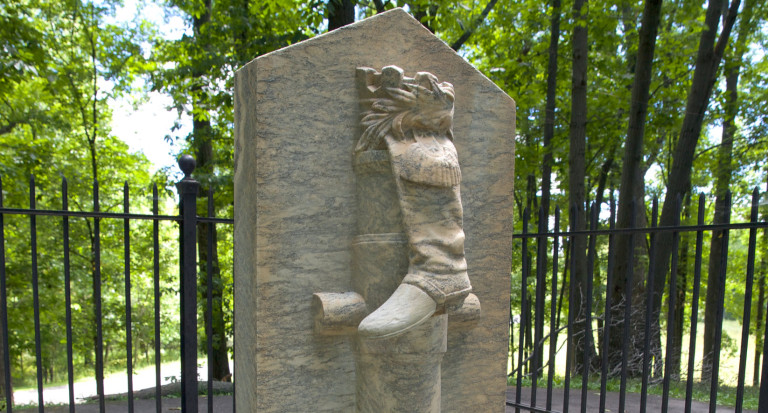
Three hours from the upstate New York village of Sleepy Hollow, in the woods of Schuylerville, there stands the statue of a leg. A boot, actually, a man’s riding boot, along with an epaulet and a cannon barrel pointing downward, denoting the death of a General. It seems the loneliest place on earth out there in the woods, with nothing but a footpath worn into the forest floor to lead you there.
The back of the stone bears these words. “In memory of the most brilliant soldier of the Continental Army“. A most brilliant soldier who, according to his own memorial, has no name.
Breymann’s RedoubtSaratoga Battlefield. H/T American Battlefield trust
In 1632, Reverend John Lothropp was an ordained minister of the Church of England. That was the year he renounced his orders, and joined the cause of religious independence. Lothropp was arrested and jailed for his apostasy, pardoned only on condition that he leave and never come back. He accepted the terms of his exile, arriving in Plymouth Massachusetts a short fourteen years after the original pilgrims.
John Lothropp is mostly forgotten today but his old house on Cape Cod, now houses the oldest public library in America. That, and a host of famous relatives, direct descendants including George Bush the elder and the younger, Franklin Roosevelt, Ulysses Grant, James Garfield and Millard Fillmore. Oh, and the guy who once wore that riding boot, up in Schuylerville. Benedict Arnold, born this day in 1741.
The year was 1777, October 7, the last day of the Battle of Saratoga. General Horatio Gates was in overall command of American forces, a position greatly exceeding his capabilities. Gates was cautious to the point of timidity, generally believing his men better off behind prepared fortifications, than taking the offensive.
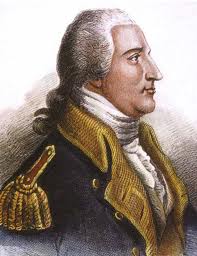
General Benedict Arnold
Gates’ subordinate, General Benedict Arnold, could not have been more different. Arnold was imaginative and daring, a risk taker possessed of physical courage bordering on thereckless. The pair had been personal friends once but that was time, long past. By this time the two men were constantly at odds.
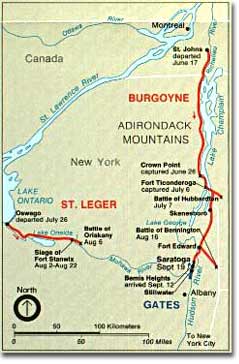
British General John “Gentleman Johnny” Burgoyne led a joint land and water invasion of 7,000 British and Hessian troops south along the New York side of Lake Champlain, down the Hudson River valley.
The invasion started out well for Burgoyne with the bloodless capture of Fort Ticonderoga, but Gentleman Johnny ran into a buzz saw outside of Bennington, Vermont, losing almost 1,000 men to General John Stark’s New Hampshire rebels and a militia unit headed by Ethan Allen, calling itself the “Green Mountain Boys”.
Burgoyne intended to continue south to Albany, linking up with forces under Sir William Howe and cutting the colonies in half. The 10,000 or so Colonial troops situated on the high ground near Saratoga, were all that stood in his way.
Patriot forces selected a site called Bemis Heights about 10 miles south of Saratoga, spending a week constructing defensive works with the help of Polish engineer Thaddeus Kosciusko. Theirs was a formidable position with mutually supporting cannon on overlapping ridges, with interlocking fields of fire.
Burgoyne had no choice but to stop and give battle at the American position, or be chopped to pieces trying to pass it by.
The Battle of Freeman’s Farm, the first of two battles for Saratoga, occurred on September 19. Technically a Patriot defeat in that the British held the ground at the end of the day, it was a costly victory. English casualties were almost two to one. Worse, the British column was out at the end of a long and tenuous supply line, while fresh men and supplies all but poured into the American position.
Freeman’s Farm could have been worse for the Patriot cause, but for Benedict Arnold’s anticipating British moves, and taking steps to block them in advance.
The personal animosity between Gates and Arnold boiled over in the days that followed. Gates’ report to Congress made no mention of Arnold’s contributions at Freeman’s Farm, though field commanders and the men involved with the day’s fighting, unanimously credited Arnold for the day’s successes. A shouting match between Gates and Arnold resulted in the latter being relieved of command, and replaced by General Benjamin Lincoln.
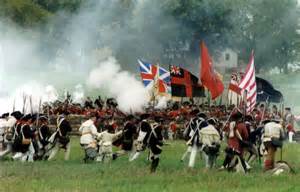
The second and decisive battle for Saratoga, the Battle of Bemis Heights, occurred on October 7, 1777.
Lieutenant Colonel Heinrich Christoph Breymann’s Hessian grenadier regiment formed the right anchor of Burgoyne’s line, manning a wooden fortification near the length of a football field and some 7-feet high. It was a strategically important position, with nothing between itself and the regiment’s main camp to the rear.
Though relieved of command Arnold was on the field, directing the battle on the American right. As the Hessian position began to collapse, General Arnold left his troops facing Balcarre’s Redoubt on the right, riding between the fire of both armies and joining the final attack on the rear of the German post. Arnold was shot through the left leg during the final moments of the action, shattering the same leg which had barely healed after the same injury at the Battle of Quebec City, only two years earlier. The same leg wounded in the defense of Ridgefield, only six months earlier.
It would have been better in the chest, he said, than to have received such a wound in that leg.
Burgoyne had no choice but to capitulate, surrendering his entire force on October 17. It was a devastating defeat for the British cause, and finally brought France in on the American side. A colonial Army had gone toe to toe with the most powerful military on the planet, and still stood.
One British officer described the battle: “The courage and obstinacy with which the Americans fought were the astonishment of everyone, and we now became fully convinced that they are not that contemptible enemy we had hitherto imagined them, incapable of standing a regular engagement, and that they would only fight behind strong and powerful works.”
One year earlier almost to the day, Benedict Arnold led a stick-built “Navy” literally constructed on the shores of lake Champlain, in a suicidal action by the shores of Valcour Island. Three years later, a man who would otherwise be remembered among the top tier of our founding fathers, betrayed the American fortifications at West Point to the British spy, John André.
The name of one of our top Revolution-era warriors, a General whom one of his own soldiers later described as “the very genius of war,” became that of Traitor. As a British officer, Arnold himself once asked an American prisoner “What will the Americans do with me if they catch me?” The reply though mostly forgotten, is one for the ages. “They will cut off the leg which was wounded when you were fighting so gloriously for the cause of liberty, and bury it with the honors of war, and hang the rest of your body on a gibbet.”
The forest has grown around it now. The only memorial on the Saratoga Battlefield, to an American Hero with no name.
So it is that there is the statue of a leg in the forest south of Saratoga, dedicated to a nameless Hero of the Revolution. On the back of the monument are inscribed these words:
“In memory of
the most brilliant soldier of the
Continental Army
who was desperately wounded
on this spot the sally port of
BURGOYNES GREAT WESTERN REDOUBT
7th October, 1777
winning for his countrymen
the decisive battle of the
American Revolution
and for himself the rank of
Major General.”
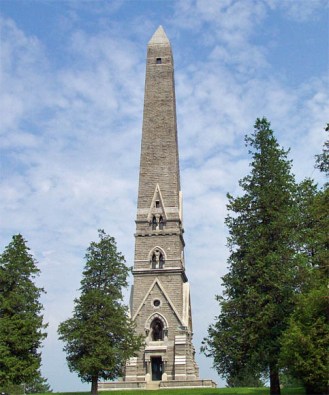
Today, the Saratoga battlefield and the site of Burgoyne’s surrender are preserved as the Saratoga National Historical Park. On the grounds of the park stands an obelisk, containing four niches.
Three of them hold statues of American heroes of the Battle. General Horatio Gates. General Philip John Schuyler. Colonel Daniel Morgan.
The fourth niche, where Benedict Arnold’s statue was intended to go, remains empty.
Fun Fact: “Few images embody the spirit of the American West as well as the trailblazing, sharpshooting, horseback-riding cowboy of American lore. And though African-American cowboys don’t play a part in the popular narrative, historians estimate that one in four cowboys were black”. – Smithsonian.com
In September 1867, Private John Randall of Troop G, US 10th Cavalry Regiment, was escorting two civilians on a hunting trip. The hunter became the hunted when a band of 70 Cheyenne warriors swept down on the trio. The two civilians were killed in the initial attack and Randall’s horse shot out from under him.
Cornered in a washout under some railroad tracks Randall held off the attack single handed with his revolver, despite a gunshot wound to his shoulder and no fewer than 11 lance wounds.
By the time help arrived, 13 Cheyenne warriors lay dead. Private Randall was still standing. Word spread among the Cheyenne about a new kind of soldier, “who had fought like a cornered buffalo; who like a buffalo had suffered wound after wound, yet had not died; and who like a buffalo had a thick and shaggy mane of hair.”
The US 10th Cavalry, formed on September 21, 1866 at Fort Leavenworth, Kansas, was the first unit of “Negro Cavalry”, an all-black unit which would soon be joined by the 9th, 24th and 25th Cavalry and come to be known as “Buffalo Soldiers”.
Fun Fact: “Few images embody the spirit of the American West as well as the trailblazing, sharpshooting, horseback-riding cowboy of American lore. And though African-American cowboys don’t play a part in the popular narrative, historians estimate that one in four cowboys were black”. – Smithsonian.com
Several all-black regiments were formed during the late Civil War including the 54th Massachusetts Volunteer Infantry depicted in the film, “Glory”. The “Buffalo Soldiers” were the first peacetime all-black regiments in the regular Army.
The original units fought in the American Indian Wars, the Spanish-American War, the Philippine-American War, the Border War and two World Wars, amassing 23 Medals of Honor by the end of 1918.
At one time, “Buffalo Soldier” was a catch-all term, used to describe American troops of African ancestry. Today the term is used as a badge of honor only by those units who trace their lineage to the 9th and 10th Cavalry regiments. Here, the 92nd Division (segregated) in the Argonne Forest of WW1. The 92nd’s insignia is a buffalo: a tribute to their predecessors.
The old met the new during WWII when Mark Matthews, veteran of the Pancho Villa Expedition, WW1, WW2 and the Battle of Saipan, was sent to train with the Tuskeegee Airmen. In the end, Matthews proved too old to fly. A member of the Buffalo Soldiers Drum & Bugle Corps, Matthews would play taps at Arlington National Cemetery, always from the woods. Blacks of the era were not permitted at “white” funerals. 1st Sergeant Matthews retired shortly before the Buffalo Soldiers were disbanded, part of President Truman’s initiative to integrate United States’ armed forces.
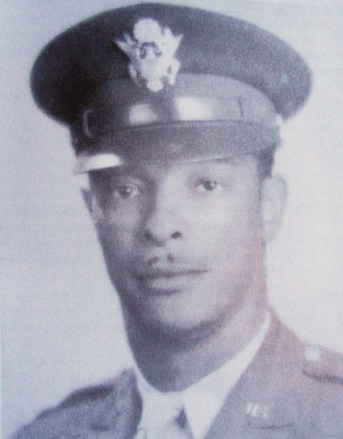
1st Lt. John Robert Fox
In December 1944, the segregated 366th Infantry Regiment of the 92nd Infantry Division was fighting in the vicinity of Sommocolonia, in northern Italy. German soldiers began to infiltrate the town on Christmas day, disguised as civilians.
A heavy artillery barrage began in the early morning hours of the 26th, followed by an overwhelming attack of enemy ground forces. Vastly outnumbered, American infantry were forced to conduct a fighting retreat.
First Lieutenant John R. Fox, forward observer for the 598th Field Artillery Battalion, volunteered to stay behind with a small Italian force, to help slow the enemy advance. From the second floor of a house, Lieutenant Fox directed American defensive fire by radio, adjusting each salvo closer to his own position. Warned that his final adjustment would bring artillery down on his own head, the soldier who received the message was stunned at the response.
1st Lieutenant John R. Fox’ last known words, were “Fire it.”
When American forces retook the town, Lieutenant Fox’ body was found with those of about 100 German soldiers.
The King James Bible teaches us, in John 15:13: “Greater love hath no man than this, that a man lay down his life for his friends“. After the war, Sommocolonia erected a Memorial. A tribute to nine brave soldiers who gave their lives that their brothers might live. Eight Italians and one American.
In a January 13, 1997 ceremony at the White House, President Bill Clinton awarded the Medal of Honor, posthumously, to the family of 1st Lieutenant John R. Fox.
1st Sergeant Mark Matthews, the last of the Buffalo Soldiers, died of pneumonia on September 6, 2005 at the age of 111. A man who forged papers in order to join at age fifteen and once had to play taps from the woods, Matthews was buried with full military honors at Arlington National Cemetery, section 69, grave #4215.
An American Hero.
The rank of General of the Armies is equivalent to that of a six-star general, the highest possible operational rank of the United States Armed Forces. The rank has been awarded only twice, once posthumously to George Washington, and once to an active-duty officer: John Joseph Pershing.
Then-1st Lieutenant Pershing served with the Buffalo Soldiers from October 1895 to May 1897 plus another six months in Cuba, and came to respect soldiers of African ancestry. These were “real soldiers”, in every way. As West Point instructor beginning in 1897, Pershing was looked down upon and insulted by white cadets and officers, aggrieved over Pershing’s strict and unyielding disciplinary policies.
The press sanitized the favored insult directed at Pershing to “Black Jack,” delivered, no doubt, behind the man’s back. That’s not actually what they called him but good enough for currently fashionable sensibilities.
Living Historians of the Pennington-Moye VFW Post 9251, Rochester NY
During WW1, General Pershing bowed to the segregationist policies of President Woodrow Wilson and Secretary of War Newton Baker. It seems Pershing understood what the Connecticut academic and the Ohio politician had failed to learn. A principle enunciated by the Reverend Martin Luther King Jr., some fifty years later:
“We must learn to live together as brothers or perish together as fools”.
Twenty-eight ton, four-engine bombers were never meant for diving attacks and multiple-G banking turns.
To the extent that most of us think about aerial combat, at least the non-pilots among us, I think we envision some variation of the dog fights between Snoopy and the Red Baron. Two aircraft, bobbing and weaving through the sky. Like bantamweight boxers, each attempting to strike the winning blow.
The Snoopy story is fun but in the real world, Manfred von Richthofen was killed by a single bullet from the ground, while pursuing a Canadian pilot behind Allied lines. The Red Baron landed his red Fokker tri-plane in a beet field and died mere moments later. He was buried with full military honors. By his enemies.
Manfred von Richtofen
Possibly the strangest dogfight of WWII took place on August 17, 1943, between two German long-range “Condor” maritime patrol bombers, and an American B-24D Liberator bomber modified to hunt submarines, in the skies over the Atlantic Ocean.
Twenty-eight ton, four-engine bombers were never meant for diving attacks and multiple-G banking turns, but these three entered a full-on dogfight.
Stripped of armor to increase range and carrying a full load of depth charges, the American anti-submarine bomber with its 10-man crew dove out of the clouds at 1,000 feet, throttles open and machine guns ablaze. The first Condor never came out of that diving turn, while machine gun fire from the second tore into the American bomber, shredding hydraulic systems and setting the right wing ablaze.
Rear-gunners returned fire as crew members frantically jettisoned depth charges. With engines #3 and 4 dead, Liberator pilot Hugh Maxwell Jr. kicked in full right rudder, throwing the massive aircraft into a skid and crash landing in the water, the aircraft breaking into three pieces.Maxwell had dubbed his B-24 “The Ark”, explaining that “it had a lot of strange animals aboard, and I hoped it would bring us through the deluge”. It must have worked. Seven out of ten crew members lived to be plucked from the water. The second Condor made it back to Bordeaux, where it crashed and burned on landing.
Surviving Liberator crew members were rescued by the British destroyer Highlander, along with three Germans from that first Condor. It was all the Highlander crew could do to keep the soaking wet combatants from resuming the fight, on the decks of the destroyer.
The “Brass” got into the action in November 1942, when general Eisenhower and a high ranking entourage left London destined for Gibraltar in a fleet of 6 converted B-17 Flying Fortress bombers. Five made the crossing without incident but one turned back due to mechanical problems. Sure enough, the lone American bomber was lumbering overhead the following day when set upon by a flight of four German long-range fighters.With crew reduced to a minimum it was one-star General Jimmy Doolittle (yeah, That Jimmy Doolittle), who took the stick from a wounded pilot. A Colonel, a Major and two senior civilian officials pitched in while one-star general Lyman Lemnitzer manned a machine gun, holding the fighters at bay.
The German squadron peeled off, probably low on fuel. The B-17 made it with what must have been the most senior combat team, in aviation history.
The final air-to-air combat of WW2 took place on April 12 1945, between unarmed spotter aircraft. Two Americans were flying low near Berlin when the pair spotted a German Fieseler Storch spotter aircraft, even lower. Having the better air position the Americans opened fire with service pistols. As the Storch attempted to escape, the aircraft brushed a wing on the ground, and it was over.
Last air-to-air combat of WW2
On the first night of the Gulf War in 1991, a single Iraqi Mirage fighter intercepted an American EF-111, an unarmed F-111 bomber modified for radar-jamming patrol. Flying at 200′ and equipped with sophisticated terrain-following radar, the bomber was able to climb up and over hilltops while the French-made Mirage fighter had no such systems.
The last anyone saw of that Iraqi fighter, was when he plowed into that hillside.
Low Level, terrain-following radar
Later in the same conflict, an Iraqi Hughes 500 helicopter was taken out by bombs dropped from an American Air Force F-15E bomber. At least one Iraqi PC-7 Turboprop pilot got so spooked he bailed out of a perfectly good aircraft, before a single shot was fired in his direction.
The strangest dogfight in history took place on January 12, 1968, when four Soviet-made Antonov AN-2 Colt biplanes took off from a base in North Vietnam headed west toward Laos.
Only 125 nautical miles from Hanoi, Phou Pha Thi mountain was long used as a staging base for CIA directed Hmong guerrilla fighters and Thai security forces. Lima Site 85 was the American radar facility, perched atop the 5,800-foot massif.
Lima site 85, atop 5,800 Phou Pha Thi Mountain
CIA-operated “Air America” captain Ted Moore was flying a UH-1D Huey helicopter at the time, carrying a load of ammunition to Phou Pha Thi. Moore arrived to see two North Vietnamese biplanes, dropping 122mm mortar shells through holes in the floor and strafing the mountaintop with 57mm rockets. “It looked like WWI,” he later recalled. Moore gave chase, positioning his helicopter above one biplane, as flight mechanic Glenn Woods fired an AK-47 from above.
Moore and Woods dropped back to the second biplane, as the first crashed into a ridge west of the North Vietnamese border. Moments later, the second crashed into a mountainside, as the other two slipped back into North Vietnamese air space. The entire contact was over in less than 20 minutes.
Theirs was a secret war, waged in the mists of the Annamite Mountains. Two months later, North Vietnamese commandos attacked and destroyed Site 85, inflicting the largest loss of US Air Force personnel of the war in Vietnam.
Ann Holland holds a 2017 calendar — “Secret Ops of the CIA” — that represents the place where her husband’s unit was overrun in 1968 during the Vietnam War. Mel Holland was on a mountaintop radar station that guided B-52 bombers toward targets in North Vietnam. (Amanda Cowan/The Columbian)
On July 27, 2007, Air America veterans Marius Burke and Boyd Mesecher presented the CIA with “An Air Combat First”, an oil on canvas painting by Keith Woodcock, depicting the shoot-down. The event was attended by members of the Air America Board, pilot Ted Moore, wife of flight mechanic Glenn Woods Sawang Reed, CIA paramilitary veteran Bill Lair; and the painting’s donors. Presumably, the painting hangs at CIA Headquarters in Langley, Virginia. A testament to the only time in the history of the Vietnam war, that an enemy fixed-wing aircraft was shot down, by a helicopter.
Florence Nightingale explains in her Notes on Nursing, “there are many physical operations where ceteris paribus (all else being the same) the danger is in a direct ratio to the time the operation lasts; and ceteris paribus the operator’s success will be in direct ratio to his quickness”.
With the invention of gunpowder in the year 142, the Chinese of the Eastern Han Dynasty had a handy if somewhat noisy way, to scare off evil spirits.
The first millennium of the common era was a time of ever improved and more efficient ways for humans to slaughter one another, from the gunpowder slow match of 919 to the fire bombs and gunpowder propelled fire arrows of the Southern Tang, of 975.
The Wuwei Bronze Cannon of 1227 may be the first such weapon in all history. By 1453, the terrifying bombard of the Ottoman Turks were capable of hurling stone balls up to 24.8-inches in diameter, more than enough to shatter the formerly impregnable Theodosian Walls of Constantinople.
Ottoman siege cannon, 1453
For a thousand years, gunpowder weapons large and small businesses and a inflicted massive injury to the human frame, resulting in damage beyond even the skills of the modern surgeon. Often the only answer was amputation, seemingly by the bushel basket.
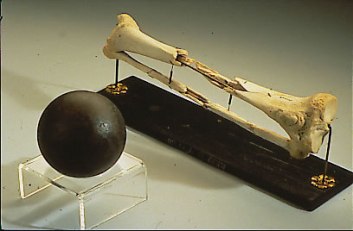
General Dan Sickles leg, destroyed by a 12-pound ball at Gettysburg, 1863
The carnage of the gunpowder era experienced something of a golden age in the 19th century. Projectiles traveled at a bone-shatteringly slow pace compared with the high velocity weapons of today while innovations such as percussion caps, shrapnel shells and breech loading weapons geometrically increased the rate of fire.
It’s been said the most common objects removed from the bodies of front-line soldiers, were the shattered bones and teeth of the next man in line.
This was a time before anesthesia, when the speed of the surgeon’s knife spelled the difference in the pain experienced by the patient, to say nothing of the poor unfortunates’ chance of survival. Florence Nightingale explains in her Notes on Nursing: “there are many physical operations where ceteris paribus” (everything else being the same) “the danger is in a direct ratio to the time the operation lasts; and ceteris paribus the operator’s success will be in direct ratio to his quickness“.
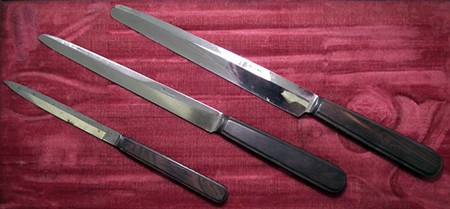
Robert Liston’s surgical instruments
First came the burly assistants, to hold down the writhing victim
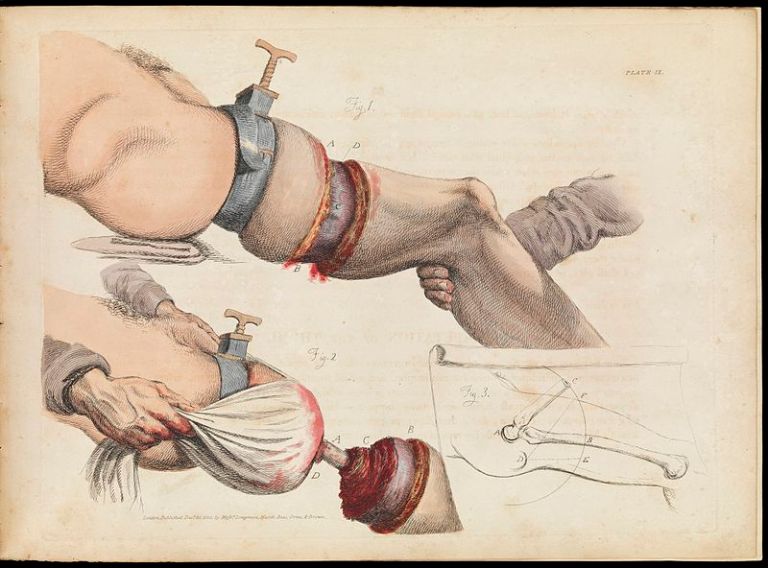
. In skilled hands the surgeon’s knife could cut all-round in a single stroke, through skin and muscle and sinew clear down to the bone before the saw completed the work of separation. Screams of agony rent the air as veins, flesh and arteries were cauterized with red-hot irons, vitriol (sulfuric acid) or boiling hot tar. Should the victim survive the experience the wound would then be sewn shut. God help the poor soul if there was any infectionleft after all that.
During the Franco-Prussian War of 1870 –’71, one surgeon amputated 200 shattered limbs in one 24-hour period, a nearly unbelievable average of one every seven minutes. Perfectly healthy fingers were occasionally severed in the gore and confusion.
A 19th-century surgical illustration detailing amputation at the thigh. Credit: Wellcome Library, London. H/T Military-History.org
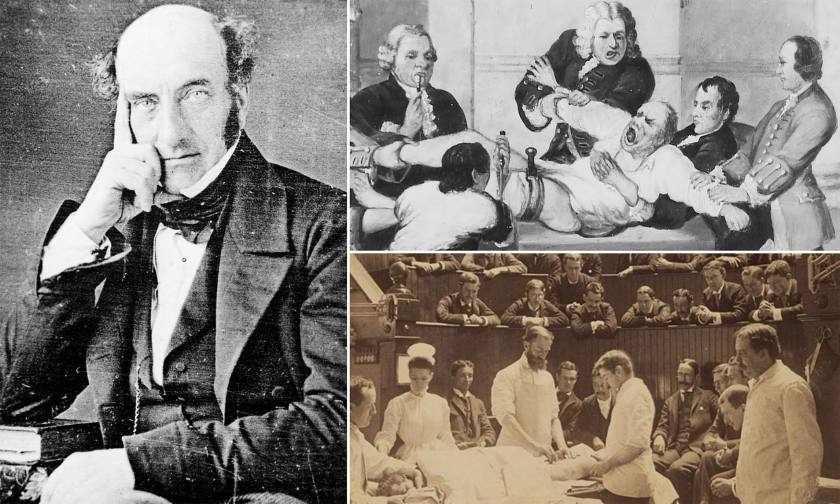
This was the world of the “Fastest Knife on West End”, a Scottish-born physician who, on this day in 1819, had just embarked on the first year of a medical career which would last until his death, in 1847.
Robert Liston, always the showman, would stride into the operating theater and call out, “Time me Gentlemen. Time me”. English surgeon and author Richard Gordon, an expert on Robert Liston, describes what that looked like:
“He was six foot two, and operated in a bottle-green coat with wellington boots. He sprung across the blood-stained boards upon his swooning, sweating, strapped-down patient like a duelist, calling, ‘Time me gentlemen, time me!’ to students craning with pocket watches from the iron-railinged galleries. Everyone swore that the first flash of his knife was followed so swiftly by the rasp of saw on bone that sight and sound seemed simultaneous. To free both hands, he would clasp the bloody knife between his teeth”.
Liston once amputated a leg in 2½ minutes from incision to suture but accidentally severed the poor bastard’s testicles, in the process.
On another occasion, he amputated a leg in 2½ minutes while severing the fingers of one assistant and piercing the coat of an observer. The spectator was so terrified at the blood and so certain that his own vital organs had been pierced, he died right then and there from heart failure.
Both patient and assistant later died from hospital gangrene, a common problem in the days before Joseph Lister. To the best of my knowledge, Robert Liston remains the only surgeon in history to achieve 300% mortality, on a single procedure.
George Orwell once pointed out. People sleep peacefully in their beds at night, only because rough men stand ready to do violence on their behalf.
As General in the American Revolution, George Washington once wrote that the “road to glory in a patriot army and a free country is…open to all”. European armies of the time bestowed honors, only on high-ranking officers who had achieved victory in battle.
There was no such honor for the common soldier.
The American military of the colonial era had precedent for such an award, but only under limited circumstances. Congressional medals were awarded to Washington himself on March 25, 1776, following the British evacuation of Boston, to General Horatio Gates in November 1777 in recognition of his victory over British General John Burgoyne at Saratoga, and to Major-General “Light-Horse Harry” Lee, father of Civil War-era Confederate general Robert E. Lee, in recognition of his 1779 attack on the British position at Paulus Hook, New Jersey.
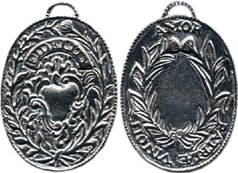
Fidelity Medallion
A “Fidelity Medallion” was awarded to three militia men in 1780, for the capture of John André, the British officer and spy whose capture uncovered the treachery of General Benedict Arnold.
The future 1st President’s general orders of August 7, 1782 established a “Badge of Military Merit” to recognize those members of the Continental Army who performed “any singular meritorious action”.
In time, General Washington’s Badge of Military Merit morphed into what we now know as the Purple Heart, but the precedent had been set. This was the first such honor available to any United States military service member, who had distinguished himself by act of valor.
Around the time of the Mexican-American war (1846 – ’48), Congress created the “Meritorious Service Citation Certificate”, a recognition for “any private soldier who had distinguished himself by gallantry performed in the presence of the enemy”. The award came in and out of use in the following decades, later becoming the Distinguished Service Medal, an award available to United States and foreign military service personnel and, in limited circumstances, civilians.
In the early days of the Civil War, General-in-chief of the army Winfield Scott argued against such an award, claiming it to be “too European”.
Secretary of the Navy Gideon Welles adopted the idea on behalf of the Navy, following Scott’s retirement in October 1861. President Abraham Lincoln signed “Public Resolution #82” on December 21, 1861, creating a Navy medal of honor.
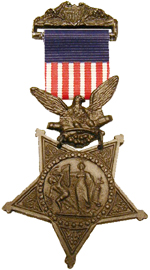
An Army version of the medal was created the following July, first awarded to six Union soldiers for hijacking the Confederate locomotive, “The General”. Several were caught and hanged as Union spies including leader of the raid, James Andrews. He alone was Not awarded the Medal of Honor, as he was a civilian.
Medals of Honor are not awarded casually, reserved only for the bravest of the brave, and for well-documented acts of valor. Permit me to share a few examples, each from his own moment in history.
Few soldiers on the Civil War battlefield had a quicker route to death’s door, than the color bearer. National and regimental flags were all-important sources of inspiration and communication.
William Harvey Carney
Reverend W. Jamison Thomson of Hartford, CT described the importance of the battle flag: “It represents the cause, is the rallying point, while it is aloft proclaims that victory is still intended, is the center of all eyes, is the means of communication between soldiers, officers, and nation,” he said, “and after the engagement, and after many of them, is their marked memento so long as its identity can be preserved.”
William Harvey Carney was born a slave in Norfolk Virginia, in 1840. How the man made it to freedom is uncertain but, in 1863, Carney joined the Massachusetts 54th Infantry, with the rank of Sergeant.
During the ill-fated assault on Fort Wagner of July 1863, Carney took up the Regimental Color as the color guard fell, mortally wounded. Carney continued all the way to the parapet despite multiple serious wounds and struggled back across the battlefield, as the 54th retired under intense fire. At last handing the colors over to another survivor, Carney said “Boys, I only did my duty; the old flag never touched the ground!”
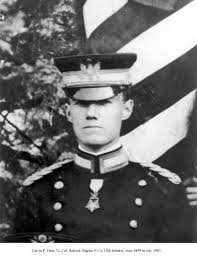
Calvin Pearl Titus
Sergeant Carney’s heroism of July 1863 was the earliest such action to result in a Medal of Honor given to an American of African Ancestry, though the medal itself was not awarded until 1900.
During the Boxer Rebellion of 1900, Chaplain’s assistant and regimental musician Calvin Pearl Titus of Vinton, Iowa volunteered to scale the 30-ft walls of Peking, raising the American flag over the outer walls of the city.
President Theodore Roosevelt awarded Titus the medal of Honor, for “Gallant and daring conduct in the presence of his colonel and other officers…”
President Roosevelt would one day become the only President awarded the Medal of Honor for actions performed on July 1, 1898, in Cuba. Titus himself is now remembered as the last American standard-bearer.
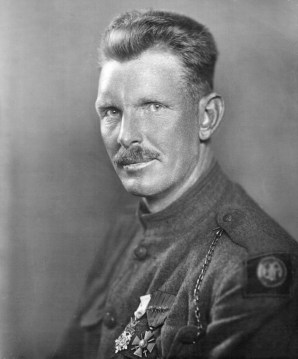
On October 8, 1918, Tennessee native Corporal Alvin Cullum York of the 82nd Division lead a group of seventeen against a numerically superior German force, dug in at Chatel-Chehery, France.
Let his citation tell the story: “…After his platoon had suffered heavy casualties and three other non-commissioned officers had become casualties, Cpl. York assumed command. Fearlessly leading seven men, he charged with great daring toward a machine gun nest, which was pouring deadly and incessant fire upon his platoon. In this heroic feat the machine gun nest was taken, together with four officers and 128 men and several guns.”
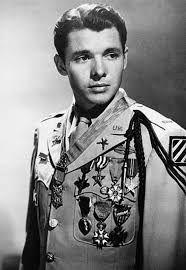
Kingston Texas 2nd Lieutenant Audie Murphyfound himself senior officer of a company of 18, whittled down from 235 by disease, wounds and casualties.
On January 26, 1945, Murphy’s small force found itself under assault by six German tanks and a large infantry force.
A man the Marine Corps had once turned down for being too small, Murphy climbed aboard a burning tank destroyer. Out in the open and exposed to German fire from three sides, the 19-year old single-handedly fought off the entire assault, killing or wounding fifty and causing the German tanks to withdraw.
Chaplain Emil Kapaun, the “Shepherd in Combat Boots” selflessly sacrificed himself on behalf of fellow prisoners in 1951, in the frozen hell of a North Korean prison camp.
President Barack Obama awarded Kapaun’s family the Medal of Honor during a ceremony in the east wing of the White House, on April 11, 2013.
Father Kapaun’s body lies in an unmarked mass grave, somewhere in Pyoktong county.
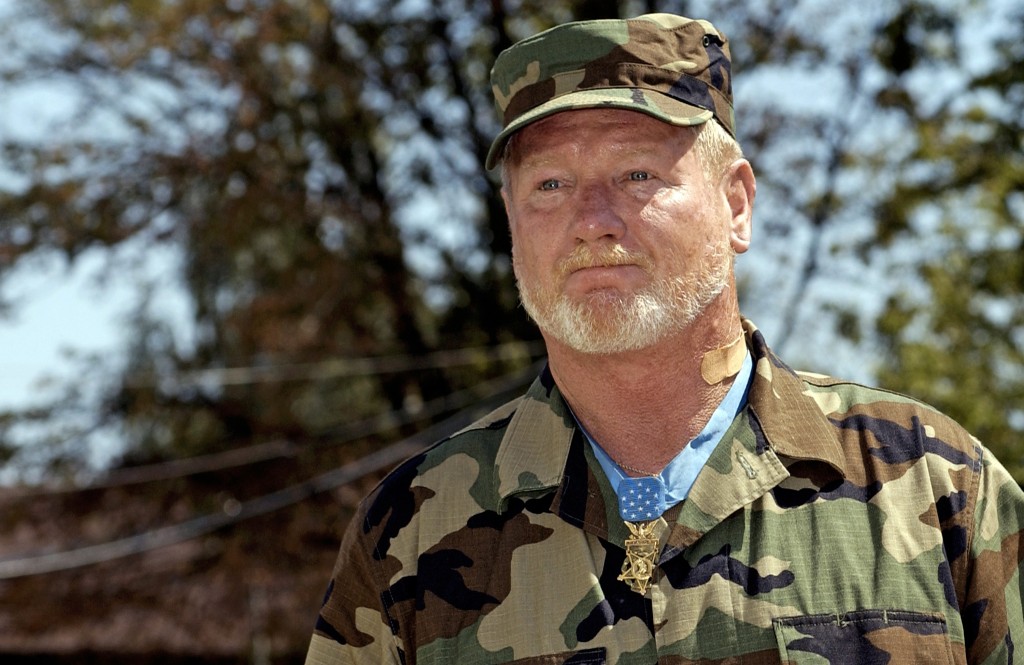
PFC Sammy Lee Davis distinguished himself during the small hours of November 18, 1967, when the 4th Artillery of 9th Infantry Division came under heavy attack west of Cai Lay, Republic of Vietnam.
Repeatedly knocked to the ground by enemy mortar fire and suffering multiple injuries, the Cannoneer from Dayton, Ohio fought back first with a heavily damaged, flaming howitzer, then with recoilless rifle and finally, a machine gun.
That’s his picture, at the top of this page.
Two Medals of honor were awarded posthumously, to Delta Force snipers Gary Gordon and Randy Shugart, for their hopeless defense of the crash site of a downed UH-60 Blackhawk helicopter against hundreds of fighters loyal to the Somali warlord Mohamed Farrah Aidid.
Corporal Jason Lee Dunham of Scio New York deliberately threw himself on an Iraqi grenade on April 14, 2004, saving the lives of fellow Marines at the sacrifice of his own life.
John 15:13 of the King James Bible teaches us: “Greater love hath no man than this, that a man lay down his life for his friends”.
Corporal Dunham was twenty-two years old.
Sergeant 1st class Jared Monti of Abington Massachusetts was killed in the mountains of Nuristan Province in Afghanistan, while attempting to rescue a wounded soldier from a hail of small arms and rocket-propelled grenade fire.
Sgt. Monti was the sixth person from the wars in Iraq and Afghanistan, to be awarded the Medal of Honor.
The Lee Brice song “I Drive your Truck“, voted Song of the Year at the 49th annual Academy of Country Music Awards, is his story.
The nation’s highest medal for military valor has been awarded 3,525 times since its inception in 1861, to 3,506 individual recipients. 624 were awarded posthumously. Nineteen men have received the Medal of Honor, twice.
Doctor Mary Edwards Walker received the Medal of Honor on November 11, 1865. The Army changed eligibility criteria in 1917 and revoked 911 such awards given to non-combatants, including Dr. Walker. Fifty years later, an Army board restored Walker’s Medal of Honor, praising her “distinguished gallantry, self-sacrifice, patriotism, dedication and unflinching loyalty to her country, despite the apparent discrimination because of her sex.” She is the only female so honored and only the second woman in American history, licensed as a Medical Doctor.The youngest Medal of Honor recipient was 11-year old drummer boy, Willie Johnston.
Possibly without exception, every one will tell you they are not heroes. They were doing a job and those who gave their lives, are the Real heroes.
If that’s not the very definition of heroism, I’m at a loss to understand what might be.
Fun Fact: Just last month, the Animals in War & Peace Medal of Braverywas instituted in the Unites States, to recognize the extraordinary contributions of animals in times of war and peace. Patterned after the Dickin Medalawarded in the United Kingdom, recipients include Cher Ami, a pigeon who served with the US Signal Corps in WW1, Chips, a Military Working Dog (MWD) who served in WW2 and Sergeant Reckless, the Mongolian Mare who served with the United Sates Marine Corps, during the Korean conflict.
“You follow the rules of war for you – not for your enemy”, his commander had said. “You fight by rules to keep your humanity”.
Franz Stigler
At the age of 26, Franz Stigler was an Ace. The Luftwaffe pilot of a Messerschmitt Bf-109 fighter, some of his kills had been revenge, payback for the death of his brother August, earlier in the war.
Stigler was no Nazi. This was a German Patriot with 22 confirmed kills, doing what the nation required him to do.
On December 20, 1943, Stigler needed one more kill for a Knight’s Cross. He tossed his cigarette aside and climbed into his fighter as the crippled American B17 bomber struggled overhead. This was going to be an easy kill.
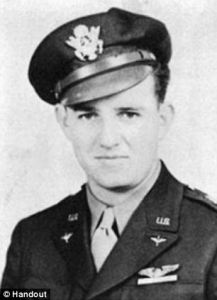
Charles Brown
21-year-old Charles Brown held the throttle of that B17, an aircraft named “Ye Olde Pub”. The earlier attack on the munitions factory in Bremen had been a success, but the pilot and crew had paid a dreadful price.
Brown’s bomber was set upon by no fewer than 15 German fighters. Great parts of the air frame were torn away, one wing severely damaged and part of the tail ripped off. The aircraft’s Plexiglas nose was shattered and the #2 engine seized. Six of the ten-man crew were wounded and the tail gunner dead, his blood frozen in icicles over silent machine guns. Brown himself had been knocked out at one point, coming around just in time to avert a fatal dive.The battered aircraft was completely alone and struggling to maintain altitude. The American pilot was well inside German air space when he looked to his left and saw his worst nightmare. Three feet from his wing tip was the sleek gray shape of a German fighter, the pilot so close that the two men were looking into each other’s eyes. Brown’s co-pilot, Spencer “Pinky” Luke said “My God, this is a nightmare.” “He’s going to destroy us,” was Brown’s reply. This had been his first mission. He was sure it was about to be his last.
Long ago before his first mission, Stigler’s commanding officer Lt. Gustav Roedel, had explained the warrior’s code of conduct: “Honor is everything here. If I ever see or hear of you shooting at a man in a parachute, I will shoot you down myself”.
The German ace must have remembered those words as he watched the wounded, terrified American airmen inside that B17, some still helping one another with their injuries. “You follow the rules of war for you – not for your enemy”, Roedel had said. “You fight by rules to keep your humanity”.The German had to do something. Nazi leadership would surely shoot him for treason if he was seen this close without completing the kill. One of the American crew was making his way to a gun turret as the German made his decision. Stigler saluted his adversary, motioned with his hand for the stricken B17 to continue, and peeled away.
Ye Olde Pub lumbered on, pierced and holed through and through, across 250 frozen miles of the North Sea. At last, she made it to Norfolk.
Over 40 years later, the German pilot was living in Vancouver, Canada. Brown took out an ad in a fighter pilots’ newsletter, explaining that he was searching for the man ‘who saved my life on December 20, 1943.’ Stigler saw the ad, and the two met for the first time in 1987. “It was like meeting a family member”, Brown said of that first meeting. “Like a brother you haven’t seen for 40 years”.
The two former enemies passed the last two decades of their lives as close friends and occasional fishing buddies.
The two old warriors passed away in 2008, only six months apart. Franz Stigler was 92, Charles Brown 87.
A book called “A Higher Call”, tells the story in greater detail, if you’re interested in reading more about this signal act of kindness, between once mortal enemies.
In the two obituaries, both men were mentioned each as the other’s, “Special Brother”.
US support for South Vietnam increased as the French withdrew. By the late 1950s, the US was sending technical and financial aid in expectation of social and land reform. By 1960, the National Front for the Liberation of South Vietnam (NLF, or “Viet Cong”) had taken to murdering Diem-supported village leaders. President John F. Kennedy responded in 1961, sending 1,364 American advisers into South Vietnam.
The American war in Indochina, had begun.
If you speak of France, most of us think of the five-sided country between Spain and Germany. That would be partly correct but “la Métropole” or “Metropolitan France” today accounts for only 82.2% of the landmass and 95.9% of the population, of la République Française. The overseas departments and territories which make up “la France d’outre-mer”, “Overseas France”, account for the rest.
That overseas percentage would have been higher in the mid-20th century with many former colonial territories added in, among them Laos, Cambodia and Vietnam.
Japanese occupation of southeast Asia caused the Europeans to leave French Indochina during WWII. Within a year of re-occupation, the French faced virulent opposition from the Nationalist-Communist Viet Minh, led by Ho Chi Minh and Vo Nguyen Giap. Theirs was a low level, rural insurgency at first, later becoming a full-scale modern war when Chinese Communists entered the fray in 1949.
What historians call the First Indochina War, many contemporaries called “la sale guerre”, or “dirty war”. The government forbade the use of metropolitan recruits, fearing that that would make the war more unpopular than it already was. Instead, French professional soldiers and units of the French Foreign Legion were augmented with colonial troops, including Moroccan, Algerian, Tunisian, Laotian, Cambodian, and Vietnamese ethnic minorities.
The war went poorly for the Colonial power. By 1952 the French were looking for a way out. Premier René Mayer appointed Henri Navarre to take command of French Union Forces in May of that year with a single order. Navarre was to create military conditions which would lead to an “honorable political solution”.
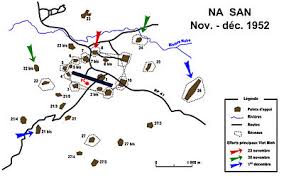
In November and December of the previous year, the French army had air lifted soldiers into a fortified position at Na San, adjacent to a key Viet Minh supply line to Laos. Superior French fire power, armor and air resources had driven Vo Nguyen Giap’s forces back with heavy losses, in what French planners called the “hérisson” or “hedgehog” strategy.
In June, Major General René Cogny proposed a “mooring point” at Dien Bien Phu, creating a lightly defended point from which to launch raids. Navarre wanted to replicate the Na San strategy and ordered that Dien Bien Phu be taken and converted to a heavily fortified base.
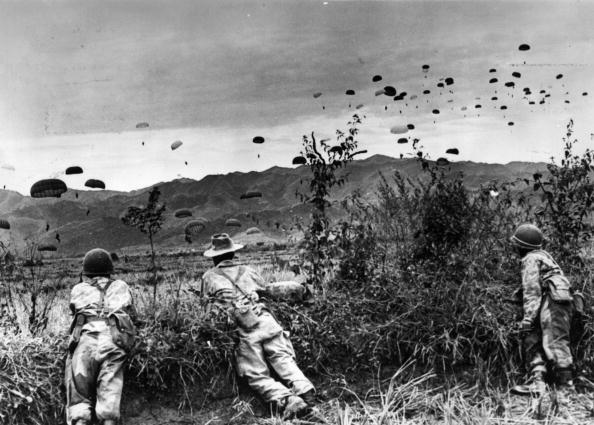
“Operation Castor” began on 20 November with three parachute infantry battalions dropping into Dien Bien Phu. The operation was completed with minimal French casualties on November 30, as air forces continued to land supplies, troops, and engineering equipment into the isolated base.
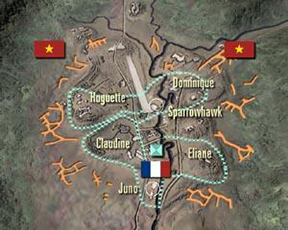
Under the command of Colonel Christian de Castries, French forces built seven fortified positions to defend the base, each allegedly named after one of his mistresses. 10,800 French troops were committed, with another 16,000 in reserve.
Vo felt that he had made a serious mistake at Na San, rushing his troops in piecemeal against French defenses. This time, he carefully prepared his positions, moving 50,000 men into position around the valley, meticulously stockpiling ammunition and placing his anti-aircraft and heavy artillery, with which he was well supplied.
The French staff made their battle plan, based on the assumption that it was impossible for the Viet Minh to place enough artillery on the surrounding high ground, due to the rugged terrain. The communists didn’t possess enough artillery to do serious damage anyway, or so they thought.
French officers quickly learned how mistaken they had been. The first sporadic artillery fire began on January 31, around the time that patrols discovered the enemy’s presence in every direction. Heavy artillery virtually ringed the valley in which they found themselves, and air support was quickly nullified by the enemy’s well placed anti-aircraft fire.
The Viet Minh assault began in earnest on March 13, when several outposts came under furious artillery barrage. Air support became next to impossible, and counter-battery fire was next to useless against Giap’s fortifications.
Lieutenant Colonel Charles Piroth commanded the French artillery at Dien Bien Phu. He was a professional soldier and no lightweight, having had his arm amputated in 1946 with no anesthesia. When it became clear how wrong his assumptions had been, Colonel Piroth circled the camp making apologies to his officers, returned to his tent, and killed himself with a hand grenade.
Last moments of the Battle of Dien Bien Phu, 1954, as depicted by North Vietnamese artist Huy Toan
“Beatrice” was the first fire base to fall, then “Gabrielle” and “Anne-Marie”. Viet Minh controlled 90% of the airfield by the 22nd of April, making even parachute drops next to impossible. On May 7, Vo ordered an all-out assault of 25,000 troops against the 3,000 remaining in garrison. By nightfall, it was over. The last words from the last radio man were “The enemy has overrun us. We are blowing up everything. Vive la France!”
Military historian Martin Windrow wrote that Dien Bien Phu was “the first time that a non-European colonial independence movement had evolved through all the stages from guerrilla bands to a conventionally organized and equipped army able to defeat a modern Western occupier in pitched battle”.
The Geneva conference opened the following day, resulting in a Vietnam partitioned into two parts. In the north was the “Democratic Republic of Vietnam” administered by the communists, and the State of Vietnam in the south, under Emperor Bao Dai and Prime Minister Ngo Dinh Diem. The North was supported by both the People’s Republic of China and the Soviet Union, and continued to terrorize patriots in the north and south alike.
US support for South Vietnam increased as the French withdrew. By the late 1950s, the US was sending technical and financial aid in expectation of social and land reform. By 1960, the National Front for the Liberation of South Vietnam (NLF, or “Viet Cong”) had taken to murdering Diem-supported village leaders. President John F. Kennedy responded in 1961, sending 1,364 American advisers into South Vietnam.
The American war in Indochina, had begun.
“The French strong-points at Dien Bien Phu in north-west Vietnam are falling again. Not, as in 1954, to Viet-Minh attacks, but rather to the bulldozers of progress”. H/T http://www.lowyinterpreter.org/
Equivalent to the American Medal of Honor or the British Victoria Cross, the “Dickin Medal” is the highest award in the British system of Military honors, awarded to animals for service in time of military conflict. The Dickin has been awarded only 71 times. Recipients include 34 dogs, 32 pigeons, 4 horses and, to this day, only one cat. A ship’s cat. The champion rat killer of the Yangtze River. Simon.
According to the archaeological record, the earliest trade dates to the Neolithic period of the 10th millennium, BC. The Austronesian peoples of island Southeast Asia established trade routes with the Indian sub-continent, as early as 1500 BC. Egyptians traded with Asian merchants from the time of the Ptolemaic dynasty. The Greco-Roman palate of antiquity would not have been the same without the spice roads, plied first by land and later, by sea.
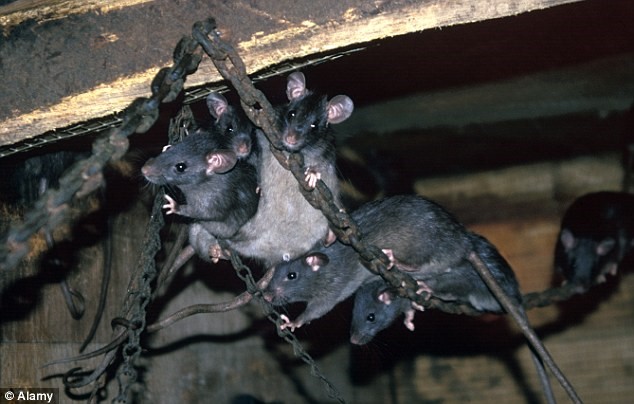
From the earliest times when man took to the ocean, food stores and trade goods alike were an attractive food source for the Black Rat, Rattus rattus.
Able to climb obstacles from trees to buildings to ship’s ropes, DNA and other evidence suggests the black rat originates not from Europe, but southeast Asia.
Also known as the “ship’s rat”, the animal reaches sexual maturity in as little as three to four months and completes the act of reproduction, in the blink of an eye. Litters average 7 or 8 “kittens” with an average gestation period of only 20 to 22 days and a weaning period, of 20 to 28.
Rat infestations get out of hand with shocking rapidity. Left uncontrolled, rats will destroy a ship’s stores in a matter of weeks. This is to say nothing of the black rat’s prodigious ability to carry disease without itself, being affected. From Bubonic plague to Typhus to Toxoplasmosis, Trichinosis and any number of Streptococci, this third to half-pound animal has done more than any creature in history, to alter the course of human events.
Unsurprisingly, the “ship’s cat” was a feature of life at sea since man first took to the water.
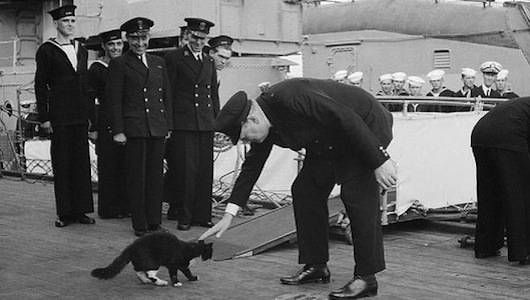
Ship’s cat “Blackie” greets Winston Churchill aboard the HMS Prince of Wales. (Photo: Wikimedia Commons)
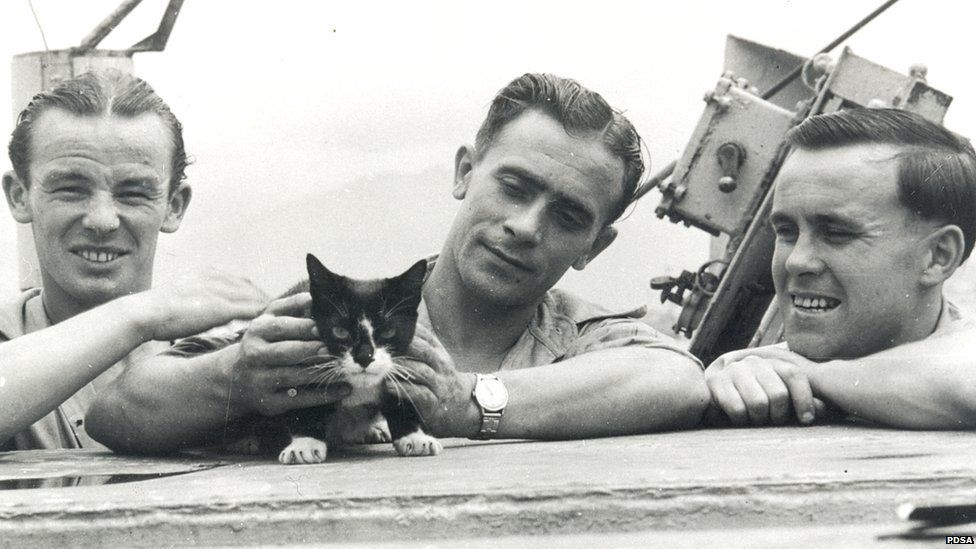
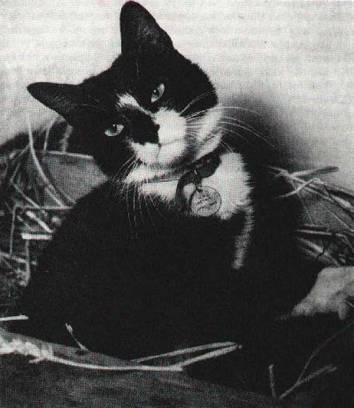
“Simon” was about a year old in 1948, one of countless and nameless feline waifs, starvelings roaming the dockyards of Hong Kong in search of a morsel. 17-year-old Ordinary Seaman George Hickinbottom smuggled the animal on board the frigate HMS Amethyst, the job of “ship’s cat” being open at that time.
Lieutenant Commander Ian Griffiths liked cats and well understood the threat posed by rodents, in the hot and humid weather of that time and place. As Hickinbottom recalled, ‘He warned me that if he saw any muck on board, he’d have me up on a charge.’ The crew made sure any ‘muck’ was quietly tossed overboard.
Simon earned the admiration of the Amethyst crew, with his prowess as a rat killer. Seamen learned to check their beds for “presents” of dead rats while Simon himself could usually be found, curled up and sleeping in the Captain’s hat.
China was embroiled in a Civil War at this time, between the Nationalist Kuomintang led Republic of China and the Communist Party led People’s Republic of China.
The first mission assigned to incoming Skipper Bernard Skinner was to travel up the Yangtze River to Nanjing to replace the duty ship HMS Consort, then standing guard over the British embassy.
On April 29, 1949, Amethyst was on her way up river when she came under fire from the People’s Liberation Army (PLA).
The frigate returned fire but she was soon disabled, run aground with most of her guns too high to return fire. The first salvo from the Communist guns exploded in the Captain’s quarters, killing Commander Skinner and badly wounding the ship’s cat.
“Yangtse Incident by Timothy OBrien. HMS Amethyst about to return fire while a Sunderland of 88 Squadron makes a hurried departure, 23rd of April 1949”. H/T worldnavalships.com
By 9:30, wounded First Lieutenant Geoffrey L. Weston made his last, desperate transmission: “Under heavy fire. Am aground in approx. position 31.10′ North 119.20′ East. Large number of casualties”.
The order was given to evacuate. Some managed to swim across to the Nationalist side, despite fire from Communist batteries. For the rest, the following three months became a tense and deadly standoff known as the Amethyst Incident.
Simon was carried to the sick bay where surviving members of the medical staff removed four pieces of shrapnel from his little body, and dressed his burned flesh and singed fur. He was grievously wounded and wasn’t expected to make it, through the night.
As weeks dragged to months, Simon did not die but recovered and resumed his duties as rat killer, below decks. A good thing it was, too. The trapped and cornered vessel was overrun, with vermin. Simon returned to his work with a vengeance, even earning the fanciful rank of “Able Sea Cat” after killing one notorious rodent known as Mao Tse-tung.
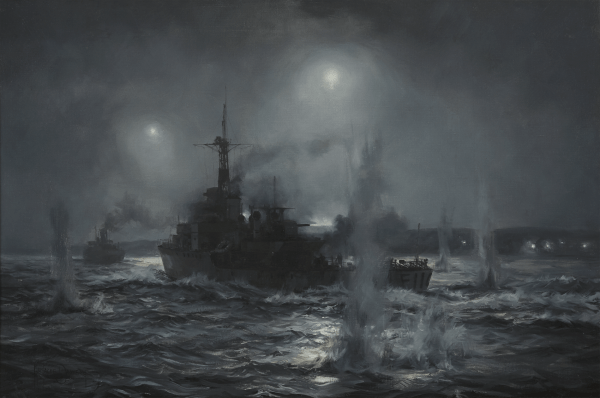
HMS Amethyst makes a nighttime dash for freedom. Painting by Montague Dawson
The Amethyst incident resulted in the death of 47 British seamen with another 74, wounded. HMS Amethyst herself sustained extensive damage in the episode. The heavy cruiser HMS London, the destroyer HMS Consort and the sloop HMS Black Swan were also damaged.
All but unseen amidst the economic devastation of World War 1, the domesticated animals of Great Britain were in desperate straits. Turn-of-the-century social reformer Maria Elizabeth “Mia” Dickin founded the People’s Dispensary for Sick Animals (PDSA) in 1917, working to lighten the dreadful state of animal health in Whitechapel, London. To this day, the PDSA is one of the largest veterinary charities in the United Kingdom, conducting over a million free veterinary consultations, every year.
The “Dickin Medal” was instituted on December 2, 1943, honoring the work performed by animals in World War Two. The “animal’s Victoria Cross”, the Dickin is equivalent to the highest accolade in the British system of military honors, comparable to the American Medal of Honor and bearing these words, “We Also Serve”.
Simon the cat received the Dickin Medal, for catching rats and protecting food supplies during the time the ship was trapped by the Chinese. (Photo by PA Images via Getty Images)
Excepting the 2014 blanket award to all animals of the “Great War”, the Dickin Medal has been awarded 71 times since its inception. Recipients include 34 dogs, 32 pigeons, 4 horses and, to this day, only one cat. A ship’s cat. The champion rat killer of the Yangtze River. Simon.
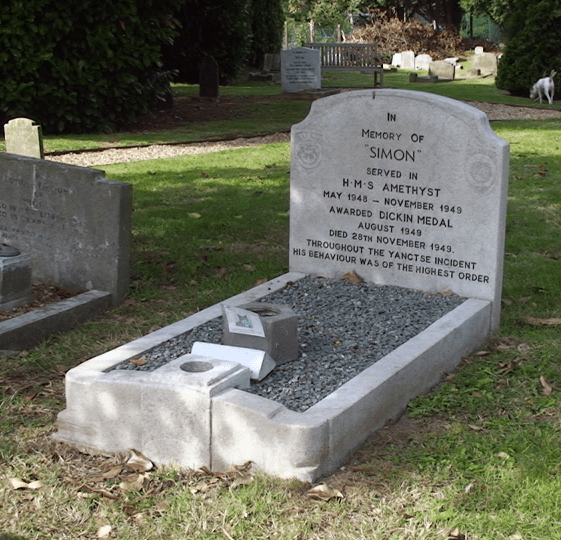
Simon arrived to accolades in Great Britain, awarded a Blue Cross medal, the Amethyst campaign medal and Naval General Service Medal with Yangtze clasp. Unhappily, Simon didn’t survive his war wounds, after all. Placed in quarantine like any other animal entering the United Kingdom, Simon succumbed to severe infections of his wounds and died on this day, November 28, 1949.
More than a thousand people including the entire crew of HMS Amethyst, attended the funeral for the two-year-old feline. Simon’s gravestone at the PDSA Animal Cemetery in Ilford reads: “Throughout the Yangtze Incident his behavior was of the highest order.”
Taken individually, either power possessed the potential to destroy the world order. The mind can only ponder the great good fortune of we who would be free, that these malign governments turned to destroying each other.
In the 18th century, the Founding Fathers gave us a Republic, centered on individual liberty, delegated and diffuse authority and checks & balances. Unique in world history, it was a governing model, based on an idea.
In this election year of peace and prosperity, news media and candidates alike speak of “Socialism”. A top down ideology where individual liberty is subsumed by the collective, and cosmic chance is all that separates benign governance, from authoritarianism.
Two of the worst such ideologies rose up in the wake of the War to end all Wars. One a murderous, authoritarian, collectivist ideology with international aspirations and class obsessions. The other a murderous, authoritarian, and collectivist ideology with nationalist aspirations and ethnic obsessions.
Taken individually, either power possessed the potential to destroy the world order. The mind can only ponder the great good fortune of we who would be free, that these malign governments turned to destroying each other.
The Nazi conquest of Europe began in 1938. Within two years, every major power on the European mainland was either neutral, or occupied. Great Britain alone escaped Nazi invasion, as the shattered defenders of the island nation fled the beaches of Dunkirk.
The National Socialist “Thousand-year Reich” was allied for a time with the Union of Soviet Socialist Republics, thanks to the Molotov-Ribbentrop non-aggression pact of August, 1939.
We in the west understand World War 2 in terms of European and Pacific “Theaters”. Yet the most shattering conflict of this most destructive war in history unfolded not in those places, but the Eastern Front, between the two former allies.
“Valhalla in flames, in an 1894 depiction by Max Brückner, one of the original set designers for the opera”. H/T Wikipedia
This was a Race war, Slav against Teuton. The Ragnarök of Norse mythology. The all-destroying Götterdämmerung of Wagnerian opera. Of an estimated 70–85 million deaths attributed to World War II, approximately 30 million occurred on the Eastern Front. 95% of all Wehrmacht casualties between 1941 and 1944, took place on the “Ostfront”. The former allies fought out the most ferocious battle of that bloodiest theater of the war, in the streets and the sewers of Stalingrad.
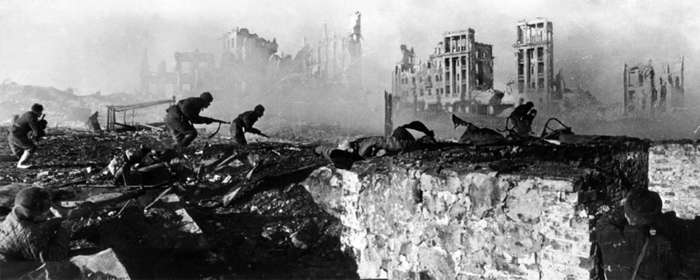
Soviet soldiers on the offensive against German troops during the Battle of Stalingrad, February 1943. Zelma/RIA Novosti archive, image no. 44732 (CC BY-SA3.0)
Wilfred von Richtofen, cousin of the famous “Red Baron” of WWI, opened up with his heavy bombers on August 23rd, dropping over 1,000 tons of high explosive on Stalingrad.
Most of the cattle, grain and rail cars surrounding the city were shipped out, in advance of the German assault. Government propagandists boasted of the “harvest victory”, and yet most of Stalingrad’s civilian residents remained, leaving the city short of food. Making matters worse, the Luftwaffe bombed Volga River shipping, sinking 32 vessels and crippling another 9 in the narrow waterway. The most vital link in the city’s supply chain, was cut off.
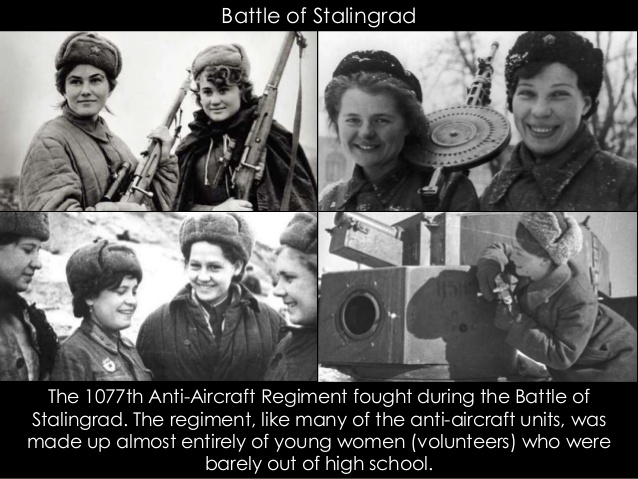
In the beginning, Soviet defense suffered extreme manpower shortages. One part of the early defense fell to the 1077th Anti-Aircraft Regiment, a primarily female unit comprised of young volunteers with little training and the wrong weapons to engage ground targets. These women were all alone at this point with no support from other units, yet they traded shot for shot with the German 16th Panzer Division until all 37 AA guns had been wiped out or overrun. When it was over, 16th Panzer soldiers were amazed to learn, they had been fighting women.
Stalingrad was quickly reduced to rubble, with the German 6th Army controlling 90% of the city. Still, the the Soviet defense held on. General Vasily Chuikov commanding the weak 62nd army well understand the overwhelming power of the Blitzkreig and insisted on “Hugging the Enemy”, to nullify German air power.
With backs to the Volga, they fought for the very sewers of the city, men and women alike reduced to a primitive level of existence. The Germans called it “Rattenkrieg”. “War of the Rats”. One German infantryman wrote home to his family, “Animals flee this burning hell of a city. The hardest stones do not last for long. Only men endure”.
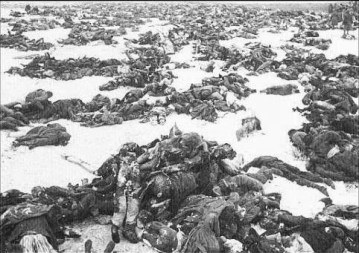
As many as 80,000 Red Army soldiers lay dead by the middle of October, 1942. Counting German losses and civilian deaths, the battle cost a quarter million lives up to this point. And it was barely halfway over.
Ice floes in the Volga further cut off supplies. Defenders were reduced to cannibalism as a massive Soviet counter-attack assembled on the German’s exposed left flank.
By November, General Georgy Zhukov had assembled over a million fresh troops and three Air Armies, for the assault on Stalingrad. 1,500 tanks and 2,500 heavy guns arrived fresh from the factory, many departing with paint, still wet.
The rumble of artillery, the “Great Soviet God of War” could be heard across the steppe as the Soviet counter-attack commenced in a blinding snowstorm on November 19, 1942.
German General Friedrich von Paulus sent a telegram to Adolf Hitler, requesting permission to withdraw. The response from the Fuhrer: the 6th Army should fight “to the last soldier and the last bullet.” Von Paulus send a second telegram on the 22nd. The 6th Army was surrounded.
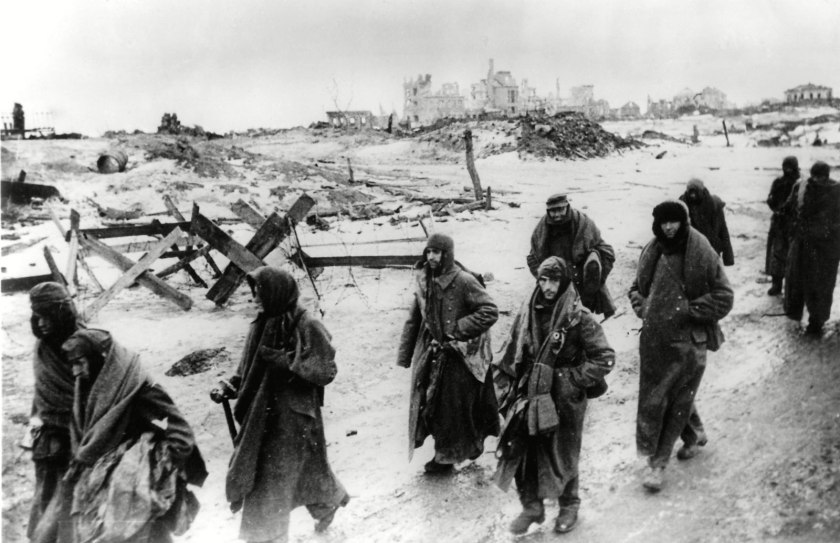
German forward movement came to an end on the Eastern Front in February, 1943, when 91,000 freezing, wounded, sick and starving Germans surrendered to the Red Army.
Even then, thousands of troops refused to lay down arms and continued to fight from the cellars and the sewers, holding on until early March.
Disease, death marches, cold, overwork, mistreatment, and malnutrition all took their toll on the prisoners. Nearly 110,000 went into captivity following the Battle of Stalingrad. Fewer than 6,000 lived to return to Germany.
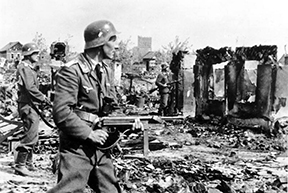
German soldiers, Battle of Stalingrad, January 1943 H/T Britannica.com
Nigh on 80 years later, my fellow Americans face one of history’s “hinge” moments. Do we choose the self-governance of We the People, with all of its many warts and short-comings. Or do we abandon self-government to cosmic chance, and the rule of a self-interested, few.

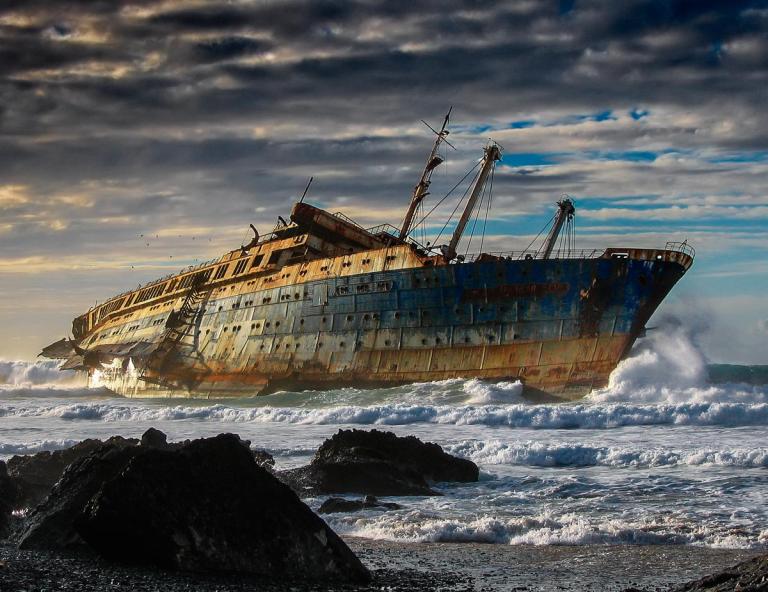
 Two years later, the first keel laid under the Merchant Marine act was the SS America, built by the United States Line and operated as a passenger liner until the United States entered WWII in 1941.


 During her service to the United States Navy, West Point was awarded the American Defense Service Medal, American Campaign Medal, European-African-Middle Eastern Campaign Medal, Asiatic-Pacific Campaign Medal, and World War II Victory Medal.
 She was in terrible condition and her refit nowhere near complete when America set sail on her first cruise on June 30, 1978. There was rusted metal, oil soaked rags and backed up sewage. There were filthy mattresses and soiled linens. One woman later said, she was a “floating garbage can.” The angriest of customers actually got into fist fights with members of the crew. There were so many complaints the ship finally turned back, still within sight of the Statue of Liberty.
 Sold yet again in 1993 and renamed the American Star, the new owners planned to convert her to a five-star hotel ship off Phuket, Thailand. A planned 100 day tow began on New Year’s Eve of 1993, but the lines broke. On January 17, 1994, the former SS America was adrift in foul seas, running aground in the Canary Islands the following day. Discussions of salvage operations were soon squashed, as the ship broke in two in the pounding surf.
 The National WWII Museum in New Orleans reports on its website that the men and women who fought and won the great conflict are now passing at a rate of 550 per day. How many, I wonder, might think back and remember passage on the most successful troop transport of their day.

 Patriot forces selected a site called Bemis Heights about 10 miles south of Saratoga, spending a week constructing defensive works with the help of Polish engineer Thaddeus Kosciusko. Theirs was a formidable position with mutually supporting cannon on overlapping ridges, with interlocking fields of fire.
 The second and decisive battle for Saratoga, the Battle of Bemis Heights, occurred on October 7, 1777.
 It would have been better in the chest, he said, than to have received such a wound in that leg.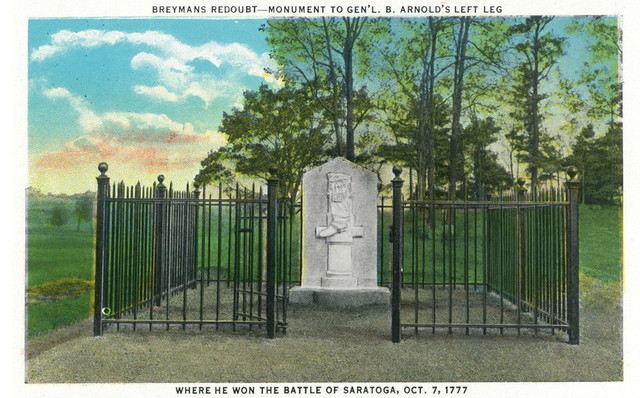
 “In memory of

 Cornered in a washout under some railroad tracks Randall held off the attack single handed with his revolver, despite a gunshot wound to his shoulder and no fewer than 11 lance wounds.
 The King James Bible teaches us, in John 15:13: “Greater love hath no man than this, that a man lay down his life for his friends“. After the war, Sommocolonia erected a Memorial. A tribute to nine brave soldiers who gave their lives that their brothers might live. Eight Italians and one American.
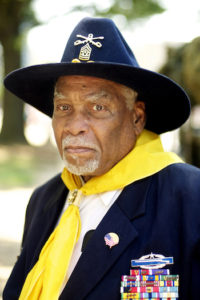 1st Sergeant Mark Matthews, the last of the Buffalo Soldiers, died of pneumonia on September 6, 2005 at the age of 111. A man who forged papers in order to join at age fifteen and once had to play taps from the woods, Matthews was buried with full military honors at Arlington National Cemetery, section 69, grave #4215.


 Stripped of armor to increase range and carrying a full load of depth charges, the American anti-submarine bomber with its 10-man crew dove out of the clouds at 1,000 feet, throttles open and machine guns ablaze. The first Condor never came out of that diving turn, while machine gun fire from the second tore into the American bomber, shredding hydraulic systems and setting the right wing ablaze.
 Maxwell had dubbed his B-24 “The Ark”, explaining that “it had a lot of strange animals aboard, and I hoped it would bring us through the deluge”. It must have worked. Seven out of ten crew members lived to be plucked from the water. The second Condor made it back to Bordeaux, where it crashed and burned on landing.


 Liston once amputated a leg in 2½ minutes from incision to suture but accidentally severed the poor bastard’s testicles, in the process.
 In the early days of the Civil War, General-in-chief of the army Winfield Scott argued against such an award, claiming it to be “too European”.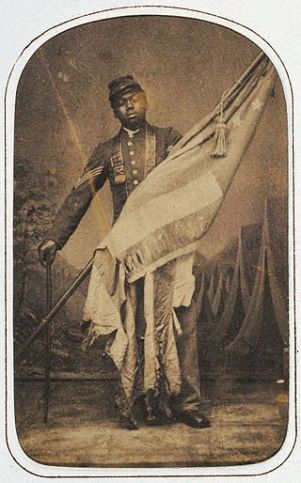
 On October 8, 1918, Tennessee native Corporal Alvin Cullum York of the 82nd Division lead a group of seventeen against a numerically superior German force, dug in at Chatel-Chehery, France.
 Kingston Texas 2nd Lieutenant
 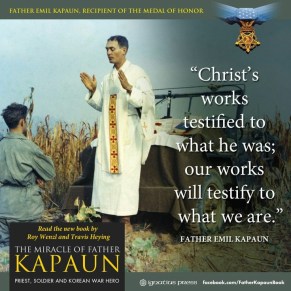 Chaplain Emil Kapaun, the “
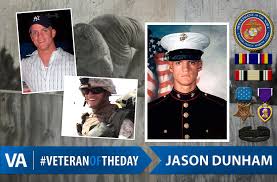 Corporal Jason Lee Dunham of Scio New York deliberately threw himself on an Iraqi grenade on April 14, 2004, saving the lives of fellow Marines at the sacrifice of his own life.
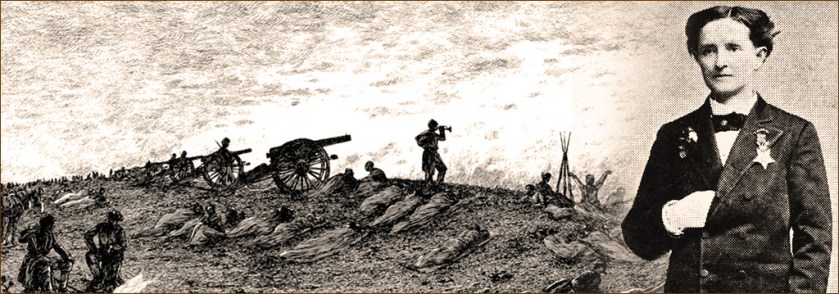 The youngest Medal of Honor recipient was 11-year old drummer boy, Willie Johnston.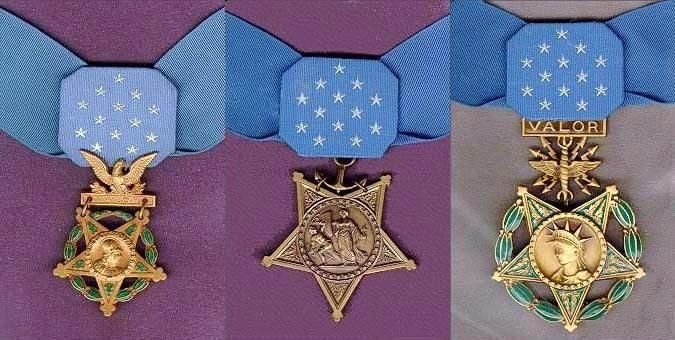


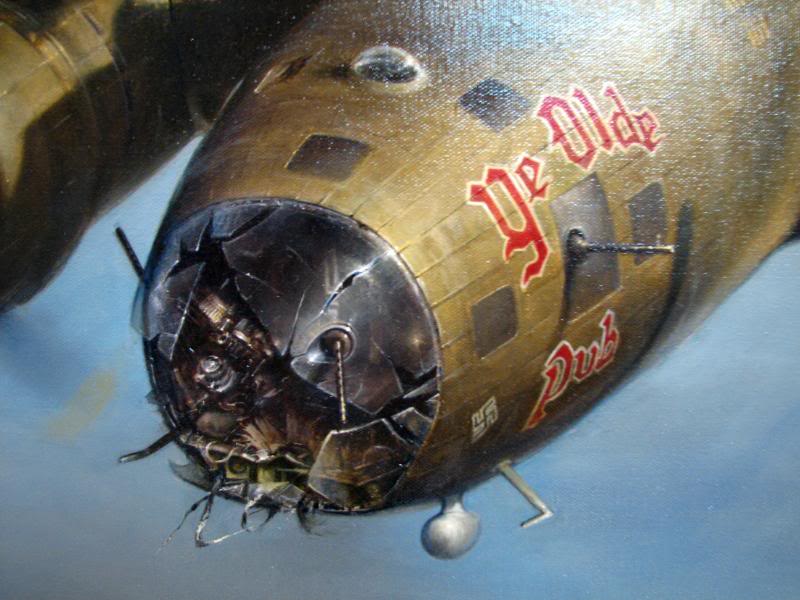 The battered aircraft was completely alone and struggling to maintain altitude. The American pilot was well inside German air space when he looked to his left and saw his worst nightmare. Three feet from his wing tip was the sleek gray shape of a German fighter, the pilot so close that the two men were looking into each other’s eyes. Brown’s co-pilot, Spencer “Pinky” Luke said “My God, this is a nightmare.” “He’s going to destroy us,” was Brown’s reply. This had been his first mission. He was sure it was about to be his last.
 The German had to do something. Nazi leadership would surely shoot him for treason if he was seen this close without completing the kill. One of the American crew was making his way to a gun turret as the German made his decision. Stigler saluted his adversary, motioned with his hand for the stricken B17 to continue, and peeled away.
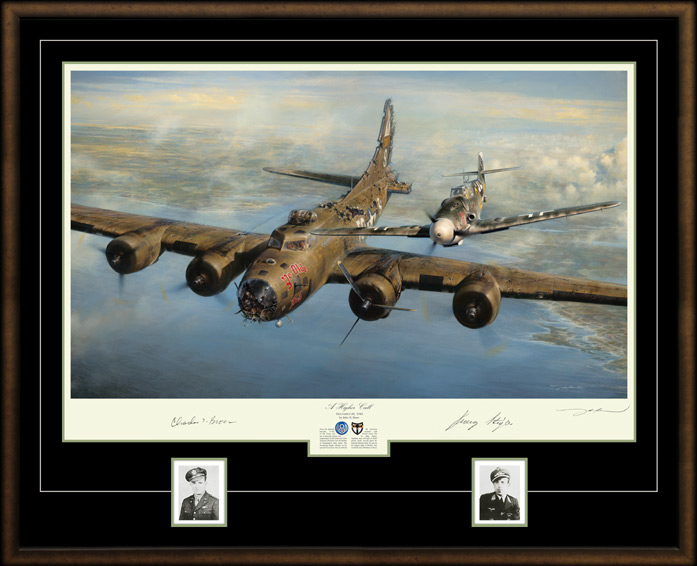 Over 40 years later, the German pilot was living in Vancouver, Canada. Brown took out an ad in a fighter pilots’ newsletter, explaining that he was searching for the man ‘who saved my life on December 20, 1943.’ Stigler saw the ad, and the two met for the first time in 1987. “It was like meeting a family member”, Brown said of that first meeting. “Like a brother you haven’t seen for 40 years”.
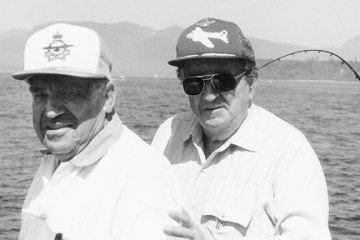 The two former enemies passed the last two decades of their lives as close friends and occasional fishing buddies.
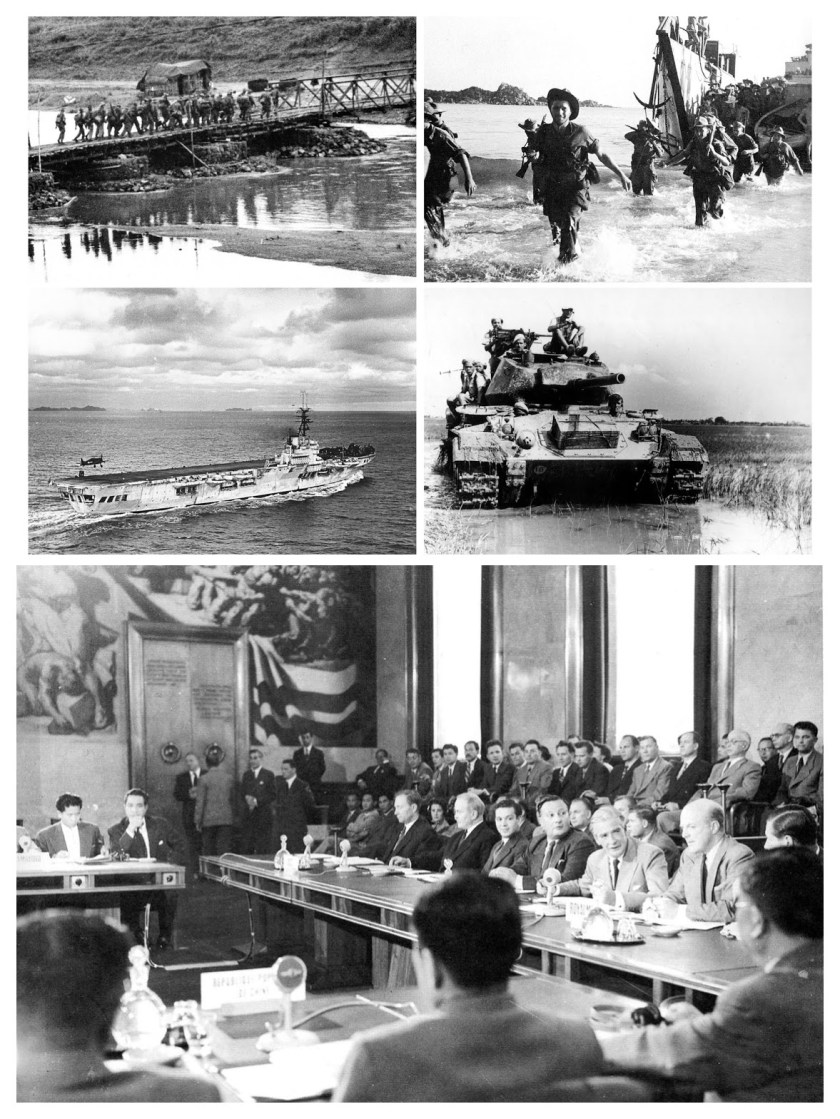 What historians call the First Indochina War, many contemporaries called “la sale guerre”, or “dirty war”. The government forbade the use of metropolitan recruits, fearing that that would make the war more unpopular than it already was. Instead, French professional soldiers and units of the French Foreign Legion were augmented with colonial troops, including Moroccan, Algerian, Tunisian, Laotian, Cambodian, and Vietnamese ethnic minorities.
 The war went poorly for the Colonial power. By 1952 the French were looking for a way out. Premier René Mayer appointed Henri Navarre to take command of French Union Forces in May of that year with a single order. Navarre was to create military conditions which would lead to an “honorable political solution”.
 In June, Major General René Cogny proposed a “mooring point” at Dien Bien Phu, creating a lightly defended point from which to launch raids. Navarre wanted to replicate the Na San strategy and ordered that Dien Bien Phu be taken and converted to a heavily fortified base.
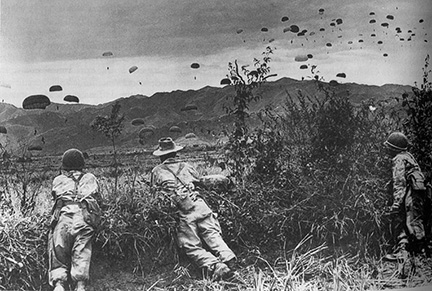 The French staff made their battle plan, based on the assumption that it was impossible for the Viet Minh to place enough artillery on the surrounding high ground, due to the rugged terrain. The communists didn’t possess enough artillery to do serious damage anyway, or so they thought.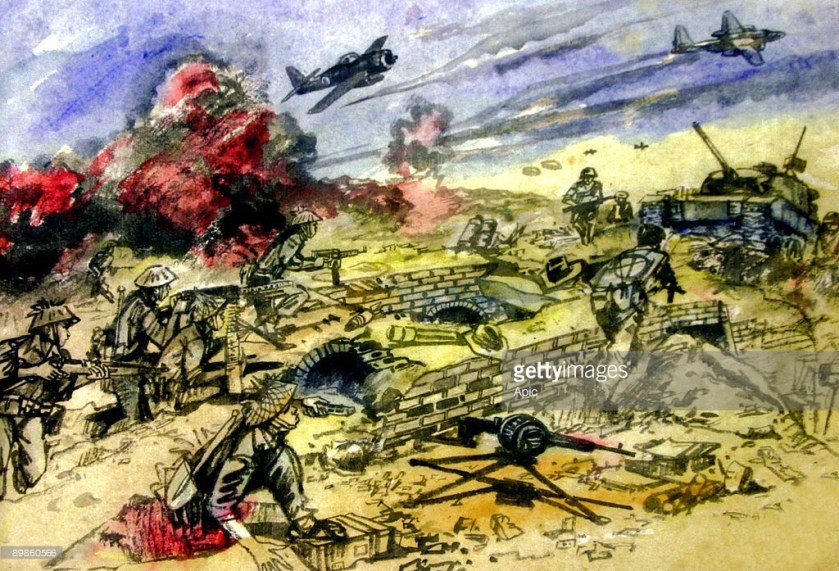


 Simon earned the admiration of the Amethyst crew, with his prowess as a rat killer. Seamen learned to check their beds for “presents” of dead rats while Simon himself could usually be found, curled up and sleeping in the Captain’s hat.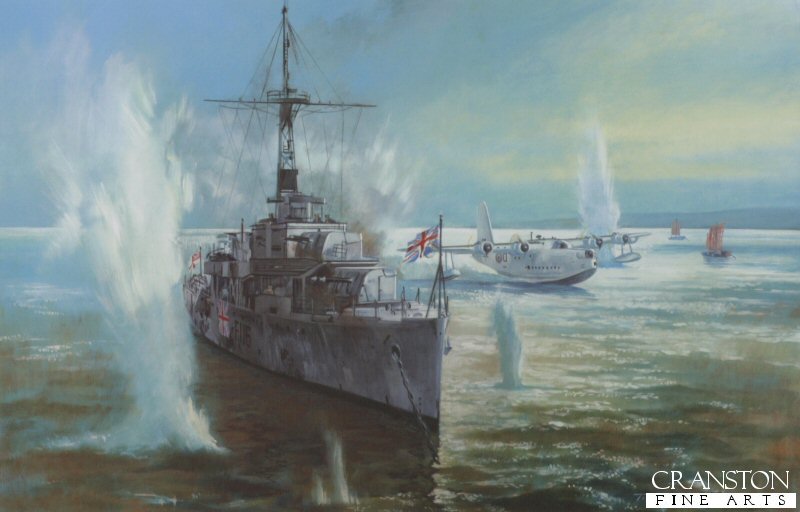
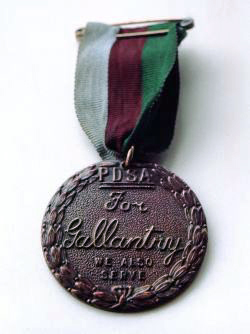 All but unseen amidst the economic devastation of World War 1, the domesticated animals of Great Britain were in desperate straits. Turn-of-the-century social reformer Maria Elizabeth “Mia” Dickin founded the People’s Dispensary for Sick Animals (PDSA) in 1917, working to lighten the dreadful state of animal health in Whitechapel, London. To this day, the PDSA is one of the largest veterinary charities in the United Kingdom, conducting over a million free veterinary consultations, every year.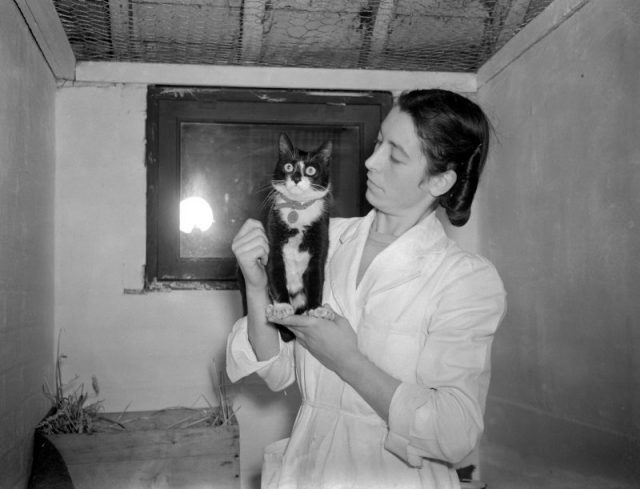


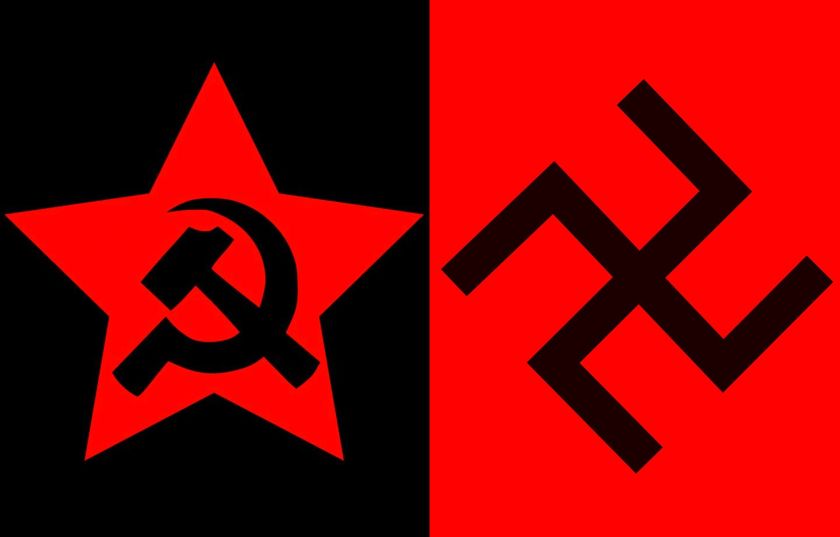 Taken individually, either power possessed the potential to destroy the world order. The mind can only ponder the great good fortune of we who would be free, that these malign governments turned to destroying each other.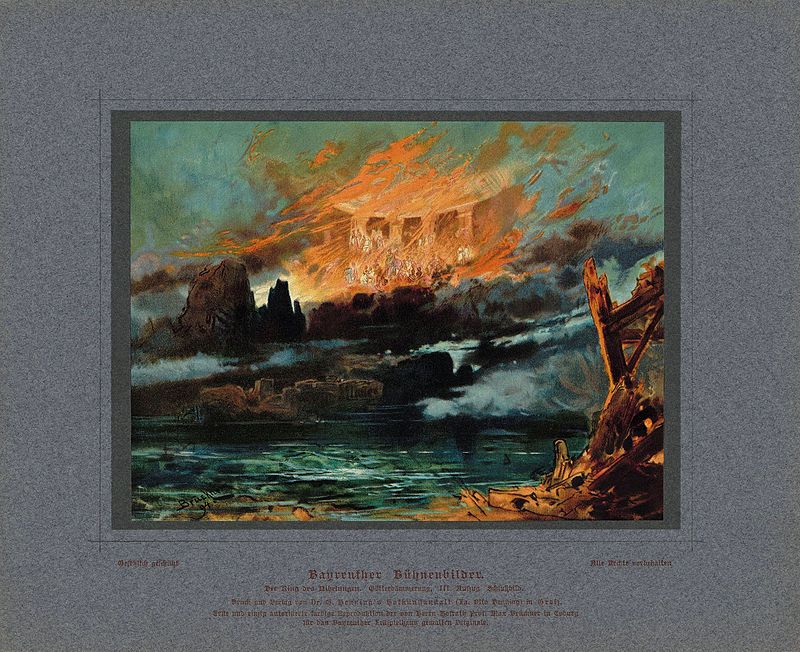

 Historical Easter Eggs - Today in History
You must be logged in to post a comment.