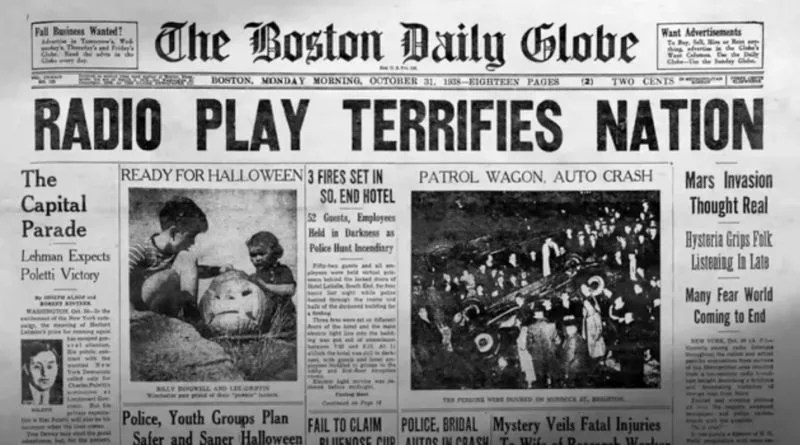
Despite repeated notices that the broadcast was fictional, it’s been estimated that as many as 1.2 million thought the news, was real. According to Grover’s Mill folklore, a local named William Dock shot a water tower, mistaking it for a Martian in the moonlight. Traffic was jammed in both directions in the little town, as locals tried to get out, and curiosity seekers came to see what Martians looked like.
34.6 million miles distant, the Red Planet is our nearest neighbor in the solar system. To the Babylonians of 3000B.C. Mars was the God of Death, lending its name to the war gods of Greek and Roman antiquity, alike.
In the 19th century, amateur astronomer Percival Lowell was convinced that he saw canals on Mars, evidence of some great civilization. In 1898, H.G. Wells published a book about a Martian invasion of earth, beginning with a landing in England. On this day in 1938, the Mercury Theater of the Air brought the story to life.
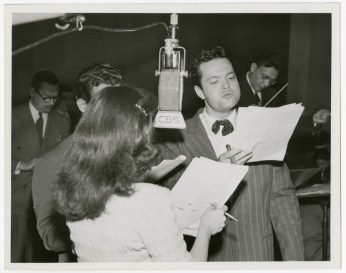
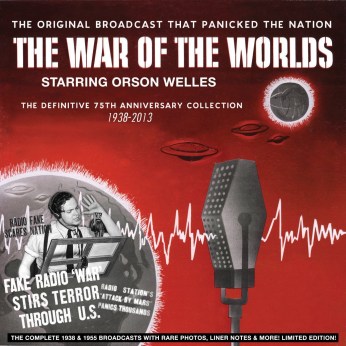
The radio drama began with a statement that, what followed, was fictional. The warning was repeated at the 40 and 55-minute mark, and again at the end of the broadcast. It began with a weather report, and then went to a dance band remote, featuring “Ramon Raquello and his orchestra”. The music was periodically interrupted by live “news” flashes, beginning with strange explosions on Mars. Producer Orson Welles made his first radio appearance as the “famous” (but non-existent) Princeton Professor Dr. Richard Pierson, who dismissed speculation about life on Mars.
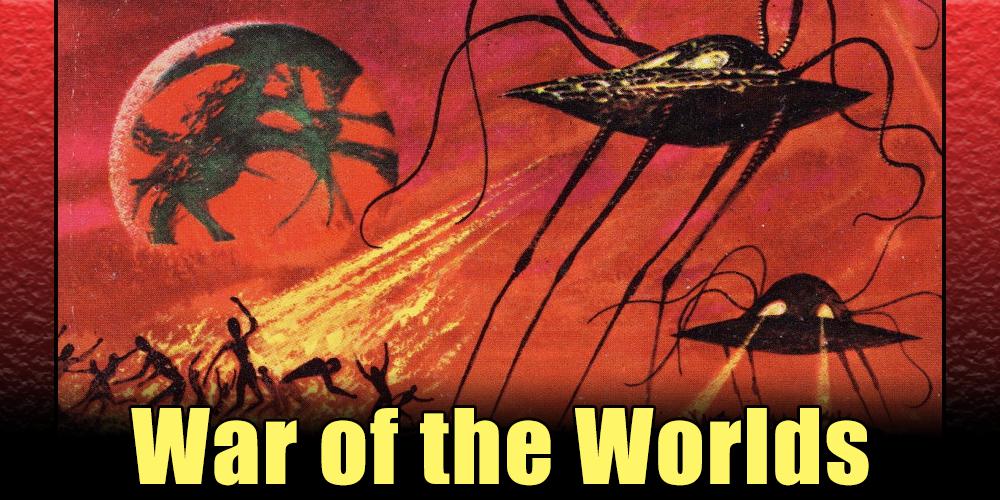
A short time later, another “news flash” reported a fiery crash in Grovers Mill, NJ. What was originally thought to be a meteorite was revealed to be a rocket machine as a tentacled, pulsating Martian unscrewed the hatch and incinerated the crowd with a death ray.
The dramatic technique was brilliant. Welles had his cast listen to the Hindenburg tape, explaining that was the “feel” that he wanted in his broadcast. Fictional on-the-spot reporter Carl Phillips describes the death ray in the same rising crescendo, only to be cut off in mid-sentence as it was turned on him.
The 60-minute play unfolds with Martians wiping out a militia unit sent against them, and finally attacking New York City with poison gas.
Alien spacecraft, hovering over the trees
Despite repeated notices that the broadcast was fictional, it’s been estimated that as many as 1.2 million thought the news, was real. According to Grover’s Mill folklore, a local named William Dock shot a water tower, mistaking it for a Martian in the moonlight. Traffic was jammed in both directions in the little town, as locals tried to get out, and curiosity seekers came to see what Martians looked like.
The USA Today Newspaper reporting on the 75th anniversary of the broadcast, that “The broadcast … disrupted households, interrupted religious services, created traffic jams and clogged communications systems. “The New York Times reported on Oct. 31, 1938: “In Newark, in a single block at Heddon Terrace and Hawthorne Avenue, more than 20 families rushed out of their houses with wet handkerchiefs and towels over their faces to flee from what they believed was to be a gas raid. Some began moving household furniture”.
Then as today, supposed “victims” of the broadcast and their lawyers lined up to get paid for “mental anguish” and “personal injury”. All suits were dismissed, except for a claim for a pair of black men’s shoes, size 9B, by a Massachusetts man who had spent his shoe money to escape the Martians. Welles thought the man should be paid.
In the end, the War of the Worlds was just what the broadcast described itself to be. A Halloween concoction. The equivalent of dressing up in a sheet, and jumping out of a bush, and saying, ‘Boo!’.
If you enjoyed this “Today in History”, please feel free to re-blog, “like” & share on social media, so that others may find and enjoy it as well. Please click the “follow” button on the right, to receive email updates on new articles. Thank you for your interest, in the history we all share.
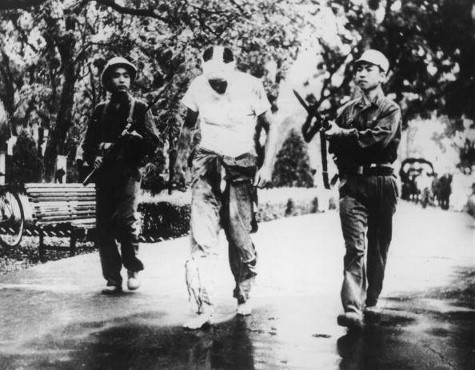
With hands tied behind his back and a rope around his neck, even then this man still spoke in three languages, of God, and Freedom, and American democracy. The effect was entirely unacceptable to his Communist tormentors. To the people of these villages, this man made sense.
Humbert Roque Versace was born in Honolulu on July 2, 1937, the oldest of five sons born to Colonel Humbert Joseph Versace. Writer Marie Teresa “Tere” Rios was his mother, author of the Fifteenth Pelican. If you don’t recall the book, perhaps you remember the 1960s TV series, based on the story. It was called The Flying Nun.
Like his father before him, Humbert, (“Rocky” to his friends), joined the armed services out of high school, graduating from the United States Military Academy at West Point, in 1959.
Rocky earned his Ranger tab and parachutist badge the same year, later serving as tank commander with the 1st Cavalry in South Korea, then with the 3rd US Infantry – the “Old Guard”.
Rocky attended the Military Assistance Institute, the Intelligence course at Fort Holabird Maryland, and the USACS Vietnamese language Course at the Presidio of Monterey, beginning his first tour of duty in Vietnam on May 12, 1962.
He did his tour, and voluntarily signed up for another six months. By the end of October 1963, Rocky had fewer than two weeks to the end of his service. He had served a year and one-half in the Republic of Vietnam. Now he planned to go to seminary school. He had already received his acceptance letter, from the Maryknoll order.
Rocky planned to become a Priest of the Roman Catholic faith, and return to the country to help the orphaned children of Vietnam.
It was a bright and shining future, one which was never meant to be.
Rocky was assisting a Civilian Irregular Defense (CIDG) force of South Vietnamese troops remove a Viet Cong (VC) command post in the Mekong Delta. It was unusual that anyone would volunteer for such a mission, particularly one with his “short-timer’s stick”. This was a daring mission in a very dangerous place.
In happier times, Colonel Humbert Joseph Versace pins insignia on the uniform of his son, Captain Humbert Roque “Rocky” Versace
On October 29, an overwhelming force of Viet Cong ambushed and overran Rocky’s unit. Under siege and suffering multiple bullet and shrapnel wounds, Versace put down suppressing fire, permitting his unit to withdraw from the kill zone.
Another force of some 200 South Vietnamese arrived, too late to alter the outcome. Communist radio frequency jamming had knocked out both main and backup radio channels.
Their position overrun, Captain Versace, Lieutenant Nick Rowe and Sergeant Dan Pitzer were captured and taken to a North Vietnamese prison, deep in the jungle.
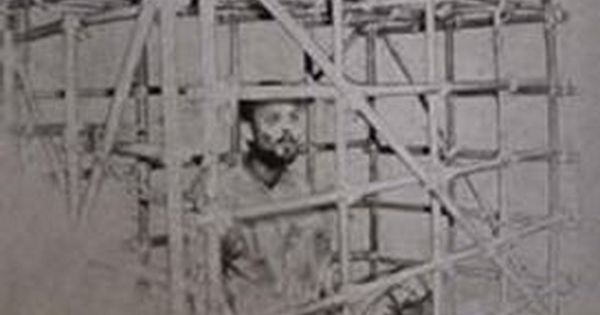
For most of the following two years, a 2’x3’x6’ bamboo cage would be their home. On nights when their netting was taken away, the mosquitoes were so thick on their shackled feet, it looked like they were wearing socks.
Years later, President George W. Bush would tell a story, about how Steve Versace described his brother. “If he thought he was right”, Steve said to audience laughter, “he was a pain in the neck. If he knew he was right, he was absolutely atrocious.”
In 1964, Vietnamese interrogators were learning what Steve Versace could have told them, if only they’d asked. His brother could not be broken. Rocky attempted to escape four times, despite leg wounds which left him no option but to crawl on his belly. Each such attempt earned him savage beatings, but that only made him try harder.
Fluent in French, Vietnamese and English, Rocky could quote chapter and verse from the Geneva Convention and never quit doing so. He would insult and ridicule his captors in three languages, even as they beat him to within an inch of his life.
Incessant torture and repeated isolation in solitary confinement did nothing to shut him up. Communist indoctrination sessions had to be brought to a halt in French and Vietnamese, because none of his interrogators could effectively argue with this guy. They certainly didn’t want villagers to hear him blow up their Communist propaganda in their own language.
For five months in 1964, reports came back through intelligence circles, of one particular prisoner. Paraded in chains before local villagers, with hair turned snow white and face swollen and yellowed with jaundice. With hands tied behind his back and a rope around his neck, even then this man still spoke in three languages, of God, and Freedom, and American democracy.
The effect was entirely unacceptable to his Communist tormentors. To the people of these villages, this man made sense.
In the end, Versace was isolated from the rest of the prison population, as a dangerous influence. He responded by singing at the top of his lungs, the lyrics of popular songs of the day replaced by messages of inspiration to his fellow POWs. Rocky was last heard belting out “God Bless America”, at the top of his lungs.
Humbert Roque Versace was murdered by his North Vietnamese captors, his “execution” announced on North Vietnamese “Liberation Radio” on September 26, 1965. He was twenty-eight.
Rocky’s remains were never recovered. The headstone bearing his name in the Memorial section MG-108 at Arlington National Cemetery, stands over an empty grave. The memory of his name is inscribed on the Courts of the Missing in the Honolulu Memorial at the National Memorial Cemetery of the Pacific in Honolulu, and on Panel 1E, line 33, of the Vietnam Veterans Memorial.
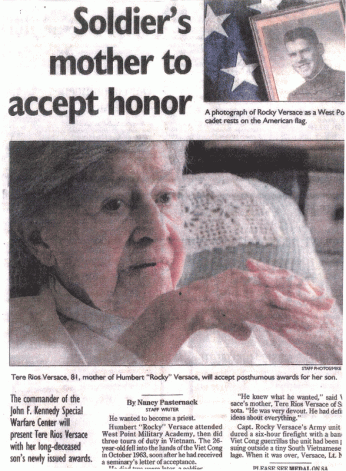
This American hero of Italian and Puerto Rican heritage was nominated for the medal of honor in 1969, an effort culminating in a posthumous Silver Star. In 2002, the Defense Authorization Act approved by the United States Congress and signed into law by President George W. Bush, awarded Versace the Medal of Honor.
In a July 8, 2002 ceremony in the East Room of the White House, the President of the United States awarded the Medal of Honor to United States Army Captain Humbert Roque “Rocky” Versace. Dr. Stephen Versace stood in to receive the award, on behalf of his brother. It was the first time the nation’s highest honor for military valor was bestowed on a POW, for courage in the face of captivity.
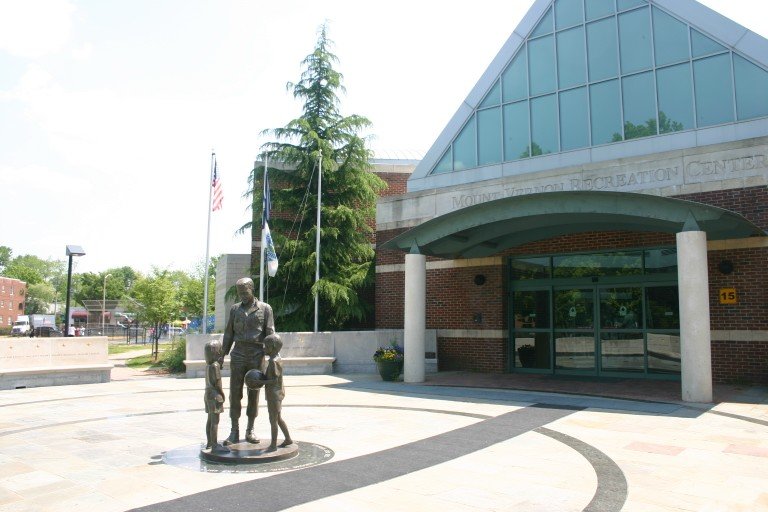
This statue of Medal of Honor recipient and Ranger Hall of Fame inductee Captain “Rocky” Versace stands in a plaza bearing his name in Alexandria, Virginia. With him are the likenesses of two Vietnamese children, along with sixty-seven gold stars, each representing one of the 67 soldiers, sailors and airmen from Alexandria who were KIA or MIA, in the war in Vietnam.
If you enjoyed this “Today in History”, please feel free to re-blog, “like” & share on social media, so that others may find and enjoy it as well. Please click the “follow” button on the right, to receive email updates on new articles. Thank you for your interest, in the history we all share.
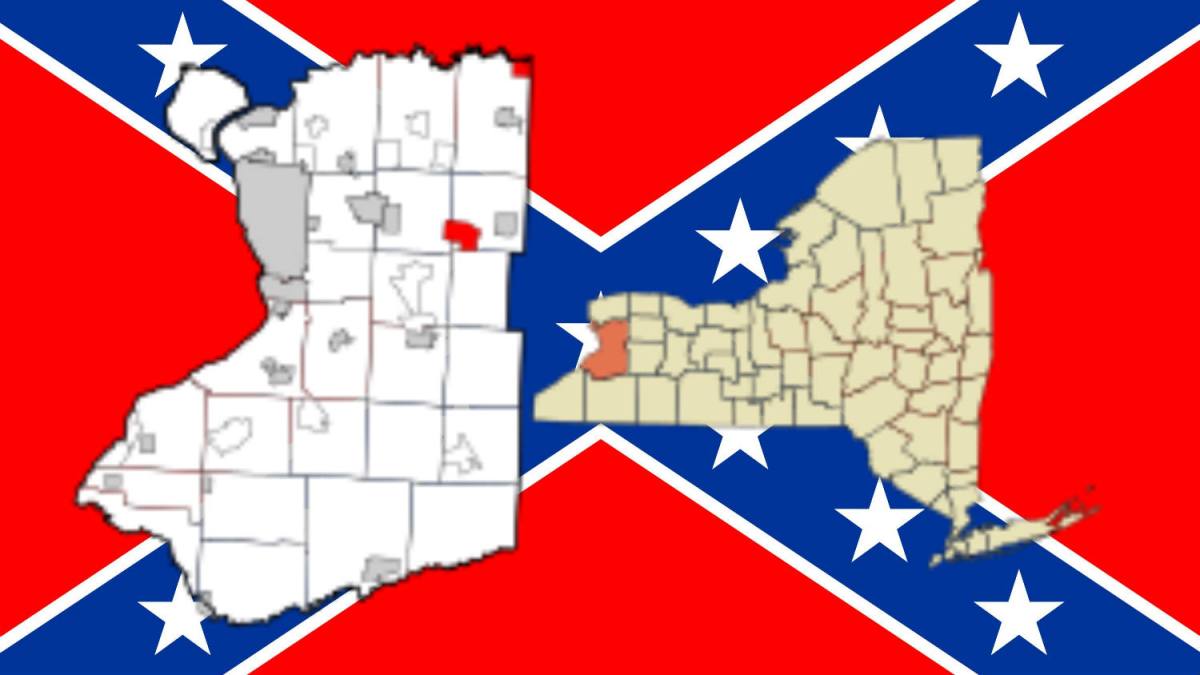
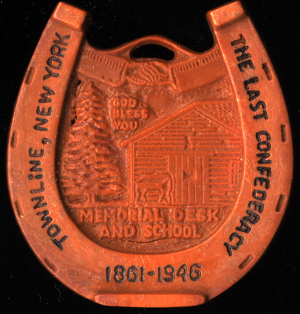
By October 1945 there legally remained only one part of the former Confederate States of America. The little hamlet of Town Line, New York.
By the early 1830s, cotton exceeded the value of all other American exports, combined. As secession loomed over the nation, a Chicago Daily Times editorial warned that if the South left “in one single blow, our foreign commerce must be reduced to less than one half of what it is now”.
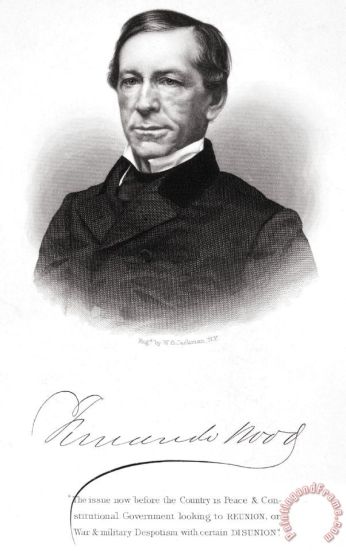
South Carolina seceded in December 1860, and the world waited to see who’d follow. New York City became the next to call for secession on January 6, when Mayor Fernando Wood addressed the city’s governing body. “When Disunion has become a fixed and certain fact”, he said, “why may not New York disrupt the bands which bind her to a venal and corrupt master…and destroyed the Confederacy of which she was the proud Empire City?”
In New York city and state alike, economic ties with the south ran deep. 40¢ of every dollar paid for southern cotton stayed in New York, in the form of insurance, shipping, warehouse fees and profits.
30 minutes’ east of Buffalo, the village of Lancaster contemplated staying with the Union. 500 miles from the nearest Confederate state, George Huber remembered the time. “When war was declared, Lancaster seethed with the news, and many were the nights we stayed up as late as 12 o’clock to talk things out. I was twelve years old at the time, but I remember the stern faces of the elders and the storm of passionate and angry discussion. Soon the town split into two factions, it was a very tense situation…Often the excitement ran so high that if a man in either group had made the slightest sign, neighbors would have been at each other’s throats and fists would have taken the place of words.”
The old blacksmith shop
“Town Line”, a hamlet on the village’s eastern boundary, put it to a vote. In the fall of 1861, residents gathered in the old schoolhouse-turned blacksmith’s shop. By a margin of 85 to 40, Town Line voted to secede from the Union.
There was angry talk of arresting “Copperheads” for sedition, as casualty reports came back from the front. “Seceders” became quiet, afraid to meet in public amidst angry talk of lynching. A half-dozen or so more ardent secessionists went south to fight for the Confederacy. Others quietly moved north, to Canada. Outside of Lancaster, no one seemed to notice. Taxes continued to be paid. No federal force ever arrived to enforce the loyalty of the small village.
A rumor went around in 1864, that a large Confederate army was building in Canada, poised to invade from the north. Town Line became a dangerous place for the few southern sympathizers left. Most of those remaining moved to Canada and, once again, Lancaster became the quiet little village in upstate New York, that nobody ever heard of.
Impatient to get on with it, Dade County “symbolically” seceded both from Georgia as well as the Union, back in 1860. Officially, Dade County seceded with Georgia in 1861, and rejoined with the rest of the state in 1870, but the deal was sealed on July 4, 1945, when a telegram from President Harry S. Truman was read at a celebration marking Dade County’s “rejoining” the Union.
The “Confederate Gibraltar”, Vicksburg Mississippi, fell on July 4, 1863. The city wouldn’t celebrate another Independence Day for 80 years.
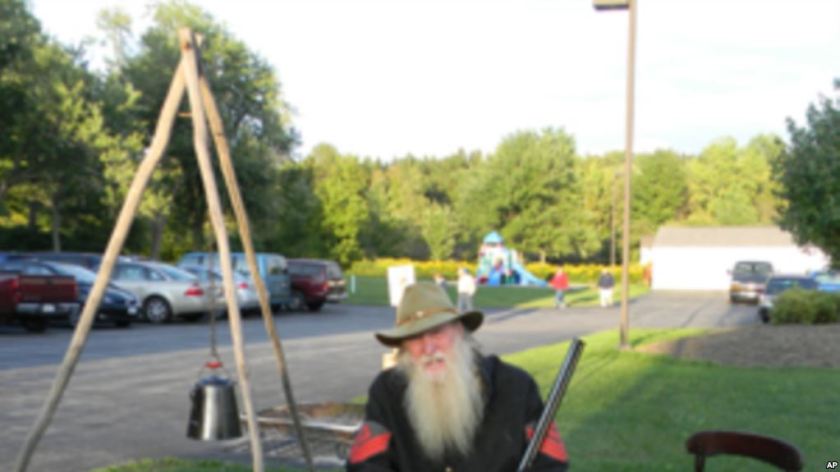
In 2011, the residents of Town Line, New York dressed up to mark the town’s sesquicentennial of secession from the Union
By October 1945 there legally remained only one part of the former Confederate States of America. The little hamlet of Town Line, New York.
Even Georgians couldn’t help themselves, from commenting. 97-year-old Confederate General T.W. Dowling said: “We been rather pleased with the results since we rejoined the Union. Town Line ought to give the United States another try“. Judge A.L. Townsend of Trenton Georgia commented “Town Line ought to give the United States a good second chance“.
A courier express note arrived on October 7, 1945. “There are few controversies that are not susceptible to a peace time resolution” read the note, “if examined in an atmosphere of tranquility and calm rather than strife and turmoil. I would suggest the possibility of roast veal as a vehicle of peace. Why don’t you run down the fattest calf in Erie County, barbecue it and serve it with fixin’s in the old blacksmith shop where the ruckus started? Who can tell? The dissidents might decide to resume citizenship.” The note was signed “Very Sincerely Yours, Harry Truman”.
Fireman’s Hall was the site of the barbecue, “The old blacksmith shop where the ruckus started” being too small for the assembled crowd. On October 28, 1945 residents adopted a resolution suspending the 1861 ordinance of secession, by a vote of 90-23. The Stars and Bars of the Confederate States of America was lowered for the last time, outside the old blacksmith shop.
Alabama member of the United States House of Representatives John Jackson Sparkman, may have had the last word: “As one reconstructed rebel to another, let me say that I find much comfort in the fact that you good people so far up in Yankee land have held out during the years. However, I suppose we grow soft as we grow older.”
If you enjoyed this “Today in History”, please feel free to re-blog, “like” & share on social media, so that others may find and enjoy it as well. Please click the “follow” button on the right, to receive email updates on new articles. Thank you for your interest, in the history we all share.
The Tweed ring at its height was an engineering marvel, strong and solid, strategically deployed to control key power points: the courts, the legislature, the treasury and the ballot box. Its frauds had a grandeur of scale and an elegance of structure: money-laundering, profit sharing and organization
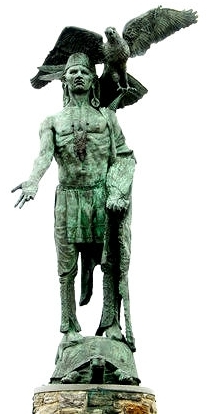
Before the first Europeans arrived in the “new world”, descendants of the Nanticoke inhabited a region from Delaware north through New Jersey and southern New York, and eastern Pennsylvania. The Europeans called them “Delaware”. These indigenous Americans called themselves “Lenni-Lenape” which literally means “Men of Men”, but is translated to mean “Original People.” (Hat tip, http://www.nanticoke-lenape.info).
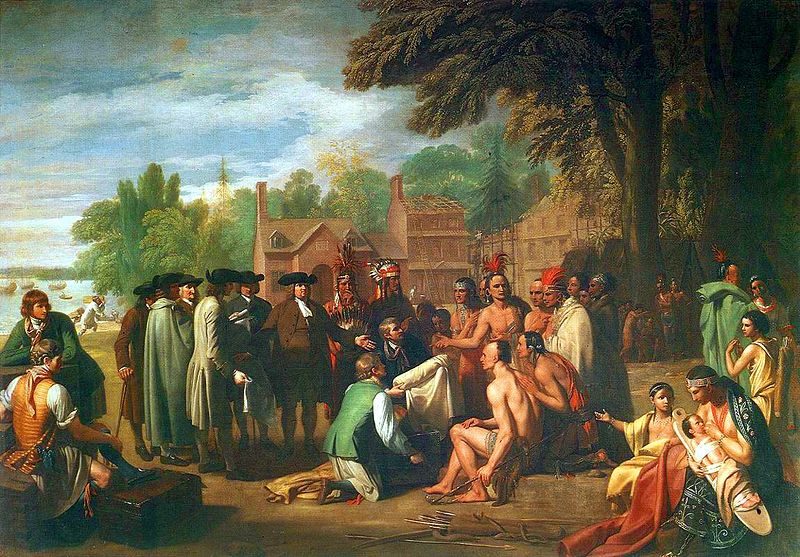
In the early 1680s, Chief Tammamend (“The Affable”) of the Lenni-Lenape nation took part in a meeting with the English colonists, where he is supposed to have said that his people and the newcomers would “live in peace as long as the waters run in the rivers and creeks and as long as the stars and moon endure.”
Treaty of Penn with Indians, by Benjamin West
“Tammany” to the settlers, Chief Tammamend became a living symbol of peace and friendship, between the two peoples. He died in 1701, but his legend lived on. In the next one-hundred years Tammany societies were established from Georgia to Rhode Island.
Tammany Societies adopted a number of native terms, with leaders calling themselves Grand Sachem, and meeting in halls called “Wigwams”. The most famous of these was incorporated in New York on May 12, 1789.
Within ten years, what had begun as a social club had morphed into a political machine. Tammany helped Aaron Burr counter Alexander Hamilton’s Society of the Cincinnati, and Burr went on to win New York’s two electoral votes in 1800. Without help from “Tammany Hall”, many historians believe that John Adams would have been re-elected to a second term.
Tammany Hall expanded its connections within New York Democrat party politics. After Andrew Jackson’s victory in 1828, the Tammany machine all but owned the government in New York city and state, alike.
Fun fact: On December 20, 1860, the Secession convention of South Carolina unanimously asserted an end to Union, proclaiming that “We…have solemnly declared that the union heretofore existing between this State and the other States of North America, is dissolved, and that the State of South Carolina has resumed her position among the nations of the world, as a separate and independent State…” In the following days, the world waited to see who would follow. The next governing entity to actually do so was the state of Mississippi, but the first to discuss the idea (after South Carolina) was New York, in the person of Tammany Hall’s own mayor, Fernando Wood.
The 19th century was a time of massive immigration, providing an ever-expanding base of political and financial support for urban politicians. Political machines helped new arrivals with jobs, housing and citizenship, providing a patina of “constituent service” and hiding a dark under-belly of graft and corruption.
Boss Tweed
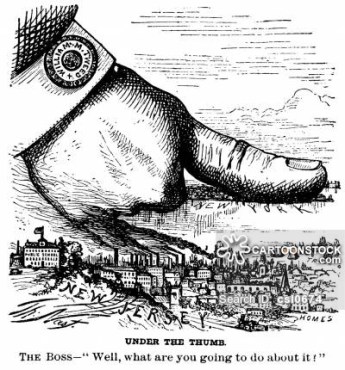
In the 1860s, Tammany Hall politician William Magear Tweed established a new standard in public self-dealing. Biographer Kenneth Ackerman wrote: “The Tweed ring at its height was an engineering marvel, strong and solid, strategically deployed to control key power points: the courts, the legislature, the treasury and the ballot box. Its frauds had a grandeur of scale and an elegance of structure: money-laundering, profit sharing and organization“.
New York contractors were instructed to multiply invoices. Checks were cashed through a go-between, settling with the contractor and dividing the rest between “Boss” Tweed and his cronies. This system of corruption inflated the cost of the New York County Courthouse to nearly $13 million, more than the Alaska purchase. One carpenter billed $360,751 (equivalent to $4.9 million today), for one month’s work. A plasterer got $133,187 for two days.
Some among the self-styled “Uppertens”, the top 10,000 amid New York’s socioeconomic strata, fell in with the self-dealing and corruption of the Tammany Hall machine. Others counted on an endless supply of cheap immigrant labor.
The system worked while Tweed’s Machine kept “his people” in line, until the “Orange Riots” of 1870-71 broke out between Irish Catholics and Protestants, killing 70.
Harper’s Weekly editorial cartoonist Thomas Nast, creator of the modern American Santa Claus and the Republican Elephant, was the scourge of Tammany Hall. Following the Orange riots, the New York Times added its voice to that of the cartoonist.
Boss Tweed, the third-largest landowner in New York City, Director of the Erie Railroad, the Tenth National Bank, and the New York Printing Company, Proprietor of the Metropolitan Hotel, former State Senator and former Member of the United States Congress, was arrested on October 27, 1871, and tried on charges of public corruption. An 1877 aldermen’s committee estimated that Boss Tweed’s graft cost New York taxpayers between $25 and $45 million. Later estimates ranged as high as $200 million, equivalent to an astonishing $2.8 Billion, today.
Cartoonist Thomas Nast denounced the Tammany machine as a ferocious tiger, devouring democracy.
The Tammany Hall political machine, moved on. By the end of the 19th century, ward Boss Richard Croker ran a system of graft and corruption the likes of which Boss Tweed could have only dreamed.
In the end, three things killed the Tammany Hall system. Early Irish arrivals had been primary beneficiaries and major supporters of Tammany’s patronage system, but there are only so many favors to go around. Continued immigration diluted Tammany’s base, and later arriving Irish, Italian and eastern European immigrants found themselves frozen out.
Next is the spoils system, itself. To this day, too many think it’s government’s job to “Bring home the Bacon”, not seeming to realize that they are themselves, the hogs. The Roosevelt administrations’ efforts to fix the Great Depression resulted in a blizzard of bacon from an increasingly Nationalized federal government, separating the local machines from their proximate base of support.
Last came “reformers” such as New York governor and future President of the United States Franklin Delano Roosevelt, who occasionally built enough steam to hurt the Tammany machine. Manhattan District Attorney Thomas E. Dewey, he of the famous “Dewey Wins!” photograph, managed to put several Tammany Hall leaders in jail, along with such unsavory supporters as “Lucky Luciano”.
Republican Fiorello La Guardia served three terms as New York mayor between 1934-’45, the first anti-Tammany mayor ever, to be re-elected. A brief resurgence of Tammany power in the 1950s met with Democratic party resistance led by the likes of Eleanor Roosevelt, and party politician Herbert Lehrman. By the mid-1960s, the Tammany Hall system, was dead.
Tammany Hall was a local manifestation of a disease afflicting the entire country. Boston, Chicago, Cleveland, Kansas City, Philadelphia, St. Louis and others: all suffered their own local outbreak.
Tammany Hall, Union_Square
The Ward Boss still lives in places like Chicago but, like the Jeffersons, the corruption has “moved on up”. Today, rent seekers and foreign powers pay tens of millions in “speaking fees” and other “pay-for-play” schemes.
A hundred years ago, Ambrose Bierce (my favorite curmudgeon) described politics as “A strife of interests masquerading as a contest of principles. The conduct of public affairs for private advantage“. Boss Tweed could tell you. It’s as true now, as it was in his time.
Featured image, top of page: Harper’s Weekly cartoonist Thomas Nast’s depiction of the Tammany ring: Who stole the people’s money? T’was him!
If you enjoyed this “Today in History”, please feel free to re-blog, “like” & share on social media, so that others may find and enjoy it as well. Please click the “follow” button on the right, to receive email updates on new articles. Thank you for your interest, in the history we all share.
In 1917, Colonel Bloor heard two of his Choctaw soldiers talking to each other, and realized he didn’t have the foggiest notion of what they were saying. If he didn’t understand their conversation, the Germans wouldn’t have a clue.
During the twentieth century, the United States and others specially recruited bilingual speakers of obscure languages, then applying those skills in secret communications based on those languages. Among these, the story of the Navajo “Code Talkers” are probably best known. Theirs was a language with no alphabet or symbols, a language with such complex syntax and tonal qualities as to be unintelligible to the non-speaker. The military code based on such a language proved unbreakable in WWII. Japanese code breakers never got close.
The United States Marine Corps recruited some 4-500 Navajo speakers, who served in all six Marine divisions in the Pacific theater. Guadalcanal, Tarawa, Peleliu, Iwo Jima: Navajo code talkers took part in every assault conducted by the United States Marine Corps, from 1942 to ‘45.
The history of the Navajo code talkers of WWII is relatively well known, but by no means, unique. Indigenous Americans of other nations served as code talkers in WW2, including Assiniboine, Lakota and Meskwaki soldiers, who did service in the Pacific, North African, and European theaters of the war.
Fourteen Comanche soldiers took part in the Normandy landings. As with the Navajo, these substituted phrases when their own language lacked a proper term. Thus, “tank” became “turtle”. “Bombers” became “pregnant airplanes”. Adolf Hitler was “Crazy White Man”.
The information is contradictory, but Basque may also have been put to use, in areas where no native speakers were believed to be present. Native Cree speakers served with Canadian Armed Services, though oaths of secrecy have all but blotted their contributions, from the pages of history.
The first documented use of military codes based on native American languages took place during the Second Battle of the Somme in September of 1918, employing on the language skills of a number of Cherokee troops.
The government of Choctaw nation will tell you otherwise, contending that Theirs was the first native language, used in this way. Late in 1917, Colonel Alfred Wainwright Bloor was serving in France with the 142nd Infantry Regiment. They were a Texas outfit, constituted in May of that year and including a number of Oklahoma Choctaws.
The Allies had already learned the hard way that their German adversaries spoke excellent English, and had already intercepted and broken several English-based codes. Colonel Bloor heard two of his Choctaw soldiers talking to each other, and realized he didn’t have the foggiest notion of what they were saying. If he didn’t understand their conversation, the Germans wouldn’t have a clue.
Choctaw soldiers in training in World War I for coded radio and telephone transmissions
The first test under combat conditions took place on October 26, 1918, as two companies of the 2nd Battalion performed a “delicate” withdrawal from Chufilly to Chardeny, in the Champagne sector. A captured German officer later confirmed the Choctaw code to have been a complete success. We were “completely confused by the Indian language”, he said, “and gained no benefit whatsoever” from wiretaps.
Choctaw soldiers were placed in multiple companies of infantry. Messages were transmitted via telephone, radio and by runner, many of whom were themselves native Americans.
As in the next war, Choctaw would improvise when their language lacked the proper word or phrase. When describing artillery, they used the words for “big gun”. Machine guns were “little gun shoot fast”.
The Choctaw themselves didn’t use the term “Code Talker”, that wouldn’t come along until WWII. At least one member of the group, Tobias W. Frazier, simply described what they did as, “talking on the radio”. Of the 19 who served in WWI, 18 were native Choctaw from southeast Oklahoma. The last was a native Chickasaw. The youngest was Benjamin Franklin Colbert, Jr., the son of Benjamin Colbert Sr., one of Teddy Roosevelt’s “Rough Riders” of the Spanish American War. Born September 15, 1900 in the Durant Indian Territory, he was all of sixteen, the day he enlisted.
Another was Choctaw Joseph Oklahombi, whose name means “man killer” in the Choctaw language. Six days before Sergeant York’s famous capture of 132 Germans in the Argonne Forest, Joseph Oklahombi charged a strongly held German position, single-handed. Oklahombi‘s Croix de Guerre citation, personally awarded him by Marshall Petain, tells the story:
“Under a violent barrage, [Pvt. Oklahombi] dashed to the attack of an enemy position, covering about 210 yards through barbed-wire entanglements. He rushed on machine-gun nests, capturing 171 prisoners. He stormed a strongly held position containing more than 50 machine guns, and a number of trench mortars. Turned the captured guns on the enemy, and held the position for four days, in spite of a constant barrage of large projectiles and of gas shells. Crossed no man’s land many times to get information concerning the enemy, and to assist his wounded comrades”.
Unconfirmed eyewitness accounts report that 250 Germans occupied the position, and that Oklahombi killed 79 of them before their comrades decided it was wiser to surrender. Some guys are not to be trifled with.
A child might have seen the trap that was laid for us. Every private dragoon did
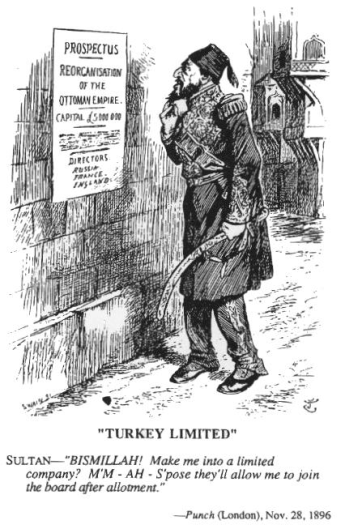
1896 Punch cartoon lampoons a hapless Ottoman Sultan Abdul Hamid II, in front of a poster announcing the reorganization of the Ottoman Empire
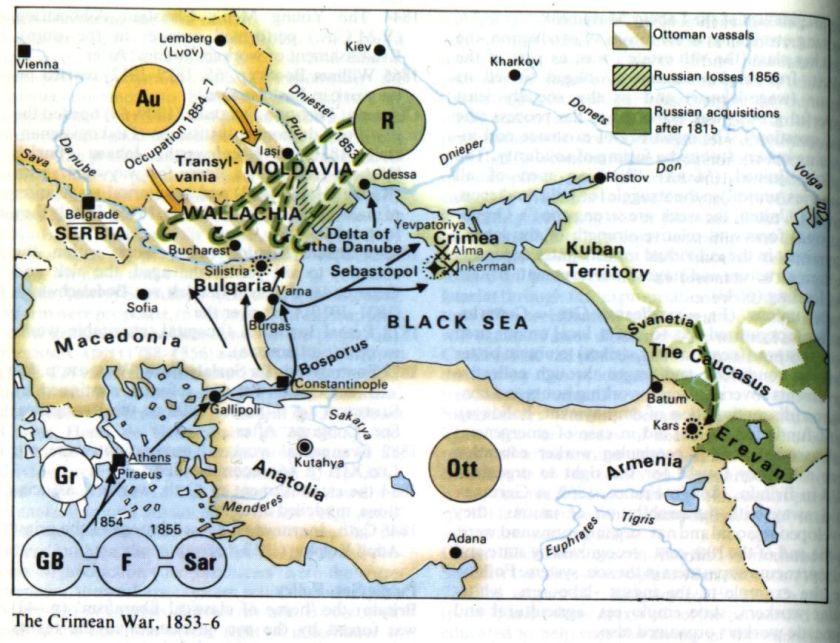
At the height of its power during the 16th and 17th centuries, the Ottoman Empire was one of the most powerful states in the world, ruling over 39 million subjects and controlling a territory spanning three continents: over two million square miles.
By the mid-19th century, the once-great Empire was the “sick man of Europe”, destined to be broken apart by its adversaries, in the wake of World War 1.
For a hundred years or more, the Russian Empire had seen itself as protector of Orthodox Church co-religionists, in the biblical land of Israel and historical Palestine. The Greek clergy in the Christian Holy Land already enjoyed warm relations with their Ottoman overlords, and controlled most of the Christian holy sites.
This state of affairs was challenged in the mid-19th century by the French Empire of Emperor Napoleon III, who was trying to extend Latin (Catholic) influence over the region.
Things came to a head in 1852 with, among other disputes, an argument over a key. No kidding. The key to the main door, of the Church of the Nativity.
Great Britain attempted to mediate the growing Franco-Russian dispute, but neither Nicholas I nor Napoleon III, would back down. War broke out in the Crimea in October 1853, between an allied coalition of forces including the Ottoman Empire, France, Great Britain and Sardinia, against the Russian Empire of Czar Nicholas I.
The loss of life in the Crimean War (October 1853 to February 1856) was prodigious, resulting in the death of some 750,000 military service personnel on all sides, and unknown numbers of civilians. Russian diplomat Pyotr Petrovich Troubetzkoy would write: “Few wars in history reveal greater confusion of purpose or richer unintended consequences than the Crimean War.”
The Battle of Balaclava opened shortly after 5:00am on this day in 1854, when a squadron of Russian Cossack Cavalry advanced under cover of darkness. The Cossacks were followed by a host of Uhlans, their Polish light cavalry allies, against several dug-in positions occupied by Ottoman Turks. The Turks fought stubbornly, sustaining 25% casualties before finally being forced to withdraw.
The Thin Red Line
For a time, the Russian advance was held only by the red coated 93rd Highland Regiment, a desperate defense recorded in history as the Thin Red Line. Finally, the Russians were driven back by the British Heavy Brigade, led by George Bingham, 3rd Earl of Lucan, a man otherwise known to history for the brutality inflicted on tenants in Mayo, during the Irish potato famine.
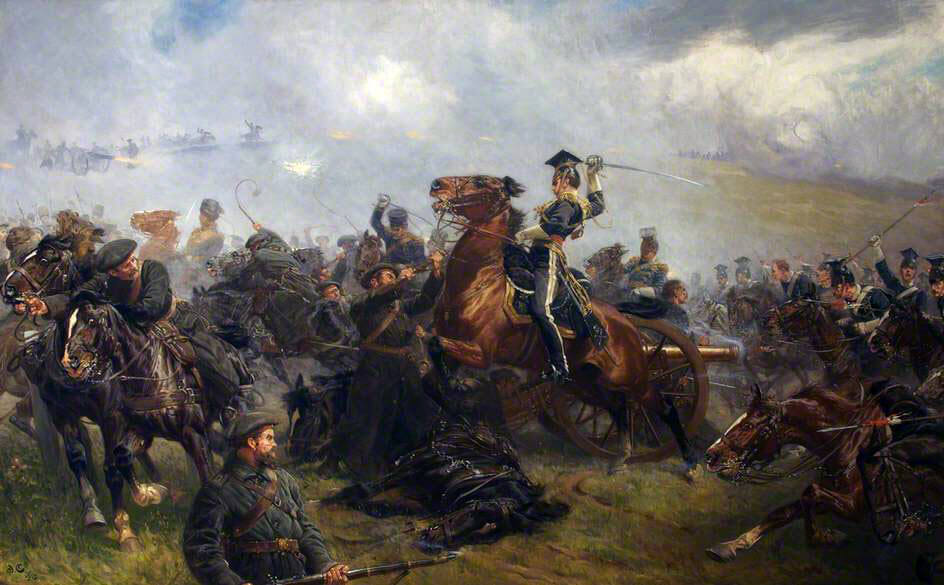
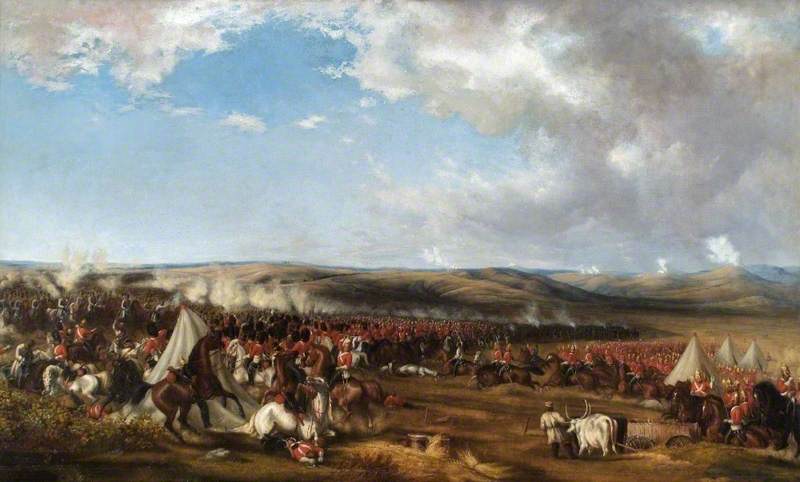
Charge of the Heavies, Balaclava, 1854
The light cavalry of the age consisted of lightly armed and armored troops mounted on small, fast horses, usually wielding cutlass or spear. They’re a raiding force, good at reconnaissance, screening, and skirmishing. The “Heavies” on the other hand, are mounted on huge, powerful chargers, both rider and horse heavily armored. They are the shock force of the army.
Lucan’s subordinate was James Brudenell, 7th Earl of Cardigan, in command of the Light Brigade. There could not have been two worse field commanders. Though possessed of physical courage bordering on recklessness, both were prideful, mean spirited and petty men. What’s more, they were brothers-in-law, and cordially detested one another.
Left to right: Lucan, Cardigan and Raglan
Field Marshal Fitzroy James Henry Somerset, 1st Baron Raglan, was in overall command of the allied armies. Raglan occupied a high spot where he could see the battle unfold before him, but didn’t seem to realize that his subordinates below couldn’t see what he could see.
Spotting a small Russian detachment trying to get away with captured cannon, Raglan issued an order to Lucan, in overall command of his Cavalry. “Lord Raglan wishes the Cavalry to advance rapidly to the front, follow the enemy, and try to prevent the enemy carrying away the guns.” As Staff Officer Louis Nolan left to deliver the message, Raglan shouted “Tell Lord Lucan the cavalry is to attack immediately“.
The Light Brigade was well suited to such a task, but the men below had no idea what Raglan meant by such a poorly worded order. The only guns they could see were dug in Russian artillery a mile away, at the other end of the valley. When Nolan brought the order, Lucan demanded to know what guns. With a contemptuous sweep of his arm, Nolan pointed down the valley. “There, sir, are your guns“.
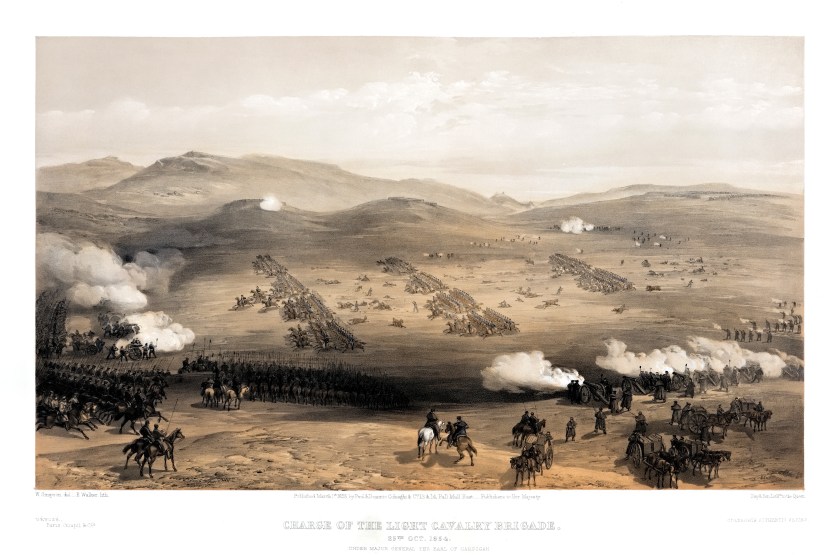
The order which then came down from Lucan to Cardigan called for a suicide mission, even for heavy cavalry. The “Lights” were being ordered to ride a mile down an open valley, with enemy cannon and riflemen lining both sides, into the muzzles of dug in, well sighted, heavy artillery.
Nose to nose and glaring, neither man blinked in the contest of wills. In the end, Cardigan did as ordered. 674 horsemen of the Light Brigade mounted up, drew their swords, and rode into the valley of death.
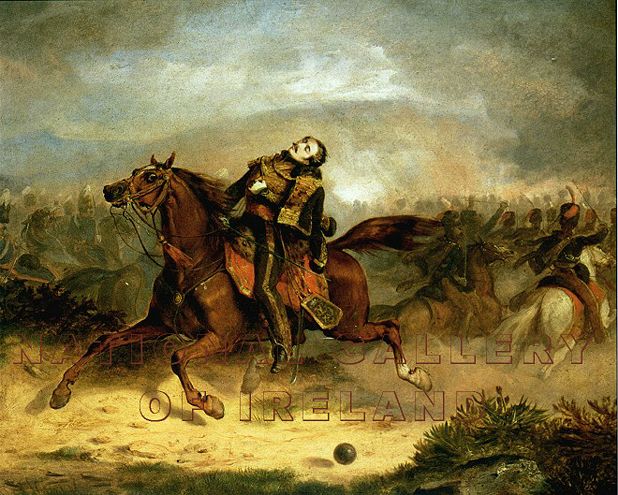
Louis Nolan should have gone back to Raglan, but rode out instead, in front of the Light Brigade. He was almost certainly trying to redirect the charge and could have saved the day, but it wasn’t meant to be. Louis Nolan, the only man in position to change history that day, was the first casualty of the raid.
Private James Wightman of the 17th Lancers, describes Nolan’s last moments: “I saw the shell explode of which a fragment struck him. From his raised sword-hand dropped the sword. The arm remained upraised and rigid, but all the other limbs so curled in on the contorted trunk as by a spasm, that we wondered how for the moment the huddled form kept the saddle. The weird shriek and the awful face haunt me now to this day, the first horror of that ride of horrors“.
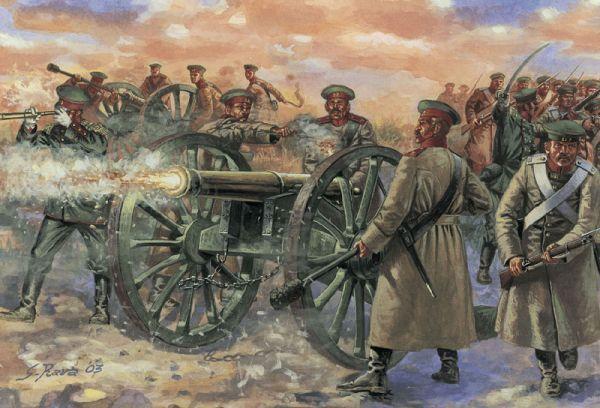
Russian artillery battery, Balaclava, 1854
Raglan must have looked on in horror as the scene unfolded, below. Instead of turning right and climbing the Causeway slopes, nearly 700 horsemen first walked, then trotted and finally charged, straight down the valley, into the Russian guns. Captain Thomas Hutton of the 4th Light Dragoons said “A child might have seen the trap that was laid for us. Every private dragoon did“.
It took the Light Brigade a full seven minutes to get to the Russian guns. Cannon fire tore great gaps out of their lines the whole time, first from the sides and then from the front. Shattered remnants actually managed to overrun the Russian guns, but had no means of holding them. They milled about for a time, and then back they came, blown and bleeding horses carrying mangled men back through another gauntlet of fire.
When it was over, 110 were dead, 130 wounded, and 58 missing or captured. 40% losses in an action which had lasted 20 minutes. Captain Nolan’s horse carried his dead body all the way down, and all the way back.
Cardigan and Lucan pointed the finger of blame at each other, for the rest of their lives. Both laid blame for the disaster on Nolan, who wasn’t there to defend himself.
Today, the Battle of Balaclava is mostly forgotten, but for a stanza in the Alfred Lord Tennyson poem, The Charge of the Light Brigade.
Forward, the Light Brigade!
Was there a man dismay’d?
Not tho’ the soldiers knew,
Some one had blunder’d:
Theirs not to make reply,
Theirs not to reason why,
Theirs but to do and die:
Into the valley of Death Rode the six hundred.
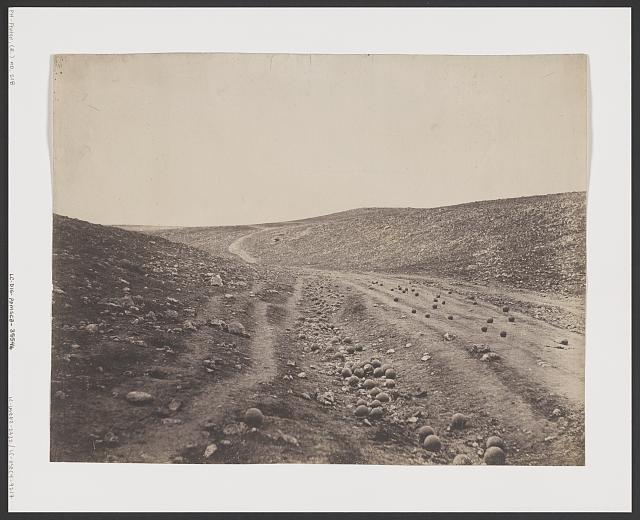
“…in coming to a ravine called the valley of death, the sight passed all imagination: round shot and shell lay like a stream at the bottom of the hollow all the way down, you could not walk without treading upon them…” Photographer Roger Fenton (“Valley of the Shadow of Death”)
The Crimean War itself may be remembered as a hideous waste of blood and treasure, for all it accomplished. Today if remembered at all, the conflict recalls the first modern war correspondent, photographer Roger Fenton. And of course the needless carnage, which could have been so much worse but for the efforts of one woman, who all-but invented the modern profession of nursing. The soldiers knew her as “The Lady with the Lamp”, for her late night rounds, taking care of the wounded.
History remembers this “Ministering Angel”, as Florence Nightingale.
If you enjoyed this “Today in History”, please feel free to re-blog, “like” & share on social media, so that others may find and enjoy it as well. Please click the “follow” button on the right, to receive email updates on new articles. Thank you for your interest, in the history we all share.
The man who had a family to support was grateful for work on a WPA project, but every dollar spent had first to be extracted from the wealth producing part of the economy. The government doesn’t produce wealth it can only take it. You can’t fill a swimming pool by draining one end of it, into the other.
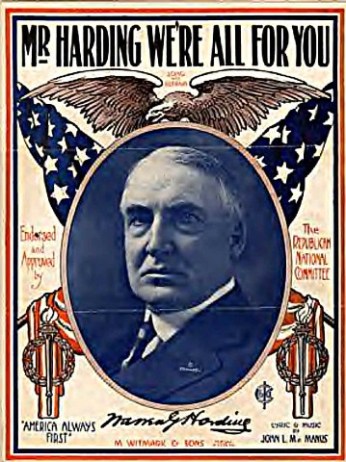
Warren Harding entered office on March 4, 1920, in the midst of the sharp recession following WWI.
Harding’s Treasury Secretary, Andrew Mellon, believed that money was driven underground or overseas as income tax rates increased. Mellon held the heretical belief for that time, that lower tax rates led to greater levels of economic activity and that, as people had more of their own money to work with, increased activity resulted in higher tax revenues.
Based on Mellon’s advice, Harding cut taxes, starting in 1922. The top marginal rate was reduced annually in four stages from 73% in 1921 to 25% in 1925. Taxes were cut for lower incomes starting in 1923.
President Calvin Coolidge became President in August 1923, following Harding’s untimely death, by heart attack. Coolidge would follow Harding’s economic policies of low taxation and high growth, resulting in the “Roaring 20s”.
“Supply Side Economics”, was born.
Revenues to the treasury increased substantially, resulting in a 36% reduction of the national debt.
Supply side tactics worked as well in the 1960s, as it did in the 1920s.
Unemployment and inflation both declined throughout the 1920s, while wages, profits and productivity, increased. The decline in what would come to be called the “Misery Index” in the Carter years, was the sharpest in history.
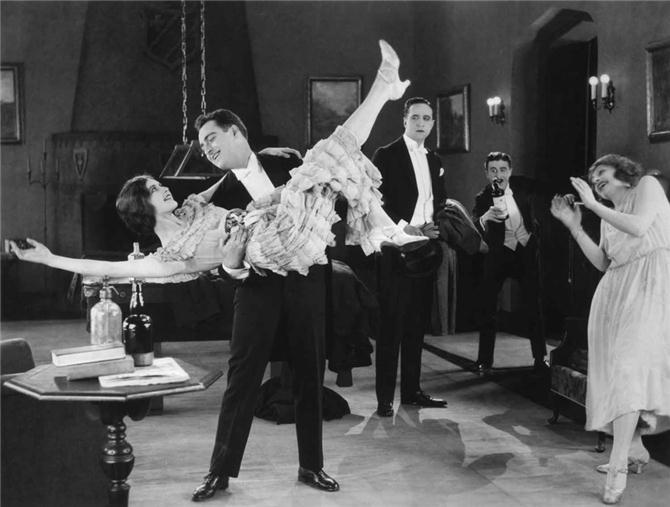
The twenties became a time of wealth and excess, and speculation in the stock market increased exponentially. New investors poured into the market in the belief that, like the housing market of the 2000s, prices could never go down. It was a nine-year run when the Dow Jones Industrial Average increased tenfold, peaking at 381.17 on September 3, 1929.
Rising share prices encouraged more people to invest, even if they didn’t have the money to do so. Brokers routinely lent investors up to two thirds of the face value of the stocks. Over $8.5 billion was hanging out on such loans, more than the entire amount of US currency in circulation, at that time.
As with 2007-’08, early tremors showed that the bubble was about to burst. Then as now, such signals were seen only in hindsight, and the rising crescendo that was 1929, continued.
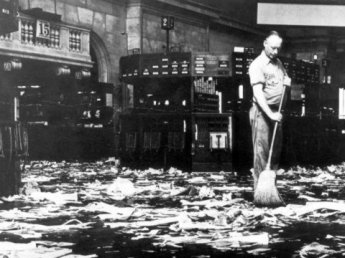
There was a brief contraction in March, but the “Crash” began in earnest on “Black Thursday”, October 24, 1929. The market lost 11% at the opening bell, amidst heavy trading. To quell the frenzy, Wall Street financial firms Morgan Bank, Chase national and National City Bank of New York stepped up and bought large blocks of US Steel and other “blue chip” stocks, at prices well above where they were trading.
The tactic had the effect of stopping the slide, much as it did during the Panic of 1907. This time however, the relief would be short lived. “Black Tuesday”, October 29, saw the Dow Jones contract by 12% on a volume record which would stand unbroken for forty years. The president of the Chase National Bank said at the time “We are reaping the natural fruit of the orgy of speculation in which millions of people have indulged. It was inevitable, because of the tremendous increase in the number of stockholders in recent years, that the number of sellers would be greater than ever when the boom ended and selling took the place of buying“.
Fears of the Smoot-Hawley tariff act fueled a further contraction in the following weeks, for apparently good reason. When President Hoover signed the protectionist measure into law in 1930, American imports and exports plunged by more than half.
Historians debate whether the stock market crash led to the Great Depression, or if the two events coincided. Only 16% of US households were actually invested in the stock market at the time, but the psychological effect was profound.
Easy credit and unbounded confidence had led to a speculative bubble which had finally burst.
Economists still argue about the interventionist policies which followed. The man who had a family to support was grateful for work on a WPA project, but every dollar spent had first to be extracted from the wealth producing part of the economy. The government doesn’t produce wealth it can only extract it. You can’t fill a swimming pool by draining one end of it, into the other.
The stock market and unemployment rates staggered throughout the 1930s. It was WWII that finally put people back to work.
Yet that was merely activity from an economic point of view. It wasn’t growth, it was more like giving the kids sugar and watching them run around the house. A convincing case may be made that the Reduction of government spending in the years following WWII, put wealth back in the pockets of the people who created it in the first place, and finally ended the Great Depression.
The Dow Jones Industrial Average, as an indicator of that wealth, wouldn’t retake the high ground of ‘29, until 1954.
“It’s not Republican, it’s not Democratic, it’s not conservative, it’s not liberal, it’s not left-wing, it’s not right-wing, it’s economics.” – Arthur B. Laffer
Altogether, those who lost their lives at the Marine barracks included 220 Marines, 18 Sailors, 3 Soldiers and an Elderly Lebanese custodian and vendor who was known to sleep in his concession stand, next to the building. 58 French paratroopers were killed at the Drakkar building, along with the wife and four children of a Lebanese janitor.
Located on the Mediterranean coast of Lebanon, Beirut is the largest seaport in the country. It’s one of the oldest cities on earth. The first reference may be found in the ancient Egyptian Tell el Amarna letters, written in the 15th century BC.
Once called “The Paris of the Middle East”, Beirut was at one time a regional hub of business, banking and tourism.
Lebanon descended into a vicious civil war in 1975, a fifteen-year period which Lebanese ex-patriots have tearfully described to me as a time of “national suicide”.
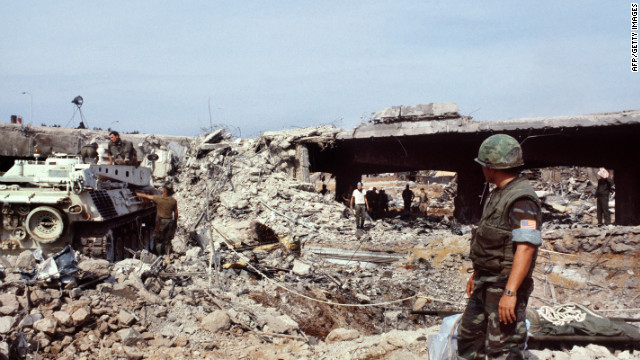
USMC Barracks in Beirut
In 1982, a Multinational Force of United States Marines, Navy SEALs, French Paratroopers and American, Italian and British soldiers were sent to Lebanon to restore the peace.
Thirty-five years ago, October 23 was a Sunday. Things were quiet in the early morning hours, most of Battalion Landing Team 1/8 still asleep in their barracks.
In 1982, the Islamic Republic of Iran established a base in the Syrian-controlled Beqaa Valley in Lebanon, a base which remains in operation, to this day. On September 26, 1983, the American National Security Agency (NSA) intercepted a diplomatic message from the Iranian Ministry of Information and Security (MOIS) to its ambassador in Damascus Ali Akbar Mohtashemi, instructing the ambassador to “take spectacular action against the American Marines.” For reasons which remain unclear, the message would not be passed to the Marines in Beirut until October 26, three days after the barracks bombing.
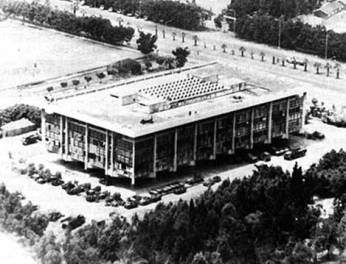
Three hundred American military service personnel were living in the four-story concrete aviation administration building, at Beirut International Airport. Guards paid scant attention at first, when the 19-ton, yellow stake-bed Mercedes truck entered the airport grounds. Such heavy vehicles were a common sight and besides, a water delivery was expected that morning.
Driven by an Iranian National, the truck carried a massive fuel-air explosive device, capable of an explosive force equivalent to 21,000 pounds of dynamite. The explosive was piled on a marble slab on top of a layer of concrete, to direct the destructive force upward.
Peacetime rules of engagement (ROE) prohibited the use of deadly force without explicit permission, or in times of imminent personal danger. Weapons were to be kept on safe, with empty chamber.
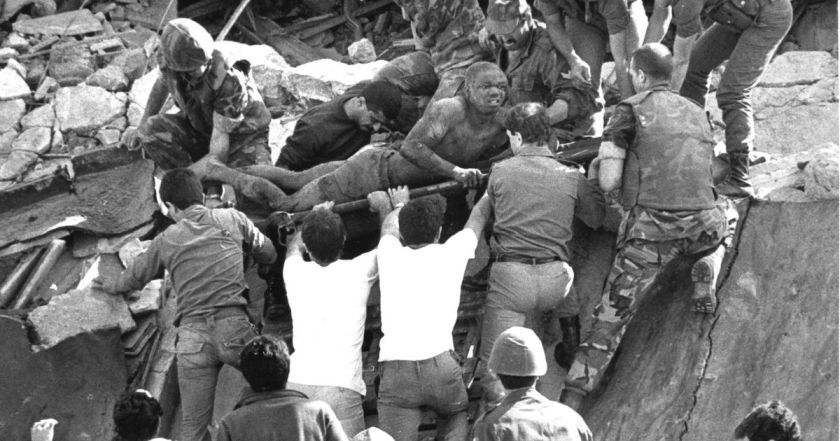
The suicide bomber picked up speed, smashing through a five-foot concertina wire barrier and in-between two guard shacks. Lance Corporal Eddie DiFranco on the driver’s side was first to realize something was wrong and managed to chamber a round, but too late. The hijacked truck struck the 1st Battalion, 8th Marine Regimental Battalion Landing Team barracks at 6:22am local time.
The resulting explosion lifted the four story building, shearing steel-reinforced concrete support columns and dropping floor slabs, like pancakes. 241 American military service personnel were killed in the explosion, or crushed to death in the collapse. Another 100 were injured. The BLT building, had ceased to exist. It was the deadliest single-day attack on United States Marines since the February 1945 battle for Iwo Jima.
Rabbi Arnold Resnicoff, assistant chaplain for the U.S. Sixth Fleet was in a neighboring building, and remembered the scene: “Bodies and pieces of bodies were everywhere. Screams of those injured or trapped were barely audible at first, as our minds struggled to grapple with the reality before us”.
Ten minutes later, a second suicide bomber drove his truck bomb into the French barracks, the nine story Drakkar building housing the 1st Parachute Chasseur Regiment. By this time alerted to the attack, guards were able to shoot and kill the driver, but not before he detonated the device.
Altogether, those who lost their lives at the Marine barracks included 220 Marines, 18 Sailors, 3 Soldiers and an Elderly Lebanese custodian and vendor who was known to sleep in his concession stand, next to the building. 58 French paratroopers were killed at the Drakkar building, along with the wife and four children of a Lebanese janitor.
I didn’t include the two “jihadists”. They’re not worth counting.
For years, radical Islamist tactics were confined mostly, to kidnappings. The Beirut barracks bombings were the first use of suicide tactics, in order to slaughter as many westerners, as possible.
Six months later, a suicide car bomb killed sixty-three at the United States embassy in Beirut, seventeen of whom, were Americans. In 2017, Vice-President Mike pence called it “the opening salvo in a war that we have waged ever since—the global war on terror”.
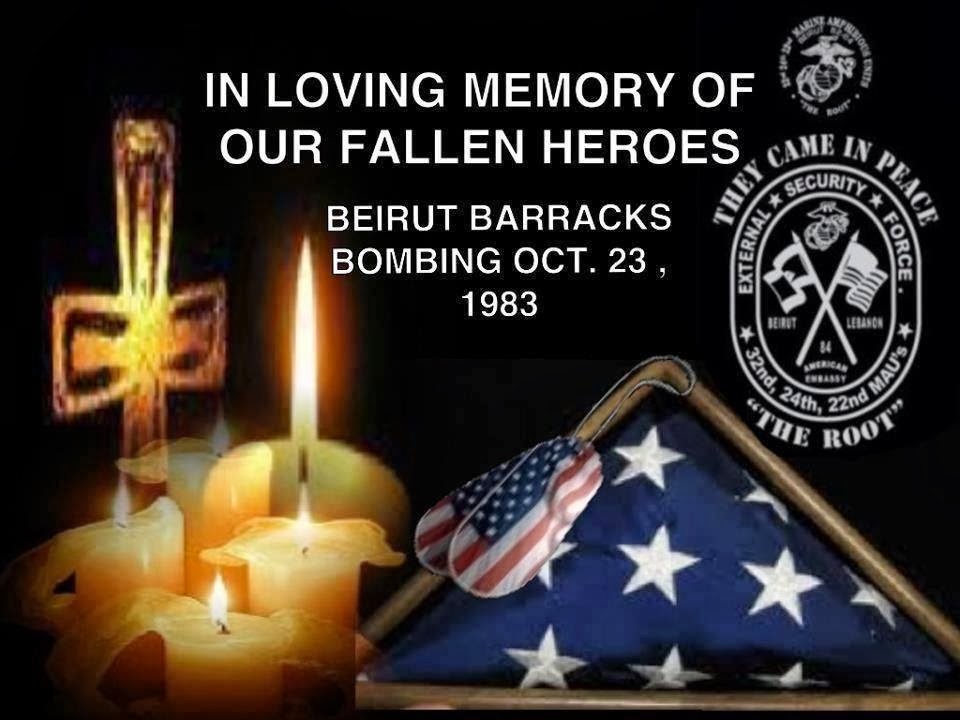
A Lebanese cedar tree grows in the green expanse of section 59 at Arlington National Cemetery, marking the final resting place of twenty-one honored dead, among the first Americans to die in the global war against Islamist terrorism. A fight which continues, to this day.
Today, thirty-five years later, survivors and first responders to the Beirut Barracks bombing continue to struggle with the sights, sounds and smells of that day.
The properly functioning conscience of a good man, recoiling in horror at what he has seen in service to his country.
The participants in this story, both living and dead, have earned our respect and our gratitude. They have earned the right to be remembered.
A million men had been brought to this place, for the purpose of killing each other. The first Battle for Ypres, (there would be others), was the greatest clash in history, or one of them, bringing together more manpower and more firepower than entire wars of the previous century.
“Sitzkrieg”. “Phony War”. Those were the terms used to describe the September 1939 to May 1940 period, when neither side of what was to become World War 2, was yet prepared to launch a major ground war against the other.
The outbreak of “The Great War” twenty-five years earlier, was a different story. Had you been alive in August of 1914, you could have witnessed what might be described as the simultaneous detonation, of a continent. France alone suffered 140,000 casualties over the four day “Battle of the Frontiers”, where the River Sambre met the Meuse. 27,000 Frenchmen died in a single day, August 22, in the forests of the Ardennes and Charleroi.
Battle of the Frontiers, 1914
The British Expeditionary Force escaped annihilation on August 22-23, only by the intervention of mythic angels, at a place called Mons. In the East, a Russian army under General Alexander Samsonov was encircled and so thoroughly shattered at Tannenberg, that German machine gunners were driven to insanity at the damage inflicted by their own guns, on the milling and helpless masses of Russian soldiers. Only 10,000 of the original 150,000 escaped death, destruction or capture. Samsonov himself walked into the woods, and shot himself.
The “Race to the Sea” of mid-September to late October was more a series of leapfrog movements and running combat, in which the adversaries tried to outflank one another. This would be some of the last major movement of the Great War, ending in the apocalypse of Ypres.
When governments make war, It’s the everyday John and the Nigel down the street, the Fritz, the Ivan and the Pierre next door, who must do the fighting, and the bleeding, and the dying.
The battle for the medieval textile town of Leper, most of the battle maps were drawn in French and so we know the place as “Ypres”, began on October 20 and lasted about three weeks, pitting a massive German force of some 600,000 against a quarter-million French, 100,000 British, and 65,000 Belgians.
A million men had been brought to this place, for the purpose of killing each other. The first Battle for Ypres, (there would be others), was the greatest clash in history, or one of them, bringing together more manpower and more firepower than entire wars of the previous century. The losses are hard to get your head around. The British Expeditionary Force (BEF) alone suffered 56,000 casualties, including 8,000 killed, 30,000 maimed and another 18,000 missing, of whom roughly one-third, were dead.
The breakdown is harder to get at for the other combatants but, all in, Germany suffered 135,000 casualties, France 85,000 and Belgium, 22,000. Assuming the same percentage distribution of killed, wounded and missing, the three week struggle for Ypres cost the lives of 75,000 men, enough to fill the Athens Olympic Stadium, in Greece.
A story comes down from the fighting of October 22, destined to become German and later Nazi, mythology. French, British and Belgian troops were by this time, digging into the ground to shelter themselves from what Private Ernst Jünger later called the “Storm of Steel”. German Generals, desperate to break through the Allied line and capture Calais and the other French ports on the English Channel, attacked.
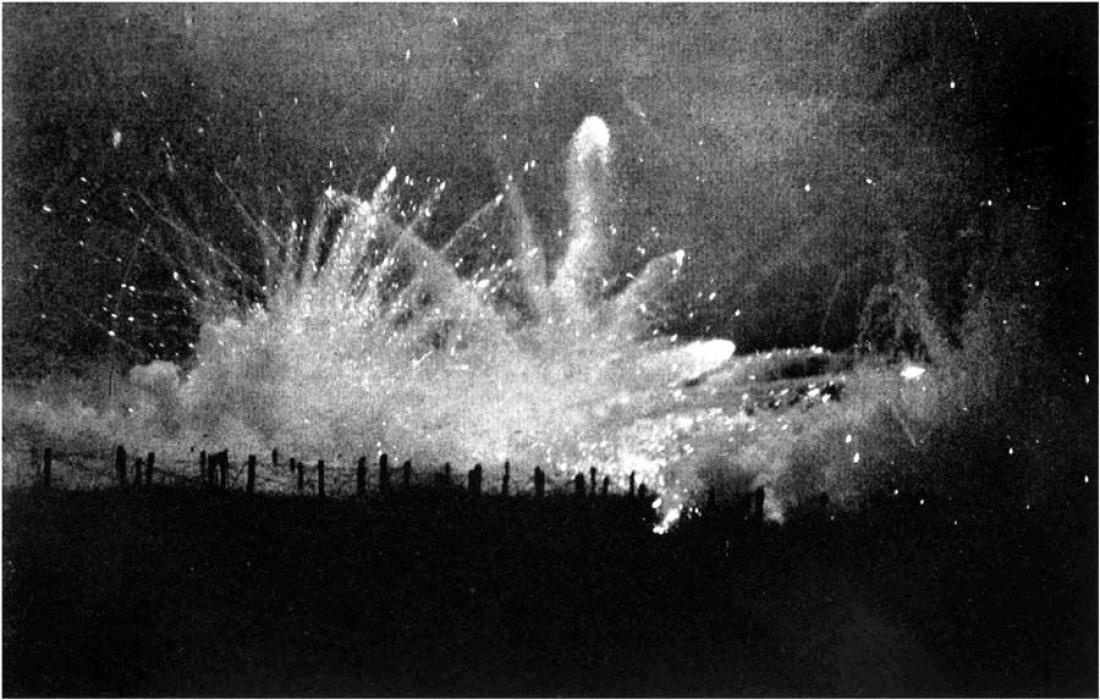
German reserve divisions comprised of student volunteers: inexperienced, untrained college students fired with patriotic zeal and singing songs of the Fatherland, marched to the attack against a puny British force, dug into shallow holes around the village of Langemarck. What the BEF lacked this day in numbers, were more than made up, in firepower. Let William Robinson, a volunteer dispatch driver with the British Army, describe what came to be known as the “Kindermord bei Ypern” The Massacre of the Innocents at Ypres.
“The enemy seemed to rise out of the ground and sweep towards us like a great tidal wave, but our machine guns poured steel into them at the rate of six hundred shots per minute, and they’d go down like grass before the scythe… The Germans were climbing over heaps of their own dead, only to meet the same fate themselves.”
Overwhelming German numbers succeeded in forcing the British back and capturing Langemarck on October 22, but the cost was appalling. Some regiments lost 70% of their strength.
Doubt has been cast on the “Myth of Langemarck”, and the tragic bravery of idealistic German boys, happily defending the Fatherland. The numbers of dead and maimed are real enough, but most reservists were in fact comprised of older working class men, not the fresh-faced youth, of the Kindermord. Be that as it may, a story must be told. Excuses must be made to the home team, for the crushing failure of the War of Movement, and the four-year war of attrition, to follow.
Two short months later, some of these same men would step out of their trenches and across the frozen fields of Flanders, to shake the hand of the man he’d been sent there, to kill. The unofficial “Christmas Truce” of 1914 would last a day or two in some sectors and a week or two in others. And then it was back, to the business at hand. For Four. More. Years.
The Man He Killed BY THOMAS HARDY
“Had he and I but met
By some old ancient inn,
We should have sat us down to wet
Right many a nipperkin!
“But ranged as infantry,
And staring face to face,
I shot at him as he at me,
And killed him in his place.
“I shot him dead because —
Because he was my foe,
Just so: my foe of course he was;
That’s clear enough; although
“He thought he’d ‘list, perhaps,
Off-hand like — just as I —
Was out of work — had sold his traps —
No other reason why.
“Yes; quaint and curious war is!
You shoot a fellow down
You’d treat if met where any bar is,
Or help to half-a-crown.”

 The radio drama began with a statement that, what followed, was fictional. The warning was repeated at the 40 and 55-minute mark, and again at the end of the broadcast. It began with a weather report, and then went to a dance band remote, featuring “Ramon Raquello and his orchestra”. The music was periodically interrupted by live “news” flashes, beginning with strange explosions on Mars. Producer Orson Welles made his first radio appearance as the “famous” (but non-existent) Princeton Professor Dr. Richard Pierson, who dismissed speculation about life on Mars.
 A short time later, another “news flash” reported a fiery crash in Grovers Mill, NJ. What was originally thought to be a meteorite was revealed to be a rocket machine as a tentacled, pulsating Martian unscrewed the hatch and incinerated the crowd with a death ray.


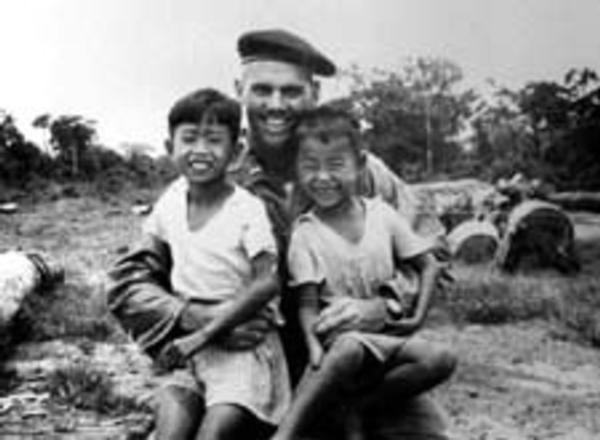
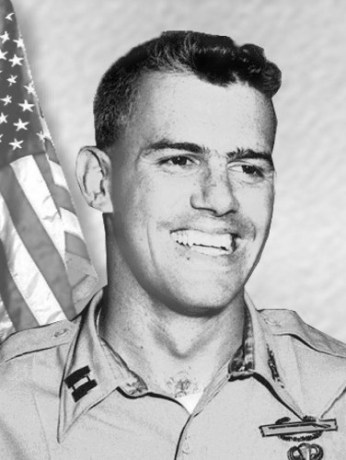 Humbert Roque Versace was born in Honolulu on July 2, 1937, the oldest of five sons born to Colonel Humbert Joseph Versace. Writer Marie Teresa “Tere” Rios was his mother, author of the
 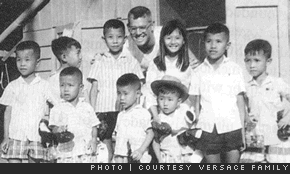 He did his tour, and voluntarily signed up for another six months. By the end of October 1963, Rocky had fewer than two weeks to the end of his service. He had served a year and one-half in the Republic of Vietnam. Now he planned to go to seminary school. He had already received his acceptance letter, from the Maryknoll order.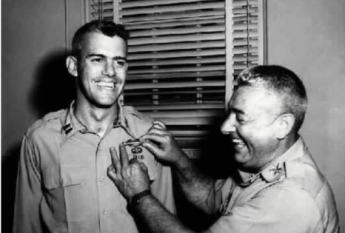
 The effect was entirely unacceptable to his Communist tormentors. To the people of these villages, this man made sense.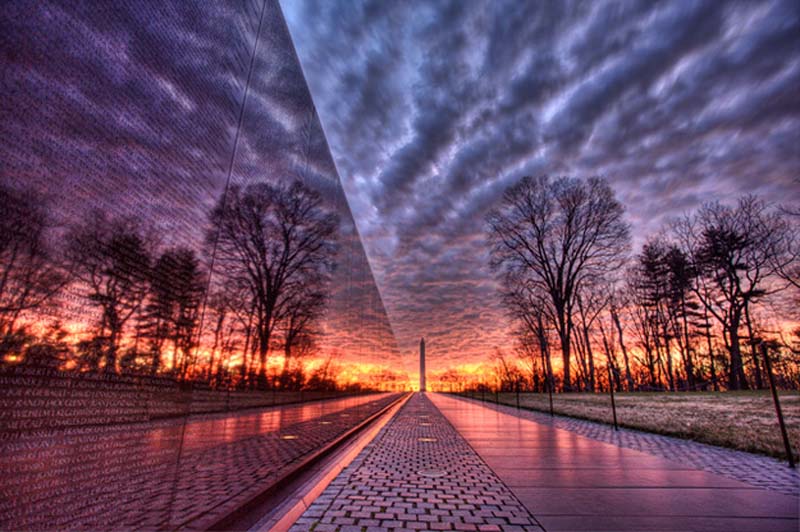

 South Carolina seceded in December 1860, and the world waited to see who’d follow. New York City became the next to call for secession on January 6, when Mayor Fernando Wood addressed the city’s governing body. “When Disunion has become a fixed and certain fact”, he said, “why may not New York disrupt the bands which bind her to a venal and corrupt master…and destroyed the Confederacy of which she was the proud Empire City?”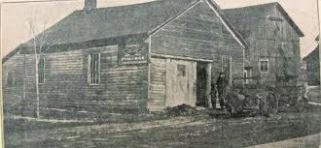
 A courier express note arrived on October 7, 1945. “There are few controversies that are not susceptible to a peace time resolution” read the note, “if examined in an atmosphere of tranquility and calm rather than strife and turmoil. I would suggest the possibility of roast veal as a vehicle of peace. Why don’t you run down the fattest calf in Erie County, barbecue it and serve it with fixin’s in the old blacksmith shop where the ruckus started? Who can tell? The dissidents might decide to resume citizenship.” The note was signed “Very Sincerely Yours, Harry Truman”.
![4b4cf0f864c3dabcdb_IMG_7326[1]](https://todayinhistory.blog/wp-content/uploads/2018/10/4b4cf0f864c3dabcdb_img_73261.jpg?w=684&h=513)


 Tammany Societies adopted a number of native terms, with leaders calling themselves Grand Sachem, and meeting in halls called “Wigwams”. The most famous of these was incorporated in New York on May 12, 1789.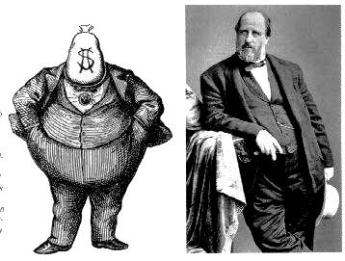
 Some among the self-styled “Uppertens”, the top 10,000 amid New York’s socioeconomic strata, fell in with the self-dealing and corruption of the Tammany Hall machine. Others counted on an endless supply of cheap immigrant labor.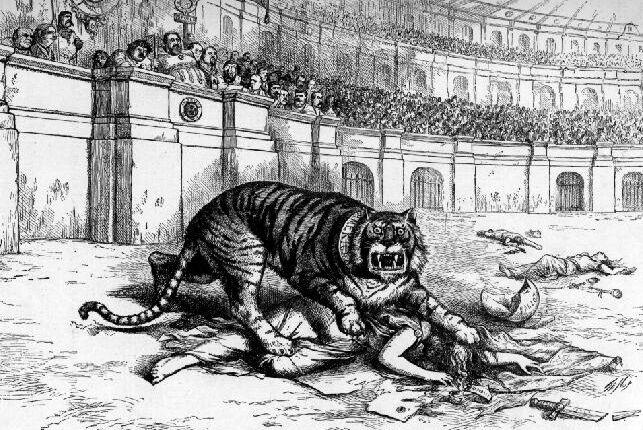
 Next is the spoils system, itself. To this day, too many think it’s government’s job to “Bring home the Bacon”, not seeming to realize that they are themselves, the hogs. The Roosevelt administrations’ efforts to fix the Great Depression resulted in a blizzard of bacon from an increasingly Nationalized federal government, separating the local machines from their proximate base of support.


 The history of the Navajo code talkers of WWII is relatively well known, but by no means, unique. Indigenous Americans of other nations served as code talkers in WW2, including Assiniboine, Lakota and Meskwaki soldiers, who did service in the Pacific, North African, and European theaters of the war.
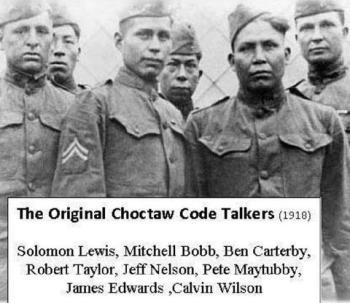 The Choctaw themselves didn’t use the term “Code Talker”, that wouldn’t come along until WWII. At least one member of the group, Tobias W. Frazier, simply described what they did as, “talking on the radio”. Of the 19 who served in WWI, 18 were native Choctaw from southeast Oklahoma. The last was a native Chickasaw. The youngest was Benjamin Franklin Colbert, Jr., the son of Benjamin Colbert Sr., one of Teddy Roosevelt’s “Rough Riders” of the Spanish American War. Born September 15, 1900 in the Durant Indian Territory, he was all of sixteen, the day he enlisted.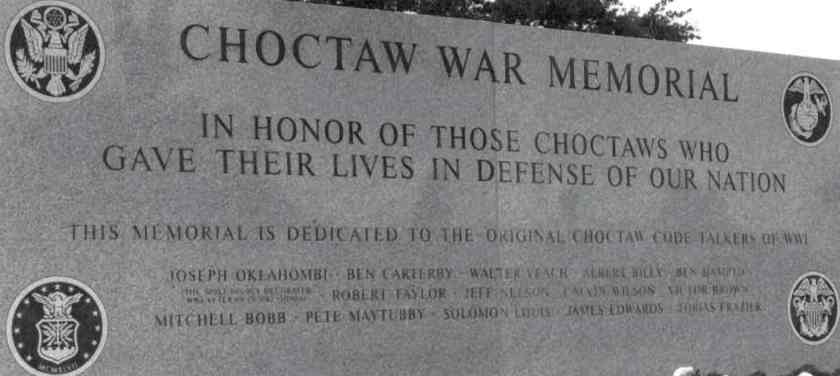

 The Battle of Balaclava opened shortly after 5:00am on this day in 1854, when a squadron of Russian Cossack Cavalry advanced under cover of darkness. The Cossacks were followed by a host of Uhlans, their Polish light cavalry allies, against several dug-in positions occupied by Ottoman Turks. The Turks fought stubbornly, sustaining 25% casualties before finally being forced to withdraw.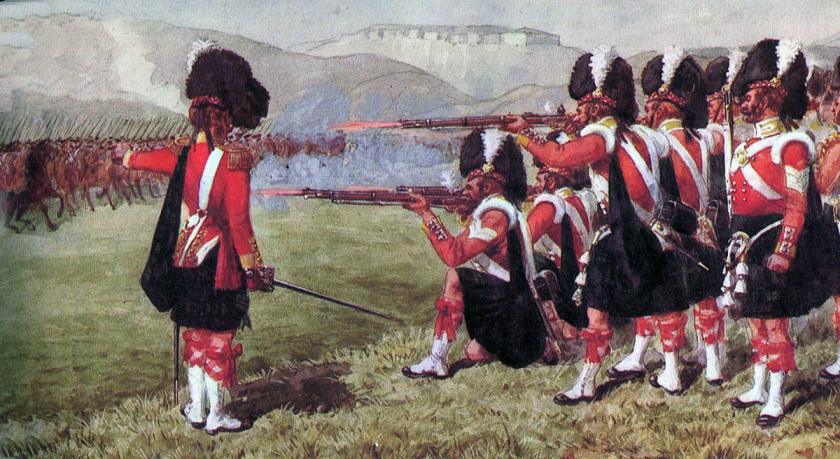




 Harding’s Treasury Secretary, Andrew Mellon, believed that money was driven underground or overseas as income tax rates increased. Mellon held the heretical belief for that time, that lower tax rates led to greater levels of economic activity and that, as people had more of their own money to work with, increased activity resulted in higher tax revenues.

 Fears of the Smoot-Hawley tariff act fueled a further contraction in the following weeks, for apparently good reason. When President Hoover signed the protectionist measure into law in 1930, American imports and exports plunged by more than half.


 A Lebanese cedar tree grows in the green expanse of section 59 at Arlington National Cemetery, marking the final resting place of twenty-one honored dead, among the first Americans to die in the global war against Islamist terrorism. A fight which continues, to this day.


 Doubt has been cast on the “Myth of Langemarck”, and the tragic bravery of idealistic German boys, happily defending the Fatherland. The numbers of dead and maimed are real enough, but most reservists were in fact comprised of older working class men, not the fresh-faced youth, of the Kindermord. Be that as it may, a story must be told. Excuses must be made to the home team, for the crushing failure of the War of Movement, and the four-year war of attrition, to follow.


You must be logged in to post a comment.