

On November 9, 2013, there occurred a gathering of four. A tribute to fallen heroes. These four were themselves heroes, and worthy of tribute. This was to be their last such gathering.
This story begins on April 18, 1942, when a flight of sixteen Mitchell B25 medium bombers took off from the deck of the carrier, USS Hornet. It was a retaliatory raid on Imperial Japan, planned and led by Lieutenant Colonel James “Jimmy” Doolittle of the United States Army Air Forces. It was payback for the sneak attack on Pearl Harbor, seven months earlier. A demonstration that the Japanese home islands, were not immune from destruction.
Launching such massive aircraft from the decks of a carrier had never been attempted, and there were no means of bringing them back. With extra gas tanks installed and machine guns removed to save the weight, this was to be a one-way mission, into territory occupied by a savage adversary.
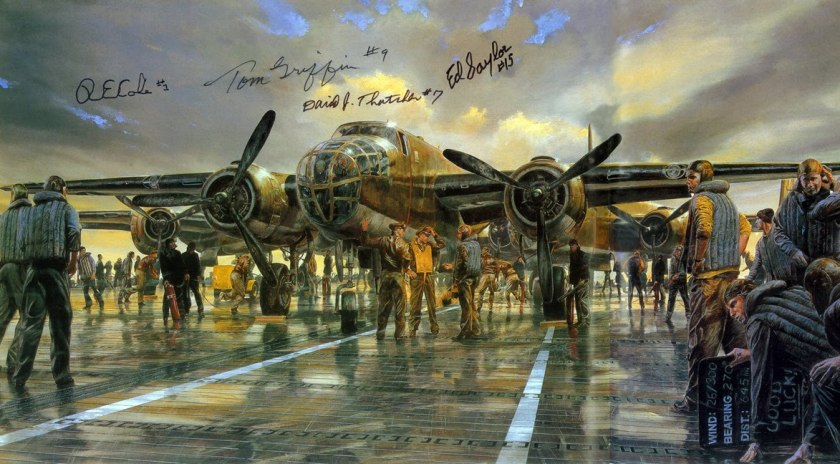
Fearing that mission security had been breached, the bomb run was forced to launch 200 miles before the intended departure spot. The range made fighter escort impossible, and left the bombers themselves with only the slimmest margin of error.
Japanese Premier Hideki Tojo was inspecting military bases, at the time of the raid. One B-25 came so close he could see the pilot, though the American bomber never fired a shot.
After dropping their bombs, fifteen continued west, toward Japanese occupied China. Unbeknownst at the time, carburetors bench-marked and calibrated for low level flight had been replaced in flight #8, which now had no chance of making it to the mainland. Twelve crash landed in the coastal provinces. Three more, ditched at sea. Pilot Captain Edward York pointed flight 8 toward Vladivostok, where he hoped to refuel. The pilot and crew were instead taken into captivity, and held for thirteen months.
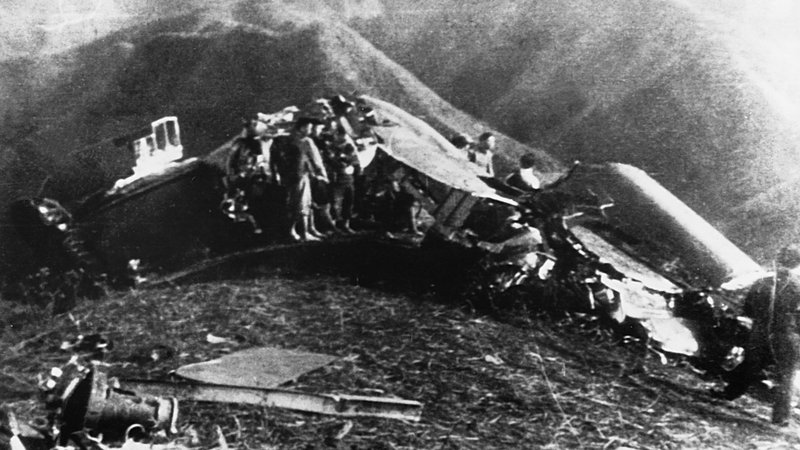
Crew 3 Engineer-Gunner Corporal Leland Dale Faktor died in the fall after bailing out and Staff Sergeant Bombardier William Dieter and Sergeant Engineer-Gunner Donald Fitzmaurice bailed out of aircraft # 6 off the China coast, and drowned.
The heroism of the indigenous people at this point, is a little-known part of this story. The massive sweep across the eastern coastal provinces, the Zhejiang-Jiangxi campaign, cost the lives of 250,000 Chinese. A quarter-million murdered by Japanese soldiers, in the hunt for Doolittle’s raiders. How many could have betrayed the Americans and refused, will never be known.
Amazingly, only eight were captured, among the seventy-seven survivors.
First Lieutenant Pilot “Bill” Farrow and Sergeant Engineer-Gunner Harold Spatz, both of Crew 16, and First Lieutenant Pilot Dean Edward Hallmark of Crew 6 were caught by the Japanese and executed by firing squad on October 15, 1942. Crew 6 Co-Pilot First Lieutenant Robert John Meder died in a Japanese prison camp, on December 11, 1943. Most of the 80 who began the mission, survived the war.
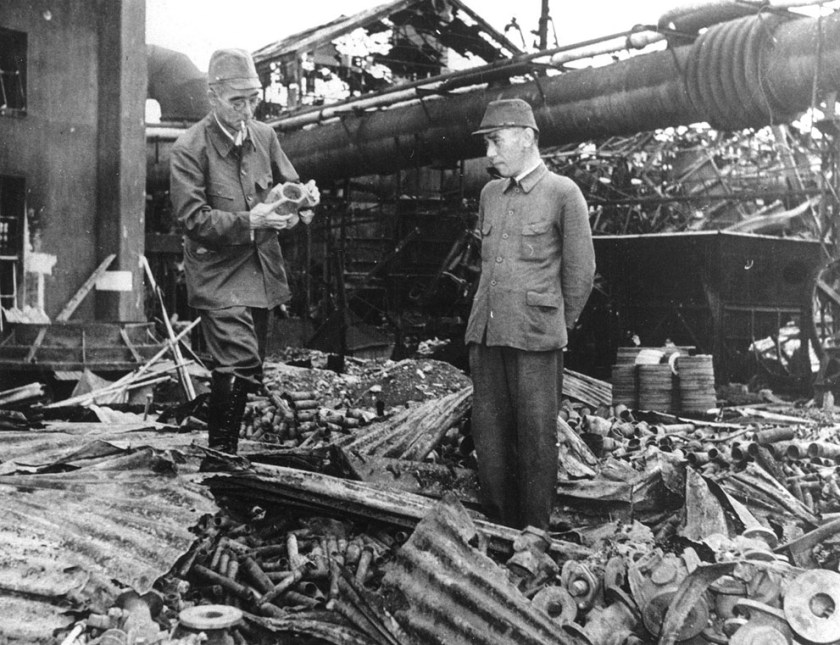
Thirteen targets were attacked, including an oil tank farm, a steel mill, and an aircraft carrier then under construction.. Fifty were killed and another 400 injured, but the mission had a decisive psychological effect. Japan withdrew its powerful aircraft carrier force to protect the home islands. Admiral Isoroku Yamamoto attacked Midway, thinking it to have been the jump-off point for the raid. Described by military historian John Keegan as “the most stunning and decisive blow in the history of naval warfare”, the battle of Midway would be a major strategic defeat for Imperial Japan.
Every year since the late 1940s, the surviving Doolittle raiders have held a reunion. In 1959, the city of Tucson presented them with 80 silver goblets, each engraved with a name. They are on display at the National Museum of the Air Force, in Dayton Ohio.
With those goblets is a fine bottle of vintage Cognac. 1896, the year Jimmy Doolittle was born. There’s been a bargain among the survivors that, one day, the last two would open that bottle, and toast their comrades.
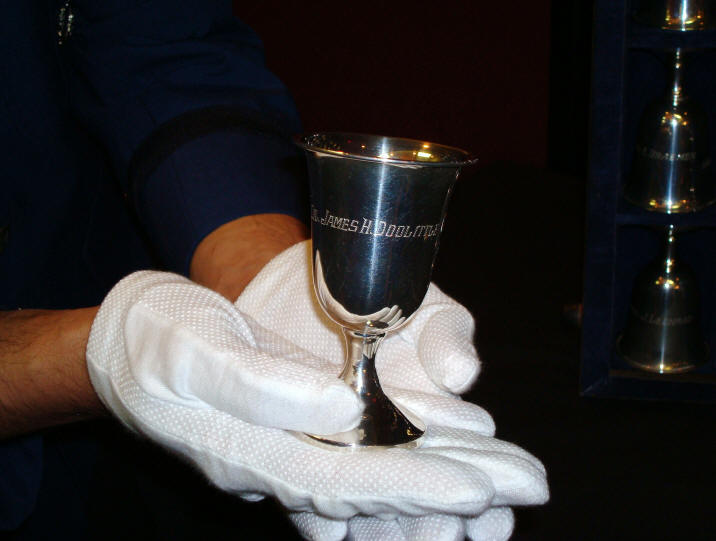
In 2013 they changed their bargain. Just a little. Jimmy Doolittle himself passed away in 1993. Twenty years later, 76 goblets had been turned over, each signifying a man who had passed on. Now, there were only four.
- Lieutenant Colonel Richard E. Cole* of Dayton Ohio was co-pilot of crew No. 1. Remained in China after the Tokyo Raid until June 1943, and served in the China-Burma-India Theater from October, 1943 until June, 1944. Relieved from active duty in January, 1947 but returned to active duty in August 1947.
- Lieutenant Colonel Robert L. Hite* of Odell Texas was co-pilot of crew No. 16. Captured by the Japanese and held prisoner for forty months, he watched his weight drop to eighty pounds.
- Lieutenant Colonel Edward J. Saylor* of Brusett Montana was engineer-gunner of crew No. 15. Served throughout the duration of WW2 until March 1945, both Stateside, and overseas. Accepted a commission in October 1947 and served as Aircraft Maintenance Officer at bases in Iowa, Washington, Labrador and England.
- Staff Sergeant David J. Thatcher* of Bridger Montana was engineer-gunner of crew No. 7. Served in England and Africa after the Tokyo raid until June 1944, and discharged in July 1945.
*H/T, http://www.doolittleraider.com
These four agreed that they would gather one last time. It would be these four men who would finally open that bottle.
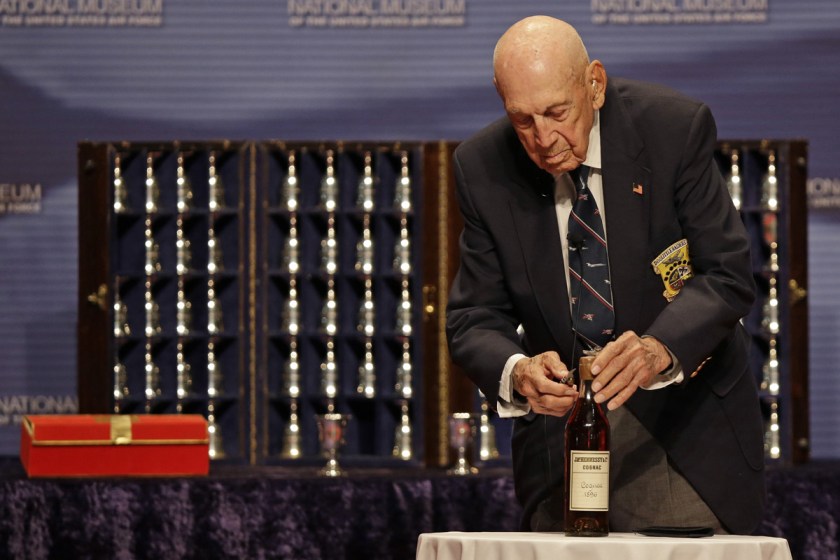
Robert Hite, 93, was too frail to travel in 2013. Wally Hite, stood in for his father.
On November 9, 2013, a 117 year-old bottle of rare, vintage cognac was cracked open, and enjoyed among a company of heroes. If there is a more magnificent act of tribute, I cannot at this moment think of what it might be.
On April 18, 2015, Richard Cole and David Thatcher fulfilled their original bargain, as the last surviving members of the Doolittle raid. Staff Sergeant Thatcher passed away on June 23, 2016, at the age of 94. As I write this, only one of those eighty goblets remains upright. Lieutenant Colonel Richard Cole, co-pilot to mission leader Jimmy Doolittle himself, is 103. He is the only living man on the planet, who has earned the right to open that rare and vintage cognac.


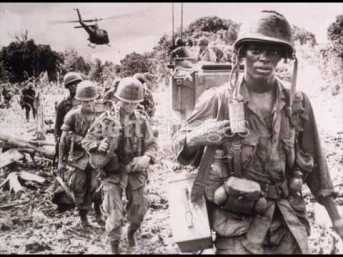 There had been little contact through the evening of the 7th, when B and C Companies of the 1/503rd took up a night defensive position in the triple canopied jungle near Hill 65.
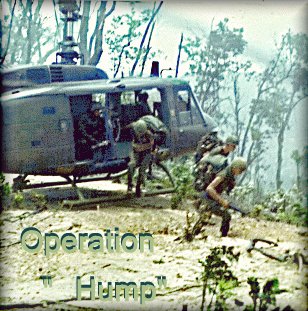 Outnumbered in some places six to one, it was a desperate fight for survival as parts of B and C companies were isolated in shoulder to shoulder, hand to hand fighting.
 “For conspicuous gallantry and intrepidity at the risk of life above and beyond the call of duty. Specialist 5 Joel demonstrated indomitable courage, determination, and professional skill when a numerically superior and well-concealed Viet Cong element launched a vicious attack which wounded or killed nearly every man in the lead squad of the company. After treating the men wounded by the initial burst of gunfire, he bravely moved forward to assist others who were wounded while proceeding to their objective. While moving from man to man, he was struck in the right leg by machine gun fire. Although painfully wounded his desire to aid his fellow soldiers transcended all personal feeling. He bandaged his own wound and self-administered morphine to deaden the pain enabling him to continue his dangerous undertaking. Through this period of time, he constantly shouted words of encouragement to all around him. Then, completely ignoring the warnings of others, and his pain, he continued his search for wounded, exposing himself to hostile fire; and, as bullets dug up the dirt around him, he held plasma bottles high while kneeling completely engrossed in his life saving mission. Then, after being struck a second time and with a bullet lodged in his thigh, he dragged himself over the battlefield and succeeded in treating 13 more men before his medical supplies ran out. Displaying resourcefulness, he saved the life of one man by placing a plastic bag over a severe chest wound to congeal the blood. As 1 of the platoons pursued the Viet Cong, an insurgent force in concealed positions opened fire on the platoon and wounded many more soldiers. With a new stock of medical supplies, Specialist 5 Joel again shouted words of encouragement as he crawled through an intense hail of gunfire to the wounded men. After the 24 hour battle subsided and the Viet Cong dead numbered 410, snipers continued to harass the company. Throughout the long battle, Specialist 5 Joel never lost sight of his mission as a medical aid man and continued to comfort and treat the wounded until his own evacuation was ordered. His meticulous attention to duty saved a large number of
  lives and his unselfish, daring example under most adverse conditions was an inspiration to all. Specialist 5. Joel’s profound concern for his fellow soldiers, at the risk of his life above and beyond the call of duty are in the highest traditions of the U.S. Army and reflect great credit upon himself and the Armed Forces of his country“.
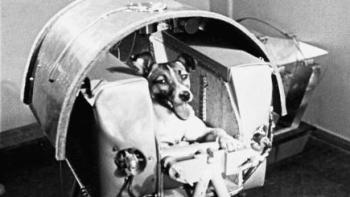 The first living creature to enter space was the dog “

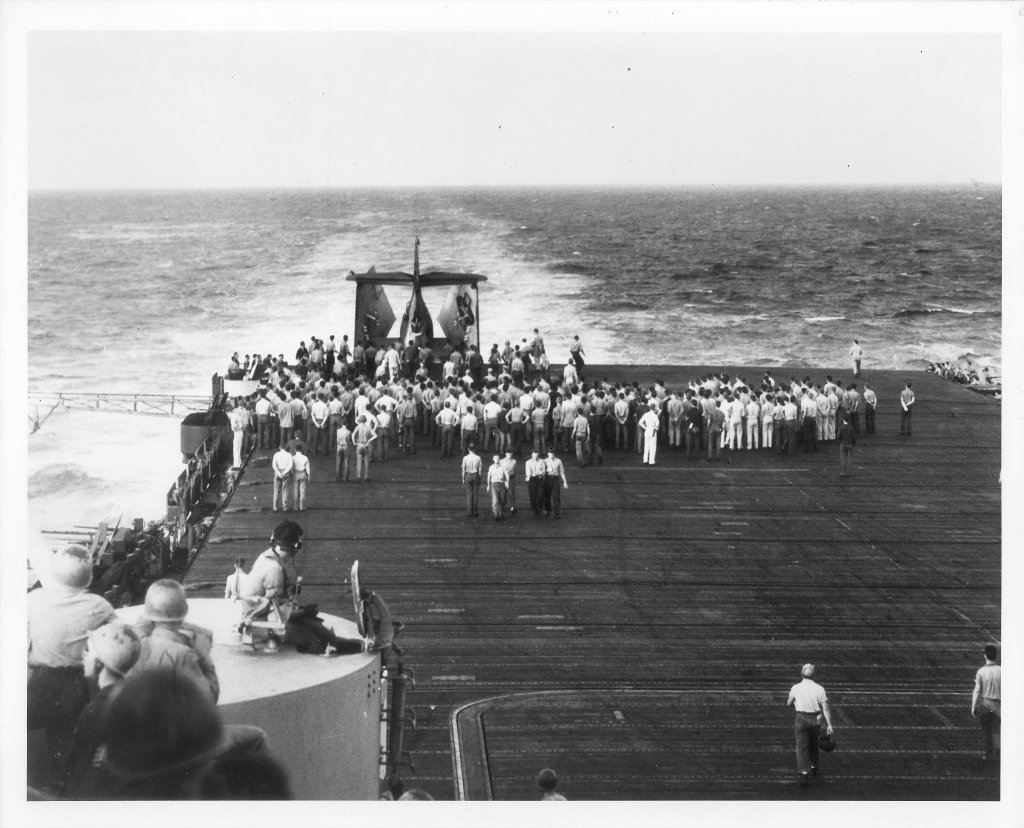
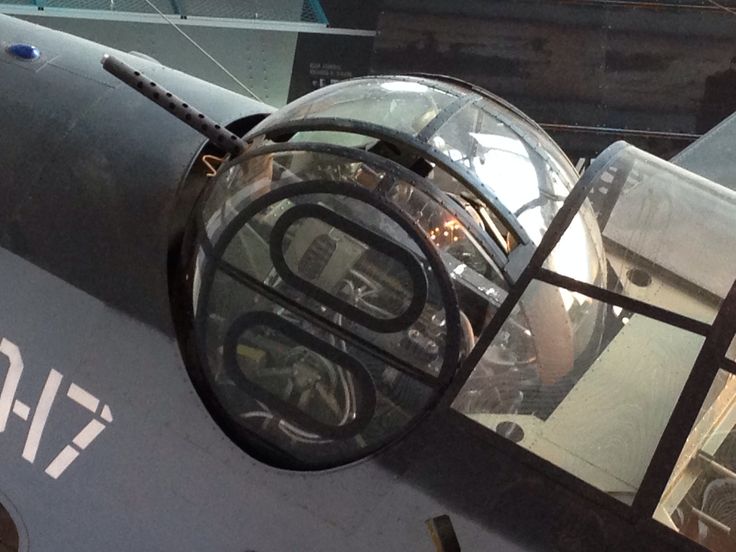
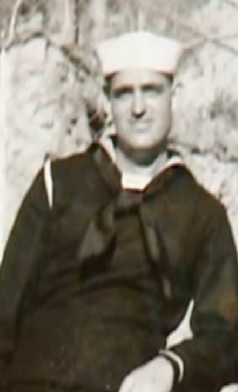 Even before the Japanese attack on Pearl Harbor, Loyce had wanted to join the Navy. In October 1942, he did just that. First there was basic training in San Diego, and then gunner’s school, learning all about the weapons systems aboard a Grumman TBF Avenger torpedo bomber. Then on to Naval Air School Fort Lauderdale, before joining the new 15th Air Group, forming out of Westerly, Rhode Island.
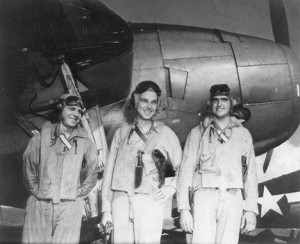 Loyce was the turret gunner on one of these Avengers, assigned to protect the aircraft from above and teamed up with Pilot Lt. Robert Cosgrove from New Orleans, Louisiana and Radioman Digby Denzek, from Grand Rapids, Michigan.


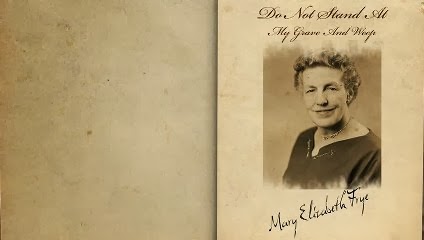


 At first in no hurry to sign up, he even considered joining the French Army before returning home to England, to enlist in the Artists Rifles Training Corps, in October 1915.
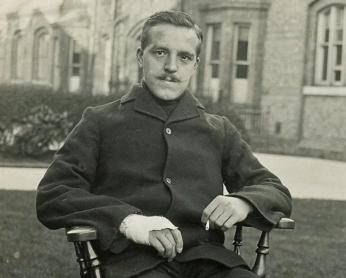 After this experience, soldiers reported him behaving strangely. Owen was diagnosed as suffering from neurasthenia or shell shock, what we now understand to be Post-Traumatic Stress Disorder, and sent to Craiglockhart War Hospital in Edinburgh, for treatment.
 Owen continued to write through his period of convalescence, his fame as author and poet growing through the late months of 1917 and into March of the following year. Supporters requested non-combat postings on his behalf, but such requests were turned down. It’s unlikely he would have accepted them, anyway. His letters reveal a deep sense of obligation, an intention to return to the front to be part of and to tell the story of the common man, thrust by his government into uncommon conditions.




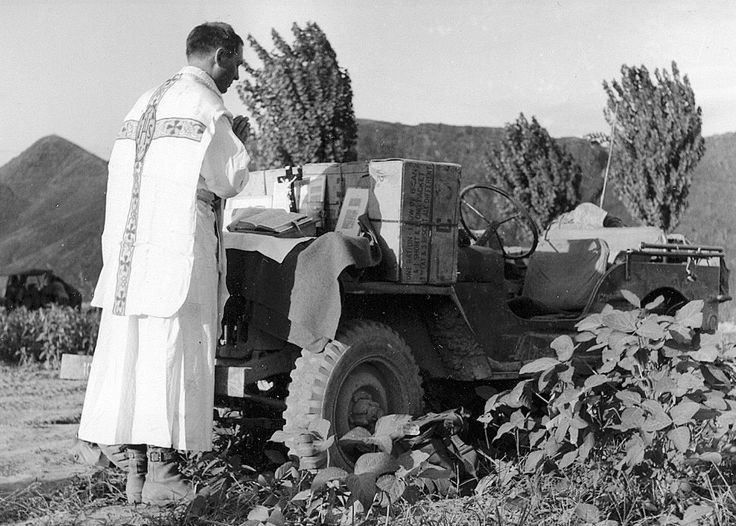
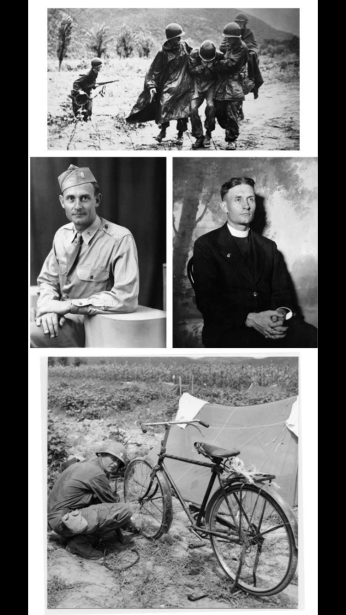 Emil Joseph Kapaun was the son of Czech immigrants, a farm kid who grew up in 1920s Kansas. Graduating from Pilsen High, class of 1930, he spent much of the 30s in theological seminary, becoming an ordained priest of the Roman Catholic faith on June 9, 1940.
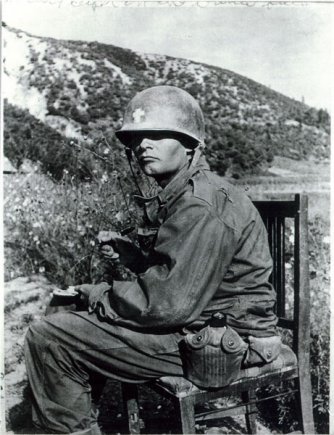 A single regiment was attacked by the 39th Chinese Corps on November 1, and completely overrun the following day. For the 8th Cav., the battle of Unsan was one of the most devastating defeats of the Korean War. Father Kapaun was ordered to evade, an order he defied. He was performing last rites for a dying soldier, when he was seized by Chinese communist forces.
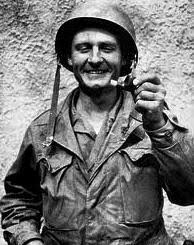 Chinese Communist guards would taunt him during daily indoctrination sessions, “Where is your god now?” Before and after these sessions, he would move through the camp, ministering to Catholic and non-Catholic alike. Kapaun would slip in behind every work detail, cleaning latrines while other prisoners argued over who’d get the job. He’d wash the filthy laundry of those made weak and incontinent with dysentery.
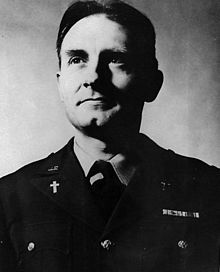 In the end, he was too weak to lift the plate that held the meager meal the guards left for him. US Army records report that he died of pneumonia on May 6, 1951, but his fellow prisoners will tell you that he died on May 23, of malnutrition and starvation. He was 35.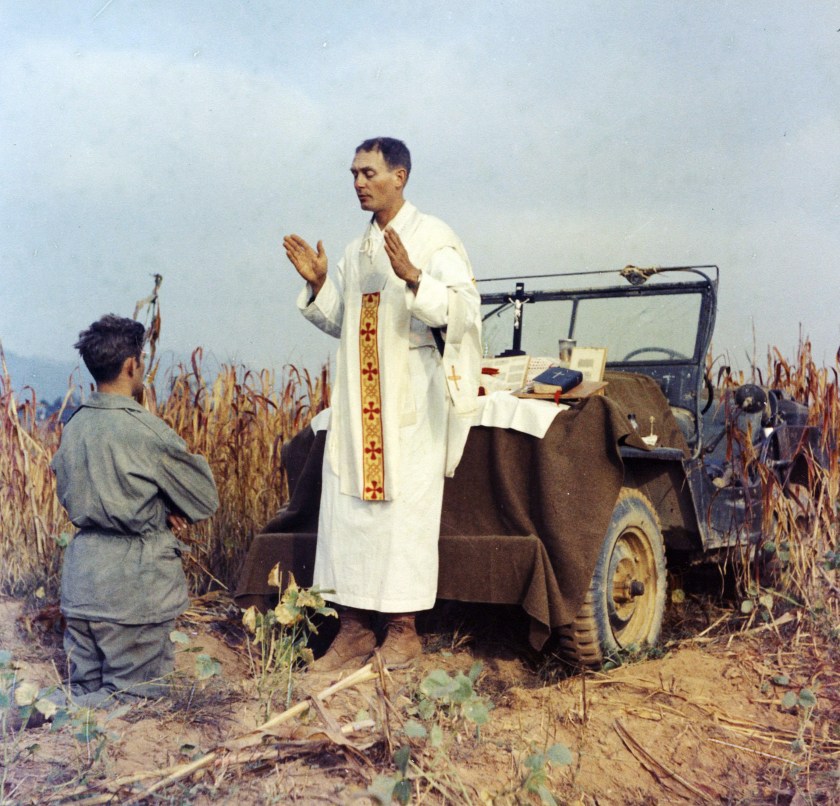



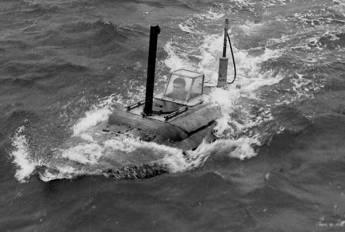 Which brings us back to that funny-looking boat. The Office of Strategic Services (OSS), predecessor to the modern Central Intelligence Agency (CIA), built two of these semi-submersibles, code named “Gimik”, part of a top-secret operation code named “NAPKO”.



You must be logged in to post a comment.