
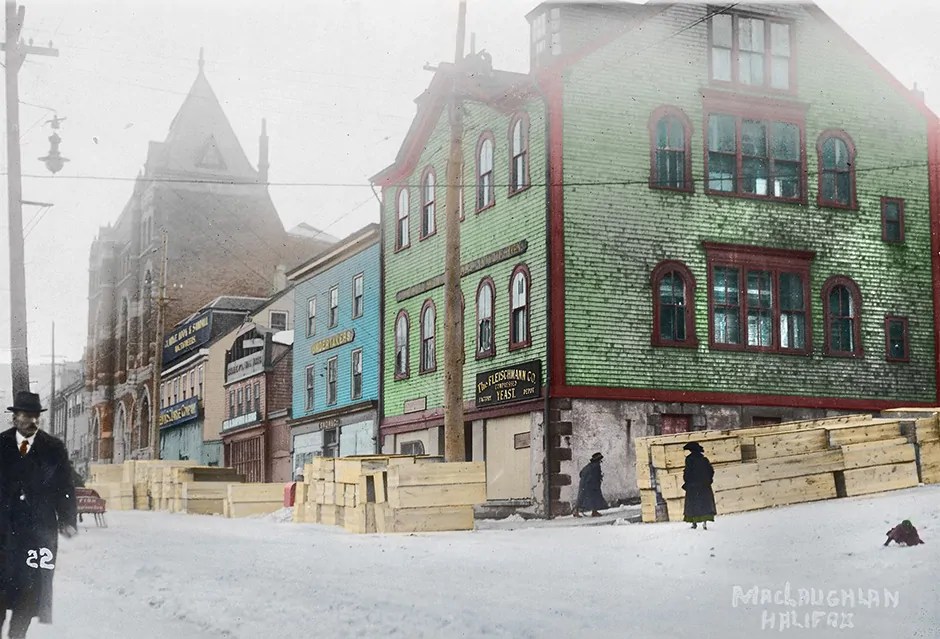
The participants in this story have long since passed from among us. Every one. It is their countrymen who remember a debt of gratitude, one-hundred years in the making. For near-half a century, this has taken the form of a tree. A gift, from the people of Nova Scotia, to the people of Boston.
As “The Great War” dragged on to the end of its third year in Europe, Halifax harbor in Nova Scotia was the bustling scene of supply, munition, and troop ships destined for “over there”. With a population of 50,000 at the time, Halifax was the busiest port in Atlantic Canada.

The Norwegian vessel SS Imo slipped her moorings in Halifax harbor on the morning of December 6, destined for New York City. The French freighter Mont Blanc was entering the harbor at this time, intending to join the convoy which would form her North Atlantic escort. In her holds, Mont Blanc carried 200 tons of Trinitrotoluene (TNT), and 2,300 tons of TNP – Trinitrophenol or “Picric Acid”, a substance then in use as a high explosive.
In addition, the freighter carried 35 tons of high octane gasoline and 20,000 lbs of gun cotton. Not wanting to draw the attention of pro-German saboteurs, the freighter flew no flags warning of her cargo. Mont Blanc was a floating bomb.

Somehow, signals became crossed as the two ships passed, colliding in the narrows at the harbor entrance and igniting the TNP on board Mont Blanc. French sailors abandoned ship as fast as they could, warning everyone who would listen of what was about to happen.
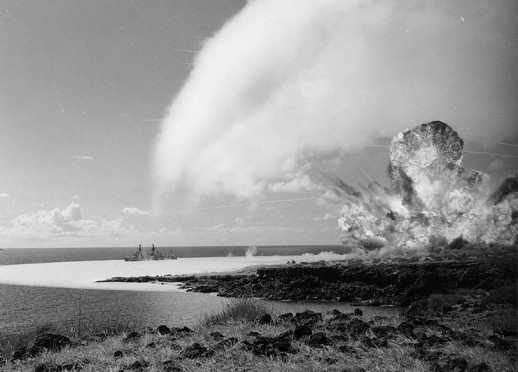
Meanwhile, the spectacle of a flaming ship was too much to resist, as crowds gathered around the harbor. The high-pitched shriek emitted by picric acid under combustion is familiar to anyone who has ever attended a public fireworks display. You can only imagine the scene as the burning freighter brushed the harbor pier, setting that ablaze, before running aground.


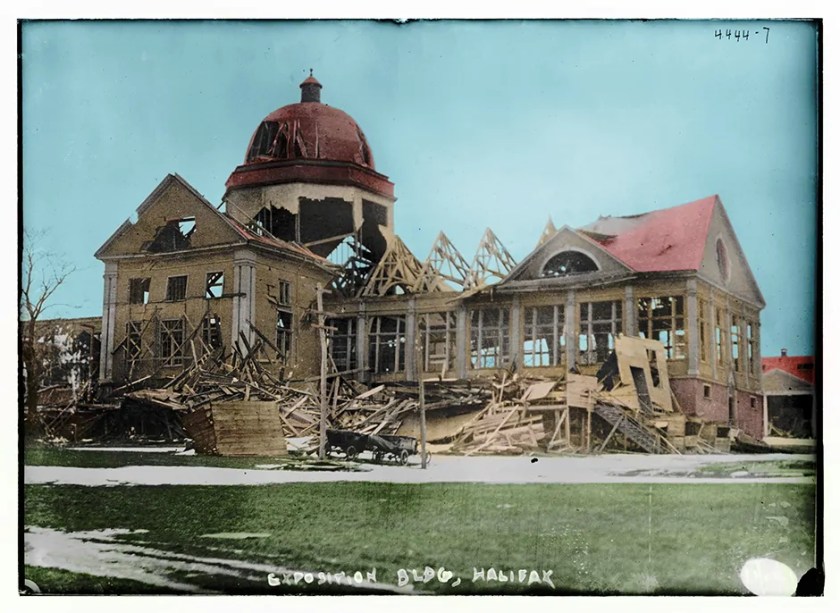
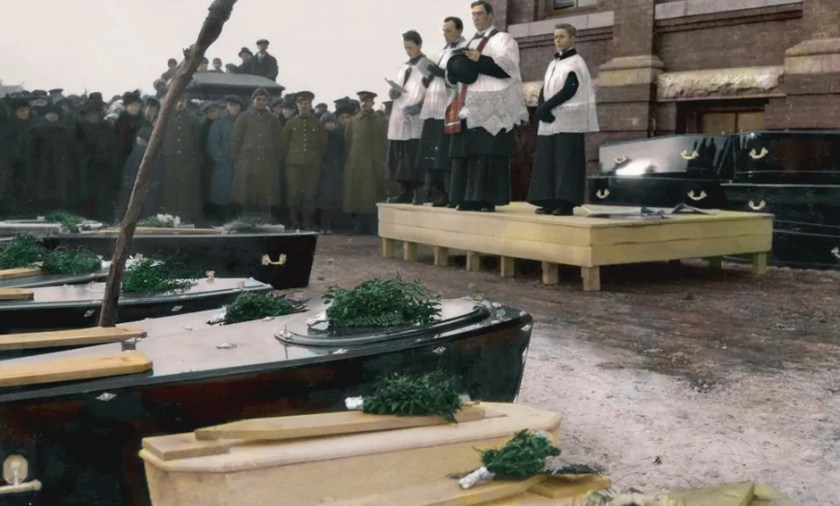
The explosion and resulting fires killed over 1,800, flattening the north end of Halifax and shattering windows as far as fifty miles away. It was one of the largest non-nuclear explosions in history, destroying over 1,600 homes on the cusp of a Canadian winter.
Mont Blanc’s half-ton anchor landed over two miles away, one of her gun barrels, three. Later analysis estimated an output of 2.9 kilotons, an explosive force greater than many tactical nuclear weapons.

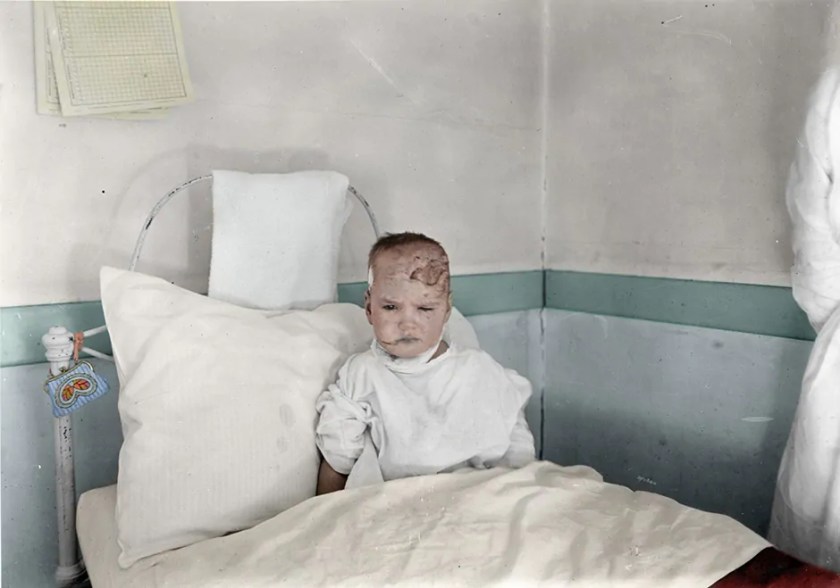
The December 7 sun rose over a scene from the apocalypse, as a blizzard descended across Nova Scotia. Over 9,000 were injured, many gravely so, and not only homeless. Their whole town was gone.
Boston Mayor James Michael Curley wrote to the American Representative in Halifax “The city of Boston has stood first in every movement of similar character since 1822, and will not be found wanting in this instance. I am, awaiting Your Honor’s kind instruction.”
 Curley was as good as his word. The Mayor and Massachusetts’ Governor Samuel McCall composed a Halifax Relief Committee to raise funds and organize aid. McCall reported the effort raised $100,000 in its first hour alone, equivalent to over $1.9 million, today.
President Woodrow Wilson authorized a $30,000 carload of Army blankets sent to Halifax. Within twelve hours of the explosion, the Boston Globe reported on the first train leaving North Station, with “30 of Boston’s leading physicians and surgeons, 70 nurses, a completely equipped 500-bed base hospital unit and a vast amount of hospital supplies”.
Delayed by deep snow drifts, the train arrived on the morning of December 8, the first non-Canadian relief train, on the scene.
$750,000 in relief aid would arrive from Massachusetts alone, equivalent to more than $15 million today. Canadian Prime Minister Robert Borden would write to Governor McCall on December 9, “On behalf of the Government of Canada, I desire to convey to Your Excellency our very sincere and warm thanks for your sympathy and aid in the appalling calamity which has befallen Halifax”.
The following year, Nova Scotia sent the city of Boston a gift of gratitude. A very large Christmas tree.
In 1971, the Lunenburg County Christmas Tree Producers Association sent another tree to Boston, both to promote Christmas tree exports, and to once again acknowledge the support of the people and government of Boston, following the 1917 disaster. The Nova Scotia government later took over the annual gift of the Christmas tree, to promote trade and tourism.
So it is that, every year, the people of Nova Scotia send the people of Boston the official Christmas tree, to be displayed on Boston Common. The tree even has its own Facebook page. More recently, the principle tree is joined by two smaller ones, donated to Rosie’s Place and the Pine Street Inn, two of Boston’s homeless shelters.


The 2018 tree begins the 600-mile journey south
This is no Charlie Brown shrub we’re talking about. The 1998 tree required 3,200 man-hours to decorate, with 17,000 lights connected by 4½ miles of wire and bedecked with 8,000 bulbs.
In 2013, the tree was accompanied by a group of runners, in recognition of the Boston Marathon bombing in April of that year.
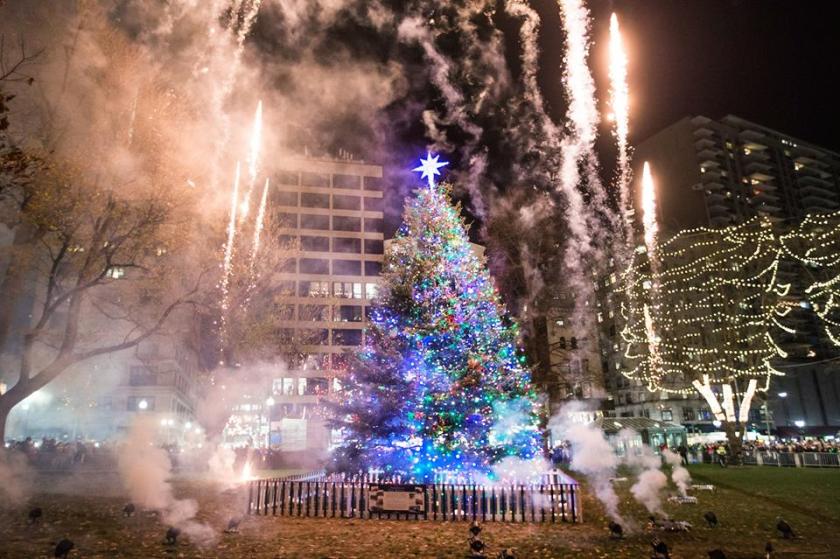
The 2018 tree is a white spruce standing 46-feet, for the first time selected from the Cumberland County town of Oxford, and donated by Ross McKellar and Teresa Simpson. It takes two men a day and a half to prepare for cutting, a crane holding the tree upright while the chainsaw does its work. It’s a major media event as the tree is paraded through Halifax on a 53’ flatbed trailer, before beginning the 600-mile journey south.
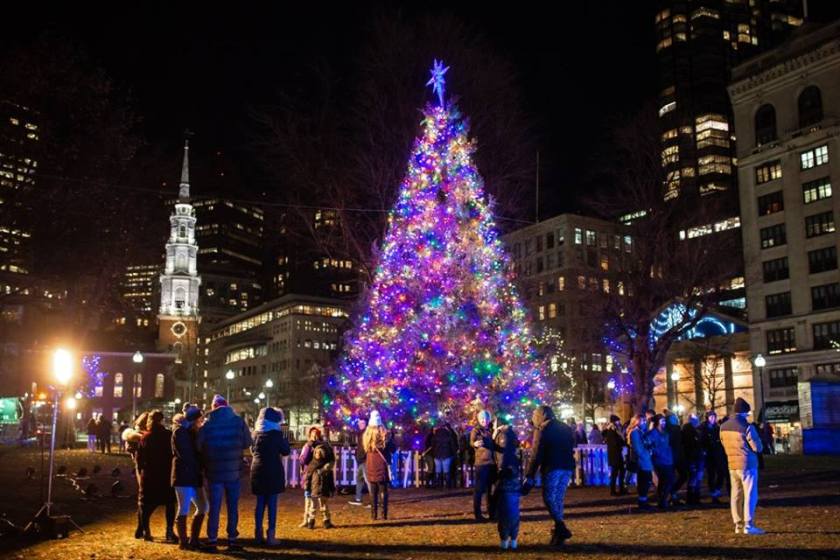
For a small Canadian province, it’s been no small commitment. In 2016 Nova Scotia spent $242,000 on the program, including transportation, cutting & lighting ceremonies, and all the promotions which went with it. The government of the province, says the program is well worth the expense.
“This is about friendship, unity and gratitude to the people of Boston,” said Deputy Premier Karen Casey on behalf of Premier Stephen McNeil. “We are forever appreciative of Boston’s immediate response of aid after the explosion. This tree embodies the spirit of our culture and is our way of saying thank you.”
Feature image, top of page: This colorized photo only hints at the scale of the disaster. Hat tip, CBC
If you enjoyed this “Today in History”, please feel free to re-blog, “like” & share on social media, so that others may find and enjoy it as well. Please click the “follow” button on the right, to receive email updates on new articles. Thank you for your interest, in the history we all share.


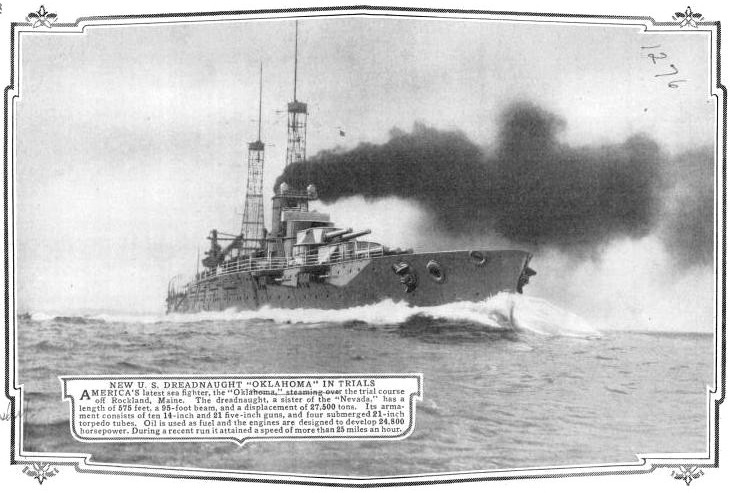
 Bilge inspection plates had been removed for a scheduled inspection the following day, making counter-flooding to prevent capsize, impossible. Oklahoma rolled over and died as the ninth torpedo slammed home. Hundreds scrambled out across the rolling hull, jumped overboard into the oil covered, flaming waters of the harbor, or crawled out over mooring lines in the attempt to reach USS Maryland in the next berth.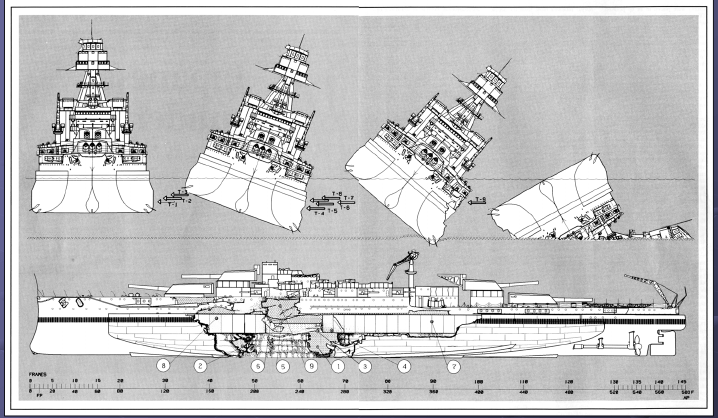
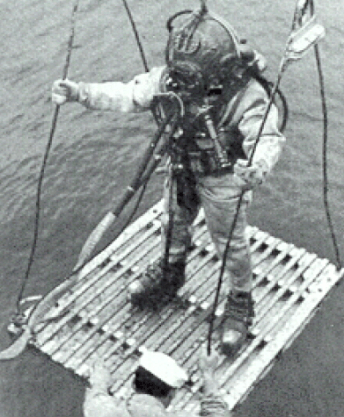 Recovery of the USS Oklahoma was the most complex salvage operation ever attempted, beginning in March, 1943. With the weight of her hull driving Oklahoma’s superstructure into bottom, salvage divers descended daily to separate the tower, while creating hardpoints from which to attach righting cables.
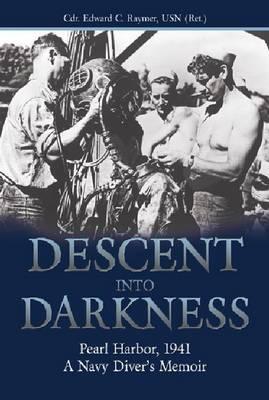 CDR Edward Charles Raymer, US Navy Retired, was one of those divers. Raymer tells the story of these men in




 At one point during this period, then-Senator Julius Caesar stepped to the rostrum to have his say. He was handed a paper and, reading it, stuck the note in his toga and resumed his speech. Cato, Caesar’s implacable foe, stood in the senate and demanded that Caesar read the note. It’s nothing, replied the future emperor, but Cato thought he had caught the hated Caesar red handed. “I demand you read that note”, he said, or words to that effect. He wouldn’t let it go.

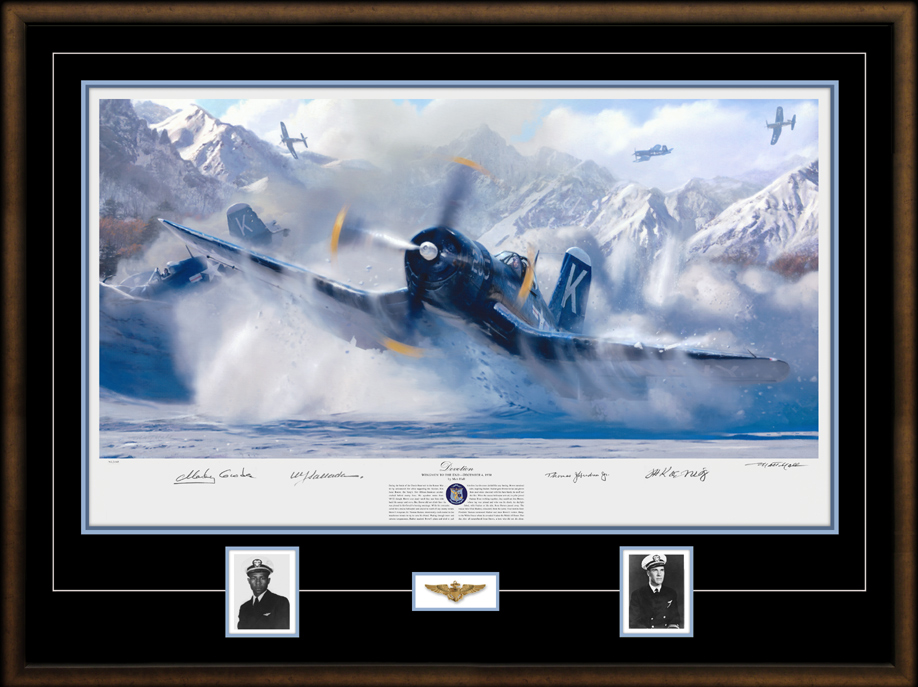
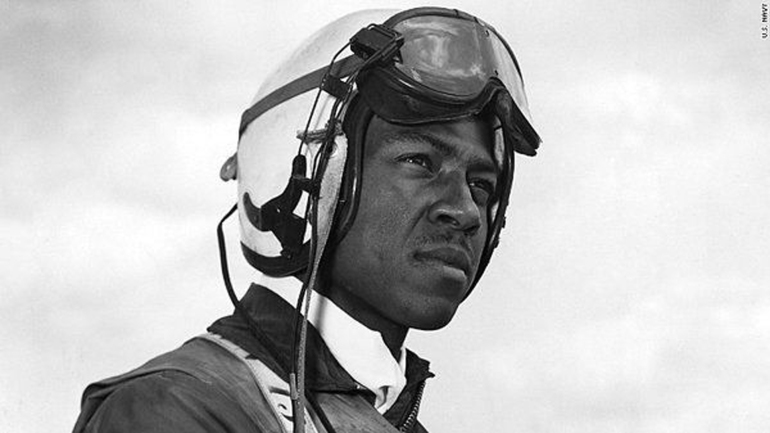
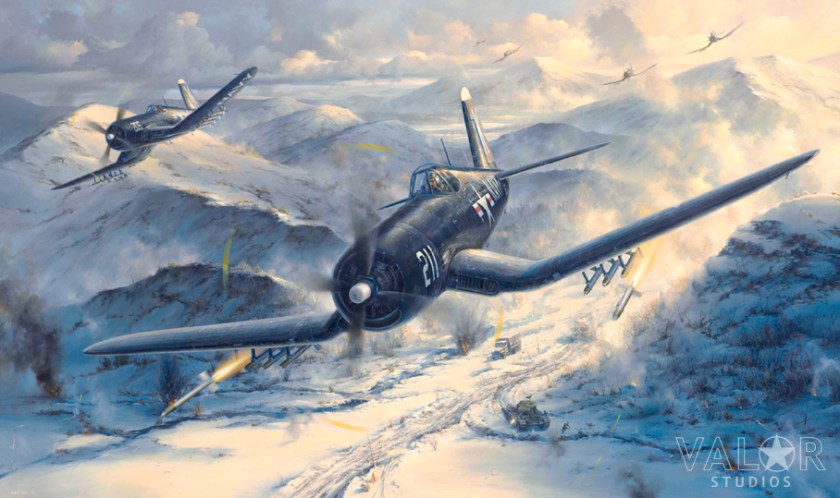
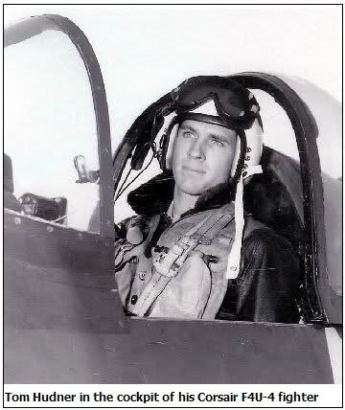 On June 25, 1950, ten divisions of the North Korean People’s Army launched a surprise invasion of their neighbor to the south. The 38,000-man army of the Republic of Korea didn’t have a chance against 89,000 men sweeping down in six columns from the north. Within hours, the shattered remnants of the army of the ROK and its government, were streaming south toward the capital of Seoul.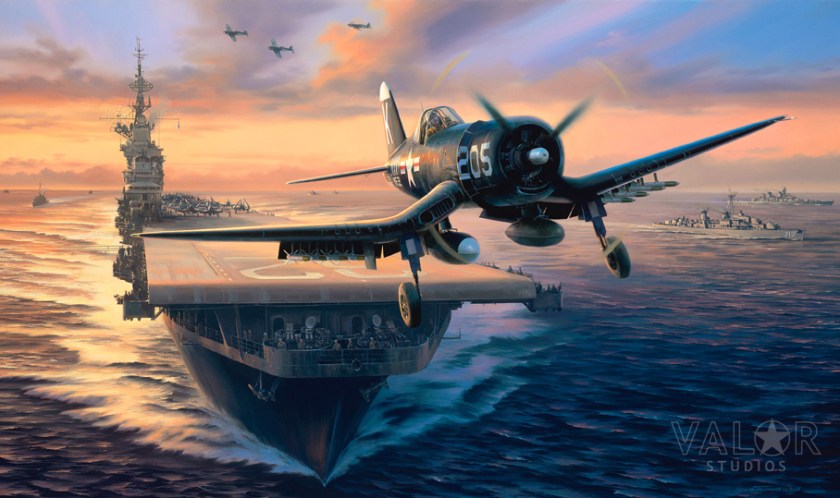


 Mohammad Reza Pahlavi came to power in 1941, following the Commonwealth/Soviet invasion of the Empire of Iran which forced the abdication of his father.


 The Iranian constitution of 1906 was supplanted by popular referendum on this day in 1979, when Ayatollah Ruhollah Khomeini was proclaimed rahbar-e mo’azzam-e irān, Supreme Leader of the Islamic Revolution.
 Ayatollah Ruhollah Khomeini is gone now, but his influence is very much alive. If you want a fun read sometime, download the constitution of the Islamic Republic of Iran. Khomeini is personally named in the document. Three times.






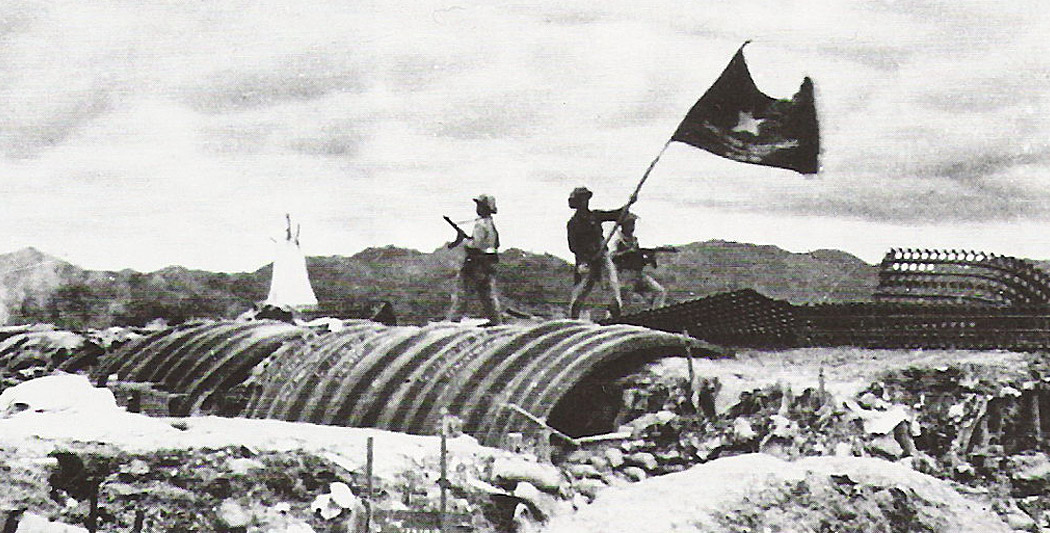
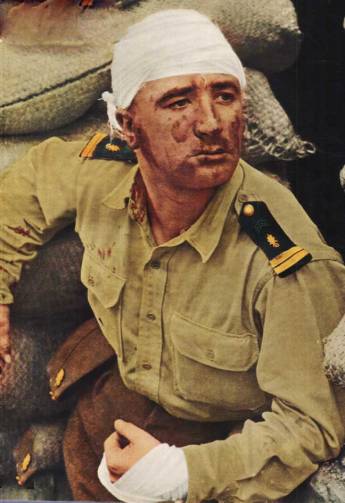
 What historians call the First Indochina War, many contemporaries called “la sale guerre”, or “dirty war”. The government forbade the use of metropolitan recruits, fearing that that would make the war more unpopular than it already was. Instead, French professional soldiers and units of the French Foreign Legion were augmented with colonial troops, including Moroccan, Algerian, Tunisian, Laotian, Cambodian, and Vietnamese ethnic minorities.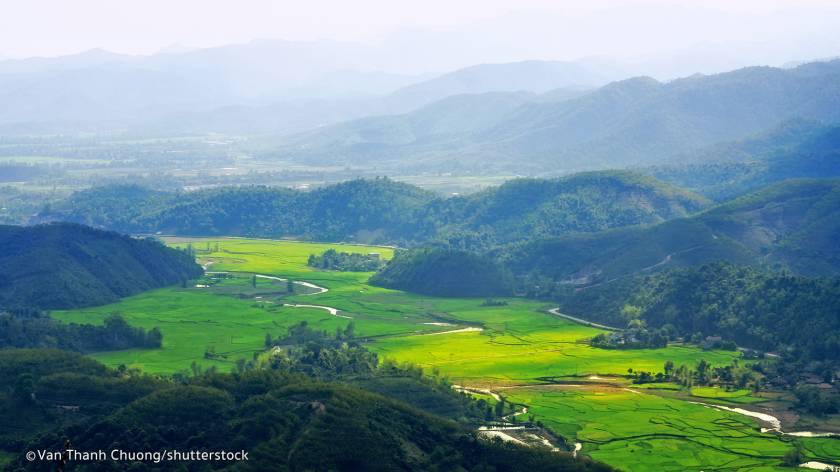
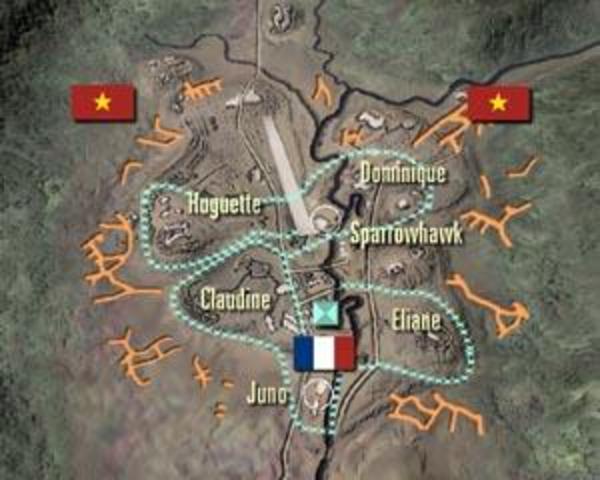
 The French staff formulated their battle plan, based on the assumption that it was impossible for the Viet Minh to place enough artillery on the surrounding high ground, due to the rugged terrain. Communist forces didn’t possess enough artillery to do serious damage anyway. Or so they thought.
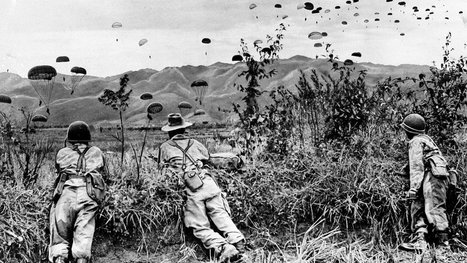 “Beatrice” was the first fire base to fall, then “Gabrielle” and “Anne-Marie”. Viet Minh controlled 90% of the airfield by the 22nd of April, making even parachute drops next to impossible. On May 7, Vo ordered an all-out assault of 25,000 troops against the 3,000 remaining in garrison. By nightfall it was over. The last words from the last radio man were “The enemy has overrun us. We are blowing up everything. Vive la France!”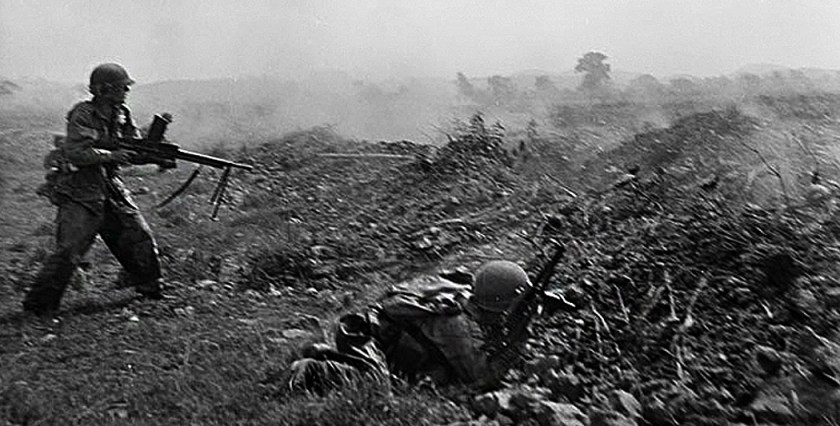
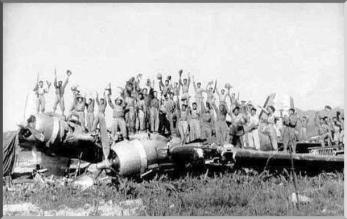 American support for the south increased as the French withdrew theirs. By the late 1950s, the United States were sending technical and financial aid in expectation of social and land reform. By 1960, the National Front for the Liberation of South Vietnam (NLF, or “Viet Cong”) had taken to murdering Diem supported village leaders. President John Fitzgerald Kennedy responded by sending 1,364 American advisers into South Vietnam, in 1961.


You must be logged in to post a comment.