The effect of the papal Bull, was as a commandment. “Thou shalt not suffer a cat, to live”.
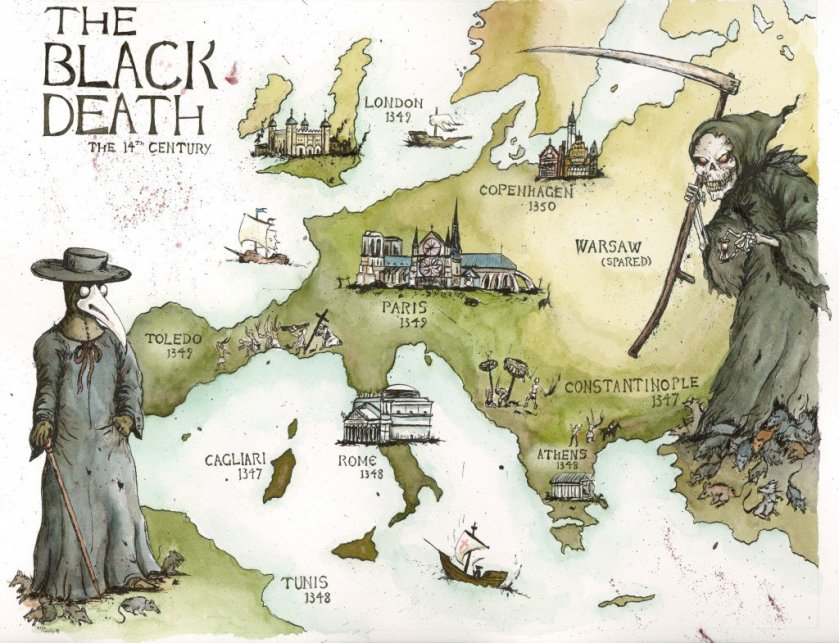
In the early 1330s, a deadly plague broke out on the steppes of Mongolia. The gram-negative bacterium Yersinia Pestis preyed heavily on rodents, whose fleas would transmit the disease to people, the infection then rapidly spreading to others. High fever would precede the appearance of “buboes”, a painful swelling of the lymph glands, especially in the armpit, neck and groin. Spots appeared on the skin turning from red to black, often accompanied by necrosis and gangrene in the nose, lips, fingers and toes.
In some cases, bubonic plague will progress from the lymphatic system to the lungs, resulting in pneumonic plague. Y. Pestis can progress to the blood system as well, a condition known as septicemic plague. In medieval times, septicemic mortality rates ran as high as 98%-100%.
H/T Historythings.com
Plague broke out among a besieging force of Mongols on the Black Sea city of Caffa, in 1346. Italian merchants fled with their ships in the Spring of 1347, carrying in their holds an untold number of rats and the fleas which came with them.
The disease process unfolded with horrifying rapidity. The Italian writer Boccaccio wrote that plague victims often “ate lunch with their friends and dinner with their ancestors in paradise.”
This was the experience of individual sufferers. So, what allowed the pandemic to spread with such rapidity?
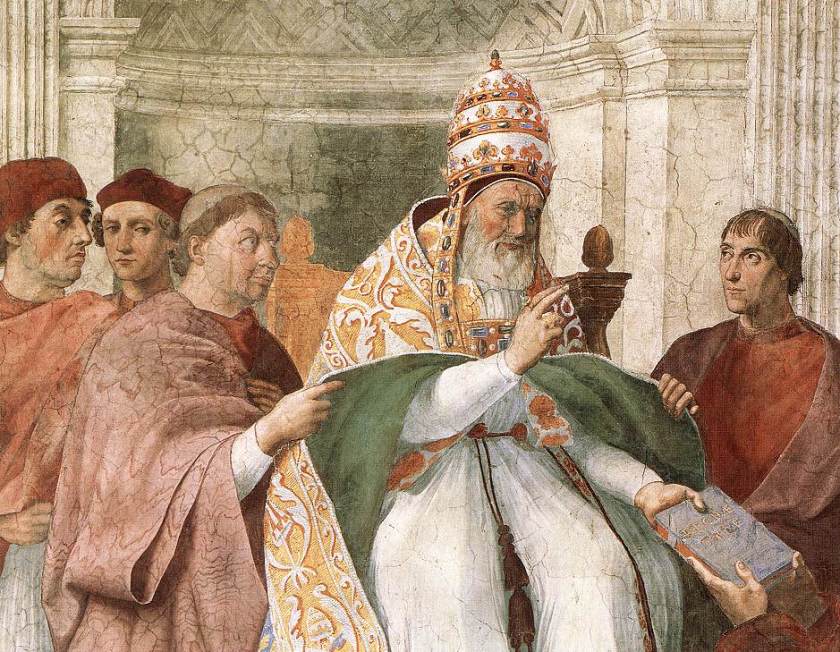
The story begins one-hundred years earlier. On this day in 1227, eighty-year-old Cardinal Ugolino di Conti was elected Supreme Pontiff, taking the name Pope Gregory IX. Gregory’s papal ordination came at a time of spreading heresy, the earliest reverberations of what came to be known some three hundred years late, as the Protestant Reformation.
Pope Gregory IX, H/T Historythings.com
The Waldenses, founded in 1170 by Peter Waldo, claimed that individuals could commune with directly with God. Other sects such as the Cathars followed similar beliefs. Such heresies challenged the authority of the One True Church, and could not be left unchecked.
Today, Gregory is best remembered for his organization of Canon law, the formalization of practices later forming the basis of the medieval inquisition. At the time, a more immediate problem was the rise of what were seen as satanic cults.
The German priest and nobleman Conrad of Marburg was an early leader in the persecution of heretics, claiming to have rooted out a number of Luciferian cults around the cities of Mainz and Hildesheim. The first Bull of the new papacy, the Vox in Rama, beseeched the bishops to come to Conrad’s aid, and went on to describe in some detail, the depraved rituals of such cults.
The devil at the center of it all was a shadowy figure, half man and half cat.
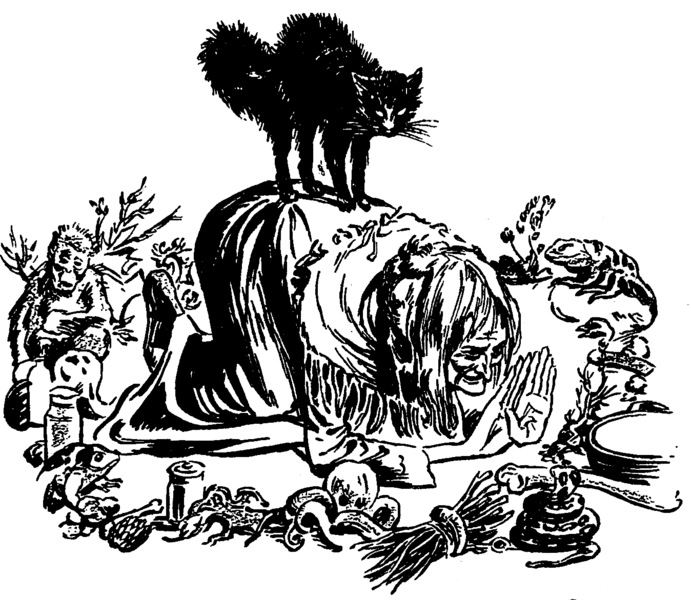
A witch and her cat. Weird Tales, Vol 36. Public Domain. Wikimedia Commons
From the mists of antiquity, the cat was worshiped as some kind of deity. The Vox reshaped the European view to where cats were now seen, as agents of hell. The French theologian Alain de Lille piled on, falsely claiming the Cathar sect took its name from the animal and not the real source, the Greek katharoi or ‘pious ones’.
The effect was as a commandment. “Thou shalt not suffer a cat, to live“.
The orgy of cruelty which followed, makes for some tough reading. Cats were hurled from high cathedrals and set on fire, ritually tortured or summarily stomped or clubbed, to death.
In Denmark, the festival of Fastelavn held at the start of Lent, held that Spring would not come until evil, was banished from the land. Black cats were ritually beaten to death, to purge evil spirits. Cat killing became a folk practice all over Europe. During the festival of cats or Kattenstoet held in the Belgian city of Ypres, the custom was to hurl cats from the belfry of local churches, before setting them on fire. The hideous practice carried on until 1817 with live cats and continues to this day, only now, they’re stuffed.
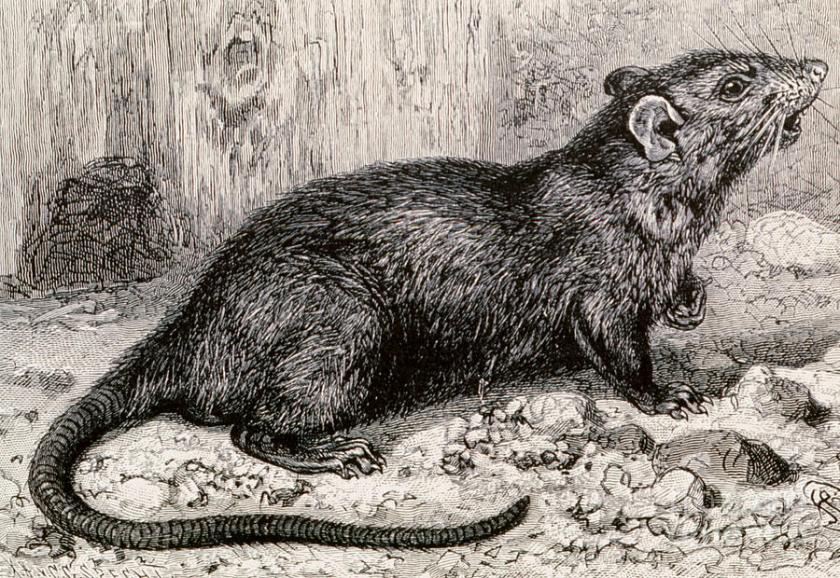
So it is that nature’s most efficient hunter of rodents was all but exterminated from the land, paving the way for the rat-borne apocalypse, to come.
One-third of the world’s population died in the rat-borne plague of 1347-’52. It’s as if over two billion were to sicken and die, today.
Feature image, top of page: Hat tip historythings.com
A Trivial Matter
The term ‘Black Death’ was not adopted until some time later. For years, the plague was known as “the Pestilence” or simply “the Great Mortality”.
The Presidential election of 1884 was as close as any in history and Republicans made hay with the Halpin scandal. “Ma, Ma, where’s my Pa”?
Born this day in 1837, Stephen G. “Big Steve” Cleveland was 33 the day he left his practice of law to become Sheriff of Erie County, in western New York.
As Sheriff, Cleveland was responsible for carrying out the sentence of death, either with his own hands, or by that of a deputy. For this, the hangman was paid a fee of ten dollars.
Stephen G. Cleveland in an undated photograph
Sheriff Cleveland took care of this job himself, personally releasing the trap door on September 6, 1872 and hanging one Patrick Morrissey, who’d been convicted of stabbing his mother to death in a drunken rage. He executed another convicted murderer six months later, hanging John Gaffeny on February 14, 1873.
The fees for these and other services were surprisingly lucrative, amounting to $40,000 over a two year term, equivalent to $836,556, today.
A lifelong Democrat, Cleveland had a reputation for ‘shooting straight” at a time of rampant political corruption, by both parties.
Elected Mayor of Buffalo in 1871, Cleveland was called upon to approve a street cleaning contract awarded to the highest bidder. The difference between high and low bids came to the considerable sum of $100,000, a pot of money which could be expected to find its way back to the politicians who’d approved it.
This sort of graft had long been a feature of political life in New York, but not now. Mayor Cleveland vetoed the measure, describing the scheme “as the culmination of a most bare-faced, impudent, and shameless scheme to betray the interests of the people, and to worse than squander the public money“.
This reputation for honesty propelled Big Steve’s political career from the Mayoralty of Buffalo to the Governor’s mansion, in New York.
Maria Halpin
Talk about corruption. Five years earlier, one New York city alderman’s committee estimated that Boss Tweed’s Tammany Hall machine fleeced New York taxpayers to the tune of $25 to $45 million. Later estimates ranged as high as an astonishing $200 million, equivalent to a jaw-dropping $2.8 Billion, today. As Governor, Cleveland earned the ire of the city’s Tammany Hall machine, with eight vetoes in his first two months in office.
In 1884, the “Buffalo Hangman” found himself Democratic nominee for President of the United States. Boston Globe columnist and political commentator Jeff Jacoby notes that “Not since George Washington had a candidate for President been so renowned for his rectitude.”
Despite all that rectitude, the candidate was not without skeletons in his closet. One was a relationship with one Maria Crofts Halpin which produced a son, named Oscar Folsom Cleveland.
Halpin insisted to the end of her days, that she’d been raped. Big Steve claimed she was crazy and overly generous with her affections, accepting paternity only as a way of doing right by an old girlfriend. Cleveland did manage to get the woman involuntarily committed, for a time, and the boy taken away to be raised in anonymity, by his adoptive family.
1884 political cartoon asks “Ma, Ma, Where’s my Pa”
The Presidential election of 1884 was as close as any in history and Republicans made hay with the Halpin scandal. “Ma, Ma, where’s my Pa“?
Despite all of it, Stephen Grover Cleveland won the popular vote by one quarter of one per cent, and an electoral college victory of 219-192, leading to the rejoinder “Ma, Ma, where’s my Pa? Gone to the White House, ha ha ha“.
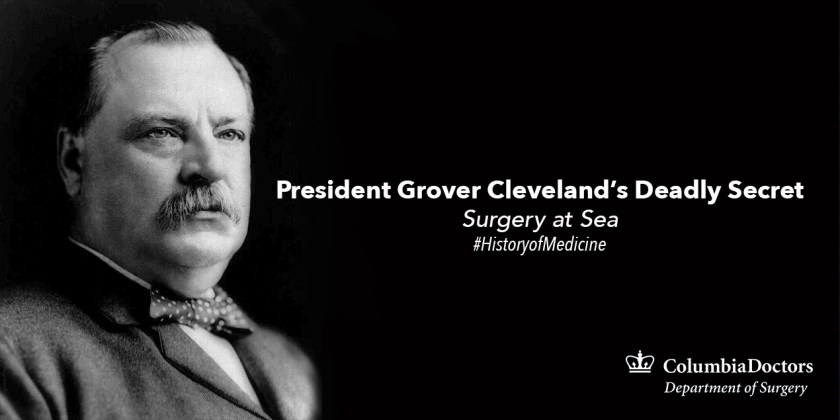
Fun fact: The only former executioner ever elected President of the United States, Grover Cleveland is best remembered for being the only President to ever serve two non-consecutive terms. The 22nd and 24th President of the United States was also, something of a medical miracle.
President Grover Cleveland was inaugurated for the second time in the midst of a disastrous recession known as the Panic of 1893. The nation suffered vast unemployment, with hundreds of businesses closing down. The railroad industry was devastated. With Americans struggling everywhere, many looked to the new President to provide hope and a new direction.
Early in his second term, the President noticed a bumpy and rapidly growing patch, on the roof of his mouth. White House physician Dr. Robert Maitland O’Reilly took one look and pronounced: “It’s a bad looking tenant, and I would have it evicted immediately”.
The health of the famously rotund, cigar chomping President was already a matter of public concern. Cleveland feared a cancer diagnosis would set off a panic. The tumor would have to be removed and the whole procedure, kept secret.
The only answer to the prying eyes of the press was to do it on the move, and there could be no scar. President Cleveland announced a four-day vacation aboard a friend’s yacht, a cruise through Long Island Sound to Buzzard’s Bay and on to the President’s summer home, on Cape Cod.
A surgical team of six boarded the yacht in disguise. On July 1, 1893, the President was strapped into a chair and anesthetized, with ether. The tumor was removed in a ninety minute procedure, along with the entire left side of the upper jaw, and five teeth. For all that, there was no external incision. The President’s life was saved, the trademark mustache undisturbed.
The operation remained secret until 1917, nine years after the death of the former President. A medical miracle for the time, the President’s surgery is studied, to this day.
A Trivial Matter
Theodore Roosevelt was the first president to call the official residence, the “White House.” Prior to that, the building was called the Executive Mansion or the President’s House.
“From 1951 through 1969, hundreds, perhaps thousands of open-air tests using bacteria and viruses that cause disease in human, animals, and plants were conducted at Dugway … It is unknown how many people in the surrounding vicinity were also exposed to potentially harmful agents used in open-air tests at Dugway”. – GAO report, 1994
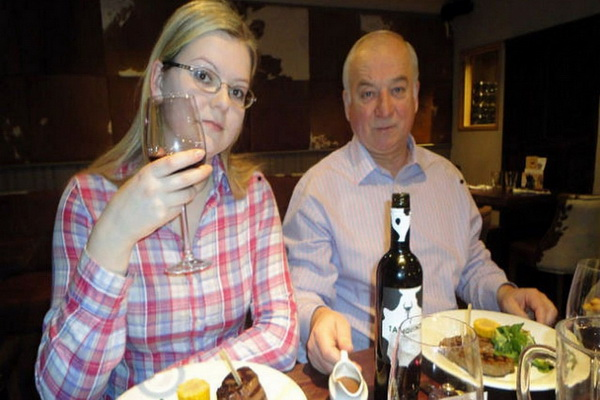
The father-daughter pair had just finished a meal at the Zizzi restaurant in the cathedral city of Salisbury, ninety miles southwest of London. The two took ill two hours before sunset. A passing doctor and nurse found the couple on a park bench.
Sergei Skripal, age 66, and his daughter Yulia (33) were slipping in and out of consciousness, foaming at the mouth with eyes wide open, but entirely white. Sergei and Yulia Skripal were weeks in intensive care before regaining consciousness. In a May 23 interview with CBS News, Yulia said “I don’t want to describe the details, but the clinical treatment was invasive, painful and depressing.”
Sergei and Yulia Skripal
Though Vladimir Putin’s Russia vehemently denies the charge, the incident has been classified as an attempted assassination carried out against the former spy and his daughter, using the military grade nerve agent, Novichok.
The terrifying history of “Nerve “Agents” began in 1936, when the German biochemist Dr. Gerhard Schrader was working on pesticides. Schrader first experienced problems with his eyesight, and soon had difficulty breathing. Symptoms included involuntary muscular spasms, the scientist’s arm was fully paralyzed, days later.
Dr. Schrader had discovered a class of chemical compounds known as organo-phosphates.
Organo-phosphates are a class of organic chemical which block nerve signals to bodily organs. Nerve agents are generally clear to a golden amber in color, tasteless liquids which may be evaporated, into a gas. The Sarin gas used in the 1995 Aum Shinrikio attack on the Tokyo subway was odorless as was the VX used to assassinate the brother of Kim Jong-un. in 2017.
Symptoms of nerve agent poisoning begin with constriction of pupils and convulsions, leading to involuntary urination and defecation. Death by asphyxiation or cardiac arrest follows within minutes.
British chemist Dr. Ranajit Ghosh discovered the “V”series of organophosphate compounds in the 1950s, sold as a pesticide in 1954 under the trade name Amiton. The stuff was soon taken off the market, as it was too dangerous for safe use. British Armed Forces took control of the compound at Porton Downs and traded it to the United States in 1958, for information on thermo-nuclear weapons.
The American military went into full-scale production of VX gas as a chemical weapon of war in 1961. The Russian military developed an analog of VX called VR in 1963, later developed into the Novichok group, including the most toxic molecules ever developed.
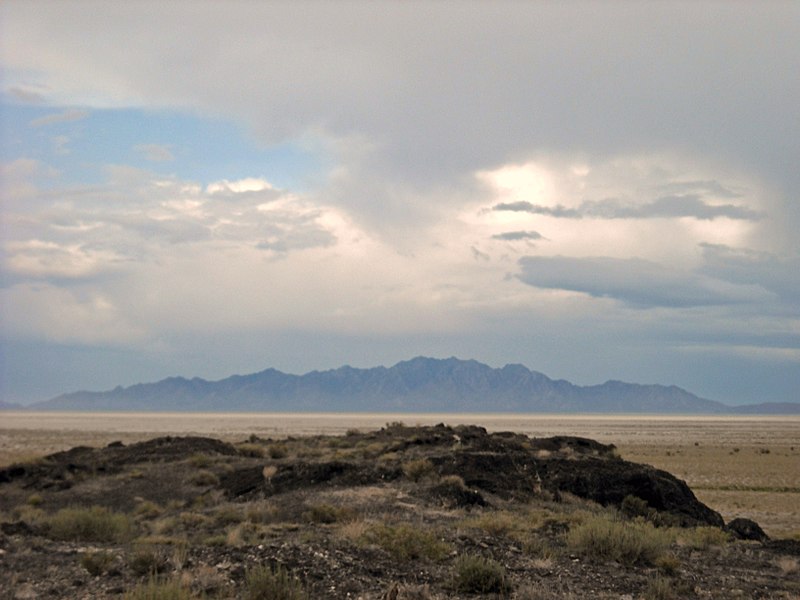
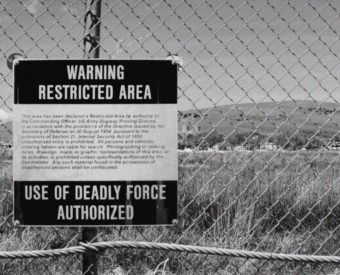
Dugway Proving Ground
The Dugway Proving Ground near Salt lake City Utah was established in 1941 and used for hundreds if not thousands of open-air tests of nuclear, biological and chemical compounds.
A 1994 GAO (US General Accounting Office) reports:
“From 1951 through 1969, hundreds, perhaps thousands of open-air tests using bacteria and viruses that cause disease in human, animals, and plants were conducted at Dugway … It is unknown how many people in the surrounding vicinity were also exposed to potentially harmful agents used in open-air tests at Dugway”.
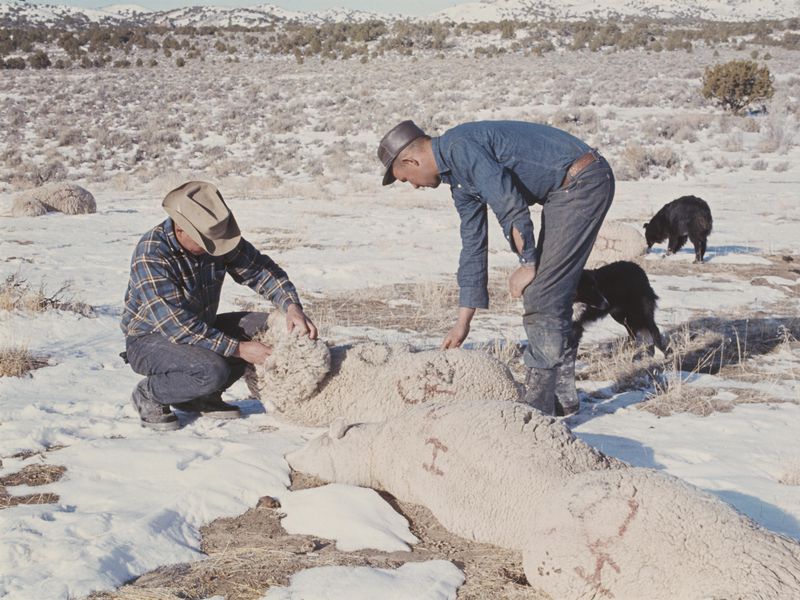
On this day in 1968, the manager of a Skull Valley livestock company phoned the department of ecology and epidemiology at Dugway to report the unexplained death of 3,000 sheep. The animals had been grazing in the Skull Valley area, some 27 miles from the proving ground.
The Dugway safety office compiled a count of 3,843 dead animals. Exact cause of death was at first difficult to determine, since “no other animals of any type, including cows, horses, dogs, rabbits, or birds, appeared to have suffered any ill effects, a circumstance that was hard to explain if VX had in fact caused the sheep deaths.”
View of two farmers checking the corpses of dead sheep on a farm ranch near the Dugway Proving Ground in Utah. (Rolls Press/Popperfoto/Getty Images) H/T Smithsonian.com
Necropsies revealed the presence of VX nerve agent, as did grass and snow samples taken, some three weeks after the incident. Total sheep deaths were counted at 6,000-6,400 including those humanely euthanized. With even the suspicion of VX nerve agent, the animals had no market value whatever, either for their meat, or for wool.
A report which remained classified for thirty years, blamed a faulty nozzle left open, as the test aircraft gained altitude.
Public backlash was vehement against the US Army Chemical Corps, and nearly lead to its disbanding. President Richard Nixon ordered a halt to open air testing of “NBC” agents, in 1969.
Today, few nations possess stockpiles of nerve agents, a hellish weapon of war which may, with a mere puff of wind, turn on those who would use it. The use of such an agent would almost certainly lead to nuclear retaliation, should any nation so attacked, posses the capability. So it is the nations of the world hold the proverbial wolf by the ears, desperately afraid to hang on, and unable to let go.
Explosives expert Staff Sgt. Dan Brown. Two surgeons, Major John Oh and Major Kevin Kirk and the whole team at the aid station. Three surgical staff. All did their jobs knowing that, at any instant, the whole team could be vaporized.
Paktika Province is a wild and lawless region in the east of Afghanistan, a border crossroads with the west of Pakistan and home to a number of Taliban and Al Qaeda units. An article from Time magazine describes the U.S. base:
“The U.S. firebase looks like a Wild West cavalry fort, ringed with coils of razor wire. A U.S. flag ripples above the 3-ft.-thick mud walls, and in the watchtower a guard scans the expanse of forested ridges, rising to 9,000 ft., that mark the border. When there’s trouble, it usually comes from that direction.”
Channing Moss, second from right
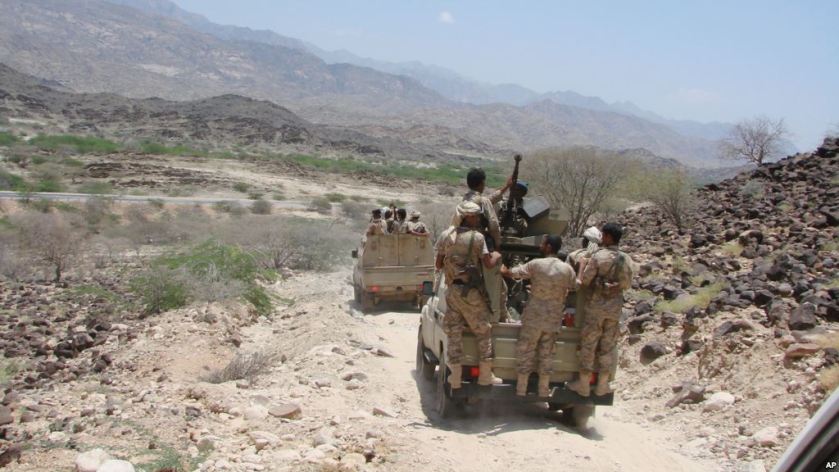
The morning of Thursday, March 16, 2006 dawned bright and clear, as a force rode out from the 10th Mountain Division. Their mission was to seek out a remote mountain village, and meet with village elders. They were twenty-four American soldiers in five Humvees and a handful of Afghan National troops, riding a pickup truck.
Paktika is a trackless wilderness of ragged hillsides and wadis, seasonal riverbeds flowing southwest from the mountains of Sar Hawza, to the north. The land appears custom made for an ambush, with dangerous high spots in nearly every direction.
Gunfire broke out from above, some four hours into the mission. First small arms, then came the rocket-propelled grenades. One gunner, twenty-three-year-old Private Channing Moss, remembered it sounded like rattling spoons.
RPGs were soon raining down. The pickup exploded, killing two Afghan soldiers. The rest scrambled to get out of the “kill zone”, as three rocket propelled grenades struck Private Moss’ Humvee. Staff Sergeant Eric Wynn, 33, felt one slice through his face. Channing Moss, standing with his upper body out of the Humvee, felt something and smelled smoke. He looked down to see it was himself. He was smoking.
RPG ammunition, found on the outskirts of Basra
A rocket propelled grenade is exactly what it sounds like, a weapon roughly the size of a baseball bat, propelled at the speed of a bullet. Standing as he was, Channing Moss had taken one of these things in the hip, leaving nothing but the fins, sticking out of his body. The weapon inside of him was capable of turning everyone in the vehicle into a “pink mist”.
What happened next, is beyond belief. When every human instinct says “get the hell away from that thing”, Moss had a whole team by his side, throughout the ordeal. Company medic Spc. Jared Angell, 23, working to stabilize that thing for transportation. Lieutenant Billy Mariani came over once the fighting had died down: “I grabbed his hand and I just said, ‘Hey, buddy, we’re gonna get you out of here.'” Badly wounded himself, Wynn held his own face together while reporting casualties over the radio, and holding Moss’ hand.
Private Channing Moss
The MEDEVAC crew arrived escorted by an Apache attack helicopter, they knew what they were dealing with. Army regulations say it’s too dangerous to carry such a human bomb. It could take out every man on the chopper and blow the bird out of the sky: four MEDEVAC crew members, and three wounded soldiers.
Pilot CW2 Jorge Correa spoke with his team: “I asked my crew, you know, ‘Are you guys comfortable with this? Because I wasn’t gonna put my crew in jeopardy if they weren’t comfortable with it.” Co-pilot Jeremy Smith recalled the moment: “We all said, ‘Yeah, let’s get him on board and let’s get outta here.'”
It was the same thing, back at the aid station. Explosives expert Staff Sgt. Dan Brown. Two surgeons, Major John Oh and Major Kevin Kirk and the whole team at the aid station. Three surgical staff. All did their jobs knowing that, at any instant, the whole team could be vaporized.
Channing Moss was well beyond the “golden hour” with expectations of survival, growing dim. The man’s heart actually stopped and the surgeons administered epinephrine, knowing that physical heart massage could detonate the ordnance still inside the man’s body.
Private Moss survived, despite massive injury to his body. There were four more surgeries back at Walter Reed and an endless hell of physical therapy as the man progressed from bed to wheel chair to crutches, to a cane. Moss had a Purple Heart coming and then some and refused to receive it, until he could stand on his own two legs and walk to receive his medal, himself.
Explosives expert Dan Brown spoke for the whole team, I think, in explaining what they had done: “He was American, he was a solider, he was a brother and he was one of us. And there was nothing gonna stop us from doing what we knew what we had to do … We knew we did right. In that screwed up world we did something right.”
Channing Moss and his wife Lorena, reunited with Majors Oh and Kirk
A Trivial Matter
While rare, unexploded ordnance has been lodged inside living human bodies on no fewer than thirty six occasions between WW2 and the modern era, requiring surgical removal. All but four, survived.
The politician who alienates a battle hardened army in the field walks on dangerous ground. Don’t pay for their services, that’s a good way to do it.
The great rebellion effectively came to an end in October 1781 with Lord Cornwallis’ surrender at Yorktown, though no one knew it at that time. Eight years after the “shot heard round the world“, the American Revolution had slowed to a standoff.
King George III remained personally in favor of prosecuting the war even after the Patriot victory at Yorktown, while opinion in Parliament, was split. Across the water, some 26,000 British troops remained in occupation in Charleston, Savannah and New York, backed up be a mighty fleet.
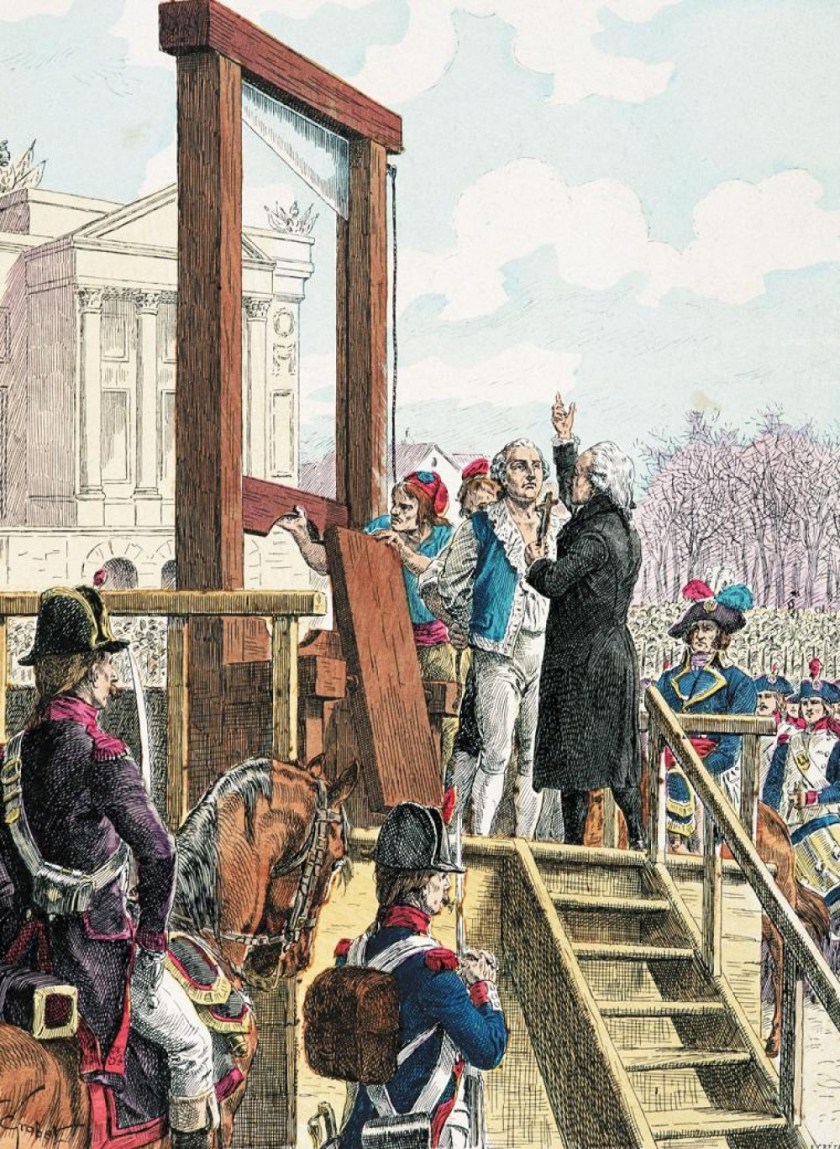
The Americans’ greatest ally departed in 1782, never to return. With state finances already prostrate with debt, l’Ancien régime (French: “the old order”) would be overthrown by its own revolution inside the next ten years, the French King Louis XVI and Queen Consort Marie Antoinette executed, by guillotine.
Negotiations carried on for nearly three years in Paris while, an hour’s drive north by modern highway from the British occupation of New York, the Continental Army waited at Newburgh.
France wasn’t the only one, ruined by this war. The American Revolution debilitated the finances of all three principle belligerents, none more so than the new-born American Republic, itself. In fact, the fledgling United States nearly died on this day in 1783, by the very hands which had given them birth.
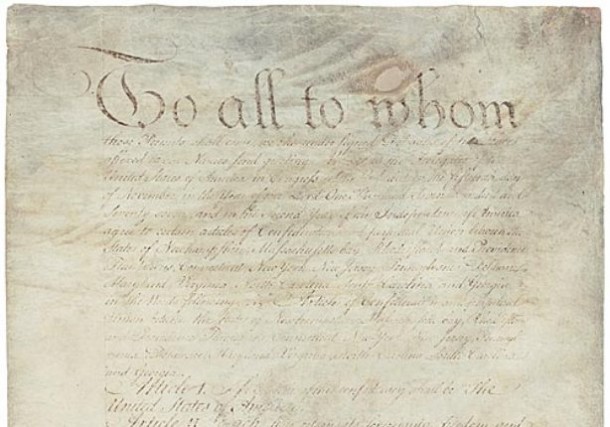
The Articles of Confederation, ratified by the states in March 1781, provided for a loose alliance of sovereign states. In theory, Congress possessed the authority to govern foreign affairs, conduct war and regulate currency. In practice, these powers were limited to a national body with no authority to enforce its will on the states.
In 1780, Congress promised Continental officers a lifetime pension, equal to half-pay upon discharge. The government in Philadelphia attempted to amend the Articles, to allow a new import duty or “impost”. States were divided against the measure. Two years later, the cupboard was bare. Continental soldiers weren’t being paid at all.
It wasn’t even possible to borrow. That required evidence, of an income stream.
The politician who alienates a battle hardened army in the field walks on dangerous ground. Don’t pay for their services, that’s a good way to do it. At the outset of war, these guys left homes and fields and families, to risk their lives on behalf of the dream of Liberty. Many among their number, had given all in service to that dream.
There was little to do during those long winter months of 1782-’83, but wait. Each with his own financial hardship waiting at home, every man worried that his promised compensation, would not come. The rumor mill worked overtime: The Army would be disbanded. The promised pensions would remain, unfunded.
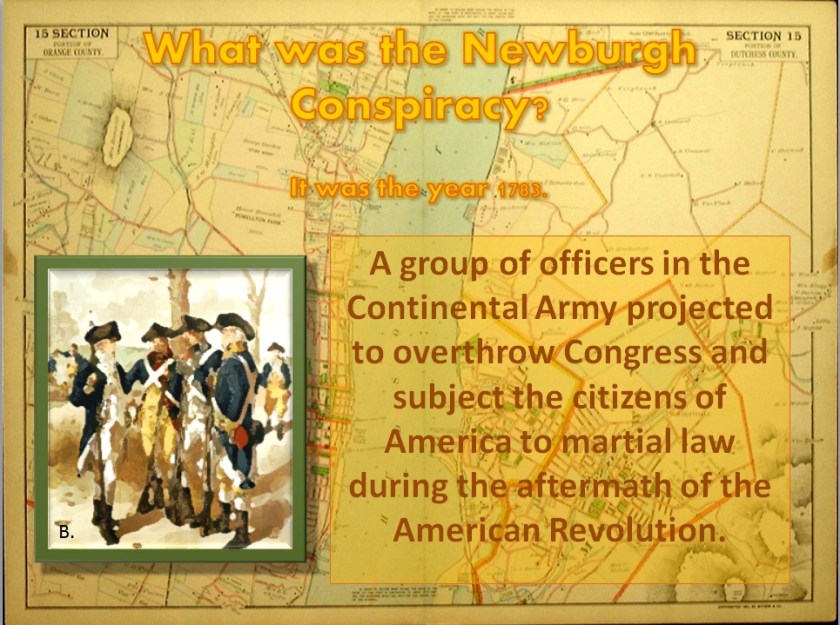
The vague unease of rumor turned to a fury of near certainty through the late winter months, as one overture after another met with defeat, in Congress. On March 10, an unsigned letter believed to have been written by Major John Armstrong, aide to General Horatio Gates, urged unspecified action against the Continental Congress. Another called for a meeting on the morning of March 11. Events were building toward armed insurrection. A coup d’état.
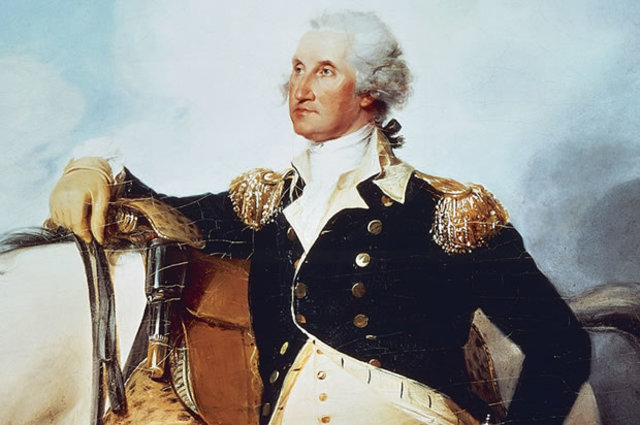
General George Washington reacted quickly, objecting in his General Orders of March 11 to the “disorderly” and “irregular” nature of such a meeting. Washington specified the morning of March 15 for an officer’s meeting and requested a report, implying that he himself, would not be present.
The mood was one of surprise and anger when the Commander-in-Chief himself walked into the room, hard men pushed past the point of patience, and now determined to take action. The General urged patience in a brief and impassioned speech remembered as the Newburgh address.
Washington’s words may as well have fallen on deaf ears. There was little of the usual deference, in this room.
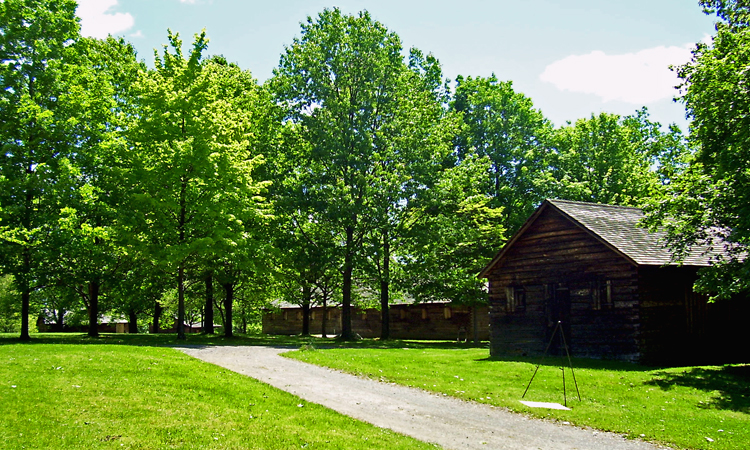
Reconstructed Temple at the New Windsor Cantonment State Historic Site, where the critical meeting took place on March 15, 1783
The future President of the United States then produced a letter from a member of Congress, to read to his officers. The content is unimportant. George Washington gazed on the letter in his hands without speaking and, fumbling in his pocket, came up with a pair of reading glasses. These were new. Few men in the room even knew the man required glasses.
Washington spoke:
Gentlemen, you will permit me to put on my spectacles, for I have not only grown gray but almost blind in the service of my country.
The words were as a physical blow, on the men assembled in that room. Obstinate and unheeding mere moments before, the realization dawned on all at once. This man had been at their head and by their sides. Washington had personally endured every bit of the hardship, as these men bent on mutiny.
There was hardly a dry eye in the place. The moment was broken for all time. Bent on mutiny a mere moment before, the cream of the continental army now determined, to wait. This Republic to which we owe so much may have died before it was born, two hundred thirty-six years ago on this day. All but for one magnificent man with an actor’s sense of timing. And a new pair of spectacles.
A Trivial Matter
At age twenty-six, George Washington married Martha Dandridge Custis, a widow with two children: Jacky and Patsy. The Father of the Nation never had any children of his own. At 6 feet, 3½ inches and 200-pounds, George Washington towered above his fellow Continental soldier, with an average height of 5-feet, 8-inches in height.
Steel was in critically short supply by the time the US entered the war in 1917, the need for new ships, higher than ever. Something had to be done. One answer, was concrete.
The final third of the nineteenth century was a period of unprecedented technological advancement, an industrial revolution of international proportion.
The war born of the second industrial revolution, would be like none before.
From the earliest days of the “War to end all Wars”, the Triple Entente powers imposed a surface blockade on the Central Powers of Germany, Austria-Hungary and the Ottoman Empire, throttling the maritime supply of goods and crippling the capacity to make war. One academic study from 1928 put the death toll by starvation at 424,000, in Germany alone.
The Kaiser responded with a blockade of his own, a submarine attack on the supply chain to the British home islands. It was a devastating incursion against an island adversary dependent on prodigious levels of imports.
Joseph Louis Lambot’s first prototype, built 1848
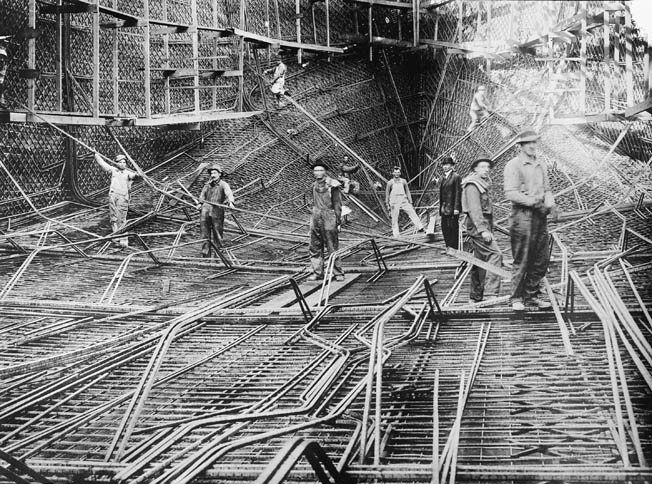
1915 saw the first German attacks on civilian shipping. Total losses for that year alone came to 370 vessels against a loss of only 16 U-Boats. Steel was in critically short supply by the time the US entered the war in 1917 with the need for new ships, higher than ever. Something had to be done. One answer, was concrete.
The idea of concrete boats was nothing new. In the south of France, Joseph Louis Lambot experimented with steel-reinforced “ferrocement”, building his first dinghy in 1848.
By the outbreak of WW1, Lambot’s creation had sunk to the bottom of a lake, where it remained for 100 years, buried deep in anaerobic mud. Today you may see the thing at the Museum of Brignoles, in the south of France.
Italian engineer Carlo Gabellini built barges and small ships of concrete in the 1890s. British boat builders experimented with the stuff, in the first decade of the 20th century. The Violette, built in Faversham in 1917, is now a mooring hulk in Kent, the oldest concrete vessel still afloat.
The Violette built in 1917, is the oldest concrete ship, still afloat.
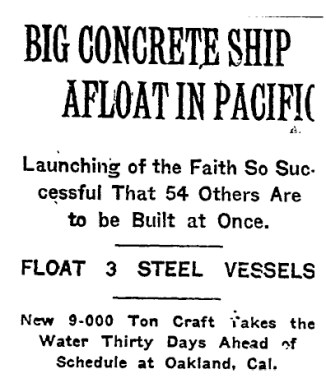
The American government contracted with Norwegian boat builder N.K. Fougner to create a prototype, the 84-foot Namsenfjord launched in August, 1917. The test was judged a success. President Woodrow Wilson approved a twenty-four ship fleet, consisting of steamers and tankers to aid the war effort. The first and largest of the concrete fleet, the SS Faith was launched on this day in 1918, thirty days ahead of schedule.
“Constructed by the San Francisco Shipbuilding Company in 1918, the SS Faith was the first concrete ship built in the United States”. – H/T warfarehistorynetwork.com
The New York Times was ecstatic:
‘”When the first steel vessels were built people said they would not float, or if they did they would be too heavy to be serviceable,” said W. Leslie Comyn, President of the concern which built the boat. “Now they say the same about concrete. But all the engineers we have taken over this boat, including many who said it was an impossible undertaking, now agree that it was a success”‘.
All that from a west coast meadow with two tool sheds, a production facility 1/20th the cost of a conventional steel shipyard.
The Great War ended eight months later with only half the concrete fleet, actually begun. None were completed. All were sold off to commercial shippers or for storage, or scrap.
For all its advantages as a building material, ferrocement has numerous drawbacks. Concrete is a porous material, and chunks tend to spall off from rusting steel reinforcements. We’ve all see that on bridge abutments. Worst of all, the stuff is brittle. On October 30, 1920, the SS Cape Fear collided with a cargo ship in Narragansett Bay Rhode Island and “shattered like a teacup”, killing 19 crewmen.
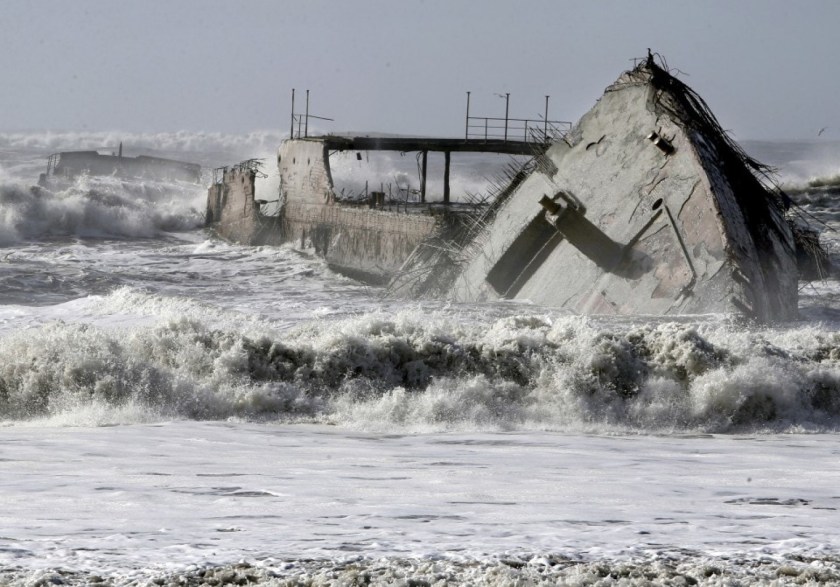
SS Palo Alto was a tanker-turned restaurant and dance club, before breaking up in heavy waves, in Monterey Bay.
SS Palo Alto
SS San Pasqual was damaged in a storm in 1921 and became a warehouse for the Old Times Molasses Company of Havana. She was converted to a coastal defense installation during WW2 and outfitted with machine guns and cannon, then becaming a prison, during the Cuban revolution. The wreck was later converted to a 10-room hotel before closing, for good. That was some swanky joint, I’m sure.
SS San Pasquale
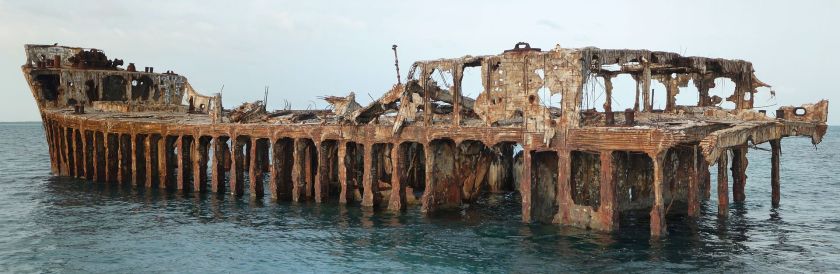
The steamer SS Sapona was sold for scrap and converted to a floating liquor warehouse during Prohibition, later grounding off the shore of Bimini during a hurricane. All the liquor, was lost.
SS Sapone as she looked, in 2009. H/T Compsciscubadive
The SS Atlantus was destined to be sunk in place as a ferry dock in Cape May New Jersey in 1926, until she broke free in a hurricane and ran aground, 150-feet from the beach. Several attempts were made to free the hulk, but none successful. At one time, the wreck bore a billboard. Advertising a marine insurance outfit, no less. Kids used to swim out and dive off, until one drowned. The wreck began to split up in the late 1950s. If you visit sunset beach today, you might see something like the image, at the top of this page.
SS Atlantus, Insurance billboard
In 1942, the world once again descended into war. With steel again in short supply, the Roosevelt administration contracted for another concrete fleet of 24 ships. The decades had come and gone since that earlier fleet. This time, the new vessels came off the production line at the astonishing rate of one a month featuring newer and stronger aggregates, lighter than those of years past. Like the earlier concrete fleet, most would be sold off after the war. Two of the WW2 concrete fleet actually saw combat service, the SS David O. Saylor and the SS Vitruvius.
In March 1944, an extraordinary naval convoy departed the port of Baltimore. including the concrete vessels, SS David O. Saylor and SS Vitruvius. It was the most decrepit procession to depart an American city since Ma and Pa Joad left Oklahoma, for California. A one-way voyage with Merchant Marines promised a return trip, aboard Queen Mary.
Merchant mariner Richard Powers , described the scene:
“We left Baltimore on March 5, and met our convoy just outside Charleston, South Carolina,” Powers recalled. “It wasn’t a pretty sight: 15 old ‘rustpots.’ There were World War I-era ‘Hog Islanders’ (named for the Hog Island shipyard in Philadelphia where these cargo and transport ships were built), damaged Liberty Ships.”
1,154 U-boats were commissioned into the German navy before and during WW2, some 245 of which were lost in 1944. The majority of those, in the North Atlantic. The allied crossing took a snail’s pace at 33 days and, despite the massive U-boat presence, passed unmolested into Liverpool. Powers figured, “The U-Boats were not stupid enough to waste their torpedoes on us.”
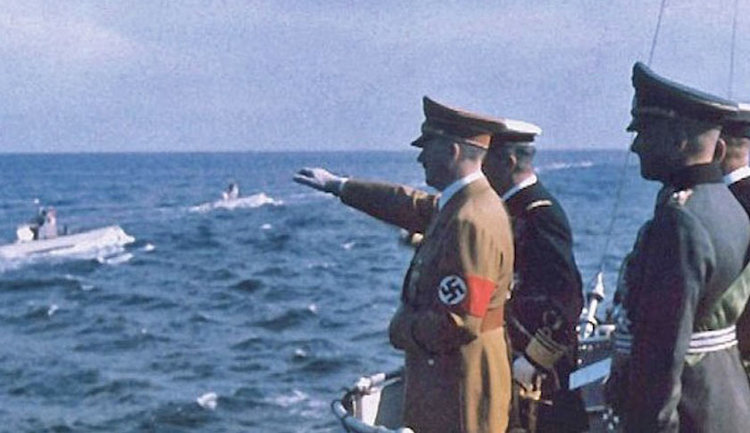
Herr Hitler’s Kriegsmarine should have paid more attention.
On June 1, Seaman Powers’ parade of misfit ships joined a procession of 100 British and American vessels. Old transports and battered warships, under tow or limping across the English channel at the stately pace of five knots. These were the old and the infirm, the combat damaged and obsolete. There were gaping holes from mine explosions, and the twisted and misshapen evidence of collisions at sea. Some had superstructures torn by some of the most vicious naval combat, of the European war. Decrepit as they were, each was bristling with anti-aircraft batteries, Merchant Mariners joined by battle hardened combat troops.
Their services would not be required. The allies had complete air supremacy over the English channel.
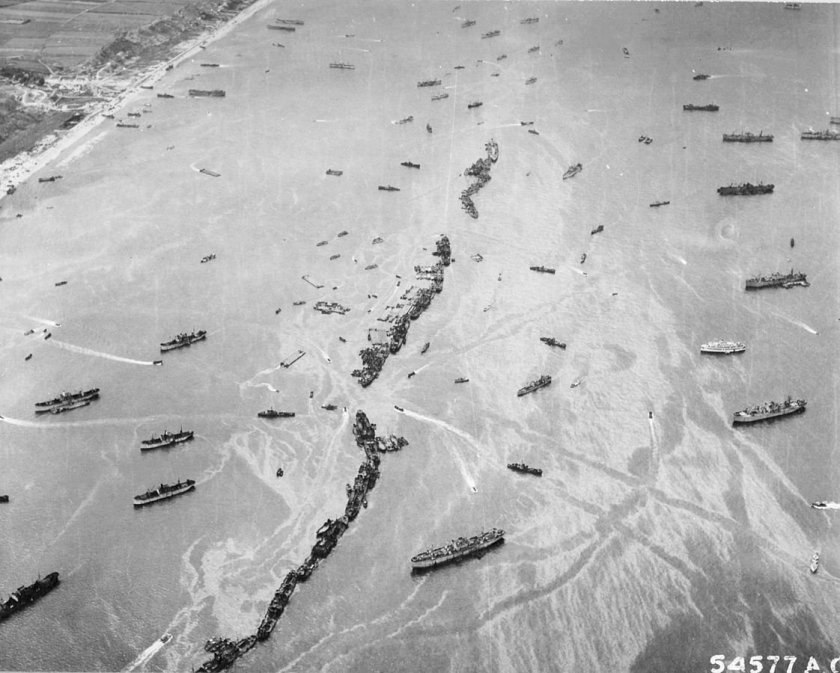
A line of U.S. Liberty ships deliberately sunk off the coast at Omaha beach to form a breakwater for the Mulberry harbor there.(U.S. Army) H/T wearethemighty.com
These were the “gooseberries” and “blockships”. Part of the artificial “Mulberry” harbors intended to form breakwaters and landing piers in support of the D-Day landing, charged with the difficult and dangerous task of scuttling under fire at five points along the Norman coast. Utah. Omaha. Gold. Juneau. Sword.
Later on, thousands more merchant vessels would arrive in support of the D-Day invasion. None more important than those hundred or so destined to advance and die, the living breakwater without which the retaking of continental Europe, would not have been possible.
A Trivial Matter
The British Army lost 19,240 killed on the first Day of the WW1 Battle of the Somme. French and German forces suffered a whopping 975,000 casualties on one single day of the ten-month Battle of Verdun. Imperial Russia lost five million soldiers, in the first two years of WW1. Many single day’s fighting of the great battles of 1916 produced more casualties than every European war of the previous 100 years. Combined.
Pinned against the split boiler plate and slowly scalded to death, engineer William Ingram lived long enough to speak with would-be rescuers. “With his last breath he warned away all who went near to try and aid him, declaring that there was danger of the boiler exploding and killing them.”
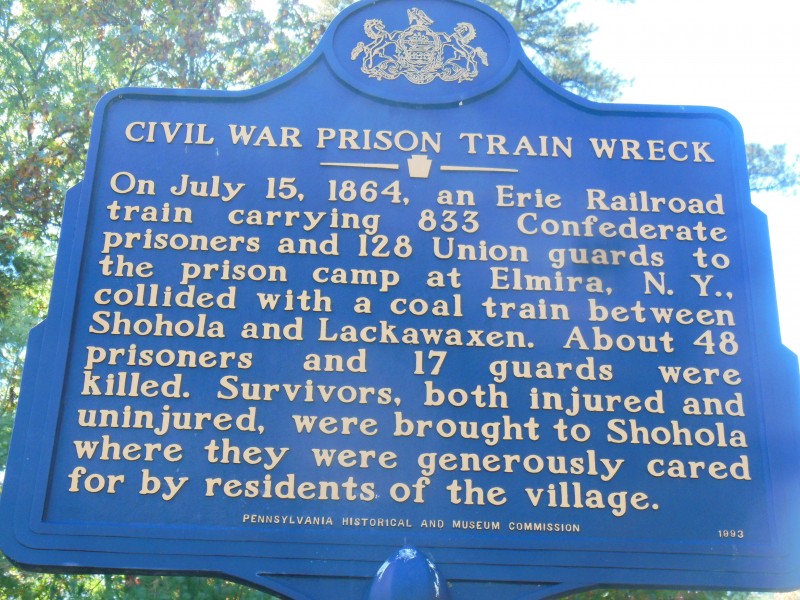
The wood burning steam locomotive #171 left Jersey City, New Jersey on July 15, 1864, pulling 17 passenger and freight cars. On board were 833 Confederate Prisoners of War captured at Cold Harbor and 128 Union guards, heading from Point Lookout, Maryland to the Union prison camp in Elmira, New York.
Engine #171 was an “extra” that day, running behind a scheduled train numbered West #23. West #23 displayed warning flags giving the second train right of way, but #171 was delayed while guards located missing prisoners. Then there was the wait for the drawbridge. By the time #171 reached Port Jervis, Pennsylvania, the train was four hours behind schedule.
Telegraph operator Douglas “Duff” Kent was on duty at the Lackawaxen Junction station, near Shohola Pennsylvania. Kent had seen West #23 pass through that morning with the “extra” flags. His job was to hold eastbound traffic at Lackawaxen until the second train passed. Kent might have been drunk that day, but nobody’s sure of it. He disappeared the following day, never to be seen again.
Erie Engine #237 arrived at Lackawaxen at 2:30 pm pulling 50 coal cars, loaded for Jersey City. Kent gave the All Clear at 2:45, the main switch was opened, and Erie #237 joined the single track heading east out of Shohola.
Only four miles of track stood between the two speeding locomotives.
The trains met head-on at “King and Fuller’s Cut”, a section of track following a blind curve with only 50’ of visibility. Historian Joseph C. Boyd described what followed on the 100th anniversary of the wreck:
“[T]he wooden coaches telescoped into one another, some splitting open and strewing their human contents onto the berm, where flying glass, splintered wood, and jagged metal killed or injured them as they rolled. Other occupants were hurled through windows or pitched to the track as the car floors buckled and opened. The two ruptured engine tenders towered over the wreckage, their massive floor timbers snapped like matchsticks. Driving rods were bent like wire. Wheels and axles lay broken.” The troop train’s forward boxcar had been compacted and within the remaining mass were the remains of 37 men”. [Witnesses] saw “headless trunks, mangled between the telescoped cars” and “bodies impaled on iron rods and splintered beams.”
Pinned against the split boiler plate and slowly scalded to death, engineer William Ingram lived long enough to speak with would-be rescuers. “With his last breath he warned away all who went near to try and aid him, declaring that there was danger of the boiler exploding and killing them.”
51 Confederate prisoners and 17 Union guards were killed on the spot, or died within a day of the wreck. 5 prisoners escaped in the confusion.
Captured at Spotsylvania in early 1864, 52nd North Carolina Infantry private James Tyner was incarcerated at the Elmira camp at this time. Tyner’s brother William was one of the prisoners on board #171.
William was badly injured in the wreck, and survived only long enough to avoid being buried in a mass grave, in Shohola. He died in Elmira three days later, never regaining consciousness.
I’ve always wondered if the brothers saw each other that one last time. James Tyner was my twice-great Grandfather, one of four brothers, farmers who laid down their tools and went to war for their home state of North Carolina, in 1861.
We’ll never know. James Tyner died in captivity on March 13, 1865, 27 days before General Lee’s surrender at Appomattox. Of the four brothers, Nicholas alone survived the war, laying down his arms when the man they called “Marse Robert” surrendered to General Ulysses S. Grant, to walk home to the Sand Hills of North Carolina.
A Trivial Matter
There were more Northern-born Confederate generals in the Civil War, than Southern-born Union generals. The last government to formally repeal ordinances of secession and rejoin the Union was the Village of Town Line, New York. In 1945.
Over 400,000 calls and letters came into company headquarters, complaining about the change. One note was addressed to “Chief Dodo, The Coca-Cola Company”. Another letter asked for Goizueta’s autograph, since the signature of “one of the dumbest executives in American business history”
By the 19th century, Europeans had long believed natural mineral waters held medicinal qualities, and favored the beverages over often polluted common drinking water. British chemist Joseph Priestley invented a means of carbonating water in 1772. Jacob Schweppe’s Geneva, Switzerland company was bottling the stuff by the 1780s. The first soda water manufacturer in the US was Yale University chemist Benjamin Silliman in 1807, though it was Joseph Hawkins of Baltimore who secured the first US patent, in 1809.
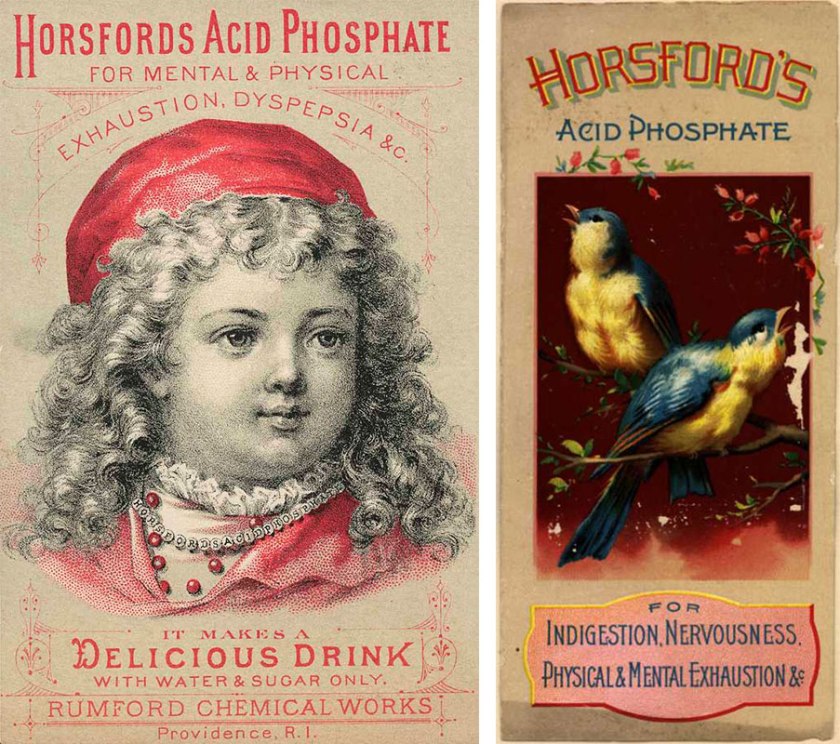
At first sold for their therapeutic value, consumers increasingly bought carbonated beverages for refreshment. By the time of the Civil War, “soft drinks” were flavored with ginger, vanilla, fruits, roots, herbs, and countless other flavorings. The first cola drink appeared in 1881.
In 1865, Confederate Cavalry officer John Stith Pemberton was wounded by a saber slash across his chest at the Battle of Columbus, Georgia. Like many wounded veterans, Pemberton became addicted to the morphine given him, to help ease the pain. A chemist in civil life, Pemberton experimented with painkillers to take the place of opiates, landing on a combination of the coca plant and kola nut in 1886.
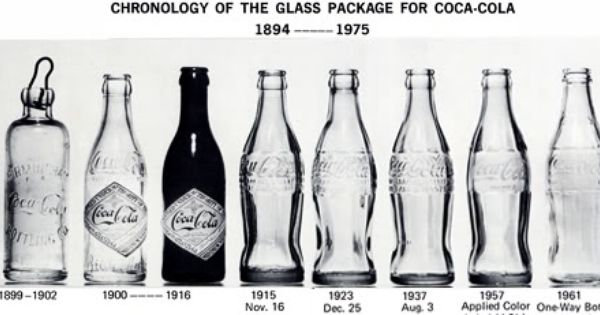
Vicksburg, Mississippi pharmacist Joseph Biedenharn installed bottling equipment in the back of his soda fountain and sold the first bottles of Coca Cola on March 12, 1894.
The most famous rivalry in the soft drink business began in the 1930s, when Pepsi offered a 12oz bottle for the same 5¢ as Coca Cola’s six ounces.
The Coca Cola Company’s flagship brand had a 60% share by the end of WWII, but that declined to less than 24% by the early 80s, most of the difference lost to Pepsi and their “Pepsi challenge” blind taste test promotions of the late 70s.
By the 80s, market analysts believed that baby boomers were likely to switch to diet drinks as they aged, and any growth in the full calorie segment was going to come from younger consumers who preferred the sweeter taste of Pepsi.
Roberto Goizueta came on board as Coca Cola Company CEO in 1980, saying that there would be “no sacred cows” among their products. He meant it. The company launched the top secret “Project Kansas”, to test and perfect the flavor for a new version of Coke. The company’s marketing department fanned out holding taste tests, surveys, and focus groups.
Early results were favorable, the newer, sweeter mixture overwhelmingly beating both Pepsi and Coke itself. Most tasters said that they would buy the product, but a small minority of 10–12% were angry and alienated at the very thought of it. This small percentage was adamant. They would stop drinking Coke products altogether, and they frequently swayed other members of their focus groups.
The way things turned out, the company should have listened to this group a little more carefully.
On an April Friday in 1985, Coke let the media know that a major announcement was coming the following Tuesday. Coca Cola officials spent a busy weekend preparing the re-launch, while Pepsi Executives announced a company-wide holiday, taking out a full page New York Times ad crowing “Pepsi had Won the Cola Wars“.
Skepticism was high on the day of the Big Announcement. Reporters were fed questions by Pepsi officials, and Goizueta fumbled, refusing to state the reason for the change. He certainly wasn’t going to give Pepsi any credit for their performance in taste tests, explaining “[It’s] smoother, uh, uh, rounder yet, uh, yet bolder…a more harmonious flavor“.
The backlash was soon in coming, and closely tracked earlier focus group results. Atlanta based Coca Cola’s southern customers described the change as another surrender to the “Yankees”. Consumers filled basements with the old Coke. One man in San Antonio bought $1,000 worth.
“Protesters at a Coca-Cola event in downtown Atlanta in May carried signs with “We want the real thing” and “Our children will never know refreshment.”” – Coca-cola.com
Over 400,000 calls and letters came into company headquarters, complaining about the change. One note was addressed to “Chief Dodo, The Coca-Cola Company“. Goizueta himself said the worst part, was the letter made it to him! Another letter asked for Goizueta’s autograph, since the signature of “one of the dumbest executives in American business history” would probably be worth a fortune. Critics proclaimed the “marketing blunder of the century” while frazzled customer service representatives fielded fifteen hundred angry calls, a day. A psychiatrist hired to listen in on calls, told executives some callers sounded as if they were mourning the death of a family member.
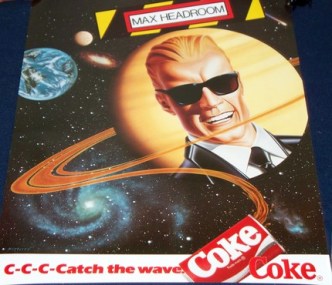
Even Max Headroom and his “C-c-c-catch the wave!” couldn’t save the company.
Ads for “New Coke” were booed at the Houston Astrodome, while Pepsi ran ads in which smiling first-time Pepsi drinkers said “Now I know why Coke did it!”
Even Fidel Castro weighed in, calling the change a sign of capitalist decadence.
Company President Donald Keough knew it was over, on a visit to the Mediterranean Principality of Monaco. A small restaurant owner proudly said that he had “the real thing, it’s a real Coke,” offering Keough’s party a bottle of the old stuff.
The 1985 return of the old brand led two network news broadcasts, and hit the front page of nearly every newspaper, in the country. “New Coke” became “Coke II” and quietly disappeared, from store shelves. One reporter asked Keough if the whole thing had been a publicity stunt. Keough’s answer was itself, a classic. “We’re not that dumb,” he said, “and we’re not that smart”.
A Trivial Matter
Coke makes so many different beverages if you drank one per day, it would take you over 9 years to try them all. Coca-Cola’s $35.1 billion in revenue makes it the 84th largest economy in the world, just ahead of Costa Rica. H/T gkfacts.in
“Antigenic Shift” occurs when two or more DNA strands combine, instantaneously forming a new virus sub-type. Like the dealer at some giant, cosmic poker table, this process may deal us a pair of twos. Occasionally, fate deals us aces & eights. The death hand.
In the world of virology, “Antigenic Drift” describes changes which happen slowly, the random mutation of virus DNA which takes place over months, or years. It’s why we get a new flu vaccine every year, even though there’s already some level of “herd immunity”.
“Antigenic Shift” occurs when two or more DNA strands combine, instantaneously forming a new virus sub-type. Like the dealer at some giant, cosmic poker table, this process may deal us a pair of twos. Occasionally, fate deals us aces & eights. The death hand.
When the “Great War” broke out in 1914, US Armed Forces were small compared with the mobilized forces of the European powers. The Selective Service Act, enacted May 18, 1917, authorized the federal government to raise an army for the United States’ entry into WWI. Two months after the American declaration of war against Imperial Germany, a mere 14,000 American soldiers had arrived “over there”. Eleven months later, that number stood at well over a million.
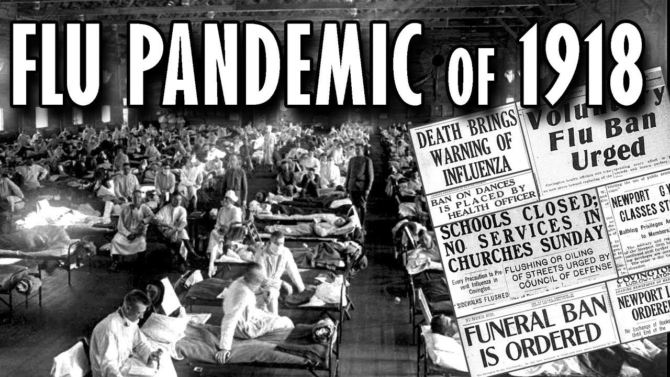
General “Black Jack” Pershing insisted that his forces be well trained before deployment. New recruits poured into training camps by the tens of thousands, while somewhere, some microscopic, chance recombination of surface proteins created a new virus, novel to nearly every immune system, in the world.
On the morning of March 11, 1918, most of the recruits at Fort Riley, Kansas, were turning out for breakfast. Private Albert Gitchell reported to the hospital, complaining of cold-like symptoms of sore throat, fever and headache. By noon, more than 100 more had reported sick with similar symptoms.
Camp Funston, Fort Riley, Kansas – 1918
Ordinary flu strains prey heavily on children, elderly, and those with compromised immune systems. Not this one. This flu would kick off a positive feedback loop between small proteins called cytokines, and white blood cells. This “cytokine storm” resulted in a death rate for 15-34 year olds 20 times higher in 1918, than in previous years. Perversely, it was their young and healthy immune systems that were most likely to kill them.
Physicians described the most viscous pneumonia they had ever seen, death often coming within hours of the first symptoms. There’s a story about four young, healthy women playing bridge well into the night. By morning, three were dead of influenza.
Over the next two years, this strain of flu infected one in every four people in the United States, killing an estimated 675,000 Americans. Eight million died in Spain alone, following an initial outbreak in May. Forever after, the pandemic would be known as the Spanish Flu.
In 1918, children skipped rope to a rhyme:
“I had a little bird, Its name was Enza. I opened the window, and in-flu-enza”.
In the trenches, the flu cut down combatants on every side. “Operation Michael”, the final, no holds barred German offensive which would determine the outcome of the war, launched from the Hindenburg line in March. Crown Prince Rupprecht wrote in August, “poor provisions, heavy losses, and the deepening influenza have deeply depressed the spirits of men in the 3rd Infantry Division”.
Some sources report as many as half the Americans killed in WWI, died of the flu.
The parades and parties following the cease fire of November 11 threw gas on the flames. Millions more contracted the flu and thousands more died. President Wilson himself fell ill, while participating in 1919 treaty negotiations in Versailles. From a public health point of view, the end of war was a disaster.
Around the planet, the Spanish flu infected half a Billion people. A third of the population of the entire world, at that time. Estimates run as high 50 to 100 million killed. For purposes of comparison, the “Black Death” of 1347-51 killed 20 million Europeans.
History has a way of swallowing some events whole, like they never happened. Today, the Spanish flu is all but overshadowed by the War to end all wars. Even though in the end, the flu pandemic of 1918-19 proved a far deadlier adversary, than the war itself.
A Trivial Matter
In the 17th century, it was cheaper to import some things from England, than to produce them here. The first bible printed in the future United States came off the press in 1661 in the Algonquin language, a tongue all but extinct in this country, today.
Though his life is remembered for other things, the final chapter of Ulysses S Grant’s story is one of the finest tributes to the common Family Man, in American history.
Hiram Grant was born in Point Pleasant, Ohio on April 27, 1822. His family called him by his middle name Ulysses, or sometimes just “Lyss”, for short.
A clerical error changed the name of the future Commander-in-Chief during his first days at the United States Military Academy at West Point. He didn’t seem to mind though, probably thinking that “US Grant” was preferable to “H.U.G.”, embroidered on his clothes. Predictably, Grant became known as “Uncle Sam” or simply “Sam.” It was as good a name as any though, as with future President Harry S. Truman, the “S” doesn’t actually stand for anything.
The 1862 Civil War Battle of Fort Donelson secured the name, when then-Brigadier General Ulysses S. Grant received a request for terms from the fort’s commanding officer, Confederate Brigadier General Simon Bolivar Buckner. Grant’s reply was that “no terms except an unconditional and immediate surrender can be accepted. I propose to move immediately, upon your works.” The legend of “Unconditional Surrender” Grant, was born.
Grant was a light smoker before Donelson, generally preferring a pipe, if anything. A reporter spotted him holding an unlit cigar during the battle, a gift from Admiral Foote. Soon, ten thousand cigars were sent to him in camp. The general gave away as many as he could, but the episode started a cigar habit which became one of his trademarks, and probably led to his death of throat cancer, in 1885.
On this day in 1864, President Abraham Lincoln signed a document promoting Ulysses S. Grant to the rank of Lieutenant General of the United States Army, officially putting then-Major General Grant in charge of all Union armies. Lincoln preferred Henry Wagner Halleck for the promotion, at the time fearing Grant would challenge him for the 1864 Republican Presidential nomination. Lincoln submitted to the will of Congress only after Grant publicly dismissed the idea of running for office.
46-year-old U.S. Grant was elected the 18th President of the United States four years later, going on to serve two terms after becoming, at that time, the youngest man ever so elected.
Grant bought a house in New York City in 1881 and invested his considerable fortune with the investment firm of Grant and Ward in which his son Ulysses, Jr., was a partner. The firm collapsed in 1884, investors fleeced and left penniless, by Ferdinand Ward.
Broke, humiliated and already suffering the pain destined to be diagnosed as throat cancer, Grant took pen to paper, and began his memoir.
The penning of that autobiography is a story in itself. Gravely ill and financially destitute, Grant soon understood with certainty, he was dying of throat cancer. The proceeds from his unwritten memoirs were his only means of supporting his family after his death.
The former President suffered constant and unbearable pain during his last year, as the cancer literally throttled the life from his body. Grant wrote at a furious pace despite his suffering, often finishing 25 to 50 pages in a day. No re-writes, no edits. There was no time for that. Grant wrote every word with his own hand, every word of the two-volume memoir a literal race with death.
Many of his wartime contemporaries felt they received too little credit in Grant’s retelling of events. That may be understood under the circumstances.
In June 1885, the cancer spread throughout his body, the Grant family moved to Mount MacGregor, New York to make him more comfortable. Propped up on chairs and too weak to walk, Grant worked to finish the book as friends, admirers and even former Confederate adversaries, made their way to Mount MacGregor to pay their respects.
US Grant in 1885
Ulysses S Grant Grant was a gifted writer. He finished the manuscript on July 18, 1885. Five days later, he was gone. On release, the book received universal critical praise. Mark Twain, who published the memoir, compared the work to the Commentaries of Julius Caesar. Gertrude Stein admired the book, saying she could not think of Grant, without weeping. Ulysses Grant’s memoirs quickly became a best seller, his family receiving 75% of the net royalties after expenses. The book earned $450,000, over $10 million in today’s dollars, comfortably re-establishing the Grant family fortune.
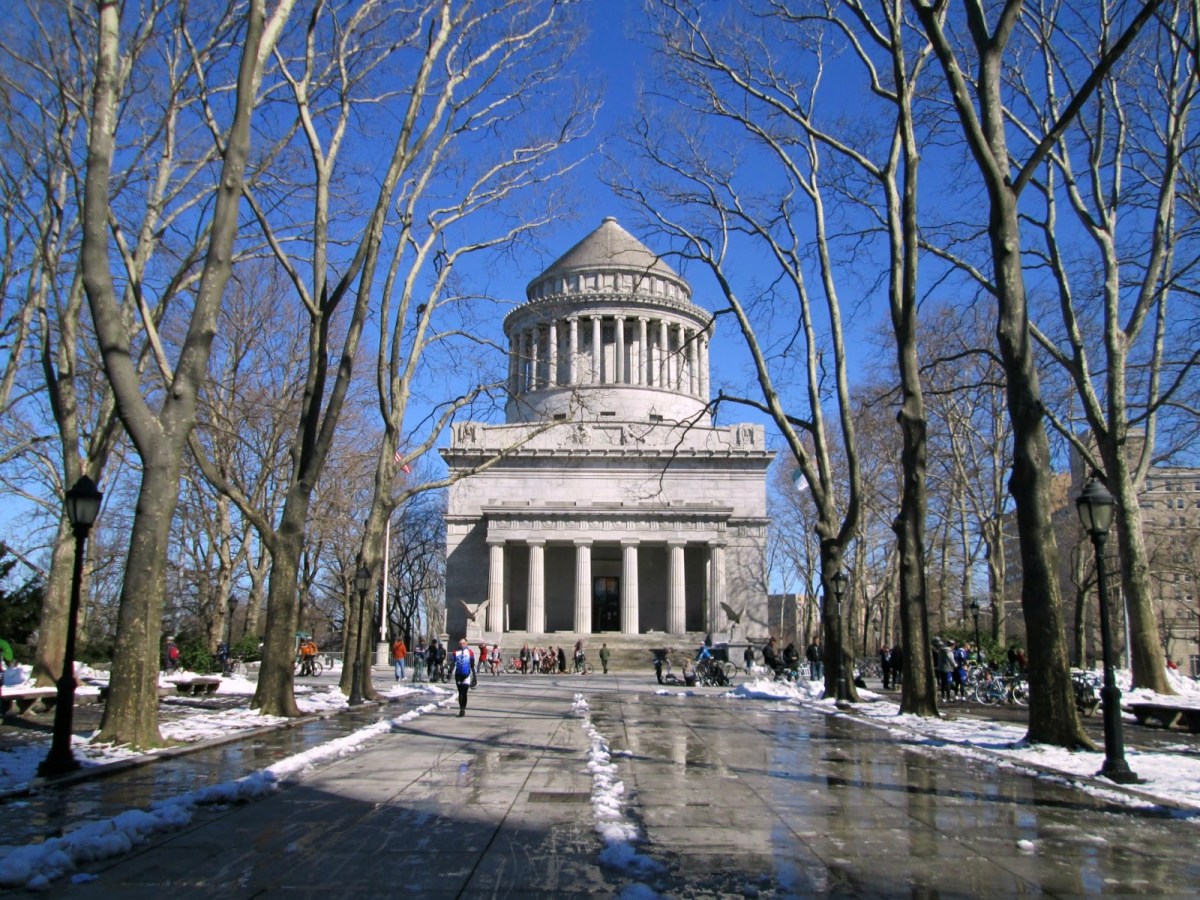
Grant’s wife Julia died on December 14, 1902, and was buried with her husband in Grant’s monumental tomb overlooking the Hudson River, in New York City.
So, next time someone asks you who’s buried in Grant’s tomb, you can tell them. It’s Hiram Ulysses Grant. If you really want to show off, don’t forget to include his wife, Julia.
A Trivial Matter
In 1872, President Ulysses S. Grant was arrested for speeding. In a horse-drawn carriage.







 A report which remained classified for thirty years, blamed a faulty nozzle left open, as the test aircraft gained altitude.













 Captured at Spotsylvania in early 1864, 52nd North Carolina Infantry private James Tyner was incarcerated at the Elmira camp at this time. Tyner’s brother William was one of the prisoners on board #171.


 By the 80s, market analysts believed that baby boomers were likely to switch to diet drinks as they aged, and any growth in the full calorie segment was going to come from younger consumers who preferred the sweeter taste of Pepsi.
 Even Max Headroom and his “C-c-c-catch the wave!” couldn’t save the company.
 When the “Great War” broke out in 1914, US Armed Forces were small compared with the mobilized forces of the European powers. The Selective Service Act, enacted May 18, 1917, authorized the federal government to raise an army for the United States’ entry into WWI. Two months after the American declaration of war against Imperial Germany, a mere 14,000 American soldiers had arrived “over there”. Eleven months later, that number stood at well over a million.
 On the morning of March 11, 1918, most of the recruits at Fort Riley, Kansas, were turning out for breakfast. Private Albert Gitchell reported to the hospital, complaining of cold-like symptoms of sore throat, fever and headache. By noon, more than 100 more had reported sick with similar symptoms.
 Over the next two years, this strain of flu infected one in every four people in the United States, killing an estimated 675,000 Americans. Eight million died in Spain alone, following an initial outbreak in May. Forever after, the pandemic would be known as the Spanish Flu.



 Grant was a light smoker before Donelson, generally preferring a pipe, if anything. A reporter spotted him holding an unlit cigar during the battle, a gift from Admiral Foote. Soon, ten thousand cigars were sent to him in camp. The general gave away as many as he could, but the episode started a cigar habit which became one of his trademarks, and probably led to his death of throat cancer, in 1885.
 Grant bought a house in New York City in 1881 and invested his considerable fortune with the investment firm of Grant and Ward in which his son Ulysses, Jr., was a partner. The firm collapsed in 1884, investors fleeced and left penniless, by Ferdinand Ward.


You must be logged in to post a comment.