
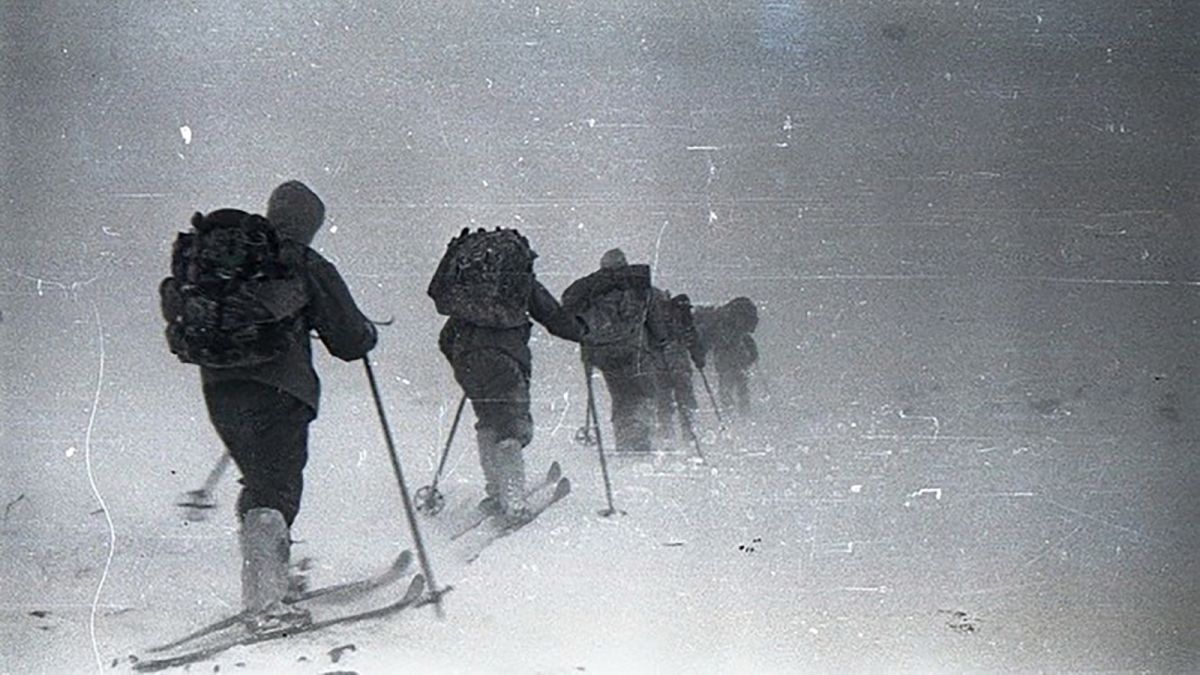
In the world of mountaineering, climbers assign a grade to a boulder or climbing route, describing the degree of difficulty and danger, in the ascent. The group assembled in January 1959 were experienced Grade II hikers, off on a winter trek which would earn them a Grade III certification, upon their safe return. They were ten in number, colleagues from the Ural Polytechnic Institute in Sverdlovsk (now Yekaterinburg) Russia, bent on conquering Mount Otorten, in the northern Ural Mountains. The Northern Ural is a remote and frozen place, the Ural Mountains forming the barrier between the European and Asian continents and ending in an island chain, in the Arctic Ocean. Very few live there, mostly a small ethnic minority called the Mansi people.
In the Mansi tongue, Otorten translates as “Don’t Go There”.
No matter. This was going to be an adventure.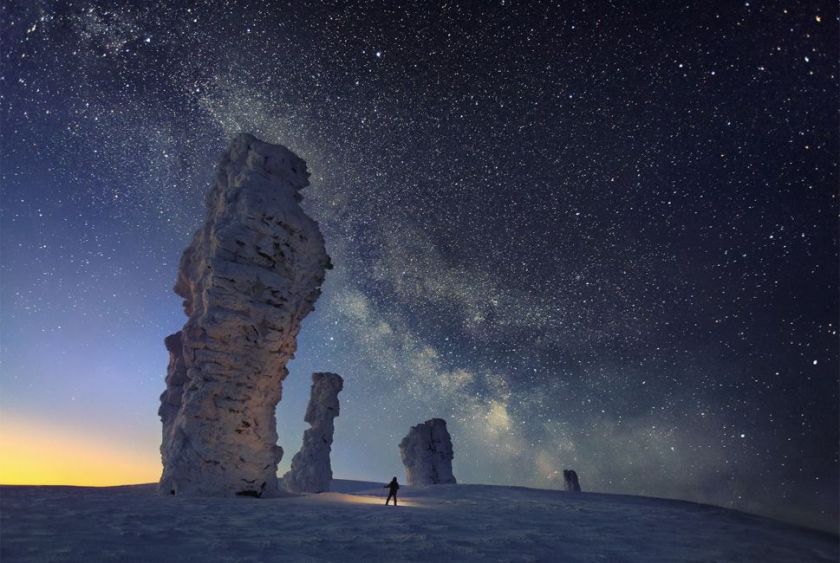 The eight men and two women made it by truck as far as the tiny village of Vizhai, on the edge of the wilderness. There the group learned the ancient and not a little frightening tale of a group of Mansi hunters, mysteriously murdered on what came to be called “Dead Mountain”.
Nothing like a good, scary mystery when you’re heading into the woods. Right?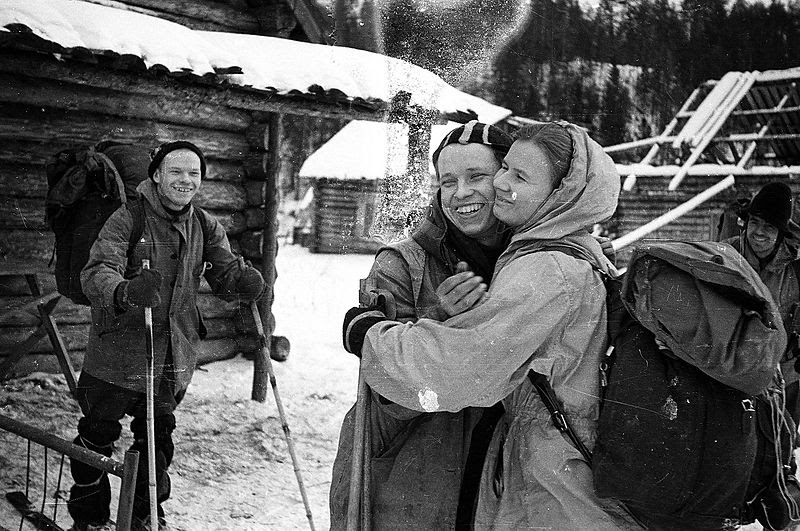 On January 28, Yuri Yudin became ill, and had to back out of the trek. The other nine agreed to carry on. None of them knew at the time. Yudin was about to become the sole survivor of a terrifying mystery.
The leader of the expedition, Igor Dyatlov, left word that he expected to return, on February 12. The day came and went with no sign of the group but, no big deal. It was common enough to come back a few days late, from the frozen wilds of the Ural Mountains.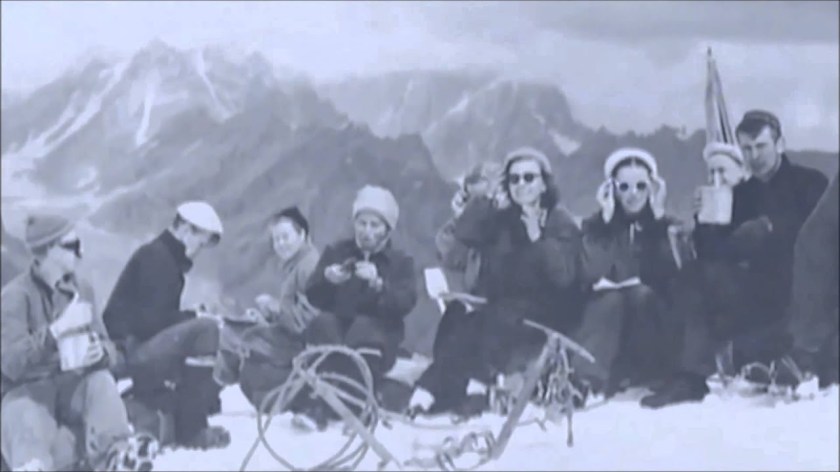 By February 20. friends and relatives were concerned Something was wrong. Rescue expeditions were assembled, first from students and faculty of the Ural Polytechnic Institute and later by military and local police.
There were airplanes and helicopters, and skiers on the ground. On February 26, searchers found an abandoned tent on the flanks of Kholat Syakhl. Dead Mountain.
Mikhail Sharavin, the student who found the tent, described the scene: “the tent was half torn down and covered with snow. It was empty, and all the group’s belongings and shoes had been left behind.” The tent was cut up the back from the inside, eight or nine sets of footprints in the snow, leading away some 1,600 feet until disappearing, under a fresh fall of snow.
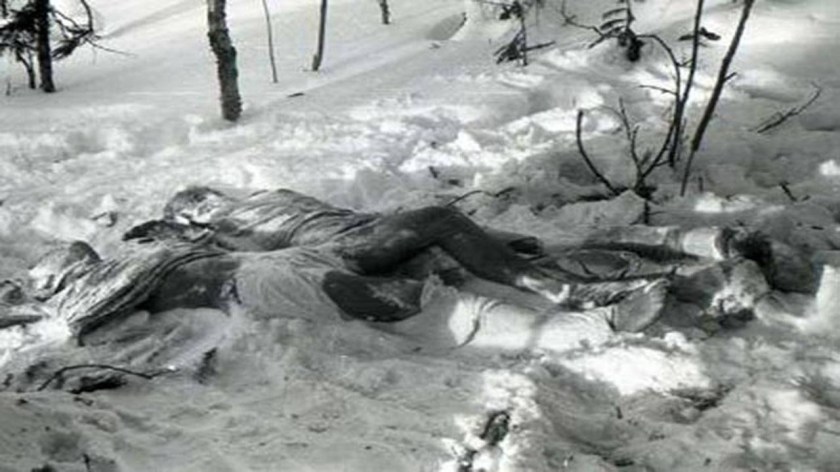
Despite winter temperatures of -13° to -30° Fahrenheit, most of these prints showed feet clad only in socks. Some were barefoot. One had a single shoe. Two bodies were found clad only in underwear, those of Yuri (Georgiy) Krivonischenko and Yuri Doroshenko, near the remains of a small fire.
Their bodies were found under a large Siberian Pine, broken branches up to thirty feet suggesting that someone had climbed the thing, to look around. Or perhaps to get away?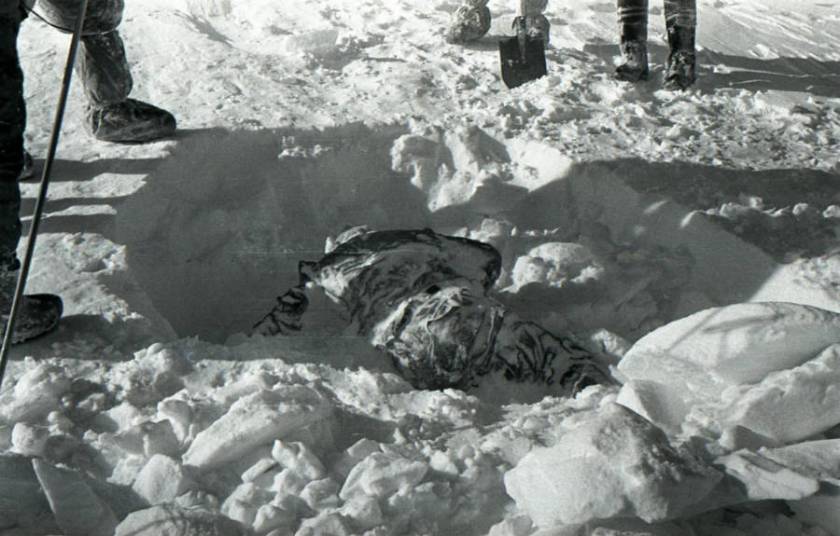 Three more bodies were found leading back to the tent, frozen in postures suggesting they were trying to return. Medical investigators examined the bodies. One, that of Rustem Slobodin showed a small skull fracture, probably not enough to threaten his life. Cause of death was ruled, hypothermia.
It took two more months to find the last four bodies, buried under twelve feet of snow some 75-feet away. These were better dressed than the other five, indicating they were already outside when something went wrong. 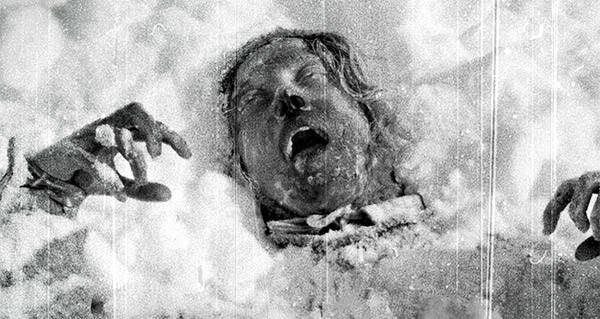 The condition of these last four, would change this whole story. There were unexplained traces of radiation on their clothes. The body of Nikolai Thibeaux-Brignolles showed massive skull fractures, with no external injury. Lyudmila Dubinina and Semyon (Alexander) Zolotaryov showed extensive chest fractures, as if hit by a car. Again, there were no external injuries. Both were missing their eyes. Dubinina was missing her tongue, and part of her face.
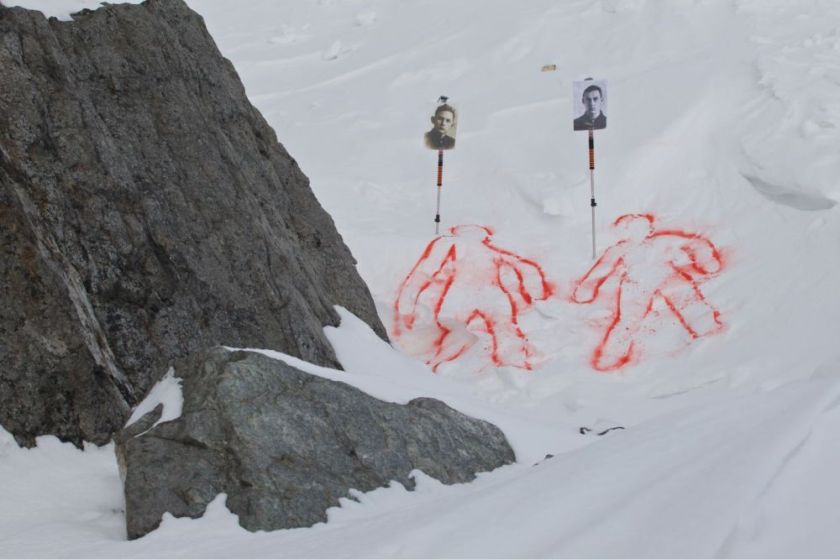 With volumes of questions and no answers, the inquiry was closed in May, 1959. Cause of death was ruled “A spontaneous force which the hikers were unable to overcome“. Dead Mountain was ruled off limits, the files marked confidential. Case closed.
“A spontaneous force which the hikers were unable to overcome“.
Explanations have been offered from the mundane to the supernatural, but none made sense. Mansi hunters had killed them for encroaching on their territory. Except, there were no other footprints. This was the work of a Menk, a mythical Siberian Yeti, or an avalanche, or a super-secret parachute mine exercise, carried out by the Soviet military. There were reports of orange glowing orbs, in the sky. Some believe it was aliens.
How nine experienced mountaineers got caught out in a frozen wilderness or why their tent was cut from the inside, remains a mystery. Missing eyes and tongues may be explained away by small animals. Maybe. The massive internal injuries suffered by three of the victims, defy explanation. The place where it all happened has come to be known as Dyatlov Pass. What happened in that place remains an enigma, to this day.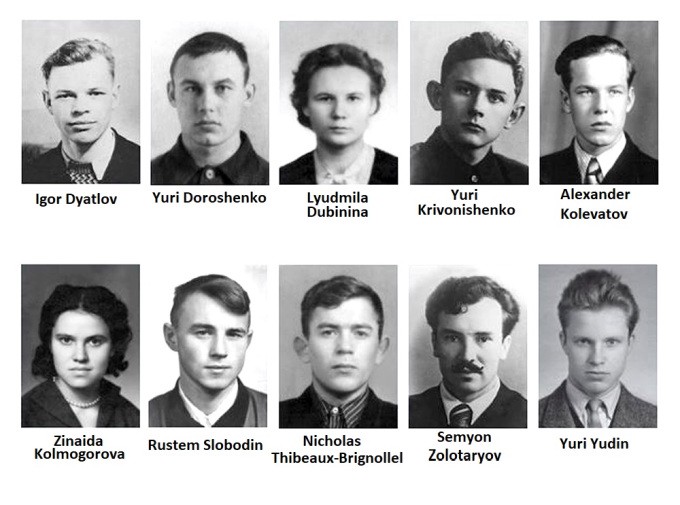


 Diphtheria is a highly contagious infection caused by the bacterium Corynebacterium diphtheriae, with early symptoms resembling a cold or flu. Fever, sore throat, and chills lead to bluish skin coloration, painful swallowing, and difficulty breathing.
 Leonhard Seppala and his dog team took their turn, departing in the face of gale force winds and zero visibility, with a wind chill of −85°F.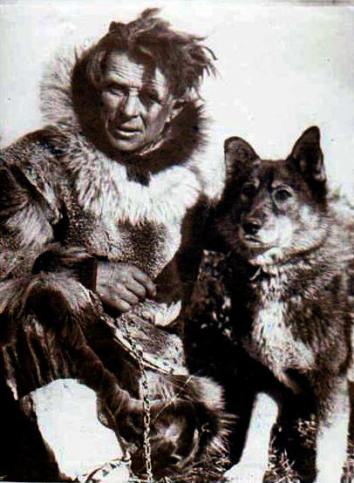
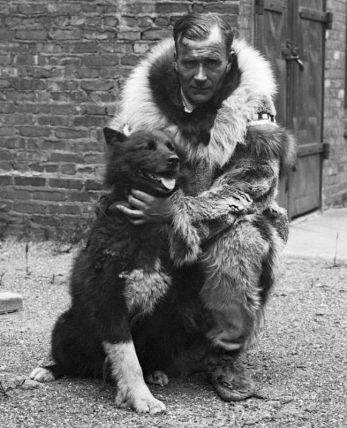
 Seppala was in his old age in 1960, when he recalled “I never had a better dog than Togo. His stamina, loyalty and intelligence could not be improved upon. Togo was the best dog that ever traveled the Alaska trail.”
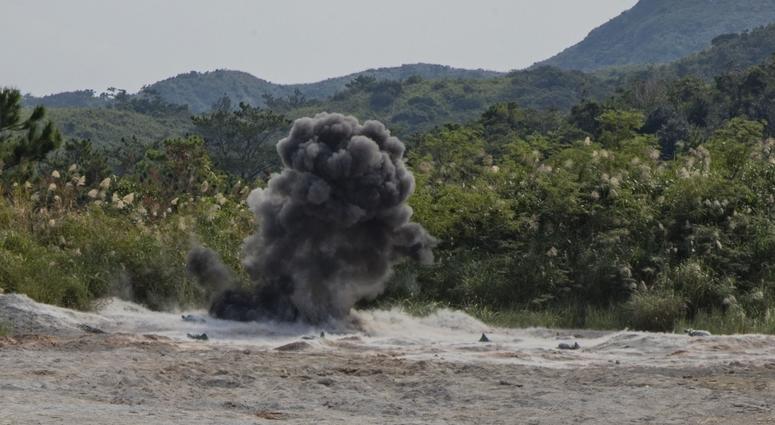
 On November 12, 1970, a 45 foot, 8-ton, dead sperm whale washed up on the beaches near Florence, Oregon. State beaches came under the jurisdiction of the Department of Transportation at that time, and officials came down, to have a look.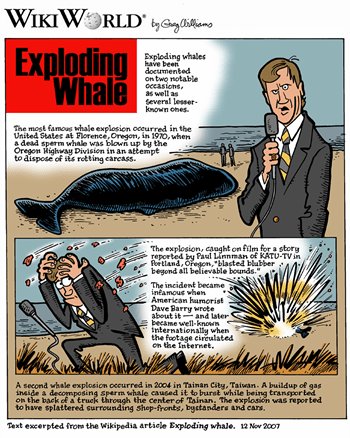
 Umenhofer was among the crowd that day. A great slab of the stuff the size of a coffee table came down from the sky, and landed on his brand new Oldsmobile 88. He’d just bought the car from a dealer running a “Whale of a Sale” deal. You can’t make this stuff up.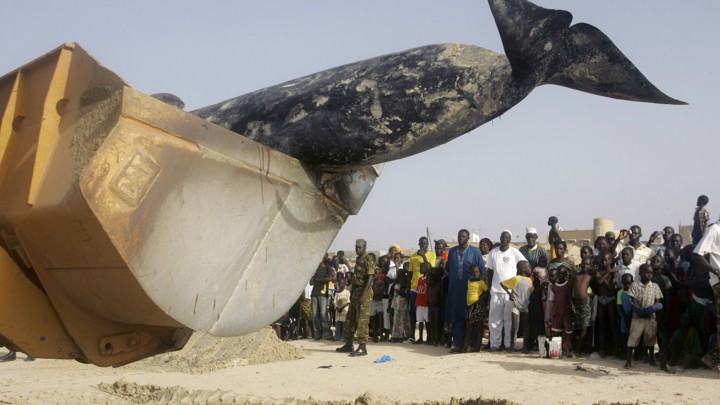
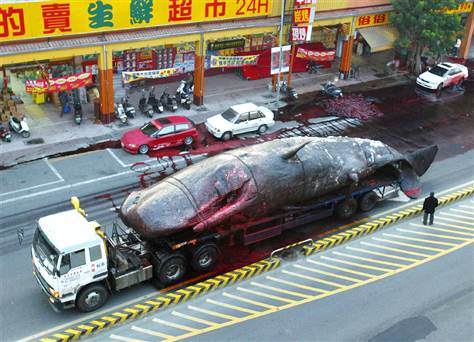 Nigh on fifty years ago, folks in the Pacific Northwest learned an important lesson on the beaches of Florence. Nine years later, 41 dead sperm whales washed ashore on the nearby coast. This time, the things were burned and buried, where they lay.
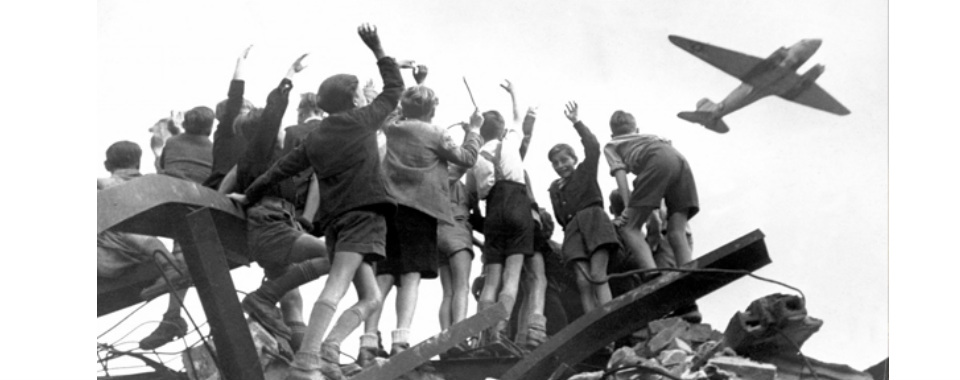
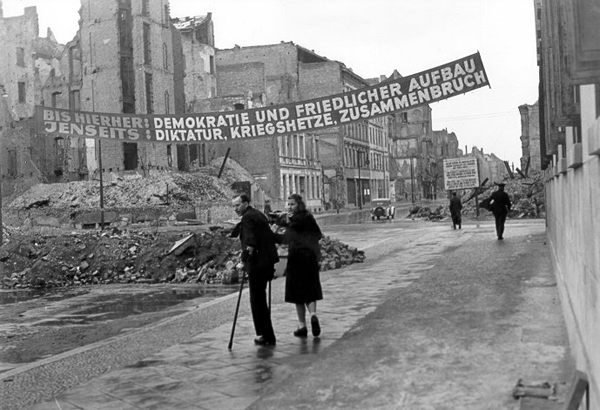 During the war, ideological fault lines were suppressed in the drive to destroy the Nazi war machine. Such differences were quick to reassert themselves in the wake of German defeat. In Soviet-occupied east Germany, factories and equipment were disassembled and transported to the Soviet Union, along with technicians, managers and skilled personnel.
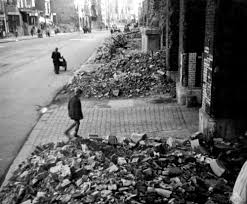 West Berlin, a city utterly destroyed by war, was home to some 2.3 million at that time, roughly three times the city of Boston.
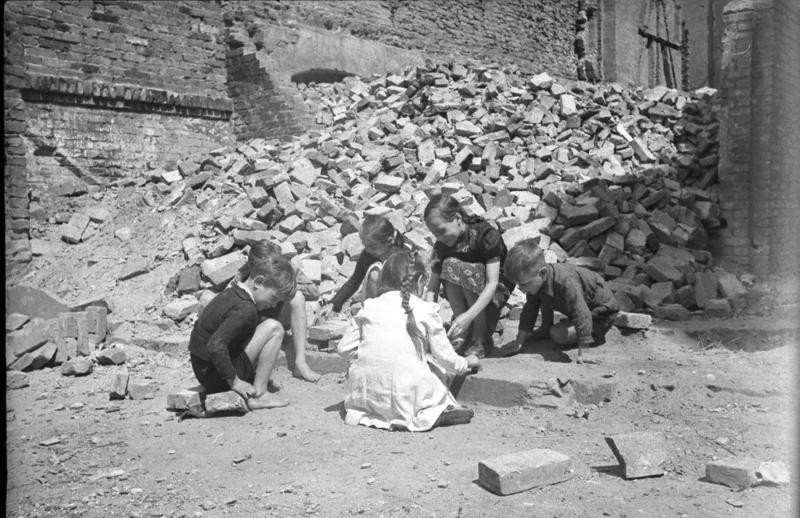 With that many lives at stake, allied authorities calculated a daily ration of only 1,990 calories would require 646 tons of flour and wheat, 125 tons of cereal, 64 tons of fat, 109 tons of meat and fish, 180 tons of dehydrated potatoes, 180 tons of sugar, 11 tons of coffee, 19 tons of powdered milk, 5 tons of whole milk for the children, 3 tons of fresh yeast for baking, 144 tons of dehydrated vegetables, 38 tons of salt and 10 tons of cheese.
 What followed is known to history, as the
  US Army Air Force Colonel Gail “Hal” Halvorsen was one of those pilots, flying C-47s and C-54 aircraft deep inside of Soviet controlled territory. On his days off, Halvorsen liked to go sightseeing, often bringing a small movie camera.
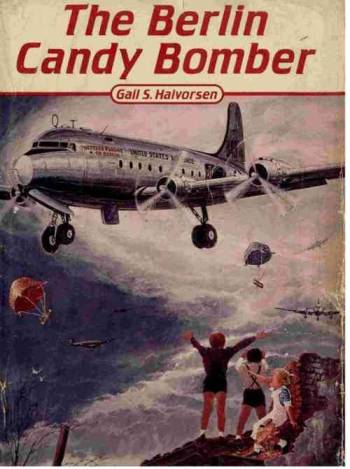 Newspapers got wind of what was going on. Halvorsen thought he’d be in trouble, but no. Lieutenant General William Henry Tunner liked the idea. A lot. “Operation Little Vittles” became official, on September 22.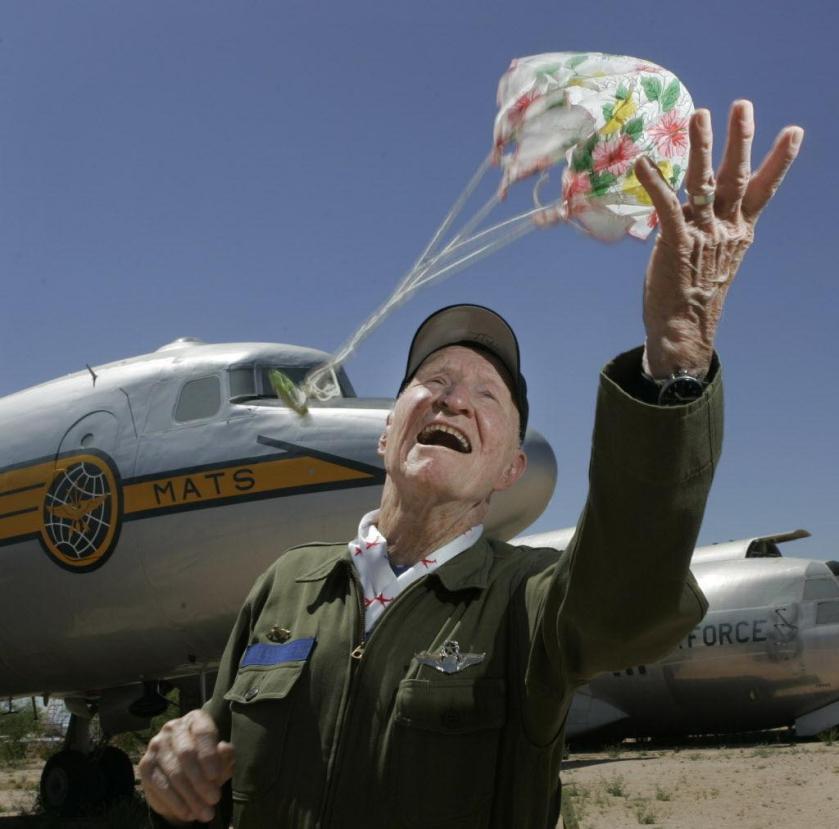


 One day, the United States Supreme Court would rule the act an unlawful taking and compensate Lee family descendants.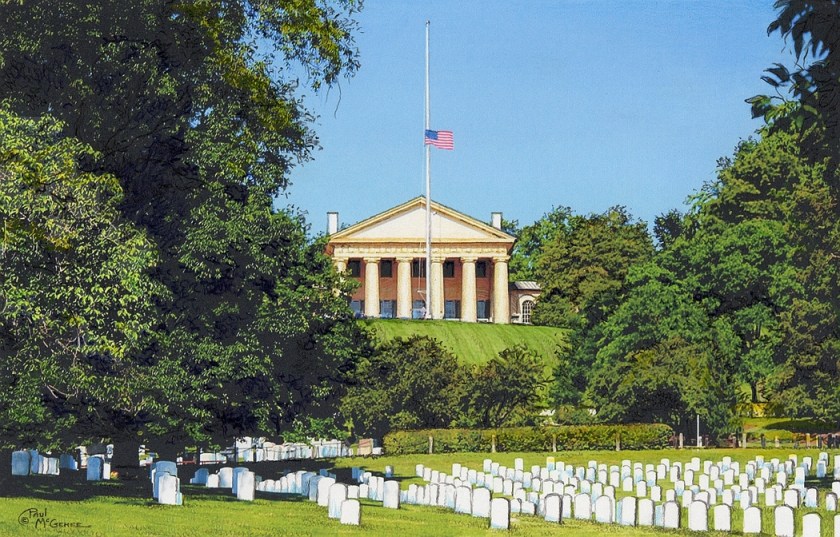
 Private Christman was the first military burial, but not the first. One had come before. When Private Christman went to his rest in our nation’s most hallowed ground, his grave joined that of Mary Randolph, laid to rest some thirty-six years earlier.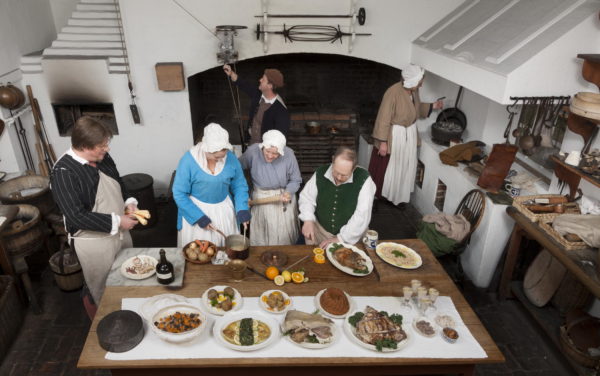
 Mary Randolph, a direct descendant of
  Mary Randolph is best known as the author of America’s first regional cookbook, “The Virginia House-wife” and known to some, as “The Methodical Cook”.
 Mary Randolph, wife of David Meade Randolph, was an early advocate of the now-common use of herbs, spices and wines in cooking.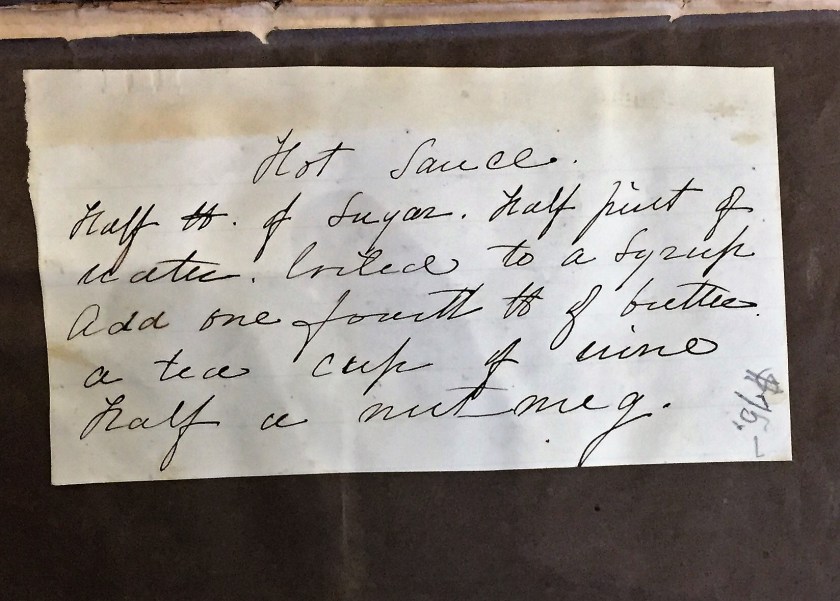


 Ernesto Guevara trained and motivated firing squads credited with the summary execution of 16,000 Cubans or more, since the Castro brothers swept out of the Sierra Maestro Mountains in 1959. It was around this time he acquired the nickname “Che” from an odd fondness for the verbal filler che, not unlike the Canadian English “eh” or some Americans’ fondness for the punctuating syllable “Right?”
 Numbers are surprisingly inexact but Guevara is believed personally responsible for the murder of hundreds if not thousands, in the name of “Revolutionary Justice”. Guevara himself described in his diary, the murder of peasant guide Eutimio Guerra: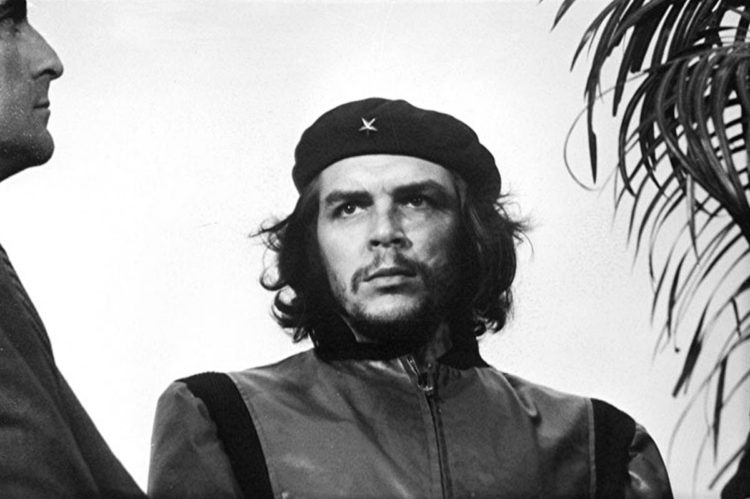
 While Che himself made no secret of his blood-lust, Western Liberals appear pathologically incapable of regarding the man’s history, as it really was.
 “Crazy with fury I will stain my rifle red while slaughtering any enemy that falls in my hands! My nostrils dilate while savoring the acrid odor of gunpowder and blood. With the deaths of my enemies I prepare my being for the sacred fight and join the triumphant proletariat with a bestial howl!…Hatred as an element of struggle; unbending hatred for the enemy, which pushes a human being beyond his natural limitations, making him into an effective, violent, selective, and cold-blooded killing machine. This is what our soldiers must become” – Ernesto Ché Guevara
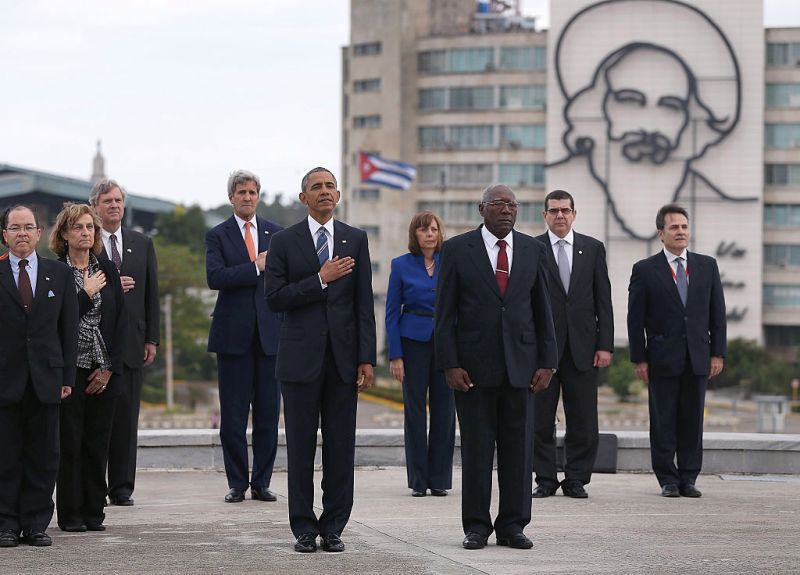
 For many of us, then-President Obama’s March 21, 2016 moment in Havana, Cuba defies understanding, unfolding as it did under a ten-story image of Che Guevara.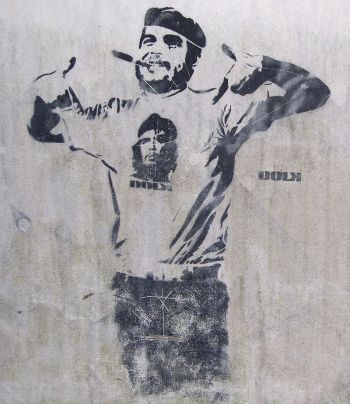


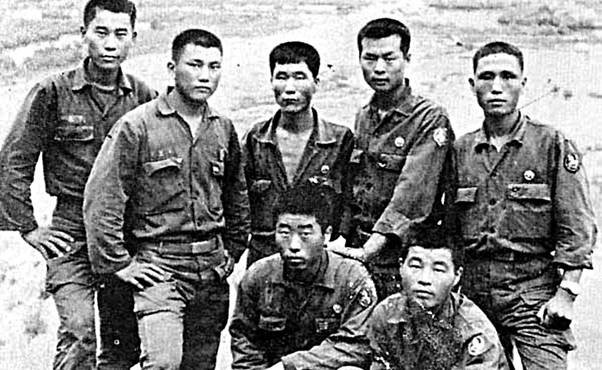
 On January 17, 1968, Unit 124 infiltrated the 2½ mile demilitarized zone (DMZ), cutting the wire and entering South Korea. Their mission was to assassinate ROK President Park Chung-hee in his home, the Executive Mansion equivalent to the United States’ own White House, the “Pavilion of Blue Tiles” known as “Blue House”.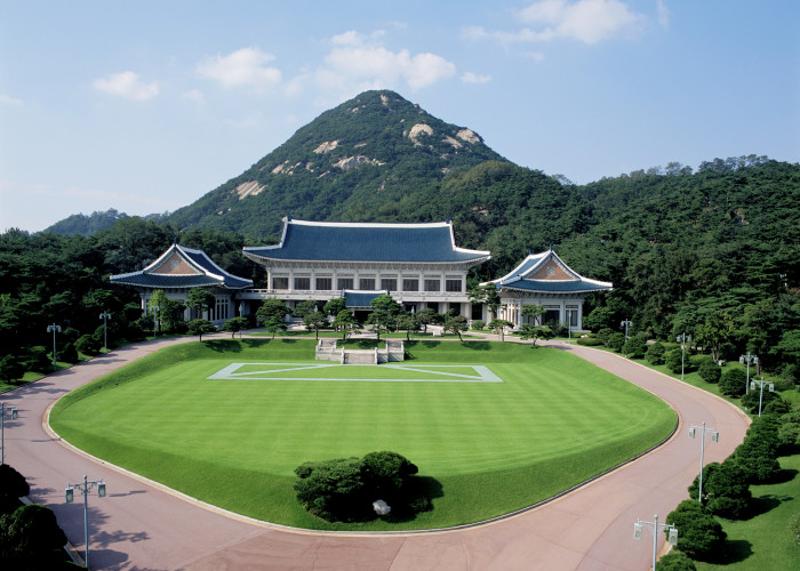
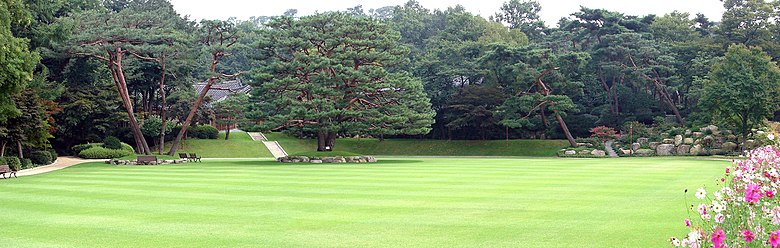
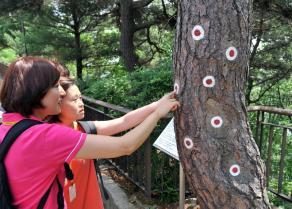
 29 commandos were killed or committed suicide. One escaped, back to North Korea. Only one, Kim Shin-jo, was captured alive.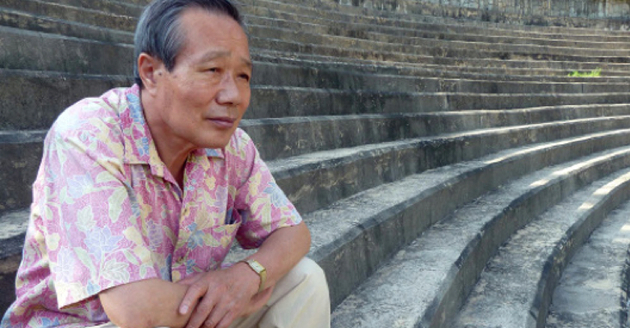

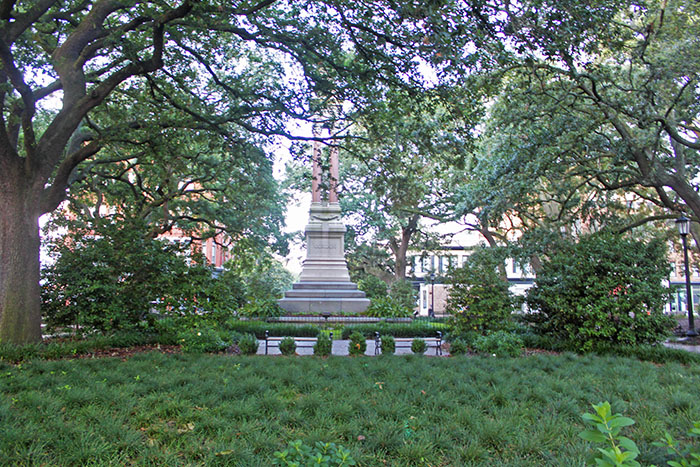
 south after a brief stay in Charleston, South Carolina. Landing at Yamacraw bluff, Oglethorpe’s party was greeted by Chief Tomochichi of the Yamacraws, along with two Indian traders, John and Mary Musgrove.
 originally come from its native Southeast Asia to West Africa, where the same strains were grown by European colonists. The rice industry failed in Africa, but the combination of English agricultural technology and African labor made the crop a mainstay of the early colonial economy.
 On January 20, 1788, Bryan brought official recognition to the First African Baptist Church and its 67 members, five years before the first “white” Baptist Church in Savannah. In 1802, Bryan founded the “Second Colored Baptist Church”, renamed the “Second African Baptist Church” in 1823.
 he called “I have a Dream”. Two years later, the same speaker delivered his speech from the steps of the Lincoln memorial in Washington.

 Iva Ikuko Toguri was born in Los Angeles on July 4, 1916, the daughter of Japanese immigrants. She attended schools in Calexico and San Diego, returning to Los Angeles where she enrolled at UCLA, graduating in January, 1940 with a degree in zoology.
 That November, Toguri was asked to become a broadcaster for Radio Tokyo on the “Zero Hour” program, part of a Japanese psychological warfare campaign designed to lower the morale of US Armed Forces. The name “Tokyo Rose” was in common use by this time, applied to as many as 12 different women broadcasting Japanese propaganda in English.
 She called herself “Orphan Annie,” earning 150 yen per month (about $7.00 US). She wasn’t a professional radio personality, but many of those who recalled hearing her enjoyed the program, especially the music.

 d’Aquino was sentenced to ten years and fined $10,000 for the crime of treason, only the seventh person in US history so convicted. She was released from the Federal Reformatory for Women at Alderson, West Virginia in 1956, having served six years and two months of her sentence.

 Look up the Highest Paid Athlete of All Time and you’ll be rewarded with the knowledge that Michael Jordan amassed career earnings of $1.85 Billion, according to Forbes Magazine. Steve Forbes and Michael Jordan alike may be surprised to know. Spanish driver Gaius Appuleius Diocles amassed an astonishing 35,863,120 sesterces, equivalent to $15 Billion, today. Not bad for a man whose name suggests he probably began as a slave, freed by a guy named Gaius Appuleius.
 The age of Constantine saw enormous expansion of the city which bore his name, including enlargement of the Hippodrome to an impressive 1,476-feet long by 427-feet wide with a seating capacity of 100,000. By way of comparison, the Empire State Building is 1,454-feet from sidewalk to the very tip of the spire. Mercedes Benz Stadium in Atlanta, home of Super Bowl LIII, has a rated capacity of 71,000 spectators.
 A raised median called a spina ran down the center, adorned with stone statuary and obelisks. Ganging up to drive opposing handlers into the stone median or the stands, whipping opponents and even hauling them out of their chariots was not only permitted, but encouraged.
 Modern sport has seen its share of fan passion rising to violence, but the worst “futbol hooligan” pales into docility, compared with the crowd come to watch the chariot races. Imagine the worst fan violence of the modern era combined with aspects of street gangs and political organizations, each faction holding positions on the issues of the day and attempting to sway public policy by shouting slogans, between races.
 With spine thus restored, Justinian formulated a plan. The popular eunuch Narses was sent with a bag of gold, into the lion’s den. Small and slight of build, unarmed but for those coins, Narses entered the Hippodrome and went directly to the Blue section. On this day in 562 Hypatius was in the very act of coronation when the eunuch spoke. Narses reminded the Blues that Hypatius was a Green while Justinian himself, supported their team.
 Thus ends one of the great “backfires” in political history. Senator Hypatius was put to the sword and those who had supported the pretender, sent into exile. Justinian I would rule another 33 years, rebuilding Constantinople, muzzling the Senatorial Class which had caused him such grief and reconquering lost territories, in Italy.
 Historical Easter Eggs - Today in History
You must be logged in to post a comment.