

By 1967, the Republic of Korea (ROK) had some 44,829 South Korean forces in Vietnam. An overwhelming force of NVA and Vietcong had the misfortune of surrounding a platoon of “Blue Dragon” Marines on February 15 of that year, a 10-to-1 numerical superiority near the village of Trà Bình. Poor visibility precluded air support and the fighting which followed was close, and personal. By the time it was over, 243 NVA lay dead. Korean Marines lost 15 men.
North Vietnam’s Commander-In-Chief put out an order to all his forces advising them: “Avoid ROK Marines at all costs.”
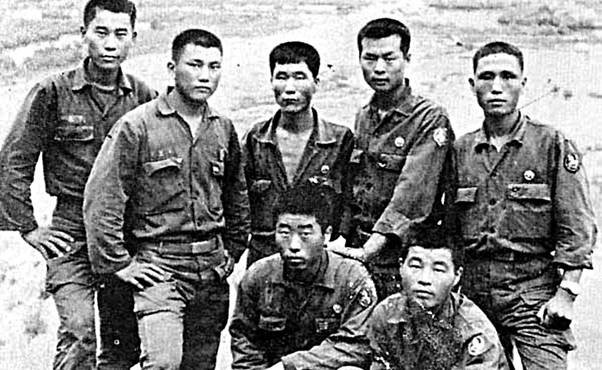
Any combat veteran of the war in Southeast Asia will tell you. In Vietnam they faced a tough and disciplined soldier. POW interrogations of captured NVA revealed one Lieutenant Trung to be particularly hard core, a tough guy in a world of tough guys. One US Marine Corps Lieutenant of Korean ancestry dressed in the uniform of the Blue Dragon Marines and paid a visit to Lt. Trung’s cell.
Not a word or gesture passed between the two. The mere presence of a Blue Dragon was enough to get this guy talking. Korean fighters are no joke.
For two years, an elite, all-officer force of 31 North Korean commandos were trained in infiltration and exfiltration techniques, weaponry, navigation, concealment and hand-to-hand combat, with particular emphasis on knife skills. These were “Unit 124” commandos, highly trained and fanatically loyal soldiers, tough as rawhide and each prepared to die for the supreme leader of the Democratic People’s Republic of Korea, (DPRK), “Dear Leader” Kim Il-sung.
 On January 17, 1968, Unit 124 infiltrated the 2½ mile demilitarized zone (DMZ), cutting the wire and entering South Korea. Their mission was to assassinate ROK President Park Chung-hee in his home, the Executive Mansion equivalent to the United States’ own White House, the “Pavilion of Blue Tiles” known as “Blue House”.
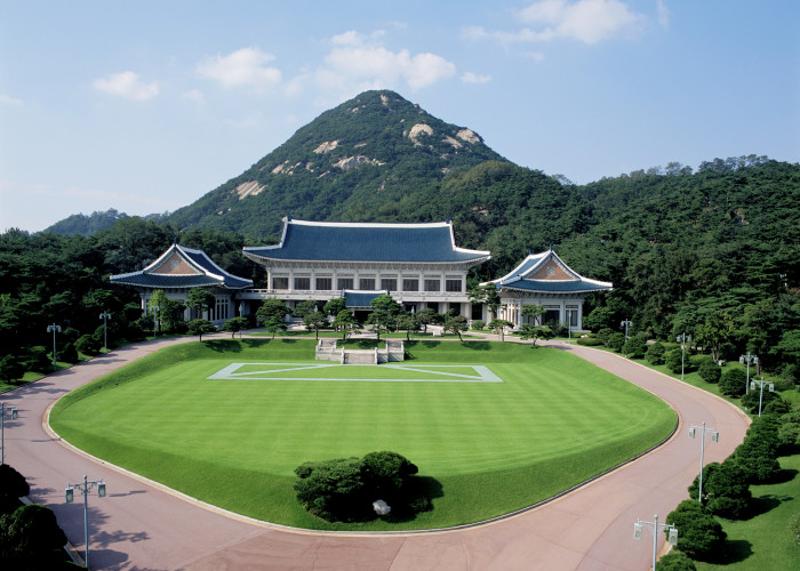
It’s hard to think of anything goofier and at the same time more hellishly lethal, than the hare-brained political calculations of DPRK leadership. Somehow it made sense to these guys, that to assassinate the South Korean President and hurl his head from the official residence, would start a popular uprising leading to the re-unification of the Korean peninsula. Under DPRK government, no less.
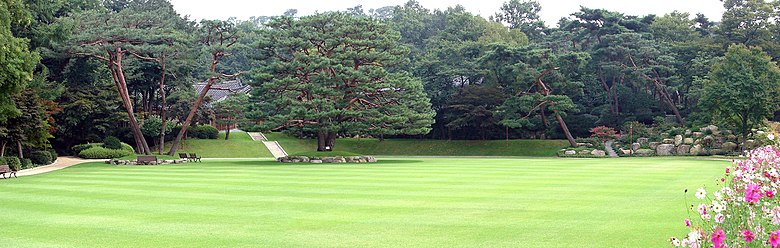
On the 19th, four brothers of the Woo family were out gathering firewood when they stumbled upon Unit 124. A fierce debate ensued among the commandos, as to what to do with these guys. Training dictated they be killed without hesitation, yet somehow that didn’t seem right. Wasn’t communist ideology supposed to be a “people’s movement”? Besides, it would take too long to bury the bodies in the rock-hard, frozen ground.
The decision was made to convert the brothers, on the spot. Talk about goofy. After a suitably long harangue on the wonders of communist ideology, the Woo brothers wisely proclaimed themselves, converted. Thus released, the brothers went directly to authorities.
Unit 124 broke camp, for the next two days averaging 10kph over mountainous terrain, despite an average 70-pounds apiece in equipment.
Commandos made it to within 100 meters of Blue House on January 21, only to be challenged at a road block. The firefight broke out without warning, dissolving into a running gunfight and manhunt lasting for the next eight days. When it was over, 26 South Korean military and police personnel were dead along with two dozen civilians and another 66, grievously wounded.
Four Americans were killed in efforts to prevent Unit 124 members from re-crossing the DMZ.
 29 commandos were killed or committed suicide. One escaped, back to North Korea. Only one, Kim Shin-jo, was captured alive.
History has a way of swallowing some events whole. Over in Vietnam, the Battle of Khe Sanh began the same day as the raid. Two days later, a US Navy technical research ship, the USS Pueblo, was captured by North Korean forces. The Tet Offensive broke out all across South Vietnam on January 30. In no time at all, the Blue House raid was forgotten.
Kim Shin-Jo’s interrogation lasted nearly a year, to learn how the raid had been carried out. Meanwhile, ROK authorities “recruited” their own commando assassination squad, as a bit of payback. The 31 members of “Unit 684” were recruited from among South Korean petty criminals, the sort of guys who “got into street fights”. A lot.
The three years’ “training” these recruits were subjected to on Silmido Island, off the coast of Inchon, was beyond brutal. Seven of didn’t live through it.
Silmido, a 2003 film produced by Kang Woo-suk
The raid was never carried out. North-South relations had thawed by August 1971, as the Silmido Island recruits staged an insurrection. 20 inmate/recruits were dead before it was over, shot to death by members of the ROK military or committed suicide, with hand grenades. The last four Unit 684 survivors were tried by a military tribunal for their role in the uprising and executed, in 1972.
The government buried the story. The tale of Unit 684 was all but unknown until the 2003 film Silmido, the first movie in South Korea to attract a box office of over 10 million viewers. In May of 2010, Seoul courts ordered the government to pay $231 million to the families of 21 members of Unit 684.
Kim Shin-jo became a citizen of the Republic of Korea in 1970. Kim’s parents were murdered by North Korean authorities and his relatives “purged”. Kim renounced his communist ideology and became an ordained minister with the Seoul “Sungrak” (“Holy Joy”) Baptist Church in Gyeonggi-do. He has a wife and two children.
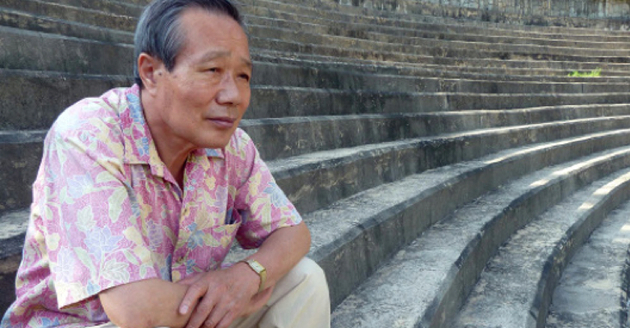
I’m indebted for this story to a man who was a family friend, almost before my folks decided to start a family. I have known this man longer than I can remember and flatter myself to regard him as a personal friend. He was one of the interrogators, during both the Trung and the Kim episodes related above. Thank you, Victor, for your story. And for your service.

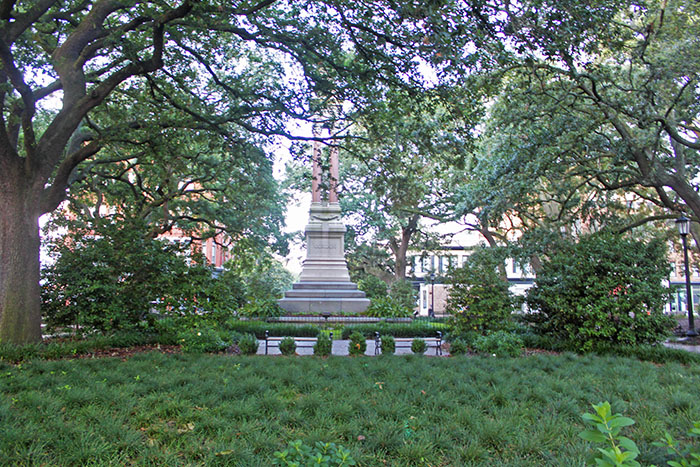
 south after a brief stay in Charleston, South Carolina. Landing at Yamacraw bluff, Oglethorpe’s party was greeted by Chief Tomochichi of the Yamacraws, along with two Indian traders, John and Mary Musgrove.
 originally come from its native Southeast Asia to West Africa, where the same strains were grown by European colonists. The rice industry failed in Africa, but the combination of English agricultural technology and African labor made the crop a mainstay of the early colonial economy.
 On January 20, 1788, Bryan brought official recognition to the First African Baptist Church and its 67 members, five years before the first “white” Baptist Church in Savannah. In 1802, Bryan founded the “Second Colored Baptist Church”, renamed the “Second African Baptist Church” in 1823.
 he called “I have a Dream”. Two years later, the same speaker delivered his speech from the steps of the Lincoln memorial in Washington.

 Iva Ikuko Toguri was born in Los Angeles on July 4, 1916, the daughter of Japanese immigrants. She attended schools in Calexico and San Diego, returning to Los Angeles where she enrolled at UCLA, graduating in January, 1940 with a degree in zoology.
 That November, Toguri was asked to become a broadcaster for Radio Tokyo on the “Zero Hour” program, part of a Japanese psychological warfare campaign designed to lower the morale of US Armed Forces. The name “Tokyo Rose” was in common use by this time, applied to as many as 12 different women broadcasting Japanese propaganda in English.
 She called herself “Orphan Annie,” earning 150 yen per month (about $7.00 US). She wasn’t a professional radio personality, but many of those who recalled hearing her enjoyed the program, especially the music.

 d’Aquino was sentenced to ten years and fined $10,000 for the crime of treason, only the seventh person in US history so convicted. She was released from the Federal Reformatory for Women at Alderson, West Virginia in 1956, having served six years and two months of her sentence.

 Look up the Highest Paid Athlete of All Time and you’ll be rewarded with the knowledge that Michael Jordan amassed career earnings of $1.85 Billion, according to Forbes Magazine. Steve Forbes and Michael Jordan alike may be surprised to know. Spanish driver Gaius Appuleius Diocles amassed an astonishing 35,863,120 sesterces, equivalent to $15 Billion, today. Not bad for a man whose name suggests he probably began as a slave, freed by a guy named Gaius Appuleius.
 The age of Constantine saw enormous expansion of the city which bore his name, including enlargement of the Hippodrome to an impressive 1,476-feet long by 427-feet wide with a seating capacity of 100,000. By way of comparison, the Empire State Building is 1,454-feet from sidewalk to the very tip of the spire. Mercedes Benz Stadium in Atlanta, home of Super Bowl LIII, has a rated capacity of 71,000 spectators.
 A raised median called a spina ran down the center, adorned with stone statuary and obelisks. Ganging up to drive opposing handlers into the stone median or the stands, whipping opponents and even hauling them out of their chariots was not only permitted, but encouraged.
 Modern sport has seen its share of fan passion rising to violence, but the worst “futbol hooligan” pales into docility, compared with the crowd come to watch the chariot races. Imagine the worst fan violence of the modern era combined with aspects of street gangs and political organizations, each faction holding positions on the issues of the day and attempting to sway public policy by shouting slogans, between races.
 With spine thus restored, Justinian formulated a plan. The popular eunuch Narses was sent with a bag of gold, into the lion’s den. Small and slight of build, unarmed but for those coins, Narses entered the Hippodrome and went directly to the Blue section. On this day in 562 Hypatius was in the very act of coronation when the eunuch spoke. Narses reminded the Blues that Hypatius was a Green while Justinian himself, supported their team.
 Thus ends one of the great “backfires” in political history. Senator Hypatius was put to the sword and those who had supported the pretender, sent into exile. Justinian I would rule another 33 years, rebuilding Constantinople, muzzling the Senatorial Class which had caused him such grief and reconquering lost territories, in Italy.


 During her service to the United States Navy, West Point was awarded the American Defense Service Medal, American Campaign Medal, European-African-Middle Eastern Campaign Medal, Asiatic-Pacific Campaign Medal, and World War II Victory Medal.
 She was in terrible condition and her refit nowhere near complete when America set sail on her first cruise on June 30, 1978. There was rusted metal, oil soaked rags and backed up sewage. There were filthy mattresses and soiled linens. One woman later said, she was a “floating garbage can.” The angriest of customers actually got into fist fights with members of the crew. There were so many complaints the ship finally turned back, still within sight of the Statue of Liberty.
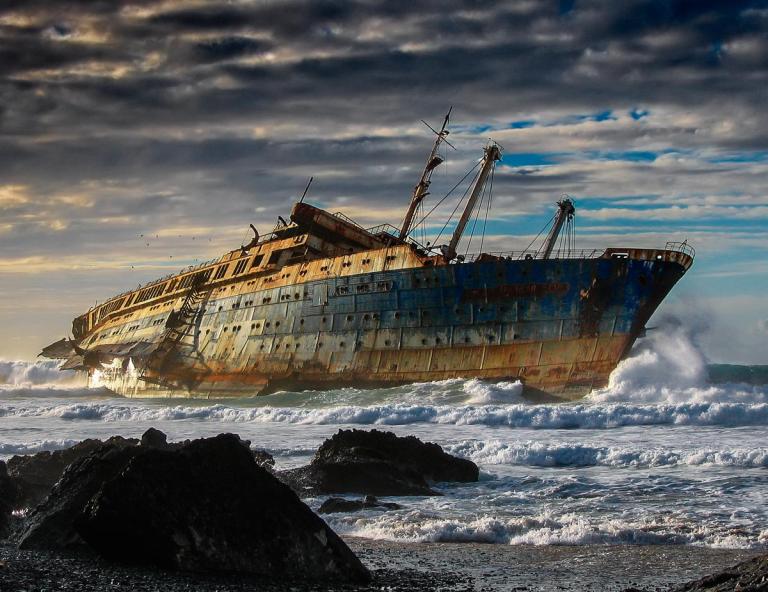
 Sold yet again in 1993 and renamed the American Star, the new owners planned to convert her to a five-star hotel ship off Phuket, Thailand. A planned 100 day tow began on New Year’s Eve of 1993, but the lines broke. On January 17, 1994, the former SS America was adrift in foul seas, running aground in the Canary Islands the following day. Discussions of salvage operations were soon squashed, as the ship broke in two in the pounding surf.
 The National WWII Museum in New Orleans reports on its website that the men and women who fought and won the great conflict are now passing at a rate of 550 per day. How many, I wonder, might think back and remember passage on the most successful troop transport of their day.

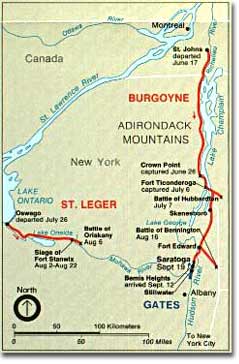 Patriot forces selected a site called Bemis Heights about 10 miles south of Saratoga, spending a week constructing defensive works with the help of Polish engineer Thaddeus Kosciusko. Theirs was a formidable position with mutually supporting cannon on overlapping ridges, with interlocking fields of fire.
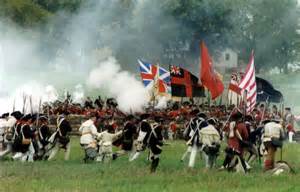 The second and decisive battle for Saratoga, the Battle of Bemis Heights, occurred on October 7, 1777.
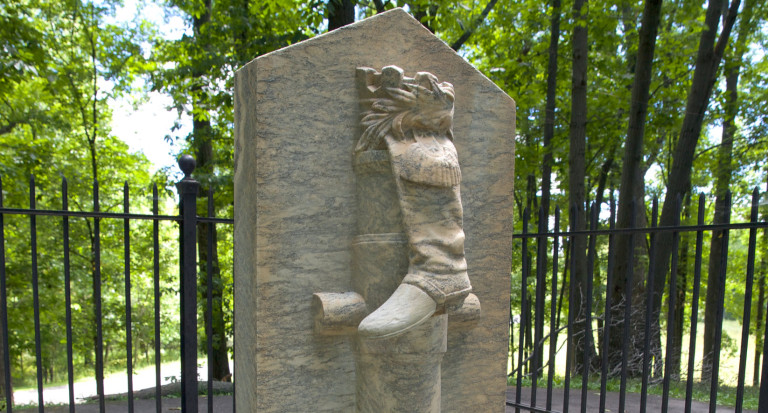
 It would have been better in the chest, he said, than to have received such a wound in that leg.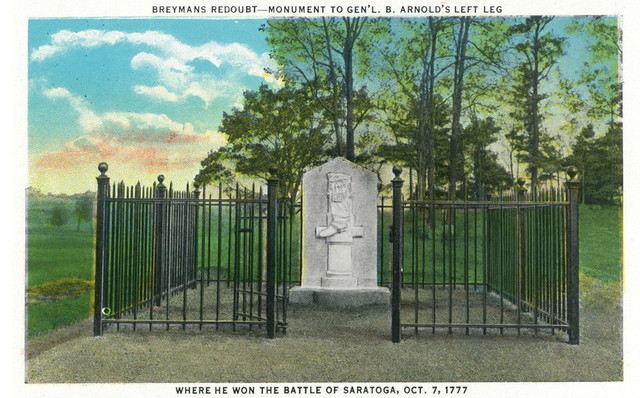
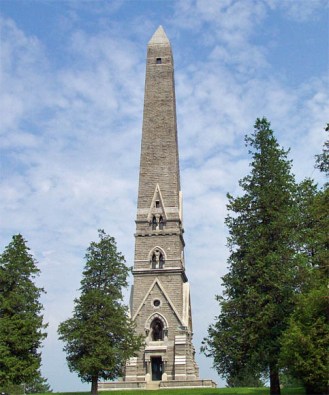 “In memory of

 Cornered in a washout under some railroad tracks Randall held off the attack single handed with his revolver, despite a gunshot wound to his shoulder and no fewer than 11 lance wounds.
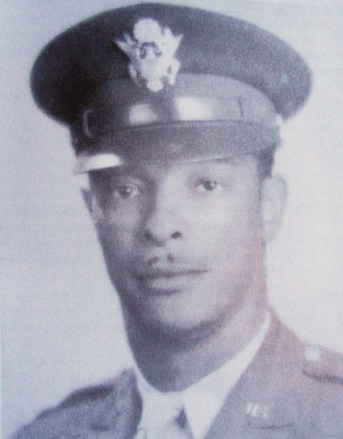
 The King James Bible teaches us, in John 15:13: “Greater love hath no man than this, that a man lay down his life for his friends“. After the war, Sommocolonia erected a Memorial. A tribute to nine brave soldiers who gave their lives that their brothers might live. Eight Italians and one American.
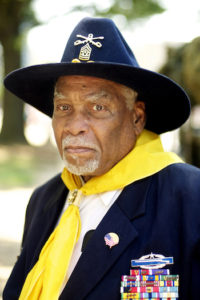 1st Sergeant Mark Matthews, the last of the Buffalo Soldiers, died of pneumonia on September 6, 2005 at the age of 111. A man who forged papers in order to join at age fifteen and once had to play taps from the woods, Matthews was buried with full military honors at Arlington National Cemetery, section 69, grave #4215.


 Stripped of armor to increase range and carrying a full load of depth charges, the American anti-submarine bomber with its 10-man crew dove out of the clouds at 1,000 feet, throttles open and machine guns ablaze. The first Condor never came out of that diving turn, while machine gun fire from the second tore into the American bomber, shredding hydraulic systems and setting the right wing ablaze.
 Maxwell had dubbed his B-24 “The Ark”, explaining that “it had a lot of strange animals aboard, and I hoped it would bring us through the deluge”. It must have worked. Seven out of ten crew members lived to be plucked from the water. The second Condor made it back to Bordeaux, where it crashed and burned on landing.


 Ed seems to have had life-long problems with alcohol, often resulting in an inability to provide for his family. Amelia must have been a disciplined student despite it all, as she graduated with her high school class, on time, notwithstanding having attended six different schools.
 Meeley and Pidge worked as nurse’s aids in Toronto, in 1919. There she met several wounded aviators and developed a strong admiration for these people. Amelia would spend much of her free time watching the Royal Flying Corps practice at a nearby airfield.

 Following the end of the official search, Earhart’s husband and promoter George Palmer Putnam financed private searches of the Phoenix Islands, Christmas (Kiritimati) Island, Fanning (Tabuaeran) Island, the Gilbert and the Marshall Islands, but no trace of the aircraft or its occupants was ever found.


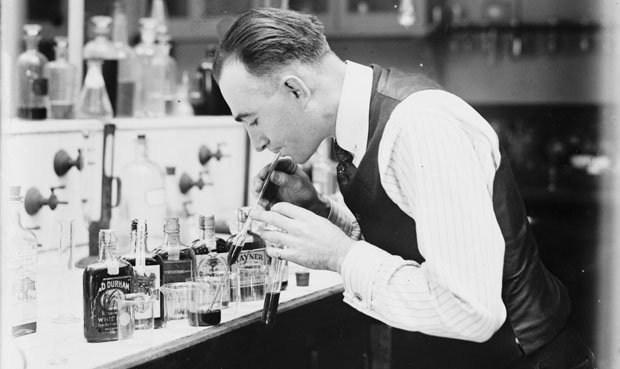
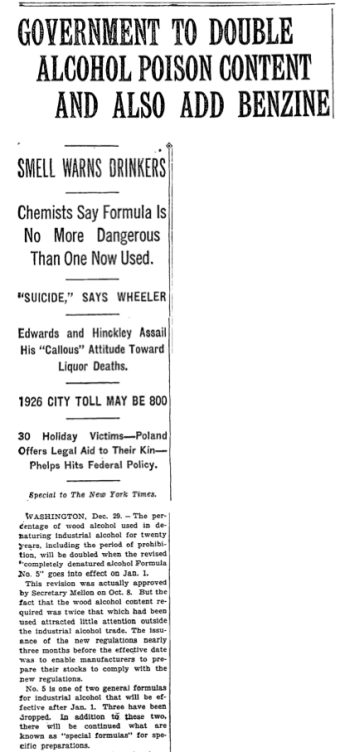
 “Industrial alcohol” such as solvents, polishes and fuels were “denatured” and rendered distasteful by the addition of dyes and chemicals. The problem was, it wasn’t long before bootleggers figured out how to “renature” the stuff.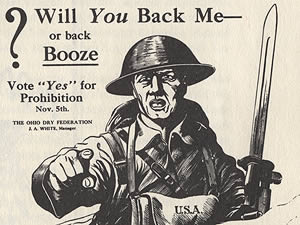



You must be logged in to post a comment.