Captain Phillips was too much of an imp, to miss out on the navigational freak of a lifetime. Course was adjusted and speed fine-tuned, bringing the Warrimoo to just the right place and time.
“Warrimoo.” The word seems to come from the Aboriginal Ladjiladji people along the border land of New South Wales and Victoria in South Australia, and translating as ‘Eagle’, or ‘Place of Eagles’.
The SS Warrimoo was a passenger steamer, launched in 1892 to serve the Trans-Tasman route between Australia and New Zealand. Later assigned to a Canada-to-Australia passenger route, she would be taken into service as a troop ship with the advent of the Great War, in 1914.
The first Maori detachment destined for the disastrous Gallipoli campaign of 1915 departed Wellington aboard the SS Warrimoo that February, its motto ‘Te Hokowhitu a Tū’ (the seventy twice-told warriors of the war god).
A list of WW1 troop ship departures from New Zealand shows 113 such passages, on which the Warrimoo appears, three times.
The troop ship met its end on May 17, 1918 on a convoy from Tunisia to Marseille. Warrimoo collided with the escorting French warship Catapulte, dislodging the destroyer’s depth charges and blowing out the bottom plates of both vessels. SS Warrimoo and Catapulte went down together with loss of life, yet this is not why the troop ship is remembered.
Nineteen years earlier, the “War to End all Wars” was part of some unknown and unknowable future. A century begun with the Napoleonic Wars and President Thomas Jefferson’s Corps of Discovery, (better known as the Lewis and Clark Expedition), was drawing to a close on the tranquil, moonlit waters of the world’s largest and deepest Ocean.
A simplified illustration of the relation between date line, date and time of day. Each color represents a different date. H/T, Wikipedia
On this day in 1899, SS Warrimoo plied the waters of the central Pacific, in transit from Vancouver to Brisbane.
It was warm and clear with the approach of midnight, the Warrimoo’s position LAT 00 31′ N and LON 179 30′ W. Captain John Phillips quietly puffed on a cigar as 1st Mate Payton, broke into his reverie. “Know what this means? We’re only a few miles from the intersection of the Equator and the International Date Line“.
Captain Phillips called his navigators to check the position, and then check it again. It was true.
Captain Phillips was too much of an imp, to miss out on the navigational freak of a lifetime. Course was adjusted and speed fine-tuned, bringing the Warrimoo to just the right place and time.
At precisely midnight on December 31, 1899, the steamer passed through that imaginary point where the international dateline, meets the equator.
The bow of the ship was in the Southern Hemisphere, where it was the middle of summer. The stern was still in the Northern Hemisphere, where it was the middle of winter. The date on the starboard side of the ship was January 1, 1900. On the port side, it was still December 31, 1899.
For that one moment in time, the SS Warrimoo was in two different days, two different months, two different years, two different seasons, and two different centuries. All at the same time.
All the best from the Long family to yours, for a healthy and prosperous New Year. May this be the first of many more.
If you enjoyed this “Today in History”, please feel free to re-blog, “like” & share on social media, so that others may find and enjoy it as well. Please click the “follow” button on the right, to receive email updates on new articles. Thank you for your interest, in the history we all share.
In Spanish speaking countries, newspapers and television stations do gag stories on December 28. A few years ago, headlines read that Kate Middleton was leaving Prince William for Mexican soccer star Chicharito.
In 1983, Boston University history professor Joseph Boskin explained the custom of ‘April Fools Day’ goes back to the Roman Emperor Constantine. A group of jesters and fools informed the Emperor, that they could do his job, better. Amused, Constantine appointed a jester named Kugel, ‘King for a Day’.
Professor Boskin went on to explain. “In a way,” he said, “it was a very serious day. In those times fools were really wise men. It was the role of jesters to put things in perspective with humor.” The Associated Press picked up the story, and newspapers ran it, across the country.
It took AP a couple weeks to realize, the professor had made the whole thing up. April fools.
In one translation of Chaucer’s Canterbury Tales, “March 32” in the year 1392 is the day the vain cock Chauntecleer was tricked by a fox. The fox appealed to the rooster’s vanity by insisting he would love to hear Chauntecleer crow, just as his amazing father did. Standing on tiptoe with neck outstretched and eyes closed. The rooster obliged, with unfortunate, if not unpredictable results.
In most of the west, March 32 is that minor holiday on which we love to play pranks. In Scotland, April Fools’ Day is called Hunt-the-Gowk Day. Although the term has fallen into disuse, a “gowk” is a cuckoo or a foolish person. The prank consists of asking someone to deliver a sealed message requesting some sort of help. The message reads “Dinna laugh, dinna smile. Hunt the gowk another mile”. On reading the message, the recipient will explain that to help, he’ll first need to contact another person, sending the victim to another person with the same message.
On April 1, 1698, citizens were invited to the Tower of London to witness the “Washing of the Lions” in the tower moat. Quite a few were sucked in. The April 2 edition of Dawks’ News-Letter reported that “Yesterday being the first of April, several persons were sent to the Tower Ditch to see the Lions washed.” The “annual ceremony of washing the lions,” lasted throughout the 18th & 19th centuries, always held on April 1st.
There is no “White Gate”, at the tower of London
In 1957, (you can guess the date), the BBC reported the delightful news that mild winter weather had virtually eradicated the dread spaghetti weevil of Switzerland, and that Swiss farmers were now happily anticipating a bumper crop of spaghetti. Footage showed smiling Swiss peasants, pulling strands of spaghetti down from trees. Apparently, an embarrassingly large number of viewers were fooled. Many called BBC offices, asking how to grow their own spaghetti tree. “Place a piece of spaghetti in a tin of tomato sauce”, callers were told, “and hope for the best.”
In Mexico as well as Spain and most Latin countries, pranksters practice their craft not on April 1 but on December 28. The custom goes back to the biblical story of King Herod, who is said to have killed all the baby boys in Bethlehem, to rid himself of the future ‘King of the Jews. The “Massacre of the Innocents” is a sad story but the ‘joke’ was on Herod. Mary and Joseph had taken the baby Jesus away, to Egypt.
So it is that el Día de los Santos Inocentes (Day of the Holy Innocents) is observed in Spanish speaking countries, on December 28. In a sort of gallows humor, the butt of the joke is the “¡Inocente!” or “Innocent one”.
Newspapers and television stations run gag stories on December 28. A few years ago, headlines read that Kate Middleton was leaving Prince William for Mexican soccer star Chicharito.
For two-hundred years now, the citizens of Ibi, Alicante on the Spanish Mediterranean coast have celebrated December 28, with a giant food fight. The practice was suspended for a time following the Spanish Civil War but revived, in 1981. Now, it’s a big tourist attraction, and the event makes a ton of money, for charity.
Who needs to run with bulls when you have la fiesta de Los Enharinados. “The Fiesta of the Flour-Covered Ones.”
Participants are covered with flour at the fiesta of Los Enharinados in Ibi, Spain. Fotógrafo Ibi/Creative Commons ASA 4.0 International.
Feature image, top of page: Food fight participants are at the fiesta of Los Enharinados in Ibi, Spain.
If you enjoyed this “Today in History”, please feel free to re-blog, “like” & share on social media, so that others may find and enjoy it as well. Please click the “follow” button on the right, to receive email updates on new articles. Thank you for your interest, in the history we all share.
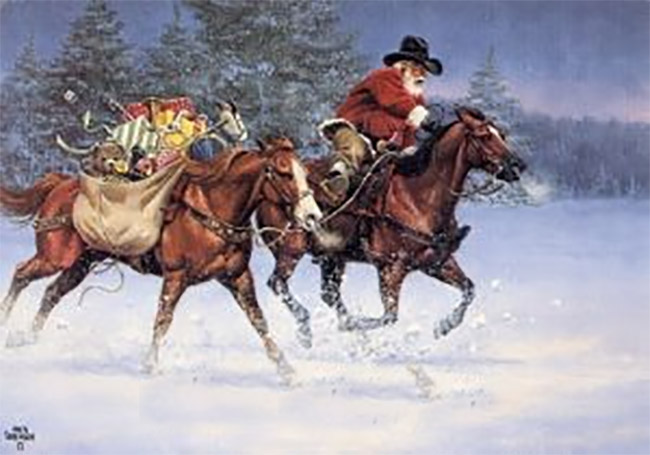
Santa Claus may be the most powerful cultural idea, ever conceived. This year, Christmas sales are expected to exceed one Trillion dollars. Not bad for a 2,000-year old saint, best remembered for gift giving with no expectation of anything in return.
The historical life of St. Nicholas is shrouded in legend. Born in modern-day Turkey on March 15, AD270, Nicholas was the only child of rich parents who died in a plague, leaving the boy a wealthy orphan.
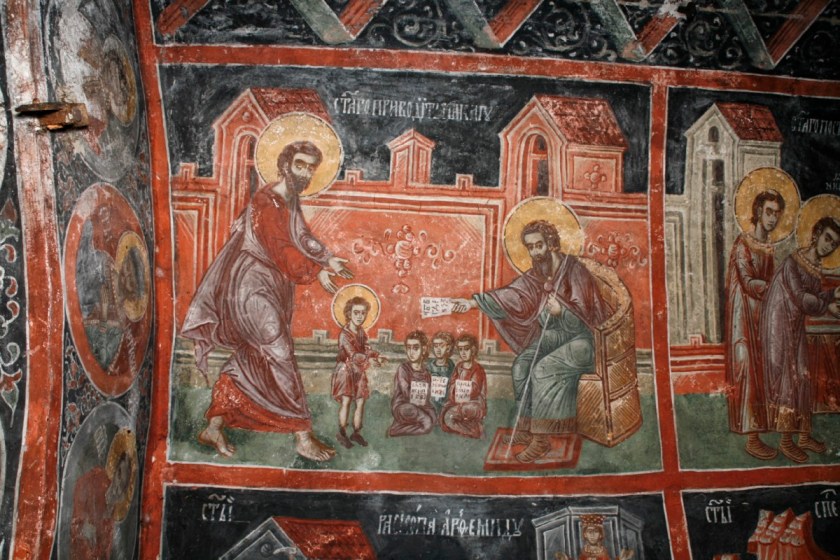
1689 fresco depicts St. Nicholas, giving to a school
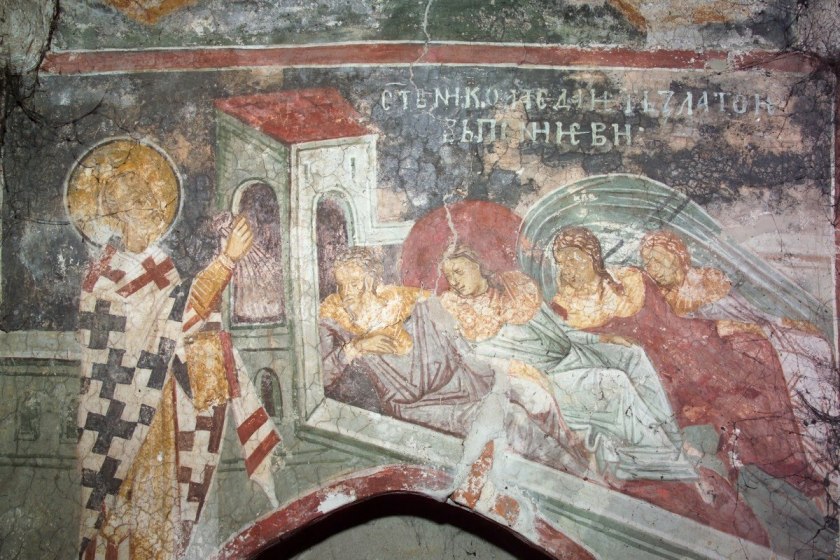
Nicholas was raised in the Christian faith and became an early bishop in the Greek church. One of many stories concerning the bishop’s generosity involves a destitute father, unable to raise a dowry sufficient to marry off his three daughters. On two consecutive nights, Nicholas crept up to the man’s window, and dropped a small sack of gold coins. On the third night, the man stayed up to learn the identity of his secret benefactor, only to be asked to keep the name, secret.
St. Nicholas saving the Three Maidens, Decani monastery, Kosovo
Saint Nicholas passed on December 6 in the year 343. He’s entombed in a marble cathedral dedicated to his name, in Myra.
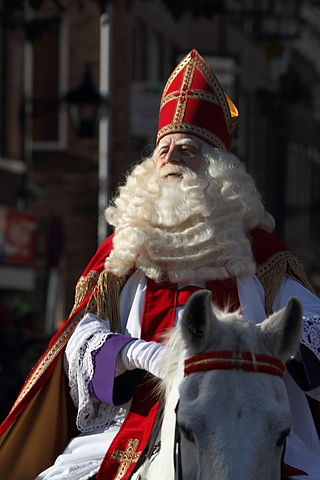
The “Sinterklass” of the Netherlands, rides a white horse
Nicholas is remembered as the patron saint of whole nations and cities such as Amsterdam and Moscow, revered among the early Christian saints and remembered for a legendary habit of secret gift-giving.
Some ideas take hold in the popular imagination, while others fade into obscurity. The “Three Daughters” episode made it into nearly every artistic medium available at that time, from frescoes to carvings and windows, even theatrical performances.
The Patron Saint not only of sailors, but of ships and their cargoes, the seas were the internet of the day, and the story of St. Nick spread from the Balkans to Holland, from England to Crete.
The Feast of St. Nicholas took hold around the 6th of December. Children and other marginal groups such as old women and slaves could receive gifts, but only by demanding them. The secret giving of gifts appeared sometime around the year 1200.

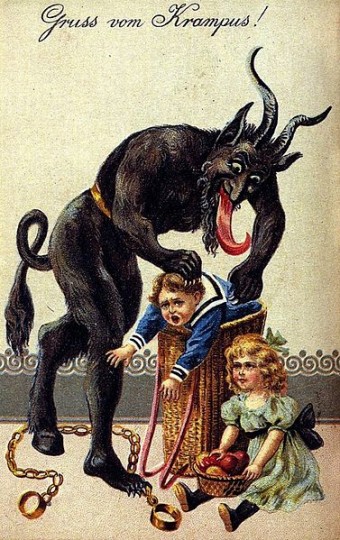
On the continent, legends of St. Nicholas combined with Pagan traditions and developed in quirky directions, including an evil doppelgänger who accompanies St. Nick on his rounds. As early as the 11th century, the Krampus may be expected to snatch bad little tykes away from parts of Germany, Austria and the Alpine villages of northern Italy, never to be seen again.
In eastern Europe, the witch Frau Perchta “The Disemboweller” was said to place pieces of silver in the shoes of children and servants who’d been good over the year, and replace the organs of the bad ones, with garbage. Yikes.
In French-speaking regions, Père Fouettard (Father Whipper) accompanies Père Noël on gift-giving rounds, dispensing beatings and/or lumps of coal to naughty boys & girls. In some German speaking regions, the malevolent Schmutzli accompanies Samichlaus, with a twig broom to spank wicked children.
Never mind Santa Claus. The Schmutzli is watching.
Samichlaus and the Schmutzli
The “Little Ice Age” of the 13th century, led to a proliferation of chimneys. Windows and doors were the things of thieves and vagabonds, while the chimney led directly to the warm heart of the home. St. Nick made his first gift-giving appearance via the chimney in a three daughters fresco, painted sometime in 1392, in Serbia.
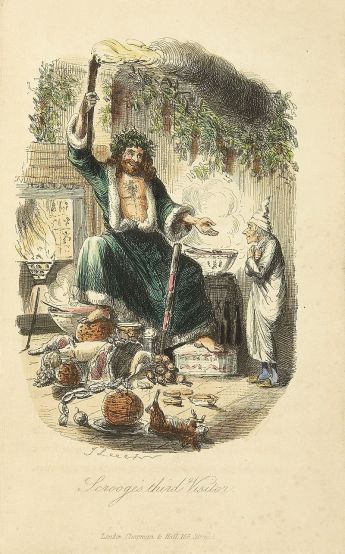
The Ghost of Christmas present as illustrated by John Leech, in Charles Dickens’ classic, a Christmas Carol
St. Nicholas was beginning to be seen as part of the family outside of the Church, which is probably why he survived what came next. Saints reigned in the Christian world until the 16th century, when the Protestant reformation rejected such “idolatry” as a corruption of Christianity.
Whatever you called him: Sinterklaos, Saint-Nikloi or Zinniklos, St. Nick went away entirely in England and Scotland during the time of Henry VIII, giving way to the spirit of Christmas cheer in the person of one Father Christmas. England would no longer keep the feast of the Saint on December 6. The celebration moved to December 25, to coincide with Christmas.
Protestants adopted as gift bringer the Baby Jesus or Christkindl, later morphing into Kris Kringle.
Puritan arrivals to New England rejected Christmas and everything with it, as “un-Christian”. In 1644, Massachusetts levied a fine of five shillings, on anyone observing the holiday.
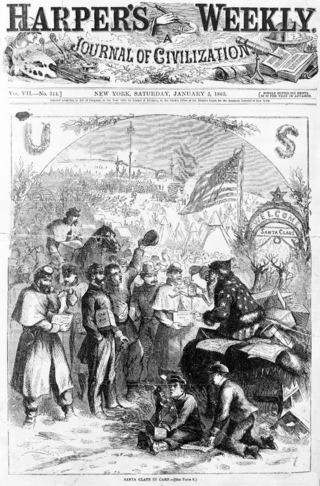
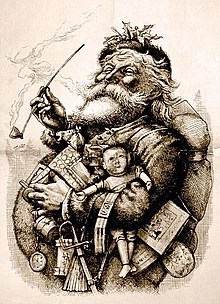
Santa Claus 1863, by Thomas Nast
Sinterklaas survived the iconoclasm of the Reformation in places like Holland, transferring to the 17th century settlement of New Amsterdam: what we now know as the new world port city of New York.
Sinterklass blended with Father Christmas, to create a distinctly American Santeclaus, which began to take hold in the 19th century.
The Christmas “celebrations” of the period, looked more like Mardi Gras than what we know today. Drunk and rowdy gangs wandered the streets of New York, Philadelphia and the cities of the northeast, something between a noisy mob and a marching band. Men fired guns into the air and banged or blew on anything that would make noise. Mobs would beat up the unfortunate, and break into the homes of the “upper classes”, demanding food and liquor.
New York philanthropist John Pintard, the man responsible for the holidays celebrating the fourth of July and George Washington’s birthday, popularized an image first set forth by Washington Irving, in his satirical story A History of New York from the Beginning of the World to the End of the Dutch Dynasty, by Diedrich Knickerbocker, depicting St. Nicholas bringing gifts to good little boys and girls, and switches with which to tan the hides of bad kids.
The unknown genius who published and illustrated A Children’s Friend in 1821, first depicted “Santa Claus” not as a Catholic bishop, but as a non-sectarian adult in a fur lined robe, complete with a sleigh inexplicably powered by a single reindeer, coming in through the chimney not on December 6, but on Christmas eve.
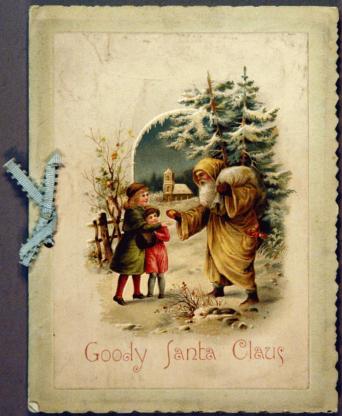
An anonymous poem believed to have been written on December 24, 1822 and later attributed to Clement Clarke Moore, began with the words: “T’was the night before Christmas, and all through the house“…
“A Visit From St. Nicholas“, better known by its first line, gave us the first description of the modern Santa Claus and a tool for domesticating the occasion, agreeable to law enforcement for calming the rowdy streets, to manufacturers and retailers for selling goods, to the church to make way for a family friendly day of worship and to parents, to control unruly children.
Goody Santa Claus 1889
The “Right Jolly old Elf” took his modern form thanks to the pen of illustrator and editorial cartoonist Thomas Nast, creator of the Democratic donkey and the Republican elephant and scourge of the Tammany Hall political machine which had swindled New York city, out of millions.
The idea of a Mrs. Claus seems to come from a poem by Katharine Lee Bates of the Cape Cod Curmudgeon’s own town of Falmouth, Massachusetts.
Today, the author is best known for her 1895 poem “Pikes Peak”, later set to music and widely known as “America the Beautiful”.
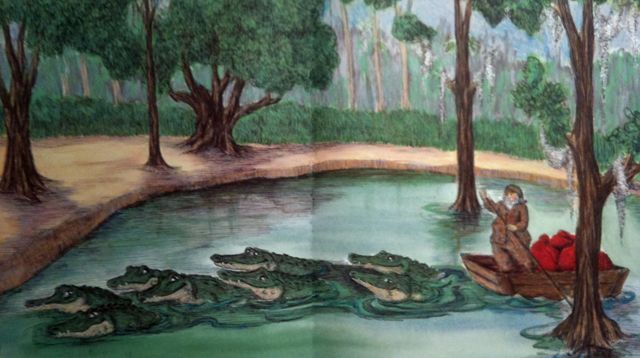
Tonight, NASA may be expected to track Santa and his sleigh drawn by eight reindeer, though none are any longer, all that tiny. Santa Claus will appear around the planet. Regional variations include Santa’s arriving on a surfboard in Hawaii. In Australia, he’s pulled by six white kangaroos. In Cajun country, Papa Noël arrives in a pirogue, drawn by eight alligators.
Santa Claus may be the most powerful cultural idea, ever conceived. This year, Christmas sales are expected to exceed one Trillion dollars. Not bad for a 2,000-year old saint, best remembered for gift giving with no expectation of anything in return.
Fun fact: Today, the port city of Barion the Adriatic coast of Italy is remembered for the WW2-era mustard gas accident, which spawned the discovery of modern chemotherapy drugs. A thousand years earlier, city fathers feared growing Muslim influence over the tomb of Saint Nicholas, and went to retrieve his remains. Find him, they did. Saint Nicholas’ large bones were removed and brought back as holy relics to Bari, where they remain, to this day. Smaller fragments were removed during the 1st Crusade and brought back to Venice, or enshrined in basilica from Moscow to Normandy. According to one local antiquarian, the “Tomb of Saint Nicholas” in Ireland, is probably that of a local priest.
Feature image, top of page: Hat tip GP Cox. I don’t know where you got it, but I Love this image. Merry Christmas and all the best for a healthy and prosperous New Year to you and yours, from Mr. & Mrs. Cape Cod Curmudgeon.
If you enjoyed this “Today in History”, please feel free to re-blog, “like” & share on social media, so that others may find and enjoy it as well. Please click the “follow” button on the right, to receive email updates on new articles. Thank you for your interest, in the history we all share.
There have been no fewer than 207 End-of-the-World predictions over the last 2,000 years.
During the recent past, one of the sillier bits of pop culture nonsense served up to us, may be that time the world came to an end on December 21, 2012.
It was the Mayan Apocalypse. A day of giant solar flares, when the planets aligned to cause massive tidal catastrophe, and the Earth collided with the imaginary planet Nibiru. Over in China, Lu Zhenghai even built himself an Ark. Sort of.
If I’d only been smart enough back then, to sell survival kits.
Lu Zhenghai’s ark, 2012. H/T Huffpo
End-of-the-world scenarios are nothing new. In 1806, the “Prophet Hen of Leeds” was laying eggs, inscribed with the message “Christ is coming”. It was the end of times. The Judgement Day cometh.
The story, as told in the book “Extraordinary Popular Delusions and the Madness of Crowds,” written by Scottish author Charles Mackay in 1841, tells the story of a “panic[ked] terror”, when a “great number of visitors” traveled from far and near, to peer at the chicken Nostradamus.
Turns out that Mary Bateman, the bird’s owner and a serial fraudster, was writing these messages with some kind of “corrosive ink”, maybe an acid, and reinserting them into the poor chicken. The “Yorkshire Witch” met her end on a gibbet, hanged for the poisoned pudding she gave that couple to relieve their chest pain. But I digress.
If you were around in 1986, you may remember the great excitement, concerning the return of Halley’s Comet. The celestial body only comes around once every 76 years and, the time before that, it was the end of the world. In 1910, the New York Times reported the discovery of the deadly poison cyanogen, in the comet’s tail. French astronomer Camille Flammarion predicted the gas would “would impregnate the atmosphere and possibly snuff out all life on the planet.”
French postcard, 1910
Hucksters sold comet pills. Doomsayers claimed that massive tides would cause the Pacific to empty, into the Atlantic. Finally, the end of days arrived. May 20, 1910. And then it went. There was no end of the world though, tragically, 16-year-old Amy Hopkins fell to her death from a rooftop, while awaiting the comet.
There have been no fewer than 207 End-of-the-World predictions over the last 2,000 years, if Wikipedia is any source. Polls conducted in 2012 across twenty countries revealed percentages from 6% in France to 22% in the United States and Turkey, believing the world would come to an end, in their lifetimes.
5,000 years ago, the Mayan civilization of modern-day Mexico and Central America developed a sophisticated calendar, working with a base numerical system of 20.
It was three calendars, really. The “Long Count” was mainly used for historical purposes, able to specify any date within a 2,880,000 day cycle. The Haab was a civil calendar, consisting of 18 months of 20 days, and an “Uayeb” of five days. The Tzolkin was the “divine” calendar, used mainly for ceremonial and religious purposes. Consisting of 20 periods of 13 days, the Tzolkin goes through a complete cycle every 260 days. The significance of this cycle is unknown, though it may be connected with the 263-day orbit of Venus. There is no year in the Haab or Tzolkin calendars, though the two can be combined to specify a particular day within a 52-year cycle.
Get it? Neither do I. Suffice it to say that the world of the Mayan Gods lasted 5,125 years and 133 days, a period of time known as 13 b’ak’tun.
The last Long Count began in August 3114 BC. Counting forward, scholars decided on December 21, 2012, as the end of the cycle.
An estimated 2% of the American public believed this betokened the end of the world. Online searches went up for one-way flights to Turkey and the South of France, both of which were rumored to be safe havens from the apocalypse.
They should have asked a Mayan, who may have been amused by all those crazy Gringos. The world wasn’t coming to an end. The calendar just rolls over and begins again at “Zero”, like the old odometers that only went up to 100,000 miles. What a party that could have been, though. The “New Year” to end all New Years. Only comes around once every 5,125 years, plus 133 days. Happy Long Count.
If you enjoyed this “Today in History”, please feel free to re-blog, “like” & share on social media, so that others may find and enjoy it as well. Please click the “follow” button on the right, to receive email updates on new articles. Thank you for your interest, in the history we all share.
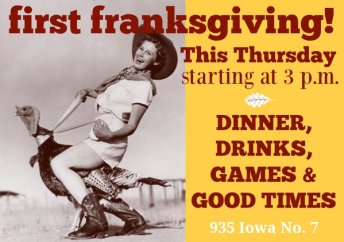
In 1941, a Commerce Department survey demonstrated little difference in Christmas sales between those states observing Franksgiving, and those observing the more traditional date. To this day, the years 1939, ’40 and ’41 remain the only outliers, outside the fourth-Thursday tradition.
The first Autumn feast of Thanksgiving dates well before the European settlement of North America.
Historian Michael Gannon writes that the “real first Thanksgiving” in America took place in 1565, when Pedro Menéndez de Avilés landed in modern-day Florida, and “had the Indians fed and then dined himself.” Likely, it was salt-pork stew with garbanzo beans. Yum.
According to the Library of Congress, the English colony of Popham in present-day Maine held a “harvest feast and prayer meeting” with the Abenaki people in 1607, twenty-four years before that “first Thanksgiving” at Plymouth.
George Washington proclaimed the first Presidential National day of Thanksgiving on November 26, 1783, “to recommend to the People of the United States a day of public thanksgiving and prayer to be observed by acknowledging with grateful hearts the many signal favors of Almighty God especially by affording them an opportunity peaceably to establish a form of government for their safety and happiness“.
So much for separation of Church and state.
President Abraham Lincoln followed suit in 1863, declaring a general day of Thanksgiving to be observed on the last Thursday of November. The date seemed to work out OK and the tradition stuck, until 1939.
Roughly two in every seven Novembers, contain an extra Thursday. November 1939, was one of them.
In those days, it was considered poor form for retailers to put up Christmas displays or run Christmas sales, before Thanksgiving. Lew Hahn, General Manager of the Retail Dry Goods Association, was afraid that extra week was going to cut into Christmas sales.
Ten years into the Great Depression with no end in sight, the Federal government was afraid of the same thing. By late August, President Franklin Delano Roosevelt decided to deviate from the customary last Thursday, and declared the fourth Thursday, November 23, to be a national day of prayer and thanksgiving.
Opposition to the plan was quick in forming. Alf Landon, Roosevelt’s Republican challenger in the earlier election, complained of Roosevelt’s impulsiveness, and resulting confusion. “More time should have been taken working it out” Landon said, “instead of springing it upon an unprepared country with the omnipotence of a Hitler.”
In Plymouth Massachusetts, self-described home of the “first Thanksgiving”, Chairman of the Board of Selectmen James Frasier, “heartily disapproved”.
The short-notice change in schedule disrupted vacation plans for millions of Americans, to say nothing of traditional Thanksgiving day football rivalries between high school and college teams, across the nation.
Unsurprisingly, support for Roosevelt’s plan split across ideological lines. A late 1939 Gallup poll reported Democrats favoring the move by a 52% to 48% majority, with Republicans opposing it by 79% to 21%.
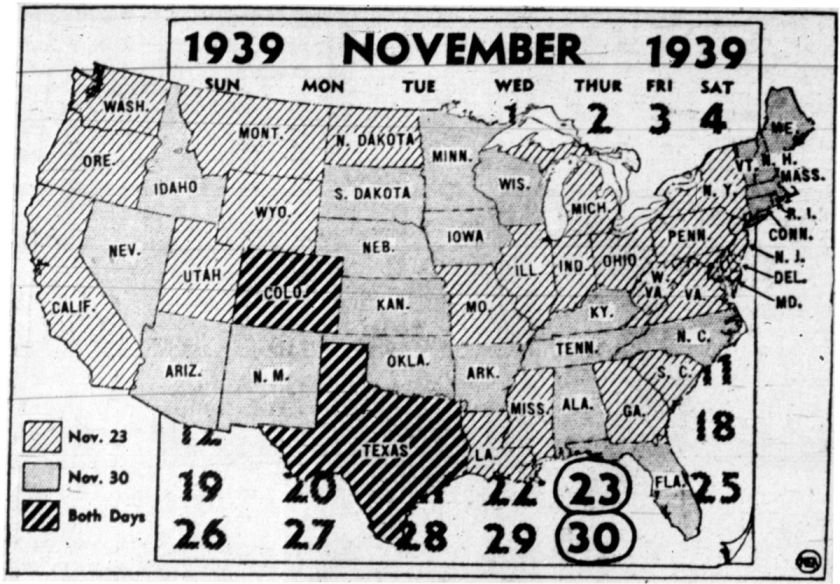
Such proclamations represent little more than the “’moral authority” of the Presidency, and states are free to do as they please. Twenty-three states and the District of Columbia observed Thanksgiving day on the non-traditional date, and twenty-two kept Thanksgiving on the 30th. Colorado, Mississippi and Texas, did both.
The next two years, thirty-two states and the District of Columbia celebrated what came to be called “Franksgiving” on the third Thursday of the month, while the remainder observed a more traditional “Republican Thanksgiving” on the last.
In 1941, a Commerce Department survey demonstrated little difference in Christmas sales between those states observing Franksgiving, and those observing the more traditional date. A joint resolution of Congress declared the fourth Thursday beginning the following year to be a national day of Thanksgiving. President Roosevelt signed the measure into law on November 26.
Interestingly, the phrase “Thanksgiving Day” had appeared only once in the 20th century prior to the 1941 resolution, that in President Calvin Coolidge’s first of six such proclamations.
Most state legislatures followed suit with the Federal fourth-Thursday approach, but not all. In 1945, the next year with five November Thursdays, Arkansas, Florida, Georgia, Idaho, Nebraska, Tennessee, Texas, and Virginia reverted to the last Thursday. Texas held out the longest, celebrating its fifth-Thursday Thanksgiving for the last time in 1956.
To this day, the years 1939, ’40 and ’41 remain the only outliers, outside the fourth-Thursday tradition.
Popular comedians of the day got a lot of laughs out of it, including Burns & Allen and Jack Benny. One 1940 Warner Brothers cartoon shows two Thanksgivings, one “for Democrats” and one a week later “for Republicans.”
The Three Stooges short film of the same year has Moe questioning Curly, why he put the fourth of July in October. “You never can tell”, he replies. “Look what they did to Thanksgiving!”
Joe Toye, the “Easy Company” character in the 2001 HBO miniseries “A Band of Brothers”, may have had the last word on Franksgiving. Explaining his plan to get the war over quickly, the paratrooper quips “Hitler gets one of these [knives] right across the windpipe, Roosevelt changes Thanksgiving to Joe Toye Day, [and] pays me ten grand a year for the rest of my f*****g life.”
Sounds like a plan.
If you enjoyed this “Today in History”, please feel free to re-blog, “like” & share on social media, so that others may find and enjoy it as well. Please click the “follow” button on the right, to receive email updates on new articles. Thank you for your interest, in the history we all share.
Four musicians were shocked to realize the shooter was the man they had worked for in those earlier months, at that burned out dive bar.
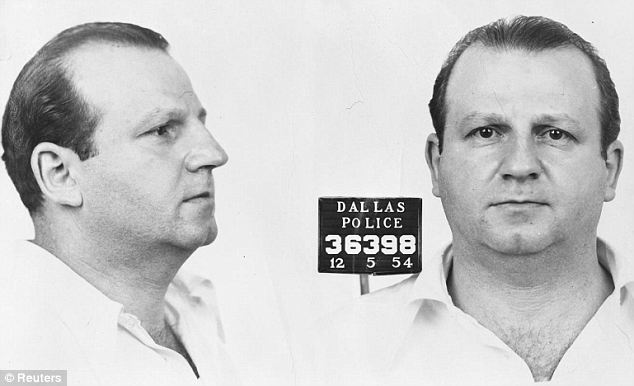
Jacob Leon Rubenstein was a troubled child, growing up on the west side of Chicago, in and out of the juvenile justice system and marked delinquent, since adolescence. Rubenstein was first arrested for truancy at age 11, and eventually skipped enough school to spend time at the Institute of Juvenile Research.
As with “Peanuts” cartoonist Charles M Shulz, those who knew Jacob Rubenstein called him “Sparky”. Some say the nickname was due to a resemblance to “Sparkplug”, the old nag with the patchwork blanket, from the Snuffy Smith cartoon strip. Unlike Shulz, Rubenstein hated the nickname and was quick to fight anyone who called him that. It may have been that quick temper, that made the name stick.
Rubinstein spent the early ’40s at racetracks in Chicago and California, until being drafted into the Army Air Forces, in 1943. Honorably discharged in 1946, Rubenstein returned to Chicago, before moving to Dallas the following year.
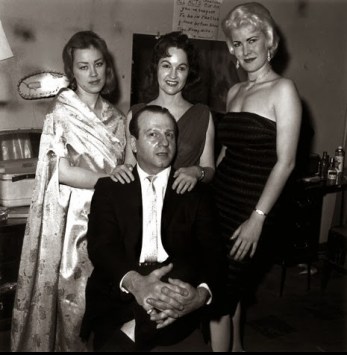
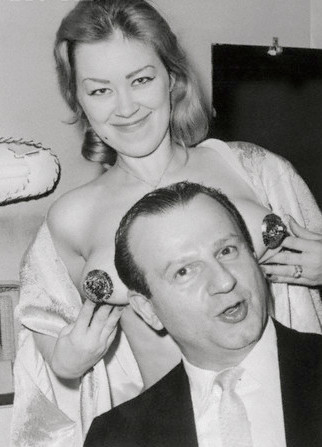
Rubenstein managed a series of Dallas nightclubs and strip joints, featuring such high class ladies as “Candy Barr” and “Chris Colt and her ’45’s”. Somewhere along the line, he shortened his name to “Ruby”.
Ruby was involved in typical underworld activities, such as gambling, narcotics and prostitution. There were rumored associations with Mafia boss Santo Trafficante. The shadier side of the Dallas police force knew that Ruby was always good for free booze, prostitutes, and other favors. This was one unsavory guy.
Today, you may know Rick Danko, Levon Helm, Garth Hudson and Robbie Robertson as musicians who went on the road with Bob Dylan in 1965 and later morphed into “The Band”, performing such rock & roll standards as “The Night they Drove Old Dixie Down”, “Up on Cripple Creek”, and “The Weight”.
Jack Ruby and his dogs, whom he always described as his “children”
In earlier days, the joints these guys played were so rough, that they performed with blackjacks, hidden in special pockets sewn into their coats. In 1963, they played a week in a Fort Worth nightclub. It was a huge venue, but no one was there that first night, save for two couples, a couple of drunk waiters and a one-armed go-go dancer. The band wasn’t through with their first set before a fight broke out, and someone was tear-gassed. The band played on, coughing and choking with teargas wafting across the stage, their faces wet with tears.
Part of the roof had either blown off this joint, or burned off, depending on which version you read. Jack, the owner, tore off the rest of it and kept the insurance money, calling it the “Skyline Lounge”. There was no need to pay for security, even without the roof. Jack said “Boys, this building ain’t exactly secure enough for you to leave your musical equipment unattended.” Band members were told they’d best stay overnight, with guns, lest anyone come over the wall to steal their equipment. Problem solved.
Months later, the nation was stunned at the first Presidential assassination in over a half-century. I was 5½ at the time, I remember it to this day. An hour after the shooting, former marine and American Marxist Lee Harvey Oswald killed Dallas police officer J.D. Tippit, who had stopped him for questioning. Thirty minutes later, Oswald was arrested in a movie theater.
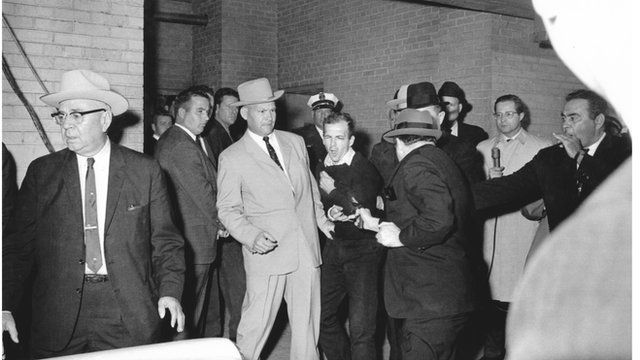
By Sunday, November 24, Oswald was formally charged with the murders of President John Fitzgerald Kennedy and Dallas police officer, J. D. Tippit. He was taken to the basement of Dallas police headquarters, where an armored car waited to transport the prisoner to a more secure county jail. The scene was crowded with press and police.
Millions watched on live television as a man came out of the crowd and fired a single bullet from his .38 into the belly of Lee Harvey Oswald. Four musicians were shocked to realize the shooter was the man they had worked for in those earlier months, at that burned out dive bar. Jack Ruby.
Oswald was taken unconscious to Parkland Memorial Hospital, the same hospital where John F. Kennedy died, two days earlier. He was dead within two hours.
Jack Ruby was sentenced to death in the murder of Lee Harvey Oswald, on March 14, 1964. The Texas Court of Criminal Appeals overturned Ruby’s conviction in October 1966, on the grounds that the trial should have taken place in a different county than that in which his high profile crime had taken place. Ruby died of lung cancer the following January, while awaiting retrial.
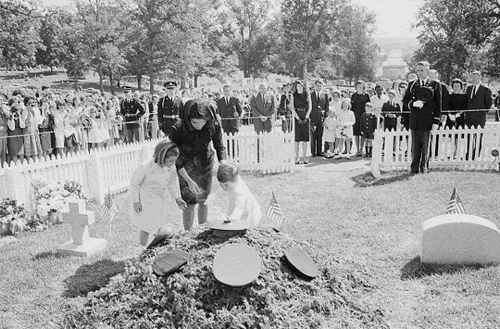
The body of the 35th President of the United States was laid to rest in Arlington National Cemetery on November 25, 1963 and moved to its present location on March 14, 1967. The Warren Commission found no evidence linking Jack Ruby’s murder of Lee Harvey Oswald, to any broader conspiracy to assassinate the President. What became of Jacob Leon “Sparky” Rubenstein’s fine establishment, is unknown to this writer.
If you enjoyed this “Today in History”, please feel free to re-blog, “like” & share on social media, so that others may find and enjoy it as well. Please click the “follow” button on the right, to receive email updates on new articles. Thank you for your interest, in the history we all share.
On Friday the 13th of October, 1307, King Philip IV of France sent out his arrest warrant, against the knights Templar. Under pressure from the French King, Pope Clement issued the bull “Pastoralis praeeminentiae” on November 22, instructing Christian monarchs throughout Europe to arrest Templar officials and seize their assets. Within a couple of years, the order had ceased to exist.
From the dawn of Christianity, faithful believers have traveled from the length and breadth of Europe to the Holy City of Jerusalem, to renew and affirm a lifelong faith in scripture.
The Rashidun Caliphate captured the Holy City in 637, following a long siege. Except for an 88-year period following the first crusade in 1099, the Temple Mount in the old city has been under Islamic administration, from that day to this.
Nevertheless, the number of these pilgrims increased over time. Many suffered robbery and even murder at the hands of Muslim fanatics, who considered it their Islamic duty to kill the “Infidel”.
The French knight Hugues de Payens approached King Baldwin II of Jerusalem and Warmund, Patriarch of Jerusalem in 1119, with a proposal. He would create a monastic order of warrior knights to protect these pilgrims, to be headquartered in a wing of the recaptured Al Aqsa Mosque, built on the ruins of the Temple of Solomon.
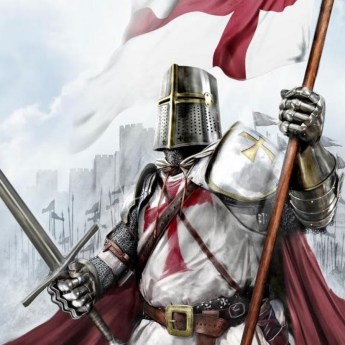
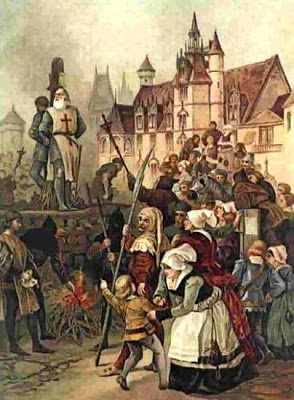
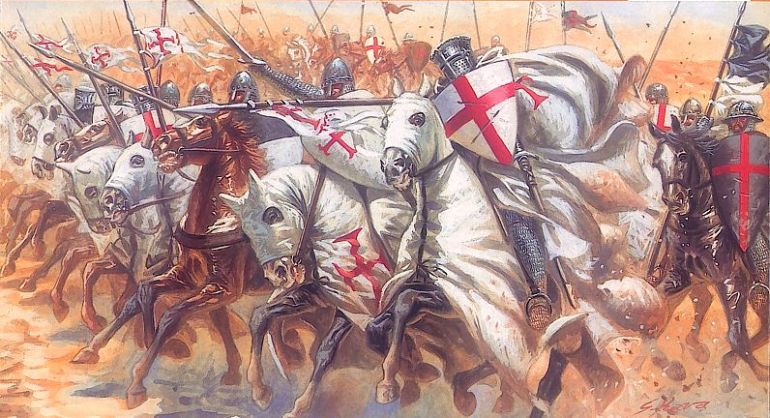
They were monks and they were warriors, “Poor Fellow-Soldiers of Christ and of the Temple of Solomon”. For 200 years, these “Knights Templar” provided for the safe passage of Christian pilgrims.
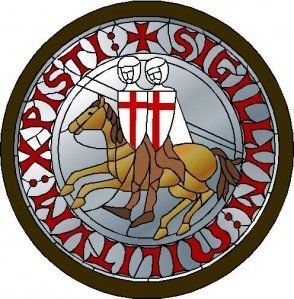
The original nine knights of the order lived up to the “poor knights” part of their name, relying on financial donations for their survival. So destitute were they that their emblem showed two knights riding a single horse.
That would change.
In time, the Templars gained favored charity status, their new-found wealth helping them to found an early banking system. Pilgrims to the holy land could deposit gold coins in Paris and take them out in Jerusalem, or vice-versa. The knights Templar achieved vast wealth in this manner, at their height running over 800 castles, every one of which ran as a full service banking institution, financing military campaigns and shoring up the treasuries of Kings.
Following what must have seemed a never ending series of wars with the English King, Philip IV of France found himself deeply in debt to the Templars. In 1307, he needed to wriggle out of it.
It was Friday the 13th of October that year, when Philip sent out his arrest warrant. Templar Grand Master Jacques de Molay and scores of other French Templars were simultaneously arrested. Charges included everything from obscene secret rituals to financial fraud. “Confessions” were extracted by torture.
Under pressure from the French King, Pope Clement issued the bull “Pastoralis praeeminentiae” on November 22, instructing Christian monarchs throughout Europe to arrest Templar officials and seize their assets.
Thousands of knights fled to areas outside Papal control. Some were burned at the stake, or absorbed into the rival Knights Hospitaller. Within a couple of years, the order had ceased to exist.
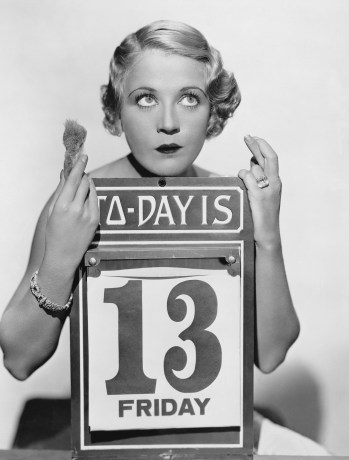
Some will tell you that’s where the Friday 13th superstition began. Others say it goes back to the Friday when Eve offered Adam that forbidden apple, or the Friday crucifixion of Jesus Christ.
Ancient Egyptians and Chinese believed the number 13 brought good luck, but some actually fear Friday the 13th. It’s called “Friggatriskaidekaphobia”.
People in Spanish-speaking countries will tell you it’s the 13-part that brings bad luck, but for most, it’s Friday. At least one psychotherapist asserts that 21 million Americans are afraid of Friday the 13th.
Smithsonian Magazine reports that fear of the number 13 costs the United States a Billion dollars a year in absenteeism, train and plane cancellations and related commerce on the 13th of the month.
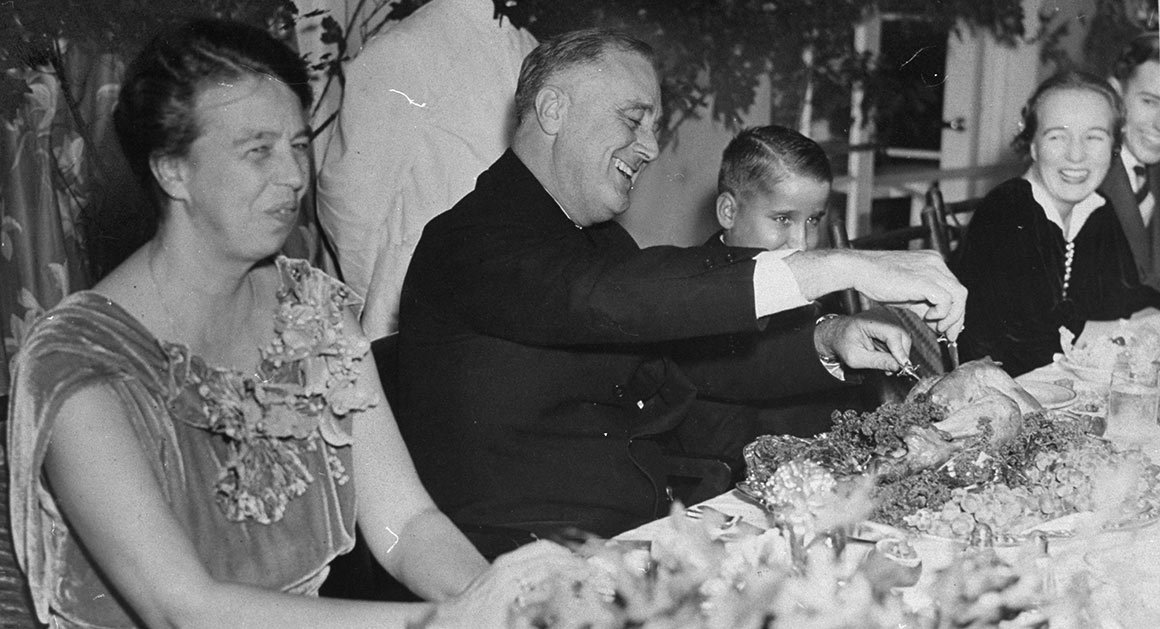
FDR avoided dinner parties with 13 guests. In France, there are professional 14th party guests called “quatorzieme“. I wonder how you get that job.
Who knows, maybe thirteen really is bad luck. There are 13 steps leading to the gallows, where the condemned meets the 13 knots of the hangman’s noose. The guillotine’s blade falls 13 feet. Diana hit the 13th pillar at Place d’Alma. Tupac was shot on Friday the 13th, and Fidel Castro was born on one.
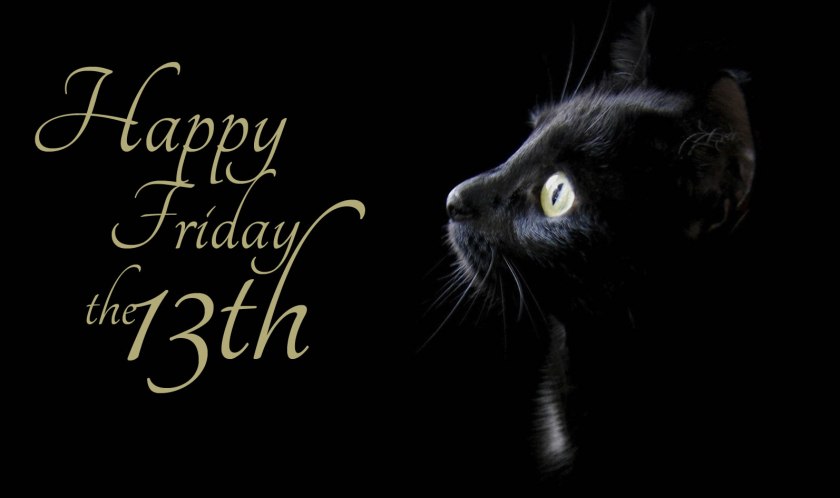
So knock on wood, and cross your fingers. Watch out for black cats. Don’t look at the full moon through a pane of glass, and be sure throw salt over your shoulder. You’ll be fine.
If you enjoyed this “Today in History”, please feel free to re-blog, “like” & share on social media, so that others may find and enjoy it as well. Please click the “follow” button on the right, to receive email updates on new articles. Thank you for your interest, in the history we all share.
“The feeling is constantly growing on me, that I had been the first to hear the greeting of one planet to another.” Nikola Tesla, 1901
In the 5th century BC, the Greek philosopher Democritus taught that the world was made of atoms. Physically indestructible and always in motion, these atoms are infinite in number, differing only in shape and size. Democritus taught that everything around us is the result of physical laws without reason or purpose, the only question to be answered, “What circumstances caused this event?”
Philosophers like Aristotle and Socrates took a less mechanistic approach, asking “What purpose did this event serve?” Plato disliked Democritus so much that he wanted to burn all his books.
The prevailing view throughout antiquity was that our planet is special. That we are alone in the cosmos. Democritus believed there were infinite numbers of worlds such as our own, with inhabitants like ourselves.
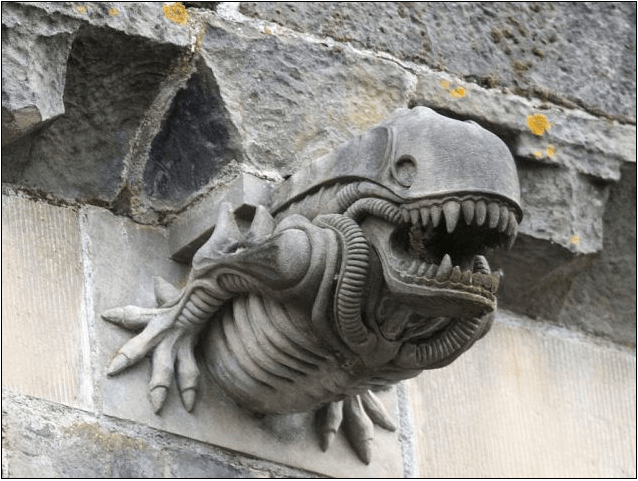
The 13th-century Paisley Abbey in Scotland, had its deteriorating gargoyles refurbished in the 1990s. One of their stonemasons was clearly, an Alien fan
In the time of Copernicus, it was widely believed that there was life on other planets. Astronomers saw several features of the moon as evidence, if not of life, then at least that intelligent life had once paid a visit.
Interest in Mars began to develop in the 1870s, when the Italian astronomer Giovanni Virginio Schiaparelli described physical features of the red planet as “canali”. The word means “channels” in Italian, but it was mis-translated as “canals”. The English speaking world was off to the races.
Speculation and folklore about intelligent life on Mars was soon replaced by the popular near-certainty, that canals were excavated by Martians.
The idea was near-universal by the turn of the century. In 1900, the French Academy of Science offered a prize of 100,000 francs to the first person to make contact with an alien civilization. Provided that it was anything but Martian. That would have been too easy.
In 1901, Nikola Tesla believed he had picked up electrical disturbances “with such a clear suggestion of number and order”, they could only be signals from Mars. “The feeling is constantly growing on me,” Tesla said, “that I had been the first to hear the greeting of one planet to another. A purpose was behind these electrical signals.”
Guglielmo Marconi said essentially the same in 1919, commenting about “queer sounds and indications, which might come from somewhere outside the earth.”
In 1924, the idea was put to the test. American astronomer David Peck Todd believed that martians might well attempt to communicate on the day the two bodies were in closest proximity on August 21, 1924. The date became “National Radio Silence Day”. Americans were urged to observe “radio silence” for the first five minutes of every hour, while a radio receiver at the U.S. Naval Observatory, two miles aloft on board a dirigible, listened for the signal that never came.
The British author H. G. Wells wrote the War of the Worlds in 1897, telling the story of an alien earth invasion by Martians fleeing the desiccation of their own planet. The story was adapted to a radio drama broadcast on Halloween, 1938, a production so realistic that many listeners sued the network for “mental anguish” and “personal injury”.
The idea of life on Mars persisted until the 1960s, when close observations of the Martian surface were made possible by the Mariner series of spacecraft.
While much of “mainstream” science seems to steer clear of the subject, the University of California at Berkeley jumped in with both feet on this day in 1984, founding the SETI Institute for the “sharing [of] knowledge as scientific ambassadors to the public, the press, and the government”.

The Berkeley SETI Research Center conducts a number of search operations at various wavelengths from radio through infrared spectrum and visible light, including:
• SERENDIP: Search for Extraterrestrial Radio Emissions from Nearby Developed Intelligent Populations
• SEVENDIP: Search for Extraterrestrial Visible Emissions from Nearby Developed Intelligent Populations
• NIROSETI: Near-InfraRed Optical Search for Extraterrestrial Intelligence
• Breakthrough Listen: Launched with $100 million in funding in 2016, it is “the most comprehensive search for alien communications to date.”
• SETI@home: A “scientific experiment that uses Internet-connected computers in the Search for Extraterrestrial Intelligence.”
The Robert C. Byrd Green Bank Telescope (GBT) in Green Bank, West Virginia is only one such installation put to use for project Breakthrough Listen, begun in 2016 as “the most comprehensive search for alien communications to date.”
Launched on May 17, 1999 with a worldwide objective of 50,000-100,000 home computers, to date more than 5.2 million SETI@home users have logged over two million years of aggregate computing time. Since the introduction of the Berkeley Open Infrastructure for Network Computing, or “BOINC” (I didn’t make that up), SETI@home users can even compete with one another, to see who can process the most “work units”.
You, too can participate at http://setiathome.berkeley.edu/, on your Windows, Apple or Network PC, or your Sony PlayStation 3. Don’t try it at work though, an act known as “Borging”. You might not be “assimilated”, but you will get fired.
“Short of pre-empting Heidi for a skin flick, NBC could not have managed to alienate more viewers that evening.”
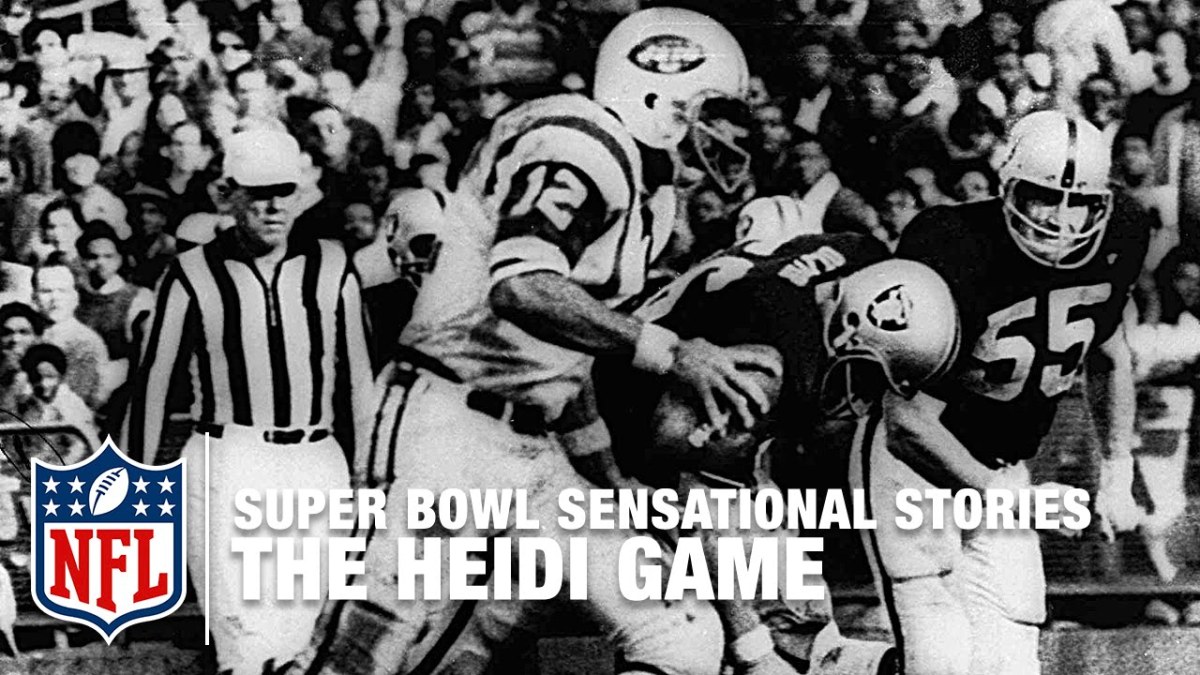
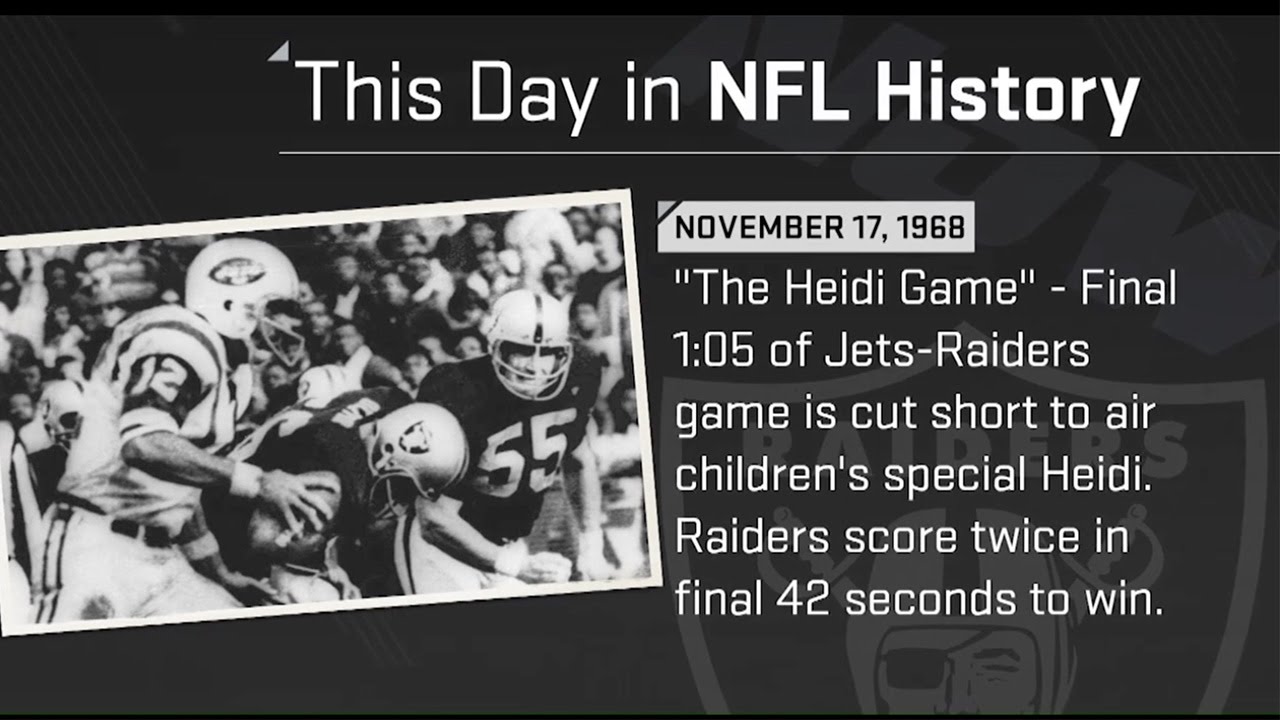
For a football fan, November 17, 1968 was shaping up to be one hell of a game. The second-best team in the world Oakland Raiders if the results of Super Bowl II were any indication, against the future American Football League champion and Super Bowl III winner, New York Jets.
NBC executives, were thrilled. The AFL was only eight years old in 1968 and as yet unproven compared with the older league, the NFL/AFL merger still two years in the future.
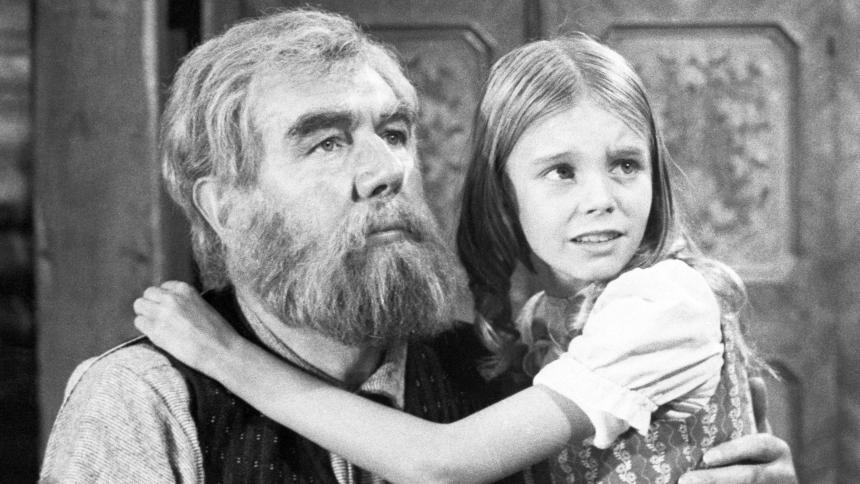
This game was expected to keep viewers in their seats, adding to the already large audience expected for the 7:00pm presentation of Heidi, a modern remake of the children’s classic story from 1880.
Most pro football games were played in 2½ hours in those days, and league executives scheduled this one, for three. The contract with Heidi prime sponsor Timex specified a 7:00 start and so the order went down. There would be no delays.
The game did not disappoint, voted among the ten most memorable games in professional football history in 1997, and the most memorable regular season contest, ever. The rivalry between the two clubs was intense, a high-scoring game where the lead changed, no fewer than eight times.
Network brass began to worry as early as 6:20 E.T., that the game wouldn’t end on time. 7:00 arrived with a minute & five seconds left to play and the Jets ahead, 32-29.
Network and affiliate switchboards began to light up, fans demanding the game be broadcast in its entirety, while others asked if Heidi would begin, on time.
NBC Sports executive producer Don “Scotty” Connal and network president Julian Goodman had by this time agreed to “slide the network”, to begin Heidi as soon as Curt Gowdy signed off from the game.
By this time phone switchboards were jammed, solid. NBC’s CIrcle-7 phone exchange blew twenty-six fuses, in an hour. Broadcast Operations Control (BOC) supervisor Dick Cline nervously watched the clock as Connal frantically tried to call, but couldn’t get through.
The television audience watched Oakland running back Charlie Smith return the kickoff from the end zone to the Oakland 22-yard line with 1:01 remaining on the clock, when the feed was broken.
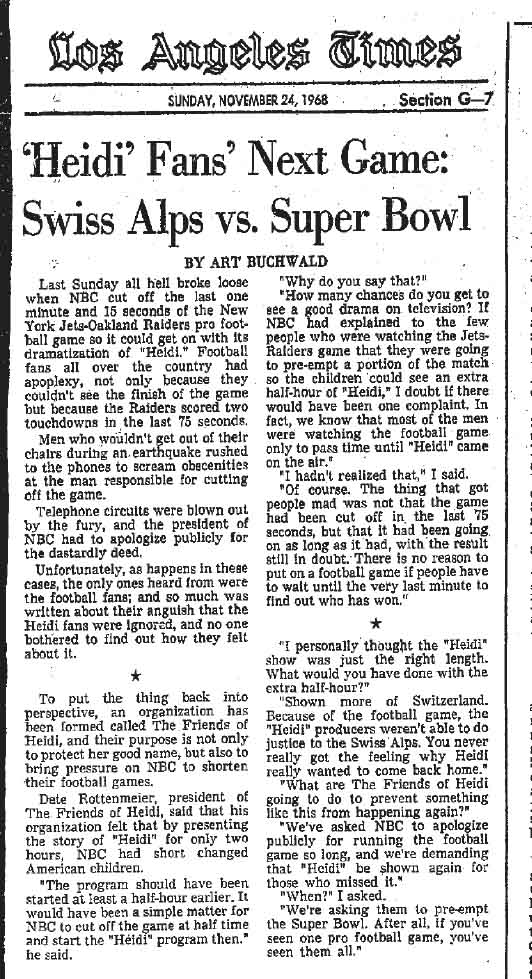
Heads exploded across the nation as callers reached out to newspapers and television stations, even local police departments, to demand the score. And to bitch. Humorist Art Buchwald wrote “Men who wouldn’t get out of their chairs in an earthquake rushed to the phone to scream obscenities [at the network].”
Meanwhile, the Oakland Raiders staged the most amazing come-from-behind rally in the history of sport, scoring two touchdowns in nine seconds. Gamblers were apoplectic on learning the news, that the Raiders had beat the 7½ point spread.
The film was just reaching a most tear-jerking moment as Heidi’s paralyzed cousin Clara was taking her first halting steps, as NBC broke in: “SPORTS BULLETIN: RAIDERS DEFEAT JETS 43-32”.
If half the nation hated NBC at that moment, now the other half did, as well. Sportswriter Jack Clary quipped, “The football fans were indignant when they saw what they had missed. The Heidi audience was peeved at having an ambulatory football score intrude on one of the story’s more touching moments. Short of pre-empting Heidi for a skin flick, NBC could not have managed to alienate more viewers that evening.”
The “Heidi Bowl” was prime time news the following night, on all three networks. NBC’s Huntley-Brinkley Report aired the last sixty seconds while ABC Evening News anchor Frank Reynolds read excerpts from the movie, with clips of the Raiders’ two touchdowns cut in. CBS Evening News’ Harry Reasoner announced the “result” of the game: “Heidi married the goat-herder“.
NBC had no option but self-mockery, to redeem itself from the fiasco. One testimonial read “I didn’t get a chance to see it, but I hear it was great”. It was signed by Joe Namath.
A special “Heidi phone” was installed in the BOC, to prevent future such disasters. In 2005, TV Guide listed the Heidi Bowl at #6 of the “100 Most Unexpected TV Moments” in television history.
Actress Jennifer Edwards in the title role of the film, may have had the final word: “My gravestone is gonna say, ‘She was a great moment in sports'”.
If you enjoyed this “Today in History”, please feel free to re-blog, “like” & share on social media, so that others may find and enjoy it as well. Please click the “follow” button on the right, to receive email updates on new articles. Thank you for your interest, in the history we all share.
For nigh on seventy years, few knew from where this little known bit of verse, had come.
In the early 1930s, Mary Elizabeth Frye was a Baltimore housewife and amateur florist, the wife of clothing merchant, Claud Frye.
A young Jewish girl was living with the couple at this time, unable to visit her sick mother in Germany, due to the growing anti-Semitic violence of the period. Her name was Margaret Schwarzkopf.
Margaret was bereft when her mother died, heartbroken that she could never “stand by my mother’s grave and shed a tear.” Mrs Frye took up a brown paper shopping bag, and wrote out this twelve line verse.
She didn’t title the poem, nor did she ever publish it, nor copyright the work. People heard about it and liked it so Frye would make copies, but that’s about it.
For nigh on seventy years, few knew from where this little known bit of verse, had come.
Over the years, there have been many claims to authorship, including attributions to traditional and Native American origins.
The unknown poem has been translated into Danish, Dutch, French, German, Hebrew, Ilocano, Japanese, Korean, Russian, Spanish, Tagalog and other languages, appearing on countless bereavement cards and read over untold funeral services.
The English translation of one Swedish version reads: “Do not weep at my grave – I am not there / I am in the sun’s reflection in the sea / I am in the wind’s play above the grain fields / I am in the autumn’s gentle rain / I am in the Milky Way’s string of stars / And when on an early morning you are awaked by bird’s song / It is my voice that you are hearing / So do not weep at my grave – we shall meet again.”
Many in the United Kingdom heard the poem for the first time in 1995, when a grieving father read it over BBC radio in honor of his son, a soldier slain by a bomb in Northern Ireland. The son had left the poem with a few personal effects, and marked the envelope ‘To all my loved ones’.
For National Poetry Day that year, the British television program The Bookworm conducted a poll to learn the nation’s favorite poems, subsequently publishing the winners, in book form. The book’s preface describes “Do Not Stand at My Grave and Weep” as “the unexpected poetry success of the year from Bookworm’s point of view… the requests started coming in almost immediately and over the following weeks the demand rose to a total of some thirty thousand. In some respects it became the nation’s favourite poem by proxy… despite it being outside the competition.”
All this at a time when the name and even the nationality of the author, was unknown.
Abigail Van Buren, better known as “Dear Abby”, researched the history of the poem in 1998, and determined that Mrs. Frye was, after all, the author.
Mary Elizabeth Frye passed away in Baltimore Maryland on September 4, 2004. She was ninety-eight.
The Times of Great Britain published her untitled work on November 5, as part of her obituary. ‘The verse demonstrated a remarkable power to soothe loss”, wrote the Times. “It became popular, crossing national boundaries for use on bereavement cards and at funerals regardless of race, religion or social status”.
“I Did Not Die”
by Mary Elizabeth Frye
Do not stand at my grave and weep, I am not there; I do not sleep. I am a thousand winds that blow, I am the diamond glints on snow, I am the sun on ripened grain, I am the gentle autumn rain. When you awaken in the morning’s hush I am the swift uplifting rush Of quiet birds in circling flight. I am the soft star-shine at night. Do not stand at my grave and cry, I am not there; I did not die.
If you enjoyed this “Today in History”, please feel free to re-blog, “like” & share on social media, so that others may find and enjoy it as well. Please click the “follow” button on the right, to receive email updates on new articles. Thank you for your interest, in the history we all share.
You must be logged in to post a comment.