
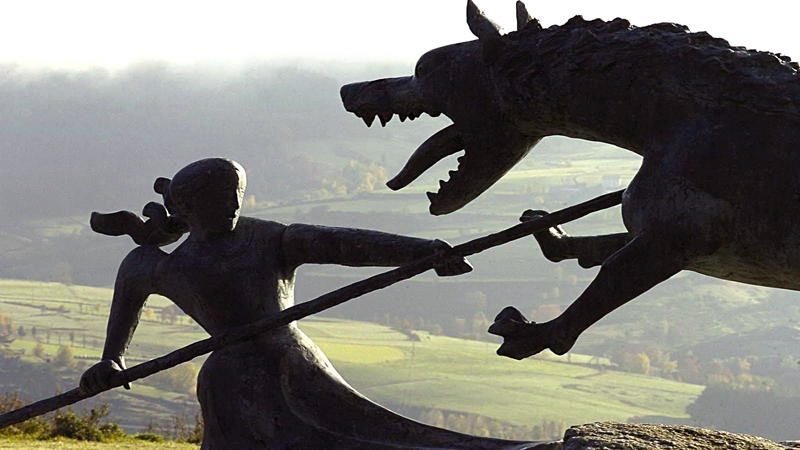
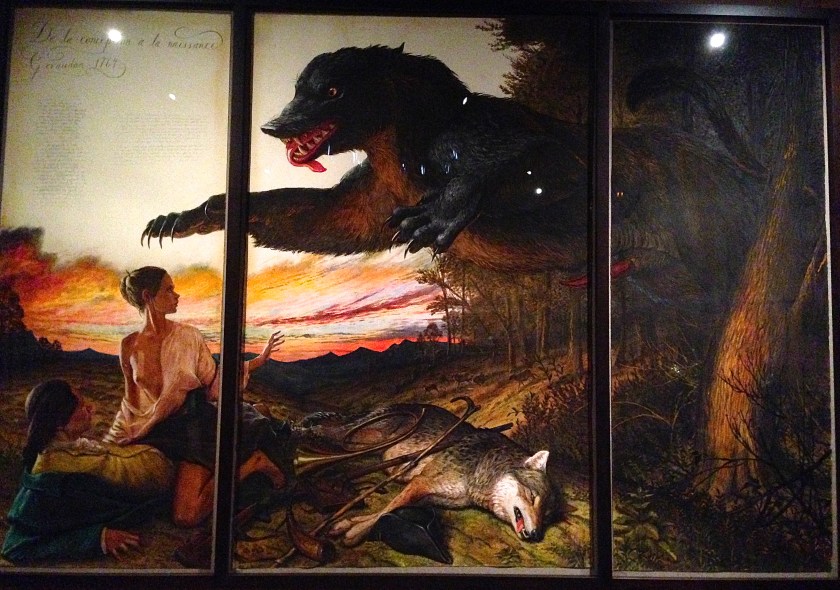
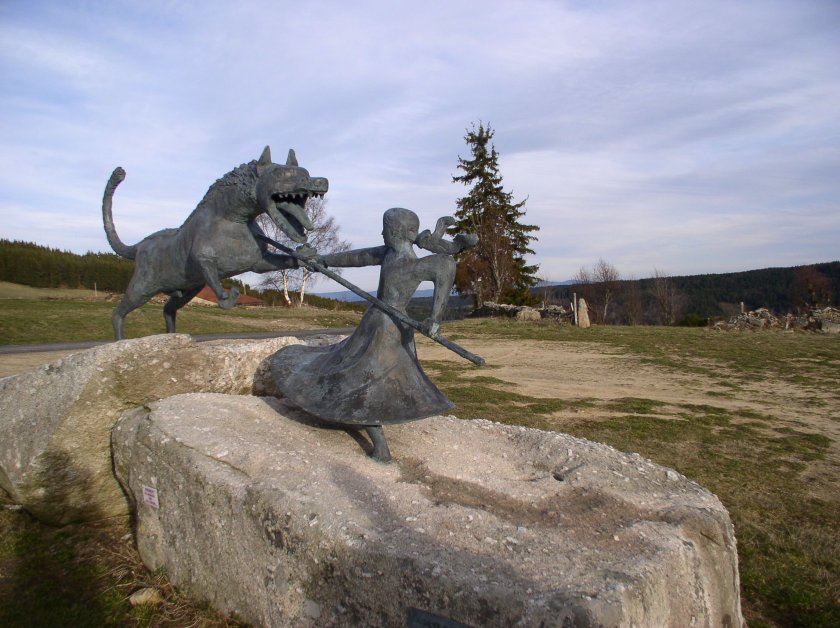
In the summer of 1764, a young woman was tending cattle near the Mercoire forest in the Gévaudan region of south-central France, when a large animal emerged from the forest. She later described the creature as wolf-like in appearance, but much larger. The size of a calf, or a donkey.
Twice the animal attacked, only to be driven off by the bulls in the herd. Twenty-nine days later, Janne Boule was not so lucky. The 14-year-old is officially recorded as the first victim of La Bête du Gévaudan. The “Beast of Gévaudan”. Over the following three years, there would be many more.

Contemporary illustration depicts the Beast as a large wolf, or wolf hybrid.
A 1987 study of contemporary sources estimates 210 such attacks over the three-year period, resulting in 113 fatalities and another 49 injuries. Victims were most often killed, by having their throats ripped out. Ninety-eight of those, were partially eaten.
Precise identification of the Beast of Gévaudan has baffled cryptozoologists, from that day to this. Eyewitness accounts describe a large animal with a long tail, about the size of a calf, or a donkey. With reddish fur and a flat head, the Beast was said to be exceptionally powerful, able to leap distances of 30-feet and more, and capable of carrying off a grown adult, in its jaws.
 Terror gripped the region in the later months of 1764, as the Beast attacked women, men and children. Usually while alone, and often while tending livestock.
Suspicion centered on an unusually large wolf, dog, or some hybrid combination of the two. Stories went to the supernatural, laying bare our most primordial fear, that of a shape shifter. A Werewolf.
The Epic of Gilgamesh comes to us from the second millennium BC, telling the tale of such creatures. The 1st-century BC Roman poet Ovid, was the first to write of shape-shifting as a conscious act of will.

In January 1765, the Beast came to the attention of King Louis XV, who decreed that the French state would help to find and destroy the Beast. First captain Duhamel of the Clermont-Ferrand dragoons was brought out with his troops, and sent to Le Gévaudan. The professional wolf-hunters Jean Charles Marc Antoine Vaumesle d’Enneval and his son Jean-François, arrived with eight bloodhounds, trained in wolf-hunting.
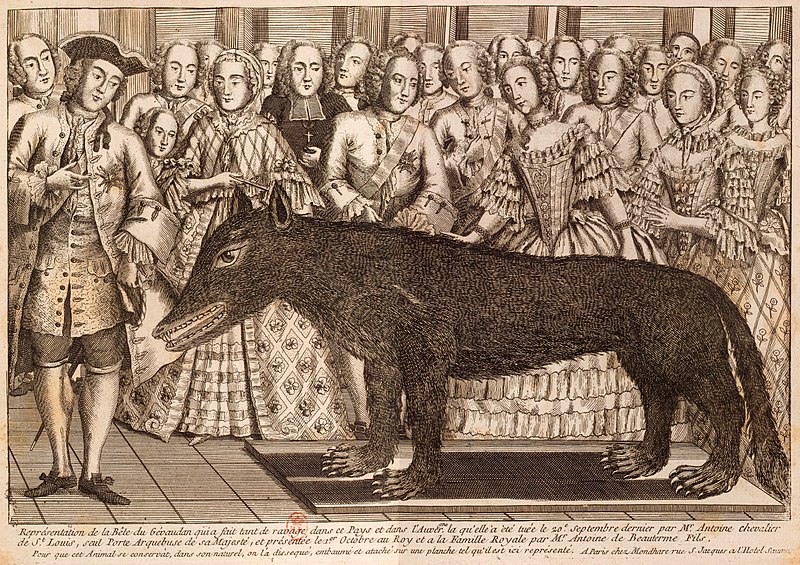
“Officer of the Royal Bedchamber” Antoine De Beauterne Marques Argents, Knight Equerry of the Royal Military Order of Saint Louis and Gun-Bearer to Louis XV of France (now, there’s a title) announced on this day in 1765 that he had killed the Beast of Gévaudan, to great rejoicing.
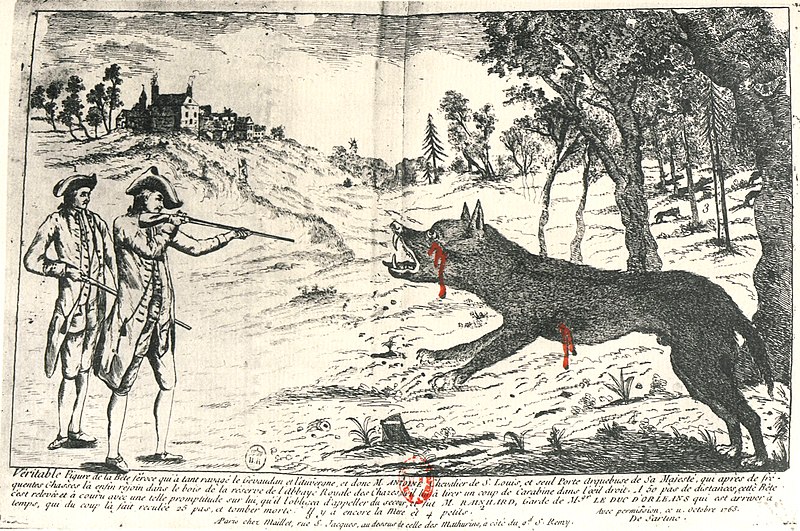
The animal was a large grey wolf measuring 5-feet, 7-inches and weighing 130-pounds. Eyewitnesses claimed to have recognized scars on the animal’s body and Beauterne himself swore that this was the Beast. “We declare by the present report signed from our hand”, he said, “we never saw a big wolf that could be compared to this one. Hence, we believe this could be the fearsome beast that caused so much damage.”
The animal was stuffed and brought to Versailles, but the joy was short-lived.
Two boys were attacked on December 2 but managed to fight off the Beast. A dozen more fatal attacks were reported to have followed, near La Besseyre-Saint-Mary.
The animal disappeared around the middle of 1767. It is believed to have been shot a dozen or more times by this time, and poison baits were widespread. A local farmer and inn-keeper named Jean Chastel is credited with killing the Beast of Gévaudan on June 19, 1767, with a bullet which he himself had cast, in silver.
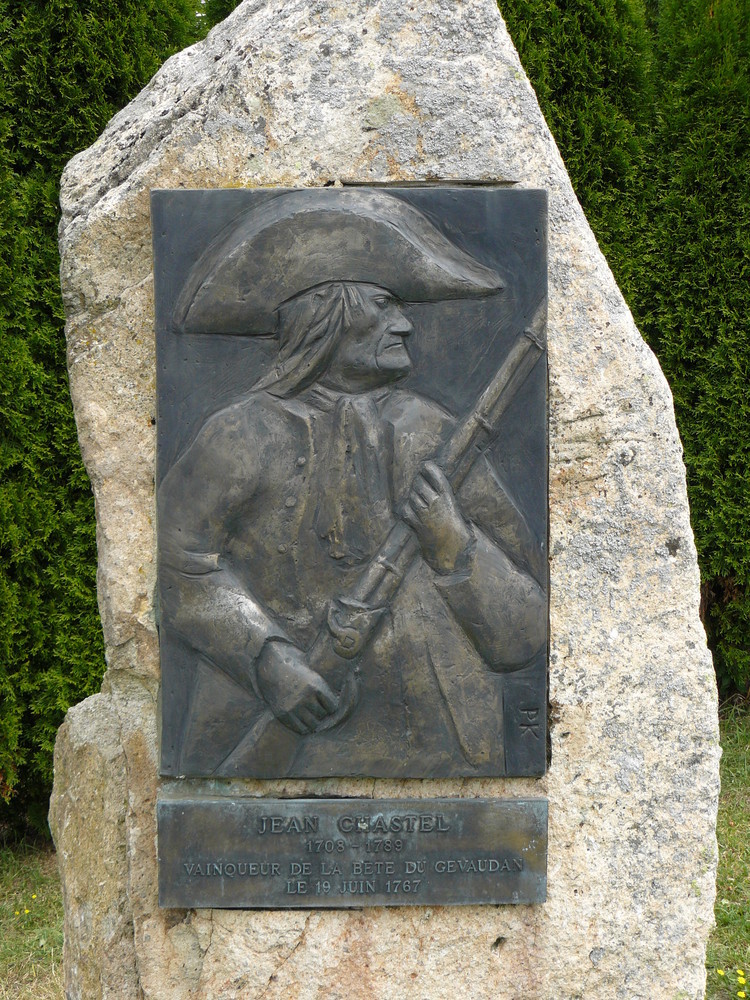
The silver bullet meme did much to feed into werewolf mythology. Chastel himself is depicted as a werewolf in Patricia Briggs’ novel, Hunting Ground. Here, the hunter and the hunted are one and the same, and some random wolf was shot, to throw everyone off the scent.
National Geographic posits that the Beast of Gévaudan was in fact, a subadult male lion. African lions were by no means unknown at this place and time, though images of the era were usually quite stylized, depicting the full mane of the adult male.
Exotic animal menageries were common among the upper classes. It is quite possible that such an animal could’ve been on the loose. Physical descriptions of the Beast including it’s reddish hair, flat head and furry ridge-line, match up with those of such an animal. This combined with descriptions of the hunting and killing methods of the animal, make the lion theory quite plausible.
The Beast of Gévaudan may have been a wolf, or maybe a lion. Perhaps it was several animals. Or maybe Jean Chastel is a werewolf, after all. A clever one who threw half a nation off his scent, and now only does his killing, in the dark. Just another thing that goes BUMP, in the night.
If you enjoyed this “Today in History”, please feel free to re-blog, “like” & share on social media, so that others may find and enjoy it as well. Please click the “follow” button on the right, to receive email updates on new articles. Thank you for your interest, in the history we all share.


 This was the world of bare knuckle boxing in the age of John L. Sullivan. He thrived in that world. The urban prize ring was his “temple of manhood”. He intended to be its Crown Prince.

 Sullivan’s unbeaten record over 44 professional fights came to an end on July 9, 1892, when “Gentleman Jim” Corbett unloaded a smashing left in the 21st round that put the champion down, for good. Sullivan would later say that his opponent only “gave the finishing touches to what whiskey had already done to me.”


 Ford left the family farm outside of modern-day Detroit as a young man, never to return. His father William thought the boy would one day own the place but young Henry couldn’t stand farm work. He later wrote, “I never had any particular love for the farm—it was the mother on the farm I loved”.
 Ford claimed he’d be able to “grow automobiles from the soil”, a hedge against the metal rationing of world War Two. He dedicated 120,000 acres of soybeans to experimentation, but to no end. The total acreage devoted to “fuel” production, is unrecorded.
 Henry Ford’s experiment in making cars from soybeans never got past that first prototype, and came to a halt during WW2. The project was never revived, though several states adopted license plates stamped out of soybeans, a solution farm animals found to be quite delicious.

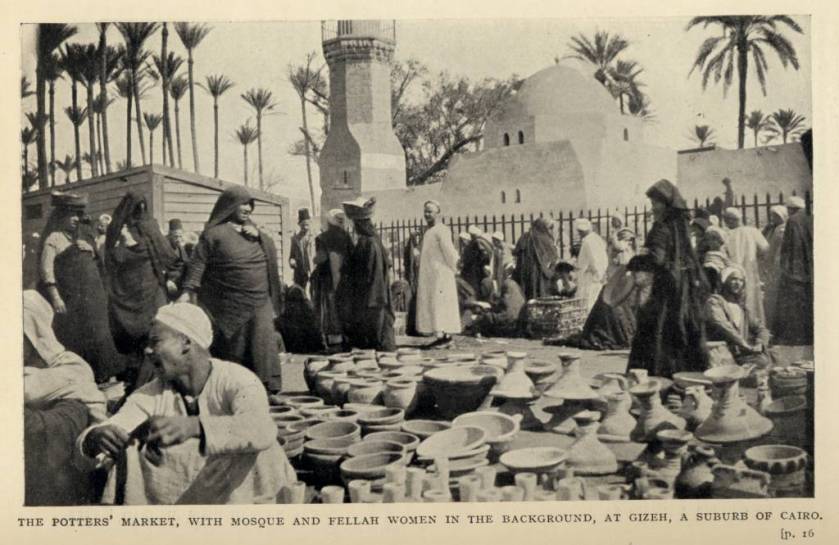




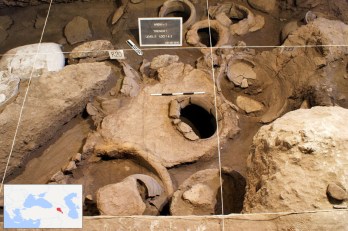 The oldest winery for which archaeological evidence exists was established around BC4100, in present-day Armenia. The Egyptian Pharoahs were producing a wine-like substance from 3100BC for use in public ceremonies, due to its resemblance to blood.
 Sounds like a great job, as Greek Gods go.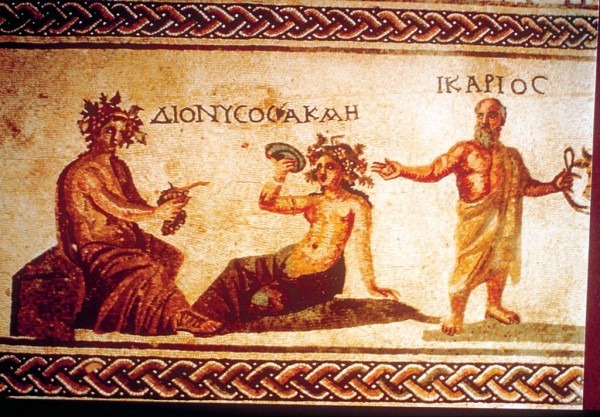
 The legions of Rome expanded the Empire across Europe from modern day France and Germany into Portugal and Spain. Everywhere the Legions went, vineyards were soon to follow. To this day, some regions are said to have more ‘Terroir’, than others.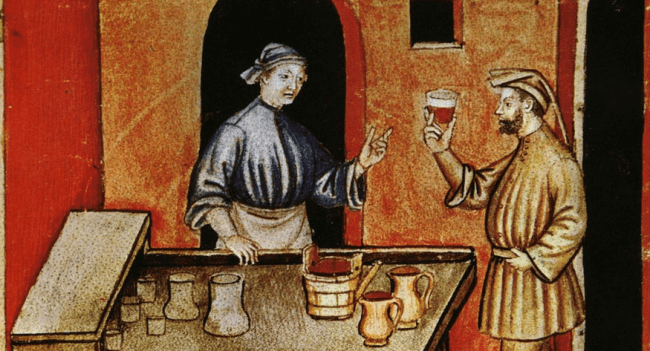
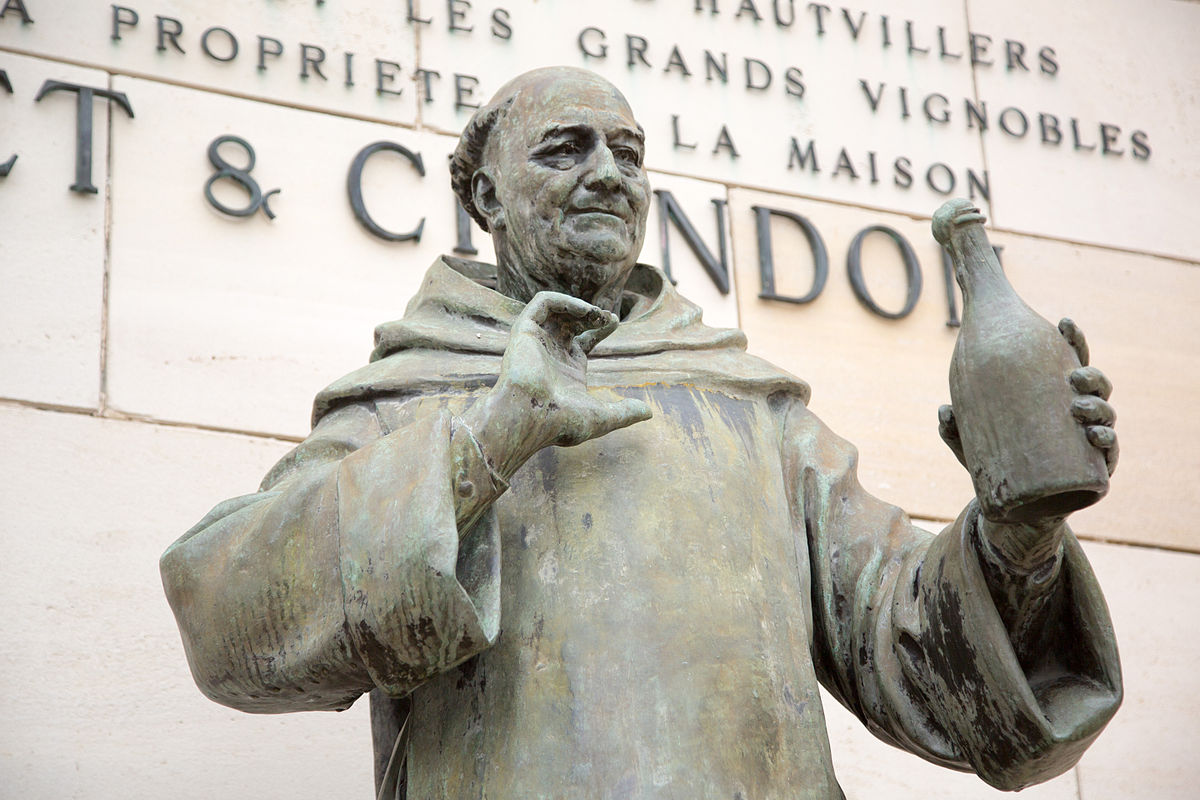
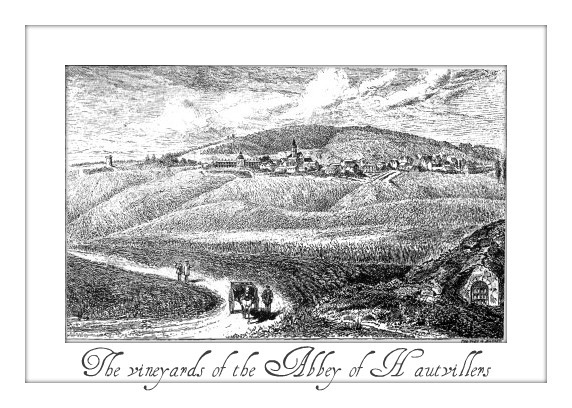 The story is almost certainly a myth, a later embellishment to the story. During his 47 year career, Pérignon went to considerable lengths to eliminate bubbles from his wine. Dom Pérignon never succeed in that goal, yet he did make bubbly wine a whole lot better, using corks for the first time to prevent the escape of carbon dioxide, and perfecting a ‘gentle’ pressing technique which left out the murkiness of the skins.
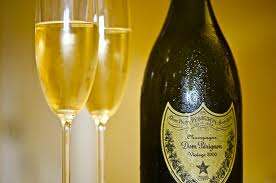 Pérignon didn’t like white grapes because of their tendency to enter refermentation. He preferred the Pinot Noir, and would aggressively prune the plants so that vines grew no higher than three feet and produced a smaller crop. The harvest was always in the cool, damp early morning hours, and Pérignon took every precaution to avoid bruising or breaking his grapes. Over-ripe and overly large fruit was always thrown out. Pérignon never permitted grapes to be trodden upon, always preferring the use of multiple presses.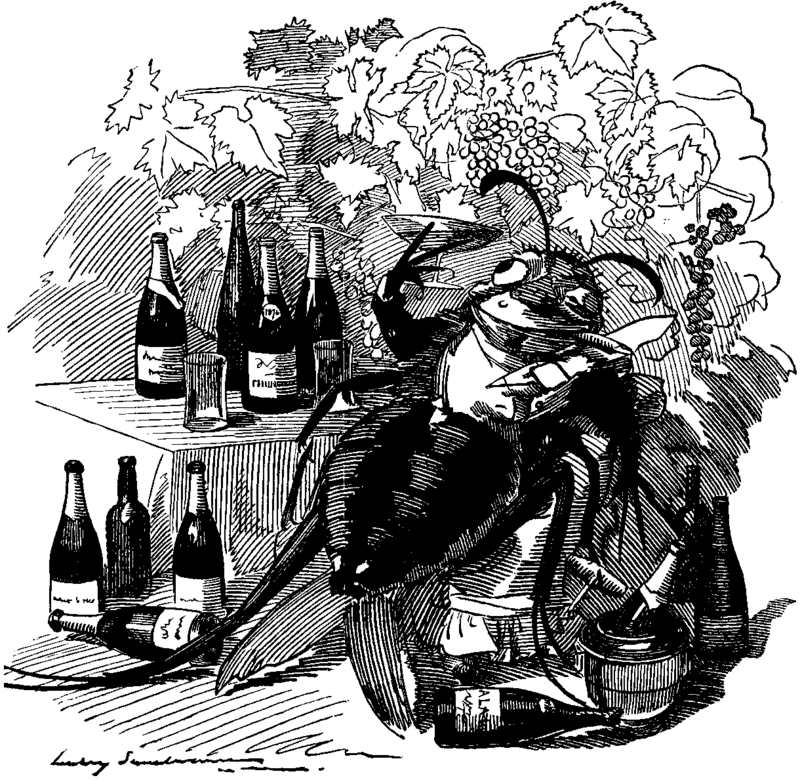



 To keep costs down, off-the-shelf components were used whenever possible. The body was made of fiberglass to keep tooling expenses low. The chassis and suspension came from the 1952 Chevy sedan. The car featured an increased compression-ration version of the same in-line six “Blue Flame” block used in other models, coupled with a two-speed Power glide automatic transmission. No manual transmission of the time could reliably handle an output of 150 HP and a 0-60 time of 11½ seconds.











 The United States still had a border in those days, which the Federal government attempted to enforce.
 Suffering a blizzard of hotel cancellations, this “attack on Key West’s sovereignty” could not stand. On April 22, Mayor Wardlow, local attorney & pilot David Horan and Old Town Trolley Tours operator Ed Swift flew to Miami seeking legal remedy. When District Court Judge C. Clyde Atkins failed to issue an injunction, the Key West delegation took to the courthouse steps.
 On April 23, with federal agents on scene to monitor the proceedings, a crowd gathered before the old customs building. Mayor Wardlow and a gaggle of allies mounted the back of a flatbed truck, to read the proclamation of secession. “We serve notice on the government in Washington”, he started, “to remove the roadblock or get ready to put up a permanent border to a new foreign land. We as a people, may have suffered in the past, but we have no intention of suffering in the future at the hands of fools and bureaucrats“.
 So it is that the micro-nation of Key West celebrates its independence, every April 23. The “Conch Republic’ issues its own passports, selling T-shirts and bumper stickers with the slogan “We seceded where others failed”.


You must be logged in to post a comment.