
 In the early days of WWI, Imperial Germany attempted to comply with standards of maritime warfare, as established by the Hague Conventions of 1899 and 1907.
Desperate to find an effective countermeasure to the German “Unterseeboot”, Great Britain introduced heavily armed merchant ships with concealed weaponry in 1915, phony merchantmen designed to lure submarines into making surface attacks. Britain called these secret countermeasures “Q-ships”, after their home base in Queenstown, in Ireland. German sailors called them U-Boot-Fälle. “U-boat traps”.
The “unprovoked” sinking of noncombatant vessels, including the famous Lusitania, in which 1,198 passengers lost their lives, became a primary justification for war. The German Empire, for her part, insisted that many of these vessels carried munitions intended to kill Germans on European battlefields.
Underwater, the submarines of WWI were slow and blind, on the surface, vulnerable to attack. In 1916, German policy vacillated between strict adherence to prize rules and unrestricted submarine warfare. The first put their people and vessels at extreme risk, the second threatened to bring the United States into the war.
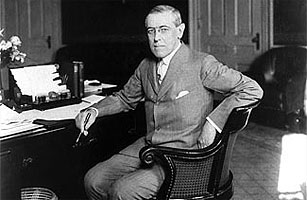
In 1916, President Woodrow Wilson won re-election with the slogan “He kept us out of war”, a conflict begun in Europe, two years earlier.
In a January 31, 1917 memorandum from German Ambassador Count Johann von Bernstorff to US Secretary of State Robert Lansing, the Ambassador stated that “sea traffic will be stopped with every available weapon and without further notice”, effective the following day. The German government was about to resume unrestricted submarine warfare.
Anticipating this resumption and expecting the decision to draw the United States into the war, German Foreign Secretary Arthur Zimmermann delivered a message to the German ambassador in Mexico, Heinrich von Eckardt. The telegram instructed Ambassador Eckardt that, if the United States seemed likely to enter the war, he was to approach the Mexican Government with a proposal for military alliance, promising “lost territory” in Texas, New Mexico, and Arizona in exchange for a Mexican declaration of war against the United States.
 The “Zimmermann Telegram” was intercepted and decoded by British intelligence and revealed to the American government on February 24. The contents of the message outraged American public opinion and helped generate support for the United States’ declaration of war.
In the end, the German response to anticipated US action, brought about the very action it was trying to avoid.
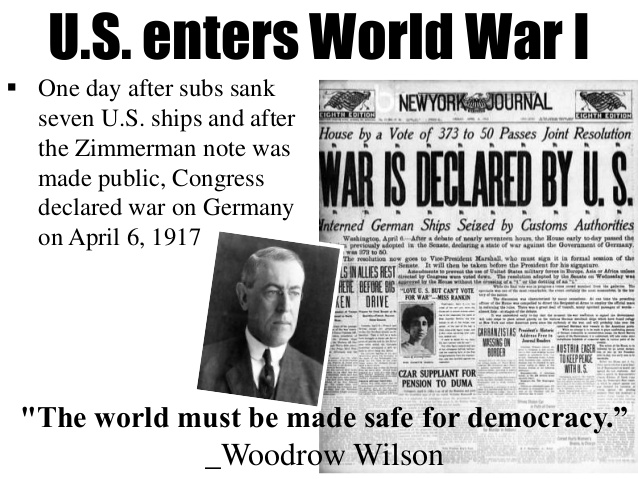
President Woodrow Wilson delivered his war message to a joint session of Congress on April 2, saying that a declaration of war on Imperial Germany would make the world “safe for democracy”. Congress voted to support American entry into the war on April 6, 1917. The “Great War”, the “War to end all Wars”, had become a world war.
At the time, a secondary explosion within the hull of the Lusitania, caused many to believe the liner had been struck by a second torpedo. In 1968, American businessman Gregg Bemis purchased the wreck of the Lusitania for $2,400, from the Liverpool & London War Risks Insurance Association. In 2007 the Irish government granted Bemis a five-year license to conduct limited excavations at the site. 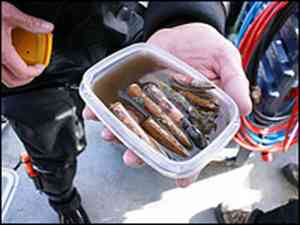
Twelve miles off the Irish coast and 300’ down, a dive was conducted on the wreck in 2008. Remote submersible operators discovered some 4,000,000 rounds of Remington .303 ammunition in the hold, proof of the German claim that Lusitania was, in fact, a legitimate target under international rules of war. The UK Daily Mail quoted Bemis: “There were literally tons and tons of stuff stored in unrefrigerated cargo holds that were dubiously marked cheese, butter and oysters’”.
American historian, author and journalist Wade Hampton Sides accompanied the expedition. “They are bullets that were expressly manufactured to kill Germans in World War I” he said, “bullets that British officials in Whitehall, and American officials in Washington, have long denied were aboard the Lusitania.'”
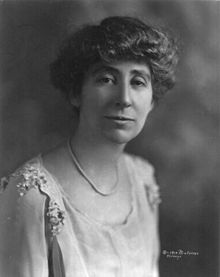
Montana Republican Jeannette Pickering Rankin, a life-long pacifist and the first woman elected to the United States Congress, would be one of only fifty votes against entering WWI. She would be elected to her second (non-contiguous) term in 1940, in time to be the only vote against entering WWII, following the Japanese attack on the United States’ Pacific anchorage at Pearl Harbor.


 The fifteenth child of Josiah and Abiah Franklin was born in a little house on Milk Street, across from the Old South Church, in Boston.
 James Franklin and his literary friends loved the letters, and published every one. All of Boston was charmed with Silence Dogood’s subtle mockery of the city’s Old School Puritan elite. Proposals of marriage came into the print shop, when the widow Dogood coyly suggested that she would welcome suitors.
 All of Boston was amused by the hoax, but not James. He was furious with his little brother, who soon broke the terms of his apprenticeship and fled to Pennsylvania.
 Franklin’s diplomacy to the Court of Versailles was every bit as important to the success of the Revolution, as the Generalship of the Father of the Republic, George Washington. Signatory to both the Declaration of Independence and the Constitution, it is arguably Ben Franklin who broke the impasse of the Convention of 1787, paving the way for ratification of the United States Constitution.

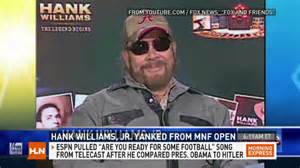
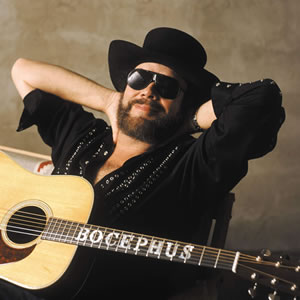
 Randall Hank Williams was born May 26, 1949 in Shreveport, Louisiana, the son of country singer/songwriter, Hiram King “Hank” Williams. Surprisingly for a guy who could neither read nor notate music and died at the age of 29, the elder Williams has been described as “one of the most significant and influential American singers and songwriters of the 20th century”.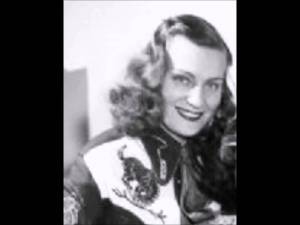


 In a later examination of Vivian, ERO field worker Dr. Arthur Estabrook pronounced her “feeble minded” saying that she “showed backwardness”, supporting the “three generations” theory expressed in the SCOTUS opinion.

 Twelve of the original thirteen states ratified these “Articles of Confederation” by February, 1779. Maryland would hold out for another two years, over land claims west of the Ohio River. In 1781, seven months before Cornwallis’ surrender at Yorktown, the 2nd Continental Congress formally ratified the Articles of Confederation. The young nation’s first governing document.
 Philadelphia’s Pennsylvania State House. The building is now known as Independence Hall, the same place where the Declaration of Independence and the Articles of Confederation were drafted.
 The Constitution was signed by 38 of the 41 delegates on September 17, 1787. As dictated by Article VII, the document would not become binding until it was ratified by nine of the 13 states.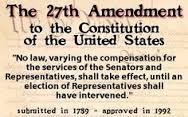


 over the international tableau of the time, there appeared great cause for concern. The largest nation on the planet had just fallen to communism, in 1917.
 Hiss flatly denied Chambers’ charges, filing suit that December for defamation of character. Chambers doubled down in his 1948 deposition, claiming that Hiss was not only a communist sympathizer, he was also a spy.
 Historians John Earl Haynes and Harvey Klehr report that the Venona transcripts tied 349 Americans to Soviet intelligence, though fewer than half have ever been identified. The Office of Strategic Services alone, precursor to the CIA, housed between fifteen and twenty Soviet spies.
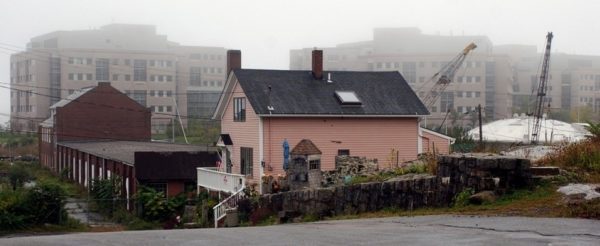
 For newly divorced paramedic Susette Kelo, the house overlooking the Fort Trumbull waterfront was the home of her dreams. Long abandoned and overgrown with vines, the little Victorian cottage needed a lot of work, but where else would she ever find a waterfront view at this asking price? It was 1997, about the same time that Connecticut and New London politicians resurrected the long-dormant New London Development Corporation (NLDC), charging it with developing a plan to revitalize the New London waterfront.
 harassment of the reluctant ones, including late-night phone calls, waste dumped on property, and tenants locked out of apartments during cold winter weather.
 District Court, with Susette Kelo lead plaintiff, “split the baby”, ruling that 11 out of 15 takings were illegal and unconstitutional. At that point it wasn’t good enough for the seven homeowners. They had been through too much. All of them would stay, or they would all go.
 In the end, most of the homes were destroyed or relocated. State and city governments spent $78 million and bulldozed 70 acres. The 3,169 new jobs and the $1.2 million in new tax revenue anticipated from the waterfront project, never materialized. Pfizer backed out of the project and moved away, taking 1,500 existing jobs with them. Just about the time when existing tax breaks were set to expire, raising the company’s tax bill by 400%.
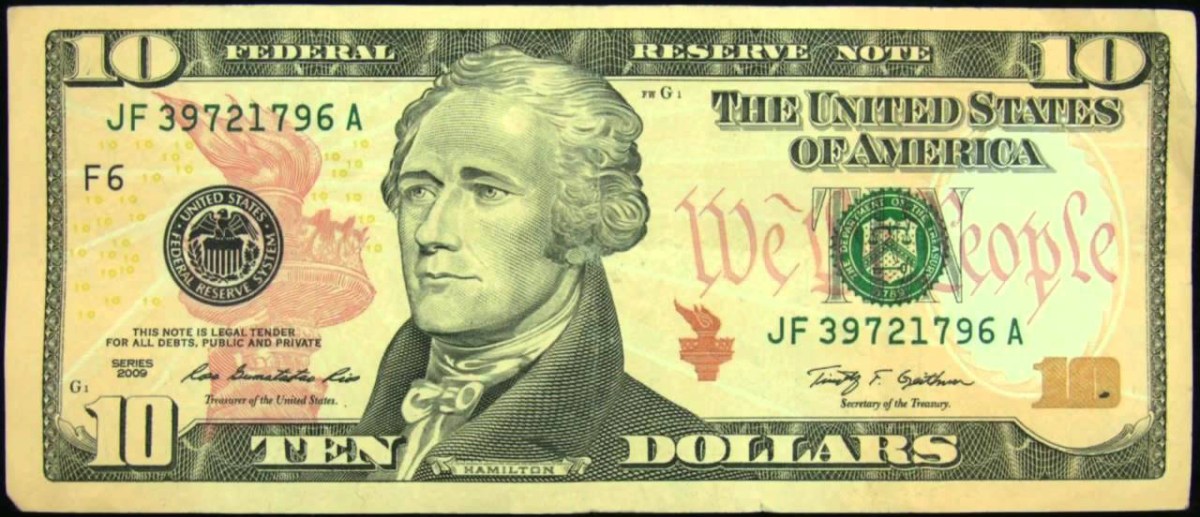

 Burr blamed Hamilton for his defeat, challenging him to a duel over comments made during the election. Dueling was illegal at this time but enforcement was comparatively lax in New Jersey. The pair rowed across the Hudson River with their “seconds”, meeting at the waterfront town of Weehawken, New Jersey. It was July 11, 1804. Hamilton “threw away” his shot, firing into the air. Aaron Burr shot to kill.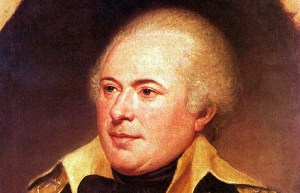


 In 1788, Virginia voted to ratify the Constitution and join the Union. Former Governor Patrick Henry persuaded the state legislature to reconfigure the 5th Congressional District, thereby forcing his political enemy James Madison to run against a powerful opponent named James Monroe. Henry’s redistricting tactic failed and Madison won, anyway. One day he would become the nation’s fourth president. All was not over for James Monroe, though. He would become #5.

 and other “interest” groups, ensuring that we look on one another as “us and them”, rather than just, plain, fellow Americans. Talk about “the conduct of public affairs for private advantage”. (Hat tip to my favorite curmudgeon, Ambrose Bierce, for that one).
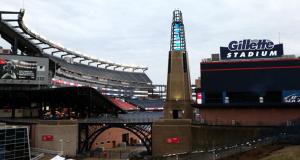 On March 24, 2000, the New England Patriots broke ground on their new stadium home in Foxborough, Massachusetts. The internet company CMGI won naming rights, agreeing to pay $114 million over 15 years for the privilege. The 2002 season opened on September 9 in the Patriots’ new home, tickets bearing the name, CMGI Stadium.
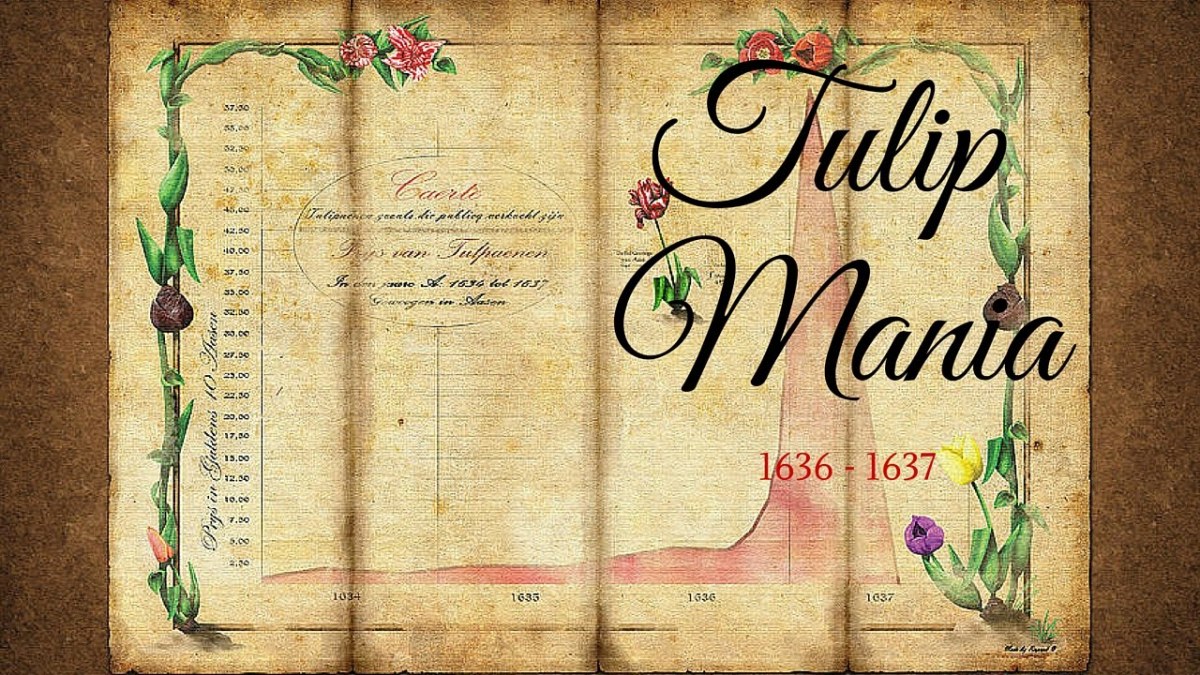
 produced single voyage profits of 400% and more, as merchants built grand estates surrounded by flower gardens. The hyacinth enjoyed early popularity, but the plant at the center of it all was the spectacular, magnificent, tulip.
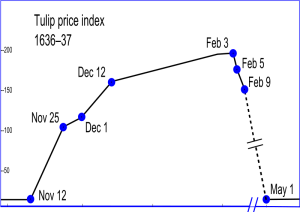 the vivid streaks of yellow or white on the red, brown or purple backgrounds of the “Bizarden” (Bizarres). Ironically, these were the most sickly specimens, victims of a “Tulip breaking virus” which “broke” petals into two or more hues.
 guidelines that year, imposing a 30% quota and raising it to 50% by the end of the Clinton era. By 2007 under President Bush, 55% of all mortgages purchased by the mortgage giants were “sub-prime”.
 2003: “I want to roll the dice a little bit more in this situation toward subsidized housing.”
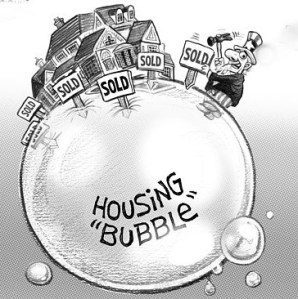 That was the year when gas first hit $4/gallon. Those living closest to the financial cliff began to fall off, and foreclosures went through the roof. Highest risk mortgage holders were the first to default, people with $20,000 incomes and multiple investment properties. We all remember 2009. I myself lost a job of 15 years when my employer went under, briefly making my family part of the “zero percent”. Some will tell you that we haven’t emerged from the “Great Recession”, to this day.


You must be logged in to post a comment.