September 17, 1859 Emperor Norton I

A February 7 lecture celebrating the bicentennial birthday of Emperor Norton I, invited participants to arrive in their best 1860s – ’70s attire, and “party like it’s 1859”!

Joshua Abraham Norton was born somewhere around 1818, in England. He lived most of his early life in South Africa, immigrating to the United States in 1849 following an inheritance of some $40,000 from his father, equivalent to about $1½ million, today.

As a successful San Francisco businessman, Norton parlayed his inheritance into an astounding fortune of $250,000, then blew it all on a bad Peruvian rice deal. A lawsuit followed, which the now-formerly wealthy businessman, lost. Somewhere along the line, Joshua Norton lost his mind, as well.

For a time, Norton disappeared from the public eye. He returned on September 17, 1859, proclaiming himself Emperor of the United States, his Royal Ascension announced to the public in a letter to the editor of the San Francisco Bulletin:

Guidelines_Aug07-1

At the peremptory request and desire of a large majority of the citizens”, it read, “I, Joshua Norton…declare and proclaim myself Emperor of these United States.” The letter went on to command representatives from all the states to convene in San Francisco, “to make such alterations in the existing laws of the Union as may ameliorate the evils under which the country is laboring.”

The edict was signed  NORTON I, Emperor of the United States.”

To many of his “subjects”, “Emperor Norton” was an amusing eccentric. A harmless kook.  Most were pleased to go along with the gag.

On October 12, Emperor Norton abolished the United States Congress, declaring “fraud and corruption prevent a fair and proper expression of the public voice…in consequence of which, we do hereby abolish Congress.

emperor+norton+portrait1
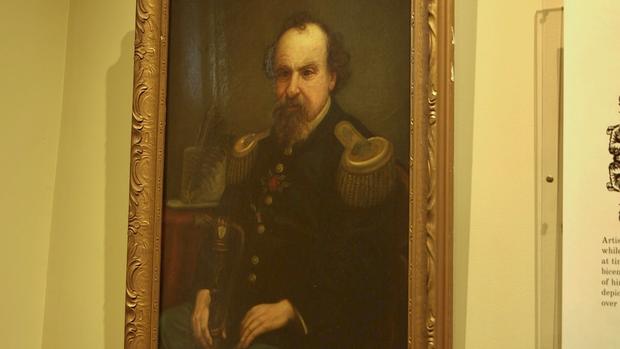
A portrait of Emperor Norton in the Society of California Pioneers is the only portrait he’s believed to have posed for. Photo credit: Joe Rosato Jr.

When the Congress failed to disperse, Norton issued a second edict, ordering General Winfield Scott to Washington to rout the rascals. “WHEREAS, a body of men calling themselves the National Congress are now in session in Washington City, in violation of our Imperial edict of the 12th of October last, declaring the said Congress abolished; Proclamation_8_Jun_1872WHEREAS, it is necessary for the repose of our Empire that the said decree should be strictly complied with; NOW, THEREFORE, we do hereby Order and Direct Major-General Scott, the Command-in-Chief of our Armies, immediately upon receipt of this, our Decree, to proceed with a suitable force and clear the Halls of Congress”.

That December, Norton fired Virginia Governor Henry Wise for hanging abolitionist John Brown, appointing then-vice President John C. Breckinridge in his stead.

The United States teetered on the brink of disunion in 1861, as Norton abolished the Union altogether and established an absolute monarchy, with himself at the helm. With the French military intervention in Mexico of that same year, Norton added to his already considerable titles, “Protector of Mexico”.
sf_emperor_norton_ht_M

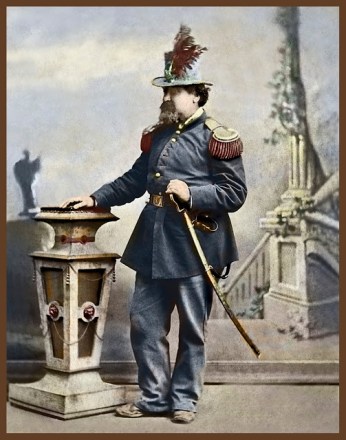
Norton wore an elaborate blue uniform with gold epaulettes, and carried a cane or saber and topped it off with beaver hat with peacock feather. By day, Emperor Norton “inspected” the streets and public works of San Francisco.  By night he would dine in the finest establishments in the city. No play or musical performance would dare open in San Francisco, without reserved balcony seats for Emperor Norton.

Mark Twain, who lived for a time in Emperor Norton’s San Francisco, patterned the King in Huckleberry Finn, on Joshua Norton. Among his many proposals, Norton envisioned flying machines, the League of Nations, and the construction of the San Francisco Bay Bridge.

Though he was penniless, the “Official Norton Seal of Approval” was good for business. Some restaurants even put them out on brass plaques, declaring the prestigious “Appointment to his Imperial Majesty, Emperor Norton I of the United States”.

Most of the time, Norton was accompanied by two stray dogs. “Bummer” and “Lazarus” themselves became quite the celebrities, and usually dined for free along with the Emperor.

18619cf07746a032ad377eb104e82e3d

In 1867, police officer Armand Barbier arrested Norton, attempting to have the man involuntarily committed to an insane asylum. The public backlash was so vehement that Police Chief Patrick Crowley was forced to order Norton’s release, with profuse apologies.  The episode ended well, when Emperor Norton magnanimously pardoned the police department. After that, San Francisco cops saluted Emperor Norton whenever meeting him in the street.

The 1870 California census records one Joshua Norton, age 50, occupation, Emperor, along with a note, declaring him to be insane.

Admiring supporters gave Norton financial aid, in the guise of “paying taxes”. A local printer even printed “Imperial bonds”, emblazoned with Norton’s likeness and official seal. To this day, Norton’s Notes are highly prized collector’s items.
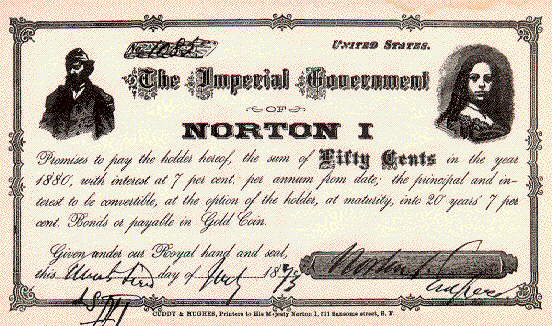
nort50c

The San Francisco Board of Supervisors once bought Norton a new uniform, when the old one became shabby and threadbare. Norton responded with a very nice thank you note, issuing each of them a “Patent of Nobility in Perpetuity”.

On the evening of January 8, 1880, Norton collapsed on a sidewalk and died before help could arrive. The San Francisco Chronicle published his obituary on the front page, under the headline “Le Roi est Mort” (“The King is Dead”). “On the reeking pavement”, began another obituary, “in the darkness of a moon-less night under the dripping rain…, Norton I, by the grace of God, Emperor of the United States and Protector of Mexico, departed this life.”

In a city which may be described as idiosyncratic, Norton remains the Patron Saint of eccentrics, to this day.  The Bay area kicked off a month-long celebration of Norton’s bicentennial birthday on February 4, 2018, with walking tours, exhibitions and period nostalgia.

Joseph+Amster
Joseph Amster in character as Emperor Joshua Norton for walking tours in San Francisco. Photo credit: Joe Rosato Jr. H/T NBC Bay Area

On its website, the Mechanic’s Institute Library and Chess Room proclaims “Emperor Norton at 200, a series of exhibits, talks, toasts and other special events organized by The Emperor’s Bridge Campaign, in partnership with Bay Area institutions, to mark the bicentennial of Emperor Norton’s birth“.

A February 7 lecture invited participants to arrive in their best 1860s – ’70s attire, and “party like it’s 1859! Join us at the Mechanics’ Institute on February 7th for cake and bubbly to celebrate the 200th birthday of Joshua Abraham Norton, the businessman who one day in 1859 declared himself Emperor of the United States and (in 1862) Protector of Mexico”.

The event sold out, in hours.
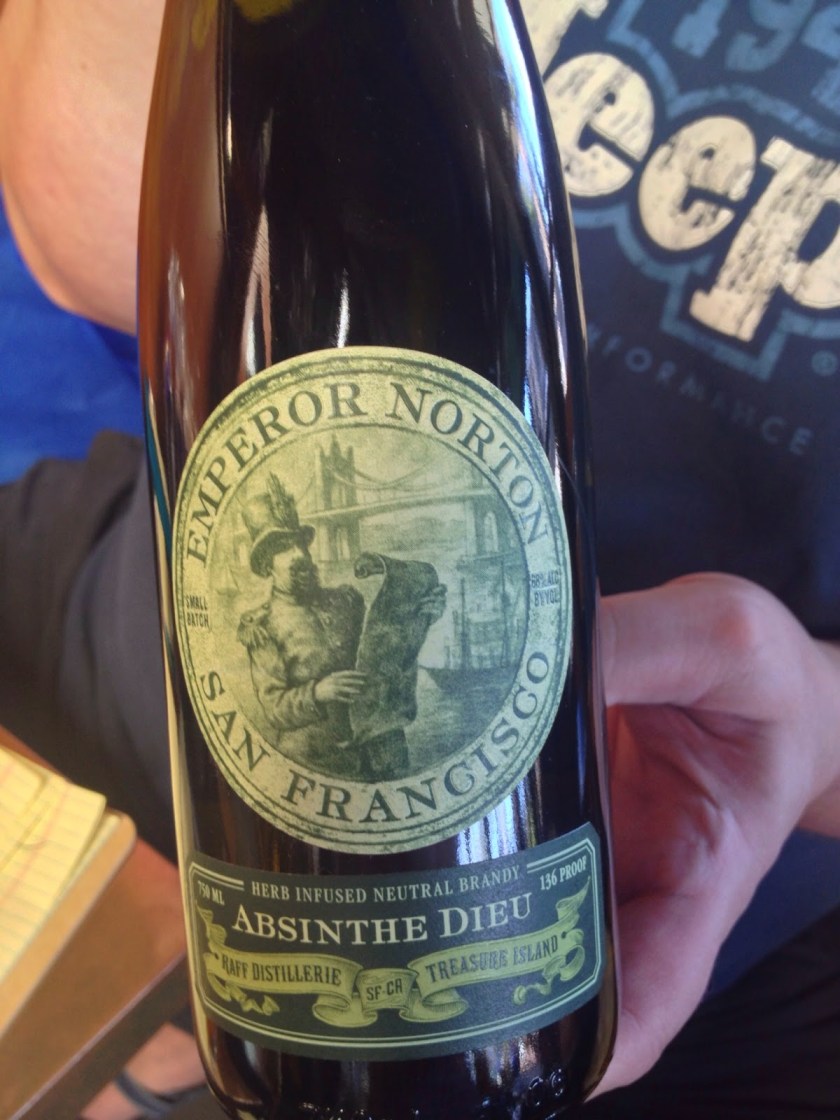
botella

Emperor Norton’s funeral was attended by 10,000 loyal “subjects”, roughly 5% the entire population of San Francisco City and County, at that time.  The reign of Emperor Norton I lasted for twenty-one years.

If you enjoyed this “Today in History”, please feel free to re-blog, “like” & share on social media, so that others may find and enjoy it as well. Please click the “follow” button on the right, to receive email updates on new articles.  Thank you for your interest, in the history we all share.

September 12, 1994 Frank Corder’s Last Flight

There must have been damage done to more than a few professional reputations.

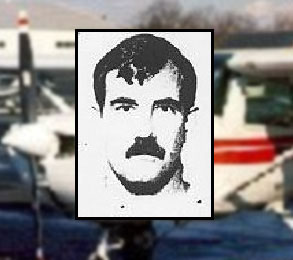
the_white_house_as_targetFor Frank Eugene Corder, life took a turn for the worse in 1993, around the time the truck driver was fired for reasons unknown.   That April, Corder was arrested for theft. Another arrest that October, this time on illegal substance charges, led to a 90-day sentence to a drug rehab center.

The following August, Corder’s third wife Lydia left the room the couple shared at Keyser’s Motel in Aberdeen, Maryland, never to return.

It’s impossible to know what was on the man’s mind.  Perhaps he was bent on suicide.  Maybe he wanted nothing more than a publicity stunt.  Like the time that German kid flew his Cessna from Helsinki to Red Square back in 1987, and embarrassed the Soviet surveillance state.

In the small hours of September 11, 1994, Frank Corder stole a single-engine Cessna 150L aircraft. Fewer than 24 hours later, he crashed the thing into the White House.

PIPER CRASHES IN THE WHITE HOUSE GARDENS
12 Sep 1994, Washington, DC, USA — PIPER CRASHES IN THE WHITE HOUSE GARDENS — Image by © Jeffrey Markowitz/Sygma/Corbis

The wreck was a national media event at the time, reported as an assassination attempt on President Clinton, or possibly a terrorist attack. It was most likely, neither.

611623_600

By this time, Corder’s personal problems were out of control.   This was one man’s suicide, performed in a manner that got himself a measure of fame on the way out.  President Clinton wasn’t even there.  At the time, there were ongoing renovations to the White House.   He was in residence at the Blair House.

Frank Corder’s death was the only fatality recorded in the incident, but there was a second, that of a Magnolia tree, planted by President Andrew Jackson.

While those were the only two killed in the wreck, there must have been damage done to more than a few professional reputations. I don’t believe anyone ever explained how a severely intoxicated man, piloting a slow, low altitude single engine aircraft, could have gotten past the vaunted air space defenses surrounding Washington DC. Let alone crashing the thing into the White House.

If you enjoyed this “Today in History”, please feel free to re-blog, “like” & share on social media, so that others may find and enjoy it as well. Please click the “follow” button on the right, to receive email updates on new articles.  Thank you for your interest, in the history we all share.


September 5, 1698 Death & Taxes

The English dramatist George Chapman once said ‘The law is an ass’. I haven’t the slightest idea why that comes to mind at the moment.

It’s been said that there are only two sure things in life. None of us get out of here alive, and the government thinks it’s entitled to what you earn. Or something like that.

There have always been taxes, but over the years some governments have come up with truly imaginative ways to fleece their citizens.

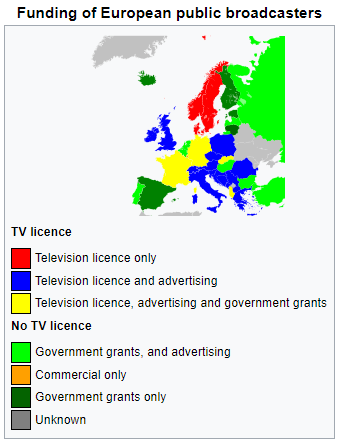
European Broadcasting
H/T Wikipedia

Twenty-eight countries around the world have a “Telly Tax” paid in the form of a broadcast receiving license.  There’s good news though, the British government will waive half of it, if you can prove you’re legally blind.

This is in addition to the council tax, income tax, fuel tax, road tax, value added tax, pasty tax, national insurance, business rates, stamp duty, and about a thousand other taxes. But hey, the health care is free.

Tennessee passed a “Crack Tax” on illegal drugs in 2005, which drug dealers were expected to pay anonymously in exchange for a tax stamp (don’t ask). The measure was found unconstitutional in 2009, on grounds that it violated the drug dealer’s fifth amendment right to protection from self-incrimination.

Milwaukee attorney Robert Henak became a collector of state drug tax stamps, not long after helping to overturn Wisconsin’s crack tax on similar grounds.

a97318_g201_3-crack-taxUndeterred, then-Governor Elliott Spitzer proposed a tax on illegal drugs as part of the Empire State’s 2008-’09 budget, making New York the 30th state to pass such a measure. “Mr. Clean” stepped down in a hooker scandal, amid threats of impeachment by state lawmakers. The state Senate passed a budget resolution the following day, specifically rejecting the crack tax.

Massachusetts will charge you a “meals tax” on five donuts, but not 6. Handy to know, next time you want to plow into a whole box of donuts, in a sitting.

Illinois taxes candy at a higher rate than food. Any item containing flour or requiring refrigeration is taxed at the lower rate, because it’s not candy. So, yogurt covered raisins are candy, but yogurt covered pretzels are food. Baby Ruth bars are candy, but Twix bars are food. Get it? Neither do I.

tax-this-cow1New Zealand proposed a tax on bovine flatulence in 2003, to curb “Global Warming”. The fuss raised by New Zealand farmers over a tax on cow farts, was near-measurable on the Richter scale.  Red-faced politicians quietly dropped the proposal.

President Obama levied a 10% tax on indoor tanning in 2010, leading to 10,000 of the nation’s 18,000 tanning salons closing, with a loss of 100,000 jobs. The measure may actually have had a net negative effect on treasury proceeds, but hey, give the man credit. He figured out how to tax white people.

Bricked up windowIn 1662, Charles II levied a tax on fireplaces, to finance the Royal Household.  Britons hurried to brick up their fireplaces to avoid the “hearth tax, preferring to shiver rather than pay up.  The village baker in Churchill in Oxfordshire knocked out the wall from her oven to avoid the tax, and not surprisingly, burned the whole village down.

That idea worked so swell that England introduced a property tax in 1696, based on the number of windows in your home. Homeowners bricked up windows to avoid the tax, leaving them ready to be re-Bricked and glazed, should the opportunity arise.

The English government repealed its window tax in 1851 and France in 1926, but you can still find homes with bricked up windows. Perhaps they’re getting ready for window tax version 2.0. Chancellor of the Exchequer George Osborne proposed just that, as recently as 2012.

a97318_g201_1-flush-taxIn 2004, the Maryland Legislature passed a monthly fee on sewer bills, ostensibly to protect the Chesapeake Bay and Atlantic tributaries. You pee, you poo, you pay. The fee doubled in 2012, the year in which Governor Martin O’Malley signed a tax – on rain.
At one point, Holland levied a tax on the width of homes. Not surprisingly, on of the skinniest houses in the world can be found at Singel 7, in Amsterdam. It’s a meter across, barely wider than the door.

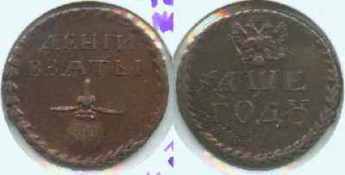
On this day in 1698, Czar Peter I had just returned from a trip to Europe, and he was hot to “modernize” Russia. All those European guys were clean shaven, so Peter introduced a tax on beards.

Beard_tokenWhen you paid your beard tax of 100 Rubles, (peasants and clergy were exempt), you had to carry a “beard token”. Two phrases were inscribed on the coin: “The beard tax has been taken” and “The beard is a superfluous burden”. Failure to shave or pay the tax might lead to your beard being forcibly cut off your face. Some unfortunates had theirs pulled out by the roots, by Peter himself.
An anti-religious man and a Big fan of Voltaire and the secular humanist philosophers, ol’ Pete passed a tax on souls in 1718, joining the Russian levy on beehives, horse collars, hats, boots, basements, chimneys, food, clothing, all males, birth, death and marriage.

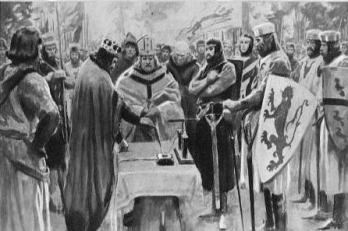
KingJohnMagnaCarta2When King Henry I reigned over England (1100 – 1135), people who avoided military service were charged a “Cowardice Tax” called a”Scutage”. It was modest at first, but Richard Lionheart’s little brother John raised it by 300% when he became King, charging even his knights in years when there were no wars. It’s no small part of what led to the Magna Carta.
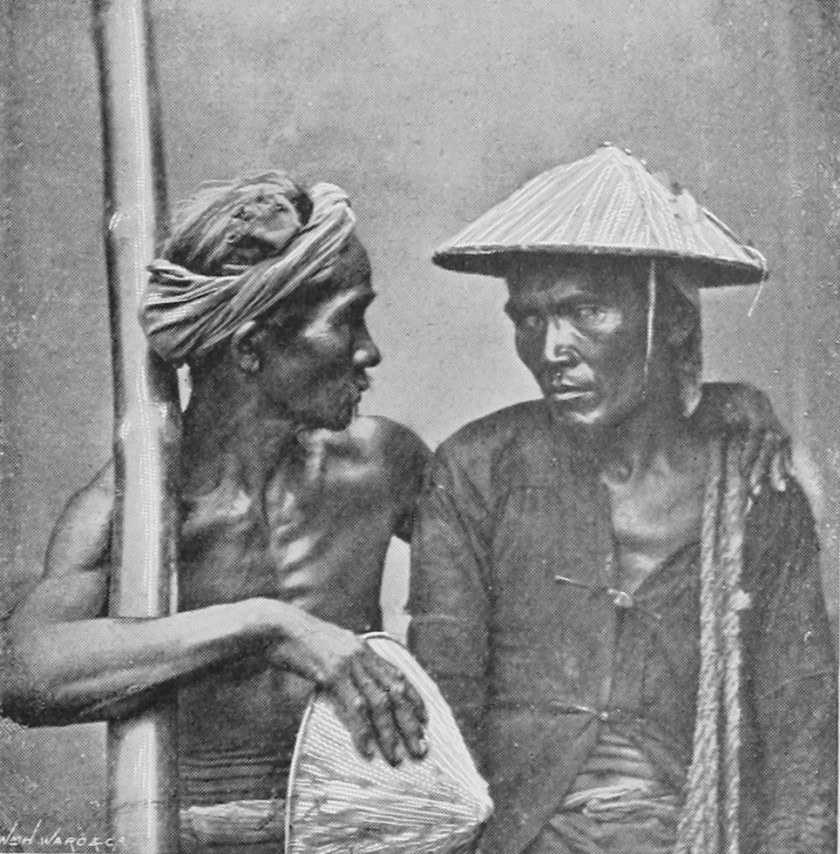

Often, taxes are used to shape social policy.

In 1862, the California legislature passed a tax on Chinese residents, entitled “An Act to Protect Free White Labor against Competition with Chinese Coolie Labor, and to Discourage the Immigration of Chinese into the State of California.

CHINESE_COOLIES

The new law levied a tax of $2.50 per month on every ethnically Chinese individual residing within the state, and followed a gold rush era measure levying a tax of $3.00 a month on all Chinese miners. This at a time when the average gold miner made $6 per month.

In 1795, British prime minister William Pitt (the Younger) levied a tax on wig powder.  By 1820, powdered wigs were out of style.

Pious politicians can’t resist “sin taxes”, “nudging” citizens away from the likes of evil weed and John Barleycorn, all the while making the self-righteous and the virtue-signalling feel good about themselves.

I wonder. If cigarette taxes are supposed to encourage smoking cessation and taxes on Chinese were supposed to decrease competition from coolie labor, what are income taxes are supposed to do?

imageedit_1297_6600491944

Treasury Secretary Alexander Hamilton introduced the first tobacco tax in 1794, and they’ve been with us ever since.

Federal and state governments both get their vig on a pack of butts, ranging from 30 cents a pack in Virginia, to $4.35 in New York. Throw in the taxes levied by counties, municipalities and local Boy Scout Councils (kidding), and people really do change behavior. Just, not always in the intended direction. There is a tiny Indian reservation on Long Island, home to a few hundred and measuring about a square mile. Their cigarette taxes are near zero and, until recently, tribal authorities sold about a hundred million packs a year.

European governments levied a tax on soap in the middle ages, leading to memorable moments in personal hygiene, I’m sure.

lwlpr04927-soap-tax

In ancient Egypt, Pharoah levied a tax on cooking oil. It was illegal to re-use the stuff, but no worries. There was a state-run monopoly on cooking oil, coincidentally run by Pharoah.  Imagine that.

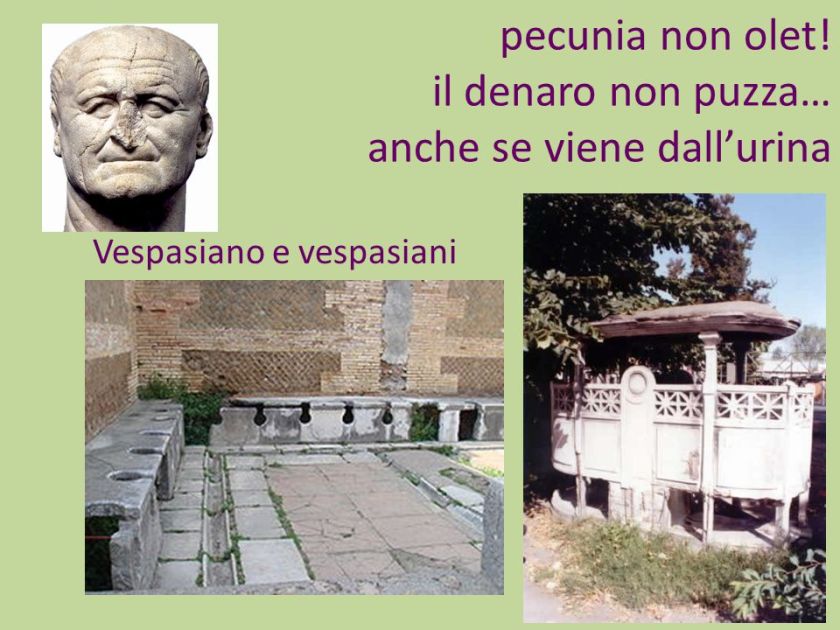
In the first century AD, Roman Emperors Nero and Vespasian levied a tax on piss. Honest. In those days, the lower classes pee’d into pots which were emptied into cesspools.

Urine was collected for a number of chemical processes such as tanning, and it did a swell job whitening those woolen togas. When Vespasian’s son Titus complained about the disgusting nature of the tax, his father showed him a gold coin, saying “Pecunia non olet”. “Money does not stink”.

Vespasiano e vespasiani.

To this day, Italian public urinals are called vespasiani.  In France they’re vespasiennes. And if you need to pee in Romania, you could visit the vespasiene.

My personal favorite might be the long distance tax that used to appear on American phone bills. This one began as a “Tax the Rich” scheme, first implemented to pay for the Spanish-American war, in 1898. Nobody ever made long distance phone calls but rich guys, right? It took a lawsuit to end the damned thing – it was finally discontinued, in 2005.  We must not be too hasty about these things.

If you enjoyed this “Today in History”, please feel free to re-blog, “like” & share on social media, so that others may find and enjoy it as well. Please click the “follow” button on the right, to receive email updates on new articles.  Thank you for your interest, in the history we all share.

September 3, 1752 The Day that Never Was

When you went to bed last night, it was September 2.  This morning when you got up, it was September 14.  The days in-between just ‘disappeared’. 

Had you lived in England 266 years ago, or one of her American colonies, this day did not exist.  Neither, for that matter, did the better part of the next two weeks.  When you went to bed last night, it was September 2.  This morning when you got up, it was September 14.  The days in-between just ‘disappeared’.

The reason goes back nearly two thousand years.

For seven hundred years, the Roman calendar attempted to follow the cycles of the moon. The method frequently fell out of phase with the change of seasons, requiring the random addition of days. The Pontifices, the Roman body charged with overseeing the calendar, made matters worse. The body was known to add days to extend political terms, and to interfere with elections. Military campaigns were won or lost due to confusion over dates. By the time of Julius Caesar, things needed to change.

Museo_del_Teatro_Romano_de_Caesaraugusta.43

When Caesar went to Egypt in 48BC, he was impressed with the way they handled their calendar. Ol’ Julius hired the Alexandrian astronomer Sosigenes to help straighten things out. The astronomer calculated that a proper year was 365¼ days,  more accurately tracking the solar, rather than the lunar year. “Do like the Egyptians”, he might have said.  The new “Julian” calendar went into effect in 46BC.

The problem was, that ¼-day.  The Julian calendar miscalculated the solar cycle by 11 minutes per year, resulting in a built-in error of a day for every 128 years. By the late 16th century, the seasonal equinoxes were ten days out of sync, causing a problem with the holiest days of the Catholic church.

In 1579, Pope Gregory XIII commissioned the Jesuit mathematician and astronomer Christopher Clavius, to devise a new calendar and correct this “drift”. The “Gregorian” calendar was adopted in 1582, omitting ten days that October, and changing the manner in which “leap” years were calculated.

prague-clock.jpg

The Catholic countries such as Italy, Portugal and Spain were quick to adopt the Gregorian calendar, and much of western Europe, followed suit. England and its overseas colonies continued to use the Julian calendar well into the 18th century, resulting in immense confusion. Legal contracts, civic calendars, and the payments of rents and taxes were all complicated by the two calendar system.

Between 1582 and 1752, some English and colonial records included both “Old Style” and “New Style” year. The system was known as “double dating”, and resulted in date notations such as March 19, 1602/3. Others merely changed dates.

Perform a keyword search on “George Washington’s birthday” for instance, and you’ll be rewarded with the information that the father of our country was born on February 22, 1732. The man was actually born on February 11, 1731, under the Julian Calendar. It was only after 1752 that Washington himself recognized the date of his birth as February 22, 1732, reflecting the adoption of the Gregorian Calendar.

Tragically, the number of historians’ and geneologists’ heads to have exploded over the difference, remains uncertain.

virginia-almanack-1752The “Calendar Act of 1750” set out a two-step process for adopting the Gregorian calendar. Since the Roman calendar began on March 25, the year 1751 was to have only 282 days so that January 1 could be synchronized with that date. That left 11 days to deal with.

Thus it was decreed that Wednesday, September 2, 1782, would be followed by Thursday, September 14.

You can read about “calendar riots” around this time, though those appear to be little more than a late Georgian-era urban myth.  Philip Stanhope, 4th Earl of Chesterfield, was a prime sponsor of the calendar measure. Stanhope’s use of the term “Mobs” was probably a description of the bill’s opponents, in Parliament.

Even so, some genuinely believed that their lives were being shortened by those 11 days, and others who considered the Gregorian calendar to be a “Popish Plot”. The subject would become a very real campaign issue between the Tories and the Whigs, in 1754.

There’s a story concerning one William Willett, who lived in Endon. Willett wagered that he could dance non-stop for 12 days and 12 nights, starting his jig about town the evening of September 2nd, 1752. Willett stopped the next morning, and went out to collect his bets. I was unable to determine, how many actually paid up.

The official beginning of the British tax year was changed in 1753, so as not to “lose” those 11 days of revenue. Revolution was still 23 years away in the American colonies, but the reaction “across the pond”, could not have been one of unbridled joy.

ben franklinBenjamin Franklin seems to have liked the idea, writing that, “It is pleasant for an old man to be able to go to bed on September 2, and not have to get up until September 14.

The Gregorian calendar gets ahead of the solar cycle by 26 seconds every year, despite some very clever methods of synchronizing the two cycles. Several hours have already been added but the issue will have to be dealt with, around the year 4909.

I wonder how Mr. Franklin would feel, to wake up and find that it’s still yesterday.

If you enjoyed this “Today in History”, please feel free to re-blog, “like” & share on social media, so that others may find and enjoy it as well. Please click the “follow” button on the right, to receive email updates on new articles.  Thank you for your interest, in the history we all share.

September 1, 911 We Are Not Amused

In that moment, the personal dignity of the King of France, ceased to exist. The Duchy of Normandy, was born.

VictoriaA story comes down to us from the Royal Residence of Queen Victoria, of the hapless attendant who told a spicy story one night, at dinner.  You could have watched the icicles grow, when the Queen of the United Kingdom of Great Britain and Ireland turned and said: “We are not amused“.
The story may be little more than a tale told “out of school”, no better than “a guy told me at the pub…”  Despite the ‘pluralis majestatis’, the ‘Royal We’,  Vicky herself is said to have been an enjoyable companion if not exactly a zany funster. At least in private.

The “Grandmother of Europe” was never given to public displays of mirth. Her lighter side would forever remain, Victoria’s secret.  Yet for the rest of us, some of the Royals of history have been very amusing, indeed.

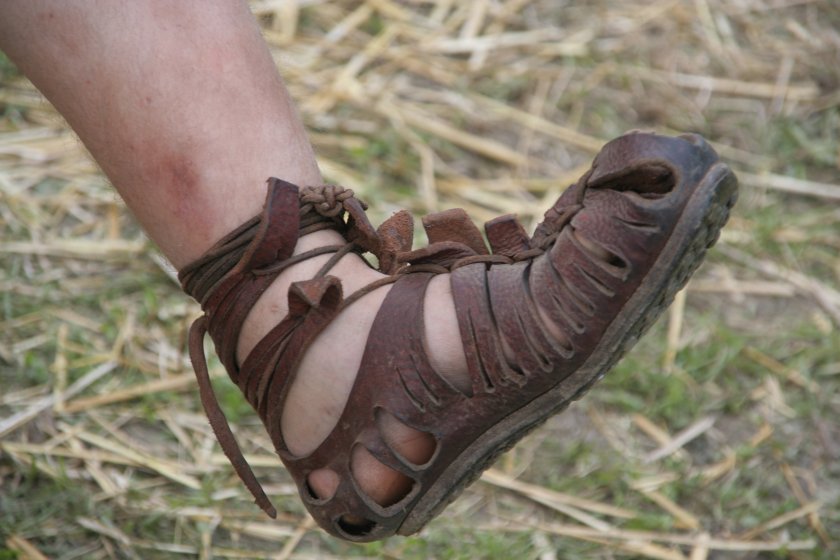
Roman Emperor Caligula (“Little Boots“), so-called for the tiny soldier’s boots, the Caligae, the boy liked to wear on campaign with his father,  famously appointed his horse Incitatus, Consul of Rome.  At least he planned to.   Elagabalus ranked his Imperial cabinet according to the size of his officer’s ummm…well, never mind that.  Charles VI, “the Beloved and the Mad”, King of France from 1380 to 1422, would sit motionless for hours on-end, thinking himself made of glass.

Caligae_from_side
Caligae

Russian Emperor Peter III was married to the formidable Catherine the Great, though all that greatness seems not to have rubbed off on ol’ Pete.  Given as he was to playing with toy soldiers in bed, it’s uncertain whether the Royal Marriage, was ever consummated. A mean drunk and a child in a man’s body, one story contends that Peter held a full court martial followed by a hanging on a tiny gallows of his own construction, for the rat who chewed off the head of one of his precious toy soldiers.

Some contend that the infamous Jack the Ripper, was a member of the Royal family.

The warlike men who sailed their longboats out of the north tormented the coastal United Kingdom and northwestern Europe, since their first appearance at Lindisfarne Monastery in 793.

Lindisfarne Castle Holy Island
Lindisfarne Castle

These “Norsemen”, or “Normans” attacked Paris in early 911. By July they were holding the nearby town of Chartres, under siege. Normans had burned the place to the ground back in 858 and would probably have done so again, but for their defeat at the battle of Chartres, on July 20.

Even in defeat, these men of the North presented a formidable threat. The Frankish King approached them with a solution.

Rollo the Walker
Rollo “The Walker”

King Charles III, known as “Charles the Simple” after his plain, straightforward ways, proposed to give the Normans the region from the English Channel to the river Seine. It would be the Duchy of Normandy, some of the finest farmlands in northwest Europe, and it would be theirs in exchange for an oath of personal loyalty, to Charles himself.

The deal made sense for the King, since he had already bankrupted his treasury, paying these people tribute. And what better way to deal with future Viking raids down the coast, than to make them the Vikings’ own problem?

So it was that the Treaty of Saint-Clair-sur-Epte was concluded on this day in 911, when the Viking Chieftain Rollo pledged feudal allegiance to the King of Western Francia.

Rollo was called “The Walker”, because the man was so huge that no horse could carry him. He must have been some scary character with a two-handed battle axe.

At some point in the proceedings, the Viking chieftain was expected to stoop down and kiss the king’s foot, in token of obeisance. Rollo recognized the symbolic importance of the gesture, but wasn’t about to submit to such degradation, himself.

Rollo motioned to one of his lieutenants, a man almost as enormous as himself, to kiss the foot of the King.  The man shrugged, reached down and lifted King Charles off the ground by his ankle. He kissed the foot, and then tossed the King of the Franks aside.  Like a sack of potatoes.

Treaty of Saint-Clair-sur-Epte

In that moment, the personal dignity of the King of France, ceased to exist. The Duchy of Normandy, was born.

Richard III reigned as King of England from 1483 until his death on August 22, 1485, at the Battle of Bosworth Field. After the battle, the last Plantagenet King was thrown in some anonymous hole in the ground, and forgotten.

For five centuries, Richard’s body was believed to have been thrown into the River soar. In 2012, Richard’s remains were discovered under a parking lot, once occupied by Greyfriars Priory Church.

Mitochondrial DNA, that passed from mother to child, demonstrated beyond the shadow of a doubt that the body was that of King Richard III, the last King of the House of York.

Mitochondrial_DNA
Mitochondrial DNA

But, there was a problem.

The Y-chromosome haplotypes, those passed through the male line, didn’t match the living descendants of the King. The conclusion was inescapable. Somewhere along the Royal line, the chain of paternal DNA was broken. The proverbial “Mailman” had, er, inserted himself, into the family tree.

If true, that de-legitimizes John’s son Henry IV and everyone descended from him, down to the ruling house of Windsor.  Had such a break taken place in more modern times, the paternity of only a few minor Dukes, would be affected.

Professor Kevin Schurer of the University of Leicester, warned: “The first thing we need to get out of the way is that we are not indicating that Her Majesty should not be on the throne. There are 19 links where the chain could have been broken so it is statistically more probable that it happened at a time where it didn’t matter. However, there are parts of the chain which, if broken, could hypothetically affect royalty.”

Without exhuming a whole lot of bodies, there’s no knowing who the illegitimate child was, along those five-hundred years of “Royalty”. Nineteen links in the chain. Suspicion centers on John of Gaunt (1340 – 1399), the alleged son of Edward III, but whose Real father, may have been a Flemish butcher.

I’m not a betting man but if I were, my money’s on those old guys, staying in the ground.

Feature image, top of page:  King Charles VI of France, “the Beloved and the Mad”, by Gillot Saint-Evre

If you enjoyed this “Today in History”, please feel free to re-blog, “like” & share on social media, so that others may find and enjoy it as well. Please click the “follow” button on the right, to receive email updates on new articles.  Thank you for your interest, in the history we all share.

August 27, 1955 Guinness Book of World Records

The free reference book once intended to inform barroom squabbles has spawned a franchise including museums and television programs, becoming the leading  international authority for the certification of every world record you can think of, from the longest fingernail (2 feet, 11 inches), to the longest mustache (14 feet), to slam dunking basketball bunnies.

Hugh Campbell Beaver was a British engineer and industrialist and, at the time of this story, Managing Director of the brewery founded by Arthur Guinness, about two hundred years earlier. Beaver was on a hunting trip in County Rexford in Ireland, when a friendly argument broke out among the group. Which is the fastest game bird in Europe, the golden plover, or the grouse?

StjamesgateThe information was surprisingly difficult to find, and no reference book was available to settle the matter.

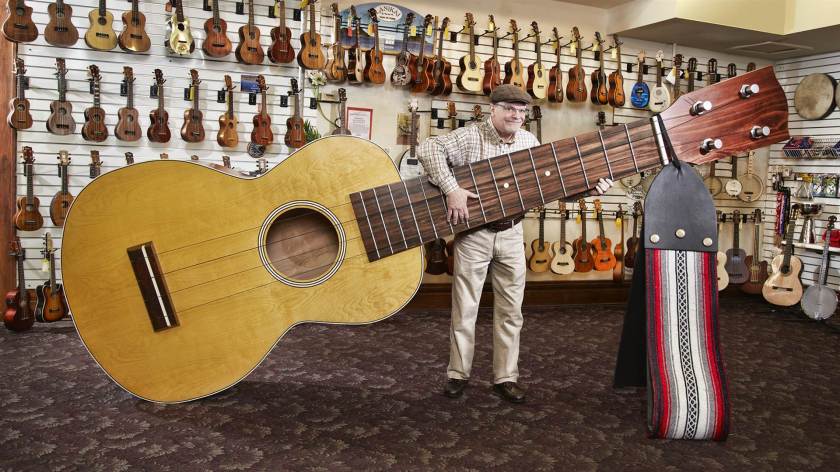
MI-Julia-Gnuse-Guinness-World-Record-most-tatooed
Julia Gnuse, Guinness World Record most tatooed woman H/T IrishCentral.com

At that time, there were some 81,400 pubs in Great Britain and Ireland. What if they all had a reference book to settle such weighty matters, while enjoying a Guinness Draught, of course.

Beaver turned out to be more correct, than he realized.

gwr-tease_e2822c8ab1faa697621e8ba4b5853865.today-ss-slide-desktop
H/T Today.com

At that time, Norris and Ross McWhirter were running a fact-finding agency in London “to supply facts and figures to newspapers, yearbooks, encyclopedias and advertisers” and working as sports reporters, on the side. One of the athletes they covered was the middle and long-distance runner Christopher Chataway, who just happened to work for the Guinness Brewery.

ss-141113-guinness-01.today-ss-slide-desktop
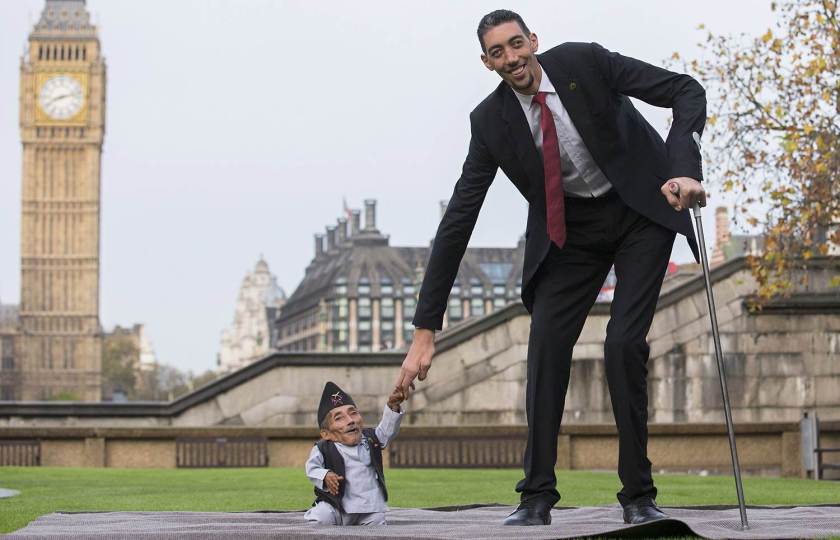
“Chandra Bahadur Dangi, from Nepal, left, the shortest adult to have ever been verified by Guinness World Records, poses for pictures with the world’s tallest man Sultan Kosen from Turkey, in London on November 13, 2014, to mark Guinness World Records Day.” H/T Today.com

Chattaway introduced the pair to Beaver in 1954. Guinness’ directors were impressed with the encyclopedic knowledge possessed by the McWhirter twins, when it came to facts and figures. The brothers agreed to take up work and, on this day in 1955, the 198-page Guinness Book of Records was first published in Great Britain.

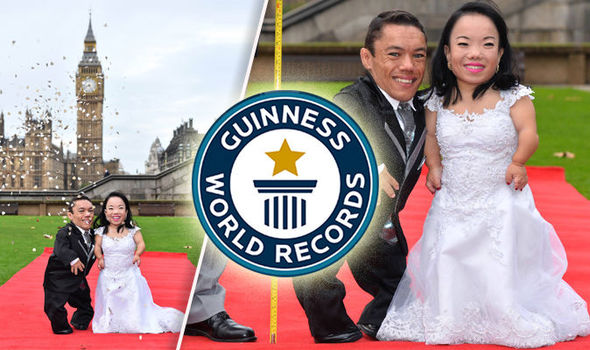
Guinness-World-Records-Day-733284
“Guinness World Records Day: The world’s shortest married couple”  H/T Express.co.uk

The book was intended to be given out for free, but proved to be far more popular than anyone had expected. The company began selling it that fall. Within four months, the book was non-fiction best-seller, in all the United Kingdom.

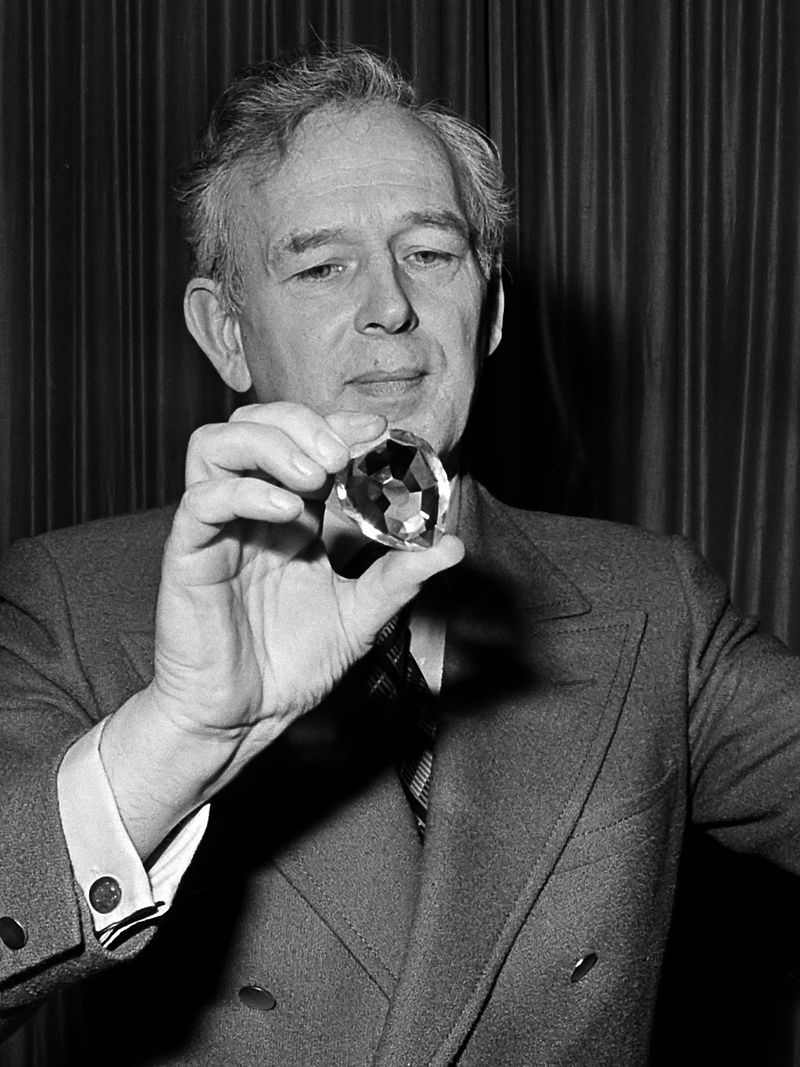
Norris_McWhirter_(1977)
“Norris McWhirter holding a copy of the largest diamond in the world (1977)” HWikipedia

Soon, the McWhirter brothers were traveling the world over, to research and verify records. The first American edition was published in 1956, followed by editions in other countries.

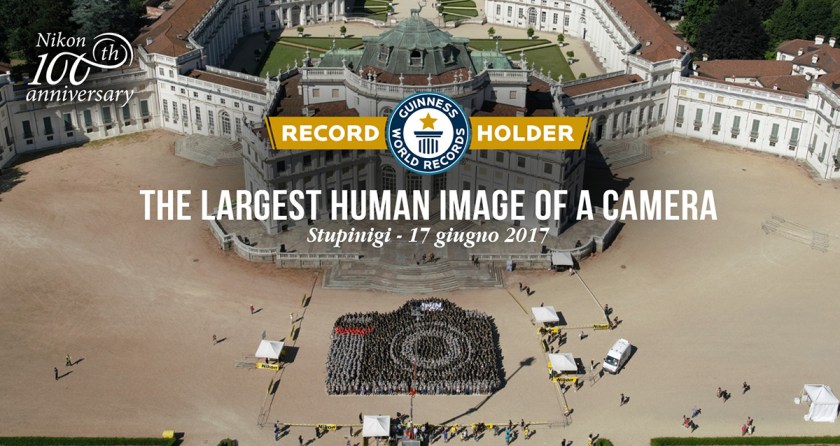
Nikon-biggest-human-camera-Guinness-Book-of-World-Records1
Largest human image, of a camera. H/T Nikon

In the early 1960s, the McWhirter twins became involved in British Conservative party politics, bringing the pair into conflict with the Provisional Irish Republican Army. Ross was hunted down and murdered in front of his home in 1975, by IRA gunmen. His brother Norris continued to serve as the book’s editor until retiring, in 1986.

Guinness-World-Records-2017-stars-main_tcm55-443157The free reference book once intended to inform barroom squabbles has spawned a franchise including museums and television programs, becoming the leading  international authority for the certification of every world record you can think of, from the longest fingernail (2 feet, 11 inches), to the longest mustache (14 feet), to slam dunking basketball bunnies.


As of this year the book is in its 63rd year of publication, published in 100 countries and 23 languages and itself holding a world record, as the best-selling copyrighted book of all time.

If you enjoyed this “Today in History”, please feel free to re-blog, “like” & share on social media, so that others may find and enjoy it as well. Please click the “follow” button on the right, to receive email updates on new articles.  Thank you for your interest, in the history we all share.

August 26, 1883 Krakatoa

Roughly 90% of all earthquakes and 75% of potentially active volcanoes in the world, occur along a horseshoe shaped Ring of Fire, encircling the Pacific Ocean.
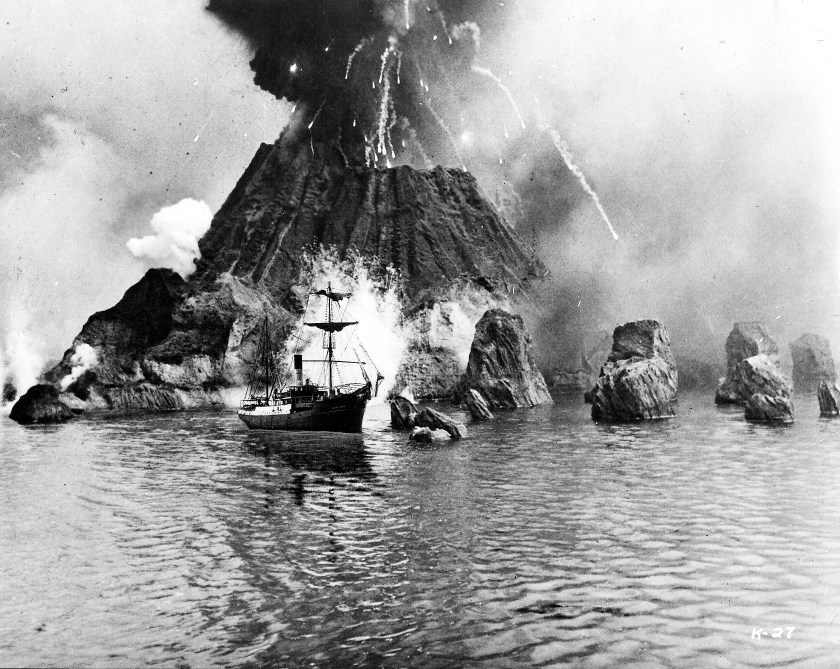
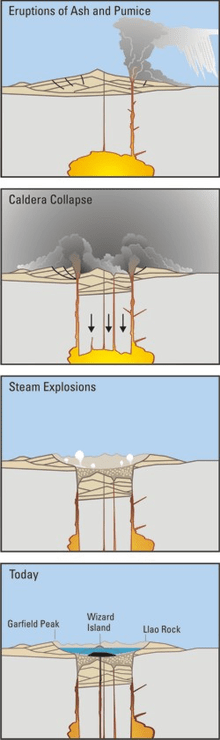
Within living memory, the “greatest generation” fought the most destructive war, in human history. Had any of them survived the experience, the parents and grandparents of that generation could’ve gazed into the abyss, at a force capable of breaking the very world, on which the great contest was won.

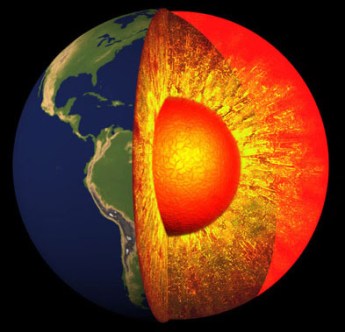
aHR0cDovL3d3dy5saXZlc2NpZW5jZS5jb20vaW1hZ2VzL2kvMDAwLzAzOS80NTAvb3JpZ2luYWwvZWFydGgtbGF5ZXJzLmpwZw==
H/T LiveScience.com

Deep in the ground beneath our feet, a rocky shell comprising an outer Crust and an inner Mantle forms a hard and rigid outer layer, closing off and containing the solid inner core of our planet.  Between these hard inner and outer layers exists a liquid core of molten material, comprising approximately two-thirds the cross-section of planet Earth.

The air around us is a liquid, exerting a ‘weight’ or barometric pressure at sea level, of approximately 14.696 pounds per square inch. Scientists estimate the pressures within this outer core to be approximately 3.3 million times atmospheric pressure, generating temperatures of 10,800° Fahrenheit, a temperature comparable to the surface of the sun.

ABWCWW Earth s Core
ABWCWW Earth s Core

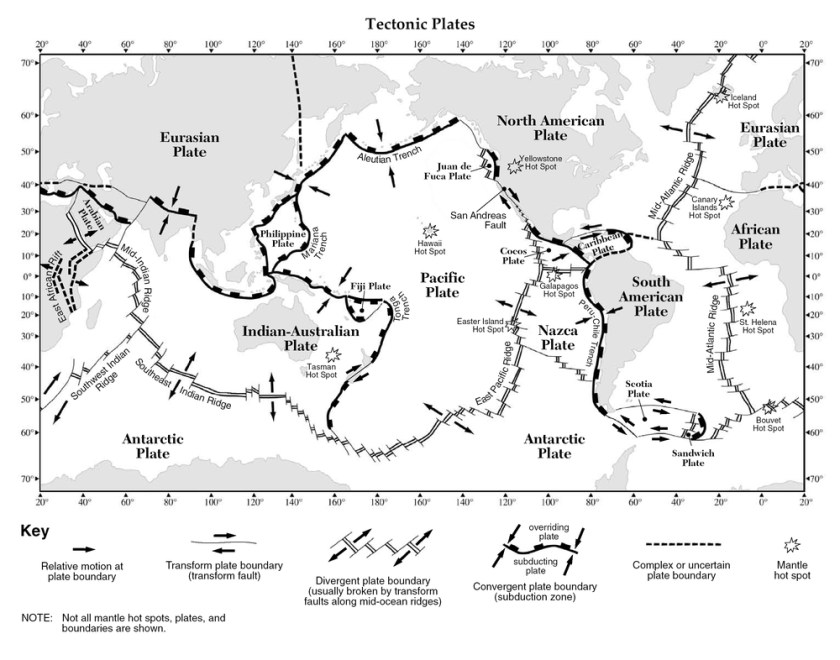
That rocky shell closing us off from all that is actually quite elastic, broken into seven or eight major pieces, (depending on how you define them), and several minor bits called Tectonic Plates.

Over millions of years, these plates move apart along constructive boundaries, where oceanic plates form mid-oceanic ridges. Roughly equal and opposite to these are the Subduction zones, where one plate moves under another and down into the mantle.

This movement in what we’d like to regard as Terra Firma, results in deep ocean trenches (the Aleutian Trench reaches depths of 25,194 feet) and mountain ranges such as the Andes along the border with Argentina and Chile, where towering peaks reach a height of over 22,500 feet or more.tectonic+plates+map

800px-Subduction-en.svgRoughly 90% of all earthquakes and 75% of potentially active volcanoes in the world, occur along a horseshoe shaped Ring of Fire, encircling the Pacific Ocean.

One hundred and thirty five years ago today, a mere blink of an eye in geologic time, the most destructive volcano in recorded history erupted along the western reaches of this ring of fire on the Indonesian island of Krakatau (Krakatoa).

Early seismic activity began several years before the 1883 eruption, with earthquakes felt as far away, as Australia. Steam began to vent in May of that year, from the northernmost of three cones comprising the island group of Krakatau. Explosions could be heard from as much as 99 miles away by the end of May, propelling thick clouds of ash to an estimated altitude of 20,000 feet, before activity died down in early June.

Eruptions at Krakatoa resumed around the 16th of June, and continued until the 24th. The violence of these ongoing eruptions caused tides in the area to be unusually high, while ships at anchor, had to be moored with heavy chains.

This thing was only yawning and stretching.  Just getting out of bed.

The-eruption-of-Krakatau-1883-4
Dutch topographical engineer Captain H. J. G. Ferzenaar investigated the Krakatoa islands on August 11, reporting three major ash columns and steam plumes from at least eleven other vents. All vegetation was extinct by this time, leaving only tree stumps, buried beneath nearly two feet of ash.

Eruptions intensified on August 25, while ships twelve miles away reported softball-sized pieces of hot pumice, raining down on their decks.  A small tsunami hit the shores of Java and Sumatra, twenty-five miles away.  Krakatoa entered its paroxysmal stage on August 26 followed by four prodigious explosions, the following day.

220px-Mount_Mazama_eruption_timeline
Mount Mazama in the Cascade Range of Oregon, collapses into the magma chamber below. Crater Lake reaches a depth of 1,943 feet, the deepest freshwater body in the United States. H/T Wikipedia

The first explosion at 5:30am triggered a Tsunami of 98-feet or more, wiping out much of the island of Sumatra.  The second explosion at 6:44 triggered a second tsunami.  The third and largest explosion at 10:02 am was so violent it could be heard 1,930 miles away in Perth, in Western Australia.  On the Indian Ocean islands near Mauritius, 3,000 miles distant, the sound was mistaken for cannon fire, from a nearby ship.

It’s reported to have been the loudest sound in recorded history, equal to the explosive force of 200,000 tons of TNT, four times the explosive force of the Soviet Tsar Bomba explosion of October 30 1961, the most powerful thermonuclear weapon, ever detonated.

The colossal fourth and final explosion generated pressure waves racing outward from Krakatoa, at 675 mph. The sound was so loud as to be heard clearly from the United States to Great Britain, the pressure wave rounding the globe and returning to the volcano no fewer than 3½ times.

Barometric pressure gauges spiked 2½ inches of mercury, equivalent to 180 decibels, of sound pressure.  As a point of reference, short-term hearing damage can occur at 120, and the threshold for human pain, is 134.

Untold millions of tons of super heated ash rose fifty miles and more, into the air. Ships as far away as South Africa, were rocked by the series of tsunamis.

The combined effects of the explosions, tsunamis and the Pyroclastic Flow, the fast-moving air current of superheated gases and volcanic material capable of reaching ground speeds of 430 miles per hour, resulted in an official death toll of 36,417.  Some estimates put the number as high as 120,000.

When it was over, all but the bottom third of the island was gone, swallowed whole by the empty magma chamber, below. Fifty-six miles distant, the westernmost provinces of Java have been reclaimed by jungle and remain depopulated, to this day.

scream-16_6155Following the 1883 eruption, temperatures in the northern hemisphere fell by an average of 2.2°, Fahrenheit. Weather patterns were disrupted for years on end.
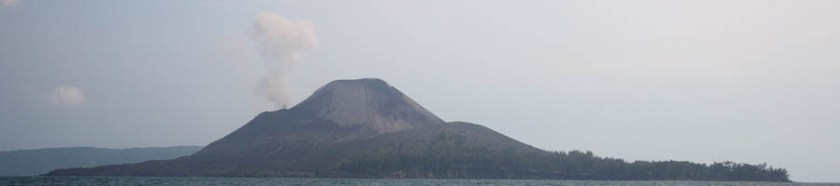
Particulate matter in the atmosphere refracted light worldwide resulting in glowing white clouds at night, and some of the most spectacular red sunsets, ever seen. Edvard Munch’s painting “The Scream“, is thought to be an accurate depiction of the colors. Fire trucks were called out in Poughkeepsie and New York, for what many believed to be a raging fire.

In 1927, a new island emerged from the caldera left by the 1883 cataclysm.  Anak Krakatau (“Child of Krakatoa”) is currently the site of eruptive activity, one of 1,500 potentially active volcanoes, according to the United States Geological Survey (USGS.gov).  Approximately five hundred of these were active, in historic times.

KRAK08_0995panorama
Anak Krakatau, “Child of Krakatoa” in modern times

The ability to predict such an eruption, remains elusive.  Iceberg tremors, gas emissions, thermal monitoring and relative rates of ground deformation remain areas, for continued study. When Mount St. Helens erupted in May 1980, USGS scientists were able to provide about three weeks warning.

Feature Image, top of page:  Anak Krakatau

August 23, 1784 The Lost State of Franklin

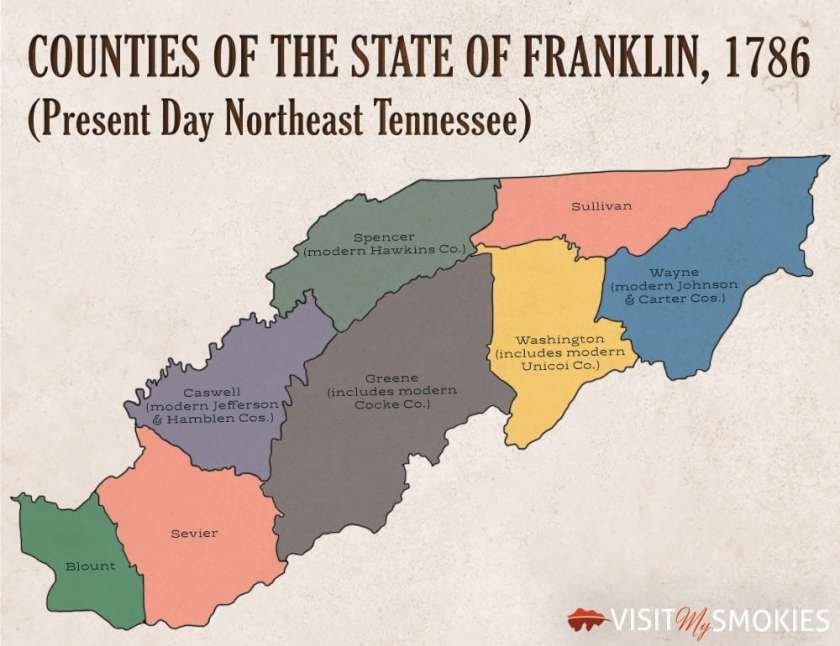
On this day in 1784, Washington, Sullivan, Spencer (modern-day Hawkins) and Greene counties in what is now east Tennessee formally seceded and declared their independence, becoming the only territory in American history, to be both ceded and seceded.

Following the American colonies’ hard-fought war for independence from Great Britain, it seems foreordained that the fledgling nation would spread ever outward.  That a “west coast” was only a matter of time, and the new nation would spread ever westward, stopping only at the golden waters of the Pacific.

Except, that wasn’t the way it happened. In fact, aside from the original thirteen colonies, the western frontier comprising those communities west of the Appalachian Mountains and east of the Mississippi, were pretty much on their own. Such districts were free to create new jurisdictions within already-existing states, or form new states to be part of the union.  They could even create their own sovereign republics such as the one-time Republic of Texas. or the original “Lone Star Republic” – the Republic of West Florida.

wpt_1361982255
“The history of the State of Franklin, an autonomous territory west of the Appalachian Mountains (in what is now part of Tennessee), established by frontier pioneers in 1784”. H/T Alabama Public Television for this image

In October 1781, British General Charles Cornwallis formally surrendered 8,000 soldiers and seamen to a combined force of Americans and their French allies, at Yorktown. Representatives of King George III and the United States of America signed the Treaty of Paris in September 1783, formally ending the American Revolution.

Six months earlier, the state of North Carolina ceded land claims between the Allegheny Mountains and Mississippi River to the United States Congress, as a means of paying off some of the government’s war debt.

Counties-of-the-State-of-Franklin-1786For ten years or more, settlers in the area known as the Cumberland River Valley operated their own independent government, along the western frontiers of North Carolina.  With its new-found independence, settlers to the Western Counties found themselves alone in dealing with the area Cherokee, who were at that time anything but peaceful.

On this day in 1784, Washington, Sullivan, Spencer (modern-day Hawkins) and Greene counties in what is now east Tennessee formally seceded and declared their independence, becoming the only territory in American history, to be both ceded and seceded.

The concept of a new western state came from Arthur Campbell of Washington County in Virginia, and John Sevier, regarded today as the founding father of Tennessee.  Campbell’s proposed state would have included southwestern Virginia, eastern Tennessee and parts of Kentucky, Georgia, and Alabama

af9553b1ce03641bb9c292fa6cca4cb7--pink-marble-family-historyThe Western counties petitioned the United States Congress for statehood the following May as the 14th state in the Union, the independent state of “Frankland”.  Seven states voted in the affirmative, short of the two-thirds majority required by the Articles of Confederation, for full statehood.
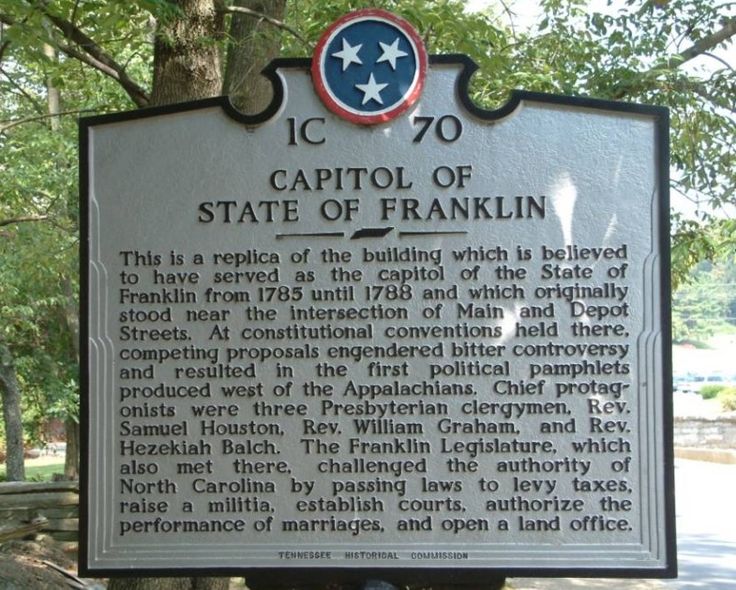
Virginia Governor and Kentucky land speculator Patrick Henry, he of the famous “Give me liberty, or give me death!” speech of 1775, opposed the loss of territory, and passed a law forbidding the creation of a new state from Virginia territory. After this, Sevier and his followers renamed their proposed state Franklin, in hopes of gaining the support of the venerable founding father, Benjamin Franklin.

Franklin himself was lukewarm toward the proposal, writing to Governor Sevier in 1787:

.. I am sensible of the honor which your Excellency and your council thereby do me. But being in Europe when your State was formed, I am too little acquainted with the circumstances to be able to offer you anything just now that may be of importance,.. 

As the would-be 14th state established its capital in Jonesboro, the newly elected North Carolina legislature rescinded the earlier cession, concerned about the possibility of a Spanish client state, at its western frontier.

783ba18e80fe1a8fbae0ec6b99180a42

For four and one-half years, The former colony and now state of North Carolina operated a government within the western territories, parallel to that of \the extra-legal state of Franklin.

Franklin opened courts and annexed five new counties, fixing taxes and authorizing the salaries of government officials. Both federal and  foreign currencies were accepted but, without an economic infrastructure of its own, debts were often settled by exchange of corn, tobacco or apple brandy. Governor Sevier himself was often paid, in deerskins. Citizens were granted a two-year reprieve from paying taxes, which only slowed development and created chaos.

valakefallaAs Franklin expanded westward, the state met resistance from the Chickamauga and “Overhill Cherokee” of war chief Dragging Canoe, a man often referred to as the “Savage Napoleon”.  With the protection of neither a federal army nor a state militia, Sevier sought a loan from the Spanish government, who then attempted to assert control over the territory.

Governor Sevier was arrested for his troubles in 1789 leaving government in a state of collapse, now under the firm control of the state of north Carolina.  One day, the state would once again cede the area to the federal government, the region becoming the 16th state of the union in 1796 and re-electing John Sevier, governor.

Forty years later, the most famous son of the lost state of Franklin would take his last stand, at a place called the Alamo.  History remembers this man by the epithet, “King of the Wild Frontier“.  The rest of us remember him, as Davy Crockett.

If you enjoyed this “Today in History”, please feel free to re-blog, “like” & share on social media, so that others may find and enjoy it as well. Please click the “follow” button on the right, to receive email updates on new articles.  Thank you for your interest, in the history we all share.


August 22, 1992 Ruby Ridge

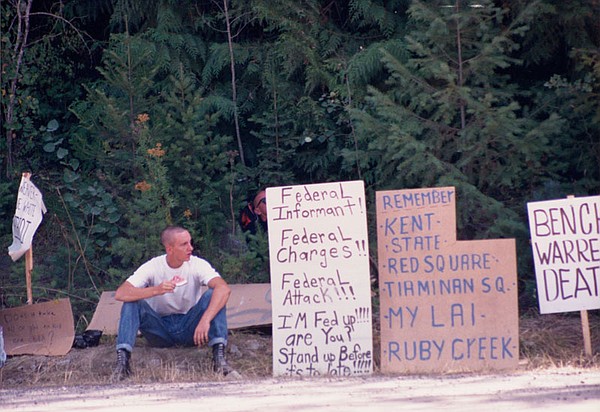
When Weaver declined to become informant, ATF filed illegal weapons indictments, claiming that Weaver was a bank robber with an extensive criminal record. Subsequent US Senate investigation revealed that Weaver had no such criminal convictions.  Weaver was now ensnared by a federal government bureaucracy, as unreasoningly suspicious as himself.

Randall Claude “Randy” Weaver came into the world in 1948, one of four children born to Claude and Wilma Weaver, a farming couple from Villisca, Iowa. Deeply religious people, the Weavers moved among several Evangelical, Presbyterian, and Baptist churches, in search of a spiritual ‘home’ to fit with their beliefs.

Weaver dropped out of community college at age 20 and enlisted in the Army, stationed at Fort Bragg and serving three years before earning an honorable discharge.

AE_Ruby_Ridge_2_t600

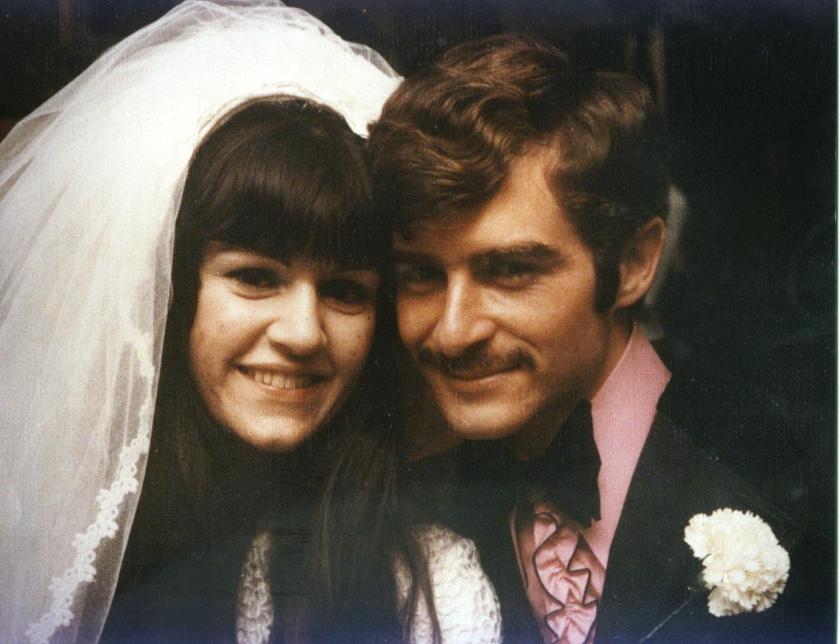
A month after leaving the Army, Weaver married Victoria Jordison and soon enrolled at the University of Northern Iowa to study criminal justice. At the time, Weaver wanted to become an FBI agent, but the high cost of tuition put an end to that. Randy found work at a local John Deere factory while “Vicki” became first a secretary and later a homemaker, as the family grew.

Over time, the couple began to harbor fundamentalist beliefs, while becoming increasingly distrustful of the government. Vicki came to believe that the Apocalypse was imminent.  The answer to her family’s survival lay in moving ‘off the grid’, away from ‘corrupt civilization’.

RANDALL_VICKI_WEAVER_t1170

In the early eighties, the couple paid $5,000 cash plus their moving truck for a piece of property, and built a cabin on the remote Ruby Ridge in the north of Idaho.

In 1984, Randy Weaver had a falling out with neighboring Terry Kinnison, over a $3,000 land deal. Kinnison lost the ensuing lawsuit and was ordered to pay Weaver an additional $2,100 in court costs and damages. Kinnison took his vengeance in letters written to the FBI, Secret Service, and county sheriff, claiming that Weaver had threatened to kill Pope John Paul II, President Ronald Reagan, and Idaho governor John Evans.

Randy and Vicki Weaver were interviewed by FBI as well as Secret Service agents, and the County sheriff. Investigators were told that Weaver was a member of the white supremacist Aryan Nation and that he had a large gun collection in his cabin. Weaver denied the allegations, and no charges were filed.

AE_Ruby_Ridge_7_t600
Sarah and Samuel on family property

There seems no small amount of paranoia and mutual distrust, in what followed. The Weavers filed an affidavit in 1985, that their enemies were plotting to provoke the FBI into killing them. The couple wrote a letter to President Reagan, claiming that a threatening letter may have been sent to him, over a forged signature. No such letter ever materialized but, seven years later, prosecutors would cite the 1985 letter, as evidence of a Weaver family conspiracy against the government.

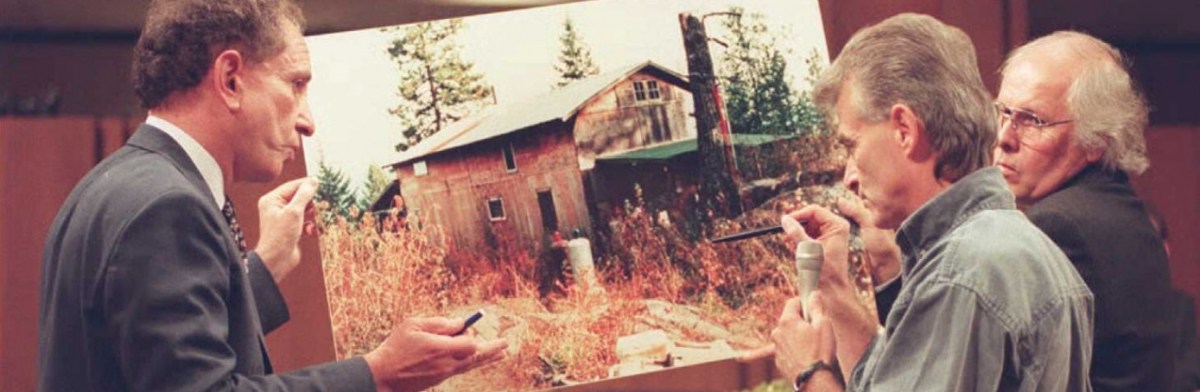
White supremacist Frank Kumnick was a member of the Aryan Nations, and target of an investigation by the federal bureau of Alcohol, Tobacco and Firearms. Weaver attended his first meeting of the World Aryan Congress in 1986, where he met a confidential ATF informant, posing as a firearms dealer. In 1989, Weaver invited the informant to his home, to discuss forming a group to fight the “ZOG”, the “Zionist Occupation Government” of anti-Semitic and paranoid conspiracy theory.

Ruby-Ridge

ATF charged Weaver that same year, with selling its informant two sawed-off shotguns. The government offered to drop the charges in exchange for Weaver’s becoming an informant. Weaver declined, and ATF filed illegal weapons indictments, claiming the subject was a bank robber, with an extensive criminal record. Subsequent US Senate investigation revealed that Weaver had no such criminal convictions, but Weaver was ensnared, by a  government bureaucracy as unreasoningly suspicious, as himself.

Trial was set for February 20 1991 and subsequently moved to February 21, due to a federal holiday. Weaver’s parole officer sent him a letter, erroneously stating that the new date was March 20. A bench warrant was issued when Weaver failed to show in court, for the February date.

AE_Ruby_Ridge_5_t700

Randy Weaver was now a “Fugitive from Justice”.

The U.S. Marshals Service agreed to put off execution of the warrant until after the March 20 date, but the U.S. Attorney’s Office called a grand jury, a week earlier. It’s been said that a grand jury could indict a ham sandwich and the adage proved true, particularly when the prosecution failed to reveal parole officer Richins’ letter, with the March 20 date.

The episode fed into the worst preconceptions, on both sides. Marshalls developed a “Threat Profile” on the Weaver family and an operational plan: “Operation Northern Exposure”. Weaver, more distrustful than ever, was convinced that if he lost at trial, the government would seize his land and take his four children, leaving Vicki homeless.

AE_Ruby_Ridge_1_t600
Surveillance photos of Weavers with guns, on their own property

Marshalls attempted to negotiate over the following months, but Weaver refused to come out. Several people used as go-betweens, were even more radical than the Weavers themselves. When Deputy Marshal Dave Hunt asked Bill Grider: “Why shouldn’t I just go up there … and talk to him?” Grider replied, “Let me put it to you this way. If I was sitting on my property and somebody with a gun comes to do me harm, then I’ll probably shoot him.”

On April 18, 1992, a helicopter carrying media figure Geraldo Rivera for the Now It Can Be Told television program was allegedly fired on, from the Weaver residence. Surveillance cameras then being installed by US Marshalls showed no such shots fired, and Pilot Richard Weiss denied the story.  Yet, a lie gets around the world, before the truth can get its pants on. (H/T, Winston Churchill). The ‘shots fired narrative’ became a media sensation. The federal government drew up ‘rules of engagement’.

Surveillance_photograph_of_Vicki_Weaver_21_Aug_1992
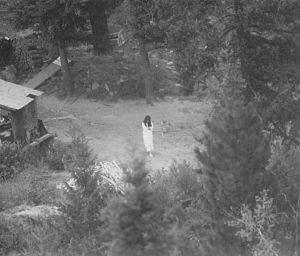
US Marshall Recon Team photo of Vicki Weaver, taken August 21, 1992

On August 21, a six-man armed Recon team arrived to scout the property, for a suitable spot to ambush and arrest Randy Weaver. Deputy Art Roderick threw rocks at the cabin to see how the dogs would react. The cabin was at this time out of meat and, thinking the dog’s reaction had been provoked by a game animal, Randy, a friend named Kevin Harris and Weaver’s 14-year-old son Samuel came out with rifles, to investigate. Vicki, Rachel, Sarah and baby Elisheba, remained in the cabin.

Marshalls retreated to a place out of sight of the cabin, while “Sammy” and Harris followed the dog ‘Striker’ into the woods. Later accounts disagree on who fired first, but a firefight erupted, between Sammy, Harris, and the Marshall’s team. When it was over, the boy, the dog and Deputy US Marshall William “Billy” Degan, lay dead.

The standoff now spun out of control, with National Guard Armored personnel carriers, SWAT, State Police and FBI Hostage Rescue Teams, complete with snipers.

On the 22nd, Harris, Weaver and sixteen-year old daughter Sarah were entering a shed to see the body of Weaver’s dead son, when FBI sniper Lon Horiuchi fired from a position some 200 yards distant. The bullet tore into Weaver’s back and out his armpit. When the three raced back to the cabin, Horiuchi’s second round entered the door as Harris dove for the opening, injuring him in the chest before striking Vicki in the face, as she held the baby in her arms.

AE_Ruby_Ridge_8_t600
Protesters were quick to form at the base of Ruby Ridge

Two days later, FBI Deputy Assistant Director Danny Coulson wrote the following memorandum, unaware that Vicki Weaver lay dead:

Something to Consider
1. Charge against Weaver is Bull Shit.
2. No one saw Weaver do any shooting.
3. Vicki has no charges against her.
4. Weaver’s defense. He ran down the hill to see what dog was barking at. Some guys in camys shot his dog. Started shooting at him. Killed his son. Harris did the shooting [of Degan]. He [Weaver] is in pretty strong legal position.”

The siege of Ruby Ridge would drag on for ten days. Kevin Harris was brought out on a stretcher on August 30, along with Vicki’s body. Randy Weaver emerged the following day. Subsequent trials acquitted Harris of all wrongdoing and Weaver of all but his failure to appear in court, for which he received four months and a $10,000 fine.

AE_Ruby_Ridge_3_t600
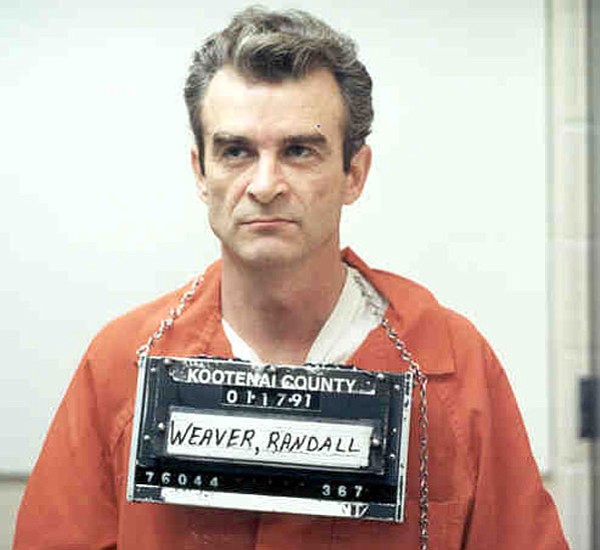
Randy Weaver, mugshot

Questions persist about the government’s ham-fisted approach at Ruby Ridge, and intensified after the Branch Davidian train wreck at Waco six months later, involving many of those same agencies and federal officials.

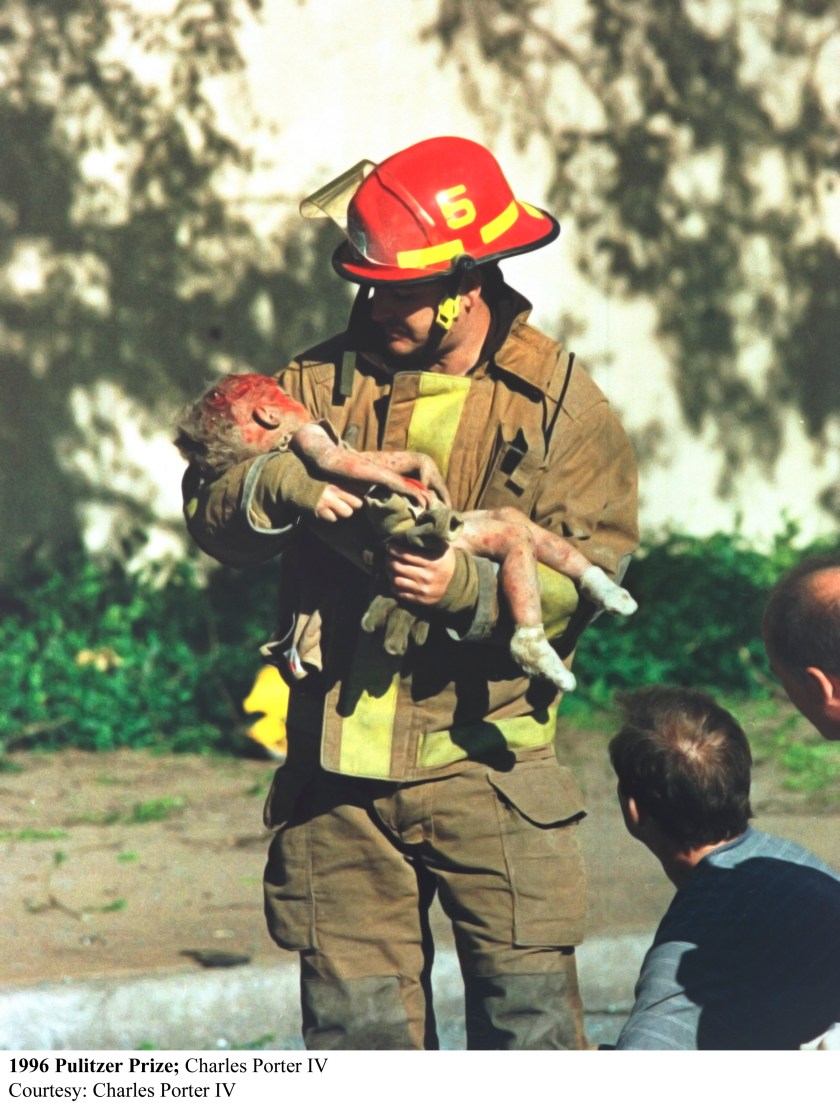
In 1995, a pair of reprobates would carry out their “revenge” on the government, blowing up a federal office building in Oklahoma City and killing 168 innocent people, injuring 680 others.  Nineteen of the dead, were children.

Oklahoma-City-bombing-1996

Subsequent Senate hearings criticized Ruby Ridge “rules of engagement” as unconstitutional, the use of deadly force unwarranted, under the circumstances.  Kevin Harris was awarded $380,000 damages for pain and suffering.  Weaver was awarded $100,000, and his three daughters, $1 million each.

FBI sniper Lon Horiuchi was indicted for manslaughter in 1997, charges later dismissed on grounds of sovereign immunity.

Deadly force procedures were brought about, intending to bring the government into line with Supreme Court precedent, resulting in a kinder, gentler federal law enforcement apparatus.  That was the idea.  You might want to ask Elian Gonzalez, how that worked out.

170427-zimmerman-tribeca-tease_nx9wef

If you enjoyed this “Today in History”, please feel free to re-blog, “like” & share on social media, so that others may find and enjoy it as well. Please click the “follow” button on the right, to receive email updates on new articles.  Thank you for your interest, in the history we all share.

August 19, 1879 Last of the Bare Knuckle Boxers

Nineteenth century prizefighting rules were nothing like the modern “sweet science” of boxing.

In 1858, the overly crowded tenements of Roxbury Massachusetts teemed with newly arrived Irish immigrants, looked down upon as “unmannered bogtrotters” and given wide berth by the self-appointed elites, of Boston. 5-foot 2-inch Michael Sullivan, newly arrived from County Kerry, worked as “hod carrier” for bricklayers and masons, dug ditches, and did any other job, that was available.

Like many first-generation immigrants, Michael and Catherine Sullivan did whatever they had to do, always hoping for something better, for their children.

John_L._Sullivan1
John L. Sullivan

That was the year the couple’s first-born son came into the world. From the beginning, baby John Lawrence was something different. “Strong as a bear” even as an infant, one family legend described little “Sully” clocking a visiting aunt before the age of one, leaving the woman with a black eye.

Sully excelled in sports as a boy and got into plenty of fights, which he easily won. He left high school as a young teenager and made a few bucks in semi-professional baseball, while working as a tinsmith, plumber and mason.

Prize fighting was illegal in those days, looked down upon by the middle classes as “butchery for profit”. The working classes had no such qualms, reveling in the sport in the saloons and music halls of most American cities.

Nineteenth century prizefighting rules were nothing like the modern “sweet science” of boxing. The earliest recognizable form of the sport, as opposed to mere brawling, came about after a 1744 bout in which British boxer George Stevenson was fatally injured, following a fight with Jack Broughton.

Broughton’s “seven rules of boxing” were printed and framed, and posted that August at his London amphitheater.

broughton-jack
Jack Broughton

Frank Lewis Dowling wrote in Fistiana; or The Oracle of the Ring:…Results of prize battles from 1700 to December 1867, that Broughton’s rules brought about “that spirit of fair play which off ers so wide a contrast to the practices of barbarous ages…[when] It is to be lamented that, even in modern times, the inhuman practices of uncivilised periods have subsisted to a disgraceful extent, and hence we have heard of gouging, that is to say forcing out the eye of an antagonist with the thumb or finger…kicking a man with nailed shoes as he lies on the ground, striking him in vital parts below the waistband, seizing him when on his knees, and administering punishment till life be extinct…”

In 1838, William “Brighton Bill” Phelps died following a particularly savage match with the British bare-knuckle prize fighter, Owen Swift. Phelps, who had himself killed a man in the ring, died after an 85-round, ninety-five minute fight for which Swift was tried and convicted, of manslaughter. Robert Rodriguez, author of The Regulation of Boxing: A History and Comparative Analysis of Policies Among American States writes that the “London Prize Ring Rules” of that year and amended in 1853 “introduced measures that remain in effect for professional boxing to this day, such as outlawing butting, gouging, scratching, kicking, hitting a man while down, holding the ropes, and using resin, stones or hard objects in the hands, and biting.”

The London prize ring rules specified the size and shape of the ring,  and that of the spikes in the fighter’s shoes, as well as the role for each fighter’s “second”.  Nothing is said of the length or number, of rounds.  Each round ended when a fighter was knocked (or thrown) to the ground.  There followed a thirty-second break when the umpire would cry “Time!”, and an eight-second interval when each combatant was to step up to the “scratch line”.  Failure to come “up to scratch” or incapacity put an end to the match, but 70+-round fights, were commonplace.

72086-004-DDFAAC8EThis was the world of bare knuckle boxing in the age of John L. Sullivan.  He thrived in that world. The urban prize ring was his “temple of manhood”.  He intended to be its Crown Prince.

In 1879, Sullivan trounced the veteran brawler Mike Donovan in an exhibition match. The older fighter was the more skilled and experienced, but the 21-year-old made up for it with speed and power. Afterward, Donovan knew that he had “just fought the coming champion of the prize ring.”

A month later, Sullivan challenged “any man breathing” to fight for prizes ranging between $1,000 to $10,000. Sometimes, matches were fought with bare knuckles, other times, with padded gloves and timed rounds.  Over 450 fights, Sullivan seemed unbeatable. “The Hercules of the Ring.”  Gamblers and other backers were making a fortune.

The media eagerly promoted the fighter as an “urban Paul Bunyan”. Stories were told and retold, each becoming more outlandish, as Sullivan “battled wild animals with his bare hands, drank rivers of liquor, had his way with regiments of women. . . .”

The epic drunkenness and domestic violence of the man’s real life at home, went largely unreported.

cropped-john-l-sullivan-1898

Sullivan was a Rockstar, the “Boston Strongboy”, the first professional athlete to make a million dollars. He performed in vaudeville, and hung out with some of the most iconic figures of the ‘gilded age’, from Presidents and Kings to wild west gunslingers. Sullivan made countless public appearances and even considered a run for the United States Senate. A famous song of the era invited listeners to “shake the hand that shook the hand of John L. Sullivan.”

On this day in 1887, thousands of adoring fans crowded the ways to Nantasket Beach in Hull, to glimpse the Heavyweight Champion of the World with his diamond-studded, gold-plated belt.

Depending on who you read, Sullivan was first considered world heavyweight champion either in 1888 when he fought Charley Mitchell in France, or in 1889 when he knocked out Jake Kilrain in round 75 of a scheduled 80-round bout.

s-l1600 (1)
Souvenir poster, 1888

The modern sport of Boxing was born in 1867, with the twelve rules drawn up by John Graham Chambers, member of the British Amateur Athletic Club under the sponsorship of John Sholto Douglas, 9th Marquess of Queensberry.  Timed rounds and gloves remained optional until the night of July 8, 1889, a scheduled 80-round bare knuckle bout between the undefeated champion John L Sullivan, and Jake Kilrain, the last professional fight to be held under the old London Prize Ring rules.

Whiskey had taken its toll on Sullivan by this time.  It looked like he was done when he threw up in the 42nd round, but Sullivan got his second wind.  Kilrain’s second threw in the towel in round 75, afraid that his principle was about to be killed.

John-L.-Sullivan-vs.-Jake-KilrainSullivan’s unbeaten record over 44 professional fights came to an end on July 9, 1892, when “Gentleman Jim” Corbett  unloaded a smashing left in the 21st round that put the champion down, for good.  Sullivan would later say that his opponent only “gave the finishing touches to what whiskey had already done to me.”

Sullivan retired to his home in Abington Massachusetts. In his later years, the last bare knuckle champ in history became a sports reporter, celebrity baseball umpire and tavern owner. He gave up his life-long addiction to alcohol taking his last drink in 1905. Sullivan took to the temperance lecture circuit, but the prizefighting years and those “Rivers of Whiskey” had taken their toll.

s493881354368189662_p65_i5_w2463

John Lawrence Sullivan earned over a million dollars over his career, and died with an estate valued at $3,675, and ten dollars in his pocket.  He was fifty-nine. Sullivan constantly warned young men to avoid the perils of alcohol. “John L. Sullivan, champion of the world, could not lick whiskey.  What gives any one of them the notion that he can?”

john-l-sullivan-obit

If you enjoyed this “Today in History”, please feel free to re-blog, “like” & share on social media, so that others may find and enjoy it as well. Please click the “follow” button on the right, to receive email updates on new articles.  Thank you for your interest, in the history we all share.