
Thomas Corbett was born in London England in 1832, immigrating with his family to the United States at age 7, and settling in Troy, New York. There he apprenticed to a hat maker, a profession he would hold off and on for the rest of his life.
19th century hat makers used an orange colored mercury solution to treat fur, and to make felt in a process called “carroting”. Mercury attacks the nervous system, causing drooling, hair loss, a lurching gait, difficulty in speaking, “brain fog” and a convulsive shaking called “hatter’s shakes”.
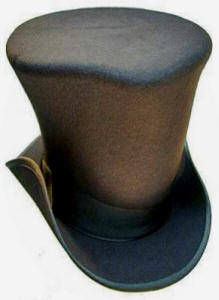
There were plenty of “Mad hatters,” in Lewis Carroll’s time, long before Alice’s Wonderland. Danbury Connecticut was once the hat making capital of the world, with 56 factories producing five million hats a year. By the time of the Civil War, mercury poisoning had reduced countless numbers of factory workers, to physical wrecks. Everybody knew the “Danbury shakes”.
Erethism mercurialis or “Mad hatter’s Disease”, goes a long way to understanding Thomas Corbett.
As a young man, Corbett married. It nearly broke him to lose his young wife in childbirth. He moved to Boston and continued to work as a hatter, but heavy drinking left him unable to keep a job for long and eventually, homeless. One night, Corbett was confronted by a street preacher, who changed his life.
He immediately quit drinking and became fanatically, religious. He was “the Glory to God man,” growing his hair long to emulate Jesus. The “local eccentric’ who took up his own street ministry and changed his name to “Boston” after the city of his re-birth.
“God has called on you to preach, my son, about four blocks, that way”.
Corbett was propositioned by two prostitutes in 1858, while walking home from a church meeting. Deeply troubled by his own temptation, he returned to his boardinghouse room and took up the Gospel, according to Matthew: “And if thy right eye offend thee, pluck it out and cast it from thee….and there be eunuchs, which have made themselves eunuchs for the kingdom of heaven’s sake“. He knew what he needed to do. He castrated himself, with a pair of scissors. Then he ate dinner and went to a prayer meeting before seeking medical attention.
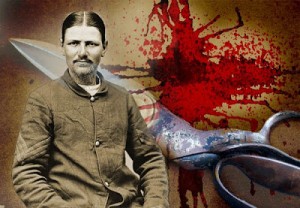 In the first months of the Civil War, Boston Corbett enlisted as a private in the 12th Regiment of the New York state militia. Eccentric behavior quickly got him into trouble. He would carry a bible with him at all times, reading passages aloud and holding unauthorized prayer meetings. He would argue with superior officers, once reprimanding Colonel Daniel Butterfield for using profane language and using the Lord’s name, in vain. That got him a stay in the guardhouse, where he continued to argue.
Corbett decided an arbitrary date, on which his enlistment would end. When that day arrived, he laid down his gun at midnight, and walked away. That got him court-martialled and sentenced to be shot, but the sentence was reduced. He was discharged in August, 1863, and re-enlisted the same month.
Harper’s Weekly of May 13, 1865 described the annoying habit of adding “er” to his words, as in “O Lord-er, hear-er our prayerer.” His shrill, sharp voice would shout out “Amen,” and “Glory to God,” whenever anything pleased him. He was often thrown in the guard-house, with a knapsack full of bricks as punishment. There he would be, Testament in hand, “preaching temperance, and calling upon his wild companions to “seek the Lord.””
 On June 24, 1864, fifteen members of Corbett’s company were hemmed in and captured, by Confederate Colonel John Singleton Mosby’s men in Culpeper Virginia.
They were sent to the notorious prison camp in Andersonville Georgia, where he escaped once, but the bloodhounds put an end to that. Only two, ever returned. Starved and skeletal, his body wracked with scurvy, Boston Corbett was paroled on November 19, 1864.
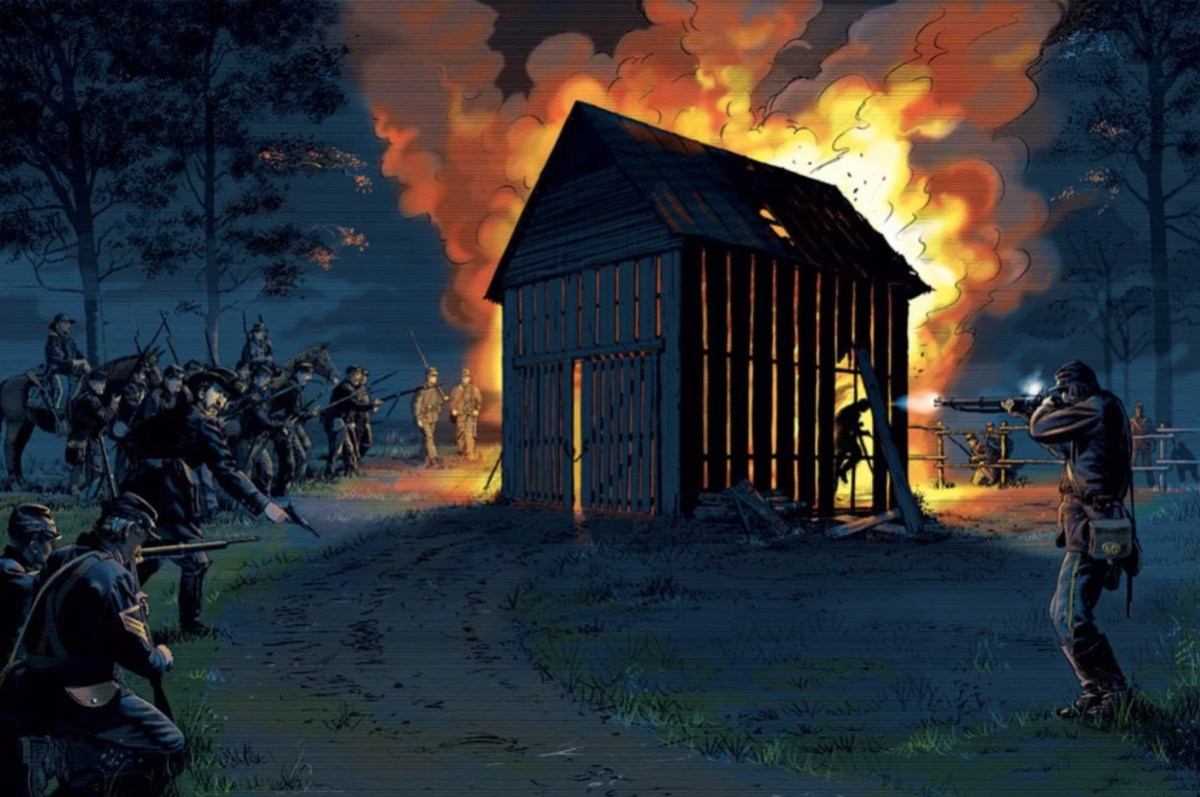
Following the Lincoln assassination, a twelve-day manhunt led to the farm of Richard Henry Garrett near Port Royal, Virginia. The life of John Wilkes Booth came to an end in a burning tobacco barn in the pre-dawn hours of April 26, the bullet fired through a crack in the boards and entering his spine, just below the point where his own bullet had entered the President’s head.
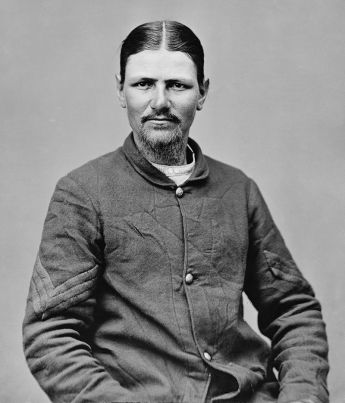
The paralyzed, dying man was dragged from the barn, and onto the porch of the Garrett farmhouse. In his dying moments he asked that his hands be lifted where he could see them. John Wilkes Booth uttered his last words. “Useless. Useless”.
In his report to Secretary of War Edwin Stanton, Lieutenant Colonel Everton Conger recommended that Sergeant Boston Corbett be punished for disobeying orders that Booth be taken alive, stating that Corbett had fired “without order, pretext or excuse.”
Corbett was treated like a conquering hero, despite Conger’s recommendation. He returned to making hats after the war, returning first to Boston and then to Danbury and finally, Camden New Jersey. He could never hold a job for long. Frequent pauses to pray for co-workers, did little to endear him to supervisors.
Women’s groups, tent meetings and Sunday schools clamored to hear from “Lincoln’s avenger”, but his speeches were wandering and incoherent. Nobody ever clamored to hear the man speak, a second time.
Corbett became increasingly paranoid over time, convinced that important men in Washington, were out to “get him”. Hate mail directed to Wilkes Booth’s killer, didn’t help. At a Blue & Gray reunion in 1878, Corbett pulled a gun on several former soldiers, during an argument over whether Booth still lived. He was hustled off before he could fire, but this was only one of several such episodes.
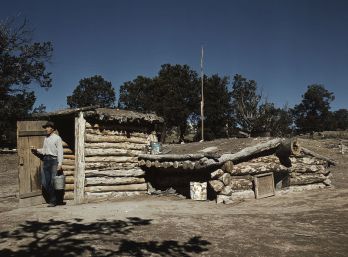
He moved to Kansas in 1878 and built a dugout home, and tried his hand at homesteading. That didn’t work out, either.
Corbett received an invalid’s pension in 1880 and the Grand Army of the Republic made him a doorman to the Kansas state legislature, seven years later. The man’s mental status was questionable before the war and put beyond dispute in 1887, when he entered the legislative chamber, with two loaded revolvers. Lawmakers dove for the exits and hid behind garbage cans and doors, as Corbett shot up the Kansas House of Representatives. Two guns, twelve bullets. It was a miracle that no one was hit.
The following day, a judge declared Corbett to be out of his mind, and remanded him to the Topeka Asylum for the Insane. On May 26, 1888, Corbett was marching along a road with other inmates, when he spotted a horse, tied to a post. Corbett dashed from the line and jumped into the saddle, and rode off into history.
Boston Corbett is believed to have died in the Great Hinckley Fire on September 1, 1894, a conflagration which killed more than 400 and destroyed over 200,000 acres of Minnesota pine forest, but there is no proof. The fate of the man who shot the man who shot Abraham Lincoln, remains unknown.


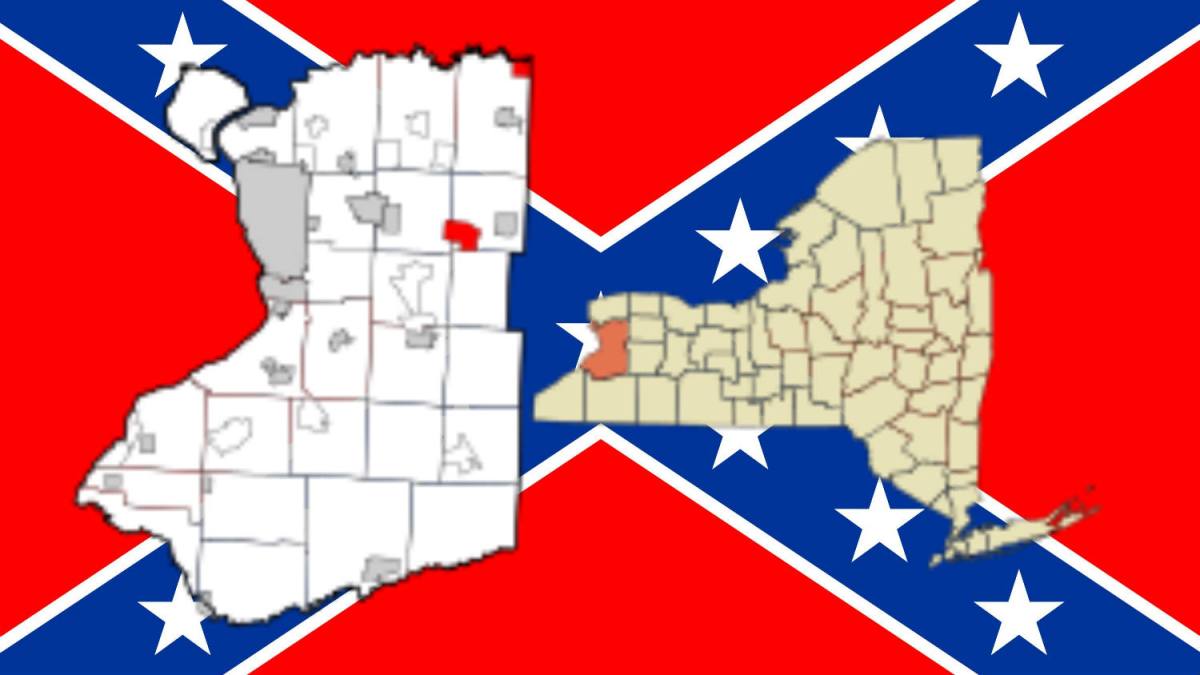
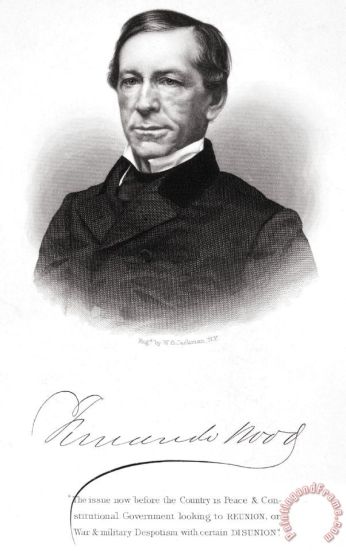 South Carolina seceded in December 1860, and the world waited to see who’d follow. New York City became the next to call for secession on January 6, when Mayor Fernando Wood addressed the city’s governing body. “When Disunion has become a fixed and certain fact”, he said, “why may not New York disrupt the bands which bind her to a venal and corrupt master…and destroyed the Confederacy of which she was the proud Empire City?”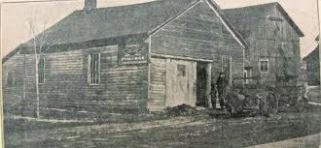
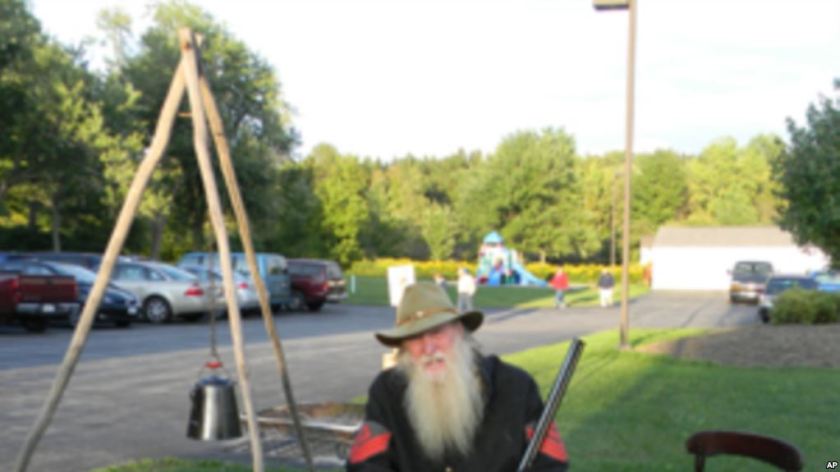
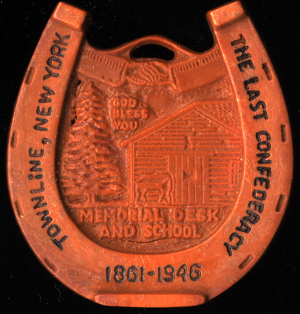 A courier express note arrived on October 7, 1945. “There are few controversies that are not susceptible to a peace time resolution” read the note, “if examined in an atmosphere of tranquility and calm rather than strife and turmoil. I would suggest the possibility of roast veal as a vehicle of peace. Why don’t you run down the fattest calf in Erie County, barbecue it and serve it with fixin’s in the old blacksmith shop where the ruckus started? Who can tell? The dissidents might decide to resume citizenship.” The note was signed “Very Sincerely Yours, Harry Truman”.
![4b4cf0f864c3dabcdb_IMG_7326[1]](https://todayinhistory.blog/wp-content/uploads/2018/10/4b4cf0f864c3dabcdb_img_73261.jpg?w=684&h=513)


 Jefferson Davis’ experiment was to be the first large-scale re-introduction of these animals on the North American continent, in geologic history.


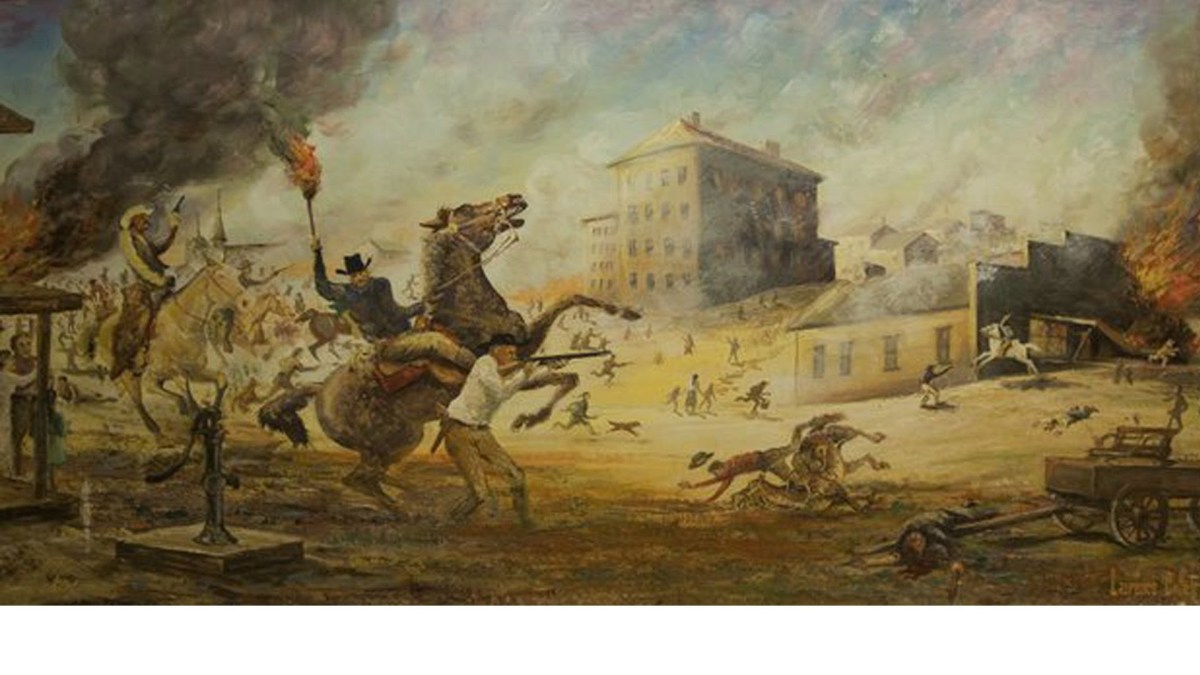
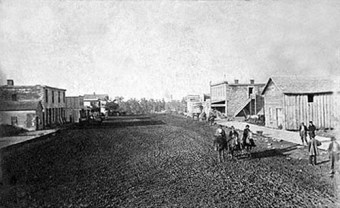
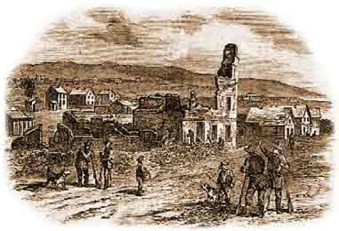
 Intending to deprive Confederate sympathizers from their base of support, General Thomas Ewing authorized General Order No. 11 four days later, ordering that most of four counties along the Kansas-Missouri border be depopulated. Tens of thousands of civilians were forced out of their homes as Union troops came through, burning buildings, torching fields and shooting livestock.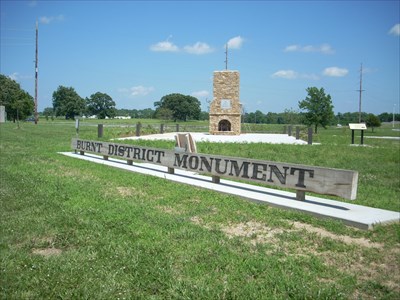
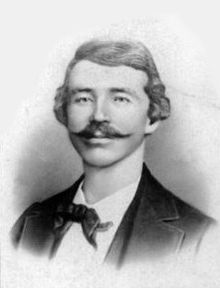
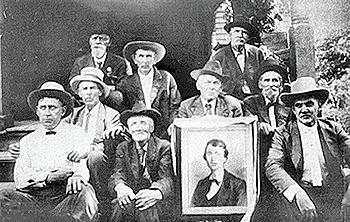


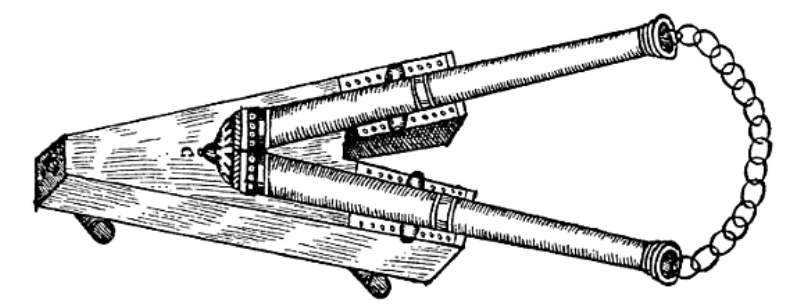
 Augustus Longstreet Hull was born 1847 in “The Classic City” of Athens Georgia, and enlisted in the Confederate Army on September 8, 1864.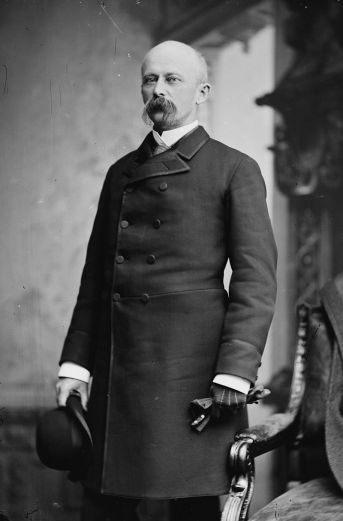




 Captured at Spotsylvania early in 1864, 52nd North Carolina Infantry soldier James Tyner was a POW at this time, languishing in “Hellmira” – the fetid POW camp at Elmira, New York. “The Andersonville of the Northern Union.”

 The “pumpkin flood“ of 1903 scoured the rail line, uncovering many of the dead and carrying away their mortal remains. It must have been a sight – caskets moving with the flood, bobbing like so many fishing plugs, alongside countless numbers of that year’s pumpkin crop.


 Twenty-seven years after Gettysburg, surviving veterans of the regiment returned to dedicate a memorial to those members of the 11th Pennsylvania, who lost their lives on that field of battle.
 The other includes a brindle colored Terrier, named Sallie. The only one of the two to have actually participated in the battle.

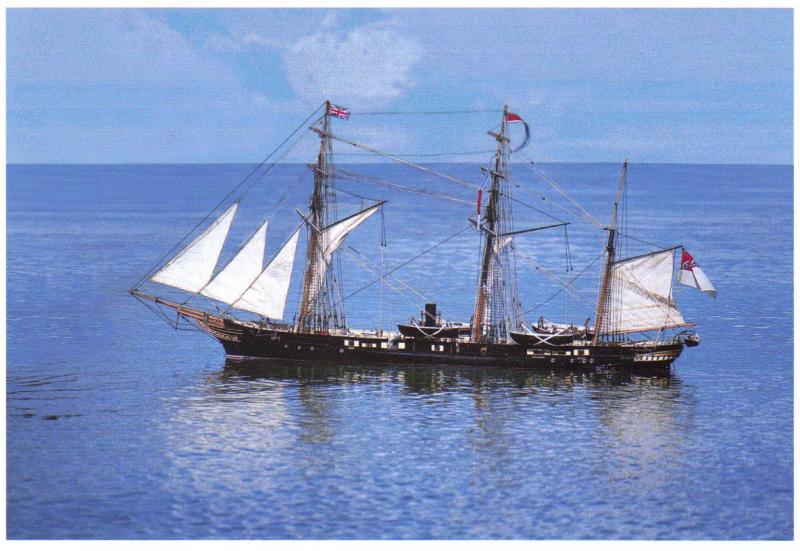
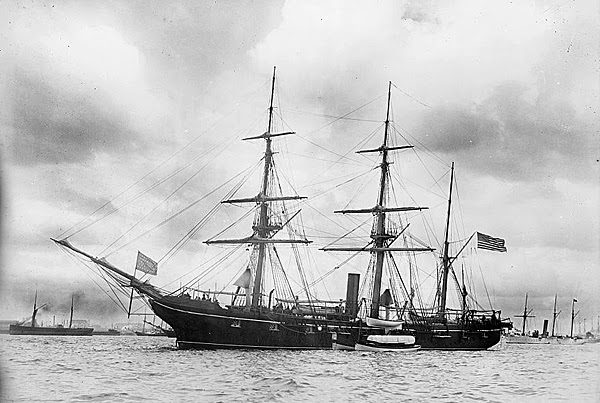

 CSS Alabama steamed out of Cherbourg harbor on the morning of June 19, 1864, escorted by the French ironclad Couronne, which remained nearby to ensure that the combat remained in international waters. Kearsarge steamed further to sea as the Confederate vessel approached. There would be no one returning to port until the issue was decided.
 Captain Winslow put his ship around and headed for his adversary at 10:50am. Alabama fired first from a distance of a mile, and continued to fire as the range decreased.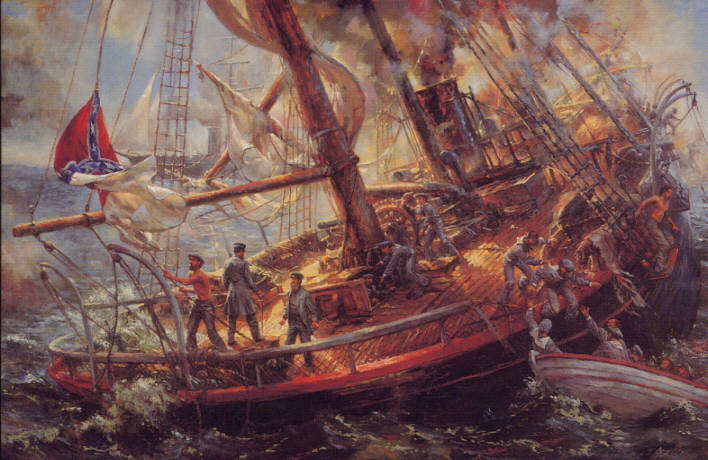
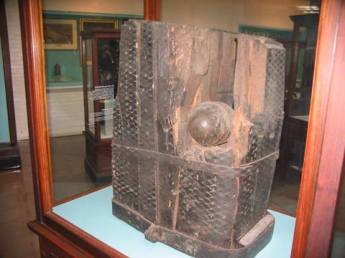


 In the first half of the 19th century, 90% of federal government revenue came from tariffs on foreign manufactured goods. A lion’s share of this revenue was collected in the south, with the region’s greater dependence on imported goods. Much of this federal largesse was spent in the north, with the construction of railroads, canals and other infrastructure.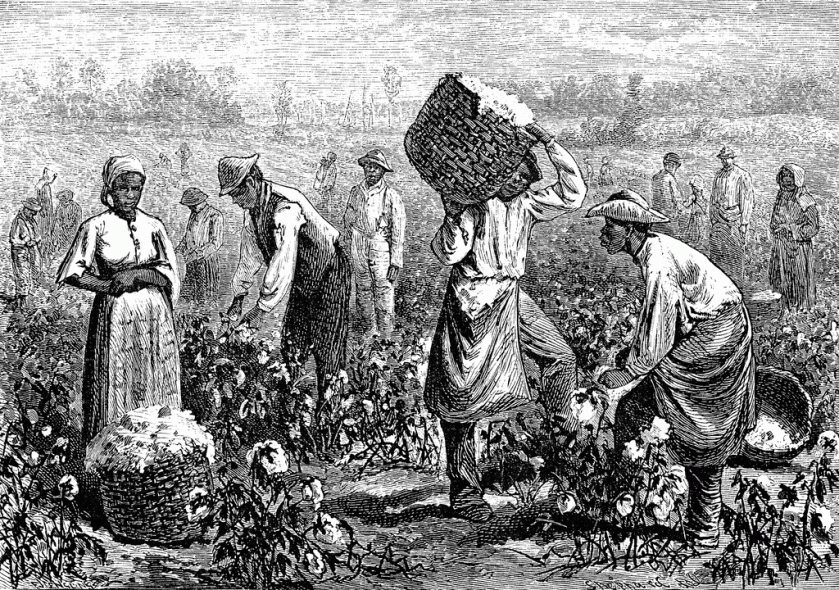
 The issue of slavery had joined and become so intertwined with ideas of self-determination, as to be indistinguishable.
 In Washington, Republicans backed the anti-slavery side, while most Democrats supported their opponents. On May 20, 1856, Massachusetts Senator Charles Sumner took to the floor of the Senate and denounced the Kansas-Nebraska Act. Never known for verbal restraint, Sumner attacked the measure’s sponsors Stephen A. Douglas of Illinois (he of the later Lincoln-Douglas debates), and Andrew Butler of South Carolina by name, accusing the pair of “consorting with the harlot, slavery”. Douglas was in the audience at the time and quipped “this damn fool Sumner is going to get himself shot by some other damn fool”.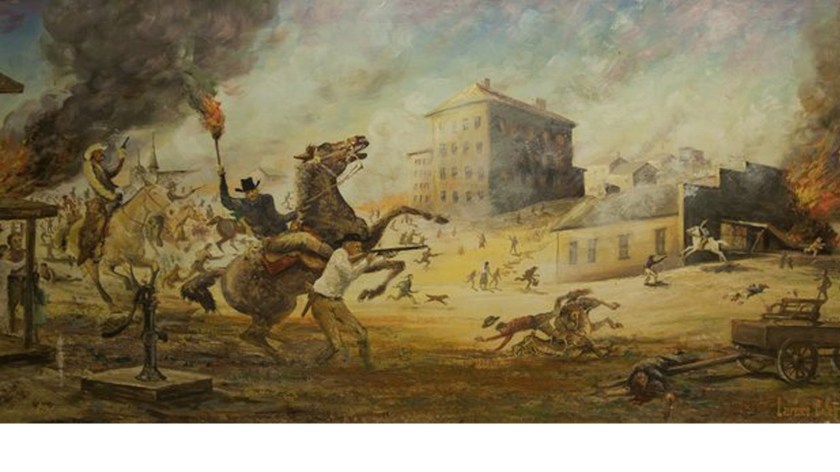


 The trio approached Sumner, who was sitting at his desk writing letters. “Mr. Sumner”, Brooks said, “I have read your speech twice over carefully. It is a libel on South Carolina, and Mr. Butler, who is a relative of mine.”
 In the next two days, a group of unarmed men will be hacked to pieces by anti-slavery radicals, on the banks of

 Historical Easter Eggs - Today in History
You must be logged in to post a comment.