When the sailor spotted Greta Zimmer, the dental assistant was dressed in the same white uniform as those Navy nurses. To him, she must have seemed like one of those white-clad angels of mercy from those earlier months.
The most destructive war in history ended this day in 1945, with the unconditional surrender of the Empire of Japan.
Rumors were flying since the small hours on the morning of August 14, but President Harry Truman had yet to receive the formal surrender. The White House’ official announcement was still hours away.
Born and raised in Austria, Greta Zimmer was 16 years old, in 1939. Fearful of the war bearing down on them, Greta’s parents sent her and her two sisters to America, not knowing if they’d ever see each other again.
Six years later Zimmer was a dental assistant, working at the Manhattan office of Dr. J. L. Berke.
Patients had been coming into the office all morning, with rumors that the war was over. Greta’s lunch break came just after 1:00. She set out for Times Square, knowing that the lit and moving type on the Times news zipper would give her the latest information.
Petty Officer 1st Class George Mendonça was on his last day of shore leave, spending the day with his new girlfriend, Rita Petry. The couple had heard the rumors too, but right now they were enjoying their last day together. The war could wait until tomorrow.
The couple went to a movie at Radio City Music Hall, but the film was interrupted by a theater employee who turned on the lights, announcing that the war was over. Leaving the theater, the couple joined the tide of humanity moving toward Times Square.
The pair stopped at the Childs Restaurant on 7th Ave & 49th, where bartenders were pouring anything they could get hands on into waiting glasses. Revelers were scooping them up as fast as the glasses were filled.
Mendonça’s alcohol-powered walk/run from the restaurant left Rita trailing behind, but neither one seemed to mind. Times Square was going wild.
The sailor from the USS Sullivans had seen bloodshed. He’d been there on May 11, as kamikaze planes smashed into the USS Bunker Hill. Explosions and fires killed 346 sailors that day. 43 of their bodies would never be found. Mendonça had helped to pull the survivors, some of them hideously burned, out of the water. He had watched while Navy nurses tended to the grievously wounded, and the dying.
When the sailor spotted Greta Zimmer, the dental assistant was dressed in the same white uniform as those Navy nurses. To him, she must have seemed like one of those white-clad angels of mercy from those earlier months.
Reporters from the AP, New York Times, New York Daily News and others descended on Times Square, to record the spontaneous celebration.
As a German Jew in the 1930s, Alfred Eisenstaedt had photographed the coming storm. He had photographed Benito Mussolini’s first meeting with Adolf Hitler in Venice, in 1934. Now Eisenstaedt and his Leica Illa rangefinder camera worked for Life Magazine, heading for Times Square in search of “The Picture™”.
The lit message running around the Times Building read, “VJ, VJ, VJ, VJ” as George Mendonça grabbed a stranger and kissed her. Two seconds later the moment was gone, but Eisenstaedt and his camera had been in the right place at the right time.
The image of the sailor kissing the nurse would become as famous as Joe Rosenthal’s photo of the flag raising at Iwo Jima, but not until years later.
After the war, Greta Zimmer learned that both of her parents had died in Nazi concentration camps. She later married and made her home in Frederick, Maryland. Greta Zimmer Friedman never returned to Austria, and passed away in September 2016, at the age of 92.
The German made camera which took the iconic image recently went to auction at the Westlicht auction house in Vienna, where it was expected to sell for $30,000. The winning bid was nearly $150,000.
George Mendonça and Rita Petry were married after the war, and put down roots in Rhode Island. The couple, now married seventy-one years, recently celebrated George’s ninety-fifth birthday. A framed copy of the famous photograph hangs in the hallway of the couple’s home. Rita once pointed to herself, grinning in the background of the image. And then she admitted: ‘In all these years, George has never kissed me like that.’
“Former Navy Quartermaster 1st Class George Mendonça and his wife of 71 years, Rita, celebrate George’s 95th birthday”. H/T Navy Times
Feature image, top of page, Victory Kiss by James Laurier Fine Art, www.jimlaurier.com
Henry Ford had a “thing”, for soybeans. At the 1934 World’s Fair in Chicago, Ford invited reporters to a feast where he served soybean cheese, soybean crackers, soy bread and butter, soy milk, soy ice cream… The man was a veritable Bubba Gump, of soybeans.
The largest museum in the United States is located in the Detroit suburb of Dearborn, the Henry Ford Museum of American Innovation. The sprawling, 12-acre indoor-outdoor complex in the old Greenfield Village is home to JFK’s Presidential limo, the Rosa Parks bus and the Wright Brothers’ bicycle shop. There you will find Abraham Lincoln’s chair from Ford’s Theater, along with Thomas Edison’s laboratory and an Oscar Mayer Wienermobile. George Washington’s camp bed is there, with Igor Sikorski’s helicopter and an enormous collection of antique automobiles, locomotives and aircraft.
Sadly, one object you will not find there, is Henry Ford’s plastic car, made from soybeans.
Ford left the family farm outside of modern-day Detroit as a young man, never to return. His father William thought the boy would one day own the place but young Henry couldn’t stand farm work. He later wrote, “I never had any particular love for the farm—it was the mother on the farm I loved”.
Henry Ford went on to other things, but part of him never left the farm. In 1941, the now-wealthy business magnate wanted to combine industry, with agriculture. At least, that’s what the museum says.
George Washington Carver, at work in his library
Ford first gave the plastic car project to yacht designer Eugene Turenne Gregorie, but later turned to the Greenfield Village soybean laboratory. To the guy in charge over there, actually, a guy with some experience in tool & die making. His name was Lowell Overly.
The car was made in Dearborn with help from the scientist and botanist George Washington Carver, (yeah, That George Washington Carver), a man born to slavery who rose to such prodigious levels accomplishment, that Time magazine labeled him the “Black Leonardo”.
The soybean car, introduced to the public this day in 1941, was made from fourteen ¼-inch thick plastic panels and plexiglass windows, attached to a tubular steel frame and weighing in at 1,900 pounds, about a third lighter than comparable automobiles of the era. The finished prototype was exhibited later that year at the Dearborn Days festival, and the Michigan State Fair Grounds.
The thing was built to run on fuel derived from industrial hemp, a related strain of the Cannibis Sativa plant beloved of stoners the world over and known simply, as “weed”.
Ford claimed he’d be able to “grow automobiles from the soil”, a hedge against the metal rationing of world War Two. He dedicated 120,000 acres of soybeans to experimentation, but to no end. The total acreage devoted to “fuel” production, is unrecorded.
Another reason for a car made from soybeans, was to help American farmers. Plus, Henry Ford seems to have had a “thing”, for soybeans. At the 1934 World’s Fair in Chicago, Ford invited reporters to a feast where he served soybean cheese, soybean crackers, soy bread and butter, soy milk, soy ice cream… The man was a veritable Bubba Gump, of soybeans. Ford was probably one of the first in this country, to regularly drink soy milk.
Henry Ford’s own car was fitted with a soybean trunk and struck with an axe to show the material’s durability, though the axe was later revealed to have a rubber boot.
Henry Ford’s experiment in making cars from soybeans never got past that first prototype, and came to a halt during WW2. The project was never revived, though several states adopted license plates stamped out of soybeans, a solution farm animals found to be quite delicious.
The car itself was destroyed long ago, the ingredients for its manufacture unrecorded, but the thing lives on in the hearts of hemp enthusiasts, everywhere.
The New York Times claimed the car body and fenders were made from soy beans, wheat and corn. Some sources opine that the car was made from Bakelite or some variant of Duroplast, a plant-based auto body substance produced in the millions, for the East German Trabant.
One newspaper claimed that nothing ever came from Henry Ford’s soybean experiments, except whipped cream.
If you enjoyed this “Today in History”, please feel free to re-blog, “like” & share on social media, so that others may find and enjoy it as well. Please click the “follow” button on the right, to receive email updates on new articles. Thank you for your interest, in the history we all share.
Even the inebriates stepped up, when a Brooklyn home for alcoholics donated fifteen dollars. Not to be outdone, collection boxes were put out in bars and saloons all over New York City.
In the late 1860s, French sculptor Frédéric Auguste Bartholdi conceived a great work of neoclassical sculpture. An enormous statue depicting a female figure in robes, this latter-day colossus holding high her Torch of Progress and standing by the water’s edge to greet the weary traveler – to Egypt.
Today, the 120-mile Suez canal connecting the Mediterranean with the Red Sea handles nearly fifty ships per day. Around Bartholdi’s time, Ottoman authorities were just getting around to digging the thing. Bartholdi had visited Egypt as a young man, and came away captivated by the Sphinxes, the Great Pyramids, and now this.
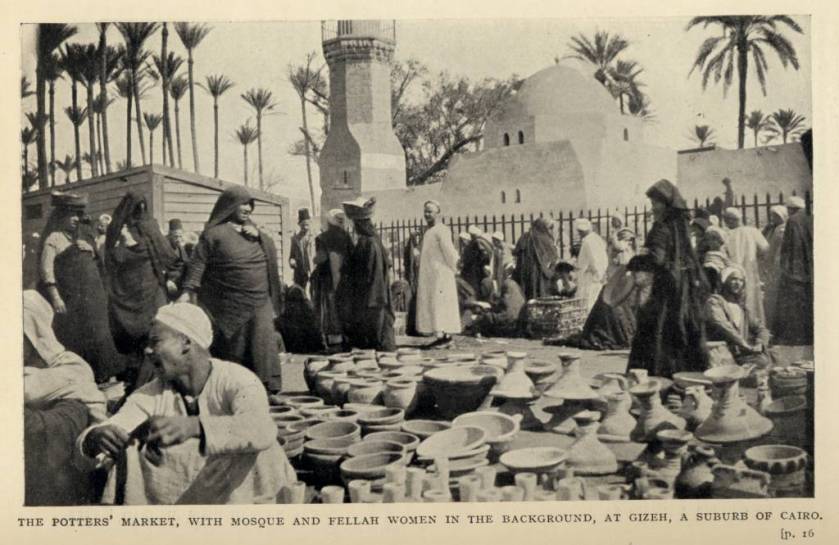
Bartholdi pitched his idea to the Khedive of Egypt in 1867, while attending the World’s Fair, in Paris. An enormous lighthouse in the form of a woman, holding high the lamp of welcome and dressed in the flowing cotton robe of the fellah, the “True Egyptian”, the peasant farmer and agricultural laborer of Egypt and North Africa.
The Egypt deal fell through, when Bartholdi came to a land where he’d never been before, to sell his colossus.
The idea was originally that of French attorney Édouard René de Laboulaye. An observer of American civic culture and passionate supporter for the Union side of the Civil War, Laboulaye wrote a three-volume work on the political history of the United States and considered the gift of “Liberty Enlightening the World” to be symbolic of values repressed at that time, by the 2nd Republique of Napoleon III.
Bartholdi pitched the idea from Niagara Falls to Washington, D.C., from Chicago to Los Angeles, but Americans were slow to appreciate the idea of a lighthouse, in the shape of a woman. Back in Paris, the sculptor put on spectacles of every kind to raise money, charging visitors admission to the dusty workshop to watch the torch’s construction, and selling souvenirs. At one point, Bartholdi even petitioned the French government, to let him hold a national lottery.
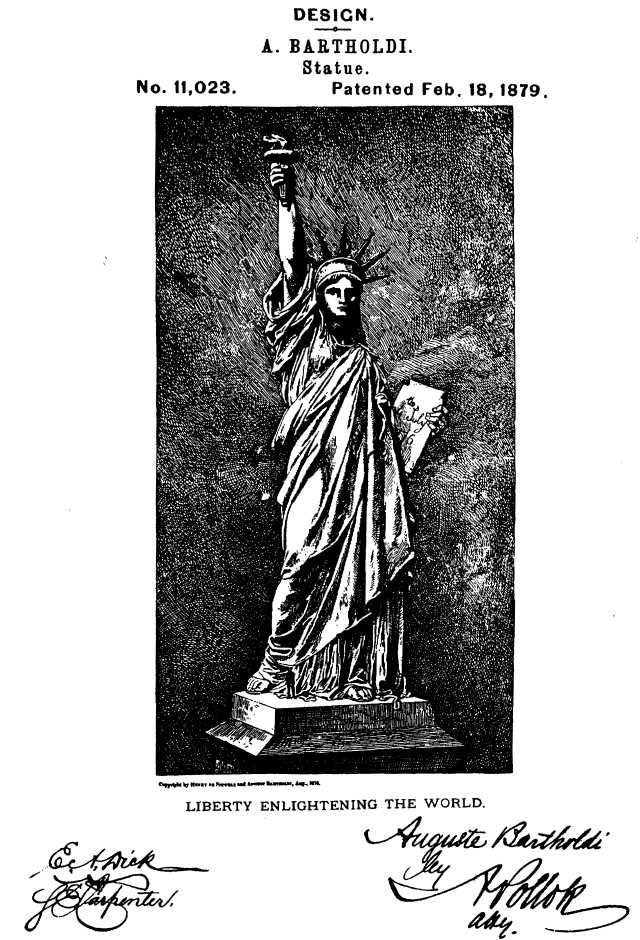
U.S. Patent D11023
The torch arrived late for the centennial festivities of 1876, celebrating the 100th birthday of the young nation. Nevertheless, the “colossal arm” proved popular with Philadelphia fairgoers, where visitors paid admission to climb up into the arm and take in the view from the balcony. The sculptor was so pleased that, for a time, he considered installing the finished statue in Philadelphia.
Fundraising committees were formed in New York, Philadelphia and Boston, to raise money for the foundation and pedestal. On his last full day in office, March 3, 1877, President Ulysses S Grant signed a joint resolution authorizing the President to accept the statue when presented by France, and to select a site for it. President Rutherford B. Hayes accepted Bartholdi’s suggestion and selected Bedloe’s Island, in New York Harbor.
Stereoscopic Image from the Centennial Exposition of 1876
Even then, fundraising went slowly for the New York committee.
With the full statue under construction in Paris, Boston made a play for the statue in 1882, offering to pay the full cost of installation provided that the statue was installed in Boston Harbor. The New York Times was miffed as only the “Newspaper of Record” can be. One editorial sniffed:
“[Boston] proposes to take our neglected statue of Liberty and warm it over for her own use and glory. Boston has probably again overestimated her powers. This statue is dear to us, though we have never looked upon it, and no third rate town is going to step in and take it from us. Philadelphia tried to do that in 1876, and failed. Let Boston be warned . . . that she can’t have our Liberty … that great light-house statue will be smashed into … fragments before it shall be stuck up in Boston Harbor”.
And here I thought that New York/Boston thing started with the Red Sox and the Yankees.
Fundraising toward the $100,000 required to complete the project was a constant and seemingly insurmountable challenge. New York Governor Grover Cleveland vetoed a bill in 1884, providing $50,000 for the effort. A bill to have the United States Congress pick the full tab the following year, was likewise defeated.
Head on display at the p 1878
With only $3,000 in the bank, the American committee organized a number of fund drives. Poet Emma Lazarus was asked to donate an original work for auction, but declined the request. At the time, Lazarus was involved in aiding Jewish refugees from the anti-Semitic pogroms of Eastern Europe. In time, Lazarus came to see the request as a way to help the cause. The resulting sonnet, The New Colossus, included the iconic lines “Give me your tired, your poor/Your huddled masses yearning to breathe free.”
New York World publisher Joseph Pulitzer pushed the project over the top, offering to print names and brief notes from contributors of every size down to a single penny. It was a brilliant marketing scheme. Newspaper circulation went through the ceiling, as readers scooped up papers to see their names in print.
One kindergarten class in Davenport, Iowa raised $1.35. A group of children sent a dollar as “the money we saved to go to the circus with.” Another dollar was sent by a “lonely and very aged woman.” Even the Big Apple’s inebriates stepped up, when a Brooklyn home for alcoholics donated fifteen dollars. Not to be outdone, collection boxes were put out in bars and saloons all over New York City. (The two cities wouldn’t be merged until 1898).
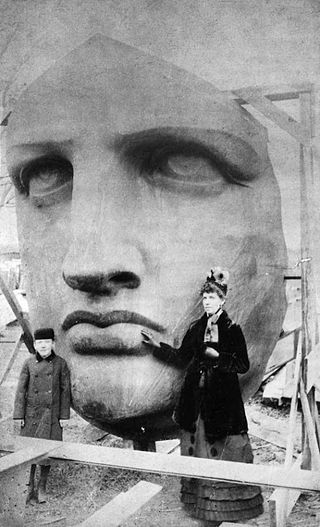
Unpacking the face, 1885
Hundreds of crates containing the disassembled Liberty Enlightening the World arrived in New York on June 17, 1885, aboard the French steamer Isère. Two months later, the final piece fell into place. On August 11, the World announced that $102,000 had been raised from 120,000 donors. 80% of the total arrived in sums of a dollar or less.
Despite the fundraising success, the pedestal wasn’t complete until April of the following year. With no room to erect scaffolding, workers descended down ropes to install skin sections to an iron armature designed by none other than Gustave Eiffel.
The formal dedication was held on the afternoon of October 28, 1886, with former New York Governor and now-President of the United States Grover Cleveland, presiding. As many as a million turned out for the parade held that morning through the streets of the city. At the New York Stock Exchange, traders showered marchers with paper strips containing stock quotes, beginning an American tradition called the ticker-tape parade.
Festivities on the future Liberty Island were for dignitaries only that day, no member of the public was allowed. Ironically, no women were permitted at all for the dedication of the world’s tallest female, save for the Sculptor’s wife, and the granddaughter of French diplomat, Ferdinand de Lesseps. It was believed that women might be injured, in all that crush of humanity.
That didn’t keep a group of offended suffragists from chartering a boat, and getting as close to the island as possible. I wonder what that sounded like.
Liberty Enlightening the World has opened and closed to the public, since that time. She has turned from a dull copper red to the rich green patina you see today. She was injured in a World War, in the Black Tom explosion of 1916. She was there to witness Annie Moore’s arrival at Ellis Island, that 15-year-old “rosy-cheeked Irish girl” from County Cork, the first of some twenty-five million immigrants who arrived at that place legally between 1892 and 1924, helping to transform this nation into the international all-star team, of the world. She witnessed that Kiss on Times Square, ending another World War in Europe. Built in the wake of the Civil War, she has watched over a nation sometimes torn along lines of race and color, as her people learned to get along with others, unlike themselves.
She has witnessed the worst terror attack of modern history and that brief, shining moment where we all seemed to be “One Nation, Under God”. Throughout it all she has remained iconic. Torch held high, the chain at her feet lying broken as she walks forward. The stone tablet in her hand is inscribed “JULY IV MDCCLXXVI”. July 4, 1776.
If you enjoyed this “Today in History”, please feel free to re-blog, “like” & share on social media, so that others may find and enjoy it as well. Please click the “follow” button on the right, to receive email updates on new articles. Thank you for your interest, in the history we all share.
Watergate prosecutor James Neal was convinced that the President hadn’t known in advance, and the later release of Oval Office tapes seem to bear that out. At one point, you can hear the President ask “Who was the asshole who ordered it?”
The time was not yet 1:00am on June 17, 1972, when security guard Frank Wills noticed tape covering several door latches at the Watergate Complex in the Foggy Bottom neighborhood of Washington, DC. Wills removed the tape and thought little of it, but came back an hour later to see that the doors had been re-taped. This time, Wills called the police.
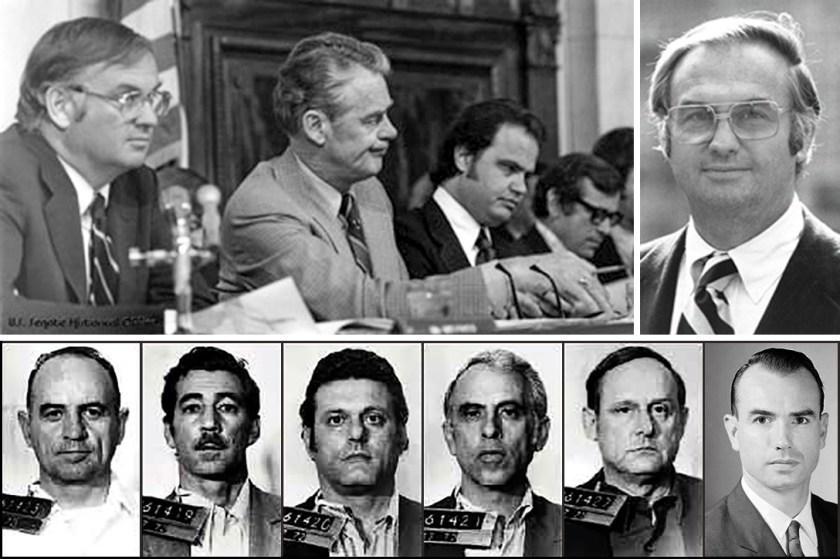
Five men were discovered inside the offices of the Democratic National Committee. These were Virgilio González, Bernard Barker, James McCord, Eugenio Martínez, and Frank Sturgis. All were arrested and charged with attempted burglary and attempted interception of telephone and other communications.
Subsequent investigation incriminated Committee to Re-elect the President (CRP) General Counsel G. Gordon Liddy, and former CIA officer E. Howard Hunt. A grand jury indicted the lot of them for conspiracy, burglary and violation of federal wiretap laws.
During the investigation and ensuing trial, it became clear that all seven had ties to the 1972 CRP. President Richard Nixon stated that his chief counsel John Dean had conducted a thorough investigation of the matter, though it later became clear that there had been no investigation at all.
Press Secretary Ron Ziegler dismissed the break-in as “a third-rate burglary attempt”.
On September 29, it was revealed that John Mitchell had controlled a secret fund while serving as Attorney General, used to finance Republican campaign intelligence gathering operations against Democrats. On October 10, the FBI reported that the Watergate break-in was only part of a comprehensive campaign of spying and political sabotage conducted on behalf of the Nixon re-election committee. The Nixon campaign was never affected by the revelations. The President was re-elected in one of the biggest landslides in American political history.
The Media wouldn’t let it go, particularly the connection between the break-in and the campaign. Relying on anonymous sources, Washington Post reporters Bob Woodward and Carl Bernstein uncovered information suggesting that there was wide-spread knowledge of the break-in and the attempt to cover it up, knowledge running through the Justice Department, FBI, CIA, and all the way to the White House.
The animosity between the media and the White House grew as Nixon and administration officials discussed plans to “get” hostile media organizations.
The scandal blew apart, the following March. Judge John Sirica, presiding over the burglary trial, read aloud in open court a letter from one of the burglars. The letter written by John McCord claimed that trial testimony had been perjured, and that defendants had been pressured to remain silent. The accusations led to the formation of a Senate select committee to investigate the Watergate burglary and subsequent cover-up, and the ultimate discovery of a secret taping system in the Oval Office.
Demands for the tapes were met with claims of Executive Privilege and refusal to hand them over. Litigation made it all the way to the Supreme Court. On July 24, 1974, the unanimous decision in United States v. Nixon voided all claims of executive privilege.
Within six days, the House Judiciary Committee approved three articles of impeachment: obstruction of justice, abuse of power and contempt of Congress.
The President’s support in Congress collapsed after the release of the “Smoking Gun” tape, demonstrating that the President himself had entered into a criminal conspiracy with the goal of obstructing justice. On August 8, Richard Nixon announced his intention to resign from office, effective at noon the following day. The first American President in history to resign from office. The Justice Department pondered an indictment, but that discussion ended a month later with a pardon from President Gerald R. Ford.
It isn’t clear whether Nixon had prior knowledge of the break-in. Watergate prosecutor James Neal was convinced that the President hadn’t known in advance, and the later release of Oval Office tapes seem to bear that out. At one point, you can hear the President ask “Who was the asshole who ordered it?”
Years later, the shoe was on the other foot, as the House considered impeachment proceedings against President Clinton for suborning perjury and obstruction of Justice. Representative John Conyers said in a September 30, 1998 Time Magazine article that “We’ve been advocating the Watergate model (of prosecution). I support it”. Contradicting himself in the next paragraph, Congressman Conyers went on to say “The notion that this review should be open ended like Watergate, as the Speaker continues to insist, is preposterous”.
At the time of the Watergate hearings, Jerry Zeifman was serving as Chief Counsel of the House Judiciary Committee’s permanent staff. Zeifman has since claimed to have fired a junior member of the temporary Impeachment Inquiry staff for dishonesty and unethical behavior, though there remains some doubt as to whether he had that authority. That staff member would continue on with the committee until its dissolution, in 1974.
Irrespective of the degree of his early involvement, Nixon himself was an active participant in the cover-up. In the end, that would prove more damaging than the burglary itself. One hopes that any such betrayal of public trust will always be worse than the underlying crime, but time will tell. Years later, that junior member of the temporary Impeachment Inquiry staff would famously ask, “What difference, at this point, does it make”?
If you enjoyed this “Today in History”, please feel free to re-blog, “like” & share on social media, so that others may find and enjoy it as well. Please click the “follow” button on the right, to receive email updates on new articles. Thank you for your interest, in the history we all share.
Named for one of it’s own private soldiers, the Mitchell Thunderbolts were not your standard military company. These guys were “organized strictly for home defense” and absolutely refused to take orders. From anyone. They recognized no superior officer and the right to criticism was reserved and freely exercised from that “splendid old gentleman” Colonel John Billups, down to the lowliest private.
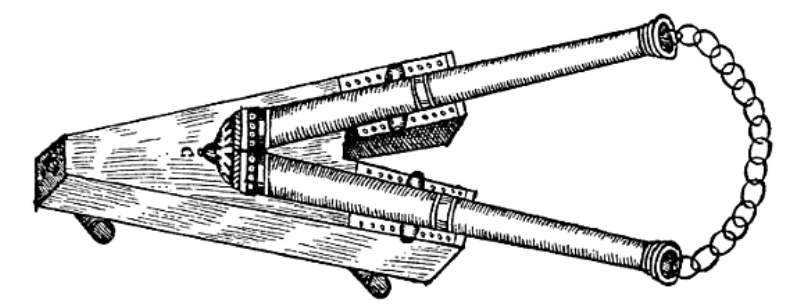
In 1642, Italian gun maker Antonio Petrini conceived a double barrel cannon, with tubes joined at 45° and firing solid shot joined together, by chain. This was the year of the “Great Rebellion“, the English Civil War, when the King and Parliament raised armies to go to war – with each other. The idea must have looked good as proposed to King Charles I of England, the weapon capable of slicing through his enemies, like grass before a scythe.
The idea was to fire both barrels simultaneously, but there was the rub. Wild ideas occur to the imagination of imperfect combustion, and a chained ball swinging around to take out the gun crew. The King himself was mute on the subject, and went on to lose his head, in 1649. Petrini’s manuscript resides to this day in the tower of London. There is no documented proof that the weapon was ever fired, save for the designer’s own description of the ‘Grandissima Ruina’ left behind, by his creation.
Two-hundred years later the former British colonies in America, found themselves embroiled in their own Civil War.
In the early days of its independence, the Confederate Congress enacted a measure, allowing local cities and towns to form semi-military companies for the purpose of local defense. As the very flower of young southern manhood was called up and sent to the front, these “home guard” units often comprised themselves of middle-age and older gentlemen, and others for various reasons, unable to leave home and hearth.
Augustus Longstreet Hull was born 1847 in “The Classic City” of Athens Georgia, and enlisted in the Confederate Army on September 8, 1864.
After the war, Hull worked twenty-seven years as a banker, before publishing the Annals of Athens, in 1906. In it, Mr. Hull writes with not a little biting wit, of his own home town home guard unit, Athens’ own, Mitchell Thunderbolts.
“From the name one might readily infer that it was a company made up of fierce and savage men, eager for the fray and ready at all times to ravage and slaughter; yet such was not the case, for in all their eventful career no harm was done to a human being, no property was seized and not one drop of blood stained their spotless escutcheon.
Thus from their patriotism sprang the “Thunderbolts”, a company whose deeds must live in order that history may be complete, whose fame, though not blazoned to the world in song and story, is yet of such a character as to entitle the names of its members to be inscribed alongside those “that were not born to die.”
Named for one of it’s own private soldiers, the Mitchell Thunderbolts were not your standard military company. These guys were “organized strictly for home defense” and absolutely refused to take orders. From anyone. They recognized no superior officer and the right to criticism was reserved and freely exercised by everyone from that “splendid old gentleman” Colonel John Billups, down to the lowliest private.
Georgia Senator Middleton Pope Barrow
General Howell Cobb sent the future United States Senator Captain Middleton Pope Barrow to Athens in 1864, to inspect the Thunderbolts. Having no intention of submitting to “inspection” by any mere stripling of a Captain, Dr. Henry Hull (Augustus’ father) “politely informed him that if he wished to inspect him, he would find him on his front porch at his home every morning at 9 o’clock“.
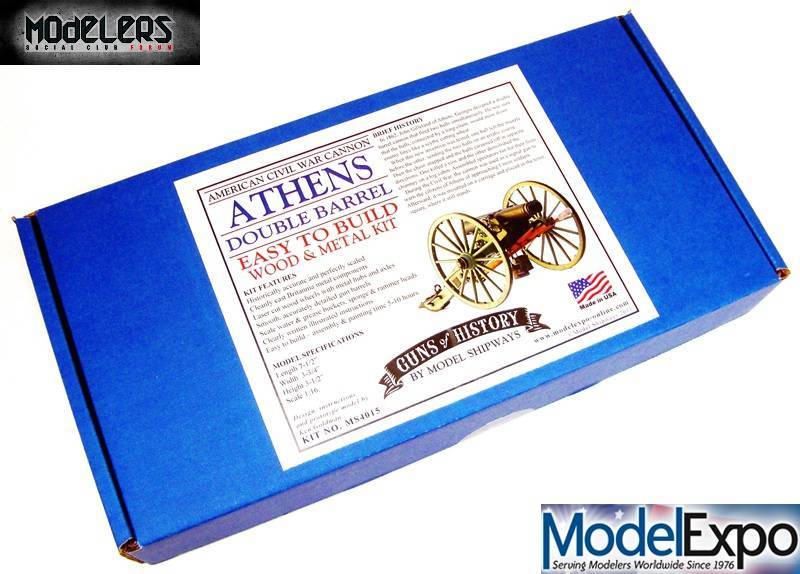
John Gilleland, 53, was a local dentist, builder and mechanic, and member in good standing of the Mitchell Thunderbolts. Gilleland must have liked Petrini’s idea because he took up a collection in 1862, and raised $350 to build the Confederate States of America’s own, double-barrel cannon.
Measuring 13 inches wide by 4-feet 8½” inches and weighing in at some 1,300 pounds, this thing had two barrels diverging at 3° and equipped with three touch holes, one for each barrel and a third should you wish to fire them, together. It was the secret “super weapon” of the age, two cannonballs connected by a chain and designed to “mow down the enemy somewhat as a scythe cuts wheat.”
As with Mr. Petrini’s invention, the insurmountable problem remained, how to fire the two, simultaneously.
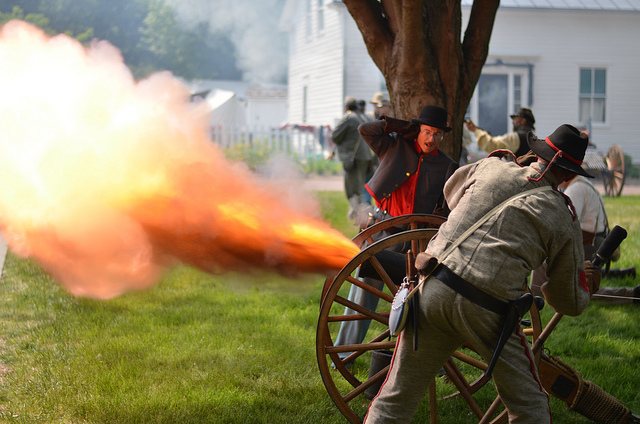
The atmosphere was festive on April 22, 1862, when a crowd gathered to watch Gilleland test his creation. The weapon was aimed at two upright poles stuck into the ground, but uneven ignition and casting imperfections sent the two balls spinning wildly off to the side, where they “plowed up about an acre of ground, tore up a cornfield, mowed down saplings, and then the chain broke, the two balls going in different directions“.
Double Barrel Cannon model, H/T ModelExpo
On its second test, two chain-connected balls shot through the air and into a stand of trees. According to one witness, the “thicket of young pines at which it was aimed looked as if a narrow cyclone or a giant mowing machine had passed through“.
On the third firing, the chain snapped right out of the barrel. One ball tore into a nearby cabin and destroyed the chimney, while the other spun off and killed a cow, who wasn’t bothering anyone.
Gilleland considered all three tests successful, but the only thing that was safe, seems to have been those target posts.
The dentist went straight to the Confederate States’ arsenal in Augusta where Colonel George Rains subjected his creation to extensive testing, before reporting the thing too unreliable for military use. The outraged inventor wrote angry letters to Georgia Governor Joseph “Joe” Brown and to the Confederate government in Richmond, but to no avail.
At last, the contraption was stuck in front of the Athens town hall and used as a signal gun, to warn the citizens of approaching Yankees.
There it remained until August 2, 1864, when the gun was hauled out to the hills west of town to meet the Federal troops of Brigadier General George Stoneman. The double-barrel cannon was positioned on a ridge near Barber’s Creek and loaded with canister shot, along with several conventional guns. Outnumbered home guards did little real damage but the noise was horrendous, and Stoneman’s raiders withdrew to quieter pastures.
There were other skirmishes in the area, but all of them minor. In the end, Athens escaped the devastation of Sherman’s march to the sea, and the weapon was moved back to town.
Gilleland’s monstrosity was sold after the war and lost, for a time. The thing was recovered and restored back in 1891, and returned to the Athens City Hall, where it remains to this day, a contributing property of the Downtown Athens Historic District. Come and see it if you’re ever in Athens, right there at the corner of Hancock and College Avenue. There you will find it, pointing north, toward the Yankees. Just in case.
If you enjoyed this “Today in History”, please feel free to re-blog, “like” & share on social media, so that others may find and enjoy it as well. Please click the “follow” button on the right, to receive email updates on new articles. Thank you for your interest, in the history we all share.
Damage Control Chief Gerald Farrier “simply disappeared” in the first of a dozen or more explosions, in the first few minutes of the fire. By the third such explosion, Damage Control Team #8 was wiped out.
The Super Carrier USS Forrestal departed Norfolk in June 1967, with a crew of 552 officers and 4,988 enlisted men. Sailing around the horn of Africa, she stopped briefly at Leyte Pier in the Philippines, before sailing on to “Yankee Station” in the South China Sea, arriving on July 25.
Before the cruise, damage control firefighting teams were shown training films of navy ordnance tests, demonstrating how a 1000-lb bomb could be directly exposed to a jet fuel fire for a full 10 minutes. Tests were conducted using the new Mark 83 bomb, featuring a thicker, heat resistant wall compared with older munitions, and “H6” explosive, designed to burn off at high temperatures, like an enormous sparkler.
Along with Mark 83s, ordnance resupply had included sixteen AN-M65A1 “Fat Boy” bombs, Korean war era surplus intended to be used on the second bombing runs of the 29th. These were thinner skinned than the newer ordnance, armed with 10+ year-old “Composition B” explosive. Already far more sensitive to heat and shock than the newer ordnance, composition B becomes more volatile as the explosive ages. The stuff becomes more powerful as well, as much as 50%, by weight.
These older bombs were way past their “sell-by” date, having spent the better part of the last ten years in the heat and humidity of Subic Bay depots. Ordnance officers wanted nothing to do with the Fat Boys, with their rusting shells leaking paraffin, and rotted packaging. Some had production date stamps as early as 1953.
Handlers feared the old bombs might spontaneously detonate from the shock of a catapult takeoff.
In 1967, the carrier bombing campaign was the longest and most intense such effort in US Naval history. Over the preceding four days, Forrestal had already launched 150 sorties against targets in North Vietnam. Combat operations were outpacing production, using Mark 35s faster than they could be replaced.
When Forrestal met the ammunition ship Diamond Head on the 28th, the choice was to take on the Fat Boys, or cancel the second wave of attacks scheduled for the following day.
In addition to the bombs, ground attack aircraft were armed with 5″ “Zuni” unguided rockets, carried four at a time in under-wing rocket packs. Known for electrical malfunctions and accidental firing, standard Naval procedure required electrical pigtails to be connected, at the catapult.
Ordnance officers found this slowed the launch rate and deviated from standard procedure, connecting pigtails while aircraft were still, “in the pack”. The table was set, for disaster.
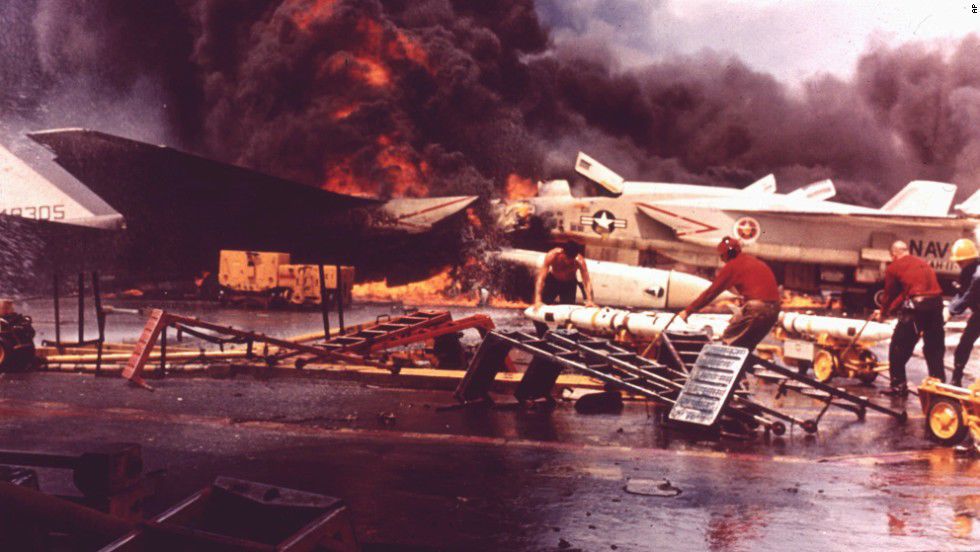
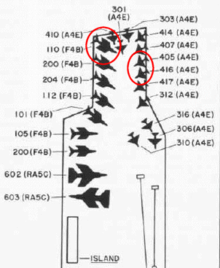
At 10:50-am local time, preparations were underway for the second strike of the day. Twenty-seven aircraft were on deck, fully loaded with fuel, ammunition, bombs and rockets. An electrical malfunction fired a Zuni rocket 100′ across the flight deck, severing the arm of one crewmember and into the 400-gallon external fuel tank of an A-4E Skyhawk, awaiting launch.
The rocket’s safety mechanism prevented the weapon from exploding, but the A-4’s torn fuel tank was spewing flaming jet fuel onto the deck. Other tanks soon overheated and exploded, adding to the conflagration.
In WW2, virtually all American carrier crew were trained firefighters. This changed over time and, by 1967, the United States Navy had adopted the Japanese method at Midway, relying instead on specialized and highly trained damage control and fire fighting teams.
Damage Control Team #8 came into action immediately, as Chief Gerald Farrier spotted one of the Fat Boy bombs turning cherry red in the flames. Farrier was working without benefit of protective clothing, there had been no time. Farrier held his PKP fire extinguisher on the 1000-lb bomb, hoping to keep it cool enough to prevent its cooking off as his team brought the conflagration under control.
Firefighters were confident that their ten-minute window would hold as they fought the flames, but the composition B explosives proved as unstable as the ordnance people had feared. Farrier “simply disappeared” in the first of a dozen or more explosions, in the first few minutes of the fire. By the third such explosion, Damage Control Team #8 was wiped out.
Future United States Senator John McCain managed to scramble out of his cockpit and down the fuel probe. Lieutenant Commander Fred White made it out of his own aircraft a split-second later, but he was killed in that first explosion.
The port quarter of the Forrestal ceased to exist in the violence of the explosions, office furniture thrown to the floor as much as five decks below. Huge holes were torn into the flight deck while a cataract of flaming jet fuel, some 40,000 US gallons of the stuff, poured through ventilation ducts and into living quarters below.
Ninety-one crew members were killed below decks, by explosion or fire.
With trained firefighters now dead or incapacitated, sailors and marines fought heroically to bring the fire under control, though they sometimes made matters worse. Without training or knowledge of fire fighting, hose teams sprayed seawater, some washing away retardant foam being used to smother the flames.
With the life of the carrier itself at stake, tales of incredible courage, were commonplace. Medical officers worked for hours in the most dangerous conditions imaginable. Explosive ordnance demolition officer LT(JG) Robert Cates “noticed that there was a 500-pound bomb and a 750-pound bomb in the middle of the flight deck… that were still smoking. They hadn’t detonated or anything; they were just setting there smoking. So I went up and defused them and had them jettisoned.” Sailors volunteered to be lowered through the flight decks into flaming and smoked-filled compartments, to defuse live bombs.
The destroyer USS George K. MacKenzie plucked men out of the water as the destroyer USS Rupertus maneuvered alongside for 90 minutes, directing on-board fire hoses at the burning flight and hangar decks.
Throughout the afternoon, crew members rolled 250-pound and 500-pound bombs across the decks, and over the side. The major fire on the flight deck was brought under control within four hours, but fires burning below decks would not be declared out until 4:00am the following day.
Panel 24E of the Vietnam Memorial records the names of 134 crewmen who died in the conflagration. Another 161 were seriously injured. 26 aircraft were destroyed and another 40, damaged. Damage to the Forrestal itself exceeded $72 million, equivalent to over $415 million today.
Gary Childs of Paxton Massachusetts, my uncle, was among the hundreds of sailors and marines who fought to bring the fire under control. Gary was below decks when the fire broke out, leaving moments before his quarters were engulfed in flames. Only by that slimmest of margins did Uncle Gary and an untold number of others escape being #135.
If you enjoyed this “Today in History”, please feel free to re-blog, “like” & share on social media, so that others may find and enjoy it as well. Please click the “follow” button on the right, to receive email updates on new articles. Thank you for your interest, in the history we all share.
The United States Navy lost over 350 ships to combat operations during WW2. Not one resulted in court martial but, on this occasion, someone was going to pay.
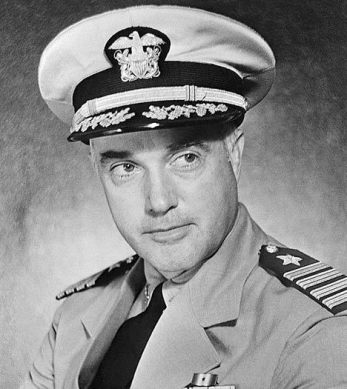
The Portland class heavy cruiser USS Indianapolis set out on its secret mission on July 16, 1945, under the command of Captain Charles Butler McVay III. She was delivering “Little Boy” to the Pacific island of Tinian, the atomic bomb which would later be dropped on Hiroshima.
Indianapolis made her delivery on July 26, arriving at Guam two days later and then heading for Leyte to take part in the planned invasion of Japan. She was expected to arrive on the 31st.
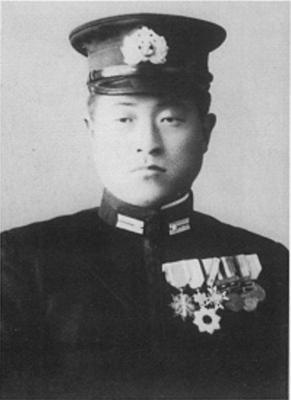
The Japanese submarine I-58, Captain Mochitsura Hashimoto commanding, fired a spread of six torpedoes at the cruiser, two striking Indianapolis’ starboard bow at fourteen minutes past midnight on Monday, July 30. The damage was massive. Within 12 minutes, the 584-ft, 9,950-ton vessel had rolled over, gone straight up by the stern, and sunk beneath the waves.
Approximately 300 of Indianapolis’ 1,196-member crew were killed outright, leaving nearly 900 treading water. Many had no life jackets. There had been no time, and there were few life boats.
Caribbean Reef sharks circling the sailors in reenactment scene after USS Indianapolis had been sunk by Japanese submarine. As seen on OCEAN OF FEAR: WORST SHARK ATTACK EVER. H/T photographer: Tim Calver
The ordeal faced by the survivors, is beyond description. Alone and stranded in open ocean, these guys treaded water for four days, hoping and praying for the rescue that did not come.
Shark attacks began on the first day, and never let up. Kapok-filled life vests became waterlogged and sank after 48 hours, becoming worse than useless. Exhaustion, hypothermia, and severe sunburn took their toll as the hours turned into days. Some men went insane and began to attack their shipmates, while others found the thirst so unbearable that they drank seawater, setting off a biological chain reaction which killed them within a few hours. Some simply swam away, following some spectral vision that only he could see. Through it all, random individuals would suddenly rise up screaming from the ocean, then to disappear forever, as the sharks claimed another victim.
Navy Command had not the slightest idea of what happened to Indianapolis, nor why she didn’t show up on the 31st. A random patrol aircraft passing the area that Thursday afternoon, that finally discovered men floating in open ocean. The last Indianapolis survivor was plucked from the ocean Friday afternoon, well past half-dead after nearly five days in the water. Of the 900 or so who survived the sinking, only 316 remained alive at the end of the ordeal.
Mochitsura Hashimoto
The Navy had committed multiple errors, from denying McVay’s requested escort to informing him that his route was safe, even when the surface operations officer knew there were at least two Japanese submarines, operating in the area.
No captain in the history of the United States Navy was subjected to court-martial for losing a ship sunk by an act of war. The United States Navy lost over 350 ships to combat operations during WW2. It didn’t matter. On this occasion, someone was going to pay.
A hastily convened court of inquiry was held in Guam on August 13, leading to McVay’s court-martial. There was evidence that the Navy itself had put the ship in harm’s way. When prosecutors flew the I-58 commander in to testify, Hashimoto swore that zigzagging would have made no difference. The Japanese Commander even became part of a later effort to exonerate McVay, but to no avail. Charles Butler McVay III was convicted of “hazarding his ship by failing to zigzag“, his career ruined.
Charles Butler McVay, III
McVay had wide support among Indianapolis’ survivors, but opinion was by no means unanimous. Birthdays, anniversaries and holidays would come and go and there was always some piece of hate mail, blaming him for the death of a loved one. One Christmas missive read “Merry Christmas! Our family’s holiday would be a lot merrier if you hadn’t killed my son”.
McVay began to doubt himself. By 1968 he must have felt the weight of Indianapolis’ dead, like a great stone upon his shoulders.
On November 6, 1968, Charles Butler McVay III sat down on his front porch in Litchfield Connecticut, took out his Navy revolver, and killed himself. He was cremated, his ashes scattered at sea.
It would take more than 20 years, for the evidence which exonerated him to be declassified.
Afterward:
Hunter Alan Scott was eleven and living in Pensacola when he saw the movie “Jaws”, in 1996. He was fascinated by the movie’s brief mention of the Indianapolis’ shark attacks, the next year, he created his 8th grade “National History Day” project on the USS Indianapolis sinking. The boy interviewed nearly 150 survivors and reviewed 800 documents. The more he read, the more he became convinced that Captain McVay was innocent of the charges for which he’d been convicted.
Scott’s National History Day project went up to the state finals, but it was rejected because he had used the wrong type of notebook to organize the material.
He couldn’t let it end there. Scott began to attend Indianapolis survivors’ reunions, at their invitation, and helped to gain a commitment in 1997 from then-Representative Joe Scarborough that he would introduce a bill in Congress to exonerate McVay the following year.
Senator Bob Smith of NH joined Scarborough in a joint resolution. Hunter Scott and several Indianapolis survivors were invited to testify before Senator John Warner and the Senate Armed Services committee on September 14, 1999.
Holding a dog tag in his hand, Scott testified “This is Captain McVay’s dog tag from when he was a cadet at the Naval Academy. As you can see, it has his thumbprint on the back. I carry this as a reminder of my mission in the memory of a man who ended his own life in 1968. I carry this dog tag to remind me that only in the United States can one person make a difference no matter what the age. I carry this dog tag to remind me of the privilege and responsibility that I have to carry forward the torch of honor passed to me by the men of the USS Indianapolis”.
The United States Congress passed a resolution in 2000, signed into law by President Bill Clinton on October 30, exonerating Charles Butler McVay III of the charges which had led to his court martial, humiliation and suicide.
Some of Indianapolis’ crew, before her sinking.
The record cannot not be expunged. Congress has rules against even considering bills altering military records, and there is no means by which to reverse a court-martial. It’s never happened. Yet Captain McVay had exonerated, something that the Indianapolis survivors had tried to accomplish without success. Until the intervention of a 12-year-old boy. Who said one person can’t make a difference?
Today, only 22 of Indianapolis’ survivors remain alive. The wreck of the “Indy” was discovered in August 2017, in 18,000-feet of water. Leader of the civilian expedition which located the wreck, Microsoft co-founder Paul Allen, said”To be able to honor the brave men of the USS Indianapolis and their families through the discovery of a ship that played such a significant role in ending World War II is truly humbling”.
If you enjoyed this “Today in History”, please feel free to re-blog, “like” & share on social media, so that others may find and enjoy it as well. Please click the “follow” button on the right, to receive email updates on new articles. Thank you for your interest, in the history we all share.
Ironically, the additional weight of lifeboats added in the wake of the Titanic disaster of 1912, almost certainly doomed the steamship and 848 of her passengers and crew, to disaster.
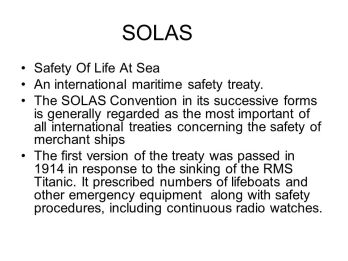
Following the “unsinkable” Titanic disaster of 1912, thirteen countries including Great Britain and the United States gathered to discuss implementation of life-saving measures at sea, such as radio communications, safety of navigation and ice patrol. Among other measures, the Safety of Life at Sea (SOLAS) treaty signed in January 1914 mandated that sufficient lifeboats be provided for every passenger and crew member on board, and that all on board be instructed on their use.
Anyone who’s been on a cruise vacation, knows what that sounds like.
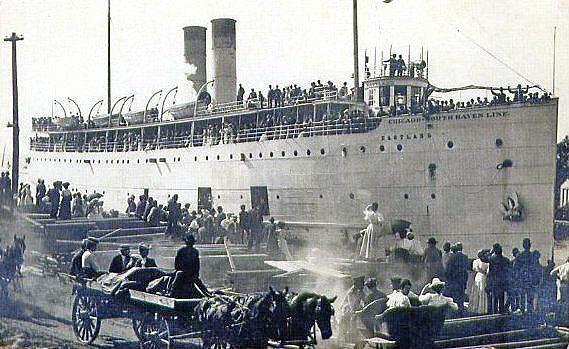
The SS Eastland was a passenger steamship based in Chicago, used for tours of the inland waterways and Great Lakes areas around the city. Eastland’s design made her top heavy from the beginning, and subject to listing. Embarking passengers would crowd along the rail to wave goodbye, several times having to be herded across the decks to reduce the list. One time, Eastland even began to take on water at the main gangplank.
Special passenger restrictions specifically imposed on Eastland helped the problem until 1914, when the weight of additional lifeboats brought stability problems to a new level. Ironically, the additional weight of those lifeboats almost certainly doomed the steamship and 848 of her passengers and crew, to disaster.
On July 24, 1915, Eastland and two other Great Lakes passenger steamers, the Theodore Roosevelt and Petoskey, were chartered to take Western Electric employees to a picnic in Michigan City, Indiana. Eastland was docked on the south bank of the Chicago River, between Clark and LaSalle, near the current site of the Merchandise Mart. Passengers began boarding around 6:30am. By 7:10 the ship had reached full capacity of 2,572 passengers.
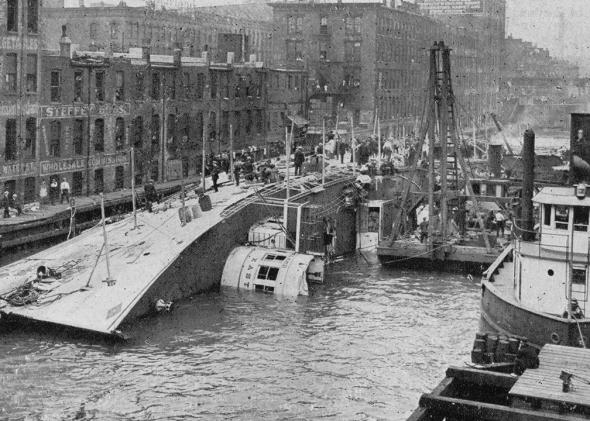
A number of passengers went below decks to get out of the chill, but hundreds stayed out on the upper decks, excited about the day ahead. The port side list away from the dock, set in early in the boarding process, when crew members began to pump water into the starboard ballast tanks, to stabilize the ship. Something interesting must have happened on the river at 7:28, causing a number of passengers to rush to the port side rail.
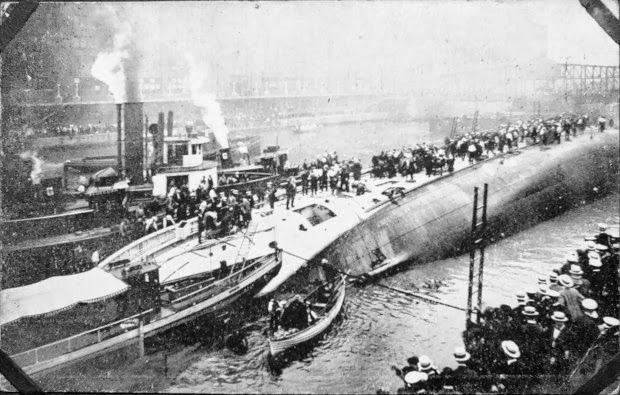
Novelist Jack Woodford witnessed what happened next, describing the scene in his autobiography: “And then movement caught my eye. I looked across the river. As I watched in disoriented stupefaction a steamer large as an ocean liner slowly turned over on its side as though it were a whale going to take a nap. I didn’t believe a huge steamer had done this before my eyes, lashed to a dock, in perfectly calm water, in excellent weather, with no explosion, no fire, nothing. I thought I had gone crazy”. Hundreds were trapped below decks, others were crushed under heavy bookcases, pianos and tables.
Another vessel, the Kenosha, pulled alongside almost immediately. Several passengers were able to jump directly onto her decks, others were rescued at the wharf, only 20′ away. Hundreds were beyond saving.
Temporary morgues were set up in area buildings for identifying the dead; including what is now the sound stage for The Oprah Winfrey Show, Harpo Studios, and the location of the Chicago Hard Rock Cafe.
Easstland disaster location, today
Then-20-year-old George Halas was scheduled to be on the Eastland, but he was late and showed up after the capsize. 844 passengers and four crew members lost their lives in the disaster, but Eastland herself would have a second life. She was raised from the bottom, converted to a gun boat, and stationed at the Great Lakes Naval Reserve, re-christened USS Wilmette.
Wilmette saw no combat service in WWI, though she was given the task of sinking UC-97, a German U-Boat surrendered to the United States following WWI. Wilmette’s guns were manned by Gunner’s Mate J.O. Sabin, who had fired the first American shell in WWI, and Gunner’s Mate A.F. Anderson, the man who fired the first American torpedo of the war.
Wilmette would serve once again as a training ship in WWII, and sold for scrap on Halloween day, 1946.
If you enjoyed this “Today in History”, please feel free to re-blog, “like” & share on social media, so that others may find and enjoy it as well. Please click the “follow” button on the right, to receive email updates on new articles. Thank you for your interest, in the history we all share.
Mary Randolph, Pocahontas’ direct descendant and cousin to Thomas Jefferson, was the cousin of George Washington Parke Custis, adopted step-grandson of George Washington, and the godmother of Custis’ daughter, Mary Anna Randolph Custis, wife of Robert E. Lee.
The first military burial at Arlington National Cemetery was that of Private William Henry Christman, 67th Pennsylvania Infantry, interred on May 13, 1864. Two more joined him that day, the trickle soon turning into a flood. By the end of the war between the states, that number was 17,000 and rising.
Private Christman’s was the first military burial, but not the first. When he went to his rest in our nation’s most hallowed ground, Private Christman’s grave joined that of Mary Randolph, buried some thirty-six years earlier.
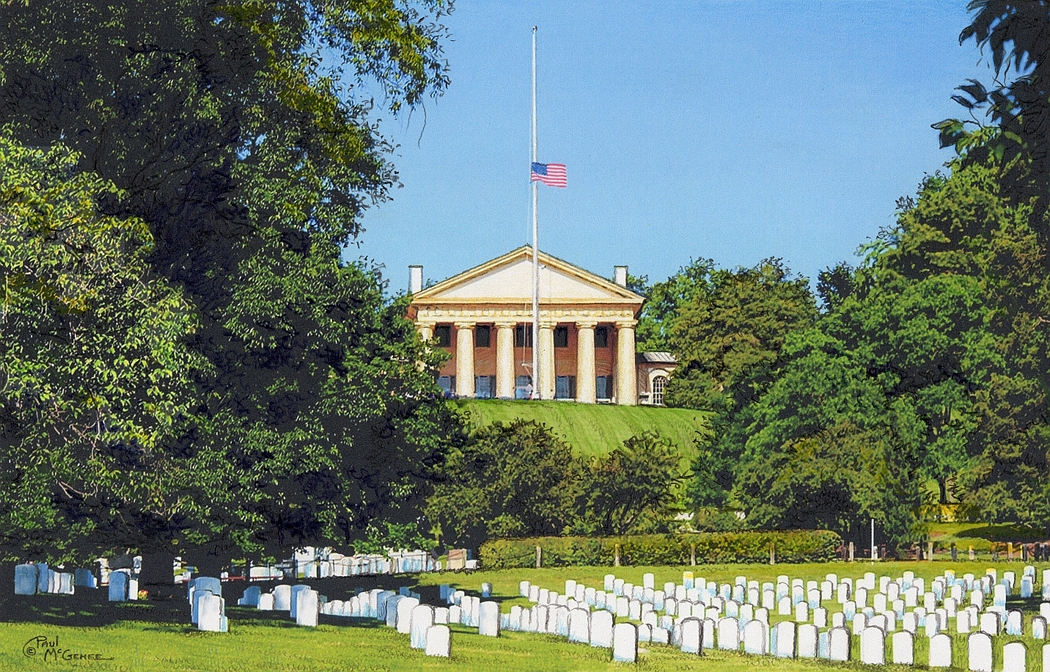
In 1929, cemetery workers were doing renovations on the Custis Mansion, at the top of the hill. They couldn’t help being aware of a solitary grave, 100′ to the north, but knew little of its occupant.
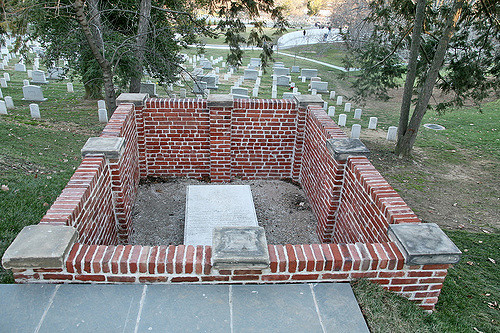
Marked with the name Mary Randolph, the stone was inscribed with these words:
“In the memory of Mrs. Mary Randolph, Her intrinsic worth needs no eulogium. The deceased was born The 9th of August, 1762 at Amphill near Richmond, Virginia And died the 23rd of January 1828 In Washington City a victim to maternal love and duty.”
Little else was known about Mary Randolph.
In 1929, journalist Margaret Husted wrote about her in the Washington Star newspaper. Descendants came forward and, piece by piece, the story of the first person buried at Arlington, came to light.
Mary Randolph, Pocahontas’ direct descendant and cousin to Thomas Jefferson, was the cousin of George Washington Parke Custis, adopted step-grandson of George Washington, and the godmother of Custis’ daughter, Mary Anna Randolph Custis, wife of Robert E. Lee.
The last line of the inscription, “a victim to maternal love and duty” refers to her youngest surviving son, Midshipman Burwell Starke Randolph, who suffered a fall from a high mast in 1817, while serving in the Navy. Both of his legs were broken and never healed properly. When Mary passed away in 1828, Randolph remarked that his mother had sacrificed her own life in care of his.
Mary Randolph is best known as the author of America’s first regional cookbook, “The Virginia House-wife”.
The Virginia Culinary Thymes writes that “It is interesting to note that all the cookery at that time was done in kitchens that had changed little over the centuries. In Virginia, the kitchen was typically a separate building for reasons of safety, summer heat and the smells from the kitchen. The heart of the kitchen was a large fireplace where meat was roasted and cauldrons of water and broth simmered most of the day. Swinging cranes and various devices made to control temperature and the cooking processes were used. The Dutch oven and the chafing dish were found in most kitchens. The brick oven used for baking was located next to the fireplace. A salamander was used to move baked products around in the oven and it could also be heated and held over food for browning“.
Mrs. Randolph was an early advocate of the now-common use of herbs, spices and wines in cooking. Her recipe for apple fritters calls for slices of apple marinated in a combination of brandy, white wine, sugar, cinnamon, and lemon rind.
She was well known as a Virginia cook and hostess, so much so that, during an 1800 slave insurrection near Richmond, the leader “General Gabriel” said that he would spare her life, if she would become his cook.
I believe that General Gabriel may have been on to something.
Feature image, top of page: Custis Mansion, Arlington National Cemetery, H/T Paul McGehee
If you enjoyed this “Today in History”, please feel free to re-blog, “like” & share on social media, so that others may find and enjoy it as well. Please click the “follow” button on the right, to receive email updates on new articles. Thank you for your interest, in the history we all share.
After eight days of trial, the jury took only nine minutes to deliberate, finding Scopes guilty on July 21.
The legal contest recorded as State of Tennessee v. John Thomas Scopes, better known as the “Scopes Monkey Trial”, began with the “Butler Act”, a measure passed by Tennessee State Representative John W. Butler, prohibiting teaching of the theory of evolution in Tennessee public schools, colleges and universities.
The American Civil Liberties Union (ACLU) immediately announced its intention to sue, offering to defend anyone accused of violating the act. Local businessman George Rappleyea arranged a meeting with the county superintendent of schools and local attorney Sue Kerr Hicks, a man who may have been the inspiration for Shel Silverstein’s “A Boy Named Sue,” which everyone remembers from the Johnny Cash song, of 1969.
The three met at Robinson’s Drug Store, and agreed that their little town of Dayton could use the publicity. The trio summoned 24-year-old High School football coach and part time substitute teacher John Scopes, asking him to plead guilty to teaching the theory of evolution. Scopes replied that he could not recall if he had done so, but would be more than happy to be the defendant if anyone could prove that he had.
Scopes was charged on May 5, barely two months after the law’s enactment, with teaching evolution from “Civic Biology”, a textbook describing the theory of evolution, race and eugenics. The prosecution brought in William Jennings Bryan to try the case and the defense hired Clarence Darrow. Two of the heaviest of jurisprudential heavy hitters of the day, were now lined up in the “Trial of the Century”.
Bryan complained that evolution taught children, that humans were no more than one among 35,000 mammals. He rejected the idea that humans were descended from apes. “Not even from American monkeys, but from old world monkeys”. The ACLU wanted to oppose the Butler Act on grounds that it violated the teacher’s individual rights and academic freedom, but it was Darrow who shaped the case, taking the position that the theistic and the evolutionary views were not mutually exclusive.
What had begun as a publicity stunt soon became an overwhelming media event. 200 newspaper reporters from all over the country arrived in Dayton, along with two come all the way from London. Twenty-two telegraphers sent out 165,000 words a day over thousands of miles of telegraph wires, hung specifically for the purpose.
Trained chimpanzees performed on the courthouse lawn. Chicago’s WGN radio personality Quin Ryan broadcast the nation’s first on-the-scene coverage of a criminal trial. A specially constructed airstrip was prepared, from which two movie cameramen had their newsreel footage flown out, daily.
H.L. Mencken, writing for the Baltimore Sun, mocked the prosecution and the jury as “unanimously hot for Genesis.” Mencken labeled the town’s inhabitants “yokels” and “morons”. Bryan was a “buffoon” and his speeches “theologic bilge”. It was Mencken who dubbed the proceedings, “Monkey Trial”. The defense, on the other hand, was “eloquent” and “magnificent”. Or so he claimed.
Not the least little bit of media bias, there.
After eight days of trial, the jury took only nine minutes to deliberate, finding Scopes guilty on July 21. The gym teacher was ordered to pay a $100 fine, equivalent to something like $1,300, today. Scopes’ conviction was overturned by the Tennessee Supreme Court, on the basis that state law required fines over $50 to be decided by a jury, and not by the judge presiding.
American creationists believe to this day, that media reports turned public opinion against the religious view. Evolution vs Creation debates may be reasonably expected to continue, for the foreseaable future. Ultimately, neither seems supportable, by anything more than the faith of its adherents.
If you enjoyed this “Today in History”, please feel free to re-blog, “like” & share on social media, so that others may find and enjoy it as well. Please click the “follow” button on the right, to receive email updates on new articles. Thank you for your interest, in the history we all share.


 Born and raised in Austria, Greta Zimmer was 16 years old, in 1939. Fearful of the war bearing down on them, Greta’s parents sent her and her two sisters to America, not knowing if they’d ever see each other again.
 The couple went to a movie at Radio City Music Hall, but the film was interrupted by a theater employee who turned on the lights, announcing that the war was over. Leaving the theater, the couple joined the tide of humanity moving toward Times Square.
 Now Eisenstaedt and his Leica Illa rangefinder camera worked for Life Magazine, heading for Times Square in search of “The Picture™”.


 Ford left the family farm outside of modern-day Detroit as a young man, never to return. His father William thought the boy would one day own the place but young Henry couldn’t stand farm work. He later wrote, “I never had any particular love for the farm—it was the mother on the farm I loved”.
 Ford claimed he’d be able to “grow automobiles from the soil”, a hedge against the metal rationing of world War Two. He dedicated 120,000 acres of soybeans to experimentation, but to no end. The total acreage devoted to “fuel” production, is unrecorded.
 Henry Ford’s experiment in making cars from soybeans never got past that first prototype, and came to a halt during WW2. The project was never revived, though several states adopted license plates stamped out of soybeans, a solution farm animals found to be quite delicious.





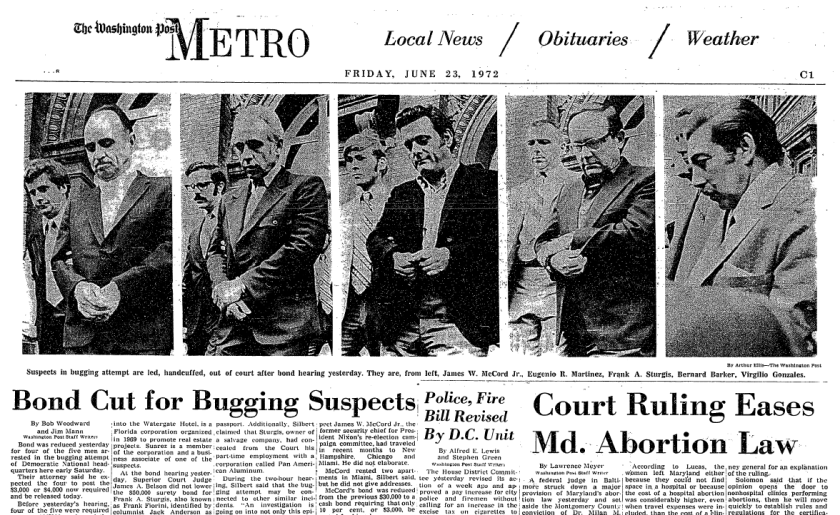
 The animosity between the media and the White House grew as Nixon and administration officials discussed plans to “get” hostile media organizations.
 Within six days, the House Judiciary Committee approved three articles of impeachment: obstruction of justice, abuse of power and contempt of Congress.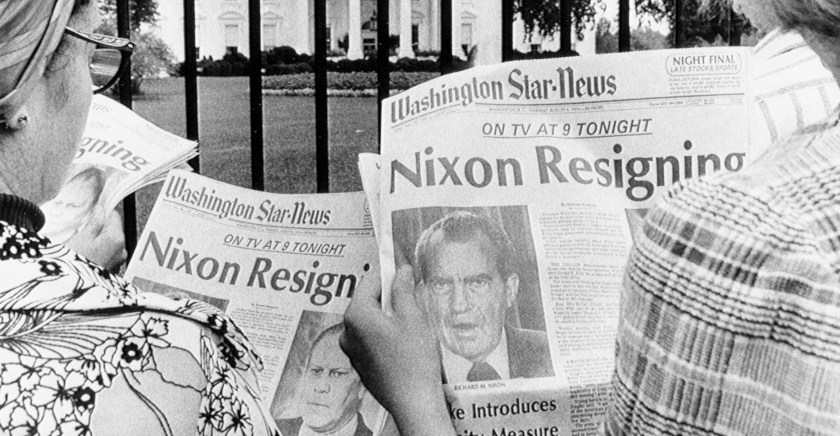


 Augustus Longstreet Hull was born 1847 in “The Classic City” of Athens Georgia, and enlisted in the Confederate Army on September 8, 1864.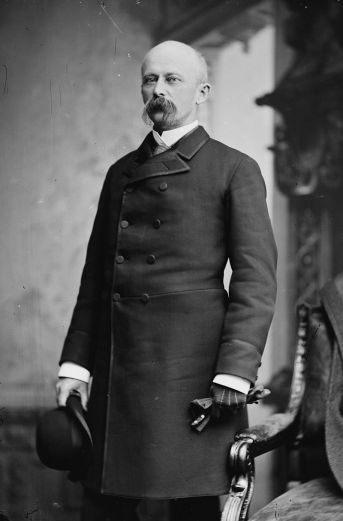


 These older bombs were way past their “sell-by” date, having spent the better part of the last ten years in the heat and humidity of Subic Bay depots. Ordnance officers wanted nothing to do with the Fat Boys, with their rusting shells leaking paraffin, and rotted packaging. Some had production date stamps as early as 1953.
 In addition to the bombs, ground attack aircraft were armed with 5″ “Zuni” unguided rockets, carried four at a time in under-wing rocket packs. Known for electrical malfunctions and accidental firing, standard Naval procedure required electrical pigtails to be connected, at the catapult.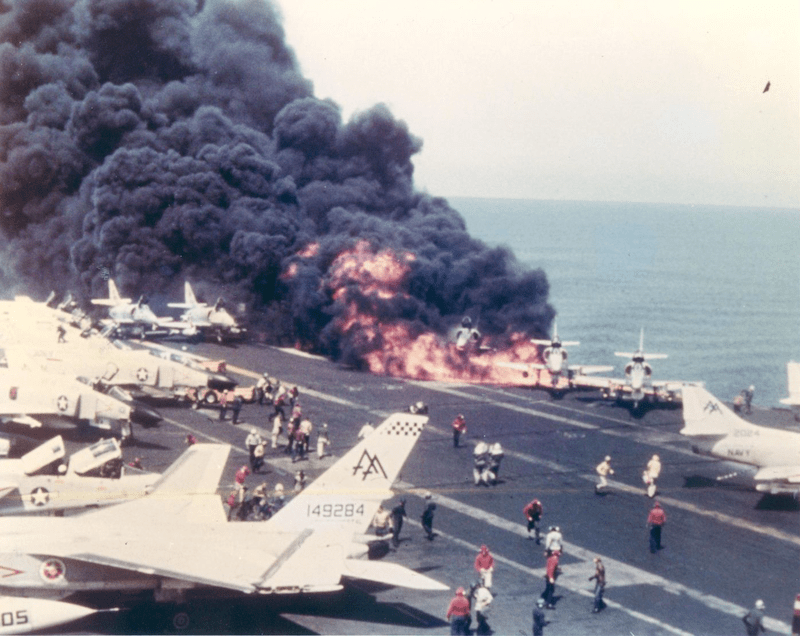


 The Japanese submarine I-58, Captain Mochitsura Hashimoto commanding, fired a spread of six torpedoes at the cruiser, two striking Indianapolis’ starboard bow at fourteen minutes past midnight on Monday, July 30. The damage was massive. Within 12 minutes, the 584-ft, 9,950-ton vessel had rolled over, gone straight up by the stern, and sunk beneath the waves.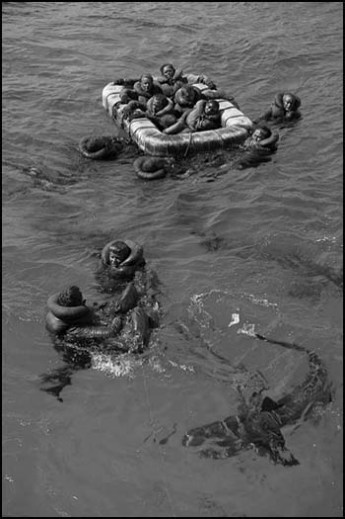
 He couldn’t let it end there. Scott began to attend Indianapolis survivors’ reunions, at their invitation, and helped to gain a commitment in 1997 from then-Representative Joe Scarborough that he would introduce a bill in Congress to exonerate McVay the following year.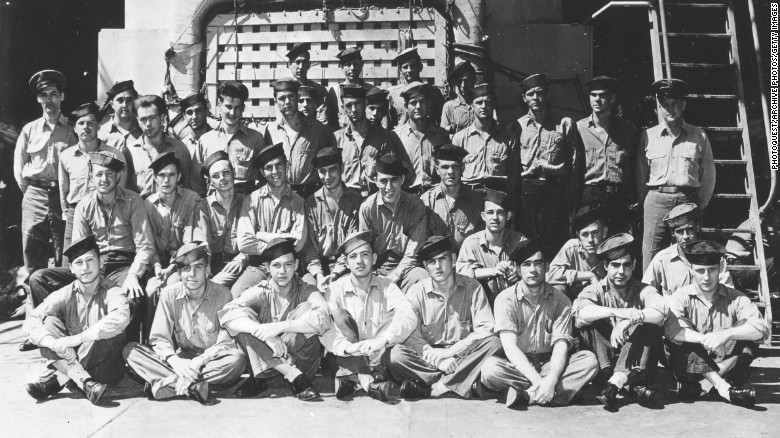

 Following the “unsinkable” Titanic disaster of 1912, thirteen countries including Great Britain and the United States gathered to discuss implementation of life-saving measures at sea, such as radio communications, safety of navigation and ice patrol. Among other measures, the Safety of Life at Sea (SOLAS) treaty signed in January 1914 mandated that sufficient lifeboats be provided for every passenger and crew member on board, and that all on board be instructed on their use.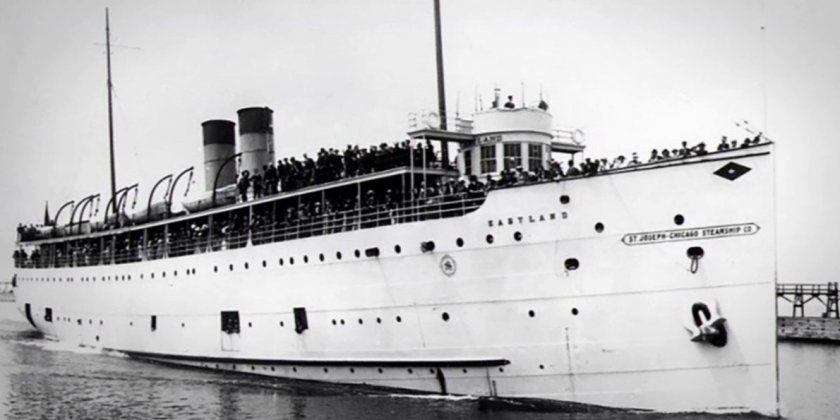


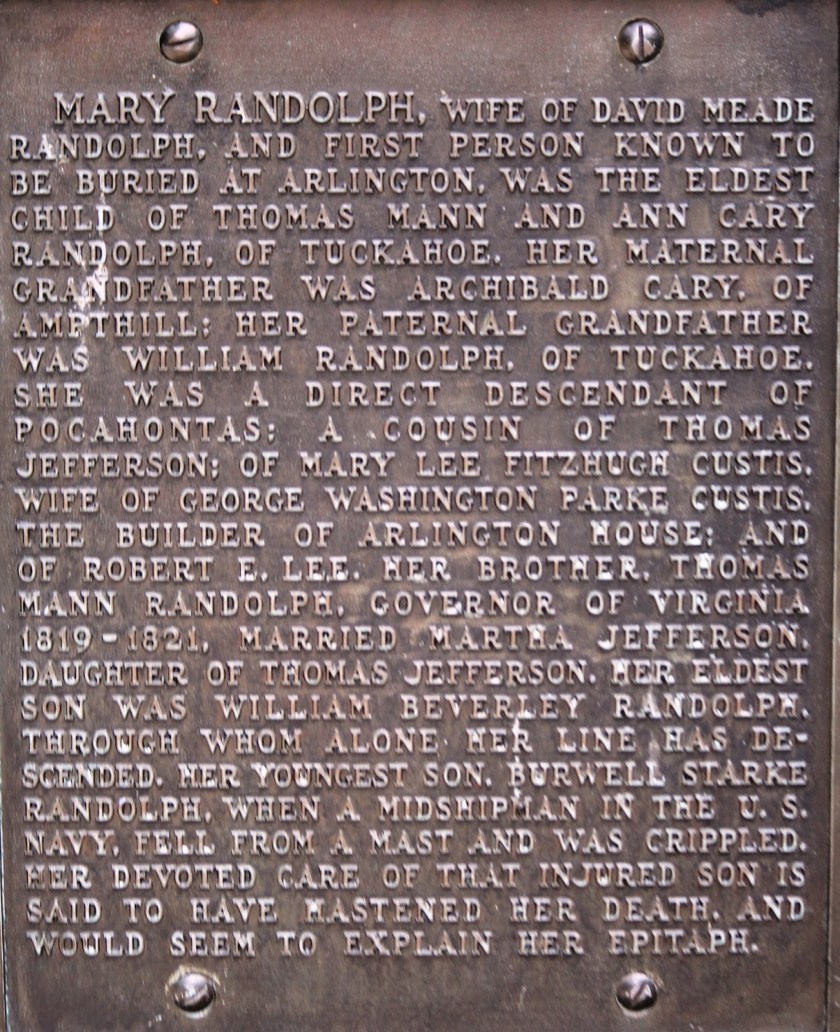
 The last line of the inscription, “a victim to maternal love and duty” refers to her youngest surviving son, Midshipman Burwell Starke Randolph, who suffered a fall from a high mast in 1817, while serving in the Navy. Both of his legs were broken and never healed properly. When Mary passed away in 1828, Randolph remarked that his mother had sacrificed her own life in care of his.
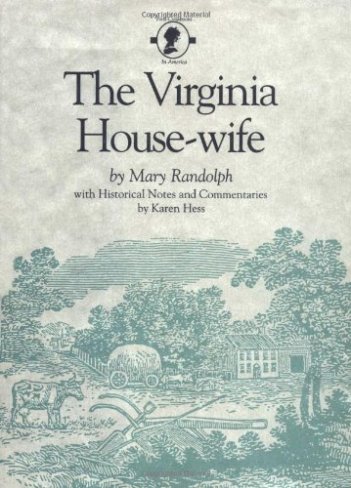 Mrs. Randolph was an early advocate of the now-common use of herbs, spices and wines in cooking. Her recipe for apple fritters calls for slices of apple marinated in a combination of brandy, white wine, sugar, cinnamon, and lemon rind.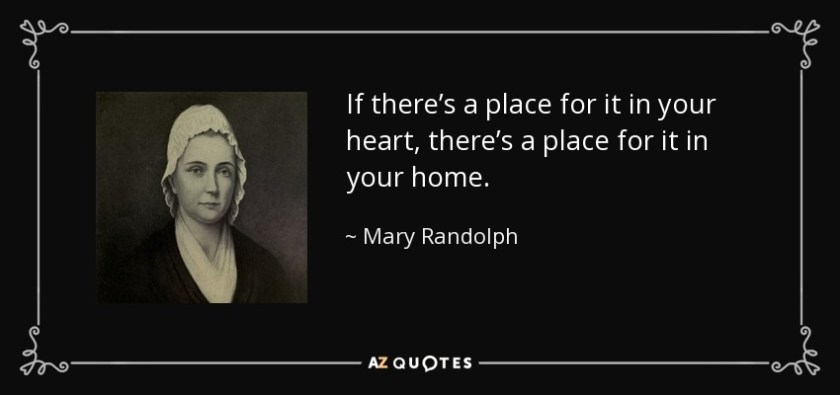


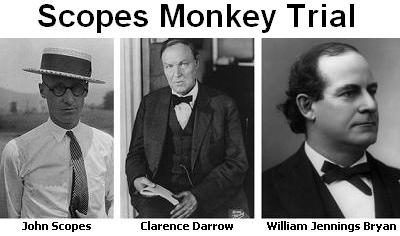 Bryan complained that evolution taught children, that humans were no more than one among 35,000 mammals. He rejected the idea that humans were descended from apes. “Not even from American monkeys, but from old world monkeys”. The ACLU wanted to oppose the Butler Act on grounds that it violated the teacher’s individual rights and academic freedom, but it was Darrow who shaped the case, taking the position that the theistic and the evolutionary views were not mutually exclusive.
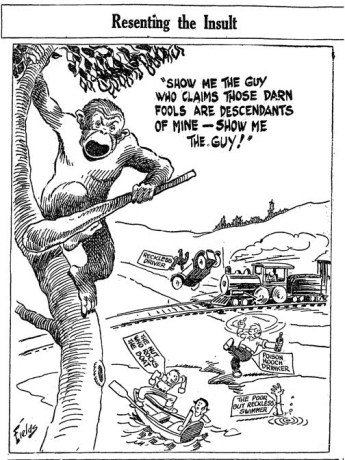 What had begun as a publicity stunt soon became an overwhelming media event. 200 newspaper reporters from all over the country arrived in Dayton, along with two come all the way from London. Twenty-two telegraphers sent out 165,000 words a day over thousands of miles of telegraph wires, hung specifically for the purpose.
 After eight days of trial, the jury took only nine minutes to deliberate, finding Scopes guilty on July 21. The gym teacher was ordered to pay a $100 fine, equivalent to something like $1,300, today. Scopes’ conviction was overturned by the Tennessee Supreme Court, on the basis that state law required fines over $50 to be decided by a jury, and not by the judge presiding.
 Historical Easter Eggs - Today in History
You must be logged in to post a comment.