April 30, 1900 Two Minutes Late

Casey Jones had a knack for these complex and powerful machines. He was good at what he did and an aggressive risk taker. Ambitious for advancement, Jones was issued nine citations for rules infractions over the course of his career, resulting in 145 days’ suspension.  He was well liked by fellow railroaders but widely regarded, as just this side of reckless.

Acts of heroism have a way of popping up, in the most unexpected places. Ordinary people rising to the occasion, in anything but ordinary circumstances.

Just recently, two teenage boys chased down a kidnapper on their bicycles, freeing a little girl from captivity.  The Poway, California Rabbi grabs hold of a gun in the hands of a demented killer, losing a finger and saving untold numbers of congregants, in the process.  An eight-month’s pregnant mother-to-be dives into the Australian surf, to save two drowning boys.

This is one of those stories.

155700_max

Jonathon Luther Jones lived near Cayce Kentucky as a boy, and the nickname stuck. For reasons which remain unclear, he preferred to spell it, “Casey”.

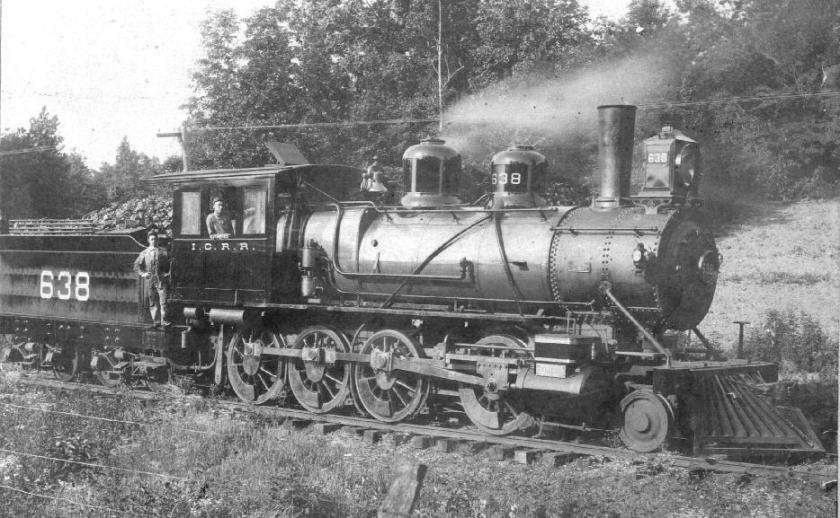
Casey Jones was a train man, working on the I.C.R.R., the Illinois Central Railroad.

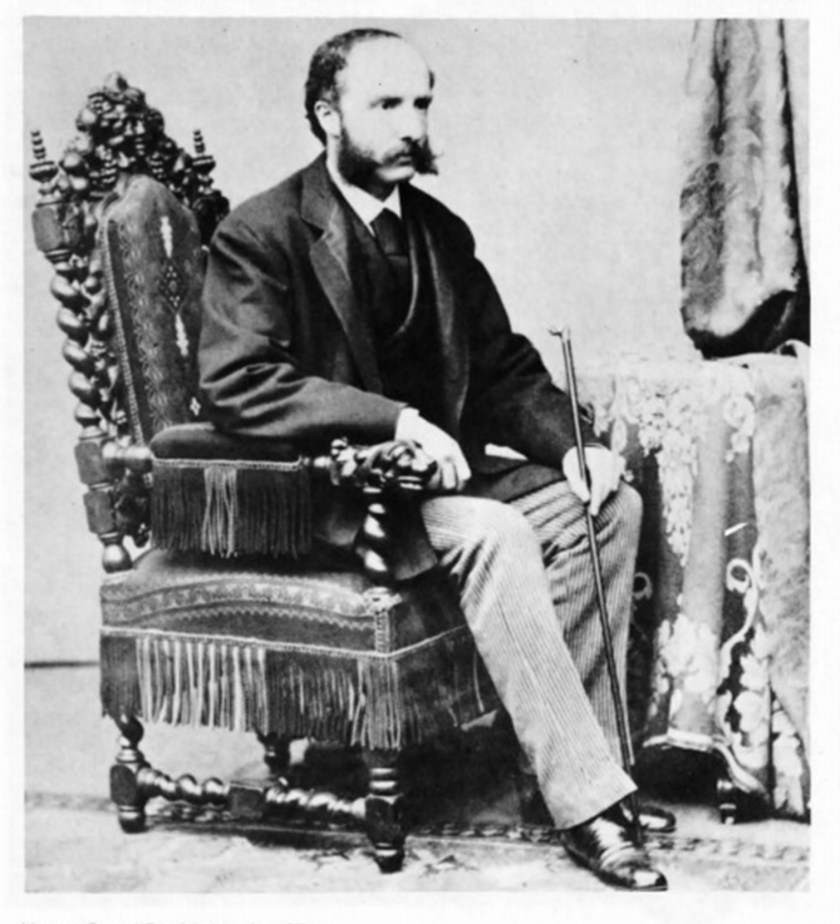
CaseyJonesPortrait
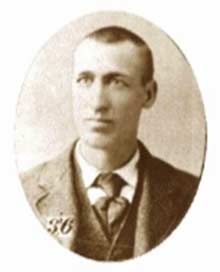
Jonathon Luther “Casey” Jones

One example of the man’s character comes to us from 1895, when Jones was thirty two. Outside Michigan City Mississippi, a group of children darted across the tracks, fewer than sixty yards from the speeding train.  Most made it across except one little girl, who froze in terror before the oncoming locomotive.

With fellow engineer Bob Stevenson hauling back on the emergency brakes and buying precious extra moments, Jones ran across the running boards and inched his way down the pilot, better known as the “cow catcher”.

This is no trick rider.  No circus acrobat.  Casey Jones worked on the railroad. Bracing himself with his legs, Jones reached out and scooped up the little girl, at the last possible moment. 

On this occasion, the man had every hope and expectation of remaining alive, and that he did.  Five years later, he’d perform his last act of heroism in the face of certain and violent, death.

Casey Jones went to work for the Mobile & Ohio Railroad where he performed well, receiving first a promotion to brakeman, and then to fireman. He met Mary Joanna (“Janie”) Brady around this time, whose father owned the boarding house, where Jones lived. The pair fell in love and married on November 11, 1886, buying a house in Jackson Alabama where the couple raised their three children. By all accounts the man was sober and devoted to his work, a dedicated family man.

casey01

Several crews from the Illinois Central Railroad (IC) were down with yellow fever in the summer of 1887. Fireman Jones went to work for the IC the following year, firing a freight run between Jackson, Tennessee, and Water Valley, Mississippi.

Casey Jones had a knack for these complex and powerful machines. He was good at what he did and an aggressive risk taker. Ambitious for advancement, Jones was issued nine citations for rules infractions over the course of his career, resulting in 145 days’ suspension.  He was well liked by fellow railroaders but widely regarded, as just this side of reckless.

6880095_orig

Jones achieved his lifelong goal of becoming an engineer in 1891.  He was well  known, for being on time. Jones insisted he never “fall down” and get behind schedule. People learned to set their watches by his train whistle, knowing he would always “get her there on the advertised” (time).

Jones moved his family to Memphis in 1900, transferring to the “cannonball run” between Chicago and New Orleans. The run was a four train passenger relay, advertising the fastest travel times in the history of the American railroad. Experienced engineers were worried about the ambitious schedule and some even quit, but Jones saw the new itinerary as an opportunity for advancement.

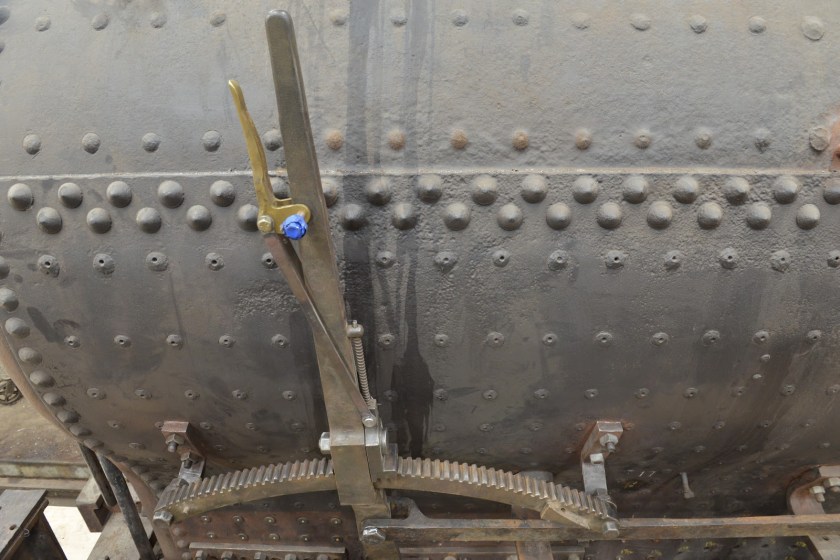
How a steam locomotive, works

On this day in 1900, Engine #382 departed Memphis at 12:05am, ninety-five minutes behind schedule due to the late arrival of the first leg, of the relay.

The Memphis to Canton, Mississippi run was 190 miles long and normally took 4 hours, 50 minutes at an average speed of 39 MPH. 95 minutes was a lot of time to make up but #382 was a fast engine and traveling “light” that night, with only six cars.

155710_max
Fireman Simeon “Sim” T. Webb

Fireman Simeon Taylor “Sim” Webb was one of the best. He would have to be. This would be a record breaking run.

Jones hit the Johnson bar, throttling #382 up to 80 MPH despite sharp turns and visibility reduced by fog. There were two stops for water and a brief halt on a side track, to let another engine through. Despite all that, #382 made up most of that time by the 155-mile mark. On leaving the side track in Goodman, Mississippi, Jones was only five minutes behind the advertised arrival time of 4:05am.

Jones was well acquainted with those last 25 miles into Vaughn Mississippi.  There were few turns and the engineer throttled his engine up to breakneck speed. He  was thrilled with his time, saying “Sim, the old girl’s got her dancing slippers on tonight!”

Unknown to Casey, there was a problem ahead. Three trains were in the station at Vaughn, with a combined length ten cars longer, than the main siding. Rail yard workers performed a “saw by” maneuver, backing #83 onto the main line and switching overlapping cars onto the “house track”. Then there was that problem with an air hose. Four cars were stranded on the main line.

#382 sped through the final curve at 75MPH, only two minutes behind schedule. Clinging to the side board, Sim Webb was the first to see the red lights, of the caboose. “Oh my Lord”, he yelled, “there’s something on the main line!”

DSC_6955

Jones didn’t have a prayer of stopping in time. He was moving too fast. He reversed throttle and slammed the air brakes into emergency stop, screaming “Jump Sim, jump!” Sim Webb jumped clear with only 300 feet to go as the piercing scream of the train’s whistle, rent the air.

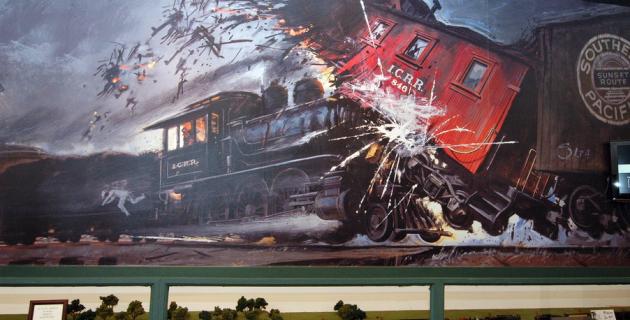
Jones could have jumped himself. His ordering Webb to do so, demonstrates he understood the situation.  Casey Jones stayed on the train as “Ole 382” plowed through the red wooden caboose and three freight cars, before leaving the track. By the time of impact, Jones frantic efforts had slowed the engine to 35 miles per hour, saving his passengers from serious injury or death. Jones himself was the only fatality, his watch stopped at 3:52am.  He was only two minutes behind schedule.

tennessee-tennesseetourism-tennessee-jackson-casey-jones-museum-crash-1900-painting

Passenger Adam Hauser of the New Orleans Times-Democrat was in a sleeper car, at the time of the wreck: “The passengers did not suffer” he said, “and there was no panic. I was jarred a little in my bunk, but when fairly awake the train was stopped and everything was still. Engineer Jones did a wonderful as well as a heroic piece of work, at the cost of his life”.

Legend has it that, when Jones’ body was removed, his dead hands still clutched the whistle cord, and the brake.

Casey Jones has achieved mythological status since that day, alongside the likes of Pecos Bill and Paul Bunyan. “The Ballad of Casey Jones” was recorded by Mississippi John Hurt, Johnny Cash and the Grateful Dead, among others.

Jones’ son Charles was 12 at the time of  his death at age 37, his daughter Helen, 10.  The  youngest, John Lloyd (“Casey Junior”) was 4.  Janie received two life insurance payments totaling $3,000 as Casey was “Double Heading” at that time, as a member of two unions.   she received no other compensation.  The Railroad Retirement Fund didn’t come about, until 1937.

Janie never had any thought of remarrying and lived the rest of her years, dressed in black.  She died on November 21, 1958 in Jackson Alabama, at the age of 92

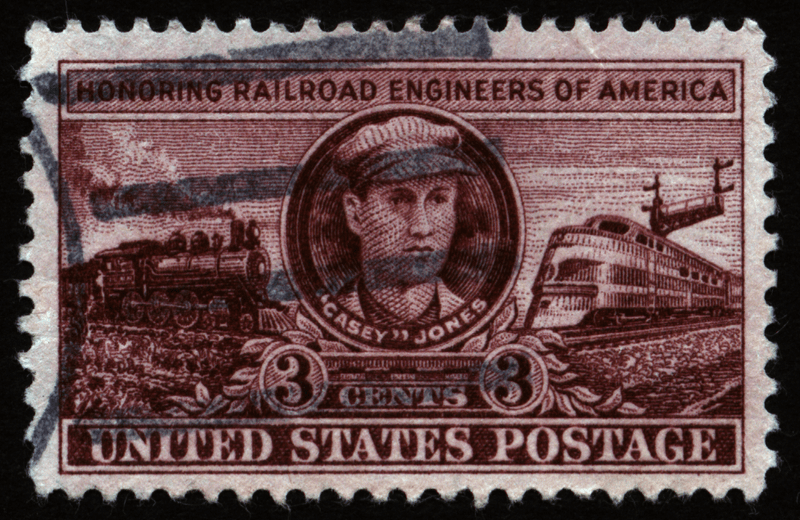
800px-CaseyJonesStamp


A Trivial Matter
In 1907, brakeman Jesus Garcia drove his flaming train away from the small mining town of Nacozari, in the Mexican state of Sonora. The train was carrying dynamite, and blew up,  Killing Garcia.  His quick actions had saved the town, where Jesus Garcia remains a hero, to this day.

April 28, 1752 John Stark, American Cincinnatus

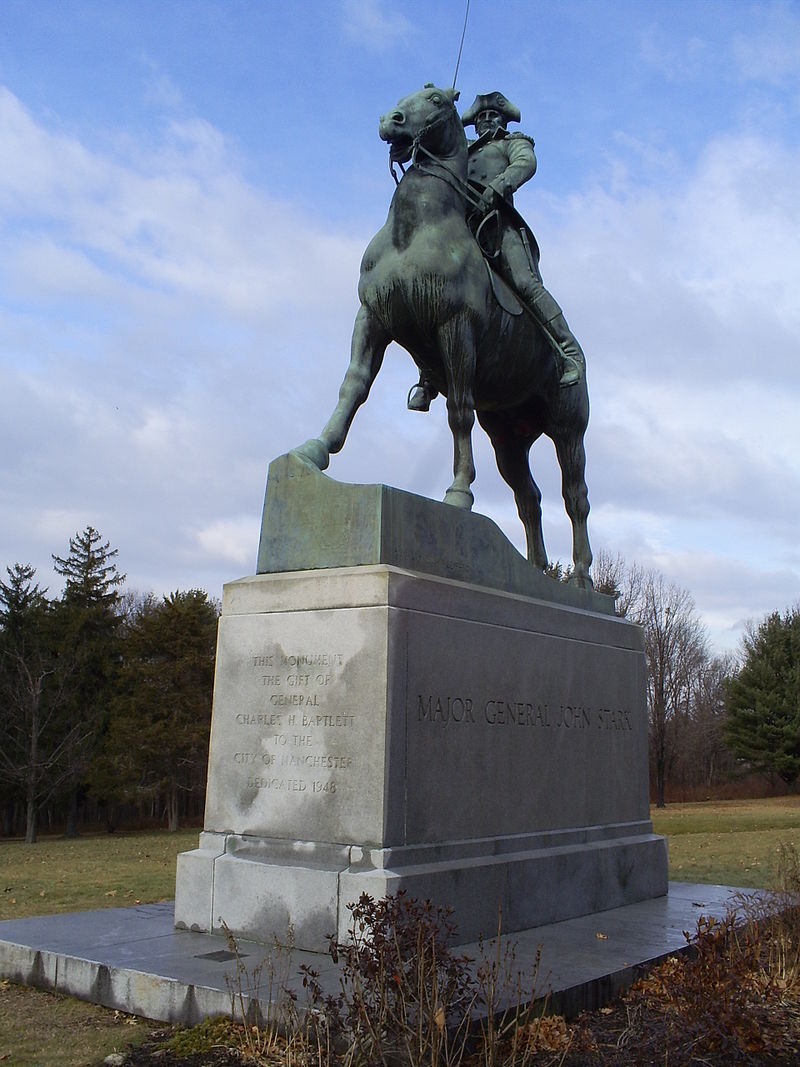
Of all the General officers who fought for American Independence, there is but one true Cincinnatus. A man who risked his life in the cause of Liberty, and truly retired from public life.

The Roman Republic of antiquity operated on the basis of separation of powers with checks and balances, and a strong aversion to the concentration of authority. Except in times of national emergency, no single individual was allowed to wield absolute power over his fellow citizens.

The retired patrician and military leader Lucius Quinctius Cincinnatus was called from his farm in 458BC to assume the mantle of Dictator and, despite his old age, again, twenty years later. With the crisis averted, Cincinnatus relinquished all power and the perks which came with it, and returned to his plow.

The man’s name remains symbolic, from that day to this. A synonym for outstanding leadership, selfless service and civic virtue.

Of all the General officers who fought for American Independence, there is but one true Cincinnatus. A man who risked his life in the cause of Liberty, and truly retired from public life.

800px-Starksgravesite

Outside of his native New Hampshire, few remember the name of John Stark.  Born August 28, 1728 in Londonderry (modern day Derry), the family moved up the road when the boy was eight, to Derryfield. Today we know it as Manchester.

On April 28, 1752, 23-year-old John Stark was out trapping and fishing with his brother William, and a couple of buddies. The small group was set upon by a much larger party of Abenaki warriors. David Stinson was killed in the struggle, as John was able to warn his brother away. William escaped, in a canoe.

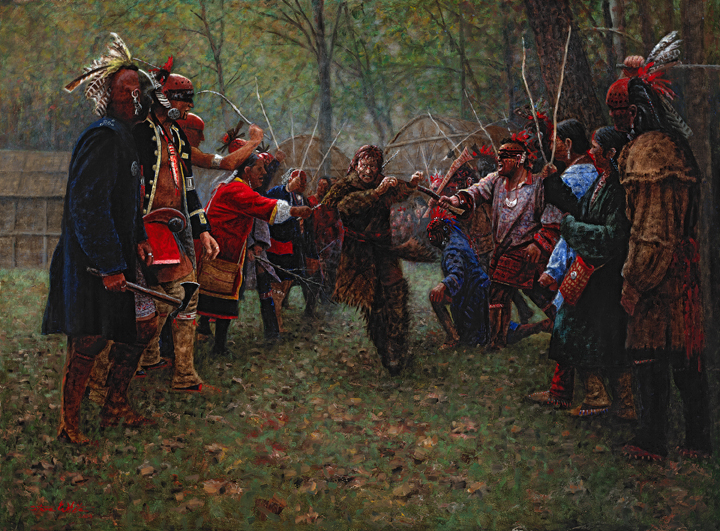
John was captured along with Amos Eastman.  267 years ago today, the hostages were heading north, all the way to Quebec, where the pair were subjected to a ritual torture known as “running the gauntlet”.

Simon-Kenton-Running-the-Gauntlet
Frontiersman Simon Kenton, running the gauntlet

In the eastern woodlands of the United States and southern Quebec and Ontario, captives in the colonial and pre-European era often faced death by ritual torture at the hands of indigenous peoples, a process which could last, for days.  In running the gauntlet, the condemned is forced between two opposing rows, where warriors strike out with clubs, whips and bladed weapons.

Eastman barely got out alive, but Stark wasn’t playing by the same rules.  He hit the first man at a dead run, wrenching the man’s club from his grasp and striking out, at both lines.  The scene was pandemonium, as the tormented captive gave as good as he got. To the chief of the Abenaki, it may have been the funniest thing, ever. He was so amused, he adopted the pair into the tribe.  Eastman and Stark lived as tribal members for the rest of that year and into the following Spring, when a Massachusetts Bay agent bought their freedom. Sixty Spanish dollars for Amos and $103, for John Stark.

3590100173_0a6114e466_bSeven years later during the French & Indian War, Rogers’ Rangers were ordered to  attack the Abenaki village with John Stark, second in command.  Stark refused to accompany the attacking force out of respect for his Indian foster family, returning instead to Derryfield and his wife Molly, whom he had married the year before.
John Stark returned to military service in 1775 following the Battles of Lexington and Concord, accepting a Colonelcy with the 1st Regiment of the New Hampshire militia.

During the early phase of the Battle of Bunker Hill, American Colonel William Prescott knew he was outgunned and outnumbered, and sent out a desperate call for reinforcements. The British warship HMS Lively was raining accurate fire down on Charlestown Neck, the narrow causeway linking the city with the rebel positions. Several companies were milling about just out of range, when Stark ordered them to step aside. Colonel Stark and his New Hampshire men then calmly marched to Prescott’s position on Breed’s Hill, without a single casualty.

Stark and his men formed the left flank of the rebel position, leading down to the beach at Mystic River.  The Battle of Bunker Hill was a British victory, in that they held the ground, when it was over. It was a costly win which could scarcely be repeated. At the place in the line held by John Stark’s New Hampshire men, British dead were piled up like cord wood.

John Stark’s service record reads like a timeline of the American Revolution. The doomed invasion of Canada in the Spring of 1776. The famous crossing of the Delaware and the victorious battles at Trenton, and Princeton New Jersey. Lieutenant Colonel Friedrich Baum and his Brunswick mercenaries ran into a buzz saw in Bennington Vermont, in the form of Seth Warner’s Green Mountain Boys and John Stark, rallying his New Hampshire militia with the cry, “There are your enemies, the Red Coats and the Tories. They are ours, or this night Molly Stark sleeps a widow!”  When it was over, Stark reported 14 dead and 42 wounded. Of Lt. Col. Baum’s 374 professional soldiers, only nine walked away.

battle-of-bennington-frederick-coffay-yohn-1
Battle of Bennington

The loss of his German ally led in no small part to “Gentleman Johnny” Burgoyne’s defeat, at Saratoga.  Stark served with distinction for the remainder of the war and, like Cincinnatus before him, returned home to his farm.

In 1809, a group of Bennington veterans gathered for a reunion. Stark was 81 at this time and not well enough to travel. Instead, he wrote his comrades a letter, closing with these words:

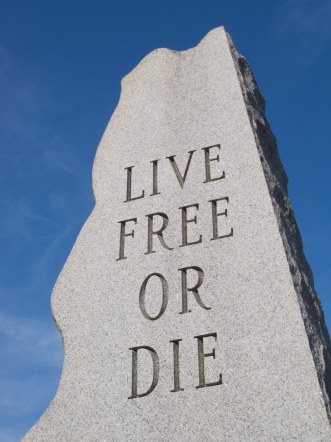
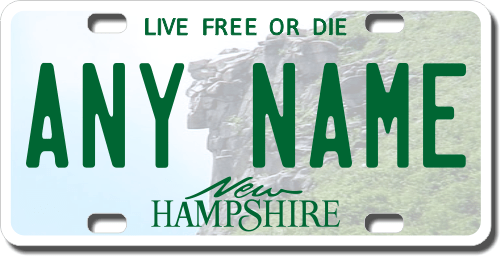
“Live free or die: Death is not the worst of evils.”

The name of the American Cincinnatus is all but forgotten today but his words live on, imprinted on every license plate, in New Hampshire.  “Live Free or Die”.

NEW-HAMPSIRE-LICENSE-PLATE-VER1-TEAMLOGO

A Trivial Matter
Neither George Washington nor Samuel Adams liked political parties, believing that such “factions” would splinter the Congress and divide the nation.

April 23, 1982 Where the Weird, Go Pro

From “Robert” the evil doll of Fort East Martello to the wild chickens who roam the streets, where conch fritters are considered a food group and history is literally built on salvaging shipwrecks, we’re talking about Key West Florida, where the “Weird go Pro”.

On December 5, 1937, bar owner Joe Russell faced an increase in rent. From three dollars a week to a whopping four bucks. Lucky for Joe, the former Victoria Restaurant owned by one Juan Farto (I didn’t make that up), was available. That night, everyone in the place picked up his drink, and his chair, and “moved the bar” across the street.

None other than Ernest Hemingway pitched in, (yeah, That Ernest Hemingway), helping himself to the urinal. “I’ve pissed enough of my money into this thing to pay for it‘ he said, bringing the thing home to his wife Pauline, who converted it to a fountain. The peacocks who once roamed “Papa” Hemingway’s yard are gone now but the fountain’s still there, not far from “Sloppy Joe’s Bar” on the corner of Greene and Duval Street.

urinal-made-into-a-fountain
Papa Hemingway’s fountain

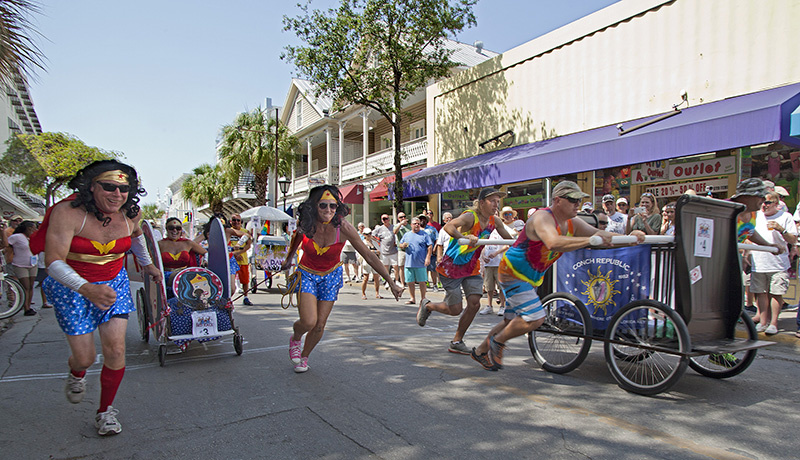
Where else but Duval Street could you watch a “bed race”, pulled by men and women in Wonder Woman outfits, or men in grass skirts. Where Times Square drops a ball to ring in the New year and Miami drops an orange, while Sloppy Joe’s drops a six-foot conch.

kwp01web2
Duval Street Bed Races, July 2015. H/t CBS, Miami

Even the above-ground cemetery is “off the beaten path”.   Inscriptions on headstones include “I told you I was sick“. One long-suffering wife got to write this one, for a philandering husband: “At least I know where he’s sleeping tonight“.

From “Robert” the evil doll of Fort East Martello to the wild chickens who roam the streets, where conch fritters are considered a food group and history is literally built on salvaging shipwrecks, we’re talking about Key West Florida, where the “Weird go Pro”.

ec04bba643c980a32309bc6e62e028db

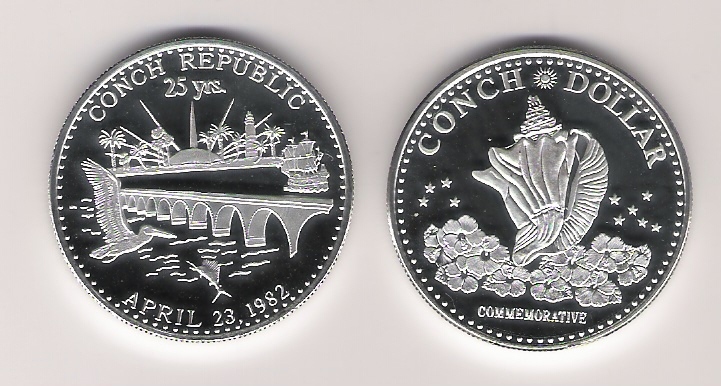
Oh.  Did I tell you the place seceded?  Really.  It’s the “Conch Republic”, now.

CON271_-_Conch_Republic_1_Conch_Dollar_2007

Except for the Naval Air Station at Boca Chica and Coast Guard installations in Key West, Marathon and Islamorada, most of the economic activity in the Florida Keys, comes from tourism. It’s no wonder that, when the federal government shuts down the only road into the Keys, the locals are going to get cranky.

In April 1982, the Mariel boat lift was a mere two years in the past, and very much in the public memory.

spidey1991-editThe United States had a border in those days, which the Federal government attempted to enforce.

On April 18, Border Patrol set up a roadblock in front of Skeeter’s Last Chance Saloon in Florida City, shutting down US Route 1, the only road in and out of the Florida Keys.  Originally intended to intercept illegals entering the country, the roadblock soon morphed into a hunt for illegal drugs, as well.

Cars waited for hours, in lines stretching 19 miles. Predictably, the attitude of Federal officials was one of towering indifference. Not so local business owners. Robert Kerstein wrote in his Key West on the Edge — Inventing the Conch Republic, “No one in Key West doubted that drugs were trafficked widely in the Keys by road and by boat. But tourism’s boosters had little tolerance for interruptions to their business.”

poster1Dennis Wardlow, then-Mayor of Key West, contacted the chief of police, the Monroe County sheriff, his State Representative and then-Governor Bob Graham, demanding the roadblock’s removal. With none of the above having any knowledge of the barrier and lacking the authority to pull it down, Wardlow contacted INS directly. When the Border Patrol told him it was “none of his business,” the Mayor’s response could best be summed up in the words of Bugs Bunny: “Of course you know, this means war!

Suffering a blizzard of hotel cancellations, this “attack on Key West’s sovereignty” could not stand. On April 22, Mayor Wardlow, local attorney & pilot David Horan and Old Town Trolley Tours operator Ed Swift flew to Miami seeking legal remedy. When District Court Judge C. Clyde Atkins failed to issue an injunction, the Key West delegation took to the courthouse steps.

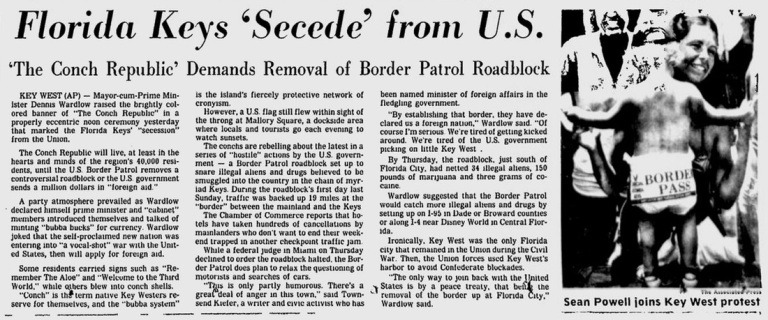
“What are you going to do, Mr. Mayor”, asked the assembled media. Swift leaned over and whispered into the Mayor’s ear, “Tell them we are going to go home and secede!” “We are going to go home and secede!”, said Wardlow, and that’s what they did.

conch-republic-secession

Over the next 24 hours, secessionist co-conspirators worked feverishly to form a new government, filling cabinet positions such as “Secretary of Underwater Affairs” and “Minister of Nutrition”.

logo-navy2On April 23, with federal agents on scene to monitor the proceedings, a crowd gathered before the old customs building. Mayor Wardlow and a gaggle of allies mounted the back of a flatbed truck, to read the proclamation of secession. “We serve notice on the government in Washington”, Wardlow began, “to remove the roadblock or get ready to put up a permanent border to a new foreign land. We as a people, may have suffered in the past, but we have no intention of suffering in the future at the hands of fools and bureaucrats“.
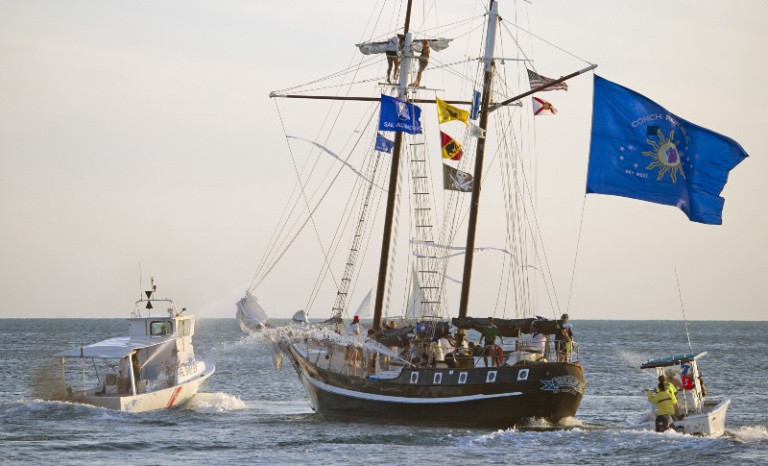
With that, Mayor Wardlow declared “war” on the United States.  The “Great Battle of the Conch Republic” broke out in the harbor, when the Schooner Western Union commanded by Captain John Kraus, attacked the Coast Guard Cutter Diligence with water balloons, Conch fritters and toilet paper.  Diligence fought back with water hoses, as the new “Prime Minister” broke a stale loaf of Cuban bread over the head of a man dressed in a Navy uniform.

download-73
Naval History was forever changed on this day, as the “Great Battle of the Conch Republic” raged across the waters of Key West
Pandemonium broke out as onlookers launched stale bread and conch fritters at federal agents, Navy sailors and Coast Guard personnel. One minute after declaring his “verbal shot” at the Federal government, Mayor Wardlow surrendered to a nearby Naval officer, demanding a billion dollars in “foreign aid” in compensation for “the long federal siege.”

conch-republic-passportsApparently, that’s what it takes to get the attention of a Federal government bureaucrat. The roadblock lifted.  The restaurants, stores and hotels of the Keys soon filled with tourists and, once again, happiness smiled upon the land.  Key West never got its “foreign aid”, but secessionist leaders never received so much as a letter, saying they couldn’t leave the Union, either.

ConchRepublicSpecialForcesSo it is that the micro-nation of Key West celebrates its independence, every April 23. The “Conch Republic’ issues its own passports, selling T-shirts and bumper stickers with the slogan “We seceded where others failed”.

And if the Federal government ever comes back to mess with the sovereign nation of Key West, it had best be prepared to deal with the Conch Republic’s very own “Special Forces”, the motto for which is “Sanctus Merda”.  “Holy Shit”.

Tip of the hat to

“Conch Republic Military Forces, The Official Site of the Conch Republic Military” for the “Conch Battle Hymn of the Republic”.  Lyrics by First Sea Lord, Admiral Finbar Gittelman, October 14, 2012 © Finbar Gittelman

Mine eyes have seen the glory of the sunshine and the sea
Right here upon our islands, where we love to live so free 
But in April 1982, the peace was not to be 
And we went rolling on

CHORUS
Glory glory Conch Republic 
From Key to shining Key

They were setting up a check point, tween the mainland and the Keys 
They had put a US Border, where it shouldn’t ‘oughta’ be 
So that’s when we seceded, and declared our sovereignty 
And the fun had just begun

(CHORUS)

We went forth into the harbor and a cutter we did spy 
And we sailed up along side her and we took her by surprise 
We hoisted up our battle flag, so proudly and so high 
And we went sailing on

(CHORUS)

The water and Conch fritters and the Cuban bread did fly 
Our bombers, they were raining toilet paper from the sky 
Our cannons they did thunder to proclaim our victory 
And we fought bravely on

(CHORUS)

We have faced the silly forces of misguided zealotry 
We have stood up to their foolishness for all the world to see 
And we’ve showed the other nations what America can be From
Key to shining Key

(CHORUS)

Feature image, top of page:  Hat Tip Captain Tony’s Saloon, http://www.capttonyssaloon.com/


A Trivial Matter
The 39th Annual Hemingway® Look-Alike contest will be held at Sloppy Joe’s Bar in Key West, July 18-21, 2019. Contestants are invited to apply at http://www.sloppyjoes.com/papa-look-alike-contest/

April 19, 1775 Lexington and Concord

The conflict that afternoon at the Old North Bridge in Concord was the first instance of the American Revolution, when colonists fired to deadly effect on British regulars.

The column of British soldiers moved out from Boston in the late night hours of April 18, with the mission of confiscating the American arsenal at Concord and  capturing the Patriot leaders Sam Adams and John Hancock, known to be hiding in Lexington.

Patriots had been preparing for such an event.  Sexton Robert John Newman and Captain John Pulling carried two lanterns to the steeple of the Old North church, signaling the Regulars were crossing the Charles River to Cambridge.

Dr. Joseph Warren ordered Paul Revere and Samuel Dawes to ride out and warn surrounding villages and towns, the two soon joined by a third rider, Samuel Prescott. Prescott alone would make it as far as Concord, though hundreds of riders would fan out across the countryside before the night was through.

paul-revere (1)

The column arrived in Lexington with the first moments of sunrise on April 19, bayonets gleaming in the early morning light.  Armed with a sorry assortment of weapons, colonial militia poured out of Buckman Tavern and fanned out across the town square.   Some weapons were hand made by village gunsmiths and blacksmiths, some decades old, but all were in good working order.   Taking positions across the village green to block the soldiers’ line of march, eighty “minutemen” turned and faced seven hundred of the most powerful military, on the planet.

Words were exchanged and no one knows who fired the first shot.  When it was over, eight Lexington men lay dead or dying, another ten wounded. One British soldier was wounded.

If you’ve never see the dawn reenactment of the Battle of Lexington, I highly recommend it.  It’s a regular feature of the Patriot’s Day festivities around the city of Boston, and well worth getting up early.  Hat tip Gethin Coolbaugh for this film of the 2018 event

Vastly outnumbered, the militia soon gave way as word spread and militia gathered from Concord to Cambridge.   The King’s Regulars never did find the weapons for which they had come, nor did they find Adams or Hancock.  There had been too much warning for that.

Regulars clashed with colonial subjects two more times that day, first at Concord Bridge and then in a running fight at a point in the road called “The Bloody Angle”.  Finally, hearing that militia was coming from as far away as Worcester, the column turned to the east and began their return march to Boston.

Hat tip DiscerningHistory.com, for this brief video on the Battle of Concord Bridge.

Some British soldiers marched 35 miles over those two days, their final retreat coming under increasing attack from militia members firing from behind stone walls, buildings and trees.

One taking up such a firing position was Samuel Whittemore of Menotomy Village, now Arlington Massachusetts. At eighty years old, he was the oldest known combatant of the Revolution.

Whittemore took his position by the road armed with his ancient musket, two dueling pistols and the old cutlass captured years earlier from a French officer whom he had once explained had “died suddenly”.

Waiting until the last possible moment, Whittemore rose and fired his musket at the oncoming Redcoats.  One shot, one kill. Several charged him from only feet away as he drew his pistols.  Two more shots, one dead and one mortally wounded. He had barely drawn his sword when they were on him, a .69 caliber ball fired almost point blank tearing part of his face off, as the butt of a rifle smashed down on his head. Whittemore tried to fend off the bayonet strokes with his sword but he didn’t have a chance.  He was run through thirteen times before he lay still.  One for each American colony.

Hat tip, The History Guy, for this presentation on Sam Whittemore. The ages given vary slightly from that engraved on his memorial but, age 78 or 80 at the time of this story, it seems a small matter.

The people who came out of their homes to clean up the mess afterward found Whittemore, up on one knee and trying to reload his old musket.

Doctor Nathaniel Tufts treated the old man’s wounds as best he could, but felt there was nothing anyone could do. Sam Whittemore was taken home to die in the company of his loved ones, and that’s what he did.  Eighteen years later, at the age of ninety-eight.

samuel_whittemore


A Trivial Matter
Just after midnight, April 19, 1775 , William Dawes, Dr. Samuel Prescott and Paul Revere were intercepted by a British patrol, just outside of Lexington. Prescott and Dawes bolted but Revere was captured, held through the small hours and interrogated. Revere was finally released, without his horse. The “Midnight Ride of Paul Revere” made famous by Henry Wadsworth Longfellow, humiliatingly ended on foot.  Revere arrived in Lexington just in time to witness the last moments on Lexington Green.  The conflict that afternoon at the Old North Bridge in Concord was the first instance of the American Revolution, when colonists fired to deadly effect on British regulars. In the 1837 classic “Concord Hymn”, American poet Ralph Waldo Emerson called it the “shot heard round the world”.

April 17, 1945 Kamikaze

What must it be like to be at sea, frantically defending yourself against a human bomb, hurtling toward you at 500 miles per hour.

By the end of 1944, a series of naval defeats had left the Imperial Japanese critically short of military aviators, and the experienced aircraft mechanics and ground crew necessary to keep them aloft.

On October 14, the Atlanta class light cruiser USS Reno was hit by a Japanese aircraft in what many believed to be a deliberate crash.  The following day, Rear Admiral Masafumi Arima personally lead an attack by 100 Yokosuka D4Y “Judy” dive bombers against a carrier task force.  Arima was killed and part of one bomber hit the USS Franklin, the Essex-class carrier known as “Big Ben”.

72nd_Shinbu_1945_Kamikaze
17-year-old Corporal Yukio Araki (holding the puppy) died the following day in a suicide attack near Okinawa. H/T Wikipedia

Japanese propagandists were quick to seize on Arima’s example.  Whether this was a deliberate “kamikaze” attack remains uncertain.  The tactic was anything but the following week, during the battle of Leyte Gulf.  Japanese aviators were deliberately flying their aircraft, into allied warships.

By the end of the war, this “divine wind” would destroy the lives of 3,862 kamikaze pilots, and over 7,000 American naval personnel.

American Marines invaded Iwo Jima in February 1945, the first allied landing on Japanese territory. It was a savage contest against a dug-in adversary, a 36-day battle costing the lives of 6,381 Americans and nearly 20,000 Japanese.

The table was set for the bloodiest battle of the Pacific war.

On April 1, Easter Sunday, 185,000 troops of the US Army and Marine Corps were pitted in the 85-day battle for Okinawa, against 130,000 defenders of the Japanese 32nd Army and civilian conscripts.  Both sides understood, the war would be won or lost in this place.

While Kamikaze attacks were near-commonplace following the October battle for Leyte Gulf, these one-way suicide missions became a major part of defense for the first time in the battle for Okinawa.  Some 1,500 Kamikaze aircraft participated in the battle for Okinawa, resulting in US 5th Fleet losses of 4,900 men killed or drowned, and another 4,800 wounded.  36 ships were sunk and another 368 damaged.  763 aircraft, were lost.

kamikaze-taking-off
Kamikaze, taking off

What must it be like to be at sea, frantically defending yourself against a flying bomb, hurtling toward you at 500 miles per hour.

On April 16, 1945, the Sumner-class destroyer USS Laffey was assigned to radar picket duty, thirty miles north of Okinawa. At 8:25 a.m., the radar operator reported a solid cluster of blips at 17,000 yards, too numerous to count and approaching fast.  165 kamikazes and 150 other enemy aircraft were coming in, from the north

The Aichi D3A “Val” dive bomber appeared near the destroyer at 8:30. This was a reconnaissance mission and, fired upon, the Val jettisoned her bombs, and departed. Four more D3As were soon to follow, tearing out of the sky in a steep dive toward USS Laffey. 20mm AA fire destroyed two while the other two crashed into the sea. Within seconds, a Yokosuka D4Y “Judy” dive bomber made a strafing run from the port beam while another approached on a bomb run, from the starboard side. These were also destroyed but, close enough to wound three gunners, with shrapnel. The flames had barely been brought under control when another Val crashed into the ship’s 40mm gun mounts, killing three sailors while another struck a glancing blow, spewing aviation fuel from a damaged engine.

kamikaze - USS Laffey

Immediately after, another D3A came in strafing from the stern, impacting a 5″ gun mount and disintegrating in a great column of fire as its bomb detonated a powder magazine. Another Val came in within seconds, crashing into the burning gun mount while yet another scored a direct hit, jamming Laffey’s rudder to port and killing several men. Within minutes, another Val and yet another Judy, had hit the port side.

It was all in the first fifteen minutes.

Soon, four FM2 Wildcats followed by twelve Vought F4U Corsair fighters from the escort carrier Shamrock Bay waded into the Kamikazes attacking Laffey, destroying several before being forced to return, low on fuel and out of ammunition.

DD-724_Laffey

By the time it was over, some fifty Kamikazes were involved with the action. USS Laffey suffered six Kamikaze crashes, four direct bomb hits and strafing fire that killed 32 and wounded another 71. Lieutenant Frank Manson, assistant communications officer, asked Commander Frederick Becton if he thought they should abandon ship. Becton snapped “No! I’ll never abandon ship as long as a single gun will fire.” He didn’t hear the comment, from a nearby lookout: “And if I can find one man to fire it.”

For USS Laffey, the war was over.  She was taken under tow the following day, April 17, and anchored near Okinawa.  She would not emerge from dry dock, until September.

Damaged-ship-Into-Seattle

Today, the WW2 destroyer is a museum ship, anchored at Patriots Point in Mount Pleasant, South Carolina.  A bronze plaque inside the ship is inscribed with the Presidential Unit Citation, received for that day off the coast of Okinawa:

For extraordinary heroism in action as a Picket Ship on Radar Picket Station Number One during an attack by approximately thirty enemy Japanese planes, thirty miles northwest of the northern tip of Okinawa, April 16, 1945. Fighting her guns valiantly against waves of hostile suicide planes plunging toward her from all directions, the U.S.S. LAFFEY sent up relentless barrages of antiaircraft fire during an extremely heavy and concentrated air attack. Repeatedly finding her targets, she shot down eight enemy planes clear of the ship and damaged six more before they crashed on board. Struck by two bombs, crash-dived by suicide planes and frequently strafed, she withstood the devastating blows unflinchingly and, despite severe damage and heavy casualties, continued to fight effectively until the last plane had been driven off. The courage, superb seamanship and indomitable determination of her officers and men enabled the LAFFEY to defeat the enemy against almost insurmountable odds, and her brilliant performance in this action, reflects the highest credit upon herself and the United States Naval Service.

For the President,
James Forrestal
Secretary of the Navy

s-l1600 (2)

The Battle for Okinawa
“The Battle of Okinawa was an intense 82-day campaign involving more than 287,000 US and 130,000 Japanese troops. It was considered the bloodiest battle of the Pacific Theater, and more than 90,000 men died from both sides, along with almost 100,000 civilian casualties. During this conflict, Kamikazes inflicted the greatest damage ever sustained by the US Navy in a single battle, killing almost 5,000 men. All told, Kamikazes sank 34 ships and damaged hundreds of others during the entire war”. H/T Listverse.com

April 15, 1865 The President’s Box

Major Rathbone would heal in time, but he never came to terms with his own failure to protect the President. He was tormented, distraught with guilt, unable to understand what he could have done differently, but, What!? Surely there must have been…Something.

When Jared Rathbone passed away in 1845, the Albany, New York businessman left a considerable fortune to his widow Pauline and their two sons, Henry and Jared.

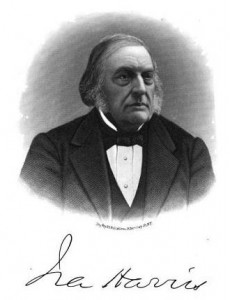
harrisira-230x300New York Supreme Court Justice Ira Harris, himself a widower and father of four, joined his household with hers when the couple married, in 1848. There were now six kids. A regular 19th-century “Brady Bunch.”
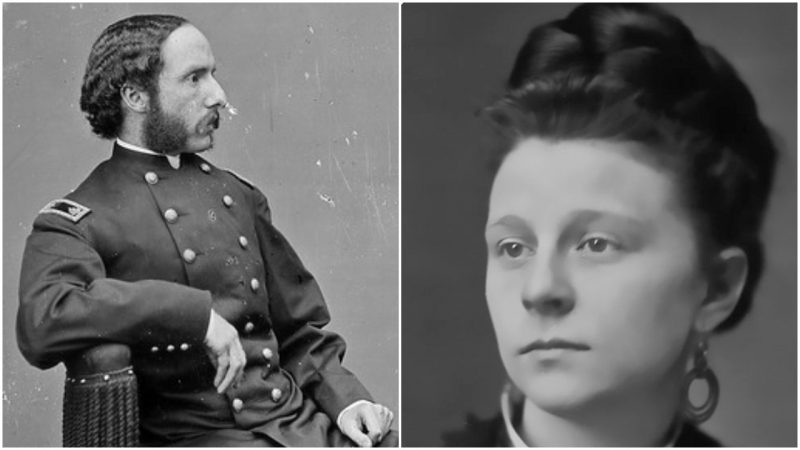
Pauline’s son Henry and Ira’s daughter Clara became close friends and later, more. Much more. They were step-siblings, yes, but there was no “blood” between them. Such a relationship seems not to have been so ‘odd’ then, as it may seem, today.

With the incoming Lincoln administration, Ira Harris was elected to the United States Senate, replacing Senator William H. Seward who’d been picked to serve in the new administration.

By the time of the War between the States, Clara Hamilton Harris and Henry Reed Rathbone were engaged to be married.

udvwxyoaRathbone served the Union army for the duration of the war, becoming Captain in the 12th Infantry Regiment and participating in the battles at Antietam and Fredericksburg. By the end of the war, Rathbone had attained the rank of Major.
Meanwhile, Senator Harris’ daughter Clara formed a friendship with the First Lady of the United States, Mary Todd Lincoln.

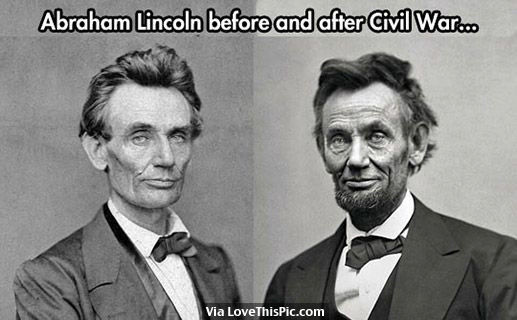
If a picture is worth a thousand words, before and after photographs tell of the burdens, born by the chief executive of a nation at war with itself. Making matters worse, the Lincolns lost two of their four boys in childhood, by war’s end. In April 1865, a night out must have seemed like a welcome break. An evening at Ford’s Theater. The play, a three-act farce by English playwright Tom Taylor. “Our American Cousin”.

197030-Abraham-Lincoln-Before-And-After-Civil-War

The Lincoln’s companions for the evening of April 14 were to be General Grant and his wife, Julia, but the General had other plans. It was probably just as well, because the ladies didn’t get along. Mary suggested her neighbor Clara Harris, of whom she was quite fond. And besides, didn’t Clara’s fiancée Major Rathbone cut a dashing figure, in his blue uniform.

The story of that night is familiar, the assassin creeping up from behind.

Lincoln_box

John Wilkes Booth was himself one of the great actors of his day, and chose his moment, carefully. Raucous laughter and applause could be expected to follow the line “Don’t know the manners of good society, eh? Well, I guess I know enough to turn you inside out, old gal — you sockdolagizing old man-trap!”

John_Wilkes_Booth_dagger
John Wilkes Booth dagger, used to attack Rathbone

The bullet was fired at point-blank range, entering the President’s head behind the left ear and coming to rest, behind the right eye.

Rathbone sprang to the attack but the assassin was ready, the dagger slashing the Major nearly bone-deep, from shoulder to elbow. Rathbone made one last lunge, knocking Booth off balance in his leap to the stage, below.

Henry bellowed out. “Stop that man!” Clara screamed.  “The President’s been shot!”  Witnesses remembered Booth cried out “Sic Semper Tyrannis”. Thus always, to tyrants. And then, he was gone.

In the President’s box, all was chaos. The first lady was inconsolable, alternately sobbing and shrieking, like a wildcat. Rathbone was losing blood at a prodigious rate, a major artery slashed in the scuffle.

Clara’s new dress was soaked with the blood of her fiancee, her face splashed and clothing drenched through layers of petticoats to the skin, beneath. The small group was taken across the street to the Peterson house, the President laid out on a bed. Henry Rathbone faded in and out of consciousness due to blood loss, raving in his delirium how he should have caught the assassin, his head on Clara’s lap, her handkerchief stuffed into the void where the bicep used to be.

There wasn’t even time to clean off her face. Mary Lincoln would just begin to calm down when she’d see Clara again and fall apart, wailing “My husband’s blood!”. It wasn’t, but, no matter. Perception is reality. The death vigil lasted this way, for nine hours. The 16th President of the United States passed away at 7:22 the following morning, April 15, 1865.

Lincolns-Death

Major Rathbone would heal in time, but he never came to terms with his own failure to protect the President. He was tormented, distraught with guilt, unable to understand what he could have done differently, but, What!? Surely there must have been…Something.

Clara Harris couldn’t bring herself to wash that dress, nor did she burn it. She hung it in a guest room closet, blood and all, in the family’s vacation home in New York.

Today, the demons afflicting the mind of Henry Rathbone may possibly qualify, as symptoms of post-traumatic stress.  At the time, what monsters lurked in the man’s head could only be guessed at as a mental illness which had no name, crept into his soul. He was possessed with that night. Was I not quick enough? Or brave enough? Or Strong enough? It was MY fault. A Better Man would have taken that bullet. Or Stopped that man. No he wouldn’t…yes he would…but…I…what, the, hell, is WRONG WITH ME???!!!

clara-harris
The Dress

Washington DC was saturated with All Things Lincoln in April 1866, and Clara fled to the family home in Albany, to get away. There in that closet hung the bloody dress. On the anniversary of the assassination, she thought she heard laughter, she knew she did, coming down the hall. Abraham Lincoln’s laughter.

Others reported hearing the same thing in the following years. The sound of laughter. A single gun shot.

Major Rathbone and Clara Harris were married in July 1867 and the couple had three children, Henry rising to the rank of brevet Colonel, in 1870. That was the year he resigned from the army, but work was hard to come by, due to increasing mental instability.

Rathbone convinced himself that Clara was unfaithful.  She planned to take the kids away. He would fly into rages and she considered divorce, but couldn’t bear the thought, nor the stigma.

Clara went so far as to have the closet bricked up with that dress inside, like Montresor bricked up Fortunato. It changed, nothing. The family traveled to Europe and back in search of a cure, but Rathbone’s condition only worsened.

Despite all this or possibly because of it, President Chester Arthur appointed Rathbone American Consul to the Province of Hannover in Germany, in 1882.

Rathbone

Henry was pale and thin, afraid to go outside and tormented by hallucinations. So fearful was he that Clara would leave him, he would not leave her to be alone, not even to sit by a window.  What Clara’s life was like during this time could only be guessed at.  Her husband said he was afraid of himself.

In the early morning hours of December 23, 1883, Henry Rathbone entered or attempted to enter the room where the children slept.  Alarmed that he meant them harm, Clara  maneuvered her husband back to the master bedroom.  There he drew a revolver and shot his wife before stabbing himself, in the chest.  Six times. He lived. She died.

He said he was defending her, against an attacker.

The three children, Henry Riggs, Gerald Lawrence and Clara Pauline, went to live with relatives. Henry Reed Rathbone was convicted of their mother’s murder and committed to an asylum for the criminally insane in Hildesheim, Germany, there to spend the next twenty-eight years.

Henry Reed Rathbone died on August 14, 1911 and was buried, next to his wife.

img_6376
The gun that killed Lincoln

German burial customs are different from those in the United States. Grave plots are generally leased for a period of 20 – 30 years, with an option to renew. In 1952, officials with the city cemetery at Hannover/Engesohde looked over visitation records, and determined there was no further interest, in Clara Harris or Henry Rathbone.

Over the years, some 15,000 books have been written about the 16th President and his wife.  Little is known of their guests from that night, at Ford’s Theater.  In 1952, the remains of Henry and Clara Rathbone were exhumed & incinerated, and thrown away.  As if they had never once lived.


A Trivial Matter
Forty-five years after the Lincoln assassination and one before the death of his father, Future member of the United States House of Representatives Henry Riggs Rathbone unbricked that closet back in New York and burned the hated dress, the dress which had stolen his childhood, murdered his mother, and cursed his family.

April 14, 1910 7th Inning Stretch

At 6’2″ and well over 300-pounds, the 27th President was a big man, not at all built for those cramped, wooden, stadium chairs.

On this day in 1910, the Washington Senators squared off with the Philadelphia Athletics in the season opener, played at Griffith Stadium in Washington, DC.  President William Howard Taft, was there for the game.

At 6’2″ and well over 300-pounds, the 27th President was a big man, not at all built for those cramped, wooden, stadium chairs.  Taft grew increasingly uncomfortable over the course of the game.  By the middle of the seventh inning, he couldn’t take it anymore.  Unable to bear it any longer, the President stood up to stretch his aching legs.

president-william-howard-taft-and-his-wife-helen-at-a-baseball-game-D70KA8.jpgAs the story goes, Taft’s fellow spectators noticed the President rising, and followed his lead.  Most had no idea why, but soon the entire section was standing.

The seventh inning stretch, was born.

President Taft was an avid baseball fan, attending no fewer than fourteen games while in office.  The man arrived late in 1909 and the game had to be delayed, not because of his arrival, but because of the applause.

Taft became the first American President to throw out an opening pitch, also on this day, in 1910.  The “opening pitch” ritual was different then, than it is today.  Taft threw the ball from the stands to the pitcher, who then began the game.  Ace pitcher Walter Johnson, who caught the throw, went on to pitch a one-hitter.

William Howard Taft
President William Howard Taft throws the opening pitch from the stands

In addition to being our heaviest Commander-in-Chief, William Howard Taft is the only man to ever serve as President of the United States, and as Chief Justice of the Supreme Court.  He is one of only two Presidents to be buried in Arlington National Cemetery.

There are other versions of the seventh-inning stretch.   Fact is, no one is certain where it began.   This is only one version of the story, but its plausible and I like it.  I’m sticking with it.


A Trivial Matter
William Howard Taft came back to throw the opening pitch in the 1911 opener and had his VP do the same, in 1912. President Woodrow Wilson continued the tradition, as did the next ten Presidents in a row. President Franklin Delano Roosevelt hit a Washington Post camera with his pitch, in 1940. President Harry S Truman threw out two balls in 1950, one left-handed and the other, right. President Jimmy Carter was the first to skip the tradition, though he did toss the opening pitch for game 7, of the 1979 World Series. President Barack Obama threw out the first pitch in 2010 on the 100th anniversary of President Taft’s toss. To date, President Donald Trump has not followed in the tradition. Search on the term “President Trump, opening pitch”, and MSNBC will give you an unflattering story about the Mueller probe. Never one to miss the political cheap shot, that one.  Not even in a baseball story. Insert deep sigh, Here.

April 13, 1861 Fort Sumter

By the time the war got going, every seceding state but South Carolina sent regiments to fight for the Union, and even that state contributed troops. A surprising number of northern soldiers resigned commissions and fought for the south, including Barre, Massachusetts native Daniel Ruggles, Ohio Quaker Bushrod Johnson and New York native Samuel Cooper, to name a few.  

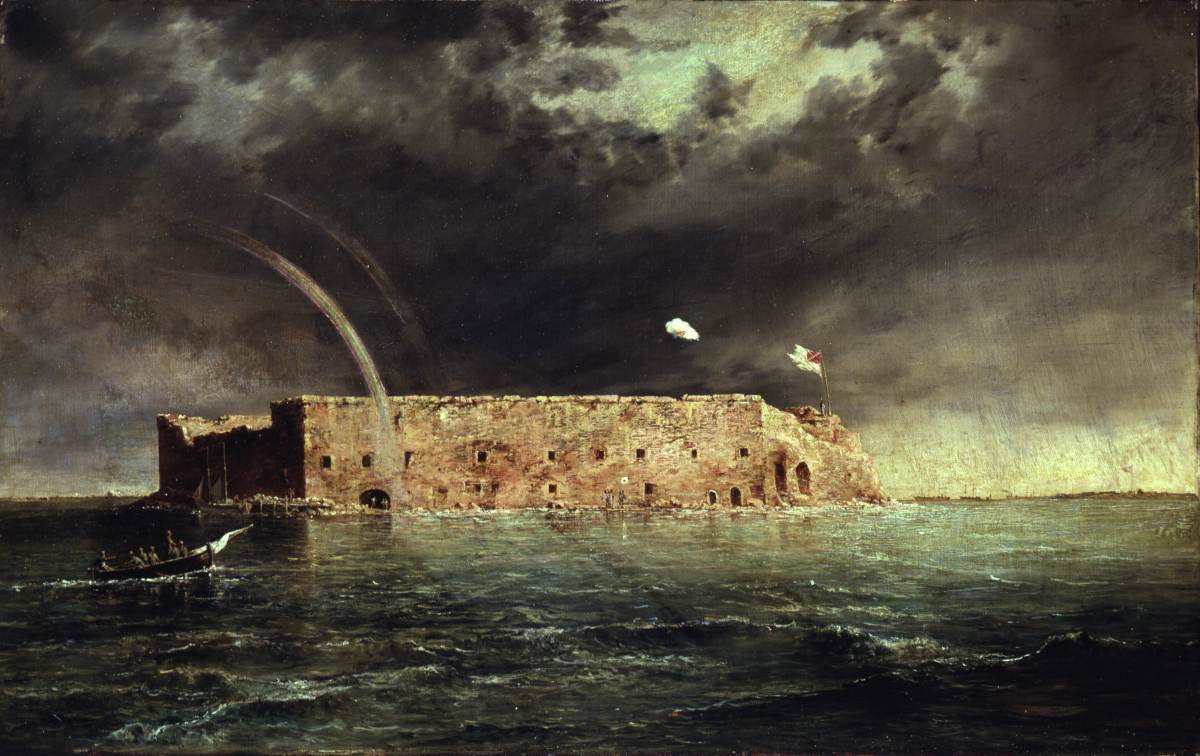
When the state of South Carolina seceded from the Union on December 20, 1860, the state government considered itself to be that of a sovereign nation. Six days later, United States Army Major Robert Anderson quietly moved his small command from the Revolution-era Fort Moultrie on Sullivan’s Island in Charleston harbor, to the as-yet to be completed Fort Sumter, a brick fortification at the mouth of the harbor.

President James Buchanan, a northern democrat with southern sympathies, believed secession to be illegal, but there was nothing he could do about it.  For months the President had vacillated, offering no resistance as local officials seized every federal government property, in the state.  Buchanan’s one attempt to intervene came in January, with the attempt to reinforce and resupply Anderson, via the unarmed merchant vessel “Star of the West”. Shore batteries opened up on the effort on January 9, 1861, effectively trapping Anderson and his garrison inside the only federal government property in the vicinity.

Overview_of_interior_of_Fort_Sumter_IMG_4543.JPG

Mississippi followed with its own ordnance of secession that same day, followed quickly by Florida, Alabama, Georgia and Louisiana. Texas seceded on February 1.

The newly founded Confederate States of America could not tolerate the presence of an armed federal force at the mouth of Charleston harbor.  Secessionists debated only whether this was South Carolina’s problem, or that of the national government, located at that time in Montgomery, Alabama.  Meanwhile, the Federal government refused to recognize the Confederacy as an independent state.

Neither side wanted to be seen as the aggressor, both needing support from the border states.  Political opinion was so sharply divided at that time, that brothers literally wound up fighting against brothers.  By the time the war got going, every seceding state but South Carolina sent regiments to fight for the Union, and even that state contributed troops.

A surprising number of northern soldiers resigned commissions and fought for the south, including Barre, Massachusetts native Daniel Ruggles, Ohio Quaker Bushrod Johnson and New York native Samuel Cooper, to name a few.  But now I’m getting ahead of the story.

Confederate Brigadier General Pierre Gustave Toutant-Beauregard (I love that name) had resigned his post as superintendent of West Point and offered his services to the Confederacy.  Beauregard was placed in charge of Charleston in March, and immediately began to strengthen the batteries surrounding the harbor.

1200px-Charleston_Harbor_1861

Fort Sumter was designed for a garrison of 650 in the service of 130 guns, nearly all of them pointed outward, positioned to defend the harbor against threats from the sea. In April 1861 there were only 60 guns, too much for Major Anderson’s 9 officers, 68 enlisted men, 8 musicians, and 43 construction workers.

Abraham Lincoln was inaugurated on March 4.  The resupply of Fort Sumter became the first crisis for the new administration. Lincoln notified South Carolina Governor Francis Pickens that he was sending supply ships, resulting in Beauregard’s ultimatum:  the Federal garrison was to evacuate immediately, or Confederate batteries would open fire.

When Major Anderson’s response was found lacking, shore batteries opened fire at 4:30 am on April 12th, 4,003 guns firing in counter-clockwise rotation. Abner Doubleday, Federal 2nd-in-command and the man erroneously credited with the invention of baseball, later wrote “The crashing of the shot, the bursting of the shells, the falling of the walls, and the roar of the flames, made a pandemonium of the fort.

Fort-Sumter-under-attack-2

Two years later at Gettysburg, Norman Jonathan Hall would lose over 200 men from his brigade, in furious fighting at a critical breach in Union lines, near the”copse of trees”.  One day, a brass plaque would mark the spot of the “High Water Mark” of the Confederacy.  On this day, Lieutenant Hall raced through flames to rescue the colors, after a direct hit on the main flagpole knocked the flag to the ground.  His eyebrows were permanently burned off his face, but Hall and two artillerymen were able to jury-rig the pole so that, once again, Old Glory flew over Fort Sumter.

Thousands of shells were fired at Fort Sumter over a period of 34 hours. Federal forces fired back, though vastly outgunned. For all that, the only casualty was one Confederate horse.

The first fatalities of the Civil War occurred after the federal surrender on April 13. Allowed a 100-gun salute while lowering the flag the following day, one cannon misfired, killing Private Daniel Hough and mortally wounding Pvt. Edward Galloway.

The following day, Colonel Robert E. Lee resigned his commission in the United States Army.  Lee’s home state of Virginia seceded three days later, followed by Arkansas, North Carolina and Tennessee.

The Civil War had begun, but few understood what kind of demons had just been unleashed. Robert Rhett, the rabble rousing editor of the Charleston Mercury Newspaper, offered to personally eat the bodies of all the slain in the coming conflict. Not wanting to be outdone, former Senator James Chesnut, Jr. said “a lady’s thimble will hold all the blood that will be shed,” promising to personally drink any that might be spilled.

The war between the states would destroy the lives of more Americans than the Revolution, WWI, WWII, and the wars in Korea, Vietnam, Iraq and Afghanistan, combined.


A Trivial Matter
Abraham Lincoln was elected in 1860 with only 39.8 per cent of the popular vote in a four-way race against Northern Democrat Stephen A. Douglas, Constitutional Unionist John Bell and Southern favorite, Kentucky Democrat John Breckenridge.  President Lincoln did not receive a single electoral vote from south of the Mason-Dixon line.

April 12, 1961 Space Race

“When they saw me in my space suit and the parachute dragging alongside as I walked, they started to back away in fear. I told them, don’t be afraid, I am a Soviet like you, who has descended from space and I must find a telephone to call Moscow.’ – Yuri Gagarin

To anyone under the age of 40, the Cold War must seem a strange and incomprehensible time.  Most of us who lived through the period feel the same way.

In the wake of WW2, irreconcilable differences between the two great super powers split the alliance which had once defeated Nazi Germany. The most destructive war in history had barely come to a close in 1946, when the Soviet state set itself to gobbling up the non-communist states of eastern Europe. Former British Prime Minister Winston Churchill delivered the most famous oration of the era on March 5, declaring “From Stettin in the Baltic to Trieste in the Adriatic, an iron curtain has descended across the continent.”

The 1950s were a time of escalating tensions and sometimes, calamity.  The war in Korea. The beginning of American intervention in Vietnam. The Cuban Revolution of 1959.  The exodus from Soviet-controlled East Germany to the west resulted in a “brain drain” of some 20% of the population, culminating in the “Berlin Crisis” of 1961. First it was barbed wire and then a wall, complete with guard towers and mine fields. Nobody else, was getting out.

44d7faed077442113394cd1721e6bf3b.jpg

The Cold War took on inter-stellar proportions on July 31, 1956, when the United States declared its intention to launch an artificial satellite into space. The Soviet Union announced it would do the same and then stunned the world, launching the first inter-continental ballistic missile (ICBM) on August 27, 1957 and then beating the US to its own goal with the launch of Sputnik 1, on October 4.

Soviet propagandists enjoyed another victory on November 3 when “Laika” launched aboard Sputnik 2.  Meanwhile, the American space program couldn’t seem to get out of its own way.

Three days later and half a world away, the Harvard Crimson newspaper reported the capsule’s appearance over Boston:

Laika and capsule
Laika

“Pupnick–the dog-bearing satellite–will be visible to early risers Thursday morning at about 5:09, Dr. Fred L. Whipple, director of the Smithsonian Astrophysical Observatory, announced last night. Whipple added that Boston, where the rocket will be directly overhead, will be “one of the best places” from which to view the Russians’ latest satellite”.

Soviet propaganda portrayed heroic images of “the first traveler in the cosmos” printed on posters, stamps and matchbook covers.  There were official hints about Laika parachuting safely to earth, and then tales of a painless and humane, euthanasia.  The real story was far more depressing.  Tightly harnessed, stressed by the forces of launch and overheated, Laika died within the first seven hours of her flight.

Belka and Strelka became the first animals to enter space and return safely to earth aboard Sputnik 5 on August 19, 1960 followed closely by the American chimpanzee Ham, whose smiling visage appears at the top of this page.

belka-strelka-2
Belka and Strelka

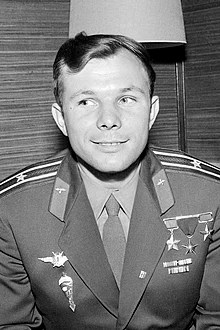
On this day in 1961, 27-year-old Soviet Air Force Major Yuri Gagarin became the first human to enter space aboard the Vostok 1  capsule, returning to earth after an hour and 48 minutes’ orbit.  Major Gagarin’s  “Poyekhali! (Let’s go!) would become the catch phrase for the entire eastern bloc, for the following half century.

Soviet capsules were parachuted onto dry land in the early days of the space program, while the Americans preferred to “splash down”.  Gagarin ejected from the craft and parachuted to earth in Kazakhstan, much to the fear and dismay of local villagers:

Gagarin_Capsule (1)
Gagarin Capsule

When they saw me in my space suit and the parachute dragging alongside as I walked, they started to back away in fear. I told them, don’t be afraid, I am a Soviet like you, who has descended from space and I must find a telephone to call Moscow.’

During the flight, Gagarin is supposed to have said “I don’t see any God up here.”

No such words appear in any of the transcripts. It’s unlikely he said such a thing.    Gagarin and his family celebrated Christmas and Easter, and kept Orthodox icons in the house.  He had baptized his daughter Elena, shortly before the historic flight.  The phrase more likely originated with Nikita Khrushchev, who  attributed the quote to Gagarin during a speech about the Soviet state’s anti-religion campaign.

220px-Yuri-Gagarin-1961-Helsinki-cropGagarin’s flight gave fresh life to the “Space Race” between the cold war rivals.  President John F. Kennedy announced the intention to put a man on the moon, before the end of the decade.
Today, the accomplishments of the space program seem foreordained, the massive complexities of the undertaking, forgotten.

In the modern era, the most powerful supercomputers on earth put the $2.5 Billion Hubble Space Telescope into orbit, with defective “vision” and literally requiring “glasses”.

In the early days, these guys were sending human beings tens to hundreds of thousands of miles into space, on less computing “horsepower” than contained in your modern cell phone.


On a lighter note
After that Laika story, this tale needs a happy ending.
In 1960, “Belka” and “Strelka” spent a day in space aboard Sputnik 5, before returning to Earth.  Aside from a few plants, these were the first creatures to enter the void of space and return, alive.
Strelka later gave birth to six puppies, fathered by “Pushok”, a dog who’d participated in ground-based space experiments, but never flew.   During a thaw  in relations, Soviet Premier Nikita Khrushchev gave one of those puppies,”Pushinka”, to President John F. Kennedy.
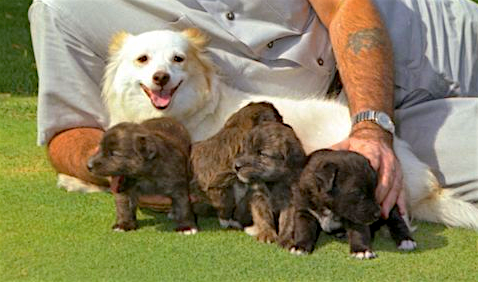
Pushinka and a Kennedy family dog named “Charlie” conducted their own Cold War rapprochement, resulting in four puppies, pups JFK jokingly referred to as “pupniks”.  Pushinka and Charlie are long gone but their descendants are still around, to this day.
pushinka-and-four-puppies
Mama Pushinka with JFK’s “Pupniks”: Butterfly, White Tips, Blackie, and Streaker

April 11, 1970 Houston, we Have a Problem

 Fifteen years before Angus “Mac” MacGyver hit your television screen, mission control teams, spacecraft manufacturers and the crew itself worked around the clock to “MacGyver” life support, navigational and propulsion systems. For four days and nights, the three-man crew lived aboard the cramped, freezing Aquarius, a landing module intended to support a crew of 2 for only a day and one-half.

Apollo 13 liftoffThe seventh manned mission in the Apollo space program was scheduled to be the third moon landing, launching at 13:13 Central Standard Time from the Kennedy Space Center in Florida.

Jack Swigert was the backup pilot for the Command Module (CM), officially joining the Apollo 13 mission only 48 hours earlier, when prime crew member Ken Mattingly was grounded, following exposure to German measles.

Jim Lovell was the most seasoned astronaut in the world at that time, a veteran of two Gemini missions and Apollo 8.  By launch day, April 11, 1970, Lovell had racked up 572 space flight hours. For Fred Haise, backup crew member on Apollo 8 and 11, this would be his first spaceflight.

apollo-13_2
Apollo 13, original crew photo, Left to right: Commander, James A. Lovell Jr., CM pilot Ken Mattingly, LM pilot, Fred W. Haise Jr.

Two separate vessels were joined to form the Apollo spacecraft, separated by an airtight hatch. The crew lived in a Command/Service module called “Odyssey”.  The Landing Module (LM) dubbed “Aquarius”, would perform the actual moon landing.

56 hours into the mission and 5½ hours from the Moon’s sphere of gravitational influence, Apollo crew members had just finished a live TV broadcast.  Haise was powering the LM down while Lovell stowed the TV camera.  Mission Control asked Swigert to activate stirring fans in the Service Module’s hydrogen and oxygen tank. Two minutes later, the astronauts heard a “loud bang”.

Apollo 13 Schematic

Manufacturing and testing of the vessel had both missed an exposed wire in an oxygen tank.  Swigert had flipped the switch for a routine procedure, causing a spark to set the oxygen tank on fire. Alarm lights lit up all over Odyssey and in Mission Control.  The entire spacecraft shuddered as one oxygen tank tore itself apart and damaged another.  Power began to fluctuate.  Attitude control thrusters fired, and communications temporarily went dark.

The crew could not have known at the time.  The entire Sector 4 panel had just blown off.

apollo-13-damage

The movie takes creative license with Commander James Lovell saying “Houston, we have a problem”.  On board the real Apollo 13 it was Jack Swigert who spoke:  “Houston, we’ve had a problem”.

205,000 miles into deep space with life support systems shutting down, the Lunar Module became the only means of survival.  There was no telling if the explosion had damaged Odyssey’s heat shields.  It didn’t matter. For now, the challenge was to remain alive.  Haise and Lovell frantically worked to boot up Aquarius, while Swigert shut down systems aboard Odyssey.   Power needed to be preserved for splashdown.

The situation had been suggested during an earlier training simulation, but considered unlikely. As it happened, the accident would have been fatal without access to the Lunar Module.

annexe6 A13-S70-34986 Fifteen years before Angus “Mac” MacGyver hit your television screen, mission control teams, spacecraft manufacturers and the crew itself worked around the clock to “MacGyver” life support, navigational and propulsion systems. For four days and nights, the three-man crew lived aboard the cramped, freezing Aquarius, a landing module intended to support a crew of 2 for only a day and one-half.

With heat plummeting to near freezing food inedible and an acute shortage of water, this tiny, claustrophobic “lifeboat” would have to do what it was never intended to do.

Atmospheric re-entry alone presented near-insurmountable challenges. The earth’s atmosphere is a dense fluid medium. If you reenter at too steep an angle, you may as well be jumping off a high bridge. As it is, the human frame can withstand deceleration forces no higher than 12 Gs, equivalent to 12 individuals identical to yourself, piled on top of you.  Even at that, you’re only going to survive a few minutes, at best.

We all know what it is to skip a stone off the surface of a pond.  If you hit the atmosphere at too shallow an angle, the result is identical to that stone. There is no coming down a second time. You get one bounce and then there is nothing but the black void of space.

Apollo_13_timeline

Apollo XIII timeline

Most of the country and much of the world held its breath for seventy-eight hours, waiting for the latest update from newspaper and television news.  With communications impossible, TV commentators used models and illustrations, to describe the unfolding drama.  On board Odyssey, power was so low that voice-only transmissions became difficult. Visual communications with Mission Control were as impossible as the idea that the stranded astronauts could get out and walk home.

800px-Apollo13_apparatus
“Astronaut John L. Swigert, at right, with the “mailbox” rig improvised to adapt the command module’s square carbon dioxide scrubber cartridges to fit the lunar module, which took a round cartridge”. /T Wikipedia

As Odyssey neared earth, engineers and crew jury-rigged a means of jettisoning the spent Service Module, to create enough separation for safe re-entry.

One last problem to be solved, was the crew’s final transfer from Lunar Module back to Command Module, prior to re-entry.  With the “reaction control system” dead, University of Toronto engineers had only slide rules and six hours in which to devise a way to “blow” the LM, by pressurizing the tunnel connecting it with the CM.  Too much pressure might damage the hatch and seal.  Too little wouldn’t provide enough separation between the two bodies.  Either failure would result in one of those “shooting stars” you see at night, as the searing heat of re-entry incinerated the Command Module and everything in it.

night-sky-shooting-star_njz-fhpbe__F0001-1
Shooting star as seen by night, H/T contentbuket.com

By this time, the Command Module had been in “cold soak” for days.  No one knew for certain, if the thing would come back to life.

Crashing into the atmosphere at over 24,000mph, the capsule had 14 minutes in which to come to a full stop, splashing down in the waters of the Pacific Ocean. External temperatures on the Command Module reached 2,691° Fahrenheit, as the kinetic energy of re-entry converted to heat.

Apollo 13 after it came back to Earth.
Apollo 13 landing

The Apollo 13 mission ended safely with splashdown southeast of American Samoa on April 17, 1970, at 18:07:41 local time.  Exhausted and hungry, the entire crew had lost weight.  Haise had developed a kidney infection.  Total duration was 142 hours, 54 minutes and 41 seconds.

apollo-13-problem


A Trivial Matter
“In 1992, Lovell…decided to write a book-length account of the incident titled Lost Moon. He and co-writer Jeff Kluger finished one chapter and a proposal, which was in turn sent to publishers and production houses. A bidding war was sparked, and Ron Howard’s Imagine Entertainment wound up winning film rights. The movie actually began shooting in 1994 before Lovell’s book was even released. (It was later re-titled Apollo 13.)” Hat Tip MentalFloss.com