
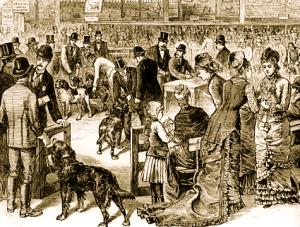
 The world’s most famous dog show was first held on May 8, 1877, and called the “First Annual NY Bench Show.” The venue was Gilmore’s Garden at the corner of Madison Avenue and 26th Street, a hall which would later be known as Madison Square Garden. Interestingly, another popular Gilmore Garden event of the era was boxing. Competitive boxing was illegal in New York in those days, so events were billed as “exhibitions” or “illustrated lectures.” I love that last one.
It was originally a show for hunting dogs, mostly Setters and Pointers with a few Terriers. A group of hunters used to meet at the Westminster Hotel at Irving Place & 16th Street, in Manhattan. The Westminster Kennel Club was formed by this group when they first decided to hold a dog show. When you think of the 2nd amendment purgatory that is Warren Wilhelm (Bill) DiBlasio’s New York, it’s amusing to think that original prizes included pearl handled revolvers.
 1,200 dogs arrived for that first show, in an event so popular that the originally planned three days morphed into four. The Westminster Kennel Club donated all proceeds from the fourth day to the ASPCA, for the creation of a home for stray and disabled dogs. The organization remains supportive of animal charities, to this day.
The Westminster dog show is the longest continuously held sporting event in the United States, with the sole exception of the Kentucky Derby, which began only two years earlier.
Not even two World Wars could stop Westminster. A tugboat strike cut two days down to one in 1946. Even so, “Best in Show” was awarded fifteen minutes earlier than it had been, the year before. I wonder how many puppies were named “Tug” that year. The Westminster dog show was first televised in 1948, three years before the first nationally televised college football game.
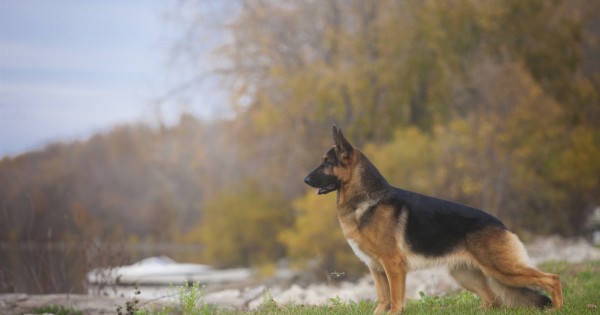
When the American Kennel Club was founded in 1884, Westminster was the first club to be admitted. Breed parent clubs such as the German Shepherd Dog Club of America develop breed standards, extensive written descriptions of what the perfect specimen looks like for any given breed. Some of the traits which distinguished the original working dogs of 1877 are still apparent, while other elements are seemingly arbitrary, such as tail carriage, eye shape and color.
Dogs are judged first against others of their own breed, and then the best of each goes forward into one of seven groups: Sporting, Hound, Working, Terrier, Toy, Non-Sporting, and Herding. In the final round, the winners from each of these seven groups compete for “Best in Show”, of which there can be only one.
Mixed breeds have been permitted since 2014, to compete in an agility event.
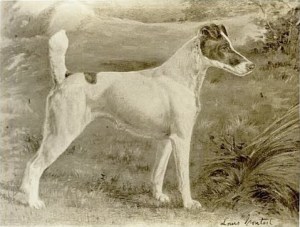
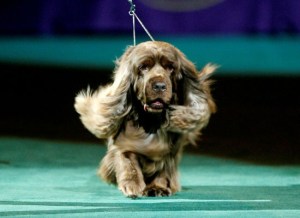
A Smooth Fox Terrier named Ch.(Championship) Warren Remedy won the top award in 1907, 1908 and 1909, the only dog to ever win three Best in Shows at Westminster. Seven dogs have twice taken the top award, and five owners have won Best in Show with more than one dog. A Sussex Spaniel named Stump became the oldest winner in dog show history in 2009, at the age of 10. Judge Sari Tietjen said she had no idea the winning dog was a senior citizen. “He showed his heart out,” she said. “I didn’t know who he was or how old … I just couldn’t say no to him”.
Today, the Westminster dog show runs two days and nights in February. Entry is limited to 2,800 dogs and fills up on the first day of registration. Breed judging takes place during the day at Piers 92 and 94. Group and Best in Show competition takes place in the evening at Madison Square Garden. Since 1992, Westminster has invited the top five dogs from each breed to pre-enter, based on dog show performances of the preceding year.
Madison Square Garden generally sells out for the event, the WKC issuing up to 700 press credentials for media attending from no fewer than 20 countries. Each year the Westminster website www.westminsterkennelclub.org receives 20 million page views from 170 countries.
 Since the late 60s, the Westminster Best in Show winner has celebrated at Sardi’s, a popular mid-town eatery in the theater district and birthplace of the Tony award. And then the Nanny State descended, pronouncing that 2012 would be their last. There shalt be no dogs dining any restaurants, not while Mayor Bloomberg is around.
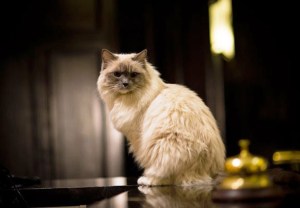
The Algonquin, the historic hotel at the corners of 59th St. W. & 44th, took in a stray cat sometime back in the 1930s. A succession of felines have had the run of the place ever since. The males have all been “Hamlet”, and the females called “Matilda”.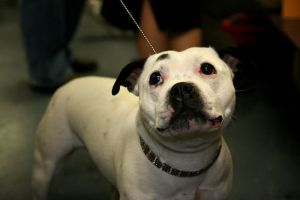
Mayor Yourslurpeeistoobig Bloomberg’s Board of Health descended on the Algonquin in 2011, requiring that the cat be kept on a leash. There ensued a tempest in a cat box, until a compromise was reached later that year. An electronic pet fence would be installed, confining the cat to non-food areas of the hotel.
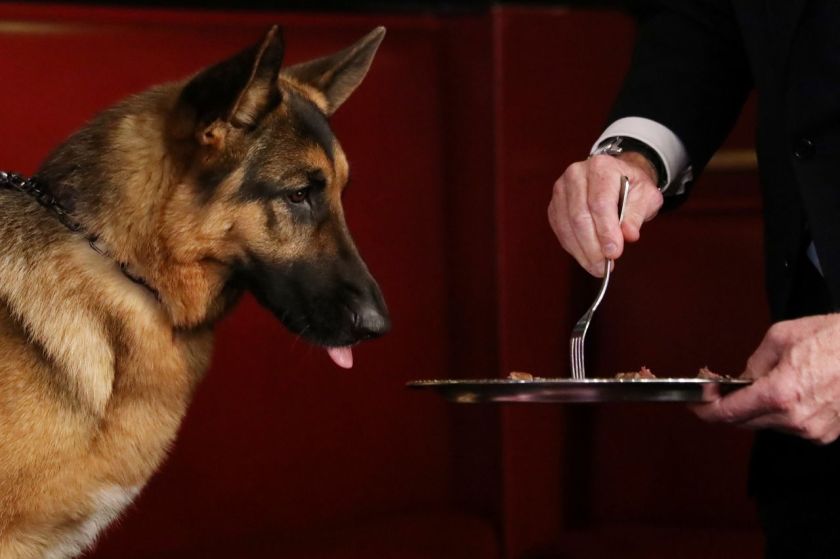
Not wanting another such drama, Nanny Bloomberg pulled his health commissioner, Dr. Thomas Farley, aside. By the end of the week, the health department had found a loophole to defuse the standoff: Dr. Farley would issue a waiver. Since then, the winner at Westminster is free to enjoy the traditional celebratory luncheon of diced chicken and rice off a silver platter. Provided that it’s eaten in the back room.


 VE Day wasn’t the end of WWII, only the end of the war in Europe. Fighting in the Pacific would continue until the Japanese surrender on the 15 August 1945, the date celebrated as VJ Day.


 grounded through the landing line, the ship’s fabric covering became charged in the electrically charged atmosphere, sending a spark to the air frame and igniting a hydrogen leak. Seven million cubic feet of hydrogen ignited almost simultaneously. It was over in less than 40 seconds.
 Where a person was inside the airship, had a lot to do with their chances of survival. Mr and Mrs Hermann Doehner and their three children (Irene, 16, Walter, 10, and Werner, 8) were in the dining room, watching the landing. Mr. Doehner left before the fire broke out. Mrs. Doehner and the two boys were able to jump out, but Irene went looking for her father. Both died in the crash.

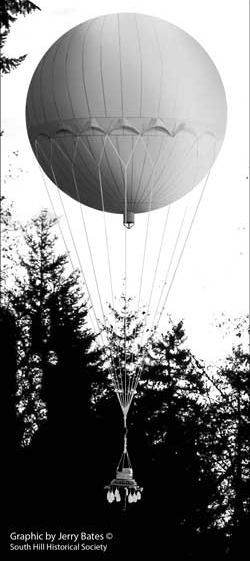
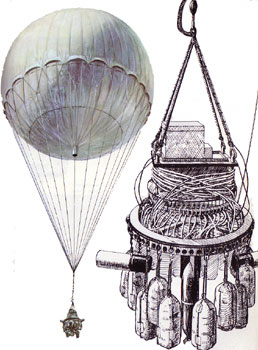 In the latter half of WWII, Imperial Japanese military thinkers conceived the fūsen bakudan or “fire balloon”, a hydrogen filled balloon device designed to ride the jet stream, using sand ballast and a valve system to navigate the weapon system onto the North American continent.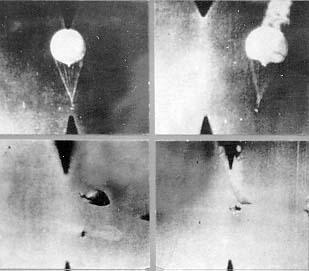
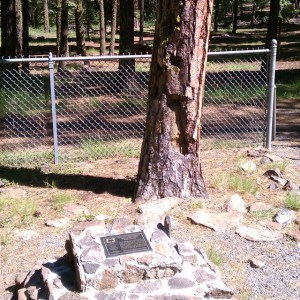


 Itter Castle appeared in the land records of the Austrian Tyrol as early as 1240. When Germany annexed Austria in 1938, Schloss Itter was first leased and later requisitioned outright by the German government, for unspecified “Official use”.

 It was late afternoon as the convoy left for Castle Itter. Leaving Boche Buster and a few Infantry to guard the largest bridge into town. What remained of the convoy fought its way through its last SS roadblock in the early evening, roaring across the last bridge and lurching to a stop in front of Itter’s gate as night began to fall. Itter’s prisoners looked on in dismay. They had expected a column of American tanks and a heavily armed infantry force. What they had here, was a single tank with seven Americans, and a truckload of armed Germans.
 concentration camp administration for the Third Reich and some of the most fanatical soldiers of WWII. Even at this late date SS units were putting up fierce resistance across northern Austria. 100-150 of them attacked on the morning of May 5. Fighting was furious around Castle Itter, the one Sherman providing machine-gun fire support until it was destroyed by a German 88mm gun. By early afternoon Lee was able to get a desperate plea for reinforcements through to the 142nd Infantry, before being cut off. Aware that he’d been unable to give complete information on the enemy’s troop strength and disposition, Lee accepted Jean Borotra’s gallant offer of assistance.
 Literally vaulting over the castle wall, the tennis star ran through a gauntlet of SS strongpoints and ambushes to deliver his message, before donning an American uniform to help fight through to the castle’s defenders. The relief force arrived at around 4pm, as defenders were firing their last ammunition.

 McCrae fought in one of the most horrendous battles of WWI, the second battle of Ypres, in the Flanders region of Belgium. Imperial Germany launched one of the first chemical attacks in history, attacking the Canadian position with chlorine gas on April 22, 1915. The Canadian line was broken but quickly reformed, in near-constant fighting that lasted for over two weeks.


 The vivid red flower blooming on the battlefields of Belgium, France and Gallipoli came to symbolize the staggering loss of life in that war. Since then, the red poppy has become an internationally recognized symbol of remembrance of the lives lost in all wars. I keep a red poppy pinned to my briefcase and another on the visor of my car. A reminder that no free citizen of a self-governing Republic, should ever forget where we come from. Or the prices paid by our forebears, to get us here.


 Gehrig was pitching for Columbia University against Williams College on April 18, 1923, the day that Babe Ruth hit the first home run out of the brand new Yankee Stadium. Though Columbia would lose the game, Gehrig struck out seventeen batters to set a team record.
 Gehrig appeared at Yankee Stadium on “Lou Gehrig Appreciation Day”, July 4, 1939. He was awarded trophies and other tokens of affection by the New York sports media, fellow players and groundskeepers. He would place each one on the ground, already too weak to hold them. Addressing his fans, Gehrig described himself as “The Luckiest Man on the Face of the Earth”.


 Be that as it may, the cause of death was difficult to detect, the condition of the corpse close to that of someone who had died at sea, of hypothermia and drowning. The dead man’s parents were both deceased, there were no known relatives and the man died friendless. So it was that Glyndwr Michael became the Man who Never Was.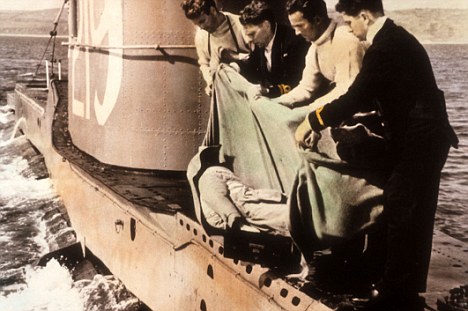
 The non-existent Major William Martin was buried with full military honors in the Huelva cemetery of Nuestra Señora. The headstone reads:
 Historical Easter Eggs - Today in History
You must be logged in to post a comment.