

“Sitzkrieg”. “Phony War”. Those were the terms used to describe the September ‘39 to May 1940 period, when neither side of what was to become the second world war, was yet prepared to launch a major ground war against the other.
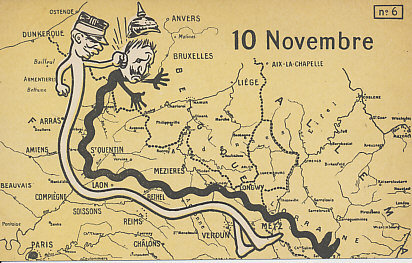
25 years earlier things had been different, at the outbreak of “The Great War”. Had you been alive in August of 1914, you’d have witnessed what might be described as the simultaneous detonation of a continent.
When governments make war on one another, it’s the Harry and the Fritz down the street, the every day Pierre and the Ivan, who must do the fighting. And the bleeding. And the dying.
France alone suffered 140,000 casualties over the four day “Battle of the Frontiers”, where the River Sambre meets the Meuse. 27,000 Frenchmen died in a single day, August 22, in the forests of the Ardennes and Charleroi.
The British Expeditionary Force escaped annihilation on August 22-23, only by the intervention of mythic angels, at a place called Mons.
In the East, a Russian army under General Alexander Samsonov was encircled and so thoroughly shattered at Tannenberg, that German machine gunners were driven to insanity at the damage inflicted by their own guns, on the milling and helpless masses of Russian soldiers. Only 10,000 of the original 150,000 escaped death, destruction or capture. Samsonov himself walked into the woods, and shot himself.
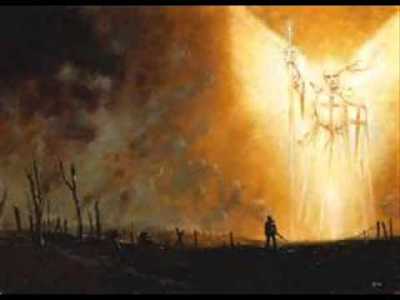
The “Race to the Sea” of mid-September to late October was more a series of leapfrog movements and running combat, in which the adversaries tried to outflank one another. It would be some of the last major movement of the Great War, ending in the apocalypse of Ypres, in which 75,000 from all sides lost their lives. All along a 450-mile front, millions of soldiers dug into the ground to shelter themselves from what Private Ernst Jünger later called the “Storm of Steel”.
On the Western Front, it rained for much of November and December that first year. The no man’s land between British and German trenches was a wasteland of mud and barbed wire. Christmas Eve, 1914 dawned cold and clear. The frozen ground allowed men to move about for the first time in weeks.
That evening, English soldiers heard Germans singing a Christmas carol. “Silent night. The Tommies were the first to respond, singing ‘The First Noel”. Then both sides joined together, in a rendition of ‘O Come, all ye Faithful’.
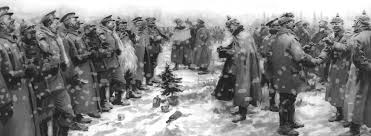
The following day was Christmas, 1914. A few German soldiers emerged from their trenches at the first light of dawn, approaching the Allies across no man’s land, calling out “Merry Christmas” in the native tongue of their adversaries.
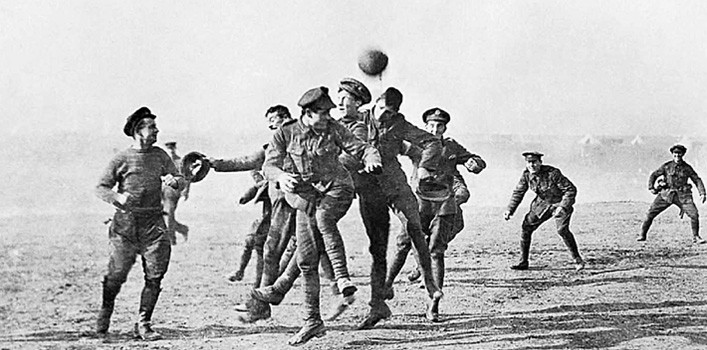
Allied soldiers first thought it was a trick, but these Germans were unarmed, standing out in the open where they could be shot on a whim. Tommies soon climbed out of their own trenches, shaking hands with the Germans and exchanging gifts of cigarettes, food and souvenirs. In at least one sector, enemy soldiers played a friendly game of soccer.
Captain Bruce Bairnsfather later wrote: “I wouldn’t have missed that unique and weird Christmas Day for anything. … I spotted a German officer, some sort of lieutenant I should think, and being a bit of a collector, I intimated to him that I had taken a fancy to some of his buttons. … I brought out my wire clippers and, with a few deft snips, removed a couple of his buttons and put them in my pocket. I then gave him two of mine in exchange. … The last I saw was one of my machine gunners, who was a bit of an amateur hairdresser in civil life, cutting the unnaturally long hair of a docile Boche, who was patiently kneeling on the ground whilst the automatic clippers crept up the back of his neck.”
Captain Sir Edward Hulse Bart reported a sing-song which “ended up with ‘Auld lang syne’ which we all, English, Scots, Irish, Prussians, Wurttenbergers, etc, joined in. It was absolutely astounding, and if I had seen it on a cinematograph film I should have sworn that it was faked!”
Nearly 100,000 Allied and German troops were involved in the unofficial ceasefire of December 24-25, 1914, which lasted in some sectors until New Year’s Day.
 A few tried to replicate the event the following year, but there were explicit orders preventing it. Captain Llewelyn Wyn Griffith recorded that after a night of exchanging carols, dawn on Christmas Day 1915 saw a “rush of men from both sides … [and] a feverish exchange of souvenirs” before the men were quickly called back by their officers.
One German unit tried to leave their trenches under a flag of truce on Easter Sunday 1915. They were warned off by the British opposite them.
German soldier Richard Schirrmann wrote in December 1915, “When the Christmas bells sounded in the villages of the Vosges behind the lines …. something fantastically unmilitary occurred. German and French troops spontaneously made peace and ceased hostilities; they visited each other through disused trench tunnels, and exchanged wine, cognac and cigarettes for Westphalian black bread, biscuits and ham. This suited them so well that they remained good friends even after Christmas was over”.
Some will tell you, that the bitterness engendered by continuous fighting made such fraternization all but impossible. Yet there are those who believe that soldiers never stopped fraternizing with their opponents, at least during the Christmas season. Heavy artillery, machine gun, and sniper fire were all intensified in anticipation of Christmas truces, minimizing such events in a way that kept them out of the history books.
 Even so, there is evidence of a small Christmas truce occurring in 1916, previously unknown to historians. 23-year-old Private Ronald MacKinnon of Princess Patricia’s Canadian Light Infantry, wrote home about German and Canadian soldiers reaching across battle lines near Arras, sharing Christmas greetings and trading gifts. “I had quite a good Christmas considering I was in the front line”, he wrote. “Christmas Eve was pretty stiff, sentry-go up to the hips in mud of course. … We had a truce on Christmas Day and our German friends were quite friendly. They came over to see us and we traded bully beef for cigars”. The letter ends with Private MacKinnon noting that “Christmas was ‘tray bon’, which means very good.”
Private Ronald MacKinnon of Toronto Ontario, Regimental number 157629, was killed barely three months later on April 9, 1917, during the Battle of Vimy Ridge.
The Man He Killed
BY THOMAS HARDY
“Had he and I but met
By some old ancient inn,
We should have sat us down to wet
Right many a nipperkin!
“But ranged as infantry,
And staring face to face,
I shot at him as he at me,
And killed him in his place.
“I shot him dead because —
Because he was my foe,
Just so: my foe of course he was;
That’s clear enough; although
“He thought he’d ‘list, perhaps,
Off-hand like — just as I —
Was out of work — had sold his traps —
No other reason why.
“Yes; quaint and curious war is!
You shoot a fellow down
You’d treat if met where any bar is,
Or help to half-a-crown.”

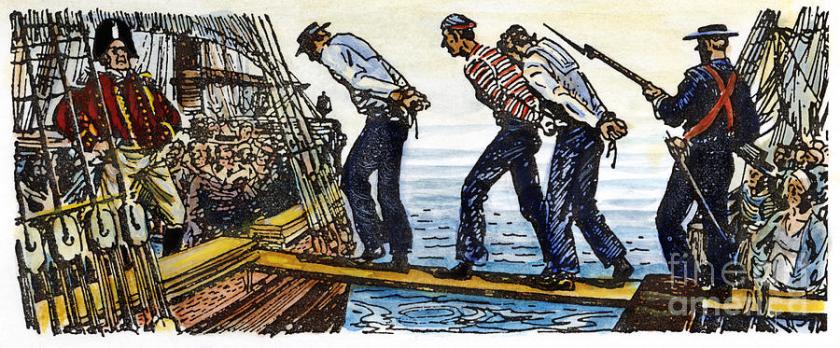
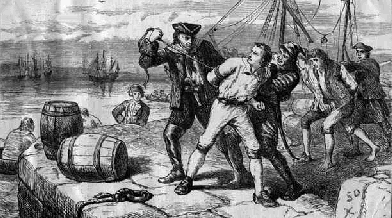 The American public was outraged and there were calls for war in 1807, when HMS Leopard overtook the USS Chesapeake, kidnapping three American-born sailors and one British deserter, leaving another three dead and 18 wounded.
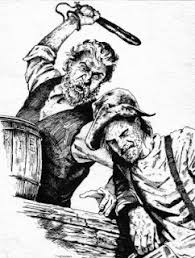 Outside of the British Royal Navy, the practice of kidnapping people to serve as shipboard labor was known as “crimping”. Low wages combined with the gold rushes of the 19th century left the waterfront painfully short of manpower, skilled and unskilled, alike. “Boarding Masters” had the job of putting together ship’s crews, and were paid for each recruit. There was strong incentive to produce as many able bodies, as possible. Unwilling men were “shanghaied” by means of trickery, intimidation or violence, most often rendered unconscious and delivered to waiting ships, for a fee.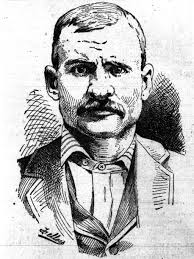
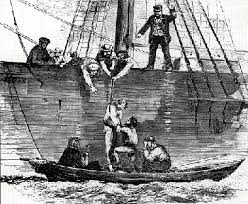 San Francisco political bosses William T. Higgins, (R) and Chris “Blind Boss” Buckley (D) were both notable crimps, and well positioned to look after their political interests. Notorious crimps such as Joseph “Frenchy” Franklin and George Lewis were elected to the California state legislature. There was no better spot, from which to ensure that no legislation would interfere with such a lucrative trade.
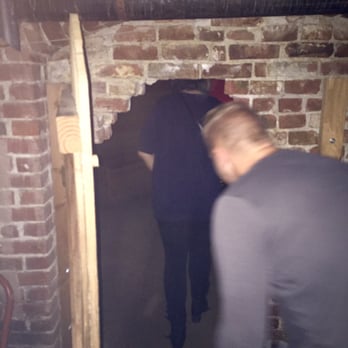 Imagine the hangover the next morning, to wake up and find you’re now at sea, bound for somewhere in the far east. Regulars knew about the trap door and avoided it at all costs, knowing that anyone going over there, was “fair game”.

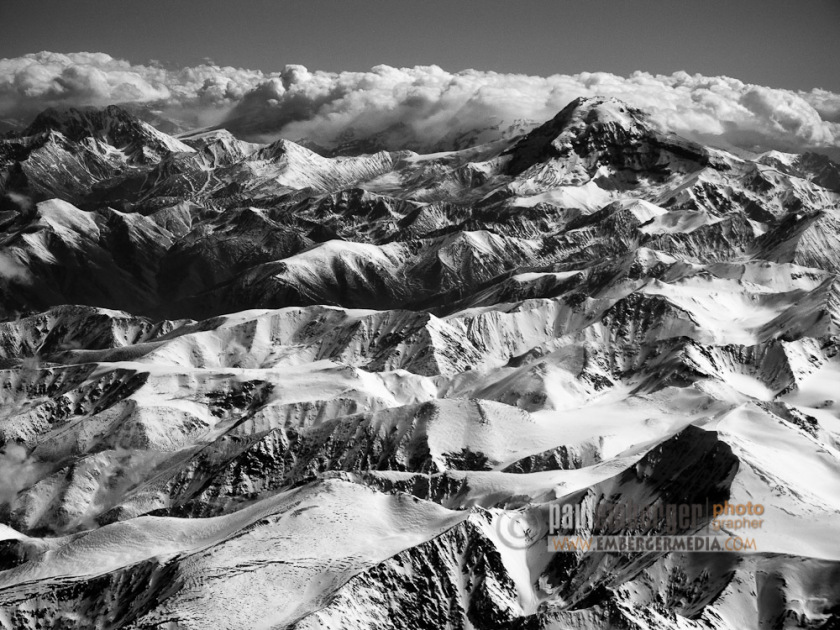
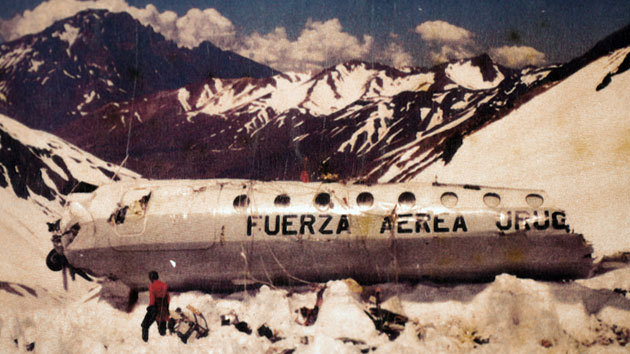
 Stranded and alone in the high Andes, meager supplies soon gave out. A few chocolate bars, assorted snacks and several bottles of wine. It was gone within days, as the survivors scoured the wreckage for crumbs. They ate leather from suitcases, tore apart seats hoping to find straw, finding nothing but inedible foam. Nothing grew at this altitude. There were no animals. There was nothing in that desolate place but metal, glass, ice and rock. And the frozen bodies of the dead.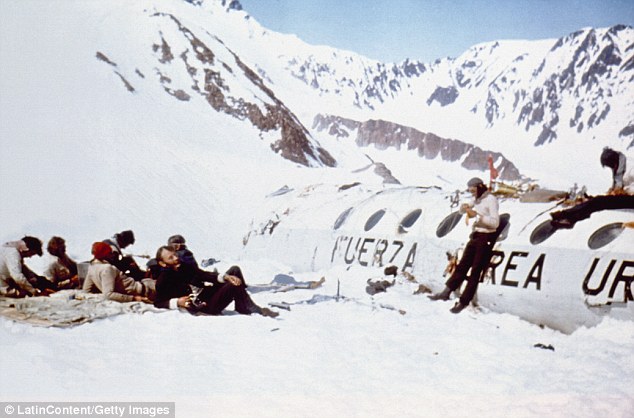
 The Juan Valdez of the coffee commercials is an “Arriero”, a man who transports goods using pack animals. Parrado and Canessa had hiked for almost two weeks when they were building a fire by a river, and spotted such a man on the other side. Sergio Catalán probably didn’t believe his eyes at first, but he shouted across the river. “Tomorrow”.

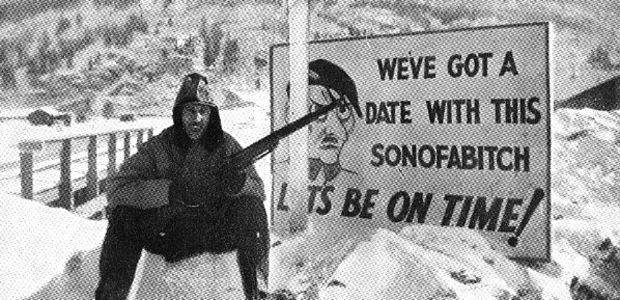
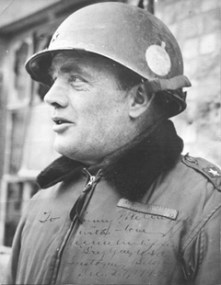
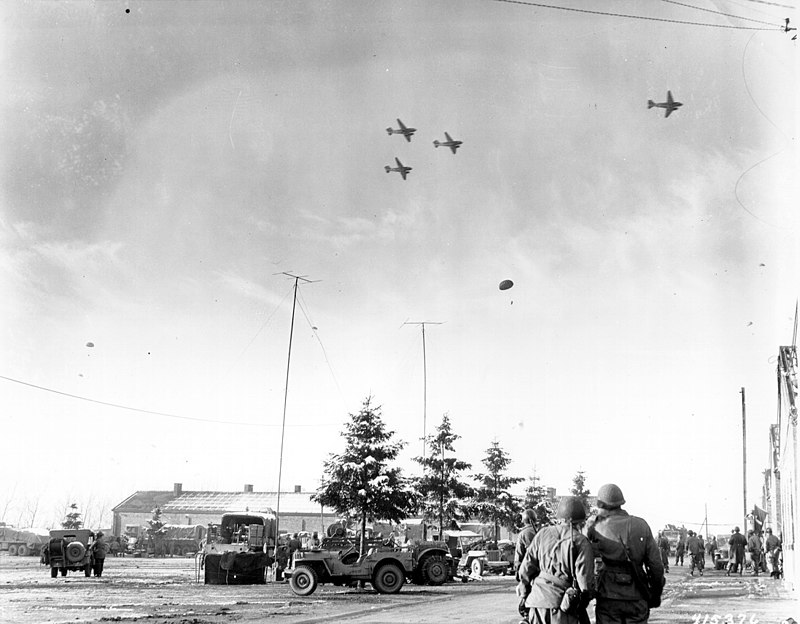
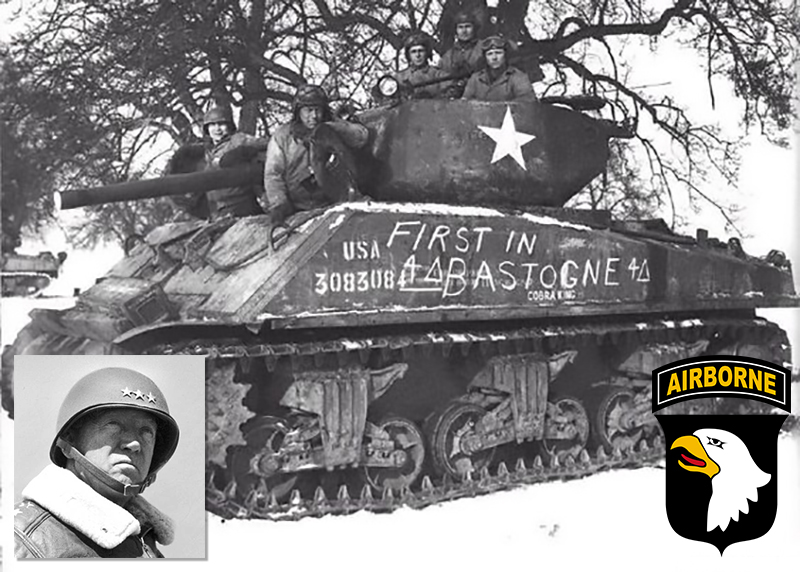
 Augusta Marie Chiwy (“Shee-wee”) was the bi-racial daughter of a Belgian veterinarian and a Congolese mother, she never knew.
 Chiwy married after the war, and rarely talked about her experience in Bastogne. It took King a full 18 months to coax the story out of her. The result was the 2015 Emmy award winning historical documentary, “Searching for Augusta, The Forgotten Angel of Bastogne”.

 A “Fidelity Medallion” was awarded to three militia men in 1780, for the capture of
 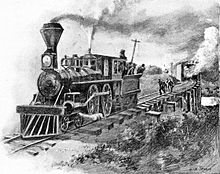 An Army version of the medal was created the following July, first awarded to six Union soldiers for hijacking the Confederate locomotive, “The General”. Leader of the raid James Andrews was caught and hanged as a Union spy. He alone was judged ineligible for the medal of honor, as he was a civilian.
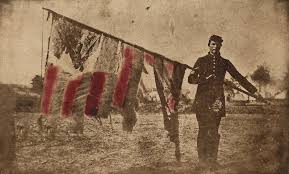 Few soldiers on the Civil War battlefield had a quicker route to death’s door, than the color bearer. National and regimental flags were all-important sources of inspiration and communication.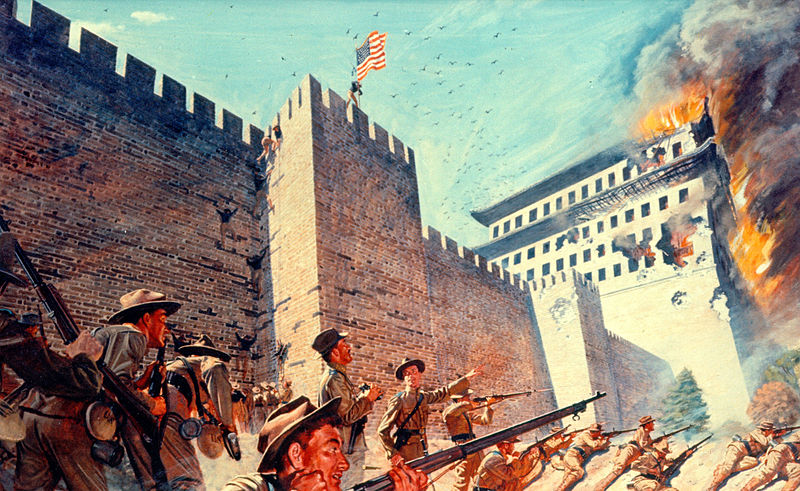


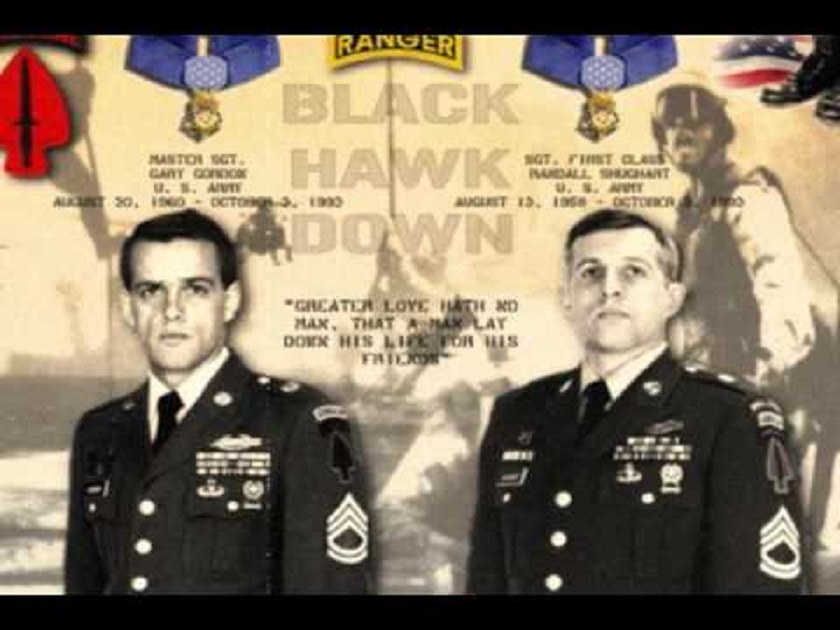
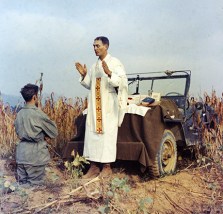 Father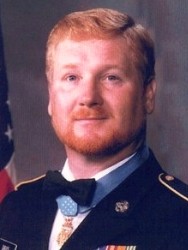


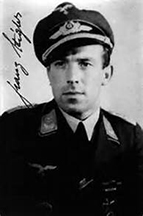

 The battered aircraft was completely alone and struggling to maintain altitude, the American pilot well inside German air space, when he looked to his left and saw his worst nightmare. Three feet from his wing tip was the sleek gray shape of a German fighter, the pilot so close that the two men were looking into one another’s eyes.


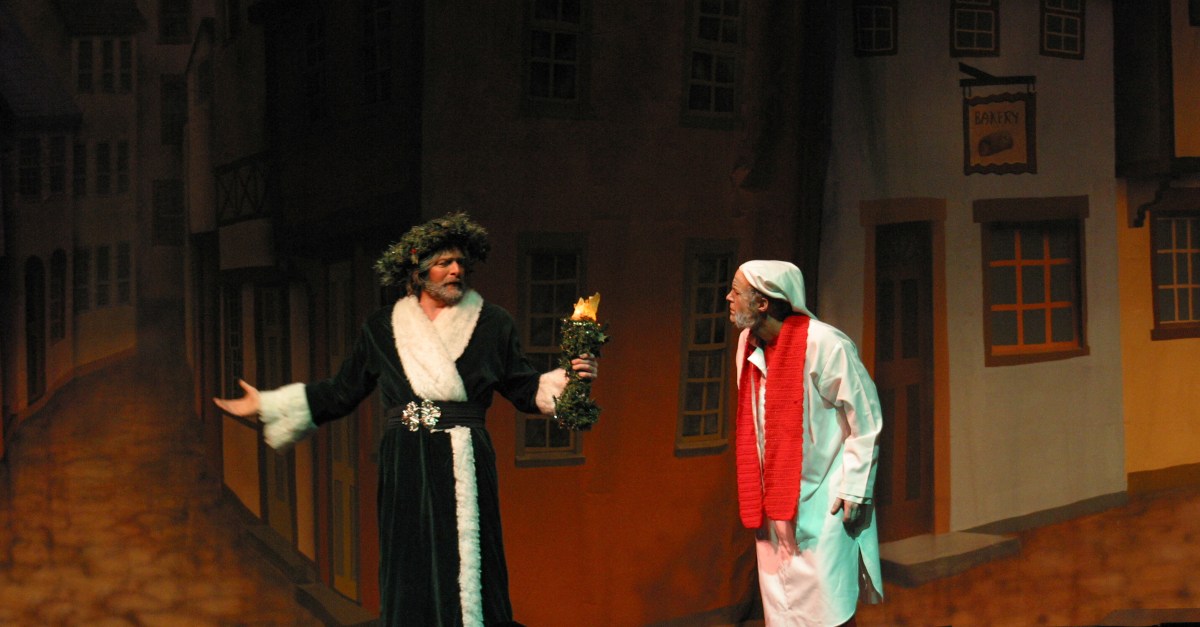

 In February, Dickens took a train north to the factory town of Lowell, visiting the textile mills and speaking with the “mill girls”, the women who worked there. Once again, he seemed to believe that his native England suffered in the comparison. Dickens spoke of the new buildings and the well dressed, healthy young women who worked in them, no doubt comparing them with the teeming slums and degraded conditions in London.
 Dickens left with a copy of “The Lowell Offering”, a literary magazine written by those same mill girls, which he later described as “four hundred good solid pages, which I have read from beginning to end.”
 The research which followed was published in the form of a thesis, later fleshed out to a full-length book:



 Early radio experiments by Nikola Tesla and Guglielmo Marconi left both inventors believing they had picked up, in Marconi’s words, “queer sounds and indications, which might come from somewhere outside the earth.”
 The British author H. G. Wells wrote the War of the Worlds in 1897, telling the story of an alien earth invasion by Martians fleeing the desiccation of their own planet. The story was adapted to a


 Over time, the solution to the meat question became a matter of doubling down on what we’re already doing, as factory farms and confinement operations took the place of free ranges, and massive use of antibiotics replaced the idea of balanced biological systems.


You must be logged in to post a comment.