November 11, 1918 The 11th Hour

In the end, starvation and malnutrition stalked the land at home as well as the front with riots at home and mutiny, in the trenches. The Russian Empire of the Czars had collapsed into a Bolshevik hellhole, never to return.  Nearly every combatant saw the disintegration of its domestic economy, or teetering on the brink.

In an alternate history, the June 1914 assassination of the heir-apparent to the Habsburg Empire may have led to nothing more, than a regional squabble.  Wiser heads could have prevailed, the diplomatic crisis of July resulting in nothing more than a policing action in the Balkans.

As it was, mutual distrust and entangling alliances combined with slavish obedience to mobilization timetables, to draw the Great Powers of Europe into the vortex.  On August 3, the “War to End All Wars” exploded across the European continent.

Many of the soldiers who went off to war in those days, viewed the conflict as some kind of grand adventure. Many of them sang patriotic songs as the young men and boys of Russia, Germany, Austria and France stole last kisses from wives and sweethearts, and boarded their ships and trains.

Believing overwhelming manpower to be the key to victory, British Secretary of State for War Lord Horatio Kitchener recruited friends and neighbors by the tens of thousands into “Pal’s Battalions”, to fight for King and country.
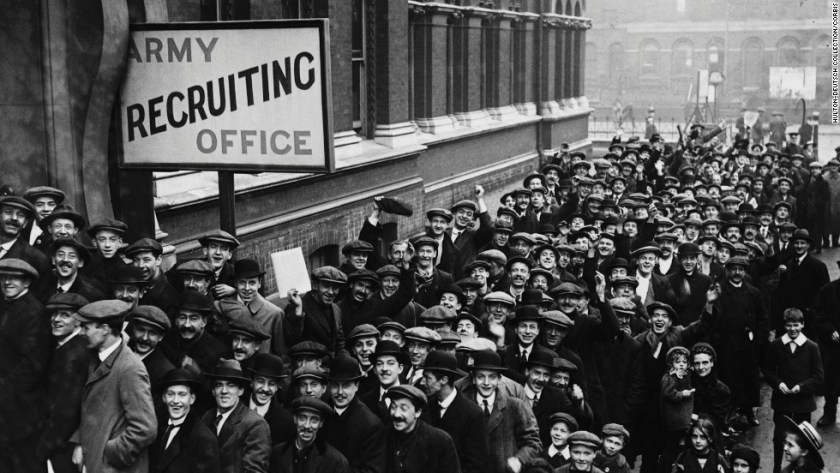
140604153439-19-wwi-main-timeline-0604-restricted-horizontal-large-gallery
The signs could have been written in any number of languages, in the early phase of the war

Over the next four years a generation would be chewed up and spit out, in pieces.

Many single day’s fighting of the great battles of 1916 produced more casualties than every European war of the preceding 100 years, civilian and military, combined.

6,503 Americans lost their lives during the savage, month-long battle for Iwo Jima, in 1945. The first day’s fighting during the 1916 Battle of the Somme killed three times that number on the British and Commonwealth side, alone.

battle_of_the_somme_in_pictures_1
Over 1.5 million shells were fired in the days leading to the battle of the Somme

Over 16 million were killed and another 20 million wounded while vast stretches of the European countryside were literally, torn to pieces. Tens of thousands remain missing, to this day.

Had you found yourself in the mud and the blood, the rats and the lice of the trenches during the New Year of 1917-’18, you could have heard a plaintive refrain drifting across the barbed wire and frozen wastes of no man’s land, sung to the tune of “Auld Lang Syne”.

We’re here, because we’re here,
because we’re here, because we’re here,
we’re here, because we’re here,
because we’re here, because we’re here.
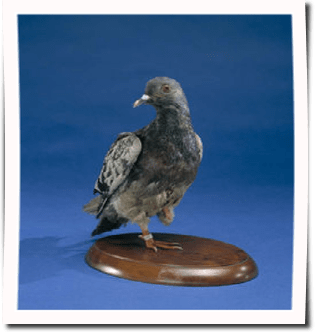
cher-ami
Cher Ami

Those who fought the “Great War”, were not always human.  The carrier pigeon Cher Ami escaped a hail of bullets and returned twenty-five miles to her coop despite a sucking chest wound, the loss of an eye and a leg that hung on, by a single tendon.  The message she’d been given to carry, saved the lives of 190 men.

“Warrior” was the thoroughbred mount to General “Galloper” Jack Seely, arriving in August 1914 and serving four years “over there”. “The horse the Germans can’t kill” survived snipers, poison gas and shellfire to be twice buried alive in great explosions, only to return home to the Isle of Wight, and live to the ripe old age of 33.
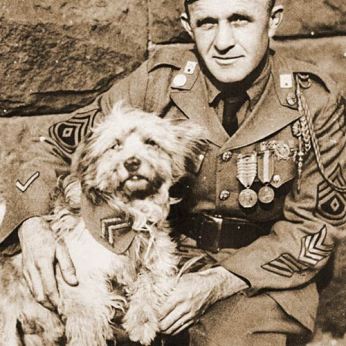
18-03-23-thumb
First division Rags

First Division Rags” ran through a torrent of shells, gassed and blinded in one eye, a shell fragment damaging his front paw, yet still, he got his message through.

Jackie the baboon lost a leg during heavy bombardment from German guns while frantically building a protective rock wall to shelter himself from what the German soldier Ernst Jünger later called, the “Storm of Steel”.

Tirpitz the German pig jumped clear of the sinking light cruiser SMS Dresden and would serve out the war not in a frying pan but as mascot to the HMS Glasgow.

Sixteen million animals served on all sides and in all theaters of WW1:  from cats to canaries, to pigeons and mules, camels, donkeys and dogs.  As “dumb animals”, none were given the choice to “volunteer”.  And yet serve they did, some nine million animals making the supreme sacrifice.
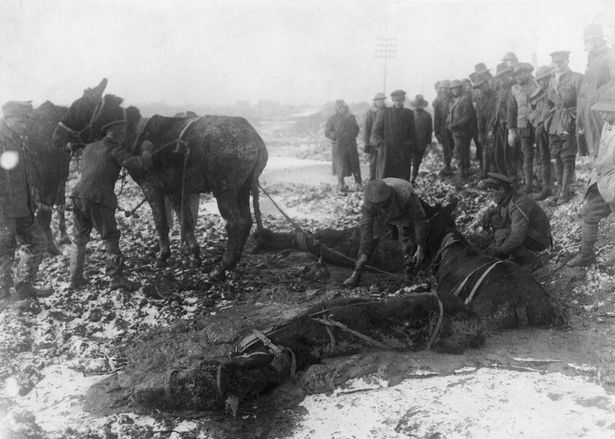
WW1-animals
British Army mules in the mud of the western front, 1918

In the end, starvation and malnutrition stalked the land at home as well as the front with riots at home and mutiny, in the trenches. The Russian Empire of the Czars had collapsed into a Bolshevik hellhole, never to return.  Nearly every combatant saw the disintegration of its domestic economy, or teetering on the brink.

A strange bugle call came out of the night of November 7, 1918. French soldiers of the 171st Régiment d’Infanterie, stationed near Haudroy, advanced into the fog and the darkness, expecting that they were about to be attacked. Instead, they were shocked to see the apparitions of three sedans, their sides displaying the German Imperial Eagle.

Imperial Germany, its army disintegrating in the field and threatened with revolution at home had sent a peace delegation, headed by the 43-year-old politician Matthias Erzberger.

The delegation was escorted to the Compiegne Forest near Paris, to a conference room fashioned from a railroad dining car. There they were met by a delegation headed by Ferdinand Foch, Marshall of France.

Adolf Hitler would gleefully accept French surrender in the same rail car, some twenty-two years later.

original-french-postcard-showing-the-wagon-in-which-the-ww1-armistice-M1B0DJ

The German delegation was shocked at the words that came out of Foch’s mouth. ‘Ask these gentlemen what they want,’ he said to his interpreter. Stunned, Erzberger responded. The Germans believed they were there to discuss terms of an armistice. Foch dropped the hammer: “Tell these gentlemen that I have no proposals to make”.

Ferdinand Foch had seen his country destroyed by war. He had vowed “to pursue the Feldgrauen (Field Grays) with a sword at their backs”. He had no intention of letting up.

Marshall Foch now produced a list of thirty-four demands, each one a sledgehammer blow on the German delegation. Germany was to divest herself of all means of self-defense, from her high seas fleet to the last machine gun. She was to withdraw from all lands occupied since 1870. With the German population at home facing starvation, the allies were to confiscate 5,000 locomotives, 150,000 rail cars and 5,000 trucks.

1200px-Waffenstillstand_gr

With 2,250 dying every day on the Western Front, Foch informed Erzberger he had 72 hours in which to respond. “For God’s sake, Monsieur le Marechal”, responded the German, “do not wait for those 72 hours. Stop the hostilities this very day”.  Even so, the plea fell on deaf ears. Fighting would continue until the last minute, of the last day.

The German King, Kaiser Wilhelm, abdicated on the 10th as riots broke out in the streets of Germany. The final surrender was signed at 5:10am on November 11 and back-timed to 5:00am Paris time, scheduled to go into effect later that morning. The 11th hour, of the 11th day, of the 11th month.

The order went out to that effect. The war would be over in hours, but there were no other instructions.

Some field commanders ordered their men to stand down. Why fight and die over ground they could walk over in just a few hours?
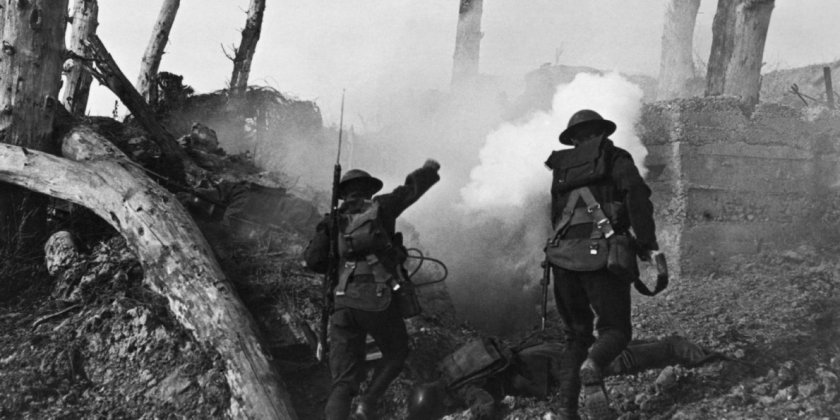
the-last-soldier-killed-in-wwi-died-one-minute-before-the-war-ended
The last six hours

Many continued the attack, believing that Germany had to be well and truly beaten. Others saw their last chance at glory or promotion. An artillery captain named Harry S Truman, kept his battery firing until only minutes before 11:00.

English teacher turned Major General Charles Summerall had a fondness for the turn of phrase. Ordering his subordinates across the Meuse River in those final hours, Summerall said “We are swinging the door by its hinges. It has got to move…Get into action and get across. I don’t expect to see any of you again…

No fewer than 320 Americans were killed in those final six hours, another 3,240 seriously wounded.

7fe16b6c9f770b107480c9ca6c28e87c

Still smarting from the disastrous defeat at Mons back in 1914, British High Command was determined to take the place back, on the final day of the war. The British Empire lost more than 2,400 in those last 6 hours.

The French 80th Régiment d’Infanterie received two orders that morning – to launch an attack at 9:00, and cease-fire at 11:00. French losses for the final day amounted to 1,170. The already retreating Germans suffered 4,120.

One-hundred-three years ago today all sides suffered over 11,000 dead, wounded, and missing in those final six hours. Some have estimated that more men died per hour after the signing of the armistice, than during the D-Day invasion, 26 years later.

Over in the Meuse-Argonne sector, Henry Gunther was “visibly angry”.   Perhaps this American grandson of German immigrants felt he had something to prove.  Anti-German bias had not reached levels of the next war, when President Roosevelt interned Americans of Japanese descent.  Yet, such bias was very real.  Gunther’s fiancé had already broken up with him. He’d recently been busted in rank, after writing home complaining about conditions at the front.

Bayonet fixed, Gunther charged the enemy machine gun position, as German soldiers frantically waved and yelled for him, to go back. He got off a “shot or two”, before the five round burst tore into his head. Henry Nicholas John Gunther of Baltimore Maryland was the last man to die in combat, in the Great War.  It was 10:59am.  The war would be over, in sixty seconds.
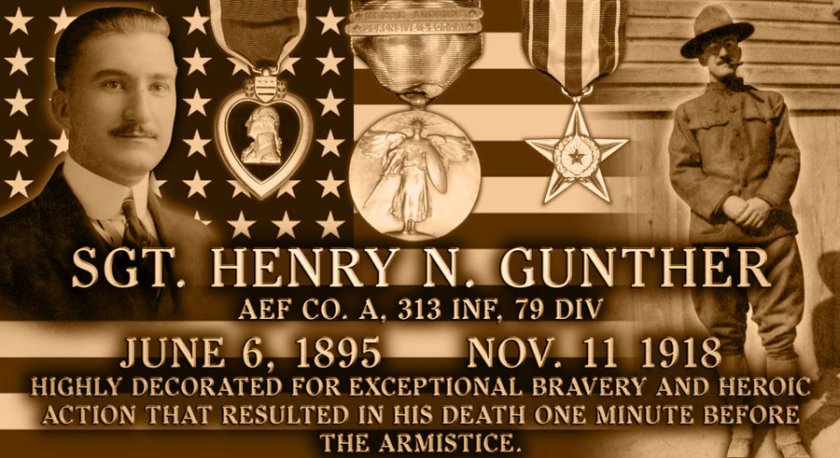
Sargeant-Henry-Gunther

After eight months on the front lines Corporal Joe Rodier of Worcester Massachusetts, was jubilant.   “Another day of days“.   Rodier wrote in his diary.  “Armistice signed with Germany to take effect at 11 a.m. this date. Great manifestations. Town lighted up at night. Everybody drunk, even to the dog. Moonlight, cool night & not a shot heard“.

Matthias Erzberger was assassinated in 1921, for his role in the surrender. The “Stab in the Back” mythology destined to become Nazi propaganda, had already begun.

AEF Commander General John “Black Jack” Pershing believed the armistice to be a grave error. He believed that Germany had been defeated but not beaten, and that failure to smash the German homeland meant that the war would have to be fought, all over again. Ferdinand Foch agreed. On reading the Versailles treaty in 1919, Foch remarked “This isn’t peace! This is a truce that will last for 20 years”.

The man got it wrong, by 36 days.

On a personal note:
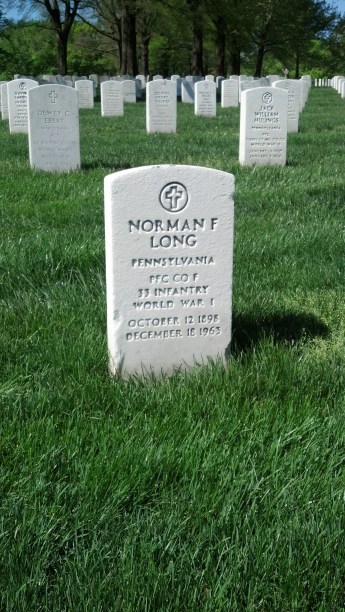
Norman Francis Long

PFC Norman F. Long was wounded during the Great War, a member of the United States Army, 33rd Pennsylvania Infantry.  He left us on December 18, 1963, only hours before his namesake, my brother Norm, was born.

My father’s father went to his final rest on Christmas eve of 1963, in Arlington National Cemetery.  Section 41, grave marker 2161.

At 63 I remember still, the pleasures of a little boy fishing with his grandfather. Just as I myself will one day take my granddaughter fishing and a bridge some sixty years in the building, will have been crossed.

Rest in peace, Grampa.  You left us, too soon.

November 9, 2013 A Vintage like No Other

On November 9, 2013, a company of heroes cracked open and enjoyed a 117-year-old bottle of rare and vintage cognac. If there can be a more magnificent act of tribute, I cannot at this moment think of what it might be.

On November 9, 2013, there occurred a gathering of four.  A tribute to fallen heroes. These four were themselves heroes, and worthy of tribute.  This was to be their last such gathering.

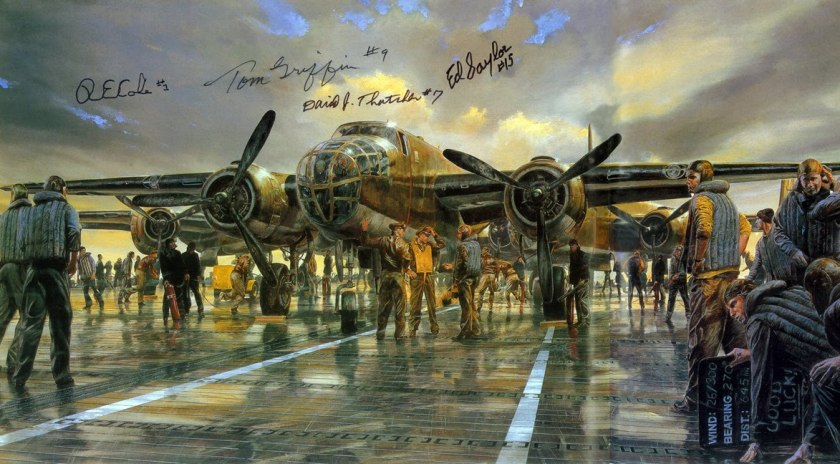
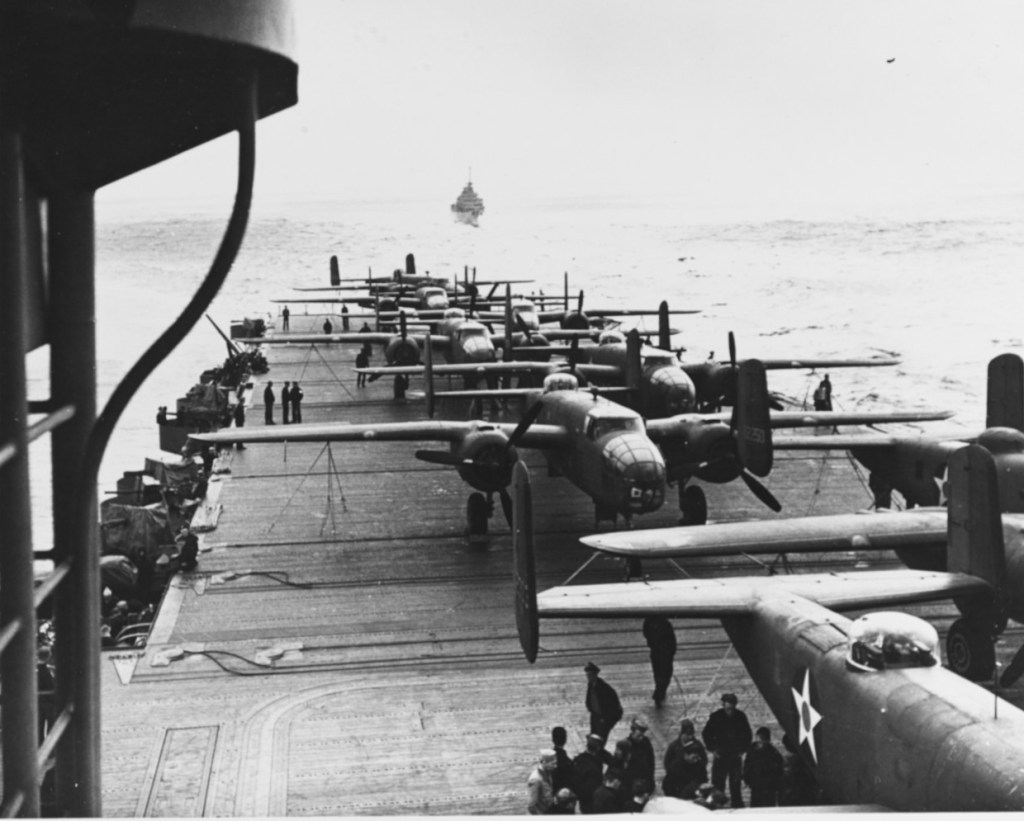
This story begins on April 18, 1942, when a flight of sixteen Mitchell B25 medium bombers launched from the deck of the carrier, USS Hornet. It was a retaliatory raid on Imperial Japan, planned and led by Lieutenant Colonel James “Jimmy” Doolittle of the United States Army Air Force. The raid was payback for the sneak attack on Pearl Harbor, four months earlier. A demonstration that the Japanese home islands, were not immune from destruction.

Launching such massive aircraft from the decks of a carrier had never been attempted. There were no means of bringing them back.  With extra gas tanks installed and machine guns removed to save the weight, this was to be a one-way mission, into territory occupied by a savage adversary.

Doolittle Signatures

Fearing that mission security was breached, the bomb run was forced to launch 200 miles before the intended departure spot.  At this range the bombers themselves might not even make it. Fighter escort, impossible.

Japanese Premier Hideki Tojo was inspecting military bases, at the time of the raid. One B-25 came so close he could see the pilot, though the American bomber never fired a shot.

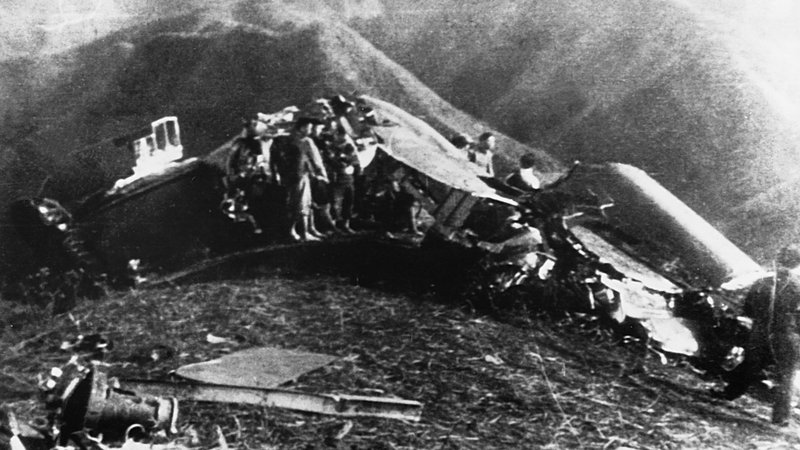
After dropping their bombs, fifteen continued west, toward Japanese occupied China.  Unbeknownst at the time, carburetors bench-marked and calibrated for low level flight had been replaced in flight #8, which now had no chance of making it to the mainland.  Twelve crash landed in the coastal provinces.  Three more, ditched at sea.  Pilot Captain Edward York pointed flight 8 toward Vladivostok, where he hoped to refuel.  The pilot and crew were instead taken into captivity and held, for thirteen months.

aftermath.jpg__800x450_q85_crop_upscale

Crew 3 Engineer-Gunner Corporal Leland Dale Faktor died in the fall after bailing out. Staff Sergeant Bombardier William Dieter and Sergeant Engineer-Gunner Donald Fitzmaurice bailed out of aircraft #6 off the China coast, and drowned.

The heroism of the indigenous people at this point, is a little-known part of this story.  The massive sweep across the eastern coastal provinces, the Zhejiang-Jiangxi campaign, cost the lives of 250,000 Chinese.  A quarter-million murdered by Japanese soldiers, in the hunt for Doolittle’s raiders.  How many were in a position to betray the American flyers and refused, will never be known.

Amazingly, only eight were captured, out of seventy-seven survivors.

First Lieutenant Pilot “Bill” Farrow and Sergeant Engineer-Gunner Harold Spatz, both of Crew 16, and First Lieutenant Pilot Dean Edward Hallmark of Crew 6 were caught by the Japanese and executed by firing squad on October 15, 1942.  Crew 6 Co-Pilot First Lieutenant Robert John Meder died in a Japanese prison camp, on December 11, 1943.  Most of the 80 who began the mission, survived the war.

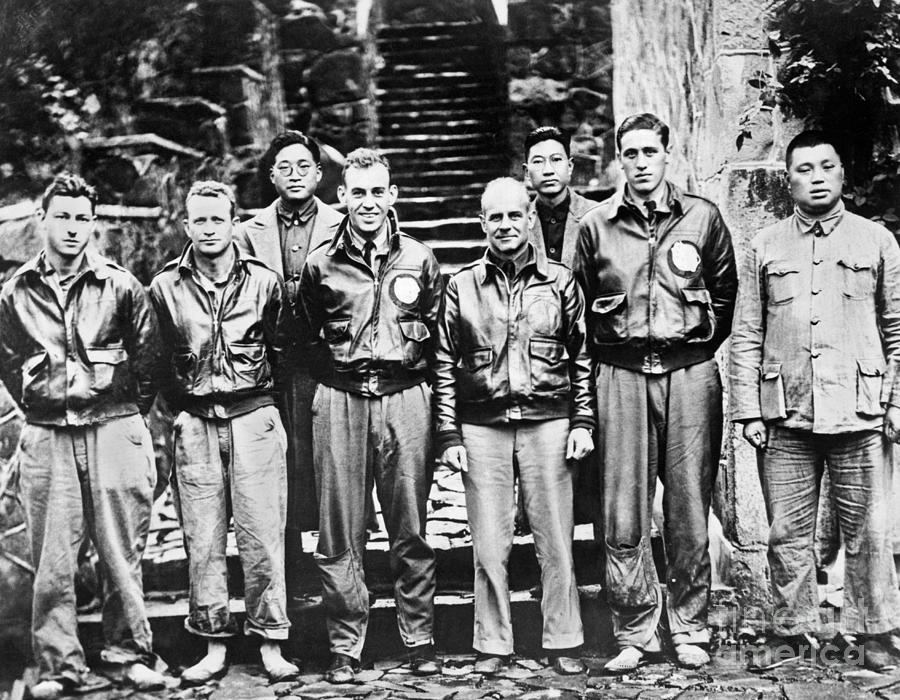
Jimmy Doolittle and his crew in China, after the raid

Thirteen targets were attacked, including an oil tank farm, a steel mill, and an aircraft carrier then under construction.. Fifty were killed and another 400 injured, but the mission had a decisive psychological effect.  Japan withdrew its powerful aircraft carrier force to protect the home islands. Admiral Isoroku Yamamoto attacked Midway, thinking that to have been the jump-off point for the raid. Described by military historian John Keegan as “the most stunning and decisive blow in the history of naval warfare”, the battle of Midway would be a major strategic defeat for Imperial Japan.

s_w07_20418042
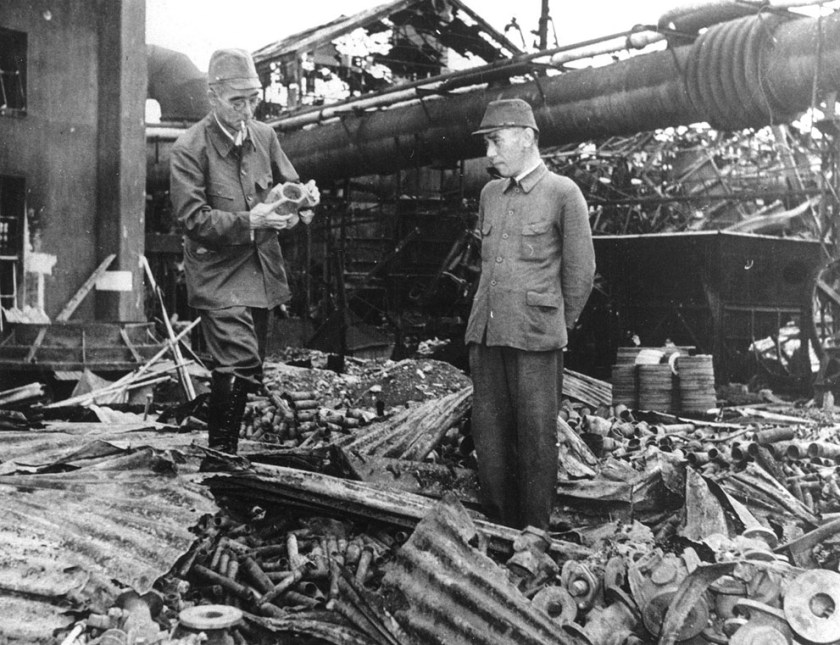
Ryozo Asano, left, spokesman for a group of diversified Japanese family enterprises called the Zaibatsu, inspects the wreckage of his Tokyo steel plant

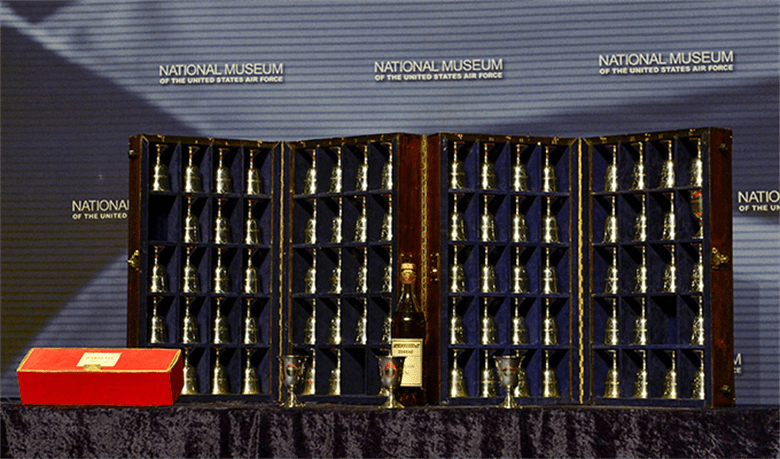
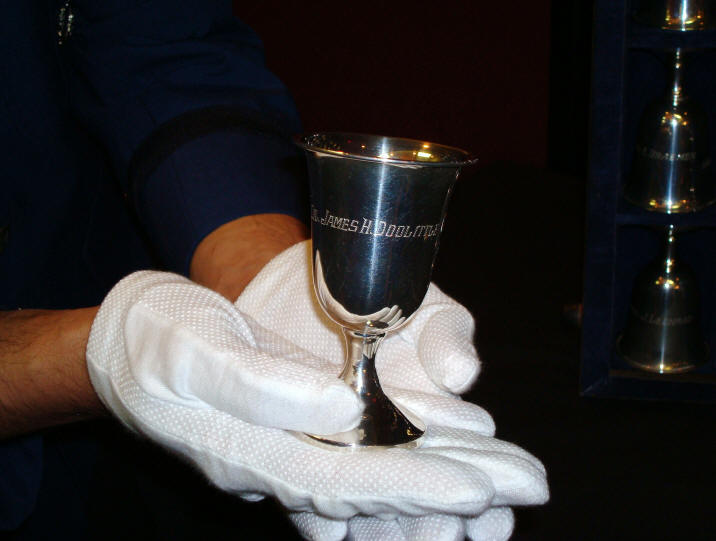
Every year since the late 1940s, the surviving Doolittle raiders have held a reunion.  In 1959, the city of Tucson presented them with 80 silver goblets, each engraved with a name. They are on display at the National Museum of the Air Force, in Dayton Ohio.

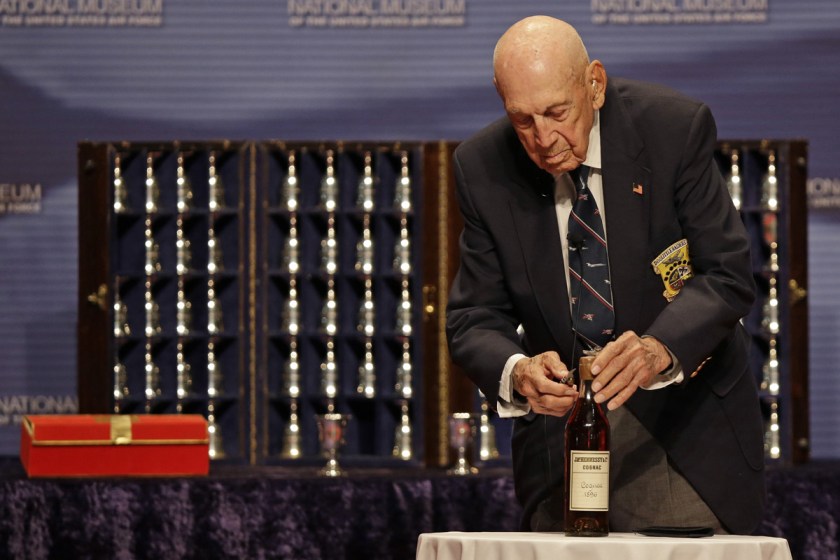
With those goblets is a fine bottle of vintage Cognac.  Hennessy VS 1896, the year Jimmy Doolittle was born. For many years there a bargain between the survivors that, one day, the last two would open that bottle, and toast their comrades.

DSC00017

They changed that bargain in 2013.   Just a little. Jimmy Doolittle himself passed away in 1993. Twenty years later, 76 goblets were turned over, each signifying a man who had passed on.  Now, there were only four.

  1. Lieutenant Colonel Richard E. Cole* of Dayton Ohio was co-pilot of crew No. 1.  Remained in China after the Tokyo Raid until June 1943, and served in the China-Burma-India Theater from October, 1943 until June, 1944. Relieved from active duty in January, 1947 but returned to active duty in August 1947.
  2. Lieutenant Colonel Robert L. Hite* of Odell Texas was co-pilot of crew No. 16. Captured by the Japanese and held prisoner for forty months, he watched his weight drop to eighty pounds.
  3. Lieutenant Colonel Edward J. Saylor* of Brusett Montana was engineer-gunner of crew No. 15.   Served throughout the duration of WW2 until March 1945, both Stateside, and overseas.  Accepted a commission in October 1947 and served as Aircraft Maintenance Officer at bases in Iowa, Washington, Labrador and England.
  4. Staff Sergeant David J. Thatcher* of Bridger Montana was engineer-gunner of crew No. 7.  Served in England and Africa after the Tokyo raid until June 1944, and discharged in July 1945.
*H/T, http://www.doolittleraider.com

These four agreed to gather, one last time.  It would be these four men who would finally open that bottle.

doolittle2

Robert Hite, 93, was too frail to travel in 2013.  Wally Hite stood in for his father.

On November 9, 2013, that 117 year-old bottle of rare, vintage cognac was cracked open, and enjoyed among a company of heroes.  If there is a more magnificent act of tribute, I cannot at this moment think of what it might be.

On April 18, 2015, Richard Cole and David Thatcher fulfilled their original bargain, as the last surviving members of the Doolittle raid.  Staff Sergeant Thatcher passed away on June 23, 2016, at the age of 94.  Today, not one of those eighty goblets remains upright.  Lieutenant Colonel Richard Cole passed from this life on April 9, 2019, at the age of 103.  There is no living man today who has so earned the right to open that rare and vintage cognac.

November 8, 1965 Kill or Be Killed

On this day in 1965, the 173rd Airborne Infantry Brigade was halfway through a one-year term of service, in Vietnam. “Operation Hump”, so named in recognition of that mid-point, was a search and destroy mission inserted by helicopter, on November 5.

Vietcong fighters occupied positions on several key hills near Bien Hoa, with the objective of driving the Americans out.

Operation hump, 2

There was little contact through the evening of the 7th, when B and C Companies of the 1/503rd took up a night defensive position in the triple canopied jungle near Hill 65.

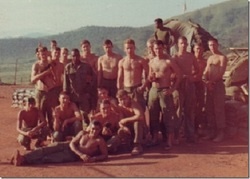
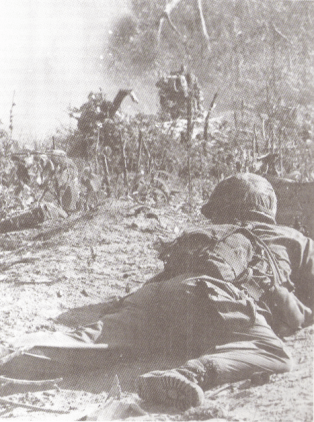
On the morning of the 8th, the Brigade found itself locked in combat with an entire main line Vietcong Regiment, pouring out of entrenched positions and onto the American defenses.

The Vietcong were well aware of American superiority when it came to artillery and air cover. The VC strategy was to get in close enough to nullify the advantage. “Grab Their Belts to Fight Them”.

Operation hump, 4

Outnumbered in some places six to one, it was a desperate fight for survival as parts of B and C companies were isolated in fighting that was shoulder to shoulder, hand to hand.

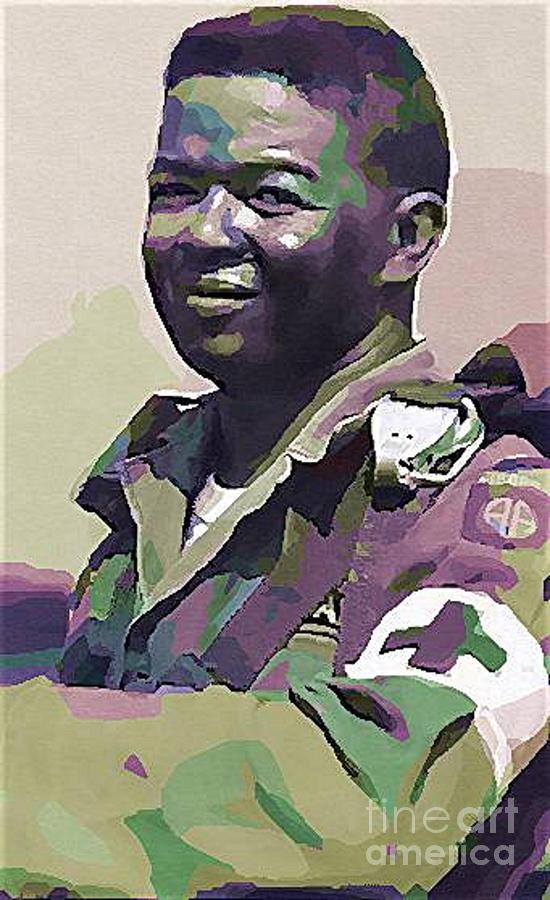
Shot through the right thigh and calf with his medical supplies depleted, Army Medic Lawrence Joel hobbled about the battlefield on a makeshift crutch, tending to the wounded.

Though himself wounded, Specialist 4 Randy Eickhoff ran ahead, providing covering fire. Eickhoff was later awarded the Silver Star and Purple Heart for his actions.

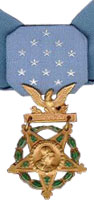
Specialist 5 Joel received the Medal of Honor for his actions that day, near hill 65.  Let Joel’s citation, tell his part of the story:

Cmoh_army

For conspicuous gallantry and intrepidity at the risk of life above and beyond the call of duty. Specialist 5 Joel demonstrated indomitable courage, determination, and professional skill when a numerically superior and well-concealed Viet Cong element launched a vicious attack which wounded or killed nearly every man in the lead squad of the company. After treating the men wounded by the initial burst of gunfire, he bravely moved forward to assist others who were wounded while proceeding to their objective. While moving from man to man, he was struck in the right leg by machine gun fire. Although painfully wounded his desire to aid his fellow soldiers transcended all personal feeling. He bandaged his own wound and self-administered morphine to deaden the pain enabling him to continue his dangerous undertaking. Through this period of time, he constantly shouted words of encouragement to all around him. Then, completely ignoring the warnings of others, and his pain, he continued his search for wounded, exposing himself to hostile fire; and, as bullets dug up the dirt around him, he held plasma bottles high while kneeling completely engrossed in his life saving mission. Then, after being struck a second time and with a bullet lodged in his thigh, he dragged himself over the battlefield and succeeded in treating 13 more men before his medical supplies ran out. Displaying resourcefulness, he saved the life of one man by placing a plastic bag over a severe chest wound to congeal the blood. As 1 of the platoons pursued the Viet Cong, an insurgent force in concealed positions opened fire on the platoon and wounded many more soldiers. With a new stock of medical supplies, Specialist 5 Joel again shouted words of encouragement as he crawled through an intense hail of gunfire to the wounded men. After the 24 hour battle subsided and the Viet Cong dead numbered 410, snipers continued to harass the company. Throughout the long battle, Specialist 5 Joel never lost sight of his mission as a medical aid man and continued to comfort and treat the wounded until his own evacuation was ordered. His meticulous attention to duty saved a large number of lives and his unselfish, daring example under most adverse conditions was an inspiration to all. Specialist 5. Joel’s profound concern for his fellow soldiers, at the risk of his life above and beyond the call of duty are in the highest traditions of the U.S. Army and reflect great credit upon himself and the Armed Forces of his country“.

lawrence-joel-popart-lawrence-joel

48 Americans lost their lives in the battle. Many more were wounded. Two Australian paratroopers were recorded, MIA. Their remains were discovered years later and repatriated, in 2007.

The country music duo Big and Rich wrote a musical tribute to that day. It’s called the 8th of November.

The children at YouTube have chosen to place this video behind an “age restriction”. You will do well to ignore YouTube. Those people are fools.

November 7, 1957 Nuke the Moon

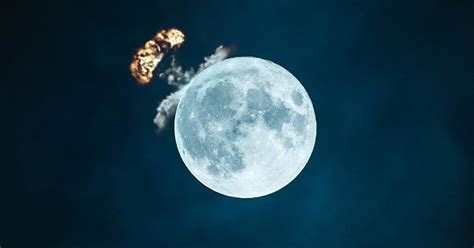
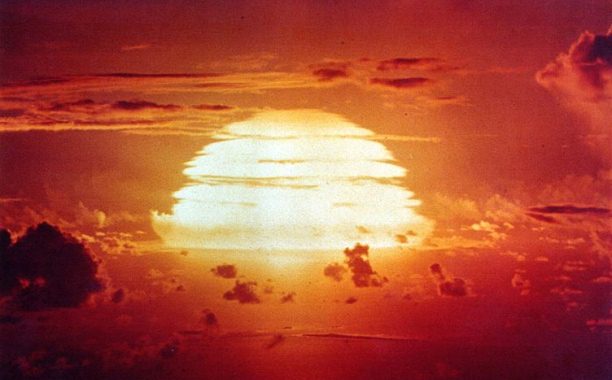
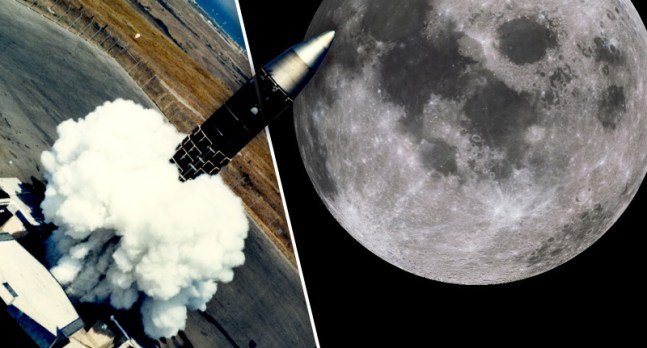
Out of the mess of the Space race emerged an idea destined to go down in the Hare-Brain Hall of fame, if there is ever to be such a place. A show of force sufficient to boost domestic morale while showing the Russkies, we mean Business. It was the top-secret “Project A119”, also known as A Study of Lunar Research Flights. We were going to detonate a nuclear weapon. On the moon.
As World War II drew to a close in 1945, there arose a different sort of conflict, a contest of wills, between the two remaining Great Powers of the world. The “Cold War” pitted the free market economy and constitutional republicanism of the United States against the top-down, authoritarian governing and economic models of the Soviet Union. The stakes could not have been higher, as each side sought to demonstrate its own technological and military superiority and, by implication, the dominance of its own economic and political system.
American nuclear preeminence lasted but four short years, coming to an end with the first successful Soviet atomic weapon test code named “First Lightning”, carried out on August 29, 1949. Mutual fear and distrust fueled the Soviet-American “arms race”, a buildup of nuclear stockpiles beyond any rational purpose. A generation grew up under the shadow of nuclear annihilation.  A single mistake, misunderstanding or one fool in the wrong place at the wrong time, initiating a sequence and bringing about the extinction of life on this planet.
nuclear

The arms race acquired the dimensions of a Space Raceon July 29, 1956, when the United States announced its intention to launch an artificial satellite, into earth orbit. Two days later, the Soviet Union announced that it aimed to do the same.

The early Space Race period was a time of serial humiliation for the American side, as the Soviet Union launched the first Inter-Continental Ballistic Missile (ICBM) on August 21, 1957, and the first artificial satellite “Sputnik 1” on October 4.

Laika and capsule

The first living creature to enter space was the dog Laika“, launched aboard the spacecraft Sputnik 2 on November 3 and labeled by the more smartass specimens among the American commentariat, as “Muttnik”.

Soviet propaganda proclaimed “the first traveler in the cosmos”, replete with heroic images printed on posters, stamps and matchbook covers. The American news media could do little but focus on the politics of the launch, as animal lovers the world over questioned the ethics of sending a dog to certain death, in space.

On the American side, the giant Vanguard rocket was scheduled to launch a grapefruit-sized test satellite into earth orbit that September, but the program was plagued by one delay after another. The December 6launch was a comprehensive disaster, the rocket lifting all of four-feet from the pad before crashing to the ground in a sheet of flame, the satellite rolling free where it continued to beep, only feet from the burning wreck.

The second Vanguard launch was nearly as bad, exploding in flames only seconds after launch.  Chortling Soviet leaders were beside themselves with joy, stamping the twin disasters as “Kaputnik”, and “Flopnik”.

Out of this mess emerged an idea destined to go down in the Hare-Brain Hall of fame, if there is ever to be such a place. A show of force sufficient to boost domestic morale, while showing the Russkies, we mean business. It was the top-secret “Project A119”, also known as A Study of Lunar Research Flights.

We were going to detonate a nuclear weapon.  On the moon.

In 1957, newspapers reported a rumor. The Soviet Union planned a nuclear test explosion on the moon, timed to coincide with the lunar eclipse of November 7. A celebration of the anniversary of the Glorious October Revolution.

Edward Teller himself, the ‘Father of the H-Bomb” is said to have proposed such an idea as early as February, to test the effects of the explosion in a vacuum, and conditions of zero gravity.

644962_v1

Today, we take for granted the massively complex mathematics, involved in hitting an object like the moon. In 1957 there was a very real possibility of missing the thing and boomerang effect, returning the bomb from whence it came.

While the information is still classified, the project was revealed in 2000 by former NASA executive Leonard Reiffel, who said he was asked to “fast track” the program in 1958, by senior Air Force officials. A young Carl Sagan was all for the idea, believing at the time that living microbes may inhabit the moon, and a nuclear explosion may help in detecting such organisms.

Reiffel commented in a Guardian newspaper interview:  “It was clear the main aim of the proposed detonation was a PR exercise and a show of one-upmanship. The Air Force wanted a mushroom cloud so large it would be visible on earth. The US was lagging behind in the space race.” The now-retired NASA executive went on to explain that “The explosion would obviously be best on the dark side of the moon and the theory was that if the bomb exploded on the edge of the moon, the mushroom cloud would be illuminated by the sun.”

The Air Force canceled the A119 program in 1959, apparently out of concern that a ‘militarization of space’ would create public backlash, and that nuclear fallout may hamper future research and even colonization efforts, on the moon.

moon-nuke_wikimedia-commons_fb

Previously secret reports revealed in 2010 that Soviet leaders had indeed contemplated such a project, part of a multi-part program code named “E”.  Project E-1 involved reaching the moon, while E-2 and E-3 focused on sending a probe around the far side of the celestial body. The final stage, project E-4, involved a nuclear strike on the moon as a “display of force”.

Construction plans for the aforementioned Hare-Brain Hall of Fame have yet to be announced but, it already appears the place may need another wing.

IS00561-What-If-We-Detonated-a-Nuke-on-the-Moon-thumbnail-image-16X9.jpg

November 6, 1944 Going Home

Sometime in the 2030s it is said, the most destructive war in human history will fade from living memory as the last World War II combatant, is laid to rest. They have All earned the right, to be remembered.

As Depression descended over the 1930s US, few states had a harder time of it, than the Sooner state. This was the world of Loyce Edward Deen, growing up 7th of eight children born to Grace and Allen Deen in the small town of Sulphur, Oklahoma.

The family moved to Altus, Oklahoma where Allen worked as a schoolteacher. Loyce would care for his younger brother Lewis, born with Down’s syndrome. The pair became extremely close. It broke his brother’s heart when Lewis became and ill and died, while Loyce was still in Junior High.

Loyce and his older brother Lance were busy during the High school years, caring for their mother following a debilitating stroke.

Loyce’s niece Bertha Deen Sullivan was little at the time, and still remembers. “Loyce was a tall dark handsome young man with deep blue eyes”. He would pick her up and ask “Who loves ya?” And then he would kiss her on the forehead.

Altus was a small town, the kind of place where the newspaper printed the bio of every graduating high school senior. Where Deen was concerned, the Times-Democrat wrote “Loyce Deen is a young man with high ambitions. He plans to enter the US Navy aeronautical mechanics division after graduation and finds subjects such as problems of American democracy, the most interesting. He has also been active in dramatics work at school.

Loyce worked for a time with the government’s Civilian Conservation Corps (CCC), and later joined the Douglas Aircraft Company in Wichita, building wing sets for the A-26 Invader attack bomber.

Loyce_pic_

Deen wanted to join the Navy, even before the Japanese attack on Pearl Harbor. In October 1942, he did just that.

First came basic training in San Diego and then gunner’s school, learning all about the weapons systems aboard a Grumman TBF Avenger torpedo bomber. Then on to Naval Air School Fort Lauderdale, before joining the new 15th Air Group, forming out of Westerly, Rhode Island.

On April 29, 1944, the Air Group reported for duty aboard the “Fightingest Ship in the Navy” at Pearl Harbor.  The aircraft carrier, USS Essex.

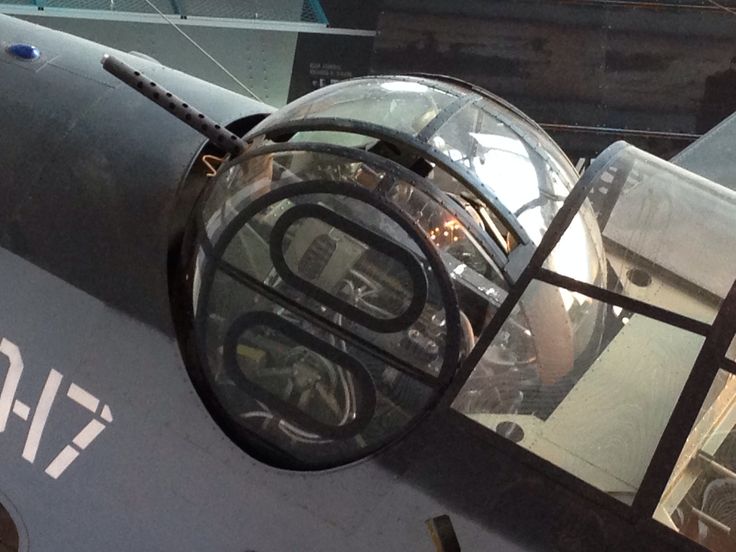
An Air Group consists of eighty or so aircraft, of three distinct types. First are the fighters, the fast, single seat Grumman Hellcats. Next are the two-seat dive bombers, the Curtiss Helldivers, the pilot joined by a rear-seat gunner whose job it is to lay the one-ton bomb on the target while handling a machine gun, at the same time. Third is the torpedo bomber, the Grumman Avenger, with two enlisted crewmen in addition to the pilot. The Avenger carries a ton of bombs, depth charges or aerial torpedoes and, like the Helldiver, is designed for low-level attack.

cache_3727742604

Loyce was the turret gunner on one of these Avengers, assigned to protect the aircraft from above and teamed up with Pilot Lt. Robert Cosgrove from New Orleans, Louisiana and Radioman Digby Denzek, from Grand Rapids, Michigan.

Cosgrove was a superb pilot, often returning aircraft to the carrier, so shot up as to seem unflyable. Digby had several jobs, including arming the weapons systems, and operating the radio. When the team was under fire, Digby would crawl down into a ball turret on the belly of the aircraft, his machine gun defending from below.

The 15th Air group saw some of the most intense fighting it had ever encountered during the battle of Leyte Gulf of October 24-25, 1944. Commander Lambert, who oversaw the Avenger squadron, described “Coming in through the most intense and accurate AA yet experienced, the squadron made three hits on one battleship, two hits on another battleship, and two hits each on two different heavy cruisers“.

Dennis_Blalock
Dennis Blalock of Calhoun GA, his hands on the shoulders of shipmate, Loyce Deen. Both would be dead within ten days, of this photograph

Deen received a shrapnel wound to his foot sometime during the fighting of the 24th. He wrapped the thing up and stayed on to fight, the following day. He would later receive a Purple heart medal for the wound. Posthumously.

Following rest and replenishment at Ulithi Atoll in the Caroline Islands, USS Essex was on station for the November 5 Battle of Manila Bay.  Loyce could have stayed back on a hospital ship until that foot healed, but chose to ignore the injury and rejoin his unit.

Loyce’s niece Bertha, was not surprised. On being informed of his injury, she said “I’m not surprised he stayed with his unit. Loyce would not have it any other way – he would always remain at his post to make sure his brothers came home safely with him.

Loyce Deen climbed into his gun turret for the last time on November 5. It was a two hour ride to the target zone in Manila Bay, with Japanese aircraft on the radar for most of that time, the carriers USS Lexington and Ticonderoga, under kamikaze attack.

Lieutenant Cosgrove’s Avenger came under savage anti-aircraft fire, from a Japanese cruiser.  Loyce Deen took two direct hits and was killed, instantly.  The Avenger aircraft, tail number 93, was so smashed up as to be all but unflyable.  It took all of the pilot’s strength and skill to fly the thing back through two thunderstorms, and land on the Essex.

e281f946d5375133dd2c1afe6213dacd

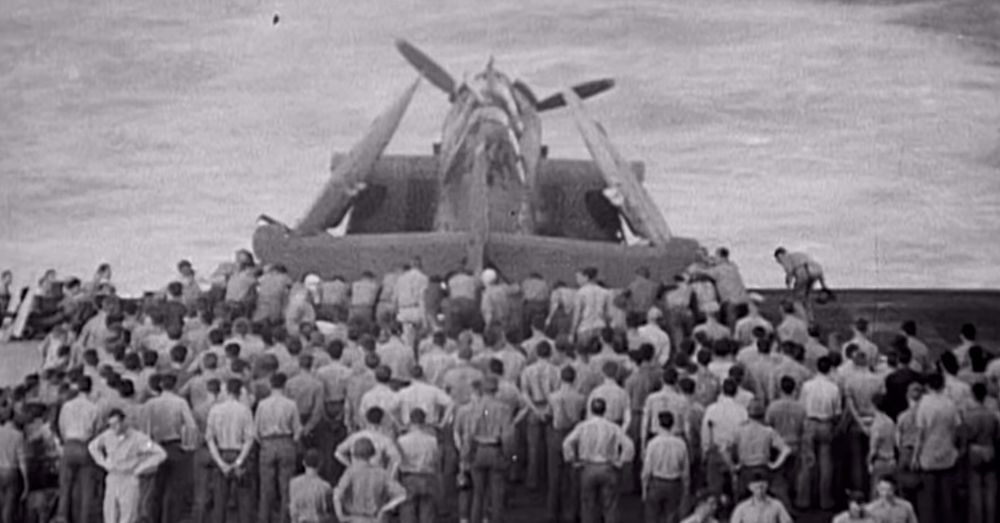
The body Loyce Edward Deen was so badly mangled it was impossible to disentangle the remains, from the smashed turret. For the first time in history and I believe the only time, a man was deliberately buried at sea, entombed by the aircraft in which he had served.

Fingerprints were taken and dog tags removed. This particular Avenger wasn’t even scavenged, for parts. With the crew of the USS Essex assembled on deck, the shattered aircraft was pushed over the side. Two other Avengers flew overhead in salute, as the tail dipped beneath the waves.

Loyce Edward Deen, was going home.

Not long after the ceremony, the carrier went to General Quarters. There were kamikazes to deal with.

For us this story has come to an end. Lieutenant Cosgrove and the rest of Air Group 15 got back into their aircraft the following day, November 6 and again on the 12th, 13th and 14th, each day yet another mortal combat against that same fleet, in Manila Bay.

For the Deen family the dread knock came to their door, the week of Thanksgiving.

November 5, 1605 Remember Remember, the 5th of November

The plan was to decapitate the English state, blowing up King James I along with much of the nation’s religious and political leadership. The Gunpowder Plot would end in failure, and a rhyme known to British school children, from that day to this.

The Tudor King Henry VIII began to take control of the English church in 1533, barely 16 years after Martin Luther is said to have nailed his 95 theses to the church door. The Protestant Reformation was barely underway. With life and eternal damnation at stake both sides would come to regard the other, as heretical.

Henry fell out with Pope Clement VII over the latter’s refusal to grant him an annulment from Catherine of Aragon. By 1540, the break between the Church of England and the Church of Rome was complete.

henryviii

English Catholics became increasingly marginalized for the remainder of Henry’s reign, and that of his daughter, Elizabeth I, who died in 1603 without issue. There were several assassination attempts against Protestant rulers in Europe and England, including a failed plot to poison Elizabeth I and the assassination of French King Henry III, who was stabbed to death by a Catholic fanatic, in 1589.

King James VI of Scotland succeeded the “Virgin Queen” in 1603, to the great disappointment of English Catholics. The moderates among them favored James’ and Elizabeth’s cousin Arbella Stuart, a woman believed to harbor Catholic sympathies. More radical Catholics looked to the infant daughter of Phillip II of Spain, the Infanta Isabella.

There were already at least two plots to remove the King from office, when James discovered that his wife, Queen Anne, had secretly received a rosary from the Pope. James responded by denouncing the Catholic Church, ordering Jesuit and all other Catholic priests to leave the country. He re-imposed “recusancy fees”, which had earlier been implemented by Elizabeth. The sum of such fines soon rose to £5,000 a year, equivalent to well over £10 million today.

Among those who believed that ‘faith need not be kept with heretics’, regicide seemed the only way out.

The “Gunpowder Plot”, also known as the “Jesuit Treason”, was inspired by Robert Catesby, a man of “ancient, historic and distinguished lineage”.

In league with about a dozen others, Catesby planned to blow up the House of Lords on November 5, 1605, killing King James and his Privy Council along with untold MPs and government records. The plan was to spark a popular revolt in the Midlands ending in the installation of James’ 9-year-old daughter, Princess Elizabeth, as Catholic head of state.

gfawkes

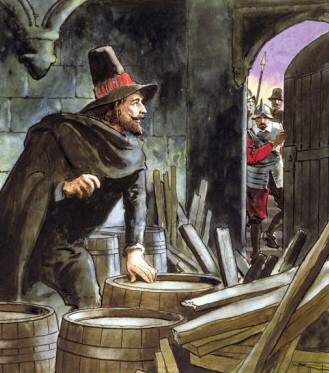
Guy Fawkes, who had 10 years of military experience fighting for the King of Spain in the Netherlands by this time, was placed in charge of the explosives.

In those days, goods of all kinds were transported in kegs. The movement of even a large number, was perfectly ordinary. Anticipating the State Opening of Parliament on July 28, 36 kegs of powder were moved to an undercroft on the 20th, a small room beneath the House of Lords. There was a metric ton of the stuff, enough to destroy the parliament building and everything around it, for a radius of 100 meters.

And then the plague reared its head and with it the fear, of gathering in large numbers. Parliament was postponed, until November 5.

Others were brought into the plot. That was probably it’s undoing. As the day approached an anonymous letter came to light, warning of the plot. Two separate searches on the evening of the 4th revealed the gunpowder barrels, hidden under sticks and coal. Guy Fawkes was discovered nearby carrying a length of slow burning fuse, called a match.

Fawkes was defiant at first saying there was enough powder, to “blow you Scotch beggars back to your native mountains“. Days of torture lay in wait, beginning with shackles and increasing in severity until finally, his body was “broken” on the rack. In January, all but two of the 13 conspirators were hanged, drawn and quartered for their treason. Those two had died in the attempt to flee and these, were dug up and decapitated. Fawkes himself, weakened by torture and weeks of confinement in the tower of London, even now managed to jump from the scaffold and break his neck, and thus to spare himself the ordeal of being emasculated and disemboweled before his own dying eyes.

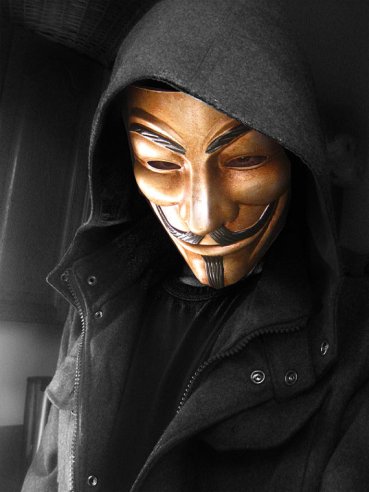
Guy Fawkes Mask

So it is that today, November 5th, is “Guy Fawkes Day”. People all over England will “remember, remember, the 5th of November, gunpowder, treason and plot.” Effigies of Guy Fawkes will be burned throughout the land.

A stylized version of the “Guy Fawkes Mask” came to be in the 1980s, with a comic book series and its later film adaptation, “V for Victory”. The story depicts a vigilante effort to destroy an authoritarian government in a dystopian future, Great Britain.

Since that time, groups ranging from the hacker/activist group Anonymous to Occupy, even radical Libertarians have used the Guy Fawkes mask. A symbol of protest against out of control, tyrannical government, political and banking institutions.

November 4, 1781 Divas

Händel himself was no slouch when it came to being the Temperamental Artist. He was lucky even to be alive following a furious argument in 1704 when a button was all that stood in the way of the skewering blade of fellow composer, Johann Mattheson.

George III King of Great Britain and Ireland ascended to the throne in 1760 declaring that, “Born and educated in this country, I glory in the name of Britain”. It was his reassurance that, unlike his father and grandfather before him, George III would rule, as an English King.

Kings George I and II were in fact Hanoverian and as such, did not speak English. At least not, fluently. Queen Victoria, that most quintessentially British of monarchs was in fact of German ancestry and spoke German, as a first language. George I, Elector of Brunswick-Lüneburg ascended to the throne of Great Britain and Ireland in August 1714, the first of the British Kings, from the House of Hanover.

The German composer George Frideric Händel was well known by this time, in German and Italian opera. He became Kapellmeister to the German prince in 1710, “Master of the Chapel Choir”. Chorale works Händel composed around this time for Queen Anne and the young and wealthy “Apollo of the Arts” Richard Boyle made it almost natural, that Händel would settle in England.

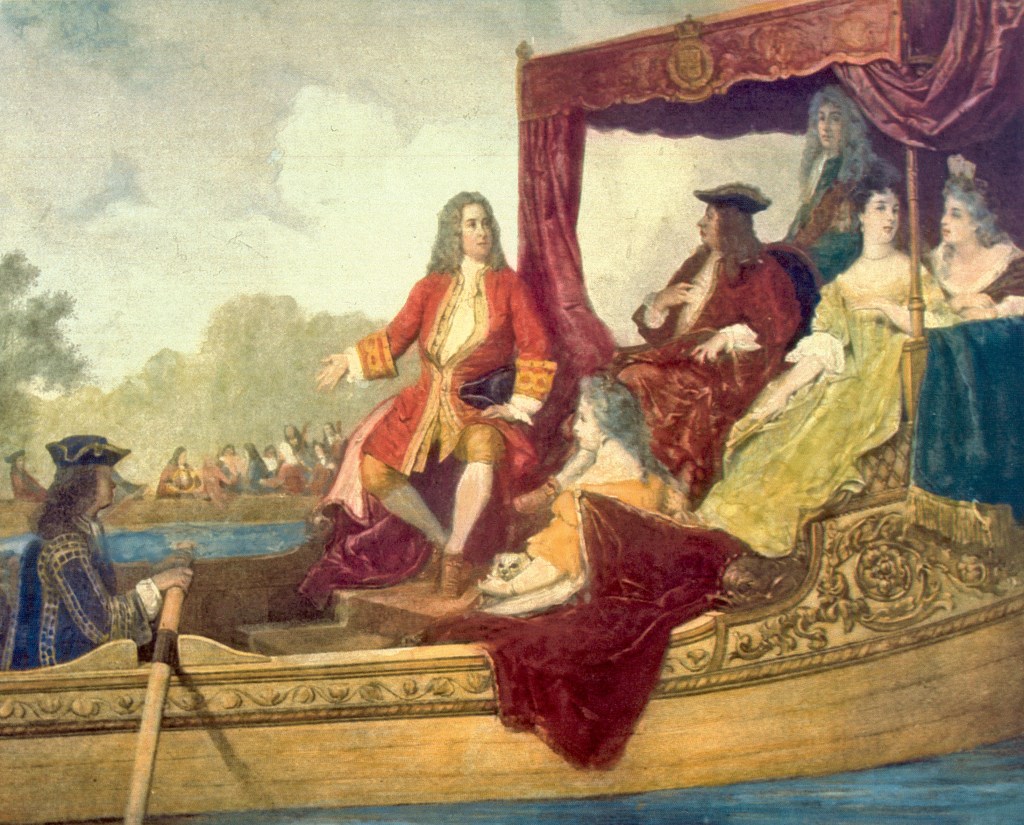
George I enjoys the River Thames with George Frideric Händel, in 1717

In Italian opera, a prima donna is the leading female singer in the company, the “first lady” opposite the male lead or primo uomo. Usually (but not always) a soprano, prima donne could be demanding of their colleagues with grand and sometime insufferable personae both on- and off-stage. Opera enthusiasts would divide into opposing “clubs” supporting or opposing one singer, over the other. The 19th century rivalry between fans of Maria Callas and Renata Tebaldi is an infamous example despite a personal friendship, between the two singers. When prima donne detest one another pandemonium, is sure to follow.

Händel’s work was popular in Georgian era society, so much so he was given free reign to hire his own performers. One such was Francesca Cuzzoni, a fiery soprano with the reputation as being among the greatest, of 18th century divas. Unkindly described by one opera historian as “doughy” and plain, a “short, squat” performer she nevertheless sang, with the voice of the angels. Widely regarded as one of the finest Sopranos in all Europe Händel hired Cuzzoni, in 1722.

Händel himself was no slouch when it came to being the Temperamental Artist. He was lucky even to be alive following a furious argument in 1704 when a button was all that stood in the way of the skewering blade of fellow composer, Johann Mattheson.

On rehearsal for her London debut, Cuzzoni became furious over one aria claiming the role was written, for someone else. She refused even to perform when Händel, a great bear of a man physically picked the woman off the ground by her waist, and threatened to throw her out a window.

Problem solved.

Francesca Cuzzoni, by James Caldwall

Francesca Cuzzoni went on to become a smashing success, for four years the undisputed Queen, of the London opera. In 1726, Händel sought to capitalize on this success and reached out to his Italian agents, for a second Star. So it was the mezo-soprano Faustina Bordoni was hired, for the following season.

Younger and considerably more attractive than the older Cuzzoni the pair had been rivals, back in Italy. Notwithstanding, Händel and other composers wrote a series of operas featuring a two-female lead taking great care to give the two, equal prominence.

You know where this is going, right?

Faustina Bordoni pastel, in 1724

Baroque opera loved nothing more than a love triangle and the two were often cast, as rivals for the affections of one man. The degree to which the two divas’ professional rivalry bled into their personal lives is a matter of some discussion but the behavior of their fans, is not.

The “clash” between the two soon became public knowledge. Opera-going aristocrats began to take up sides enthusiastically egged on, by the press. Society ladies would dress in the respective fashion of their particular heroine and hiss and catcall, at the appearance of the other.

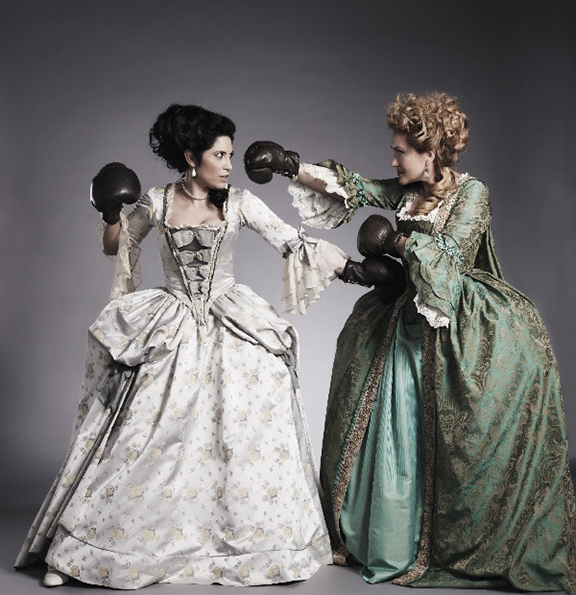
Things got out of hand during a performance of Bononcini’s Astianatte. Fights broke out among the audience when Cuzzoni turned and unleashed a torrent of Italian invective, at her rival. The pair hurled insults at one another. You know the words. These two, knew ALL of them them. Verbal combat soon became physical the performance, be damned. The scene beggars the imagination. A wild west bar fight in stalls and stage alike as two divas tore at each other’s costumes, and pulled each other’s hair.

In the end, the two were physically dragged from the stage their performance, abandoned.

Theater management canceled Cuzzoni’s contract. King George would have none of that and threatened to withdraw their allowance, and that was the end of that. The two divas kept an uneasy truce for the following season, but something had to give.

In the end, Faustina Bordoni was offered a guinea more for the 1728 season. One schilling, one pence. Predictably, Francesca Cuzzoni threw a tantrum and immediately resigned, and returned to Italy.

Faustina Bordoni lived on to a happy and prosperous old age and died on November 4, 1781. No so Francesca Cuzzoni who faded into poverty and obscurity eking out a living it is said, making and selling, buttons.

Back in 1728, theater management dearly wished the whole sorry mess would just go away. No such luck. John Gay’s Beggar’s Opera was a smash hit that season, “the most popular play of the eighteenth century” satirizing Italian opera with its perpetually feuding heroines Polly Peachum, and Lucy Lockit.

Hat tip “Rival Queens” featuring Simone Kermes, and Vivica Genaux

November 3, 1752 Quacks

As for the man who blinded Händel and all but murdered Bach, he worked most of his 72 years blinding hundreds of unfortunates before he himself, lost his sight. The English writer Samuel Johnson later described the man’s life as “an instance of how far impudence may carry ignorance.”

From Brahms to Beethoven, Mendelssohn to Mozart, German composers have formed the core and the nucleus, of western music. And not just the classical stuff. Frankfurt-born Hans Zimmer has composed scores for over 150 different films including The Lion King, the Pirates of the Caribbean series, Gladiator, and the Dark Knight trilogy. The German-born Persian composer Ramin Djawadi may not be a household name but we know his scores for the 2008 Marvel film Iron Man and season 7 of Game of Thrones, both nominated, for Grammy Awards. The German-American singer/songwriter Henry John Deutschendorf Jr. may not be a household name but his stage name certainly is. We remember him, as John Denver.

1685 was a good year for German composers, George Frideric Händel born on February 23 in Halle and Johann Sebastian Bach barely a month later, in Eisenbach. Bach’s father Johann Ambrosius was a 7th generation musician and encouraged the boy, to learn the violin. Not so Händel ‘s father. A respected barber-surgeon aged 63 at the time of Händel’s birth to his second wife Dorothea, Georg expected his son to study civil law.

Little George found means to smuggle a clavichord into an attic room where he would steal away to practice, while his parents slept.

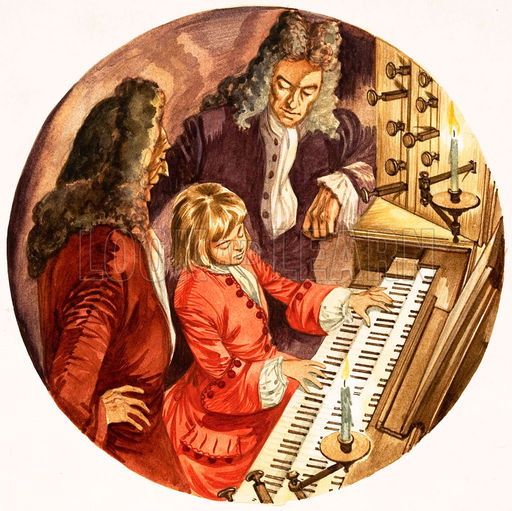
The boy was yet to turn ten when he accompanied his father to the court of the Duke of Johann, Adolf I. Somehow, George found himself on the organ stool and, when he began to play, Georg could only wonder where THAT came from. The Duke was so impressed he persuaded his father to allow him to study music and the rest, is history.

J.S. Bach was only ten when he lost both of his parents, only eight months apart. It was an uncle, Johann Christoph, who introduced the boy to the organ. Like Händel , Bach went on to become one of the most prolific composers of the Baroque era.

From 1727 to this day the anthem Zadok the Priest is performed at coronation ceremonies, of British royalty. The magnificent strains of George Frideric Händel’s “Messiah” and Johann Sebastian Bach’s “Christmas Oratorio” are favorites, of the Christmas season.  And yet there is another, darker connection between the two men. While the two never met both composers were blinded, by the same quack physician.

In the Dutch language a kwakzalver is a seller of cures, nostrums and potions of dubious origin, and little efficacy.   In 1665 an outbreak of Bubonic Plague ravaged London causing doctors to flee by the score leaving quacksalvers and charlatans to pray on the vulnerable, and the fearful.

So bad was it Daniel Defoe, author of Robinson Crusoe, penned the following: 

“Infallible preventive pills against the plague.” “Neverfailing preservatives against the infection.” “Sovereign cordials against the corruption of the air.” “Exact regulations for the conduct of the body in case of an infection.” “Anti-pestilential pills.” “Incomparable drink against the plague, never found out before.” “An universal remedy for the plague.” “The only true plague water.” “The royal antidote against all kinds of infection”;—and such a number more that I cannot reckon up; and if I could, would fill a book of themselves to set them down.

Daniel Defoe

British surgeon Dale Ingram remarked: “Every one [of the quacks in London] was at liberty to prescribe what nostrum he pleased, and there was scarce a street in which some antidote was not sold, under some pompous title.”

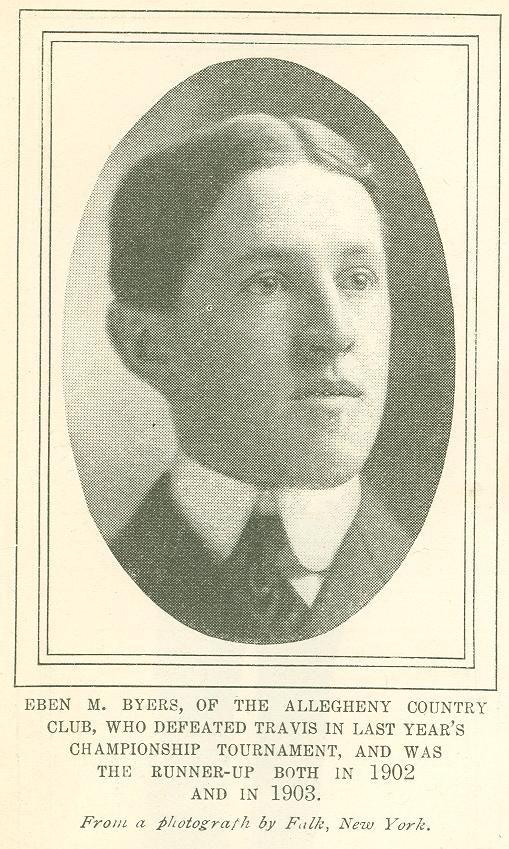
Clark Stanley claimed to have studied with native Hopi shaman and learned the medicinal benefits, of snake oil. The original snake oil salesman made a tidy sum until the US Congress passed the Pure Food and Drug Act, in 1906. In 1917, investigators discovered that Stanley’s elixir was nothing but ordinary mineral oil and beef fat flavored with red pepper, and turpentine. William Bailey’s RadiThor, a nostrum for the cure of erectile dysfunction was basically radium, dissolved in water. Ebenezer Byers, the wealthy Pittsburgh industrialist who won the 1906 US Amateur golf tournament was so enamored of the stuff he drank two to three bottles, every day. The federal government shut RadiThor down in 1932 but not before Byers met a horrible end, his skeleton destroyed and much of his skull eaten away, his jawless body buried, in a lead lined coffin. In 1822, British businessman James Morrison cured his own “inexpressible suffering” with a home made vegetable pill said to cure, whatever ails you. Morrison’s “vegetable universal medicines” were roundly criticized by the medical establishment of the time, but that didn’t seem to hurt business. In 1836 one of Morrison’s resellers was convicted of manslaughter when the post-mortem of one unfortunate revealed a belly full of Morrison’s pills, to be the cause of death.

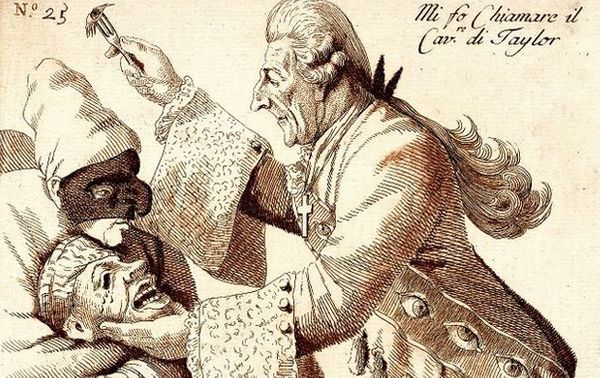
Which brings us to John Taylor and no, I’m not talking about the founding member, of Duran Duran. The self-styled “Chevalier” (knight) John Taylor was an oculist, Royal Eye Surgeon to none other than Britain’s King George, II.

Flamboyant, egotistical and utterly without principle, Taylor would ride into town in a horse drawn carriage painted with images of eyes and the words qui dat videre dat vivere (giving sight is giving life), painted on the side. Victims err, I mean patients of this Baroque era ShamWow pitchman were instructed to leave the bandage on for seven days, plenty long enough for the good doctor to get paid, and leave town. When he wasn’t busy writing his two-volume autobiography “The Life and Extraordinary History of the Chevalier John Taylor”, Taylor would ride into town and deliver a speech on a street corner before performing surgery. On the street corner. In an age before anesthesia with little conception of bacteria the idea was to get in and out, as quickly as possible.

Bach was losing his sight when he underwent the first of two unsuccessful surgeries. After the second, the composer developed a painful post-operative eye infection. Unsurprisingly, a ‘cure’ of laxatives and bleeding did little to relieve the symptoms. Johann Sebastian Bach died of his infection, just a few months later.

Händel was suffering with cataracts when he met the good doctor. Taylor performed a “couching” of the lens on this day in 1752, the insertion of a sharp hook to dislodge the lens and push it down, to emit light. On those few occasions where the procedure succeeded the patient would wear enormous, thick glasses to compensate, for the rest of his life. The other 70 percent including Mr. Händel …went blind.

The man who blinded Händel and all but murdered Bach worked most of his 72 years blinding hundreds of unfortunates before he himself, lost his sight. The English writer Samuel Johnson described the man’s life as “an instance of how far impudence may carry ignorance.” Today the name of John Taylor is all but forgotten, while the works of Bach and Händel live on, after all these centuries.

There’s a reason they call this stuff…Classical.

November 2, 1985 The Curse of Harlan Sanders

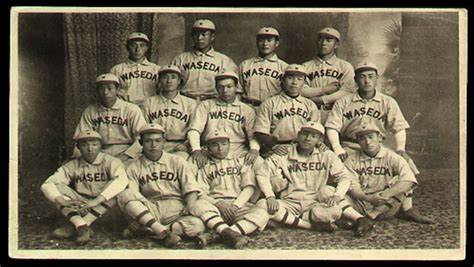
Much has been written of the rise of imperial Japan and the military officers, who brought the nation to war. How different the 20th century might have turned out had those guys picked up baseball, instead.

Baseball as we know it was introduced to the nation, in 1872. To this day, the game remains the most popular sport in the country for participants and spectators, alike. In 1907, Ambassador to the United States Tsuneo Matsudaira commented: “the game spread, like a fire in a dry field, in summer, all over the country, and some months afterwards, even in children in primary schools in the country far away from Tōkyō were to be seen playing with bats and balls“.

Did I neglect to mention? The nation we’re talking about, is Japan.

Professional baseball got off to a rocky start in 1920s Japan and continued to flounder, until 1934. That’s when media bigwig Matsutarō Shōriki pulled off a “goodwill tour” with an all-star American team.

“The [1934] party included future Hall of Famers Earl Averill, Lou Gehrig, Charlie Gehringer, Lefty Gomez, Connie Mack, Foxx and Ruth, along with several other American Leaguers (asked to accompany the tour when the National League forbade its stars from coming along). Even Moe Berg, the big league catcher who would eventually work as a United States government spy, was a member of the ball playing entourage”.

H/T baseballhall.org

Much has been written of the rise of imperial Japan and the military officers, who brought the nation to war. How different the 20th century might have turned out had those guys picked up baseball, instead.

The first Japanese professional league was formed in 1936, becoming large enough to split into two leagues in 1950, the Central and Pacific.

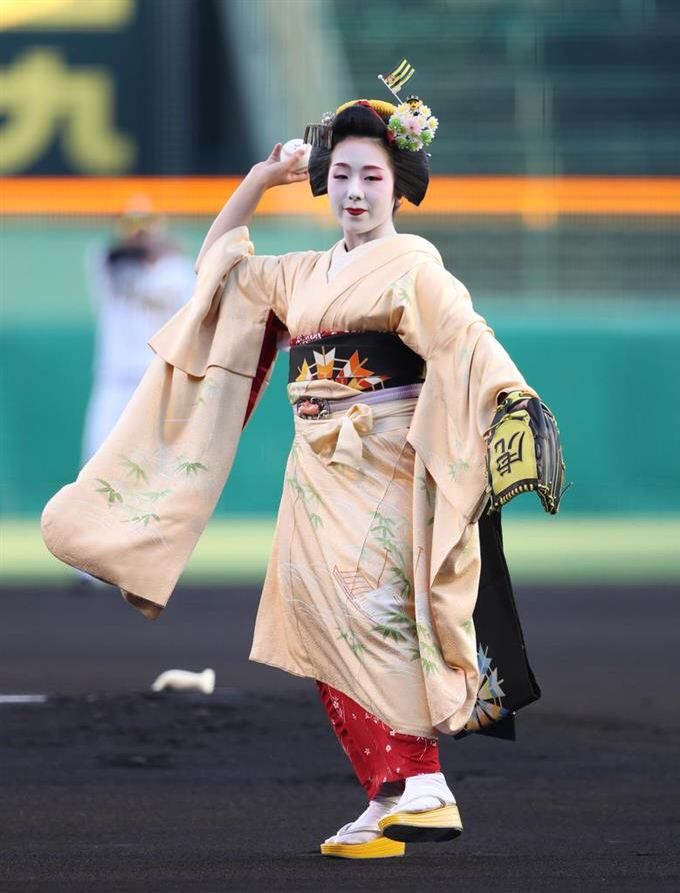
Today, the Kansai region of Honshu is the 2nd largest metropolis, in all Japan. That’s where you’ll find the Hanshin Tigers, those perennial underdogs of Nippon Professional Baseball and arch-rival to the Yomiuri Giants of Tokyo, widely regarded as the kings, of Japanese baseball.

As a life-long Red Sox fan, this story is beginning to sound familiar.

November 2, 1985 was a time of unbridled joy for delirious Tigers fans, following Hanshin’s 6-2 drubbing of the Seibu Lions to win the ultimate prize, the Japan series pennant, of 1985.

Now you may not know this, but the Japanese people are crazy, about Kentucky Fried Chicken. Japan is the third largest market on the planet for the Colonel’s yard bird, #3 only behind the United States and China. Not bad for a fast food outfit that opened its first Japanese franchise on July 4, 1970.

Which brings us back, to baseball.

The Boston baseball fan is well acquainted with the “Curse of the Bambino”, the 86-year World Series championship drought, second only to the “Curse of the Billy Goat” denying victory to long-suffering Cubbies fans, for 106 years.

Since 1985, Japanese mothers have scared wayward children into acting right with the curse, of Colonel Sanders.

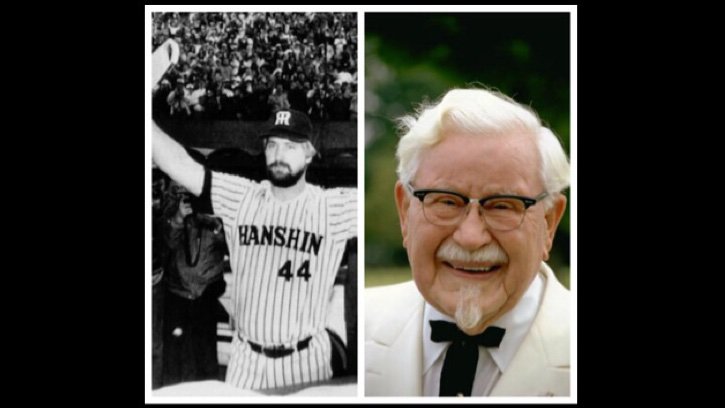
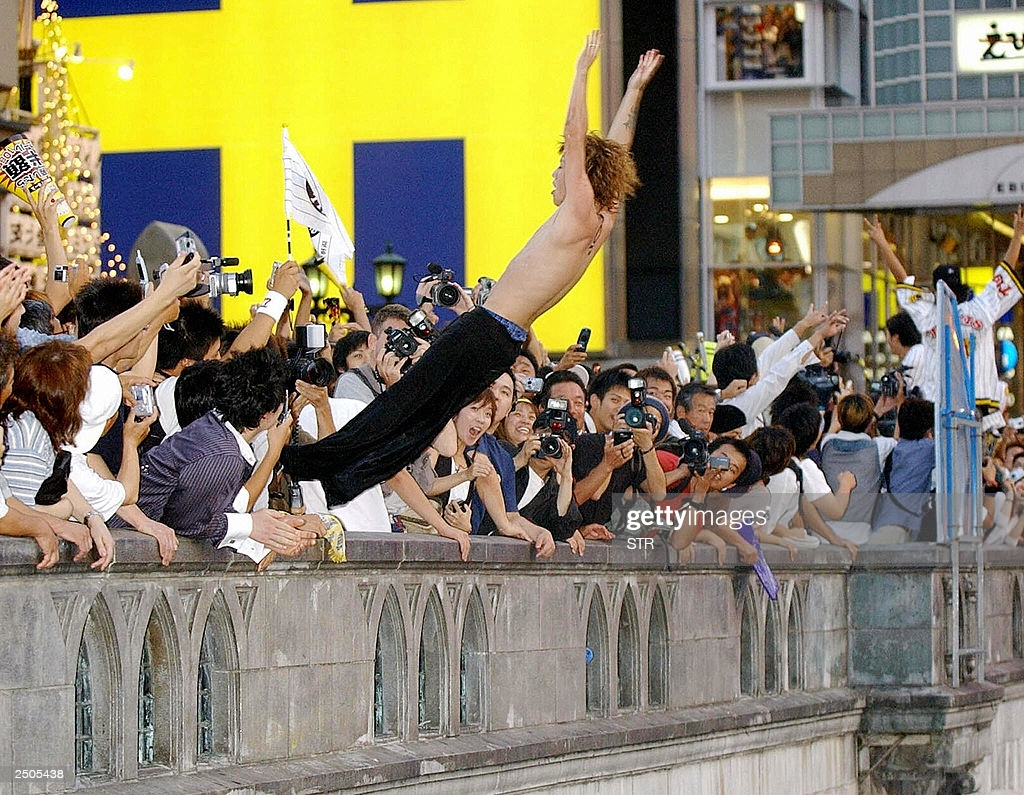
The Hanshin club emerged victorious in 1985, due in large part to the efforts of American slugger, Randy Bass. Delirious after unexpected victory in game one and superstitious as baseball fans the world over, Hanshin supporters gathered at the Ebisu Bridge over the Dōtonbori river in Osaka, to partake in one of the most bizarre spectacles, in the history of sports.

Fans would shout out the names of Tigers players and someone who resembled that player, even vaguely, would jump into the river. There being no Caucasians in attendance to represent Mr. Bass, the crowd took hold of a storefront statue of Harlan Sanders, and threw it into the River.

A young fan of the Hanshin Tigers dives into the Osaka river to celebrate the team’s first league championship win in 18 years 15 September 2003. Tigers defeated Hiroshima Carp 3-2. AFP PHOTO/JIJI PRESS (Photo credit should read STR/AFP via Getty Images)

What the hell. They were both white guys and they both wore beards, right?

Thus began the curse of Colonel Sanders, a losing streak brought on by the ghost of a man who didn’t appreciate being tossed, into a river. Brief rallies in 1992 and again in ’99 brought hope once again to the Hanshin faithful, (gosh, this story sounds Really familiar now), only to have cruel fate, block the way. Repeated efforts were made to retrieve the Colonel from the river, only to be met, with failure.

The curse, dragged on.

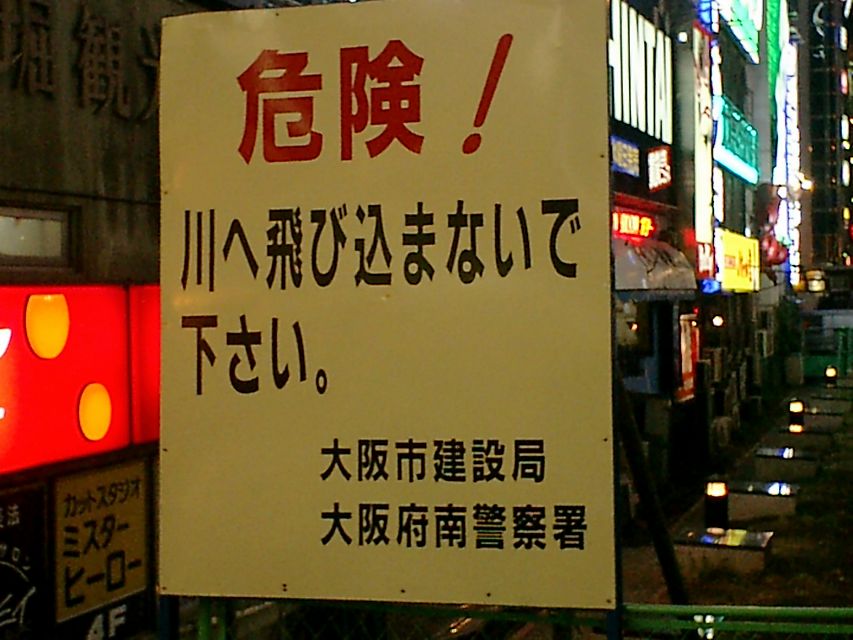
“Dangerous! Do not dive into this river. Osaka Regional Development Bureau and Osaka-Minami Police station” sign at the new Ebisubashi bridge H/T Wikipedia

The joy of victory smiled upon the land of Hanshin once again in 2003, when Yomiuri Giants MVP Hideki Matsui was traded to the New York Yankees, clearing the way to a Central League pennant for Hanshin. Even so, final victory remained elusive. The Japan series went to the Fukuoka Daiei Hawks that year, in 7 games.

Celebration turned to tragedy that year, when thousands of Tigers fans jumped into the river. 24-year-old Masaya Shitababa, drowned. The Osaka city council ordered construction of a new bridge over the Dōtonbori beginning in 2004, making further such jumps, next to impossible.

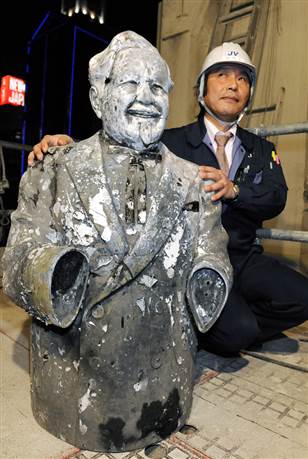
Divers discovered the upper part of Harlan Sanders’ statue on March 10, 2009 and the lower piece, the following day. And yet one hand and the Colonel’s eyeglasses, were nowhere to be found.

Colonel Sanders’ left hand and spectacles remain missing to this day and the KFC where it all started, is closed and gone forever. The October 26, 2021 English language edition of thehanshintigers.com blog mournfully reports: “Game 143 vs. Dragons: Lifeless Last Game, Pennant Lost”. So it is for long suffering fans of the Hanshin Tigers. The curse of Colonel Sanders, lives on.

Image.jpeg

November 1, 1945 X-Day

For years, everyone believed that semi-submersible craft in Fall River must have been a kamikaze vessel, from World War 2. The story that funny little boat had to tell was very different. The tale of a history, that never was.

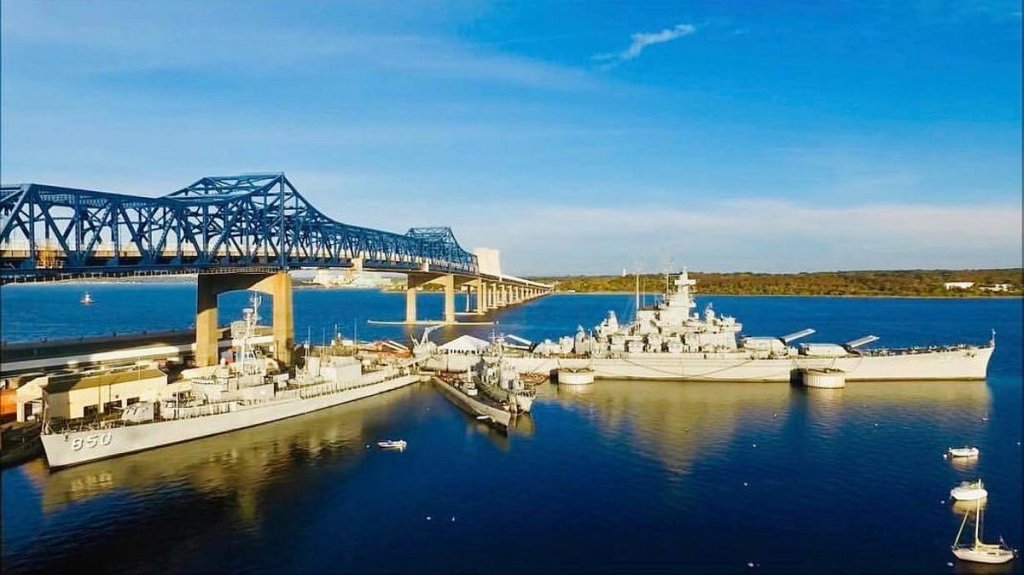
If you’re ever in southeastern Massachusetts, be sure to visit Battleship Cove in Fall River, the largest collection of World War 2 naval craft, in the world. The Battleship Cove museum sports some sixty exhibits, preserving the naval heritage of these iconic vessels and the veterans who served them.

To inspect battle damage visible to this day on the decks of USS Massachusetts is to realize United States armed forces once exchanged shots in anger with our French ally, at a place called Casablanca. The attack sub USS Lionfish once performed “lifeguard duty”, the rescue of downed fliers, off the coast of Japan. Her captain was Lieutenant Commander Edward D. Spruance, son of Admiral Raymond Spruance who commanded US naval forces during one of the most significant naval battles of the Pacific, the battle of the Philippine Sea.

To walk aboard USS Massachusetts or USS Lionfish, is to experience a side of WW2, fast disappearing from living memory.

Battleship Cove

Walk among the wooden-hulled PT boats of the Pacific war, and there you will find a strange little craft. One of three planned for and only two, ever built. Closed at the top and semi-submersible, a Japanese kamikaze boat perhaps, designed for suicide missions against allied warships. Museum management believed just that and mislabeled the display, for years.

The other it turns out is on display at Central Intelligence headquarters, at Langley, Virginia. Years later a retired CIA employee visiting Battleship cove spotted the error. CIA files declassified in 2011 added detail to a very different story, from that of Japanese suicide vessels.  To the tale of a history, that never was.

On August 2, 1939, Hungarian physicist Leó Szilárd delivered a letter which would change history, to President Franklin Delano Roosevelt. Written in consultation with fellow Hungarian physicists Edward Teller and Eugene Wigner and signed by Albert Einstein, the letter warned that Nazi Germany was working to develop atomic weapons, and urged the American government to develop a nuclear program of its own.  Immediately, if not sooner.

The Einstein–Szilárd letter spawned the super-secret Manhattan project, culminating in the atomic bombs “Little Boy” and “Fat Man”, and ending the war in the Pacific in August, 1945.

At the time, precious few were aware of even the possibility of such a weapon.  Fewer still, the existence of a program dedicated to building one.  Vice President Harry Truman, second only to the Commander in Chief himself, was entirely ignorant of the Manhattan project and only read in following the death of the President in April, 1945.

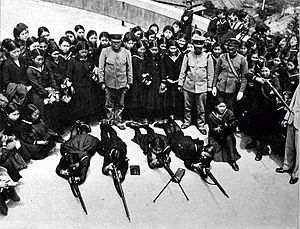
Female students with the Kokumin Giyū Sentōtai, the Volunteer Fighting Corps, prepare for the Allied projected invasion

The battle for the Japanese home islands was expected to be a fight like no other. Casualties of a million or more were expected, and for good reason. Japanese soldiers fought with such fanaticism, that hundreds continued to resist, years after the war was ended. The last holdout wouldn’t lay down his arms until 1974. 29 years, 3 months, and 16 days after the war had ended.

Such frenzied resistance would not be isolated to Japanese military forces, either. Japanese government propaganda warned of “American devils raping and devouring Japanese women and children.” American GIs looked on in horror in 1944, as hundreds if not thousands of Japanese soldiers and civilians hurled themselves to their death, at Laderan Banadero and “Banzai Cliff” on the northern Mariana island of Saipan. One correspondent wrote with admiration of such mass suicides, praising “the finest act of the Shōwa period”… “the pride of Japanese women.”

This is what their government, had taught these people to believe.

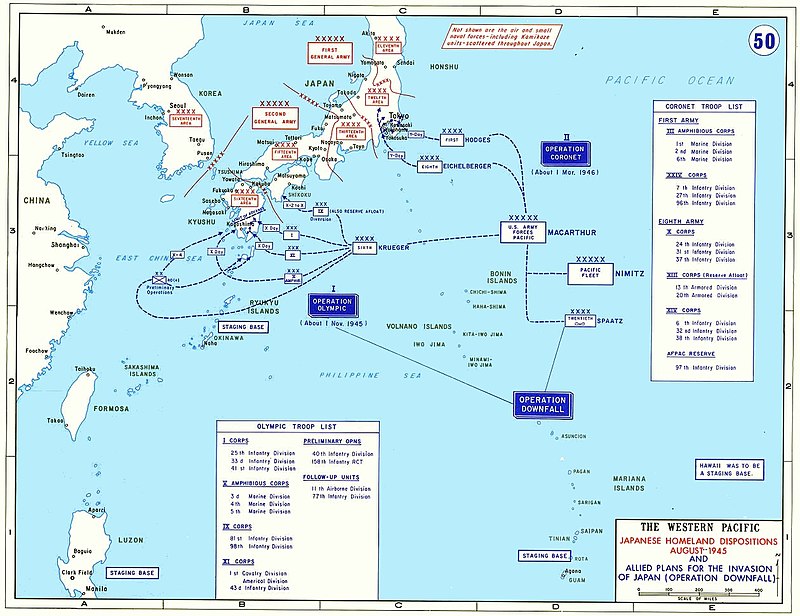
Plans for the final defeat of the Imperial Japanese Empire all but wrote themselves, phase one launched from the south against the main island of Kyūshū, and using the recently captured island of Okinawa, as staging area.  Phase two was the planned invasion of the Kantō Plain toward Tokyo, on the island of Honshu.

Adobe ImageReady
Operation Downfall

The story of the D-Day invasion begins with deception, a massive head fake intended to draw German defenders away from intended landing zones. “Operation Downfall” offered no such opportunities, for deceit. Geography dictated the method of attack, and everybody knew it. Virtually everything left of Japanese military might would be assembled for the all-out defense of Kyūshū, against what would be the largest amphibious invasion, in history.

This was to be a full frontal assault with no subterfuge and nowhere, to hide.

American military planners ordered half a million Purple Hearts, in preparation for the final invasion of the Japanese home islands. To this day, military forces have yet to use them all. As of 2003 some 120,000 Purple Heart medals still remained, in inventory.

The whole thing would begin on “X-Day”.  November 1, 1945.

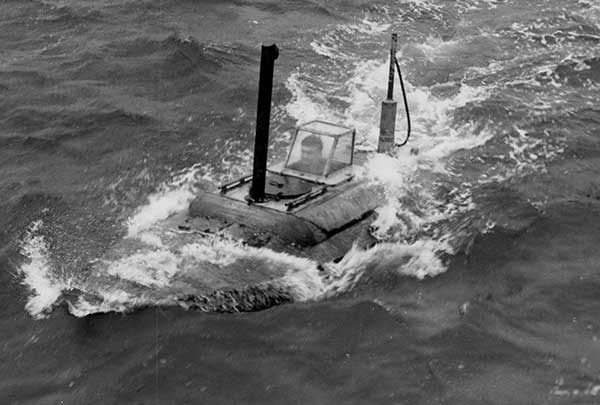
Which brings us back to that funny-looking boat, in Fall River. The Office of Strategic Services (OSS), predecessor to the modern CIA, built two of these semi-submersibles. The vessel was called “Gimik”, part of a top-secret operation code named “NAPKO”.

GIMIK, underway

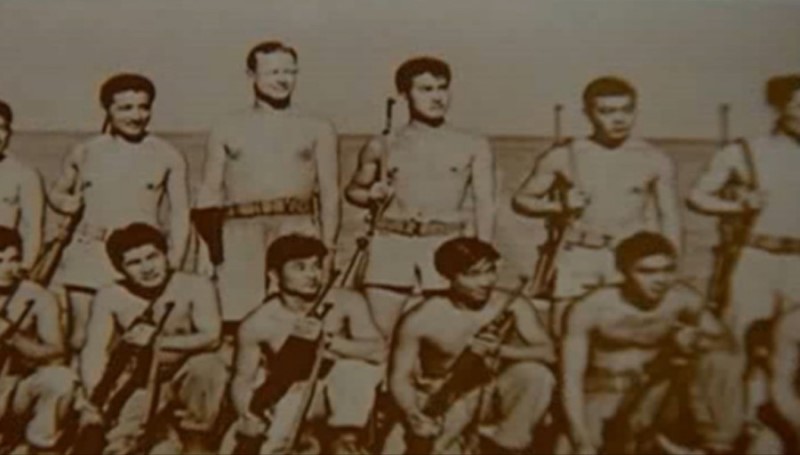
Ten teams were envisioned varying from five to a single individual. 55 Korean-Americans and Korean prisoners freed from Japanese prison labor camps were trained to infiltrate Japanese occupied Korea and possibly Japan itself, to collect intelligence and carry out sabotage against military targets in advance of Operation Downfall. None were aware even of the existence of the other teams lest any, were to fall into Japanese hands.

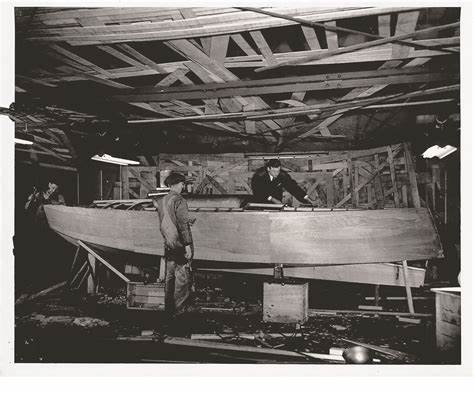
The GIMIK craft were built by John Trumpy and sons yacht yard of Annapolis Maryland, builders of the presidential yacht, Sequoia

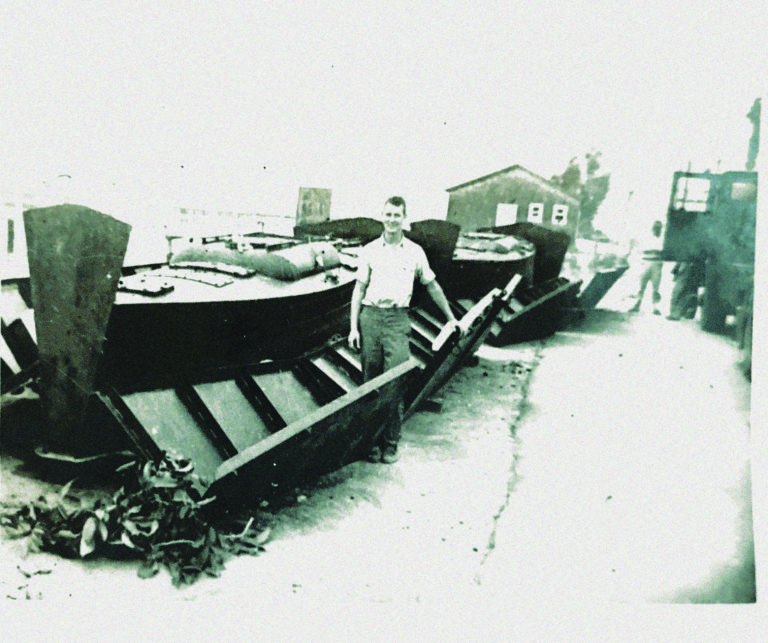
Operated by a single OSS officer with two Korean operatives and up to 1,000-pounds of equipment secured inside, the GIMIK craft would be their means of insertion. 19-feet long and built of plywood to avoid radar and sonar detection, the snorkel was wrapped in steel wool to confound discovery. The craft were to be delivered on theater via submarine in large metal boxes called “coffins’. After insertion, the vessels would go fully submerged and anchor to the bottom where they were equipped to operate, for up to four weeks.

Operated by a single OSS officer with two Korean operatives and up to 1,000-pounds of equipment secured inside, the GIMIK craft would be their means of insertion. 19-feet long and built of plywood to avoid radar and sonar detection, the snorkel was wrapped in steel wool to confound discovery. The craft were to be delivered on theater via submarine in large metal boxes called “coffins’. After insertion, the vessels would go fully submerged and anchor to the bottom where they were equipped to operate, for up to four weeks.

The NAPKO operation was conceived and run by OSS Colonel Carl Eifler, who hope to have as many as seven teams, operational. Tactical focus would then be placed on those best positioned, for ultimate success. As it turned out only two teams were ever ready, for the operational stage.

“Code-named ‘Kinec’ and ‘Charo.’ Both were very similar in concept, differing primarily in intended points of penetration and operating areas. Kinec envisioned landing five agents at Chemulpo Bay, about 20 miles outside Seoul on the country’s west coast; Charo was focused on Pyongyang following penetration via Wonsan and utilized three, rather than five, Korean agents. Typical of NAPKO missions, the teams were to carry minimal equipment and supplies: 100,000 yen, a radio, appropriate clothing for passing as locals, and a Japanese-manufactured shovel for burying the team’s equipment after landing.”

Hat tip former Special Forces NCO Steve Balestrieri, writing for SOFREP.com

The mission was extremely dangerous for obvious reasons.  Training was carried out during the summer of 1945 on Catalina Island, off the California coast.  The two boats, nicknamed “Gizmos”, were tested at night against the US Naval base in Los Angeles. Even this part was dangerous, since no one was told about the trials. Should such a vessel be detected entering the American installation, it would be treated as an enemy vessel, and destroyed.

In the end, the Gizmo teams never left American waters.  Several such tests were carried out without detection, leading to a scheduled departure date of August 26, 1945.  It was never meant to be.

A parallel and equally secret plan to end the war literally burst on the scene on August 6, 1945.  The war would be over, in another nine days.