

Popular ideas of what is beautiful have changed with time and place, but strange beauty secrets are as old as history itself.
 In ancient Greece, blond hair was perceived as beautiful, probably because it was unusual. Women would lighten their hair using a mixture of ashes, olive oil & water, and sometimes arsenic.
Cleopatra used a lipstick of mashed up beetle guts and powdered her eyes with the dried excrement, of crocodiles. She would bathe daily in the sour milk of donkeys, 700 of the animals kept on-hand, for the purpose.
The stuff was supposed to have smoothed out wrinkles and just might have worked too. Soured lactose turns to lactic acid, capable of removing the top layer of skin. The Greek princess-turned Egyptian Pharoah all but owned the hearts of the most powerful men of the age, but at a cost. Burning your own skin off seems a tough way to go.
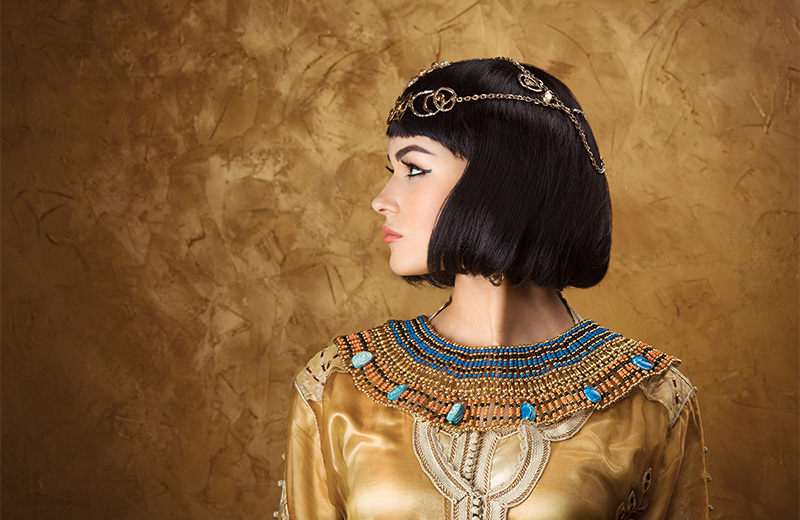 The 12th century Queen Isabeau of France likewise favored the sour donkey milk routine, followed up by rubbing her skin with crocodile glands and the brains of boars.

History remembers Empress Elisabeth of Austria for helping to bring about the dual monarchy of Austria-Hungary, in 1867. Less well known is the woman’s obsessive dedication to her own youthful figure and exceptional beauty.
Elisabeth would crush strawberries over her face, neck and hands, followed by a bath in warm olive oil. She would sleep in a mask lined with raw veal.
Elisabeth emphasized her already slender figure by “tight-lacing” a leather corset, a practice which infuriated the mother-in-law who regarded the queen’s duty, as being perpetually pregnant.
Even after four pregnancies, on her death at age 60 at the hands of an Italian anarchist, the woman’s waist measured 18½”-19 inches.
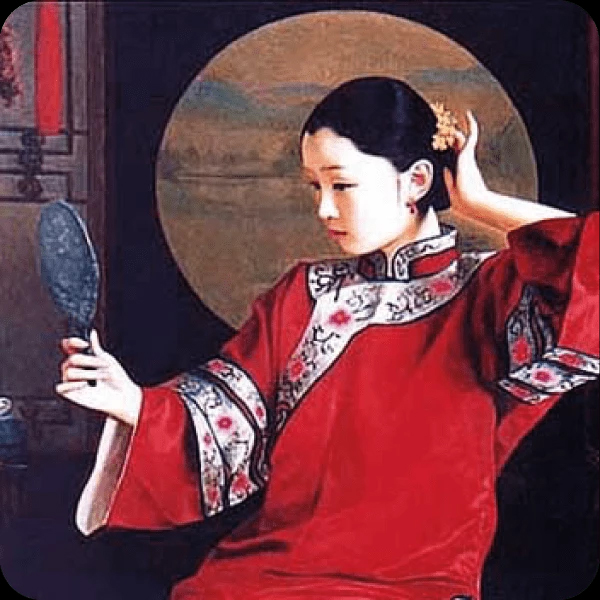
During the Heian period in Japan, 794 to 1185AD, a woman’s beauty was judged by the length of her hair. The ideal was considered to be about two feet below her waist.
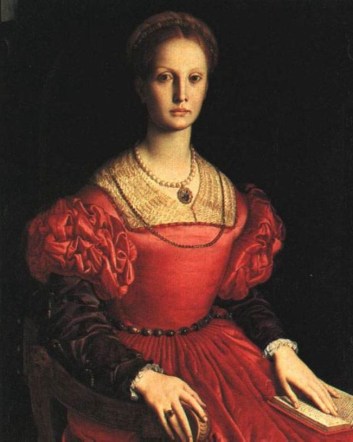
The Hungarian “Blood Countess” Erzsébet Báthory who lived from August 7, 1560 – August 21, 1614, may be the most prolific female serial killer in history, bathing in the blood of as many as 650 virgins, to keep herself looking young.
Erzsébet’s four cohorts were convicted in the murder of 80, while the Countess herself was neither tried nor convicted due to her exalted rank. She was simply thrown into a cell on her arrest in December, 1610 and there left to die, four years later.
On a less macabre note, Mary, Queen of Scots, bathed in wine. Strange beauty rituals weren’t limited to women, either. Novelist George Sands liked to soak himself in cow’s milk (3 quarts) and honey (3 pounds).
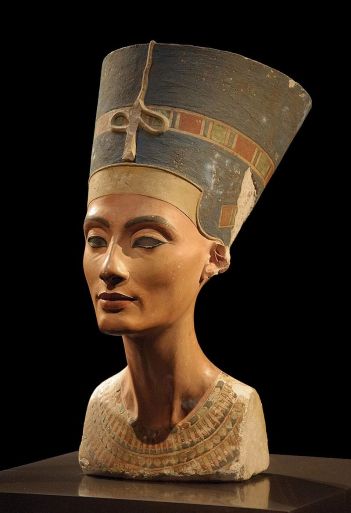 Nefertiti ruled as Egyptian Queen ca. 1351–1334 BC, the Great Royal Wife of Pharoah Akhenaten, predecessor to the great Tutankhamun. Nefertiti , her name translates as “The Beautiful Woman has Come”, would shave herself hairless from head to foot, donning a wig and lining her eyes with Egyptian kohl, a substance derived from lead. In case that wasn’t enough, Nefertiti would color her lips with a combination of seaweed and bromine nitrate, a plant-derived toxin so powerful, some believe the stuff to be the origin of the phrase, “the kiss of death”.
Elizabeth I, daughter of Anne Boleyn and Henry VIII, was crowned this day, November 17, 1588. As queen, Elizabeth followed a path taken by women for thousands of years, sporting the high forehead and daubing her face with a powder makeup called ceruse. High lead content made the practice deadly enough, but women would top it off with a rouge containing mercury, leading to an untold number of birth defects and miscarriages. It’s all but certain the combination of lead and mercury led to her complete loss of hair. Small wonder she was the “Virgin Queen”.
 The European quest for the perfect, porcelain complexion lasted well into the 19th century, for which some women ate clay. The ladies of the French Court obsessed over flawless, alabaster skin, until the end of the 18th century. They would fake it with thick layers of white powder, made from white lead, or talcum powder, or pulverized bone. Whatever they could get hold of. Combined with wax, whale blubber, deer fat or vegetable oil, the stuff had a nice, greasy consistency that stayed where they put it.
 Meanwhile, African women of antiquity favored lavender oil for its distinctive feminine scent and a red tea called Rooibos to keep skin looking young and supple. With its naturally high levels of zinc and vitamin D2, the stuff was an important defense against the hot African sun.
Marie Antoinette washed up with “Eau Cosmetique de Pigeon”, the stuff bearing the promise right there on the label, that every bottle contained no fewer than “eight pigeons stewed.”
 Hers was a time of big hair, when hair was piled high on top of the head, powdered and augmented with the hair of servants and the fur of pets. The do was often adorned with fabric, ribbons or fruit, sometimes holding props like birdcages complete with stuffed birds and even miniature frigates, under sail.
It wasn’t just women’s hair, either. Fashionable European men of the 18th century wore wigs made of both animal and human hair, a practice that soon spread across the water and into North America.
The wealthy wore longer wigs, often powdered and curled while those who couldn’t afford them wore shorter versions, usually styled into a braided ponytail.
 George Edward Pickett, he of the famous charge at the Battle of Gettysburg, was acclaimed for his oiled and perfumed locks. The “Boy General”, the youngest Civil War General in the Union Army, would anoint his hair with cinnamon oil. A lock of George Armstrong Custer’s hair recently sold at auction, for $12,500.
Well into the 20th century, women and men alike chose between slicking their hair down with a greasy brilliantine, or spraying it with shellac dissolved in an admixture of water and alcohol.
Weird beauty tips are easy to find on-line. Some say that Preparation H under the eyes reduces puffiness (I hear it works). Hot pepper sauce applied to the roots of the hair will help it grow, (the jury’s out on this one). Some believe that urine works as an astringent to clear up acne, (it doesn’t), and rubbing your face with a potato dries up oily skin (that one’s false as well).
 Today we look on past practices as bizarre, but maybe we shouldn’t. If those people from the past were to peer into their own future, they’d see spray tanning, teeth bleaching, and Brazilian bikini wax. They’d see people injecting the neurotoxic output of Clostridium Botulinum into their faces, and sticking metal objects through all manner of body parts.
You have to wonder what our own future will bring. Not even Nostradamus could have foretold tattooed grandmothers.

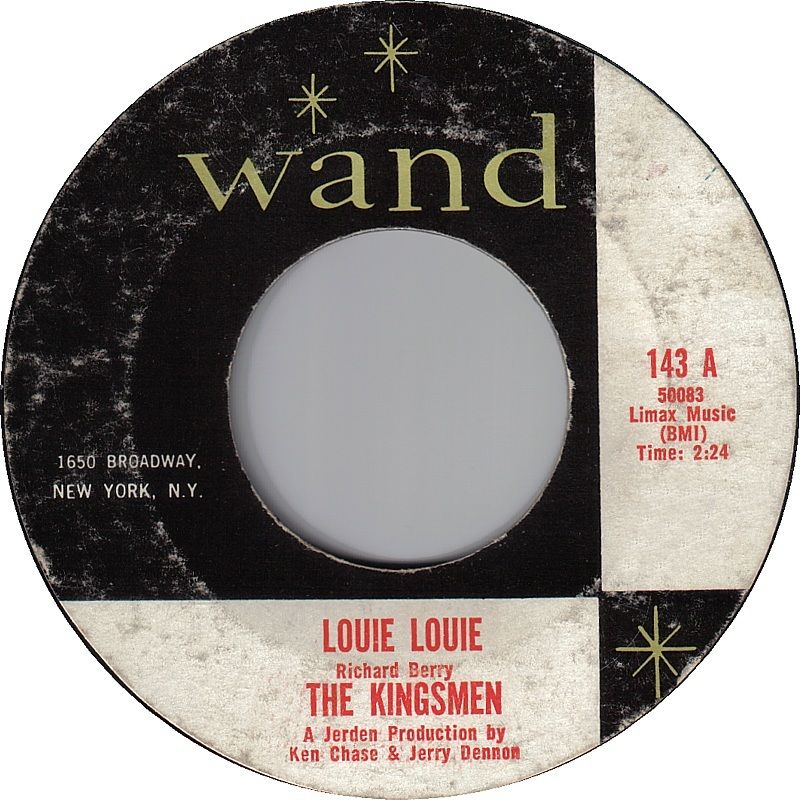
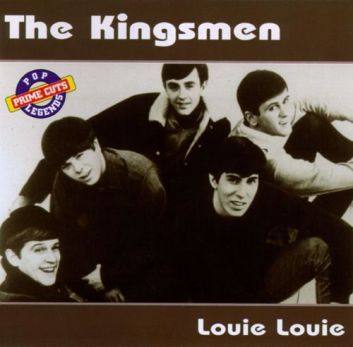 In 1955, singer-songwriter Richard Berry wrote a tune about a Jamaican sailor returning home to see his lady love. It’s a ballad, a Caribbean-flavored conversation in the first person singular, with a bartender. The bartender’s name is Louie.
 It all went downhill from there. “Louie Louie, me gotta go,” became in the fevered imagination, “Louie Louie, grab her way down low.” Invented lyrics ranging from mildly raunchy to downright pornographic were written out on slips of paper and exchanged between teenagers, spurring interest in the song and driving record sales, through the roof.
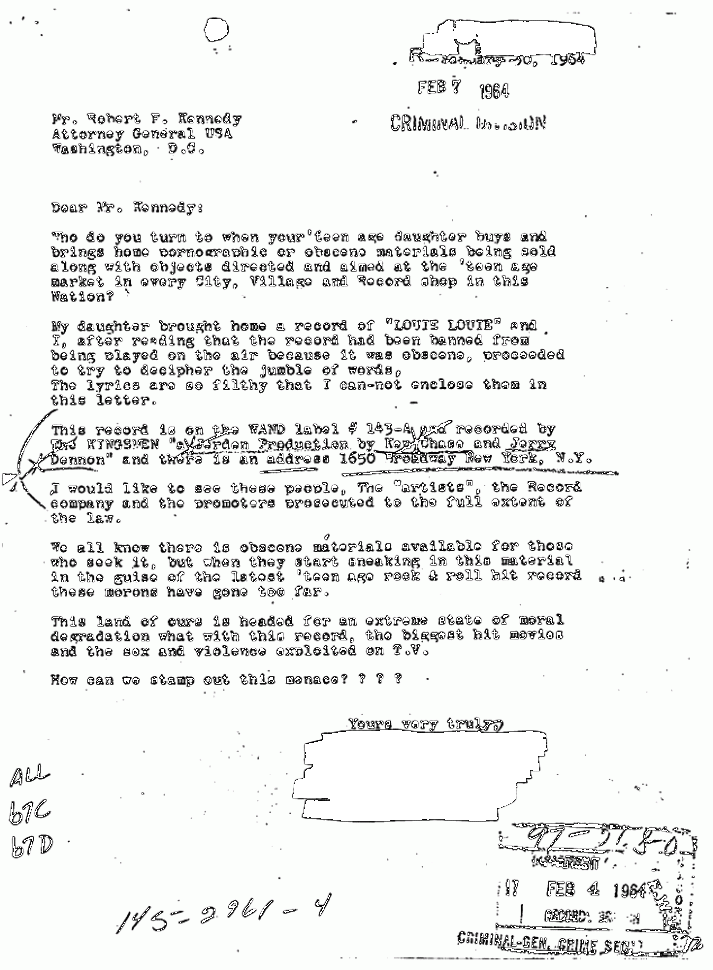 Dad might have taken a breath. The pop culture scene was not so steeped in filth, as he imagined. The top television program of the time was the Beverly Hillbillies. The top movie the Disney animated production, “The Sword and the Stone”.
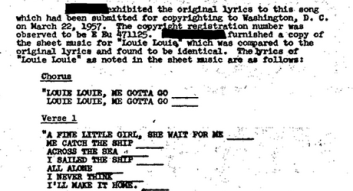 The FBI took up an investigation under the ITOM statute in 1964, a federal law regulating the Interstate Transportation of Obscene Material. Investigators interviewed witnesses. They listened to the song at varying speeds, backward and forward. The relentless search for lascivious material lasted two years and in the end, came up empty.










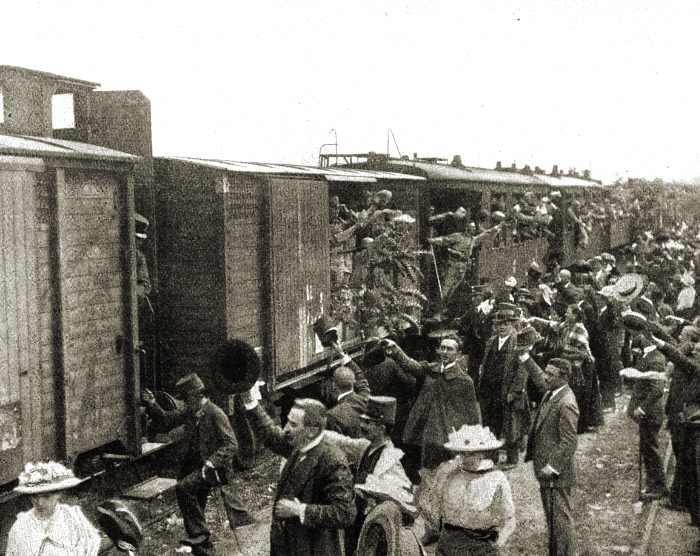
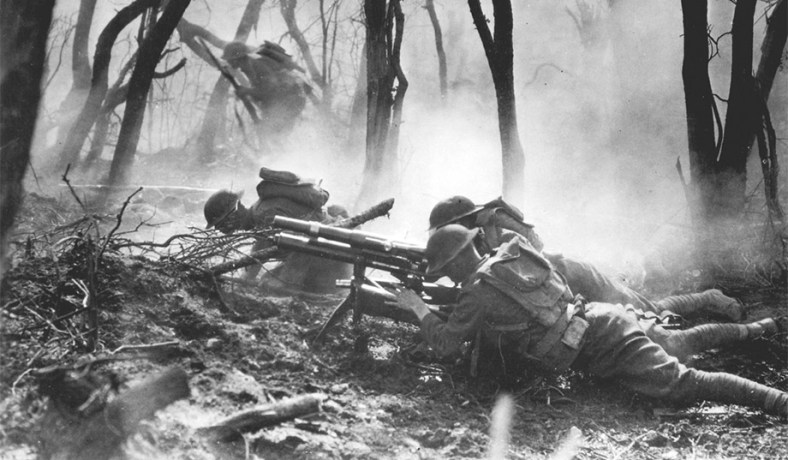
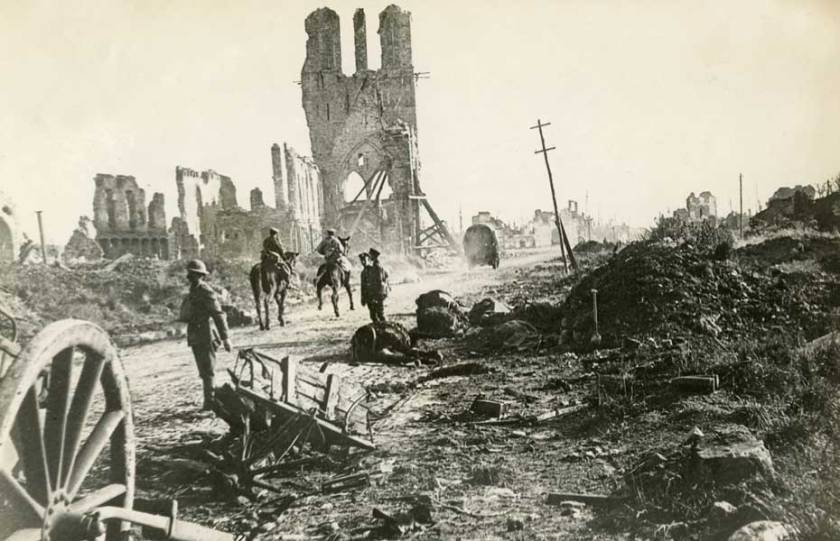 Some 40 million were killed in the Great War, either that or maimed or simply, vanished. It was a mind bending number, equivalent to the entire population in 1900 of either France, or the United Kingdom. Equal to the combined populations of the bottom two-thirds of every nation on the planet. Every woman, man, puppy, boy and girl.
 The idea of honoring the unknown dead from the “War to end all Wars” originated in Europe. Reverend David Railton remembered a rough cross from somewhere on the western front, with the words written in pencil: “An Unknown British Soldier”.

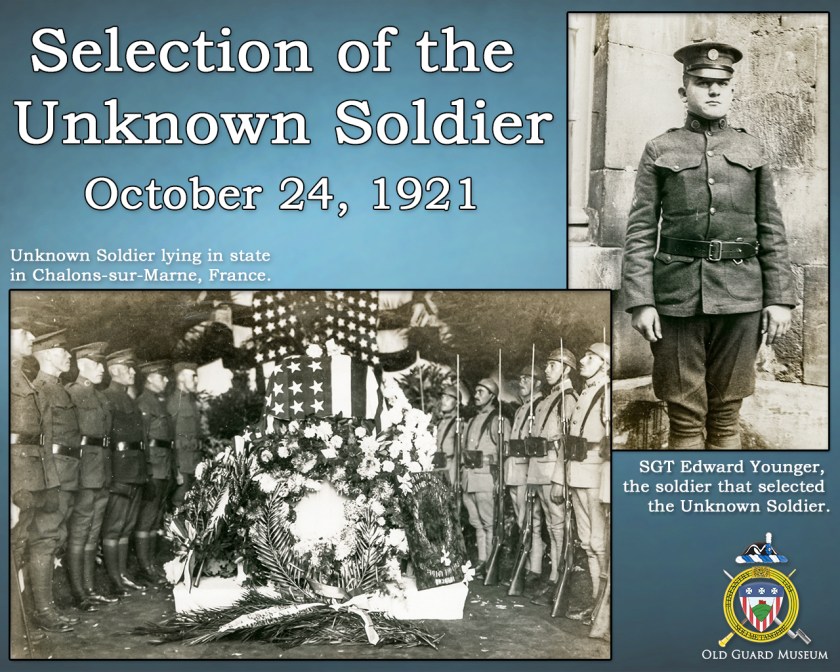 Passing between two lines of French and American officials, Sgt. Younger entered the room, alone. Slowly, he circled the four caskets, three times, before at last stopping at the third from the left. “What caused me to stop” he later said, “I don’t know. It was as though something had pulled me“. Younger placed the roses on the casket, drew himself to attention, and saluted. This was the one.
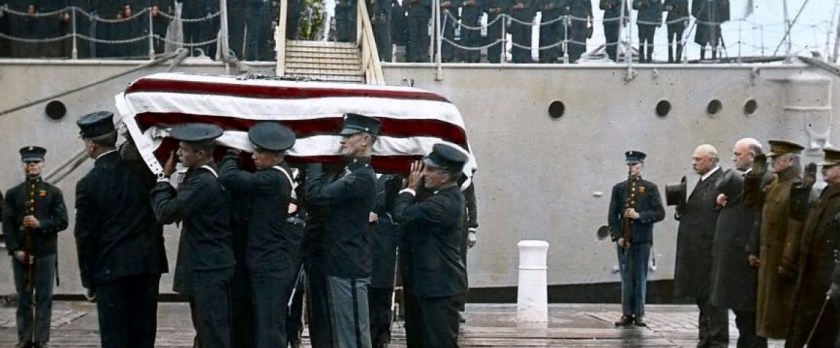 On November 11, the casket was removed from the Rotunda of the Capitol and escorted under military guard to the amphitheater at
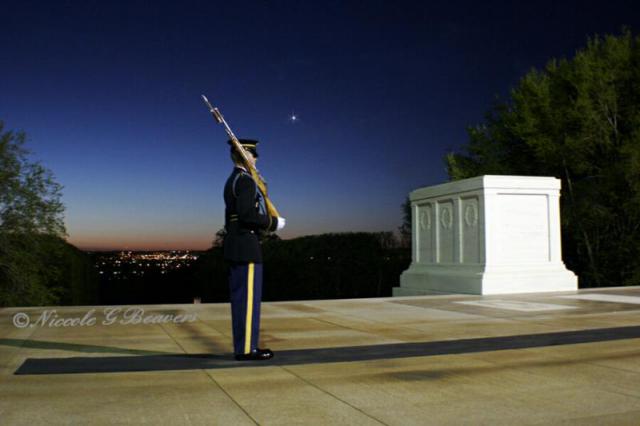
 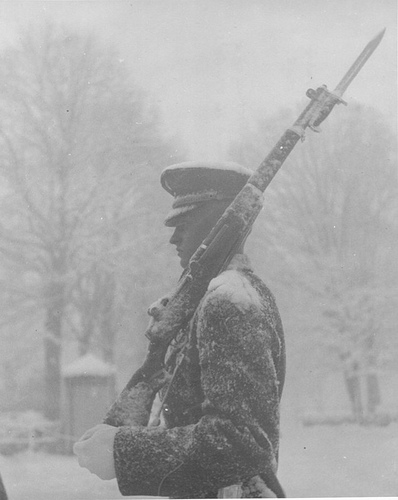 With three salvos of artillery, the rendering of Taps and the National Salute, the ceremony was brought to a close and the 12-ton marble cap placed over the Tomb of the Unknown Soldier. The west facing side bears this inscription:

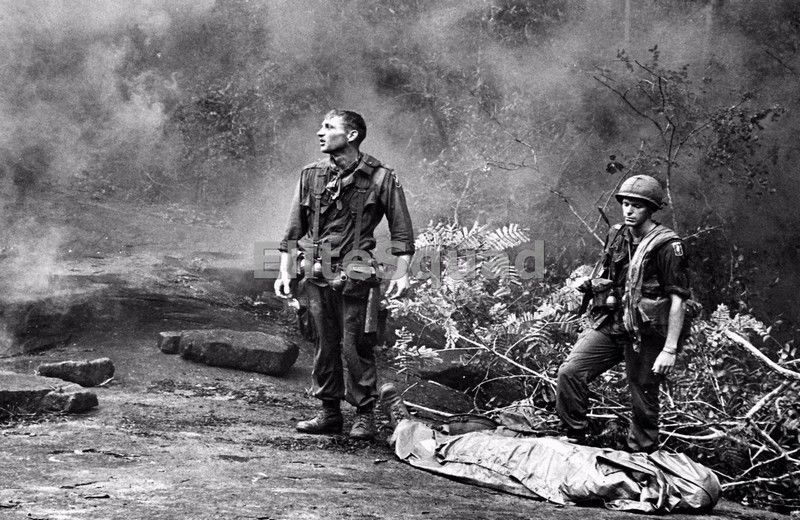
 On this day in 1965, the 173rd Airborne Infantry Brigade was halfway through a one-year term of service, in Vietnam. “Operation Hump”, so named in recognition of that mid-point, was a search and destroy mission inserted by helicopter on November 5.
 There was little contact through the evening of the 7th, when B and C Companies of the 1/503rd took up a night defensive position in the triple canopied jungle near Hill 65.
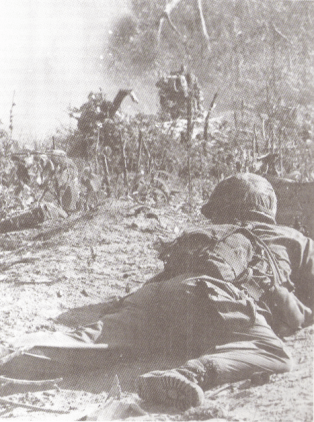 Outnumbered in some places six to one, it was a desperate fight for survival as parts of B and C companies were isolated in fighting that was shoulder to shoulder, hand to hand.
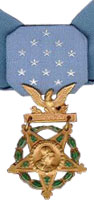 “For conspicuous gallantry and intrepidity at the risk of life above and beyond the call of duty. Specialist 5 Joel demonstrated indomitable courage, determination, and professional skill when a numerically superior and well-concealed Viet Cong element launched a vicious attack which wounded or killed nearly every man in the lead squad of the company. After treating the men wounded by the initial burst of gunfire, he bravely moved forward to assist others who were wounded while proceeding to their objective. While moving from man to man, he was struck in the right leg by machine gun fire. Although painfully wounded his desire to aid his fellow soldiers transcended all personal feeling. He bandaged his own wound and self-administered morphine to deaden the pain enabling him to continue his dangerous undertaking. Through this period of time, he constantly shouted words of encouragement to all around him. Then, completely ignoring the warnings of others, and his pain, he continued his search for wounded, exposing himself to hostile fire; and, as bullets dug up the dirt around him, he held plasma bottles high while kneeling completely engrossed in his life saving mission. Then, after being struck a second time and with a bullet lodged in his thigh, he dragged himself over the battlefield and succeeded in treating 13 more men before his medical supplies ran out. Displaying resourcefulness, he saved the life of one man by placing a plastic bag over a severe chest wound to congeal the blood. As 1 of the platoons pursued the Viet Cong, an insurgent force in concealed positions opened fire on the platoon and wounded many more soldiers. With a new stock of medical supplies,
 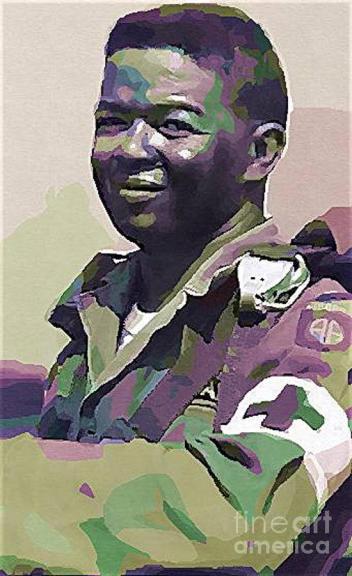 Specialist 5 Joel again shouted words of encouragement as he crawled through an intense hail of gunfire to the wounded men. After the 24 hour battle subsided and the Viet Cong dead numbered 410, snipers continued to harass the company. Throughout the long battle, Specialist 5 Joel never lost sight of his mission as a medical aid man and continued to comfort and treat the wounded until his own evacuation was ordered. His meticulous attention to duty saved a large number of lives and his unselfish, daring example under most adverse conditions was an inspiration to all. Specialist 5. Joel’s profound concern for his fellow soldiers, at the risk of his life above and beyond the call of duty are in the highest traditions of the U.S. Army and reflect great credit upon himself and the Armed Forces of his country“.


 The first living creature to enter space was the dog “

 Historical Easter Eggs - Today in History
You must be logged in to post a comment.