

When the United States won its independence from Britain in 1783, the young nation soon learned that freedom was not without disadvantages. One being that America had lost its protector at sea.
British and French vessels harassed American merchant shipping, often kidnapping American sailors and forcing them to serve in their own navies.
 Barbary pirates were a problem for Mediterranean shipping, and throughout parts of the Atlantic. Predominantly North African Muslims with the occasional outcast European, the Barbary pirates operated with the blessing of the Ottoman Empire, the Barbary Coast states of Algiers, Tunis & Tripoli, and the independent Sultanate of Morocco. The Barbary Corsairs had long since stripped the shorelines of Spain and Italy in search of loot and Christian slaves.
Many villages wouldn’t be re-inhabited until the 19th century. Between the 16th and the 18th centuries, thousands of ships were captured and held for ransom. Somewhere between 800,000 and 1.25 million Europeans disappeared into the Arab slave markets of North Africa and the Middle East.
Barbary pirates began to harass American shipping as early as 1785. They captured 11 American vessels in 1793 alone, holding the ships and crew for ransom.
Congress passed the Naval Act of 1794, appropriating funds to build a fleet of 6 three-masted, heavy frigates for the United States Navy. The act included a clause halting construction, in the event of a peace treaty with Algiers. No such treaty was ever concluded.
Launched this day in 1797 and named by George Washington himself, USS Constitution was one of these six. Her hull was made of the wood from 2,000 Georgia live oak trees, and built in the Edmund Hartt shipyard of Boston, Massachusetts.
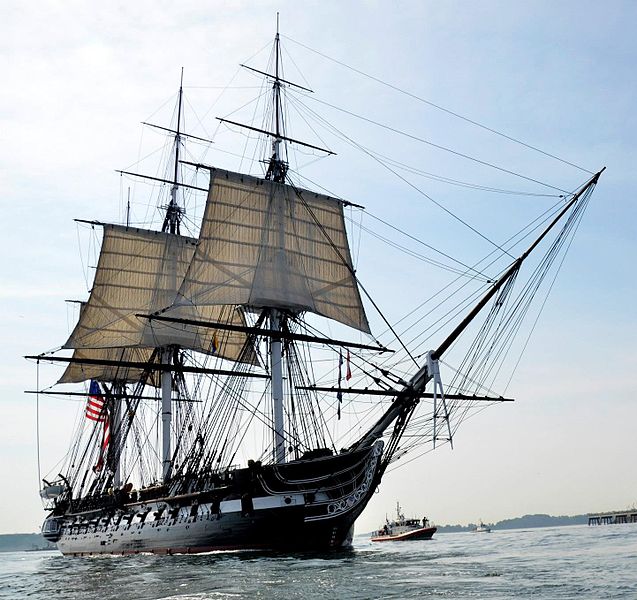 Constitution’s first duties involved the “quasi-war” with France, but this was not the France which helped us win our independence. France had been swallowed up in a revolution of its own by this time. Leftists calling themselves “Jacobins” had long since sent their Bourbon King and his Queen Consort to the guillotine. Marie-Joseph Paul Yves Roch Gilbert du Motier, Marquis de Lafayette and Hero of the American Revolution, languished in an Austrian prison.
The French Monarchy would one day be restored, but not before a Corsican Corporal rose to the rank of Emperor to meet his Waterloo, fighting (and winning) more battles than Julius Caesar, Frederick the Great, Alexander the Great, and Hannibal, combined. But I digress.
The Barbary pirates were paid “tribute” during this time to keep them quiet, but that ended in 1800. Yusuf Karamanli, Pasha of Tripoli, demanded $225,000 from the incoming Jefferson administration. Jefferson refused, and Constitution joined in the Barbary Wars in 1803, a conflict memorialized in a line from the Marine Corps Hymn “From the Halls of Montezuma to the Shores of Tripoli.”
 Two months after the War of 1812 broke out in June, Constitution faced off with the 38 gun HMS Guerriere, about 400 miles off the coast of Halifax. Watching Guerriere’s shots bounce off Constitution’s 21” thick oak hull, an American sailor exclaimed “Huzzah! her sides are made of iron!” Guerriere was reduced to an unsalvageable hulk in twenty minutes, and the nickname “Old Ironsides” was born.
The month before, Constitution had put to sea intending to join a five ship squadron off the coast of New Jersey. Spotting five sails and thinking that they had found their squadron on July 17, Constitution was disabused of that notion when lookouts reported the next morning that they were 5 British warships, and they were giving chase.
That soon to be famous “iron” hull would have been useless in a five to one fight. A common naval tactic of the day was to close to short range and fire at the masts and rigging of opposing vessels, disabling the ship’s “power plant”. A disabled vessel could then be boarded and a bloody fight would ensue with cutlass and pistol. Those 5 British captains would have considered Constitution to be a great prize; the ship faced a race for survival and the stakes were life and death.
Conditions were near dead calm and all six vessels were wetting sail, trying to get the most out of light winds. In a process called “kedging“, Constitution’s boats were rowed out ahead of the ship, dropping small “kedge anchors”. Sailors would then haul the great ship up the anchor chain, hand over hand, repeating the process over and over. The British ships soon imitated the tactic. What followed was a slow motion race lasting 57 hours in the July heat.

Constitution’s crew dumped everything they could find overboard to lessen the weight, including 2,300 gallons of drinking water. Cannon fire was exchanged several times, though the shots fell short of their mark. Constitution pulled far enough ahead of the British ships that they abandoned the pursuit on July 19.
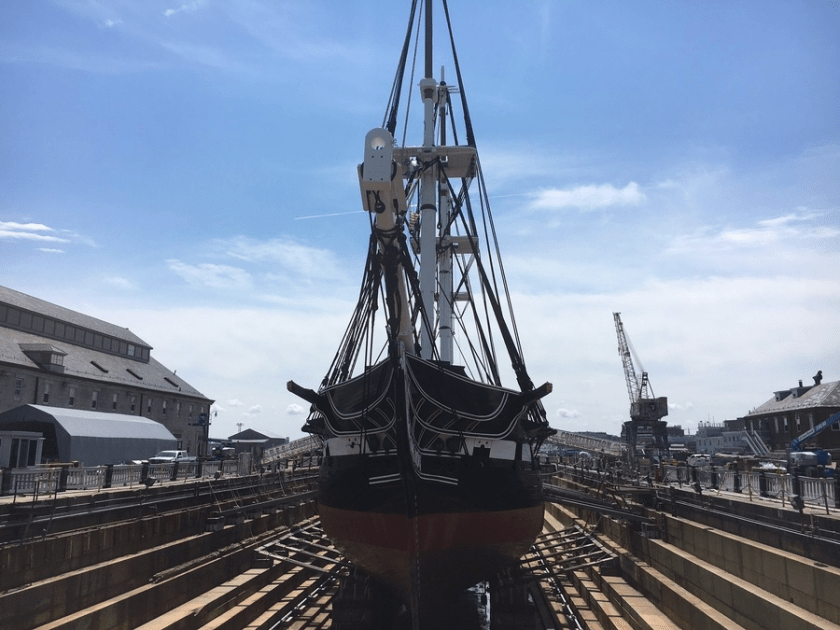
USS Constitution is still in service today, the world’s oldest commissioned naval vessel still afloat. She went into dry dock for major overhaul in October 2014 and re-floated on July 23 this year. Freshly restored and re-fitted, Old Ironsides took her first sail in three years only yesterday. 220 years since her own launch, and honoring the 242nd birthday, of the United States Navy.


 The violent uprising of the early 50s was called “Mau Mau”, an anagram of Uma Uma, roughly translating as “Get out, Get out”. The first “blow against the Colonial regime” was struck on October 3, 1952, when a white woman was stabbed to death near her home in Thika, in the Kiambu County of Kenya.

 Farrokh was attending St. Peter’s boarding school at the time of the rebellion, and calling himself “Freddie”.
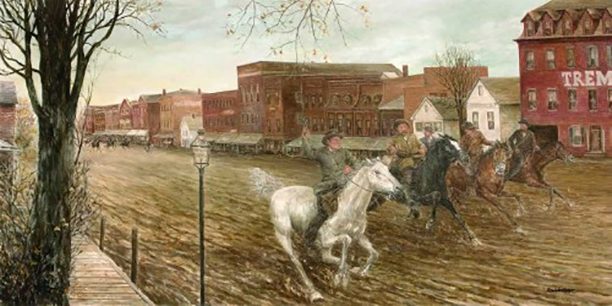
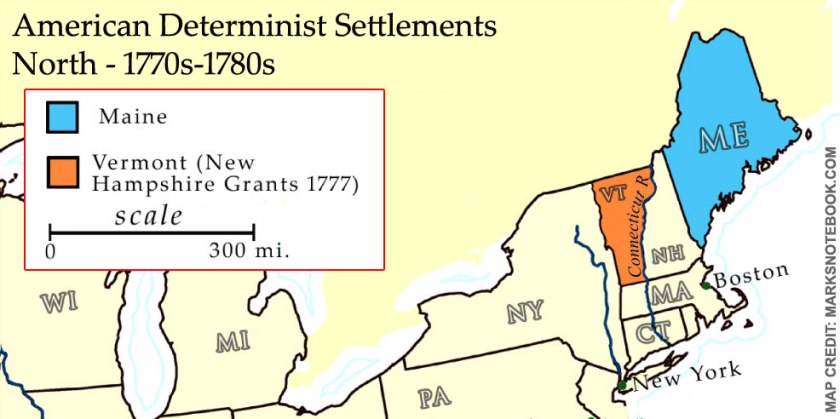

 In April 1864, President Jefferson Davis dispatched former Secretary of the Interior Jacob Thompson, ex-Alabama Senator Clement Clay, and veteran Confederate spy Captain Thomas Henry Hines to Toronto, with the mission of raising hell in the North.
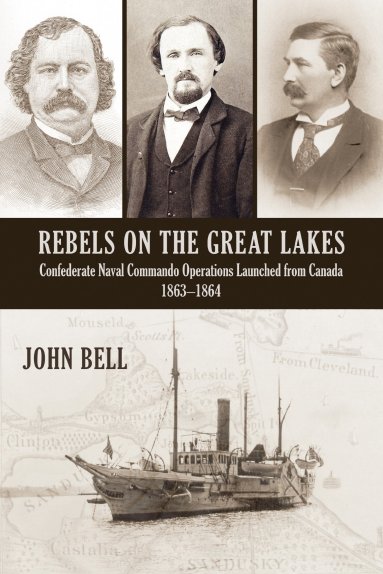 The Confederate invasion of Maine never materialized, thanks in large measure to counter-espionage efforts by Union agents.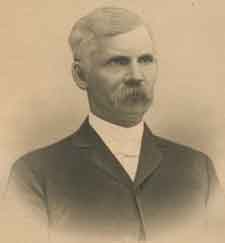

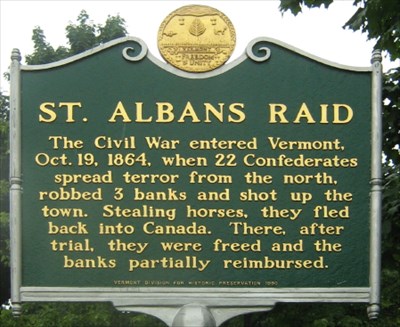 The group was arrested on returning to Canada and held in Montreal. The Lincoln administration sought extradition, but the Canadian court decided otherwise, ruling that the raiders were under military orders at the time, and neutral Canada could not extradite them to America. The $88,000 found with the raiders, was returned to Vermont.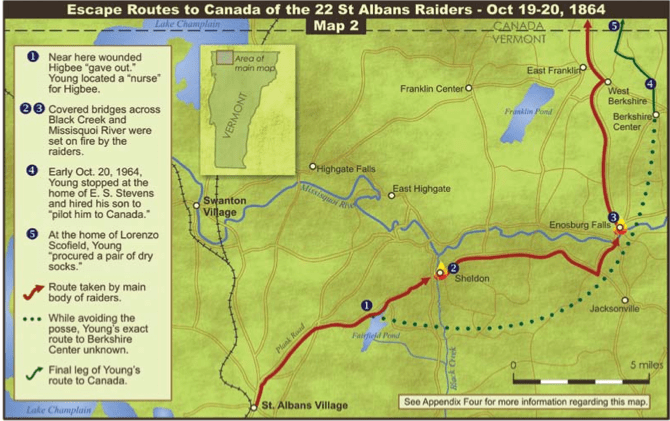


 In 132, the Roman Emperor Hadrian all but erased all sign of Jewish and Christian presence, in the old city of Jerusalem. Golgotha and the Tomb were obliterated, and a pagan temple to Venus Aphrodite was raised in their place.
 Al-Hakim bi-Amr Allah, (literally “Ruler by God’s Command”) was the 6th Caliph of the Fatimid Dynasty, coming to power in October of 996.


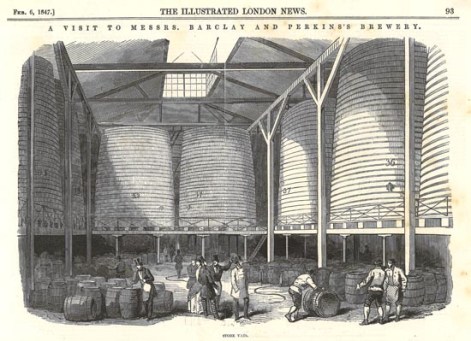 The Meux’s Brewery Co Ltd, established in 1764, was a London brewery owned by Sir Henry Meux. What the Times article was describing was a 22′ high monstrosity, held together by 29 iron hoops.
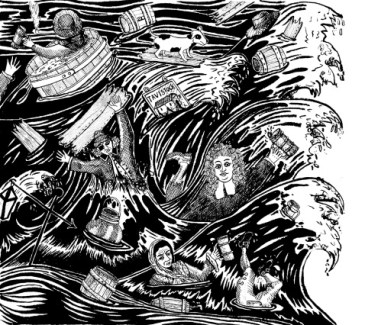 323,000 imperial gallons of beer smashed through the brewery’s 25′ high brick walls, gushing into the streets, homes and businesses of St. Giles. The torrent smashed two houses and the nearby Tavistock Arms pub on Great Russell Street, where a 14-year-old barmaid named Eleanor Cooper was buried under the rubble.
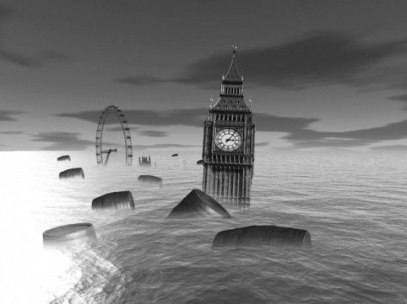 In the days that followed, the crushing poverty of the slum led some to exhibit the corpses of their family members, charging a fee for anyone who wanted to come in and see. In one house, too many people crowded in and the floor collapsed, plunging them all into a cellar full of beer.

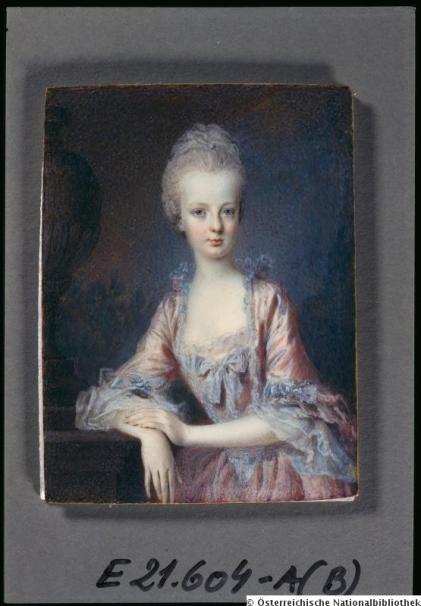 There was a second, ceremonial wedding held in May, after which came the ritual bedding. This wasn’t the couple quietly retiring to their own private space. This was the bizarre spectacle of a room full of courtiers, peering down at the proceedings, to make sure the marriage was consummated.
 Louis-Auguste was crowned Louis XVI, King of France, on June 11, 1775. Antoinette remained by his side, though she was never crowned Queen, instead remaining Louis’ “Queen Consort”.
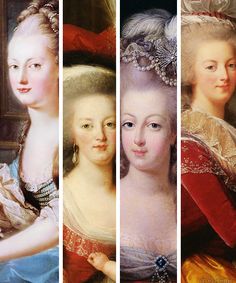 Unrest turned to barbarity as Antoinette’s friend and supporter, the Princesse de Lamballe, was taken by the Paris Commune for interrogation. She was murdered at La Force prison, her head fixed on a pike and marched through the city.
 Marie-Antoinette’s hair was cut off on October 16, 1793. She was driven through Paris in an ox cart, taken to the Place de la Révolution, and decapitated. She accidentally stepped on the executioner’s foot on mounting the scaffold. Her last words were “Pardon me sir, I meant not to do it”.

 Despite problems at home, the Dutch mail order bride found herself moving among the upper classes. She immersed herself in Indonesian culture and traditions, even joining a local dance company. It was around this time that she revealed her “artistic” name in letters home: “Mata Hari”, Indonesian for “sun” (literally, “eye of the day”), in Sanskrit.
 British reporter Henry Wales described the execution, based on an eyewitness account. Unbound and refusing a blindfold, Mata Hari stood alone to face her firing squad. After the shots rang out, Wales reported that “Slowly, inertly, she settled to her knees, her head up always, and without the slightest change of expression on her face. For the fraction of a second it seemed she tottered there, on her knees, gazing directly at those who had taken her life. Then she fell backward, bending at the waist, with her legs doubled up beneath her.”

 Great believers in the perfectibility of the public sphere, Progressives eschewed old methods as wasteful and inefficient, leaning instead toward the advice of academics and “experts”, looking for that “one best way” to get things done.
 Roosevelt retired from politics after two terms to go on African safari, backing William Howard Taft for the Republican nomination.


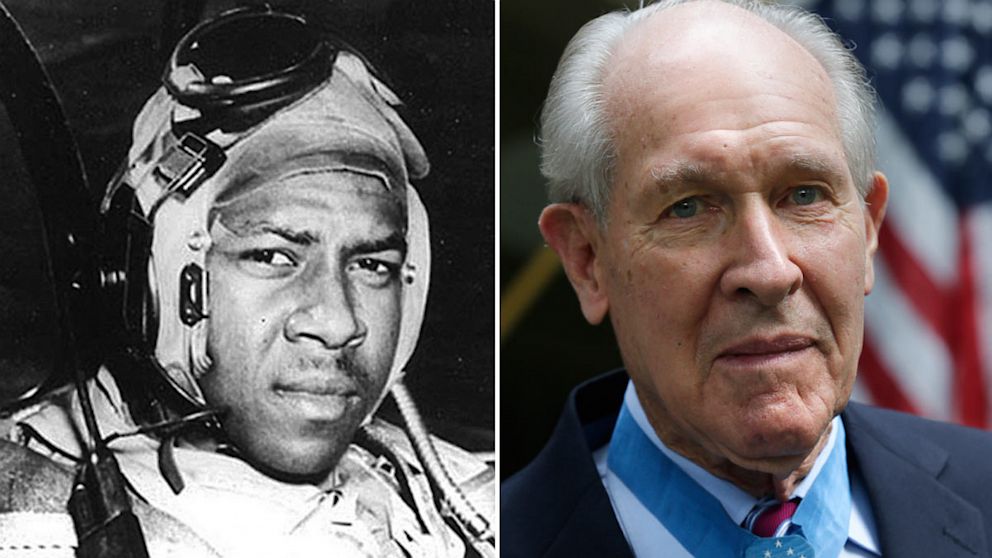

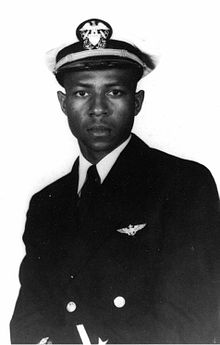
 Hudner pleaded with authorities the following day to go back to the crash site, but they were unwilling to risk further loss of life. They would napalm the crash site so that the Chinese couldn’t get to the aircraft or the body, though pilots reported that it looked like the Brown’s body had already been disturbed.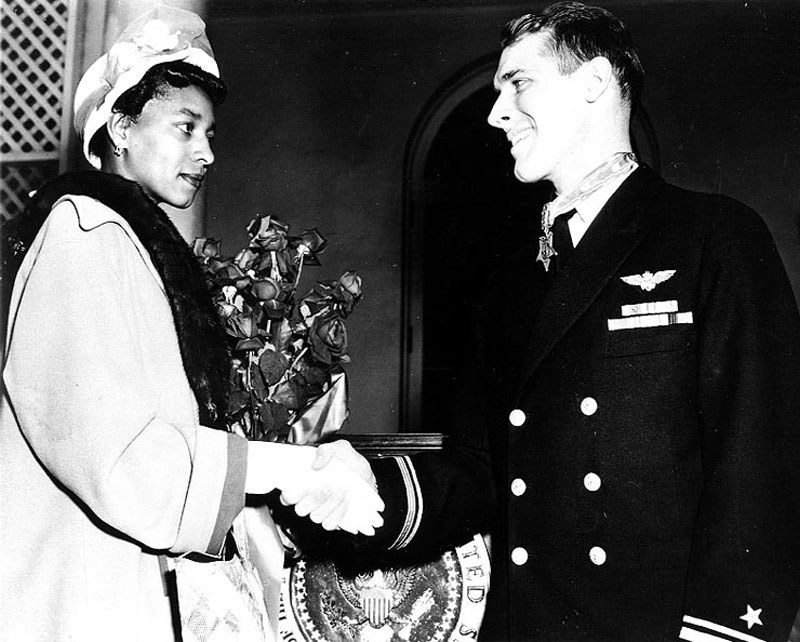


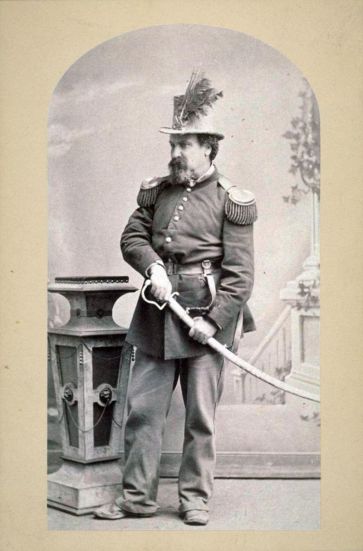 For a time, Norton disappeared from the public eye. In September 1859, he proclaimed himself Emperor of the United States, his Royal Ascension announced to the public in a letter to the editor of the San Francisco Bulletin. “At the peremptory request and desire of a large majority of the citizens”, it read, “I, Joshua Norton…declare and proclaim myself Emperor of these United States.” The letter went on to command representatives from all the states to convene in San Francisco, “to make such alterations in the existing laws of the Union as may ameliorate the evils under which the country is laboring.”
 That December, Norton fired Virginia Governor Henry Wise for hanging abolitionist John Brown, appointing then-vice President John C. Breckinridge in his stead.
 Norton wore an elaborate blue uniform with gold epaulettes, carrying a cane or saber and topped off with beaver hat with peacock feather. By day he “inspected” the streets and public works of San Francisco, by night he would dine in the city’s finest establishments. No play or musical performance would dare open in the city, without reserved balcony seats for Emperor Norton.
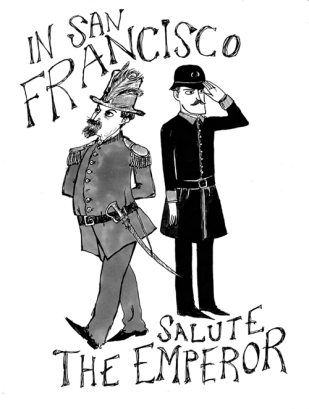 In 1867, police officer Armand Barbier arrested Norton, attempting to have him involuntarily committed to an insane asylum. The public backlash was so vehement that Police Chief Patrick Crowley ordered Norton’s release and issued a public apology. The episode ended well, when Emperor Norton magnanimously pardoned the police department. After that, San Francisco cops saluted Emperor Norton whenever meeting him in the street.
 The San Francisco Board of Supervisors once bought him a new uniform, when the old one got too shabby. Norton responded with a very nice thank you note, issuing each of them a “Patent of Nobility in Perpetuity”.

 Historical Easter Eggs - Today in History
You must be logged in to post a comment.