

 Fifty-two years ago today, the 173rd Airborne Brigade was halfway through its year of service in Vietnam. “Operation Hump”, so named in recognition of that mid-point, was a search and destroy mission inserted by helicopter on November 5.
Vietcong fighters had taken up positions on several key hills near Bien Hoa, with the objective of driving them out.
 There had been little contact through the evening of the 7th, when B and C Companies of the 1/503rd took up a night defensive position in the triple canopied jungle near Hill 65.
On the morning of the 8th, the Brigade found itself locked in combat with an entire main line Vietcong Regiment, pouring out of their trenches and onto the Americans’ position.
The VC were well aware of the Americans’ superior artillery and air cover capabilities. Their strategy was to get in so close that it nullified the advantage. “Grab Their Belts to Fight Them”, they would say.
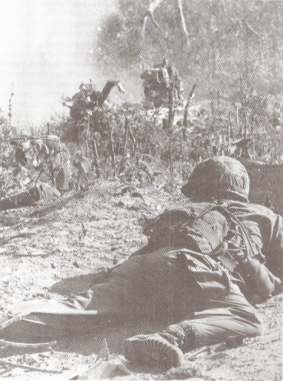 Outnumbered in some places six to one, it was a desperate fight for survival as parts of B and C companies were isolated in shoulder to shoulder, hand to hand fighting.
Shot through the right thigh and calf with his medical supplies depleted, Army Medic Lawrence Joel hobbled about the battlefield on a makeshift crutch, tending to the wounded. Though wounded himself, Specialist 4 Randy Eickhoff ran ahead, providing covering fire. Eickhoff was later awarded the Silver Star and Purple Heart for his actions.
Specialist 5 Joel received the Medal of Honor. Let his citation, tell his part of the story:
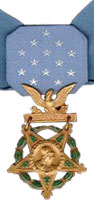 “For conspicuous gallantry and intrepidity at the risk of life above and beyond the call of duty. Specialist 5 Joel demonstrated indomitable courage, determination, and professional skill when a numerically superior and well-concealed Viet Cong element launched a vicious attack which wounded or killed nearly every man in the lead squad of the company. After treating the men wounded by the initial burst of gunfire, he bravely moved forward to assist others who were wounded while proceeding to their objective. While moving from man to man, he was struck in the right leg by machine gun fire. Although painfully wounded his desire to aid his fellow soldiers transcended all personal feeling. He bandaged his own wound and self-administered morphine to deaden the pain enabling him to continue his dangerous undertaking. Through this period of time, he constantly shouted words of encouragement to all around him. Then, completely ignoring the warnings of others, and his pain, he continued his search for wounded, exposing himself to hostile fire; and, as bullets dug up the dirt around him, he held plasma bottles high while kneeling completely engrossed in his life saving mission. Then, after being struck a second time and with a bullet lodged in his thigh, he dragged himself over the battlefield and succeeded in treating 13 more men before his medical supplies ran out. Displaying resourcefulness, he saved the life of one man by placing a plastic bag over a severe chest wound to congeal the blood. As 1 of the platoons pursued the Viet Cong, an insurgent force in concealed positions opened fire on the platoon and wounded many more soldiers. With a new stock of medical supplies, Specialist 5 Joel again shouted words of encouragement as he crawled through an intense hail of gunfire to the wounded men. After the 24 hour battle subsided and the Viet Cong dead numbered 410, snipers continued to harass the company. Throughout the long battle, Specialist 5 Joel never lost sight of his mission as a medical aid man and continued to comfort and treat the wounded until his own evacuation was ordered. His meticulous attention to duty saved a large number of
  lives and his unselfish, daring example under most adverse conditions was an inspiration to all. Specialist 5. Joel’s profound concern for his fellow soldiers, at the risk of his life above and beyond the call of duty are in the highest traditions of the U.S. Army and reflect great credit upon himself and the Armed Forces of his country“.
48 Americans lost their lives in the battle, with many more wounded. Two Australian paratroopers were recorded as MIA. Their remains were discovered years later, and repatriated in 2007.
The country music duo Big and Rich did a song in tribute to that day. It’s called the 8th of November.


 The men who built it used to suck lemons on the job site, to keep from becoming seasick. It was probably one of these “boomers” who first noticed how the bridge rippled in the wind. Someone called it “Galloping Gertie”, and the name stuck.
 The bridge was bucking so violently that at times, one sidewalk rose as high as 28’ above its opposite.
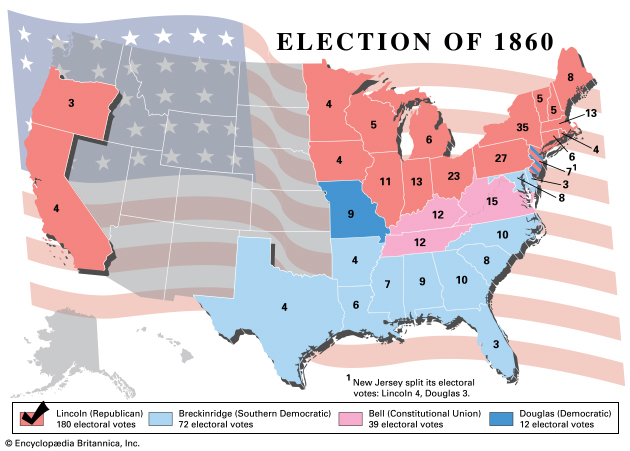
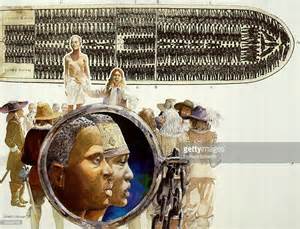
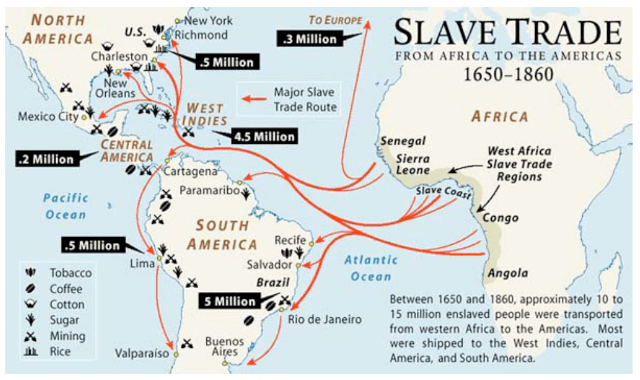
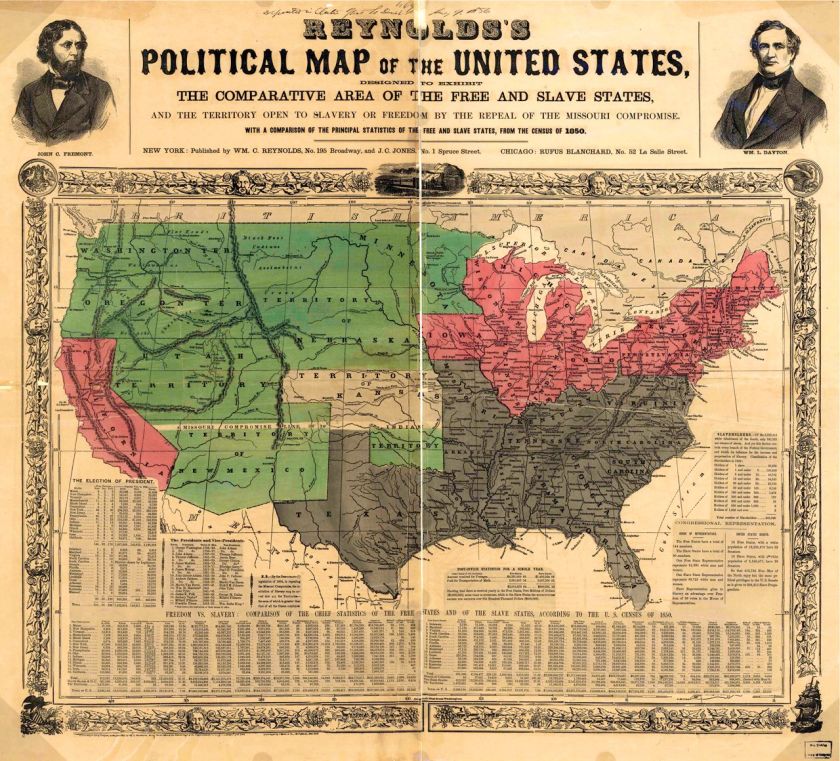
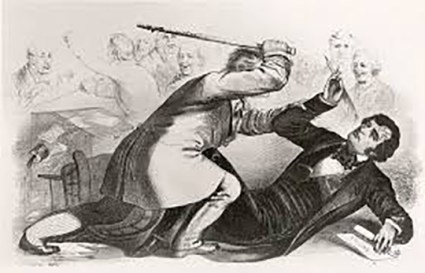 Sectional differences grew and sharpened in the years that followed. A member of Congress from Kentucky killed a fellow congressman from Maine. A Congressman from South Carolina all but beat a Massachusetts Senator to death with a

 English Catholics became increasingly marginalized for the remainder of Henry’s reign, and that of his daughter, Elizabeth I, who died in 1603 without issue. There were several assassination attempts against Protestant rulers in Europe and England, including a failed plot to poison Elizabeth I, and the assassination of French King Henry III, who was stabbed to death by a Catholic fanatic in 1589.
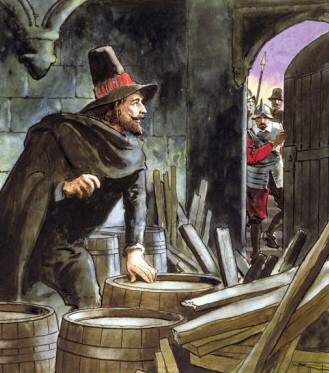 Guy Fawkes, who had 10 years of military experience fighting for the King of Spain in the Netherlands, was put in charge of the explosives.
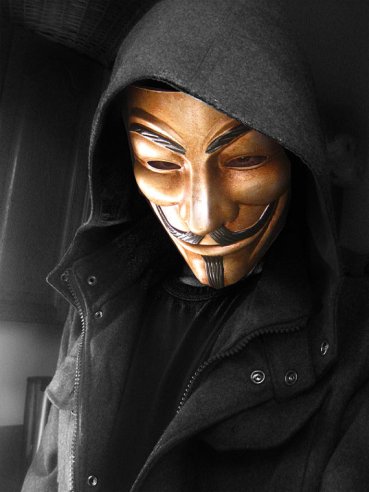 So it is that today, November 5th, is “Guy Fawkes Day”. People all over England will “remember, remember, the 5th of November, gunpowder, treason and plot.” Effigies of Guy Fawkes will be burned throughout the land.

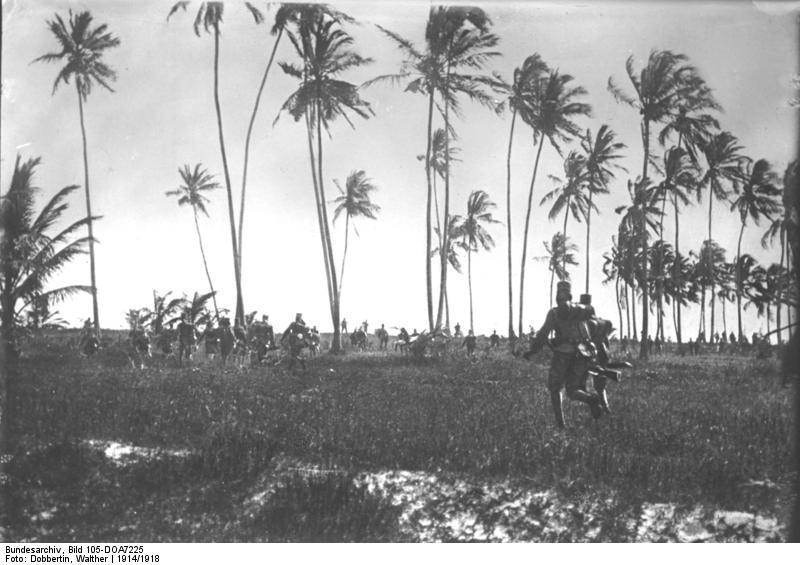 This invasion force, commanded by General Arthur Aitkin, spent that first day and most of the second sweeping for non-existent mines, before finally assembling an assault force on the beaches late on November 3rd. It was a welcome break for the German Commander, Colonel Paul Emil von Lettow-Vorbeck, who had assembled and trained a force of Askari warriors around a core of white German commissioned and non-commissioned officers.
 Colonel, and later General Lettow-Vorbeck, was called “
 Paul von Lettow-Vorbeck came to loathe Adolf Hitler, and tried to establish a conservative opposition to the Nazi political machine. When offered the ambassadorship to the Court of St. James in 1935, he apparently did more than merely decline the job. He told Der Fuehrer to perform an anatomically improbable act. Years later, Charles Miller asked the nephew of a Schutztruppe officer about the exchange. “I understand that von Lettow told Hitler to go f**k himself”. “That’s right”Came the reply, “except that I don’t think he put it that politely”.
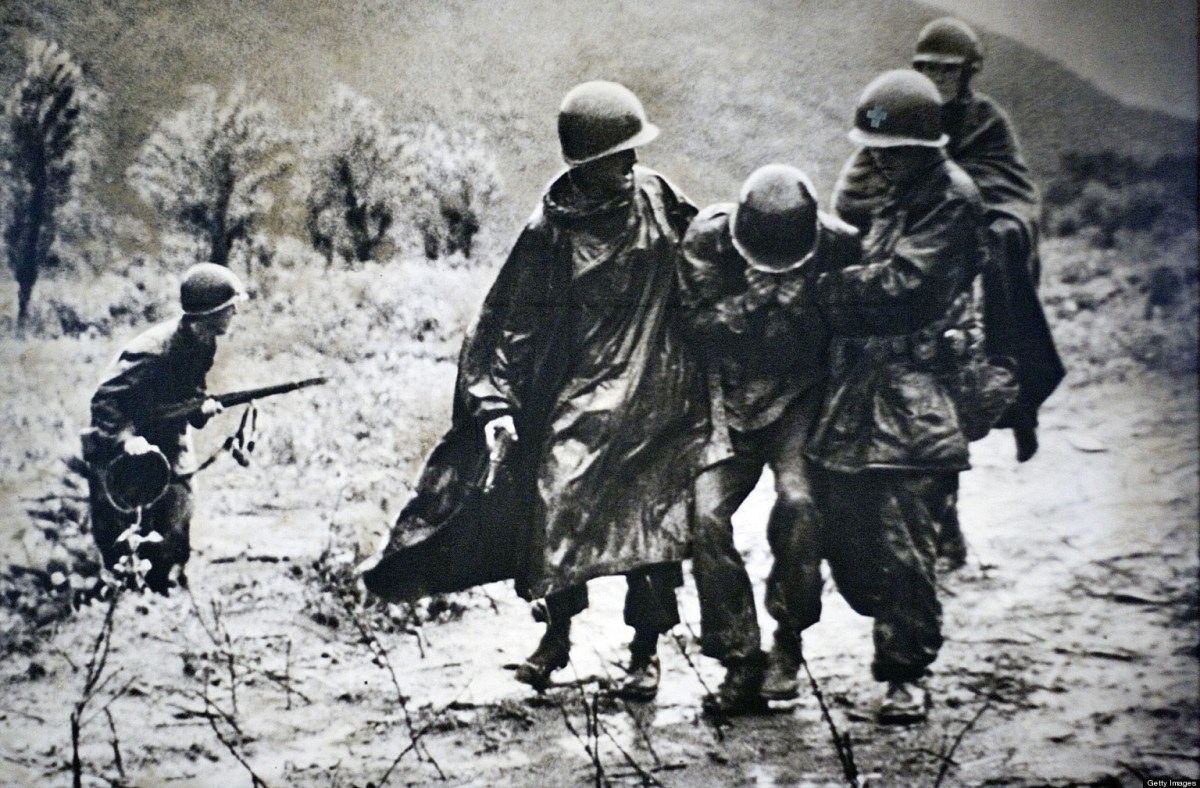
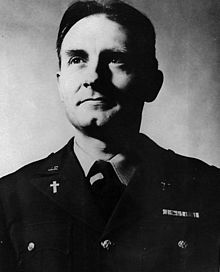
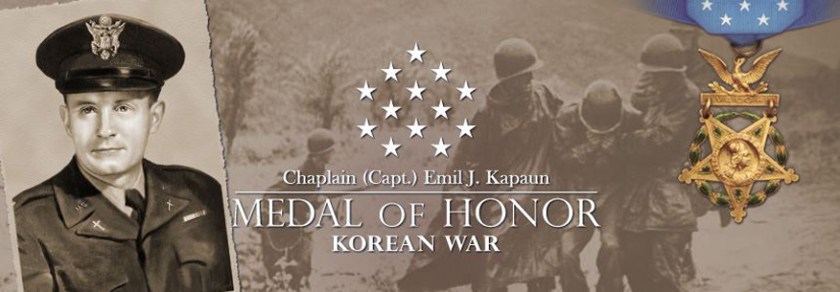
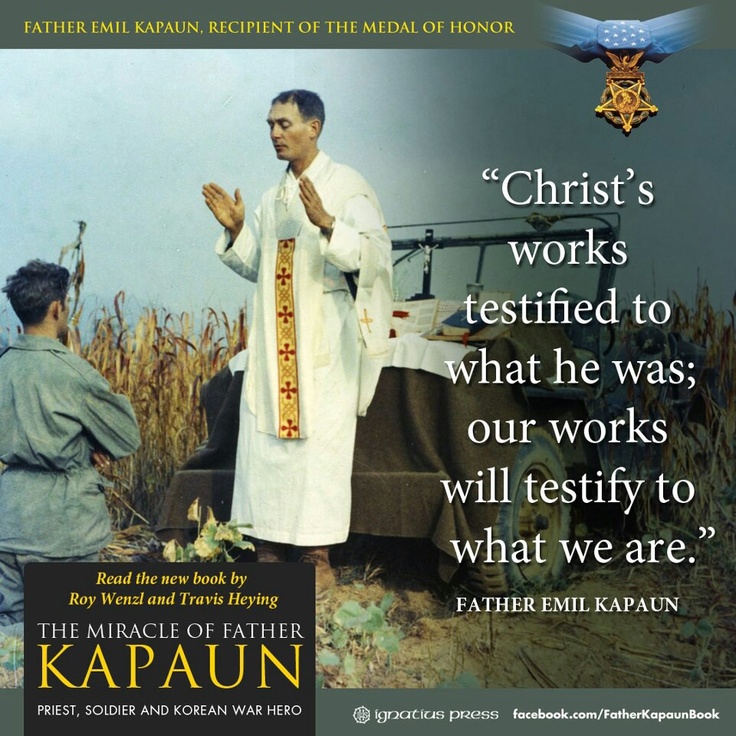
 Emil Joseph Kapaun was the son of Czech immigrants, a farm kid who grew up in 1920s Kansas. Graduating from Pilsen High, class of 1930, Kapaun spent much of the 30s in theological seminary, becoming an ordained priest of the Roman Catholic faith on June 9, 1940.


 In the Netherlands, ice hockey began sometime in the 16th century. North Americans have played the sport since 1855. For all that time, flying hockey pucks have collided with the faces of goalies. The results could not have been pretty.


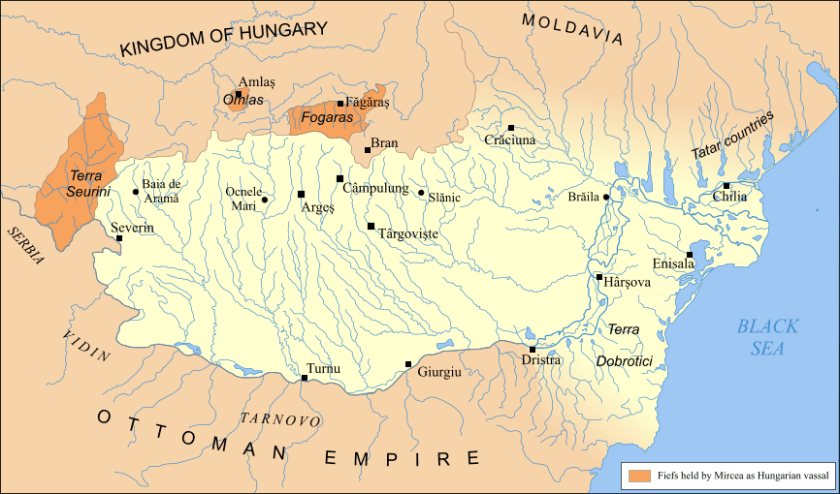
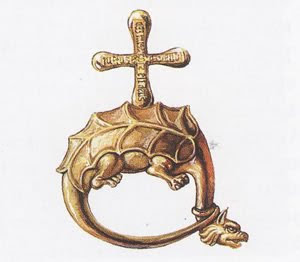 In 1436, Vlad II became voivode, (prince), of Wallachia. The sobriquet “Dracul” came from membership in the “Order of the Dragon” (literally “Society of the Dragonists”), a monarchical chivalric order founded by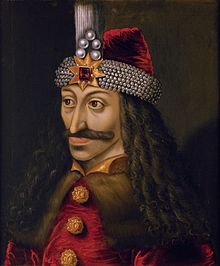
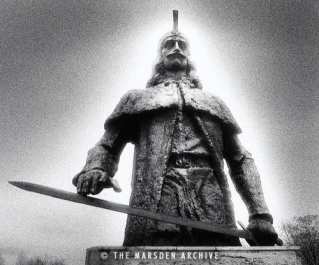 Ethnic Germans had long since emigrated to these parts, forming a distinct merchant class in Wallachian society. These Saxon merchants were allied with the boyars. It was not long before they too, found themselves impaled on spikes.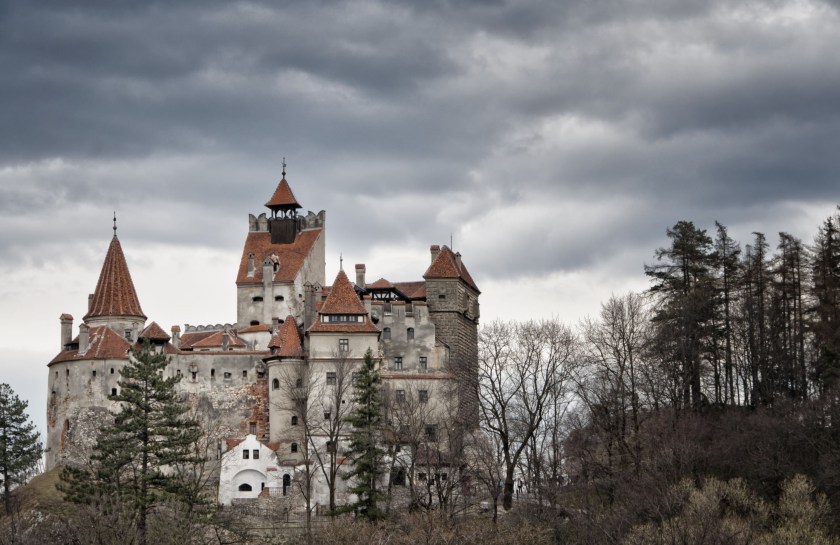



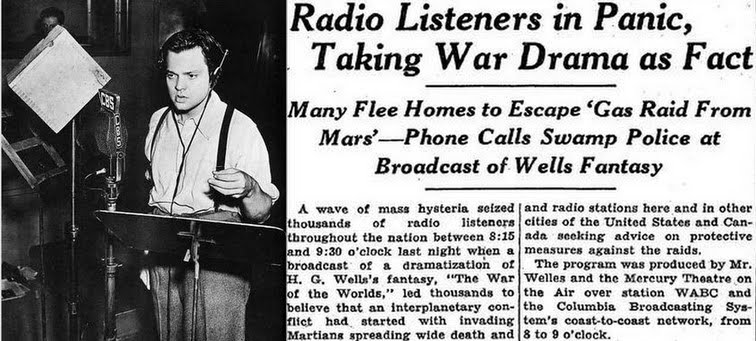
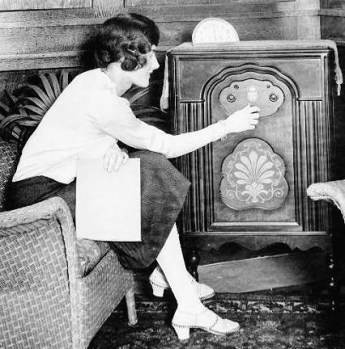 The radio drama began with a statement that what followed was fictional. The warning was repeated at the 40 and 55-minute mark, and again at the end of the broadcast. It began with a weather report, and then went to a dance band remote, featuring “Ramon Raquello and his orchestra”. The music was periodically interrupted by live “news” flashes, beginning with strange explosions on Mars. Producer Orson Welles made his first radio appearance as the “famous” (but non-existent) Princeton Professor Dr. Richard Pierson, who dismissed speculation about life on Mars.
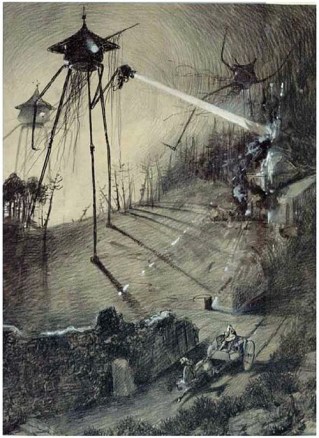 The dramatic technique was brilliant. Welles had his cast listen to the Hindenburg tape, explaining that was the “feel” that he wanted in his broadcast. Fictional on-the-spot reporter Carl Phillips describes the death ray in the same rising crescendo, only to be cut off in mid-sentence as it’s turned on him.
 The New York Times reported on Oct. 31, “In Newark, in a single block at Heddon Terrace and Hawthorne Avenue, more than 20 families rushed out of their houses with wet handkerchiefs and towels over their faces to flee from what they believed was to be a gas raid. Some began moving household furniture”.

 Born on October 29, 1921 in New Mexico and brought up in Arizona, William Henry “Bill” Mauldin was part of what Tom Brokaw called, the “Greatest Generation”.
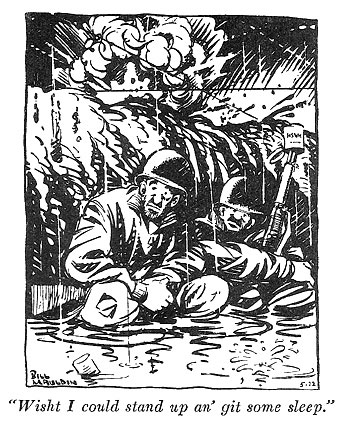 Mauldin developed two cartoon infantrymen, calling them “Willie and Joe”. He told the story of the war through their eyes. He became extremely popular within the enlisted ranks, while his humor tended to poke fun at the “spit & polish” of the officer corps. He even lampooned General George Patton one time, for insisting that his men to be clean shaven all the time. Even in combat.
 Mauldin later told an interviewer, “I always admired Patton. Oh, sure, the stupid bastard was crazy. He was insane. He thought he was living in the Dark Ages. Soldiers were peasants to him. I didn’t like that attitude, but I certainly respected his theories and the techniques he used to get his men out of their foxholes”.
 Bill Mauldin drew Willie & Joe for last time in 1998, for inclusion in Schulz’ Veteran’s Day Peanuts strip. Schulz had long described Mauldin as his hero. He signed that final strip Schulz, as always, and added “and my Hero“. Bill Mauldin’s signature, appears underneath.

 Historical Easter Eggs - Today in History
You must be logged in to post a comment.