September 28, 48BC Mad Honey

Tales come down from the Civil War, of Union troops getting into hives of mountain honey and becoming sick and disoriented, much like Roman troops some two thousand years earlier.

From sniffing glue to licking toads and huffing gasoline, people have thought of crazy and often dangerously stupid ways, of catching a buzz. Three years ago, CNN reported on a child ingesting a few squirts of hand sanitizer, resulting in slurred speech and an inability to walk straight. What do a dozen broke college kids do on a Saturday night? Buy a bottle of gin, and snort it. In some parts of the world, bees pollinate great fields of rhododendron flowers, resulting in a neurotoxic delicacy known as “Mad Honey”.

The Rhododendron genus contains some 1,024 distinct species ranging from Europe to North America, Japan, Nepal and Turkey and grown at altitudes from sea level to nearly three miles. Many Rhododendron species contain grayanotoxins though, in most regions, concentrations are diluted to trace levels. Some species contain significant levels.

rhododendron ferrugineum

Occasionally, a cold snap in the Appalachian Mountains of the Eastern United States will kill off other flowers while leaving Rhododendrons unaffected, resulting in mad honey. Such circumstances are rare. Mad honey is the most expensive in the world, normally selling for around $166 per pound.

When ingested in small doses, grayanotoxins produce feelings of euphoria and mild hallucinations.   Larger doses have toxic effects,  ranging from nausea and vomiting to dizziness, severe muscular weakness and slow or irregular heartbeat and plummeting blood pressure. Symptoms generally last for three hours or so, but may persist for 24 hours or longer. Ingesting large amounts of the stuff, may result in death.

Today, the toxic effects of over ingesting mad honey are primarily found among middle-age males in Turkey and Nepal, where the stuff is thought to have restorative qualities for a number of sexual dysfunctions.

honey-hunters-andrew-newey-13-740x493

Tales come down from the Civil War, of Union troops getting into hives of mountain honey and becoming sick and disoriented, much like Roman troops some two thousand years earlier.

The Greek historian, soldier and mercenary Xenophon of Athens wrote in 401BC of a Greek army passing through Trebizond in northeastern Turkey, on the way back home. While returning along the shores of the Black Sea, this crew had themselves a feast of honey, stolen from local beehives. For hours afterward, troops suffered from diarrhea and disorientation, no longer able to march or even to stand.

Fortunately, the effects had passed by the following day, before their defeated Persian adversary could learn of their sorry state.  Nearly four hundred years later, Roman troops would not be so lucky.

Gnaeus Pompeius Magnus lived from September 29, 106BC through September 28, 48BC, and usually remembered in English as Pompey the Great.

Following the death of Alexander the Great in 323BC, Alexander’s generals and advisers fell to squabbling over an empire, too big to hold. The period marked the beginning of Hellenistic colonization throughout the Mediterranean and Near East to the Indus River Valley.

Within two hundred years, the Mithradatic Kingdom of Pontus encompassing modern-day Armenia and Turkey, was becoming a threat to Roman hegemony in the east. King Mithradates VI is remembered as one of the most formidable adversaries faced by the Roman Republic, engaging three of the most successful generals of the late Republic in the Mithradatic Wars of the first century.

1_Mad-honey-deadly-hallucinogen

In 67BC, a Roman army led by Pompey the Great was chasing King Mithridates and his Persian army through that same region along the Black Sea. The retreating Persians laid a trap, gathering honey and putting the stuff out in pots, by the side of the road.

Had any on the Roman side brushed up on their Xenophon, the outcome may have become different.  As it was, Roman troops pigged out and could scarcely defend themselves, against the returning Persians.  A thousand or more Romans were slaughtered, with few losses to the other side.  And all of it, for a little taste of honey.

If you enjoyed this “Today in History”, please feel free to re-blog, “like” & share on social media, so that others may find and enjoy it as well. Please click the “follow” button on the right, to receive email updates on new articles.  Thank you for your interest, in the history we all share.

September 27, 1943 The Waving Girl of Cockspur Island

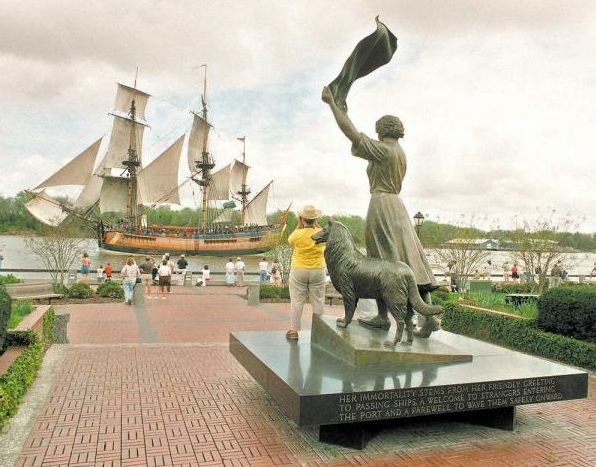
Miss Martus would take out her handkerchief by day or light her lantern by night, and she would greet every vessel that came or went from the Port of Savannah.  Every one of them.  Some 50,000 vessels, over 44 years.

Following the War of 1812, President James Madison ordered a series of coastal fortifications built, to protect the young nation from foreign invasion. Fort Pulaski, located on Cockspur Island between Savannah and Tybee Island, Georgia, is one of them.

cockspur-island-lighthouseFlorence Margaret Martus was born there in 1868, where her father worked as an ordnance sergeant. Martus spent her childhood on the south channel of the Savannah River, moving in with her brother, keeper of the Cockspur Island Lighthouse, when she was 17.

Sometime around 1887 while still a young girl, Florence began waving at ships passing in the river.

It started with friends, working the river. Harbor masters, bar pilots and tugboat captains.  She’d use a lantern by night and a white handkerchief by day.

“The waving girl” and her collie soon became familiar figures, greeting every ship that entered or left the port of Savannah.  Sailors would look for her and salute in return. Vessels would blow their horns.  Few ever met her, in person.

Legends grew up around her, over the years. She had fallen in love with a sailor. She wanted him to find her when he returned. He’d been lost at sea.

The bittersweet truth was not quite so dramatic. She later said, “That’s a nice story. But what got me started – I was young and it was sort of lonely on the island for a girl. At first I would run out to wave at my friends passing, and I was so tickled when they blew the whistle back at me“.

ga sv 579So it was that Miss Martus would take out her handkerchief by day or light her lantern by night, and she would greet every vessel that came or went from the Port of Savannah.  Every one of them.  Some 50,000 vessels, over 44 years.
In 1893, Martus and her brother braved hurricane conditions, rowing out to save several men from a sinking boat.  She waved an American flag at the troop ship St. Mihiel after WWI, on its return to Savannah carrying the US Army of the Rhine.

“The Waving Girl” took it upon herself to greet every ship entering or leaving the Port of Savannah, from young womanhood until old age.

She stopped only when she was forced to do so when her brother, then 70, had to leave his lighthouse job and the home that went with it.

Florence_Martus_statue_in_Savannah,_August_2016

All that time she kept a careful record of every ship:  name, date, where it was from and type of vessel.  It must have broken her heart to move, because she burned the entire record.  44-years’ worth. WWII-era reporter Ernie Pyle lamented “The daily record for forty-four years, one of the most legendary figures of the Seven Seas, kept in her own hand, gone up in smoke in two minutes”.

The Waving Girl Statue

Martus never reconciled herself to the move, saying, “It’s just like trying to dig up that big oak tree and get it to take root someplace else.”

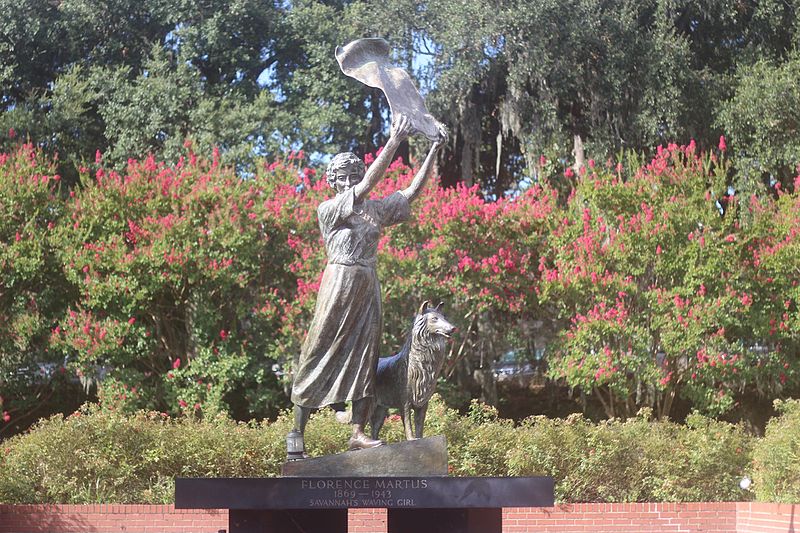
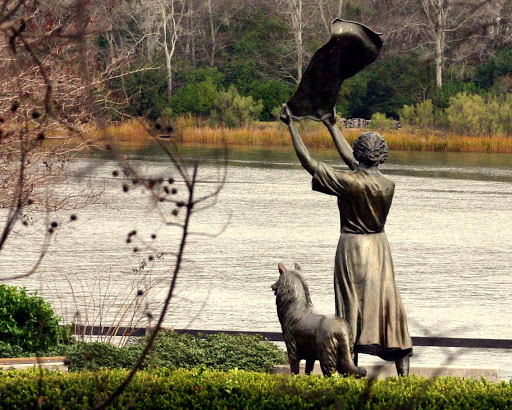
The artist Felix de Weldon, who sculpted the United States Marine Corps Memorial outside Arlington National Cemetery, erected a statue of the Waving Girl and her collie. You can see it in Morrell Park, on the west bank of the Savannah River.

b1068a_florence_martus_01_fag

The Waving Girl passed away on February 8, 1943, following a brief bout with bronchial pneumonia.

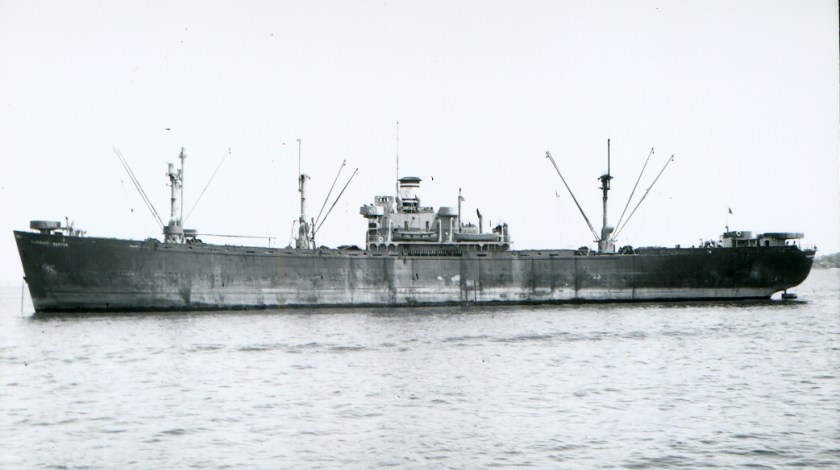
sav-belles-4-smallThe Southeastern Shipbuilding Corporation of Savannah built 88 Liberty ships during the course of World War II, the light, low-cost cargo ship which came to symbolize the industrial output of the American economy.
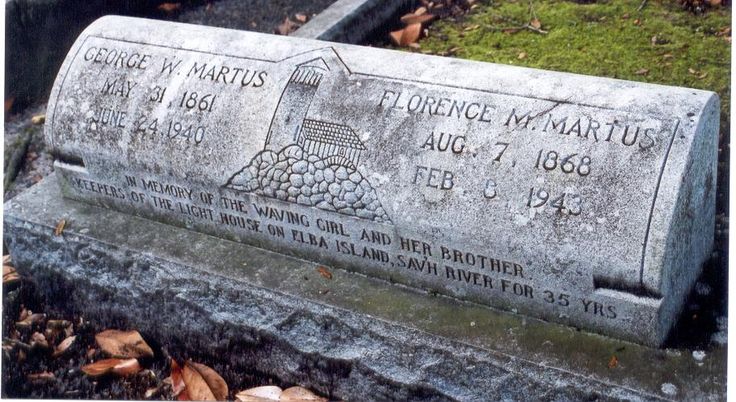
One of them was named in her honor. The SS Florence Martus was officially christened on September 27, 1943.

Today, the four vessels of the “Savannah Belles Ferry” fleet ply the waters of the Savannah River, each named for notable women from Savannah history. There is the Juliette Gordon Low, named for the founder of the Girl Scouts of America. Susie King Taylor was born a slave and earned her freedom at age 14, serving as a nurse during the Civil War and later opening one of the first schools in Savannah, for Americans of African ancestry. The Mary Musgrove is named for the native American translator, and indispensable connection between Chief Tomochichi, Mico (Leader) of the Yamacraw and James Oglethorpe, founding father of the city of Savannah.  And the Florence Martus, the Waving Girl of Cockspur Island.

5b51a432fcc34c12a18c0a196a35f3d0

If you enjoyed this “Today in History”, please feel free to re-blog, “like” & share on social media, so that others may find and enjoy it as well. Please click the “follow” button on the right, to receive email updates on new articles.  Thank you for your interest, in the history we all share.

September 26, 1995 Last Skate

There was nothing but potential in that rookie year, but that bright future was never meant to be.

Having come of age in this part of the world, it’s hard to imagine anyone over forty never having been to the old Boston Garden.

Originally built as a boxing venue, “The Garden” was then known as the Boston Madison Square Garden.

President Calvin Coolidge flipped a switch at the White House in November 1928, turning the lights on at the brand new arena.  Three days later, a crowd of 14,000 watched Dorchester native Dick “Honeyboy” Finnegan take the World featherweight championship away from French boxer Andre Routis, in a ten round decision.

From the earliest days, the Boston Garden was the site of political conventions, tennis matches, roller derbies and bike races.  There you could hear the sounds of a Christian revival one night, and a dance marathon the next.

FDR, Winston Churchill and Dwight Eisenhower all delivered speeches from the floor of the Garden.  Legend has it that JFK mapped out his political strategy for the 1960 Presidential election, while watching a Bruins game.

I saw my first big-time rock concert, when Aerosmith played the Garden in 1975.

The Boston Celtics played to 16 championships on the old parquet, along with 19 Conference and 15 Division titles.

boston-garden-t-kolendera
Boston Garden is a painting by T Kolendera

Five times did the Bruins hold Lord Stanley’s Cup aloft on the home ice of the Garden, adding to 19 Eastern Division championships, two Conference championships, and a President’s trophy.

In the end, obstructed seats and a lack of air conditioning spelled the end for the Boston Garden.  On this day in 1995, Cam Neely scored the final goal in a 3-0 victory over the arch rival Montreal Canadiens.  There would be no more.

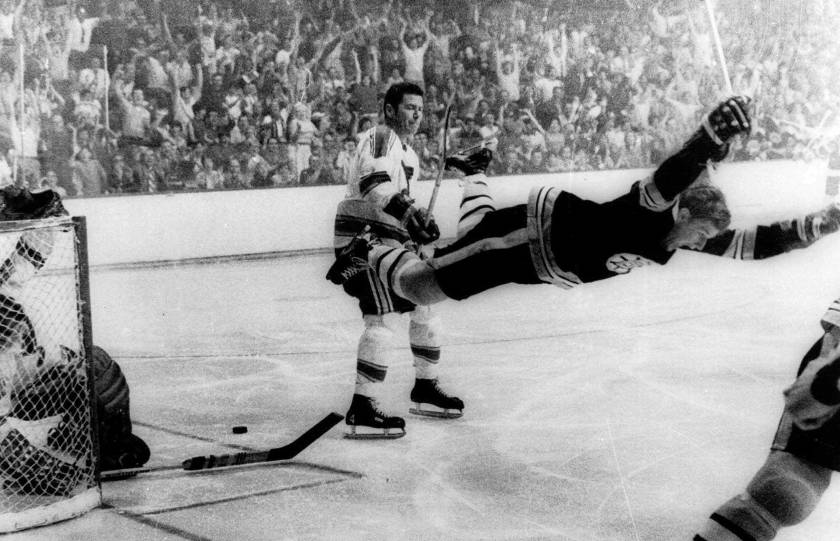
Many of the Greats of Boston hockey were there that night, to take a final skate around the Bruins’ home ice.   Johnny Bucyk was on-hand, along with Milt Schmidt.  There was Phil Esposito, Ray Bourque and Bobby Orr, and possibly the greatest, though few will remember the name of Normand Léveillé.

032013orr1

A first-round draft pick in 1981, Léveillé scored 33 goals in his first 60 games with the Bruins.  There was nothing but potential in that rookie year, but that bright future was never meant to be.

On October 23, 1982, Boston was playing the Canucks in the ninth game of his second season.  Léveillé complained of feeling dizzy, and lost consciousness during trainers’ examination .  An aneurysm had burst inside of his head.  The delicate filaments of his brain were being torn apart, as a spider’s web is destroyed by a garden hose.

Emergency brain surgery was followed by three weeks in a coma.  At 19, Normand Léveillé would never play hockey again.  He was lucky to be alive.

boston-garden-finalBound to a wheelchair after thirteen years and barely able to stand without aid of a walker, Normand Léveillé came back to the Garden twenty-three years ago tonight, to skate there one last time.

Let sports reporter Brent Conklin finish this story:

“For the final skate, an ecstatic Léveillé held his cane in front of him, while Bourque, facing Léveillé, pulled him around the ice; the crowd clamored in approval as eyes throughout the Garden filled up with tears.

Léveillé’s girlfriend, Lucie Legare, said at the end of the ceremony: “He said the biggest emotion wasn’t to put on the (Bruins) sweater again, but to have his fellow men there, caring. I cried. It’s just too much.”

“It was the highlight of the day,” Orr said.

Thus ends a long chapter in the history of sports. And although the luxurious Fleet Center becomes the center of attention on Oct. 7 — when the Bruins open their season versus the New York Islanders — to the very last second of the post-game ceremony, memories were still being made and dreams realized at rickety old Boston Garden”.

If you enjoyed this “Today in History”, please feel free to re-blog, “like” & share on social media, so that others may find and enjoy it as well. Please click the “follow” button on the right, to receive email updates on new articles.  Thank you for your interest, in the history we all share.

September 25, 1789  Bill of Rights

Today the American system is often described as “democracy”, but such a description is in error.  Four wolves and a lamb voting on what to have for dinner, is a democracy.  The genius of the founders can be demonstrated in a system which protects the rights of All its citizens, including that individual.  The proverbial lamb.

The Founding Fathers ratified the United States Constitution on June 21, 1788.  In so doing, our forebears bestowed on generations yet unborn, a governing system unique in all history.  A system of diffuse authority, of checks and balances, and authority delegated but Never relinquished, by a sovereign electorate.

Today the American system is often described as “democracy”, but such a description is in error.  Four wolves and a lamb voting on what to have for dinner, is a democracy.  The genius of the founders can be demonstrated in a system which protects the rights of All its citizens, including that individual.  The proverbial lamb. The specifics are enumerated in our bill of rights, twelve amendments adopted by the first Congress on this day in 1789, and sent to the states for ratification.

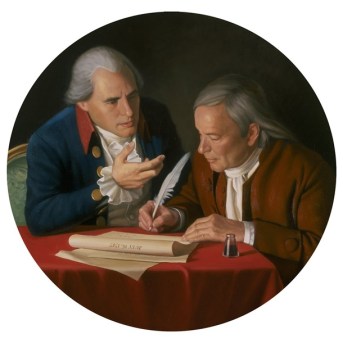
bill-of-rightsEven at the Constitutional Convention, delegates expressed concerns about the larger, more populous states holding sway, at the expense of the smaller states. The “Connecticut Compromise” solved the problem, creating a bicameral legislature with proportional representation in the lower house (House of Representatives) and equal representation of the states themselves in the upper house (Senate).
The 62nd Congress proposed a Constitutional amendment in 1912, negating the intent of the founders and proposing that Senators be chosen by popular election.  The measure was adopted the following year, the seventeenth amendment having been ratified by ¾ of the states.  Since that time, it’s difficult to understand what the United States Senate even is,  an institution neither democratic nor republican.  But I digress.

Five states: Delaware, Pennsylvania, New Jersey, Georgia, and Connecticut, ratified the document in quick succession. Some states objected to the new Constitution, especially Massachusetts, which wanted more protection for basic political rights such as freedom of speech, religion, and of the press. These wanted the document to specify, that those powers left un-delegated to the Federal government, were reserved to the states.

sherman-ellsworthA compromise was reached in February, 1788 whereby Massachusetts and other states would ratify the document, with the assurance that such amendments would immediately be put up for consideration.

With these assurances, Massachusetts ratified the Constitution by a two-vote margin, followed by Maryland and South Carolina. New Hampshire became the ninth state on June 21. The new Constitutional Government would take effect on March 4 of the following year.

Amendments 2-12 were adopted on December 15, 1791, becoming the “Bill of Rights”.

It’s interesting to note the priorities of that first Congress, as expressed in their original 1st and 2nd amendments.  As proposed to the 1st Congress, the original 1st amendment dictated apportionment of representation. It was ratified by only 11 states, and technically remained pending. Had the states ratified that original first amendment, we would now have a Congress of at least 6,345 members, instead of the 535 we currently have.

The original 2nd amendment was an article related to Congressional compensation, that no future Congress could change their own salaries.   The measure would in fact, pass, becoming the 27th amendment in 1992.  Following a ratification period of 202 years, 7 months, and 10 days.

If you enjoyed this “Today in History”, please feel free to re-blog, “like” & share on social media, so that others may find and enjoy it as well. Please click the “follow” button on the right, to receive email updates on new articles.  Thank you for your interest, in the history we all share.

September 24, 1789 Supreme Court

From “Separate but Equal” to the “rights” of terrorists, SCOTUS’ rulings are final, inviolate, and sometimes imbecilic.

Article III of the United States Constitution establishes the Supreme Court of the United States (SCOTUS), and “such inferior Courts as the Congress may from time to time ordain and establish”.

There is no mention of the number of justices. The first Congress passed the Federal Judiciary Act on September 24, 1789, specifying a six-justice Supreme Court.

Twelve years later, the presidency of John Adams was coming to an end. As a Federalist, Adams wanted nothing more than to stymie the incoming administration of Democratic-Republican Thomas Jefferson. Toward that end, Adams appointed the infamous “midnight judges” in the last hours of his administration: 16 Federalist Circuit Court judges and 42 Federalist Justices of the Peace.

The incoming Jefferson administration sought to block the appointments. Jefferson ordered then-Secretary of State James Madison to hold those commissions as yet undelivered, thus invalidating the appointments. One of the appointees, William Marbury, took the matter to Court.

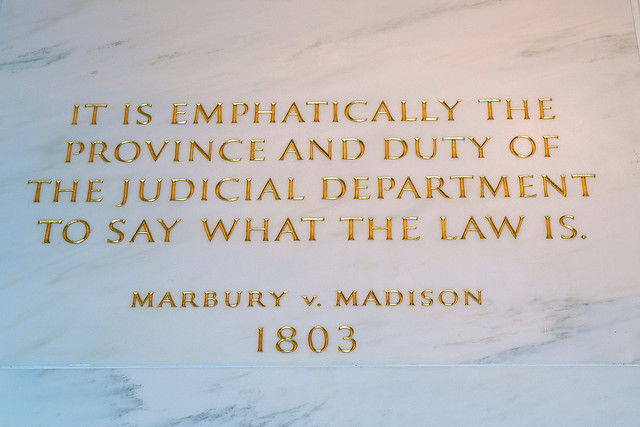
The case advanced all the way to the Supreme Court, which ruled in Marbury v. Madison that the provision of the Judiciary Act enabling Marbury to bring his claim, was unconstitutional.  Marbury lost his case, but the principle of judicial review, the idea that the court could preside Godlike, over laws passed by their co-equal branch of government, has been the law of the land, ever since.

marbury-v-madison

In the early days of the Great Depression, Federal agricultural officials conceived the hare brained idea that artificially introducing scarcity would increase prices, and therefore wages, in the agricultural sector. Six million hogs were destroyed in 1933. Not harvested, just destroyed and thrown away. 470,000 cattle were shot in Nebraska alone. Vast quantities of milk were poured down sewers, all at a time of national depression, when malnutrition was widespread.

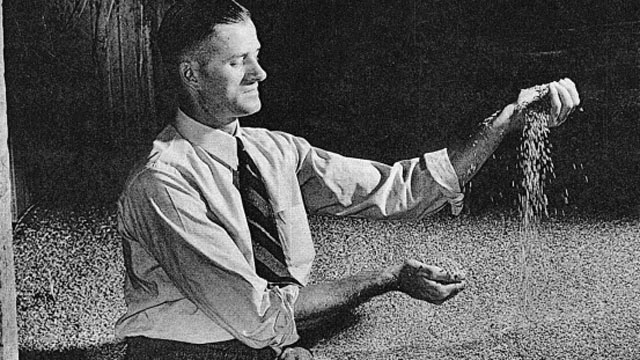
With the Agricultural Adjustment Act of 1938, Washington began to impose production quotas on the nation’s farmers. Ohio farmer Roscoe Filburne was ordered to grow 223 bushels of wheat in the 1941 season. Filburne grew 462.

Article 1, Section 8 of the Constitution permits Congress “To regulate Commerce with foreign Nations, and among the several States, and with the Indian Tribes”. That is all but, on this flimsy basis, the Federal Government took Roscoe Filburne to court.

The farmer argued that the “surplus” stayed on his farm, feeding his family and his chickens. Lower Courts sided with Filburne. The government appealed all the way to the Supreme Court, arguing that, by withholding his surplus, Filburne was effecting interstate market conditions, thereby putting him under federal government jurisdiction.

ht_roscoe_filburn_nt_120130_wmain

Intimidated by the Roosevelt administration’s aggressive and illegal “court packing scheme“, SCOTUS decided the Wickard v. Filburne case, against the farmer. Ever since, what you don’t do can be held against you in a court of law. Get it? Neither do I.

Over time, SCOTUS has proven itself to be as imperfect as any other institution. There have only been 17 Chief Justices and 101 Associate Justices in the entire history of the court. Five Chiefs having previously sat as Associate Justices, there are only 113 in all.  Should Brett Kavanaugh be confirmed, he would be #114.

Some among those 113 have been magnificent human beings, and some of them cranks. There have been instances of diminished capacity ranging from confusion to outright insanity. One justice spent part of his term in a debtor’s prison. Another killed a man. There have been open racists and anti-Semites.

There is no official portrait of the 1924 court because Justice James C. McReynolds wouldn’t stand next to Louis Brandeis, the court’s first Jewish Justice. One Justice was known to chase flight attendants around his quarters, while another spent his time in chambers, watching soap operas.

There’s the former Klan lawyer turned Justice who took a single phrase, “separation of church and state”, from a private letter of Thomas Jefferson, and turned the constitutional freedom OF religion into an entirely made up freedom FROM religion.

Separation-of-Church-and-State

The Supreme Court reinforced chattel slavery with the Dred Scott decision. The Korematsu ruling gave us the forced incarceration of Americans of Japanese descent. Buck v. Bell gave Americans the “gift” of forced sterilization, and Stenberg v. Carhartt enshrined the constitutional “right” to the hideous and detestable “procedure” known as partial birth abortion. From “Separate but Equal” to the “rights” of terrorists, SCOTUS’ rulings are final, inviolate, and sometimes imbecilic.

Chief Justice John Roberts, who once said “remember that it’s my job to call balls and strikes, and not to pitch or bat,” invented a whole new definition of taxation, enshrining the “Affordable Care Act” as the law of the land.

The framers gave us a Constitutional Republic with co-equal branches of government, with power diffused and limited by a comprehensive set of checks and balances.

They gave us two distinct means to amend that Constitution, should circumstances require it.

Traditionally, Congress proposes amendments, submitting them to the states for ratification. The problem is that many believe Congress itself to be part of the problem, and a broken institution is unlikely to fix itself.

Article V gives us a way to amend the constitution, if we would take it. Instead of Congress proposing amendments, an Article V convention of state legislatures would propose amendments, to take effect only if ratified by a super majority of states. We could start with an amendment permitting 2/3rds of the People’s representatives in Congress, to overturn a SCOTUS decision. Then we could term limit these people.

article-5

Unless, that is, you believe it’s fine for the Federal Government to prohibit a farmer from growing wheat for his own use, that one man in a black robe can force you to buy a product you don’t want and call it a “tax”, or you believe that “established by the state” means by the state or federal government, at the sole discretion of the man who says, “I’m from the Government. I’m here to help”.

If you enjoyed this “Today in History”, please feel free to re-blog, “like” & share on social media, so that others may find and enjoy it as well. Please click the “follow” button on the right, to receive email updates on new articles.  Thank you for your interest, in the history we all share.

September 23, 1908 Merkle’s Boner

Bad as it was, Buckner’s Bungle at first had nothing on a Flub that will live for the Ages, Fred Merkle’s Screw-up at Second, a Blooper that would always be known as “Merkle’s Boner”.

For Boston sports fans, there is little to match for pure unhappiness of memory, with the 86-year World Series Championship drought known as the “Curse of the Bambino”.

Babies grew up and had babies of their own during that time. There were grandchildren and great grandchildren, and sometimes even great-greats, and still the drought wore on.  It was 86 years.  One of the longest World Series championship droughts in Major League Baseball history.

The third longest, actually, behind those of the Chicago White Sox (87 games) and the Chicago Cubs, (107 games).  Pity the long suffering baseball fans, of Chicago.

763.jpg

It’s the worst moment in Boston baseball, unless you count the ball that lost the 1986 world series, the one that dribbled through Bill Buckner’s legs at First Base and snatched defeat from the jaws of victory in game six, against the New York Mets.

And that after defeating the Arch Nemesis New York Yankees by 5½ games, for the championship of the American League East.

An unfortunate joke emerged from that game, about Bill Buckner’s most regrettable moment.  A joke unbefitting the caliber of the man’s career in Major League Baseball.

Bad as it was though, Buckner’s Bungle at first had nothing on a Flub that will live for the Ages, Fred Merkle’s Screw-up at Second, a Blooper that will always be known, as “Merkle’s Boner”.

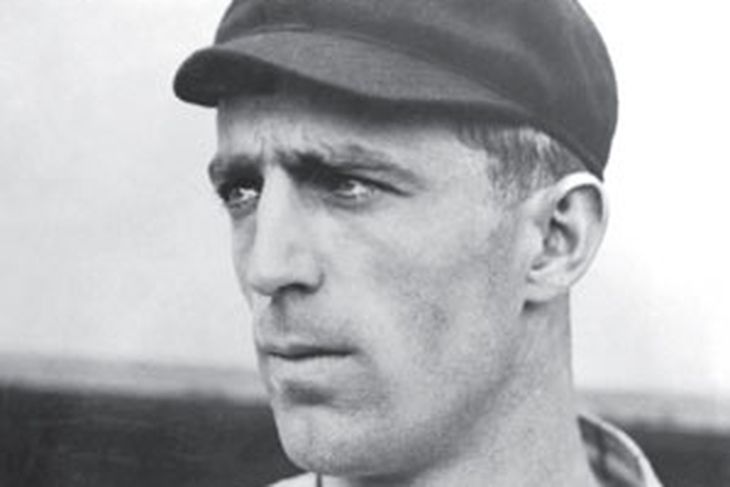
fred_merkle_1908.0
Fred “Bonehead” Merkle

On this day in 1908, the New York Giants faced off with the Chicago Cubs in the last of a three-game series at the Polo Grounds, in upper Manhattan.

The Giants held a slim lead at this time for the National League pennant, but the Cubbies had managed to hold on to a 2-0 series lead. This game was going to be a Big Deal.

Fred Merkle was 19 years old that day, the youngest player in the National League.

In the bottom of the 9th, Merkle came to the plate with two outs, the score tied 1–1, and Harry “Moose” McCormick on first.

Merkle singled and McCormick advanced to third. Al Bridwell, followed with a single of his own and McCormick crossed the plate, with the winning run.

Except, that’s not the way it happened.

The fans poured onto the field, convinced that the game was over. Fans did that, in those days.

320px-Fred_Merkle_baseball_cardMerkle thought so too, and ran to the Giants’ clubhouse, never touching second base.

Cubs second baseman Johnny Evers noticed and, after fielding the ball and touching second, appealed to umpire Hank O’Day to call the out.

The Ump called Merkle out on a force play. The run didn’t count.

With the winning run nullified, the Giants’ victory was erased and the score tied, 1-all. There was no hope of resuming play, with thousands of fans on the field.

The game was declared a tie, and the two teams finished regular season, tied for first.

The Cubs won the 1908 National League pennant with a 4-2 victory on the rematch, also played at the Polo Grounds, on October 8.

A game that never should have been played, but for a nineteen-year-olds screwup at second, for which Fred Merkle would always be known as “Bonehead”.

Oh.  The joke.  I almost forgot.  Question:  What do Bill Buckner and Michael Jackson, have in common?  Answer:  They both wear one glove, for no apparent reason.

If you enjoyed this “Today in History”, please feel free to re-blog, “like” & share on social media, so that others may find and enjoy it as well. Please click the “follow” button on the right, to receive email updates on new articles.  Thank you for your interest, in the history we all share.

September 22, 1663 The King’s Daughters

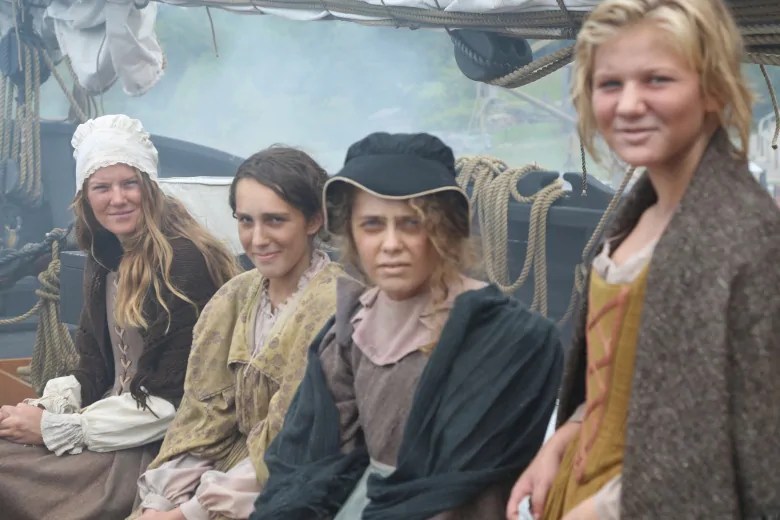
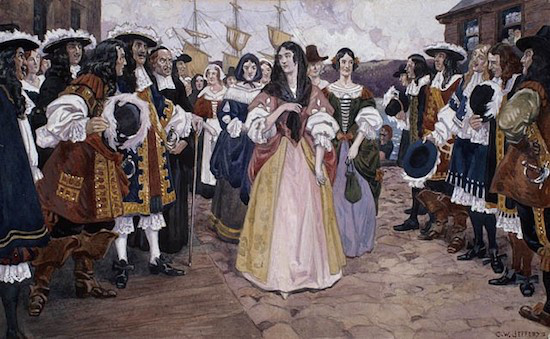
In the following ten years, 800 young French women immigrated to New France under the filles du roi program, sponsored by King Louis XIV and his colonial advisors. 

Around 1523, the Florentine navigator Giovanni da Verrazzano convinced the French King Francis I to fund an expedition to find a western water route to “Cathay” (China).  Some of the earliest French presence in the New World began ten years later, with Jacques Cartier’s exploration of the Gulf of St. Lawrence in present-day Canada. In 1534, Cartier planted his flag on the Gaspé Peninsula in present-day Quebec City, claiming the territory in the name of Francis I.

The first French settlement was attempted in 1541 when some 400 individuals put down in Fort Charlesbourg-Royal. That effort would come to an end two years later but, there would be others.

As early English colonists to North America struggled to put down roots in places like Roanoke and Jamestown, the Spanish developed toeholds in Florida and the American southwest. To the north, French fishing fleets sailed the Atlantic coast and into the St. Lawrence waterways, making alliances with Canadian First Nations and developing a rich trade in furs, particularly beaver, which were at that time becoming rare in Europe.

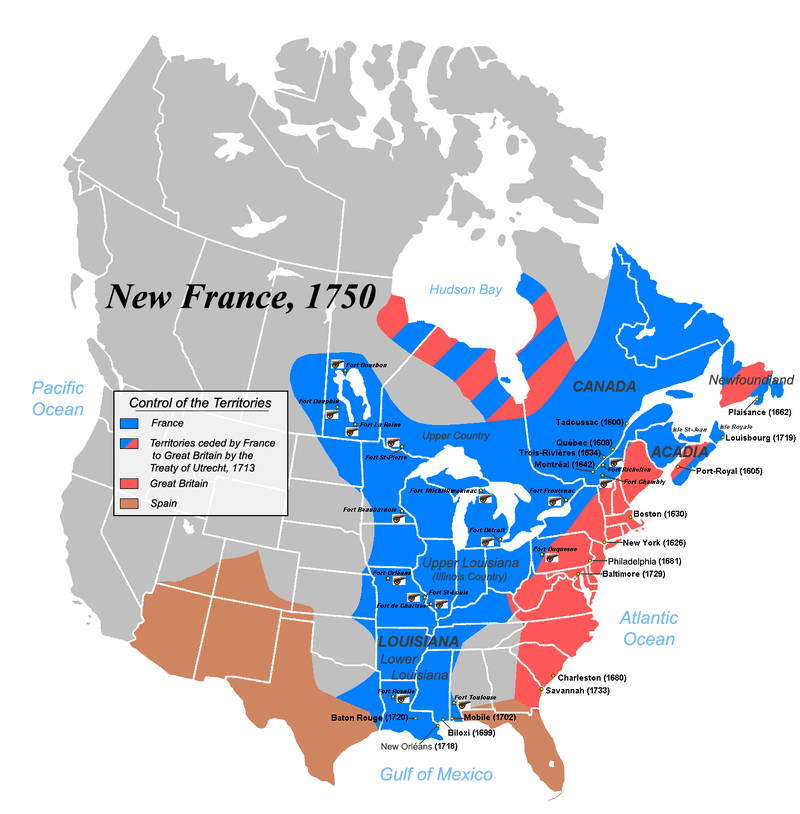
By its peak in 1712, the territory of Nouvelle-France (New France) consisted of five colonies, stretching from Canada to the Gulf of Mexico, and from Newfoundland to the Great Lakes.

800px-New-France1750

English settlers developed a farming economy, and men brought wives and families along, from the earliest days. Not so French settlers.  New France was a man’s world, a world of soldiers and fur traders, of missionaries, sailors and fishermen. A world with little to offer women.

Well into the 17th century, a great number of marriageable males would return to France following three-year terms of service.  If there was to be permanent French settlement in the New World, that would have to change.

In the thirty years beginning in 1634, private individuals and religious groups recruited a mere 262 filles à marier (marriageable girls) between Québec and Montréal, an area with some 2,500 men.

canada-story-of-us-episode-101-filles-du-roi-group-shot

Marguerite Bourgeoy set sail for the New World in 1653 aboard the Saint-Nicholas, along with another hundred or so colonists. There Bourgeoys lived in Fort Ville-Marie (now Montreal) where she educated young girls, the poor, and the native population.  Bourgeoys developed one of the first uncloistered religious communities in the Catholic Church and went on to found the Congregation of Notre Dame of Montreal.

Today, Bourgeoy  is a Saint of the Roman Catholic Church. It was she who first used the term filles du roi (King’s Daughters).

The term “King’s Daughters” referred not to parentage, but to sponsorship. In 1663, King Louis XIV took over direct control of governing New France, and initiated a system for recruiting and transporting marriageable women into the colony.

Recruiting took place in the northern cities, carried out by merchants and ship’s outfitters. Each girl was expected to be of appropriate age for giving birth, and to present a birth certificate and recommendation from her parish priest or local magistrate, stating that she was free to marry.

Graphique_sur_la_répartition_des__Filles_du_Roi__selon_l'âge_(vers_1663-1673)
The majority of the filles du roi were aged 16 to 25

Each girl was equipped with an assortment of practical items: a coiffe, bonnet, taffeta handkerchief, pair of stockings, pair of gloves, ribbon, four shoelaces, white thread, 100 needles, 1,000 pins, a comb, pair of scissors, two knives and two livres in cash along with suitable clothing and a few provisions.  The cost including passage came to 100 livres, equivalent to $1,425 in the year 2000, a cost which was paid by the French state.

On September 22, the first thirty-six Filles du Roi arrived in Québec.

While awaiting proposals of marriage, women were lodged in dormitory-style houses, under the supervision of a female chaperone or directress. Suitors would come to the house to make their selection, under the supervision of the Directress. Outward appearance was less important in this world, than that these women be equipped for the hardships of the New World.

It quickly emerged that city girls were too “lightheaded and lazy”. Good, strong peasant stock was needed. Marie de l’Incarnation, mother superior of the Ursuline convent at Québec City requested in 1668: “From now on, we only want to ask for village girls who are as fit for work as men, experience having shown that those who are not raised [in the country] are not fit for this country.”

filles-du-roi

In the following ten years, 800 young French women immigrated to New France under the filles du roi program, sponsored by King Louis XIV and his colonial advisors.  Unsurprisingly, Canada experienced a baby boom, such as never seen before, or since.  The average family had five children during this period, about twice as many as the “Baby Boom”, following WW2.   Families with more than 10 children got a bonus from the Crown:  an additional annual pension of 300 livres ($6,000).

According the Canadian Broadcasting Corporation (CBC), two-thirds of modern French Canadians can trace their lineage back to one of those 800 women, including Hillary Clinton, Madonna and Angelina Jolie.

If you enjoyed this “Today in History”, please feel free to re-blog, “like” & share on social media, so that others may find and enjoy it as well. Please click the “follow” button on the right, to receive email updates on new articles.  Thank you for your interest, in the history we all share.

September 21, 1765 The Beast of Gévaudan

Precise identification of the Beast of Gévaudan has baffled cryptozoologists, from that day to this. 

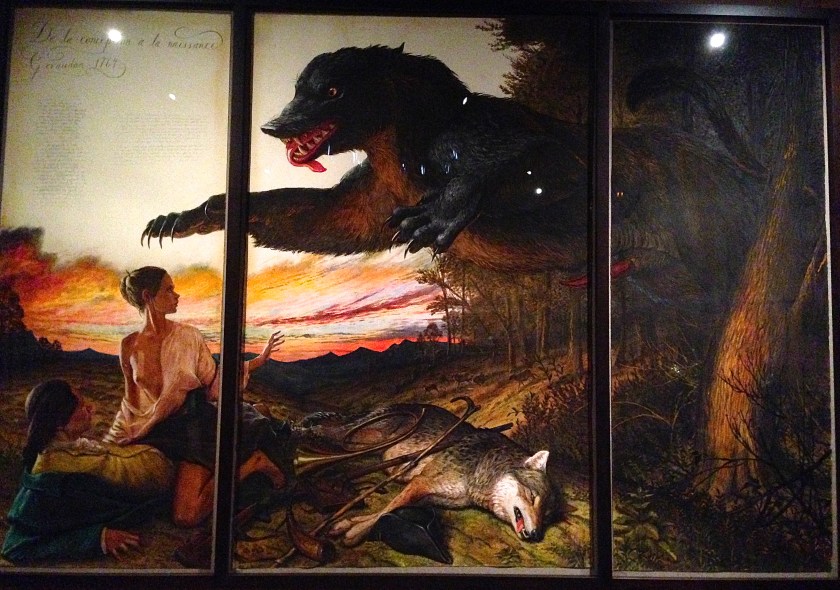
In the summer of 1764, a young woman was tending cattle near the Mercoire forest in the Gévaudan region of south-central France, when a large animal emerged from the forest.    She later described the creature as wolf-like in appearance, but much larger.  The size of a calf, or a donkey.

Twice the animal attacked, only to be driven off by the bulls in the herd.  Twenty-nine days later, Janne Boule was not so lucky. The 14-year-old is officially recorded as the first victim of La Bête du Gévaudan.  The “Beast of Gévaudan”. Over the following three years, there would be many more.

Gevaudanwolf

Contemporary illustration depicts the Beast as a large wolf, or wolf hybrid.

A 1987 study of contemporary sources estimates 210 such attacks over the three-year period, resulting in 113 fatalities and another 49 injuries. Victims were most often killed, by having their throats ripped out. Ninety-eight of those, were partially eaten.

Precise identification of the Beast of Gévaudan has baffled cryptozoologists, from that day to this.  Eyewitness accounts describe a large animal with a long tail, about the size of a calf, or a donkey. With reddish fur and a flat head, the Beast was said to be exceptionally powerful, able to leap distances of 30-feet and more, and capable of carrying off a grown adult, in its jaws.

gevaudan-660x357Terror gripped the region in the later months of 1764, as the Beast attacked women, men and children.  Usually while alone, and often while tending livestock.
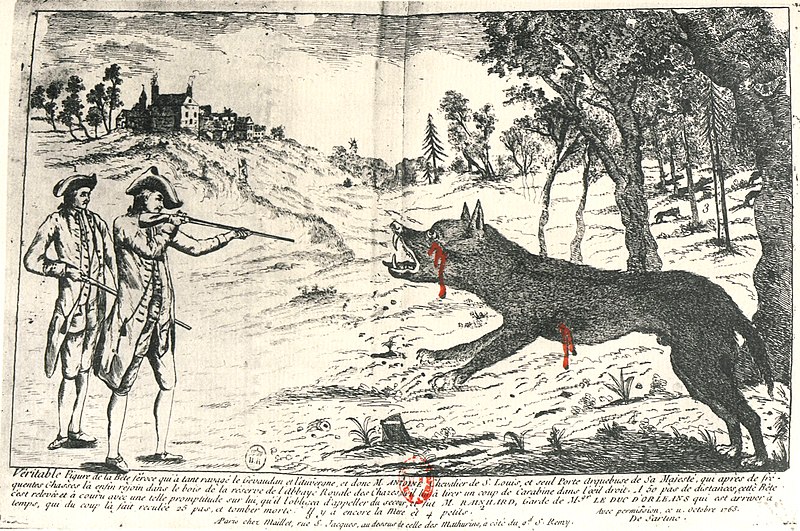
Suspicion centered on an unusually large wolf, dog, or some hybrid combination of the two.   Stories went to the supernatural, laying bare our most primordial fear, that of a shape shifter. A Werewolf.

The Epic of Gilgamesh comes to us from the second millennium BC, telling the tale of such creatures. The 1st-century BC Roman poet Ovid, was the first to write of shape-shifting as a conscious act of will.

Beast of Gevaudan, 1700s

In January 1765, the Beast came to the attention of King Louis XV, who decreed that the French state would help to find and destroy the Beast. First captain Duhamel of the Clermont-Ferrand dragoons was brought out with his troops, and sent to Le Gévaudan. The professional wolf-hunters Jean Charles Marc Antoine Vaumesle d’Enneval and his son Jean-François, arrived with eight bloodhounds, trained in wolf-hunting.

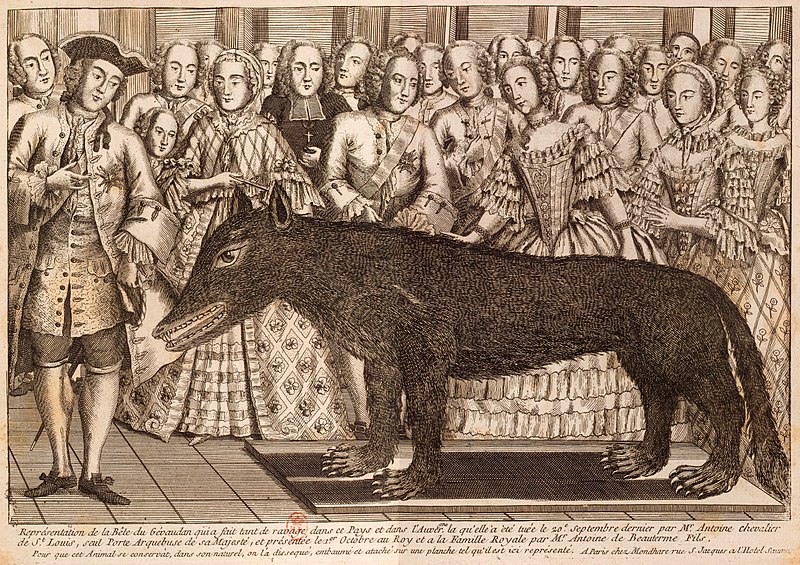
“Officer of the Royal Bedchamber” Antoine De Beauterne Marques Argents, Knight Equerry of the Royal Military Order of Saint Louis and Gun-Bearer to Louis XV of France (now, there’s a title) announced on this day in 1765 that he had killed the Beast of Gévaudan, to great rejoicing.

800px-François_Antoine_et_la_Bête_du_Gévaudan,_gravure

The animal was a large grey wolf measuring 5-feet, 7-inches and weighing 130-pounds. Eyewitnesses claimed to have recognized scars on the animal’s body and Beauterne himself swore that this was the Beast. “We declare by the present report signed from our hand”, he said, “we never saw a big wolf that could be compared to this one. Hence, we believe this could be the fearsome beast that caused so much damage.”

The animal was stuffed and brought to Versailles, but the joy was short-lived.

800px-Wolf_of_Chazes

Two boys were attacked on December 2 but managed to fight off the Beast.  A dozen more fatal attacks were reported to have followed, near La Besseyre-Saint-Mary.

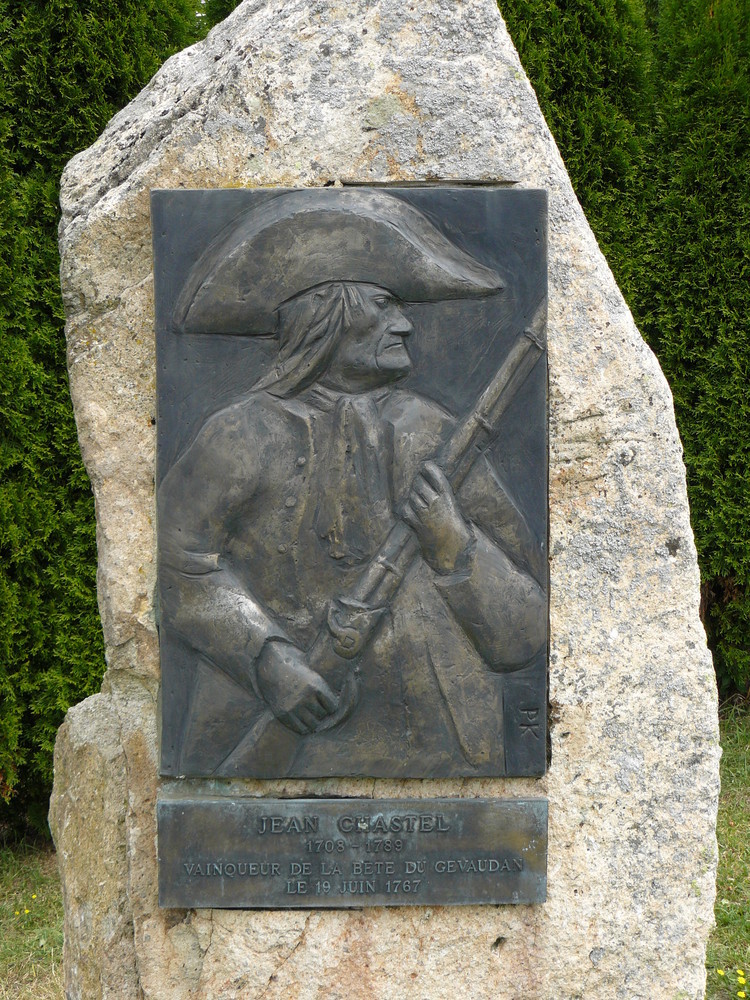
The animal disappeared around the middle of 1767.  It is believed to have been shot a dozen or more times by this time, and poison baits were widespread.  A local farmer and inn-keeper named Jean Chastel is credited with killing the Beast of Gévaudan on June 19, 1767, with a bullet which he himself had cast, in silver.

ob_d62710_3ll2i-p1000111
Jean Chastel

The silver bullet meme did much to feed into werewolf mythology. Chastel himself is depicted as a werewolf in Patricia Briggs’ novel, Hunting Ground.  Here, the hunter and the hunted are one and the same, and some random wolf was shot, to throw everyone off the scent.

gevaudan-beast.jpg

National Geographic posits that the Beast of Gévaudan was in fact, a subadult male lion. African lions were by no means unknown at this place and time, though images of the era were usually quite stylized, depicting the full mane of the adult male.

Exotic animal menageries were common among the upper classes. It is quite possible that such an animal could’ve been on the loose.  Physical descriptions of the Beast including it’s reddish hair, flat head and furry ridge-line, match up with those of such an animal.  This combined with descriptions of the hunting and killing methods of the animal, make the lion theory quite plausible.

The Beast of Gévaudan may have been a wolf, or maybe a lion.  Perhaps it was several animals.  Or maybe Jean Chastel is a werewolf, after all.  A clever one who threw half a nation off his scent, and now only does his killing, in the dark.  Just another thing that goes BUMP, in the night.

56a793c27d
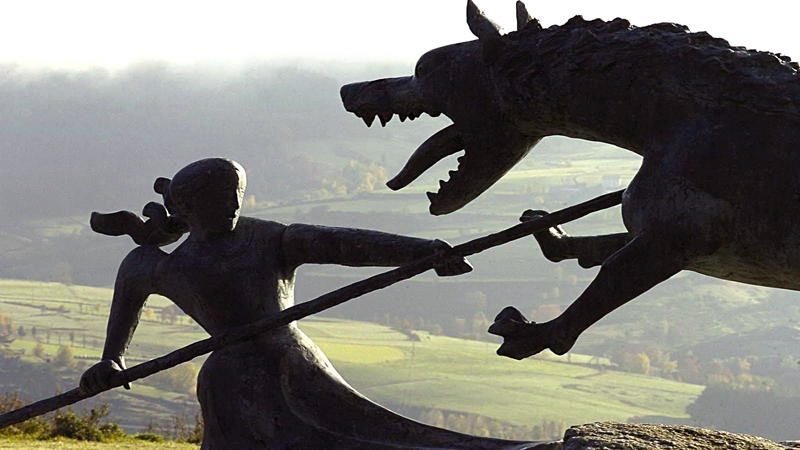
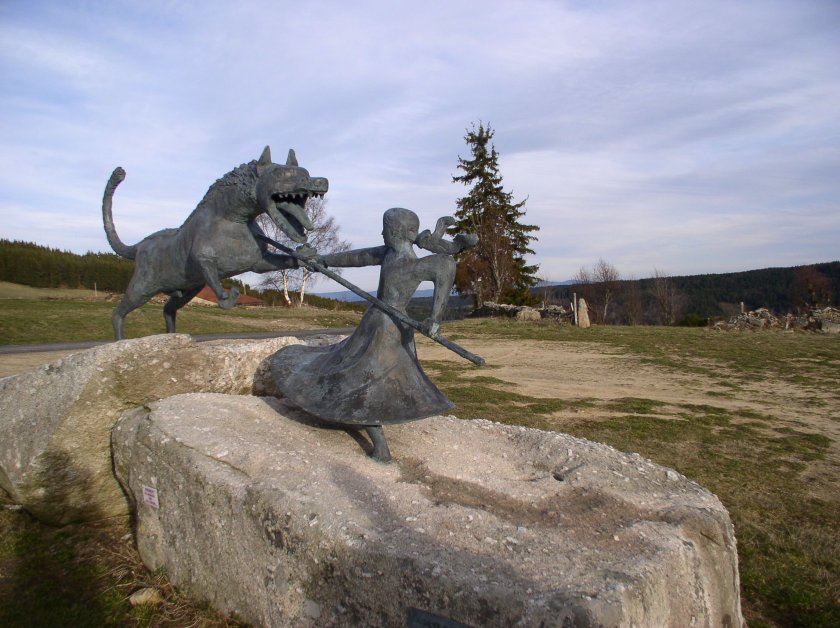
A monument was erected in the village of Auvers to honour those who fought against the beast.

If you enjoyed this “Today in History”, please feel free to re-blog, “like” & share on social media, so that others may find and enjoy it as well. Please click the “follow” button on the right, to receive email updates on new articles.  Thank you for your interest, in the history we all share.

September 20, 1066 Fulford Gate

How different were those last thousand years, but for this one day’s outcome, at a place called Fulford Gate.

Edward the Confessor, King of England, went into a coma in December 1065, having expressed no clear preference for a successor. Edward died on January 5 after briefly regaining consciousness, and commending his wife and kingdom to the protection of Harold, second son of Godwin, the powerful Earl of Wessex, and Gytha Thorkelsdóttir.

The Anglo-Saxon Kings didn’t normally pick their own successors, but their wishes carried import. Nobles of the Witenagemot, the early Anglo-Saxon predecessor to the modern parliament, were in Westminster to observe the Feast of the Epiphany. Convening the following day, the council elected Harold Godwinson, crowning him King Harold II on January 6.

For some, Harold’s quick ascension was a matter of administrative convenience and good fortune, that everyone just happened to be at the right place, at the right time. Others saw shades of conspiracy.  A brazen usurpation of the throne.  Edward’s death touched off a succession crisis which would change the course of history.

800px-Norman-conquest-1066.svg
H/T By Amitchell125 at English Wikipedia

Harold’s younger brother Tostig, third son of Godwin, was himself a powerful Earl of Northumbria, and thoroughly detested by his fellow northern Earls.  Tostig was deposed and outlawed by King Edward in October 1065, with support from much of the local ruling class as well as that of Tostig’s own brother, Harold.

King Edward’s death a short two months later, left the exile believing he had his own claim to the throne. Tostig’s ambition and animosity for his brother, would prove fatal to them both.

After a series of inconclusive springtime raids, Tostig went to a Norman Duke called William “The Bastard”, looking for military support. William had his own claim to the English throne, and had already declared his intention to take it. The Norman Duke had little use for King Harold’s younger brother, so Tostig sought the assistance of King Harald of Norway, also known as Harald Hardrada (“harðráði” in the Old Norse), the name translating as”hard ruler”.

Facts_Harald_Hardrada_Last_Great_Viking_5.crop_730x548_20,0.preview
Harald Hardrada. The Last Great Viking

Tostig sailed for England with King Harald and a mighty force of some 10,000 Viking warriors, arriving in September, 1066.  Six thousand were deployed on September 20, to meet 5,000 defenders on the outskirts of the village of Fulford, near the city of York.  Leading the defenders were those same two brothers, Edwin of Mercia, and Morcar of Northumbria.

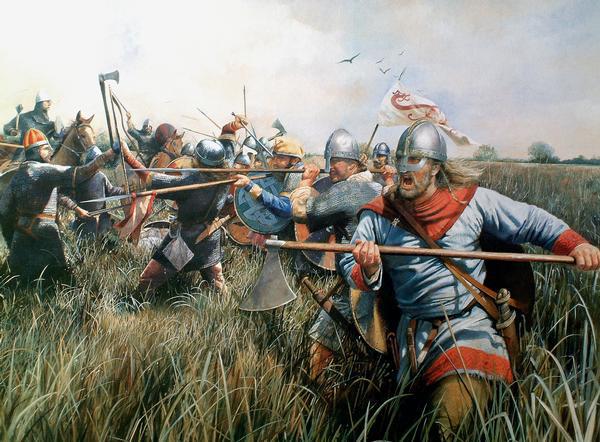
The Anglo-Saxons were first to strike, advancing on a weaker section of the Norwegian line and driving Harald’s vikings into a marsh.  With fresh invaders hurrying to the scene, the tide turned as the English charge found itself cut off and under attack, wedged between the soft ground of the marsh and the banks of an adjoining river. The encounter at Fulford Gate was a comprehensive defeat for the English side.  It was over in an hour.  On this day in 1066, two of the seven Great Kingdoms of Anglo-Saxon England, were decimated.

fulford-gate

Perhaps not wanting to have his capital city looted, Tostig agreed to take a number of hostages, and retired seven miles south to Stamford Bridge to await formal capitulation.  Harald went along with the plan, believing he had nothing further to fear from the English.

Meanwhile, King Harold awaited with an army in the south, anticipating William’s invasion from Normandy.  Hearing of the events at Fulford, Harold marched his army north, traveling day and night and covering 190 miles in four days, on foot, completely surprising the Viking force waiting at Stamford Bridge.

OLYMPUS DIGITAL CAMERA
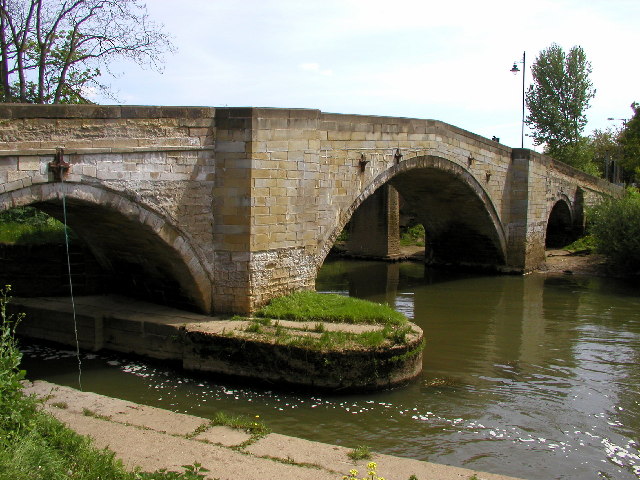
The new Stamford Bridge over the River Derwent, built in 1727

Believing they had come to accept submission, the Norwegians must have looked at the horizon and wondered, how a peace party could raise that much dust.  This was no peace party.  With their forces spread out and separated on opposite sides of the River Derwent, Harald Hardrada and his ally Tostig now faced a new army.

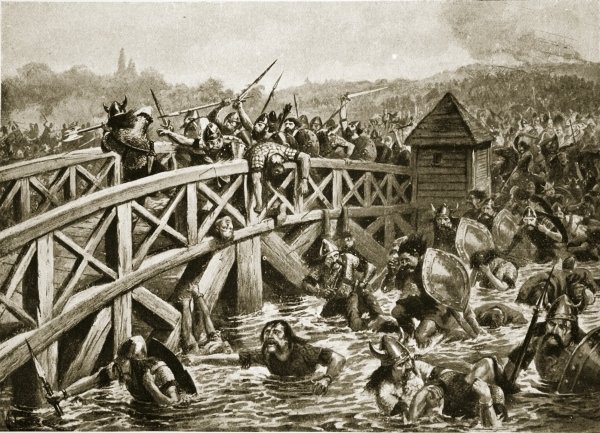
At the height of the battle, one Berserker stood alone at the top of Stamford Bridge, wielding the great two-handed Dane Axe.  Alone and surrounded, this giant of a man slew something like 40 English soldiers when one of Harold’s soldiers floated himself under the bridge, spearing the Viking warrior from below.

Stamford Bridge

The savagery of the battle at Stamford Bridge, can only be imagined. Before the age of industrialized warfare, every injury was personally administered with sword, axe or mace.  Before it was over 5,000 of King Harold’s soldiers lay  dead, about a third of his entire force. Two-thirds of King Harald’s Vikings died at Stamford Bridge, about 6,000 including Harald himself and the would-be King, Tostig Godwinson.

So many died in that small area that, 50 years later, the site was said to have been white with the sun bleached bones of the slain.  Of 300 ships arriving that September, the battered remnants of Harald’s Viking army needed only 24, to sail away.

Battle_of_Stamford_Bridge-04 (1)

Stamford Bridge is often described as the end of the Viking invasions of England, but that isn’t quite so. There would be others, but none so powerful as this.  The Last of the Great Vikings, was dead.

The Norman landing King Harold had been waiting, for took place three days later at Pevensey Harbor, just as his battered army was disbanding and heading home for the Fall harvest. The Anglo Saxon army would march yet again, meeting the Norman invader on October 14 near the East Sussex town of Hastings.  King Harold II was killed that day, with an arrow to his eye.  He was the Last of the Anglo Saxon Kings.

Twenty years later, William “The Conqueror” would commission the comprehensive inventory of his new Kingdom, the “Domesday Book“.

battle-of-stamford-bridge

Alternate histories are fraught with peril.  It’s hard to tell the story of events, which never occurred. Even so, I have to wonder.  Some of the best men in the England of 1066 were killed under King Harold‘s banner, in the clash at Stamford Bridge. Surely every last man among them faced some degree of exhaustion to say nothing of wounds, the day they faced Duke William’s Norman force on that Hastings hillside.

Those who survived Stamford Bridge performed a round-trip march of some 380-miles, in the three weeks since Fulford.

Those three weeks in 1066 altered the next 1,000 years of British history and with it, her former colonies in America.  How different were those last thousand years, but for this one day’s outcome, at a place called Fulford Gate.

Feature image, top of page”  One scene from the Bayeux Tapestry.   At 20-inches tall and nearly 230-feet long, the 11th-century textile tells the story of the Norman conquest of England, in 1066. 

If you enjoyed this “Today in History”, please feel free to re-blog, “like” & share on social media, so that others may find and enjoy it as well. Please click the “follow” button on the right, to receive email updates on new articles.  Thank you for your interest, in the history we all share.

September 19, 1862 Douglas the Confederate Camel

In the 1850s, then-Secretary of War Jefferson Davis was convinced that camels were the military super weapon of the future.

Due west of the Mississippi capital of Jackson and across the river from New Orleans lies the city of Vicksburg, at the confluence of the Mississippi and Yazoo Rivers. In 1863, Vicksburg was the last major stronghold of the Confederacy, along the Mississippi River.  Surrounded and vastly outnumbered, the “Gibraltar of the Confederacy” held out for forty days against a far larger Union army, surrendering on July 4, 1863. The city would not celebrate another Independence Day, for 81 years.

The Cedar Hill Cemetery in Vicksburg contains some 5,000 stone markers in ‘the soldier’s rest‘, each placed in memory of one who died in defense of the city.  Even the one with the camel on it.

cedar-hill-cemetery

This story begins with Jefferson Davis, in the 1840s. Today, we remember Davis as the one President of the Confederate States of America. Then, he was a United States Senator from Mississippi, with a pet project of introducing camels into the United States.

Re-introducing them might be more like it. Today, the distribution of these animals is almost the inverse of their area of origin. According to the fossil record, the earliest camelids first appeared on the North American continent, these even-toed ungulates ancestor to the Alpaca, Llama, Guanaco and Vicuña of today.

fdgfcxedgym2d7vkiryqJefferson Davis’ experiment was to be the first large-scale re-introduction of these animals on the North American continent, in geologic history.

Davis envisioned the day when every southern planter would have a stable full of camels. In the kind of pork barrel tit-for-tat spending deal beloved of Congressmen to this day, the Senator slid $30,000 into a highway appropriations bill, to get the support of a colleague from Illinois.

us_camel_corp_1

The measure failed but, in the 1850s, then-Secretary of War Davis persuaded President Franklin Pierce that camels were the military super weapons of the future. Able to carry greater loads over longer distances than any other pack animal, Davis saw camels as the high tech weapon of the age. Hundreds of horses and mules were dying in the hot, dry conditions of Southwestern Cavalry outposts, when the government purchased 75 camels from Algeria, Tunisia and Egypt. Several camel handlers came along in the bargain, one of them a Syrian named Haji Ali, who successfully implemented a camel breeding program. Haji Ali became quite the celebrity within the West Texas outpost. The soldiers called him “Hi Jolly”.

When Civil War broke out, Camp Verde Texas had about 60 camels. The King of Siam, (now Thailand), saw the military advantage to the Confederacy, and wrote to President Abraham Lincoln. “Here”, he wrote, “we use elephants”. The King went on to propose bringing elephants into the Northwest, to help the Union war effort. This “animal arms race” appears to have gotten no further than the King’s letter to the President, but the imagination runs wild at the idea of War Elephants at Gettysburg.

camelsintex-4-color-final

The horse lobby did a lot to kill the camel project, and the animal’s unpleasant personality traits didn’t help. A camel will not passively accept a riding crop or a whip. They are vengeful, and can spit stinking wads of phlegm with great accuracy over considerable distances. If they’re close enough, they will rake the skin off your face with their front teeth. Camels have been known to trample people to death.

Cut loose, one of those Texas camels somehow made its way to Mississippi, where he was taken into service with the 43rd Infantry Regiment, who named him “Douglas”.

Vicksburg Post
“Two Civil War re-enactors discuss the use of camels by the U.S. Army and recall the story of ” Old Douglas,” the camel that was killed during the Siege of Vicksburg, during a visit by the Texas Camel Corps to the Vicksburg National Military Park in 2016″ H/T Vicksburg Post

Douglas wouldn’t permit himself to be tethered, but he always stuck around so he was allowed to graze on his own. Southern soldiers became accustomed to the sight of “Old Douglas”. The 43rd Mississippi became known as the “Camel Regiment,” but the horses never did get used to their new companion. On this day in 1862, Major General Sterling Price was preparing to face two Union armies at Iuka, when the sight of Old Douglas spooked the regimental horses. One horse’s panic turned into a stampede, injuring several of them and possibly killing one or two.

The 43rd Infantry was ordered to Vicksburg during General Ulysses S. Grant’s siege of the city, when Douglas was shot and killed by a Union sharpshooter. Enraged by the murder of their prized camel, the 5th Missouri’s commander Lieutenant Colonel Robert S. Bevier enlisted six of his best snipers, who stalked the killer until one of them had his revenge. Bevier later said of Douglas’ killer, “I refused to hear his name, and was rejoiced to learn that he had been severely wounded.”

4794804019_72aa9bdf28_z

So it is that there is a camel at the Cedar Hill Cemetery in Vicksburg, Mississippi. He is not forgotten. Douglas and other camels of the era are remembered by the Texas Camel Corps, a cross between a zoo and a living history exhibit.

The organization’s website begins with: “Texas Camel Corps was established to educate the public about the historic use of camels in America in the 19th century”. I just might have to check that out.

camel.jpg__1072x720_q85_crop

If you enjoyed this “Today in History”, please feel free to re-blog, “like” & share on social media, so that others may find and enjoy it as well. Please click the “follow” button on the right, to receive email updates on new articles.  Thank you for your interest, in the history we all share.