

The study of warfare has rarely been a source of great mirth. The history of human conflict is hardly a subject for humor, yet there are times when the irony rises from the ridiculous, to the sublime.
Confederate raider John Singleton Mosby, the “Grey Ghost“, once bagged Union General Edwin Stoughton while dead asleep, lifting the General’s nightshirt and slapping his bare ass, with a sword. Mosby and his 29 raiders made off with the Union General, two Captains, 30 enlisted men and 58 horses, without firing a shot. When the President heard the story, Lincoln lamented: “I can make another Brigadier in 5 minutes, but I can’t replace those horses”.
 In the middle ages, a French soldier once saw fit to mouth off to an Italian woman on her way home from church, causing France to lose Sicily, to Spain.
At least one WWI battle was called off, on account of an amphibious landing force being attacked, by bees.
The same occurred outside Okalana, Arkansas on April 3, 1864. Union and Confederate troops got into it in a pecan orchard, overturning several hives of honeybees, in the process. If victory goes to he who holds the ground after the battle, this one must go neither to Blue nor Butternut, but to the bugs. Brave soldiers all, no doubt, prepared to take a bullet. But not a bee sting.
120,000 Chinese troops poured into North Korea between November 27 and December 13 1950, overwhelming 20,000 American and United Nations forces at the Chosin Reservoir. Desperately low on ammunition, one Marine Corps mortar division called in re-supply, by parachute. The battle of the “Frozen Chosin” might have ended differently, had some supply clerk understood the code-name for mortar shells was “Tootsie Rolls”. As it was, the guy sent candy into the combat zone. At least those Marines had something to eat, as they broke their encirclement and headed south.

Speaking of sweet stuff. Had the Romans of 48BC brushed up on their Xenophon, the Mithradatic wars may have ended sooner. Roman troops pigged out on “Mad Honey” left for them by fleeing Persians, and were too stoned to defend themselves when they came back. A thousand or more Romans were slaughtered, with few losses to the other side. All of that, for a little taste of honey.
 In 585BC, the battle between the Medes and Lydians was stopped in its tracks, on account of a solar eclipse. In the 3rd Mithradatic War of 76-63BC, a meteor was enough to do the trick.
Who can forget that WW2 bomb disposal tech, Melvin Kaminsky. Hearing German soldiers singing a beer hall song, Kaminsky grabbed a bullhorn and serenaded them back, crooning out an old tune that Al Jolson used to sing, in black face: “Toot Toot Tootsie, Goodbye”. After he was done, polite applause could be heard, drifting across the river. In all military history, there may be one soldier who’d even think about entertaining his adversary. Melvin Kaminsky did it. We remember him today, as Mel Brooks.
 So, yes, there is irony when men make war, if not always humor. Yet, in all the annals of warfare, there may be no episode more amusing, than the time a naval force was defeated by men on horseback.
In early 1793, Austria, Prussia, Spain, Great Britain and the Dutch Republic formed the first of seven coalitions to oppose the French Republic.
France declared war on its neighbor to the north. By the end of the following year, many of Holland’s provinces as well as those of the Austrian Netherlands, were overrun.
The winter of 1794-95 was brutally cold. A number of Dutch ships sought shelter near the North Sea village of den Helder, becoming icebound near the mouth of a shallow bay called the Zuiderzee.
General Johan Willem de Winter, a former Dutch naval officer, had been in service to the Grande Armée since 1787. On the night of January 23, de Winter arrived at the head of a regiment of “hussars”, the French light cavalry. The following morning, a number of horsemen rode out over the ice to the Dutch ship-of-the-line “Admiraal Piet Heyn”, demanding its surrender. The surgeon aboard another ship, the “Snelheid”, blithely wrote “On Saturday morning, my servant informed me that a French hussar stood near our ship. I looked out my porthole, and indeed, there stood an hussar.”

This was a significant part of the Dutch fleet, 15 ships, 11 of which were manned and seaworthy. The whole thing was now in the hands of French cavalry.
At least one source will tell you the event never occurred, or at least it’s embellished , as retold by the hussars themselves. I guess you can take your pick. A number of 19th century authors have portrayed the episode as unvarnished history, as have any number of paintings and sketches.

In February 1846, French Lieutenant-General Baron Lahure published a letter in the newspaper “Echo de la Frontière”, describing the event:
“I departed immediately with a company of tirailleurs in wagons and a squadron of light cavalry; before dawn I had taken position in the dunes. When the ships saw us, they prepared their defences. I sent some tirailleurs ahead, and followed with the rest of my forces. The fleet was taken. The sailors received us ‘de bonne grace’ on board… This is the true story of the capture of the Dutch fleet, devised and executed by a 23 year old Chef de Bataillion”.
Archibald Gordon Macdonell included the episode in his 1934 “Napoleon and his Marshals”. It’s one of those stories that I Want to be true, even if it isn’t. “(When) the ragged men” Macdonell wrote, “thundered on their horses across the ice to capture with naked swords the battlefleet of Holland”. The only time in recorded history, a naval fleet was captured by a cavalry charge.





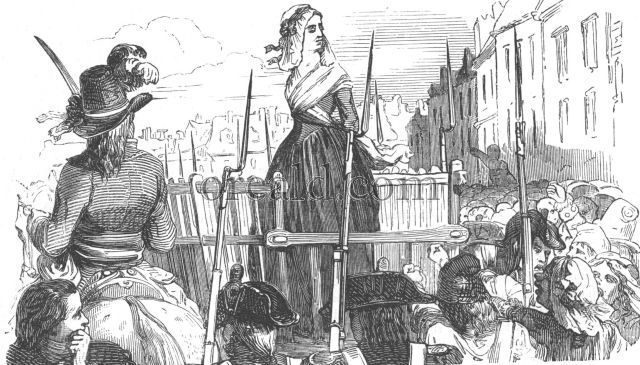
 The happy couple had yet to meet when the marriage was performed by proxy, the bride remaining in Vienna while the groom stayed in Paris. At 12 she was now the Dauphine, Marie Antoinette, wife of the 14-year-old Dauphin, future King of France.
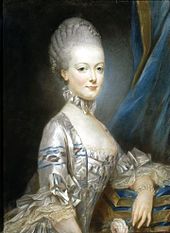 The stories you read about 18th century Court intrigue make you wonder how anyone lived like that. Antoinette was naive of the shark tank into which she’d been thrown. Relations were especially difficult with the King’s mistress, the Comtesse du Barry. Antoinette was somehow expected to work them out.
 France had serious debt problems in the 1770s, the result of endless foreign wars, but Antoinette received more than her share of the blame.

 Marie-Antoinette’s hair was cut off on October 16, 1793. She was driven through Paris in an ox cart, taken to the Place de la Révolution, and executed by decapitation. She accidentally stepped on the executioner’s foot on mounting the scaffold. Her last words were “Pardon me sir, I meant not to do it”.


 Over the years there have been many Rosie the Riveters, the last of whom was Elinor Otto, who built aircraft for fifty years before being laid off at age ninety-five. Naomi Parker-Fraley knew she was the “first”, but that battle was a long lost cause until Dr. Kimble showed up at her door, in 2015. All those years, she had known. Now the world knew.


 Former Olympian and coach of the German Olympic track & field team Josef Waitzer took an interest in the work, becoming a friend and consultant. Dassler brothers shoes were used in international competitions as early as the 1928 games in Amsterdam and the Los Angeles games, of 1932.



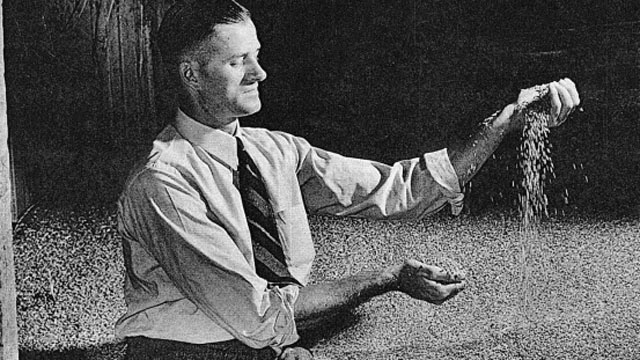
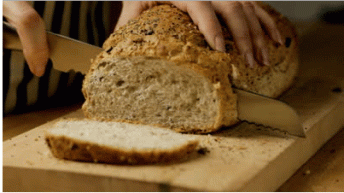 Frank Bench, a personal friend of the inventor, was the first to install the machine. The first pre-sliced loaf was sold in July of the following year. Customers loved the convenience and Bench’s bread sales shot through the roof.
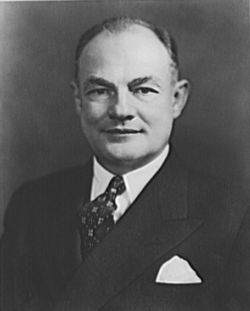
 Article 1, Section 8 of the Constitution includes the “Commerce Clause”, permitting the Congress “To regulate Commerce with foreign Nations, and among the several States, and with the Indian Tribes”. That’s it.
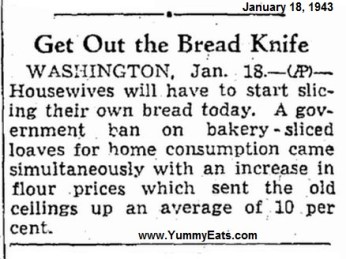 The United States Supreme Court, apparently afraid of President Roosevelt and his aggressive and illegal “
 The stated reasons for the ban never did make sense. At various times, Wickard claimed that it was to conserve wax paper, wheat or steel, but one reason was goofier than the one before. According to the War Production Board, most bakeries had plenty of wax paper supplies on hand, even if they didn’t buy any. Furthermore, the federal government had a billion bushels of wheat stockpiled at the time, about two years’ supply, and the amount of steel saved by not making bread slicers has got to be marginal, at best.


 He appeared from 1973 – ’75 on The National Lampoon Radio Hour, along with future SNL regulars Gilda Radner, Chevy Chase and Bill Murray. A number of radio segments went on to become SNL sketches in the show’s first couple of seasons.
 Animal House, the film that launched Belushi’s career on the big screen, almost didn’t happen.
 John Belushi was found dead the following morning. The cause of death was originally thought to be an accidental overdose. Cathy Smith was extradited from Canada and tried on first degree murder charges following a National Enquirer interview in which she admitted giving Belushi eleven speedballs. A plea bargain reduced the charge to involuntary manslaughter. She served fifteen months in prison.


 STS-1, the first mission of the “Space Shuttle” program launched aboard “Columbia” from the Kennedy Space Center on Merritt Island, Florida. It was April 12, 1981, the 20th anniversary of the first human spaceflight aboard the Russian capsule Vostok 1.
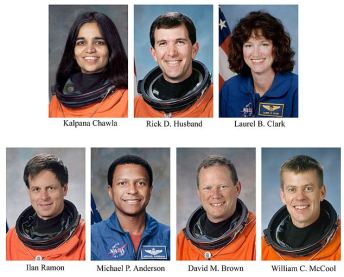 STS-107 launched from the Kennedy Space Center aboard the Space Shuttle Columbia on January 16, 2003.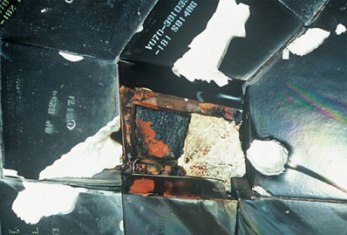





 Educated Spaniards of the era considered witchcraft to be a Protestant superstition. The Spanish Inquisition, launched in 1478 to protect Catholicism as the One True Faith, went first after forced converts from Islam (Moriscos) and Judaism (Marranos) suspected of lapsing into their prior faith.

 Historical Easter Eggs - Today in History
You must be logged in to post a comment.