December 24, 1822 Santa Claus

In some German speaking regions, a malevolent Schmutzli accompanies Samichlaus, carrying a twig broom with which to spank wicked children. Never mind Santa Claus. The Schmutzli is watching.

The historical life of St. Nicholas is shrouded in legend.  Born in modern-day Turkey on March 15, AD270, Nicholas was the only child of affluent parents, both of whom died in a plague leaving young Nicholas a very wealthy orphan.

St. Nicholas going to school
1689 fresco depicts St. Nicholas, giving to a school

Nicholas was raised in the Christian faith and became an early bishop in the Greek church.

One of many stories concerning the bishop’s generosity involves a destitute father, unable to raise a dowry sufficient to marry his three daughters off. On two nights in a row, Nicholas crept up to the man’s window and dropped a small sack of gold coins.

On the third night, the man stayed up to learn the identity of his secret benefactor, only to be asked to keep the name, secret.

Saint Nicholas died on December 6 in the year 343.  He was entombed in a marble cathedral dedicated to his name, in the Roman town of Myra.
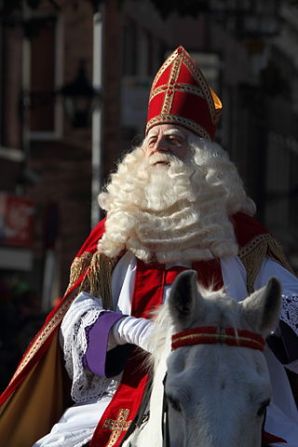
320px-Intocht_van_Sinterklaas_in_Schiedam_2009_(4102602499)_(2)
The “Sinterklass” of the Netherlands, rides a white horse

Nicholas is remembered as the patron saint of whole nations and cities such as Amsterdam and Moscow, revered among the early Christian saints and remembered for a legendary habit of secret gift-giving.

Some ideas take hold in the popular imagination, while others fade into obscurity.  The “Three Daughters” episode made it into nearly every artistic medium available at that time, from frescoes to carvings and windows, even theatrical performances.

The Patron Saint not only of sailors but of ships and their cargoes, the seas were the internet of the day and the story of St. Nick spread from the Balkans to Holland, from England to Crete.

In time, the Feast of St. Nicholas took hold around December 6.  Children and other marginal groups such as old women and slaves could receive gifts, but only by demanding them.  Secret gift giving appeared sometime around the year 1200.
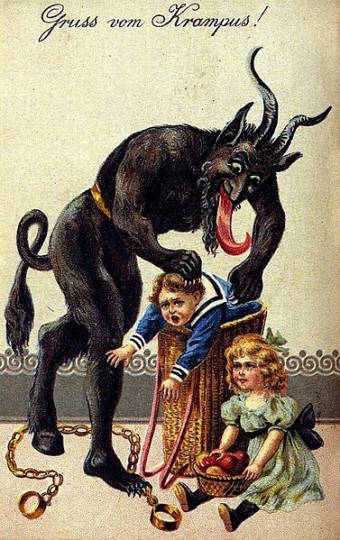
Krampus-340x540.jpgOn the European continent, legends of St. Nicholas combined with Pagan traditions and developed in quirky directions, including an evil doppelgänger who accompanies St. Nick on his rounds.

As early as the 11th century, the Krampus may be expected to snatch up bad little tykes in parts of Germany, Austria and the Alpine villages of northern Italy, never to be seen again.

In eastern Europe, the witch Frau Perchta “The Disemboweller” was said to place pieces of silver in the shoes of children and servants who’d been good and worked hard over the year.  Those who’d been naughty or lazy would be slit open and their organs replaced, with pebbles and straw.

Yikes.

In French-speaking regions, Père Fouettard (Father Whipper) accompanies Père Noël on gift-giving rounds, dispensing beatings and/or lumps of coal to naughty boys & girls.

In some German speaking regions, a malevolent Schmutzli accompanies Samichlaus, carrying a twig broom with which to spank wicked children.

Never mind Santa Claus. The Schmutzli is watching.
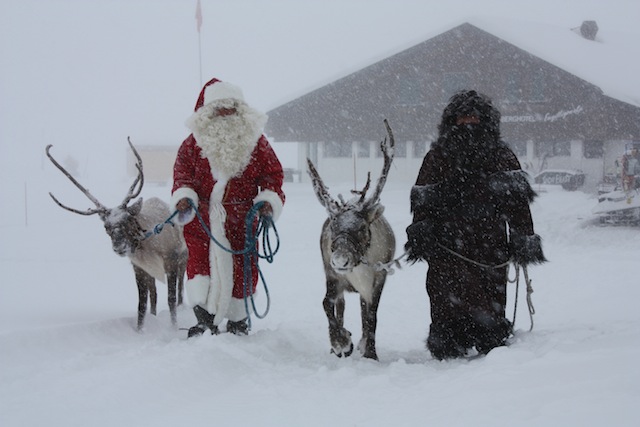
Samichlaus_Schmutzli_Rentiere1
Samichlaus and the Schmutzli

In the 13th century, the “Little Ice Age” of led to a proliferation of chimneys.  Windows and doors were common objects, often the things of thieves and vagabonds.  The chimney was different, a direct pathway to the warm heart of the home.  So it was St. Nick made his first gift-giving appearance via the chimney in a three daughters fresco, painted sometime in 1392, in Serbia.

St.-Nicholas-saving-the-Three-Maidens
St. Nicholas saving the Three Maidens, Decani monastery, Kosovo

St. Nicholas was beginning to be seen as part of the family outside of the Church, which is probably why he survived what came next.  Saints reigned in the Christian world until the 16th century, when the Protestant reformation rejected such “idolatry” as a corruption of Christianity.
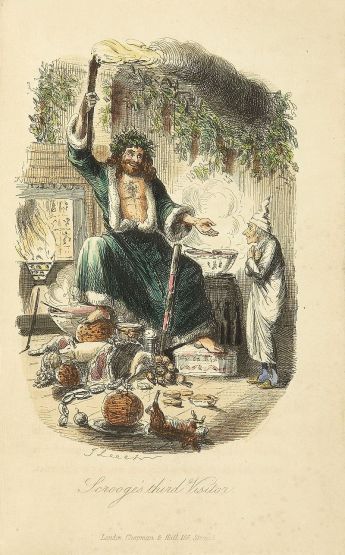
800px-Scrooges_third_visitor-John_Leech1843
The Ghost of Christmas present as illustrated by John Leech, in Charles Dickens’ classic, a Christmas Carol

Whatever you called him:  Sinterklaos, Saint-Nikloi or Zinniklos, St. Nick went away entirely in England and Scotland during the time of Henry VIII, giving way to the spirit of Christmas cheer in the person of one Father Christmas.  England would no longer keep the feast of the Saint on December 6.  The celebration moved to December 25, to coincide with Christmas itself.

Protestants adopted as gift bringer the Baby Jesus or Christkindl, later morphing into Kris Kringle.

Puritan arrivals to New England rejected Christmas and everything with it, as “un-Christian”.  In 1644, Massachusetts levied a fine of five shillings, on anyone observing the holiday.

Sinterklaas survived the iconoclasm of the Reformation in places like Holland, transferring to the 17th century settlement of New Amsterdam:  what we now know as the new world port city of New York.

Sinterklass blended with Father Christmas to create a distinctly American Santeclaus, which began to take hold in the 19th century.

The Christmas “celebrations” of the period looked more like Mardi Gras than what we know today.  Drunk and rowdy gangs wandered the streets of New York, Philadelphia and the cities of the northeast, something between a noisy mob and a marching band.  Men fired guns into the air and banged or blew on anything that would make noise.  Mobs would beat up the unfortunate, and break into the homes of the “upper classes”, demanding food and liquor.
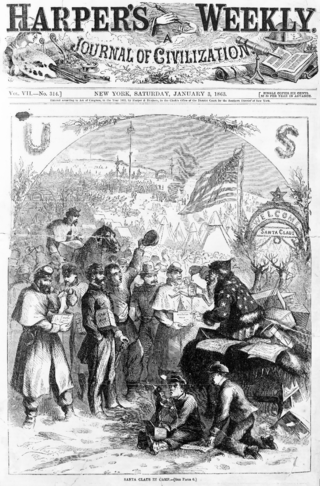
Santa_Claus_1863_Harpers
Santa Claus 1863, by Thomas Nast

New York philanthropist John Pintard, the man responsible for the holidays celebrating the fourth of July and George Washington’s birthday, popularized an image first set forth by Washington Irving, in his satirical story A History of New York from the Beginning of the World to the End of the Dutch Dynasty, by Diedrich Knickerbocker, depicting St. Nicholas bringing gifts to good little boys and girls, and switches with which to tan the hides of bad kids.

The unknown genius who published and illustrated A Children’s Friend in 1821, first depicted “Santa Claus” not as a Catholic bishop, but as a non-sectarian adult in a fur lined robe, complete with a sleigh inexplicably powered by a single reindeer, coming in through the chimney not on December 6, but on Christmas eve.

An anonymous poem believed to have been written on December 24, 1822 and later attributed to Clement Clarke Moore, began with the words: “T’was the night before Christmas, and all through the house“…
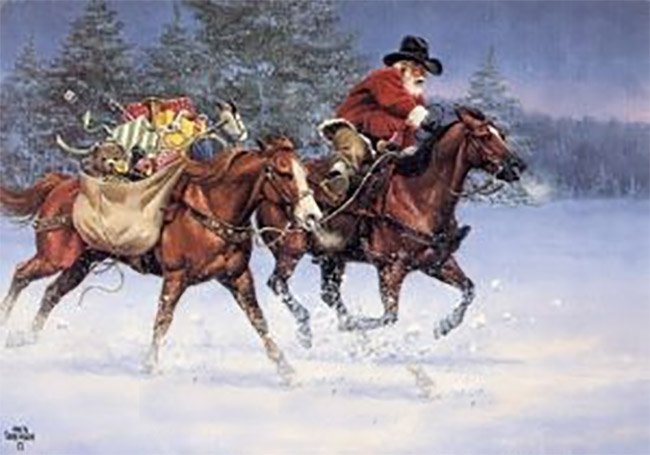
Santa-Express
Santa Express

“A Visit From St. Nicholas“, better known by its first line, gave us the first description of the modern Santa Claus.  It was a tool for domesticating the occasion, agreeable to law enforcement for calming the rowdy streets, to manufacturers and retailers for selling goods, to the church to make way for a family friendly day of worship and to parents, for  the control of unruly children.
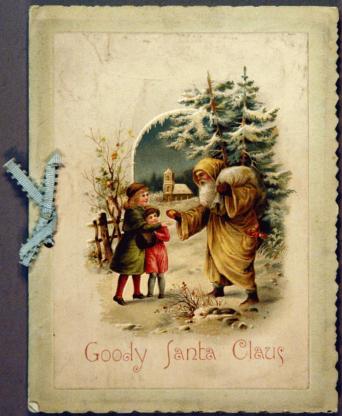
Goody_Santa_Claus_1889
Goody Santa Claus 1889

The “Right Jolly old Elf” took his modern form thanks to the pen of illustrator and editorial cartoonist Thomas Nast, creator of the Democratic donkey and the Republican elephant and scourge of the Tammany Hall political machine which had swindled New York city, out of millions.

The idea of a Mrs. Claus seems to come from a poem by Katharine Lee Bates of the Cape Cod Curmudgeon’s own town of Falmouth, Massachusetts.

Today, the author is best known for her 1895  poem “Pikes Peak”, later set to music and widely known as “America the Beautiful”.

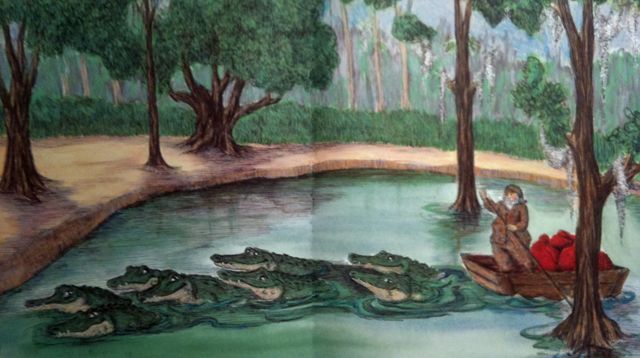
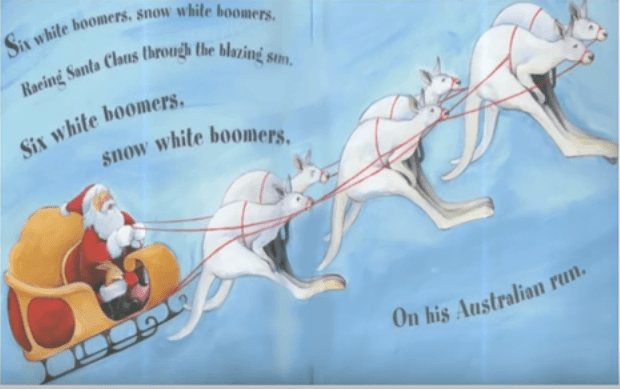
Tonight, NASA may be expected to track Santa and his sleigh drawn by eight reindeer, though none are any longer, all that tiny.  Santa Claus will appear around the planet. Regional variations include Santa’s arriving on a surfboard in Hawaii.  In Australia, he’s pulled by six white kangaroos.  In Cajun country, Papa Noël arrives in a pirogue, drawn by eight alligators.69c173c1af76a36f2aae98f4dfe183b6
Santa Claus is the most powerful cultural idea, ever conceived.  This year, Christmas sales are expected to exceed one Trillion dollars.  Not too bad for a 2,000-year old saint, best remembered for gift giving with no expectation of anything in return.

Merry Christmas.
17-sydney-blog-post-image-20171228081132.png

Fun fact:  Today, the port city of Bari on the Adriatic coast of Italy is remembered for the WW2-era mustard gas accident, which spawned the discovery of modern chemotherapy drugs. A thousand years earlier, city fathers feared growing Muslim influence over the tomb of Saint Nicholas, and went to retrieve his remains.  Find him, they did.  Saint Nicholas’ large bones were removed and brought back as holy relics to Bari where they remain, to this day.  Smaller fragments were removed during the 1st Crusade, brought back to Venice or enshrined in basilica from Moscow to Normandy.

The teeth and small bones of the real St. Nicholas are enshrined in over a dozen churches from Russia to France and the Palestinian territories.  Some of these cherished relics were believed to reside in St. Nicholas Orthodox Church, in New York City, destroyed in the terrorist attacks of September 11, 2001 and never recovered.

December 21, 1861 The Medal of Honor

George Orwell once pointed out. People sleep peacefully in their beds at night, only because rough men stand ready to do violence on their behalf.

As General in the American Revolution, George Washington once wrote that the “road to glory in a patriot army and a free country is…open to all”. European armies of the time bestowed honors, only on high-ranking officers who had achieved victory in battle.

There was no such honor for the common soldier.

The American military of the colonial era had precedent for such an award, but only under limited circumstances. Congressional medals were awarded to Washington himself on March 25, 1776, following the British evacuation of Boston, to General Horatio Gates in November 1777 in recognition of his victory over British General John Burgoyne at Saratoga, and to Major-General “Light-Horse Harry” Lee, father of Civil War-era Confederate general Robert E. Lee, in recognition of his 1779 attack on the British position at Paulus Hook, New Jersey.

6a0134828112fe970c01901cdd2dbf970b-350wi
Fidelity Medallion

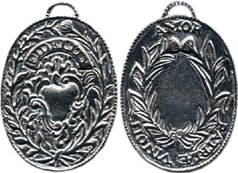
A “Fidelity Medallion” was awarded to three militia men in 1780, for the capture of John André, the British officer and spy whose capture uncovered the treachery of General Benedict Arnold.

The future 1st President’s general orders of August 7, 1782 established a “Badge of Military Merit” to recognize those members of the Continental Army who performed “any singular meritorious action”.

In time, General Washington’s Badge of Military Merit morphed into what we now know as the Purple Heart, but the precedent had been set. This was the first such honor available to any United States military service member, who had distinguished himself by act of valor.

Around the time of the Mexican-American war (1846 – ’48), Congress created the “Meritorious Service Citation Certificate”, a recognition for “any private soldier who had distinguished himself by gallantry performed in the presence of the enemy”. The award came in and out of use in the following decades, later becoming the Distinguished Service Medal, an award available to United States and foreign military service personnel and, in limited circumstances, civilians.

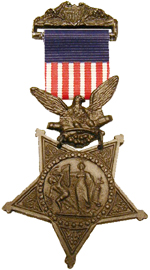
moh.jpgIn the early days of the Civil War, General-in-chief of the army Winfield Scott argued against such an award, claiming it to be “too European”.
Secretary of the Navy Gideon Welles adopted the idea on behalf of the Navy, following Scott’s retirement in October 1861. President Abraham Lincoln signed “Public Resolution #82” on December 21, 1861, creating a Navy medal of honor.

An Army version of the medal was created the following July, first awarded to six Union soldiers for hijacking the Confederate locomotive, “The General”.  Several were caught and hanged as Union spies including leader of the raid, James Andrews.   He alone was Not awarded the Medal of Honor, as he was a civilian.

Medals of Honor are not awarded casually, reserved only for the bravest of the brave, and for well-documented acts of valor. Permit me to share a few examples, each from his own moment in history.

Few soldiers on the Civil War battlefield had a quicker route to death’s door, than the color bearer. National and regimental flags were all-important sources of inspiration and communication.

William_Harvey_Carney_c1864.jpg
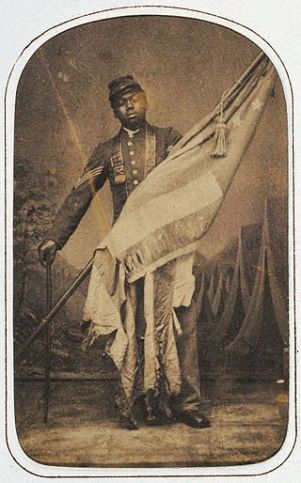
William Harvey Carney

Reverend W. Jamison Thomson of Hartford, CT described the importance of the battle flag: “It represents the cause, is the rallying point, while it is aloft proclaims that victory is still intended, is the center of all eyes, is the means of communication between soldiers, officers, and nation,” he said, “and after the engagement, and after many of them, is their marked memento so long as its identity can be preserved.”

William Harvey Carney was born a slave in Norfolk Virginia, in 1840. How the man made it to freedom is uncertain but, in 1863, Carney joined the Massachusetts 54th Infantry, with the rank of Sergeant.

During the ill-fated assault on Fort Wagner of July 1863, Carney took up the Regimental Color as the color guard fell, mortally wounded. Carney continued all the way to the parapet despite multiple serious wounds and struggled back across the battlefield, as the 54th retired under intense fire. At last handing the colors over to another survivor, Carney said “Boys, I only did my duty; the old flag never touched the ground!”

download - 2019-12-21T075933.925
Calvin Pearl Titus

Sergeant Carney’s heroism of July 1863 was the earliest such action to result in a Medal of Honor given to an American of African Ancestry, though the medal itself was not awarded until 1900.

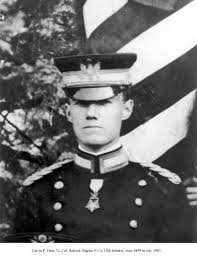
During the Boxer Rebellion of 1900, Chaplain’s assistant and regimental musician Calvin Pearl Titus of Vinton, Iowa volunteered to scale the 30-ft walls of Peking, raising the American flag over the outer walls of the city.

President Theodore Roosevelt awarded Titus the medal of Honor, for “Gallant and daring conduct in the presence of his colonel and other officers…”

President Roosevelt would one day become the only President awarded the Medal of Honor for actions performed on July 1, 1898, in Cuba.  Titus himself is now remembered as the last American standard-bearer.

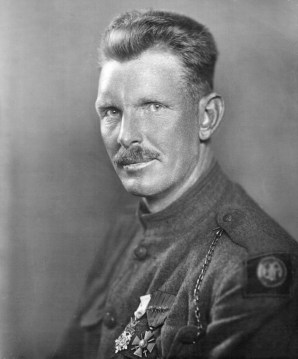
Alvin_C._York_1919.jpgOn October 8, 1918, Tennessee native Corporal Alvin Cullum York of the 82nd Division lead a group of seventeen against a numerically superior German force, dug in at Chatel-Chehery, France.
Let his citation tell the story: “…After his platoon had suffered heavy casualties and three other non-commissioned officers had become casualties, Cpl. York assumed command. Fearlessly leading seven men, he charged with great daring toward a machine gun nest, which was pouring deadly and incessant fire upon his platoon. In this heroic feat the machine gun nest was taken, together with four officers and 128 men and several guns.”

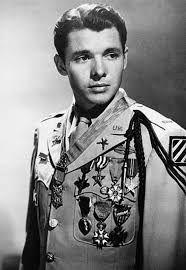
download - 2019-12-21T080643.761.jpgKingston Texas 2nd Lieutenant Audie Murphy found himself senior officer of a company of 18, whittled down from 235 by disease, wounds and casualties.

On January 26, 1945, Murphy’s small force found itself under assault by six German tanks and a large infantry force.

A man the Marine Corps had once turned down for being too small, Murphy climbed aboard a burning tank destroyer. Out in the open and exposed to German fire from three sides, the 19-year old single-handedly fought off the entire assault, killing or wounding fifty and causing the German tanks to withdraw.

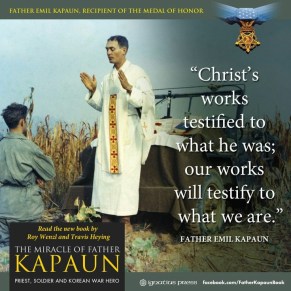
Emil Kapaun.jpg Chaplain Emil Kapaun, the “Shepherd in Combat Boots” selflessly sacrificed himself on behalf of fellow prisoners in 1951, in the frozen hell of a North Korean prison camp.

President Barack Obama awarded Kapaun’s family the Medal of Honor during a ceremony in the east wing of the White House, on April 11, 2013.

Father Kapaun’s body lies in an unmarked mass grave, somewhere in Pyoktong county.

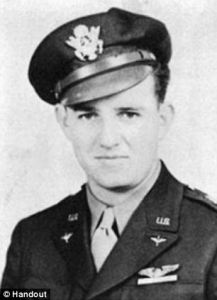
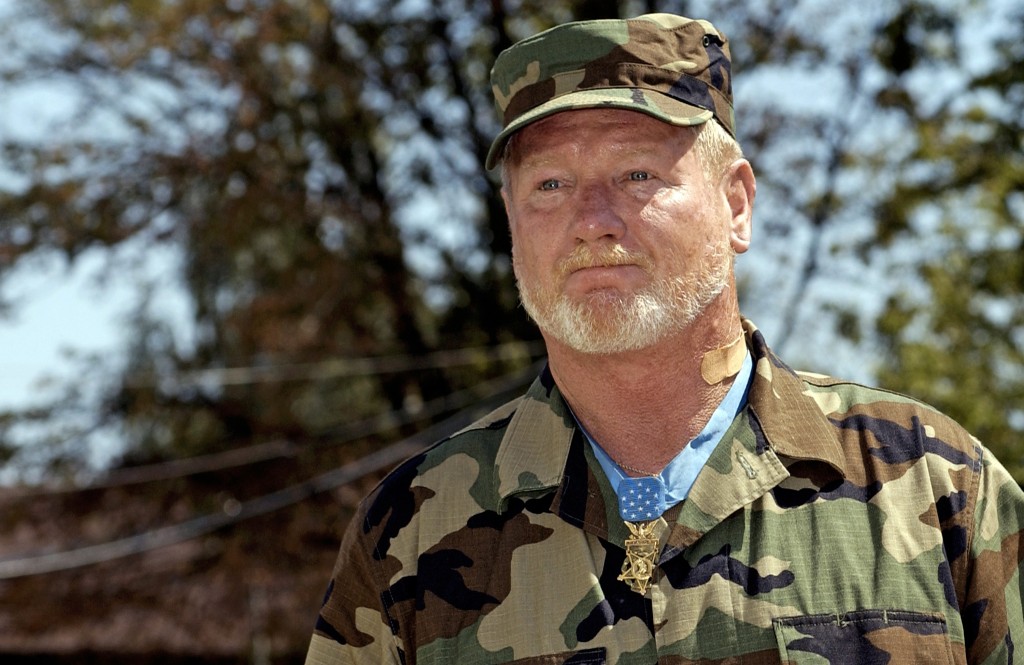
PFC Sammy Lee Davis distinguished himself during the small hours of November 18, 1967, when the 4th Artillery of 9th Infantry Division came under heavy attack west of Cai Lay, Republic of Vietnam.

Repeatedly knocked to the ground by enemy mortar fire and suffering multiple injuries, the Cannoneer from Dayton, Ohio fought back first with a heavily damaged, flaming howitzer, then with recoilless rifle and finally, a machine gun.

That’s his picture, at the top of this page.

Two Medals of honor were awarded posthumously, to Delta Force snipers Gary Gordon and Randy Shugart, for their hopeless defense of the crash site of a downed UH-60 Blackhawk helicopter against hundreds of fighters loyal to the Somali warlord Mohamed Farrah Aidid.

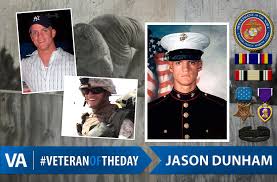
images (57).jpgCorporal Jason Lee Dunham of Scio New York deliberately threw himself on an Iraqi grenade on April 14, 2004, saving the lives of fellow Marines at the sacrifice of his own life.
John 15:13 of the King James Bible teaches us: “Greater love hath no man than this, that a man lay down his life for his friends”.

Corporal Dunham was twenty-two years old.

Sergeant 1st class Jared Monti of Abington Massachusetts was killed in the mountains of Nuristan Province in Afghanistan, while attempting to rescue a wounded soldier from a hail of small arms and rocket-propelled grenade fire.

Sgt. Monti was the sixth person from the wars in Iraq and Afghanistan, to be awarded the Medal of Honor.

The Lee Brice song “I Drive your Truck“, voted Song of the Year at the 49th annual Academy of Country Music Awards, is his story.

The nation’s highest medal for military valor has been awarded 3,525 times since its inception in 1861, to 3,506 individual recipients. 624 were awarded posthumously.  Nineteen men have received the Medal of Honor, twice.

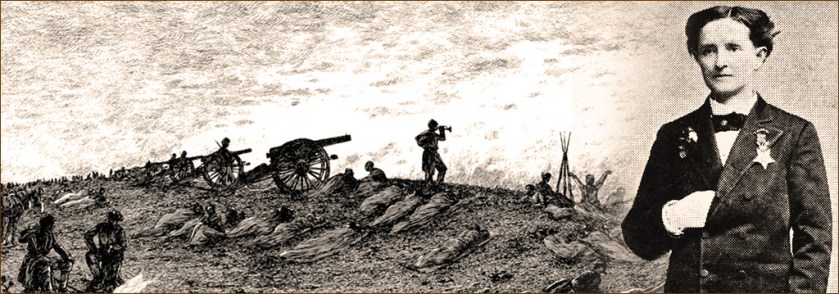
Doctor Mary Edwards Walker received the Medal of Honor on November 11, 1865. The Army changed eligibility criteria in 1917 and revoked 911 such awards given to non-combatants, including Dr. Walker. Fifty years later, an Army board restored Walker’s Medal of Honor, praising her “distinguished gallantry, self-sacrifice, patriotism, dedication and unflinching loyalty to her country, despite the apparent discrimination because of her sex.” She is the only female so honored and only the second woman in American history, licensed as a Medical Doctor.walker-header1024.jpgThe youngest Medal of Honor recipient was 11-year old drummer boy, Willie Johnston.
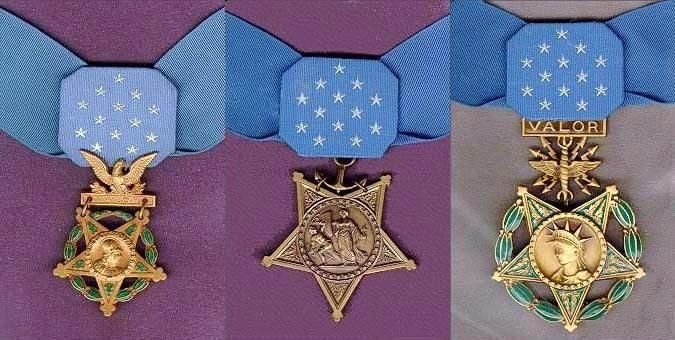
Possibly without exception, every one will tell you they are not heroes. They were doing a job and those who gave their lives, are the Real heroes.

If that’s not the very definition of heroism, I’m at a loss to understand what might be.

Medalsofhonor2

Fun Fact:  Just last month, the Animals in War & Peace Medal of Bravery was instituted in the Unites States, to recognize the extraordinary contributions of animals in times of war and peace. Patterned after the Dickin Medal awarded in the United Kingdom, recipients include Cher Ami, a pigeon who served with the US Signal Corps in WW1, Chips, a Military Working Dog (MWD) who served in WW2 and Sergeant Reckless, the Mongolian Mare who served with the United Sates Marine Corps, during the Korean conflict.

December 20, 1943 Special Brothers

“You follow the rules of war for you – not for your enemy”, his commander had said. “You fight by rules to keep your humanity”.

Franz Stigler
Franz Stigler

At the age of 26, Franz Stigler was an Ace. The Luftwaffe pilot of a Messerschmitt Bf-109 fighter, some of his kills had been revenge, payback for the death of his brother August, earlier in the war.

Stigler was no Nazi.  This was a German Patriot with 22 confirmed kills, doing what the nation required him to do.

On December 20, 1943, Stigler needed one more kill for a Knight’s Cross. He tossed his cigarette aside and climbed into his fighter as the crippled American B17 bomber struggled overhead. This was going to be an easy kill.

charles-brown.jpg
Charles Brown

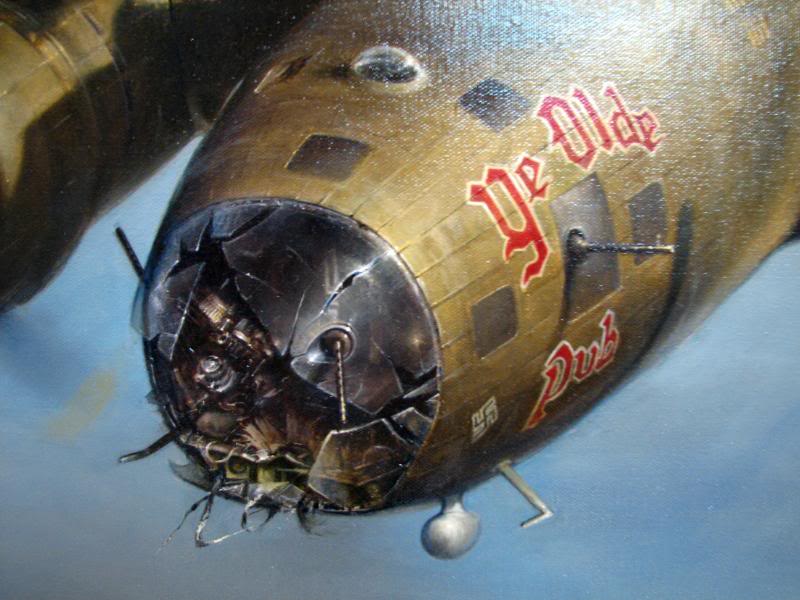
21-year-old Charles Brown held the throttle of that B17, an aircraft named “Ye Olde Pub”. The earlier attack on the munitions factory in Bremen had been a success, but the pilot and crew had paid a dreadful price.

Brown’s bomber was set upon by no fewer than 15 German fighters. Great parts of the air frame were torn away, one wing severely damaged and part of the tail ripped off. The aircraft’s Plexiglas nose was shattered and the #2 engine seized. Six of the ten-man crew were wounded and the tail gunner dead, his blood frozen in icicles over silent machine guns. Brown himself had been knocked out at one point, coming around just in time to avert a fatal dive.yeoldepub.jpgThe battered aircraft was completely alone and struggling to maintain altitude.  The American pilot was well inside German air space when he looked to his left and saw his worst nightmare. Three feet from his wing tip was the sleek gray shape of a German fighter, the pilot so close that the two men were looking into each other’s eyes.  Brown’s co-pilot, Spencer “Pinky” Luke said “My God, this is a nightmare.” “He’s going to destroy us,” was Brown’s reply. This had been his first mission. He was sure it was about to be his last.

Long ago before his first mission, Stigler’s commanding officer Lt. Gustav Roedel, had explained the warrior’s code of conduct:  “Honor is everything here. If I ever see or hear of you shooting at a man in a parachute, I will shoot you down myself”.

The German ace must have remembered those words as he watched the wounded, terrified American airmen inside that B17, some still helping one another with their injuries. “You follow the rules of war for you – not for your enemy”, Roedel had said. “You fight by rules to keep your humanity”.big-hole.jpgThe German had to do something.  Nazi leadership would surely shoot him for treason if he was seen this close without completing the kill. One of the American crew was making his way to a gun turret as the German made his decision. Stigler saluted his adversary, motioned with his hand for the stricken B17 to continue, and peeled away.
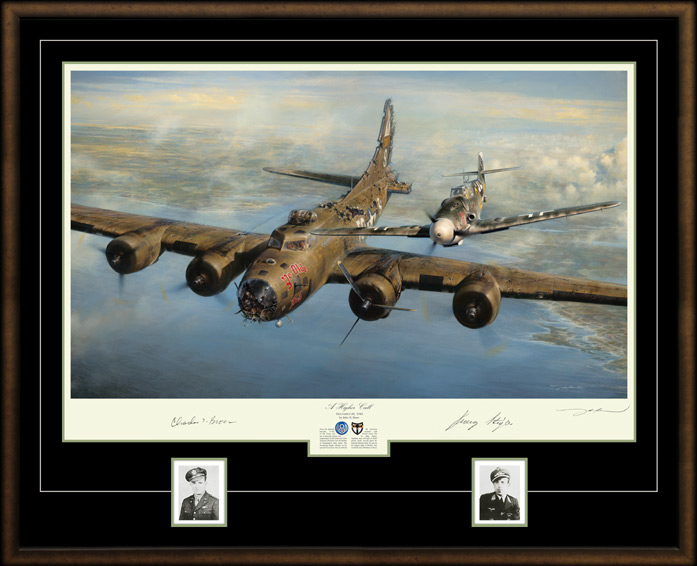
Ye Olde Pub lumbered on, pierced and holed through and through, across 250 frozen miles of the North Sea.  At last, she made it to Norfolk.

Bf-109-pilot-Franz-StiglerOver 40 years later, the German pilot was living in Vancouver, Canada.  Brown took out an ad in a fighter pilots’ newsletter, explaining that he was searching for the man ‘who saved my life on December 20, 1943.’  Stigler saw the ad, and the two met for the first time in 1987. “It was like meeting a family member”, Brown said of that first meeting. “Like a brother you haven’t seen for 40 years”.
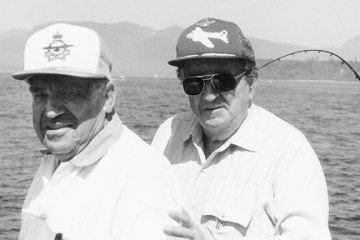
Ye-Old-pub-9The two former enemies passed the last two decades of their lives as close friends and occasional fishing buddies.
The two old warriors passed away in 2008, only six months apart. Franz Stigler was 92, Charles Brown 87.

A book called “A Higher Call”, tells the story in greater detail, if you’re interested in reading more about this signal act of kindness, between once mortal enemies.

In the two obituaries, both men were mentioned each as the other’s, “Special Brother”.


December 19, 1986 The Lost Dogs of Chernobyl

The devastating Chernobyl Prayer tells the story of: “dogs howling, trying to get on the buses. Mongrels, Alsatians. The soldiers were pushing them out again, kicking them. They ran after the buses for ages.” Heartbroken families pinned notes to their doors: “Don’t kill our Zhulka. She’s a good dog.”

It all began as a test.  A carefully planned series of events, intending to simulate a station blackout at the Chernobyl Nuclear Power Plant, in the Soviet Socialist Republic of Ukraine.

This most titanic of disasters, began with a series of small mishaps. Safety systems intentionally turned off.  Inexperienced reactor operators, failing to follow checklists. Inherent design flaws in the reactor itself.

t_1554313914803_name_rpod_Chernobyl_Social.jpg

On the night of April 25-26, 1986, a nuclear chain reaction expanded beyond control, flashing water to super-heated steam.  Violent explosions shattered reactor and building alike as reactor #4 belched massive amounts of nuclear material into the atmosphere.  For the next nine days, intense updrafts created by the open-air graphite fire spewed vast quantities of radiation into the air, raining radioactive  particles over large swaths of the western USSR and Europe.  Some 60 percent of the stuff came down in the Republic of Belarus.

It was the most disastrous nuclear power plant accident in history and yet, this was 1986.  The Soviet government didn’t tell its own people for days, what was going on.  In the West, the first alert came not from the USSR, but from Sweden.

images (56).jpgAn estimated 4,000 to 93,000 died in the aftermath of the accident, many of whom, were children.
The death toll could have been higher but for heroic self-sacrifice, by first responders.  Anatoli Zakharov, a fireman stationed in Chernobyl since 1980, replied to remarks that firefighters believed this to be an ordinary electrical fire:

Of course we knew! If we’d followed regulations, we would never have gone near the reactor. But it was a moral obligation – our duty. We were like kamikaze“.

Work began within three weeks on the design and construction of a concrete sarcophagus, large enough to contain 200 tons of radioactive corium, 30 tons of contaminated dust and 16 tons of uranium and plutonium, trapped inside the twisted wreckage. It was the largest civil engineering project in history involving no fewer than a quarter-million construction workers, every one of whom received a lifetime maximum dose of radiation.  By this day in December, work was substantially complete.

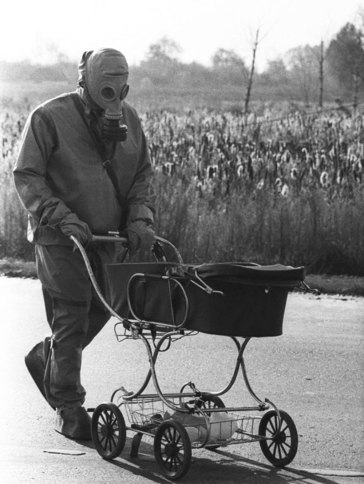
A Chernobyl liquidator pushes a baby in a carriage who was found during the cleanup of the Chernobyl nuclear accident, 1986.jpgOfficials of the top-down Soviet state first downplayed the disaster.  Asked by one Ukrainian official, “How are the people?“, acting minister of Internal Affairs Vasyl Durdynets replied there was nothing to be concerned about: “Some are celebrating a wedding, others are gardening, and others are fishing in the Pripyat River.

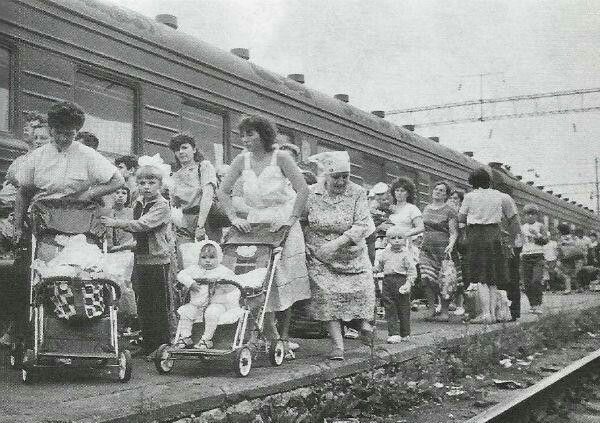
As the scale of the disaster became evident, civilians were at first ordered to shelter in place.  A 10-kilometer exclusion zone was enacted within the first 36 hours, resulting in the hurried evacuation of some 49,000.  The exclusion zone was tripled to 30-km within a week, leading to the evacuation of another 68,000.

Before it was over some 350,000 were moved away, never to return.

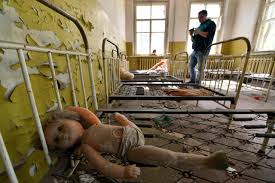
c3a6c209f69a1fe061fc35ef7d9e4e09.jpgThe chaos of these forced evacuations, can scarcely be imagined.  Confused adults.  Crying children.  Howling dogs.  Shouting soldiers, barking orders and herding now-homeless civilians onto waiting trains and vehicles by the tens of thousands.  Dogs and cats, beloved companion animals and lifelong family members, were abandoned to fend for themselves.
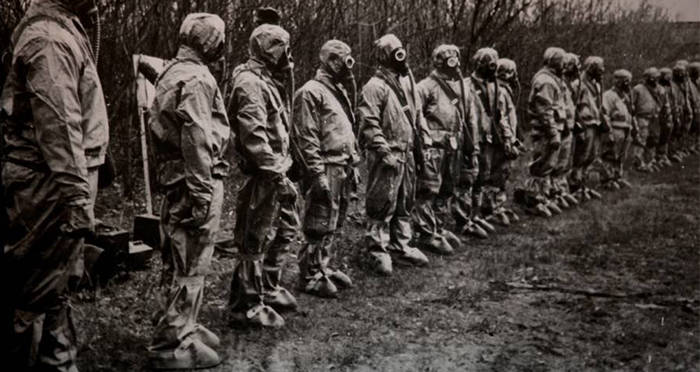
The government didn’t bother to explain.   There would be no return.

chernobyl-cleanup-crew.jpgThere were countless and heartbreaking scenes of final abandonment, of mewling cats, and whimpering dogs.  Belorussian writer Svetlana Alexievich compiled hundreds of interviews into a single monologue, an oral history of the forgotten.  The devastating Chernobyl Prayer tells the story of: “dogs howling, trying to get on the buses. Mongrels, Alsatians. The soldiers were pushing them out again, kicking them. They ran after the buses for ages.” 0720-dogsfront.jpgThere was no mercy.  Squads of soldiers were sent to shoot the animals, left behind.   Heartbroken families pinned notes to their doors: “Don’t kill our Zhulka.  She’s a good dog.”  Most of these abandoned pets, were shot.  Some escaped notice, and survived.
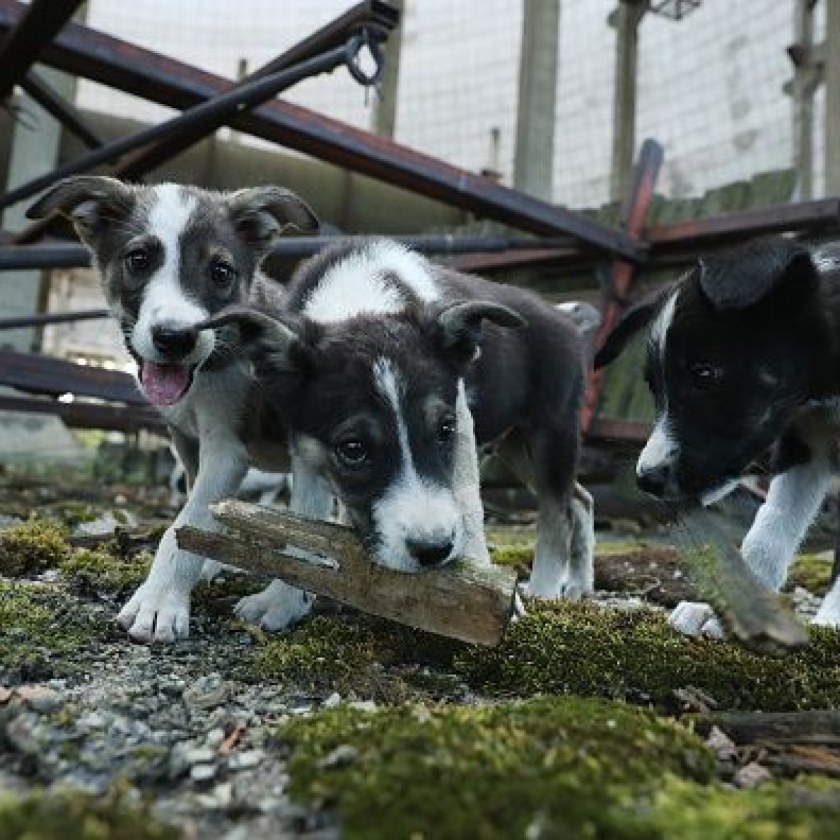
vegan-plant-based-news-dogs-livekindly-Cropped-1-1-1068x601 (1).jpgLater on, plant management hired someone, to kill the 1,000 or so dogs still remaining.  The story is, the worker refused.

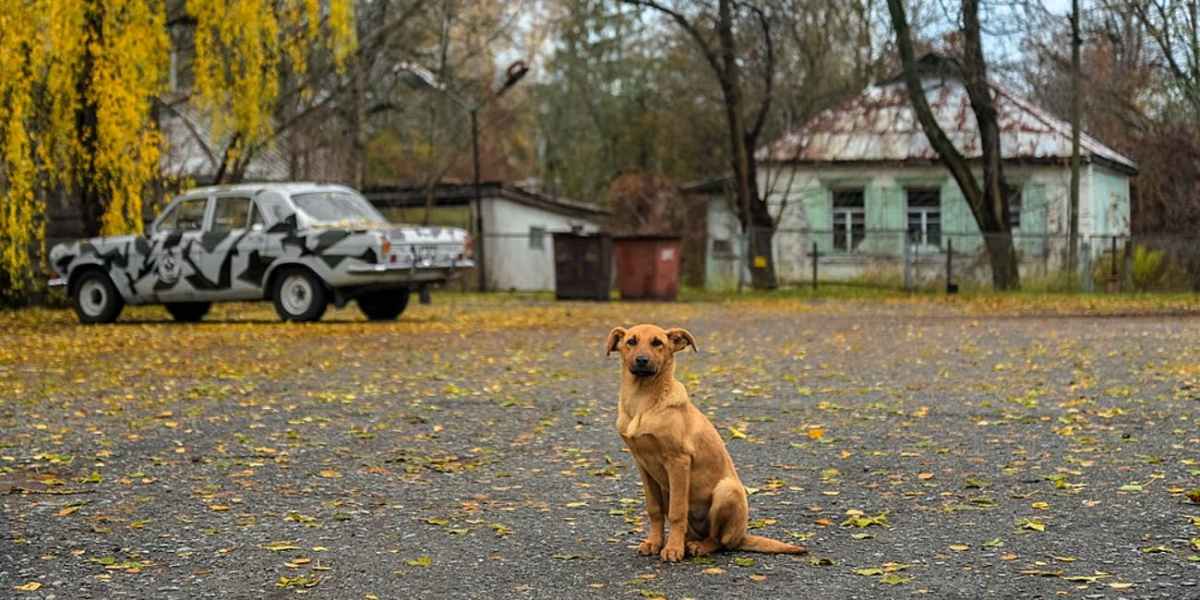
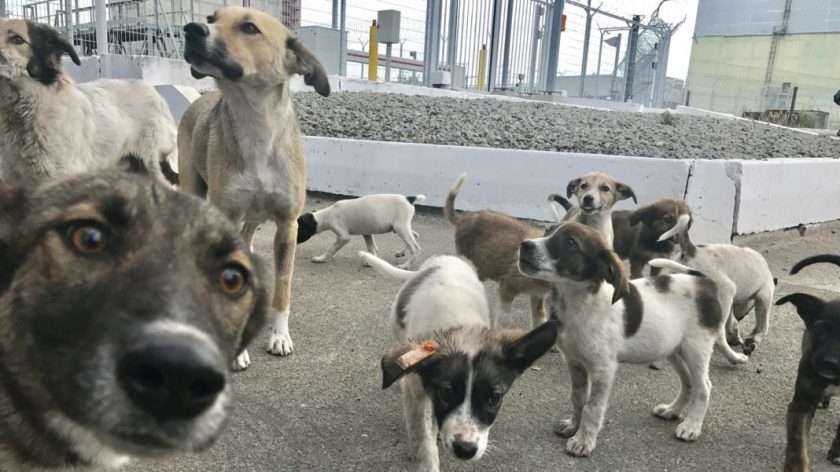
1424 (1)Today, untold numbers of stray dogs live in the towns of Chernobyl, Pripyat and surrounding villages.  Descendants of those left behind, back in 1986.  Ill equipped to survive in the wild and driven from forests by wolves and other predators, they forage as best they can among abandoned streets and buildings, of the 1,000-mile exclusion zone.  For some,  radiation can be found in their fur.  Few live beyond the age of six but, all is not bleak.

chernobyl-dogs-2Since September 2017, a partnership between the SPCA International and the US-based 501(c)(3) non-profit CleanFutures.org has worked to provide for the veterinary needs of these defenseless creatures.  Over 450 animals have been tested for radiation exposure, given medical care, vaccinations and spayed or neutered, to bring populations within manageable limits.  Most are released back to the “wild”.

ynimas0uSome have been successfully decontaminated and socialized for human interaction.  In 2018, the first batch became available for adoption into homes in Ukraine and North America, some forty puppies and dogs.
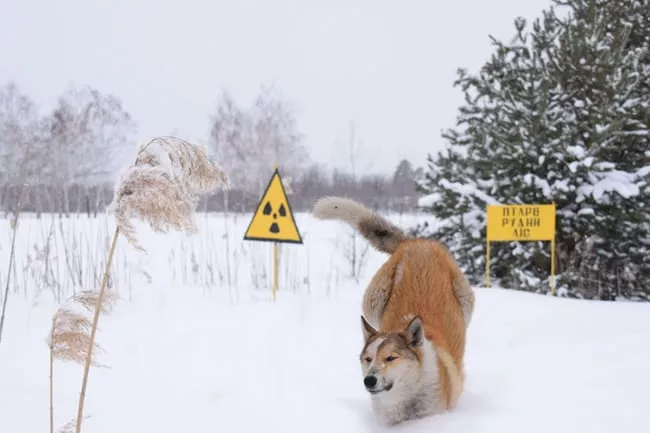
 

To this day, hundreds of dogs eke out a living, in the exclusion zone.  The work of rescue is ongoing.  A joint press release from the two organizations gives much-needed hope:  “This unprecedented event marks an important partnership with the Ukrainian government, which has been reluctant in the past 32 years to allow anything to be removed from the nuclear exclusion zone.”

Dogs of Chernobyl.jpgBelieve it or not there are visitors to the area.  People actually go on tours of the region but they’re strictly warned.  No matter how adorable, do not pet, cuddle nor even touch any puppy or dog who has not been through rigorous decontamination.

For those lucky few the search for good homes goes on, for the lost dogs of Chernobyl.2016_Chernobyl-NB-1-4.jpg

December 16, 1884 Lake Bacon

Biologically, there seems little reason to believe that Hippo ranching couldn’t have worked along the Gulf coast. Colombian officials estimate that, within a few years, the hippo descendants of drug kingpin Pablo Escobar’s exotic animal menagerie will number 100 or more individuals.

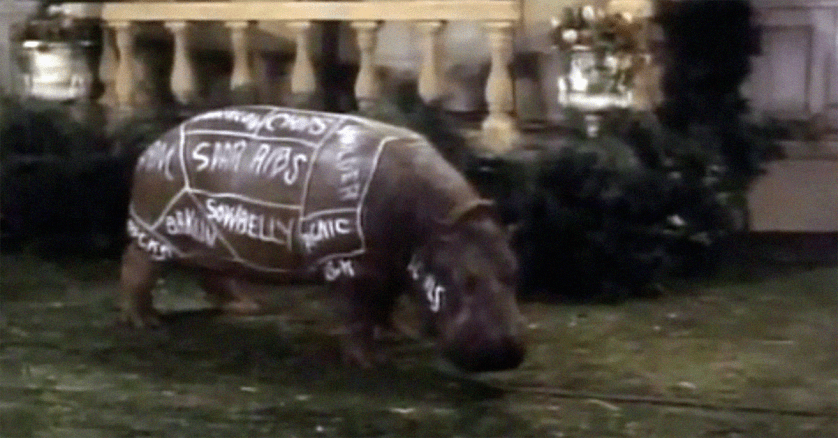
Short days from now, families across the nation will gather for the Christmas table. There will be moist and savory stuffing, and green bean casserole. Creamy mashed potatoes and orange cranberry sauce. And there, the centerpiece of the feast. Slow-roasted and steaming in its tray, golden brown and delicious, the roast hippopotamus.

vokM434dW5z3NafMBwpvHS-768-80.jpgWait…What?

The story begins on December 16, 1884, the opening day for the World’s Fair, in New Orleans. Among the many wonders on display was the never-before seen, Eichornia crassipes, a gift of the Japanese delegation. The Water Hyacinth. Visitors marveled at this beautiful aquatic herb, its yellow spots accentuating the petals of beautiful delicate purple and blue flowers, floating across tranquil ponds on thick, dark green leaves.

Eichhornia_crassipes_002.JPG
Eichhornia crassipes

The seeds of Eichornia crassipes are spread by wind, flood, birds and humans, and remain viable for 30 years. Beautiful as it is to look at, the Water Hyacinth is an “alpha plant”, the aquatic equivalent to the Japanese invasive perennial Kudzu, the “vine that ate the south”. Impenetrable floating mats choke out native habitats and species, while thick roots impede the passage of vessels, large and small. The stuff is toxic if ingested by humans and most animals, and costs a fortune to remove.

This plant native from the Amazon basin quickly broke the bounds of the 1884 World’s Fair, spreading across the bayous and waterways of Louisiana, and beyond.

Water Hyacinth.png
Left uncontrolled, water hyacinth quickly becomes a hazard to navigation

In the first decade of the 20th century, an exploding American population could barely keep up with its own need for food, especially, meat. The problem reached crisis proportions in 1910, with over grazing and a severe cattle shortage. Americans were seriously discussing the idea, of eating dogs.

Enter Louisiana member of the House of Representatives, New Iberia’s own Robert Foligny Broussard, with a solution to both problems. “Lake Bacon”.

The attorney from Louisiana’s 3rd Congressional district proposed the “American Hippo” bill, H.R. 23621, in 1910, with enthusiastic support from Theodore Roosevelt and the New York Times. One Agricultural official estimated that such a free-range hippo herd would produce up to a million tons of meat, per year.

dqfEH-1478541763-174-quiz_question_image_-bevhil_hippo.png
Lippincott’s monthly magazine waxed rhapsodic about the idea: “This animal, homely as a steamroller, is the embodiment of salvation. Peace, plenty and contentment lie before us, and a new life with new experiences, new opportunities, new vigour, new romance, folded in that golden future, when the meadows and the bayous of our southern lands shall swarm with herds of hippopotami”.

With a name deriving from the Greek term “River Horse”, the common hippopotamus is the third largest land animal living today. Despite a physical resemblance to hogs and other even-toed ungulates, Hippopotamidae’s closest living relatives are cetaceans such as whales, dolphins and porpoises.

The problem is, these things are dangerous.

The adult bull hippopotamus is extremely aggressive, unpredictable and highly territorial. Heaven help anyone caught between a cow and her young. Hippos can gallop at short sprints of 19 mph, only a little slower than Sprinter Usain Bolt, “the fastest man who ever lived”.

Google the “10 most dangerous animals in Africa”. You’ll be rewarded with the knowledge that hippos are #1, responsible for more human fatalities, than any other large animal, in Africa.

the-hippopotamus-is-considered-to-be-the-most-dangerous-animal-5981600.pngBe that at it as it may, the animal is a voracious herbivore, spending daylight hours at the bottom of rivers & lakes, happily munching on vegetation.
What could be better than taking care of two problems at once. Otherwise unproductive swamps and bayous from Florida to Louisiana would become home to great hordes of free-range hippos. The meat crisis would be solved, and America would become a nation of hippo ranchers.

As Broussard’s bill wended its way through Congress, the measure picked up steam with the enthusiastic support of two enemies who’d spent ten years in the African bush, trying to kill each other. No, really.

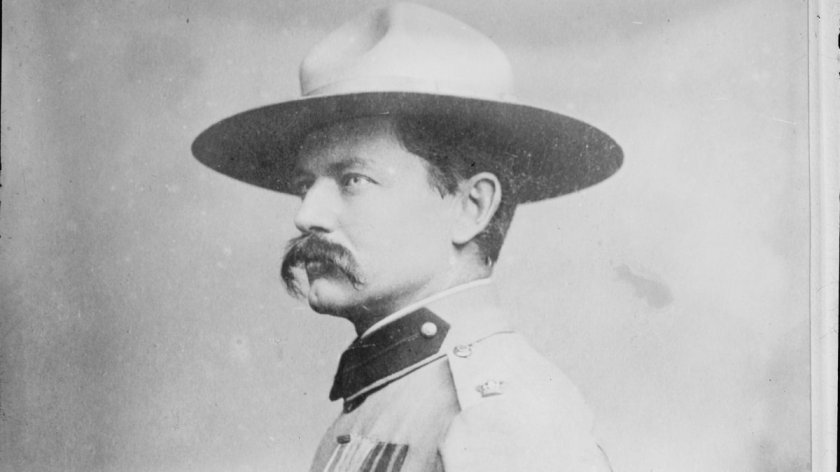
Frederick Russell Burnham had argued for the introduction African wildlife into the American food stream, some four years earlier. A freelance scout and American adventurer, Burnham was known for his service to the British South Africa company and to the British army in colonial Africa. The “King of Scouts’, commanding officers described Burnham as “half jackrabbit and half wolf”. A “man totally without fear.” One writer described Burnham’s life as “an endless chain of impossible achievements”, another “a man whose senses and abilities approached that of a wild predator”.

He was the inspiration for the Indiana Jones character and for the Boy Scouts. Frederick Burnham was the “most complete human being who ever lived “.

frederick-russell-burnham-a-splendid-savage_h
Frederick Russell Burnham

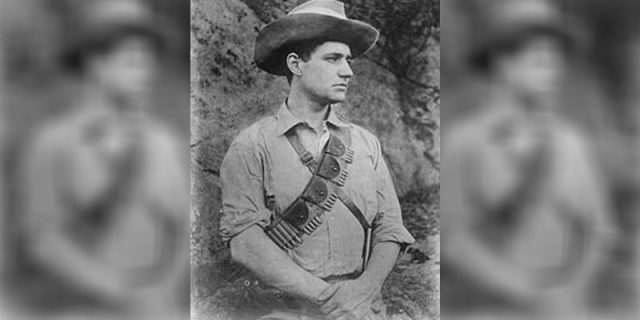
Frederick “Fritz” Joubert Duquesne was a Boer of French Huguenot ancestry, descended from Dutch settlers to South Africa. A smooth talking guerilla fighter, the self-styled “Black Panther” once described himself as every bit the wild African animal, as any creature of the veld. An incandescent tower of hate for all things British, Duqesne was a liar, a chameleon, a man of 1,000 aliases who once spent seven months feigning paralysis, so he could fool his jailers long enough to cut through his prison bars.

Destined to be a German spy and saboteur through two world wars, Frederick Burnham described his mortal adversary, thus: “He was one of the craftiest men I ever met. He had something of a genius of the Apache for avoiding a combat except in his own terms; yet he would be the last man I should choose to meet in a dark room for a finish fight armed only with knives“.

220px-Capt_fritz_duquesne-01-640x320.jpg
Frederick “Fritz” Joubert Duquesne

During the 2nd Boer war, the pair had sworn to kill each other. In 1910, these two men became partners in a mission to bring hippos, to America’s dinner table.

Biologically, there seems little reason to believe that Hippo ranching couldn’t have worked along the Gulf coast. Colombian officials estimate that, within a few years, the hippo descendants of drug kingpin Pablo Escobar’s exotic animal menagerie will number 100 or more individuals.

Broussard’s measure went down to defeat by one vote, but didn’t entirely go away. Always the political calculator, Representative and later-Senator Broussard died with the bill on his legislative agenda, waiting for the right moment to reintroduce the thing.

Over time, the solution to the meat question became a matter of doubling down on what we’re already doing, as factory farms and confinement operations took the place of free ranges, and massive use of antibiotics replaced the idea of balanced biological systems.

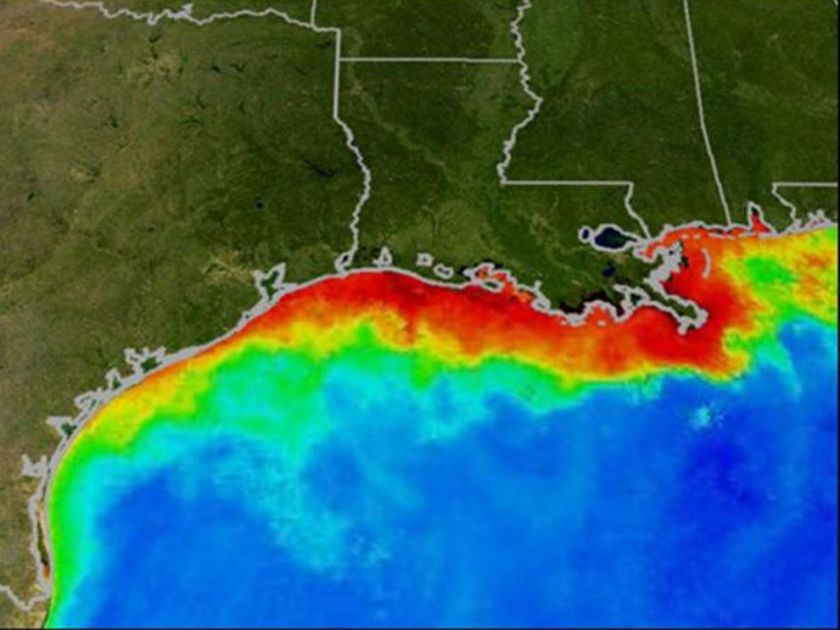
We may or may not have “traded up”. Today, we contend with ever more antibiotic-resistant strains of “Superbug”. Louisiana spends $2 million per year on herbicidal control of the water hyacinth. The effluent of factory farms from Montana to Pennsylvania works its way into the nation’s rivers and streams, washing out to the Mississippi Delta to a biological dead zone, the size of New Jersey.

27232.jpgThat golden future of Lippincott’s hippo herds roam only in the meadows and bayous of the imagination. Who knows, it may be for the best. I don’t know if any of us could see each other across the table. Not with a roast hippopotamus.

hippo-ranch.jpg

hippo-ranch.jpg

November 30, 1953 Dirty War

US support for South Vietnam increased as the French withdrew.  By the late 1950s, the US was sending technical and financial aid in expectation of social and land reform. By 1960, the National Front for the Liberation of South Vietnam (NLF, or “Viet Cong”) had taken to murdering Diem-supported village leaders.  President John F. Kennedy responded in 1961, sending 1,364 American advisers into South Vietnam.

The American war in Indochina, had begun.

If you speak of France, most of us think of the five-sided country between Spain and Germany. That would be partly correct but “la Métropole” or “Metropolitan France” today accounts for only 82.2% of the landmass and 95.9% of the population, of la République Française. The overseas departments and territories which make up “la France d’outre-mer”, “Overseas France”, account for the rest.

That overseas percentage would have been higher in the mid-20th century with many former colonial territories added in, among them Laos, Cambodia and Vietnam.

Japanese occupation of southeast Asia caused the Europeans to leave French Indochina during WWII. Within a year of re-occupation, the French faced virulent opposition from the Nationalist-Communist Viet Minh, led by Ho Chi Minh and Vo Nguyen Giap. Theirs was a low level, rural insurgency at first, later becoming a full-scale modern war when Chinese Communists entered the fray in 1949.

What historians call the First Indochina War, many contemporaries called “la sale guerre”, or “dirty war”. The government forbade the use of metropolitan recruits, fearing that that would make the war more unpopular than it already was. Instead, French professional soldiers and units of the French Foreign Legion were augmented with colonial troops, including Moroccan, Algerian, Tunisian, Laotian, Cambodian, and Vietnamese ethnic minorities.
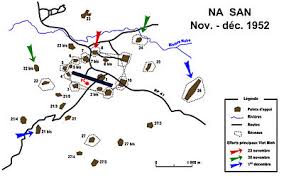
Na SanThe war went poorly for the Colonial power.  By 1952 the French were looking for a way out. Premier René Mayer appointed Henri Navarre to take command of French Union Forces in May of that year with a single order. Navarre was to create military conditions which would lead to an “honorable political solution”.
In November and December of the previous year, the French army had air lifted soldiers into a fortified position at Na San, adjacent to a key Viet Minh supply line to Laos. Superior French fire power, armor and air resources had driven Vo Nguyen Giap’s forces back with heavy losses, in what French planners called the “hérisson” or “hedgehog” strategy.

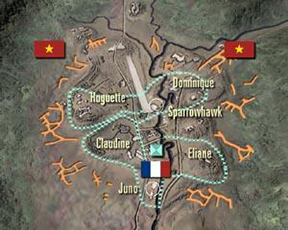
Dien_Bien_Phu, baseIn June, Major General René Cogny proposed a “mooring point” at Dien Bien Phu, creating a lightly defended point from which to launch raids. Navarre wanted to replicate the Na San strategy and ordered that Dien Bien Phu be taken and converted to a heavily fortified base.
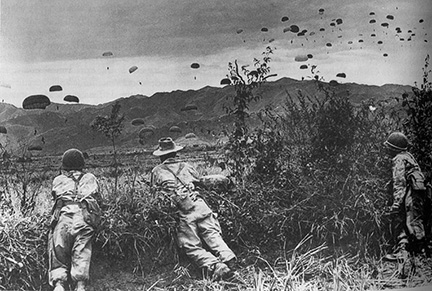
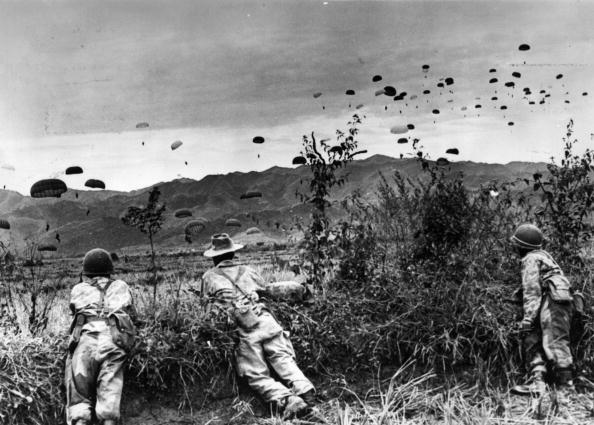
“Operation Castor” began on 20 November with three parachute infantry battalions dropping into Dien Bien Phu. The operation was completed with minimal French casualties on November 30, as air forces continued to land supplies, troops, and engineering equipment into the isolated base.

Under the command of Colonel Christian de Castries, French forces built seven fortified positions to defend the base, each allegedly named after one of his mistresses. 10,800 French troops were committed, with another 16,000 in reserve.

Vo felt that he had made a serious mistake at Na San, rushing his troops in piecemeal against French defenses. This time, he carefully prepared his positions, moving 50,000 men into position around the valley, meticulously stockpiling ammunition and placing his anti-aircraft and heavy artillery, with which he was well supplied.

dien_bien_phu-resupplyThe French staff made their battle plan, based on the assumption that it was impossible for the Viet Minh to place enough artillery on the surrounding high ground, due to the rugged terrain. The communists didn’t possess enough artillery to do serious damage anyway, or so they thought.
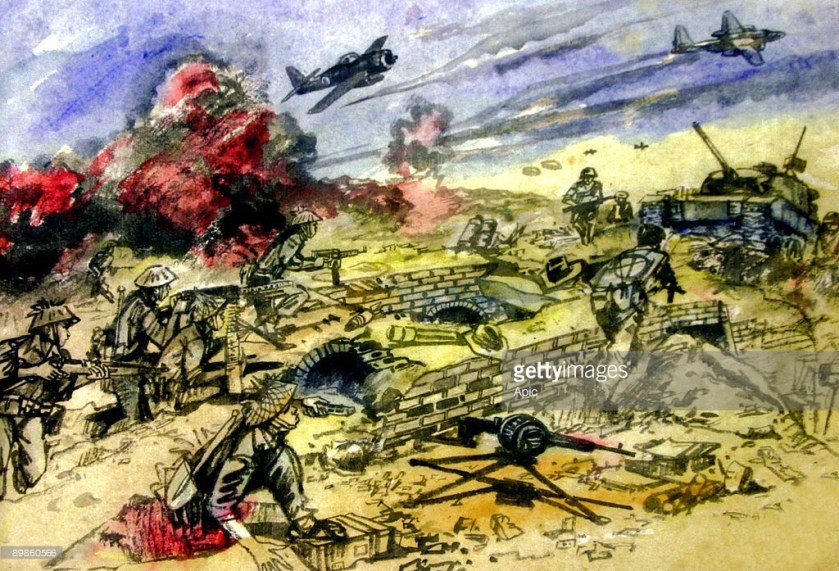

French officers quickly learned how mistaken they had been. The first sporadic artillery fire began on January 31, around the time that patrols discovered the enemy’s presence in every direction. Heavy artillery virtually ringed the valley in which they found themselves, and air support was quickly nullified by the enemy’s well placed anti-aircraft fire.

The Viet Minh assault began in earnest on March 13, when several outposts came under furious artillery barrage. Air support became next to impossible, and counter-battery fire was next to useless against Giap’s fortifications.

Lieutenant Colonel Charles Piroth commanded the French artillery at Dien Bien Phu. He was a professional soldier and no lightweight, having had his arm amputated in 1946 with no anesthesia. When it became clear how wrong his assumptions had been, Colonel Piroth circled the camp making apologies to his officers, returned to his tent, and killed himself with a hand grenade.

“Beatrice” was the first fire base to fall, then “Gabrielle” and “Anne-Marie”. Viet Minh controlled 90% of the airfield by the 22nd of April, making even parachute drops next to impossible. On May 7, Vo ordered an all-out assault of 25,000 troops against the 3,000 remaining in garrison. By nightfall, it was over.  The last words from the last radio man were “The enemy has overrun us. We are blowing up everything. Vive la France!”

Military historian Martin Windrow wrote that Dien Bien Phu was “the first time that a non-European colonial independence movement had evolved through all the stages from guerrilla bands to a conventionally organized and equipped army able to defeat a modern Western occupier in pitched battle”.

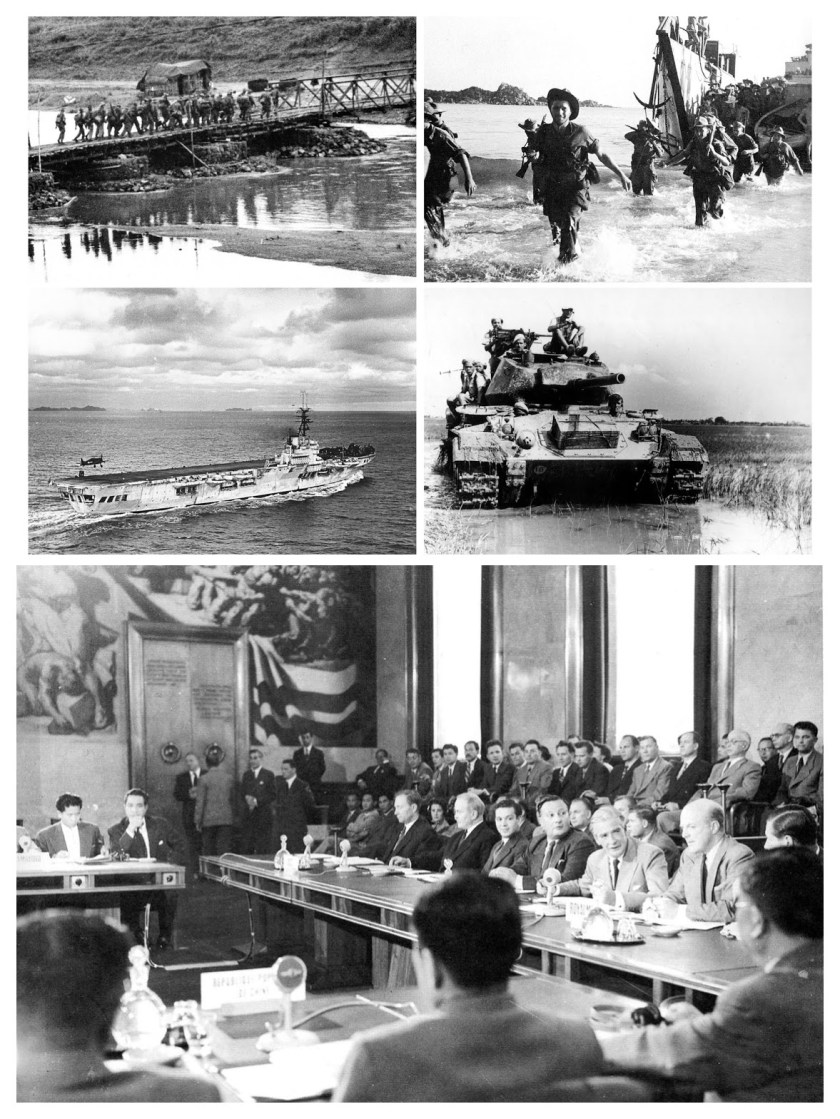
The Geneva conference opened the following day, resulting in a Vietnam partitioned into two parts. In the north was the “Democratic Republic of Vietnam” administered by the communists, and the State of Vietnam in the south, under Emperor Bao Dai and Prime Minister Ngo Dinh Diem. The North was supported by both the People’s Republic of China and the Soviet Union, and continued to terrorize patriots in the north and south alike.

US support for South Vietnam increased as the French withdrew.  By the late 1950s, the US was sending technical and financial aid in expectation of social and land reform. By 1960, the National Front for the Liberation of South Vietnam (NLF, or “Viet Cong”) had taken to murdering Diem-supported village leaders.  President John F. Kennedy responded in 1961, sending 1,364 American advisers into South Vietnam.

The American war in Indochina, had begun.

trenches cropped-min
“The French strong-points at Dien Bien Phu in north-west Vietnam are falling again. Not, as in 1954, to Viet-Minh attacks, but rather to the bulldozers of progress”. H/T http://www.lowyinterpreter.org/

November 29, 1918 A Medical Mystery

Further study is needed but, perversely, such study is only possible given more cases of the disease. For now, the lethal pandemic of 1915 – 1924 remains one of the great medical mysteries. An epidemiological conundrum, locked away in a nightmare closet of forgotten memory.

The Great War was in its third year in 1917, with another year to go. Before they had numbers, this was the most cataclysmic war in living memory, destroying the lives of some thirty-six million on all sides and leaving untold millions more, maimed.

In March of the following year, a new batch of trainees cycled through Fort Riley in Kansas, fresh recruits destined for the “War to End All Wars”. On reporting for breakfast one morning, none could know that an enemy lurked among them, more lethal than the war itself.

Private Albert Gitchell was coming down with cold-like symptoms: sore throat, fever and headache. Never mind breakfast. Pvt. Gitchell was headed for the base hospital.  More than one-hundred reported sick by noon, with similar symptoms.

file-20180109-36019-q61srvOrdinary flu strains prey most heavily on children, elderly, and those with compromised immune systems. Not this one. This flu would kick off a positive feedback loop between small proteins called cytokines, and white blood cells. This “cytokine storm” resulted in a death rate for 15 to 34-year-olds twenty times higher in 1918, than in previous years.
The young and healthy immune system of the victims, were what killed them.

The armistice was a bare two weeks in the past on November 29, 1918.  Formal peace negotiations would occupy the whole of 1919.

History has a way of swallowing some events, whole. Like they never happened. The Spanish flu afflicted some five hundred million worldwide, killing an estimated fifty to one hundred million.  Two to three times the number killed by the war itself and yet, the story was overshadowed by the end of the war.

Small wonder it is then, that such an event would itself eclipse a pandemic far smaller but in some ways more terrifying, than the worldwide calamity of the Spanish flu. To this day, nobody knows where this enemy came from. Or where it left to, when it went away.

In 1915, Austrian psychiatrist and neurologist Constantin von Economo described the signs and symptoms of a strange new condition which came to be called Von Economo’s Disease. The illness was labeled Encephalitis Lethargica, literally “Inflammation of the brain which makes you tired”.

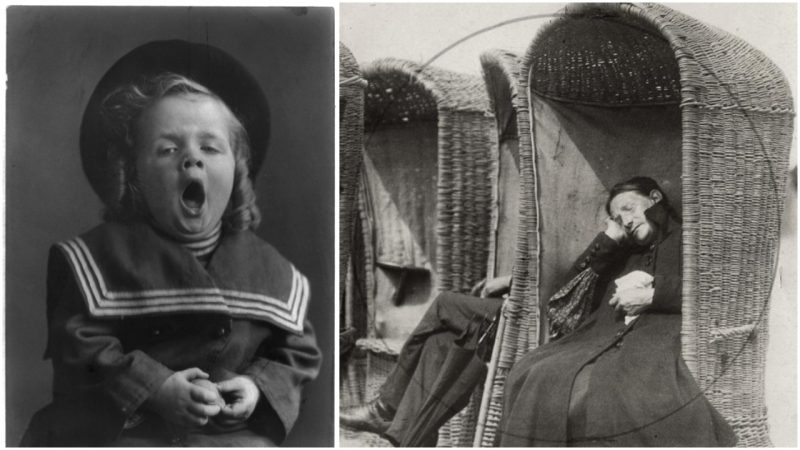
“We are dealing with a kind of sleeping sickness, having an unusually prolonged course. The first symptoms are usually acute, with headaches and malaise. Then a state of somnolence appears, often associated with active delirium from which the patient can be awakened easily. He is able to give appropriate answers and to comprehend the situation. This delirious somnolence can lead to death, rapidly, or over the course of a few weeks. On the other hand, it can persist unchanged for weeks or even months with periods lasting bouts of days or even longer, of fluctuation of the depth of unconsciousness extending from simple sleepiness to deepest stupor or coma,” Die Encephalitis lethargica, Constantin von Economo, 1917

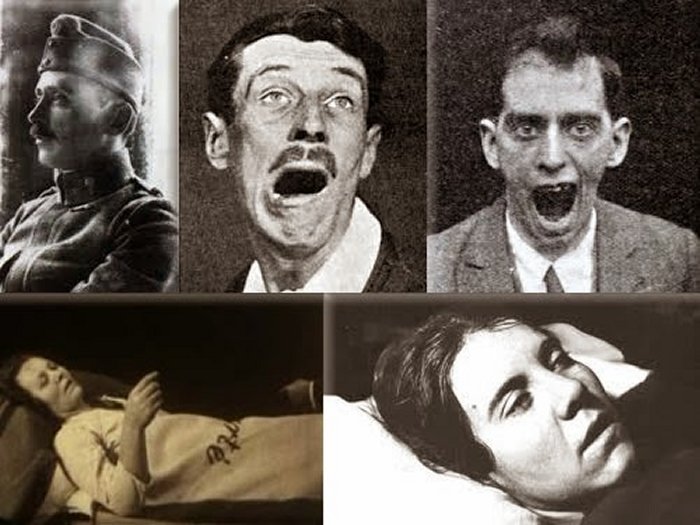
Encephalitis Lethargica is also known by the deceptively benign name of “Sleepy Sickness”. Von Economo distinguished three phases of the illness. Symptoms of the somnolent-ophthalmoplegic include paralysis of the cranial nerves, leading to expressionless faces and involuntary eye movements, with overwhelming sleepiness leading to coma. Fully one-third of E.L. sufferers died during this phase, of respiratory failure. The hyperkinetic form manifested itself with restlessness and motor disturbances leading to facial contortion, anxious mental state and an inability to sleep, often leading to death by exhaustion.

encephalitislethargica2.jpg
Dr. Constantin von Economou top left, described the plight of E.L. sufferers, in 1917

The amyostatic-akinetic form frequently resulted in a chronic state resembling Parkinson’s disease, called Postencephalitic Parkinsonism.

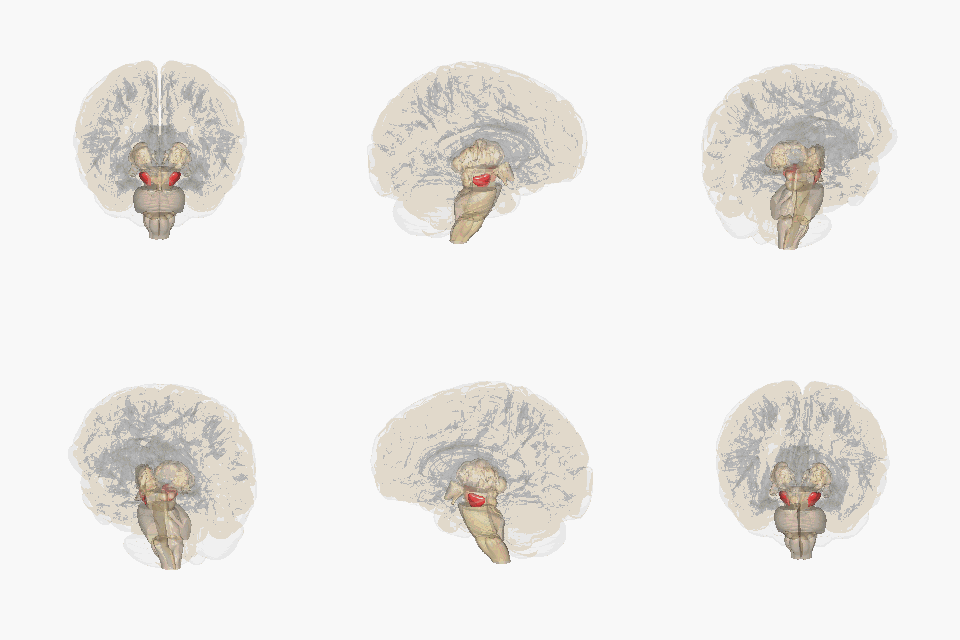
Autopsies revealed this third phase to result from localized neurodegeneration of the Substantia Nigra, the basal ganglia structure of the mid-brain which plays a role in reward and associative learning as well as bodily movement. Unknown to the sufferer, this neurodegeneration takes place over an interval of a few days to thirty years, consigning the sufferer to a trance-like state in which the patient is rendered speechless and motionless, fully aware but, for all intents and purposes, a statue.

Substantia_nigra
Substantia Nigra

The 1973 non-fiction book Awakenings by Oliver Sacks, describes what that looks like:

“They would be conscious and aware – yet not fully awake; they would sit motionless and speechless all day in their chairs, totally lacking energy, impetus, initiative, motive, appetite, affect or desire; they registered what went on about them without active attention, and with profound indifference. They neither conveyed nor felt the feeling of life; they were as insubstantial as ghosts, and as passive as zombies”.

It is hard to imagine a more terrifying condition.   Worldwide, Encephalitis Lethargica afflicted some five million between 1915 and 1924.  The disease preyed mostly on young victims, between 15 and 35.  Early symptoms include high fever, headache, fatigue and runny nose. Sufferers would take to bed believing it to be nothing more than a severe cold, or flu. Meanwhile, the unknown enemy within quietly spread to the brain.

j8zjvpoiOne-third of sufferers died in the acute phase, a higher mortality rate than the Spanish flu of 1918-’19.  Many of those who survived never returned to pre-disease states of “aliveness” and lived out the rest of their lives institutionalized, literal prisoners of their own bodies.  Living paperweights.
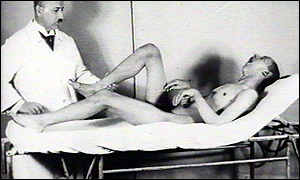
A bare 14% emerged from the condition, with no lasting effect.

140297_patient_from_20s_300_24-7-98_grab.jpgProfessor John Sydney Oxford is an English virologist, a leading expert on influenza, the 1918 Spanish Influenza, and HIV/AIDS. Few have done more in the modern era, to understand Encephalitis Lethargica: “I certainly do think that whatever caused it could strike again. And until we know what caused it we won’t be able to prevent it happening again.”
Doctors Russell Dale and Andrew Church discussed 20 new cases in 2004, published in the Oxford University medical journal Brain. The two hypothesize infection leading to a massive auto-immune response, possibly brought on by an unusual Streptococcus bacterium.

Further study is needed but, perversely, such study is only possible given more cases of the disease. For now, the lethal pandemic of 1915 – 1924 remains one of the great medical mysteries. An epidemiological conundrum, locked away in a nightmare closet of forgotten memory.

We can only hope it stays that way.

FP_PANDEMIC.0

November 28, 1949 Simon

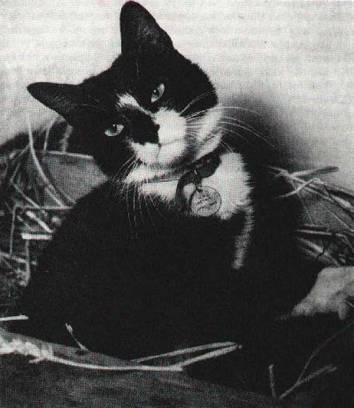
Equivalent to the American Medal of Honor or the British Victoria Cross, the “Dickin Medal” is the highest award in the British system of Military honors, awarded to animals for service in time of military conflict. The Dickin has been awarded only 71 times. Recipients include 34 dogs, 32 pigeons, 4 horses and, to this day, only one cat. A ship’s cat. The champion rat killer of the Yangtze River. Simon.

According to the archaeological record, the earliest trade dates to the Neolithic period of the 10th millennium, BC. The Austronesian peoples of island Southeast Asia established trade routes with the Indian sub-continent, as early as 1500 BC. Egyptians traded with Asian merchants from the time of the Ptolemaic dynasty.  The Greco-Roman palate of antiquity would not have been the same without the spice roads, plied first by land and later, by sea.

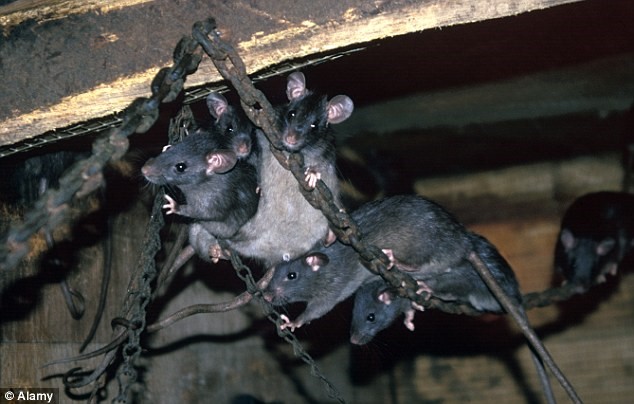
From the earliest times when man took to the ocean, food stores and trade goods alike were an attractive food source for the Black Rat, Rattus rattus.

Black Rat

Able to climb obstacles from trees to buildings to ship’s ropes, DNA and other evidence suggests the black rat originates not from Europe, but southeast Asia.

Also known as the “ship’s rat”, the animal reaches sexual maturity in as little as three to four months and completes the act of reproduction, in the blink of an eye. Litters average 7 or 8 “kittens” with an average gestation period of only 20 to 22 days and a weaning period, of 20 to 28.

Rat infestations get out of hand with shocking rapidity.  Left uncontrolled, rats will destroy a ship’s stores in a matter of weeks.  This is to say nothing of the black rat’s prodigious ability to carry disease without itself, being affected.  From Bubonic plague to Typhus to Toxoplasmosis, Trichinosis and any number of Streptococci, this third to half-pound animal has done more than any creature in history, to alter the course of human events.

Unsurprisingly, the “ship’s cat” was a feature of life at sea since man first took to the water.

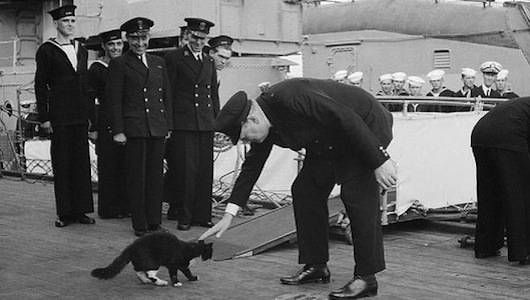
Blackie_and_Churchill.jpg.653x0_q80_crop-smart
Ship’s cat “Blackie” greets Winston Churchill aboard the HMS Prince of Wales. (Photo: Wikimedia Commons)

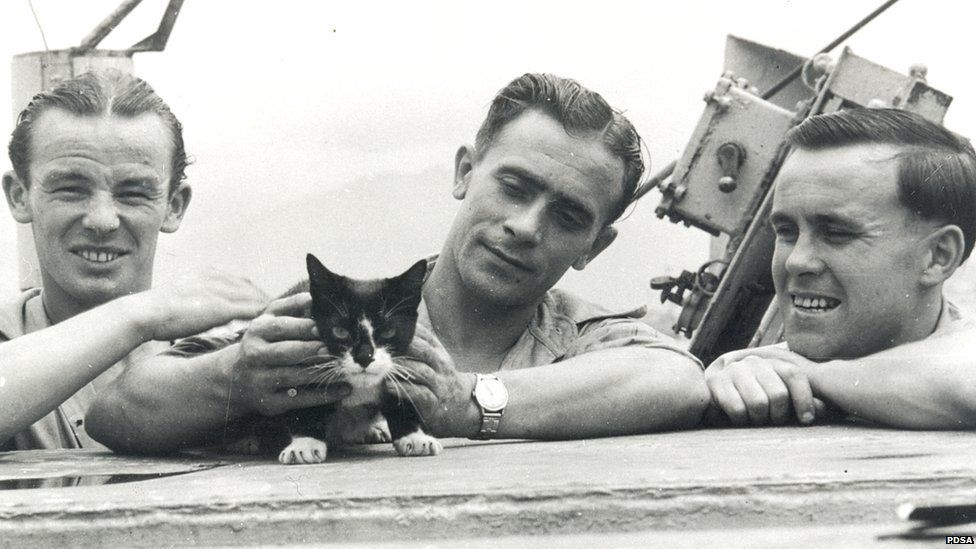
“Simon” was about a year old in 1948, one of countless and nameless feline waifs, starvelings roaming the dockyards of Hong Kong in search of a morsel.  17-year-old Ordinary Seaman George Hickinbottom smuggled the animal on board the frigate HMS Amethyst, the job of “ship’s cat” being open at that time.

Lieutenant Commander Ian Griffiths liked cats and well understood the threat posed by rodents, in the hot and humid weather of that time and place.  As Hickinbottom recalled, ‘He warned me that if he saw any muck on board, he’d have me up on a charge.’ The crew made sure any ‘muck’ was quietly tossed overboard.

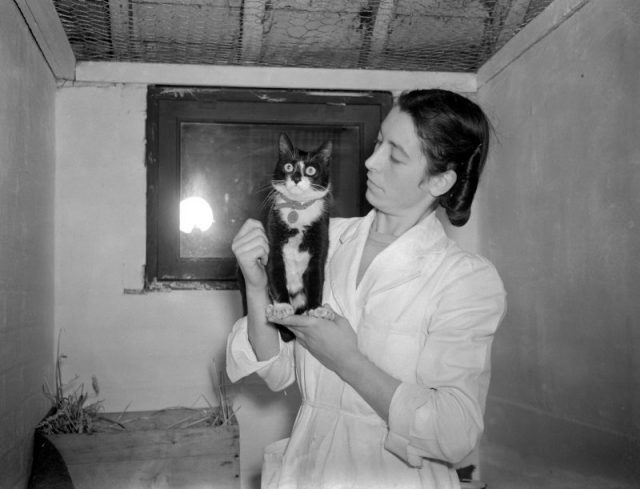
simon-hms-amethyst-catSimon earned the admiration of the Amethyst crew, with his prowess as a rat killer. Seamen learned to check their beds for “presents” of dead rats while Simon himself could usually be found, curled up and sleeping in the Captain’s hat.
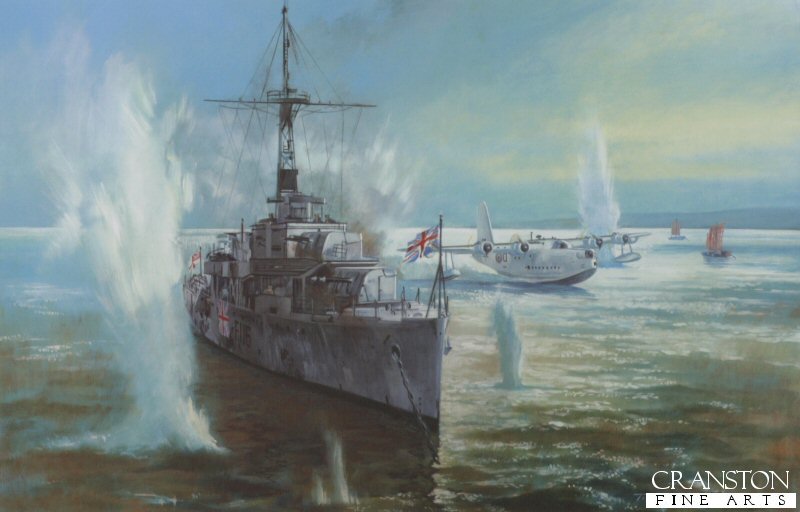
China was embroiled in a Civil War at this time, between the Nationalist Kuomintang led Republic of China and the Communist Party led People’s Republic of China.

The first mission assigned to incoming Skipper Bernard Skinner was to travel up the Yangtze River to Nanjing to replace the duty ship HMS Consort, then standing guard over the British embassy.

On April 29, 1949, Amethyst was on her way up river when she came under fire from the People’s Liberation Army (PLA).

The frigate returned fire but she was soon disabled, run aground with most of her guns too high to return fire.  The first salvo from the Communist guns exploded in the Captain’s quarters, killing Commander Skinner and badly wounding the ship’s cat.

to0001
“Yangtse Incident by Timothy OBrien. HMS Amethyst about to return fire while a Sunderland of 88 Squadron makes a hurried departure, 23rd of April 1949”. H/T worldnavalships.com

By 9:30, wounded First Lieutenant Geoffrey L. Weston made his last, desperate transmission: “Under heavy fire. Am aground in approx. position 31.10′ North 119.20′ East. Large number of casualties”.

The order was given to evacuate.  Some managed to swim across to the Nationalist side, despite fire from Communist batteries. For the rest, the following three months became a tense and deadly standoff known as the Amethyst Incident.

Simon was carried to the sick bay where surviving members of the medical staff removed four pieces of shrapnel from his little body, and dressed his burned flesh and singed fur.  He was grievously wounded and wasn’t expected to make it, through the night.

As weeks dragged to months, Simon did not die but recovered and resumed his duties as rat killer, below decks.  A good thing it was, too.  The trapped and cornered vessel was overrun, with vermin.  Simon returned to his work with a vengeance, even earning the fanciful rank of “Able Sea Cat” after killing one notorious rodent known as Mao Tse-tung.

rjos_007-2-(3)

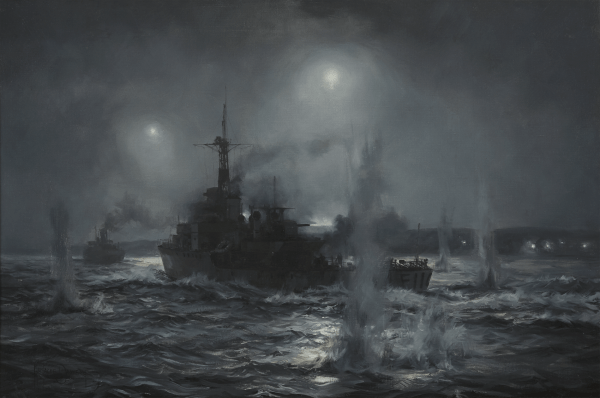
HMS Amethyst makes a nighttime dash for freedom. Painting by Montague Dawson

The Amethyst incident resulted in the death of 47 British seamen with another 74, wounded. HMS Amethyst herself sustained extensive damage in the episode.  The heavy cruiser HMS London, the destroyer HMS Consort and the sloop HMS Black Swan were also damaged.

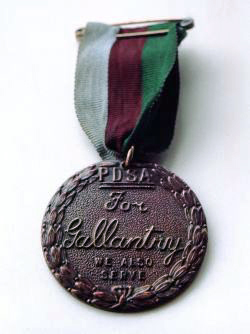
Dickin_Medal.jpgAll but unseen amidst the economic devastation of World War 1, the domesticated animals of Great Britain were in desperate straits. Turn-of-the-century social reformer Maria Elizabeth “Mia” Dickin founded the People’s Dispensary for Sick Animals (PDSA) in 1917, working to lighten the dreadful state of animal health in Whitechapel, London. To this day, the PDSA is one of the largest veterinary charities in the United Kingdom, conducting over a million free veterinary consultations, every year.
The “Dickin Medal” was instituted on December 2, 1943, honoring the work performed by animals in World War Two.  The “animal’s Victoria Cross”, the Dickin is equivalent to the highest accolade in the British system of military honors, comparable to the American Medal of Honor and bearing these words, “We Also Serve”.

Simon, Dickin.png
Simon the cat received the Dickin Medal, for catching rats and protecting food supplies during the time the ship was trapped by the Chinese. (Photo by PA Images via Getty Images)

Excepting the 2014 blanket award to all animals of the “Great War”, the Dickin Medal has been awarded 71 times since its inception.  Recipients include 34 dogs, 32 pigeons, 4 horses and, to this day, only one cat.  A ship’s cat.  The champion rat killer of the Yangtze River.  Simon.

Simon arrived to accolades in Great Britain, awarded a Blue Cross medal, the Amethyst campaign medal and Naval General Service Medal with Yangtze clasp.  Unhappily, Simon didn’t survive his war wounds, after all.  Placed in quarantine like any other animal entering the United Kingdom, Simon succumbed to severe infections of his wounds and died on this day, November 28, 1949.

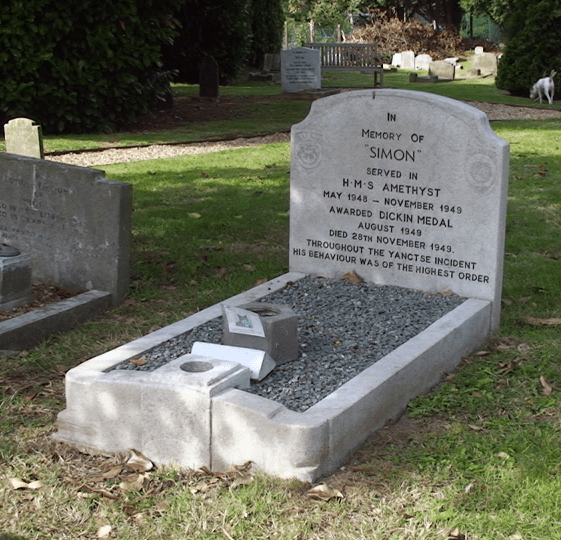
More than a thousand people including the entire crew of HMS Amethyst, attended the funeral for the two-year-old feline.  Simon’s gravestone at the PDSA Animal Cemetery in Ilford reads: “Throughout the Yangtze Incident his behavior was of the highest order.”

Simon grave.png

November 27, 1926 The Army Navy Game

As the result of a friendly wager and Navy’s 10-17 loss in the 2018 game, acting SECNAV Thomas Modly announced this week, the planned construction of the Navy’s newest Destroyer. The “USS Jeff Monken” will be named after the 37th head coach, of the United States Army’s football program.

Sometime during the 1893 football season, a navy doctor told Midshipman Joseph Reeves that another kick to the head could result in “instant insanity”, even death.

Reeves commissioned an Annapolis-area shoemaker to build him a leather covering, thus making himself the father of the modern football helmet. Years later, this man of the battleship era became an ardent supporter of naval air power. Today, Admiral “Bull” Reeves is widely known as the “Father of Carrier Aviation”.

The naval academy’s football program is one of the oldest in the country, dating back to 1879.  The canvas jersey of that year is believed to be the first college football uniform.

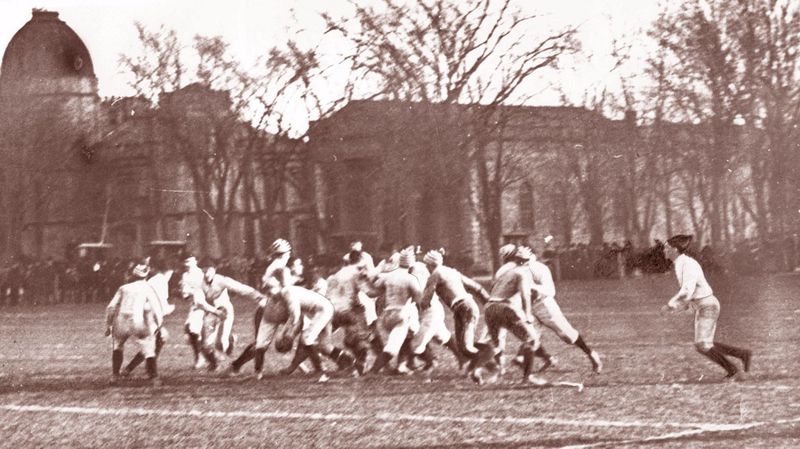
First Army Navy Game
The First Army-Navy football game was played at West Point on Nov. 29, 1890, with the Navy squad achieving a 24-0 victory. (Baltimore Sun File Photo)

The Army got into the game the following year, when Navy challenged Army cadets in what was then a relatively new sport. 271 members of the corps of cadets pitched in 52¢ apiece to pay for half of Navy’s travel expenses, for that first game in 1890. That first game was played on November 29, ending in a humiliating loss for the cadets at West Point, 24-0.

The Black Knights had their revenge the following year, defeating Navy at Annapolis, 32-16.  The two teams met some 30 times between 1890 and 1930, before the game became an annual event.

f6a9fada734c536df7c1bc53796bb8f3.jpgThe two met in Chicago on November 27, 1926 in a National Dedication of Soldier Field, as a monument to American servicemen killed in the War to end all Wars.

More than just inter-service “bragging rights” are at stake. Only 17 schools can boast of having winners, of the prestigious Heisman Trophy. Army and Navy, combine for five.

West Point and Annapolis fielded some of the best teams in college football, during the first half of the 20th century. In 1944 and ’45 with the country at war, Army and Navy entered that final game of the season,with perfect records. Army finished both seasons, undefeated.

Fun Fact:  “A 1973 episode of “M*A*S*H” referenced a fictional Army-Navy game that ended 42-36 Navy. To this day, no Army-Navy game has ended with that score. The radio announcer in the episode says the game is the 53rd Army-Navy game. That game was played in 1952; Navy won, 7-0″.  H/T army.mil

Today, size and weight restrictions combine with a five-year military service commitment, while dreams of NFL careers draw some of the best football talent away from the service academies. Since 1963, only four seasons have seen both teams enter the Army-Navy game with winning records. Yet, the game remains a college football institution, receiving radio coverage every year since the late 1920s, and broadcast on national television, since 1945.

The first instant replay in American football history made its debut during the 1963 Army–Navy game.

The Army-Navy game may be the purest such event in all of college sports. These young men play for the love of the game, knowing the next few years will lead not to careers in business or sport, but to the United Sates military.

Army-Navy-702.jpegFive-year post-graduation military service commitments preclude the NFL career aspirations of most Army-Navy game veterans, but not all. Notable exceptions include Dallas Cowboys Quarterback Roger Staubach (Navy, 1965), New York Giants Wide Receiver and Return Specialist Phil McConkey (Navy, 1979), and (then) LA Raiders Running back Napoleon McCallum (Navy, 1985).
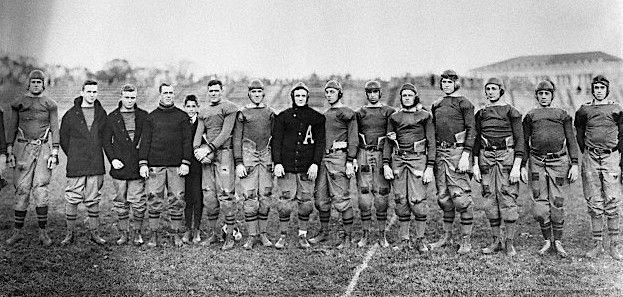
President Dwight Eisenhower earned the distinction of being the only future President in history to play the Army-Navy game in 1912, alongside future General of the Army, Chairman of the Joint Chiefs of Staff and teammate, Omar Bradley.

Eisenhower_Football
The 1912 squad at West Point included Dwight D. Eisenhower (3rd from left) and Omar Bradley (far right)

The only game ever played west of the Mississippi was the Rose Bowl of 1983, earning the DoD Wisconsin Senator William Proxmire’s not-so-coveted “Golden Fleece” award for blowing $100,000 to transport cadets, midshipmen and mascots, to Pasadena.

How I miss those days when government pretended to look out for our money.

With capacities of only 38,000 and 34,000 respectively, Army’s Michie Stadium and Navy’s Navy–Marine Corps Memorial Stadium are far too small, to hold the assembled crowd. Out of 117 games, only six have been played on either campus. Two of those (1942-’43), were due to WWII travel restrictions.

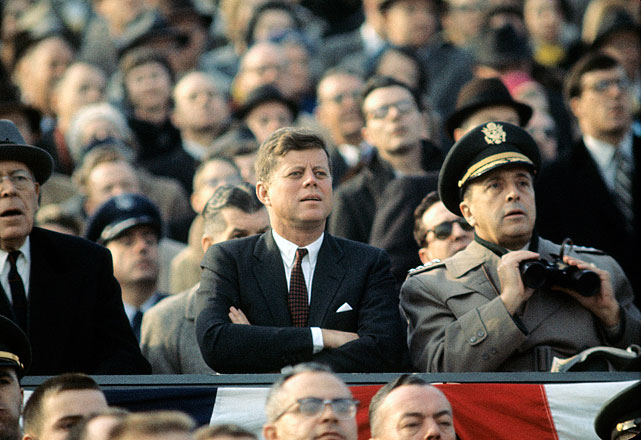
The Army-Navy game was canceled in 1963, part of a 30-day period of mourning, following the assassination of President John F. Kennedy.  Knowing her husband to be a big fan, First Lady Jacqueline Kennedy requested the game go on.  Quarterback Roger Staubach lead his #2 nationally ranked team to a 21-15 Navy victory.

kennedy-army-navy-game.jpg

For most seniors, the “First Classmen” of either academy, the Army-Navy game carries special meaning. Some may go on to play in a bowl game, but for most, this is the last regular season football game, each will ever play. In times of war, they and others like themselves will be among the first to go, in defense of the country.  Some won’t come back alive.

The game is particularly emotional for this reason. Despite intense rivalry, it would be hard to find a duel in all of sports, where the two sides hold the other in higher regard.

The game is steeped in tradition. As opposites cheer them on, each side takes the field in a spectacle of precision drill, unmatched in any venue outside the military. After the game, teams assemble to sing the almae matres to the assembled students and fans of each institution, ‘On Brave Old Army Team’ and ‘Anchors Aweigh’.

The first such serenade is always performed for those of the losing academy, hence the coveted position of “singing second”, signifying the victor of this, the oldest sports rivalry in service academy history.

Respect and tradition is all well and good, but such rivalries do not come without a share of debauchery. During junior year, selected “Middies” and Cadets attend courses with the opposite military academy. On game day, each is restored in a “prisoner exchange”, returning from their semester in “enemy territory”.

Goats have a long history with all things maritime, having gone to sea since the age of sail and eating all manner of garbage and other undesirable food in exchange for which, she provided companionship, milk and butter. British explorer and naturalist Sir Joseph Bank’s nanny goat was the first creature two-legged or four, to circumnavigate the planet, twice.

merlin_147402201_bce4c286-d05a-4837-8f3a-3fc6f35661ea-articleLarge
A Navy goat and Army mule meet at the 1924 Army-Navy football game.Credit…U.S. Naval Institute

Navy had multiple mascots during the early years, including a gorilla, two cats, a bulldog, and a carrier pigeon. Legend has it a beloved goat once died aboard a Navy cruise.  Two ensigns cavorted about wearing the skin during half-time, before making their way to the taxidermist.

Navy won that game.  A live goat named “El Cid” (The Chief) appeared at the fourth Army-Navy game, in 1893. Navy won that game too, the third victory of those first four games. Small wonder that Billy goats have been the Navy mascot, since 1904.

The 2016 matchup was attended by “Bill” the Goat #XXXVI and his backup, Bill #XXXVII.
Small wonder too, why Army cadets will go to any length, to kidnap that goat. The first such kidnapping of the modern era, took place in 1953.

The pre-dawn raid of November 5, 1995 resulted in the ‘goatnapping’ of the entire stable, of Navy mascots. The Pentagon was notified, and the goats returned under a joint Army/Navy policy, prohibiting the “kidnapping of cadets, midshipmen or mascots”.

Cadets pulled off the caper in 2002, disguised in Grateful Dead T-shirts. “Operation Good Shepherd” launched in 2007, to kidnap Bill #XXXII, XXXIII, and XXXIV. The whole thing was posted, on You Tube.

Only the Army would mount a military operation, to kidnap a goat.  Only the Navy would contact the Pentagon, to get him back.

The Philadelphia Quartermaster Depot decided in 1899, that Army needed a mascot. Army Mules have a long history going back to George Washington, “Father of the American Mule“.  The first was a white mule, used to haul an ice wagon.   Virginia pack mule “Mr. Jackson” (named for “Stonewall”) became the first “official” mascot, in 1936.

Mr. Jackson served twelve years, the first of seventeen Army mules. Only one, “Buckshot”, was a female.  The “Mule Corps” currently consists of two Percheron crosses:  “Ranger III” and his half-brother “Stryker” and a half-thoroughbred called “Paladin”.

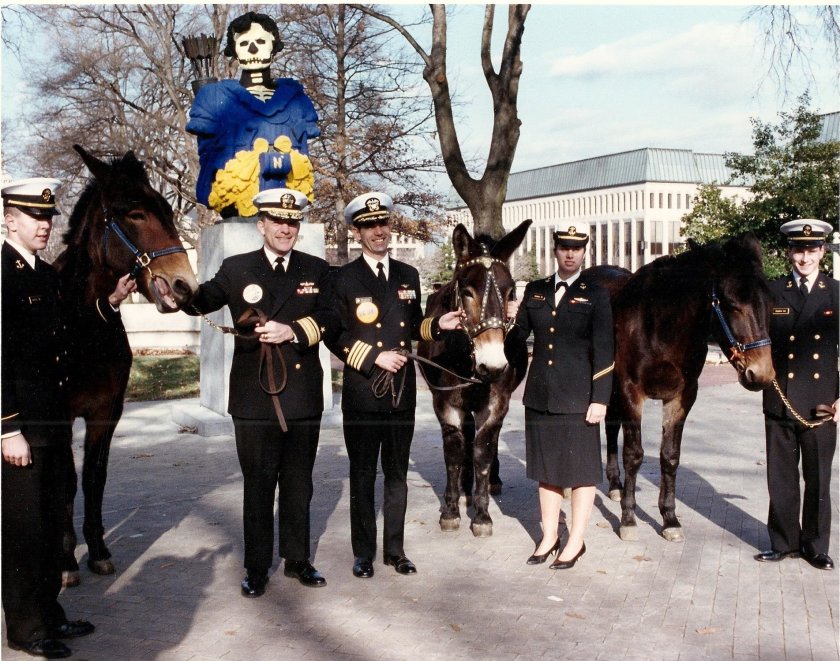
merlin_147431586_fb2dfc7c-7dec-4a74-9943-2d48f00f41b3-superJumbo
Senior commanders at the Naval Academy, including the superintendent, Rear Adm. Thomas Lynch, second from left, and the commandant of midshipmen, Capt. Michael Haskins, center, posed in 1991 with the Army mules that midshipmen had abducted from West Point. H/T New york Times

Always the last regular-season game in Division I-A football, the next two Army-Navy games are scheduled in Philadelphia. The game will then move to Metlife Stadium in East Rutherford New Jersey, to mark the twenty-year anniversary of the Islamist terror attacks on the World Trade Center. The 2022 game moves back to Philadelphia, marking the 91st time Army and Navy have played there.

To date, Navy leads Army in the series 60-49-7, with the Black Knights ending Navy’s 14-game winning streak in 2016. The 2019 edition is scheduled for December 14, at Lincoln Financial Field.

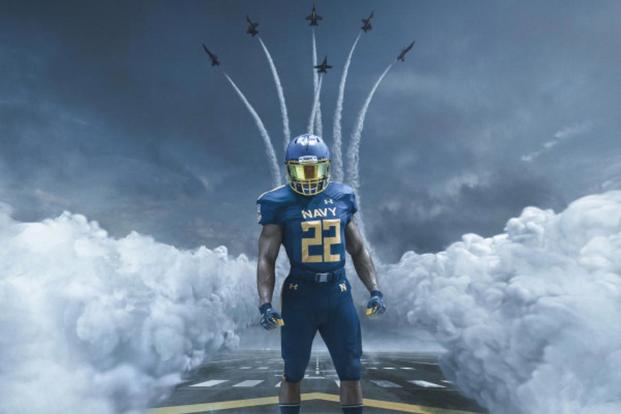
navy-angels-uniform-1-1200As the brother, son and grandson of Army veterans going back to the Revolution and beyond, have no doubt who I’ll be rooting for.  ‘Beat Navy’.
November 26, 1703 Into the Maelstrom

It’s hard to count the cost of such a cataclysm, when everyone who ever knew you, is gone.  Estimates of fatalities range from 8,000 to 15,000 killed.

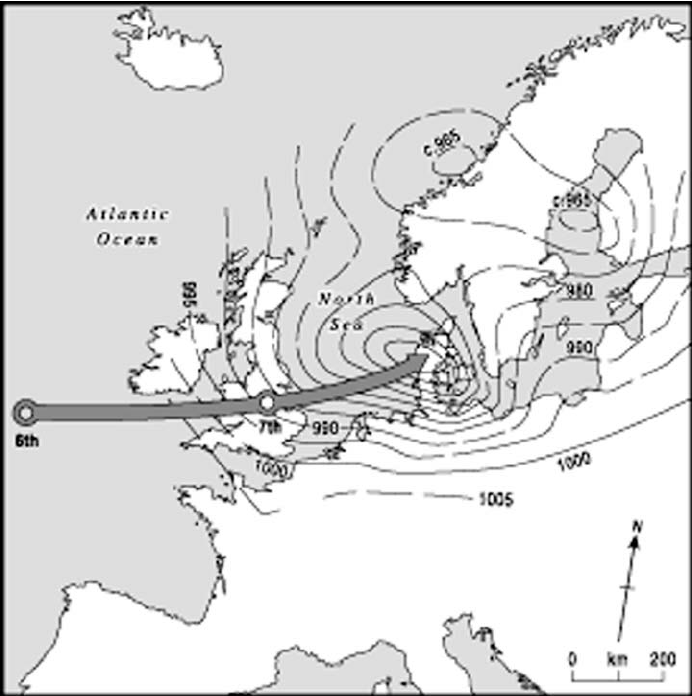
The storm came in from the southwest on Wednesday evening, November 24, and stayed until December 2. On Friday the 26th, barometers read as low as 950 millibars in some areas, a reading so low as not to have been seen in living memory. Before it was over, the southern part of Great Britain had suffered one of the most destructive storms, in history.

In a time before meteorological science, such an event was understood to be the wrath of God.  And what a wrathful God, he was.  Any storm worthy of the name “Hurricane”- any storm, we’re not talking Katrina or Andrew here – expends the energy equivalent to 200 times the electrical generating capacity, of the entire planet.  We’re talking about 10,000 Hiroshimas here, usually spread out over time and place.  Not this one.  This one was concentrated, compacted into the heavily populated south of England, a place where the gray and feeble first light of dawn broke across the land, and “nobody could believe the hundredth part they saw“.

A155403.jpgBeginning in early November, a series of gales drove hundreds of ships up the Thames estuary, is search of shelter.  The “Perfect Hurricane” of 1703 arrived on November 24 (Old Style) and remained until December 2 with the worst of the storm on November 26-27.
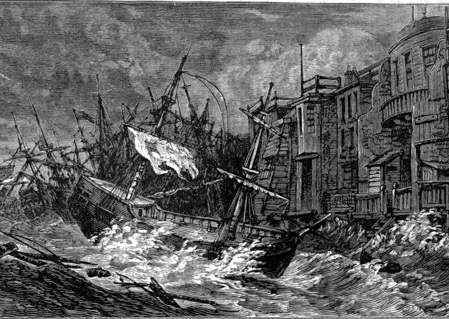
Queen Anne sought shelter in the cellars of St. James’ Palace, while the lead roof blew off of Westminster Abbey.  More than 2,000 chimneys were toppled to the ground in London alone as were another 17,000, trees. In the Thames, 700 vessels of all sizes piled up like children’s toys.  Ship’s officers struggled to record an event, entirely outside of living memory.

“It was so severe, none of these poor captains had ever experienced it before, so they didn’t have any yardsticks to base the description on,” says Wheeler, who studied Royal Navy logbooks at length. “One gave up and just wrote ‘a most violent storm’ and left it at that, for sheer want of anything more he could say.”

At the Cathedral City at Wells, Bishop Richard Kidder was asleep with his wife next to him, when a toppling chimney killed them both in their bed.

A third of British Naval power was destroyed during this storm, the entire Channel squadron, gone.  Ships were driven as much as 15 miles inland, more than 1,500 sailors drowned.  Many vessels simply disappeared. Others washed up on the faraway shores of Denmark, and Norway.

Synoptic-summary-of-The-Great-Storm-of-December-1703-in-England-after-Lamb-and.pngThe most miraculous tale of survival was that of Thomas Atkins, a sailor aboard the HMS Mary. As Mary broke apart, Atkins watched as Rear Admiral Beaumont climbed aboard a piece of her quarter deck, only to be washed away.  Atkins himself was lifted high on a wave and deposited on the decks of another ship, the HMS Stirling Castle.  He was soon in the water again as Stirling Castle broke up and sank, only to thrown by yet another wave, this time landing in a small boat. Atkins alone survived the maelstrom, of the 269 men aboard HMS Mary.
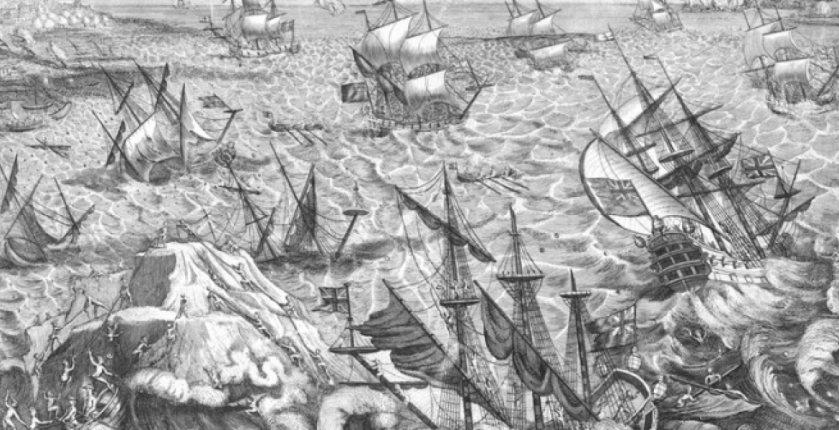

Hundreds found themselves stranded on Goodwin Sands, a ten mile long sand bar, six miles off the coast of Kent. In a race against the incoming tide, a man named Thomas Powell organized the rescue of some 200.  More could have been saved, had the good citizens onshore stopped looting shipwrecks long enough to lend a hand.

Great_Storm_1703_Goodwin_Sands_engraving
An engraving of the age depicts the disaster, on Goodwin Sands.

With “Robinson Crusoe” still sixteen years in the future, the famous author Daniel Defoe was at this time, but a minor poet and pamphleteer.  The writer was freshly out of prison in 1703, having served a sentence for criticizing the religious predilections, of High Church Anglicans. Hearing the collapse of brick chimneys, the Defoes and their six children sought refuge in their gardens but were soon driven inside, to “trust the will of Providence”. “Whatever the danger was within doors”, he said, “”twas worse without; the bricks, tiles, and stones, from the tops of the houses, flew with such force, and so thick in the streets, that no one thought fit to venture out, tho’ their houses were near demolish’d within.”

The 75,000 words which followed are recognized by many as the first work of modern journalism, forming Daniel Defoe’s first book length work, “The Storm”.

great-storm-1703-700x396
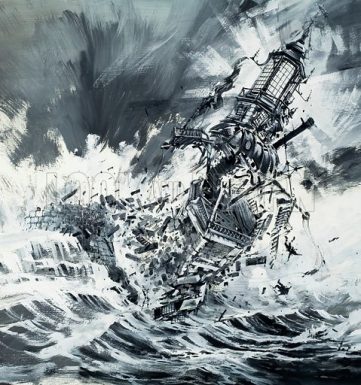
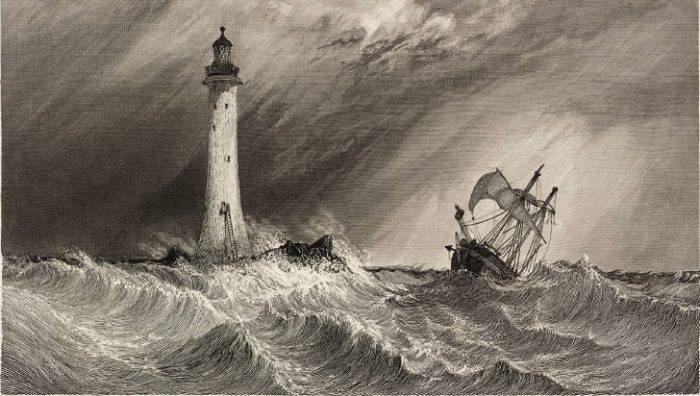
English engineer Henry Winstanley constructed the first Eddystone Lighthouse. He died with his creation in 1703, caught out while making repairs, by the cataclysm of 1703

Storms of great severity are not unheard of in southern England. In 1362, part of the Norwich Cathedral spire was blown down.  Severe gales were recorded in 1897, 1908 and 1943. The gales of 1953 and 1987 left more damage than any storm of the last century. At the time, the storm of 1703 was seen as the Wrath of God, visited upon Great Britain for the “crying sins of this nation”. The storm would remain the subject of sermons for the next 150 years.

It’s hard to count the cost of such a cataclysm, when everyone who ever knew you, is gone.  Estimates of fatalities range from 8,000 to 15,000 killed. The Reaper’s true account, is impossible to know.

p04vjxws.jpg