

Hans Luder sent his son Martin to a series of Latin schools beginning in 1497. There the boy learned the so-called “trivium”: grammar, rhetoric, and logic. He entered the University of Erfurt in 1501 at the age of 19, receiving his master’s degree in 1505. The elder Luder (“Luther”) intended that his son become a lawyer. Years later, the younger Luther described his Latin school education as time spent in purgatory, his University a “beerhouse” and a “whorehouse”.
Martin Luther was not cut out for that world.
He entered Law School in 1505 and dropped out almost immediately. His father was furious over what he saw as a wasted education. Martin entered an Augustinian cloister that July, saying “This day you see me, and then, not ever again.”
 16th century Church doctrine taught that the Saints built a surplus of good works over a lifetime, sort of a moral bank account. Like “carbon credits” today, positive acts of faith and charity could expiate sin. Monetary contributions to the church could, so it was believed, “buy” the benefits of the saint’s good works, for the sinner.
As he studied the bible, Luther came to believe that the church had lost sight of the central truths of Christianity. The Grace of God wasn’t traded as a medium of exchange, he believed, but rather through faith in Jesus Christ, as the Messiah. “This one and firm rock”, he wrote, “which we call the doctrine of justification, is the chief article of the whole Christian doctrine, which comprehends the understanding of all godliness”.
Papal “commissioner for indulgences” Johann Tetzel came to Wittenberg in 1516, selling expiation to raise money to rebuild St. Peter’s Basilica, in Rome. A saying attributed to the Dominican friar, went “As soon as the coin in the coffer rings, the soul from purgatory springs.”
Martin Luther wrote to Archbishop Albrecht on October 31, 1517, objecting to this sale of indulgences. He enclosed a copy of his “Disputation of Martin Luther on the Power and Efficacy of Indulgences”, a document which came to be known as his “95 Theses”.
 A popular story has Martin Luther nailing the document to the door of the Wittenberg Palace Church, but it may never have happened that way. Luther had no intention of confronting the Church at this time. This was an academic work, 95 topics offered for scholarly debate.
Be that as it may. Luther’s ideas would rock the Christian world.
What seems to the modern mind as mere doctrinal differences, were life and death matters in the late middle and early modern ages. Archbishop Albrecht forwarded Luther’s note to Pope Leo X, who responded slowly and “with great care as is proper”.
Three theologians drafted heresy cases against Luther. In 1520, the papal bull (edict) “Exsurge Domine” commanded Luther to recant under pain of excommunication.
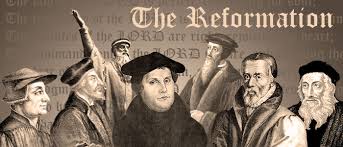 Luther stood on dangerous ground. Jan Hus had been burned at the stake for such heresy, back in 1415. On this day in 1420, Pope Martinus I called for a crusade against the followers of the Czech priest, the “Hussieten”.
The Italian reformer Girolamo Savonarola confessed under torture to any number of inventions and then recanted, and confessed again. Savonarola was ritually stripped of his Dominican garments and hanged in 1498, while fire was ignited from below to consume his body. Henry VIII’s famous break with the church over his divorce from Catherine of Aragon was still years in the future in 1521, the year Henry was named “Fidei Defensor” (“Defender of the Faith”). Nine years later, French theologian Jean Calvin would be forced to flee a deadly outbreak of violence against Protestant Christians. Jan Matthias, Bernhard Rothmann and Bernhard Knipperdolling would be tortured to death with white-hot pliers in the Münster marketplace in 1535, their corpses placed in cages and hanged from the steeple of St. Lambert’s Church.
The bones of the three were later removed but those three cages remain there, to this day. The papal bull had the effect of hardening Luther’s positions. He publicly burned it, on December 10. Twenty-four days later, Luther was excommunicated. A general assembly of the secular authorities of the Holy Roman Empire summoned Luther to appear before them in April, in the upper-Rhine city of Worms. The “Edict of Worms” of May 25, 1521, declared Luther an outlaw, stating “We want him to be apprehended and punished as a notorious heretic”. Anyone killing Luther was permitted to do so without legal consequence.
Luther went into hiding at Wartburg Castle. In 1516, Erasmus had expressed the wish that the holy text should be available in every language, “so that even Scots and Irishmen might read it”. It was there that Luther translated the New Testament from Greek into German, laying the foundation for other vernacular translations and, for the first time, making the bible accessible to the common man.
Radical sects took Luther’s teaching far beyond his intent. Luther found himself in the odd position of defending the faith against more radical reformers. The Zwickau Prophets rejected holy scripture in favor of direct revelations from the holy spirit. The Anabaptists took the “equality of man” in radical egalitarian directions, sounding more like the principles Karl Marx would write about, in 1848.
Martin Luther’s reformations plunged Europe into a series of wars. The Peasant’s War of 1524-25 alone killed more Europeans than any conflict prior to the 1789 French Revolution. The established church would respond with counter-reformation, but the idea that Christian faith was more than the exclusive province of a special, segregated order of men, was here to stay.
On October 31, 1999, 482 years to the day from Martin Luther’s letter to Archbishop Albrecht, leaders of the Roman Catholic and Lutheran Churches signed the “Joint Declaration on the Doctrine of Justification”, ending the half-millennium old doctrinal dispute, once and for all.


 The second month had 30 days back then, when Caesar renamed his birth month from Quintilis to “Julius”, in honor of himself. Rank hath its privileges. To this day, it’s why we have “July”. Not to be outdone, Caesar’s successor Caesar Augustus changed Sextilis to Augustus and, you got it, today we have August. The only thing was, that Augustus had only 29 days to Julius’ 31, and we can’t have that.
 There is an old legend that St. Bridget complained to St. Patrick back in the 5th century, that women had to wait too long for beaus to “pop the question”. Other versions of the story date back before English Law recognized the Gregorian calendar, meaning that the extra day had no legal status. Be that as it may, it is customary in many places for a woman to propose marriage on the 29th of February. According to legend, one old Scottish law of 1288 would fine the man who turned down such a proposal.
 “With great howling and lamentation” wrote Columbus’ son Ferdinand, “they came running from every direction to the ships, laden with provisions, praying the Admiral to intercede by all means with God on their behalf; that he might not visit his wrath upon them”.

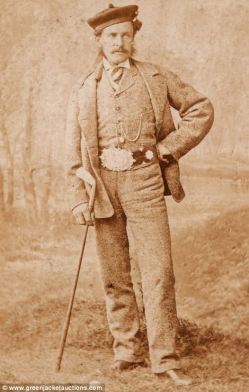


 The Father/Son team tee’d off in match against the brothers Willie and Mungo Park on September 11, 1875. With two holes to go, Young Tom received a telegram with upsetting news. His wife Margaret had gone into a difficult labor. The Morrises finished those last two holes winning the match, and hurried home by ship across the Firth of Forth and up the coast. Too late. Tom Morris Jr. got home to find that his young wife and newborn baby, had both died in childbirth.

 Established by act of Congress on July 9, 1918, the Silver Star is the third-highest decoration is the system of military honors, awarded to members of US armed services for valor in combat against an enemy of the United States. A search of public records reveals a long list of recipients of the Silver Star including the name “Ball, Harvey A. HQ, 45th Infantry Division, G.O. No. 281”.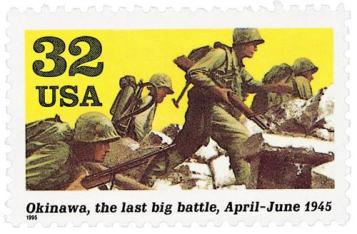



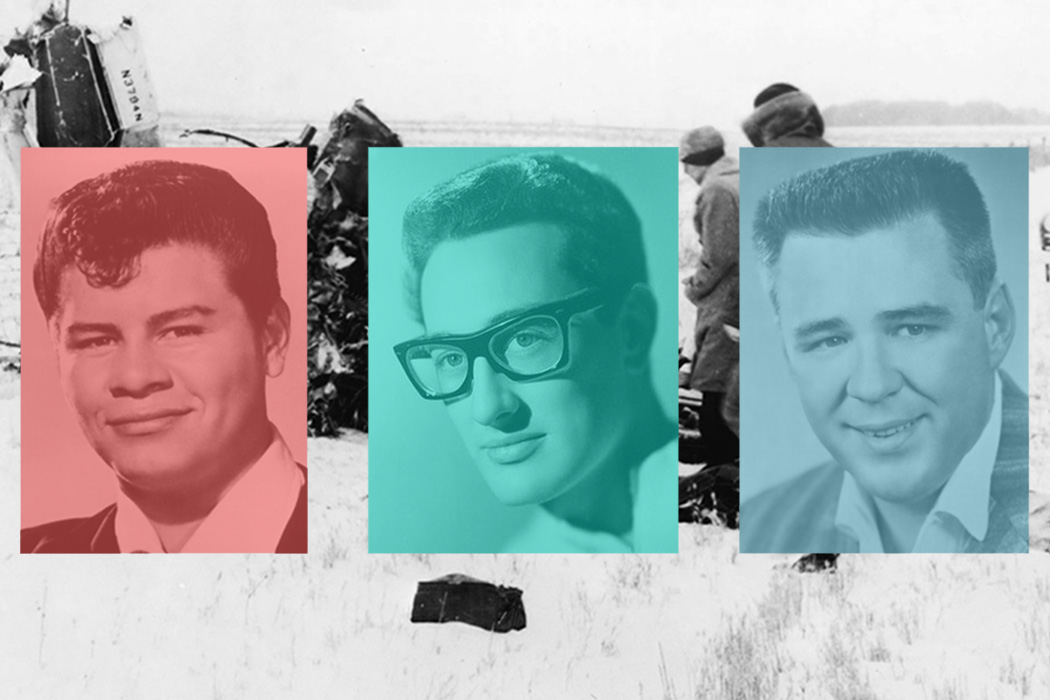
 58 years ago, his name changed as the result of a misspelling in a recording contract, Buddy Holly was headliner of the “The Winter Dance Party Tour”. Richardson, performing as the “Big Bopper” and Valenzuela, professionally known as Ritchie Valens, were on the tour, along with Dion and the Belmonts, Holly’s friend from Lubbock and fellow musician Waylon Jennings, and a young Owasso, Oklahoma Rockabilly musician and former “Crickets” band member, an enrolled member of the Cherokee Nation named Tommy Allsup.
 Holly was sick of it, and decided to charter a plane for himself and some of his guys. At least that would give them time to do laundry before the next performance.
 N3794N left the ground in a snowstorm, shortly after 1:00am on February 3. The pilot, Roger Peterson, may have been inexperienced with the instrumentation. He may have become disoriented in near-whiteout conditions. One wing hit the ground in a cornfield outside of Clear Lake and the aircraft corkscrewed into the ground, throwing the three musicians clear of the plane. There was no fire, barely a sound. Just a small aircraft swallowed whole, by a snow covered cornfield.
 A boy named Don McLean heard about the plane crash while doing his morning paper route. One day, the future singer/songwriter would pen the words “February made me shiver, with every paper I’d deliver”.

 German submarine wolf packs had already sunk several ships in these waters. Late on the night of February 2, one of the Cutters flashed flashed the light signal “we’re being followed”.
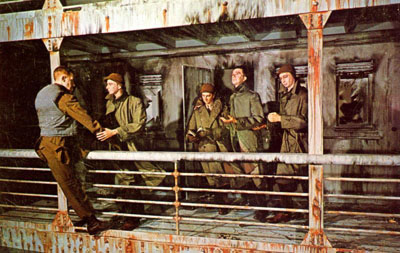 Those who could escape scrambled onto the deck, injured, disoriented, many still in their underwear as they emerged into the cold and darkness.
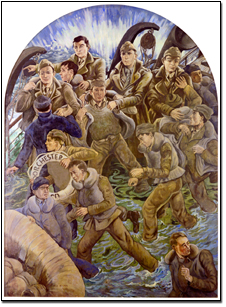 Dorchester was listing hard to starboard and taking on water fast, with only 20 minutes to live. Port side lifeboats were inoperable due to the ship’s angle. Men jumped across the void into those on the starboard side, overcrowding some to the point of capsize. Only two of fourteen lifeboats launched successfully.
 Rushing back to the scene, coast guard cutters found themselves in a sea of bobbing red lights, the water-activated emergency strobe lights of individual life jackets. Most marked the location of corpses. Of the 904 on board, the Coast Guard plucked 230 from the water, alive.
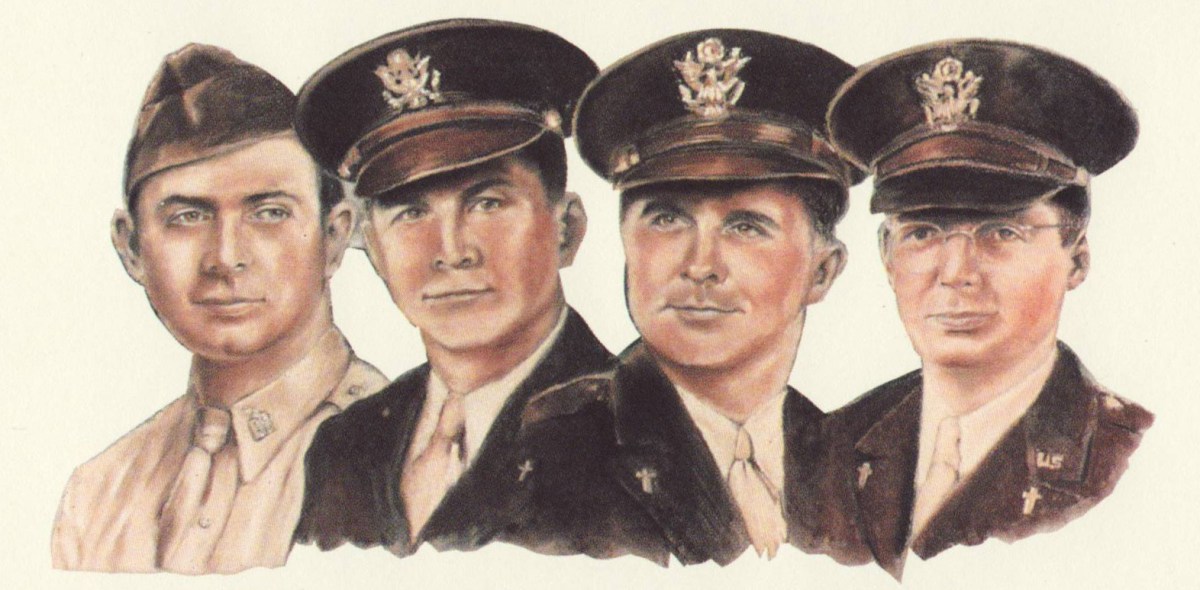
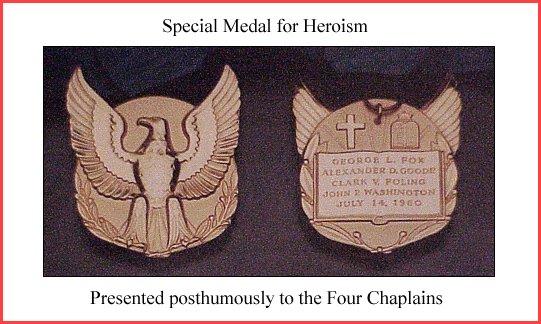 John 15:13 teaches us, “Greater love hath no man than this, that a man lay down his life for his friends”. Rabbi Goode did not call out for a Jew when he gave away his only hope for survival, Father Washington did not ask for a Catholic. Neither minister Fox nor Poling asked for a Protestant. Each gave his life jacket to the nearest man.


 Groundhogs hibernate for the winter, an ability some people of my acquaintance, would love to master. During that time, the animal’s heart rate drops from 80 beats per minute to 5 as the slumbering rodent lives off stored body fat. Another ability some of us could learn to appreciate, very much.
 But then there is the amorous woodchuck’s worst nightmare in a top hat, the groundhog hunter.
 There are those who would dispute the Gobbler’s Knob crowd and their claims to Punxsutawney Phil’s weather forecasting prowess. Alabama has “Birmingham Bill”, and Canada has Shubenacadie Sam. New York can’t seem to decide between Staten Island Chuck and New York City’s very own official groundhog, “Pothole Pete”.


 By 1967, the Johnson administration was coming under increasing criticism, for what many of the American public saw as an endless and pointless stalemate in Vietnam.
 One of the largest military operations of the war launched on January 30, 1968, coinciding with the Tết holiday, the Vietnamese New Year. In the first wave of attacks, North Vietnamese troops and Viet Cong Guerillas struck over 100 cities and towns including Saigon, the South Vietnamese capitol.
 While the Tết offensive was a military defeat for the forces of North Vietnam, the political effects on the American public, were profound. Support for the war effort plummeted, leading to demonstrations. Jeers could be heard in the streets. “Hey! Hey! LBJ! How many kids did you kill today?”
 Lyndon Johnson’s Presidency, was finished. The following month, Johnson appeared before the nation in a televised address, saying “I shall not seek, and I will not accept, the nomination of my party for another term as your president.”
 AP photographer Eddie Adams was out on the street with NBC News television cameraman Võ Sửu, looking for something interesting. The pair saw a group of South Vietnamese soldiers dragging what appeared to be an ordinary man into the road, and filmed the event.


 The couple was forced to close the restaurant in 1991. Nguyễn Ngọc Loan died of cancer, seven years later.

 There the couple may have ridden out WWII, but the war was consuming manpower at a rate unprecedented in history. Shortly after the couple’s first anniversary, Slovik was re-classified 1A, fit for service, and drafted into the Army. Arriving in France on August 20, 1944, he was part of a 12-man replacement detachment, assigned to Company G of the 109th Infantry Regiment, US 28th Infantry Division.
 of my desertion we were in Albuff [Elbeuf] in France. I came to Albuff as a replacement. They were shelling the town and we were told to dig in for the night. The following morning they were shelling us again. I was so scared, nerves and trembling, that at the time the other replacements moved out, I couldn’t move. I stayed there in my fox hole till it was quiet and I was able to move. I then walked into town. Not seeing any of our troops, so I stayed over night at a French hospital. The next morning I turned myself over to the Canadian Provost Corp. After being with them six weeks I was turned over to American M.P. They turned me loose. I told my commanding officer my story. I said that if I had to go out there again I’d run away. He said there was nothing he could do for me so I ran away again AND I’LL RUN AWAY AGAIN IF I HAVE TO GO OUT THERE. — Signed Pvt. Eddie D. Slovik A.S.N. 36896415”.
 On December 9, Slovik wrote to Supreme Allied Commander Dwight D. Eisenhower, pleading for clemency. Desertion was a systemic problem at this time. Particularly after the surprise German offensive coming out of the frozen Ardennes Forest on December 16, an action that went into history as the Battle of the Bulge. Eisenhower approved the execution order on December 23, believing it to be the only way to discourage further desertions.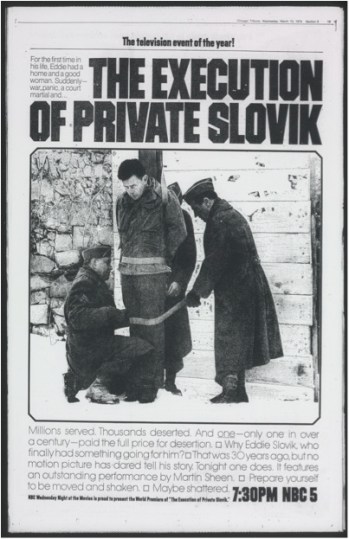
 Nick Gozik of Pittsburg passed away in 2015, at the age of 95. He was there in 1945, a fellow soldier called to witness the execution. “Justice or legal murder”, he said, “I don’t know, but I want you to know I think he was the bravest man in that courtyard that day…All I could see was a young soldier, blond-haired, walking as straight as a soldier ever walked. I thought he was the bravest soldier I ever saw.”

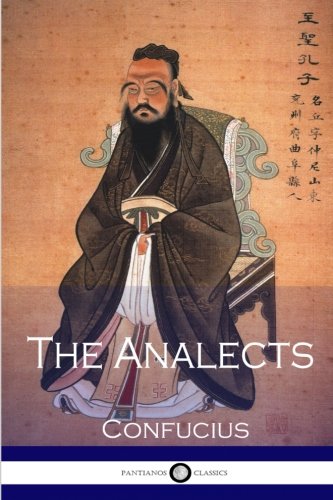 In it, a follower called Yen Yüan asked the Master about perfect virtue.
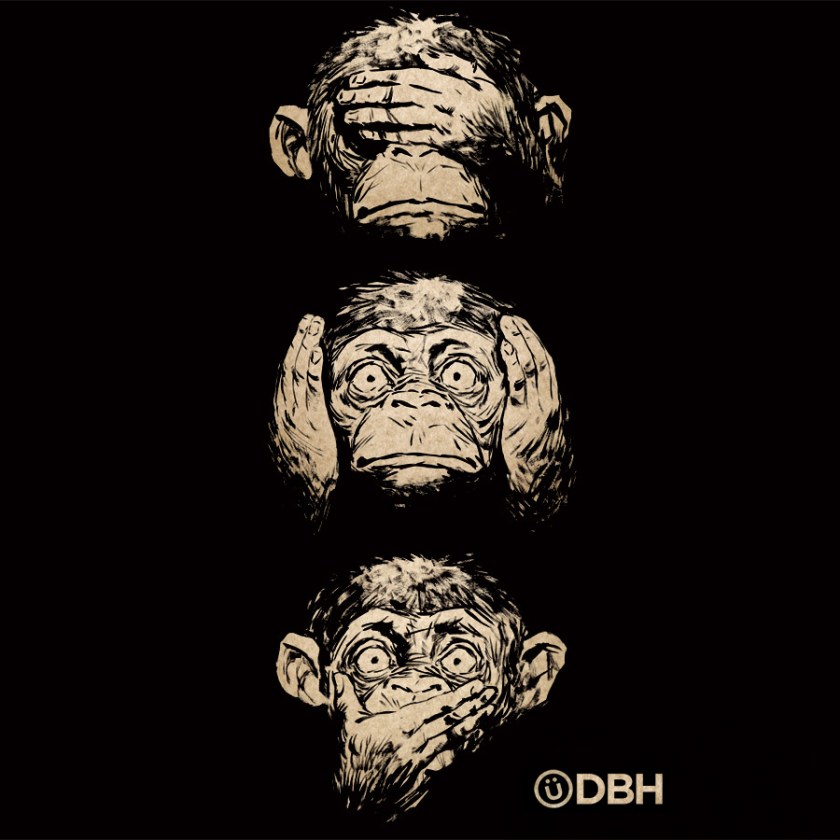 In medieval Japanese, mi-zaru, kika-zaru, and iwa-zaru translate as “don’t see, don’t hear, and don’t speak”, –zaru being an archaic negative verb conjugation and pronounced similarly to “saru”, the word for monkey.
 The first known depiction of the “Three Mystic Apes” appears over the doors of the Tōshō-gū shrine in Nikkō, Japan, carved sometime in the 17th century.
 Mohandas Karamchand Gandhi was a Hindu lawyer, a member of the merchant caste from coastal Gujarat, in western India. Today he is known by the honorific “Mahatma”, from Gandhithe Sanskrit meaning “high-souled”, or “venerable”.

 Historical Easter Eggs - Today in History
You must be logged in to post a comment.