In England, May 7 dragged on with no public statement. Large crowds gathered outside of Buckingham Palace shouting “We want the King”. Bell ringers throughout the British Isles remained on silent standby, waiting for the announcement. The British Home Office issued a circular, instructing Britons how they could celebrate: “Bonfires will be allowed, but the government trusts that only material with no salvage value will be used.”
Beginning on the 5th of May, reporters from AP, Life magazine, and others began to sleep on the floor of Eisenhower’s red brick schoolhouse headquarters, for fear of stepping out and missing the moment. Adolf Hitler was dead by his own hand, the life of the German tyrant extinguished on April 30. So it was that General Alfred Jodl came to Reims to sign the document, including the phrase “All forces under German control to cease active operations at 2301 hours Central European time on 8 May 1945“.
The signing of the instruments of surrender ending the most destructive war in history took place on Monday, May 7, at 2:41am, local time. In Europe, World War II had come to an end.The German government announced the end of hostilities right away to its own people, but most of the Allied governments, remained silent. It was nearly midnight the following day when Field Marshal Wilhelm Keitel signed a second instrument of surrender, in the Berlin headquarters of Soviet General Georgy Zhukov.
Soviet Premier Josef Stalin had his own ideas about how he wanted to handle the matter, and so the rest of the world, waited.
In England, May 7 dragged on with no public statement. Large crowds gathered outside of Buckingham Palace shouting “We want the King”. Bell ringers throughout the British Isles remained on silent standby, waiting for the announcement. The British Home Office issued a circular, instructing Britons how they could celebrate: “Bonfires will be allowed, but the government trusts that only material with no salvage value will be used.” And still, the world waited.
Prime Minister Winston Churchill finally lost patience in the early evening, saying he wasn’t going to give Stalin the satisfaction of holding up what everyone already knew. The Ministry of Information made this short announcement at 7:40pm: “In accordance with arrangements between the three great powers, tomorrow, Tuesday, will be treated as Victory in Europe Day and will be regarded as a holiday”.
The news was greeted with reserve in the United States, where the first thought was that of the Pacific. Even now, many months of savage combat lay ahead. President Harry Truman broadcast his own address to the nation at 9:00am on May 8, thanking President Roosevelt and wishing he’d been there to share the moment. Franklin Roosevelt had died on April 12 in Warm Springs, Georgia.President Truman’s speech begins: “This is a solemn but a glorious hour. I only wish that Franklin D. Roosevelt had lived to witness this day. General Eisenhower informs me that the forces of Germany have surrendered to the United Nations. The flags of freedom fly over all Europe. For this victory, we join in offering our thanks to the Providence which has guided and sustained us through the dark days of adversity”.
Victory in Europe, “VE Day” wasn’t the end of WWII, only the end of the war in Europe. Fighting in the Pacific would continue until the Japanese surrender of August 15, 1945, a date we remember to this day, as VJ Day.
The popular history of the era doesn’t talk much about the Ostfront, the Eastern Front, though this theater alone was the scene of the largest military confrontation in history. Fighting between Nazi Germany and the Soviet Union had long since taken on shades of a race war, Slav against Teuton, in a paroxysm of mutual extermination that is horrifying, even by the hellish standards of WWII.Nearly every extermination camp, death march, ghetto and pogrom now remembered as the Holocaust, occurred on the Eastern Front.
The loss of life was prodigious, through atrocity, massacre, disease, starvation and exposure. Civilians resorted to cannibalism during the 900-day siege of Leningrad. Landscapes were destroyed while entire populations fled, never to return.
Mass rape became a weapon of war. Estimates range as high as 2 million German females ages 8 to 80, were defiled by Soviet soldiers. Some as many as 60 or 70 times.
An estimated 70 million people were killed all over the world, as the result of World War II. Over 30 million of them, many of those civilians, died on the Eastern Front. Pockets of fighting would continue through the surrender in Europe. Soviet forces lost over 600 in Silesia alone, on May 9. The day after their own signing. Moscow celebrated VE Day on the 9th, with a radio broadcast from Josef Stalin himself: “The age-long struggle of the Slav nations…has ended in victory. Your courage has defeated the Nazis. The war is over.”
From kids to step kids to grandchildren, this woman has been my companion and partner, in business as in life.
She could pull off a business trip while nursing a premie German Shepherd. She could feed a crowd of 200 out of a small kitchen, and have them standing in line for more.
From Washburn to Annamaria to Cozumel island, from small business to political campaigns to fostering the worthy and needful, both two-legged and four.
We’ve been from triumph to tragedy and back again, together always, and in all ways. My woman, my traveling buddy, the love of my life breathed her last sometime in the small hours, this morning.
Across 130 Japanese prison encampments, the death rate for western prisoners was 27.1%. Seven times the death toll for allied prisoners in Nazi Germany, or Fascist Italy.
With increasing tensions between the Unites States and the empire of Japan, the “China Marines” of the Fourth Marine Regiment, “The Oldest and the Proudest”, departed Shanghai for the Philippines on November 27-28, 1941. The first elements arrived at Subic Bay on November 30.
A week later and 5,000 miles to the east, the radio crackled to life in the early – morning hours of December 7. “Air raid on Pearl Harbor. This is no drill!”
Military forces of Imperial Japan appeared unstoppable in the early months of WWII, attacking first Thailand, then the British possessions of Malaya, Singapore and Hong Kong, as well as US military bases in Hawaii, Wake Island, Guam and the Philippines.
On January 7, Japanese forces attacked the Bataan peninsula. The Fourth Marines, under Army command, were ordered to help strengthen defenses on the “Gibraltar of the East”, the heavily fortified island of Corregidor.
The prize was nothing less than the finest natural harbor in the Asian Pacific, Manila Bay, the Bataan Peninsula forming the lee shore and Corregidor and nearby Caballo Islands standing at the mouth, dividing the entrance into two channels. Before the Japanese invasion was to succeed, Bataan and Corregidor must be destroyed.
The United States was grossly unprepared to fight a World War in 1942. The latest iteration of “War Plan Orange” (WPO-3) called for delaying tactics in the event of war with Japan, buying time to gather US Naval assets to sail for the Philippines. The problem was, there was no fleet to gather. The flower of American pacific power in the pacific, lay at the bottom of Pearl Harbor. Allied war planners turned their attention to defeating Adolf Hitler.
General Douglas MacArthur abandoned Corregidor on March 12, departing the “Alamo of the Pacific” with the words, “I shall return”. Some 90,000 American and Filipino troops were left behind without food, supplies or support with which to fight off the onslaught of the Japanese 14th Army, under the command of Lieutenant General Masaharu Homma.
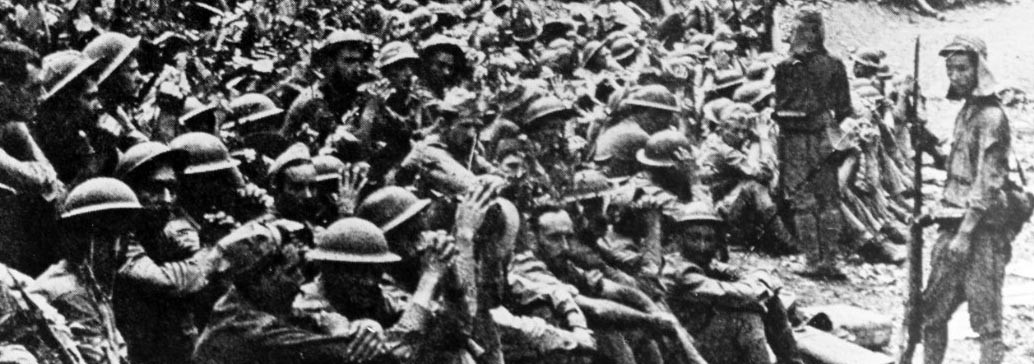
Battered by wounds and starvation, decimated by all manner of tropical disease and parasite, the 75,000 “Battling Bastards of Bataan” fought on until they could fight no more. Some 75,000 American and Filipino fighters were surrendered with the Bataan peninsula on April 9, only to begin a 65-mile, five-day slog into captivity through the unbearable heat and humidity, of the Philippine jungle.Japanese guards were sadistic. They would beat marchers and bayonet those too weak to walk. Tormented by a thirst few among us can so much as imagine, men were made to stand for hours under a relentless sun, standing by a stream from which none were permitted to drink. The man who broke ranks and dove for the water was clubbed or bayoneted to death, on the spot. Japanese tanks would swerve out of their way to run over anyone who had fallen and was too slow in getting up. Some were burned alive, others buried alive. Already crippled from tropical disease and starving from the long siege of Luzon, wanton killing and savage abuse took the lives of some 500 – 650 Americans and between 5,000 – 18,000 Filipinos.
For the survivors, the “Bataan Death March” was only the beginning of their ordeal.
United States Marine Corps 1st Lieutenant Austin Shofner came ashore back in November, with the 4th Marines. Shofner and his fellow leathernecks engaged the Japanese as early as December 12 and received their first taste of aerial bombardment, on December 29. Promoted to Captain and placed in command of Headquarters Company, Shofner received two Silver Stars by April 15 in near-constant defense against aerial attack.
For three months, defenders on Corregidor were required to resist near constant aerial, naval and artillery bombardment. All that on two scant water rations and a meager food allotment of only 30 ounces per day.
I don’t know about you. I’ve eaten Steaks, bigger than 30-ounces.
Beset as they were, seven private maritime vessels attempted to run the Japanese gauntlet, loaded with food and supplies. The MV Princessa commanded by 3rd Lieutenant Zosimo Cruz (USAFFE), was the only ship to arrive in Corregidor.
Japanese artillery bombardment intensified, following the fall of Bataan. Cavalry horses killed in the onslaught were dragged into tunnels and caves, and consumed. Japanese aircraft dropped 1,701 bombs in the tiny island during 614 sorties, armed with some 365-tons of high explosive. On May 4 alone, an estimated 16,000 shells hit the little island.
Malinta Tunnel
The final assault beginning May 5 met with savage resistance, but the outcome was never in doubt. General Jonathan Wainwright was in overall command of the defenders on Corregidor. Some 11,000 men comprised of United States Marines, Army and Navy and an assemblage of Filipino fighters. The “Malinta Tunnel” alone contained over a thousand, so sick or wounded as to be helpless. Fewer than half had even received training in ground combat techniques.
All were starved, sick, utterly exhausted. The 4th Marines was shattered, and ceased to exist as a fighting force. With the May 6 landing of Japanese tanks, General Wainwright elected the preservation of life over continued slaughter in the defense of a hopeless position. Maine Colonel Samuel Howard ordered the regimental and national colors burned to prevent their capture, as Wainwright sent a radio message, to President Roosevelt:
“There is a limit of human endurance, and that point has long been passed.”
Isolated pockets of marines fought on for four hours until at last, all was still. Two officers were sent forward with a white flag, to carry the General’s message of surrender. It was 1:30pm, May 6, 1941.Nearly 150,000 Allied soldiers were taken captive by the Japanese Empire, during World War 2. Clad in unspeakably filthy rags they were fed a mere 600 calories per day of fouled rice, supplemented only by the occasional insect or bird or rodent unlucky enough to fall into desperate hands. Disease such as malaria was all but universal as gross malnutrition led to loss of vision and unrelenting nerve pain. Dysentery, a hideously infectious disease of the large intestine reduced grown men to animated skeletons. Mere scratches resulted in grotesque tropical ulcers up to a foot in length exposing living bone and rotting flesh to swarms of ravenous insects.
The death rate for western prisoners was 27.1% across 130 Japanese prison encampments. Seven times the death toll for allied prisoners in Nazi Germany, or Fascist Italy.Given such cruel conditions it’s a wonder anyone escaped at all but it did happen. Once.
Austin Schofner and his group were moved from camp to camp. Bilibid. Cabanatuan. Davao. Throughout early 1943, Schofner and others would steal away from work details to squirrel away small food caches, in the jungle. On April 4, Captain Schofner, nine fellow Marines and two Filipino soldiers brought into the scheme to act as guides, slipped away from work parties.
Austin Conner Shofner
The group moved through the jungle over the long hours of April 5-6, dodging enemy patrols and managing to avoid detection, arriving at a remote Filipino Guerrilla Outpost on April 7. Guided by wild mountain tribesmen of the Ata Manobo, the Marines rejoined the 110th Division, 10th Military District, at this time conducting guerrilla operations against the Japanese occupiers.
Emaciated, sick and weak, these men had reached the end of an ordeal a year and one-half in the making. It would be perfectly understandable if they were to seek out the relative safety of a submarine bound to Australia, but no. These were no ordinary men. Those physically able to do so, joined the guerrillas in fighting the Japanese.
Austin Shofner and his Marines were evacuated in November 1943, aboard the submarine USS Narwhal. For the first time, Japanese atrocities came to light. The Death March, the torture, mistreatment and summary execution, of Allied POWs. The public was outraged, leading to a change in Allied war strategy. No longer would the war in the Pacific, take a back seat to the effort to destroy the Nazi war machine.
Now-Colonel Shofner volunteered to return to the Pacific where his experience helped with the rescue of 500 prisoners of the infamous POW camp at Cabanatuan on January 30, 1945.
An American military tribunal conducted after the war held Lieutenant General Homma Masaharu, commander of the Japanese invasion forces in the Philippines, guilty of war crimes. He was executed by firing squad on April 3, 1946.
Austin Shofner served in a variety of posts before retiring from the Marine Corps in 1959, with the rank of Brigadier General. He settled in Shelbyville Tennessee, two hours up the road from his hometown of Chattanooga. He died in November 1999. The senior officer and leader of the only successful escape from a Japanese Prison camp, in all WW2.
The 4th Marine Regiment was reconstituted on February 1, 1944, from members of the first marine raiders, who fought with distinction at fought with distinction in the Makin Island, Guadalcanal, Central Solomons and Bougainville. Among 30 currently serving Marine Regiments, the 4th alone has not been stationed in the continental United States since that time. If you ask the old hands from the war in the Pacific, they’ll tell you it was a big deal, when they renamed those guys, the 4th Marines.
“The Corregidor Hymn”
Written by an unknown Marine during the Battle for Corregidor. Neither it nor the Marine who wrote it, were ever seen again.
“First to jump for holes and tunnels And to keep our skivvies clean, We are proud to claim the title of Corregidor’s Marines. “Our drawers unfurled to every breeze From dawn to setting sun. We have jumped into every hole and ditch And for us the fightin’ was fun. “We have plenty of guns and ammunition But not cigars and cigarettes, At the last we may be smoking leaves Wrapped in Nipponese propaganda leaflets. “When the Army and the Navy Looked out Corregidor’s Tunnel Queen, They saw the beaches guarded by more than one Marine!”
For every wound, a balm.
For every sorrow, cheer.
For every storm, a calm.
For every thirst, a beer. – Irish toast, author unknown
Given the right combination of sugars, almost any cereal will undergo simple fermentation, due to the presence of wild yeasts in the air. It seems likely that our cave-dwelling ancestors experienced their first beer, as the result of this process.
Starch dusted stones were found with the remains of doum-palm and chamomile in the 18,000-year old Wadi Kubbaniya in upper Egypt. While it’s difficult to confirm, University of Pennsylvania archaeologist Dr. Patrick McGovern suspects, “it’s very likely they were making beer there”.
Chemical analysis of pottery shards date the earliest barley beer to 3400BC, in the Zagros Mountains of Iran.Tacitus scorned the bitter brew of Germanic barbarians. Wine seemed better suited to the sensibilities of the Roman palate. Nevertheless, letters from Roman cavalry commanders of the Roman Britain period, c. 97-103 AD, include requests for more “cerevisia“, for the legionaries.
In North and South America, native peoples brewed fermented beverages from local ingredients including agave sap, the first spring tips of the spruce tree, and maize.
Pilgrimsleft the Netherlands city of Leiden in 1620, hoping not for the frozen, rocky soil of New England, but for rich farmland and a congenial climate in the New World. Lookouts spotted the wind-swept shores of Cape Cod on November 9, 1620 and may have kept going, had there been enough beer. One Mayflower passenger wrote in his diary: “We could not now take time for further search… our victuals being much spent, especially our beer…”Prior to the drum roaster’s invention in 1817, malt was typically dried over wood, charcoal or straw fires, leaving a smoky quality which would seem foreign to the modern beer drinker. William Harrison wrote in his “Description of England” in 1577, “For the wood-dried malt, when it is brewed, beside that the drink is higher of colour, it doth hurt and annoy the head of him that is not used thereto, because of the smoke“.
Smoky flavor didn’t trouble the true beer aficionado of the age. When the Meux Brewerycasks let go in 1814 spilling nearly 400,000 gallons onto the street, hundreds of Britons hurried to scoop the stuff up in pots and pans. Some lapped it right up off of the street, doggy-style.1,389 were trampled to death and another 1,300 injured in a stampede for the suds, when someone thought the beer had run out at the coronation of Czar Nicholas II, in 1896.The 18th amendment, better known as “prohibition”, went into effect at midnight, January 16, 1920. For thirteen years it was illegal to import, export, transport or sell liquor, wine or beer in the United States.
Portable stills went on sale within a week and organized smuggling was quick to follow. California grape growers increased acreage by over 700% over the first five years, selling dry blocks of grapes as “bricks of rhine” or “blocks of port”. The mayor of New York City sent instructions on wine making, to his constituents.
Smuggling operations became widespread as cars were souped up to outrun “the law”. This would lead in time to competitive car racing, beginning first on the streets and back roads and later moving to dedicated race tracks. It’s why we have NASCAR, today.Organized crime became vastly more powerful due to the influx of enormous sums of cash. The corruption of public officials was a national scandal.
Gaining convictions for breaking a law that everyone hated became increasingly difficult. There were over 7,000 prohibition related arrests in New York alone between 1921 and 1923. Only 27 resulted in convictions.Finally, even John D. Rockefeller, Jr., a lifelong teetotaler who contributed $350,000 to the Anti-Saloon League, had to announce his support for repeal.
It’s difficult to compare rates of alcohol consumption before and during prohibition. If death by cirrhosis of the liver is any indication, alcohol consumption never decreased by more than 10 to 20 per cent.
FDR signed the Cullen–Harrison Act into law on March 22, 1933, commenting “I think this would be a good time for a beer.” The law went effect on April 7, allowing Americans to buy, sell and drink beer containing up to 3.2% alcohol.
A team of draft horses hauled a wagon up Pennsylvania Avenue, delivering a case of beer to the White House – the first public appearance of the Budweiser Clydesdales.“Dry” leaders tried to prohibit consumption of alcohol on military bases in 1941, but military authorities claimed it was good for morale. Brewers were required to allocate 15% of total annual production to be used by the armed forces. So essential were beer manufacturers to the war effort, that teamsters were ordered to end a labor strike against Minneapolis breweries. Near the end of WWII, the army made plans to operate recaptured French breweries, to ensure adequate supplies for the troops.
18 states continued prohibition at the state level after the national repeal, the last state finally dropping it in 1966. Almost 2/3rds of all states adopted some form of local option, enabling residents of political subdivisions to vote for or against local prohibition. Some counties remain dry to this day. Ironically, Lynchburg County, Tennessee, home to the Jack Daniel distillery, is one such dry county.
The night before Roosevelt’s law went into effect, April 6, 1933, beer lovers lined up at the doors of their favorite watering holes, waiting for their first legal beer in thirteen years.
A million and a half barrels of the stuff were consumed the following day, a date remembered to this day, as “National Beer Day”.
So it is that, from that day to this, we celebrate April 6 as “New Beer’s Eve”. Sláinte.
For every wound, a balm. For every sorrow, cheer. For every storm, a calm. For every thirst, a beer. – Irish toast, author unknown
Pocahontas was a pet name, variously translated as “playful one” “my favorite daughter” or “little wanton”. Early in life, she bore the secret name “Matoaka” meaning, “Bright Stream Between the Hills”. Later she was known as “Amonute” which, to the best of my knowledge, has never been translated.
In 1607, approximately 100 English colonists settled along the James River in Tidewater-area Virginia. They called their little settlement “Jamestown, the first permanent English settlement in the New World. One of the colonists, John Smith, was exploring the Chickahominy River that December, when he and two others were captured by Powhatan warriors. The Powhatan Confederacy of the Tsenacommacah comprised roughly 30 Algonquin speaking tribes, led by Paramount Chief Wahunsonacock.
Smith’s two companions were killed. John Smith himself was transported to the principle village of Werowocomoco, and brought before the Chief of the Powhatan. His head was forced onto a large stone as a warrior raised a club to bash out his brains. Pocahontas, the favorite daughter of Wahunsonacock, rushed in and placed her head on top of his, stopping the execution.
Whether it actually happened this way has been debated for centuries. One theory describes the event as an elaborate adoption ceremony, though Smith himself wouldn’t have known it at the time. Afterward, Powhatan told Smith he would “forever esteem him as his son Nantaquoud”.
The year of Pocahontas’ birth is uncertain. In the Spring of 1608, Smith described her as “a child of tenne years old”. At the time, Powhatans were commonly given multiple names, some secret and known only a select few. Names would change for important occasions, different names carrying different meanings depending on context.
Pocahontas was a pet name, variously translated as “playful one” “my favorite daughter” or “little wanton”. Early in life, she bore the secret name “Matoaka” meaning, “Bright Stream Between the Hills”. Later she was known as “Amonute” which, to the best of my knowledge, has never been translated.
The “Starving Time”, the winter of 1609-1610, killed all but 60 of the 204 settlers then in Jamestown. Survivors were about to abandon the place when the Baron De La Warr, also known as Delaware, arrived in June with new supplies and new settlers. The settlement was rebuilt. One of the new arrivals, John Rolfe, became the first tobacco planter in the area.
Pocahontas was a frequent visitor at this time. English Captain Samuel Argall took her hostage in the spring of 1613, hoping it would help him negotiate a permanent peace with her father.
Pocahontas was treated as a guest rather than a prisoner and encouraged to learn English customs. She converted to Christianity and was baptized, Lady Rebecca. Powhatan eventually agreed to terms for her release, but by then she’d fallen in love with John Rolfe. The two were married on April 5, 1614, with the blessing of Chief Powhatan and the governor of Virginia.
Lady Rebecca, 1616, oil on canvas. Artist unknown.
The marriage ensured peace between the Jamestown settlers and the Powhatan Confederacy for several years. Pocahontas gave birth to Thomas, the couple’s first child, in 1615. The couple sailed to England the following year, where she proved popular with English gentry. The couple was preparing to sail back to Virginia in March 1617 when Pocahontas sickened and died, of unknown causes. She was twenty-one years old.
Some historians believe Pocahontas suffered from an upper respiratory condition, possibly pneumonia. Others believe she died from dysentery. The favorite daughter of Paramount Chieftain Powhatan of the Attanoughkomouck is buried at the parish church of St. George in Gravesend, in England.
John Rolfe returned to Virginia and died in an Indian attack, in 1622. Following his education in England, Thomas Rolfe returned to Virginia to become a prominent citizen. Some of the socially prominent and wealthy destined to become America’s own gentry, the “First Families of Virginia”, trace their lineage through Thomas Rolfe to Pocahontas.
Later descendants of the “Indian Princess” include Glenn Strange, the actor who played Frankenstein in three Universal films during the 1940s and the character Sam Noonan, the popular bartender in the CBS series, “Gunsmoke”. Astronomer Percival Lowell is a direct descendant of Pocahontas, as are Las Vegas performer Wayne Newton and former First Lady Edith Wilson, whom some describe as the first female President of the United States. But that must be a story for another day.
At a recent event honoring Native American code talkers, President Donald Trump revived his pet nickname for Massachusetts Senator Elizabeth Warren, who has claimed Native American ancestry but has thus far, embarrassingly proven but 1/1,024th.
Predictably, Washington Post editorial writers were incensed: “Trump’s repeated reference to “Pocahontas” is racist first of all because it’s intended as a pejorative. Trump does not like Warren. It’s also racist because it seizes on a stereotypical Native American name to refer to an entire race — like calling an Asian man “Jackie Chan” or a black man “Frederick Douglass” (one of the president’s favorites). Worse yet, Trump is mushing together his tribes: At an event to honor Navajo heroes, he used the name of a Powhatan woman to disparage a senator who claimed Cherokee ancestry“.
Matoaka, also known as Amonute, daughter of the Paramount Chieftain Powhatan of the Attanoughkomouck who called her “Pocahontas” would be surprised I imagine, to learn that the Washington Post regards her name as a racial slur.
Since 1937, the Tomb of the Unknown Soldier has been under 24/7/365 guard, heedless of hurricanes, howling blizzards and bone-chilling cold. Guards come from the 3rd Infantry Regiment, “The Old Guard”.
Otto von Bismarck, the German statesman who masterminded the unification of Germany in 1871 and served until 1890 as its first Chancellor, once said “If a general war begins, it will be because of some damn fool thing in the Balkans”.
Bismarck got his damn fool thing on June 28, 1914 when a tubercular 19-year-old leveled a revolver in Sarajevo and murdered the heir-apparent to the Austro-Hungarian throne Archduke Franz Ferdinand and his wife Sophie, Duchess of Hohenberg.
What followed could have been a regional conflict at worst, a local squabble between Austria-Hungary and Serbia, as the two settled issues going beyond the scope of this essay. Instead, mutually entangling national alliances brought about mobilization timetables moving vast armies according to predetermined schedules. Deep and abiding mistrust ensured that none would be the first to blink.
The cataclysm of the next four years would destroy a generation, and lay waste to a continent.The catastrophe could have been averted as late as the last day of July. By the first of August, mutual distrust had gone past the point of no return. By the time it was over, 18 million were dead or vanished and presumed dead, another 23 million, maimed.
The United States entered the conflict on April 2, 1917, leading to casualties of its own numbering 321,467.
The idea of honoring the unknown dead of the “War to End Wars” originated during the war itself, in Europe. A British Commonwealth soldier was the first to be so honored, laid to rest in Westminster Abbey on Armistice day, November 11, 1920.
Private Auguste Thien of the 123e Régiment d’Infantrie had the honor of final selection for the French Unknown Soldier. Today that single grave lies under the Arch of Triumph. The eternal flame above was first kindled by French Minister for War Andre Maginot, on November 11, 1923. That flame is re-lit each night at twilight, in solemn remembrance of the millions of French heroes who went to their final rest, in places unknown.
Left: ‘The Tomb of The Unknown Warrior’, Westminster Abbey, London. Right: French Tomb of the Unknown Soldier, Arc de Triomphe, Paris
In 1921, the United States followed Great Britain and France in honoring its own unknown dead. A single unidentified soldier was selected each from the Aisne-Marne, Meuse-Argonne, Somme and St. Mihiel American cemeteries, and carefully examined, lest there be any clue as to identity. The remains were then transported to the Hotel de Villes, where Sergeant Edward F. Younger, himself a wounded combat veteran and recipient of the Distinguished Service Medal, had the honor of performing the final selection.
Edward F Younger recreates his selection of the Unknown
Passing between two lines of French and American officials, Younger entered the room. Slowly, he circled the four caskets three times, finally stopping at the third from the left. There Sgt. Younger placed a spray of white roses, drew himself to attention, and saluted.
With flags at half-mast and stern bedecked with flowers, the cruiser USS Olympia received the precious cargo and returned to the United States, arriving in the Washington Navy Yard on November 9, 1921. There the flag draped casket was solemnly transferred to the United States Army, and placed under guard of honor on the same catafalque which had once borne the bodies of three slain Presidents: Abraham Lincoln, James Garfield, and William McKinley.On November 11, Armistice Day, the casket was removed from the Rotunda of the Capitol and escorted under military guard to the amphitheater at Arlington National Cemetery. In a simple ceremony, President Warren G. Harding bestowed on this unknown soldier the Medal of Honor, and the Distinguished Service Cross.
Special representatives of foreign nations then bestowed, each in their turn, their nation’s highest military decoration: the Croix de Guerre of Belgium, the English Victoria Cross, le Medaille Militaire & Croix de Guerre of France, the Italian Medaglia al Valor Militare, the Romanian Virtutes Militara, the Czechoslavak Československý Vojnový Kríž 1918, and the Polish Virtuti Militari.With three salvos of artillery, the rendering of Taps and the National Salute, the ceremony was brought to a close and the 12 ton marble cap placed over the tomb of the unknown. The west facing side bears this inscription:
Here Rests In
Honored Glory
An American Soldier
Known But To God
Two years later, a civilian guard was placed on the tomb of the unknown. A permanent Military guard would take its place in 1926.
Since 1937, the Tomb of the Unknown Soldier has been under 24/7/365 guard, heedless of hurricanes, howling blizzards and bone-chilling cold. Guards come from the 3rd Infantry Regiment, “The Old Guard”. Established in 1784, the Old Guard is the oldest active infantry unit in the United States military.Every movement of the guard is a series of “twenty-ones” in reference to the 21-gun salute, a military tradition dating to the 14th century and universally recognized as the highest honor, among nations.
Tombguard.org explains: “The Sentinel does not execute an about face, rather they stop on the 21st step, then turn and face the Tomb for 21 seconds. They then turn to face back down the mat, change the weapon to the outside shoulder, mentally count off 21 seconds, then step off for another 21 step walk down the mat. They face the Tomb at each end of the 21 step walk for 21 seconds. The Sentinel then repeats this over and over until the Guard Change ceremony begins“.
In 1919, both AEF commander General John Pershing and Allied supreme commander Ferdinand Foch of France were adamantly opposed to the treaty at Versailles. Germany had been defeated, they argued, but not well and truly Beaten. The failure to defeat Imperial Germany on German soil the pair believed, would once again lead the three nations to war.
Meanwhile in Germany, the “Stab in the Back” fiction destined to become Nazi party mythology, was already taking shape.
On reading the treaty, Foch said “This isn’t a peace. It’s a cease-fire for 20 years!”
Begun on November 1, 1955, the conflict lasted 19 years, 5 months and a day. On March 29, 1973, two months after signing the Paris Peace accords, the last US combat troops left South Vietnam as Hanoi freed the remaining POWs held in North Vietnam.
Since the late 19th century, the area now known as Laos, Cambodia and Vietnam was governed as a French Colonial territory. “French Indo-China” came to be occupied by the Imperial Japanese after the fall of France, at the onset of WWII. There arose a nationalist-communist army during this period, dedicated to throwing out the Japanese occupier. It called itself the “League for the Independence of Vietnam”, or “Viet Minh”.
France re-occupied the region following the Japanese defeat which ended World War 2, but soon faced the same opposition from the army of Ho Chi Minh and Vo Nguyen Giap.
What began as a low level rural insurgency, later became a full-scale modern war when Communist China entered the fray in 1949.
The disastrous defeat of French forces at Dien Bien Phu in 1953 led to French withdrawal from Vietnam, the Geneva Convention partitioning the country into the communist “Democratic Republic of Vietnam” in the north, and the State of Vietnam in the south led by Emperor Bao Dai and Prime Minister Ngo Dinh Diem.
Communist forces of the north continued to terrorize Vietnamese patriots in north and south alike, with aid and support from communist China and the Soviet Union.
The student of history understands that nothing happens in a vacuum. US foreign policy is no exception. International Communism had attempted to assert itself since the Paris Commune rebellion of 1871, and found its first major success with the collapse of czarist Russia in 1917.
US policy makers feared a “domino” effect, and with good cause. The 15 core nations of the Soviet bloc were soon followed by Eastern Europe, as Poland, Bulgaria, Romania, Hungary and Czechoslovakia fell each in their turn, into the Soviet sphere of influence. Germany was partitioned into Communist and free-enterprise spheres after WWII, followed by China, North Korea and on across Southeast Asia.
Communism is no benign ideology, morally equivalent to the free market west. Current estimates of citizens murdered by Communist party ideology in the Soviet Union alone, range from 8 to 61 million during the Stalinist period.
Agree or disagree with policy makers of the time that’s your business, but theirs was a logical thought process. US aid and support for South Vietnam increased as a way to “stem the tide” of international communism, at the same time that French support was pulling back. By the late 1950s, the US was sending technical and financial aid in expectation of social and land reform. By 1960, the “National Front for the Liberation of South Vietnam” (“NLF”, or “Viet Cong”) had taken to murdering Diem supported village leaders. JFK responded by sending 1,364 American advisers into South Vietnam, in 1961.The war in Vietnam pitted as many as 1.8 million allied forces from South Vietnam, the United States, Thailand, Australia, the Philippines, Spain, South Korea and New Zealand, against about a half million from North Vietnam, China, the Soviet Union and North Korea. Begun on November 1, 1955, the conflict lasted 19 years, 5 months and a day. On March 29, 1973, two months after signing the Paris Peace accords, the last US combat troops left South Vietnam as Hanoi freed the remaining POWs held in North Vietnam.
Even then it wasn’t over. Communist forces violated cease-fire agreements before they were even signed. Some 7,000 US civilian Department of Defense employees stayed behind to aid South Vietnam in conducting an ongoing and ultimately futile war against communist North Vietnam.
The last, humiliating scenes of the war played themselves out on the roof of the US Embassy in Saigon on April 29 – 30, 1975, as those able to escape boarded helicopters, while communist forces closed around the South Vietnamese capital.
The “Killing Fields” of Cambodia followed between 1975 – ‘79, when the “Khmer Rouge”, self-described as “The one authentic people capable of building true communism”, murdered or caused the deaths of an estimated 1.4 to 2.2 million of their own people, out of a population of 7 million. All to build the perfect, agrarian, “Worker’s Paradise”.
Imagine feeling so desperate, so fearful of the alien ideology invading your country, that you convert all your worldly possessions and those of your family into a single diamond, and bite down on that stone so hard it embeds in your shattered teeth. Forced to flee for your life and those of your young ones, you take to the open ocean in a small boat. All in the faint and desperate hope, of getting out of that place.
That is but one story among more than three million “boat people”. Three million from a combined population of 56 million, fleeing the Communist onslaught in hopes of temporary asylum in other countries in Southeast Asia or China.
They were the Sino-Vietnamese Hoa, and Cambodians fleeing the Khmer Rouge. Ethnic Laotians, Iu Mien, Hmong and other highland peoples of Laos. The 30 or so Degar (Montagnard) tribes of the Central Highlands, so many of whom had been our steadfast allies in the late war. Over 2.5 million of them were resettled, more than half to the United States. The other half went mostly to Canada, Europe and South Pacific nations.
A half-million were repatriated, voluntarily or involuntarily. Hundreds of thousands vanished in the attempt to flee, never to be seen again.The humanitarian disaster that was the Indochina refugee crisis was particularly acute between 1979 – ’80, but reverberations continued into the 21st century.
Graduating UMass Lowell in 1972 with a degree in nuclear engineering, John Ogonowski joined the United States Air Force. During the war in Vietnam. The pilot would ferry equipment from Charleston, SC to Southeast Asia, sometimes returning with the bodies of the fallen aboard his C-141 transport aircraft.
Today, we remember him as Senior Captain on American Airlines flight 11, one of thousands murdered by Islamist terrorists, on September 11, 2001. When he wasn’t flying jumbo jets, John Ogonowski was a farmer. Until he was killed in his cockpit, John mentored Cambodian refugees turned farmers on his Dracut, Massachusetts “White Gate Farm“, helping them grow familiar crops, in an unfamiliar climate. Just as those old Yankee farmers had once mentored his Polish immigrant ancestors, generations before.
Military Working Dogs (MWDs) served with every service branch in Vietnam, mostly German Shepherds and Dobermans but many breeds were accepted into service.
It is estimated that 4,900 dogs served between 1964 and 1975. Detailed records were kept only after 1968, documenting 3,747.
A scant 204 dogs ever left during the ten-year period. Some remained in the Pacific while others returned to the United States. Not one ever returned to civil life. An estimated 350 dogs were killed in action as were 263 handlers. Many more were wounded. As to the rest, many were euthanized, or left with ARVN units, or simply abandoned, as “surplus equipment”.
There would be no war dog adoption law until 2000 when WWII Marine War Dog Platoon Leader and Veterinarian Dr. William Putney made it happen, with assistance from Congressman Roscoe Bartlett of Maryland.
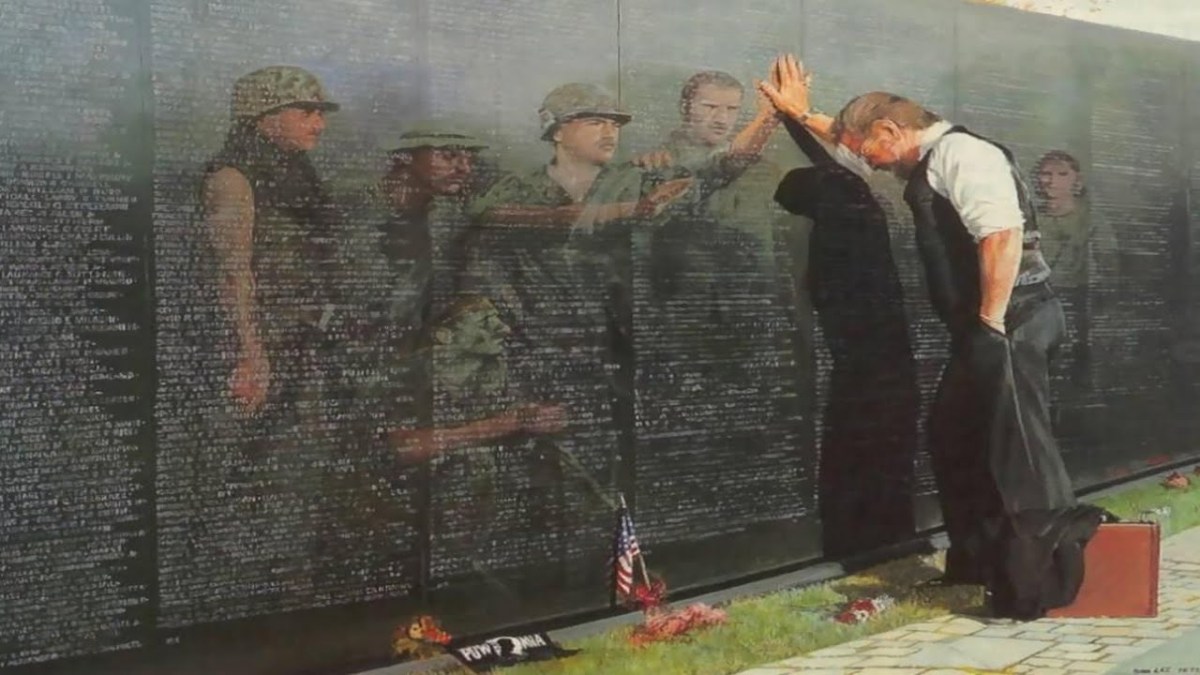
The day it opened in 1982 there were 57,939 names inscribed on the Vietnam Memorial Wall, Over the years, the names of military personnel who succumbed to wounds sustained in the war, were added to the wall. As of Memorial Day 2015, there are 58,307.
In the end, US public opinion would not sustain what too many saw as an endless war in Vietnam. We feel the political repercussions, to this day. I was ten at the time of the Tet Offensive in 1968. Even then I remember the searing sense of disgrace and humiliation, at the behavior of some of my fellow Americans.
In 2012, President Barack Obama declared a one-time occasion proclaiming March 29 National Vietnam War Veterans Day and calling on “all Americans to observe this day with appropriate programs, ceremonies, and activities.”
In 2017, Senator Pat Toomey (R-PA) and Joe Donnelly (D-IN) co-sponsored a measure to declare March 29 Vietnam Veterans Day from that day forward, to honor US service members who served in the war in southeast Asia. The measure passed the United States Senate on February 3 and the House of Representatives on March 21. President Donald Trump signed the measure into law on March 28 designating the following day and every March 29 henceforward, Vietnam Veteran’s Day.
The recognition and gratitude due those who served in an unpopular war, was long overdue
For the United States it was First Blood. The first American to die in the “War to End all Wars”.
One-hundred and five years ago, the “War to end all Wars” had not yet entered the 9th month. The war of mobility from 1914 was gone now, replaced by the hundreds of miles of trench-works, destined to characterize the remainder of the war.
Off the battlefield, German and British governments sought control over the waters and thus to choke the economic life, each out of the other.
In 1914, both Germany and the United Kingdom were heavily dependent on foreign trade, not only to feed their own war industries but also to feed civil populations, back at home.
After the war, the German Board of Public Health claimed 763,000 civilian deaths due to disease and starvation, specifically brought about by the blockade. Ten years later, one academic study put the number at 424,000.
In theory, neutral America was happy to trade with any and all comers but in practice, Britannia ruled the waves, her deep-water surface fleet holding all but undisputed superiority over Atlantic trade routes, the English Channel, and the North Sea.
Leon Thrasher, the 1st American killed in WW1
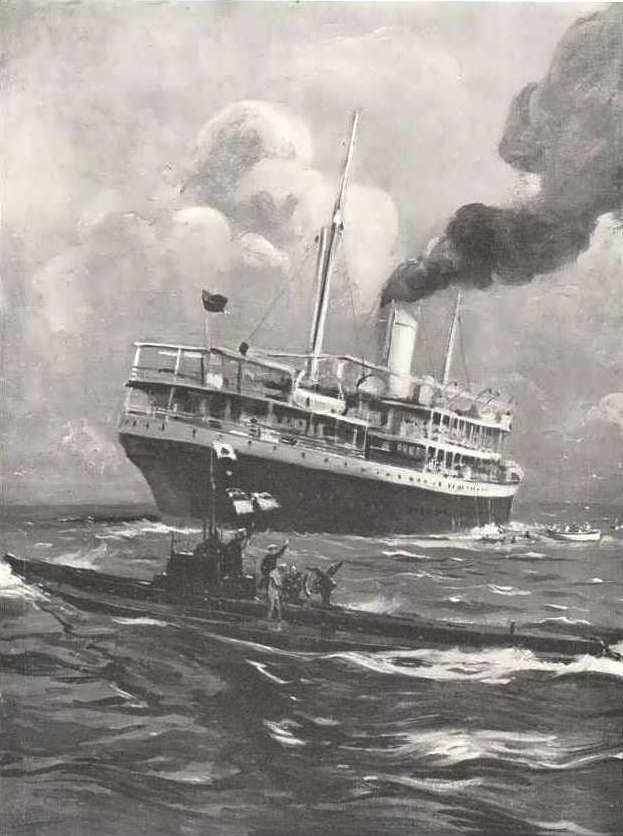
To the Kaiser’s way of thinking, blockade parity was to come in the shape of a submarine.
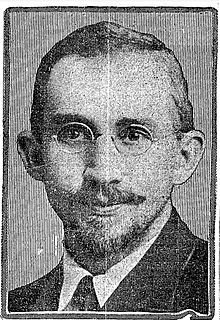
Leon Chester Thrasher was an American mining engineer from Hardwick, Massachusetts. That March, the 31-year-old was leaving Liverpool, returning to a job on the Gold Coast of British West Africa aboard the cargo-passenger ship RMS Falaba.
The German submarine U-28 stopped Falaba on this day in 1915, later sinking the vessel to the bottom with a single torpedo and killing 104, including Leon Thrasher.
For the United States it was First Blood. The first American to die in the “War to End all Wars”.
German policy varied over the course of the war, from unrestrained submarine warfare, to strict adherence with international law. U-28 Commander Freiherr Georg-Günther von Forstner claimed to have given Falaba 23 minutes to evacuate, cutting that short and firing his torpedo only in response to Falaba’s distress rockets and wireless pleas for assistance.
British authorities claim Falaba was given only 7 minutes’ warning. Hardly enough to evacuate 245 passengers and crew.
The death of the first American in the European war set off a diplomatic row which threatened for a time to bring the Americans into the war. American newspapers called it the “Thrasher Incident”, denouncing the sinking as a “massacre”. An act of “piracy”.
Germans claimed that secondary explosions within Falaba’s hull proved her to be anything but neutral, carrying some 13*tons of contraband ammunition, intended to kill German boys on European battlefields. Eyewitness accounts failed to settle the matter, but many tended toward the German view.President Woodrow Wilson stayed his hand, winning re-election the following year with the slogan, “He Kept Us Out of War”.
What remained of Leon Thrasher washed ashore on the coast of Ireland in July 1915, following 106 days in the water. Authorities initially believed him to be a victim of the RMS Lusitania sinking, designating the remains, Body No. 248.
The U-boat U-20 had torpedoed the Cunard liner RMS Lusitania off the coast of Ireland only 40 days earlier killing 1,198, 124 of whom were Americans. The US came close to the brink of war that time too, but the last and final straw would not come for another two years.
The United States entered the war in April 1917 as a result of the resumption of unrestricted submarine warfare and a German telegram, to the government of Mexico.
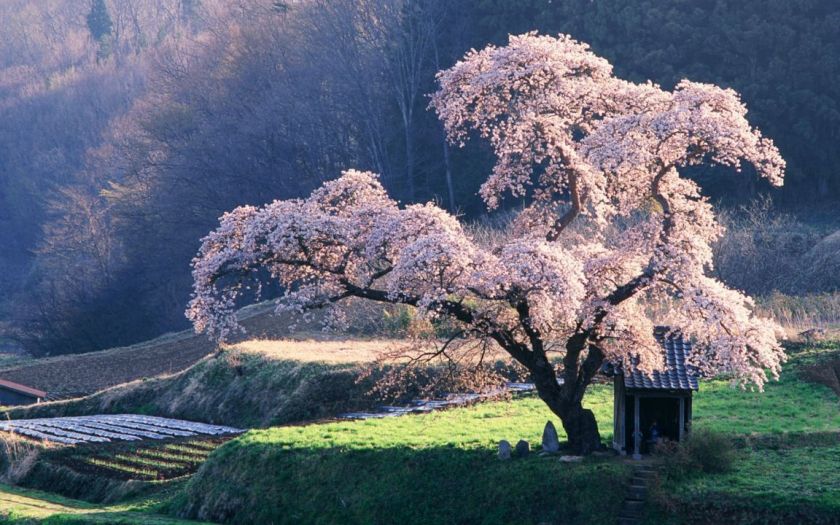
During World War II, aerial bombardment laid waste to Tokyo and its surrounding suburbs. After the war, cuttings from the cherry trees of Washington were sent back to Japan, to restore the Tokyo collection.
George Hawthorne Scidmore was a career diplomat, serving assignments throughout the Asian Pacific between 1884 and 1922. Eliza Ruhamah Scidmore was as accomplished as her brother: American author and socialite, journalist and world traveler. She was the first female board member of the National Geographic Society.
Frequent visits with her brother led to a passionate interest in all things Japanese, most especially the Japanese cherry, Prunus serrulata, commonly known as the Sakura. The Japanese blossoming cherry tree. She called them “the most beautiful thing in the world”.
In January 1900, President William McKinley summoned Federal judge William Howard Taft to Washington, for a meeting.
President and 1st Lady William Howard Taft
Taft hoped to discuss a Supreme Court appointment, but it wasn’t meant to be. One day, judge Taft would get his wish, becoming the only man in United States history to serve both as President, and as Chief Justice of the Supreme Court.
For now, the American war in the Philippines was ongoing. Judge Taft was bound for the Pacific, to head up a commission to organize civilian self-government in the island nation.
While the future President labored in the Philippines, Helen Herron Taft took up residence in Japan, where she came to appreciate the beauty of the native cherry trees.
Years later, the Japanese Consul in New York learned of the First Lady’s interest in the Sakura and suggested a gift from the city of Tokyo to the government of the United States. A grove of Japanese cherry trees,
For Eliza Scidmore, it was a dream some 34 years, in the making. The people and the government of Japan would present this gift to the government and the people, of the United States. It was Eliza Scidmore who raised the money, to make it all happen.
On March 27, 1912, the Viscountess Chinda, wife of the Japanese ambassador to the United States joined First Lady Helen Taft, in planting two Japanese Yoshino cherry trees on the bank of the Potomac River, near the Jefferson memorial.
Those two ladies planted the first two trees, in a formal ceremony. By the time the workmen were through, there would be thousands of them.
This was the second such effort. 2,000 trees had arrived in January 1910, but these had not survived the journey. So it was a private Japanese citizen, donated the funds to transport this new batch of trees.
3,020 specimens were taken from the bank of the Arakawa River in the Adachi Ward suburb of Tokyo, to be planted along the Potomac River Basin and White House grounds.
The beautiful March blossoms were overwhelmingly popular with visitors to the Washington Mall. In 1934, city commissioners sponsored a three-day celebration of the blossoming cherry trees, which grew into the annual Cherry Blossom Festival.
During World war II, aerial bombardment laid waste to Tokyo and its surrounding suburbs. After the war, cuttings from the cherry trees of Washington were sent back to Japan, to restore the Tokyo collection.
Cherry Trees along the Arakawa
It’s not clear to me, if the trees which grace the Arakawa River today are entirely composed from the Potomac collection, or some combination of American and native stock. After the cataclysm of war in the Pacific, I’m not sure it matters. That might even be the whole point.
For the media, the business model depends on renting an audience to a sponsor. Nothing sells like “controversy” and they were going to squeeze this one, for all it was worth. Even if they were the ones who started it, in the first place.
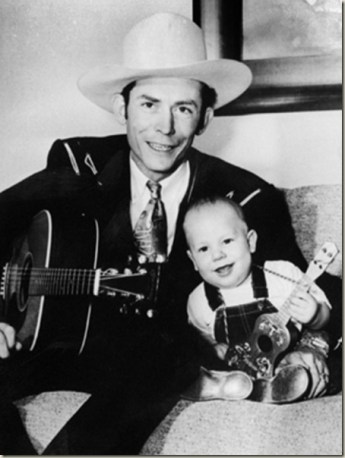
Randall Hank Williams was born May 26, 1949 in Shreveport, Louisiana, son of the country singer/songwriter, Hiram King “Hank” Williams.
The elder Williams has been described as “One of the most significant and influential American singers and songwriters of the 20th century”. Impressive for a man who could neither read nor notate music and died, never having reached the age of 30.
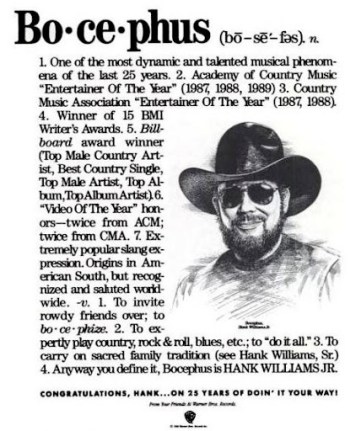
Dad called the younger Williams “Bocephus” after the ventriloquist’s dummy used by Grand Ole Opry comedian Rod Brasfield.
Hank Williams climbed into the back seat of his powder blue Cadillac on New Years’ Day, 1953. College student Charles Carr was at the wheel.
A lifelong victim of drug and alcohol abuse, the singer/songwriter was Liquored up as usual and abusing morphine, the pair heading west from a hotel room in West Virginia, to a concert venue in Ohio.
Carr became concerned when things got quiet back there – too quiet – and pulled over at 5:30 in the morning. Hank Williams was pronounced dead, a short time later. He was 29. All police found in that Cadillac, were empty beer cans and handwritten, unfinished song lyrics.
For little Bocephus, the apple didn’t fall far from the musical tree. The younger Williams was raised by his mother Audrey, who encouraged the boy to copy his father’s dress and musical style. “Hank Williams Jr.” made his stage debut in Swainsboro Georgia on March 22, 1958. He was eight years old.
Some of the top musicians, singers and songwriters of the era came to visit the family: Johnny Cash, Fats Domino, Earl Scruggs, and Jerry Lee Lewis, to name a few. Each taught Bocephus a little of their favorite instruments, and musical styles.
Williams was nearly killed in 1975, while climbing Ajax Peak in Montana. The snow collapsed beneath him, plunging him near-500 feet to the rocks below. There were multiple skull and facial fractures. Williams required several reconstructive surgeries, and had to learn to talk, and sing, all over again. The signature look of beard, sunglasses and cowboy hat have all become part of his brand, but it all began to hide the dreadful scars of that mountain climbing accident.
Bocephus’ work in the 1960s and ’70s earned him a string of country music hits, but he wanted to be more than just a “Hank Williams impersonator”.
A prodigiously talented musician in his own right, Williams’ repertoire includes guitar, bass guitar, upright bass, steel guitar, banjo, dobro, piano, keyboards, harmonica, fiddle, and drums.
The country music establishment was slow to accept the new sound, but Hank Williams Jr. would not be denied. Sometimes recording and releasing two albums a year, Williams released 21 albums between 1979 and 1990, all certified “gold” by the Recording Industry Association of America. There were 44 Top Ten singles on the Billboard Country charts, including 10 No. 1 singles over the course of his career.
“Directed by John Goodhue, the music video for the song features artists such as George Jones driving a riding mower; Willie Nelson and Waylon Jennings playing poker; Little Jimmy Dickens and Paul Williams carrying a keg of beer; Cheech and Chong stumbling out of a smoke-filled limousine; William Lee Golden (of The Oak Ridge Boys) hitchhiking; Duane Allen (The Oak Ridge Boys) as a chauffer; and George Thorogood and the Delaware Destroyers entertaining other celebrities like Mel Tillis, Kris Kristofferson, Grandpa Jones, Porter Wagoner, Jim Varney, at Hank Jr.’s “party pad out in the woods.” At the end of the video, a ghostly Cadillac flies into the night sky, referencing the fact that his father, Hank Williams, Sr., died while riding in a Cadillac”. – H/T Wikipedia
In 1982, Bocephus had nine albums on the Billboard Top Country Albums chart, all at the same time.
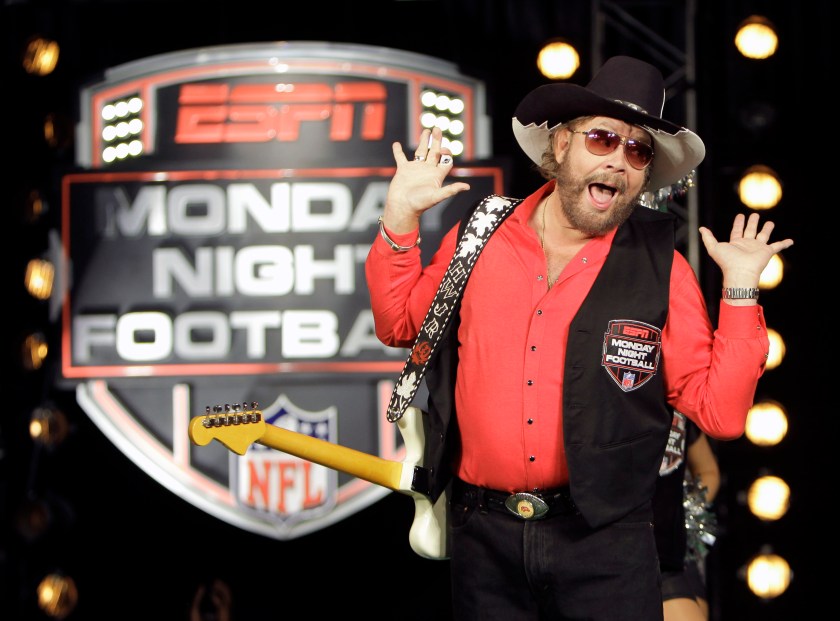
For decades, every sports fan knew. When “All My Rowdy Friends Are Coming Over Tonight” came over the television, it was time for Monday night Football.
In an October 2011 interview with Fox News’ “Fox & Friends”, Williams described a June golf match between then-President Barack Obama and Speaker John Boehner as “one of the biggest political mistakes ever”. Asked to explain, Williams said, “Come on. That’d be like Hitler playing golf with Netanyahu … in the shape this country is in?”
The media outrage machine cranked and sputtered to life. First Amendment be damned, such language would not do. First to go was the distinction, between metaphor and literal fact. ESPN pulled the song three days later. It was the first Monday night game, of the season.
Williams himself described the analogy as “…extreme – but it was to make a point…I was simply trying to explain how stupid it seemed to me – how ludicrous that pairing was. They’re polar opposites, and it made no sense. They don’t see eye-to-eye and never will.”
No matter. ESPN announced that Williams and his song would be pulled from future broadcasts. ABC and the National Football League, were quick to pile on.
For the media, the business model depends on renting an audience to a sponsor. Nothing sells like “controversy” and they were going to squeeze this one, for all it was worth. Even if they were the ones who started it, in the first place.
There would be a heartfelt apology, but no matter. The “Cancel Culture’ or whatever you want to call it, had done its work.
“I have always been very passionate about politics and sports, and this time it got the best or worst of me. The thought of the leaders of both parties jukin’ and high fivin’ on a golf course, while so many families are struggling to get by, simply made me boil over and make a dumb statement. I am very sorry if it offended anyone. I would like to thank all my supporters. This was not written by some publicist.”- Hank Williams, Jr.
When it was over, Hank Williams, Jr. had the last word. Bocephus responded with a song of his own, criticizing President Obama, ESPN and Fox & Friends. He called it, “Keep the Change”.
Over the next two days, the song was downloaded more than 180,000 times.
In the song lyrics, Bocephus and all his rowdy friends were “Outta there”. Outta there, but not for good. The song was quietly re-instated, in 2017.


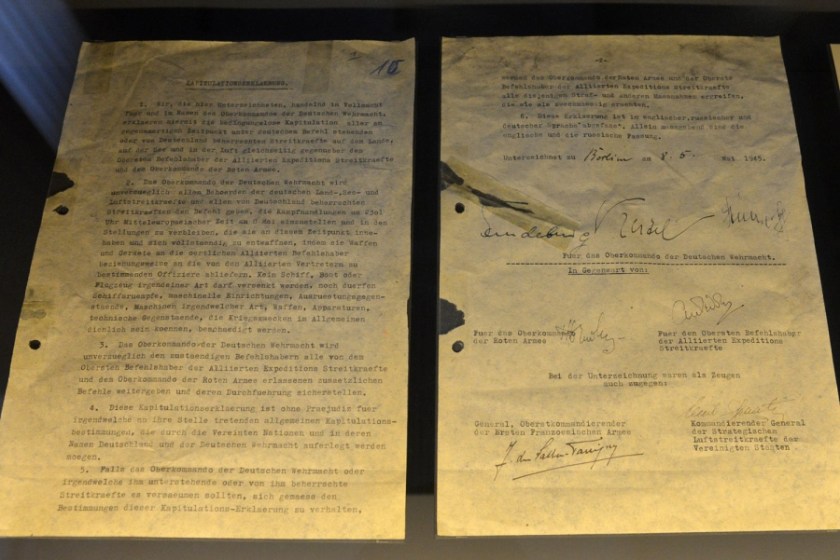 The German government announced the end of hostilities right away to its own people, but most of the Allied governments, remained silent. It was nearly midnight the following day when Field Marshal Wilhelm Keitel signed a second instrument of surrender, in the Berlin headquarters of Soviet General Georgy Zhukov.
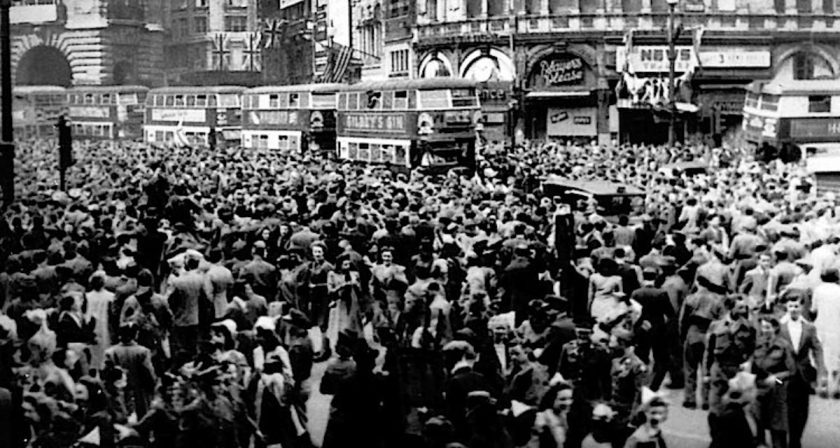 And still, the world waited.
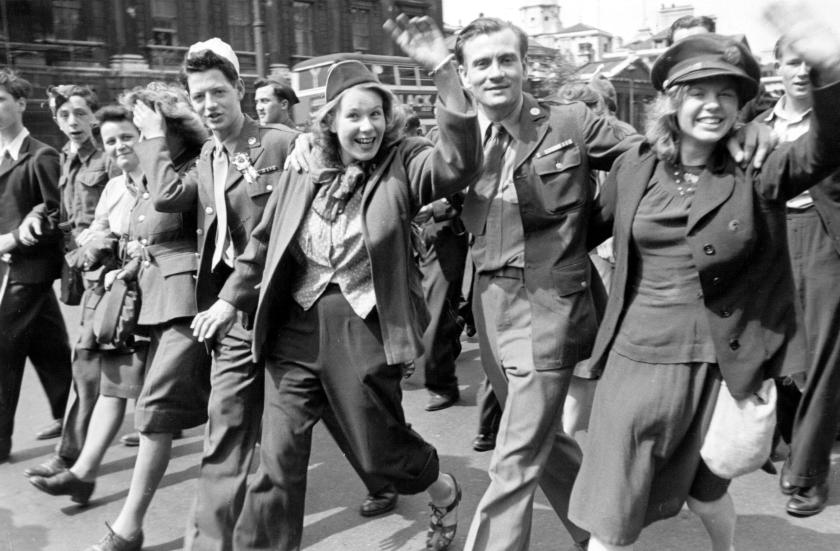 President Truman’s speech begins: “This is a solemn but a glorious hour. I only wish that Franklin D. Roosevelt had lived to witness this day. General Eisenhower informs me that the forces of Germany have surrendered to the United Nations. The flags of freedom fly over all Europe. For this victory, we join in offering our thanks to the Providence which has guided and sustained us through the dark days of adversity”.
 Nearly every extermination camp, death march, ghetto and pogrom now remembered as the Holocaust, occurred on the Eastern Front.

 From kids to step kids to grandchildren, this woman has been my companion and partner, in business as in life.
 The United States was grossly unprepared to fight a World War in 1942. The latest iteration of “War Plan Orange” (WPO-3) called for delaying tactics in the event of war with Japan, buying time to gather US Naval assets to sail for the Philippines. The problem was, there was no fleet to gather. The flower of American pacific power in the pacific, lay at the bottom of Pearl Harbor. Allied war planners turned their attention to defeating Adolf Hitler.
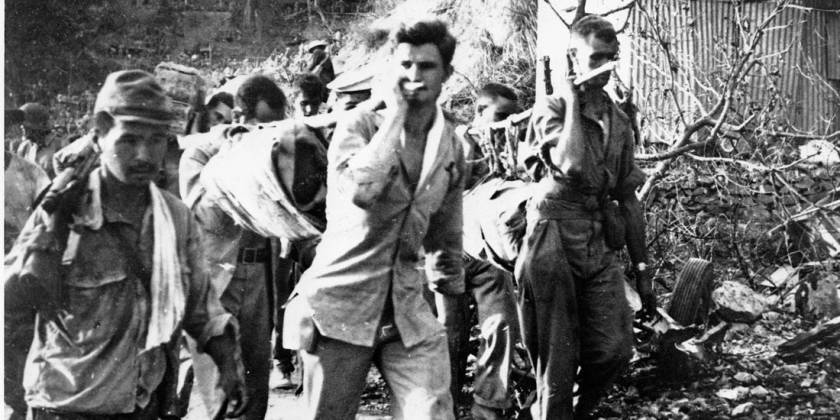 Japanese guards were sadistic. They would beat marchers and bayonet those too weak to walk. Tormented by a thirst few among us can so much as imagine, men were made to stand for hours under a relentless sun, standing by a stream from which none were permitted to drink. The man who broke ranks and dove for the water was clubbed or bayoneted to death, on the spot. Japanese tanks would swerve out of their way to run over anyone who had fallen and was too slow in getting up. Some were burned alive, others buried alive. Already crippled from tropical disease and starving from the long siege of Luzon, w
 United States Marine Corps 1st Lieutenant Austin Shofner came ashore back in November, with the 4th Marines. Shofner and his fellow leathernecks engaged the Japanese as early as December 12 and received their first taste of aerial bombardment, on December 29. Promoted to Captain and placed in command of Headquarters Company, Shofner received two Silver Stars by April 15 in near-constant defense against aerial attack.
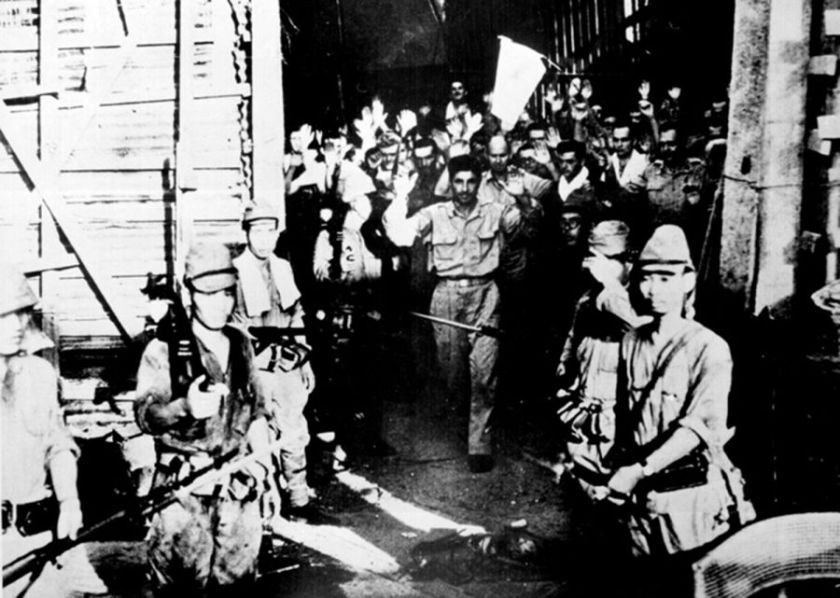 Nearly 150,000 Allied soldiers were taken captive by the Japanese Empire, during World War 2. Clad in unspeakably filthy rags they were fed a mere 600 calories per day of fouled rice, supplemented only by the occasional insect or bird or rodent unlucky enough to fall into desperate hands. Disease such as malaria was all but universal as gross malnutrition led to loss of vision and unrelenting nerve pain. Dysentery, a hideously infectious disease of the large intestine reduced grown men to animated skeletons. Mere scratches resulted in grotesque tropical ulcers up to a foot in length exposing living bone and rotting flesh to swarms of ravenous insects.
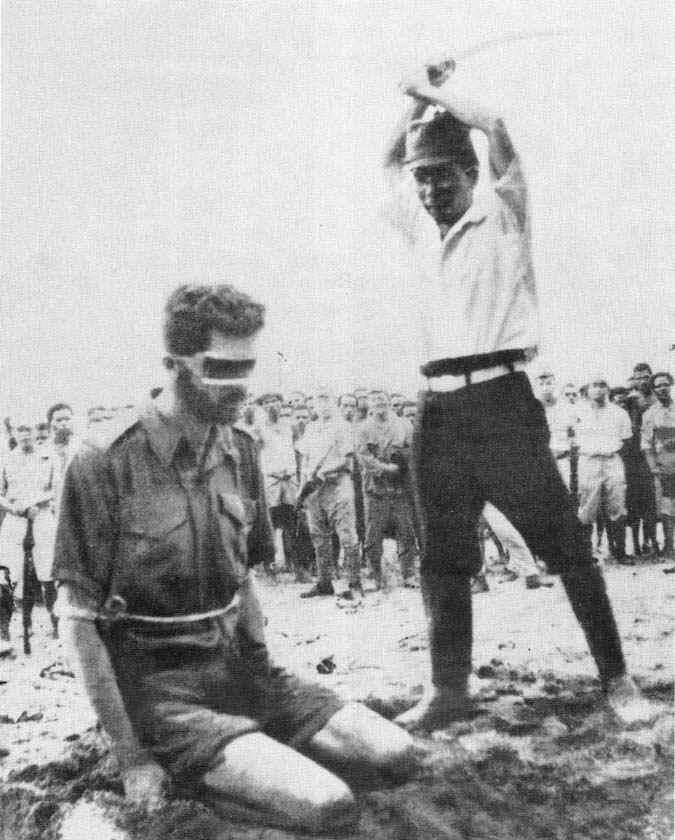 Given such cruel conditions it’s a wonder anyone escaped at all but it did happen. Once.
 Now-Colonel Shofner volunteered to return to the Pacific where his experience helped with the rescue of 500 prisoners of the infamous POW camp at Cabanatuan on January 30, 1945.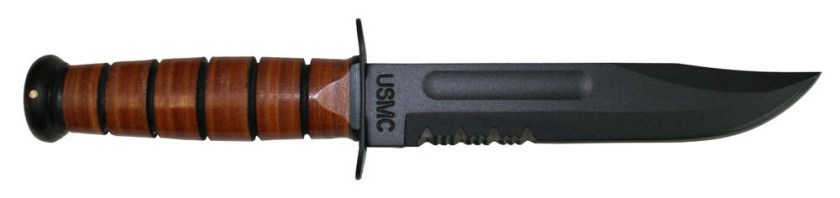


 Tacitus scorned the bitter brew of Germanic barbarians. Wine seemed better suited to the sensibilities of the Roman palate. Nevertheless, letters from Roman cavalry commanders of the Roman Britain period, c. 97-103 AD, include requests for more “cerevisia“, for the legionaries.
 Prior to the drum roaster’s invention in 1817, malt was typically dried over wood, charcoal or straw fires, leaving a smoky quality which would seem foreign to the modern beer drinker. William Harrison wrote in his “Description of England” in 1577, “For the wood-dried malt, when it is brewed, beside that the drink is higher of colour, it doth hurt and annoy the head of him that is not used thereto, because of the smoke“.
 1,389 were trampled to death and another 1,300 injured in a
  The 18th amendment, better known as “prohibition”, went into effect at midnight, January 16, 1920. For thirteen years it was illegal to import, export, transport or sell liquor, wine or beer in the United States.
 Organized crime became vastly more powerful due to the influx of enormous sums of cash. The corruption of public officials was a national scandal.
 Finally, even John D. Rockefeller, Jr., a lifelong teetotaler who contributed $350,000 to the Anti-Saloon League, had to announce his support for repeal.
 “Dry” leaders tried to prohibit consumption of alcohol on military bases in 1941, but military authorities claimed it was good for morale. Brewers were required to allocate 15% of total annual production to be used by the armed forces. So essential were beer manufacturers to the war effort, that teamsters were ordered to end a labor strike against Minneapolis breweries. Near the end of WWII, the army made plans to operate recaptured French breweries, to ensure adequate supplies for the troops.
 The night before Roosevelt’s law went into effect, April 6, 1933, beer lovers lined up at the doors of their favorite watering holes, waiting for their first legal beer in thirteen years.

 Smith’s two companions were killed. John Smith himself was transported to the principle village of Werowocomoco, and brought before the Chief of the Powhatan. His head was forced onto a large stone as a warrior raised a club to bash out his brains. Pocahontas, the favorite daughter of Wahunsonacock, rushed in and placed her head on top of his, stopping the execution.
 Pocahontas was a pet name, variously translated as “playful one” “my favorite daughter” or “little wanton”. Early in life, she bore the secret name “Matoaka” meaning, “Bright Stream Between the Hills”. Later she was known as “Amonute” which, to the best of my knowledge, has never been translated.
 Later descendants of the “Indian Princess” include Glenn Strange, the actor who played Frankenstein in three Universal films during the 1940s and the character Sam Noonan, the popular bartender in the CBS series, “Gunsmoke”. Astronomer Percival Lowell is a direct descendant of Pocahontas, as are Las Vegas performer Wayne Newton and former First Lady Edith Wilson, whom some describe as the first female President of the United States. But that must be a story for another day.

 The catastrophe could have been averted as late as the last day of July. By the first of August, mutual distrust had gone past the point of no return. By the time it was over, 18 million were dead or vanished and presumed dead, another 23 million, maimed.


 On November 11, Armistice Day, the casket was removed from the Rotunda of the Capitol and escorted under military guard to the amphitheater at Arlington National Cemetery. In a simple ceremony, President Warren G. Harding bestowed on this unknown soldier the Medal of Honor, and the Distinguished Service Cross.
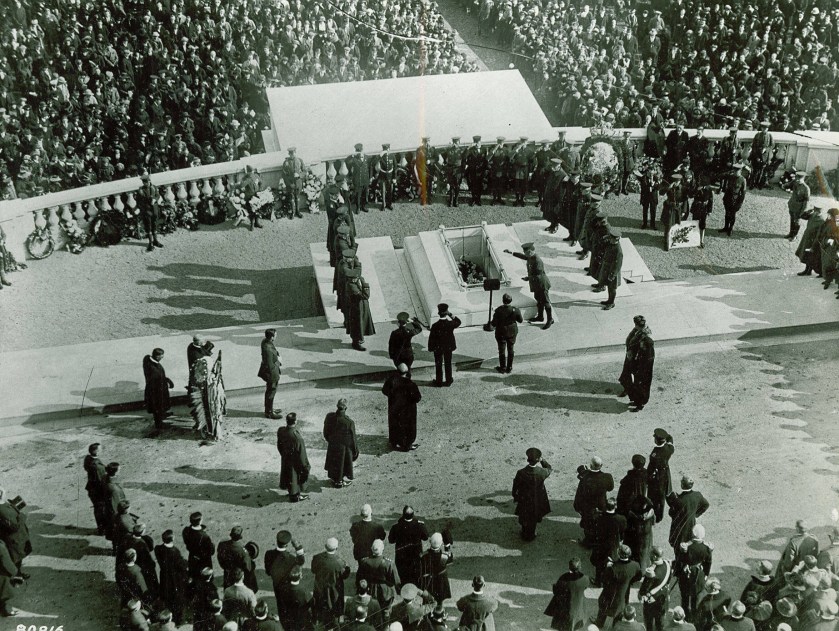 With three salvos of artillery, the rendering of Taps and the National Salute, the ceremony was brought to a close and the 12 ton marble cap placed over the tomb of the unknown. The west facing side bears this inscription:
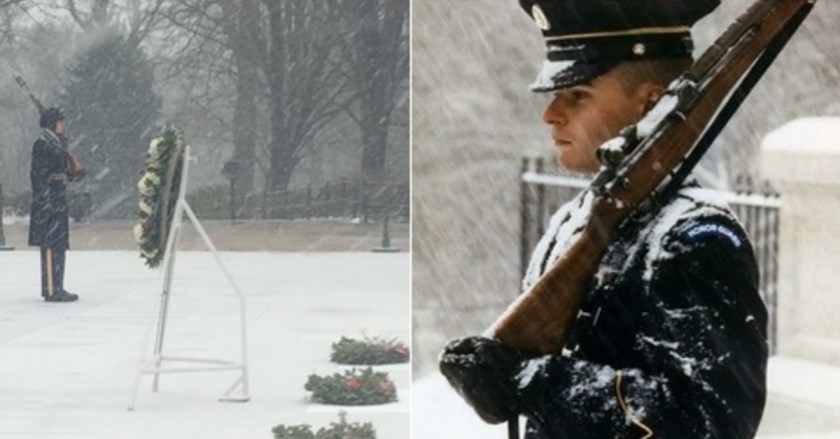 Every movement of the guard is a series of “twenty-ones” in reference to the 21-gun salute, a military tradition dating to the 14th century and universally recognized as the highest honor, among nations.
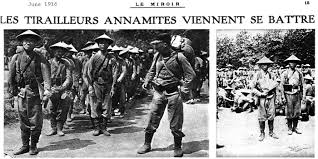 France re-occupied the region following the Japanese defeat which ended World War 2, but soon faced the same opposition from the army of Ho Chi Minh and Vo Nguyen Giap.
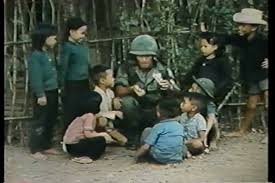 US policy makers feared a “domino” effect, and with good cause. The 15 core nations of the Soviet bloc were soon followed by Eastern Europe, as Poland, Bulgaria, Romania, Hungary and Czechoslovakia fell each in their turn, into the Soviet sphere of influence. Germany was partitioned into Communist and free-enterprise spheres after WWII, followed by China, North Korea and on across Southeast Asia.
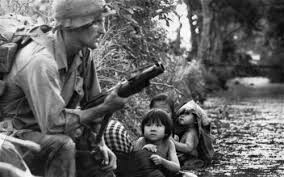 The war in Vietnam pitted as many as 1.8 million allied forces from South Vietnam, the United States, Thailand, Australia, the Philippines, Spain, South Korea and New Zealand, against about a half million from North Vietnam, China, the Soviet Union and North Korea. Begun on November 1, 1955, the conflict lasted 19 years, 5 months and a day. On March 29, 1973, two months after signing the Paris Peace accords, the last US combat troops left South Vietnam as Hanoi freed the remaining POWs held in North Vietnam.
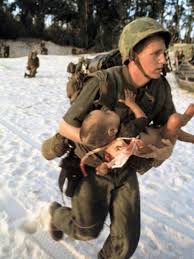 Even then it wasn’t over. Communist forces violated cease-fire agreements before they were even signed. Some 7,000 US civilian Department of Defense employees stayed behind to aid South Vietnam in conducting an ongoing and ultimately futile war against communist North Vietnam.
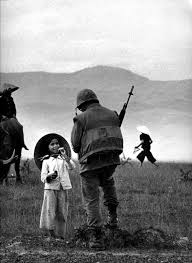 Imagine feeling so desperate, so fearful of the alien ideology invading your country, that you convert all your worldly possessions and those of your family into a single diamond, and bite down on that stone so hard it embeds in your shattered teeth. Forced to flee for your life and those of your young ones, you take to the open ocean in a small boat. All in the faint and desperate hope, of getting out of that place.
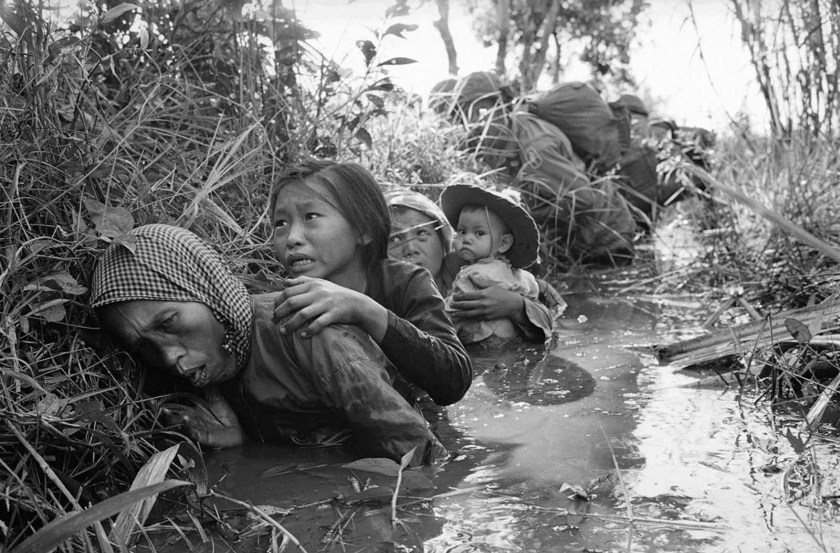 The humanitarian disaster that was the Indochina refugee crisis was particularly acute between 1979 – ’80, but reverberations continued into the 21st century.

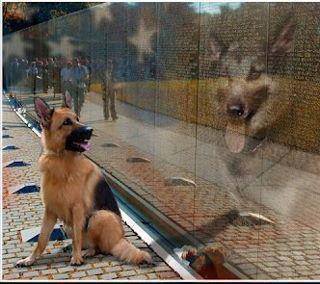
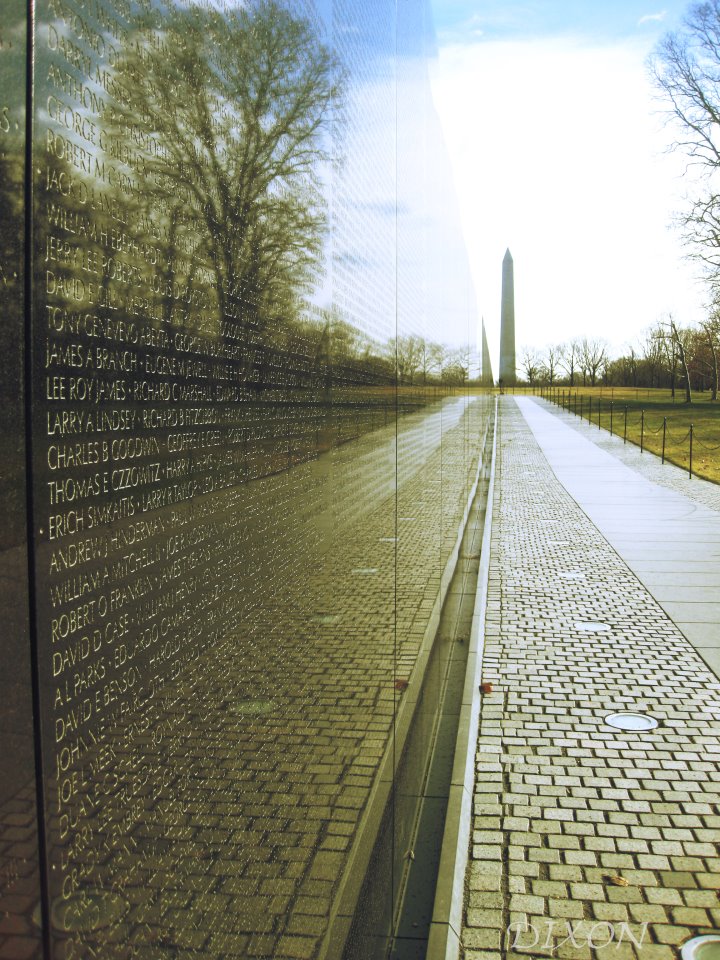 In the end, US public opinion would not sustain what too many saw as an endless war in Vietnam. We feel the political repercussions, to this day. I was ten at the time of the Tet Offensive in 1968. Even then I remember the searing sense of disgrace and humiliation, at the behavior of some of my fellow Americans.
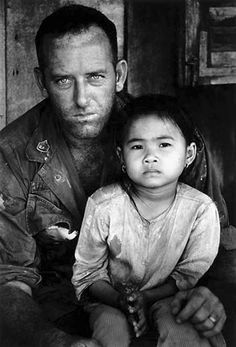 In 2012, President Barack Obama declared a one-time occasion proclaiming March 29 National Vietnam War Veterans Day and calling on “all Americans to observe this day with appropriate programs, ceremonies, and activities.”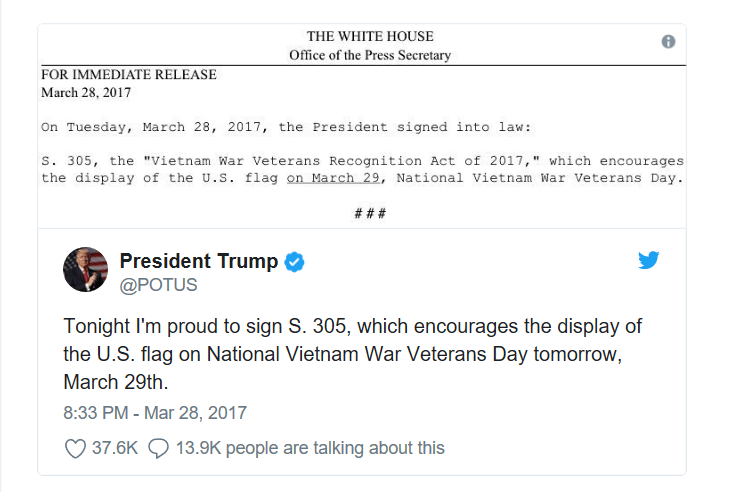


 President Woodrow Wilson stayed his hand, winning re-election the following year with the slogan, “He Kept Us Out of War”.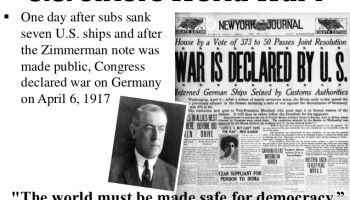


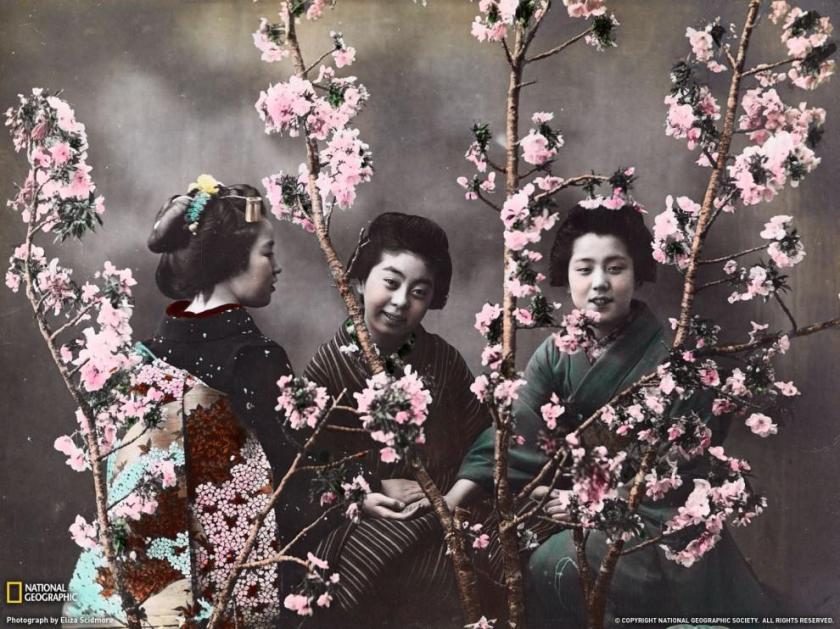 Frequent visits with her brother led to a passionate interest in all things Japanese, most especially the Japanese cherry, Prunus serrulata, commonly known as the Sakura. The Japanese blossoming cherry tree. She called them “the most beautiful thing in the world”.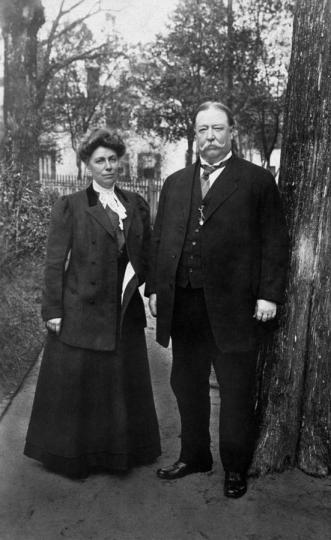
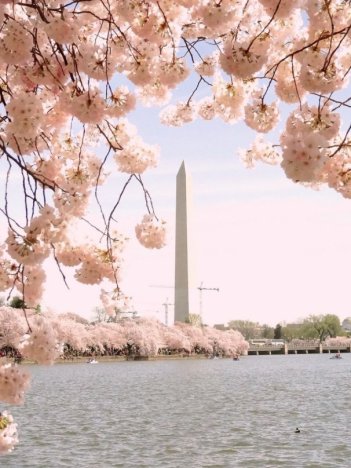 On March 27, 1912, the Viscountess Chinda, wife of the Japanese ambassador to the United States joined First Lady Helen Taft, in planting two Japanese Yoshino cherry trees on the bank of the Potomac River, near the Jefferson memorial.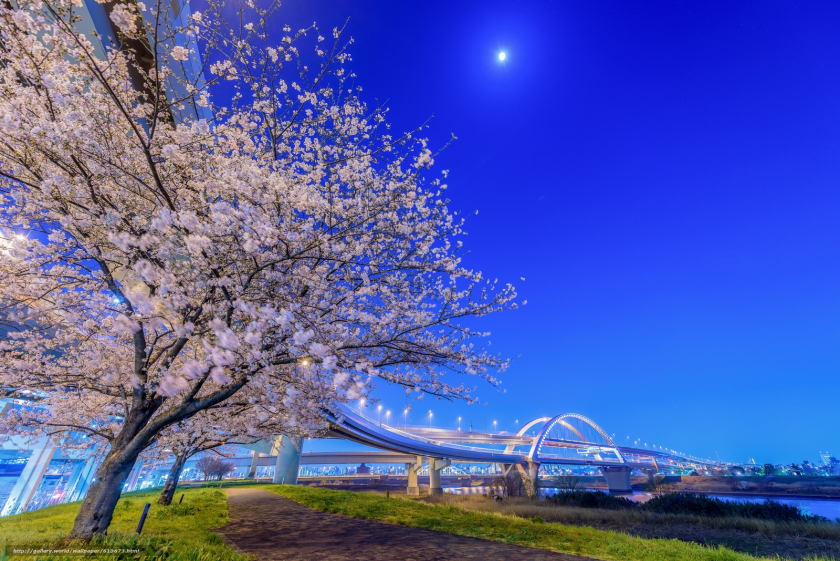


 Dad called the younger Williams “Bocephus” after the ventriloquist’s dummy used by Grand Ole Opry comedian Rod Brasfield.
 Williams was nearly killed in 1975, while climbing Ajax Peak in Montana. The snow collapsed beneath him, plunging him near-500 feet to the rocks below. There were multiple skull and facial fractures. Williams required several reconstructive surgeries, and had to learn to talk, and sing, all over again. The signature look of beard, sunglasses and cowboy hat have all become part of his brand, but it all began to hide the dreadful scars of that mountain climbing accident.
 No matter. ESPN announced that Williams and his song would be pulled from future broadcasts. ABC and the National Football League, were quick to pile on.


You must be logged in to post a comment.