

In the age of Edward the Confessor somewhere in the English midlands, there lay the Kingdom of Mercia. It was 1040 or thereabouts and Leofric, Earl of Mercia, had a problem. Leofric was the kind of ruler who never saw a tax he didn’t like, his latest the “Heregeld”, a tax to pay for the King’s bodyguard. The Earl’s wife Godgyfu had other ideas, her name in the Olde English, signifying “Gift of God”. Today, we call her “Godiva”.
Take pity on the people of Coventry, Godiva said, they are suffering under all this oppressive taxation.

A guy can only take so much, even if he IS an Earl. Tired of his wife’s entreaties, Leofric agreed to repeal the tax on one condition; that Godiva ride a horse through the streets of town, dressed only in her birthday suit. Lady Godiva took him at his word. She issued a proclamation requiring all townspeople to stay indoors and shut their windows, so it was she took her famous ride through Coventry.
The story probably isn’t true, any more than the one about Tom, the guy who drilled a hole in his door so he could watch and lost his sight at what he saw. But a thousand years later, we still use the term “Peeping Tom”.
Tax revolts are nothing new. Neither are the many and sometimes novel ways that politicians have concocted to fleece those of us who pay their bills.
 On December 31, 1695, King William III decreed a 2 shilling tax on each house in the land. Never one to miss an opportunity to “stick-it-to-the-rich”, there was an extra tax on every window over ten, a tax which would last for another 156 years.
It must have been a money maker, because the governments of France, Spain and Scotland followed suit. To this day, you can see homes where owners have bricked up windows, preferring darkness to the payment of yet another tax.
 In Holland, they used to tax the frontage of a home, the wider your house the more you paid. If you’ve ever been to Amsterdam, narrow houses rise several stories, with hooks over windows almost as wide as the building itself. These are used to haul furniture up from the outside, since the stairways are too narrow. The narrowest home in Amsterdam can be found at Singel #7, the house itself barely wider than its own front door.
You can find the same thing in the poorer quarters of New Orleans, where the “shotgun single”, a home so narrow you can fire a shotgun in the front door and pellets will go out the back, and the “Camelback” (second story out back) are the architectural remnants of long-dead taxation policy.
 The Roman Emperor Vespasian who ruled from 69 to 79AD, levied a tax on public toilets. When Vespasian’s son, the future Emperor Titus wrinkled his nose, the old man held a coin under the boy’s nose. “Pecunia non olet”, he said. “Money does not stink”. 2,000 years later, the name remains inseparable from public urinals. In France, the er…pissoir… is called vespasiennes, in Italy vespasiani. If you need to piss in Romania you could go to the vespasiene. History fails to record the inevitable push-back on Vespasian’s toilet tax, but I’m sure that ancient Romans had to look where they walked.
 Environmentalist types in Venice, Italy have been pushing a tax on tourism, claiming the city’s facing “an irreversible environmental catastrophe as the subsequent increase in water transport has caused the level of the lagoon bed to drop over time”. Deputy mayor Sandro Simionato said that “This tax is a new and important opportunity for the city,” explaining that it will “help finance tourism”, among other things. So, the problem borne of too much tourism is going to be fixed by a tax to help finance tourism. I think. Or maybe it’s all just another money grab.
 As of December 2015, state and territory tax rates on cigarettes ranged from 17¢ per pack in Missouri to $4.35 in New York, on top of federal, local, county, municipal and local Boy Scout council taxes (kidding). Philip Morris reports that taxes run 56.6% on average, per pack. Not surprisingly, tax rates make a vast difference in where and how people buy cigarettes. There is a tiny Indian reservation on Long Island, measuring a few miles square and home to a few hundred people. Tax rates are close to zero there, on a pack of butts. Until recent changes in tax law, the tiny reservation was selling 100 million cartons per year.
If all those taxes are supposed to encourage people to quit smoking, I wonder what income taxes are supposed to do?
 Back in 2013, EU politicians were discussing a way of taxing livestock flatulence, as a means of curbing “Global Warming”. At that time there was an Australian ice breaker, making its way to Antarctica to free the Chinese ice breaker that got stuck in the ice trying to free the Russian ship full of environmentalist types. They were all there to view the effects of “Global Warming”, until they got stuck in the ice.
Honest. I wouldn’t kid you about a thing like that.


 Dan Ackroyd tells a story about long days of rehearsals on the SNL set. An exhausted John Belushi would wander off and let himself into the house of a friend or a stranger, scrounging around for food before falling asleep in the house, unable to be found for the next day’s work. These outings were the inspiration for the SNL horror-spoof sketch “The Thing That Wouldn’t Leave”.
 The Blues Brothers film premiered in Chicago on this day in 1980, four days before general release. Set in the windy city and sprawling across the Midwest, the musical/comedy film tells the story of a paroled convict and his brother, and their mission to save the Catholic orphanage in which they were raised from foreclosure. The Blues Brothers’ “Mission from God” needs to raise $5,000 to pay the orphanage’s property tax bill. To do so, the pair sets out to reignite their old R&B band, pursued by the police and wrecking 103 cars along the way, a world record for that time.
 “Fans” repeatedly felt the need to desecrate the grave. The body was removed at Mrs. Belushi’s request and reburied in an undisclosed location. An unmarked tombstone in an undisclosed location marks the final burial location, where the man can at last rest in peace.

 One day, the United States Supreme Court would rule the act an unlawful taking and compensate Lee family descendants, but that must be a story for another day. As 1863 drew to a close, the property was destined to become the nation’s most hallowed ground and known to posterity, as Arlington National Cemetery.
 And yet, this is no lifeless “garden of stone”. The final resting place for over 400,000 honored dead is itself a living memorial, combining tens of thousands of native and exotic plants in a unique blending of landscapes, combined with formal and informal gardens.
 Three of these trees are Virginia state champions and one is state co-champion, including the Royal Paulownia, (Paulownia tomentosa) at the top of this page. State champion trees are those having the greatest height, crown spread and trunk circumference, for their species.
 The cemetery also has 24 Chinese Redbuds, a strain native to central China. These are only two of Arlington’s hundreds of varieties of flowering trees.
 The Cemetery’s horticulture division recently installed 297 tree labels, identifying many of the cemetery’s noteworthy specimens. Thirty-six of them form a right angle along Farragut & Wilson Drive, lending a sense of history as each is a direct descendant of a famous ancestor, each a living memorial to recipients of the Medal of Honor.
 Ancestors of these “tree descendants” include the Cottonwood of Delta Colorado, which shaded the peace meetings between settlers and Ute tribes in 1879. The Sweetgum of the Westmoreland, Virginia home of four generations of the Lee family, including Richard Henry and Francis “Lightfoot” Lee. The only brothers to have signed the Declaration of Independence. The great Charter Oak of Connecticut is represented there, a specimen sprouted sometime in the 12th or 13th century. There is the American Sycamore descended from a “witness tree” at Gettysburg. There is the Red Maple from Walden Woods, outside of Boston, and the Sycamore Maple, witness to George Washington’s crossing of the Delaware.


 Dating the historical events of antiquity with any kind of accuracy can be problematic, but not this one. The Greek historian Herodotus wrote that the mathematician and astronomer Thales of Miletus predicted the eclipse in a year when the Medians and the Lydians were at war. The “solar clock” can be run backward as well as forward. Thanks to Herodotus, it’s possible to calculate the date with precision. May 28 is one of the cardinal dates from which other dates in antiquity, may be calculated.
 Predicting a solar eclipse isn’t the same as predicting an eclipse of the moon. The calculations are far more difficult. When the moon passes through the shadow of the sun, the event can be seen over half the planet, the total eclipse phase lasting over an hour. In a solar eclipse, the shadow of the moon occupies only a narrow path. The total eclipse phase at any given point, lasts only about 7½ minutes.
 Be that as it may, for the first time in history a full eclipse of the sun had been predicted beforehand. The Battle of Halys marked the first time in history, that a war was ended when day turned to night. Aylattes, King of Lydia and Cyaxares, King of the Medes, put down their weapons and declared a truce and their armies, followed suit. With help from the kings of Cilicia and Babylon, the two sides negotiated a more permanent treaty.

 In May of 1940 the British Expeditionary Force and what remained of French forces occupied a sliver of land along the English Channel. Field Marshall Gerd von Rundstedt called a halt of the German armored advance on May 24, while Hermann Göring urged Hitler to stop the ground assault, let the Luftwaffe finish the destruction of Allied forces. On the other side of the channel, Admiralty officials combed every boatyard they could find for boats to ferry their people off of the beach.
![dunkirk-evacuation.-1-june-1940-troop-positions.-operation-dynamo.-hmso-1953-map-[2]-272563-p](https://todayinhistory.blog/wp-content/uploads/2020/05/dunkirk-evacuation.-1-june-1940-troop-positions.-operation-dynamo.-hmso-1953-map-2-272563-p.jpg?w=840) The battered remnants of the French 1st Army fought a desperate delaying action against the advancing Germans. They were 40,000 men against seven full divisions, 3 of them armored. They held out until May 31 when, having run out of food and ammunition, the last 35,000 finally surrendered. Meanwhile, a hastily assembled fleet of 933 vessels large and small began to withdraw the broken army from the beaches.
The battered remnants of the French 1st Army fought a desperate delaying action against the advancing Germans. They were 40,000 men against seven full divisions, 3 of them armored. They held out until May 31 when, having run out of food and ammunition, the last 35,000 finally surrendered. Meanwhile, a hastily assembled fleet of 933 vessels large and small began to withdraw the broken army from the beaches. A thousand copies of navigational charts helped organize shipping in and out of Dunkirk, as buoys were laid around Goodwin Sands to prevent stranding. Abandoned vehicles were driven into the water at low tide, weighted down with sand bags and connected by wooden planks, forming makeshift jetties.
 It all came to an end on June 4. Most of the light equipment and virtually all the heavy stuff had to be left behind, just to get what remained of the allied armies out alive. But now, with the United States still the better part of a year away from entering the war, the allies had a fighting force that would live to fight on. Winston Churchill delivered a speech that night to the House of Commons, calling the events in France “a colossal military disaster”. “[T]he whole root and core and brain of the British Army”, he said, had been stranded at Dunkirk and seemed about to perish or be captured. In his “We shall fight on the beaches” speech of June 4, Churchill hailed the rescue as a “miracle of deliverance”.
 On the home front, thousands of volunteers signed up for a “stay behind” mission in the weeks that followed. With “Operation Sea Lion” all but imminent, the German invasion of Great Britain, their mission was to go underground and to disrupt and destabilize the invaders in any way they could. They were to be part of the Home guard, a guerrilla force reportedly vetted by a senior Police Chief so secret, that he was to be assassinated in case of invasion to prevent membership in the units from being revealed.

 Historians from the Coleshill Auxiliary Research Team (CART) had been trying to do this for years.
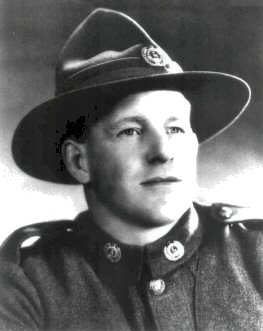



 In the Roman imagination, Britain was a faraway and exotic place, a misty, forested land inhabited by fierce, blue painted warriors.
 Militarily, there was no reason to attack the British home isles. The channel itself formed as fine a protector of the western flank, as could be hoped for.

 Apoplectic with rage and determined to avenge her family, Boudicca was not a woman to be trifled with. She led the Iceni, the Trinovantes and others among the Celtic, pre-Roman peoples of Britain, in a full-scale, bloody revolt.
 For the Celtic peoples, the hour of payback had arrived. For the seizure of lands to provide estates for Roman veterans to their own forced labor in building the Temple of Claudius to the sudden recall of loans and destruction of estates and properties. The Roman historian Tacitus writes of the last stand at the Temple of Claudius: “In the attack everything was broken down and burnt. The temple where the soldiers had congregated was besieged for two days and then sacked“.
 Outnumbered 23 to 1, the 10,000 strong Roman legion was battle hardened, well-equipped and disciplined, facing off against a mob of nearly a quarter-million unarmored, poorly disciplined individuals.
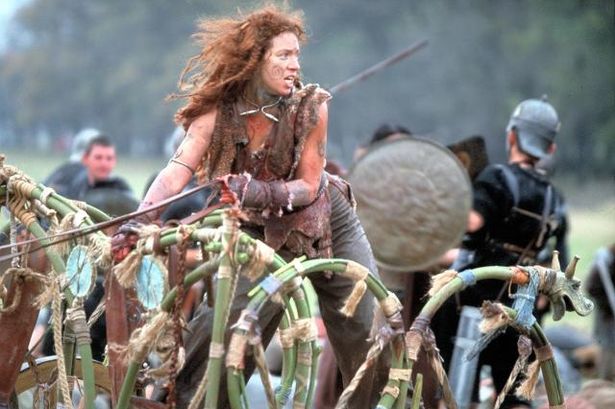 What must it look like, when 230,000 screaming warriors charge a fixed force of 10,000 disciplined soldiers. First came the Pila, the Roman javelins tearing into the tightly packed front, of the adversary. Then the Legion advanced, shields out front with the short swords, the long swords and farm implements of the Celts unable to move in the crush of humanity. The wedge formation advanced unbroken, slaughtering all who came before it as a scythe before the grass. The turning and the attempt to flee, only to be boxed in by their own tightly packed crescent formed wagon train.
 80,000 of Boudicca’s men lay dead before the slaughter was ended, against 400 dead Romans. Queen Boudicca poisoned herself according to Tacitus, Cassius Dio claims she became ill.


 To search on the term “Serial killers with the highest known victim count” is to be rewarded with the knowledge that the top 32 serial killers of the modern era, are responsible for a proven list of 1,661 victims and a probable count, several times that number.
 Filho says he first wanted to kill at age 13, when he tried to push an older cousin into a sugar cane press. His first victim came a year later. Filho murdered the deputy mayor of Santa Rita do Sapucaí with a shotgun in front of city hall, for firing his father from the school where he worked as security guard. It was claimed the elder Filho, was stealing food. Pedro then killed the guard whom he believed to be the real thief.
 He was once attacked by five gang members before killing three by himself and chasing off, the other two. Brazilian law dictates a maximum of 30 years. By the time he got out the Brazilian Dexter had killed another 47.

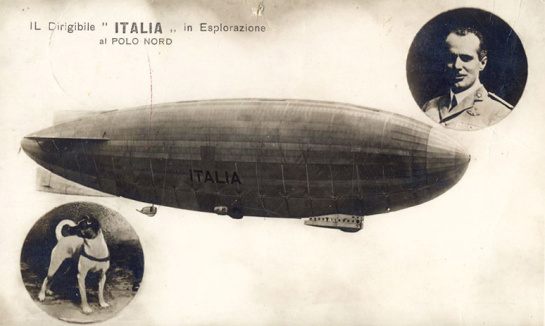
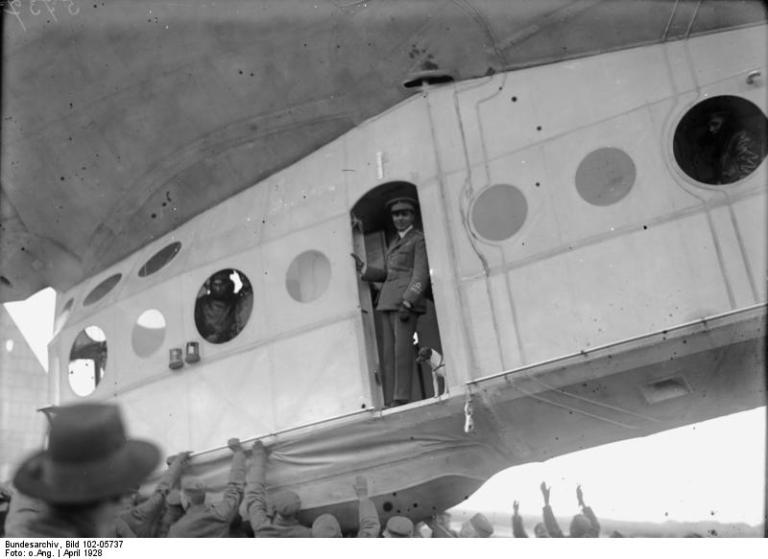
 Two years earlier, the Norge (“NOR-gay”) had demonstrated that such an airship, could reach the north pole. This time they were coming back, for further exploration.
 The first of five planned sorties began on May 11, before turning back only eight hours later in near-blizzard conditions. The second trip took place in virtually perfect weather conditions with unlimited visibility. The craft covered 4,000 km (2,500 miles), setting the stage for the third and final trip.


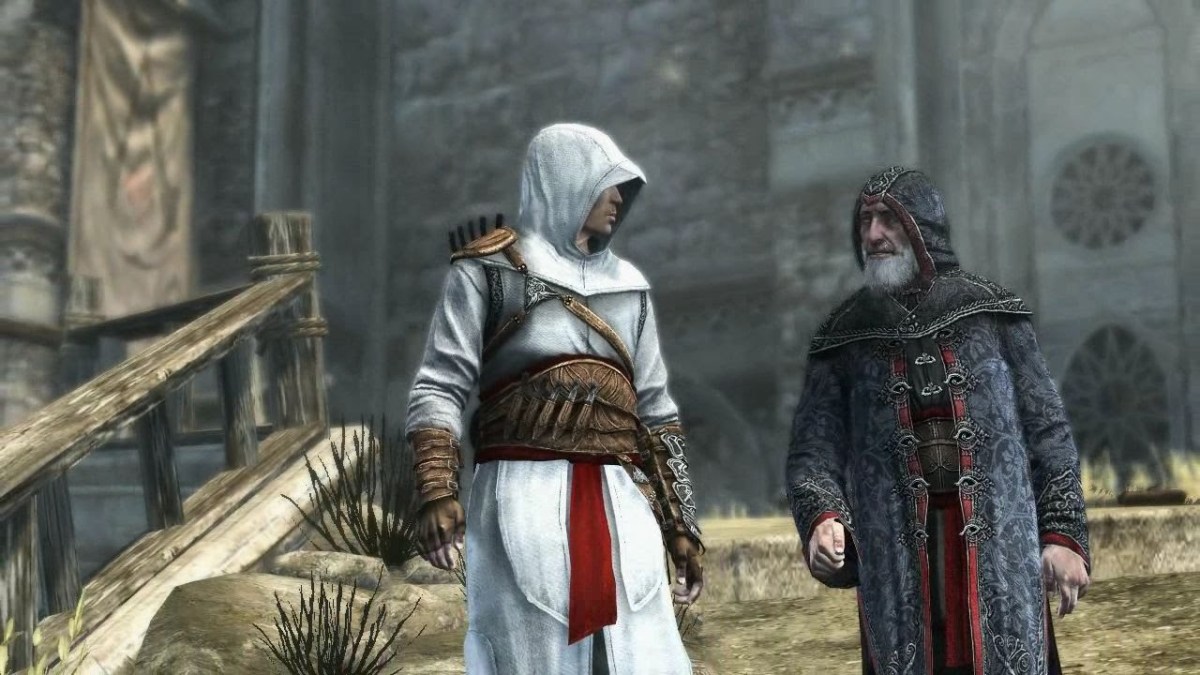
 To the east lay the Great Seljuk Empire, the Turko-Persian, Sunni Muslim state established in 1037 and stretching from the former Sassanid domains of modern-day Iran and Iraq to the Hindu Kush. An “appanage” or “family federation” state, the Seljuk empire was itself in flux after a series of succession contests, destined to disappear altogether in 1194.
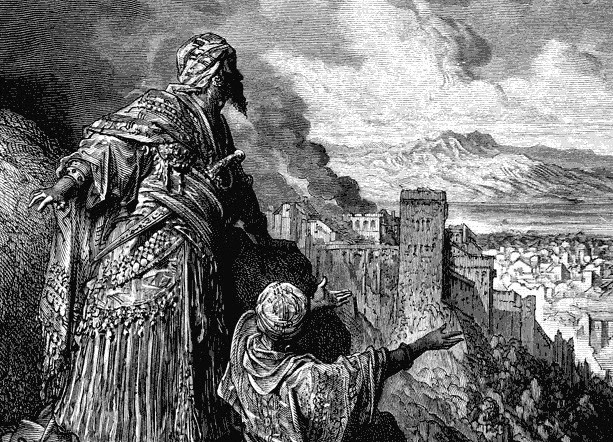 The name derives from the Arabic “Hashashin”, meaning “those faithful to the foundation”. Marco Polo reported a story that the old man of the mountain got such fervent loyalty from his young followers, by drugging and leading them to a “paradise” of earthly delights, to which only he could bring them back. The story is probably apocryphal, there is little evidence that hashish was ever used by the Assassins’ sect. Sabbah’s followers believed him to be divine, personally selected by Allah. The man didn’t need to drug his “Fida’i” (self-sacrificing agents). He was infallible in their eyes, his every whim to be obeyed, as the literal Word of God.
 Why Sabbah would have founded such an order is unclear, if not in pursuit of his own personal and political goals. By the time of the first Crusade, 1095-1099, the Old Man of the Mountain found himself pitted against rival Muslims and invading Christian forces, alike.
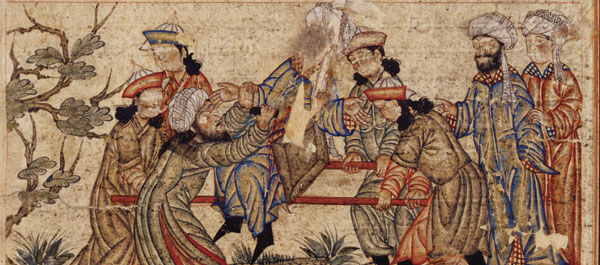 Sometimes, a credible threat of assassination did as much an actual killing. When the new Seljuk Sultan Ahmad Sanjar rebuffed Hashashin diplomatic overtures in 1097, he awoke one morning to find a dagger stuck into the ground, next to his bed. A messenger arrived sometime later from the Old Man of the Mountain. “Did I not wish the sultan well” he said, “that the dagger which was struck in the hard ground would have been planted on your soft breast?” The tactic worked nicely. For the rest of his days, Sanjar was happy to allow the Hashashin to collect tolls from travelers in his realm. The Sultan even provided them with a pension, collected from the inhabitants of the lands they occupied.
 Conrad of Montferrat was elected King of Jerusalem in 1192, though he would never be crowned. Stabbed at least twice by a pair of Hashashin on April 28, on the way home, the Kurdish historian and biographer wrote “[T]he Frankish marquis, the ruler of Tyre, and the greatest devil of all the Franks, Conrad of Montferrat — God damn him! — was killed.”
 The Grand Master of the Assassins dispatched his killers to Karakorum in the early 1250s, to murder the grandson of Genghis Khan, the Great Khan of the “Golden Horde”, Möngke. It was a Bad idea.
 Hulagu went on to subjugate the 5+ million Lurs people of western and southwestern Iran, the Abbasid Caliphate in Baghdad, the Ayyubid state of Damascus, and the Bahri Mamluke Sultanate of Egypt. Mongol and Muslim accounts alike, agree that the Caliph of Baghdad was rolled up in a Persian rug, whereupon the horsemen of Hulagu rode over him. Mongols believed that the earth was offended if touched by royal blood.


You must be logged in to post a comment.