

One of the bloodiest battles of the Civil War began on the 11th of December, 1862, when nearly 200,000 combatants collided in the town of Fredericksburg, Virginia.
The Union crossing of the Rappahannock was intended to be a surprise, depending on pontoons coming down from Washington to meet up with General Ambrose Burnside’s Union army in Falmouth, across the river from Fredericksburg. The army of the Potomac arrived on November 19, with no sign of pontoons. When they finally arrived, heavy snows slowed military operations for an additional week. Lt. General James Longstreet and Lt. General Thomas “Stonewall” Jackson had more than enough time to prepare their defenses.
Burnside’s crossing began on the morning of December 11, as engineer battalions constructed bridges in the face of determined Confederate fire. Several groups of soldiers had to row across the river, the battle moving through the streets and buildings of Fredericksburg, as Union and Confederate troops fought the first urban combat of the Civil War.
On the morning of the 13th, Robert E. Lee’s Confederate forces occupied a seven mile long curving line, with the five divisions of Longstreet’s Corps on the left along Marye’s Heights, west of town. Fighting began on both ends of the Confederate position, more or less simultaneously. George Meade had some early successes against Stonewall Jackson’s dug-in positions on the right, but requested reinforcements never arrived. By the end of the day, the old farmer’s expression “slaughter pen”, had taken on a whole new meaning.
In contrast to the swampy approaches on the Confederate right, 5,000 soldiers under James Longstreet looked out from behind the stone wall on Marye’s Heights to an open plain, crossed from left to right by a mill run, 5′ deep, 15′ wide and filled with 3′ of freezing water.
Confederate artillery commander Edward Porter Alexander looked out on that field, and said “a chicken could not live on that field when we open on it”. He was right. For six hours, the Union army threw one attack after another against the rebels behind the wall. Fourteen assaults, in all. As the sun went down on the evening of December 13, the ground before Marye’s Heights was carpeted with the mangled, dead and dying bodies of Union soldiers.
The Army of the Potomac suffered over 13,000 casualties, about two-thirds of them in front of that wall. Lee’s army, by comparison, had suffered around 4,500 losses. Watching the great Confederate victory unfold from his hilltop command post, Robert E. Lee said “It is well that war is so terrible, or we should grow too fond of it.”
Union ambulance corps had all they could do to remove their wounded from the plains, but dared not enter within the Confederate’s range of fire in front of that wall. All through the night of the 13-14th, the moans of mangled and dying Union soldiers could be heard along the heights.
I don’t doubt that some Confederate soldiers reveled in all this carnage, but I’m sure that the moans and cries of agony were difficult for most to hear. There wasn’t a man among them who didn’t understand that, but for the grace of God, that could be himself. For Sergeant Richard Kirkland, Company G, Second South Carolina Infantry, it wasn’t good enough to sit and listen. He could no longer stand to hear “those poor people crying for water”. Kirkland left his position and made his way to General Joseph Kershaw’s headquarters, asking permission to help.
On the morning of December 14, 1862, Richard Kirkland took as many canteens as he could carry, and stepped into the no man’s land between two watching armies. No one fired, nor even moved. Sgt. Kirkland worked his way alone from one wounded man to the next, straightening out a shattered leg here, there spreading out an overcoat, always with a quiet word of encouragement and a drink of water.
Kirkland was out there for no less than 1½ hours. Alone in no man’s land, he never left until he had helped every fallen soldier, Federal and Confederate, on that part of the battlefield.
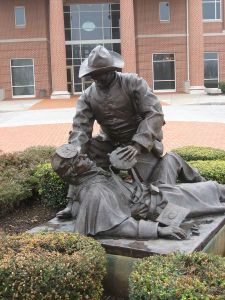
General Kershaw later gave this account: “Unharmed he reached the nearest sufferer. He knelt beside him, tenderly raised the drooping head, rested it gently upon his own noble breast, and poured the precious life-giving fluid down the fever scorched throat. This done, he laid him tenderly down, placed his knapsack under his head, straightened out his broken limb, spread his overcoat over him, replaced his empty canteen with a full one, and turned to another sufferer.”
Kirkland would not survive the war. He met his end while leading an infantry charge the following September, at a place called Chickamauga. No one will ever know how many lives were saved by his courage, and his kindness, this day in 1862. Richard Rowland Kirkland will forever remain, the Angel of Marye’s Heights.


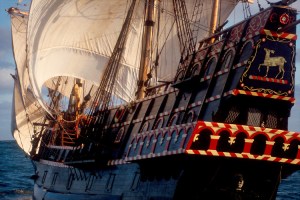
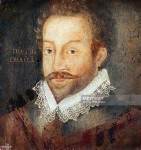 offloaded his captives, each with a gift appropriate to his rank, and a letter of safe conduct.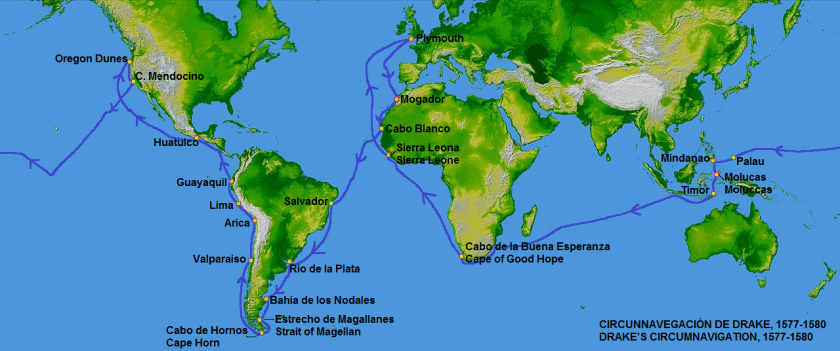

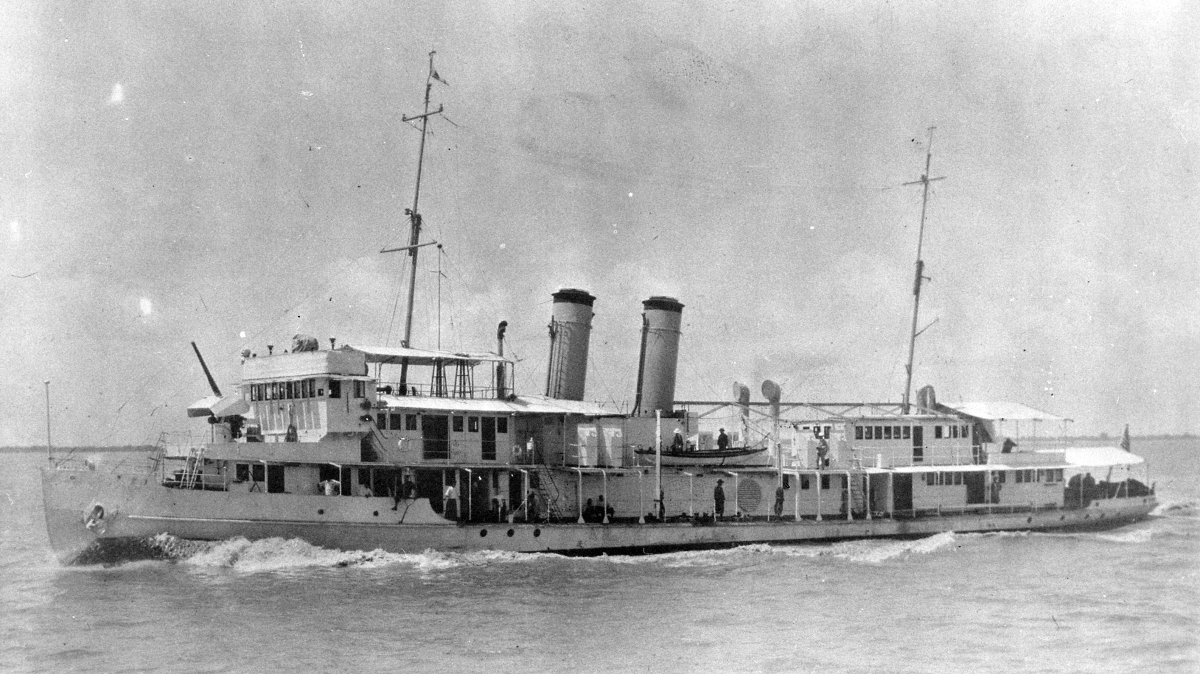
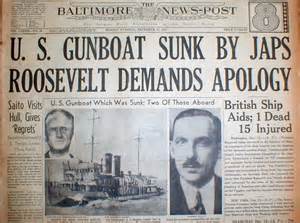 than old enough to remember how the sinking of the Maine in Havana Harbor brought the US into war with Spain in 1898. Grew hoped to avoid a similar outcome following the Panay sinking, though Japanese authorities were less than helpful. US cryptographers uncovered information shortly after the attack indicating that aircraft were operating under orders, while the Japanese government continued to insist that the attack had been accidental.
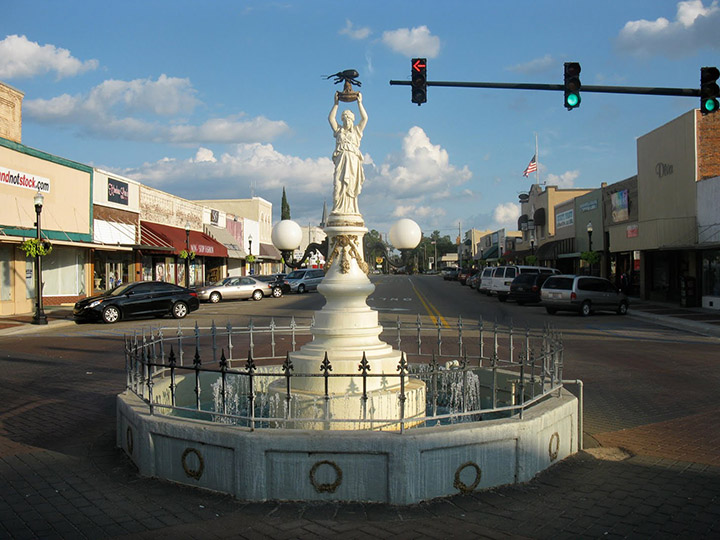






 problem. Roosevelt was fond of his 1939 Lincoln V12 Convertible. Roosevelt called it the “Sunshine Special,” but the car was anything but secure. Armored Presidential cars would not come into regular use for another 20 years, after the assassination of President Kennedy.
 making sure that it would safely get the Commander in Chief the few short blocks to Capitol Hill. It apparently did, because Roosevelt continued to use it until his old car could be fitted with the same features. To this day, Presidential limousines have flashing police lights hidden behind their grilles.
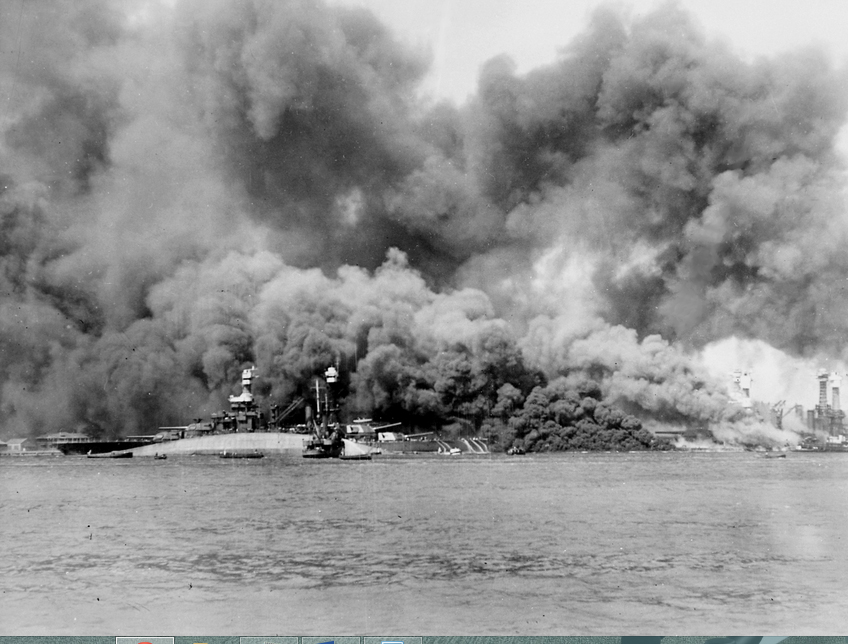
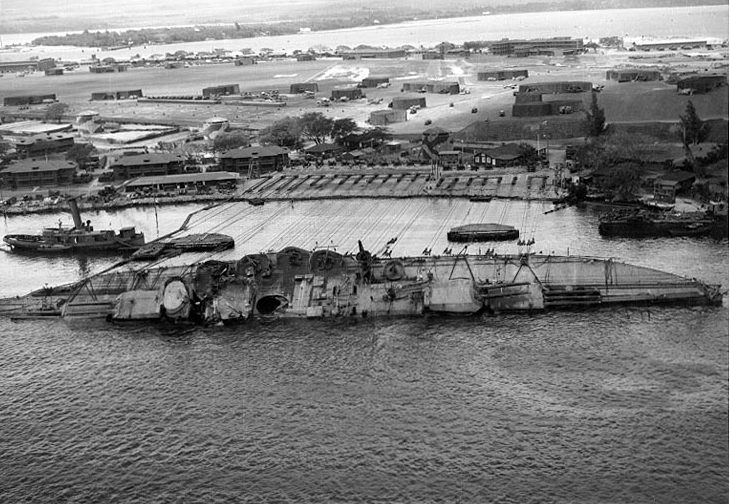 battleship USS Oklahoma was raised from the bottom, but was never repaired. In 1947 she would sink under tow to the mainland, very nearly taking two ocean going tugs to the bottom, with her.
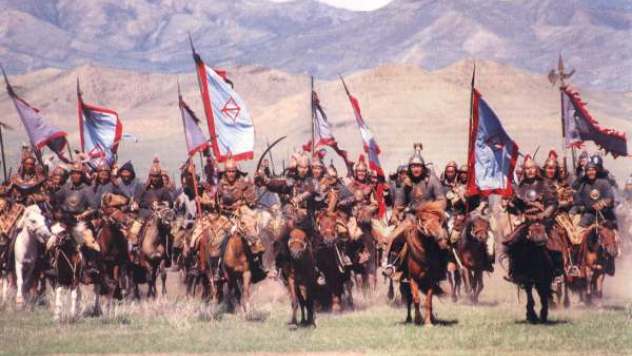
 The Steppes have long been a genetic crossroad, the physical features of its inhabitants as diverse as any in the world. The word “Rus”, from which we get Russia, was the name given to Viking invaders from earlier centuries. History does not record what Genghis himself looked like, though he’s often depicted with Asian features. There is evidence suggesting he had red hair and green eyes. Think of that beautiful young Afghan girl, the one with those killer eyes on that National Geographic cover, a few years back.
 Hungary, to parts of Austria, to Eastern Persia. Plans were being laid for the invasion of Germany, Austria and Italy in December, 1241, when news arrived informing them of the death of the Great Khan. Ögedei and Batu wanted to continue, but the Law of Yassa required that all Princes of the Blood return to Karakorum and the Kurultai, the meeting of Mongol Chieftains.


You must be logged in to post a comment.