May 5, 1945 Fire Balloon – The only Americans killed by enemy action on the American continent in WW2, were a pregnant Sunday school teacher and five children.
1,200 dogs arrived for that first show, in an event so popular that the originally planned three days morphed into four.
The world’s most famous dog show was first held on May 8, 1877, and called the “First Annual NY Bench Show.” The venue was Gilmore’s Garden at the corner of Madison Avenue and 26th Street, a hall which would later be known as Madison Square Garden. Interestingly, another popular Gilmore Garden event of the era was boxing. Competitive boxing was illegal in New York in those days, so events were billed as “exhibitions” or “illustrated lectures.” I love that last one.
It was originally a show for hunting dogs, mostly Setters and Pointers with a few Terriers. A group of hunters used to meet at the Westminster Hotel at Irving Place & 16th Street, in Manhattan. The Westminster Kennel Club was formed by this group when they first decided to hold a dog show. When you think of the 2nd amendment purgatory that is Warren Wilhelm (Bill) DiBlasio’s New York, it’s amusing to think that original prizes included pearl handled revolvers.
1,200 dogs arrived for that first show, in an event so popular that the originally planned three days morphed into four. The Westminster Kennel Club donated all proceeds from the fourth day to the ASPCA, for the creation of a home for stray and disabled dogs. The organization remains supportive of animal charities, to this day.
The Westminster dog show is the longest continuously held sporting event in the United States, with the sole exception of the Kentucky Derby, which began only two years earlier.
Not even two World Wars could stop Westminster. A tugboat strike cut two days down to one in 1946. Even so, “Best in Show” was awarded fifteen minutes earlier than it had been, the year before. I wonder how many puppies were named “Tug” that year. The Westminster dog show was first televised in 1948, three years before the first nationally televised college football game.
When the American Kennel Club was founded in 1884, Westminster was the first club to be admitted. Breed parent clubs such as the German Shepherd Dog Club of America develop breed standards, extensive written descriptions of what the perfect specimen looks like for any given breed. Some of the traits which distinguished the original working dogs of 1877 are still apparent, while other elements are seemingly arbitrary, such as tail carriage, eye shape and color.
Dogs are judged first against others of their own breed, and then the best of each goes forward into one of seven groups: Sporting, Hound, Working, Terrier, Toy, Non-Sporting, and Herding. In the final round, the winners from each of these seven groups compete for “Best in Show”, of which there can be only one.
Mixed breeds have been permitted since 2014, to compete in an agility event.
Ch. Warren Remedy
A Smooth Fox Terrier named Ch.(Championship) Warren Remedy won the top award in 1907, 1908 and 1909, the only dog to ever win three Best in Shows at Westminster. Seven dogs have twice taken the top award, and five owners have won Best in Show with more than one dog. A Sussex Spaniel named Stump became the oldest winner in dog show history in 2009, at the age of 10. Judge Sari Tietjen said she had no idea the winning dog was a senior citizen. “He showed his heart out,” she said. “I didn’t know who he was or how old … I just couldn’t say no to him”.
Stump
Today, the Westminster dog show runs two days and nights in February. Entry is limited to 2,800 dogs and fills up on the first day of registration. Breed judging takes place during the day at Piers 92 and 94. Group and Best in Show competition takes place in the evening at Madison Square Garden. Since 1992, Westminster has invited the top five dogs from each breed to pre-enter, based on dog show performances of the preceding year.
Madison Square Garden generally sells out for the event, the WKC issuing up to 700 press credentials for media attending from no fewer than 20 countries. Each year the Westminster website www.westminsterkennelclub.org receives 20 million page views from 170 countries.
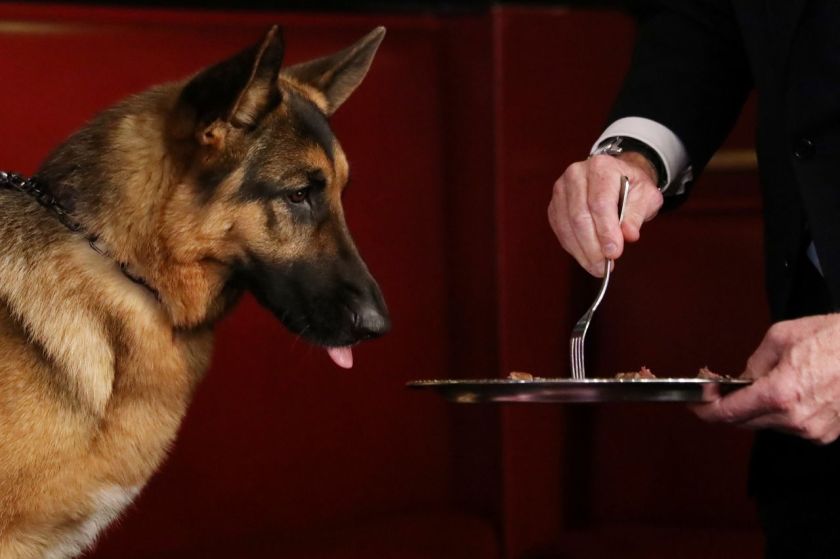
Since the late 60s, the Westminster Best in Show winner has celebrated at Sardi’s, a popular mid-town eatery in the theater district and birthplace of the Tony award. And then the Nanny State descended, pronouncing that 2012 would be their last. There shalt be no dogs dining any restaurants, not while Mayor Bloomberg is around.
The Algonquin, the historic hotel at the corners of 59th St. W. & 44th, took in a stray cat sometime back in the 1930s. A succession of felines have had the run of the place ever since. The males have all been “Hamlet”, and the females called “Matilda”.
Mayor Yourslurpeeistoobig Bloomberg’s Board of Health descended on the Algonquin in 2011, requiring that the cat be kept on a leash. There ensued a tempest in a cat box, until a compromise was reached later that year. An electronic pet fence would be installed, confining the cat to non-food areas of the hotel.
Not wanting another such drama, Nanny Bloomberg pulled his health commissioner, Dr. Thomas Farley, aside. By the end of the week, the health department had found a loophole to defuse the standoff: Dr. Farley would issue a waiver. Since then, the winner at Westminster is free to enjoy the traditional celebratory luncheon of diced chicken and rice off a silver platter. Provided that it’s eaten in the back room.
The news was greeted with reserve in the United States, where the first thought was that there was still a lot of fighting to do in the Pacific
Reporters from AP, Life magazine, and others began sleeping on the floor of Eisenhower’s red brick schoolhouse headquarters on the 5th, for fear of stepping out and missing the surrender of Nazi Germany. Adolf Hitler had taken his own life on April 30, so it was General Alfred Jodl who came to Reims, France to sign the document, which included the phrase “All forces under German control to cease active operations at 2301 hours Central European time on 8 May 1945“. The signing of the instruments of surrender ending WWII in Europe took place on Monday, May 7, at 2:41am, local time. The war in Europe, was over.
The German government announced the end of hostilities to its people right away, but most of the Allied governments, remained silent. Field Marshal Wilhelm Keitel would not repeat the signing in Soviet General Georgy Zhukov’s Berlin headquarters until nearly midnight of the following day. Soviet Premier Josef Stalin had his own ideas about how he wanted to handle the matter, and so the rest of the world, waited.
In England, the 7th dragged on with no public statement. Large crowds gathered outside of Buckingham Palace shouting “We want the King”. Bell ringers throughout the British Isles remained on silent standby, waiting for the announcement. The British Home Office issued a circular, instructing Britons how they could celebrate: “Bonfires will be allowed, but the government trusts that only material with no salvage value will be used.” Still, the world waited.
Prime Minister Winston Churchill finally lost patience in the early evening, saying he wasn’t going to give Stalin the satisfaction of holding up what everyone already knew. The Ministry of Information made this short announcement at 7:40pm: “In accordance with arrangements between the three great powers, tomorrow, Tuesday, will be treated as Victory in Europe Day and will be regarded as a holiday”.
The news was greeted with reserve in the United States, where the first thought was that there was still a lot of fighting to do in the Pacific. President Harry Truman broadcast an address to the nation at 9:00am on May 8th, thanking President Roosevelt and wishing he’d been there to share the moment. Roosevelt had died on April 12, in Warm Springs, Georgia.
President Truman’s speech begins: “This is a solemn but a glorious hour. I only wish that Franklin D. Roosevelt had lived to witness this day. General Eisenhower informs me that the forces of Germany have surrendered to the United Nations. The flags of freedom fly over all Europe. For this victory, we join in offering our thanks to the Providence which has guided and sustained us through the dark days of adversity”.
VE Day wasn’t the end of WWII, only the end of the war in Europe. Fighting in the Pacific would continue until the Japanese surrender on the 15 August 1945, the date celebrated as VJ Day.
Today we don’t hear much about the Eastern Front, though it was the largest military confrontation in history. Fighting between Nazi Germany and the Soviet Union had long since taken on shades of a race war, Slav against Teuton, in a paroxysm of mutual extermination that is horrifying, even by the hellish standards of WWII. Nearly every extermination camp, death march, ghetto and pogrom which formed the Holocaust, occurred on the Eastern Front.
The loss of life was prodigious, through atrocity, massacre, disease, starvation and exposure. Civilians resorted to cannibalism, during the 900-day siege of Leningrad. Entire landscapes were destroyed while populations fled, never to return. Rape became a weapon of war.
An estimated 70 million people were killed all over the world, as the result of World War II. Over 30 million of them, many of those civilians, died on the Eastern Front. Pockets of fighting would continue through the surrender in Europe. Soviet forces lost over 600 in Silesia alone, on May 9. The day after their own signing. Moscow celebrated VE Day on the 9th, with a radio broadcast from Josef Stalin himself: “The age-long struggle of the Slav nations…has ended in victory. Your courage has defeated the Nazis. The war is over.”
7th May 1945: A wounded American serviceman during a ticker tape parade in New York following press reports of the unconditional surrender of Germany. (Photo by Fox Photos/Getty Images)
The famous film shows ground crew running for their lives, and then turning and running back to the flames. It’s natural enough to have run, but there’s something the film doesn’t show.
Hindenburg left Frankfurt airfield on its last flight at 7:16pm, May 3, 1937, carrying 97 passengers and crew. Crossing over Cologne, Beachy Head and Newfoundland, the airship arrived over Boston at noon on the 6th. By 3:00pm it was over the skyscrapers of Manhattan, arriving at the Naval Air Station in Lakehurst, NJ at 4:15.
Foul weather had caused a half-day’s delay, but the landing was eventually cleared. The final S turn approach executed at 7:21pm. The ship was at the mooring mast, 180′ from the ground with forward landing ropes deployed, when flames first erupted near the top tail fin.
Eyewitness accounts differ as to the origin of the fire. The leading theory is that, with the metal framework grounded through the landing line, the ship’s fabric covering became charged in the electrically charged atmosphere, sending a spark to the air frame and igniting a hydrogen leak. Seven million cubic feet of hydrogen ignited almost simultaneously. It was over in less than 40 seconds.
The largest dirigible ever built, an airship the size of Titanic, burst into flames as the hull collapsed and plummeted to the ground. Passengers and crew jumped for their lives and scrambled to safety, along with ground crews who had moments earlier been positioned to receive the ship.
The famous film shows ground crew running for their lives, and then turning and running back to the flames. It’s natural enough to have run, but there’s something the film doesn’t show. That was Chief Petty Officer Frederick “Bull” Tobin, the airship veteran in charge of the landing party, bellowing at his sailors above the roar of the flames. “Navy men, Stand fast! We’ve got to get those people out of there!” Tobin had survived the crash of the USS Shenandoah on September 4, 1923. He wasn’t about to abandon his post, even if it cost him his life. Tobin’s Navy men obeyed. That’s what you see when they turn and run back to the flames.
The Hindenburg disaster is sometimes compared with that of the Titanic, but there’s a common misconception that the former disaster was the more deadly of the two. In fact, 64% of the passengers and crew aboard the airship survived the fiery crash, despite having only seconds to react. In contrast, officers on board the Titanic had 2½ hours to evacuate, yet most of the lifeboats were launched from level decks with empty seats. Only 32% of Titanic passengers and crew survived the sinking. It’s estimated that an additional 500 lives could have been saved, had there been a more orderly, competent, evacuation of the ship.
As it was, 35 passengers and crew lost their lives on this day in 1937, and one civilian ground crew. Without doubt the number would have been higher, if not for the actions of Bull Tobin and is Navy men.
Where a person was inside the airship, had a lot to do with their chances of survival. Mr and Mrs Hermann Doehner and their three children (Irene, 16, Walter, 10, and Werner, 8) were in the dining room, watching the landing. Mr. Doehner left before the fire broke out. Mrs. Doehner and the two boys were able to jump out, but Irene went looking for her father. Both died in the crash.
For all the film of the Hindenburg disaster, there is no footage showing the moment of ignition. Investigators theorized a loose cable creating a spark or static charge from the electrically charged atmosphere. Some believed the wreck to be the result of sabotage, but that theory is largely debunked.
Four score years after the disaster, the reigning hypothesis begins with the static electricity theory, the fire fed and magnified by the incendiary iron oxide/aluminum impregnated cellulose “dope” with which the highly flammable hydrogen envelope was painted.
The 35 year era of the dirigible was filled with accidents before Hindenburg, but none had dampened public enthusiasm for lighter-than-air travel. The British R-101 accident killed 48, the crash of the USS Akron 73. The LZ-4, LZ-5, Deutschland, Deutschland II, Italia, Schwaben, R-38, R-101, Shenandoah, Macon, and there were others. All had crashed, disappeared into the darkness, or over the ocean. Hindenburg alone was caught on film, the fiery crash recorded for all to see. The age of the dirigible, had come to an end.
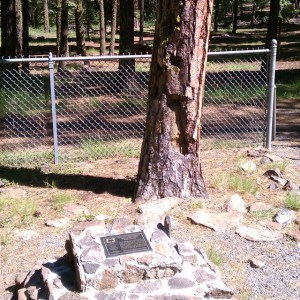
In a forest near Bly, Oregon, a monument bears these words, cast in bronze: The “only place on the American continent where death resulted from enemy action in World War II”
Following the 1883 eruption of the Krakatoa volcano, weather watchers described an eastbound, upper atmospheric air current described as the “equatorial smoke stream”. In the 1920s, Japanese meteorologist Wasaburo Oishi tracked these upper level winds from a site near Mount Fuji, using pilot balloons. Oishi doomed his work to international obscurity when he published his findings in Esperanto. Inside Japan, there were those who took note, filing away this new-found knowledge of what we now call the “Jet Stream”.
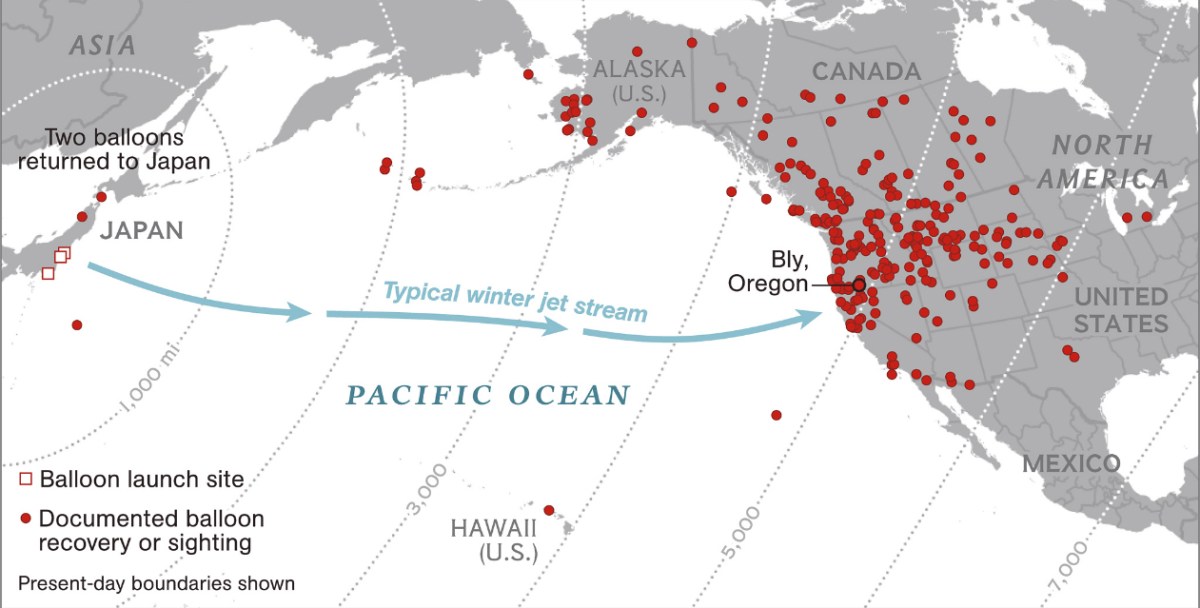
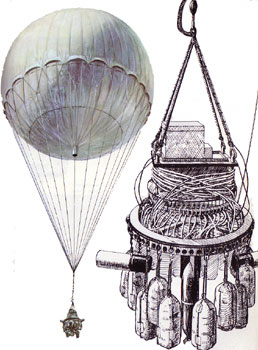
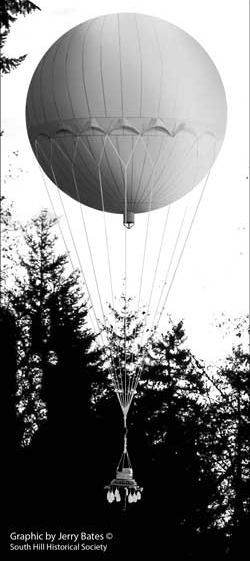
In the latter half of WWII, Imperial Japanese military thinkers conceived the fūsen bakudan or “fire balloon”, a hydrogen filled balloon device designed to ride the jet stream, using sand ballast and a valve system to navigate the weapon system onto the North American continent.
With sandbags, explosives, and the device which made the thing work, the total payload was about a thousand pounds on liftoff. The first such device was released on November 3, 1944, beginning the crossing to the west coast of North America. 9,300 such balloons were released with military payloads, between late 1944 and April, 1945.
Such a long-range attack would not be duplicated until the 1982 Falklands War, and was near unimaginable at the time. In 1945, intercontinental weapons were more in the realm of science fiction. As these devices began to appear, American authorities theorized that they originated with submarine-based beach assaults, German POW camps, even the internment camps into which the Roosevelt administration herded Japanese Americans.
Fighters shot down fewer than 20
These “washi” paper balloons flew at high altitude and surprisingly quickly, completing the Pacific crossing in three days. Balloons landed from Alaska to Northern Mexico, and as far east as Detroit.
A P-38 Lightning fighter shot one down near Santa Rosa, California, while Yerington, Nevada cowboys cut one up to make hay tarps. Pieces of balloon were found in the streets of Los Angeles. A prospector near Elko Nevada delivered one to local authorities, on the back of a donkey.
Among US units assigned to fight fire balloons was the 555th Parachute Infantry Battalion, which suffered one fatality and 22 injuries fighting fires.
One of the last balloons came down on March 10 near Hanford Washington, shorting out power lines supplying electricity for Manhattan Project nuclear reactor cooling pumps. The war in the Pacific could have ended very differently, had not backup safety devices restored power, almost immediately.
Colonel Sigmund Poole, head of the U.S. Geological Survey military geology unit, asked, “Where’d the damned sand come from?” Microscopic analysis of sand ballast identified diatoms and other microscopic sea life. This and the mineral content of the sand itself proved to be definitive. This stuff could only have come from the home islands of Japan, more specifically, one or two beaches on the island of Honshu.
American authorities were alarmed. Anti-personnel and incendiary bombs were relatively low grade threats. Not so the biological weapons Japanese military authorities were known to be developing at the infamous Unit 731, in northern China.
284 of these weapons are known to have completed the Pacific crossing to the United States, Mexico and Canada. Experts estimate as many as 1,000 may have made it. Sightings were reported in seventeen US states. Pilots were ordered to shoot them down on sight, but many devices escaped detection, altogether.
In an effort to deny valuable intelligence to their Japanese adversary, US military and government authorities did everything they could to keep these “Fire Bombs” out of the media. Even though such secrecy put Americans at risk.
Japanese Authorities reported that the bombs were hitting key targets, thousands were dead or injured, and American morale was low.
On the morning of May 5, 1945, Pastor Archie Mitchell and his wife Elsie took their Sunday school class of five on a picnic to a forest area near Bly, Oregon. Elsie and the kids came upon a large balloon with a strange looking device attached to it, as Pastor Mitchell parked the car. There was no way they could have known, what they had found was a Japanese weapon of war. The device exploded, killing all six, instantly.
Several such devices exploded, igniting wildfires in the forests of California, Oregon and Washington, but the site near Bly is the only one known to have resulted in American casualties.
Today there is a small picnic area located in the Fremont-Winema National Forest, in Lake County, Oregon. It’s maintained by the US Forest Service, memorialized as the Mitchell Recreation Area and listed on the National Register of Historic Places. A small stone marker points the way to a shrapnel scarred tree.
A second monument bears these words, cast in bronze: The “only place on the American continent where death resulted from enemy action during World War II”. There are six names above those words, those of five children and their teacher, who was pregnant at the time. Elsie Mitchell, age 26. Edward Engen, age 13. Jay Gifford, age 13. Joan Patzke, age 13. Dick Patzke, age 14. Sherman Shoemaker, age 11.
72 years ago today, Wehrmacht infantry fought side by side with American soldiers and French civilians, against Nazi SS.
Itter Castle appeared in the land records of the Austrian Tyrol as early as 1240. When Germany annexed Austria in 1938, Schloss Itter was first leased and later requisitioned outright by the German government, for unspecified “Official use”.
Fun Fact: Most WWII-era Nazis didn’t merely abstain from tobacco use. Nazis were rabid anti-smokers. Adolf Hitler himself once smoked two packs a day. By the start of WWII he had a standing offer of a gold watch to anyone among his inner circle who quit the habit. In 1942, Castle Itter became home to the “German Association for Combating the Dangers of Tobacco”.
Nazi anti-tobacco propaganda
By April 1943, Itter had become a prison for individuals of value to the Reich. Among them were tennis player Jean Borotra and former French Prime Ministers Édouard Daladier and Paul Reynaud. Former commanders-in-chief Maxime Weygand and Maurice Gamelin were interned there, as was Marie-Agnès Cailliau, the older sister of Charles de Gaulle. A number of Eastern Europeans were also interned at Itter, mostly employed in maintenance and other menial work around the castle.
In the early weeks of 1945, the 23rd Tank Battalion of the American 12th Armored Division fought its way across France, through Germany and into the Austrian Tyrol. 27 year-old 1st Lt. John “Jack” Lee Jr. was leading the three tank “Company B’, spearheading the drive into Kufstein and on to Munich. The unit had just fought a pitched battle at a German roadblock before clearing the town. With lead elements of the 36th Infantry moving in to take possession on May 4, Lee’s unit could finally take a rest.
By this time, Wehrmacht Major Josef Gangel and a few of his soldiers had changed sides, joining the Austrian resistance in Wörgl against roving bands of SS then in possession of the town.
Back at Itter, the last commander of the Dachau concentration camp, Eduard Weiter, had fled his command and made his way to the safety of Itter Castle. He was murdered by an unnamed SS officer on May 2, for insufficient devotion to the cause. Fearing for his own life, Itter commanding officer Sebastian Wimmer fled the Castle on May 4, followed by his guards. The now-former prisoners of Schloss Itter were alone for now, but the presence of SS units in the area made it imperative – they had to do something. While breaking into the weapons room and arming themselves with pistols, rifles, and submachine guns, Zoonimir Cuckovic, AKA “André”, purloined a bicycle and went looking for help.
Schloss Itter (Itter Castle) in July 1979. Photo by S.J. Morgan.
André’s mad bicycle ride resulted in the one of the strangest rescues in military history. Lt. Lee tapped eight volunteers and two tanks, his own “Besotten Jenny” and Lt. Wallace Holbrook’s “Boche Buster.” Riding atop the two Shermans were six members of the all–black Company D, 17th Armored Infantry Battalion, a couple of crews from the 142nd Infantry Regiment, and the Wehrmacht’s own Josef Gangel with a Kübelwagen full of German soldiers bringing up the rear.
It was late afternoon as the convoy left for Castle Itter. Leaving Boche Buster and a few Infantry to guard the largest bridge into town. What remained of the convoy fought its way through its last SS roadblock in the early evening, roaring across the last bridge and lurching to a stop in front of Itter’s gate as night began to fall. Itter’s prisoners looked on in dismay. They had expected a column of American tanks and a heavily armed infantry force. What they had here, was a single tank with seven Americans, and a truckload of armed Germans.
The castle’s defenders came under attack almost at once, by harrying forces sent to assess their strength and to probe the fortress for weakness. Lee ordered French prisoners to hide inside, but they refused, remaining outside and fighting alongside American and German soldiers. Frantic calls for reinforcements resulted in two more German soldiers and a teenage Austrian resistance member arriving overnight, but that would be all.
The Totenkopf, or “Death’s head” units was the SS organization responsible for concentration camp administration for the Third Reich and some of the most fanatical soldiers of WWII. Even at this late date SS units were putting up fierce resistance across northern Austria. 100-150 of them attacked on the morning of May 5. Fighting was furious around Castle Itter, the one Sherman providing machine-gun fire support until it was destroyed by a German 88mm gun. By early afternoon Lee was able to get a desperate plea for reinforcements through to the 142nd Infantry, before being cut off. Aware that he’d been unable to give complete information on the enemy’s troop strength and disposition, Lee accepted Jean Borotra’s gallant offer of assistance.
Literally vaulting over the castle wall, the tennis star ran through a gauntlet of SS strongpoints and ambushes to deliver his message, before donning an American uniform to help fight through to the castle’s defenders. The relief force arrived at around 4pm, as defenders were firing their last ammunition.
100 SS were captured. Lee later received the Distinguished Service Cross for his actions. Josef Gangel was killed by a sniper while trying to move Prime Minister Reynaud out of harm’s way. Today, there is a street in Wörgl which bears his name. Germany signed the unconditional surrender two days later. So ended the first and only battle in which Americans and Germans fought side by side.
Paul Reynaud didn’t like Jack Lee, remembering the American Lieutenant as “crude in both looks and manners”. “If Lee is a reflection of America’s policies”, he sniffed, “Europe is in for a hard time”. How very French of him. All that, before he got to learn the lyrics of the Horst Wessel song.
No free citizen of a self-governing Republic, should ever forget where we come from. Or the prices paid by our forebears, to get us here.
John McCrae was a physician and amateur poet from Guelph, Ontario. Following the outbreak of WWI, McCrae enlisted in the Canadian Expeditionary Force at the age of 41. He had the option of joining the medical corps based on his training and his age, but volunteered instead to join a fighting unit as gunner and medical officer. McCrae had previously served in the Boer War, this would be his second tour of duty in the Canadian military.
McCrae fought in one of the most horrendous battles of WWI, the second battle of Ypres, in the Flanders region of Belgium. Imperial Germany launched one of the first chemical attacks in history, attacking the Canadian position with chlorine gas on April 22, 1915. The Canadian line was broken but quickly reformed, in near-constant fighting that lasted for over two weeks.
Dr. McCrae later wrote to his mother, describing the nightmare. “For seventeen days and seventeen nights”, he wrote, “none of us have had our clothes off, nor our boots even, except occasionally. In all that time while I was awake, gunfire and rifle fire never ceased for sixty seconds … and behind it all was the constant background of the sights of the dead, the wounded, the maimed, and a terrible anxiety lest the line should give way”.
On May 3, Dr. McCrae presided over the funeral of his friend and fellow soldier Alexis Helmer, who had died in the battle. He performed the burial service himself, when he noted how quickly the red poppies grew on the graves of the fallen. He composed this poem the next day, while sitting in the back of an ambulance.
Moina Michael was browsing through the Ladies Home Journal when she came across McCrae’s poem. It was Saturday morning, November 9, 1918, two days before the armistice. She was so moved that she made a personal pledge to “keep the faith”, vowing always to wear a red poppy as a sign of remembrance of the dead. She scribbled down a response on the back of a used envelope, calling her poem “We Shall Keep the Faith“.
The vivid red flower blooming on the battlefields of Belgium, France and Gallipoli came to symbolize the staggering loss of life in that war. Since then, the red poppy has become an internationally recognized symbol of remembrance of the lives lost in all wars. I keep a red poppy pinned to my briefcase and another on the visor of my car. A reminder that no free citizen of a self-governing Republic, should ever forget where we come from. Or the prices paid by our forebears, to get us here.
The Yankees were in Detroit on May 2 when Gehrig told manager Joe McCarthy “I’m benching myself, Joe”. It’s “for the good of the team”. The Iron Horse’s streak of 2,130 consecutive games, had come to an end.
The Lane Tech high school baseball team was at home on June 26, 1920. 10,000 spectators had assembled to watch the game at Cubs Park, now Wrigley Field. New York’s Commerce High was ahead 8–6 in the top of the 9th, when a left handed batter hit a grand slam out of the park. No 17 year-old had ever hit a baseball out of a major league park before, and I don’t believe it’s happened, since. It was the first time the country heard the name Lou Gehrig.
Gehrig was pitching for Columbia University against Williams College on April 18, 1923, the day that Babe Ruth hit the first home run out of the brand new Yankee Stadium. Though Columbia would lose the game, Gehrig struck out seventeen batters to set a team record.
The loss didn’t matter to Paul Krichell, the Yankee scout who’d been following Gehrig. Krichell didn’t care about the arm either, as much as he did that powerful left-handed bat. He had seen Gehrig hit some of the longest home runs ever seen on several eastern campuses, including a 450′ home run at Columbia’s South Field that cleared the stands and landed at 116th Street and Broadway.
NY Giants manager John McGraw persuaded a young Gehrig to play pro ball under a false name, Henry Lewis, despite the fact that it could jeopardize his collegiate sports eligibility. Gehrig played only a dozen games for the Hartford Senators before being found out, and suspended for a time from college ball. This period, and a couple of brief stints in the minor leagues in the ’23 and ’24 seasons, were the only times Gehrig didn’t play for a New York team.
Gehrig started as a pinch hitter with the NY Yankees on June 15, 1923. He came into his own in the ‘26 season. In 1927 he batted fourth on “Murderers’ Row”, the first six hitters in the Yankee’s batting order: Earle Combs, Mark Koenig, Babe Ruth, Lou Gehrig, Bob Meusel and Tony Lazzeri.
He had one of the greatest seasons of any batter in history that year, hitting .373, with 218 hits: 52 doubles, 18 triples, 47 home runs, a then-record 175 RBIs, and a .765 slugging percentage. Gehrig’s bat helped the 1927 Yankees to a 110–44 record, the American League pennant, and a four game World Series sweep of the Pittsburgh Pirates.
He was the “Iron Horse”, playing in more consecutive games than any player in history. It was an “unbreakable” record, standing for 56 years, until surpassed in 1995 by Cal Ripken, Jr. Gehrig hit his 23rd and last major league grand slam in August 1938, a record that would stand until fellow Yankee Alex Rodriquez tied it in 2012.
Lou Gehrig collapsed in 1939 spring training, going into an abrupt decline early in the season. The Yankees were in Detroit on May 2 when Gehrig told manager Joe McCarthy “I’m benching myself, Joe”. It’s “for the good of the team”. McCarthy put Babe Dahlgren in at first and the Yankees won 22-2, but that was it. The Iron Horse’s streak of 2,130 consecutive games, had come to an end.
Sports reporter James Kahn wrote: “I think there is something wrong with him. Physically wrong, I mean. I don’t know what it is, but I am satisfied that it goes far beyond his ball-playing”.
Gehrig left the team in June, arriving at the Mayo Clinic on the 13th. The diagnosis of Amyotrophic Lateral Sclerosis (ALS) was confirmed six days later, on June 19. It was his 36th birthday. It was a cruel prognosis: rapidly increasing paralysis, difficulty in swallowing and speaking, and a life expectancy of fewer than three years.
Gehrig briefly rejoined the Yankees in Washington, D.C. He was greeted by a group of Boy Scouts at Union Station, happily waving and wishing him luck. Gehrig waved back, but he leaned forward to a reporter. “They’re wishing me luck”, he said, “and I’m dying.”
Gehrig appeared at Yankee Stadium on “Lou Gehrig Appreciation Day”, July 4, 1939. He was awarded trophies and other tokens of affection by the New York sports media, fellow players and groundskeepers. He would place each one on the ground, already too weak to hold them. Addressing his fans, Gehrig described himself as “The Luckiest Man on the Face of the Earth”.
Henry Louis Gehrig died on June 2, 1941, at the age 37.
I drove by Yankee Stadium back in 2013, the week after the Boston Marathon bombing. The sign out front said “United we Stand”. With it was a giant Red Sox logo. That night, thousands of Yankees fans interrupted a game with the Arizona Diamondbacks, to belt out Neil Diamond’s “Sweet Caroline,” a staple of Red Sox home games since 1997.
I thought about Lou Gehrig. I’ve always been a Boston guy myself, I think I’m required by Massachusetts state law to hate the Yankees. But seriously. What a Class Act.
I find it infinitely preferable that we learn from our history, rather than hide from it.
Last week, New Orleans authorities took to the dead of night, to remove monuments to the history of their own city. The recent fuss about the “Confederate Flag” has faded away, sort of, not so the political atmosphere that gave it birth. For all that, it seems worth pointing out: the “Stars and Bars” with which we’ve all become so familiar, never was the flag of the Confederate States of America. It wasn’t even the real Stars & Bars.
Battle of Sullivan’s Island, 1776
On June 28, 1776, British General Sir Henry Clinton ordered the ship Thunder to attack the Continental fortification on Sullivan’s Island, in Charleston Harbor. The fighting was furious and lasted 16 hours and more. At one point, a British shell tore the flagstaff away. In full view and under constant fire, Sergeant William Jasper of the 2nd South Carolina retrieved the fallen flag of his regiment and fixed it to an artilleryman’s sponge pole. There he stood on the parapet, holding the flag under fire until a new pole could be installed.
Jasper’s heroism had rallied his forces to fight on. Governor John Rutledge gave him his personal sword, in recognition of his bravery. The battle was a humiliating defeat for a British fleet that hadn’t been beaten in 100 years. It was four years before they’d take another run at Charleston.
SC Secession Flag
The Liberty Flag or Moultrie flag became a standard for South Carolina militia. A palmetto was added in 1861, a reference to the palm trunks laid over the sand walls of Fort Moultrie, which had helped withstand that British bombardment of 85 years earlier. A variant of this flag appeared at South Carolina’s secession conventions, as did militia and state flags in all the state secession conventions.
Bonnie Blue Flag
When Mississippi seceded in January 1861, a blue flag with a single white star was flown from the capitol dome. This, the first and unofficial flag of the Confederacy, came to be called the “Bonnie Blue Flag”, closely patterned after the flag flown over the short-lived Republic of West Florida in 1810, and adopted by the Congress of the Republic of Texas on December 10, 1836.
The first national flag of the Confederate States of America, the real Stars and Bars, was similar in design to the United States flag. A blue field containing seven, nine, eleven and finally thirteen stars, depending on the period, appeared in the “canton”, or upper left corner. Three stripes of equal height ran from hoist to fly end, alternating red to white and back to red.
Stars and Bars
Regiments of the era carried flags to help commanders observe and assess the progress of battle. At a distance, the Stars and Bars and the Stars and Stripes were hard to tell apart, particularly in still conditions, or when smoke clouded the view.
The similarity between the two national flags led to confusion at the first battle of Manassas, also known as the first battle of Bull Run. After the battle, Confederate General Pierre Gustave Toutant Beauregard wrote that he was “resolved then to have [our flag] changed if possible, or to adopt for my command a ‘Battle flag’, which would be entirely different from any State or Federal flag”.
The star studded diagonal stripes of the St. Andrew’s Cross is what resulted, becoming Beauregard’s battle flag, as well as that of the Army of Tennessee, the Army of Northern Virginia, and the ensign of the Confederate Navy.
Most submissions for the second national flag incorporated the battle flag into the design. The winning design adopted on May 1, 1863, was called the “Stainless Banner”, placing the Saint Andrews Cross in the canton, the rest of the flag pure white. Visibility remained an issue with this design as with the first; as it was often misinterpreted as a flag of surrender.
Stainless Banner
The third national flag, also known as the “Blood Stained Banner”, was adopted March 4, 1865. This last design retained the white background with the same canton as before, but now there was a vertical red stripe on the fly end.
The Confederate battle flag enjoyed renewed popularity during the first half of the 20th century. Several WWII military units with Southern nicknames, made the flag their unofficial emblem. The USS Columbia flew a Confederate Navy Ensign throughout combat in the South Pacific. A Confederate battle flag was raised over Shuri Castle after the Battle of Okinawa, by a Marine from Company A of the 1st Battalion, 5th Marines; the self-styled “Rebel Company”. It was visible for miles and was taken down after three days on the orders of General Simon Bolivar Buckner, Jr., son of Confederate general Simon Bolivar Buckner. “Americans from all over are involved in this battle”, said Buckner, replacing it with the US flag.
Blood Stained Banner
According to Civil War historian and native Southerner Shelby Foote, the flag traditionally represented the South’s resistance to Northern political dominance.
The symbol became highly controversial during the Civil Rights era, and disagreement continues over its symbolism. Supporters of the flag view it as a symbol of southern heritage and the independence of the distinct cultural tradition of the American South. Civil rights groups associate it with a history of racial discrimination and the institution of slavery.
Now, we have the current government in New Orleans, taking to the dark of night, to remove Confederate memorials from the streets of that city.
In writing these history essays, I hope to learn something new about a subject which interests me. I enjoy the responses of those who feel the same way. There’s plenty of time for politics and I don’t intend that this blog be the place for it. Except to say: I find it infinitely preferable that we learn from our history, rather than hiding from it.
April 24, 1959 The Day the Music Died– One day, the future singer/songwriter would pen the words “February made me shiver, with every paper I’d deliver”.
April 25, 1976 Don’t Do it Around Me– Describing the “protesters”, Monday said “He got down on his knees, and I could tell he wasn’t throwing holy water on it”.



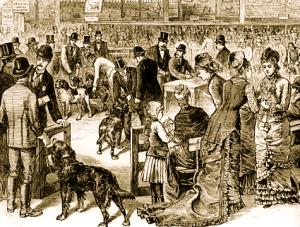 The world’s most famous dog show was first held on May 8, 1877, and called the “First Annual NY Bench Show.” The venue was Gilmore’s Garden at the corner of Madison Avenue and 26th Street, a hall which would later be known as Madison Square Garden. Interestingly, another popular Gilmore Garden event of the era was boxing. Competitive boxing was illegal in New York in those days, so events were billed as “exhibitions” or “illustrated lectures.” I love that last one.
 1,200 dogs arrived for that first show, in an event so popular that the originally planned three days morphed into four. The Westminster Kennel Club donated all proceeds from the fourth day to the ASPCA, for the creation of a home for stray and disabled dogs. The organization remains supportive of animal charities, to this day.
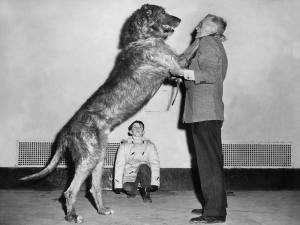 one in 1946. Even so, “Best in Show” was awarded fifteen minutes earlier than it had been, the year before. I wonder how many puppies were named “Tug” that year. The Westminster dog show was first televised in 1948, three years before the first nationally televised college football game.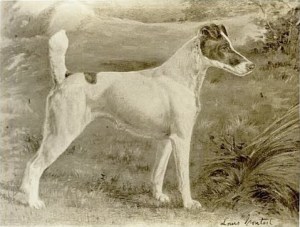

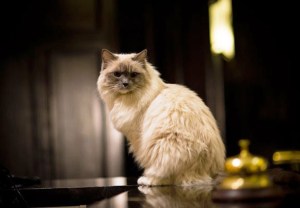 Since the late 60s, the Westminster Best in Show winner has celebrated at Sardi’s, a popular mid-town eatery in the theater district and birthplace of the Tony award. And then the Nanny State descended, pronouncing that 2012 would be their last. There shalt be no dogs dining any restaurants, not while Mayor Bloomberg is around.


 VE Day wasn’t the end of WWII, only the end of the war in Europe. Fighting in the Pacific would continue until the Japanese surrender on the 15 August 1945, the date celebrated as VJ Day.


 grounded through the landing line, the ship’s fabric covering became charged in the electrically charged atmosphere, sending a spark to the air frame and igniting a hydrogen leak. Seven million cubic feet of hydrogen ignited almost simultaneously. It was over in less than 40 seconds.
 Where a person was inside the airship, had a lot to do with their chances of survival. Mr and Mrs Hermann Doehner and their three children (Irene, 16, Walter, 10, and Werner, 8) were in the dining room, watching the landing. Mr. Doehner left before the fire broke out. Mrs. Doehner and the two boys were able to jump out, but Irene went looking for her father. Both died in the crash.
 In the latter half of WWII, Imperial Japanese military thinkers conceived the fūsen bakudan or “fire balloon”, a hydrogen filled balloon device designed to ride the jet stream, using sand ballast and a valve system to navigate the weapon system onto the North American continent.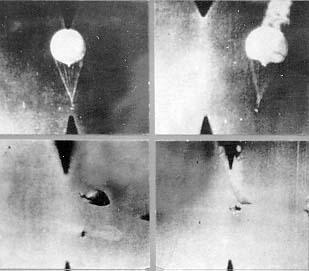


 Itter Castle appeared in the land records of the Austrian Tyrol as early as 1240. When Germany annexed Austria in 1938, Schloss Itter was first leased and later requisitioned outright by the German government, for unspecified “Official use”.

 It was late afternoon as the convoy left for Castle Itter. Leaving Boche Buster and a few Infantry to guard the largest bridge into town. What remained of the convoy fought its way through its last SS roadblock in the early evening, roaring across the last bridge and lurching to a stop in front of Itter’s gate as night began to fall. Itter’s prisoners looked on in dismay. They had expected a column of American tanks and a heavily armed infantry force. What they had here, was a single tank with seven Americans, and a truckload of armed Germans.
 concentration camp administration for the Third Reich and some of the most fanatical soldiers of WWII. Even at this late date SS units were putting up fierce resistance across northern Austria. 100-150 of them attacked on the morning of May 5. Fighting was furious around Castle Itter, the one Sherman providing machine-gun fire support until it was destroyed by a German 88mm gun. By early afternoon Lee was able to get a desperate plea for reinforcements through to the 142nd Infantry, before being cut off. Aware that he’d been unable to give complete information on the enemy’s troop strength and disposition, Lee accepted Jean Borotra’s gallant offer of assistance.
 Literally vaulting over the castle wall, the tennis star ran through a gauntlet of SS strongpoints and ambushes to deliver his message, before donning an American uniform to help fight through to the castle’s defenders. The relief force arrived at around 4pm, as defenders were firing their last ammunition.

 McCrae fought in one of the most horrendous battles of WWI, the second battle of Ypres, in the Flanders region of Belgium. Imperial Germany launched one of the first chemical attacks in history, attacking the Canadian position with chlorine gas on April 22, 1915. The Canadian line was broken but quickly reformed, in near-constant fighting that lasted for over two weeks.


 The vivid red flower blooming on the battlefields of Belgium, France and Gallipoli came to symbolize the staggering loss of life in that war. Since then, the red poppy has become an internationally recognized symbol of remembrance of the lives lost in all wars. I keep a red poppy pinned to my briefcase and another on the visor of my car. A reminder that no free citizen of a self-governing Republic, should ever forget where we come from. Or the prices paid by our forebears, to get us here.


 Gehrig was pitching for Columbia University against Williams College on April 18, 1923, the day that Babe Ruth hit the first home run out of the brand new Yankee Stadium. Though Columbia would lose the game, Gehrig struck out seventeen batters to set a team record.
 Gehrig appeared at Yankee Stadium on “Lou Gehrig Appreciation Day”, July 4, 1939. He was awarded trophies and other tokens of affection by the New York sports media, fellow players and groundskeepers. He would place each one on the ground, already too weak to hold them. Addressing his fans, Gehrig described himself as “The Luckiest Man on the Face of the Earth”.


You must be logged in to post a comment.