Ed Sabol was inducted into the Professional Football Hall of Fame on August 6, 2011. Steve delivered a tribute to his father, explaining the company’s operating philosophy. “Tell me a fact”, he said, “and I’ll learn. Tell me a truth, and I’ll believe. But tell me a story, and it will live in my heart forever”.
Edwin Milton “Ed” Sabol came home from WWII and took a job selling topcoats. He was good at it and provided a decent living for his family, but his heart was elsewhere. What he liked more than anything, was to watch his son Steve play high school football.
Sabol would take a motion picture camera, a wedding gift, and film the games. He found that he had a knack for it, and founded a small film production company called Blair Motion Pictures, named after his daughter, Blair.
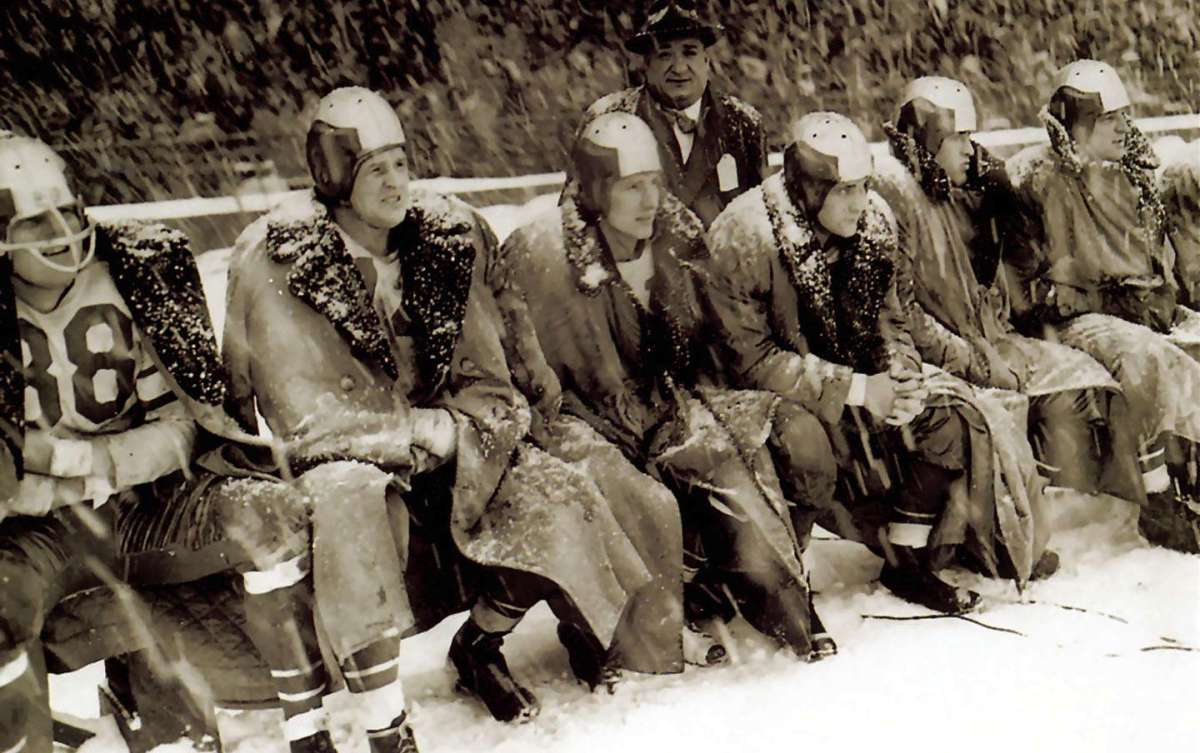
Sabol successfully bid for the rights to film the 1962 NFL championship game between the Green Bay Packers and the New York Giants. The game was played in cold so severe that camera operators suffered frostbite, and a wind so strong that it blew the ball off the tee three times before opening kickoff. Despite all that, Sabol’s work on the game was impressive.
The league’s 14 owners rejected commissioner Pete Rozelle’s proposal to buy Sabol out, instead giving him $20,000 apiece in seed money to shoot all NFL games and produce a highlight film for each team.
NFL Films production style is unmistakable: the “tight to the spiral” shot of the ball leaving the quarterback’s hand, the on-the-field close-ups and slow motion shots, all of it “mic’d up” in a way that let you hear every hit, every sound, as if you were on the field.
With the orchestral score and the stentorian tones of John Facenda’s narration, “the voice of God”: “They call it pro football. They play it under the autumn moon, in the heat of a Texas afternoon.” NFL Films became “the greatest in-house P.R. machine in pro sports history” according to Salon.com television critic Matt Zoller Seitz. “An outfit that could make even a tedious stalemate seem as momentous as the battle for the Alamo.”
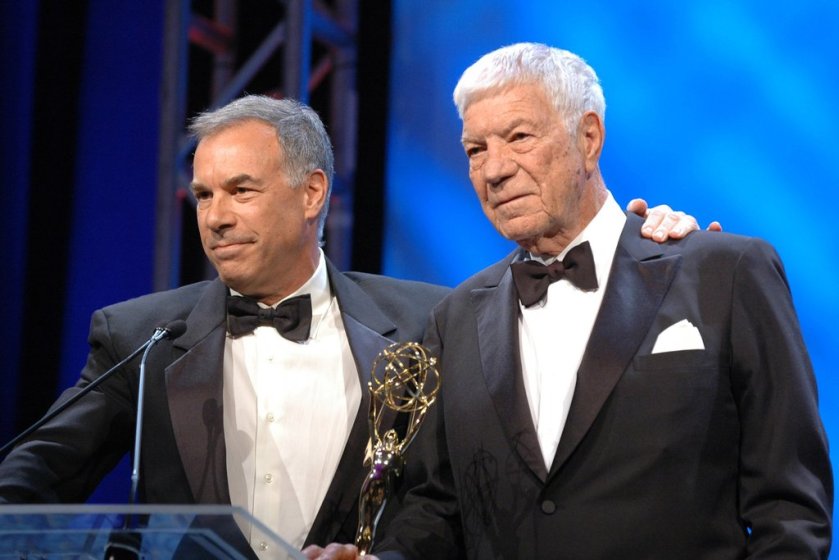
Steve and Ed Sabol at the 2004 Sports Emmys
NFL Films won 112 Sports Emmys. While the company’s $50 million earnings are small relative to the $18 billion in revenue the NFL earns from television alone, the real value of NFL Films is how it promotes the sport. Many credit NFL Films as a key reason that the National Football League has become the most watched professional sports league in the United States.
Ed Sabol was inducted into the Professional Football Hall of Fame on August 6, 2011. Steve was suffering inoperable brain cancer at the time, a condition which would take his life the following September. In delivering his tribute to his father, Steve Sabol explained the company’s operating philosophy. “Tell me a fact”, he said, “and I’ll learn. Tell me a truth, and I’ll believe. But tell me a story, and it will live in my heart forever”.
The Mel Gibson film “Braveheart” has it mostly right as they depict Wallace’s betrayal by Scottish Nobles. Wallace had evaded capture until August 5, 1305, when a Scottish knight loyal to Edward, John de Menteith, turned him over to English soldiers at Robroyston, near Glasgow.
Following the death of King Alexander in 1286, there were several weak claimants to the Scottish throne. Thousands of nobles met in the great feudal court held at the castle Berwick upon Tweed, for the purpose of selecting their new King. In the end, the nobles selected John Balliol.
John was a weak king, known as “Toom Tabard”. Empty Coat. Factions quickly coalesced around rival claimants. Scotland was descending into civil war when nobles called on English King Edward I “Longshanks”, to arbitrate.
Edward could have entered this story as a benevolent and wise ruler, or he could have been a tyrant. He chose the latter course, passing into history as “The Hammer of the Scots”. Edward summoned King John to stand before the English Court as a common plaintiff. Thousands of Scottish nobles were arrested as John was forced to abdicate.
It’s uncertain where William Wallace came from, but later events indicate that he had military training. Specifically, he was an archer. He must have been an imposing physical specimen, as the first class long bow of the era had a draw weight of 170lbs.
Rebellion arose across Scotland as Wallace assassinated William de Heselrig, the English High Sheriff of Lanark, in May 1297. He became involved with raids happening all over Scotland, joining forces with Andrew Moray on September 11, 1297 to defeat a vastly superior English army at Stirling Bridge.
After the battle, Moray and Wallace assumed the title of “Guardians of the Kingdom of Scotland”, though Moray would soon die of injuries suffered at Stirling Bridge. They were sworn to restore the reign of King John Balliol, and Wallace was knighted as he led a large scale raid into northern England in November of 1297.
Edward ordered a second invasion of Scotland in April, 1298. Wallace was defeated at the battle Falkirk later that year. He managed to escape capture, resigning as Guardian of Scotland and traveling to the French court of King Philip IV to plead the case for assistance in the Scottish struggle for independence.
The Mel Gibson film “Braveheart” has it mostly right as it depicts Wallace’s betrayal by Scottish Nobles. Wallace had evaded capture until August 5, 1305, when a Scottish knight loyal to Edward, John de Menteith, turned him over to English soldiers at Robroyston, near Glasgow.
Wallace was transported to London and tried for treason and “atrocities against civilians in war.” He was crowned with a garland of oak, suggesting that he was “king of outlaws”. Responding to the treason charge, Wallace said “I could not be a traitor to Edward, for I was never his subject.” Wallace was found guilty on August 23, stripped naked, and dragged through the city by a horse to the Elms at Smithfield.
This is where the Braveheart film gets it wrong. I’m not going to dwell on the brutality which passes for medieval “justice”. Suffice it to say that the film’s portrayal of Wallace’s execution could have been a Disney production, compared with what was dealt him. When it was over, Wallace’s head sat atop a pike on London Bridge, dipped in tar, next to the heads of the brothers John and Simon Fraser.
Scotland never did gain independence from England, though the subject has never entirely been put to rest. Last June, the Scottish electorate voted to remain in the European Union, even should the rest of the UK vote to “Brexit”. William Wallace was looking down on the proceedings with great interest. I’m sure.
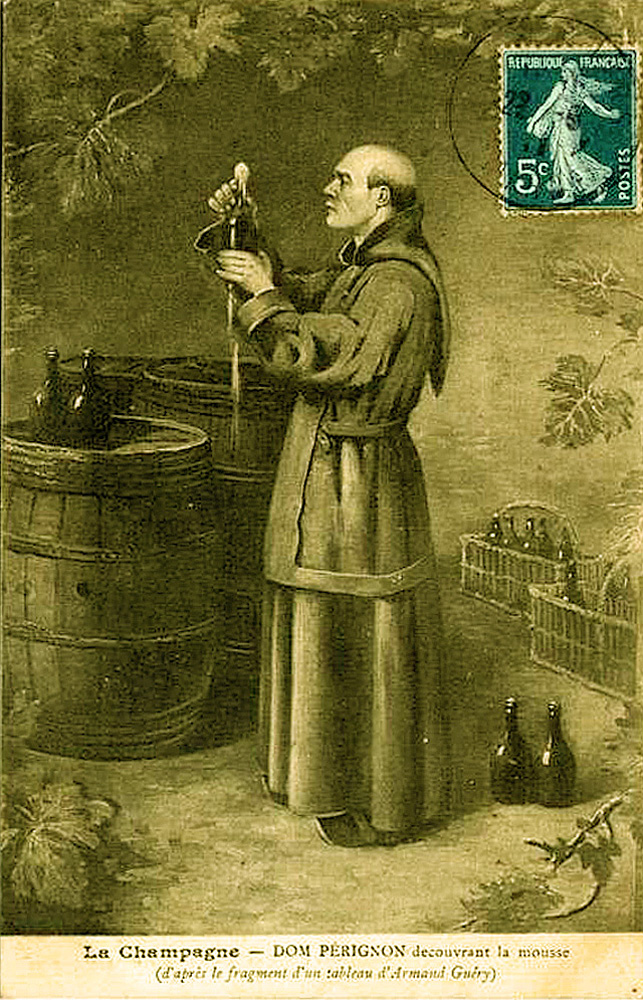
August 4, 1693 is the date traditionally ascribed to Brother (Dom) Pérignon’s invention of Champagne, when he is supposed to have said “Come quickly, I am drinking the stars!”.
The wines of medieval and renaissance Europe tended to be almost universally red, and almost always still. The in-bottle refermentation that gives “sparkling” wine its ‘fizz’ was a problem for winemakers. Fermentable sugars were frequently left over when weather began to cool in the fall, particularly with the white grape varietals. Refermentation would set in with the warm spring weather, converting bottles into literal time bombs. Corks would pop out and wine would spoil. Sometimes the whole batch would explode, one pressurized bottle going off in sympathetic detonation with the other.
Pierre Perignon entered the Benedictine Order when he was 19, doing his novitiate at the abbey of Saint-Vannes near Verdun, and transferring to the abbey of Hautvillers in 1668.
August 4, 1693 is the date traditionally ascribed to Brother (Dom) Pérignon’s invention of Champagne, when he is supposed to have said “Come quickly, I am drinking the stars!”.
The story seems to be an 1821 embellishment by one Dom Groussard, in an attempt to increase the prestige of the abbey. The English scientist and physician Christopher Merret seems to have been the first to add sugars, beginning the refermentation process which resulted in the first carbonated wine.
Yet Dom Pérignon most certainly perfected the double fermentation process, and made important contributions to the quality of the abbey’s fine wines. He was an early advocate of natural process, farming methods we would call “organic”, today. He strictly avoided the addition of foreign substances, and insisted that all blending take place at the grape stage. Pérignon insisted on “blind” tasting, not wanting to know what vineyard a grape came from prior to selection.
Pérignon didn’t like white grapes because of their tendency to enter refermentation. He preferred the Pinot Noir, and would aggressively prune vines so that they grew no higher than three feet and produced a smaller crop. The harvest was always in the cool, damp early morning hours, and he took every precaution to avoid bruising or breaking his grapes. Over-ripe and overly large fruit was always thrown out. Pérignon did not allow grapes to be trodden, always preferring the use of multiple presses.
Dom Pérignon served as the “cellarer” of the Hautvillers abbey until his death in 1715, in a time when the abbey flourished and doubled the size of its vineyards. In a sign of honor and respect, Dom Pierre Pérignon was buried in a section of the abbey cemetery, historically reserved only for abbots.
Moët et Chandon, which began as Moët et Cie, purchased the vineyards of the Abbey of Hautvillers in 1792. To this day, Moët’s most prestigious cuvée bears the name of Dom Pérignon.
Ralph Durst, one of the largest agricultural employers in Yuba County, California, advertised widely for hops pickers for the 1913 harvest season. He got 1,000 more than he needed, which had the effect of depressing already low wages.
Organized labor was a growing force in 1913 and strikes were often violent. English cigar maker Samuel Gompers had started the American Federation of Labor (AFL) almost 30 years earlier, and Upton Sinclair’s exposé on the Chicago Stockyards, “The Jungle”, had been in print for 7 years. Yet seasonal farm workers were difficult to organize. They were an unskilled and unsettled group, largely transient and until now, mostly passed over by Union organizers.
Ralph Durst, one of the largest agricultural employers in Yuba County, California, advertised widely for hops pickers for the 1913 harvest season. He got 1,000 more than he needed, which had the effect of depressing already low wages.
Sanitary conditions quickly became deplorable. There was one toilet per 100 workers, which quickly filled up in the July heat. Fresh drinking water was scarce. A Durst cousin selling watered down, ersatz lemonade out of a wagon for a nickel a glass did little to improve things.
The International Workers of the World, (IWW), established in 1905, was a radical socialist labor organization. 100 of Durst’s hop pickers were members. Two of them, Richard “Blackie” Ford and Herman Suhr, managed to rally a majority to their cause with speeches, songs and slogans.
104 years ago today, 1,700 seasonal hops pickers gathered in the field of the Durst Hop Farm. They demanded an increase from their $1.00/100 lbs of hops picked, and they wanted better working conditions. Durst agreed to some changes, but Ford and Suhr stuck to their full list of demands and called a strike.
A mass meeting was called on the afternoon of August 3, as a succession of speakers addressed the crowd in English, German, Greek, Italian, Arabic, and Spanish. Most were in favor of a strike. Tensions were high when Durst arrived just after 5pm with Marysville Sheriff George Voss, a number of deputies, and Yuba County District Attorney Edward Manwell, who was also Durst’s personal attorney.
The group was surrounded as a deputy fired a warning blast into the air from a shotgun, but the warning had the opposite effect from what was intended. The crowd attacked District Attorney Manwell and Deputy Sheriff Lee Anderson and began beating them. Gunfire erupted in what soon became a full-fledged riot. Deputy Sheriff Eugene Reardon and District Attorney Manweel were both killed, along with two pickers. A third lost an arm to a shotgun blast.
There were over 100 arrests in the aftermath of the riot, the prisoners beaten and starved to extract information on strike leaders. A field worker named Alfred Nelson was hauled from one county to another and held in secret locations while being sweated, starved, and beaten. He was repeatedly threatened with death, unless he confessed to participation in the killings. The pressure was so severe that Nels Nelson, the picker who lost his arm in the shotgun blast, hanged himself in his cell. Another prisoner tried to do the same, and a third suffered a mental breakdown and had to be committed to an asylum.
Blackie Ford and Herman Suhr were found guilty of second-degree murder in the following trial, and sentenced to life in the state penitentiary. Two other strike leaders, Walter Bagan and William Beck, were acquitted.
The Wheatland Hop Riot was one of the first major agricultural labor confrontations in American history, but it was far from the last. Today, the site is registered as California Historical Landmark #1003.
The Battle of Cannae, fought this day in 216 BC, is studied by historians and military tacticians to this day. A Roman army, estimated at 86,000 Roman and allied troops, was drawn in and enveloped by Hannibal’s far smaller force.
There were two great powers in the Mediterranean region of 264BC: the Romans on the Italian peninsula, and Carthage, a North African maritime power settled by Phoenician travelers some 800 years earlier, in modern day Tunisia.
A dispute in Sicily that year led to war between the two powers, ending in Roman victory in 241BC and a vanquished Carthage being stripped of her Navy.
Hamilcar Barca was a great general of this, the first “Punic” war, the name deriving from the Latin word for Phoenician. Barca made his then 12-year-old son Hannibal swear undying hatred for the Romans.
At the age of 20, Hannibal Barca set out on what would become the second Punic war. It was late Spring, 218BC, when Hannibal left the Iberian outpost of “New Carthage”, now the Spanish city of Cartagena. Crossing into hostile Gaul (France) at the head of 38,000 infantry, 8,000 cavalry, and 37 war elephants, Hannibal arrived at the Rhône River in September.
Hannibal’s crossing of the Alps that winter is one of the great feats of military history, costing almost half his force before entering Italy that December.
What followed was a series of crushing defeats for Rome. First at the Battle of Trebia, then Lake Trasimene, Hannibal’s army laid waste to the Italian peninsula.
There was almost no family in all of Rome that didn’t lose one or more members in the swath of destruction brought down on them by Hannibal and his Carthaginian army.
At this point, Rome took the extreme step of appointing one man, absolute dictator of the Roman Republic. His name was Quintus Fabius Maximus Verrucosus. Rather than joining the Carthaginians in pitched battle, Fabius sought to wear them down in a series of “hit & run” and “scorched earth” tactics.
Fabius was right. His tactics were a military success and bought the Republic time in which to rebuild its military, but they were a political flop. The Roman psyche would accept nothing short of pitched battle. In six months, Fabius “Cunctator” (“the Delayer”) was replaced by the co-consuls Gaius Terentius Varro, and Lucius Aemilius Paullus.
In the co-consul system, Varro would be supreme commander of the army on one day, and Paullus the next. Knowing full well how this system worked and wanting to draw the more aggressive Varro into pitched battle, Hannibal sprung his trap on a day when Varro was in command.
The Battle of Cannae, fought this day in 216 BC, is studied by historians and military tacticians to this day. A Roman army, estimated at 86,000 Roman and allied troops, was drawn in and enveloped by Hannibal’s far smaller force. Squeezed into a pocket so tightly they could barely raise their weapons, the Legions were attacked from all sides.
Unable to function as a disciplined unit, as many as 75,000 Romans were hacked to death, equivalent to the seating capacity of the New York Mets’ Citi Field and Harvard Stadium, combined.
Another 10,000, were captured. Among the dead was a current Consul, the most powerful elected official in the Roman Republic, as well as both consuls from the preceding year.
80 senators, almost a third of the entire Roman Senate, were wiped out on that single day.
There was now no military force left between Hannibal and Rome itself. Most powers would have admitted defeat, and sued for peace. Not Rome. Unable to defeat the Carthaginian army in open battle, Rome returned to Fabian tactics, harassing the Carthaginians and wearing them down in an endless series of scorched earth and guerrilla tactics.
For 16 years, Hannibal remained undefeated on Italian soil, while his political adversaries at home never once sent him reinforcement. He was finally recalled to Carthage to defend his homeland against Roman attacks in North Africa and Spain. Hannibal was defeated by his own tactics at the Battle of Zama, the second Punic War ending in 201BC.
Hannibal, Louvre Museum.
Carthage was a thoroughly defeated power as Hannibal grew into his old age, but some in Rome wouldn’t let it go. Misbehaving Italian children were threatened that Hannibal would come and get them if they weren’t good. Roman politician Marcus Porcius Cato, “Cato the Elder”, ended his every speech, “Carthago delenda est”, “Carthage must be destroyed“.
The third Punic War saw the Romans attack Carthage itself. After three years of siege, the city fell in 146BC. Thousands were slaughtered, as many as 70,000 sold into slavery. Though the salting of fields is probably a later embellishment to the story, the city was sacked, then burned to the ground. Utterly destroyed.
Hannibal himself had grown elderly by the time of 181-183BC, fleeing from one town to the next to escape his Roman pursuers. Unwilling to be paraded through Rome in a cage, Hannibal committed suicide by poison sometime that same year. In a letter found after his death, Hannibal had written “Let us relieve the great anxiety of the Romans, who have found it too weighty a task, to wait for the death of a hated old man”.
A federalized militia force of 12,950 was raised to put down what President Washington saw as armed insurrection, marching on Western Pennsylvania in October 1794. It was a larger force than General Washington normally had under his command, during the late Revolution.
On ratification of the modern constitution in 1789, the founding fathers gazed out at what they had wrought. What they saw, was debt.
The Continental government had been unable to levy taxes under the Articles of Confederation, the only major income source being foreign import duties. The government had borrowed money to meet expenses during this period, accumulating $54 million in debt. The states themselves another $25 million.
Compounding the problem was the matter of runaway inflation, which had plagued the Articles of Confederation period. The colonies had printed paper currency to pay debts, as did the national government. Silver coinage remained stable due to the inherent value of the metal itself, but there was nothing behind this paper money. At one point, you could buy a single sheep for $2 “hard currency”, or $150 in paper “Continental Dollars”. To this day, you might hear the expression “worthless as a continental”.
The first Secretary of the Treasury, Alexander Hamilton, reported in his Report on Public Credit, urging Congress to consolidate state and national debt into a single debt to be funded by the federal government. Hamilton felt that existing duties were as high as they could be without depressing imports, so he recommended the first excise tax on a domestically manufactured product – whiskey. The more meddlesome of Hamilton’s contemporaries were enthusiastically in favor of a “sin tax”, just as they are today. The “Whiskey Act” became law on March 3, 1791.
The whiskey tax was immediately unpopular, particularly in the west where it was, for all intents and purposes, an income tax. At a flat rate of 7¢ per gallon, the tax weighed more heavily on the western frontiers, where whiskey was sold for 50¢ a gallon. About half what it sold for in the more established regions of the east.
Furthermore, coinage wasn’t easy to come by on the frontiers. In many areas the medium for exchange was whiskey itself. The stuff was popular, it’s value was relatively stable, and it was easier to transport than the grain from which it was distilled.
Folks on the western fringes of the new nation already felt the federal government was doing too little to secure them against the predation of Indians. This whiskey tax was the final straw.
Illustration of the Whiskey Rebellion from “Our First Century”, R.M. Devens 1882
Petitions were signed against the new law and there were hearings, none of which settled the matter satisfactorily. Events reached a boiling point in May 1794, when federal district attorney William Rawle issued subpoenas for more than 60 Western Pennsylvania distillers who had not paid their excise tax. All 60 were expected to appear in excise court in Philadelphia, an expensive, disruptive trip that these poor farmers were loathe to undertake.
The war of words became a shooting war as US Marshal David Lenox was delivering these writs in Allegheny County, south of Pittsburgh, on July 15.
More shooting incidents occurred in the days that followed. Objections to the whiskey tax gave way to a long list of economic grievances, as over 7,000 gathered in Braddock’s Field on August 1. They talked of secession and carried their own flag, each of its six stripes representing one of 6 Pennsylvania or eastern Ohio counties.
At last they marched on Pittsburg, burning the barns of Major Abraham Kirkpatrick, who had previously led soldiers against them.
A federalized militia force of 12,950 was raised to put down what President Washington saw as armed insurrection, marching on Western Pennsylvania in October 1794. It was a larger force than General Washington normally had under his command during the late Revolution.
Washington himself rode out to check on the progress of his army, the first and only time in history that a sitting American President led an army in the field.
The whiskey rebellion collapsed in the face of what was then an overwhelming army, with 10 of their leaders brought to Philadelphia to stand trial. Two were sentenced to hang for their role in the rebellion, but President Washington pardoned them both. The whiskey rebellion was over.
All internal taxes were repealed in 1800, when President Thomas Jefferson returned US fiscal policy to a reliance on trade tariffs. With the Napoleonic wars ongoing in Europe, business was good. National debt was reduced from $83 million to $43 million, despite $11 million spent on the Louisiana Purchase.
President Andrew Jackson paid off the national debt in its entirety, in 1835. The first and only President in United States history, ever to do so. Since that time, the Federal government has saddled the American taxpayer with approximately $301 million in additional debt. Per day.
Albert took a bullet in the shoulder at the Battle of Agagia on February 26, 1916, while the monkey, beside himself with agitation, licked the wound and did everything he could to comfort the stricken man. It was this incident more than any other that marked Jackie’s transformation from pet and mascot, to a comrade to the men of the regiment.
In 1915, Albert Marr lived with his family and his Chacma baboon, Jackie, on Cheshire Farm, on the outskirts of Pretoria, South Africa. The Great War had begun a year earlier, when Marr was sworn into the 3rd (Transvaal) Regiment of the 1st South African Infantry Brigade, in August of that year. He was now Private Albert Marr, #4927.
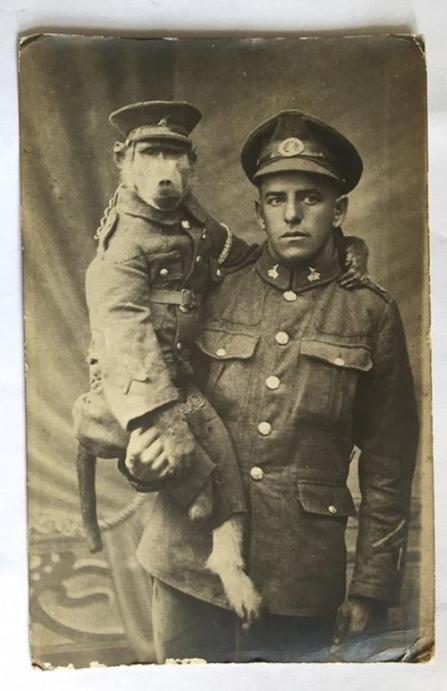
Private Marr asked for and received permission to bring Jackie along with him. It wasn’t long before the monkey became the official Regimental Mascot.
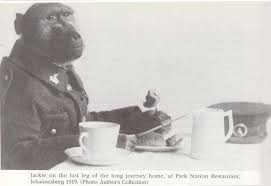
Jackie drew rations like any other soldier, eating at the mess table, using his knife and fork and washing it all down with his own drinking basin.
He drilled and marched with his company in a special uniform and cap, complete with buttons, regimental badges, and a hole for his tail.
Jackie entertained the men during quiet periods, lighting their pipes and cigarettes and saluting officers as they passed on their rounds. He learned to stand at ease when ordered, placing his feet apart and hands behind his back, regimental style.
These two inseparable buddies, Albert Marr and Jackie, first saw combat during the Senussi Campaign in North Africa. Albert took a bullet in the shoulder at the Battle of Agagia on February 26, 1916, while the monkey, beside himself with agitation, licked the wound and did everything he could to comfort the stricken man. It was this incident more than any other that marked Jackie’s transformation from pet and mascot, to a comrade to the men of the regiment.
Jackie would accompany Albert at night when he was on guard duty. Marr soon learned to trust Jackie’s keen eyesight and acute hearing. The monkey was almost always first to know about enemy movements or impending attack. He would give early warning with a series of sharp barks, or by pulling on Marr’s tunic.
The pair went through the nightmare of Delville Wood together, early in the Somme campaign, when the First South African Infantry held their position despite 80% casualties. The pair experienced the nightmare of mud that was Passchendaele, and the desperate fighting at Kemmel Hill. The two were at Belleau Wood, a primarily American operation, where Marine Captain Lloyd Williams of the 2nd Battalion, 5th Marines, was informed that he was surrounded by Germans. “Retreat?” Williams retorted, “hell, we just got here.”
Throughout all of it, Albert Marr and Jackie had come through WWI mostly unscathed. That all changed in April, 1918.
The South African Brigade was being heavily shelled as it withdrew through the West Flanders region of Belgium. Jackie was frantically trying to build a wall of stones around himself, a shelter from flying shrapnel, while shells were bursting all around. A jagged piece of shrapnel wounded Jackie in the arm and another all but amputated the animal’s leg. He refused to be carried off by the stretcher-bearers, trying instead to finish his wall, hobbling around on what had once been his leg.
Lt. Colonel R. N. Woodsend of the Royal Medical Corps described the scene: “It was a pathetic sight; the little fellow, carried by his keeper, lay moaning in pain, the man crying his eyes out in sympathy, ‘You must do something for him, he saved my life in Egypt. He nursed me through dysentery’. The baboon was badly wounded, the left leg hanging with shreds of muscle, another jagged wound in the right arm. We decided to give the patient chloroform and dress his wounds…It was a simple matter to amputate the leg with scissors and I cleaned the wounds and dressed them as well as I could. He came around as quickly as he went under. The problem then was what to do with him. This was soon settled by his keeper: ‘He is on army strength’. So, duly labelled, number, name, ATS injection, nature of injuries, etc. he was taken to the road and sent by a passing ambulance to the Casualty Clearing Station”.
As the war drew to a close, Jackie was promoted to the rank of Corporal, and given a medal for bravery. Possibly the only monkey in history, ever to be so honored.
On his arm he wore a gold wound stripe, and three blue service chevrons, one for each of his three years’ front line service.
After the pair arrived home, Jackie became the center of attention at a parade officially welcoming the 1st South African Regiment home.
On July 31, 1920, Jackie received the Pretoria Citizen’s Service Medal, at the Peace Parade in Church Square, Pretoria.
Jackie died as the result of a fire, which destroyed the Marr family farmhouse in May 1921. Albert Marr passed away in 1973, at the age of 84. Marr had missed his battle buddy Jackie, for all the days in-between.
“This is Captain McVay’s dog tag from when he was a cadet at the Naval Academy. As you can see, it has his thumbprint on the back. I carry this as a reminder of my mission in the memory of a man who ended his own life in 1968. I carry this dog tag to remind me that only in the United States can one person make a difference no matter what the age. I carry this dog tag to remind me of the privilege and responsibility that I have to carry forward the torch of honor passed to me by the men of the USS Indianapolis”.
The heavy cruiser USS Indianapolis set out on its secret mission on July 16, 1945, under the command of Captain Charles Butler McVay, III. She was delivering “Little Boy” to the Pacific island of Tinian, the atomic bomb which would later be dropped on Hiroshima.
Indianapolis made her delivery on July 26, arriving at Guam two days later and then heading for Leyte to take part in the planned invasion of Japan. She was expected to arrive on the 31st.
Japanese submarine I-58, Captain Mochitsura Hashimoto commanding, fired a spread of six torpedoes at the cruiser, two striking Indianapolis’ starboard bow at fourteen minutes past midnight on Monday, July 30. The damage was massive. Within 12 minutes she had rolled over, gone straight up by the stern, and sunk beneath the waves.
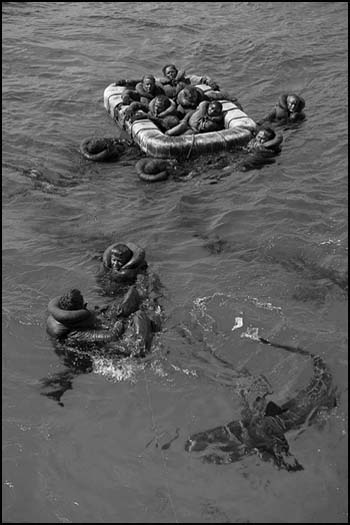
About 300 of Indianapolis’ 1,196-member crew were killed outright, leaving almost 900 treading water. Many had no life jackets and there were few life boats. There had been too little time.
For four days they treaded water, alone in open ocean, hoping for the rescue that did not come. Shark attacks began on the first day, and didn’t let up for the entire time they were in the water. Kapok life vests became waterlogged and sank after 48 hours, becoming worse than useless.
Exhaustion, hypothermia, and severe sunburn took their toll as the days went by. Some went insane and began to attack shipmates. Others found the thirst so unbearable that they drank seawater, setting off a biological chain reaction which killed them in a matter of hours.
Some simply swam away, following some hallucination that only they could see. Through it all, random individuals would suddenly rise up screaming from the ocean, and then disappear from sight, as the sharks claimed another victim.
Caribbean Reef sharks circling the sailors in reenactment scene after USS Indianapolis had been sunk by Japanese submarine. As seen on OCEAN OF FEAR: WORST SHARK ATTACK EVER.
At Naval Command, there was confusion about where Indianapolis was to report when it arrived. When the cruiser failed to arrive on the 31st, there was no report of the non-arrival. Perhaps worst, a message which could have clarified Indianapolis’ expected arrival on Monday came through garbled, and there was no request to repeat it.
As it was, only the barest of chances led to Indianapolis’ survivors being located at all. Lieutenant Wilbur Gwinn, pilot of a Ventura scout-bomber, had lost the weight from a navigational antenna wire. Belly-crawling through the fuselage to fix the thrashing antenna, Gwinn noticed an oil slick. Back in the cockpit, he dropped down to have a better look. Only then did he spot men floating in open ocean.
Lieutenant R. Adrian Marks and his PBY Catalina amphibious patrol aircraft were the first on the scene. Horrified to see sharks actually attacking the men below, Marks landed his flying boat at sea. The last Indianapolis survivor was plucked from the ocean Friday afternoon, half dead after almost five days in the water. Of the 900 or so who survived the sinking, only 317 remained alive at the end of the ordeal.
The Navy had committed multiple errors, from denying McVay’s requested escort to informing him that his route was safe, even when the surface operations officer knew at least two Japanese submarines operated within the area. No Matter. A capital ship had been lost and someone was going to pay. A hastily convened court of inquiry was held in Guam on August 13, leading to Captain McVay’s court-martial.
No less a figure than Fleet Admiral Chester Nimitz (CINCPAC) and Admiral Raymond Spruance, for whom the Indianapolis had served as 5th Fleet flagship, opposed the court-martial, believing McVay to be guilty of an error in judgement at worst, not gross negligence. Naval authorities in Washington saw things differently, particularly Navy Secretary James Forrestal and Chief of Naval Operations Admiral Ernest King.
Captain McVay’s orders were to “zigzag” at discretion, a naval maneuver most effective at avoiding torpedoes already in the water. No Navy directives in effect at that time or since have so much as recommended, let alone ordered, zigzagging at night or in poor visibility.
Prosecutors flew I-58 commander Hashimoto in to testify at the court-martial, but he swore that zigzagging would have made no difference. The Japanese Commander even became part of a later effort to exonerate McVay, but to no avail. Charles Butler McVay III was convicted of “hazarding his ship by failing to zigzag”, his career ruined.
Captain Charles Butler McVay, III
McVay had wide support among Indianapolis’ survivors, but opinion was by no means unanimous. Many family members held him personally responsible for the death of loved ones. Birthdays, anniversaries and holidays would come and go. There was almost always hate mail from some family member. One Christmas missive read “Merry Christmas! Our family’s holiday would be a lot merrier if you hadn’t killed my son”.
As the years went by, McVay began to question himself. In time, he came to feel the weight of the Indianapolis’ dead, a soul crushing burden from which there was no escape. On November 6, 1968, Charles McVay took a seat on his front porch in Litchfield Connecticut, took out his Navy revolver, and killed himself. He was cremated, his ashes scattered at sea.
The ULTRA code-breaking system which revealed I-58’s presence on Indianapolis’ course, would not be declassified until the early 90s.
Afterward:
Hunter Alan Scott was 11 and living in Pensacola when he saw the movie “Jaws”, in 1996. He was fascinated by the movie’s brief mention of Indianapolis’ shark attacks. The next year, he created his 8th grade “National History Day” project on USS Indianapolis’ sinking.
The boy interviewed nearly 150 survivors and reviewed 800 documents. The more he read, the more he became convinced that Captain McVay was innocent of the charges for which he’d been convicted.
Scott’s National History Day project went up to the state finals, only to be rejected because he used the wrong type of notebook to organize the material.
He couldn’t let it end there. Scott began to attend Indianapolis survivors’ reunions, at their invitation, and helped to gain a commitment in 1997 from then-Representative Joe Scarborough that he would introduce a bill in Congress to exonerate McVay the following year.
Senator Bob Smith of New Hampshire joined Scarborough in a joint resolution of Congress. Hunter Scott and several Indianapolis survivors were invited to testify before Senator John Warner and the Senate Armed Services committee on September 14, 1999.
Holding a dog tag in his hand, Scott testified “This is Captain McVay’s dog tag from when he was a cadet at the Naval Academy. As you can see, it has his thumbprint on the back. I carry this as a reminder of my mission in the memory of a man who ended his own life in 1968. I carry this dog tag to remind me that only in the United States can one person make a difference no matter what the age. I carry this dog tag to remind me of the privilege and responsibility that I have to carry forward the torch of honor passed to me by the men of the USS Indianapolis”.
The United States Congress passed a resolution in 2000, signed into law by President Bill Clinton on October 30, exonerating Charles Butler McVay, III of the charges which had led to his court martial, humiliation and suicide.
The record cannot not be expunged – Congress has rules against even considering bills which alter military records. Yet Captain McVay had been exonerated, something that the Indianapolis survivors had tried for years to accomplish, without success. Until the intervention of a 12-year-old boy.
The last word on the whole episode belongs to Captain Hashimoto, who wrote the Senate Armed Services Committee in 1999 on behalf of Captain McVay. “Our peoples have forgiven each other for that terrible war and its consequences“, wrote the former submarine commander, now a Shinto Priest. “Perhaps it is time your peoples forgave Captain McVay for the humiliation of his unjust conviction“.
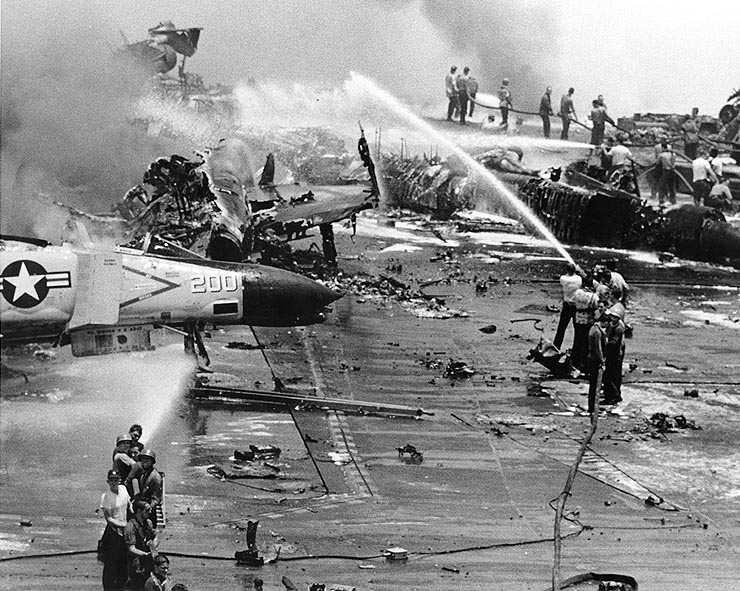
With trained firefighters now dead or incapacitated, hundreds of sailors and marines fought for hours to bring the fire under control. Flare-ups would continue inside the ship until 4:00 the next morning.
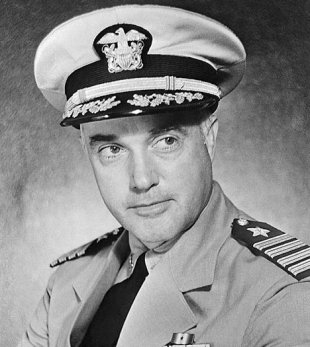
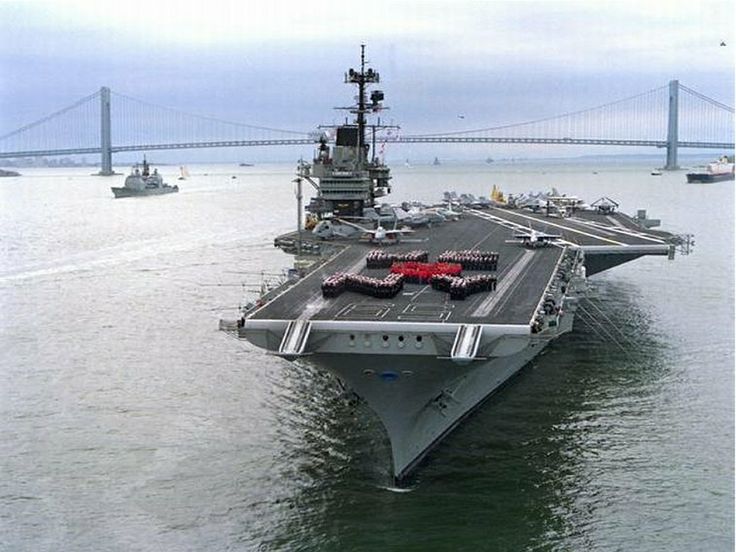
The Super Carrier USS Forrestal departed Norfolk, Virginia in June 1967, with a crew of 552 officers and 4,988 enlisted men. Sailing around the horn of Africa, Forrestal stopped briefly at Leyte Pier in the Philippines, before sailing on to “Yankee Station” in the Gulf of Tonkin, arriving on July 25.
Before the cruise, damage control firefighting teams were shown training films of navy ordnance tests, demonstrating how a 1,000lb bomb could be directly exposed to a jet fuel fire for a full 10 minutes. These tests were conducted using the new Mark 83 bomb, featuring a thicker, heat resistant wall, and “H6” explosive, designed to burn off at high temperatures. Like a huge sparkler.
Along with the Mark 83s, the ordnance resupply had included 16 AN-M65A1 “fat boy” bombs, WWII surplus intended to be used on the second bombing runs of the 29th. These were thinner skinned than the newer ordnance, armed with 20+ year-old “Composition B” explosive. Already far more sensitive to heat and shock than newer ordnance, composition B becomes more so as the explosive ages. The stuff becomes more powerful as well, up to 50%, by weight.
These older bombs were way past their “sell-by” date, having spent the better part of the last 30 years in the heat and humidity of the Philippine jungle. Ordnance officers wanted nothing to do with the Fat Boys. They were rusting and leaking paraffin, their packaging rotted. Some had production dates as early as 1935.
Handlers were wary of these old weapons, fearing they might go off spontaneously during catapult launch. Someone suggested that they be immediately jettisoned. Captain John Beling was informed of these concerns, and demanded that Diamond Head, their supply ship, take them back and exchange them for newer ordnance. The reply was that there were no more. Combat operations were using Mark 83s up faster than new ones could be procured. Fat boys were all that was available.
At 10:50am local time, July 29, preparations were underway for the second strike of the day.
Today, John McCain’s diagnosis of brain cancer has brought the Senator from Arizona to prominence in the evening news. Fifty years ago today, Lieutenant Commander John McCain was in the cockpit of an A-4 Skyhawk. Next to him was Lieutenant Commander Fred D. White in his own A-4.
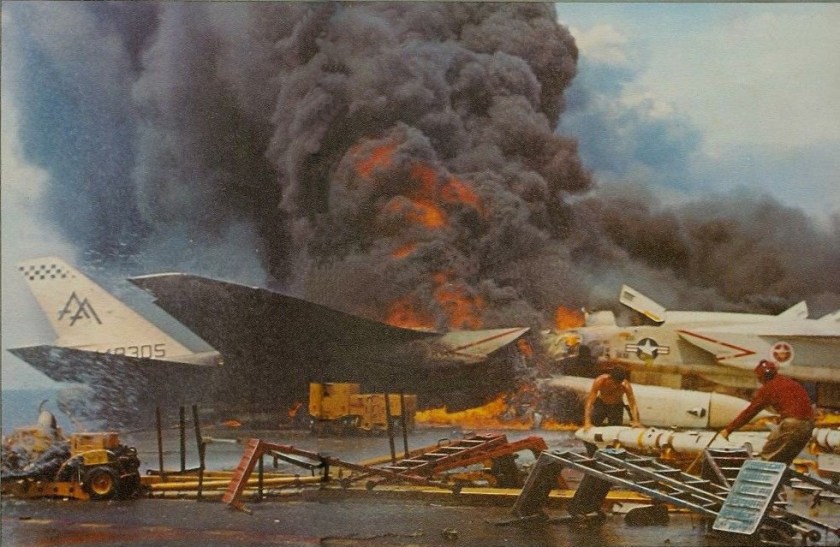
An electrical malfunction fired a 5″ Zuni rocket across the flight deck and into White’s fuel tank. The rocket’s safety mechanism prevented it from exploding, but the A-4’s torn fuel tank was spewing flaming jet fuel onto the deck. Other fuel tanks soon overheated and exploded, adding to the conflagration as McCain scrambled down the nose of the aircraft and across the refueling probe.
Damage Control Team #8 sprang into action immediately, as Chief Gerald Farrier spotted one of the Fat Boys turning cherry red in the flames. Without benefit of protective clothing, Farrier held his PKP fire extinguisher on the 1,000lb bomb, hoping to keep it cool enough to prevent its cooking off as his team brought the conflagration under control.
Firefighters were confident that their ten-minute window would hold as they fought the flames, but composition B explosives proved as unstable as the ordnance people had feared. The bomb went off in just over a minute, killing Farrier instantly and virtually the entire firefighting team, along with Fred White, who was a split second behind McCain.
By Official U.S. Navy Photograph – This Image was released by the United States Navy with the ID USN 1124794
The Mark 83 bombs performed as designed, but eight of the old thousand-pounders went off in the next few seconds, triggering the sympathetic detonation of at least one 500 pounder. The port quarter of the Forrestal ceased to exist as huge holes were torn in the flight deck, flaming jet fuel draining into the aircraft hangar and the living quarters below.
Gary Childs, my uncle, was in his cabin when the fire broke out, leaving just before his quarters were engulfed in flames. With trained firefighters now dead or incapacitated, he and hundreds of sailors and marines fought for hours to bring the fire under control. Flare-ups continued inside the ship until 4:00am on the 30th.
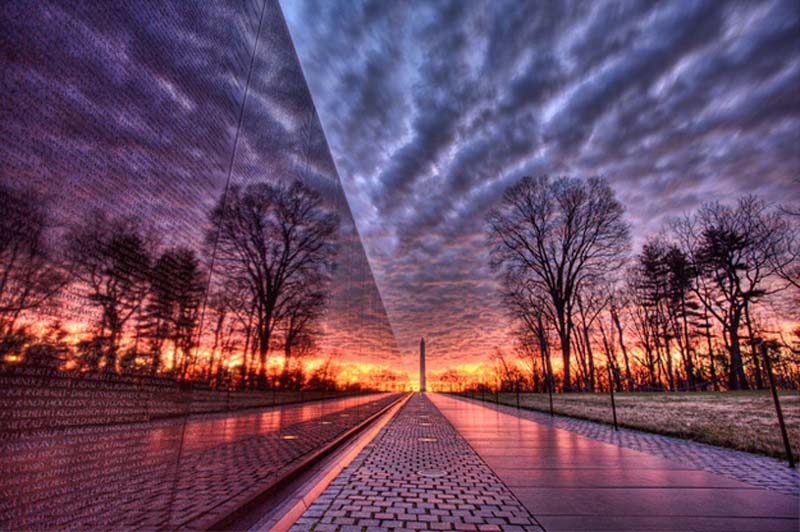
Panel 24E of the Vietnam Memorial contains the names of 134 crewmen who died in the conflagration. Eighteen of those found their final rest at Arlington National Cemetery. Another 161 were seriously wounded. Not including the aircraft, damage to the USS Forrestal exceeded $72 million. Equivalent to over $415 million today.
Since 1950, there have been 32 Broken Arrow incidents. As of this date, six nuclear weapons have been lost and never recovered.
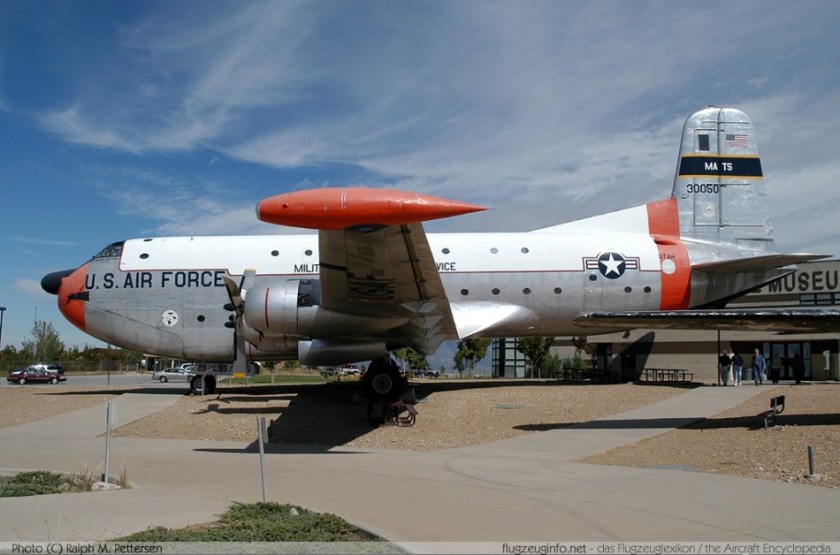
At one time, the C-124 was the world’s largest military transport aircraft. Weighing in at 175,000lbs with a wingspan of 175ft, four 3,500 horsepower Pratt & Whitney propeller engines drive the air frame along at a stately cruising speed of 246 mph. Manufacturer Douglas Aircraft called the aircraft “Globemaster”. Airmen called the plane “Old Shaky”.
The Air Force C-124 Globemaster transport left its base in Delaware on July 28, 1957, on a routine flight to Europe. On board were a crew of seven, three nuclear bombs, and one nuclear core. The flight would routinely have taken 10-12 hours. This trip was destined to be anything but routine.
Exactly what went wrong remains a mystery, due to the sensitive nature of the cargo. Two engines had to be shut down shortly into the mission, and the aircraft turned back. The nearest suitable airfield was the Naval Air Station in Atlantic City, but that was too far. Even at maximum RPMs, the best the remaining two engines could do was slow the massive aircraft’s descent into the sea.
An emergency landing on open ocean is not an option with such a large aircraft. It would have broken up on impact with the probable loss of all hands. Descending rapidly, the crew would have jettisoned everything they could lay hands on, to reduce weight. Non-essential equipment would have gone first, then excess fuel, but it wasn’t enough. With only 2,500ft and losing altitude, there was no choice left but to jettison those atomic bombs.
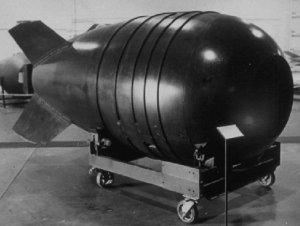
At 3,000lbs apiece, two of the three bombs were enough to do the job, and the C-124 made it safely to Atlantic City. What became of those two atomic bombs remains a mystery. Most likely, they lie at the bottom of the ocean, 100 miles off New Jersey.
The United States Department of Defense has a term for accidents involving nuclear weapons, warheads or components, which do not involve the immediate risk of nuclear war. Such incidents are called “Broken Arrows”.
Broken Arrows include accidental or unexplained nuclear or non-nuclear detonation of an atomic weapon, the loss of such a weapon with or without its carrying vehicle, and the release of nuclear radiation resulting in public hazard, whether actual or potential.
Since 1950, there have been 32 Broken Arrow incidents. As of this date, six nuclear weapons have been lost and never recovered.
If you’re interested, a handy “Nuclear Folly Locator” appears at the link below, based on Rudolph Herzog’s “A Short History of Nuclear Folly”. It makes for some very comforting reading.




 The Mel Gibson film “Braveheart” has it mostly right as it depicts Wallace’s betrayal by Scottish Nobles. Wallace had evaded capture until August 5, 1305, when a Scottish knight loyal to Edward, John de Menteith, turned him over to English soldiers at Robroyston, near Glasgow.




 104 years ago today, 1,700 seasonal hops pickers gathered in the field of the Durst Hop Farm. They demanded an increase from their $1.00/100 lbs of hops picked, and they wanted better working conditions. Durst agreed to some changes, but Ford and Suhr stuck to their full list of demands and called a strike.


 More shooting incidents occurred in the days that followed. Objections to the whiskey tax gave way to a long list of economic grievances, as over 7,000 gathered in Braddock’s Field on August 1. They talked of secession and carried their own flag, each of its six stripes representing one of 6 Pennsylvania or eastern Ohio counties.
 The whiskey rebellion collapsed in the face of what was then an overwhelming army, with 10 of their leaders brought to Philadelphia to stand trial. Two were sentenced to hang for their role in the rebellion, but President Washington pardoned them both. The whiskey rebellion was over.

 Private Marr asked for and received permission to bring Jackie along with him. It wasn’t long before the monkey became the official Regimental Mascot.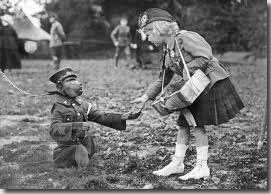


 Indianapolis made her delivery on July 26, arriving at Guam two days later and then heading for Leyte to take part in the planned invasion of Japan. She was expected to arrive on the 31st.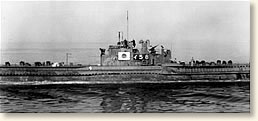



 An emergency landing on open ocean is not an option with such a large aircraft. It would have broken up on impact with the probable loss of all hands. Descending rapidly, the crew would have jettisoned everything they could lay hands on, to reduce weight. Non-essential equipment would have gone first, then excess fuel, but it wasn’t enough. With only 2,500ft and losing altitude, there was no choice left but to jettison those atomic bombs.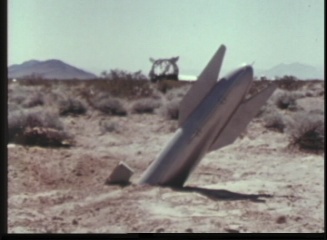


You must be logged in to post a comment.