

The earliest version of the Bugs Bunny cartoon character had something of his later personality, though he was smaller, with a voice sounded more like Woody Woodpecker. He first appeared in “Porky’s Hare Hunt”, released on April 30, 1938, a little white wisecracking rabbit, entering the scene with the odd expression “Jiggers, fellers”. Hare Hunt was the first to introduce the Elmer Fudd character, and first to use the Groucho Marx line, “Of course you realize, this means war!”
According to his 1990 “biography”, Bugs Bunny was born in Brooklyn New York on July 27, 1940, in a warren under Ebbets Field, home of the Brooklyn Dodgers. A Utah celery grower once offered a lifetime supply of their product to everyone at the studio, if they switched Bugs over to a celery diet. But carrots it was. For fifty years, production had to stop as Mel Blanc, the real-life voice of Bugs Bunny, stopped to spit out the raw carrot he ate to make the sound of his character eating a carrot.
 “A Wild Hare”, directed by Tex Avery and released on this day in 1940, was the first recognizable Bugs Bunny cartoon. For the first time Elmer Fudd and Bugs Bunny are cast as hunter and tormentor, the first time Mel Blanc used that trademark Flatbush accent, and the first in which Bugs uses his catchphrase, “Ehhh, What’s up, Doc?” A Wild Hare was a huge success in theaters, receiving an Academy Award nomination for Best Animated Short Film and ensuring Bugs Bunny’s future as a stock character.
 In 1941, “Hiawatha’s Rabbit Hunt” became the second Bugs Bunny cartoon to receive an Academy Award nomination for Best Animated Short Film. It didn’t win the award, and Bugs later made fun of the award in “What’s Cookin’ Doc?”. In 1944 he demands a recount, claiming to be the victim of “sa-bo-TAH-gee”.
Bugs Bunny was receiving star billing by World War II, helping to make Warner Bros. the most profitable cartoon studio in America. He appeared along with Porky Pig and Elmer Fudd in a 1942 US war bond commercial, going toe to toe with a group of Japanese soldiers in “Bunny Nips the Nips” in 1944. The cartoon was later pulled due to the racially stereotypical manner in which it treated the Japanese. Bugs went to “Joimany” to face off against Göring and Hitler in “Herr Meets Hare” in 1945, the first time he “musta made a wrong toin at Albaquoique”.
Bugs even showed up in rival studio Paramount Pictures’ “Jasper goes hunting”, once. He popped out of his rabbit hole and said “What’s up Doc”, realizing his mistake only when he hears the orchestra play the wrong theme. “Hey, I’m in the wrong picture!” he says, and there he went, down the rabbit hole.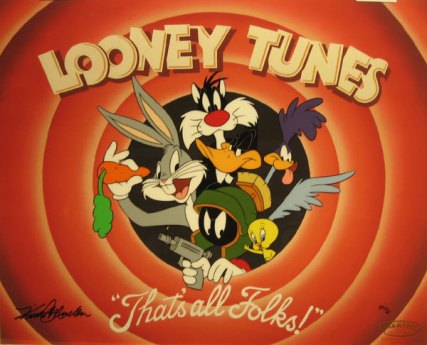
It was usually Porky Pig who brought Looney Tunes films to a close, with his trademark “Uh-b-dee, uh-b-dee, uh-b-dee, that’s all, folks!”, but Bugs replaced him at the end of “Hare Tonic” and “Baseball Bugs”. He busted out of a drum, same as Porky, munching on a carrot and saying in that Brooklyn accent, “And that’s the end!”.
Bugs Bunny has appeared in more films, both short and feature length, than any other cartoon character in history. He’s the ninth most portrayed film personality in the world.
Here ends this day’s Today in History. Now, “shhh. Be vewy vewy quiet, I’m hunting wabbits. Huh-uh-uh-uh-uh-uh-uh-uh”.


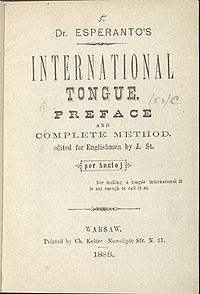 As the son of a German language teacher, Zamenhof was fluent in many languages, including Russian, German, French, Latin, Greek, Hebrew, Yiddish and English. He was reasonably proficient in Italian, Spanish and Lithuanian, as well. Zamenhof came to believe that poor relations between Białystok’s many minorities stemmed from the lack of a common language, so he set out to create an “auxiliary language” – an international second language that would help people of different ethnic and linguistic backgrounds communicate with one another.
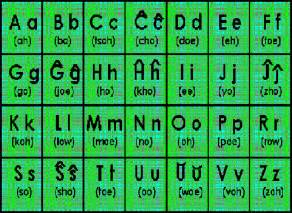 The Esperanto alphabet includes 28 letters. There are 23 consonants, 5 cardinal vowels, and 2 semivowels which combine with vowels to form 6 diphthongs. Esperanto words are derived by stringing together prefixes, roots, and suffixes. The process is regular, so that people can create new words as they speak and still be understood.




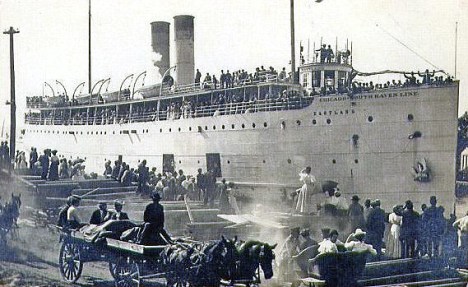

 Temporary morgues were set up in area buildings for the identification of the dead; including what is now the sound stage for The Oprah Winfrey Show, Harpo Studios, and the location of the Chicago Hard Rock Cafe.

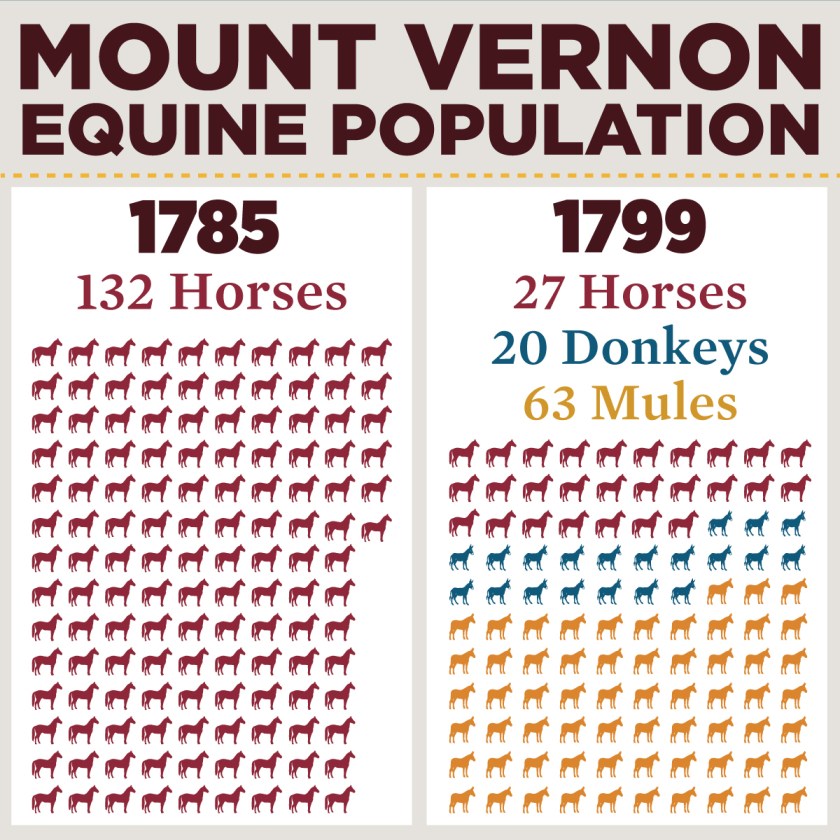
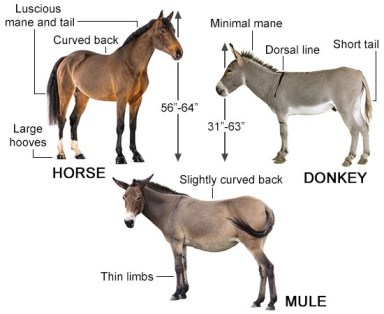 Mules are hybrid animals, the offspring of a male Equus Africanus Asinus, and a female Equus Caballus. A jackass and a mare. From the sire, the mule inherits intelligence, toughness and endurance, while the dam passes down her speed, conformation and agility.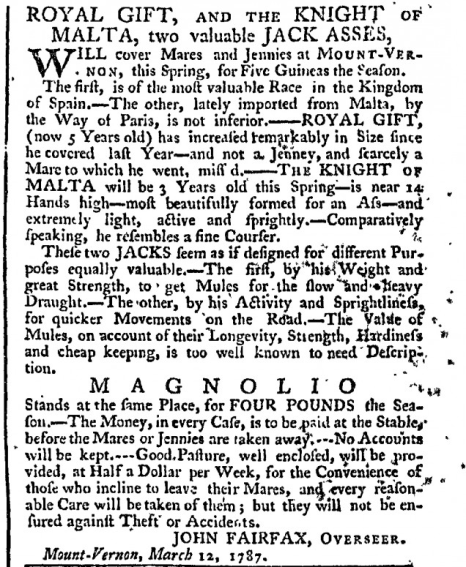


 Realist” or “Liberal” legal scholars and judges argued that the constitution was a “living document”, allowing for judicial flexibility and legislative experimentation. Supreme Court justice Oliver Wendell Holmes, Jr., a leading proponent of the Realist philosophy, said of Missouri v. Holland that the “case before us must be considered in the light of our whole experience and not merely in that of what was said a hundred years ago”.
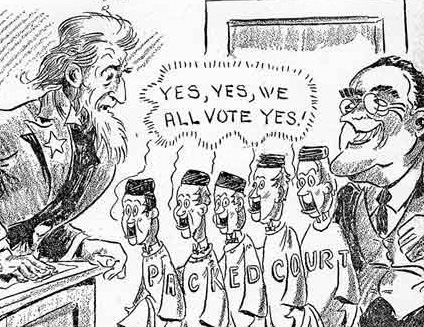 To Roosevelt, that was the answer. The age 70 provision allowed him 6 more handpicked justices, effectively ending Supreme Court opposition to his policies.
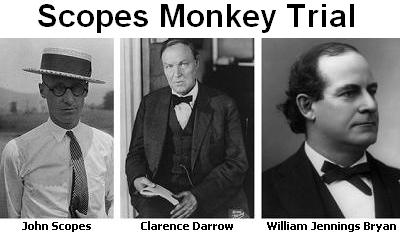
 The three met at Robinson’s Drug Store, and agreed that their little town of Dayton, Tennessee could use the publicity. The trio summoned 24-year-old High School football coach and part time substitute teacher John T. Scopes, asking him to plead guilty to teaching the theory of evolution. Scopes replied that he could not recall if he had taught evolution, but he would be more than happy to be the defendant if anyone could prove that he had.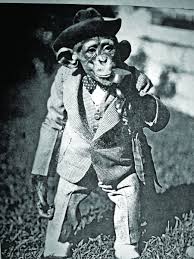
 After eight days of trial, it took the jury only nine minutes to deliberate, finding Scopes guilty on July 21. He was ordered to pay a $100 fine, equivalent to about $1,300 today. The conviction was overturned by the Tennessee Supreme Court, on the basis that state law required fines over $50 to be decided by jury, and not by the judge presiding.

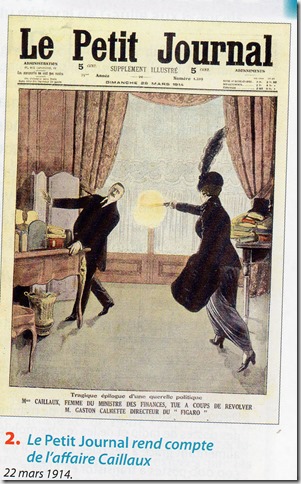 On March 16, 1914, the now-second Mrs Caillaux took a taxi to the offices of Le Figaro. She waited for a full hour to see the newspaper’s editor, before walking into his office and shooting him at his desk. Four out of six rounds hit their mark. Gaston Calmette would be dead before the night was through.











You must be logged in to post a comment.