

In the 4th century BC, Hippocrates of Kos identified an upper respiratory infection, characterized by the formation of a leathery white “pseudomembrane” on the tonsils, pharynx, and/or nasal cavities of its victims. Early symptoms resemble a cold or flu, in which fever, sore throat, and chills lead to bluish skin coloration, painful swallowing, and difficulty breathing. Late symptoms include cardiac arrhythmia with cranial and peripheral nerve palsies.
German bacteriologist Friedrich August Johannes Loeffler first identified Corynebacterium diphtheriae in the 1880s, the causal agent of the disease Diphtheria. Within ten years, researchers had developed an effective antitoxin.

Today the disease is all but eradicated in the United States, but diphtheria was once a leading cause of death among children and adults over 40.
Diphtheria is highly contagious and spread by direct physical contact and by breathing aerosolized secretions of its victims. Spain experienced an outbreak of the disease in 1613. To this day the year is remembered as “El Año de los Garotillos”. The Year of Strangulations.
A severe outbreak swept through New England in 1735. In one New Hampshire town, one of every three children under the age of 10 died of the disease. In some cases entire families were wiped out. Noah Webster described the outbreak, saying “It was literally the plague among children. Many families lost three of four children—many lost all”.
 Dr. Curtis Welch practiced medicine in Nome, Alaska, in 1925. Several children became ill with what he first diagnosed as tonsillitis. More came down with sore throats, early sufferers beginning to die as Welch observed the pseudomembrane of diphtheria. He had ordered fresh antitoxin the year before, but the shipment hadn’t arrived by the time the ports froze over. By January, all the serum in Nome was expired.
There were 10,000 living in Nome at the time, 2° south of the Arctic Circle. Welch expected a high mortality rate among the 3,000 or so white inhabitants, but the 7,000 area natives: Central Yupik, Inupiaq, St. Lawrence Island Yupik and American Indians with lineage tied to tribes in the lower 48, likely had no immunity whatsoever. Mortality among these populations could be expected to approach 100%.
Five children had already died by January 25, while Dr. Welch suspected more in the remote native camps. A plea for help went out by telegram and an Anchorage hospital came up with 300,204 units of serum. Enough for 30 patients. A million units would be required, but perhaps this would be enough to stave off epidemic, until a larger shipment arrived in February.
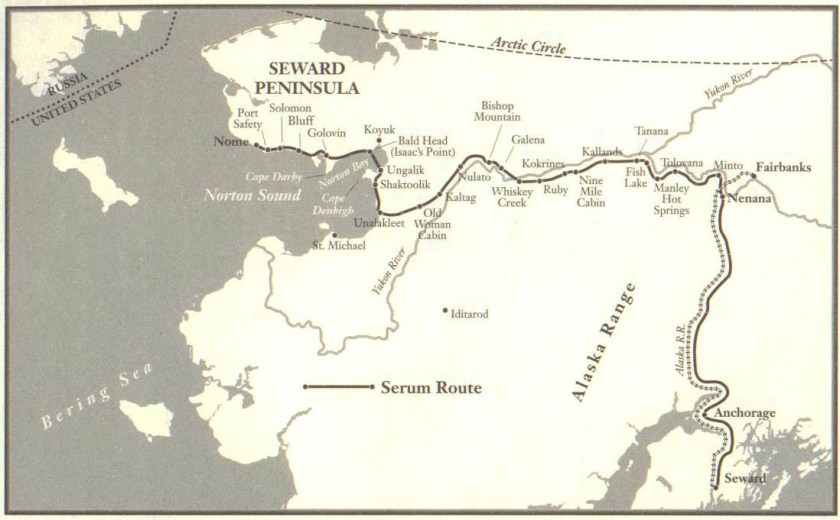
A 20-lb cylinder containing the antitoxin and wrapped in protective fur shipped as far as it could by rail, arriving at Nenana, 674 miles from Nome. Three vintage biplanes were available, but all were in pieces, and none would start in the sub-arctic cold. The antitoxin would have to go the rest of the way, by dog sled.
On January 27, a US Marshal pounded on the door of Willard J. “Wild Bill” Shannon, begging for his help with the relay to Nome. It was after midnight and −50° Fahrenheit , when Shannon and his nine-dog team received the serum. The temperature had dropped to −62°F by the time the team reached Tolovana, 24 hours later. Shannon himself was hypothermic, with parts of his face turned black with frostbite. Three of his dogs had died on the way, of frostbitten lungs.
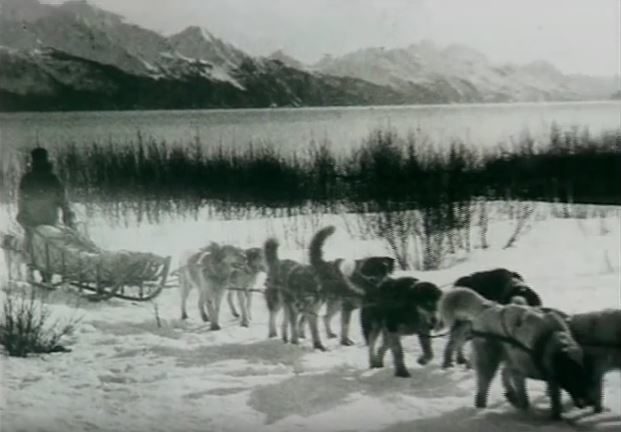
Leonhard Seppala and his team took their turn, departing into gale force winds and zero visibility, with a wind chill of −85°F. With Seppala’s 8-year old-daughter and only child Sigrid at risk for the disease, the stakes could not have been higher.
Up the 5,000′ “Little McKinley”, Seppala gambled on a shortcut across the unstable ice of Norton Sound. The howling gale threatened to break up the ice, stranding the team at sea, while visibility was so poor that Seppala couldn’t see his “wheel dog” – the dog nearest his sled. The 19-dog team struggled for traction on the glassy skin of the ocean water, returning to the coastline only hours before the ice broke up.
Much of the time, navigation in that frozen wilderness was entirely up to Seppala’s lead dog. Most sled dogs are retired by age twelve, especially team leaders, but it was twelve-year-old “Togo”, who was trusted with the lead.

Seppala and Togo ran 170 miles to receive the serum, returning another 91 miles to make the handoff on February 1. Together the pair covered twice as much ground as any other team, over the most dangerous terrain of the “serum run”.
Gunnar Kaasen and his team took the handoff, hitting the trail at 10:00 that night. A massive gust estimated at 80mph upended the sled, pitching musher and serum alike into the snow. Already frostbitten, Kaasen searched in the darkness with bare hands, until he found the cylinder. Covering the last 53 miles overnight, the team reached Front Street, Nome, at 5:30am on February 2. The serum was thawed and ready by noon.
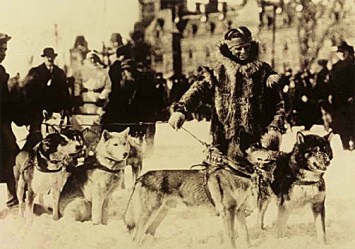 20 mushers and 150 dogs or more had covered 674 miles in 5 days, 7½ hours, a distance that normally took the mail relay 2-3 weeks. Not a single serum ampule was broken.
With 28 confirmed cases and enough antitoxin for 30, the serum run had held the death toll to no higher than seven.
Doctor Welch suspected as many as 100 or more deaths in the native camps, but the real number will never be known. An untold number of dogs died while completing the run. Several mushers were severely frostbitten.
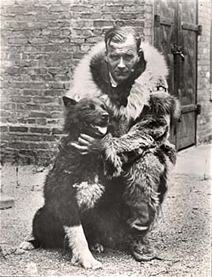
Gunnar Kaasen and his lead dog “Balto” were hailed as heroes of the serum run, the dog becoming the most popular canine celebrity in the country, after Rin Tin Tin. There was a nine-month vaudeville tour, and Hollywood produced a 30-minute silent film, “Balto’s Race to Nome,” starring himself in the lead role.
A bronze likeness was erected in New York’s Central Park in 1925, with Balto in attendance. The statue stands there to this day, though Kaasen’s lead is depicted wearing Togo’s “colors” (awards).
Balto’s notoriety was a source of considerable bitterness for Leonhard Seppala, who felt that Kaasen’s 53-mile run was nothing compared with his own 261, Kaasen’s lead little more than a “freight dog”. The statue was particularly galling. “It was almost more than I could bear” he said, “when the ‘newspaper dog’ Balto received a statue for his ‘glorious achievements’”.
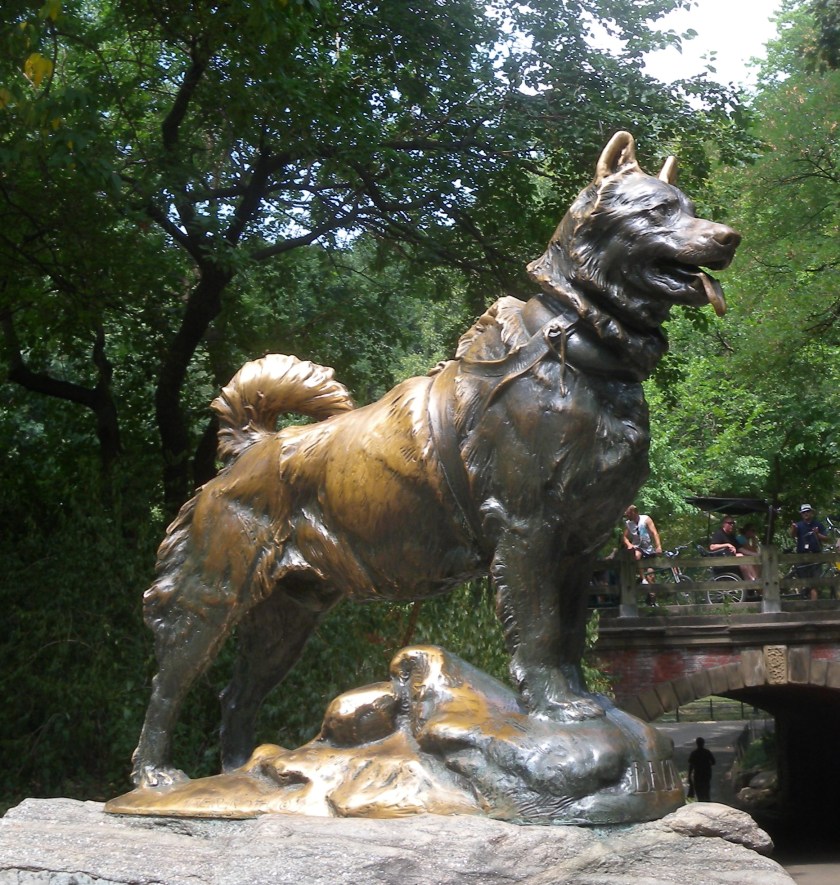
Togo lived another four years though the serum run had rendered him lame, never again able to run. The real hero of the serum run spent the last years of his life in Poland Spring, Maine, and passed away at the ripe old age of 16.
Wild Bill Shannon disappeared in 1937, while prospecting for gold. His bones were discovered four years later, perhaps a victim of exposure, or his final “close call”, with a grizzly bear.
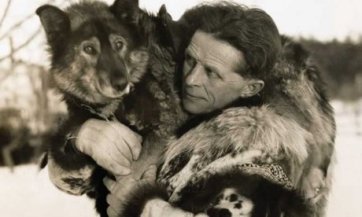
Leonhard Seppala was in his old age in 1960, when he recalled his lead dog on the serum run. “I never had a better dog than Togo. His stamina, loyalty and intelligence could not be improved upon. Togo was the best dog that ever traveled the Alaska trail.”
Today, the memory of the 1925 serum run lives on in the Iditarod Trail Sled Dog Race, held every March and run over much of the same terrain as the ‘Great Race of Mercy’. Togo himself is stuffed and mounted, standing watch at the Iditarod museum headquarters, in Wasilla.


 The Continental Congress appointed George Washington General of this “Army” on June 15, two days before the British assault on Farmer Breed’s hill. An action which took its name from that of a neighboring farmer, going into history as the Battle of Bunker Hill.
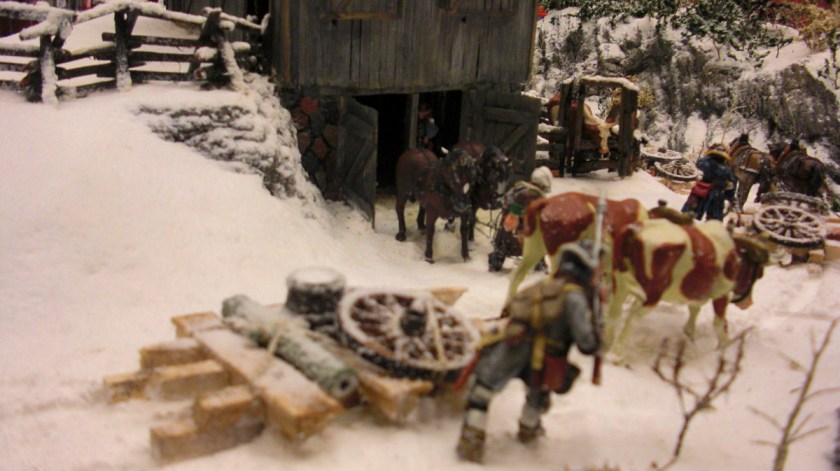
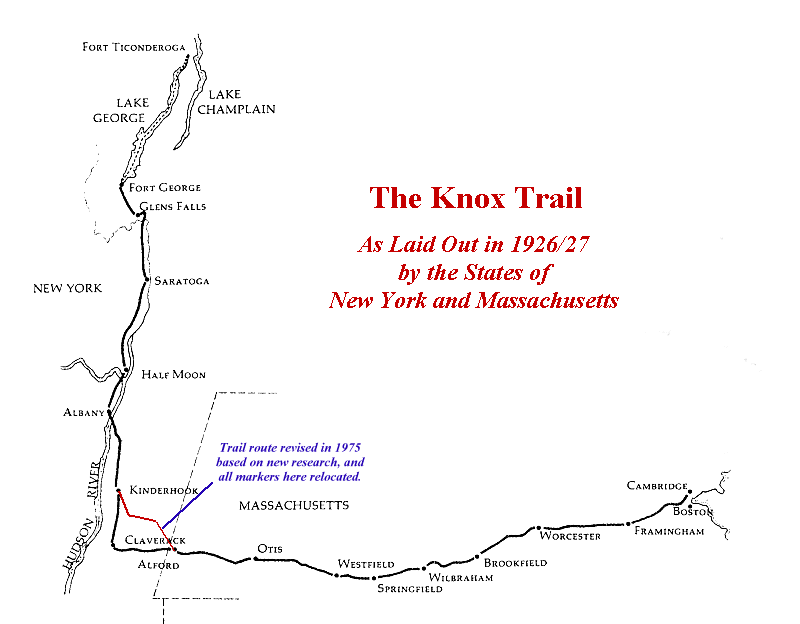
 Local farmers were enlisted to help and by December 17, Knox was able to report to General Washington “I have had made forty two exceedingly strong sleds & have provided eighty yoke of oxen to drag them as far as Springfield where I shall get fresh cattle to carry them to camp. . . . I hope in 16 or 17 days to be able to present your Excellency a noble train of artillery.”

 The first military burial, but not the first. When Private Christman went to his rest in our nation’s most hallowed ground, his grave joined that of Mary Randolph, buried some thirty-six years earlier.
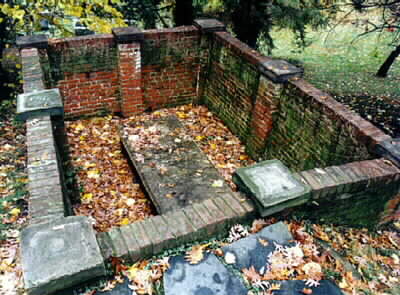 Mary Randolph, Pocahontas’ direct descendant and cousin to Thomas Jefferson, was the cousin of George Washington Parke Custis, adopted step-grandson of George Washington, and the godmother of Custis’ daughter, Mary Anna Randolph Custis, wife of Robert E. Lee.
 Mary Randolph is best known as the author of America’s first regional cookbook, “The Virginia Housewife”. The Virginia Culinary Thymes writes that “It is interesting to note that all the cookery at that time was done in kitchens that had changed little over the centuries. In Virginia, the kitchen was typically a separate building for reasons of safety, summer heat and the smells from the kitchen. The heart of the kitchen was a large fireplace where meat was roasted and cauldrons of water and broth simmered most of the day. Swinging cranes and various devices made to control temperature and the cooking processes were used. The Dutch oven and the chafing dish were found in most kitchens. The brick oven used for baking was located next to the fireplace. A salamander was used to move baked products around in the oven and it could also be heated and held over food for browning“.
 Mrs. Randolph was an early advocate of the now-common use of herbs, spices and wines in cooking. Her recipe for apple fritters calls for slices of apple marinated in a combination of brandy, white wine, sugar, cinnamon, and lemon rind.


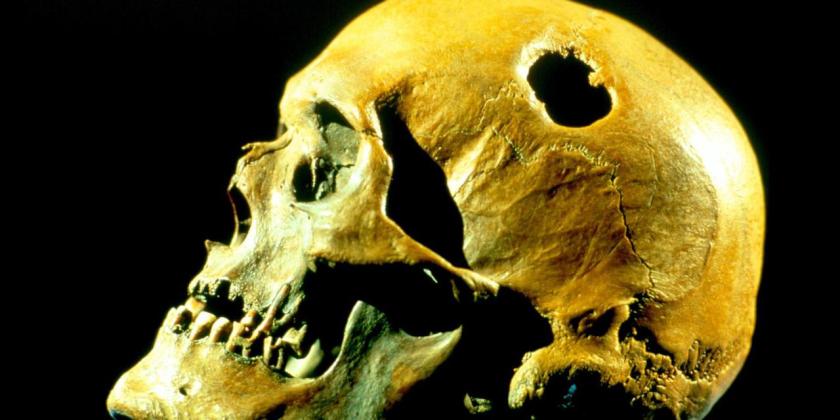
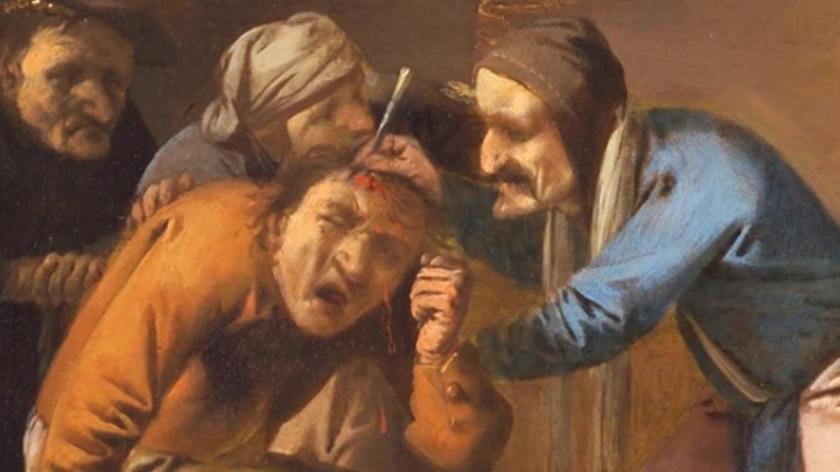
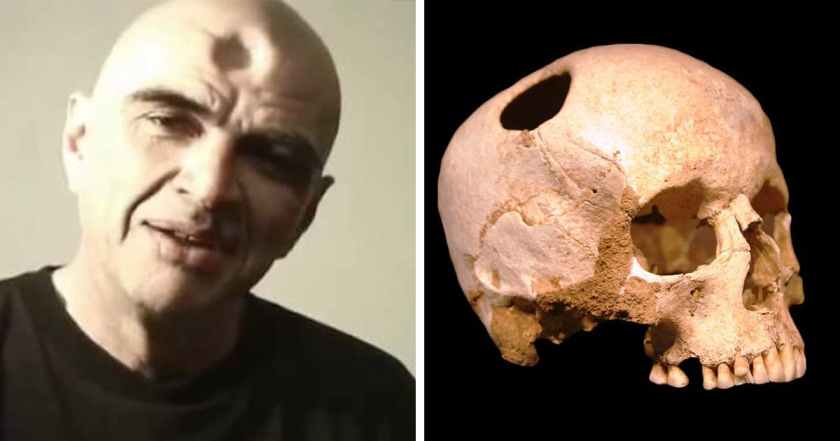
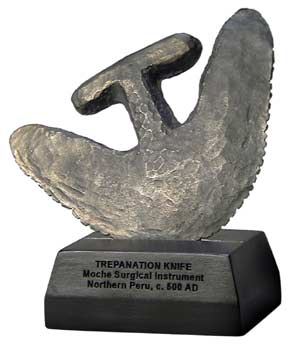 To prove the value of his ‘third eye’ theory, to his own satisfaction if to no one else, Hughes drilled a hole in his own skull in 1965, using a Black & Decker electric drill. He must have thought it proved the point, because he expanded on his theory with “Trepanation: A Cure for Psychosis”, followed by an autobiography, “The Book with the Hole”, published in 1972.
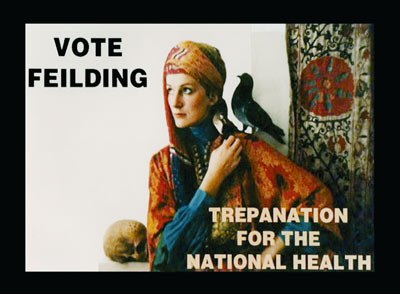 At age 27, Amanda Feilding brought an electric dentist’s drill to her London apartment, and drilled a hole in her skull. After four unsuccessful years trying to find a surgeon to do it for her, “I thought, ‘Well, I’m a sculptor, I may as well do it myself'”.
 At the time, the Iron County DA also considered charges against ABC News reporter Chris Cuomo, for aiding in the crime.


 On that July morning, no one had any idea of the years-long bloodbath that lay ahead. 35,000 Federal troops, 90-day recruits all, had arrived to crush a trifling force of rebels. Then on to Richmond, the Confederate capitol, and the end of the uprising.


 Jackson believed that slavery existed because the Creator willed it. His mission was to save their souls, by teaching them the Old Testament, the Ten Commandments, the Lord’s Prayer and the Apostle’s Creed.






 Iva Ikuko Toguri was born in Los Angeles on July 4, 1916, the daughter of Japanese immigrants. She attended schools in Calexico and San Diego, returning to Los Angeles where she enrolled at UCLA, graduating in January, 1940 with a degree in zoology.
 She called herself “Orphan Annie,” earning 150 yen per month (about $7.00 US). She wasn’t a professional radio personality, but many of those who recalled hearing her enjoyed the program, especially the music.


 d’Aquino was sentenced to ten years and fined $10,000 for the crime of treason, only the seventh person in US history to be so convicted. She was released from the Federal Reformatory for Women at Alderson, West Virginia in 1956, having served six years and two months of her sentence.


 The United States had been in World War II for two years in 1943, when Claude Wickard, head of the War Foods Administration as well as Secretary of Agriculture, had the hare brained idea of banning sliced bread.
 Article 1, Section 8 of the Constitution includes the “Commerce Clause”, permitting the Congress “To regulate Commerce with foreign Nations, and among the several States, and with the Indian Tribes”. That’s it and, not surprisingly, the Federal District Court sided with the farmer.
 The Supreme Court, apparently afraid of President Roosevelt and his aggressive and illegal “
 The stated reasons for the ban never did make sense. At various times, Wickard claimed that it was to conserve wax paper, wheat and steel, but one reason was goofier than the one before.


 The act served multiple purposes, among them the modernization of what was then a largely WWI vintage merchant marine fleet, serving as the basis for a naval auxiliary that could be activated in time of war or national emergency.


 Where there are government subsidies, there are strings. For SS America, those strings were pulled on May 28, 1941, while the ship was at port in Saint Thomas, in the US Virgin Islands. The ship had been called into service by the United States Navy, and ordered to return to Newport News.



 STS-1, the first mission of the “Space Shuttle” program launched aboard “Columbia” from the Kennedy Space Center on Merritt Island, Florida. It was April 12, 1981, the 20th anniversary of the first human spaceflight, aboard the Russian Vostok 1. This was the first and, to-date only, manned maiden test flight of a new spacecraft system, in the US space program.
 STS-107 launched from the Kennedy Space Center aboard the Space Shuttle Columbia on January 16, 2003. Eighty seconds after launch, a piece of insulating foam the size of a briefcase broke away from the external fuel tank, striking the leading edge of Columbia’s left wing and leaving a hole in the carbon composite tiles.


 Payload Specialist Colonel Ilan Ramon, born Ilan Wolferman, was an Israeli fighter pilot, the first Israeli astronaut to join the NASA space program.


You must be logged in to post a comment.