We rarely hear about the work of the spy or the saboteur in times of war. These are the Heroes who work behind enemy lines, with little to protect them but their own guts and cleverness. We rarely know their names and yet, there are times when the lives of millions hang in the balance.
We rarely hear about the work of the spy or the saboteur in times of war. These are the Heroes who work behind enemy lines, with little to protect them but their own guts and cleverness. We rarely know their names and yet, there are times when the lives of millions hang in the balance.
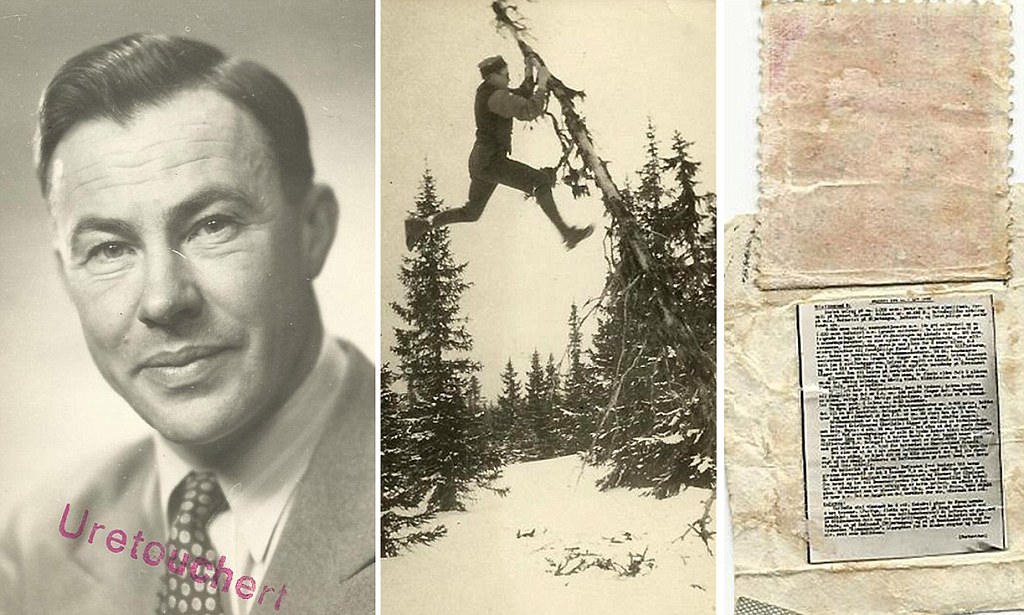
One such was Iacob Sømme, a Norwegian who was caught, tortured and executed by the Gestapo, for his role in sabotaging the Nazi heavy water plant in Telemark, in 1943.
But for the work of men such as this, we are left only to imagine a world in which the Nazi Swastika was painted on the sides of “Little boy” and “Fat Man”. We may thank the likes of Iacob Sømme that such a world remains merely one of nightmare imagination.
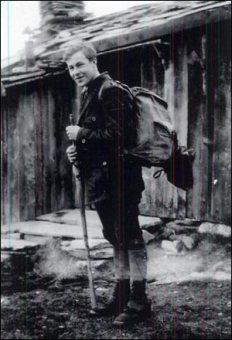
Another such man was Iacob’s brother Sven, born this day, November 19, 1904.
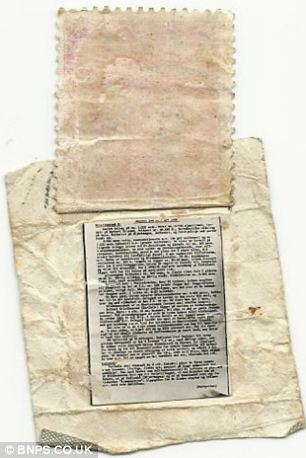
Like his brother, Sven Sømme joined the Norwegian Resistance to fight the Nazis who had occupied his country since 1940. A scientist and fisheries officer, Somme joined the Resistance. He would photograph strategic German military bases using a miniature camera, sending covert maps, photographs and intelligence reports to the Allies hidden under the postage stamps, on letters.
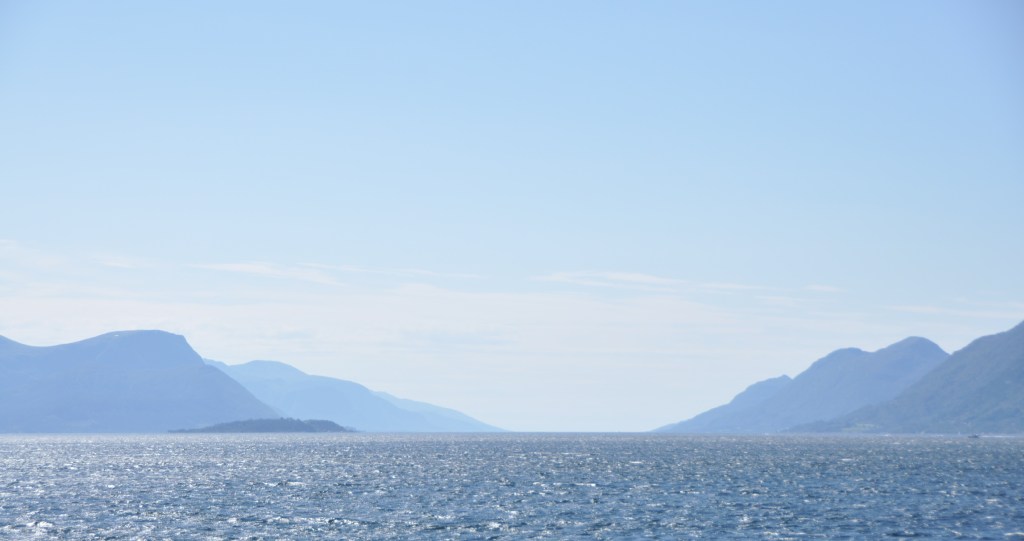
In 1944, guards saw the sun glint off a camera’s lens, and came running. Sømme had been caught, taking pictures of a German U-boat base on Otteroy island. Sven tried hiding the tiny camera under a rock, but the Germans quickly found it. He was put in cuffs.
The penalty for what he was doing, was the firing squad. He would be lucky not to be tortured to death.
That night, Sømme managed to slip his handcuffs and creep past his sleeping guard. What followed was a nightmare race to freedom. A relentless hunt two months in duration, across 200 miles of snow covered mountains.
The Norwegian had barely an hour’s head start. The Nazis couldn’t let this man escape. He knew too much. Pursued by 900 troops and a pack of bloodhounds, Sømme worked his way through icy streams and across ravines moving ever higher, into the mountains.
Otrøya island (right) where Sømme photographed the torpedo base, at Midfjorden. H/T Wikipedia
He wore a pair of beat up dress shoes and certainly would have succumbed to frostbite in the mountains, had he not been taken in for a time by a friendly family. He couldn’t stay for long, but the family’s 19-year-old son Andre gave him the pair of mountain boots.
Sømme would wade through icy streams to avoid leaving tracks in the snow, or leap from one tree to another, a game he‘d once learned, as a kid. He trekked 200 miles through the mountains in this manner dodging bears and wolves. That baying horde was never far from his heels.
At last he made it to neutral Sweden, where he was taken to England. There he met the exiled King of Norway, and the woman who would one day become his wife and mother of his three daughters, an English woman named Primrose.
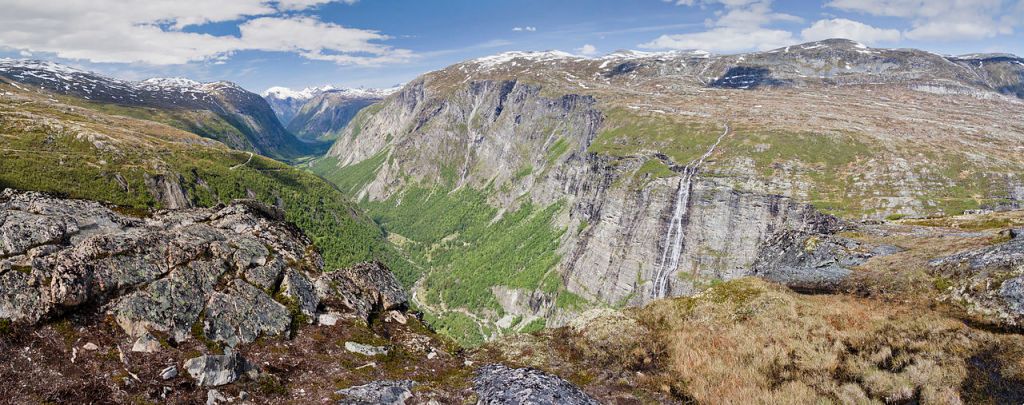
Mountaineer Arne Randers Heen guided Sømme through the steep mountains from Isfjord to Eikesdalen (photo) and locals in Eikesdal helped him through the difficult terrain in from Eikesdal to Aursjøen lake. From there he walked across Norway to Sweden. H/T Wikipedia
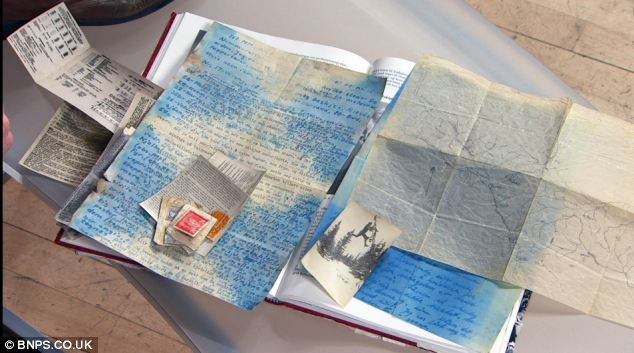
Sven Sømme passed away in 1961 following a battle with cancer. Primrose died not long after. It was only in going through her things after she passed, that the three girls discovered their father’s history. The photographs, the letters, even an arrest warrant, written out in German and Norwegian.
“Documents: His daughter has now found an incredible archive of secret documents he collected while working as a spy” H/T UK Daily Mail
Sømme had written a memoir about his escape. He called it “Another Man’s Shoes”. In 2004, his daughters used the book to retrace their father’s epic flight across the mountains. They even met the family who had sheltered him and, to their amazement, they still had his old shoes. The book is still in print as far as I know. It has a forward by his daughter Ellie, describing their emotional meeting with the family who had sheltered her father.
The first full day of the evacuation was May 27, 7,669 were evacuated. By day 9 a total of 338,226 soldiers had been rescued from the beach. The “Miracle of Dunkirk” would remain the largest such waterborne evacuation in history, until the Great boat lift of September 11, 2001.
The Nazi conquest of Europe began with the Sudetenland in 1938, the border districts of Bohemia, Moravia, and German speaking parts of Czechoslovakia. Within two years, every major power on the European mainland was either neutral, or under Nazi occupation.
The island nation of Great Britain alone escaped occupation, but its armed forces were shattered and defenseless in the face of the German war machine.In May of 1940 the British Expeditionary Force and what remained of French forces occupied a sliver of land along the English Channel. Field Marshall Gerd von Rundstedt called a halt of the German armored advance on May 24, while Hermann Göring urged Hitler to stop the ground assault, let the Luftwaffe finish the destruction of Allied forces. On the other side of the channel, Admiralty officials combed every boatyard they could find for boats to ferry their people off of the beach.
Hitler ordered his Panzer groups to resume their advance on May 26, while a National Day of Prayer was declared at Westminster Abbey. That night Winston Churchill ordered “Operation Dynamo”. One of the most miraculous evacuations in military history had begun from the beaches of Dunkirk.The battered remnants of the French 1st Army fought a desperate delaying action against the advancing Germans. They were 40,000 men against seven full divisions, 3 of them armored. They held out until May 31 when, having run out of food and ammunition, the last 35,000 finally surrendered. Meanwhile, a hastily assembled fleet of 933 vessels large and small began to withdraw the broken army from the beaches.
Larger ships were boarded from piers, while thousands waded into the surf and waited in shoulder deep water for smaller vessels. They came from everywhere: merchant marine boats, fishing boats, pleasure craft, lifeboats and tugs. The smallest among them was the 14’7″ fishing boat “Tamzine”, now in the Imperial War Museum.A thousand copies of navigational charts helped organize shipping in and out of Dunkirk, as buoys were laid around Goodwin Sands to prevent stranding. Abandoned vehicles were driven into the water at low tide, weighted down with sand bags and connected by wooden planks, forming makeshift jetties.
The first full day of the evacuation was May 27, 7,669 were evacuated. By day 9 a total of 338,226 soldiers had been rescued from the beach. The “Miracle of Dunkirk” would remain the largest such waterborne evacuation in history, until the Great boat lift of September 11, 2001.It all came to an end on June 4. Most of the light equipment and virtually all the heavy stuff had to be left behind, just to get what remained of the allied armies out alive. But now, with the United States still the better part of a year away from entering the war, the allies had a fighting force that would live to fight on. Winston Churchill delivered a speech that night to the House of Commons, calling the events in France “a colossal military disaster”. “[T]he whole root and core and brain of the British Army”, he said, had been stranded at Dunkirk and seemed about to perish or be captured. In his “We shall fight on the beaches” speech of June 4, Churchill hailed the rescue as a “miracle of deliverance”.On the home front, thousands of volunteers signed up for a “stay behind” mission in the weeks that followed. With “Operation Sea Lion” all but imminent, the German invasion of Great Britain, their mission was to go underground and to disrupt and destabilize the invaders in any way they could. They were to be part of the Home guard, a guerrilla force reportedly vetted by a senior Police Chief so secret, that he was to be assassinated in case of invasion to prevent membership in the units from being revealed.
Participants of these auxiliaries were not allowed to tell their families, what they were doing or where they were. Bob Millard, who passed in 2014 at the age of 91, said they were given 3 weeks’ rations, and that many were issued suicide pills in case of capture. Some 400-500 elaborately concealed underground “operational bases” are believed to have been built, from which Home Guard units were to carry out the arts of guerrilla warfare including unarmed combat, demolition, sabotage and even assassination.
Left, Operational base, reconstruction at Parham Airfield Museum. Right, Auxiliary Units, Operational Base, emergency exit. H/T Wikipedia
Even Josephine, Millard’s wife of 67 years, didn’t know a thing about it until the auxiliaries’ reunion in 1994. “You just didn’t talk about it, really”, he said. “As far as my family were aware I was still in the Home Guard. It was all very hush hush. After the war, it was water under the bridge”.
The word “Cenotaph” literally translates as “Empty Tomb”, in Greek. Every year since 1919 and always taking place on the Sunday closest to the 11th day of the 11th month, the Cenotaph at Whitehall is the site of a remembrance service, commemorating British and Commonwealth servicemen and women who died in 20th century conflicts. Since WWII, the march on the Cenotaph includes members of the Home Guard and the “Bevin Boys”, the 18-25 year old males conscripted to serve in England’s coal mines. In 2013, the last surviving auxiliers joined their colleagues, proudly marching past the Cenotaph for the very first time.
Historians from the Coleshill Auxiliary Research Team (CART) had been trying to do this for years.
CART founder Tom Sykes said: “After over 70 years of silence, the veterans of the Auxiliary Units and Special Duties Section, now more than ever, deserve to get the official recognition that has for so long been lacking. ‘They were, in this country’s hour of need, willing to give up everything, families, friends and ultimately their lives in order to give us a fighting chance of surviving”.
On this day in 1941, Sergeant Clive Hulme learned of the death of his brother Harold, also fighting in the battle for Crete. The life expectancy for German snipers was about to become noticeably shorter.
Throughout the history of armed conflict, men who have endured combat together have formed a special bond. Prior to the David vs. Goliath battle at Agincourt, Henry V spoke of “We few, we happy few, we band of brothers“. The men who fought the “War to end all wars” spoke not of God and Country, but of the man to his left and right. What then does it look like, when the man you’re fighting for is literally your own brother?
Hellenic forces enjoyed early success when fascist Italy invaded Greece on October 28, 1940, the Greek army driving the intruder into neighboring Albania in the first Allied land victory of the second World War.
Until the intervention of Nazi Germany and her Bulgarian ally.
German occupation of Greece
British commonwealth troops moved from Libya on orders from Winston Churchill proved too little, too late. The Greek capital at Athens fell on April, 27. Greece suffered axis occupation for the rest of the war, with devastating results. Some 80% of Greek industry was destroyed along with 90 percent of ports, roads, bridges and other infrastructure. 40,000 civilians died of starvation, in Athens alone. Tens of thousands more died in Nazi reprisals, or at the hands of Nazi collaborators.
Airborne invasion of Crete
Fearful of losing the strategically important island of Crete, Prime minister Winston Churchill sent a telegram to the Chief of the Imperial General Staff General Sir John Dill: “To lose Crete because we had not sufficient bulk of forces there would be a crime.”
By the end of April, the Royal Navy evacuated 57,000 troops to Crete, largest of the islands comprising the modern Greek state. They’d been sent to bolster the Cretan garrison until the arrival of fresh forces, but this was a spent force. Most had lost heavy equipment in the hasty evacuation. Many were unarmed, altogether.
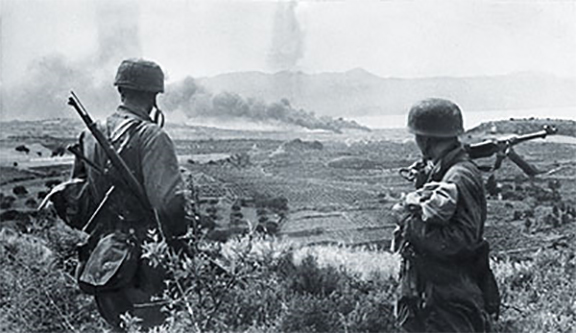
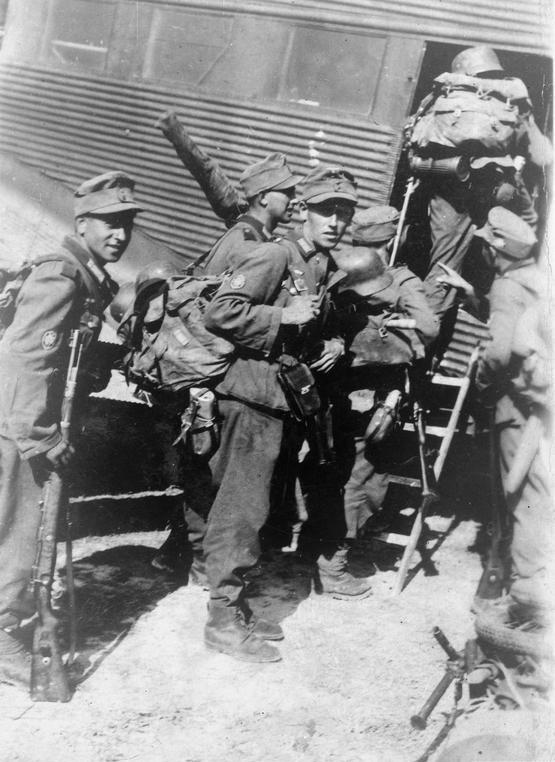
German mountain troops board a Junkers Ju 52 for Crete, 20 May 1941, H/T Wikipedia
Occupied at this time with operation Barbarossa, Hitler’s surprise invasion of his erstwhile Soviet ally, German Army command had little desire to go after Crete. Eager to redeem themselves following the failure to destroy an all-but prostrate adversary during the Battle of Britain, Luftwaffe High Command was a different story.
Hitler recognized the strategic importance of Crete, both to the air war in the eastern Mediterranean and for the protection of the Axis southern flank.
By the time of the German invasion, Allied forces were reduced to 42,000 on Crete of which only 15,000, were combat ready. New Zealand Army Major-General Bernard Freyberg in command of these troops, requested evacuation of 10,000 who had “little or no employment other than getting into trouble with the civil population“.
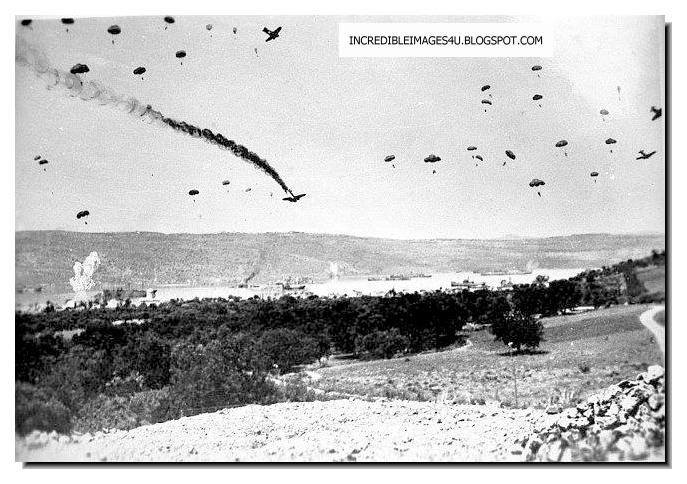
Once again it was too little, to late. The first mainly airborne invasion in military history and the only such German operation of WW2 began on May 20, 1941.
The Luftwaffe sent 280 long-range bombers, 150 dive-bombers, 180 fighters and 40 reconnaissance aircraft into the attack, along with 530 transport aircraft and 100 gliders.
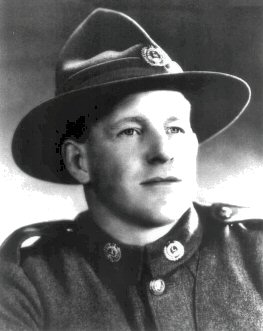
Sgt. Clive Hulme
The allied garrison was soon outnumbered and fighting for their lives. Recognizing that the battle was lost, leadership in London instructed Freyberg to abandon the island, on May 27.
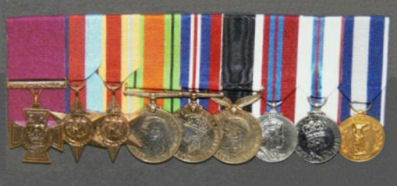
The “Victoria Cross” is the highest accolade in the British system of military honors, equivalent to the American Medal of Honor. Sergeant Clive Hulme of the New Zealand 2nd Division was part of that fighting withdrawal. He was 30 years old at the time of the battle for Crete where his actions, earned him the Victoria Cross. Let Sergeant Hulme’s citation, tell his story:
“On ground overlooking Malene Aerodrome on 20th and 21st May [Sergeant Hulme] personally led parties of his men from the area held by the forward position and destroyed enemy organised parties who had established themselves out in front of our position, from which they brought heavy rifle, machine-gun and mortar fire to bear on our defensive posts. Numerous snipers in the area were dealt with by Serjeant Hulme personally; 130 dead were counted here. On 22nd, 23rd and 24th May, Serjeant Hulme was continuously going out alone or with one or two men and destroying enemy snipers. On 25th May, when Serjeant Hulme had rejoined his Battalion, this unit counter-attacked Galatas Village. The attack was partially held up by a large party of the enemy holding the school, from which they were inflicting heavy casualties on our troops. Serjeant Hulme went forward alone, threw grenades into the school and so disorganised the defence, that the counter-attack was able to proceed successfully.”
On this day in 1941, Sergeant Clive Hulme learned of the death of his brother Harold, also fighting in the battle for Crete. The life expectancy for German snipers was about to become noticeably shorter. Again, from Hulme’s VC citation:
On Tuesday, 27th May, when our troops were holding a defensive line in Suda Bay during the final retirement, five enemy snipers had worked into position on the hillside overlooking the flank of the Battalion line. Serjeant Hulme volunteered to deal with the situation, and stalked and killed the snipers in turn. He continued similar work successfully through the day. On 28th May at Stylos, when an enemy heavy mortar was severely bombing a very important ridge held by the Battalion rearguard troops, inflicting severe casualties, Serjeant Hulme, on his own initiative, penetrated the enemy lines, killed the mortar crew of four…From the enemy mortar position he then worked to the left flank and killed three snipers who were causing concern to the rearguard. This made his score of enemy snipers 33 stalked and shot. Shortly afterwards Serjeant Hulme was severely wounded in the shoulder while stalking another sniper. When ordered to the rear, in spite of his wound, he directed traffic under fire and organised stragglers of various units into section groups.”
Clive Hulme’s medals
The man took out 33 German snipers by himself in 8 days and still assisted in the withdrawal, after being shot badly enough to put him out for the rest of the war.
One day of fresh horrors ended to reveal the next, and still they lived. It was unusual for even two or three siblings to survive the Auschwitz death camp. I don’t believe there was another instance where an entire family lived to tell the tale.
Shimson Eizik Ovitz was a Romanian rabbi, and a WWI-era “merrymaker’ or traveling entertainer. He was also a man afflicted with pseudoachondroplasia. Shimson Eizik Ovitz was a dwarf. Ovitz fathered 10 children by two normal sized wives: Brana Fruchter and Batia Bertha Husz. All ten survived to adulthood. Three grew to normal height. The other seven were “little people”, the largest dwarf family unit, in history.
On her death bed in 1930, Batia gave the kids a piece of advice that stuck with them, all their lives: “through thick and thin” she said, “never separate. Stick together, guard each other and live for one another”.
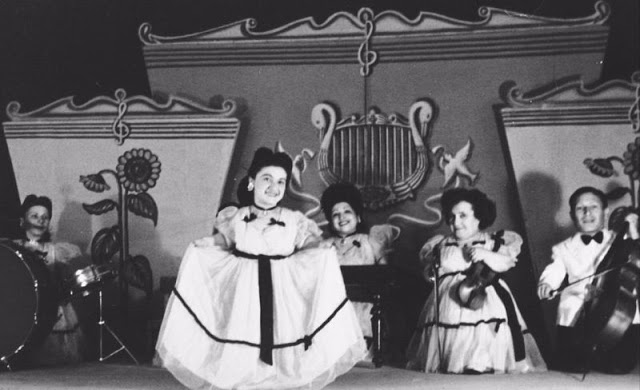
Circus-like performing dwarves were common enough at this time but the Ovitz siblings were different. These were talented musicians playing quarter-sized instruments, performing a variety show throughout the 1930s and early ’40s as the “Lilliput Troupe”. The family performed throughout Romania, Hungary and Czechoslovakia, with their normal height siblings serving as “roadies”. And then came the day. The whole lot of them were swept up by the Nazis and deported to the concentration camp and extermination center, at Auschwitz-Birkenau.
The train arrived around midnight on May 19, 1944. Thoroughly accustomed to a degree of celebrity, one of them began to give out autographed cards. The family would soon be disabused of any notions of celebrity.
The “death gate” of Auschwitz-Birkenau
Even so, cultural currents run deep. Not even concentration camp guards could resist the irony of seven dwarves. Knowing of his perverse fascination with the malformed and what he called “blood” (family) experiments, Dr. Josef Mengele was immediately awakened. The “Angel of Death”was delighted, exclaiming “I now have work for 20 years!”
The ten siblings were spared from the gas chamber that night, along with two more family members, a baby boy and a 58-year old woman. Families of their handyman and a neighbor were also spared, as all insisted they were close relatives. All told, there were 22 of them.
Ovitz family performers, before the war
The family was housed in horrific conditions, yet seven dwarves didn’t come along every day. Where others were directed to the gas chambers, these were kept alive for further use. As bad as it was, the food and clothing was better than that received by most camp inmates. Mengele even allowed them to keep their hair, and arranged special living quarters.
The bizarre and hideous “experiments” Mengele performed in the name of “science” were little more than freakish torture rituals. Three dwarf skeletons were on prominent display, the bones of earlier arriving little people, ever-present reminders of what could be. Boiling water was poured into their ears, followed by freezing. Eyelashes and teeth were pulled without anesthesia. Blood was the holy grail in the mind of Josef Mengele, and the stuff was drawn until each would throw up and pass out, only to be revived to have more blood drawn.On one occasion, the Angel of Death told the family they were “going to a beautiful place”. Terrified, the siblings were given makeup, and told to dress themselves. Brought to a nearby theater and placed onstage, the family must have thought they’d be asked to perform. Instead, Mengele ordered them to undress, leaving all seven naked before a room full of SS men. Mengele then gave a speech and invited the audience onstage, to poke and prod at the humiliated family.
One day of fresh horrors ended to reveal the next, and still they lived. It was unusual for even two or three siblings to survive the Auschwitz death camp. I don’t believe there was another instance where an entire family lived to tell the tale.
Before becoming an industrialized extermination center, Auschwitz I was a slave labor camp for Polish and later Russian prisoners. The words over the gate, “Arbeit Macht Frei”, translate: “Work Makes You Free”.
Auschwitz was liberated by the Soviet Red Army on January 27, 1945.
Traveling by foot to their Transylvanian home village of Rozavlea, the family found the place ruined. The gold coins buried for safekeeping before the war were right where they had left them. Otherwise, there was no future in this place.
Only 50 of the 650 Jewish inhabitants of the village ever returned. In 1949, the family emigrated to Israel and resumed their musical tour, performing until the group retired in 1955.
Josef Mengele never did face justice. The man who had directed victims by the hundreds of thousands to the gas chamber, fled to South America after the war. He was living under a false name in Brazil in 1979 when he suffered a stroke, while enjoying an afternoon swim. The cause of death for one of the great monsters of modern history, was accidental drowning.
The youngest and last of the Ovitz dwarves, Piroska or “Perla” to her friends, passed away two days before the terrorist attack on the World Trade Towers. She spoke for the whole family, I think, when she said “I was saved by the grace of the devil”.
The hour-long film “Standing Tall at Auschwitz” fills in a lot of the details. It’s worth watching.
It must have been terrifying but secretly amusing, at the same time. To see this beautiful Jewish baby, depicted as the perfect “Aryan” child.
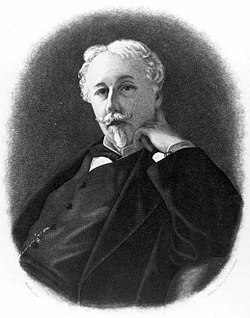
In the world of crackpot theories, none have had more lasting effect than the work of 19th century intellectuals. The economic theories of Karl Heinrich Marx, which continue to plague us, to this day. The French aristocrat Joseph-Arthur de Gobineau, whose work on “racial demography” renders him the intellectual father of Aryan “Master Race” theory.
Joseph-Arthur de Gobineau
De Gobineau’s work was lauded by white supremacist, pro-slavery Americans like Josiah Nott and Henry Hotze, who translated his book into English but somehow managed to leave out the hundreds of pages describing Americans themselves, as racial mongrels.
The book went on to fuel the late-19th and early 20th century movement in eugenicsbut nowhere did the work enjoy more enthusiastic support, than the Third Reich of Adolf Hitler.
With Hitler’s appointment as chancellor on January 30, 1933, the National Socialist Worker’s Party (Nationalsozialistische Deutsche Arbeiterpartei, or NSDAP) lost no time in consolidating power. Interestingly, the former Austrian corporal did not call himself a “Nazi”. That term was an insult, coined a long time before the party’s rise to power.
Two days later, the 876-member democratically elected deliberative body, the “Reichstag”, was dissolved.
On February 27, an arson fire broke out in the German Parliament building. Hitler’s government blamed Dutch communist Marinus van der Lubbe for the fire, claiming the arson to have been the result of communist plots, against the Nazi government. Today, the term “Reichstag fire” is synonymous with a false flag operation, carried out by authorities to exact retribution on a political adversary. At the time, the “Reichstag Fire Trial” served to decimate political opposition and consolidate Nazi power.March elections failed to produce a Nazi party majority. For the time being, Herr Hitler was forced to rely on his coalition partner the German National People’s Party (DNVP), to hold a majority in the new Reichstag.
Nazi propaganda was relentless. Hitler himself had written back in 1924, that propaganda’s “task is not to make an objective study of the truth, in so far as it favors the enemy, and then set it before the masses with academic fairness; its task is to serve our own right, always and unflinchingly.”
Nazi racial propaganda was everywhere, in art, in music, in theater, radio and educational materials. Posters, leaflets, books and magazines proclaimed the perfect, “Aryan Master Race,” the Übermenschen of Friedrich Nietzsche, in contradistinction with the Üntermenschen: the Roma, the “feeble-minded”, the Jew.
In the first six years after Hitler took power, no fewer than 400 decrees and regulations were aimed specifically, at the Jews of Germany.
Jacob and Pauline Levinsons came to Berlin in 1928, a few years before Hitler came to power. Both Latvian Jews, the couple gave birth to a beautiful baby girl on this day in 1934. Later that year, the proud parents brought wide-eyed, curly haired, chubby little Hessy to photographer Hans Ballin of Berlin.
As required by law, the Levinsons informed the photographer they were both Jews. Hessy was the perfect photographer’s subject, and Jacob and Pauline happily brought home a portrait, to keep on the shelf.
And that’s where the story ends, except, no. Unbeknownst to the Levinsons, the photographer submitted the portrait in a contest, a search for the perfect Aryan child.
You know where this is going, right? Ballin’s picture won. Pauline was struck with terror, to find the image on the cover of a prominent Nazi magazine. There were posters, billboards, the picture was…everywhere.
Near hysterical, she called the photographer. You knew very well that we’re Jewish, how could you do this? Ballin, no friend of the Nazis, replied “I wanted to allow myself the pleasure of this joke”, he said, I wanted to make the Nazis ridiculous”.
The picture spread throughout the Reich. It must have been terrifying but secretly amusing, at the same time. For her first birthday, Hessy’s aunt gave her a birthday card, with her own image printed on the front. To escape attention the little girl lived her childhood years, entirely indoors. The Nazis never did figure out, who she was.
In 1938, Jacob Levinsons was arrested by the SS, but later released. This was the year of the Kristallnacht and the family fled, first for Paris and later to Cuba before emigrating to the United States in 1949.
Hessy Levinsons went to Julia Richman High School in New York and later majored in chemistry at Barnard College, graduating in 1955. As a graduate student at Columbia University, Hessy met her future husband, mathematics professor Earl Taft. The couple joined the faculty at Rutgers University before she interrupted her career to raise a family.
She was interviewed in 2014, by the German magazine Bild. “I can laugh about it now, she said, “but if the Nazis had known who I really was, I wouldn’t be alive.” Hessy Levinsons Taft, once the Jewish infant selected to represent the Most Perfect Aryan Baby, retired from academia in 2016.
In England, May 7 dragged on with no public statement. Large crowds gathered outside of Buckingham Palace shouting “We want the King”. Bell ringers throughout the British Isles remained on silent standby, waiting for the announcement. The British Home Office issued a circular, instructing Britons how they could celebrate: “Bonfires will be allowed, but the government trusts that only material with no salvage value will be used.”
Beginning on the 5th of May, reporters from AP, Life magazine, and others began to sleep on the floor of Eisenhower’s red brick schoolhouse headquarters, for fear of stepping out and missing the moment. Adolf Hitler was dead by his own hand, the life of the German tyrant extinguished on April 30. So it was that General Alfred Jodl came to Reims to sign the document, including the phrase “All forces under German control to cease active operations at 2301 hours Central European time on 8 May 1945“.
The signing of the instruments of surrender ending the most destructive war in history took place on Monday, May 7, at 2:41am, local time. In Europe, World War II had come to an end.The German government announced the end of hostilities right away to its own people, but most of the Allied governments, remained silent. It was nearly midnight the following day when Field Marshal Wilhelm Keitel signed a second instrument of surrender, in the Berlin headquarters of Soviet General Georgy Zhukov.
Soviet Premier Josef Stalin had his own ideas about how he wanted to handle the matter, and so the rest of the world, waited.
In England, May 7 dragged on with no public statement. Large crowds gathered outside of Buckingham Palace shouting “We want the King”. Bell ringers throughout the British Isles remained on silent standby, waiting for the announcement. The British Home Office issued a circular, instructing Britons how they could celebrate: “Bonfires will be allowed, but the government trusts that only material with no salvage value will be used.” And still, the world waited.
Prime Minister Winston Churchill finally lost patience in the early evening, saying he wasn’t going to give Stalin the satisfaction of holding up what everyone already knew. The Ministry of Information made this short announcement at 7:40pm: “In accordance with arrangements between the three great powers, tomorrow, Tuesday, will be treated as Victory in Europe Day and will be regarded as a holiday”.
The news was greeted with reserve in the United States, where the first thought was that of the Pacific. Even now, many months of savage combat lay ahead. President Harry Truman broadcast his own address to the nation at 9:00am on May 8, thanking President Roosevelt and wishing he’d been there to share the moment. Franklin Roosevelt had died on April 12 in Warm Springs, Georgia.President Truman’s speech begins: “This is a solemn but a glorious hour. I only wish that Franklin D. Roosevelt had lived to witness this day. General Eisenhower informs me that the forces of Germany have surrendered to the United Nations. The flags of freedom fly over all Europe. For this victory, we join in offering our thanks to the Providence which has guided and sustained us through the dark days of adversity”.
Victory in Europe, “VE Day” wasn’t the end of WWII, only the end of the war in Europe. Fighting in the Pacific would continue until the Japanese surrender of August 15, 1945, a date we remember to this day, as VJ Day.
The popular history of the era doesn’t talk much about the Ostfront, the Eastern Front, though this theater alone was the scene of the largest military confrontation in history. Fighting between Nazi Germany and the Soviet Union had long since taken on shades of a race war, Slav against Teuton, in a paroxysm of mutual extermination that is horrifying, even by the hellish standards of WWII.Nearly every extermination camp, death march, ghetto and pogrom now remembered as the Holocaust, occurred on the Eastern Front.
The loss of life was prodigious, through atrocity, massacre, disease, starvation and exposure. Civilians resorted to cannibalism during the 900-day siege of Leningrad. Landscapes were destroyed while entire populations fled, never to return.
Mass rape became a weapon of war. Estimates range as high as 2 million German females ages 8 to 80, were defiled by Soviet soldiers. Some as many as 60 or 70 times.
An estimated 70 million people were killed all over the world, as the result of World War II. Over 30 million of them, many of those civilians, died on the Eastern Front. Pockets of fighting would continue through the surrender in Europe. Soviet forces lost over 600 in Silesia alone, on May 9. The day after their own signing. Moscow celebrated VE Day on the 9th, with a radio broadcast from Josef Stalin himself: “The age-long struggle of the Slav nations…has ended in victory. Your courage has defeated the Nazis. The war is over.”
Across 130 Japanese prison encampments, the death rate for western prisoners was 27.1%. Seven times the death toll for allied prisoners in Nazi Germany, or Fascist Italy.
With increasing tensions between the Unites States and the empire of Japan, the “China Marines” of the Fourth Marine Regiment, “The Oldest and the Proudest”, departed Shanghai for the Philippines on November 27-28, 1941. The first elements arrived at Subic Bay on November 30.
A week later and 5,000 miles to the east, the radio crackled to life in the early – morning hours of December 7. “Air raid on Pearl Harbor. This is no drill!”
Military forces of Imperial Japan appeared unstoppable in the early months of WWII, attacking first Thailand, then the British possessions of Malaya, Singapore and Hong Kong, as well as US military bases in Hawaii, Wake Island, Guam and the Philippines.
On January 7, Japanese forces attacked the Bataan peninsula. The Fourth Marines, under Army command, were ordered to help strengthen defenses on the “Gibraltar of the East”, the heavily fortified island of Corregidor.
The prize was nothing less than the finest natural harbor in the Asian Pacific, Manila Bay, the Bataan Peninsula forming the lee shore and Corregidor and nearby Caballo Islands standing at the mouth, dividing the entrance into two channels. Before the Japanese invasion was to succeed, Bataan and Corregidor must be destroyed.
The United States was grossly unprepared to fight a World War in 1942. The latest iteration of “War Plan Orange” (WPO-3) called for delaying tactics in the event of war with Japan, buying time to gather US Naval assets to sail for the Philippines. The problem was, there was no fleet to gather. The flower of American pacific power in the pacific, lay at the bottom of Pearl Harbor. Allied war planners turned their attention to defeating Adolf Hitler.
General Douglas MacArthur abandoned Corregidor on March 12, departing the “Alamo of the Pacific” with the words, “I shall return”. Some 90,000 American and Filipino troops were left behind without food, supplies or support with which to fight off the onslaught of the Japanese 14th Army, under the command of Lieutenant General Masaharu Homma.
Battered by wounds and starvation, decimated by all manner of tropical disease and parasite, the 75,000 “Battling Bastards of Bataan” fought on until they could fight no more. Some 75,000 American and Filipino fighters were surrendered with the Bataan peninsula on April 9, only to begin a 65-mile, five-day slog into captivity through the unbearable heat and humidity, of the Philippine jungle.Japanese guards were sadistic. They would beat marchers and bayonet those too weak to walk. Tormented by a thirst few among us can so much as imagine, men were made to stand for hours under a relentless sun, standing by a stream from which none were permitted to drink. The man who broke ranks and dove for the water was clubbed or bayoneted to death, on the spot. Japanese tanks would swerve out of their way to run over anyone who had fallen and was too slow in getting up. Some were burned alive, others buried alive. Already crippled from tropical disease and starving from the long siege of Luzon, wanton killing and savage abuse took the lives of some 500 – 650 Americans and between 5,000 – 18,000 Filipinos.
For the survivors, the “Bataan Death March” was only the beginning of their ordeal.
United States Marine Corps 1st Lieutenant Austin Shofner came ashore back in November, with the 4th Marines. Shofner and his fellow leathernecks engaged the Japanese as early as December 12 and received their first taste of aerial bombardment, on December 29. Promoted to Captain and placed in command of Headquarters Company, Shofner received two Silver Stars by April 15 in near-constant defense against aerial attack.
For three months, defenders on Corregidor were required to resist near constant aerial, naval and artillery bombardment. All that on two scant water rations and a meager food allotment of only 30 ounces per day.
I don’t know about you. I’ve eaten Steaks, bigger than 30-ounces.
Beset as they were, seven private maritime vessels attempted to run the Japanese gauntlet, loaded with food and supplies. The MV Princessa commanded by 3rd Lieutenant Zosimo Cruz (USAFFE), was the only ship to arrive in Corregidor.
Japanese artillery bombardment intensified, following the fall of Bataan. Cavalry horses killed in the onslaught were dragged into tunnels and caves, and consumed. Japanese aircraft dropped 1,701 bombs in the tiny island during 614 sorties, armed with some 365-tons of high explosive. On May 4 alone, an estimated 16,000 shells hit the little island.
Malinta Tunnel
The final assault beginning May 5 met with savage resistance, but the outcome was never in doubt. General Jonathan Wainwright was in overall command of the defenders on Corregidor. Some 11,000 men comprised of United States Marines, Army and Navy and an assemblage of Filipino fighters. The “Malinta Tunnel” alone contained over a thousand, so sick or wounded as to be helpless. Fewer than half had even received training in ground combat techniques.
All were starved, sick, utterly exhausted. The 4th Marines was shattered, and ceased to exist as a fighting force. With the May 6 landing of Japanese tanks, General Wainwright elected the preservation of life over continued slaughter in the defense of a hopeless position. Maine Colonel Samuel Howard ordered the regimental and national colors burned to prevent their capture, as Wainwright sent a radio message, to President Roosevelt:
“There is a limit of human endurance, and that point has long been passed.”
Isolated pockets of marines fought on for four hours until at last, all was still. Two officers were sent forward with a white flag, to carry the General’s message of surrender. It was 1:30pm, May 6, 1941.Nearly 150,000 Allied soldiers were taken captive by the Japanese Empire, during World War 2. Clad in unspeakably filthy rags they were fed a mere 600 calories per day of fouled rice, supplemented only by the occasional insect or bird or rodent unlucky enough to fall into desperate hands. Disease such as malaria was all but universal as gross malnutrition led to loss of vision and unrelenting nerve pain. Dysentery, a hideously infectious disease of the large intestine reduced grown men to animated skeletons. Mere scratches resulted in grotesque tropical ulcers up to a foot in length exposing living bone and rotting flesh to swarms of ravenous insects.
The death rate for western prisoners was 27.1% across 130 Japanese prison encampments. Seven times the death toll for allied prisoners in Nazi Germany, or Fascist Italy.Given such cruel conditions it’s a wonder anyone escaped at all but it did happen. Once.
Austin Schofner and his group were moved from camp to camp. Bilibid. Cabanatuan. Davao. Throughout early 1943, Schofner and others would steal away from work details to squirrel away small food caches, in the jungle. On April 4, Captain Schofner, nine fellow Marines and two Filipino soldiers brought into the scheme to act as guides, slipped away from work parties.
Austin Conner Shofner
The group moved through the jungle over the long hours of April 5-6, dodging enemy patrols and managing to avoid detection, arriving at a remote Filipino Guerrilla Outpost on April 7. Guided by wild mountain tribesmen of the Ata Manobo, the Marines rejoined the 110th Division, 10th Military District, at this time conducting guerrilla operations against the Japanese occupiers.
Emaciated, sick and weak, these men had reached the end of an ordeal a year and one-half in the making. It would be perfectly understandable if they were to seek out the relative safety of a submarine bound to Australia, but no. These were no ordinary men. Those physically able to do so, joined the guerrillas in fighting the Japanese.
Austin Shofner and his Marines were evacuated in November 1943, aboard the submarine USS Narwhal. For the first time, Japanese atrocities came to light. The Death March, the torture, mistreatment and summary execution, of Allied POWs. The public was outraged, leading to a change in Allied war strategy. No longer would the war in the Pacific, take a back seat to the effort to destroy the Nazi war machine.
Now-Colonel Shofner volunteered to return to the Pacific where his experience helped with the rescue of 500 prisoners of the infamous POW camp at Cabanatuan on January 30, 1945.
An American military tribunal conducted after the war held Lieutenant General Homma Masaharu, commander of the Japanese invasion forces in the Philippines, guilty of war crimes. He was executed by firing squad on April 3, 1946.
Austin Shofner served in a variety of posts before retiring from the Marine Corps in 1959, with the rank of Brigadier General. He settled in Shelbyville Tennessee, two hours up the road from his hometown of Chattanooga. He died in November 1999. The senior officer and leader of the only successful escape from a Japanese Prison camp, in all WW2.
The 4th Marine Regiment was reconstituted on February 1, 1944, from members of the first marine raiders, who fought with distinction at fought with distinction in the Makin Island, Guadalcanal, Central Solomons and Bougainville. Among 30 currently serving Marine Regiments, the 4th alone has not been stationed in the continental United States since that time. If you ask the old hands from the war in the Pacific, they’ll tell you it was a big deal, when they renamed those guys, the 4th Marines.
“The Corregidor Hymn”
Written by an unknown Marine during the Battle for Corregidor. Neither it nor the Marine who wrote it, were ever seen again.
“First to jump for holes and tunnels And to keep our skivvies clean, We are proud to claim the title of Corregidor’s Marines. “Our drawers unfurled to every breeze From dawn to setting sun. We have jumped into every hole and ditch And for us the fightin’ was fun. “We have plenty of guns and ammunition But not cigars and cigarettes, At the last we may be smoking leaves Wrapped in Nipponese propaganda leaflets. “When the Army and the Navy Looked out Corregidor’s Tunnel Queen, They saw the beaches guarded by more than one Marine!”
Following the Japanese attack on Pearl Harbor it was never more clear. The Pacific coast was vulnerable to foreign attack.
Discussions concerning a road to Alaska began as early as 1865, when Western Union contemplated plans to install a telegraph wire from the United States to Siberia. The concept picked up steam with the proliferation of automobiles in the 1920s but the idea was a hard sell for Canadian authorities. Such a road would necessarily pass through their territory, and the Canadian government believed the project would have little impact, benefiting no more than a few thousand people in the Yukon.
As the first wave of Japanese aircraft descended to the final attack on Pearl Harbor, a force of some 5,900 soldiers and marines under Lieutenant General Tomitarō Horii invaded the American garrison on Guam, some 4,000 miles to the west. American forces on Wake Island held out a bit longer but, by the 23rd it was over.
Priorities were changing for both the United States, and Canada. It was never more clear that the Pacific coast, was vulnerable to foreign attack.
The Alaska Territory was particularly exposed. Situated only 750 miles from the nearest Japanese base, the Aleutian Island chain had but 12 medium bombers, 20 pursuit planes and fewer than 22,000 troops to defend an area four times the size of Texas.
Colonel Simon Bolivar Buckner Jr., son of the Confederate commander who famously received Ulysses S. Grant’s “Unconditional Surrender” ultimatum at Fort Donelson (“I propose to move immediately, upon your works”), was in charge of the Alaska Defense Command. Buckner made his made point, succinctly. “If the Japanese come here, I can’t defend Alaska. I don’t have the resources.”
The Army approved construction of the Alaska Highway in February 1942, the project receiving the blessings of Congress and President Roosevelt within the week. Canada agreed to allow the project, provided that the United States pay the full cost, and the roadway and other facilities be turned over to Canadian authorities at the end of the war.
Construction began on March 9 as trains moved hundreds of pieces of construction equipment to Dawson Creek, the last stop on the Northern Alberta Railway. At the other end, 10,670 American troops arrived in Alaska that spring, to begin what their officers called “the biggest and hardest job since the Panama Canal.”
Dawson Creek, 1942
In-between lay over 1,500 miles of unmapped, hostile, wilderness.
The project received a new sense of urgency on June 7, when a Japanese force of 1,140 took control of Attu Island and murdering Charles Jones, a ham radio operator and weather reporter from Ohio, and taking his wife Etta prisoner, along with 45 Aleuts. Adding to the urgency was the fact that the Alaskan winter permits no more than an eight-month construction window. That period was already well underway.
Construction began at both ends and the middle at once, with nothing but the most rudimentary engineering sketches. A route through the Rocky Mountains had yet to be identified.
Radios of the age didn’t work across the Rockies, and the mail was erratic. The only passenger service available was run by the Yukon Southern airline, a run which locals called the “Yukon Seldom”. For construction battalions at Dawson Creek, Delta Junction and Whitehorse, it was faster to talk to each other through military officials in Washington, DC.
Moving men to assigned locations was one thing. Transporting 11,000 pieces of heavy equipment, to say nothing of supplies needed by man and machine, was quite another.
Tent pegs were useless in the permafrost, while the body heat of sleeping soldiers meant waking up in mud. Partially thawed lakes meant that supply planes could use neither pontoon nor ski, as Black flies swarmed the troops by day. Hungry bears raided camps at night, looking for food.
Engines had to run around the clock, as it was impossible to restart them in the cold. Engineers waded up to their chests building pontoons across freezing lakes, battling mosquitoes in the mud and the moss laden arctic bog. Ground which had been frozen for thousands of years was scraped bare and exposed to sunlight, creating a deadly layer of muddy quicksand in which bulldozers sank in what seemed like stable roadbed.
That October, Refines Sims Jr. of Philadelphia, with the all-black 97th Engineers, was driving a bulldozer 20 miles east of the Alaska-Yukon line when the trees in front of him toppled to the ground. Sims slammed his machine into reverse as a second bulldozer came into view, driven by Kennedy, Texas Private Alfred Jalufka. North had met south, and the two men jumped off their machines, grinning. Their triumphant handshake was photographed by a fellow soldier and published in newspapers across the country, becoming an unintended first step toward desegregating the US military.
A gathering at Soldier’s Summit on November 21, 1942 celebrated “completion” of the route, though the “highway” remained impassable for most vehicles, until 1943.NPR ran an interview about this story sometime in the eighties, in which an Inupiaq elder was recounting his memories. He had grown up in a world as it existed for hundreds of years, without so much as an idea of internal combustion. He spoke of the day that he first heard the sound of an engine, and went out to see a giant bulldozer making its way over the permafrost. The bulldozer was being driven by a black operator, probably one of the 97th Engineers Battalion soldiers. The old man’s comment, as best I can remember it, was a classic. “It turned out”, he said, “that the first white person I ever saw, was a black man”.
Rabbi Goode did not call out for a Jew when he gave away his only hope for survival, Father Washington did not ask for a Catholic. Neither minister Fox nor Poling asked for a Protestant. Each gave his life jacket to the nearest man.
The Troop Transport USAT Dorchester sailed out of New York Harbor on January 23, 1943, carrying 904 service members, merchant seamen and civilian workers. They were headed for the the Army Command Base at Narsarsuaq in southern Greenland, part of a six-ship convoy designated SG-19 together with two merchant ships and escorted by the Coast Guard Cutters Comanche, Escanaba and Tampa.
Built as a coastal liner in 1926, Dorchester was anything but graceful, bouncing and shuddering her way through the rough seas of the North Atlantic.German submarine wolf packs had already sunk several ships in these waters. Late on the night of February 2, one of the Cutters flashed flashed the light signal “we’re being followed”.
Dorchester Captain Hans Danielson ordered his ship on high alert that night. Men were ordered to sleep in their clothes with their life jackets on, but many disregarded the order. It was too hot down there in the holds, and those life jackets were anything but comfortable.
Some of those off-duty tried to sleep that night, while others played cards or threw dice, well into the night. Nerves were understandably on edge, especially among new recruits, as four Army chaplains passed among them with words of encouragement.
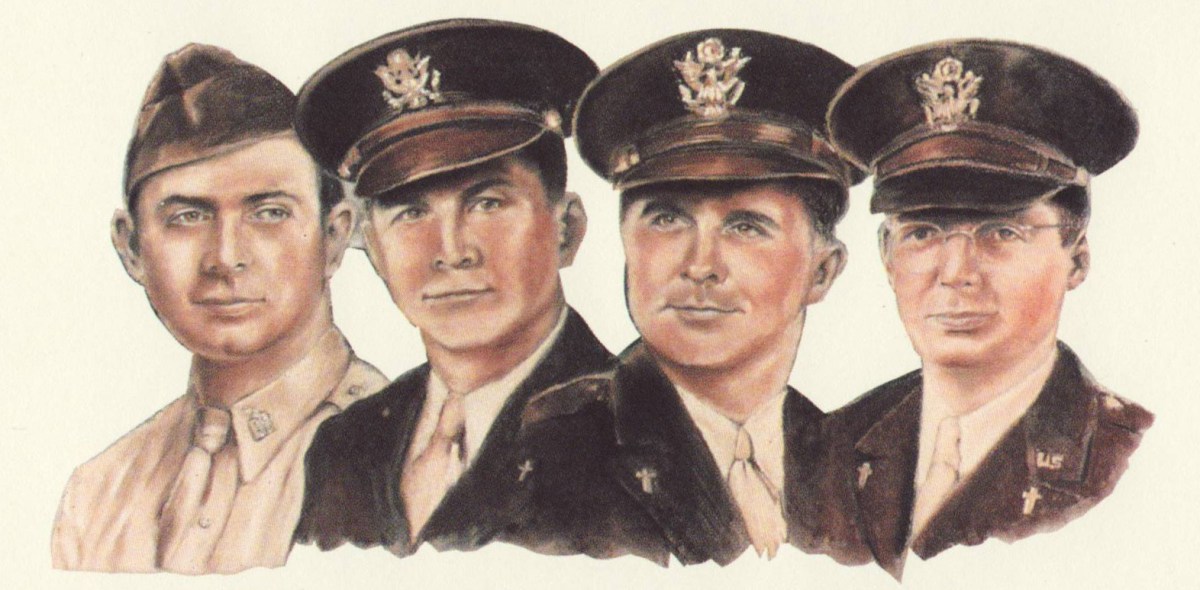
They were the Jewish rabbi Alexander David Goode, the Catholic priest John Patrick Washington, the Reformed Church in America (RCA) minister Clark Vandersail Poling, and the Methodist minister George Lansing Fox.
At 12:55am on February 3rd, the German submarine U-223 fired a spread of three torpedoes. One struck Dorchester amidships, deep below the water line. A hundred or more were killed in the blast, or in the clouds of steam and ammonia vapor billowing from ruptured boilers. Suddenly pitched into darkness, untold numbers were trapped below decks. With boiler power lost, there was no longer enough steam to blow the full 6 whistle signal to abandon ship, while loss of power prevented a radio distress signal. For reasons which remain unclear, there never were any signal flares.Those who could escape scrambled onto the deck, injured, disoriented, many still in their underwear as they emerged into the cold and darkness.
The four chaplains must have been a welcome sight, guiding the disoriented and the wounded, offering prayers and words of courage. They opened a storage locker and handed out life preservers, until there were no more. “Padre,” said one young soldier, “I’ve lost my life jacket and I can’t swim!” Witnesses differ as to which of the four it was who gave this man his life jacket, but they all followed suit. One survivor, John Ladd, said “It was the finest thing I have seen or hope to see this side of heaven.” Rabbi Goode gave his gloves to Petty Officer John Mahoney, saying “Never mind. I have two pairs”. It was only later that Mahoney realized. Rabbi Goode intended to stay with the ship.
Dorchester was listing hard to starboard and taking on water fast, with only 20 minutes to live. Port side lifeboats were inoperable due to the ship’s angle. Men jumped across the void into those on the starboard side, overcrowding some to the point of capsize. Only two of fourteen lifeboats launched successfully.
Private William Bednar found himself floating in 34° water, surrounded by dead bodies and debris. “I could hear men crying, pleading, praying,” he recalled. “I could also hear the chaplains preaching courage. Their voices were the only thing that kept me going.”
As the ship upended and went down by the bow, survivors floating nearby could see the four chaplains. With arms linked and leaning against the slanting deck, their voices offered prayers and sang hymns for the dead and for those about to die.Rushing back to the scene, coast guard cutters found themselves in a sea of bobbing red lights, the water-activated emergency strobe lights of individual life jackets. Most marked the location of corpses. Of the 904 on board, the Coast Guard plucked 230 from the water, alive.
The United States Congress attempted to confer the Medal of Honor on the four chaplains for their selfless courage, but strict requirements for “heroism under fire” prevented it from doing so. Congress authorized a one time, posthumous “Chaplain’s Medal for Heroism”, awarded to the next of kin on January 18, 1961 by Secretary of the Army Wilber M. Brucker at Fort Myer, Virginia.John 15:13 teaches us, “Greater love hath no man than this, that a man lay down his life for his friends”. Rabbi Goode did not call out for a Jew when he gave away his only hope for survival, Father Washington did not ask for a Catholic. Neither minister Fox nor Poling asked for a Protestant. Each gave his life jacket to the nearest man.
Carl Sandburg once said that “Valor is a gift. Those having it never know for sure whether they have it until the test comes.” If I were ever to be so tested, I hope I would prove myself half the man as any of those four chaplains.
From the Civil War to this day, the execution of Private Slovik was the only time a death sentence was carried out for the crime of desertion.
When he was little, his neighbors must have thought he was a bad kid. His first arrest came at age 12, when he and some friends were caught stealing brass from a foundry. There were other episodes between 1932 and ’37: petty theft, breaking & entering, and disturbing the peace. He was sent to prison in 1939, for stealing a car.
Edward Donald “Eddie” Slovik was paroled in 1942, his criminal record rendering him 4F. “Registrant not acceptable for military service”. He took a job at the Montella Plumbing & Heating company in Dearborn, Michigan, where he met bookkeeper Antoinette Wisniewski, the woman who would later become his wife.
There the couple may have ridden out WWII, but the war was consuming manpower at a rate unprecedented in history. Shortly after the couple’s first anniversary, Slovik was re-classified 1A, fit for service, and drafted into the Army. Arriving in France on August 20, 1944, he was part of a 12-man replacement detachment, assigned to Company G of the 109th Infantry Regiment, US 28th Infantry Division.
Slovik and a buddy from basic training, Private John Tankey, became separated from their detachment during an artillery attack and spent the next six weeks with Canadian MPs. It was around this time that Private Slovik decided he “wasn’t cut out for combat”.
The rapid movement of the army during this period caused difficulty for many replacements attempting to find their units. Edward Slovik and John Tankey finally caught up with the 109th on October 7. The following day, Slovik asked his company commander Captain Ralph Grotte for reassignment to a rear unit, saying he was “too scared” to be part of a rifle company. Grotte refused, confirming that, were he to run away, such an act would constitute desertion.
And desert, he did. Eddie Slovik left his unit on October 9, despite Private Tankey’s protestations that he should stay. “My mind is made up”, he said. Slovik walked several miles until he found an enlisted cook, to whom he presented the following note.
“I, Pvt. Eddie D. Slovik, 36896415, confess to the desertion of the United States Army. At the time of my desertion we were in Albuff [Elbeuf] in France. I came to Albuff as a replacement. They were shelling the town and we were told to dig in for the night. The following morning they were shelling us again. I was so scared, nerves and trembling, that at the time the other replacements moved out, I couldn’t move. I stayed there in my fox hole till it was quiet and I was able to move. I then walked into town. Not seeing any of our troops, so I stayed over night at a French hospital. The next morning I turned myself over to the Canadian Provost Corp. After being with them six weeks I was turned over to American M.P. They turned me loose. I told my commanding officer my story. I said that if I had to go out there again I’d run away. He said there was nothing he could do for me so I ran away again AND I’LL RUN AWAY AGAIN IF I HAVE TO GO OUT THERE. — Signed Pvt. Eddie D. Slovik A.S.N. 36896415”.
Slovik was repeatedly ordered to tear up the note and rejoin his unit, and there would be no consequences. Each time, he refused. The stockade didn’t scare him. He’d been in prison before and it was better than the front lines. Beside that, he was already an ex-con. A dishonorable discharge was hardly going to change anything in an already dim future. Finally, instructed to write a second note on the back of the first acknowledging the legal consequences of his actions, Eddie Slovik was taken into custody.
1.7 million courts-martial were held during WWII, 1/3rd of all the criminal cases tried in the United States during the period. The death penalty was rarely imposed. When it was, it was almost always in cases of rape or murder.
2,864 US Army personnel were tried for desertion between January 1942 and June 1948. Courts-martial handed down death sentences to 49 of them, including Eddie Slovik. Division commander Major General Norman Cota approved the sentence. “Given the situation as I knew it in November, 1944,” he said, “I thought it was my duty to this country to approve that sentence. If I hadn’t approved it–if I had let Slovik accomplish his purpose–I don’t know how I could have gone up to the line and looked a good soldier in the face.”
On December 9, Slovik wrote to Supreme Allied Commander Dwight D. Eisenhower, pleading for clemency. Desertion was a systemic problem at this time. Particularly after the surprise German offensive coming out of the frozen Ardennes Forest on December 16, an action that went into history as the Battle of the Bulge. Eisenhower approved the execution order on December 23, believing it to be the only way to discourage further desertions.
His uniform stripped of all insignia with an army blanket draped over his shoulders, Slovik was brought to the place of execution near the Vosges Mountains of France. “They’re not shooting me for deserting the United States Army”, he said, “thousands of guys have done that. They just need to make an example out of somebody and I’m it because I’m an ex-con. I used to steal things when I was a kid, and that’s what they are shooting me for. They’re shooting me for the bread and chewing gum I stole when I was 12 years old.”
Movie poster from the film: “The Execution of Private Slovik”
Army Chaplain Father Carl Patrick Cummings said, “Eddie, when you get up there, say a little prayer for me.” Slovik said, “Okay, Father. I’ll pray that you don’t follow me too soon”. Those were his last words. A soldier placed the black hood over his head. The execution was carried out by firing squad. It was 10:04am local time, January 31, 1945.
Edward Donald Slovik was buried in Plot E of the Oise-Aisne American Cemetery, his marker bearing a number instead of his name. Antoinette Slovik received a telegram informing her that her husband had died in the European Theater of the war and a letter, instructing her to return a $55 allotment check. She wouldn’t learn about the execution for another nine years.
In 1987, President Ronald Reagan ordered the repatriation of Slovik’s remains. He was re-interred at Detroit’s Woodmere Cemetery next to Antoinette who had gone to her final rest, eight years earlier.
In all theaters of WWII, the United States military executed 102 of its own, almost always for the unprovoked rape and/or murder of civilians. From the Civil War to this day, the execution of Private Slovik was the only time a death sentence was carried out for the crime of desertion. At least one member of the tribunal which condemned him to death, would come to see it as a miscarriage of justice.
Nick Gozik of Pittsburg passed away in 2015, at the age of 95. He was there in 1945, a fellow soldier called to witness the execution. “Justice or legal murder”, he said, “I don’t know, but I want you to know I think he was the bravest man in that courtyard that day…All I could see was a young soldier, blond-haired, walking as straight as a soldier ever walked. I thought he was the bravest soldier I ever saw.”




 In May of 1940 the British Expeditionary Force and what remained of French forces occupied a sliver of land along the English Channel. Field Marshall Gerd von Rundstedt called a halt of the German armored advance on May 24, while Hermann Göring urged Hitler to stop the ground assault, let the Luftwaffe finish the destruction of Allied forces. On the other side of the channel, Admiralty officials combed every boatyard they could find for boats to ferry their people off of the beach.
![dunkirk-evacuation.-1-june-1940-troop-positions.-operation-dynamo.-hmso-1953-map-[2]-272563-p](https://todayinhistory.blog/wp-content/uploads/2020/05/dunkirk-evacuation.-1-june-1940-troop-positions.-operation-dynamo.-hmso-1953-map-2-272563-p.jpg) The battered remnants of the French 1st Army fought a desperate delaying action against the advancing Germans. They were 40,000 men against seven full divisions, 3 of them armored. They held out until May 31 when, having run out of food and ammunition, the last 35,000 finally surrendered. Meanwhile, a hastily assembled fleet of 933 vessels large and small began to withdraw the broken army from the beaches.
The battered remnants of the French 1st Army fought a desperate delaying action against the advancing Germans. They were 40,000 men against seven full divisions, 3 of them armored. They held out until May 31 when, having run out of food and ammunition, the last 35,000 finally surrendered. Meanwhile, a hastily assembled fleet of 933 vessels large and small began to withdraw the broken army from the beaches.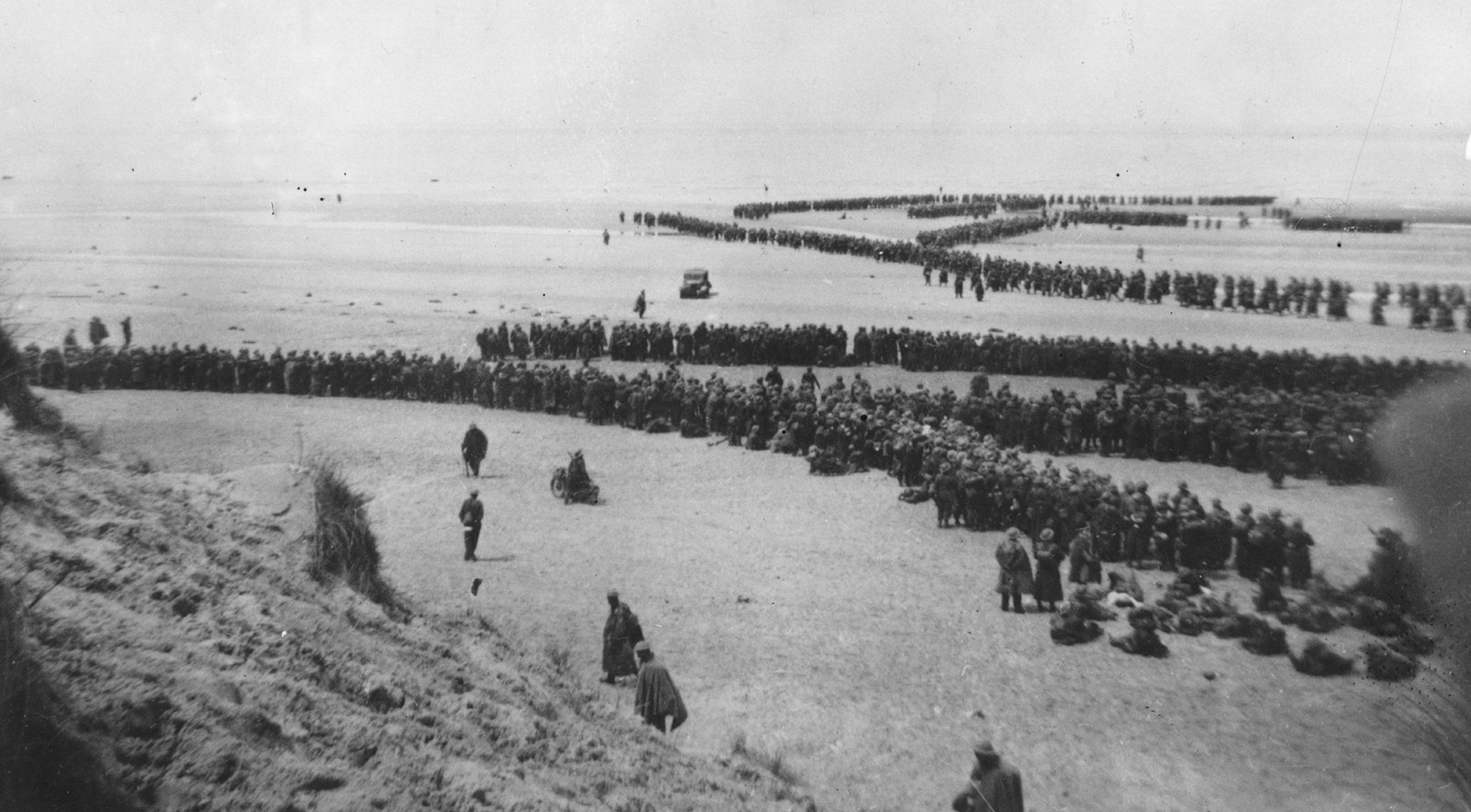 A thousand copies of navigational charts helped organize shipping in and out of Dunkirk, as buoys were laid around Goodwin Sands to prevent stranding. Abandoned vehicles were driven into the water at low tide, weighted down with sand bags and connected by wooden planks, forming makeshift jetties.
 It all came to an end on June 4. Most of the light equipment and virtually all the heavy stuff had to be left behind, just to get what remained of the allied armies out alive. But now, with the United States still the better part of a year away from entering the war, the allies had a fighting force that would live to fight on. Winston Churchill delivered a speech that night to the House of Commons, calling the events in France “a colossal military disaster”. “[T]he whole root and core and brain of the British Army”, he said, had been stranded at Dunkirk and seemed about to perish or be captured. In his “We shall fight on the beaches” speech of June 4, Churchill hailed the rescue as a “miracle of deliverance”.
 On the home front, thousands of volunteers signed up for a “stay behind” mission in the weeks that followed. With “Operation Sea Lion” all but imminent, the German invasion of Great Britain, their mission was to go underground and to disrupt and destabilize the invaders in any way they could. They were to be part of the Home guard, a guerrilla force reportedly vetted by a senior Police Chief so secret, that he was to be assassinated in case of invasion to prevent membership in the units from being revealed.

 Historians from the Coleshill Auxiliary Research Team (CART) had been trying to do this for years.



 Circus-like performing dwarves were common enough at this time but the Ovitz siblings were different. These were talented musicians playing quarter-sized instruments, performing a variety show throughout the 1930s and early ’40s as the “Lilliput Troupe”. The family performed throughout Romania, Hungary and Czechoslovakia, with their normal height siblings serving as “roadies”. And then came the day. The whole lot of them were swept up by the Nazis and deported to the concentration camp and extermination center, at Auschwitz-Birkenau.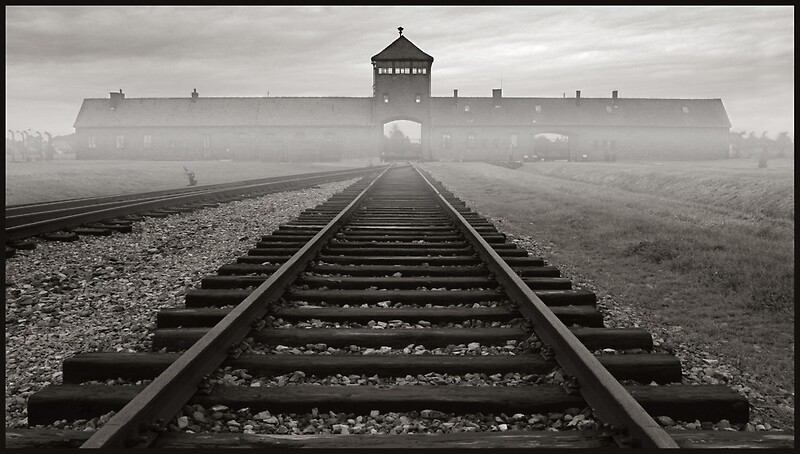
 On one occasion, the Angel of Death told the family they were “going to a beautiful place”. Terrified, the siblings were given makeup, and told to dress themselves. Brought to a nearby theater and placed onstage, the family must have thought they’d be asked to perform. Instead, Mengele ordered them to undress, leaving all seven naked before a room full of SS men. Mengele then gave a speech and invited the audience onstage, to poke and prod at the humiliated family.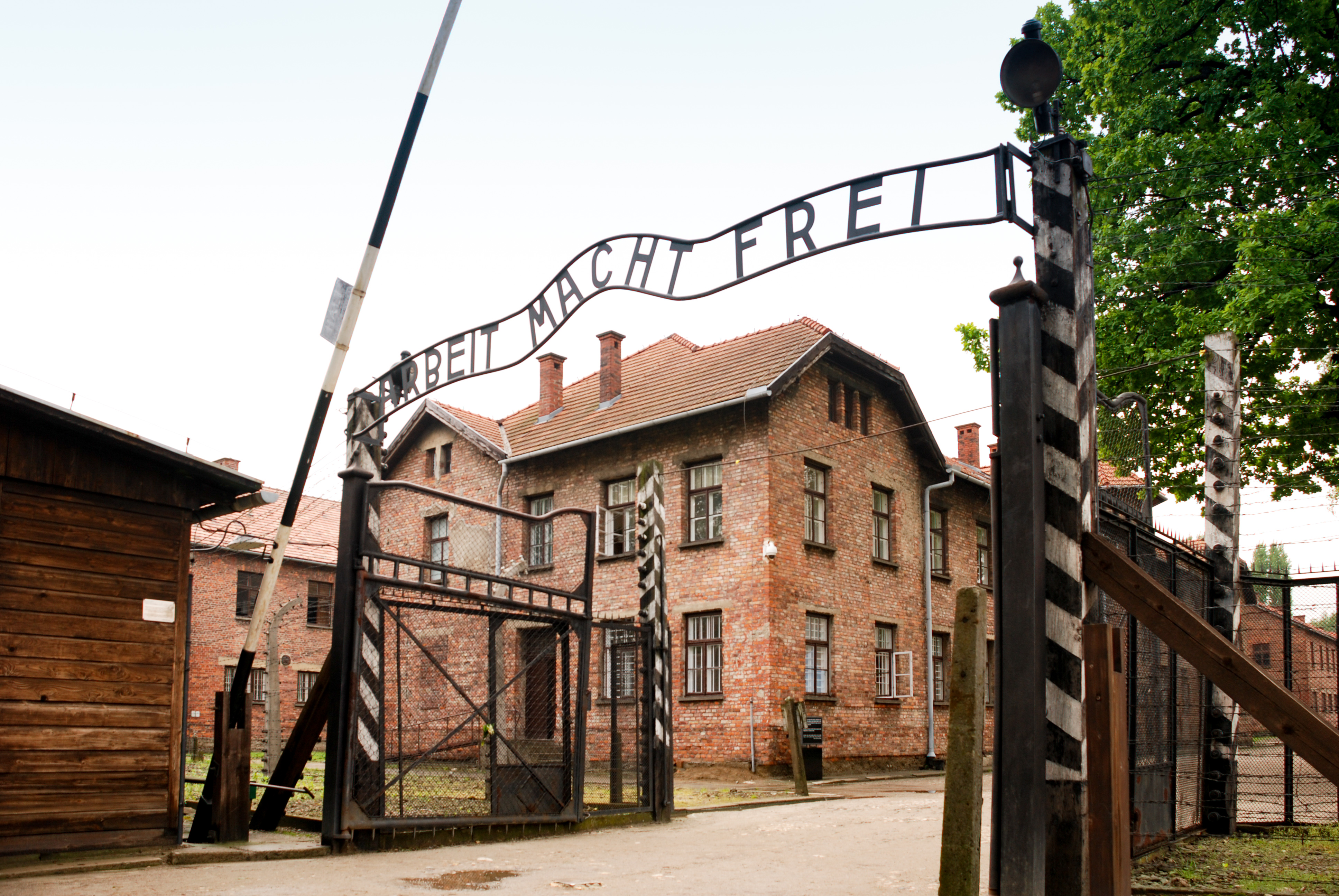
 Only 50 of the 650 Jewish inhabitants of the village ever returned. In 1949, the family emigrated to Israel and resumed their musical tour, performing until the group retired in 1955.

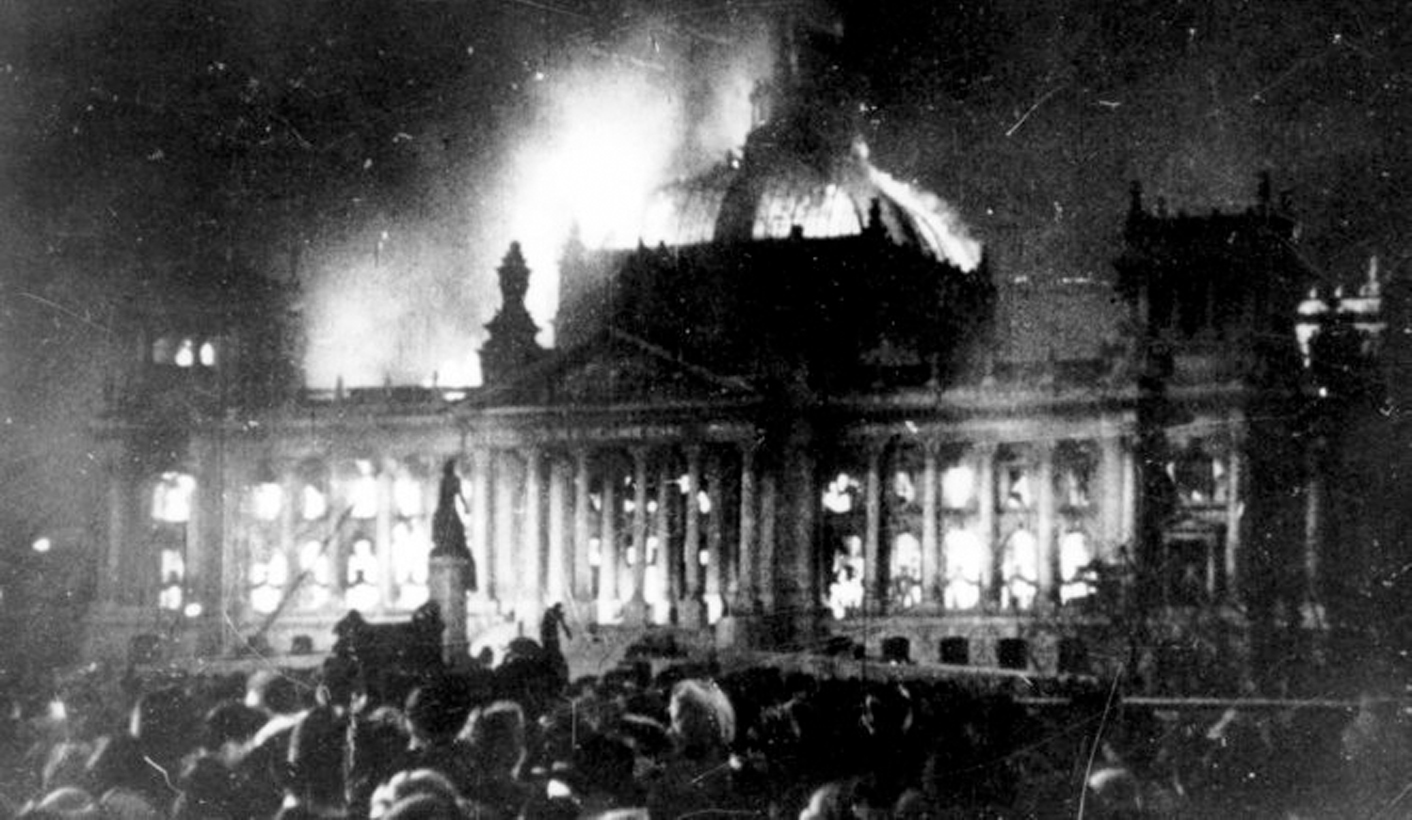 March elections failed to produce a Nazi party majority. For the time being, Herr Hitler was forced to rely on his coalition partner the German National People’s Party (DNVP), to hold a majority in the new Reichstag.
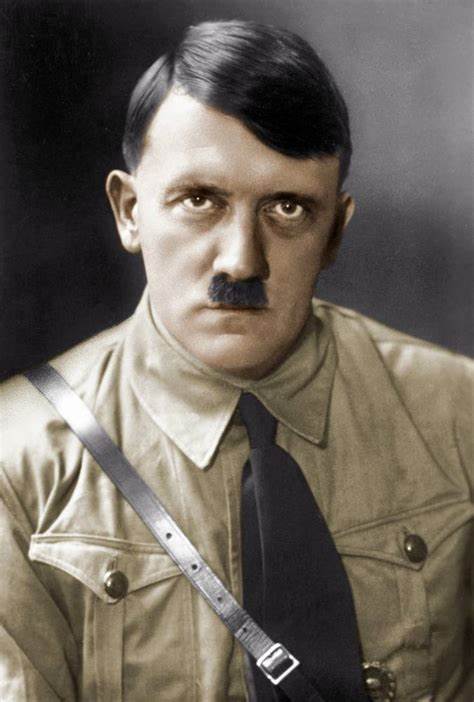 Nazi propaganda was relentless. Hitler himself had written back in 1924, that propaganda’s “task is not to make an objective study of the truth, in so far as it favors the enemy, and then set it before the masses with academic fairness; its task is to serve our own right, always and unflinchingly.”
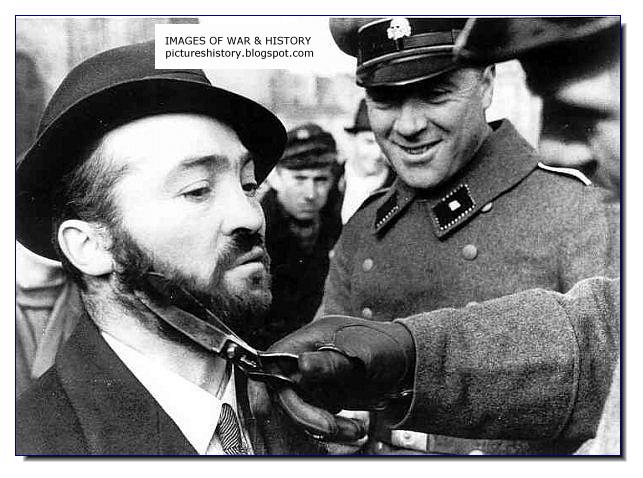 Jacob and Pauline Levinsons came to Berlin in 1928, a few years before Hitler came to power. Both Latvian Jews, the couple gave birth to a beautiful baby girl on this day in 1934. Later that year, the proud parents brought wide-eyed, curly haired, chubby little Hessy to photographer Hans Ballin of Berlin.
 And that’s where the story ends, except, no. Unbeknownst to the Levinsons, the photographer submitted the portrait in a contest, a search for the perfect Aryan child.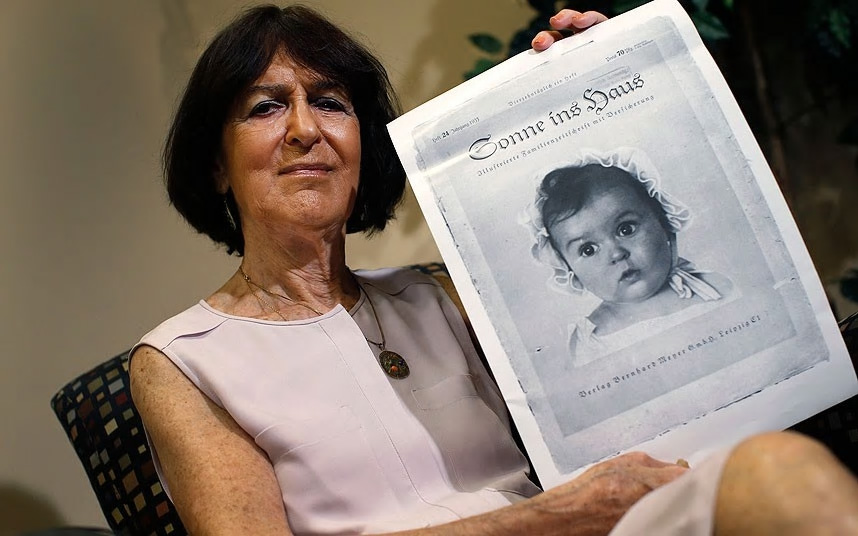


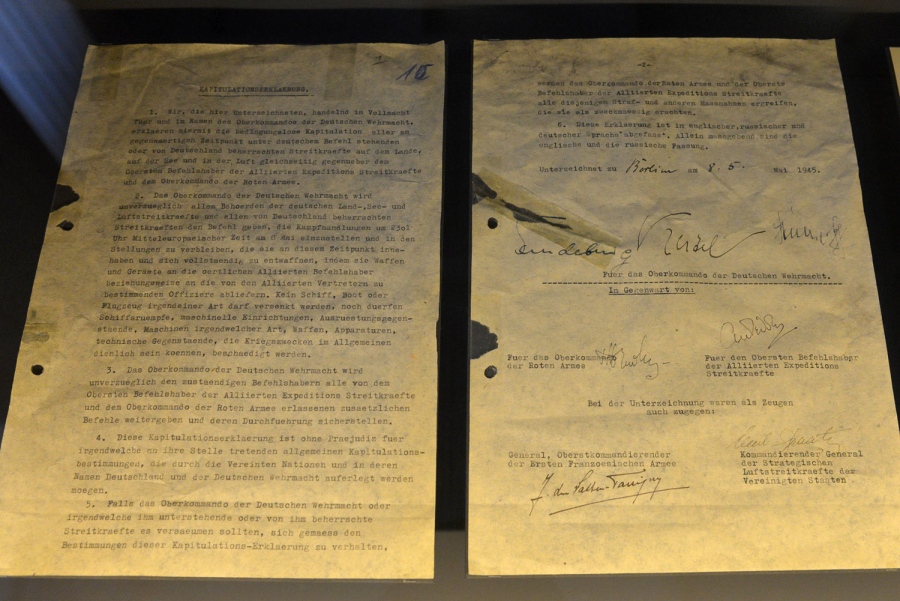 The German government announced the end of hostilities right away to its own people, but most of the Allied governments, remained silent. It was nearly midnight the following day when Field Marshal Wilhelm Keitel signed a second instrument of surrender, in the Berlin headquarters of Soviet General Georgy Zhukov.
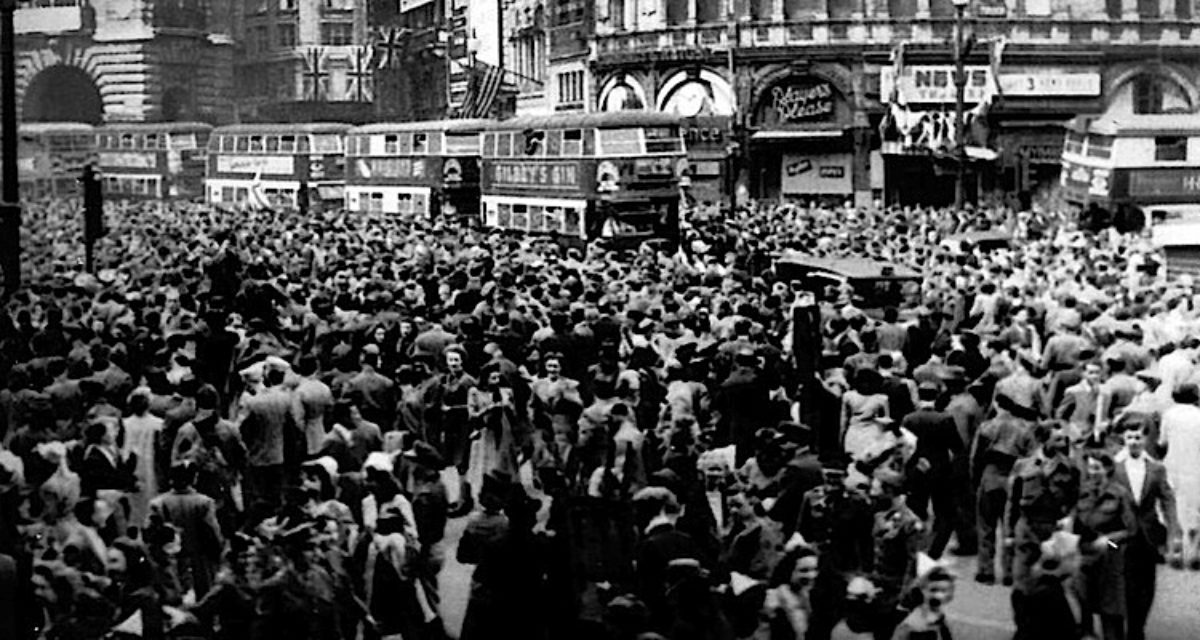 And still, the world waited.
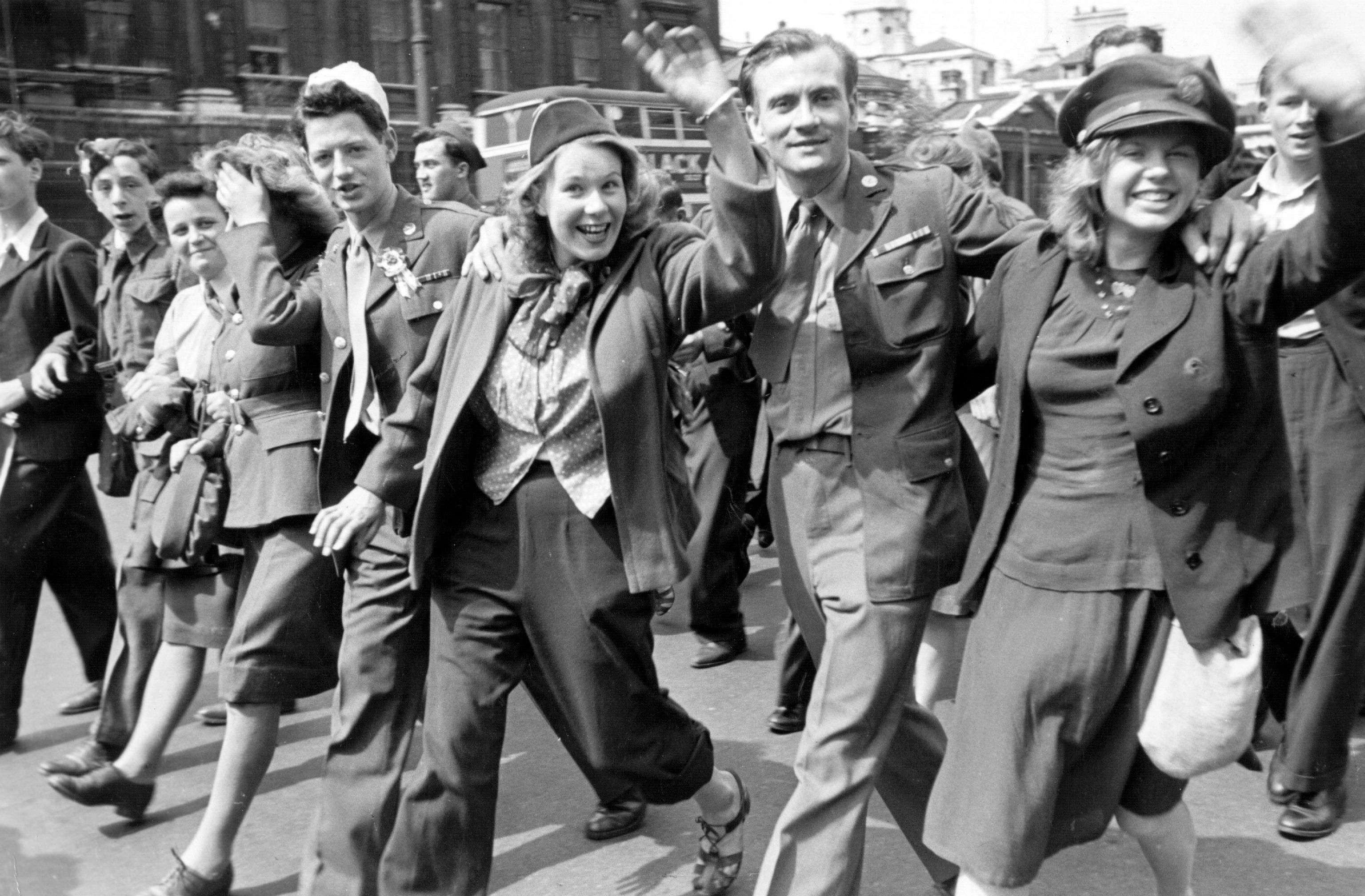 President Truman’s speech begins: “This is a solemn but a glorious hour. I only wish that Franklin D. Roosevelt had lived to witness this day. General Eisenhower informs me that the forces of Germany have surrendered to the United Nations. The flags of freedom fly over all Europe. For this victory, we join in offering our thanks to the Providence which has guided and sustained us through the dark days of adversity”.
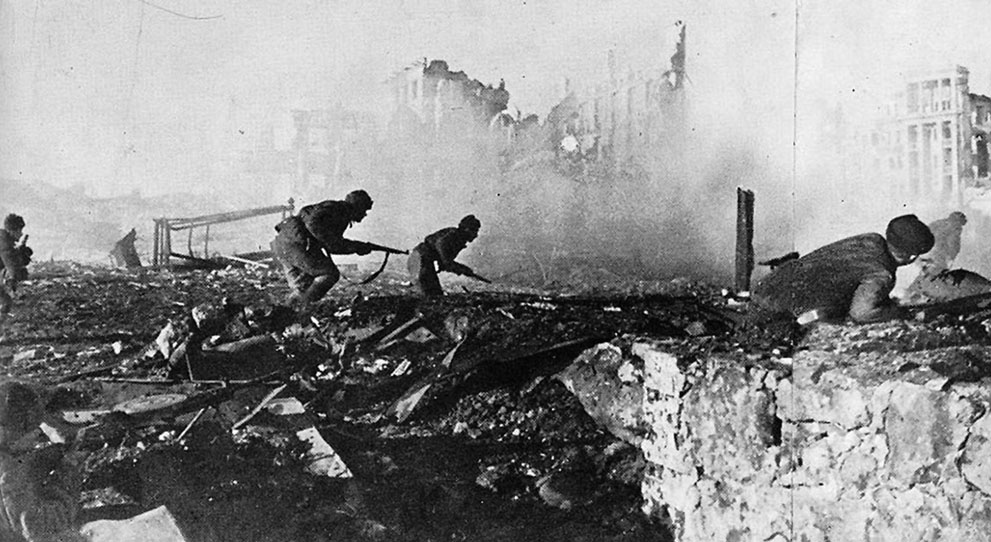 Nearly every extermination camp, death march, ghetto and pogrom now remembered as the Holocaust, occurred on the Eastern Front.

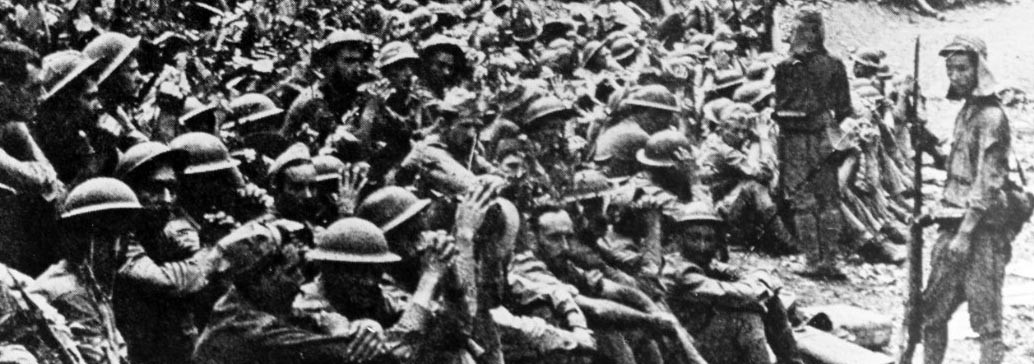
 The United States was grossly unprepared to fight a World War in 1942. The latest iteration of “War Plan Orange” (WPO-3) called for delaying tactics in the event of war with Japan, buying time to gather US Naval assets to sail for the Philippines. The problem was, there was no fleet to gather. The flower of American pacific power in the pacific, lay at the bottom of Pearl Harbor. Allied war planners turned their attention to defeating Adolf Hitler.
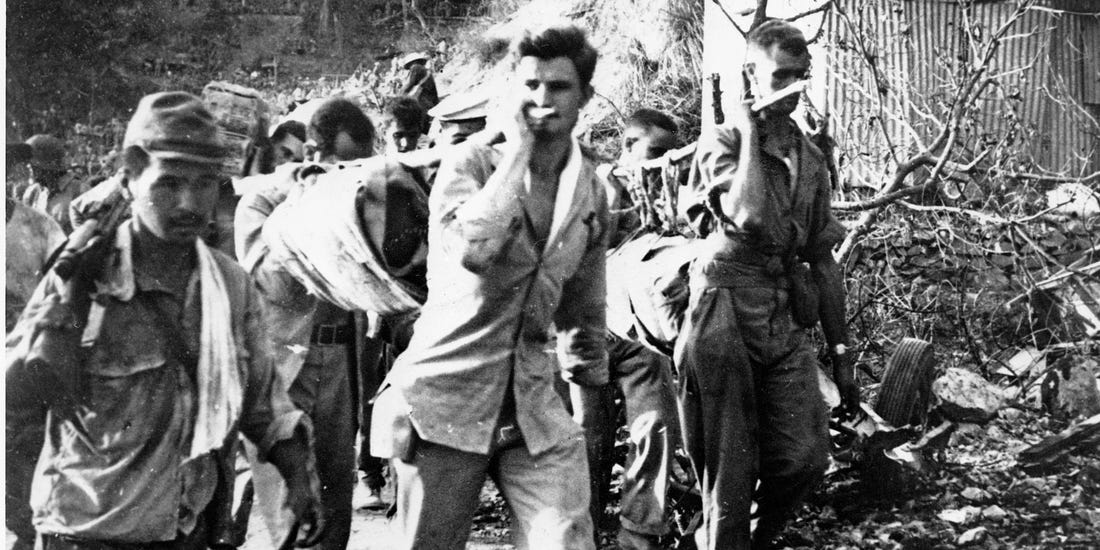 Japanese guards were sadistic. They would beat marchers and bayonet those too weak to walk. Tormented by a thirst few among us can so much as imagine, men were made to stand for hours under a relentless sun, standing by a stream from which none were permitted to drink. The man who broke ranks and dove for the water was clubbed or bayoneted to death, on the spot. Japanese tanks would swerve out of their way to run over anyone who had fallen and was too slow in getting up. Some were burned alive, others buried alive. Already crippled from tropical disease and starving from the long siege of Luzon, w
 United States Marine Corps 1st Lieutenant Austin Shofner came ashore back in November, with the 4th Marines. Shofner and his fellow leathernecks engaged the Japanese as early as December 12 and received their first taste of aerial bombardment, on December 29. Promoted to Captain and placed in command of Headquarters Company, Shofner received two Silver Stars by April 15 in near-constant defense against aerial attack.
 Nearly 150,000 Allied soldiers were taken captive by the Japanese Empire, during World War 2. Clad in unspeakably filthy rags they were fed a mere 600 calories per day of fouled rice, supplemented only by the occasional insect or bird or rodent unlucky enough to fall into desperate hands. Disease such as malaria was all but universal as gross malnutrition led to loss of vision and unrelenting nerve pain. Dysentery, a hideously infectious disease of the large intestine reduced grown men to animated skeletons. Mere scratches resulted in grotesque tropical ulcers up to a foot in length exposing living bone and rotting flesh to swarms of ravenous insects.
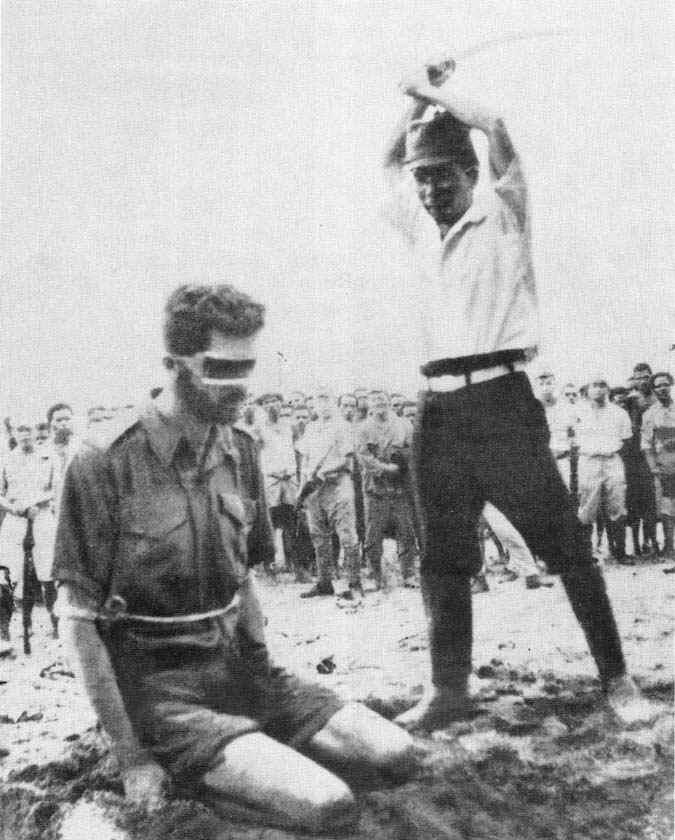 Given such cruel conditions it’s a wonder anyone escaped at all but it did happen. Once.
 Now-Colonel Shofner volunteered to return to the Pacific where his experience helped with the rescue of 500 prisoners of the infamous POW camp at Cabanatuan on January 30, 1945.


 Radios of the age didn’t work across the Rockies, and the mail was erratic. The only passenger service available was run by the Yukon Southern airline, a run which locals called the “Yukon Seldom”. For construction battalions at Dawson Creek, Delta Junction and Whitehorse, it was faster to talk to each other through military officials in Washington, DC.
 Tent pegs were useless in the permafrost, while the body heat of sleeping soldiers meant waking up in mud. Partially thawed lakes meant that supply planes could use neither pontoon nor ski, as Black flies swarmed the troops by day. Hungry bears raided camps at night, looking for food.
 That October, Refines Sims Jr. of Philadelphia, with the all-black 97th Engineers, was driving a bulldozer 20 miles east of the Alaska-Yukon line when the trees in front of him toppled to the ground. Sims slammed his machine into reverse as a second bulldozer came into view, driven by Kennedy, Texas Private Alfred Jalufka. North had met south, and the two men jumped off their machines, grinning. Their triumphant handshake was photographed by a fellow soldier and published in newspapers across the country, becoming an unintended first step toward desegregating the US military.


 German submarine wolf packs had already sunk several ships in these waters. Late on the night of February 2, one of the Cutters flashed flashed the light signal “we’re being followed”.
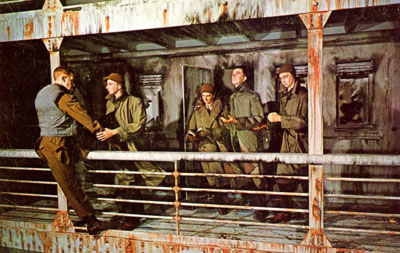 Those who could escape scrambled onto the deck, injured, disoriented, many still in their underwear as they emerged into the cold and darkness.
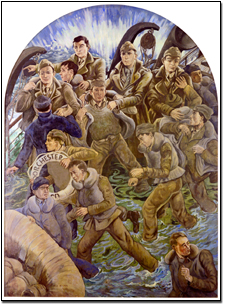 Dorchester was listing hard to starboard and taking on water fast, with only 20 minutes to live. Port side lifeboats were inoperable due to the ship’s angle. Men jumped across the void into those on the starboard side, overcrowding some to the point of capsize. Only two of fourteen lifeboats launched successfully.
 Rushing back to the scene, coast guard cutters found themselves in a sea of bobbing red lights, the water-activated emergency strobe lights of individual life jackets. Most marked the location of corpses. Of the 904 on board, the Coast Guard plucked 230 from the water, alive.
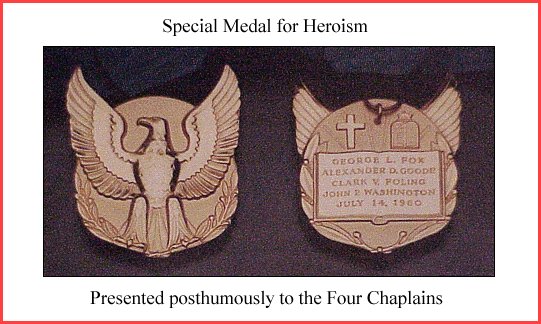 John 15:13 teaches us, “Greater love hath no man than this, that a man lay down his life for his friends”. Rabbi Goode did not call out for a Jew when he gave away his only hope for survival, Father Washington did not ask for a Catholic. Neither minister Fox nor Poling asked for a Protestant. Each gave his life jacket to the nearest man.


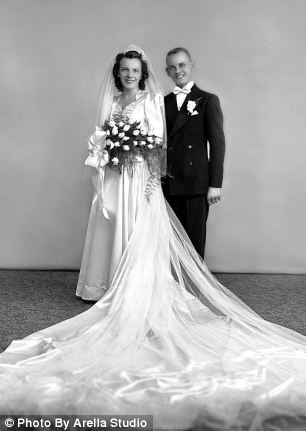 There the couple may have ridden out WWII, but the war was consuming manpower at a rate unprecedented in history. Shortly after the couple’s first anniversary, Slovik was re-classified 1A, fit for service, and drafted into the Army. Arriving in France on August 20, 1944, he was part of a 12-man replacement detachment, assigned to Company G of the 109th Infantry Regiment, US 28th Infantry Division.
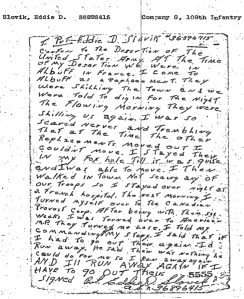 of my desertion we were in Albuff [Elbeuf] in France. I came to Albuff as a replacement. They were shelling the town and we were told to dig in for the night. The following morning they were shelling us again. I was so scared, nerves and trembling, that at the time the other replacements moved out, I couldn’t move. I stayed there in my fox hole till it was quiet and I was able to move. I then walked into town. Not seeing any of our troops, so I stayed over night at a French hospital. The next morning I turned myself over to the Canadian Provost Corp. After being with them six weeks I was turned over to American M.P. They turned me loose. I told my commanding officer my story. I said that if I had to go out there again I’d run away. He said there was nothing he could do for me so I ran away again AND I’LL RUN AWAY AGAIN IF I HAVE TO GO OUT THERE. — Signed Pvt. Eddie D. Slovik A.S.N. 36896415”.
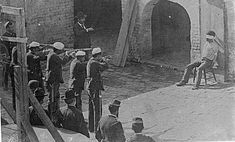 On December 9, Slovik wrote to Supreme Allied Commander Dwight D. Eisenhower, pleading for clemency. Desertion was a systemic problem at this time. Particularly after the surprise German offensive coming out of the frozen Ardennes Forest on December 16, an action that went into history as the Battle of the Bulge. Eisenhower approved the execution order on December 23, believing it to be the only way to discourage further desertions.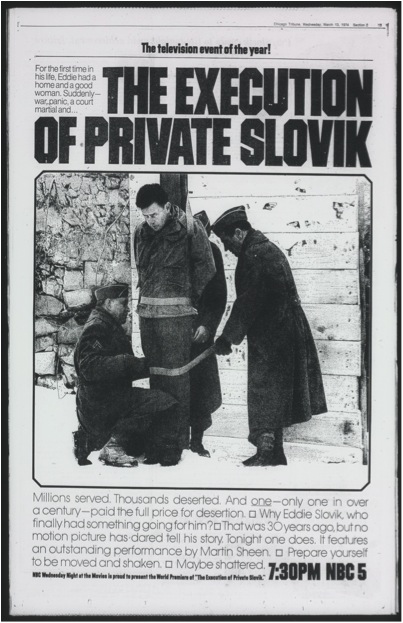
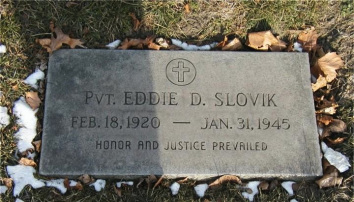 Nick Gozik of Pittsburg passed away in 2015, at the age of 95. He was there in 1945, a fellow soldier called to witness the execution. “Justice or legal murder”, he said, “I don’t know, but I want you to know I think he was the bravest man in that courtyard that day…All I could see was a young soldier, blond-haired, walking as straight as a soldier ever walked. I thought he was the bravest soldier I ever saw.”


You must be logged in to post a comment.