July 26 1945 USS Indianapolis

The United States Navy lost over 350 ships to combat operations during WW2.  Not one  resulted in court martial but, on this occasion, someone was going to pay. 

The Portland class heavy cruiser USS Indianapolis set out on its secret mission on July 16, 1945, under the command of Captain Charles Butler McVay III.  She was delivering “Little Boy” to the Pacific island of Tinian, the atomic bomb which would later be dropped on Hiroshima.

Indianapolis made her delivery on July 26, arriving at Guam two days later and then heading for Leyte to take part in the planned invasion of Japan. She was expected to arrive on the 31st.

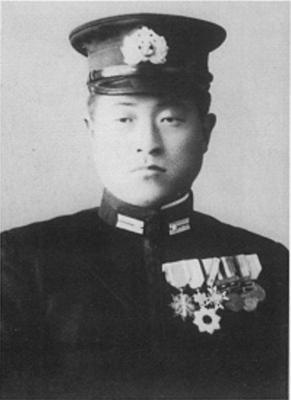
Indianapolis SubThe Japanese submarine I-58, Captain Mochitsura Hashimoto commanding, fired a spread of six torpedoes at the cruiser, two striking Indianapolis’ starboard bow at fourteen minutes past midnight on Monday, July 30. The damage was massive.  Within 12 minutes, the 584-ft, 9,950-ton vessel had rolled over, gone straight up by the stern, and sunk beneath the waves.

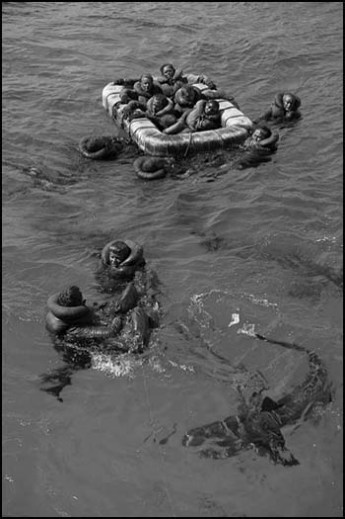
Approximately 300 of Indianapolis’ 1,196-member crew were killed outright, leaving nearly 900 treading water. Many had no life jackets.  There had been no time, and there were few life boats.
indianapolis_2
Caribbean Reef sharks circling the sailors in reenactment scene after USS Indianapolis had been sunk by Japanese submarine. As seen on OCEAN OF FEAR: WORST SHARK ATTACK EVER. H/T photographer: Tim Calver

The ordeal faced by the survivors, is beyond description.  Alone and stranded in open ocean, these guys treaded water for four days, hoping and praying for the rescue that did not come.

Shark attacks began on the first day, and never let up. Kapok-filled life vests became waterlogged and sank after 48 hours, becoming worse than useless. Exhaustion, hypothermia, and severe sunburn took their toll as the hours turned into days. Some men went insane and began to attack their shipmates, while others found the thirst so unbearable that they drank seawater, setting off a biological chain reaction which killed them within a few hours. Some simply swam away, following some spectral vision that only he could see. Through it all, random individuals would suddenly rise up screaming from the ocean, then to disappear forever, as the sharks claimed another victim.

Navy Command had not the slightest idea of what happened to Indianapolis, nor why she didn’t show up on the 31st.  A random patrol aircraft passing the area that Thursday afternoon, that finally discovered men floating in open ocean. The last Indianapolis survivor was plucked from the ocean Friday afternoon, well past half-dead after nearly five days in the water. Of the 900 or so who survived the sinking, only 316 remained alive at the end of the ordeal.
mochitsura-hashimoto
Mochitsura Hashimoto

The Navy had committed multiple errors, from denying McVay’s requested escort to informing him that his route was safe, even when the surface operations officer knew there were at least two Japanese submarines, operating in the area.

No captain in the history of the United States Navy was subjected to court-martial for losing a ship sunk by an act of war.  The United States Navy lost over 350 ships to combat operations during WW2.  It didn’t matter.  On this occasion, someone was going to pay.

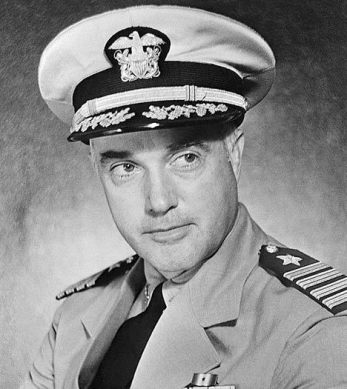
A hastily convened court of inquiry was held in Guam on August 13, leading to McVay’s court-martial. There was evidence that the Navy itself had put the ship in harm’s way.  When prosecutors flew the I-58 commander in to testify, Hashimoto swore that zigzagging would have made no difference. The Japanese Commander even became part of a later effort to exonerate McVay, but to no avail. Charles Butler McVay III was convicted of “hazarding his ship by failing to zigzag“, his career ruined.
450729-charles-mcvay
Charles Butler McVay, III

McVay had wide support among Indianapolis’ survivors, but opinion was by no means unanimous. Birthdays, anniversaries and holidays would come and go and there was always some piece of hate mail, blaming him for the death of a loved one. One Christmas missive read “Merry Christmas! Our family’s holiday would be a lot merrier if you hadn’t killed my son”.

McVay began to doubt himself.  By 1968 he must have felt the weight of Indianapolis’ dead, like a great stone upon his shoulders.

On November 6, 1968, Charles Butler McVay III sat down on his front porch in Litchfield Connecticut, took out his Navy revolver, and killed himself.  He was cremated, his ashes scattered at sea.

It would take more than 20 years, for the evidence which exonerated him to be declassified.

Afterward:
Hunter Alan Scott was eleven and living in Pensacola when he saw the movie “Jaws”, in 1996. He was fascinated by the movie’s brief mention of the Indianapolis’ shark attacks, the next year, he created his 8th grade “National History Day” project on the USS Indianapolis sinking. The boy interviewed nearly 150 survivors and reviewed 800 documents.  The more he read, the more he became convinced that Captain McVay was innocent of the charges for which he’d been convicted.

Scott’s National History Day project went up to the state finals, but it was rejected because he had used the wrong type of notebook to organize the material.

artbHe couldn’t let it end there. Scott began to attend Indianapolis survivors’ reunions, at their invitation, and helped to gain a commitment in 1997 from then-Representative Joe Scarborough that he would introduce a bill in Congress to exonerate McVay the following year.

Senator Bob Smith of NH joined Scarborough in a joint resolution.  Hunter Scott and several Indianapolis survivors were invited to testify before Senator John Warner and the Senate Armed Services committee on September 14, 1999.

Holding a dog tag in his hand, Scott testified “This is Captain McVay’s dog tag from when he was a cadet at the Naval Academy. As you can see, it has his thumbprint on the back. I carry this as a reminder of my mission in the memory of a man who ended his own life in 1968. I carry this dog tag to remind me that only in the United States can one person make a difference no matter what the age. I carry this dog tag to remind me of the privilege and responsibility that I have to carry forward the torch of honor passed to me by the men of the USS Indianapolis”.

The United States Congress passed a resolution in 2000, signed into law by President Bill Clinton on October 30, exonerating Charles Butler McVay III of the charges which had led to his court martial, humiliation and suicide.
170819163129-02-uss-indianapolis-crew-restricted-exlarge-169
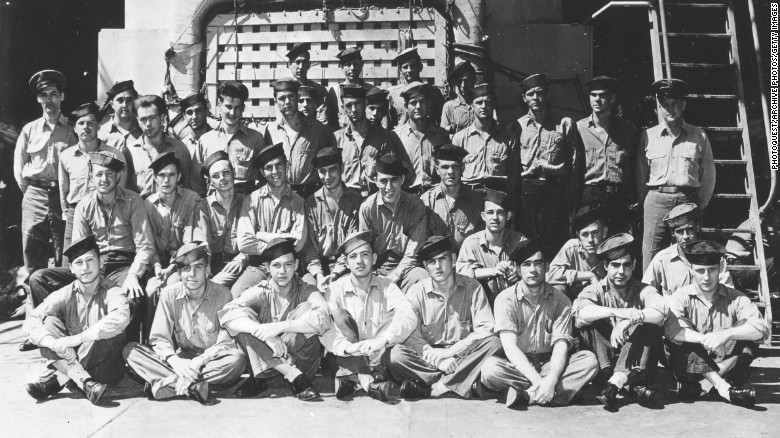
Some of Indianapolis’ crew, before her sinking.

The record cannot not be expunged.  Congress has rules against even considering bills altering military records, and there is no means by which to reverse a court-martial.  It’s never happened.  Yet Captain McVay had exonerated, something that the Indianapolis survivors had tried to accomplish without success.  Until the intervention of a 12-year-old boy.  Who said one person can’t make a difference?

Today, only 22 of  Indianapolis’ survivors remain alive.  The wreck of the “Indy” was discovered in August 2017, in 18,000-feet of water.  Leader of the civilian expedition which located the wreck, Microsoft co-founder Paul Allen, said”To be able to honor the brave men of the USS Indianapolis and their families through the discovery of a ship that played such a significant role in ending World War II is truly humbling”.

If you enjoyed this “Today in History”, please feel free to re-blog, “like” & share on social media, so that others may find and enjoy it as well. Please click the “follow” button on the right, to receive email updates on new articles.  Thank you for your interest, in the history we all share.


July 25, 1944 Most III

“This is the decisive weapon of the war. Humanity will never be able to endure it,” Hitler said, “If I had this weapon in 1939 we would not be at war now.”

In the early years of WWII, Nazi Germany fired 10,000 V1″Doodlebug” rockets at England, killing over 6,000 Londoners alone, by 1943. The subsonic V1 was an effective terror weapon but, bad as it was to be the target of one of these things, the “low and slow” trajectory and the weapon’s short range lacked the strategic punch needed by Nazi Germany to end the war in its favor.

The V2 was a different story.  This was the dawn of the ballistic missile era, and Nazi Germany was first off the starting line.

The Peenemünde Aggregat A4 V2 was an early predecessor of the Cruise Missile, delivering a 2,148 pound payload at 5 times the speed of sound over a 236-mile range. While you could hear the V1 coming and seek shelter, victims of the V2 didn’t know they were under attack, until the weapon had exploded.

When Wernher von Braun showed Adolf Hitler the launch of the V2 on color film, Hitler jumped from his seat and shook Braun’s hand with excitement. “This is the decisive weapon of the war. Humanity will never be able to endure it,” Hitler said, “If I had this weapon in 1939 we would not be at war now.”

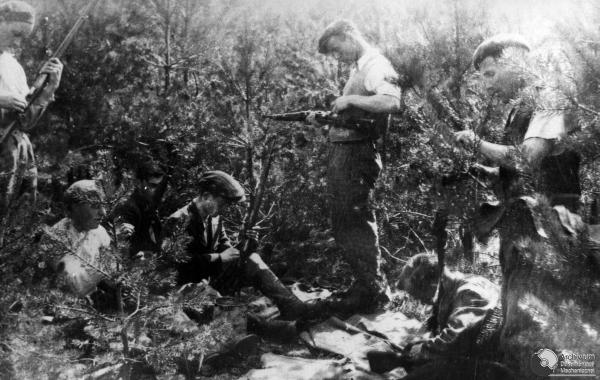
Allies were anxious to get their hands on the secret weapon and, in early 1944, they had their chance. A V2 had crashed into a muddy bank of the Bug River in Nazi-occupied Poland, without exploding. The Polish underground had been waiting for such an opportunity and quickly descended on the rocket, covering it with brush. Desperate to retrieve it, Germans conducted a week long aerial and ground search for the weapon, but failed find it under all that camouflage.

Polish Partisans preparing for battle_WW2
Polish Partisans preparing for battle, WW2

After what must have seemed an eternity, the search came to an end and partisans returned to the site. This time they brought four Polish scientists who carefully disassembled the weapon, packing the pieces in barrels. The parts were then shipped to a barn in Holowczyce, just a few miles away.

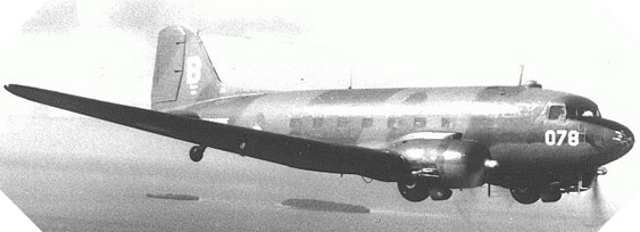
The allied effort to retrieve the stolen missile, code named “Most III”, got underway on this day in 1944, when Royal New Zealand Air Force 1st Lt Stanley George Culliford landed his Dakota C47 in the early morning darkness, at a secret air strip near Tarnow.

1920px-Home_Army_intelligence_on_V1_and_V2
Home Army intelligence on V1 & V2

The V2 chassis and several technical experts were loaded on board, but it was too much weight.  The overloaded C47 couldn’t move on the wet, muddy field – the port wheel stuck fast in the mud.  Everything had to be offloaded, Polish partisans working desperately to free the aircraft as dawn approached. They stuffed the wheel track with straw, and then laid boards in the trench.  Nothing worked.

Co-pilot Kazimierz “Paddy” Szrajer thought the parking brake must be stuck, so the hydraulic leads supplying the brake, were cut. That didn’t work, either. In the end, partisans were frantically digging trenches under the aircraft’s main wheel. Two attempts failed to get the aircraft off the ground, and Culliford was thinking about blowing up the plane and burning all the evidence.  There would be one last attempt.

The aircraft lumbered off the ground on the third try.  The last of the partisans scattered into the night, as the headlights of Nazi vehicles could be seen, approaching in the early morning darkness.

18lfbi20zpunyjpgThere would be 5 hours of unarmed, unescorted flight through Nazi-controlled air space and an emergency landing with no brakes, before those V2 rocket components finally made it to England.

Today, few remember the names of these heroes, struggling in the dark to defeat the forces of Nazi Tyranny.  We are left only to imagine a world, in which Nazi Germany remained in sole possession of the game changing super weapons, of WWII.

If you enjoyed this “Today in History”, please feel free to re-blog, “like” & share on social media, so that others may find and enjoy it as well. Please click the “follow” button on the right, to receive email updates on new articles.  Thank you for your interest, in the history we all share.

July 16, 1945 Destroyer of Worlds

“Now I am become death, the destroyer of worlds”. – Bhagavad Gita

Now I am become death, the destroyer of worlds“.

The words come down to us from the Bhagavad Gita, the Hindu epic Mohandas Gandhi would describe as his “spiritual dictionary”. On this day in 1945, these were the words of “Manhattan Project” director J. Robert Oppenheimer as he witnessed “Trinity”, the world’s first nuclear detonation.

The project had begun with an August 2, 1939 letter, written by the prominent physicists Leo Szilárd and Albert Einstein to President Franklin Roosevelt, warning that Nazi Germany may be working to develop a secret “Super Weapon”. It ended with that single explosion in the Jornada del Muerto (loosely, “Journey of the Dead Man”) desert, equal to the explosive force of 15,000 – 20,000 tons of TNT.

330px-Einstein-Roosevelt-letter
Einstein–Szilárd letter

The Manhattan project, the program to develop the Atomic Bomb, was so secret that Vice President Harry Truman was unaware of its existence. President Roosevelt passed away on April 14, when Harry Truman was sworn in as President. He was fully briefed on the Manhattan project 10 days later, writing in his diary that night that the United States was perfecting an explosive great enough to destroy the whole world.

Nazi Germany surrendered on May 7, but the war with Japan ground on. By August, Truman faced the most difficult decision ever faced by an American President.  Whether to drop an atomic bomb on a population of human beings.

h13_36

The morality of the decision has been argued ever since, and will continue to be, I’m sure. In the end, it was decided that to drop the bomb would end the war faster with fewer lives lost (on both sides), compared with an invasion of the Japanese home islands.

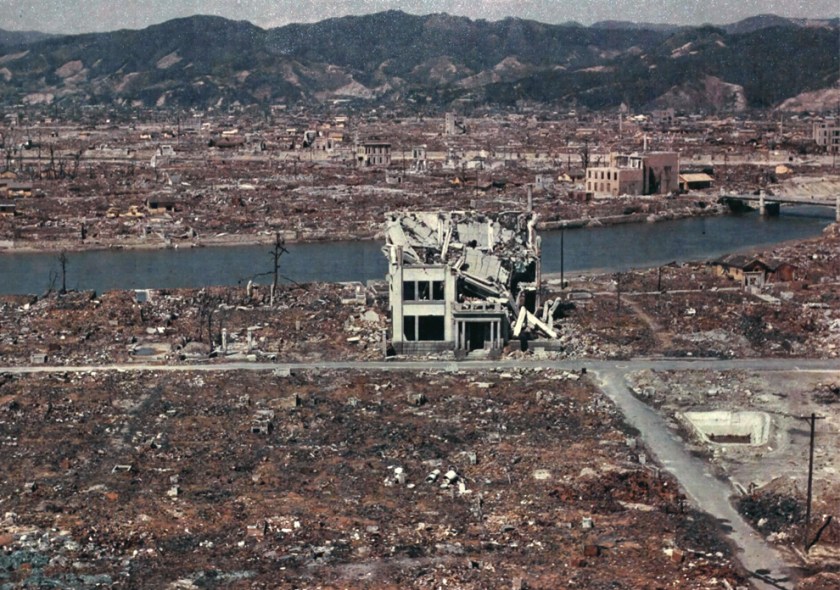
The second nuclear detonation in history took place on August 6 over Hiroshima, Japan. “Little Boy”, as the bomb was called, was delivered by the B29 Superfortress “Enola Gay”, named after the mother of United States Army Air Forces pilot Lieutenant Colonel Paul Tibbets. 66,000 Japanese citizens were vaporized in an instant, or died within the following days from the effects of the bomb.  Another 100,000 later died from injuries and the delayed effects of radiation.

7A_Nagasaki_Bomb_Cloud

Even then, the Imperial Japanese Government refused to surrender.  ‘Fat Man’, a plutonium bomb carried by the B29 “Bockscar”, was dropped on Nagasaki on August 9.

The intended target was Kokura, but local weather reduced visibility.  393d Bombardment Squadron Commander Major Charles Sweeney bypassed Kokura and chose the secondary target, Nagasaki. Half of Nagasaki was destroyed in the blast, and another 70,000 people killed.

Japan surrendered unconditionally on the 14th of August, ending the most destructive war in history.

During the 1920s, the University of Göttingen was one of the world’s leading centers for theoretical physics. American-born J. Robert Oppenheimer was himself educated there, along with the likes of Enrico Fermi, Edward Teller, and the English-born Paul Dirac, regarded as “one of the most significant physicists of the 20th century”.

The academic landscape of 1920s Germany was such that the Nazi regime may very well have been first to the nuclear finish line, but for the politicization of the universities themselves, brought on by National Socialist policy.

German+experimental+nuclear+pile+at+Haigerloch

On April 7, just 67 days after Adolf Hitler’s appointment as Chancellor, the ‘Civil Service Law’ of 1933 established the framework for the removal of ‘undesirables’ in civil service, medicine, education and the legal profession. A series of increasingly draconian anti-Jewish laws left tens of thousands of Jews including that pillar of modern theoretical physics Albert Einstein himself, no choice but to flee.

More than 133,000 German Jewish émigrés moved to the United States between 1933 and 1944, many of them highly educated and some holding Nobel prizes. In a research paper for the University of Stanford, assistant Professor of Economics Petra Moser reported a 31% increase in the number of US patents in the physical sciences, after 1933.

The Nazi nuclear weapons project began on December 17, 1938 when German physicist Otto Hahn and assistant Fritz Strassmann discovered the atomic fission of heavy elements. The first real push to develop a nuclear weapon began the following April but fizzled months later, when a number of notable physicists were drafted into the Wehrmacht.

Nazi-Nuclear-Weapons-Adolf-Hitler-Third-Reich-Test-Bomb-Drop-V2-Ludwigslust-Britain-Rocket-590825

A second such effort began on September 1, 1939, the day that Hitler invaded Poland. While the Nazi nuclear program received funding throughout the war, it never received the concentrated effort of a Manhattan project. Instead, the program was carved into three separate pieces, and personnel were always subject to the recruiting needs of the military, irrespective of education, training or skills.

This series of decisions, no doubt taken in some conference room somewhere, put Nazi Germany behind in the nuclear arms race. How different the world would be, if Little Boy and Fat Man displayed swastikas, painted on their sides.


If you enjoyed this “Today in History”, please feel free to re-blog, “like” & share on social media, so that others may find and enjoy it as well. Please click the “follow” button on the right, to receive email updates on new articles.  Thank you for your interest, in the history we all share.
July 14, 1987 The Other Hitler

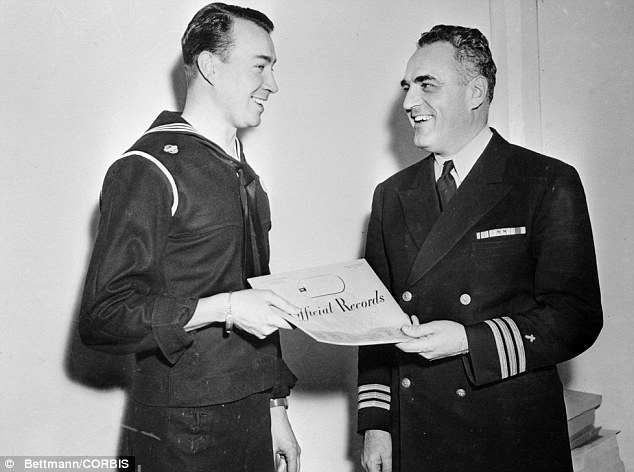
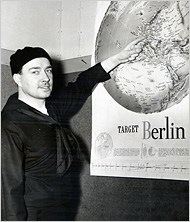
William Patrick Hitler petitioned President Roosevelt for permission to fight on the American side, receiving permission in 1944.  Drafted into the Navy, the induction officer asked his name.  The reply came, “Hitler”. “Glad to see you Hitler,” the officer replied, “My name’s Hess.”

Suppose for a moment, that Gallup or Ipsos were to conduct a survey, naming the top ten bad guys, in all history. One name I daresay would top every list, would be that of the National Socialist German Workers’ Party leader, Adolf Hitler.

Hitler himself wouldn’t have the term, “Nazi”. That was bitter insult, coined long before the rise of the Nazi party. In German, Hitler would have referred to the Nationalsozialistische Deutsche Arbeiterpartei, or NSDAP for short.

Alois Johann Schicklgruber was born on June 7, 1837, to the 42-year-old unmarried peasant Maria Schicklgruber.  The boy’s father was known to her, the priest wrote “illegitimate” on the baptismal certificate. Johann Georg Hiedler married the peasant woman when the boy was five.  By ten, Alois was sent to live with Heidler’s brother, Johann Nepomuk Hiedler. Three years later, Alois  Schicklgruber moved to Vienna where he worked as a cobbler’s apprentice, finally becoming a low level civil servant in the Austrian Finance Ministry.

There are plenty of variations on the Hiedler family surname. ‘Hiedler’ apparently derives from an Austro-Bavarian dialect, meaning one who lives by a Hiedl, or underground spring. Other derivations come from the German Hutte (hut), as in “one who lives in a hut”.  Be that as it may, the variations appear to have been interchangeable.  Common variations included Hitler, Hiedler, Hüttler, Hytler, and Hittler.

5025565e94b0d956cd32e9326850bdf6There are plenty of tales regarding the man’s paternity, but none are any more than that. Alois Schicklgruber ‘legitimized’ himself in 1877, adopting a variant on the name of his stepfather and calling himself ‘Hitler”.

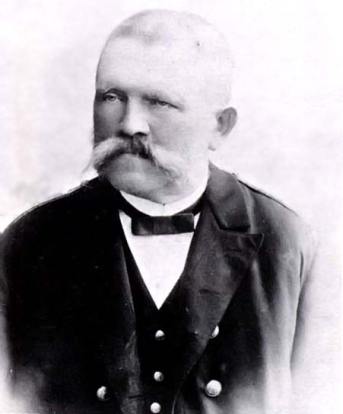
Historian Alan Bullock has described Alois Hitler as “hard, unsympathetic and short-tempered”. He seems to have had a problem with marital fidelity, as well. Alois was thirty-six when he married Anna Glasl-Hörer, the 50-year-old, invalid daughter of a customs official. By age 43, he was carrying on with the 19-year-old servant girl, Franziska “Fanni” Matzelsberger, with whom he had an illegitimate son, Alois Jr.

Alois Sr. was for all intents and purposes ‘married’ to the Matzelsberger girl for the next two years, while his lawful wife Anna, sickened and died. Hitler, 45, married Matzelsberger, age 21 in May, 1883. The couple’s second child Angela, was born two months later.

Sixteen-year-old Klara Pölzl moved in years earlier as household servant, and no woman was going to do to the new Mrs. Hitler, that which she had done to another woman.  Frau Hitler demanded that the “servant girl” be sent away but Pölzl would return the following year, as Fanni herself sickened and died.

170px-Bundesarchiv_Bild_183-1989-0322-506,_Adolf_Hitler,_Kinderbild_retouched

Pölzl was by this time pregnant with the first of the couple’s four children, but there was a problem. There are many candidates for Alois (Schicklgruber) Hitler’s biological father. If Hitler’s step-father was in fact his real sire as implied by the name change, that made Klara Pölzl his first cousin once removed, at least by law. The couple was too close to marry.

Alois petitioned the church for a humanitarian waiver. The waiver was granted and Klara Pölzl became the third Frau Hitler in January 1885. The first-born child was born five months later.

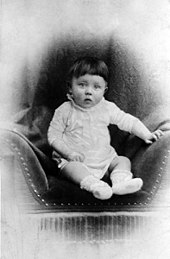
Adolf Hitler as an infant

The future leader of the National Socialist Party was born fours later, by that time the only child born to his mother Klara.  Her first three children Gustav, Ida and Otto, all died in childhood.

Alois Hitler, Sr. seems to have been a thoroughly unlikable man, lording it over neighbors and brutalizing his own family. Historian Robert Waite notes that, “Even one of his closest friends admitted that Alois was ‘awfully rough’ with his wife and ‘hardly ever spoke a word to her at home’.” The man would berate Klara and children alike, and apparently beat them on a regular basis.  Alois Jr. left home never to return, following a violent argument with his father. The elder Alois swore that he would never give the boy a single mark of inheritance, over what the law required. The youngest, Adolf, grew up a frail and sickly child, doted on by his mother and often at the center of violent rages by his father.

Alois-Hitler-2
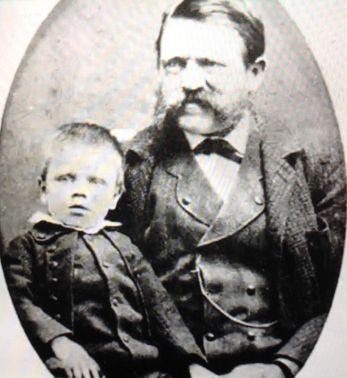
Alois Hitler

Alois tried to browbeat his youngest into following him, into the civil service. The boy feared and detested his father, and wanted nothing to do with him.  Adolf Hitler would follow the path which would bring him to that list of the great monsters of the 20th century, as his brother Alois Jr., made his own way in the world.

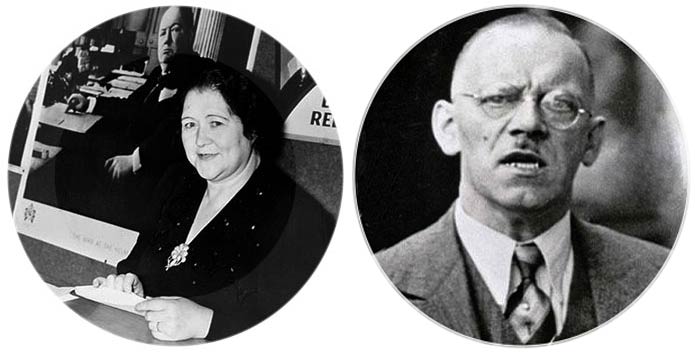
Some apples don’t fall far from the tree. Alois Hitler Jr. went to Ireland, where he met Bridget Dowling at the Dublin Horse Show. Nothing more than a poor kitchen porter at the Shelbourne Hotel, Hitler managed to convince her that he was, in fact, a wealthy hotelier, touring Europe. The couple eloped to London in June 1910. Bridget’s father William threatened to bring Hitler up on charges of kidnapping, and only relented when Bridget pleaded with him to stop.

It was a decision she would come to regret.

Dowling-Hitler
Dowling-Hitler

The couple had their only child in 1911, William Patrick Hitler. Alois left home in Liverpool in May 1914 to establish himself in the safety razor business.  He had become violent by this time and begun to beat the boy.  Bridget refused to go with William’s father and would end up, raising the boy alone.

War descended over Europe in 1914, when the elder Hitler met and (bigamously) married his second wife, Hedwig Heidemann.

heinz-640x462
Heinz Hitler was captured by Soviet Forces in 1942, and tortured to death

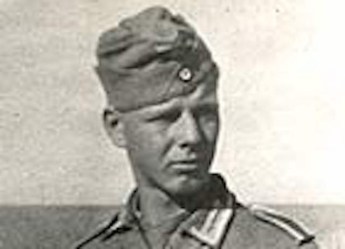
Alois’ second marriage  produced a son, Heinz, who went on to become a committed Nazi. In 1933, William moved to Germany, in an effort to take advantage of his uncle’s rise to power.  He got a job at an Opel factory and later worked as a car salesman, but  badgered his uncle for a better job. At last, he threatened to sell embarrassing family stories to the newspapers, if Uncle Adolf didn’t do something to improve his “personal circumstances”.

Ironically, Nazi party regulations precluded Adolf Hitler himself from proving his own “Aryan Purity”, based on his father’s unknown paternity.  For years, Hitler had been dogged by hushed speculation about “Jewish blood”.  Quiet rumor became front-page headline this day in 1933, when Austrian newspapers published reports that the German Chancellor, sworn enemy of all things Jewish, was himself, a Jew.  That same day, all political parties but the Nazi party, were banned from Germany.

William-Patrick-Hitler
Pharmacists Mate William Patrick Hitler

Der Führer of the fledgling thousand-year Reich promised his nephew a “high ranking post” in 1938, in exchange for renunciation of his British citizenship. Suspecting a trap, the younger Hitler fled Germany, traveling to the United States in 1939. William Patrick Hitler petitioned President Roosevelt for permission to join the American side, receiving permission in 1944.

Drafted into the Navy, the induction officer asked his name.  The reply came, “Hitler”. “Glad to see you Hitler,” the officer replied, “My name’s Hess.”

William Patrick Hitler served honorably for the duration of the war, holding the rank of Pharmacists Mate (a designation later changed to Hospital Corpsman) and earning a purple heart in the process.    Hitler’s half-brother Heinz was captured by Soviet forces in 1942, and tortured to death. Their more famous uncle took his own life in 1945 and died, childless.

Ironically, Hitler’s childhood home in Liverpool was destroyed in the last air raid of the Liverpool Blitz, in 1942.

IMG_20170811_0005-300x207
Alexander

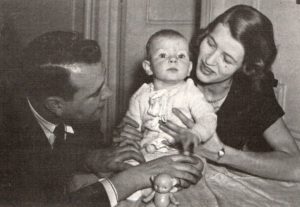
Wishing to live a life of anonymity, “Willy” Hitler changed his name to William Patrick  Stuart-Houston at the end of the war, and married fellow German emigre Phyllis Jean-Jacques in 1947.  The couple made a home in Patchogue, New York and raised four sons: Alexander Adolf (b. 1949), Louis (b. 1951), Howard Ronald (1957–1989), and Brian William (b. 1965).

William Patrick Stuart-Houston, nephew to one of the worst dictators in history and a man who fought with honor on the side of his uncle’s mortal enemy, died this day in 1987, leaving no grandchildren.

Alexander Adolf Stuart-Houston,, an American social worker, dismissed speculation of a pact to end the Hitler line. There was no such agreement among the last four boys in the family.  Things just turned out that way.

If you enjoyed this “Today in History”, please feel free to re-blog, “like” & share on social media, so that others may find and enjoy it as well. Please click the “follow” button on the right, to receive email updates on new articles.  Thank you for your interest, in the history we all share.

July 9, 1943 The Most Decorated K-9 of WW2

The machine gun episode ended with a final score of Chips 4, Italian machine-gun team 0, but he wasn’t done. Before the day was over, Chips had helped to bag ten more.

By the end of the “Great War”, France, Great Britain and Belgium had at least 20,000 dogs on the battlefield, Imperial Germany as many as 30,000. Some sources report that over a million dogs served over the course of the war.

Dogs performed a variety of roles in WWI, from ratters in the trenches, to sentries, scouts and runners. “Mercy” dogs were trained to seek out the wounded on battlefields, carrying medical supplies with which the stricken could treat themselves. Sometimes, these dogs simply provided the comfort of another living soul, so that the gravely wounded should not die alone.

dog-19-1600x1200-4-opt897x579o00s897x579.jpg
French propaganda postcard of WW1

The famous Rin Tin Tin canine movie star of the 1920s was rescued as a puppy, from the bombed out remains of a German Army kennel, in 1917.

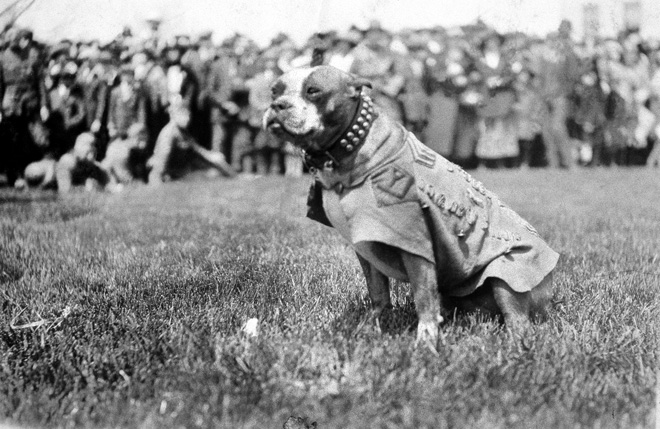
Leaders of the American Expeditionary Force (AEF) discussed the use of dogs as sentries, messengers and draft animals, but the war was over before US forces put together any kind of a War Dog program.  America’s first war dog, “Sgt. Stubby”, went “over there” by accident, serving 18 months on the Western Front before coming home to a well-earned retirement.

sgt_stubby_5
Sergeant Stubby

In March 1942, the US Army Quartermaster Corps began training dogs for an American “K-9 Corps.” In the beginning, the owners of healthy animals were encouraged to “loan” their dogs to the Quartermaster Corps, where they were trained for service with the Army, Navy, Marine Corps and Coast Guard.

Chips.jpgOne such dog was “Chips”, the German Shepherd/Collie/Husky mix who would become the most decorated K-9 of WWII.

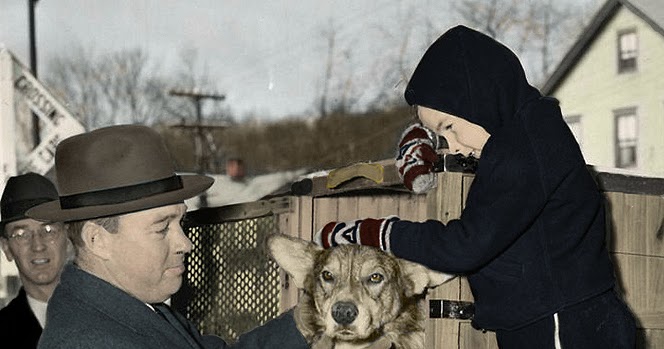
Chips belonged to the Wren family of Pleasantville New York, who “enlisted” their dog in the “Dogs for Defense (DfD) program in 1942. He was trained at the War Dog Training Center in Front Royal Virginia, and served in the 3rd Infantry Division of Patton’s 7th Army, along with with his handler, Private John Rowell.

Tip of the hat to my son-in-law Nate who also served in the 3rd ID in the Wardak Province of Afghanistan, partnered as handler and “battle buddy” with a four-year-old German Shepard and Tactical Explosives Detection Dog (TEDD) named “Zino”.

Back to WW2.  Chips and his handler took part in North Africa, Italy, France and Germany.  He served as a sentry dog for the Casablanca Conference of 1943, where he met the American President Franklin Roosevelt and the British Prime Minister Winston Churchill.

The Allied invasion of Sicily was a large scale amphibious and airborne operation, beginning this day in 1943 and lasting through the 17th of August.  The Rowell/Chips team was part of the landings, beginning six weeks of land combat in an action code named “Operation Husky”.

chips (1)
Chips

During the night landing phase on July 10, Private Rowell and Chips were pinned down in the darkness by an Italian machine gun team, operating out of a nearby hut. The dog broke free from his handler as the platoon dived for shelter, covering the beach in a flash and jumping into the building.

Private Rowell described the scene.  “There was an awful lot of noise and the firing stopped. Then I saw one soldier come out of the door with Chips at his throat. I called him off before he could kill the man.”

Three others were quick to follow, hands up.  Chips had grabbed the Italian’s machine gun by the barrel, knocking the gun off its mount before turning his attentions on the team. The dog sustained a scalp wound and powder burns, demonstrating that someone had tried to shoot him during the brawl.  How many lives were spared by the actions of a single dog, is anyone’s guess.

That episode ended with a final score of Chips 4, Italian machine-gun team 0, but he wasn’t done. Before the day was over, Chips had helped to bag ten more.

chips war dog
“Chips” goes to war, 1942

Chips was awarded the Distinguished Service Cross, Silver Star, and Purple Heart, but those awards were later revoked. At that time the army didn’t permit commendations to be given to animals. His unit awarded him a Theater Ribbon with an Arrowhead for the assault landing anyway, along with eight Battle stars. One for each of his campaigns.

Chips was discharged in December, 1945, and returned home to live out the rest of his days with the Wren family in Pleasantville, New York.  In 1990, Disney produced a made-for-TV movie based on the life of the most highly decorated K-9 of WW2, calling it “Chips, the War Dog”.

Afterward

In 1917, the British animal welfare pioneer Maria Dickin founded the People’s Dispensary for Sick Animals (PDSA), to “provide care for sick and injured animals of the poor”. Today, the PDSA is the largest veterinary charity in England, carrying out a million or more free veterinary visits every year and employing the largest number of veterinary surgeons and nurses in the United Kingdom.

Dickin_Medal
Dickin_Medal

The Dickin Medal was established in 1943, to recognize animals displaying “conspicuous gallantry or devotion to duty while serving or associated with any branch of the Armed Forces or Civil Defence Units“.  Sometimes referred to as “the animals’ Victoria Cross”, the Dickin medal has been awarded only 75 times as of November 2017, plus an honorary Dickin Medal for all animals who served during WW1.

On January 15, 2018, seventy-five years to the day following the Casablanca Conference, Chips was posthumously awarded the Dickin Medal.  John Wren, who was only four when Chips went to war, accepted the award in Chips’ honor.  United States Army Lieutenant Colonel Alan Throop and Military Working Dog (MWD) Handler Staff Sergeant Jeremy Mayerhoffer of the United States Air Force were also there, along with MWD Ayron, who stood in for Chips to wear his Dickin Medal.

The medal reads “For Gallantry” and “We Also Serve.” Previous recipients include 33 dogs, 32 messenger pigeons, four horses and a ship’s cat.

4828E71D00000578-5270495-image-a-40_1516019598733
“John Wren (left), who was four years old when Chips the family pet returned from the war effort, with military working dog Ayron and his handler Staff Sergeant Jeremy Mayerhoffer (centre) and US Lieutenant Colonel Alan Throop (right) in London today”  H/T Daily Mail

July 3, 1947 The May Incident

History is replete with examples of what power concentrated in the hands of a few, leads to.

Two hundred and forty-two years ago, our founding fathers bequeathed to us a nation unique in all history. A nation founded on an idea, that all men are created equal, and government derives its powers from the just consent of the governed. A Federal, Constitutional Republic in which our politicians are not our ‘leaders’ but rather our Representatives, operating within a system of diffuse powers with checks and balances, periodically accountable through democratic processes to their bosses – the people who put them there.

In modern times, it has become fashionable to point to the flaws in such a system. Howard Zinn and others present a victim’s-eye narrative of American history.  Smug, faculty iconoclasts and a pop culture Commentariat, decrying the ‘sugar coated fairy tales’, of our past.  Yet, the Great Winston Churchill may have had the final word, describing ‘Democracy” as the worst form of government there is…except for all the others.

o-WINSTON-CHURCHILL-facebook

For many among us, most I should think, some form of that Constitutional, self-governing Republic envisioned by our founders, remains preferable to all other forms of government.  Warts and all.

History is replete with examples of what power concentrated in the hands of a few, leads to.

Ambrose+bierce+majorityIndeed, such a system has imperfections, not least among them those who would ascend to political office.

Hearst columnist Ambrose Bierce, a social satirist of his day and my favorite curmudgeon, once defined politics as ‘A strife of interests, masquerading as a contest of principles. The conduct of public affairs for private advantage.

In the late 19th century, Democrat William “Boss” Tweed owned New York politics, fleecing city taxpayers at the head of the Tammany Hall political machine. New York debt levels soared by over $100 million between 1868 and 1870 alone, a figure equivalent to over a Billion dollars, today.

As Governor of Tennessee, Democrat Ray Blanton ran a ‘pay for play’ operation selling pardons, paroles and commutations, until drawing the attention of the eye of Sauron, at the FBI.  Blanton’s corruption was extensive enough to spawn a book and a later movie, and launched the political career of prosecutor and sometime actor, Fred Thompson.

And, lest I be accused of picking on Democrats, Pennsylvania Republican and Representative in Congress R. Budd Dwyer faced up to 55 years in prison and a $300,000 fine for racketeering and mail fraud, when he took a .357 Magnum revolver out of a manila envelope and blew his brains out.  On live television, no less.

R.-Budd-Dwyer-suicide-660x330

There are so many more and we all have our ‘favorites’, in this parade of horribles.  Yet, for insensate cupidity and pure boneheadedness, it would be hard to outdo the attorney, circuit court judge and member of the United States House of Representatives, Andrew Jackson May.

The Kentucky Democrat was a staunch supporter of the ‘New Deal’ policies of President Franklin Delano Roosevelt, serving in seven succeeding Congresses between 1931 and 1947. As Chairman of the powerful Committee on Military Affairs, May became involved with New York businessmen Murray and Henry Garsson, a relationship which would lead to war profiteering allegations.

Congressman-Andrew-May
Congressman Andrew Jackson May

After the war, a Senate investigating committee discovered evidence of substantial kickbacks from the Garsson brothers. Making matters worse, their munition business took excessive profits, while producing shoddy product. May’s bribery scandal revealed evidence that the Garsson factory produced defective fuses for their 4.2-inch mortar shells, detonating prematurely and leading to the death of no fewer than 38 American soldiers.

Andrew May would serve nine months in Federal prison for accepting bribes in exchange for securing munitions contracts during WW2.

Yet, even that pales in comparison with the ‘May incident’, for which the man has earned eternal infamy. As an influential member of an important committee, Andrew May was necessarily entrusted with highly confidential information, among them deficiencies in Imperial Japanese Navy anti-submarine depth-charge tactics.

Depth Charge
Imperial Japanese Navy light Crusier using Depth Charges against an American submarine, South Pacific 1942 H/T ww2incolor

For some time, the American submarine service had enjoyed considerable success in its war on Japanese shipping. Imperial Japanese naval planners held some bad assumptions about American submarine specifications, among them maximum depth capabilities.

Japanese depth charges were set to detonate at too shallow a depth, leading to a high survival rate for American subs. Congressman May took care of that problem, in 1943.

Returning home from a junket, the Congressman revealed this highly sensitive information, before a press conference. Various press associations ran with the story and some were bright enough to ‘sit on it’, but not all. Several newspapers published the information, including one in Hololulu.

Vice Admiral Charles A Lockwood
Vice Admiral Charles A. Lockwood

Japanese naval ASW (Antisubmarine Warfare) forces were quick to adjust depth charge settings. Vice Admiral Charles A. Lockwood, commander of the U.S. submarine fleet in the Pacific, estimated that May’s indiscretion killed as many as 800 American crewman, with the loss of ten submarines. “I hear Congressman May said the Jap depth charges are not set deep enough”, he said. “He would be pleased to know that the Japs set them deeper now.”

Andrew Jackson May was convicted by a federal jury on this day in 1947, for accepting cash bribes from Murray and Henry Garsson, to use his position as Chairman of the Military Affairs Committee to secure munitions contracts for the Garsson firm.  The Garsson brothers also received prison terms.

President Harry Truman granted May a full pardon in 1952, though his political career was finished. Andrew May returned home to Kentucky to resume the practice of law, until his death in 1959.  We are left only to contemplate, what the man or the press could be thinking, to divulge information more safely left in the hands of a stupid child.  That, and the horrifying realization that the democratic process might actually work, and the government we elect is just…like…Us.

If you enjoyed this “Today in History”, please feel free to re-blog, “like” & share on social media, so that others may find and enjoy it as well. Please click the “follow” button on the right, to receive email updates on new articles.  Thank you for your interest, in the history we all share.
June 26, 1948 Berlin Airlift

At the height of the operation, an aircraft landed every thirty seconds in West Berlin. The USAF delivered 1,783,573 tons altogether and the RAF 541,937, on a total of 278,228 flights.  The Royal Australian Air Force delivered 7,968 tons of freight in over 2,000 sorties.  Added together, the Berlin Airlift covered nearly the distance from the Earth, to the Sun.

Following the end of World War II in Europe, the three major allied powers (United States, United Kingdom and the Soviet Union) met at Potsdam, capital of the German federal state of Brandenburg. The series of agreements signed at Cecilienhof Castle and known as the Potsdam agreement built on earlier accords reached at conferences at Tehran, Casablanca and Yalta, addressing issues of German demilitarization, reparations, de-nazification and the prosecution of war criminals.

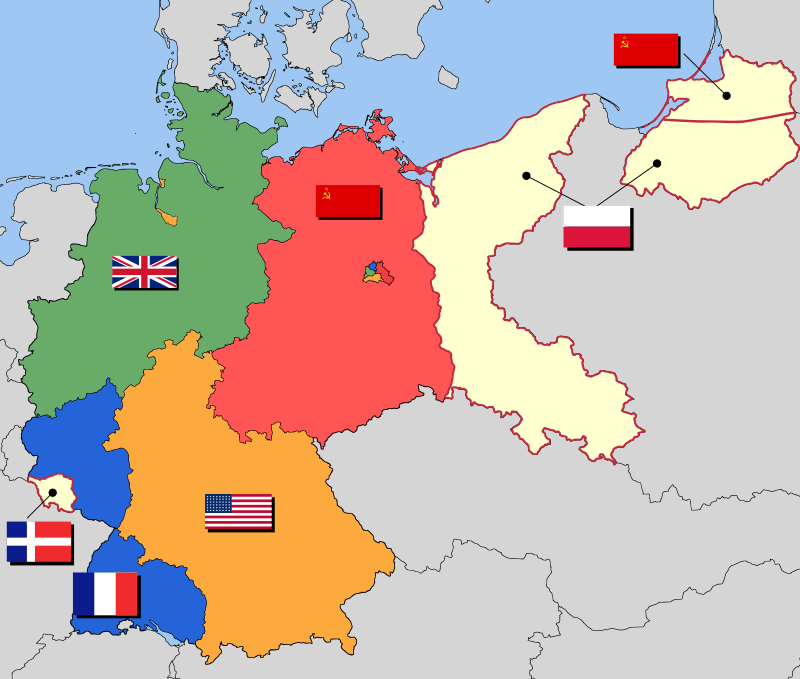
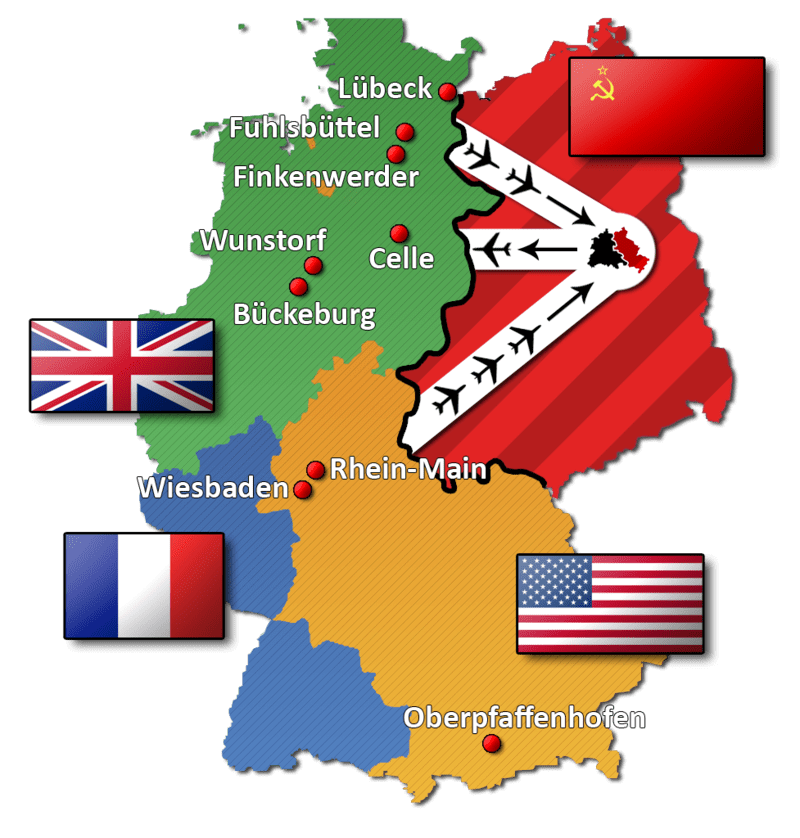
Among the provisions of the Potsdam agreement was the division of defeated Germany into four zones of occupation, rougly coinciding with the then-current locations of allied armies. The former capital city of Berlin was itself partitioned into four zones of occupation. A virtual island located 100 miles inside Soviet-controlled eastern Germany.

800px-Map-Germany-1947.svg
“The red area of Germany (above) is Soviet controlled East Germany. German territory east of the Oder-Neisse line (light beige) was ceded to Poland, while a portion of the easternmost section of Germany East Prussia, Königsberg, was annexed by the USSR, as the Kaliningrad Oblast”. H/T Wikipedia

During the war, ideological fault lines were suppressed in the mutual desire to destroy the Nazi war machine.  These were quick to reassert themselves, in the wake of German defeat.  In Soviet-occupied east Germany, factories and equipment were disassembled and transported to the Soviet union, along with technicians, managers and skilled personnel.

Soviet leader Josef Stalin informed German communist leaders in June 1945, of his belief that the United States would withdraw within a year or two.  He had his reasons.  At that time, the Truman Administration had yet to decide whether American forces would remain in West Berlin past 1949, when an independent West German government was expected to be established.

Stalin would do everything he could to undermine the British position within its zone of occupation, and appears unconcerned about that of the French.  He and other Soviet leaders assured visiting Bulgarian and Yugoslavian delegations.  In time, all of Germany would be Soviet, and Communist.

The former German capital became the focus of diametrically opposing governing philosophies, and leaders on both sides believed all Europe to be at stake. Soviet Foreign Minister Vyacheslav Molotov put it succinctly, “What happens to Berlin, happens to Germany; what happens to Germany, happens to Europe.”

hqdefault (5)There never was any formal agreement, concerning road and rail access to Berlin through the 100-mile Soviet zone. Western leaders were forced to rely on the “good will” of a regime which had deliberately starved millions of its own citizens to death, in consolidating power.
With 2.8 million Berliners to feed, clothe and shelter from the elements, Soviet leaders permitted cargo access on only ten trains per day over a single rail line.

Western allies believed the restriction to be only be temporary, but this belief would prove to be sadly mistaken.

Only three corridors were permitted through Soviet-controlled air space. With millions to feed, the Soviets stopped delivering agricultural products from their zone in eastern Germany, in 1946. The American commander, General Lucius Clay, retaliated by stopping shipments of dismantled industries from western Germany into the Soviet Union. The Soviets responded with obstructionist policies, doing everything it could to throw sand in the gears of all four occupied zones.

US and UK zones of occupation combined into a single “bizone” in January 1947, joining with that of France and becoming the “trizone” on June 1, 1948. Representatives of these governments and that of the Benelux nations of Belgium, the Netherlands and Luxembourg met twice in London to discuss the future of Germany, while Soviet leaders threatened to ignore any decisions coming out of such conferences.

The four-power solution was unworkable throughout the postwar period. For the city of Berlin, 1948 would reach the point of crisis.

800px-BerlinerBlockadeLuftwege

That March, Soviet authorities slowed cargo to a crawl, individually searching every truck and train. General Clay ordered a halt to train traffic on April 2, ordering that supplies to the military garrison in Berlin be transported by air. Soviets eased their restrictions a week later, but still interrupted road and rail traffic. Meanwhile, Soviet military aircraft began to harass and “buzz” allied flights in and out of West Berlin. On April 5, a Soviet Air Force Yakovlev Yak-3 fighter collided with a British European Airways Vickers Viking 1B airliner near RAF Gatow airfield.   Everyone onboard both aircraft, were killed.

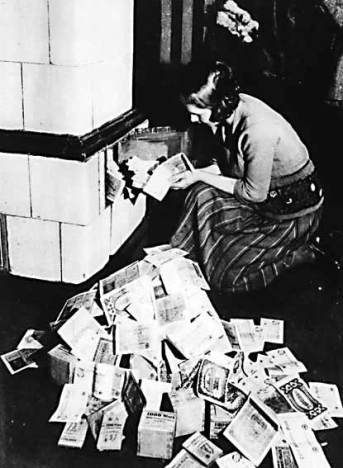
The final straw came with the currency crisis of early 1948, when the Deutsche Mark was introduced. The former Reichsmark was severely devalued by this time, with calamitous economic repercussions. The new currency went into use in all four sectors of occupied Berlin, against the wishes of the Soviets. This new currency combined with the Marshall Pan had the potential to revitalize the German economy, and that wouldn’t do. Not for Soviet policy makers, for whom a prostrate German economy remained the objective.

Soviet guards halted all traffic on the autobahn to Berlin on June 19, the day after the new currency was introduced.

woman-burning-cash-for-heat
German woman burning cash, for heat

At the time, West Berlin had 36 days’ food supplies, and 45 days’ supply of coal. The western nations had scaled military operations down in the wake of the war, to the point where the western sectors of the city had only 8,973 Americans, 7,606 British and 6,100 French. Soviet military forces numbered some 1.5 million. Believing that Allied powers had no choice but to cave to their demands, Soviet authorities cut off the electricity.

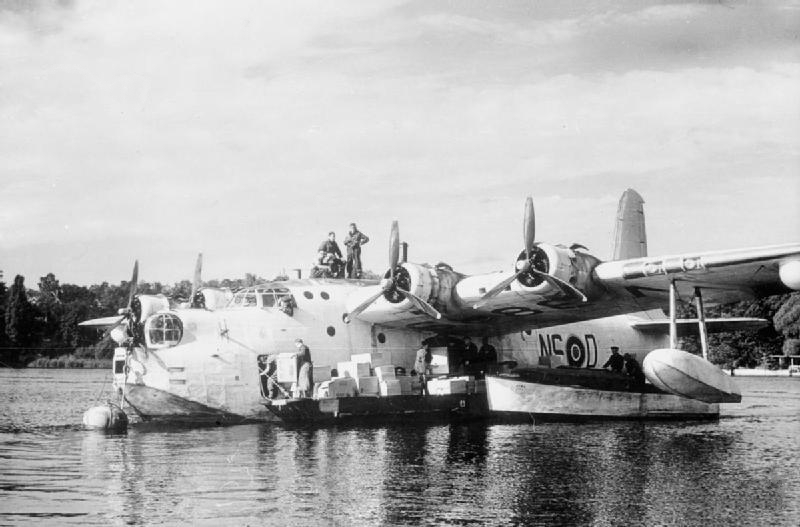
While ground routes were never negotiated in and out of occupied Berlin, the same was not true of the air.  Three air routes had been agreed upon back in 1945.  These went into use on this day in 1948, beginning the largest humanitarian airlift, in history.

Of all the malignant governing ideologies of history, Josef Stalin’s Soviet Union has to be counted among the worst.  These people had no qualms about using genocide by starvation as a political tool.  They had proven as much during the Holodomor of 1932 – ’33, during which this evil empire had murdered millions of its own citizens, by deliberate starvation.  Two million German civilians would be nothing more than a means to an end.

Sunderland_201_Sqn_on_Havel_during_Berlin_Airlift_1948
RAF Sunderland flying Boat moored on the Havel near Berlin unloading salt

With that many lives at stake, allied authorities calculated that a daily ration of only 1,990 kilocalories would require 646 tons of flour and wheat, 125 tons of cereal, 64 tons of fat, 109 tons of meat and fish, 180 tons of dehydrated potatoes, 180 tons of sugar, 11 tons of coffee, 19 tons of powdered milk, 5 tons of whole milk for children, 3 tons of fresh yeast for baking, 144 tons of dehydrated vegetables, 38 tons of salt and 10 tons of cheese.

Every.  Single. Day.

Heat and power for such a population would require 3,475 tons of coal, diesel and gasoline, every day.

United States Air force General Curtis LeMay was asked “Can you haul coal?” LeMay replied “We can haul anything.”

Berlin_Blockade_Milk
Loading milk, bound for Berlin

The obstacles were daunting.  Postwar demobilization had diminished US cargo capabilities in Europe to a nominal 96 aircraft, theoretically capable of transporting 300 tons per day. Great Britain’s RAF was somewhat better with a capacity of 400 tons, according to General Sir Brian Robertson.

700 tons were nowhere near the 5,000 per day that was needed, but it was a start.  With additional aircraft mobilizing all over the United States, the United Kingdom and France, the people of occupied Berlin had to buy into the program.

General Clay went to Ernst Reuter, Berlin’s mayor-elect. “Look, I am ready to try an airlift. I can’t guarantee it will work. I am sure that even at its best, people are going to be cold and people are going to be hungry. And if the people of Berlin won’t stand that, it will fail. And I don’t want to go into this unless I have your assurance that the people will be heavily in approval.”

Luckily, General Albert Wedemeyer was in Europe on an inspection tour, when the crisis broke out. Wedemeyer had been in charge of the previously-largest airlift in history, the China-Burma-India theater route over the Himalayas, known as “The Hump”. Reuter was skeptical but assured the authorities that the people of Berlin were behind the plan. Wedemeyer’s endorsement gave the plan a major boost. The Berlin Airlift began seventy years ago today, June 26, 1948.

Germans-airlift-1948
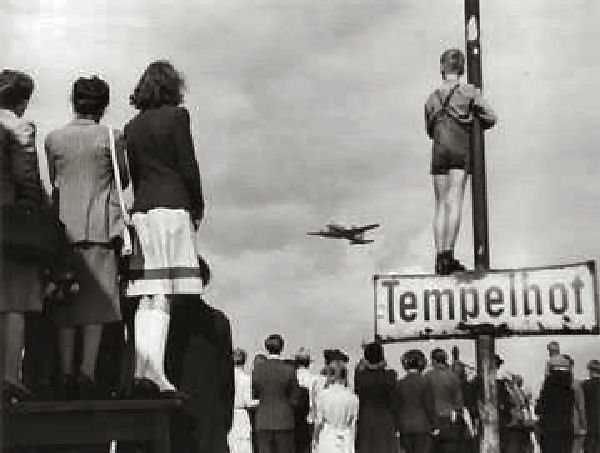
German civilians awaiting inbound aircraft, at Templehof

The Australian Air force joined in the largest humanitarian effort in history that September. The Canadians never did, believing the operation to be a provocation which would lead to war with the Soviet Union.

Through the Fall and Winter of 1948 – ’49 the airlift carried on.  Soviet authorities maintained their stranglehold but, preoccupied with rebuilding their own war-ravaged economy and fearful of the United States’ nuclear capabilities, Stalin had little choice but to look on.  On April 15, 1949, the Soviet news agency TASS announced that the Soviets were willing to lift the blockade.

C-54_dropping_candy_during_Berlin_Airlift_c1949
C-54 drops candy over berlin, 1948 – ’49

Negotiations were begun almost at once but now, the Allies held the stronger hand. An agreement was announced on May 4 that the blockade would be ended, in eight days’ time. A British convoy drove through the gates at a minute after midnight on May 12, though the airlift would continue, to build up a comfortable surplus.

At the height of the operation, an aircraft landed every thirty seconds in West Berlin. The USAF delivered 1,783,573 tons altogether and the RAF 541,937, on a total of 278,228 flights.  The Royal Australian Air Force delivered 7,968 tons of freight in over 2,000 sorties.  Added together, the Berlin Airlift covered nearly the distance from the Earth, to the Sun.

39 British and 31 American airmen lost their lives during the operation.

In 1961, Communist leaders would erect a wall around their sector of the city.  Not to keep foreigners out, but to keep their own unfortunate citizens, in.  The Berlin Wall would not come down, for twenty-eight years.


If you enjoyed this “Today in History”, please feel free to re-blog, “like” & share on social media, so that others may find and enjoy it as well. Please click the “follow” button on the right, to receive email updates on new articles.  Thank you for your interest, in the history we all share.


June 10, 1944 Ghost Village

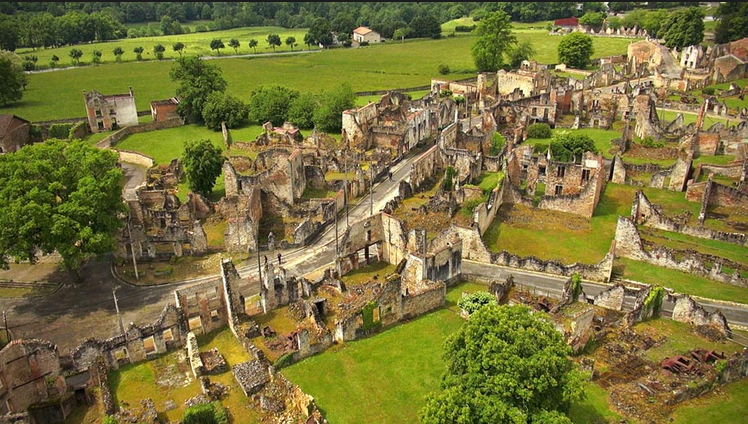
The village stands today as those Nazi soldiers left it, seventy-four years ago today.  It may be the most forlorn place on earth.

On D+4 after the Normandy invasion of WW2, the 2nd Panzer Division of the Waffen SS was passing through the Limousin region, in west-central France.  “Das Reich” had been ordered to help stop the Allied advance, when SS-Sturmbannführer Adolf Diekmann received word that SS officer Helmut Kämpfe was being held by French Resistance forces in the village of Oradour-sur-Vayres.

Oradour-sur-Glane-Hardware

Diekmann’s battalion sealed off the nearby village of Oradour-sur-Glane, seemingly unaware of their own confusion between the two villages.

Everyone in the town was ordered to assemble in the village square, for examination of identity papers. The entire population of the village was there, plus another half-dozen unfortunates, caught riding their bicycles at the wrong place, and the wrong time.

Oradour-sur-Glane-ChurchThe women and children of Oradour-sur-Glane were locked in a village church while German soldiers looted the town.  The men were taken to a half-dozen barns and sheds, where the machine guns were already set up.

The Germans aimed for the legs when they opened fire, intending to inflict as much pain as possible. Five escaped in the confusion before the SS lit the barn on fire. 190 men were burned alive.

Oradour-sur-Glane.jpg 3Nazi soldiers then lit an incendiary device in the church, and gunned down 247 women and 205 children as they tried to escape.
47-year-old Marguerite Rouffanche escaped out a back window, followed by a young woman and child.  All three were shot.  Rouffanche alone escaped alive, crawling to some pea bushes where she hid until next morning.

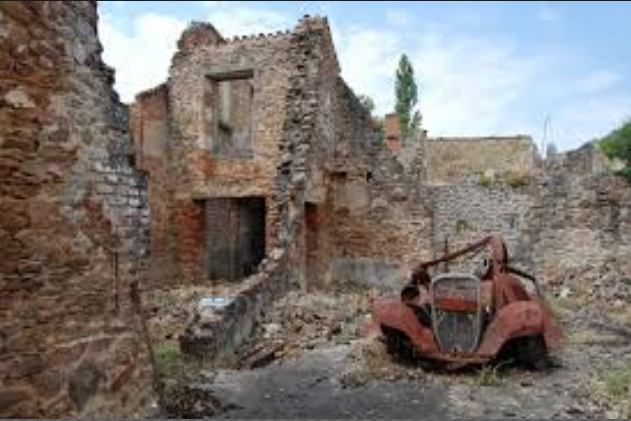
642 inhabitants of Oradour-sur-Glane, aged one week to 90 years, were shot to death, burned alive or some combination of the two, in a few hours.  The village was then razed to the ground.

Raymond J. Murphy, a 20-year-old American B-17 navigator shot down over France and hidden by the French Resistance, reported seeing a baby who’d been crucified.

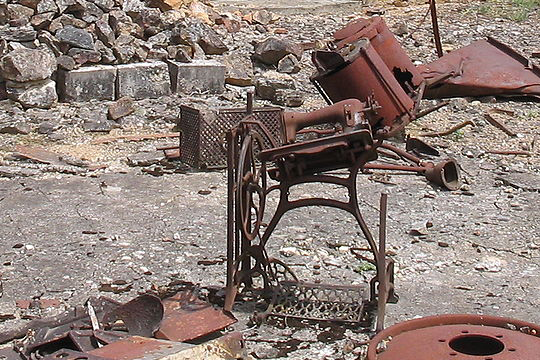
After the war, a new village was built on a nearby site.  French President Charles de Gaulle ordered that the “old” village remain as it is;  a monument for all time to criminally insane governing ideologies, and the malignity of collective punishment.

Oradour-sur-Glane.jpg 4

Generals Erwin Rommel and Walter Gleiniger, German commander in Limoges, protested the senseless act of brutality.  Even the SS Regimental commander agreed and began an investigation, but that came to naught.  Within days, Diekmann and most of the men who had carried out the massacre, had been killed in combat.

The ghost village at the old Oradour-sur-Glane stands mute witness to this day, to the savagery committed by black-clad Schutzstaffel units in countless places like the French towns of Tulle, Ascq, Maillé, Robert-Espagne, and Clermont-en-Argonne; the Polish villages of Michniów, Wanaty and Krasowo-Częstki and the city of Warsaw; the Soviet village of Kortelisy; the Lithuanian village of Pirčiupiai; the Czechoslovakian villages of Ležáky and Lidice; the Greek towns of Kalavryta and Distomo; the Dutch town of Putten; the Yugoslavian towns of Kragujevac and Kraljevo and the village of Dražgoše, in what is now Slovenia; the Norwegian village of Telavåg; the Italian villages of Sant’Anna di Stazzema and Marzabotto.

Oradour-sur-Glane.jpg 2

And on.  And on.  And on.

Oradour-sur-Glane-StreetsFrench President Jacques Chirac dedicated a memorial museum in 1999, the “Centre de la mémoire d’Oradour“. The village stands today as those Nazi soldiers left it, seventy-four years ago today.  It may be the most forlorn place on earth.

The story was featured on the 1974 British television series “The World at War”, narrated by Sir Laurence Olivier, who intones these words for the first and final episodes of the program: “Down this road, on Oradour-sur-Glane.jpg 5a summer day in 1944. . . The soldiers came. Nobody lives here now. They stayed only a few hours. When they had gone, the community which had lived for a thousand years. . . was dead. This is Oradour-sur-Glane, in France. The day the soldiers came, the people were gathered together. The men were taken to garages and barns, the women and children were led down this road . . . and they were driven. . . into this church. Here, they heard the firing as their men were shot. Then. . . they were killed too. A few weeks later, many of those who had done the killing were themselves dead, in battle. They never rebuilt Oradour. Its ruins are a memorial. Its martyrdom stands for thousands upon thousands of other martyrdoms in Poland, in Russia, in Burma, in China, in a World at War”.

Oradour-sur-Glane2

June 7, 1942 The Alcan Highway

The project received a new sense of urgency on June 7, when a Japanese force of 1,140 took control of Attu Island, murdering Charles Jones, a ham radio operator and weather reporter from Ohio, and taking his wife Etta prisoner, along with 45 Aleuts. 

Discussions concerning a road to Alaska began as early as 1865, when Western Union contemplated plans to install a telegraph wire from the United States to Siberia. The concept picked up steam with the proliferation of automobiles in the 1920s, but the idea was a hard sell for Canadian authorities. Such a road would necessarily pass through their territory, and the Canadian government believed the project would have little impact, benefiting no more than a few thousand people in the Yukon.

In the days following the surprise attack on Pearl Harbor, Guam and Wake Island fell to Imperial Japanese forces , making it clear that parts of the Pacific coast were vulnerable.

Priorities were changing for both the United States, and Canada.

The Alaska Territory was particularly exposed. Situated only 750 miles from the nearest Japanese base, the Aleutian Island chain had but 12 medium bombers, 20 pursuit planes, and fewer than 22,000 troops in the entire territory, an area four times the size of Texas.

Surviving-AK-blog-1

Colonel Simon Bolivar Buckner Jr., son of the Confederate commander who famously received Ulysses S. Grant’s “Unconditional Surrender” ultimatum at Fort Donelson (“I propose to move immediately, upon your works”), was in charge of the Alaska Defense Command.  Buckner made his made point, succinctly. “If the Japanese come here, I can’t defend Alaska. I don’t have the resources.”

The Army approved construction of the Alaska Highway in February 1942, the project receiving the blessings of Congress and President Roosevelt within the week. Canada agreed to allow the project, provided that the United States pay the full cost, and the roadway and other facilities be turned over to Canadian authorities at the end of the war.

Construction began in March as trains moved hundreds of pieces of construction equipment to Dawson Creek, the last stop on the Northern Alberta Railway. At the other end, 10,670 American troops arrived in Alaska that spring, to begin what their officers called “the biggest and hardest job since the Panama Canal.”

4517139905_887f3c484a_b
Dawson Creek, 1942

In-between lay over 1,500 miles of unmapped, hostile, wilderness.

The project received a new sense of urgency on June 7, when a Japanese force of 1,140 took control of Attu Island, murdering Charles Jones, a ham radio operator and weather reporter from Ohio, and taking his wife Etta prisoner, along with 45 Aleuts.  Adding to the urgency was the fact that the Alaskan winter permits no more than an eight-month construction window.  That period was already well underway.

Construction began at both ends and the middle at once, with nothing but the most rudimentary engineering sketches. A route through the Rocky Mountains had yet to be identified.

06162017_HighwayRadios of the age didn’t work across the Rockies, and the mail was erratic.  The only passenger service available was run by the Yukon Southern airline, a run which locals called the “Yukon Seldom”.  For construction battalions at Dawson Creek, Delta Junction and Whitehorse, it was faster to talk to each other through military officials in Washington, DC.

Moving men to assigned locations was one thing.  Transporting 11,000 pieces of heavy equipment, to say nothing of supplies needed by man and machine, was quite another.

alcan-hwyTent pegs were useless in the permafrost, while the body heat of sleeping soldiers meant waking up in mud. Partially thawed lakes meant that supply planes could use neither pontoon nor ski, as Black flies swarmed the troops by day.  Hungry bears raided camps at night, looking for food.

Engines had to run around the clock, as it was impossible to restart them in the cold. Engineers waded up to their chests building pontoons across freezing lakes, battling mosquitoes in the mud and the moss laden arctic bog. Ground which had been frozen for thousands of years was scraped bare and exposed to sunlight, creating a deadly layer of muddy quicksand in which bulldozers sank in what seemed like stable roadbed.

Alaska Highway Black Soldiers

That October, Refines Sims Jr. of Philadelphia, with the all-black 97th Engineers, was driving a bulldozer 20 miles east of the Alaska-Yukon line when the trees in front of him toppled to the ground. Sims slammed his machine into reverse as a second bulldozer came into view, driven by Kennedy, Texas Private Alfred Jalufka. North had met south, and the two men jumped off their machines, grinning. Their triumphant handshake was photographed by a fellow soldier and published in newspapers across the country, becoming an unintended first step toward desegregating the US military.

24SOLD-popup

A gathering at Soldier’s Summit on November 21, 1942 celebrated “completion” of the route, though the “highway” remained impassable for most vehicles, until 1943.

Alaska-Hwy-historyNPR ran an interview about this story back in the eighties, in which an Inupiaq elder was recounting his memories. He had grown up in a world as it existed for hundreds of years, without so much as an idea of internal combustion. He spoke of the day that he first heard the sound of an engine, and went out to see a giant bulldozer making its way over the permafrost. The bulldozer was being driven by a black operator, probably one of the 97th Engineers Battalion soldiers.  The old man’s comment, as best I can remember it, was a classic. “It turned out”, he said, “that the first white person I ever saw, was a black man”.

REBRANDSD2997_THC_MDRN_3703_HVG_000_2997_60_20160202_00_HD

If you enjoyed this “Today in History”, please feel free to re-blog, “like” & share on social media, so that others may find and enjoy it as well. Please click the “follow” button on the right, to receive email updates on new articles.  Thank you for your interest, in the history we all share.

May 28, 1919 From SS to Green Beret

So it is that the name of the elite warrior who had served under three flags, a man who once wore the uniform of the Nazi SS, is engraved on that stone in Arlington, along with those of the South Vietnamese warriors with whom he once served.

There is a surprise or two, hidden among the 400,000+ grave sites, at Arlington National Cemetery.  Did you know, for instance, that 4,000 former slaves went to their final rest there?  Arlington is the only cemetery in the world, to hold American servicemen from every war in US history.  Three graves contain the remains of enemy combatants, from WW2.  Among them all there may no greater curiosity, than the grave of a Green Beret, interred with the remains of three South Vietnamese soldiers.  Unless it’s to learn that that same guy, once wore the uniform of the Nazi SS.

280px-Europe_before_Operation_Barbarossa,_1941_(in_German)

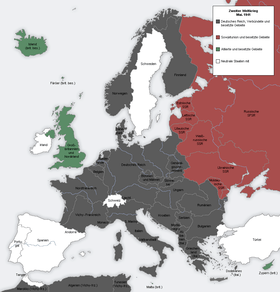
In May 1941, the geopolitical map of the Eurasian continent could be drawn in two colors, the spheres of influence of governments headed by two of the great monsters of the 20th century:  Josef  Stalin’s Soviet Union, and the Nazi Germany of Adolf Hitler.

The Republic of Finland, the 8th largest nation on the European landmass with a population equal to that of Minnesota, suffered military defeat during the “Winter War” of a year earlier, a 105-days long David vs. Goliath contest fought against the Soviet Union.

The two dictators were allies at this time according to the terms of the Molotov-Ribbentrop pact, signed two years earlier.  That state of affairs ceased the following month, with ‘Operation Barbarossa’, Hitler’s surprise attack on his erstwhile ally.

Finland never signed the Tripartite Pact with Nazi Germany and stated that it would fight the Soviets only insofar as to redress territorial losses suffered during the Winter War. Adolf Hitler saw the distinction as irrelevant and regarded the Nordic republic as an ally.  To Hitler, Finland would become just another part of the war on the Eastern Front.  To Finnish patriots, the uneasy alliance with Nazi Germany and the continued struggle with the Soviet Union, would be known as the “Continuation War’.

larry-thorne-with-soldiers
Lauri Törni (center) stands among other soldiers near Lake Tolvajärvi in Russia, date unknown

Lauri Alan Törni was such a patriot, born this day in 1919 in Finland’s Viipuri Province. Törni fought the Soviet Union during the Winter War and the Continuation War, rising to the rank of Captain and earning the Mannerheim Cross, Finland’s equivalent to the British Victoria Cross, or the American Medal of Honor. An elite and highly effective guerrilla fighter, Törni trained with the Nazi SS in Austria. Such a menace was this man to Stalin’s war effort, that the Soviets placed a bounty on his head of three million Finnish marks, equivalent to $650,000. There is no record of such a bounty on any other Finnish soldier.

220px-Torni_lauri
Törni in Waffen-SS uniform, 1941

The Continuation War came to an end in September 1944, but Törni still had scores to settle with the Communists.  He joined forces with a German unit fighting Soviet troops near Schwerin, Germany, and surrendered to British and American forces in the last stages of WW2.

Törni escaped the British POW camp and returned to Finland, only to be arrested on charges of treason for having joined the German army.  There would be a six-year prison sentence and one more escape, before the Presidential pardon in 1948.

Traveling under alias as a Swedish seaman, Törni jumped overboard in the Gulf of Mexico, swimming ashore near Mobile, Alabama and claiming political asylum. He was granted citizenship in 1953 by special act of congress, and adopted the more “Americanized” name of Larry Thorne, joining the United States Army the following year.

thorne1Thorne was soon headed to Special Forces, the elite warrior becoming an instructor of skiing, mountaineering, survival and guerrilla tactics.

Thorne attended airborne school and earned the silver wings of a Green Beret. He went through Officer Candidate School and received his commission as a 1st Lieutenant, rising to the rank of Captain in just three years.

Larry Thorne had a reputation for physical toughness, even amidst such an elite organization as the Green Berets. Now in his mid-forties, he could physically out-perform many men half his age.

images3UCTLQOHAs part of the 10th Special Forces Group, Thorne served in a search-and-rescue capacity in West Germany, earning a reputation for courage in operations to recover bodies and classified documents, following a plane in the Zagros Mountains of Iran.
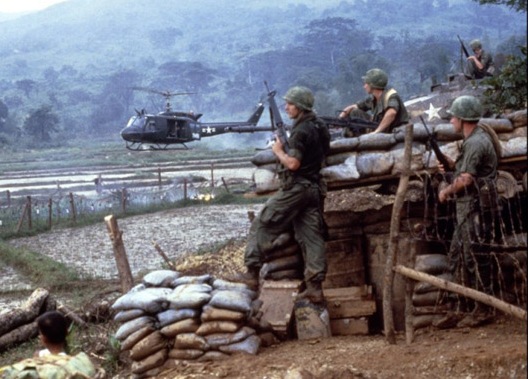
Captain Thorne was sent to Vietnam in 1963, assigned to operate Civilian Irregular Defense Group (CIDG) camps at Châu Lăng and later Tịnh Biên. Thorne earned two Purple Hearts and a Bronze Star for valor during one particularly ferocious attack on Tịnh Biên, an episode author Robin Moore wrote about in his best-selling paperback, The Green Berets.

On October 18, 1965, Larry Thorne was leading a covert mission against a Viet Cong stronghold in Laos when his helicopter crashed, killing all on board.  He was 46.  Captain Thorne was posthumously promoted to the rank of major and awarded the Legion of Merit and Distinguished Flying Cross.  Let the citation tell his story:

thorne5

If the patrol were immediately confronted by a superior force, Major Thorne would land and extricate the patrol under fire. This was done with total disregard for the inherent dangers and with selfless concern for the ground forces. In so doing, he exposed himself to extreme personal danger which ultimately led to his disappearance and the loss of his aircraft. He had, however, guaranteed the safe introduction of the patrol into the area, the successful accomplishment of this mission and had positioned himself to react to any immediate calls for assistance from the patrol“.

The crash site of the Republic of Vietnam Air Force CH-34 helicopter was discovered in 1999.   Thorne’s remains were found, intermingled with those of Lieutenant Bao Tung Nguyen, First Lieutenant The Long Phan, and Sergeant Vam Lanh Bui.  Major Thorne was identified by dental records.

hqdefault (4)

Thorne’s family in Finland said let him be buried in America, because that was the choice that he made.  The four were buried with full military honors in Arlington National Cemetery, the way they had died. Together.

So it is that the name of the elite warrior who had served under three flags, a man who once wore the uniform of the Nazi SS, is engraved on that stone in Arlington, along with those of the South Vietnamese warriors with whom he once served.

If you enjoyed this “Today in History”, please feel free to re-blog, “like” & share on social media, so that others may find and enjoy it as well. Please click the “follow” button on the right, to receive email updates on new articles.  Thank you for your interest, in the history we all share.