December 22, 1944 The Battered Bastards of Bastogne

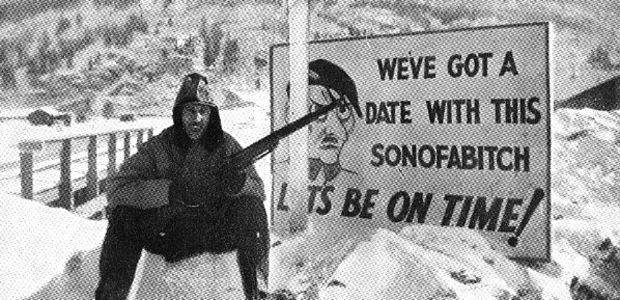
The seven roads leading to Antwerp converged in Bastogne, in what the Germans called “Straße Oktopus”, “Road Octopus”. The town was strategically indispensable to the German drive on Antwerp, and all or parts of 7 German armored divisions converged on the place. Over 54,000 men. The Allies understood the importance of the place as well. General Eisenhower dispatched the 101st Airborne Division, to hold the town, at all costs.

The largest German offensive of the western front burst out of the frozen Ardennes forest on December 16, 1944, aiming to drive a wedge between British and American forces and to capture the Belgian port of Antwerp, vital to the German need to re-supply. It was called “Unternehmen Wacht am Rhein”.  “Operation Watch on the Rhine”.

The tactical surprise was complete, allied forces driven back through the densely forested regions of France, Belgium and Luxembourg. Wartime news maps showed a great inward “bulge” in the lines, and the name stuck. The Battle of the Bulge was the largest and bloodiest battle fought by the US in WWII, fought in the harshest winter conditions in recorded history and involving 610,000+ Americans.
54626e3c46ec3.image

The seven roads leading to Antwerp converged in Bastogne, in what the Germans called “Straße Oktopus”, “Road Octopus”. The town was strategically indispensable to the German drive on Antwerp, and all or parts of 7 German armored divisions converged on the place. Over 54,000 men. The Allies understood the importance of the place as well. General Eisenhower dispatched the 101st Airborne Division, to hold the town, at all costs.

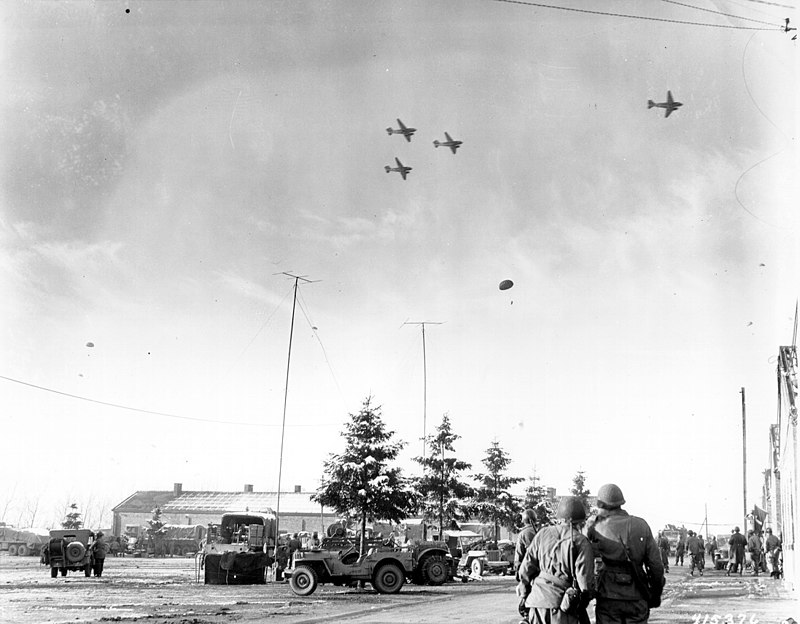
For two days, a desperate defense of the nearby villages of Noville and Foy held back the 2nd Panzerdivision, as 11,000 men and 800 officers of the 101st joined a combined force of 11,000 converging on Bastogne. By the 21st, Bastogne’s field hospital was overrun, surrounded by forces outnumbering them 2½ to one. Poorly supplied for the cold winter conditions with air supply made all but impossible by weather conditions, the citizens of Bastogne gave their blankets to the Americans, along with white linens to be used for camouflage.

On the morning of December 22, 1944, two German officers appeared at the American perimeter along with two enlisted men, carrying a white flag. They were a Major Wagner of the 47th Panzer Corps, and Lt. Hellmuth Henke of the Panzer Lehr Operations Section.

The pair carried a note from German General Luttwitz, 165 words in all, and reading in part: “To the U.S.A. Commander of the encircled town of Bastogne. There is only one possibility to save the encircled U.S.A. troops from total annihilation: that is the honorable surrender of the encircled town. In order to think it over a term of two hours will be granted beginning with the presentation of this note“.
nuts
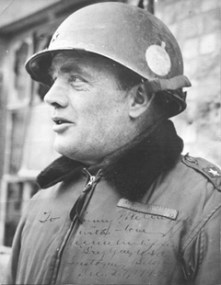
General Anthony McAuliffe

The note worked its way up the chain of command to the acting Division Commander, General Tony McAuliffe. Told that there was a surrender ultimatum, McAuliffe first thought that it was the Germans who wanted to surrender. Soon disabused of that notion, he laughed and said: “Us surrender? Aw, nuts!”

Knowing that he had to reply, McAuliffe said “Well I don’t know what to tell them.” Lt. General Harry Kinnard spoke up, saying, “That first remark of yours would be hard to beat”. McAuliffe said, “What do you mean?” and Kinnard replied “Sir, you said ‘Nuts’.” They all agreed, and McAuliffe wrote his reply.

“To the German Commander, “Nuts!” The American Commander.”

Joseph H. “Bud” Harper was the American army officer who delivered the reply, with medic Ernie Premetz acting as translator.

Confused by the American slang, Henke asked “What does that mean?” Harper said to Premetz “You can tell them to take a flying shit.” The medic, knowing he had to convey the intent of the message, translated as “Du kannst zum Teufel gehen”. You can go to hell. Harper then said, “If you continue to attack, we will kill every goddamn German that tries to break into this city.” Henke replied, “We will kill many Americans. This is war.” Harper then said, “On your way Bud, and good luck to you.”

Years later, Harper would say that he always regretted wishing the Germans luck.
800px-Bastogne_resupply1944_sm

In his Christmas eve letter of 1944, General McAuliffe wrote “What’s merry about all this, you ask? We’re fighting – it’s cold we aren’t home. All true but what has the proud Eagle Division accomplished with its worthy comrades the 10th Armored Division, the 705th Tank Destroyer Battalion and all the rest? Just this: We have stopped everything that has been thrown at us from the north, east, south and west”.

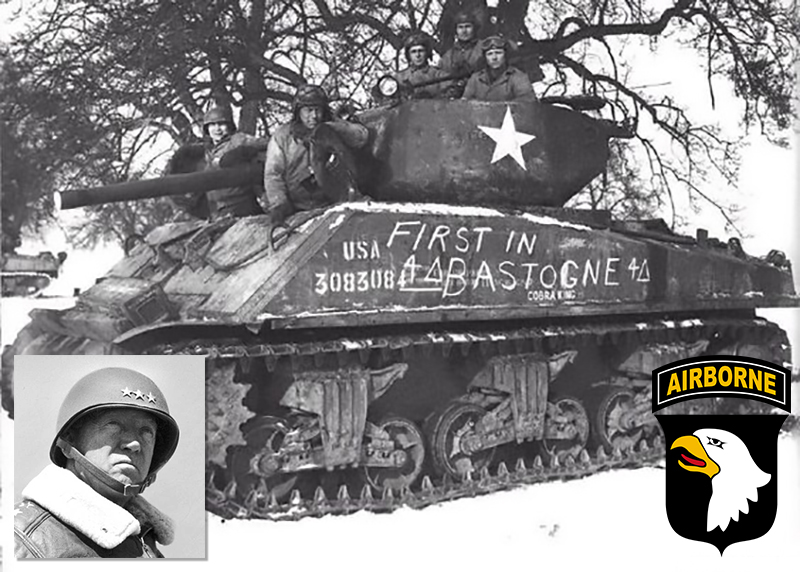
Elements of George Patton’s 3rd Army would break through from the southwest two days later, ending the German encirclement.
Tank-first-in-Bastogne-2c

By the end of January, the last great effort of German armed forces had been spent and driven back beyond their original lines. An official report by the US Army on the Battle of the Bulge lists 108,347 casualties, including 19,246 killed, 62,489 wounded and 26,612 captured and missing.

Those numbers could have been far worse, if not for what newspapers would soon call the “Battered Bastards of Bastogne”.


Afterward

A Black nurse called “Anna” briefly appeared in Historian Stephen Ambrose’ ‘A Band of Brothers’, and on the HBO series based on the book.  But who was Anna?  Was she a myth?  British military historian Martin King discovered her in a nursing home, 61 years after the encirclement at Bastogne.

Augusta-ChiwyAugusta Marie Chiwy (“Shee-wee”) was the bi-racial daughter of a Belgian veterinarian and a Congolese mother, she never knew.

Thinking it safe to visit her father in Bastogne that Christmas, Chiwy found herself, like everyone else in that place, surrounded.  A trained nurse, Chiwy spent the entire siege tending to the wounded, along with Dr. Jack Prior.  Once, she even ran through enemy fire to collect the wounded from the field.

On Christmas eve, the petite nurse was blown off her feet and through a wall. She got up and went back to it, despite the direct hit that killed 30 American wounded, along with the only other nurse at the Rue Neufchatel aid station, Renée Lemaire.

AugustaanuresChiwy married after the war, and rarely talked about her experience in Bastogne.  It took King a full 18 months to coax the story out of her.  The result was the 2015 Emmy award winning historical documentary, “Searching for Augusta, The Forgotten Angel of Bastogne”.

In 2011, Augusta Chiwy was awarded a Knighthood in the Order of the Crown in the name of King Albert II, of Belgium.  The United States Army awarded her the Civilian Award for Humanitarian Service, presented by the Ambassador to Belgium.

The Forgotten Angel of Bastogne died on August 23, 2015, at the age of 94.

December 21, 1861 Medal of Honor

Medals of Honor are not awarded casually, reserved only for the bravest of the brave, and for well-documented acts of valor. Permit me to share a few examples, each from his own moment in history.

As Revolution-era General, George Washington once wrote that the “road to glory in a patriot army and a free country is…open to all”.   European armies of the time bestowed honors, only on high-ranking officers who had achieved victory in battle. There was no such honor for the common soldier.

There was precedent for such an award in the Colonial military, but only under limited circumstances.  Congressional medals were awarded to Washington himself on March 25, 1776, following the British evacuation of Boston, to General Horatio Gates in November 1777, in recognition of his victory over British General John Burgoyne at Saratoga, and to Major-General “Light-Horse Harry” Lee, father of Civil War-era Confederate general Robert E. Lee, in recognition of his 1779 attack on the British position at Paulus Hook, New Jersey.

purpleheartA “Fidelity Medallion” was awarded to three militia men in 1780, for the capture of John André, the British officer and spy whose capture uncovered the treachery of General Benedict Arnold.
The future 1st President’s general orders of August 7, 1782 established a “Badge of Military Merit” to recognize those members of the Continental Army who performed “any singular meritorious action”.

In time, Washington’s Badge of Military Merit morphed into what we now know as the Purple Heart, but the precedent had been set.  This was the first such honor available to any U.S. military service member, who had distinguished himself by act of valor.

Congress created the “Meritorious Service Citation Certificate” around the time of the Mexican-American war, a recognition of “any private soldier who had distinguished himself by gallantry performed in the presence of the enemy”.  The award would come in and out of use in the decades that followed, later becoming the Distinguished Service Medal, an award available to United States and foreign military service personnel and, in limited circumstances, civilians.

In the early days of the Civil War, General-in-chief of the army Winfield Scott was against such an award.  Secretary of the Navy Gideon Welles adopted the idea on behalf of the Navy, following Scott’s retirement in October 1861.  President Abraham Lincoln signed “Public Resolution #82” on December 21, 1861, creating a Navy medal of honor.

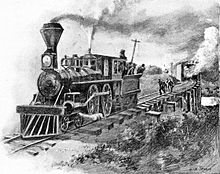
DoV1-018_-_Mitchel_RaidAn Army version of the medal was created the following July, first awarded to six Union soldiers for hijacking the Confederate locomotive, “The General”.  Leader of the raid James Andrews was caught and hanged as a Union spy.  He alone was judged ineligible for the medal of honor, as he was a civilian.
Medals of Honor are not awarded casually, reserved only for the bravest of the brave, and for well-documented acts of valor. Permit me to share a few examples, each from his own moment in history.

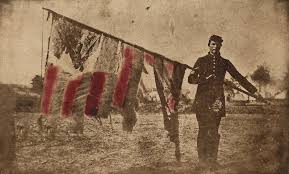
downloadFew soldiers on the Civil War battlefield had a quicker route to death’s door, than the color bearer.  National and regimental flags were all-important sources of inspiration and communication.
Reverend W. Jamison Thomson of Hartford, CT described the importance of the battle flag: “It represents the cause, is the rallying point, while it is aloft proclaims that victory is still intended, is the center of all eyes, is the means of communication between soldiers, officers, and nation,” he said, “and after the engagement, and after many of them, is their marked memento so long as its identity can be preserved.”

Pvt. Joseph E. Brandle served as regimental color bearer, with the 17th Michigan Infantry.  Private Brandle earned the MOH for his actions of November 16, 1863, near Lenoire, Tennessee…”…[H]aving been twice wounded and the sight of one eye destroyed, [he] still held to the colors until ordered to the rear by his regimental commander.”

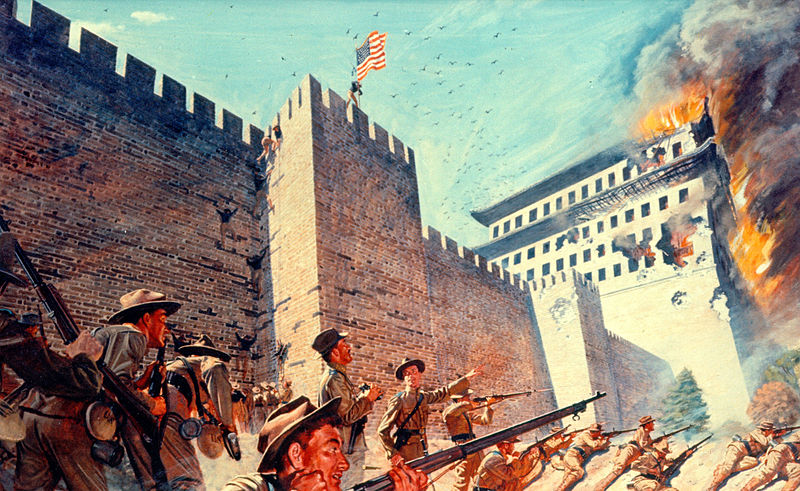
During the Boxer Rebellion of 1900, Chaplain’s assistant and regimental musician Calvin Pearl Titus of Vinton, Iowa, volunteered to scale the 30-ft walls of Peking, raising the American flag over the outer walls of the city.  President Theodore Roosevelt awarded Titus the medal of Honor, for “Gallant and daring conduct in the presence of his colonel and other officers…”  He was “the last color bearer”.

800px-Siege_of_Peking,_Boxer_Rebellion

york
Sergeant York

On October 8, 1918, Tennessee native Cpl. Alvin Cullum York of the 82nd Division lead a group of seventeen against a numerically superior German force, dug in at Chatel-Chehery, France.

Let his citation tell the story: “…After his platoon had suffered heavy casualties and three other non-commissioned officers had become casualties, Cpl. York assumed command. Fearlessly leading seven men, he charged with great daring toward a machine gun nest, which was pouring deadly and incessant fire upon his platoon. In this heroic feat the machine gun nest was taken, together with four officers and 128 men and several guns.”

Audie_Murphy
Audie Murphy

Kingston Texas 2nd Lieutenant Audie Murphy found himself senior officer of a company of 18, whittled down from 235 by disease, wounds and casualties.  On January 26, 1945, Murphy’s small force found itself under assault by six German tanks and a large infantry force.

A man the Marine Corps had once turned down for being too small, Murphy climbed aboard a burning tank destroyer.  Out in the open and exposed to German fire from three sides, the 19-year old single-handedly fought off the entire assault, killing or wounding fifty and causing the German tanks to withdraw.

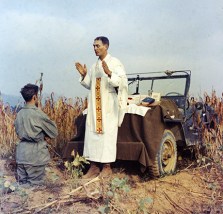
The Medal at LastFather Emil Kapaun selflessly sacrificed himself on behalf of his fellow prisoners in 1951, in the frozen hell of a North Korean prison camp.  President Barack Obama awarded Kapaun’s family the Medal of Honor during a ceremony in the east wing of the White House, on April 11, 2013.

Chaplain Kapaun’s body lies in an unmarked mass grave, somewhere in Pyoktong county.

2827
Sammy Lee Davis

PFC Sammy Lee Davis distinguished himself during the small hours of November 18, 1967, when the 4th Artillery of 9th Infantry Division came under heavy attack west of Cai Lay, Republic of Vietnam.

Repeatedly knocked to the ground by enemy mortar fire and suffering multiple injuries, the Cannoneer from Dayton, Ohio fought back first with a heavily damaged, burning howitzer, and then with recoilless rifle and machine gun.

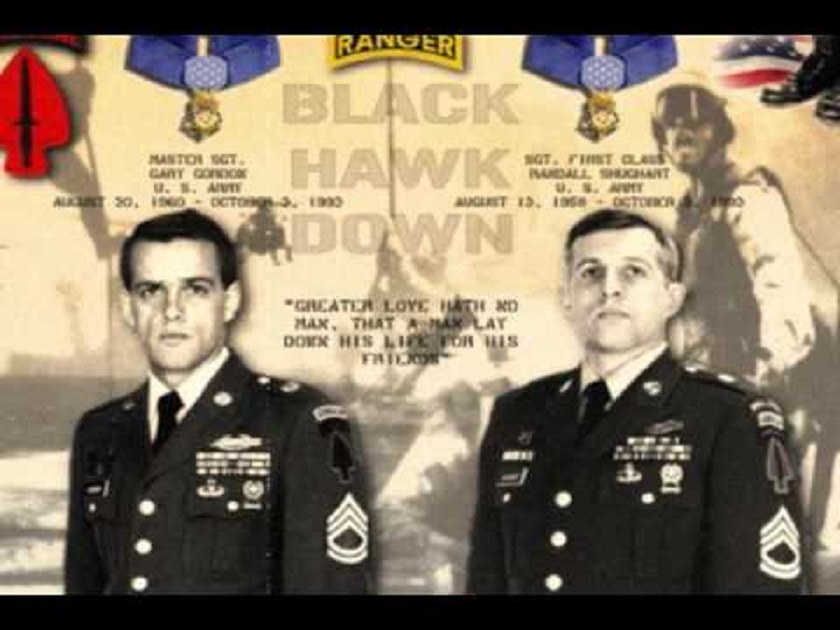
Two Medals of honor were awarded posthumously, to Delta Force snipers Gary Gordon and Randy Shugart, for their hopeless defense of the crash site of a downed UH-60 Blackhawk helicopter, against hundreds of fighters loyal to the Somali warlord Mohamed Farrah Aidid.

gary-gordon-and-randy-shughart-delta-force

0422C5
Corporal Jason Lee Dunham

Corporal Jason Lee Dunham of Scio New York deliberately threw himself on an Iraqi grenade on April 14, 2004, saving the lives of fellow Marines at the sacrifice of his own life.  He was twenty-two.

monti_image
Sergeant Jared Monti

Sergeant 1st class Jared Monti of Abington Massachusetts was killed in the mountains of Nuristan Province in Afghanistan, while attempting to rescue a wounded soldier from a hail of small arms and rocket-propelled grenade fire.

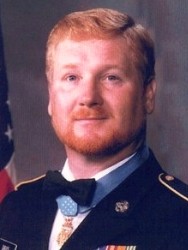
Monti was the sixth person from the wars in Iraq and Afghanistan, to be awarded the Medal of Honor.  The Lee Brice song “I Drive your Truck“, voted Song of the Year at the 49th annual Academy of Country Music Awards, is his story.

The nation’s highest medal for military valor has been awarded 3,517 times since its inception in 1861, to 3,498 distinct recipients.  621 were awarded posthumously.  Possibly without exception, these are people who will tell you that they are not heroes.  They were doing a job and those left behind, are the real heroes.

If that is not the very definition of true heroism, it should be.

December 20, 1943 When Enemies became Brothers

The battered aircraft was completely alone and struggling to maintain altitude, the American pilot well inside German air space when he looked to his left and saw his worst nightmare. Three feet from his wing tip was the sleek gray shape of a German fighter, the pilot so close that the two men were looking into one another’s eyes.

Franz Stigler
Franz Stigler

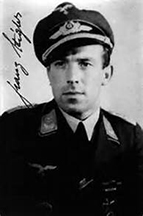
At the age of 26, Franz Stigler was an Ace. The Luftwaffe pilot of a Messerschmitt Bf-109 fighter, some of his kills had been revenge, payback for the death of his brother August, earlier in the war. This man was no Nazi. He was a German Patriot with 22 confirmed kills.  On December 20, 1943, he needed one more for a Knight’s Cross. He tossed his cigarette aside and climbed into his fighter as the crippled American B17 bomber lumbered overhead. This was going to be an easy kill.

Charles Brown
Charles Brown

21-year-old Charles Brown was at the throttle of that B17, a plane named “Ye Olde Pub”. The earlier attack on the munitions factory in Bremen had been a success, but the pilot and crew had paid a heavy price.

The aircraft had been savaged by no fewer than 15 German fighters. Great parts of the air frame were torn away, one wing severely damaged and part of the tail torn off. The aircraft’s Plexiglas nose was shattered and the #2 engine seized. Six of the ten-man crew were wounded and the tail gunner dead, his blood frozen in icicles over silent machine guns. Brown himself had been knocked out at one point, coming around just in time to avert a fatal dive.

big-holeThe battered aircraft was completely alone and struggling to maintain altitude, the American pilot well inside German air space, when he looked to his left and saw his worst nightmare. Three feet from his wing tip was the sleek gray shape of a German fighter, the pilot so close that the two men were looking into one another’s eyes.

Brown’s co-pilot, Spencer “Pinky” Luke said “My God, this is a nightmare.” “He’s going to destroy us,” was Brown’s reply. This had been his first mission.  He was sure it was about to be his last.

maxresdefault (1)

Before his first mission, Stigler’s commanding officer, Lt. Gustav Roedel, had said “Honor is everything here. If I ever see or hear of you shooting at a man in a parachute, I will shoot you down myself”.

The German ace must have remembered those words as he watched the wounded, terrified US airmen inside the B17, some still helping one another with their injuries. “You follow the rules of war for you – not for your enemy, Roedel had said. “You fight by rules to keep your humanity”.

The German had to do something. The Nazis would surely shoot him for treason if he was seen this close without completing the kill. One of the American crew was making his way to a gun turret as the German made his decision. Stigler saluted his adversary, motioned with his hand for the stricken B17 to continue, and then peeled away. Ye Olde Pub made it, crossing 250 miles of the frozen North Sea before finally landing in Norfolk.

franz-stigler-2016

More than 40 years later, the German pilot was living in Vancouver, Canada, when Brown took out an ad in a fighter pilots’ newsletter. It said that he was searching for the man ‘who saved my life on December 20, 1943.’ Stigler saw the ad, and the two met for the first time in 1987. “It was like meeting a family member”, Brown said of that first meeting. “Like a brother you haven’t seen for 40 years”.

The two became close friends and occasional fishing buddies until their passing in 2008, six months apart. Franz Stigler was 92, Charles Brown 87.  A book called “A Higher Call”, tells their story in far greater detail, if you want to know more about it.

In their obituaries, both men were mentioned as the other’s “Special Brother”.


If you enjoyed this “Today in History”, please feel free to re-blog, “like” & share on social media, so that others may find and enjoy the same. Please click the “follow” button on the right, to receive email updates on new articles. Thank you for your interest, in the history we all share.

December 18, 1944 Typhoon Cobra

Hulls would creak and groan with the pounding and rivets popped.  Captains in wheelhouses would order course headings, but helmsmen could do no better than 50° to either side of the intended course.  Some ships rolled more than 70°.  The 888-ft carrier USS Hancock, scooped tons of water onto its flight decks, 57′ up.

In September 1935, the Imperial Japanese Navy was conducting wargame maneuvers, when the fourth fleet was caught in extremely foul weather. By the 26th, the storm had reached Typhoon status,  The damage to the Japanese fleet was near catastrophic. Two large destroyers had their bows torn away by heavy seas. Several heavy cruisers suffered major structural damage.  Submarine tenders and light aircraft carriers developed serious cracks in their hulls. One minelayer required near total rebuild, and virtually all fleet destroyers suffered damage to their superstructures. 54 crewmen were lost.

Nine years later, it would be the turn of the American fleet.

The war in the Pacific was in its third year in December 1944. A comprehensive defeat only weeks earlier had dealt the Imperial Japanese war effort a mortal blow at Leyte Gulf, yet the war would go on for the better part of another year.

Carrier Task Force 38 was a massive assembly of warships, a major element of the 3rd Fleet under the Command of Admiral William “Bull” Halsey.  In formation, TF-38 moved in three eight-mile diameter circles, each with an outer ring of destroyers, an inner ring of battleships and cruisers, and a mixed core of 35,000-ton Essex class and smaller escort carriers. TF-38 was a massive force, fielding eighty-six warships, altogether.

By mid-December 1944, Task Force 38 had been underway for three weeks, having just completed three days of heavy raids against Japanese airfields in the Philippines, suppressing enemy aircraft in support of American amphibious operations against Mindoro.  Ships were badly in need of re-supply.  A replenishment fleet, 35 ships in all, was sent to the nearest spot near Luzon, yet still outside of Japanese fighter range.  Replenishment operations began the morning of the 17th.

Rapid movement into previously enemy-held territory made it impossible to establish advance weather reporting.  By the time that Task Force aerological (meteorological) service reports made it to ships in the operating area, weather reports were at least twelve hours old.

Cobra 9

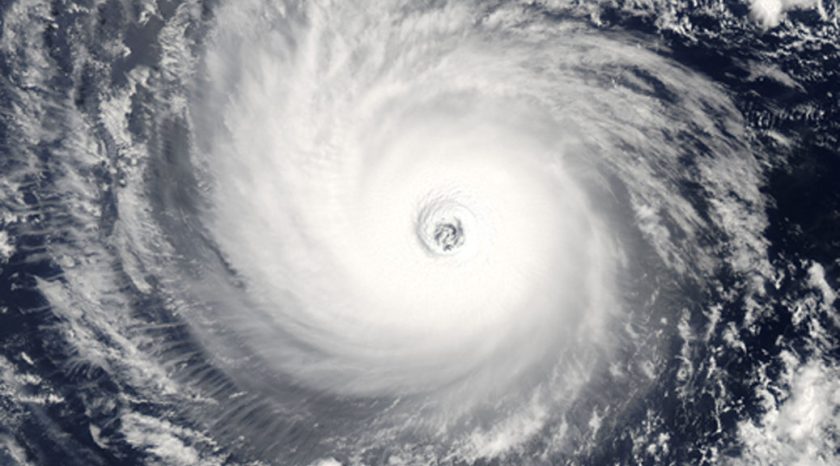
Three days earlier, a barometric low pressure system had begun to form off Luzon, fed by the warm waters of the Philippine sea.  High tropospheric humidity fed and strengthened the disturbance, as counter-clockwise winds began to develop around the low pressure center.  By the 18th, this small “tropical disturbance” had developed into a compact but powerful cyclone.

Replenishment operations began the morning of the 17th, as increasing winds and building seas made refueling increasingly difficult.  Refueling hoses were parted on several occasions and thick hawsers had to be cut to avoid collision, as sustained winds built to 40 knots.  Believing the storm center to be 450 miles to his southeast, Admiral Halsey didn’t want to return to base.  That would take too long, and combat operations were scheduled to resume, two days later.  Halsey needed the carrier group refueled and on station, and so it was decided.  Task Force 38 and the replenishment fleet, would proceed to a second replenishment point, hoping to resume refueling operations on the morning of the 18th.

Cobra

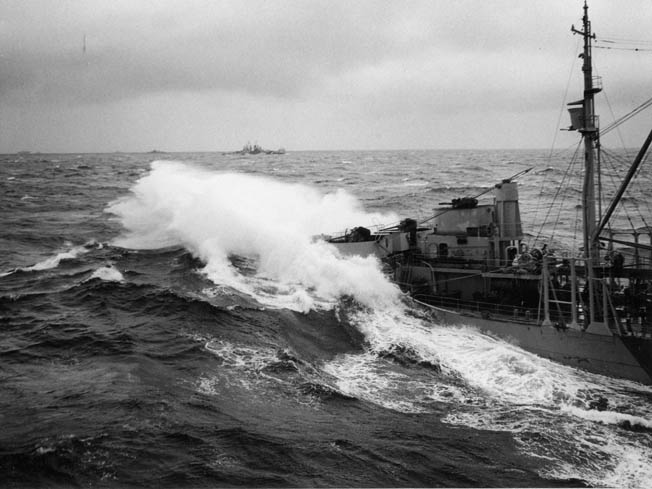
Four times over the night of December 17-18, course was corrected in the search for calmer water.  Four times, the ships of Task Force 38 and it’s attendant resupply ships, turned closer to the eye of the storm.  2,200-ton destroyers pitched and rolled like corks, towering over the crest of 70-waves, only to crash into the trough of the next, shuddering like cold dogs as decks struggled to shed thousands of tons of water.

Hulls would creak and groan with the pounding and rivets popped.  Captains in wheelhouses would order course headings, but helmsmen could do no better than 50° to either side of the intended course.  Some ships rolled more than 70°.  The 888-ft carrier USS Hancock, scooped tons of water onto its flight decks, 57′ up.

Cobra 4

Typhoon Cobra reached peak ferocity between 1100 and 1400, with sustained winds of 100mph and gusts of up to 140.

The lighter destroyers got the worst of it, finding themselves “in irons” – broad side to the wind and rolling as much as 75°, with no way to regain steering control.  Some managed to pump seawater into fuel tanks to increase stability, while others rolled and couldn’t recover, as water cascaded down smokestacks and disabled engines.

146 aircraft were either wrecked or blown overboard.  The carrier USS Monterrey nearly went down in flames, as loose airplanes crashed about on hanger decks and burst into flames.  One of those fighting fires aboard Monterrey was then-Lieutenant Gerald Ford, the former Michigan Wolverine center and future President of the United States.


Many of the ships of TF-38 sustained damage to above-decks superstructure, knocking out radar equipment and crippling communications.


790 Americans lost their lives in Typhoon Cobra, killed outright or washed overboard and drowned.

It could have been worse.  The destroyer escort USS Tabberer defied orders to return to port, Lieutenant Commander Henry Lee Plage conducting a 51-hour boxed search for survivors, despite the egregious pounding being taken by his own ship.  USS Tabberer plucked 55 swimmers from the water, survivors of the capsized destroyers Hull and Spence.

Typhoon Cobra moved on that night, December 19 dawning clear with brisk winds. Admiral Halsey ordered “All ships of the Task Force line up side-by-side at about ½ mile spacing and comb the 2800-square mile area” in which they’d been operating.  Carl M. Berntsen, SoM1/C aboard the destroyer USS DeHaven, recalled that “I saw the line of ships disappear over the horizon to starboard and to port”. The Destroyer USS Brown rescued six survivors from the Monaghan, and another 13 from USS Hull.  18 more would be plucked from the water, 93 in all, by ships spread across 50-60 miles of open ocean.

When it was over, Admiral Chester Nimitz said typhoon Cobra “represented a more crippling blow to the Third Fleet than it might be expected to suffer in anything less than a major action.”

Afterward

Carl Martin Berntsen passed away on October 13th, 2014 in Kitty Hawk, North Carolina. He would have been 94, the following month. I am indebted to him and his excellent essay for this story.  Virtually all ships of Task Force 38 were damaged to some degree.  I tip my hat to Wikipedia, for the following summary of the more serious instances.

USS Hull – with 70% fuel aboard, capsized and sunk with 202 men drowned (62 survivors)

USS Monaghan – capsized and sunk with 256 men drowned (six survivors)

USS Spence – rudder jammed hard to starboard, capsized and sunk with 317 men drowned (23 survivors) after hoses parted attempting to refuel from New Jersey because they had also disobeyed orders to ballast down directly from Admiral Halsey

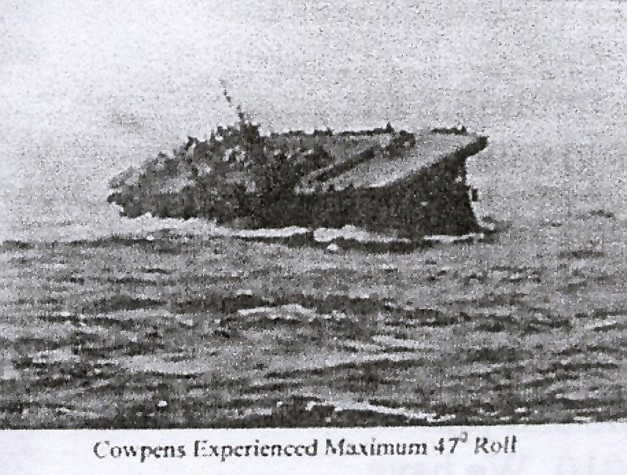
USS Cowpens – hangar door torn open and RADAR, 20mm gun sponson, whaleboat, jeeps, tractors, kerry crane, and 8 aircraft lost overboard. One sailor lost.

USS Monterey – hangar deck fire killed three men and caused evacuation of boiler rooms requiring repairs at Bremerton Navy yard

USS Langley – damaged

USS Cabot – damaged

USS San Jacinto – hangar deck planes broke loose and destroyed air intakes, vent ducts and sprinkling system causing widespread flooding. Damage repaired by USS Hector

USS Altamaha – hangar deck crane and aircraft broke loose and broke fire mains

USS Anzio – required major repair

USS Nehenta – damaged

USS Cape Esperance – flight deck fire required major repair

USS Kwajalein – lost steering control

USS Iowa – propeller shaft bent and lost a seaplane

USS Baltimore – required major repair

USS Miami – required major repair

USS Dewey – lost steering control, RADAR, the forward stack, and all power when salt water shorted main electrical switchboard

USS Aylwin – required major repair

USS Buchanan – required major repair

USS Dyson – required major repair

USS Hickox – required major repair

USS Maddox – damaged

USS Benham – required major repair

USS Donaldson – required major repair

USS Melvin R. Nawman – required major repair

USS Tabberer – lost foremast

USS Waterman – damaged

USS Nantahala – damaged

USS Jicarilla – damaged

USS Shasta – damaged “one deck collapsed, aircraft engines damaged, depth charges broke loose, damaged “

December 14, 1862  Angel of Marye’s Heights

No one will ever know how many lives were saved by his courage, and his kindness, this day in 1862. 

One of the bloodiest battles of the Civil War began on December 11, 1862, when nearly 200,000 combatants collided in the town of Fredericksburg, Virginia.

rappa5The Union crossing of the Rappahannock was intended to be a surprise, depending on pontoons coming down from Washington to meet up with General Ambrose Burnside’s Union army in Falmouth, across the river from Fredericksburg.

The army of the Potomac arrived on November 19, with no sign of pontoons.  When they finally arrived, heavy snows slowed military operations for an additional week.  Lt. General James Longstreet and Lt. General Thomas Jonathan “Stonewall” Jackson had more than enough time to prepare defenses.

Burnside’s crossing began on the morning of December 11, as engineer battalions constructed bridges in the face of determined Confederate fire. Several groups of soldiers had to row across the river, the battle then moving through the streets and buildings of Fredericksburg as Union and Confederate troops fought the first urban combat of the Civil War.

On the morning of the 13th, Robert E. Lee’s Confederate forces occupied a seven-mile-long curving line, with the five divisions of Longstreet’s Corps on the left along Marye’s Heights, west of town.  Fighting began on both ends of the Confederate position, more or less simultaneously.  George Meade had some early successes against Stonewall Jackson’s dug-in positions on the right, but requested reinforcements never arrived.  By the end of the day, the old farmer’s expression “slaughter pen”, had taken on a whole new meaning.

Marye's HeightsIn contrast to the swampy approaches on the Confederate right, 5,000 soldiers under James Longstreet looked out from behind the stone wall on Marye’s Heights to an open plain, crossed from left to right by a mill run, 5′ deep, 15′ wide and filled with 3′ of freezing water.
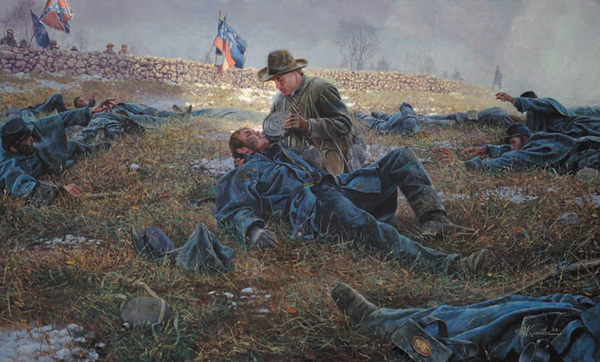
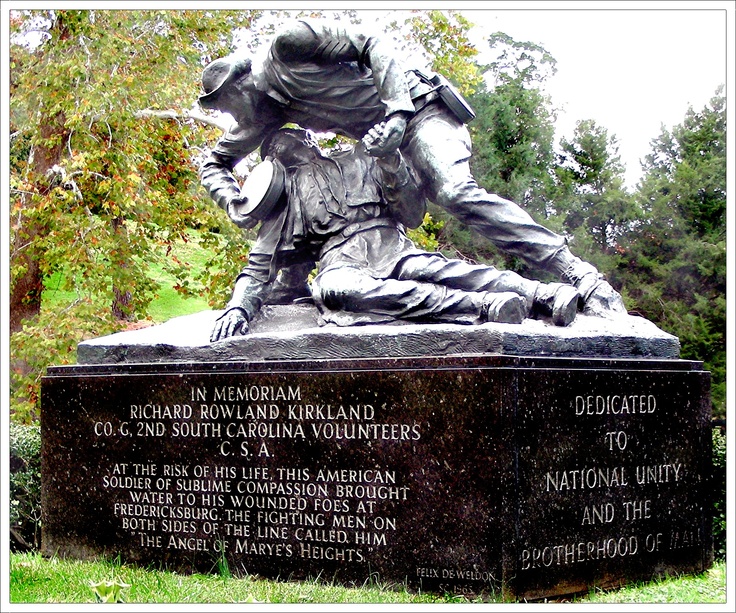
Confederate artillery commander Edward Porter Alexander looked out on that field, and said “a chicken could not live on that field when we open on it”.  Alexander was right.  For six hours, the Union army threw one attack after another against the rebels behind the wall.  Fourteen assaults, in all.  As the sun went down on the evening of December 13, the ground below Marye’s Heights was carpeted with the mangled, dead and dying bodies of Union soldiers.

The Army of the Potomac suffered over 13,000 casualties, about two-thirds of them in front of that wall.  Lee’s army, by comparison, suffered around 4,500 losses.  Watching the great Confederate victory unfold from his hilltop command post, Robert E. Lee said “It is well that war is so terrible, or we should grow too fond of it.”

sergeant_richard_kirkland1
Sergeant Richard Kirkland

Union ambulance corps had all they could do to remove their wounded from the plains, but dared not enter within the Confederate’s range of fire in front of that wall.  All through the night of the 13-14th, the moans of mangled and dying Union soldiers could be heard along the heights.

I don’t doubt that some Confederate soldiers reveled in all that carnage, but I’m sure that the moans and cries of agony were difficult for most of them to hear.  There wasn’t a man among them who didn’t understand that, but for the grace of God, that could be himself.

For Sergeant Richard Kirkland, Company G, 2nd South Carolina Infantry, it wasn’t good enough to sit and listen.  He could no longer stand to hear “those poor people crying for water”.  Kirkland left his position and made his way to General Joseph Kershaw’s headquarters, asking permission to help.

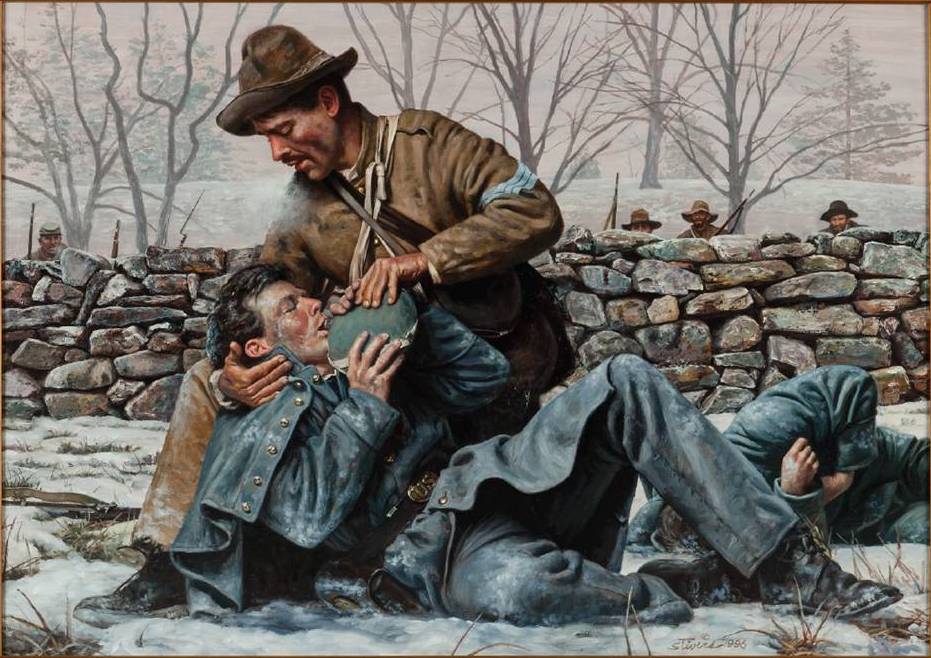
On the morning of December 14, 1862, Richard Kirkland took as many canteens as he could carry, and stepped into the no man’s land between two watching armies.  No one fired, nor even moved.  Sgt. Kirkland worked his way alone from one wounded man to the next, straightening out a shattered leg here, there spreading out an overcoat, always with a quiet word of encouragement and a drink of water.

Angel of Marye's Heights

Kirkland was out there for no less than 1½ hours.  Alone in no man’s land, he never left until he had helped every fallen soldier, Federal and Confederate, on that part of the battlefield.

General Kershaw later gave this account:  “Unharmed he reached the nearest sufferer. He knelt beside him, tenderly raised the drooping head, rested it gently upon his own noble breast, and poured the precious life-giving fluid down the fever scorched throat. This done, he laid him tenderly down, placed his knapsack under his head, straightened out his broken limb, spread his overcoat over him, replaced his empty canteen with a full one, and turned to another sufferer.”

Richard Kirkland would not survive the war.  He met his end while leading an infantry charge the following September, at a place called Chickamauga. No one will ever know how many lives were saved by his courage, and his kindness, this day in 1862.

Richard Rowland Kirkland will forever remain, the Angel of Marye’s Heights.

55227d724bc71729117c7386ca437c4c

December 13, 1942 Ship’s Cook

Untold numbers of lives that could have been lost.  But for the actions, of a sixteen-year-old ship’s cook.

Similar to the Base Exchange system serving American military personnel, the British Navy, Army and Air Force Institutes (NAAFI) is the UK-government organization operating clubs, bars, shops and supermarkets in service to British armed forces, as well as naval canteen services (NCS) on board Royal Navy ships.

NAAFI personnel serving on ships are assigned to duty stations and wear uniforms, while technically remaining civilians.

Tommy Brown was fifteen when he lied about his age, enlisting in the NAAFI and assigned as canteen assistant to the “P-class” destroyer, HMS Petard.

HMSPETARD
HMS Petard

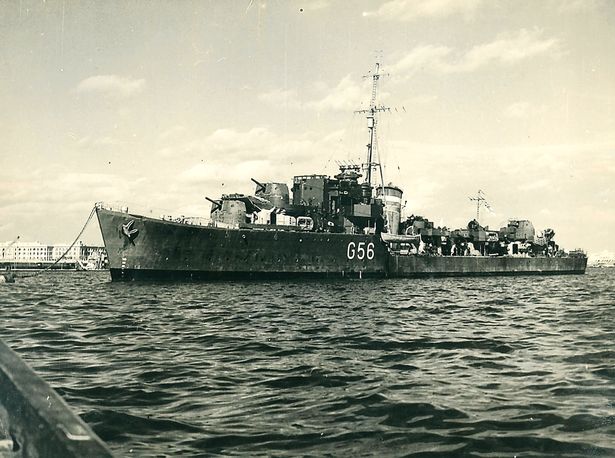
On October 30, 1942, Petard joined three other destroyers and a squadron of Vickers Wellesley light bombers off the coast of Port Said Egypt, in a 16-hour hunt for the German “Unterseeboot”, U–559.

Hours of depth charge attacks were rewarded when the crippled U-559 came to the surface, the 4-inch guns of HMS Petard, permanently ending the career of the German sub.

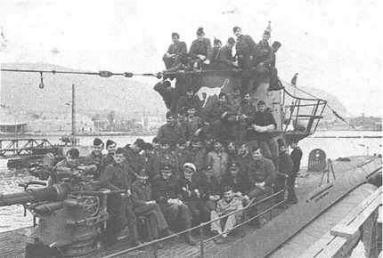
U-559
U-559

The crew abandoned ship, but not before opening the boat’s seacocks.   Water was pouring into the submarine as Lieutenant Francis Anthony Blair Fasson and Able Seaman Colin Grazier dived into the water and swam to the submarine, with junior canteen assistant Tommy Brown close behind.

With U-559 sinking fast, Fasson and Grazier made their way into the captain’s cabin.   Finding a set of keys, Fasson opened a drawer, to discover a number of documents, including two sets of code books.

With one hand on the conning ladder and the other clutching those documents, Brown made three trips up and down through the hatch, to Petard’s whaler.

300px-U-185
U-185 sinking, after American depth charging

In the final moments, the ship’s cook called for his shipmates to get out of the boat. Brown himself was dragged under, but managed to kick free and come to the surface.  Colin Grazier and Francis Fasson, went down with the German sub.

The episode brought Brown to the attention of the authorities, ending his posting aboard Petard when his true age became known.  He was not discharged from the NAAFI, and later returned to sea on board the light cruiser, HMS Belfast.

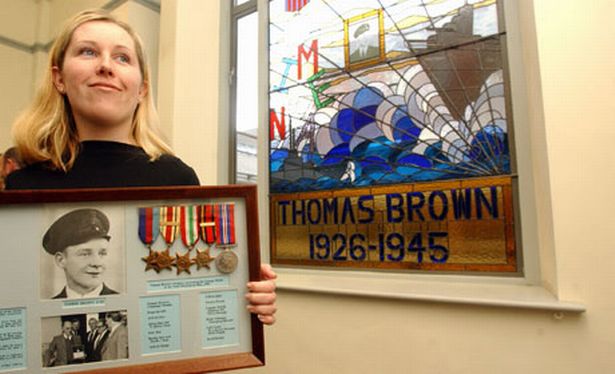
In 1945, now-Leading Seaman Tommy Brown was home on shore leave, when fire broke out at the family home in South Shields.  He died while trying to rescue his 4-year-old sister Maureen, and was buried with full military honors in Tynemouth cemetery.

Fasson and Grazier were awarded the George Cross, the second-highest award in the United Kingdom system of honors.  Since he was a civilian due to his NAAFI employment, Brown was awarded the George Medal.

355b2-442_doenitz_paukenschlagFor German U-boat commanders, the period between the fall of France and the American entry into WW2 was known as “Die Glückliche Zeit” – “The Happy Time” – in the North Sea and North Atlantic.  From July through October 1940 alone, 282 Allied ships were sunk on the approaches to Ireland, for a combined loss of 1.5 million tons of merchant shipping.
Tommy Brown’s Mediterranean episode took place in 1942, in the midst of the “Second Happy Time”, a period known among German submarine commanders as the “American shooting season”. U-boats inflicted massive damage during this period, sinking 609 ships totaling 3.1 million tons with the loss of thousands of lives, against a cost of only 22 U-boats.

USMM.org reports that the United States Merchant Marine service suffered a higher percentage of fatalities at 3.9%, than any American service branch in WW2.

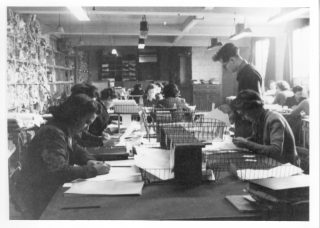
Bletchley ParkEarly versions of the German “Enigma” code were broken as early as 1932, thanks to cryptanalysts of the Polish Cipher Bureau, and French spy Hans Thilo Schmidt.  French and British military intelligence were read into Polish decryption techniques in 1939, these methods later improved upon by the British code breakers of Bletchley Park.
Vast numbers of messages were intercepted and decoded from Wehrmacht and Luftwaffe sources through the Allied intelligence project “Ultra”, shortening the war by at least a year, and possibly two.

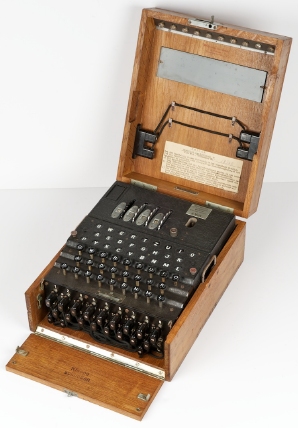
The Kriegsmarine was a different story.  Maniacally concerned with security, Admiral Karl Dönitz introduced a third-generation enigma machine (M4) into the submarine service around May 1941, a system so secret that neither Wehrmacht nor Luftwaffe, were aware of its existence.

The system requires identical cipher machines at both ends of the transmission and took a while to put into place, with German subs being spread around the world.

M4All M4 machines were distributed by early 1942.  On February 2, German submarine communications went dark.  For code breakers at Bletchley Park, the blackout was sudden and complete.  For a period of nine months, Allies had not the slightest idea of what the German submarine service was up to.  The result was catastrophic.
U-559 documents were rushed back to England, arriving at Bletchley Park on November 24, allowing cryptanalysts to attack the “Triton” key used within the U-boat service.  It would not be long, before the U-boats themselves were under attack.

The M4 code was broken by December 13, when the first of a steady stream of intercepts arrived at the Admiralty Operational Intelligence Office, giving the positions of 12 U-boats.

The UK Guardian newspaper wrote: “The naval historian Ralph Erskine thinks that, without the (M4) breakthrough, the Normandy invasion would have been delayed by at least a year, and that between 500,000 and 750,000 tons of allied shipping were saved in December 1942 and January 1943 alone”.

Tommy Brown never knew what was in those documents.  The entire enterprise would remain Top Secret, until decades after he died.

Winston Churchill later wrote, that the actions of the crew of HMS Petard were “crucial to the outcome of the war”.

Untold numbers of lives that could have been lost.  But for the actions, of a sixteen-year-old ship’s cook.

thomas-brown-sharon-carley-462946894

If you enjoyed this “Today in History”, please feel free to re-blog, “like” & share on social media, so that others may find and enjoy the same. Please click the “follow” button on the right, to receive email updates on new articles.  Thank you for your interest, in the history we all share.

December 12, 1937  The Road to Pearl Harbor

Interestingly, though the Japanese government held considerable animosity for that of the United States, the people of Japan seemed a different story.  Ambassador Grew was flooded with expressions of sympathy from Japanese citizens, who apologized for their government and expressed affection for the United States.

USS Panay was a flat bottomed river craft, built in Shanghai as part of the Asiatic fleet and charged with protecting American lives and property on the Yangtze River, near Nanking.

crew02Japanese forces invaded China in the summer of 1937, advancing on Nanking as American citizens evacuated the city.  The last of them boarded Panay on December 11:  five officers, 54 enlisted men, four US embassy staff, and 10 civilians.

Japanese air forces received word the morning of December 12, 1937, that Chinese forces were being evacuated on several large steamers and a number of junks, about 12 miles north of the city.

Anchored a short way upstream along with several Chinese oil tankers, Panay came under bombing and strafing attack that morning, sinking mid-river with three men killed.  43 sailors and five civilians were wounded.  Two newsreel cameramen were on board at the time, and captured part of the attack.

The American ambassador to Japan at the time was Joseph C. Grew, a man who was more than old enough to remember how the sinking of the Maine in Havana Harbor brought the US into war with Spain, in 1898.  Grew hoped to avoid a similar outcome following the Panay sinking, though Japanese authorities were less than helpful.

US cryptographers uncovered information shortly after the attack, indicating that aircraft were operating under orders.  The Japanese government continued to insist that the attack had been accidental.

images (13)The matter was officially settled four months later, with an official apology and an indemnity of $2,214,007.36 paid to the US government.


The “accidental attack” narrative appears to be a safe story which both sides pretended to accept, but it seems a little hard to believe.   HMS Ladybird had been fired on that same morning by Japanese shore batteries, and the attack was followed a month later by the “Allison incident”, in which the American consul in Nanking, John M. Allison, was struck in the face by a Japanese soldier.

Added to the fact that American property was being looted by Japanese forces, it seems clear that relations between the two governments at that time, were toxic.

Interestingly, though the Japanese government held considerable animosity for that of the United States, the people of Japan seemed a different story.  Ambassador Grew was flooded with expressions of sympathy from Japanese citizens, who apologized for their government and expressed affection for the United States.

Letters came from citizens of all ages and walks of life, from doctors and professors to school children.  The wives of high ranking Japanese officials apologized to Grew’s wife without the knowledge of their husbands, while ten Japanese men describing themselves as retired US Navy sailors living in Yokohama, sent a check for $87.19.

A typical letter read: “Dear Friend! This is a short letter, but we want to tell you how sorry we are for the mistake our airplane made. We want you to forgive us I am little and do not understand very well, but I know they did not mean it. I feel so sorry for those who were hurt and killed. I am studying here at St. Margarets school which was built by many American friends. I am studying English. But I am only thirteen and cannot write very well. All my school-mates are sorry like myself and wish you to forgive our country. To-morrow is X-Mas, May it be merry, I hope the time will come when everybody can be friends. I wish you a Happy New Year. Good-bye.”

The two governments never did patch things up. What’s been called the “Rape of Nanking”, began the day after the Panay incident.  On December 13, Japanese forces smashed into the city of 600,000, murdering fully half of the inhabitants.  Newsreel footage may be found of live prisoners being used for bayonet practice, being mowed down by machine guns, or doused with accelerant and burnt alive.

The US placed an embargo on September 1940, prohibiting exports of steel, scrap iron, and aviation fuel, in retaliation for the Japanese occupation of northern French Indochina:  modern day Laos, Cambodia and Vietnam.

uss

Japan occupied southern Indochina by the summer of 1941, as the US, Great Britain, and the Netherlands retaliated by freezing Japanese assets.

Throughout that summer and fall, Japan tried to negotiate a settlement to lift the embargo on terms which allowed them to keep newly captured territory, while at the same time preparing for war.

General Hideki Tojo, future Prime Minister, secretly set November 29 as the last day on which Japan would accept settlement without war.

Air and naval forces of the Imperial Japanese government attacked the US naval anchorage at Pearl Harbor, about a week later.

December 10, 1917 Oh, Christmas Tree…

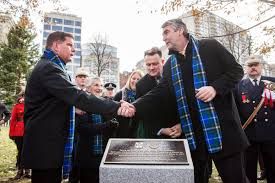
On November 30, a monument was unveiled on Boston Commons, commemorating the 100th anniversary of the Halifax explosion.  The official 2017 Christmas tree lit up for the first time, that night.

A few days short ago, a Christmas tree was erected on Boston Commons. Symbolizing as it does the friendship between the people of two nations, this is no ordinary tree. This tree stands in solemn remembrance of catastrophe, 100 years ago, today.

As “The Great War” dragged to the end of its third year in Europe, Halifax harbor in Nova Scotia was the bustling scene of supply, munition, and troop ships destined for “over there”.  With a population of 50,000 at the time, Halifax was the busiest port in Atlantic Canada.

The Norwegian vessel Imo left its mooring in Halifax harbor on December 6, 1917, destined for New York City.   The French ship Mont Blanc was entering the harbor at this time, intending to join the convoy which would form her North Atlantic escort.

In her holds, Mont Blanc carried 200 tons of Trinitrotoluene (TNT), and 2,300 tons of TNP – Trinitrophenol or “Picric Acid”, a substance used as a high explosive.  In addition, the freighter carried 35 tons of high octane gasoline and 20,000 lbs of gun cotton.

Not wanting to draw the attention of pro-German saboteurs, the freighter flew no flags warning of her dangerous cargo.  Mont Blanc was a floating bomb.

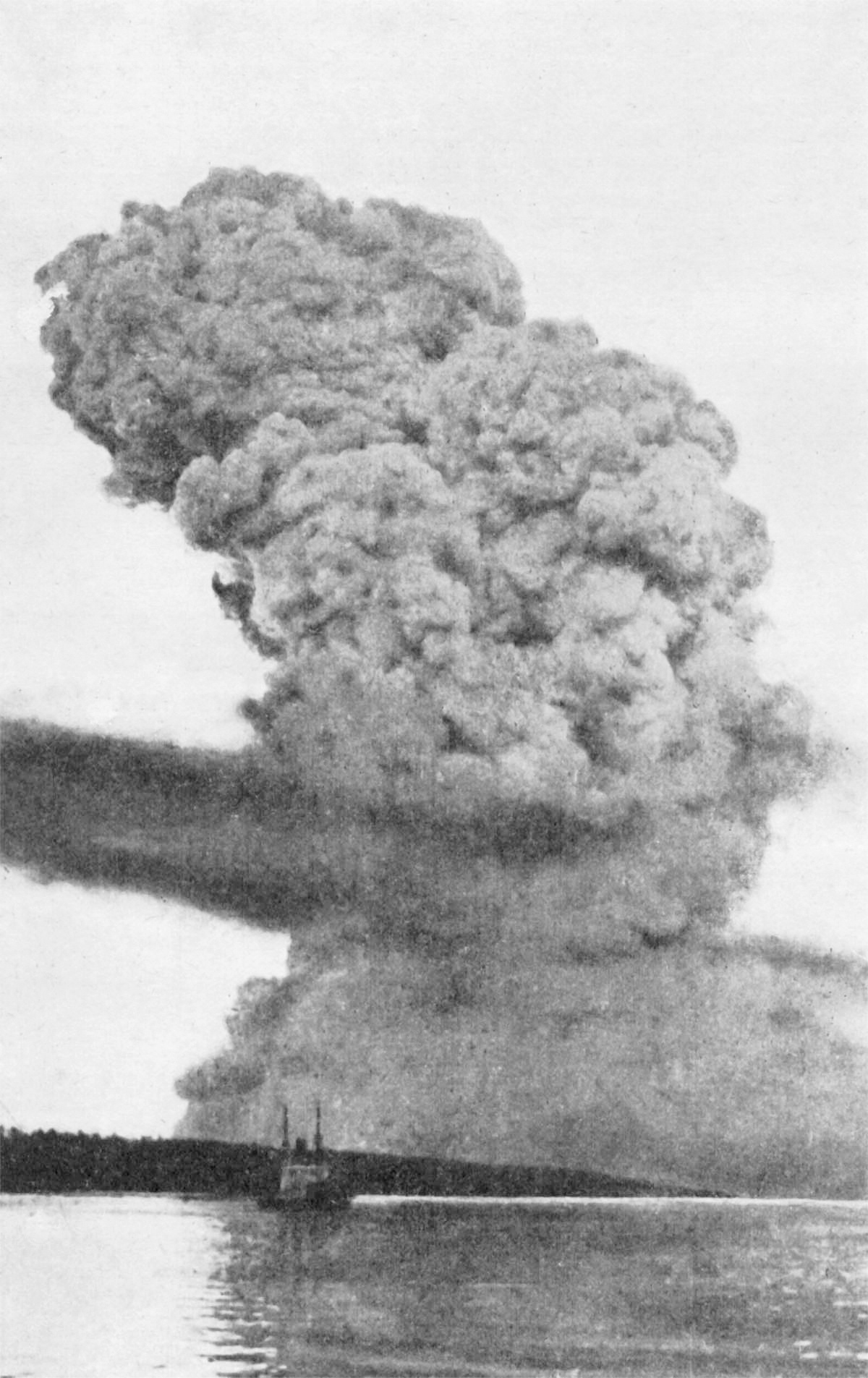
Somehow, signals became crossed as the two ships passed, colliding in the narrows at the harbor entrance and igniting TNP onboard Mont Blanc.  French sailors abandoned ship as fast as they could, warning everyone who would listen of what was about to happen.

As might be expected, the pyrotechnic spectacle put on by the flaming ship was too much to resist, and crowds gathered around the harbor.  The high-pitched scream emitted by picric acid under combustion is a principal feature of fireworks displays, to this day.  You can only imagine the scene as the burning freighter brushed the harbor pier setting that ablaze as well, before running itself aground.

That was when Mont Blanc exploded.

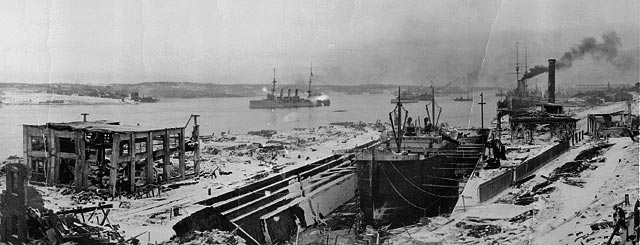
Halifax explosion, 2

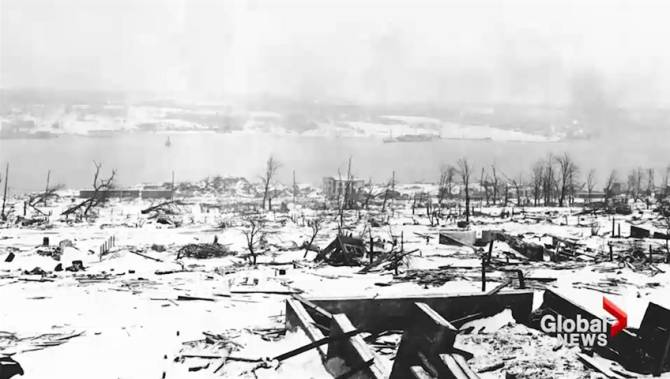
The detonation and resulting fires killed over 1,800 and wounded another 9,000, flattening the north end of Halifax and shattering windows as far as 50 miles away.

It was one of the largest man made, non-nuclear explosions in history. Mont Blanc’s anchor landed two miles away, one of her gun barrels, three.  Later analysis estimated the output at 2.9 kilotons, an explosive force greater than some tactical nuclear weapons.

Halifax explosion, 3

The first ray of light the morning of December 7 revealed some 1,600 homes destroyed in the blast, as a blizzard descended across Nova Scotia.

Boston Mayor James Michael Curley wrote to the US Representative in Halifax “The city of Boston has stood first in every movement of similar character since 1822, and will not be found wanting in this instance. I am, awaiting Your Honor’s kind instruction.”

Halifax explosion, 1

The man was as good as his word.  Mayor Curley and Massachusetts Governor Samuel McCall composed a Halifax relief Committee to raise funds and organize aid.  McCall reported that the effort raised $100,000 in its first hour, alone. President Woodrow Wilson authorized a $30,000 carload of Army blankets sent to Halifax.

Within 12 hours of the explosion, the Boston Globe reported on the first train leaving North Station, with “30 of Boston’s leading physicians and surgeons, 70 nurses, a completely equipped 500-bed base hospital unit and a vast amount of hospital supplies”.

Delayed by deep snow drifts, the train arrived on the morning of December 8, the first non-Canadian relief train on the scene.

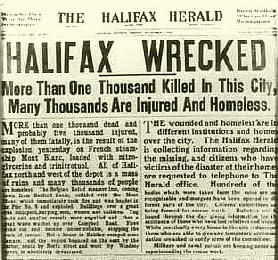
Halifax HeraldThere was strong sentiment at the time, that German sabotage lay behind the disaster.  A front-page headline on the December 10 Halifax Herald Newspaper proclaimed “Practically All the Germans in Halifax Are to Be Arrested”.

$750,000 in relief aid would arrive from Massachusetts alone, equivalent to more than $15 million today.  Canadian Prime Minister Robert Borden would write to Governor McCall on December 9, “On behalf of the Government of Canada, I desire to convey to Your Excellency our very sincere and warm thanks for your sympathy and aid in the appalling calamity which has befallen Halifax”.

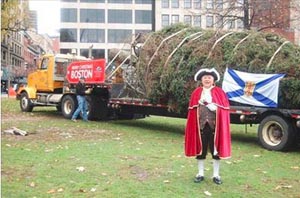
The following year, Nova Scotia sent the city of Boston a gift of gratitude.  A very large Christmas tree.

O1A0508

In 1971, the Lunenburg County Christmas Tree Producers Association sent another tree to Boston, to promote Christmas tree exports, and to once again acknowledge the support of the people and government of Boston after the 1917 disaster. The Nova Scotia government later took over the annual gift of the Christmas tree, to promote trade and tourism.Halifax Tree Sendoff

So it is that, every year, the people of Nova Scotia send the official Christmas tree to the people of Boston.  More recently, the principle tree is joined by two smaller trees, donated to Rosie’s Place and the Pine Street Inn, two Boston homeless shelters.

events3406This is no Charlie Brown shrub we’re talking about. The 1998 tree required 3,200 man-hours to decorate:  17,000 lights connected by 4½ miles of wire, and decorated with 8,000 bulbs.

In 2013, the tree was accompanied by a group of runners, in recognition of the Boston Marathon bombing earlier that year.

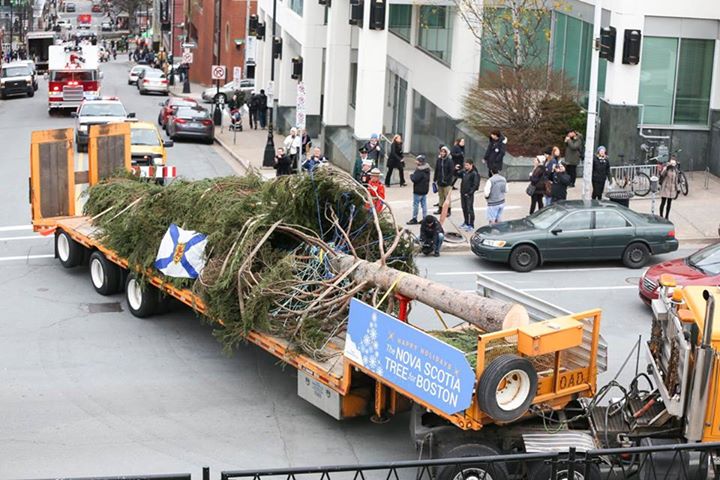
This year’s tree stands 53′ tall, marking 100 years since the Halifax exlosion. It takes two men a day and a half to prepare for cutting, a crane holding the tree upright while the chainsaw does its work.  It’s a major media event, as the tree is paraded through Halifax on a 53’ flatbed, before boarding the ferry across the Bay of Fundy to begin its 750-mile journey south.download

For a small Canadian province, it’s been no small commitment.  In 2015 Nova Scotia spent $242,000 on the program, including transportation cutting & lighting ceremonies, and the promotions that went with it.

On November 30, a monument was unveiled on Boston Commons, commemorating the 100th anniversary of the Halifax explosion.  The official 2017 Christmas tree lit up for the first time, that night.

Last year, Premier Stephen McNeil explained the program and why it was worth the expense:  “(It) gives us a chance to showcase our beautiful part of the world to a global community”.   Premier McNeil may have had the last word this year, at the tree lighting ceremony. “We had massive deaths and injuries,” McNeil said of the 1917 catastrophe. “It would have been far worse if the people of Boston hadn’t come and supported us.”

boston-tree-header

If you enjoyed this “Today in History”, please feel free to re-blog, “like” & share on social media, so that others may find and enjoy the same. Please click the “follow” button on the right, to receive email updates on new articles.  Thank you for your interest, in the history we all share.

December 7, 1942 The Ship that Wouldn’t Die

Commander Joe Taylor found a typewriter and wrote the plan of the day, to which he added this headline, “Big Ben Bombed, Battered, Bruised and Bent But Not Broken”.  No ship in history had taken such a beating, and survived.

On December 7, 1941, Imperial Japanese air forces attacked the US Pacific Naval anchorage at Pearl Harbor.  The attack killed 2,335 and wounded another 1,178.  Four battleships and two other vessels were sunk to the bottom.  Thirteen other ships were damaged or destroyed. 188 aircraft were destroyed and another 159 damaged, most while still on the ground.  All eight battleships then in harbor were damaged.

PaerlHarborUSSOklahoma_SocialImage
USS Oklahoma

Four torpedoes slammed into USS Oklahoma, capsizing the Nevada-class battleship and trapping hundreds within the overturned hull.  Frantic around-the-clock rescue efforts delivered 32.  Bulkhead markings later revealed that at least some of the sailors aboard the doomed battleship lived another seventeen days.  Seventeen days alone in that black, upside down hell, they died waiting for the rescue that came too late. The last mark was drawn by the last survivor on Christmas Eve, 1941.

Harvard-educated Japanese Admiral Isoroku Yamamoto was the unwilling architect of the attack on Pearl Harbor, writing home to a correspondent “I wonder if our politicians [who speak so lightly of a Japanese-American war] have confidence as to the final outcome and are prepared to make the necessary sacrifices”.  Yamamoto well understood the consequences of the actions taken by his government, confiding to his diary. “I fear we have awakened a sleeping giant and filled him with a terrible resolve.”

Isoroku_YamamotoFor Imperial Japan, Yamamoto’s worst nightmare would prove correct.  In terms of GDP, the Tokyo government had attacked an adversary, nearly six times its own size.  The Japanese economy reached its high point in 1942 and declined steadily throughout the war years, while that of the United States exploded at a rate unseen in human history.

1942 started out grimly in the Pacific, with Americans and their Filipino allies besieged in Bataan and Corregidor, and Commonwealth forces hurled from the Malayan peninsula.  The Kriegsmarine celebrated the “Second Happy Time”, as German submarine commanders called it the “American shooting season”.  Yet, at the home front, 1942 saw massive industrial mobilization.

The backbone of American naval power during this period was the Essex-class aircraft carrier, remaining so until the supercarriers of the 60s and 70s.  Twenty-four Essex class carriers were completed during WW2, including USS Franklin, her hull laid down seventy-five years ago, today, one year after the attack on Pearl Harbor.  December 7, 1942.

USS Franklin, 1
Essex-class carrier, USS Franklin

“Big Ben” was launched ten months later at Newport News Shipbuilding Company in Virginia, and commissioned on January 31, 1944.

For the remainder of 1944, Franklin’s engagements read like a timeline of the war, South of the Japanese home islands. The Bonin archipelago. Mariana Islands. Iwo Jima, Chichi Jima, Haha Jima, Leyte, Guam and the Palau Islands.

By late 1944, a series of defeats had left the Japanese critically short of military aviators, and the experienced aircraft mechanics and groundcrew necessary to keep them aloft.

On October 14, USS Reno was hit by the deliberate crash of a Japanese airplane.   The following day, Rear Admiral Masafumi Arima personally lead an attack by 100 Yokosuka D4Y “Judy” dive bombers, against a carrier task force including USS Franklin.  Arima was killed and part of a plane hit Franklin.

It’s not clear that this was a suicide attack, but Japanese propagandists were quick to seize on Arima’s example.   Official Japanese accounts bear little resemblance to the actual event, but Arima was officially given credit for the first kamikaze attack, of World War II.

By war’s end, this “divine wind” tactic would end the lives of 3,862 kamikaze pilots, and over 7,000 naval personnel.

On October 30, Franklin was attacked by a three-plane squadron of enemy bombers, bent on a suicide mission. One plummeted off her starboard side while a second hit the flight deck, crashing through to the gallery deck, killing 56 and wounding 60.   The third discharged it’s bombs nearly missing Franklin, before diving into the flight deck of the nearby Belleau Wood.  It was a harbinger of things to come.

Both carriers withdrew to Ulithi Atoll for temporary repairs of battle damage, and Franklin proceeded to the Puget Sound Navy Yard, for more permanent repairs.

Early in the following spring, Franklin rendezvoused with Task Force 58, joining in strikes against the Japanese home islands.

On the morning of March 19, 1945, Franklin turned into the early dawn wind preparing to launch aircraft, while up on the bridge, Commander Stephen Jurika was writing in his log.  On the hangar deck, chow lines snaked their way between 12″ wide “Tiny Tim” rockets on ordnance carts, while Messmen plopped the morning’s breakfast onto steel trays.

At 7:05, Commander Jurika heard a message from the carrier Hancock.  “Enemy plane closing on you…one coming toward you!”  Franklin’s Combat Information Center (CIC) picked up the enemy bomber at a range of twelve miles, but lost it in the clutter of Task Force 58’s morning launch.

Franklin 2

At 7:07, Commander Jurika saw the Japanese dive bomber sweep over his head, dropping two 500-pound bombs on Franklin.  The first ripped through 3-inch armor to the hangar deck, as the second exploded two decks below. Great sheets of flame enveloped the flight deck, as the 32-ton forward elevator literally rose into the air.  5 bombers, 14 torpedo bombers and 12 fighters were engulfed in the inferno, between them carrying 36,000 gallons of aviation fuel and 30 tons of bombs and rockets.

From the other ships of TF 58, Franklin appeared to be engulfed in flames.  With firefighters working fore and aft and Franklin making 24 knots, an aft gas line ruptured, igniting bombs, rockets, and a 40mm ready-service magazine. This second explosion literally lifted Franklin and spun her to starboard, as a 400′ sheet of flame towered over the carrier.  Franklin was listing at 13°, with radar and CIC, gone.  The flight deck was ruptured in a dozen places.  In ready room #51, eleven of twelve aviators of the famed “Black Sheep Squadron”, were dead.

Franklin 6

12′ Tiny Tim rockets flew screaming across the decks in every direction, as entire aircraft engines, propellers attached, flew through the air.  Each time firefighters dropped to the deck, and then went back at it.

Commander Jurika felt as if the carrier was a rat, being shaken by an angry cat.

The destroyers Miller and Hickox moved within several hundred feet, aiming their hoses at the damaged ship. A Mitsubishi Zero fighter was reported diving on the carrier at 7:41, but determined flak batteries, brought it down.

Franklin 4

Six minutes later, the light cruiser Santa Fe moved up, hurling life jackets and floater nets into the water to help swimmers.  Task Group 58.2 commander Rear Admiral Ralph Davison departed Franklin for the destroyer Miller, telling Captain Leslie Gehres, “Captain, I think there’s no hope. I think you should consider abandoning ship — those fires seem to be out of control”.

Ensign William Hayler later said “I was not sure whether I was entering Dante’s Inferno or crossing the River Styx”

A mile-high column of thick, greasy smoke rose from the carrier, as signalmen blinkered a message to Santa Fe: “We have lost steering control. Can you send fire hoses? Can you send for sea tugs?” Santa Fe blinkered back, asking if Franklin’s magazines were flooded.  “We believe the magazines are flooded, Big Ben replied. “Am not sure”. No one knew at the time, that the water valves were on, but the pipes had split. Hundreds of tons of explosives stored in the aft magazines, were dry.

Franklin 3Lieutenant Commander Joseph O’Callahan, a Jesuit priest from Boston and former Holy Cross track star was a Chaplain aboard the Franklin.  O’Callahan was everywhere, hurling bombs overboard and administering last rites, shouting encouragement and fighting fires.   Father O’Callahan would be the only Chaplain of WW2, to be awarded the Medal of Honor.

At 10am, Santa Fe signaled the carrier Bunker Hill: “Franklin now dead in water. Fires causing explosions. Have got a few men off. Fires still blazing badly…whether Franklin can be saved or not is still doubtful”.  Boards and ladders stretched between the cruiser and the carrier, evacuating the wounded.  Gehres ordered 800 off Franklin onto Santa Fe, as thirty sailors hacked at the starboard anchor with files, steel cutters and acetylene torches, dumping the anchor and using the 540′ chain as a towline, to the Baltimore-class heavy cruiser, USS Pittsburgh.  Others passed hot shells hand to hand, and dumping them overboard.

Franklin-OCallahan
Chaplain O’Callahan administers last rites

Another dive bomber attacked at 12:40, dropping its 500-pounder close enough to shake the carrier, while a motley crew of laundrymen and ship’s buglers manning the last operational 40mm AA guns, dropped the “Judy” into the water.

By 15:45, Franklin was under tow at 7 knots. That night she was able to make way under her own power.  No lights shone that night, but for the faint red glow of still burning fires.  The few Franklin crew remaining would continue to fight off additional dive bombers and put out fires, through the 31st.

832 were dead and another 300 wounded, one-third of the crew. Commander Joe Taylor found a typewriter and wrote the plan of the day, to which he added this headline, “Big Ben Bombed, Battered, Bruised and Bent But Not Broken”.  No ship in history had taken such a beating, and survived.


If you enjoyed this “Today in History”, please feel free to re-blog, “like” & share on social media, so that others may find and enjoy the same. Please click the “follow” button on the right, to receive email updates on new articles.  Thank you for your interest, in the history we all share.

December 6, 1240 Golden Horde

Imagine an army of circus riders, equipped with composite bows and a minimum of 60 arrows apiece, each capable of hitting a bird in flight. Each rider has have no fewer than 3-4 small, fast horses, and is able to transfer mounts in mid-gallop in order to keep his horses fresh.  In this way, riders could cover 100 miles and more in a day.  Stirrups allowed them to fire in any direction, including to the rear.

The Eurasian Steppe is a vast region of grasslands and savannas, extending thousands of miles east from the mouth of the Danube, nearly to the Pacific Ocean. There’s no clearly defined southern boundary, as the land becomes increasingly dry as you move south. To the north are the impenetrable forests of Russia and Siberia.

The 12th century steppe was a land of inter-tribal rivalry, immersed in a poverty so profound that many of its inhabitants went about clad in the skins of field mice. Ongoing acts of warfare and revenge were carried out between a kaleidoscope of ever-changing tribal confederations, compounded and egged on by the interference of foreign powers such as the Chinese dynasties of the Song and the Jurchen, to the south.

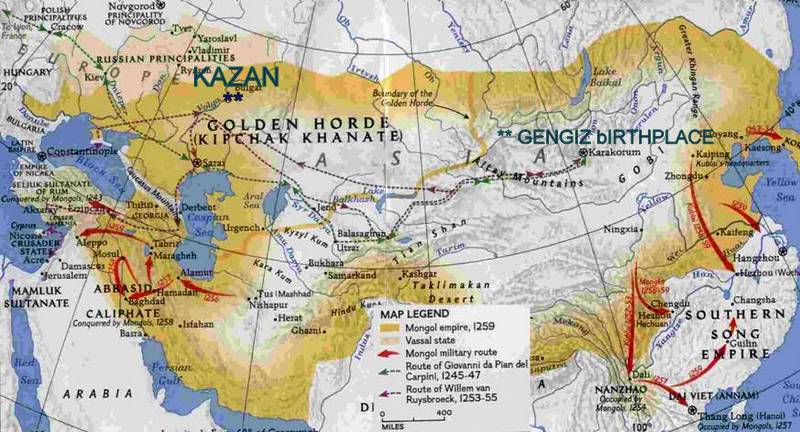
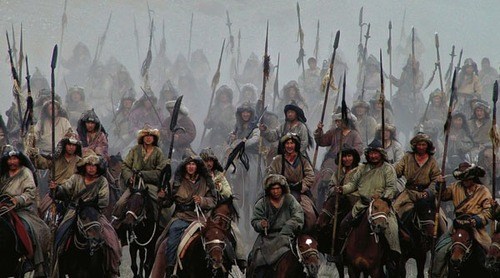
Mongol Golden Horde

Into this land was born the son of the Mongol chieftain Yesügei, born with a blood clot grasped in his fist. It was a sign, they said, that this child was destined to become a great leader. By 1197, the boy would unite the nomadic tribes of northeast Asia into the largest contiguous empire in history, extending from Korea in the east, through Baghdad and Syria all the way into eastern Europe.  One-fifth of the inhabited land area, of the entire planet.

His name was Temujin. He is known to history as the Great Leader of the Mongol Empire, Genghis Khan.

NatGeo Cover, Afghan girlThe Steppes have long been a genetic crossroad, the physical features of its inhabitants as diverse as any in the world. The word “Rus”, from which we get Russia, was the name given to Viking invaders from earlier centuries. History does not record what Genghis himself looked like, though he’s often depicted with Asian features.  There is evidence suggesting he had red hair and green eyes. Think of that beautiful young Afghan girl, the one with those killer eyes on that National Geographic cover, a few years back.
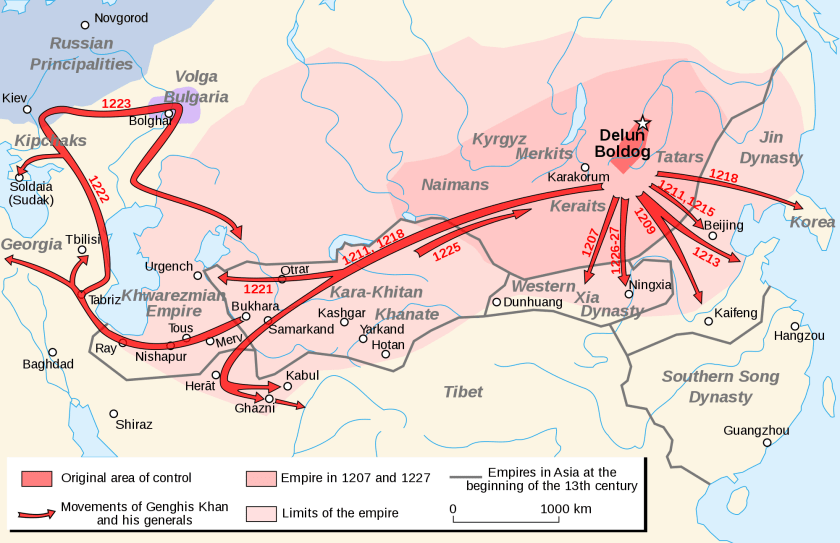
The Mongols called themselves “Tata”, while others called them after the people of Tartarus, the Hell of Roman mythology. They were the “Tatars” to the people they terrorized: “Demons from Hell”.

The two most prominent weapons in the Mongol arsenal can be found in the words “Horse Archer”.  Imagine an army of circus riders, equipped with composite bows and a minimum of 60 arrows apiece, each capable of hitting a bird in flight. Each rider has have no fewer than 3-4 small, fast horses, and is able to transfer mounts in mid-gallop in order to keep his horses fresh.  In this way, riders could cover 100 miles and more in a day.  Stirrups allowed them to fire in any direction, including to the rear.

Horse Archer

The bow, a laminated composite of wood, horn and sinew, combined the compression of the interior horn lamina with the stretching of animal sinews, glued to the exterior.  The weapon was capable of aimed shots at five times the length of a football field.  Ballistic shots into large groups were common as far as 2½ times that distance. The average draw weight of a first-class English longbow is 70-80 lbs.  The Mongol composite bow ranged from 100 to 160 lbs, depending upon the physical strength of its user.

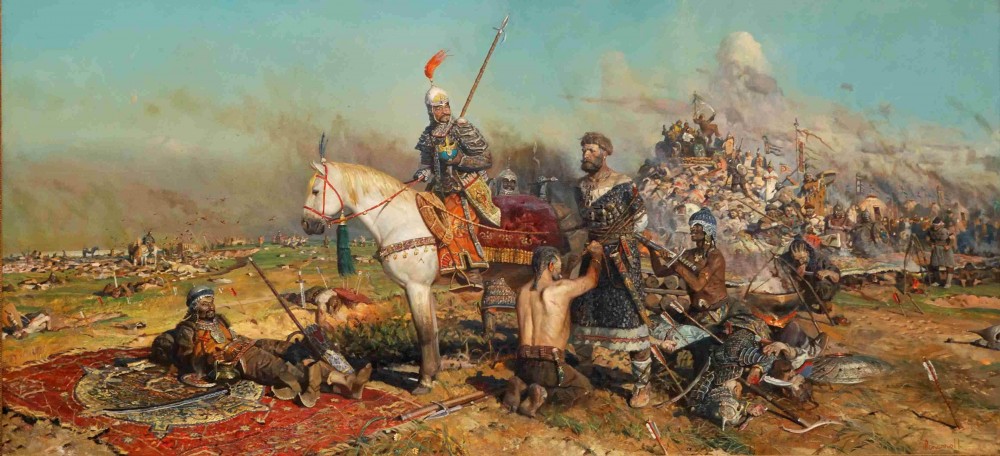
After the death of Genghis’ eldest son Jochi, who pre-deceased his father, the Great Khan installed his grandson Batu as Khan (Chief of State) of the Kipchak Khanate to the north. In 1235, the Great Khan Ögedei, who had succeeded his father on Genghis’ death in 1229, ordered his nephew Batu and an army of 130,000 of these circus riders to conquer Europe, beginning with the Rus.

Mongol Invasion of the Rus

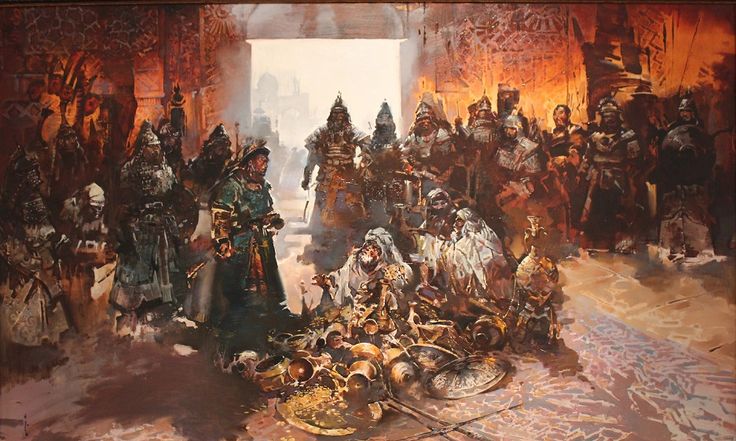
13th century Russia was more a collection of principalities than it was a single nation. One by one these city-states fell to the army of Batu, known as the “Golden Horde”. Ryazan, Kolomna and Moscow. Vladimir, Rostov, Uglich, Yaroslavl, and a dozen others. Some of the names are familiar today, others were extinguished for all time. All fell to the Golden Horde.  Smolensk alone escaped, having agreed to submit and pay tribute. The city of Kitezh, as the story goes, submerged itself into a lake along with its inhabitants, at the approach of the Horde.  On this day, December 6, 1240, Mongols under Batu Khan occupied & destroyed Kiev, following several days’ struggle.

By the end of 1241, Mongol armies had crushed opposing forces from the Plains of Hungary, to Eastern Persia, to the outskirts of Austria. That December, plans were being laid for the invasion of Germany, Austria and Italy, when news arrived informing the Mongol host of the death of the Great Khan, Ögödei.  Batu wanted to continue, but the Law of Yassa required that all Princes of the Blood return to Karakorum and the Kurultai, the meeting of Mongol Chieftains.

The Abbasid Caliphate of Islam, descended from the uncle of Muhammad Al-Abbas ibn Abd al-Muttalib and established in 750, was the third Islamic Caliphate since the time of Muhammad. Centered in Baghdad, the Abbasid Caliphate became a center of science, culture, philosophy and invention, during what has come to be known as the Golden Age of Islam.

Since 1241, the Abbassids paid tribute to the Khanate in the form of gold, military support, and, according to rumors, Christian captives of the Crusades. That came to a halt in 1258, when Caliph Al-Musta’sim refused to continue the practice. The Abbassid Caliphate ceased to exist on February 10, following a twelve-day siege by the Mongol army of Hulagu Khan, brother of the Khagan (great kahn) Möngke.

591db11cb4831eaddd0ec6b0858997b1--baghdad-islam

The Mongols first looted and then destroyed mosques, palaces and hospitals.  The “House of Wisdom”, the grand library of Baghdad, compiled over generations and  comparable in size and scope to the modern-day Library of Congress, the British Library in London or the Nationale Bibliotheque in Paris, was utterly destroyed.  Survivors said that the muddy waters of the Tigris ran black with the ink of the books hurled into its waters, and red from the blood of the slain.

Estimates of the number killed in the fall of Baghdad, range from 90,000 to one million.  Hulagu needed to move his camp to get upwind, so overwhelming was the stench of the dead.

Believing the earth to be offended by the spilling of royal blood, Mongols rolled Caliph Al-Musta’sim himself up in a carpet and trampled him to death, with their horses.

tumblr_inline_njkn8eqTh61rea0r5

In 1281, a massive Mongol fleet of some 4,000 ships and 140,000 men set out under Kublai Khan, to invade Japan. This was the second such attempt, the largest naval invasion in history and not to be eclipsed until the 20th century D-Day invasion, of Normandy. As with the previous attempt, a great typhoon came up and destroyed the Mongol fleet. As many as 70,000 men were captured.  The Golden Horde never again attempted the invasion of Japan. To this day, we know this “Divine Wind”, as “Kamikaze”.

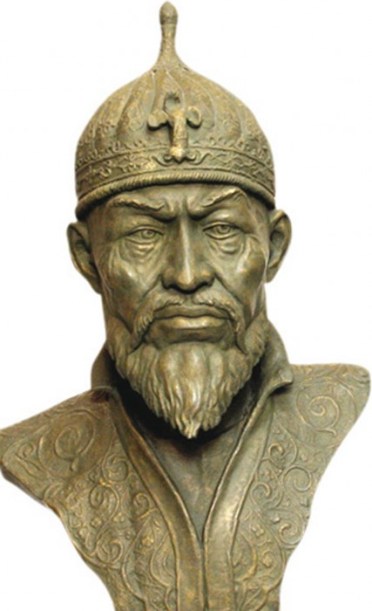
Tamerlane
Tamerlane

Berke, grandson of Ghenghis and brother of Batu, converted to Islam, creating a permanent division among the descendants of the Great Khan.

Timur-i-leng, “Timur the Lame”, or “Tamerlane”, professed to be a good Muslim, but had no qualms about destroying the capitals of Islamic learning of his day.  Damascus, Khiva, Baghdad and more he destroyed.  Many, have never entirely recovered.  Best known for the pyramids of skulls he left behind, as many as 19 million fell to the murderous regime, of Tamerlane.

The violence of the age was so vast and horrific that it’s hard to get your head around. WWII, the deadliest conflict in human history, was a time of industrialized mass slaughter.  From the battlefields to the death camps, WWII ended the lives of 40 to 72 million souls, killed in a few short years.  Roughly 3% of the inhabitants of earth.  By comparison, the Mongol conquests killed 30 million over 162 years, mostly one-by-one with edged or pointed weapons. When it was over, 17% of the entire world’s population, had vanished.

The Celtic warrior Calgacus once said of the Roman conquests that “They make a desert, and they call it peace”. It was likewise for the Mongol Empire; a time of peace for those who would submit and pay tribute.  A time when “A maiden bearing a nugget of gold on her head could wander safely throughout the realm.”

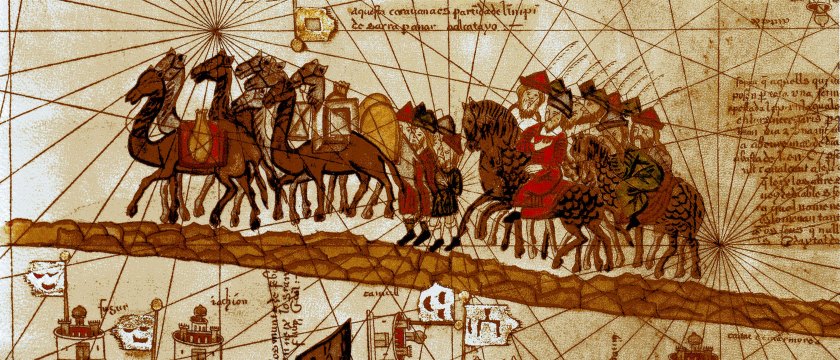
Catalan-Atlas-depicting-Marco-Polo-traveling-to-the-East-during-the-Pax-Mongolica
The Catalan Atlas depicts Marco Polo traveling to the East during the ‘Pax Mongolica’.

This “Pax Mongolica” lasted through the reign of the Great Khan and his several successors, making way for the travels of Marco Polo. The 4,000-mile long “Spice Roads”, the overland trade routes between Europe and China, flourished throughout the 14th and 15th centuries under Mongol control.

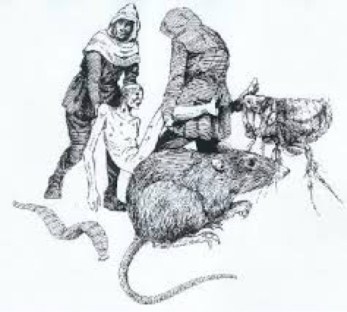
In the 14th century, the “Black Death” began to change the balance of power on the Eurasian steppe. 100 years later, the fall of Byzantium and marauding bands of Muslim brigands were making the east-west overland trade routes increasingly dangerous. In 1492, the Spanish Crown hired an Italian explorer to find a water route to the east.

Black DeathThe Mongols would never regain the lost high ground of December 1241, as chieftains fell to squabbling over bloodlines.

The Golden Horde ruled over parts of Russia until the time of Ivan IV “Grozny” (The Terrible), in the 1550s.

The Mongol hordes never went away, not entirely. Modern DNA testing reveals that up to 8% of certain populations across the Asian subcontinent, about one-half of one per cent of the world’s population, descends directly from that baby with the blood clot, grasped in his fist.  Genghis Khan.


If you enjoyed this “Today in History”, please feel free to re-blog, “like” & share on social media, so that others may find and enjoy the same. Please click the “follow” button on the right, to receive email updates on new articles.  Thank you for your interest, in the history we all share.