September 2, 1945 Unit 731

To perform even the most cursory examination of WW2 is to walk among a catalog of atrocities, unimaginable to the modern reader. As if the very nightmare pits of hell had opened and unleashed horrors, unthinkable even to the blackest visions of the perverted and depraved. A true reckoning of the horrors of that war, is capable of producing psychological damage.

As Western historians tell the tale of WW2, the deadliest conflict in history began in September 1939, with the Nazi invasion of Poland. The United States joined the conflagration two years later, following the sneak attack on the American Naval anchorage at Pearl Harbor, by naval air forces of the Empire of Japan.

To perform even the most cursory examination of WW2 is to walk among a catalog of atrocities, unimaginable to the modern reader. As if the very nightmare pits of hell had opened and unleashed horrors, unthinkable even to the blackest visions of the perverted and depraved. A true reckoning of the horrors of that war, is capable of producing psychological damage.

auschwits-birkenau
Auschwitz-Birkenau

The mountains of gold teeth, of eyeglasses and hair and children’s shoes, testify in mute witness to the systematic extermination of eleven million souls in the gas chambers and ovens of the “Master Race”.  The Untermenschen:  The Jews.  The Roma (“gypsies”).  The physically and mentally disabled.  The Poles and other Slavic races, Jehovah‘s Witnesses, homosexuals, and members of political opposition groups.

Mass graves and savage reprisals by Nazi death squads for the imaginary “collective guilt” of civil populations. The vicious brutality inflicted upon the diseased and starving captives of the countless prison camps, of the “Greater East Asia Co-Prosperity Sphere“.

JapanesePowCamps-WWII-front
“Imperial Japanese-run prisoner-of-war camps within the Greater East Asia Co-Prosperity Sphere known during World War II from 1941 to 1945”. H/T Wikipedia

The tales are widely told and deservedly so.  Never should such atrocities be forgotten, any more than the cataclysmic fire bombing campaigns of entire cities, nor the nuclear annihilation which brought this whole ghastly conflagration, to a close.

Yet, of 100 randomly selected adults, how many are aware of “Unit 731″ and the other “medical experimentation” centers of the Kempetai, possibly the most hideous episode in this entire parade of horribles?

Shiro-ishii
General Shirō Ishii, Commandant of Unit 731

In the East, the war which began in 1939 dates back to 1931, and the Japanese invasion of Manchuria beginning on September 18.

The invasion followed the Mukden incident, an entirely staged “false flag” operation and bald pretext to war, carried out by Japanese military personnel and identical in purpose, to that carried out against Poland by Nazi aggressors eight years later, almost to the day.

The puppet state of Manchukuo now joined most of the Korean peninsula under Japanese subjugation.  This and subsequent invasions and the famine and civil wars which ensued, killed more people during this eight-year period, than the modern populations of Canada and Australia.  Combined.

The covert biological and chemical warfare research program conducted by Unit 731 began operations two years before the European war, during the “second Sino-Japanese War” of 1937-’45. Originally set up by the Kempeitai military police arm of the Imperial Japanese army, Unit 731 was taken over and commanded until the end of the war by General Shirō Ishii, a combat medic officer of the Kwantung Army.

Thousands of so-called “logs” (“Maruta”, in Japanese) were brought through the 150 buildings comprising Unit 731, and smaller facilities known as Unit 100 and Unit 516.  They were men, women and children, captives subjected to unspeakable acts of barbarity, in the name of medical “science”.   70% of Unit 731’s victims were ethnic Chinese, but the list includes Soviet, Mongolian and Korean nationals and possibly European, American and Australian POWs, as well.

unit-731-frostbite
Frostbite “experiment”

One example of the work there, is physiologist Yoshimura Hisato’s interest in hypothermia. The arms and legs of prisoners were submerged in ice or exposed to sub-zero winter cold until frozen solid, with ice accumulated on skin. Limbs were judged “ready” when they made a sound like a wooden board, when struck with a cane. Re-warming methods were carried out, from exposure to open fire to dousing in hot water. Sometimes the subject was simply left alone, to see how long a person’s own blood took to warm up the now-destroyed limbs.

germ-warfare
“Japanese personnel in protective suits carry a stretcher through Yiwu, China during Unit 731’s germ warfare tests. June 1942”. H/T allthatsinteresting.com

Human beings were intentionally infected with diseases such as cholera, anthrax or venereal disease, or nerve, chemical and biological warfare agents of every description. Then, as always, the live dissections, and examination of the prisoner’s organs.

unit-731-germs
“Germ” warfare experiment, being carried out at Unit 731

Female prisoners were subjected to rape and forced pregnancy, to test the “vertical transmission” of all of it, from mother to child.

Unit 731 museum
Unit 731 Museum, Harbin. “A permanent lab of the Troop No.731 to research the formation, therapy and prevention of frostbite. Before 1939, the troop did frostbite experiments generally in the fields.” Credit Samuel Kim, China Chronicles

Such “medical experiments” were carried out with no regard for the subjects’ survival.  In fact, live dissections were performed on fully aware and un-anesthetized victims, unless they were merely buried alive.  Such humane measures as unconsciousness, were thought to skew the “data”.  Not a single prisoner assigned to Unit 731, survived.  Not one.

Photographs may be found on-line if you wish, of the vivisection of live and fully conscious human beings.  I didn’t go there.   The images I decided to show, are bad enough.

Unit 731 prisoners were herded together onto firing ranges, to measure the damage done by weapons from swords to the Nambu 8mm pistol, to machine guns or bayonets and grenades.  Even flame throwers.

Bubonic plague-infected fleas were bred in laboratories at Unit 731 and Unit 1644, and spread by low flying aircraft in the coastal city of Ningbo and Changde in the Province of Hunan. Chinese civilians killed in outbreaks of bubonic plague, number thirty thousand or more.

children-researchers
“Unit 731 researchers conduct bacteriological experiments with captive child subjects in Nongan County of northeast China’s Jilin Province. November 1940”. H/T allthatsinteresting.com

Throughout the eight years of its existence, 1937 -1945, Unit 731 and its counterparts received generous support from the Japanese government.

On this day in 1945, Representatives of the Imperial Japanese government signed the formal instrument of surrender aboard the “Mighty Mo”, the Iowa-class battleship USS Missouri, ending World War 2 in the Pacific.

douglas-macarthur-and-hsu-yungchang-P
September 2, 1945

After the war, Unit 731 records were burned and researchers resumed civilian lives, as if nothing had happened. Many went back to faculty positions. Like “Operation Paperclip”, the combined British – American effort to scour the German talent pool for scientists and technicians of every sort, Japanese researchers were given immunity from prosecution, in exchange for what they knew.

Shirō Ishii was arrested by US occupation authorities after the war, and managed to negotiate immunity, in exchange for their full disclosure of germ warfare data based on human experimentation. On May 6 1947, General Douglas MacArthur wrote to Washington that “additional data, possibly some statements from Ishii probably can be obtained by informing Japanese involved that information will be retained in intelligence channels and will not be employed as ‘War Crimes’ evidence.”

After that, Ishii all but stepped off the pages of history.

Building_on_the_site_of_the_Harbin_bioweapon_facility_of_Unit_731
Today, the former Unit 731 bioweapon facility at Harbin is open to the public, as a war crimes museum

Cambridge University history lecturer Richard Drayton claims that he showed up in Maryland, to advise on bioweapons. Some sources place him on the Korean peninsula in 1951, still others claim he never left Japan where he died of throat cancer, at the age of 67.

In April of this year, the National Archives of Japan disclosed for the first time, a full list of the 3,607 people who worked for Unit 731. The Japanese government has yet to apologize for its acts of barbarity, nor is it likely to, anytime soon.  No more than the government in China, is likely to forget.

harbin-facility
Unit 731 facility, in Harbin

August 31, 1959 Sgt. Reckless

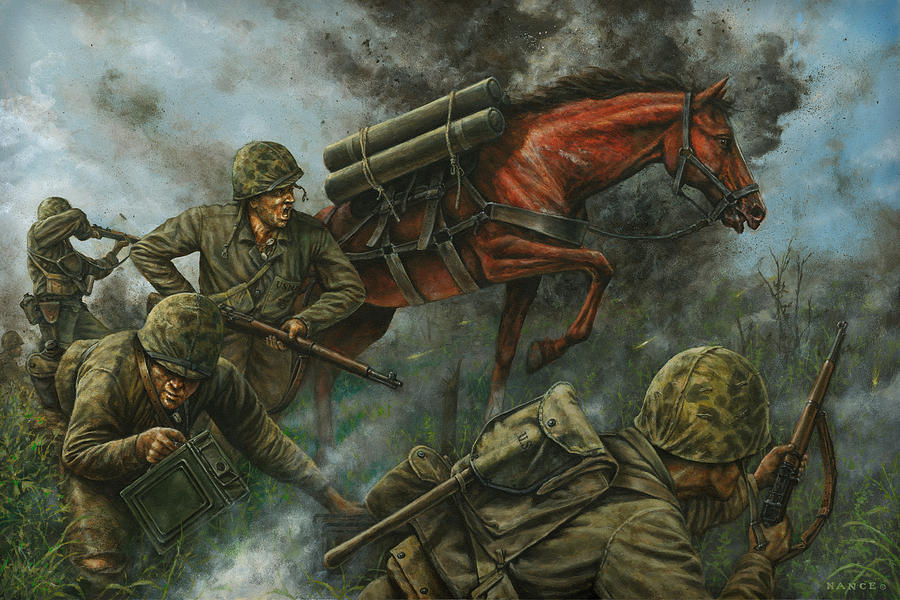
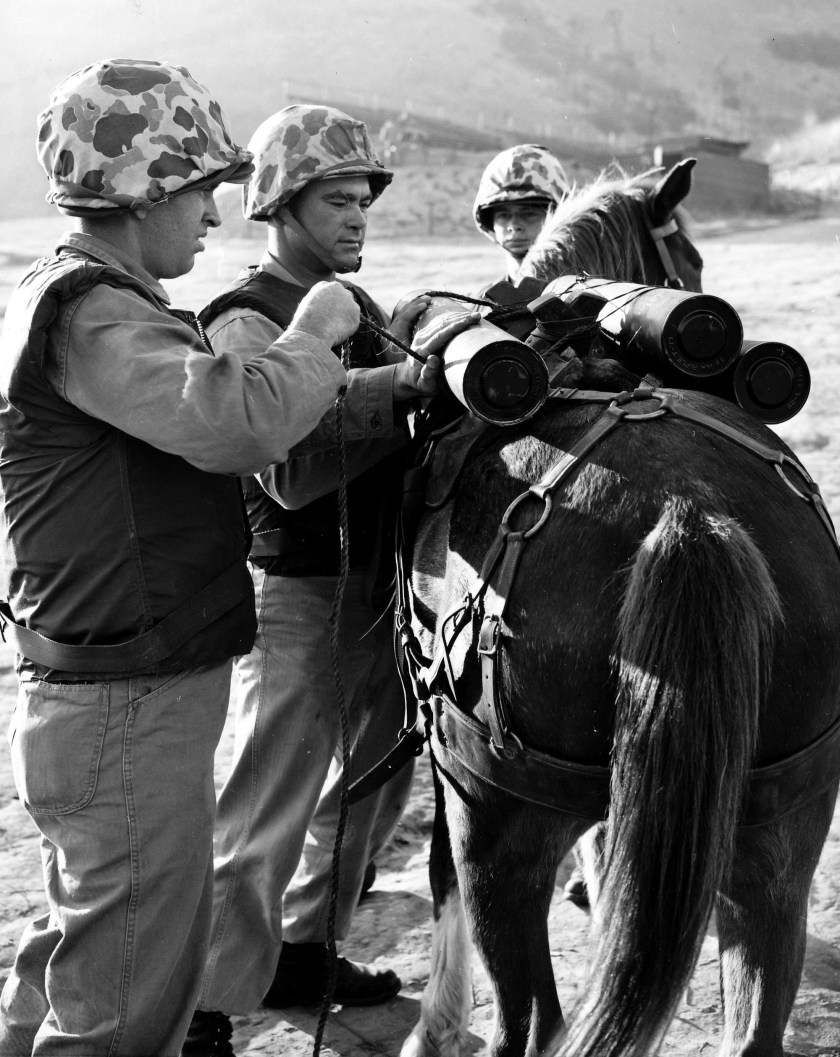
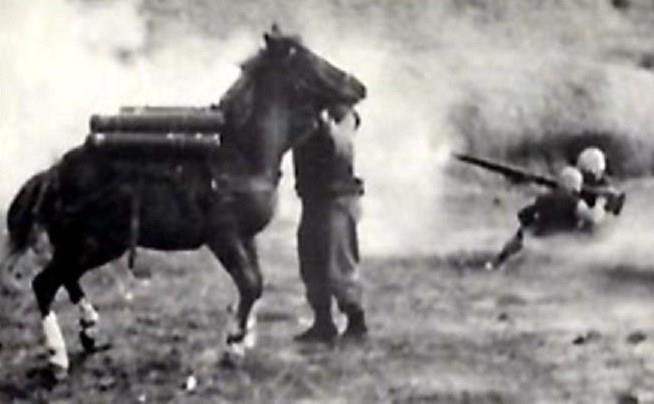
Reckless “went straight up” the first time she heard an RCLR go off, despite being loaded down with six shells. All four feet left the ground and she came down trembling with fear, but Coleman was able to soothe her. The second time she snorted. By the fourth she didn’t bother to look up.  She was happily munching on a discarded helmet liner.

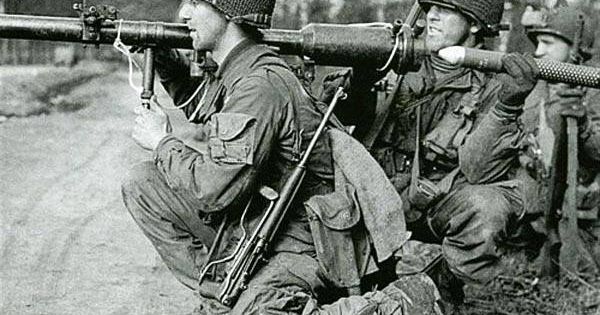
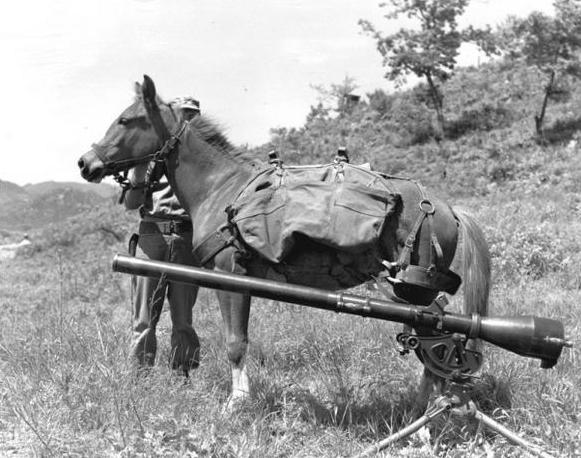
A Recoilless Rifle is a type of lightweight tube artillery. Think of a portable cannon. Kind of a bazooka, really, only the Recoilless fires modified shells rather than rockets. The back blast of these shells compensates for the mule’s kick which would otherwise be expected from such a weapon, making the rifle “recoilless”.

While that reduces projectile range, reduced gas pressures permit a thinner-walled barrel, resulting in a weapon light enough to be served by a 2 to 3-man crew, and shoulder fired by a single infantryman.

5d719499852b439ca042d1937e3727e8

The “RCLR” weapon system has provided the punch of artillery to mobile troop formations since the early days of WWII, including Airborne, Special Forces and Mountain units.

The problem arises when combat operations consume ammunition faster than the supply chain can replace it. Mountainous terrain makes the situation worse. Even today in the more mountainous regions of Afghanistan, there are times when the best solution for the problem, is horsepower.

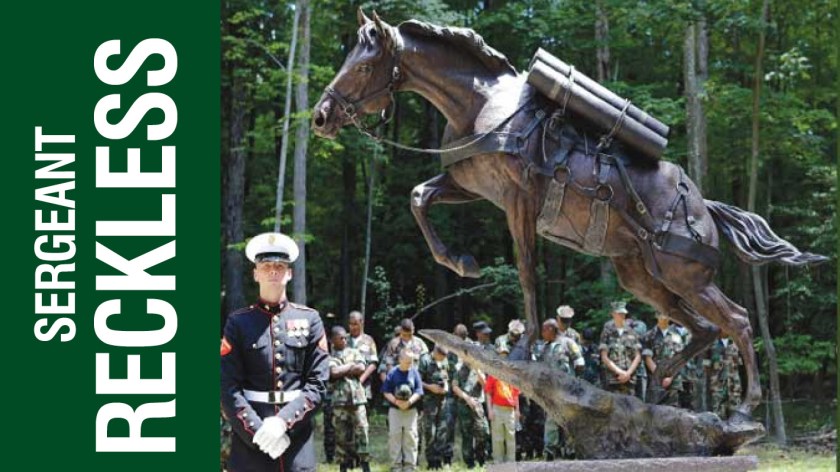
sgt-reckless

Ah Chim-hai was a chestnut mare of mixed Mongolian and Thoroughbred lineage, a race horse at the track in Seoul, South Korea. Her name translated as “Flame of the Morning”.
Lieutenant Eric Pedersen of the recoilless rifle platoon, anti-tank company of the 5th Marine Regiment, needed a pack animal to carry the weapon’s 24-lb shells up Korean mountain passes. In October 1952, Pederson received permission from regimental commander Colonel Eustace P. Smoak, to buy a horse for his platoon.

Lt. Pederson and stable boy Kim Huk-moon agreed on a price of $250, and Pederson paid with his own money. Kim cried on watching his “Flame” leave the stable, but the sale had a higher purpose.  The boy’s sister had stepped on a land mine, and badly needed a prosthetic leg.

sgt-reckless_PHOTO_D

The Marines called the new recruit “Reckless” – a nod to the weapon system she was meant to serve, and to the fighting spirit of the 5th Marines.

Pederson wrote to his wife in California to send a pack saddle, while Gunnery Sergeant Joseph Latham and Private First Class Monroe Coleman provided for her care and training.

p44-4

Navy Hospitalman First Class George “Doc” Mitchell provided most of Reckless’ medical care, Latham taught her battlefield skills: how to step over communication wires, when to lie down under fire, how to avoid becoming entangled in barbed wire. She learned to run for cover, at the cry “Incoming!”

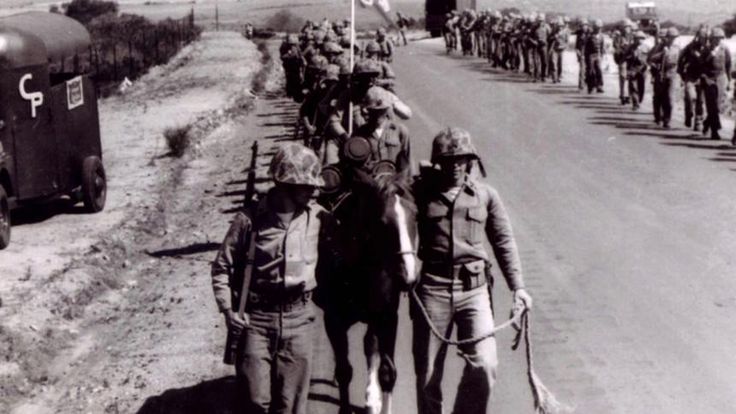
The platoon built her a bunker and fenced off a pasture, but soon Reckless was allowed to roam freely throughout the camp. She’d enter tents at will, sometimes spending the night if it was cold.

sgt-reckless_PHOTO_D

She’d eat anything: bacon, mashed potatoes, shredded wheat.  She loved scrambled eggs.  Just about anything else that a Marine wasn’t watching closely enough, as well. Reckless even ate her horse blanket once, and she loved a beer. Mitchell had to warn his fellow Marines against giving her more than two Cokes a day, which she’d drink out of a helmet. Once, she ate $30 worth of winning poker chips.

General Randolph McCall Pate, a veteran of Guadalcanal, Iwo Jima and Korea, served as the 21st Commandant of the Marine Corps from 1956 – ’59.  Pate wrote: “I was surprised at her beauty and intelligence, and believe it or not, her esprit de corps. Like any other Marine, she was enjoying a bottle of beer with her comrades. She was constantly the center of attraction and was fully aware of her importance. If she failed to receive the attention she felt her due, she would deliberately walk into a group of Marines and, in effect, enter the conversation. It was obvious the Marines loved her.”  Reckless was a Marine.

eae75db58fc3a2ec2c20c4273d5b9435

Reckless “went straight up” the first time she heard an RCLR go off, despite being loaded down with six shells. All four feet left the ground and she came down trembling with fear, but Coleman was able to soothe her. The second time she snorted. By the fourth she didn’t bother to look up.  She was happily munching on a discarded helmet liner.

Recoilless rifle tactics call for fire teams to fire four or five rounds, and then relocate before the enemy can shoot back. Reckless usually learned the route after one or two trips, often traveling alone to deliver supplies on the way up, and evacuate wounded on the way down.

379_4846200240062_674245243_n

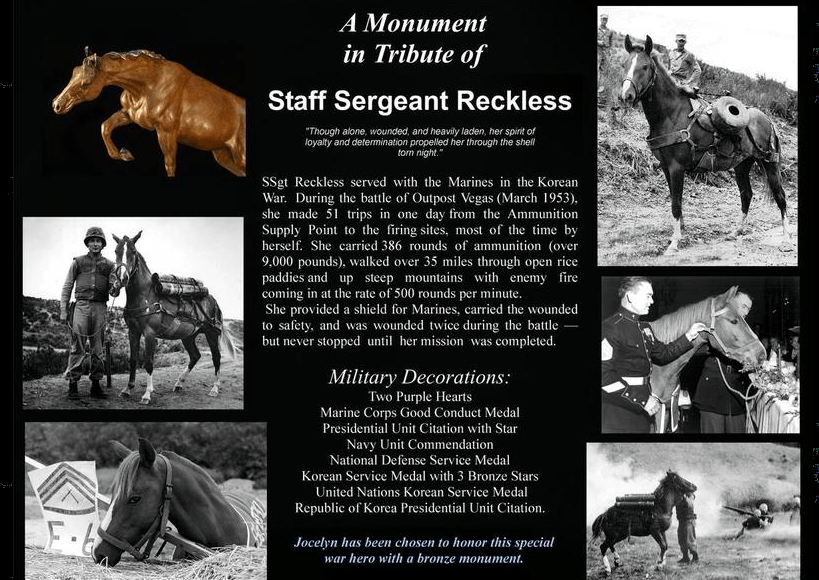
In February 1953, Captain Dick Kurth and his Fox Company were fighting for a hill called “Detroit”. Reckless made 24 trips by herself, carrying a total 3,500lbs of ammunition over 20 miles. She made 51 solo trips that March, during the battle for Outpost Vegas. Reckless carried 9,000lbs of ammunition in a single day, over 35 miles of open rice paddies and steep hills. At times, artillery exploded around her at the rate of 500 rounds per minute. She was wounded twice during the battle. That night, she was too exhausted to do anything but hang her head while they rubbed her down.

Reckless was the first horse in Marine Corps history to participate in an amphibious landing. She was wounded twice, and later awarded two Purple Hearts and a Marine Corps Good Conduct Medal. Her name appears on Presidential Unit citations from the United States and the Republic of Korea.

1000w_q75

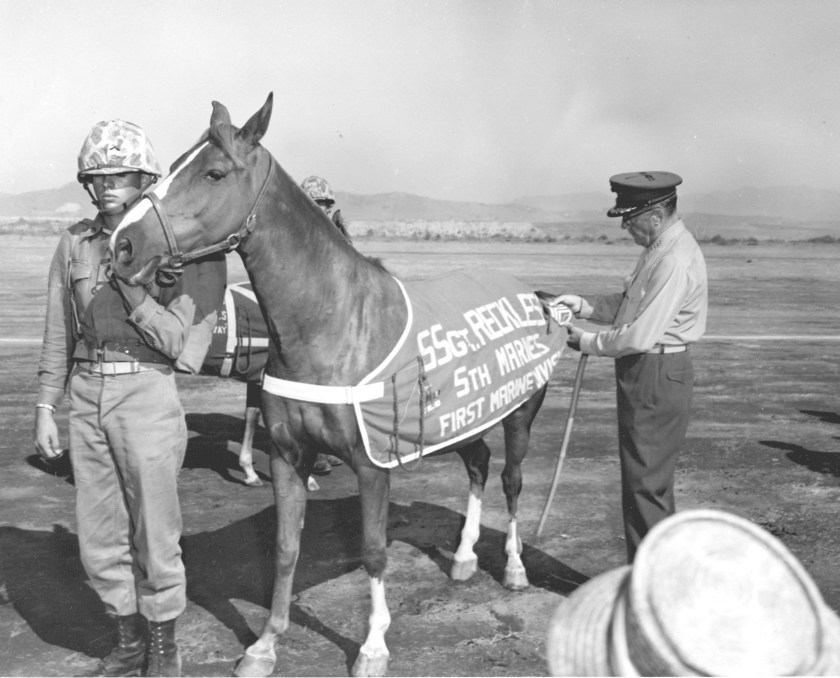
On August 31, 1959, Reckless was promoted to Staff Sergeant in a ceremony at Camp Pendleton. 1,900 of her 5th Marine comrades attended, as did two of her sons, “Fearless” and “Dauntless”. A third, “Chesty”, was unavailable to attend.

General Pate wrote: “In my career I have seen many animals that have been adopted by Marines, but never in all my experience have I seen one which won the hearts of so many as did. . .Reckless.”

HP_SeptOct13_SergeantReckless_MarkTenally

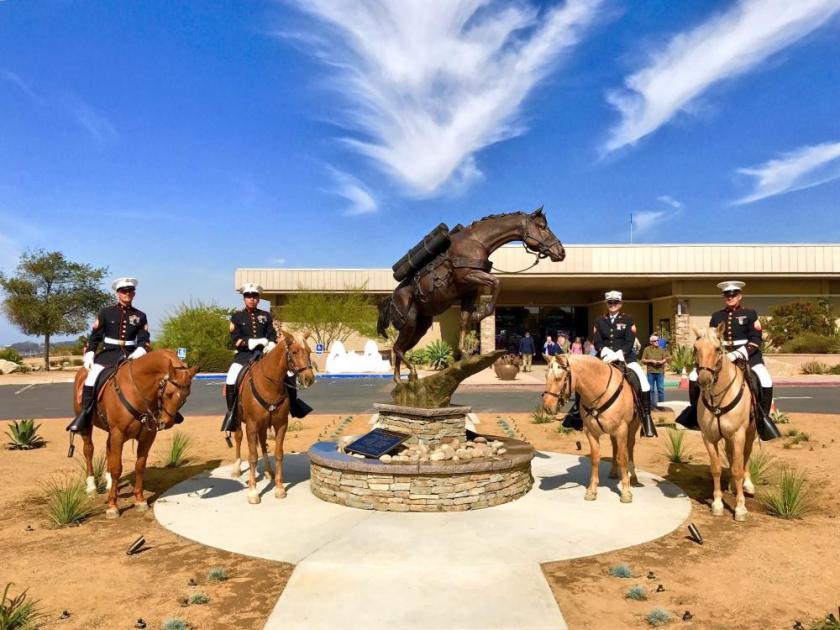
Life Magazine published a collector’s edition in 1997, listing 100 heroes from American history. Alongside the names of George Washington and Thomas Jefferson, Sally Ride and Abraham Lincoln, was that of a small Mongolian horse. Sergeant Reckless.

Screen-Shot-2014-09-11-at-10.42.17-AM

August 30, 1776 A Damn Close-Run Thing

The silent evacuation over the night of August 29-30 had averted disaster, a feat made possible only through the nautical skills of the merchants and rum traders, the sailors and the fishermen of Colonel John Glover’s Marblehead, Massachusetts militia, the “Amphibious Regiment”.

When General George Washington raised his sword under the branches of that ancient elm on Cambridge commons, by that act did he take command of an “army”, equipped with with an average of only nine rounds per man.

116037-040507-01.tif1776 started out well for the cause of American independence, when the twenty-six-year-old bookseller Henry Knox emerged from a six week slog through a New England winter, at the head of a “Noble train of artillery’.

Manhandled all the way from the frozen wilderness of upstate New York, the guns of Fort Ticonderoga were wrestled to the top of Dorchester Heights, overlooking the British fleet anchored in Boston Harbor.

General sir William Howe faced the prospect of another Bunker Hill.   A British victory, yes, but one which came at a cost that  Howe could ill afford to pay again.

The eleven-month siege of Boston came to an end on March 17 when that fleet evacuated Boston Harbor, and removed to Nova Scotia.  Three months later, a force of some 400 South Carolina patriots fought a day-long battle with the nine warships of Admiral Sir Peter Parker, before the heavily damaged fleet was forced to withdraw.  The British eventually captured Fort Moultrie and Charleston Harbor along with it but, for now, 1776 was shaping up to be a very good year.

Declaration of IndependenceThe Continental Congress adopted the Declaration of Independence, that July.
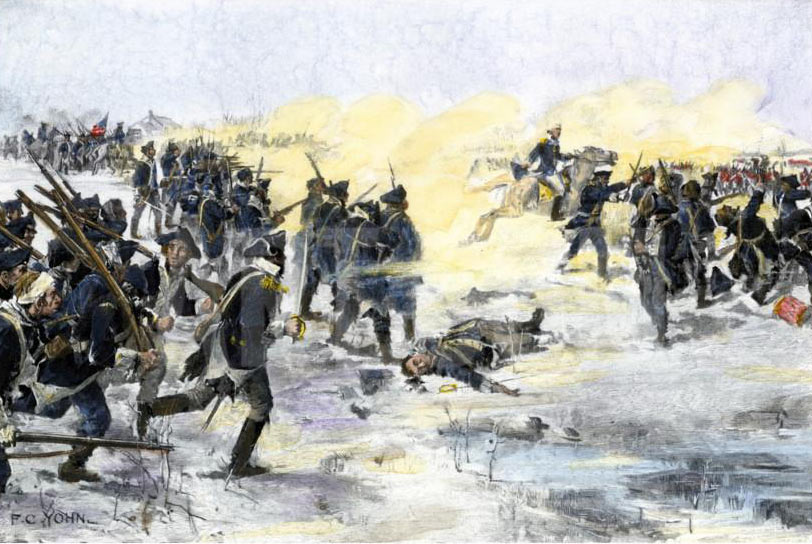
King’s Regular and Rebel alike understood the strategic importance of New York, as the center of communications between the New England colonies, and those in the south.  Beginning that April, Washington moved his forces from Boston to New York, placing his troops along the west end of Long Island in anticipation of the British arrival.

The British fleet was not long in coming, the first arrivals dropping anchor by the end of June.  Within the week, 130 ships were anchored off Staten Island, under the command of Admiral sir Richard Howe, the General’s brother.  By August 12 the British force numbered 400 vessels with 73 warships, with a force of some 32,000 camped on Staten island.

American forces were badly defeated at the Battle of Brooklyn, fought on August 27, 1776. The British dug in for a siege, confident that their adversary was cornered and waiting to be destroyed at their convenience, while the main Patriot army retreated to Brooklyn Heights.

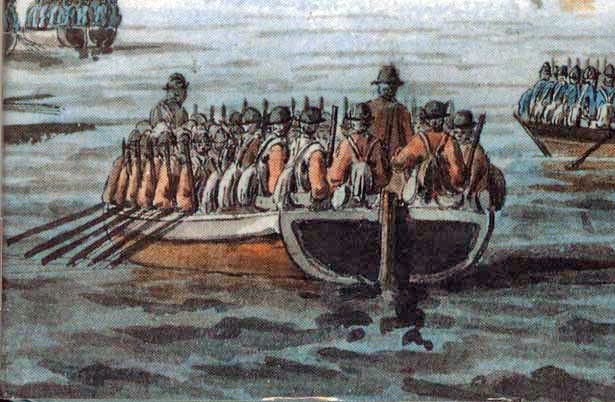
British_flat-bottomed_boat_American_Revolution
“British troops in the type of flat-bottomed boat used for the invasion of Long Island. Hessians in their blue uniforms are in the two boats that are only partly visible”. H/T Wikipedia

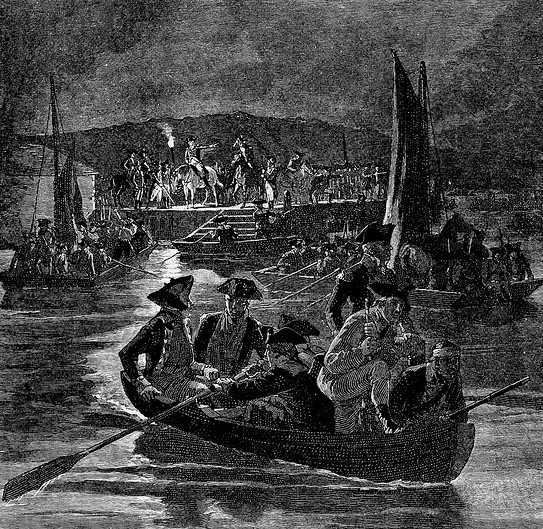
Cornered on land with the British-controlled East River to their backs, it may have been all over for the Patriot cause, but for one of the great feats of military history.   The surprise was complete for the British side on waking for the morning of August 30, to discover that the American army, had vanished. The silent evacuation over the night of August 29-30 had averted disaster, a feat made possible through the nautical skills of the merchants and rum traders, the sailors and the fishermen of Colonel John Glover’s Marblehead, Massachusetts militia, the “Amphibious Regiment”.

Retreat from LI
Retreat from long island, August 29-30, 1776

That October, the defeat of General Benedict Arnold’s home-grown “Navy” on the waters near Valcour Island in Vermont, cost the British fleet dearly enough that it had to turn back, buying another year of life for the Patriot cause.

By December, the Continental army had fled New York, to the south of New Jersey.  Already reduced to a puny force of only 4,707 fit for duty, Washington faced a decimation of his army by the New Year, with the end of enlistment for fully two-thirds of those.  With nowhere to go but on offense, Washington crossed the Delaware river in the teeth of a straight-up gale over the night of December 25, defeating a Hessian garrison at Trenton in a surprise attack on the morning of December 26.

trenton

While minor skirmishes by British standards, the January 2-3 American victories at Assunpink Creek and Princeton demonstrated an American willingness, to stand up to the most powerful military of its time.  Cornwallis had suffered three defeats in the last ten days, and withdrew his forces from the south of New Jersey.  American morale soared, as enlistments came flooding in.

american-troops-charging-the-british-at-the-battle-of-princeton-new-jersey-c-1777
Battle of Princeton, January 3, 1777

The American war for independence would not be over, for another six years.  Before it was through, more Americans would die in the fetid holds of British prison ships than in every battle of the Revolution, combined.  Yet, that first year had come and gone, and the former colonies were still in the fight.

A generation later, Lord Arthur Wellesley described the final defeat of a certain “Corsican corporal” at a place called Waterloo.  Wellesley might have been talking about the whole year of 1776 in describing that day in 1815:  “It was a damn close run thing“.

If you enjoyed this “Today in History”, please feel free to re-blog, “like” & share on social media, so that others may find and enjoy it as well. Please click the “follow” button on the right, to receive email updates on new articles.  Thank you for your interest, in the history we all share.

August 21, 1863 Bushwacker

During the “Bleeding Kansas” period, pro-slavery “Border Ruffians” and anti-slavery “Jayhawkers” crossed one another’s borders with impunity, primarily to murder each other’s civilians and burn out one another’s towns.

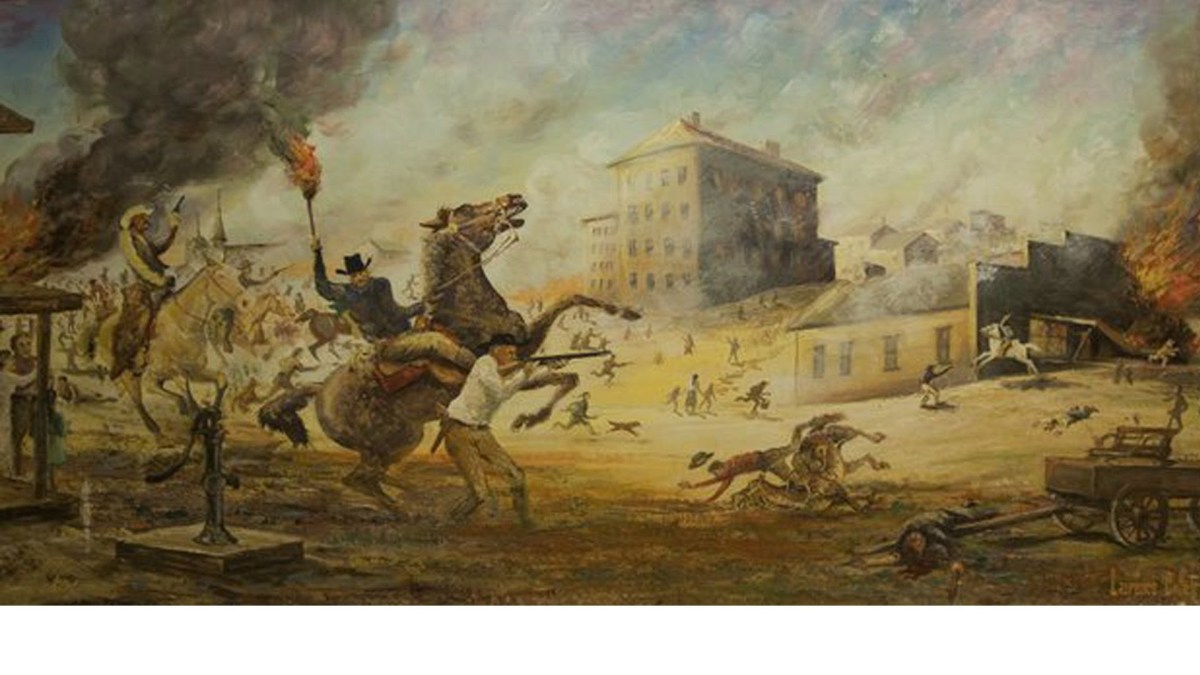
Lawrence, 1863
Lawrence, Kansas 1863

In the early morning hours of August 21, 1863, 300 to 400 riders converged in the darkness outside the city of Lawrence, Kansas.

These were a loose collection of independent “bushwacker groups”, pro-slavery and nominally Confederate, though subject to no structure of command and control.

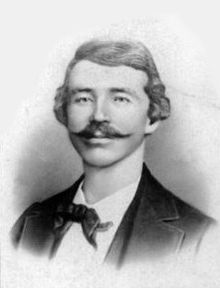
This was a civilian group operating outside of any structured chain of command, more a gang of criminal outlaws than any military operation. There was Cole Younger and Frank James, the soon-to-be-famous Jesse’s older brother. There was William T. “Bloody Bill” Anderson, whose men were known for tying the scalps of slain Unionists to the saddles and bridles of their horses. Leading this assemblage of ruffians was a 27-year-old former schoolteacher from Ohio: William Clarke Quantrill.

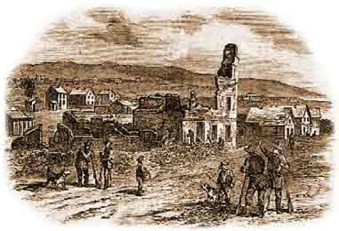
Lawrence Kansas
Lawrence Kansas

Lawrence, Kansas was mostly asleep at that hour, as several columns of riders descended on the town. It was 5:00am and pitch dark, as most of the city of 3,000 awoke to the sound of pounding hooves.

Doors were smashed in amid the sounds of gunshots and screams. Quantrill’s band went through the town, systematically shooting most of the male population.

The shooting, the looting and the burning went on for four hours. Between 160 and 190 of the men and boys of Lawrence, ages 14 to 90, were murdered. Most of them had no means of defending themselves.

06quantrill0Intending to deprive Confederate sympathizers from their base of support, General Thomas Ewing authorized General Order No. 11 four days later, ordering that most of four counties along the Kansas-Missouri border be depopulated. Tens of thousands of civilians were forced out of their homes as Union troops came through, burning buildings, torching fields and shooting livestock.
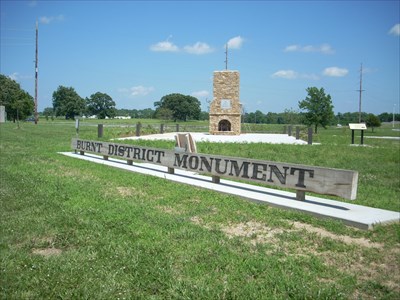
The area was so thoroughly devastated, it would forever be known as the “Burnt District”.

48fc70e5-6dfd-415f-bcfa-7e414722ae07_d

Following the raid on Lawrence, Quantrill fled to Texas and was later killed in a Union ambush, near Taylorsville Kentucky.

William Clarke Quantrill

Quantrill’s band broke up into several smaller groups, with some joining the Confederate army. Others such as Frank and Jesse James and the Younger brothers, went on to apply the hit and run tactics they had learned from Quantrill’s “army” to a career of bank and train robberies.

Quantrill himself explained the incursion as retribution, for the 1861 “Jayhawker” raid of Colonel Charles “Doc” Jennison and Senator James H. Lane, that left 9 dead in Osceola, Missouri, resulting in acres of so-called “Jennison Monuments”, the two story brick chimneys which were all that remained of the burned out homes of Union and Confederate sympathizer, alike.

Others blamed the raid on the collapse of a makeshift jail in Kansas City, that killed several female relatives of the raiders. It seems more likely that it was just one more in a series of homicidal raids carried out by both sides, such raids usually resulting in the death of innocents.

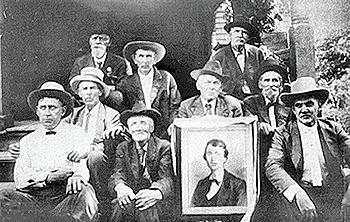
QuantrillsGuerrillasReunion1920
Quantrill’s Guerrillas Reunion, 1920

In 1907, newspaper articles appeared in Canada reporting that Quantrill was still alive, living on northwest Vancouver Island, under the name of John Sharp.  “Quantrill” claimed to have survived that Kentucky ambush after all, despite wounds from bullet and bayonet. Sharp/Quantrill made his way south to Chile, according to the story, before drifting up north and finally become a mine caretaker at Coal Harbour at Quatsino, on the northwest coast of Vancouver Island.

The story was probably one of fiction on Mr. Sharp’s part, but the fib would prove to have unfortunate consequences. Weeks later, two men traveled north to Canada, with the apparent purpose of taking revenge.  The pair took a coastal steamer out of Quatsino Sound the following morning, the day in which Sharp was found, severely beaten.  John Sharp died several hours later, without identifying his attackers.  The crime has never been solved.

If you enjoyed this “Today in History”, please feel free to re-blog, “like” & share on social media, so that others may find and enjoy it as well. Please click the “follow” button on the right, to receive email updates on new articles.  Thank you for your interest, in the history we all share.

August 17, 1942 Makin Island Raid

The war in the Pacific continued for another three years, but the Butaritari people never forgot the barbarity of the Japanese occupier, nor the Marines who had given their lives in the attempt to throw them out.

Military forces of the Japanese Empire appeared unstoppable in the early months of WWII, attacking first Thailand, then the British possessions of Malaya, Singapore, and Hong Kong, as well as American military bases in Hawaii, Wake Island, Guam and the Philippines.

The United States was grotesquely unprepared to fight a World War in 1942, and dedicated itself to beating Adolf Hitler, first. General Douglas MacArthur abandoned the “Alamo of the Pacific” on March 11 saying “I shall return”, leaving 90,000 American and Filipino troops without food, supplies or support with which to fight off the Japanese offensive.

That April, 75,000 surrendered the Bataan peninsula, beginning a 65-mile, five-day slog into captivity through the heat of the Philippine jungle. Japanese guards were sadistic,  beating marchers at random and bayoneting those too weak to walk. Japanese tanks would swerve out of their way to run over anyone who had fallen and was too slow in getting up. Some were burned alive. Already crippled from tropical disease and starving from the long siege of Luzon, thousands perished in what came to be known as the Bataan Death March.

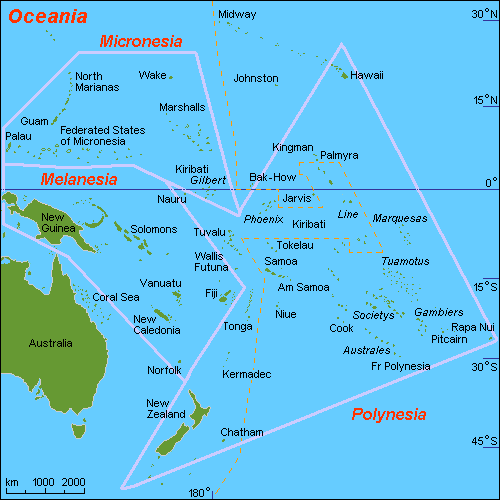
The Imperial Japanese Navy asserted control over much of the region in 1941, installing troop garrisons in the Marshall Island chain and across the ‘biogeographical region’ known as Oceana.

Map_OC-Oceania
WWF Map of the biogeographic region ‘Oceana

The “Island hopping strategy” used to wrest control of the Pacific islands from the Japanese would prove successful in the end but, in 1942, the Americans had much to learn about this style of warfare.

Today, the island Republic of Kiribati comprises 32 atolls and reef islands, located near the equator in the central Pacific, among a widely scattered group of federated states known as Micronesia. Home to just over 110,000 permanent residents, about half of these live on Tarawa Atoll.  At the opposite end of this small archipelago is Butaritari, once known as Makin Island.

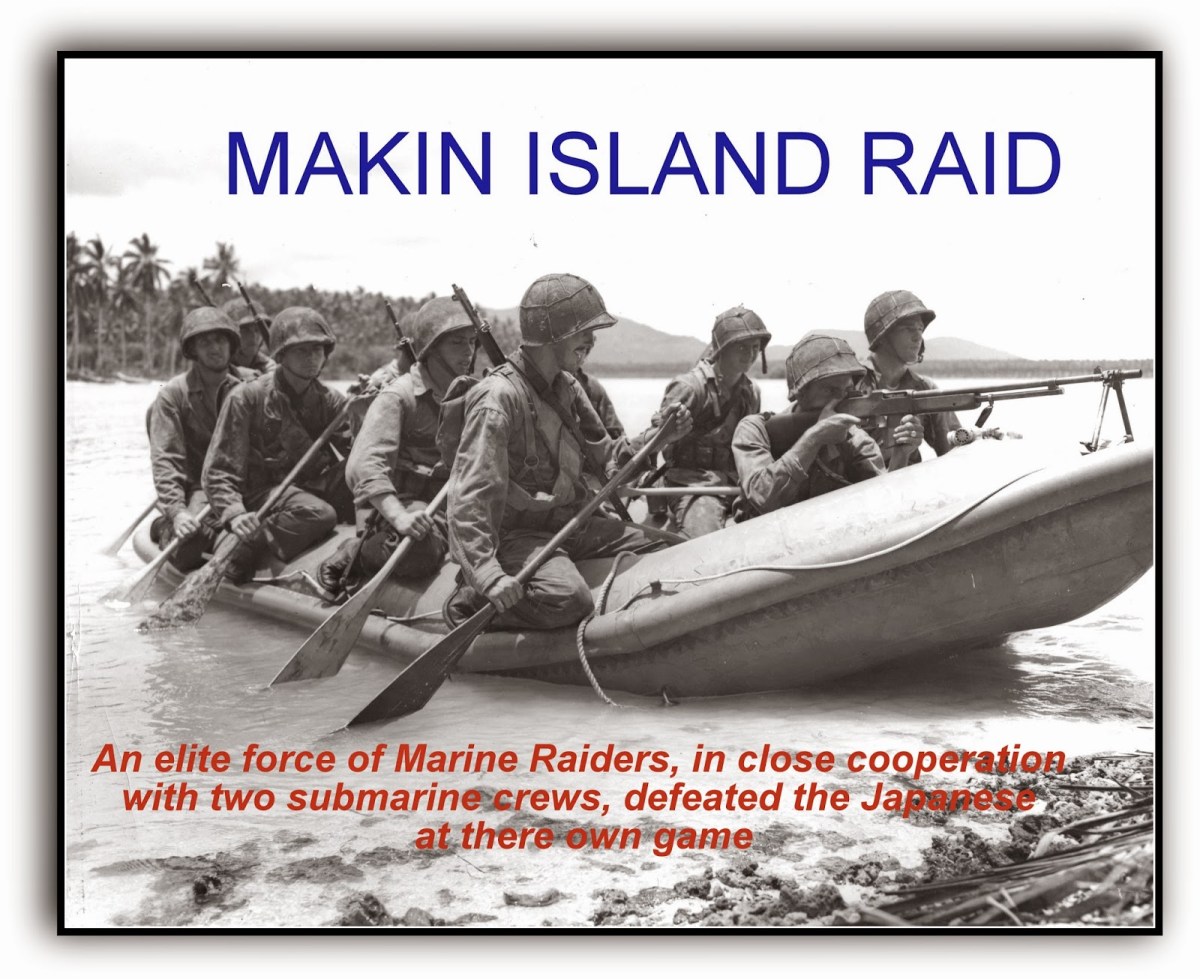
A few minutes past 00:00 (midnight) on August 17, 1942, 211 United States Marine Corps raiders designated Task Group 7.15 (TG 7.15) disembarked from the submarines Argonaut and Nautilus, and boarded inflatable rubber boats for the landing on Makin Island. The raid was among the first major American offensive ground combat operations of WW2, with the objectives of destroying Japanese installations, taking prisoners to gain intelligence on the Gilbert Islands region, and to divert Japanese reinforcement from allied landings at Guadalcanal and Tulagi.

Left), Makin Island as seen by Nautilus and, Right), Marine raiders about to embark

High surf and the failure of several outboard engines confused the night landing.  Lt. Colonel Evans Carlson in charge of the raid, decided to land all his men on one beach instead of two as originally planned, but not everyone got the word. At 5:15, a 12-man squad led by Lt. Oscar Peatross found itself isolated and alone but, undeterred by the lack of support, began to move inland in search of the enemy. Meanwhile, the balance of TG 7.15 advanced inland from the landing, encountering strong resistance from Japanese snipers and machine guns.

Two Bansai charges turned out to be a tactical mistake for Japanese forces. Meanwhile, Peatross and his small force of 12 found themselves behind the Japanese machine gun team engaging their fellow Marines.  Peatross’ unit killed eight enemy soldiers along with garrison commander Sgt. Major Kanemitsu, knocked out a machine gun and destroyed several enemy radios, while suffering three dead and two wounded of their own.

Unable to contact Carlson, what remained of Peatross’ small band withdrew to the submarines, as originally planned.  That was about the last thing that went according to plan.

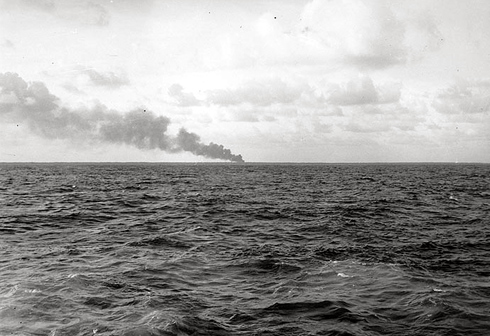
Makin Island Burning
View of Makin Island from USS Nautilus, waiting to withdraw Marine Corps raiding force

At 13:30, twelve Japanese aircraft arrived over Makin, including two “flying boats”, carrying reinforcements for the Japanese garrison. Ten aircraft bombed and strafed as the flying boats attempted to land, but both were destroyed in a hail of machine gun and anti-tank fire.

The raiders began to withdraw at 19:30, but surf conditions were far stronger than expected. Ninety-three men managed to struggle back to the waiting submarines, but eleven out of eighteen boats were forced to turn back. Despite hours of heroic effort, exhausted survivors struggled back to the beach, most now without their weapons or equipment.

Wet, dispirited and unarmed, seventy-two exhausted men were now left alone on the island, including only 20 fully-armed Marines originally left behind, to cover the withdrawal.

A Japanese messenger was dispatched to the enemy commander with offer to surrender, but this man was shot by other Marines, unaware of his purpose.  A rescue boat was dispatched on the morning of the 18th to stretch a rescue line out to the island. The craft was attacked and destroyed by enemy aircraft.  Both subs had to crash dive for the bottom where each was forced to wait out the day. Meanwhile, exhausted survivors fashioned a raft from three remaining rubber boats and a few native canoes, and battled the four miles out of Makin Lagoon, back to the waiting subs. The last survivor was withdrawn at fifty-two minutes before midnight, on August 18.

Many survivors got out with little but their underclothes, and a few souvenirs

The raid annihilated the Japanese garrison on Makin Island, but failed in its other major objectives.  In the end, Marines had asked the island people to bury their dead.  There had been no time.  Casualties at the time were recorded as eighteen killed and 12 missing in action.

The war in the Pacific continued for another three years, but the Butaritari people never forgot the barbarity of the Japanese occupier, nor the Marines who had given their lives in the attempt to throw them out.

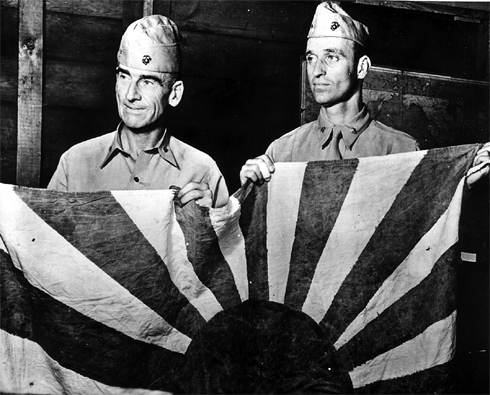
Captured Flag
Lieutenant Colonel Evans Carlson holds a souvenir with his second-in-command from the Makin Island raid, James Roosevelt.  The President’s son. 

Neither it turns out, had one Butaritari elder who, as a teenager, had helped give nineteen dead Marines a warrior’s last due.  In December 1999, representatives of the Marine Corps once again came to Butaritari island, not with weapons this time, but with caskets.

The man spoke no English, save for a single song he had memorized during those two days back in 1942, taught to him by those United States Marines:   “From the halls of Montezuma, to the shores of Tripoli…”

If you enjoyed this “Today in History”, please feel free to re-blog, “like” & share on social media, so that others may find and enjoy it as well. Please click the “follow” button on the right, to receive email updates on new articles.  Thank you for your interest, in the history we all share.

August 15, 1942 Baby Vet

During the WW2 era, it wasn’t unusual for boys to lie about their age in order to enlist.

Calvin Leon Graham was a child of the Great Depression, a poor East Texas farm kid born April 3, 1930, the youngest of seven.

By the time  Japanese military planners were outlining the surprise attack on the American anchorage at Pearl Harbor, the boy’s mother had become widowed and remarried. The man was by all accounts mean and abusive of his step-children. By sixth grade, Calvin had moved out with an older brother, living in a cheap rooming house and supporting himself selling newspapers and delivering telegrams on weekends and after school.

The boys’ mother continued to visit, sometimes only to sign their report cards, at the end of a semester.

CalvinLGrahamBeing around newspapers allowed the boy to keep up on events overseas, “I didn’t like Hitler to start with“, he once told a reporter. By age eleven, some of Graham’s cousins had been killed in the war, and the boy wanted to fight.

He began to shave, believing that his facial hair would come in faster and thicker that way (it didn’t), and practiced “talking deep”.

In those days, you could join up at 16 with your parents’ consent” he later said, “but they preferred 17“. Graham forged his mother’s signature and stole a notary stamp, telling his mother he was going to see some relatives for a while.

On this day in 1942, Calvin Leon Graham showed up at a Houston recruiting office, dressed in his older brother’s clothes. All five-foot-two inches of him, and 125 pounds. He was twelve years old.

Graham was less concerned with the recruiting officer spotting that forged signature, than he was with the dentist. With good reason, this was a man with a finely tuned BS detector. “When the dentist kept saying I was 12, I said I was 17“. At last, the boy played his trump card, informing the dentist that the last two boys were fourteen and fifteen, and that the dentist had already let them through. “Finally,” Graham recalled, “he said he didn’t have time to mess with me and he let me go“.

During the WW2 era, it wasn’t unusual for boys to lie about their age in order to enlist. Ray Jackson joined the United States Marine Corps at 16, and founded a group for underage military veterans in 1991, “to assure all underage veterans that there will be no retribution from the government because of their fraudulent enlistment“. Smithsonian.com reports the organization lists over 1,200 active members.  Twenty-six of them, are women.

The boy was sent to boot camp in San Diego and on to Pearl Harbor six weeks later, and assigned to the newly christened battleship USS South Dakota.

When South Dakota steamed out of Philadelphia and cleared the Panama Canal, “No ship more eager to fight ever entered the Pacific.” Under the command of Captain Thomas Leigh Gatch, the battleship was brimming with “green boys” –  cocky, inexperienced new recruits, full of fight and eager for payback against the Japanese empire.

During the October battle for the Santa Cruz islands, South Dakota was credited with downing 26 Japanese aircraft, while taking a 500-pound bomb to the #1 gun turret.

980x (1)
The USS South Dakota engages a Japanese torpedo bomber during the Battle of Santa Cruz October 26, 1942. Photo: US Navy

Standing on the bridge, Captain Gatch watched as that 500-pounder came in, striking the main gun turret.  The impact threw the skipper off his feet and severed his jugular vein, and permanently injuring ligaments in the man’s arms. Quick-thinking quartermasters saved the unconscious captain’s life, and several later asked him, why he hadn’t ducked. “I consider it beneath the dignity of a captain of an American battleship“, he said, “to flop for a Japanese bomb“.

Before the action was over, the South Dakota’s guns had fired 890 rounds of 5-inch, 4,000 rounds of 40mm, 3,000 rounds of 1.1-inch and 52,000 rounds of 20mm ammunition. One of those gunners, was twelve-year-old Calvin Graham.

Over the November 14 night battle for Guadalcanal, USS South Dakota came under attack from three Japanese warships, receiving no fewer than forty-seven hits. With her radio communications out and radar demolished, the battleship lost track of the complicated tactical situation. Calvin Graham was manning his 40mm gun when shrapnel tore through his mouth and jaw, tearing out his front teeth. Another hit burned the boy severely and threw him off his feet, and down three stories of superstructure.

Despite his injuries, Graham did what he could to take care of his fellow sailors:

“I took belts off the dead and made tourniquets for the living and gave them cigarettes and encouraged them all night. It was a long night. It aged me… I didn’t do any complaining because half the ship was dead”.

USS South Dakota was so beat up during the confused night action, that the Japanese believed her to have been sunk.  Eventually, she would limp back to new York for repairs and, not wanting the enemy to know too much, she was stripped of her insignia.

USS South Dakota would complete her WW2 service as “Battleship X”, but that must be a story for another day.

800px-_Battleship_X__-_NARA_-_513922

Graham received a Bronze Star and a Purple Heart for his actions, but such distinctions were short-lived. His mother learned what the boy had been up to and informed the Navy of his real age. Graham was thrown in the brig for lying about his age and held for nearly three months, released only when his sister threatened to go to the media. He was stripped of his medals and dishonorably discharged from the military. At thirteen, Calvin Graham was a “Baby Vet”, no longer fitting in at school and rejected by the nation he had served.

If only our politicians, could expect such stern justice.

Graham soon chose the life of an adult, marrying and fathering a child at the age of fourteen, while working as a welder.  He was divorced by seventeen and enlisted in the Marine Corps. A fall from a pier broke his back three years later, ended his military career for good and leaving him selling magazine subscriptions for a living.

517537543_c_o-300x267For the rest of his life, Calvin Graham fought for a clean service record, and for restoration of medical benefits. President Jimmy Carter personally approved an honorable discharge in 1978, and all Graham’s medals were reinstated, save for his Purple Heart. He was awarded $337 in back pay but denied medical benefits, save for the disability status conferred by the loss of one of his teeth, back in WW2.

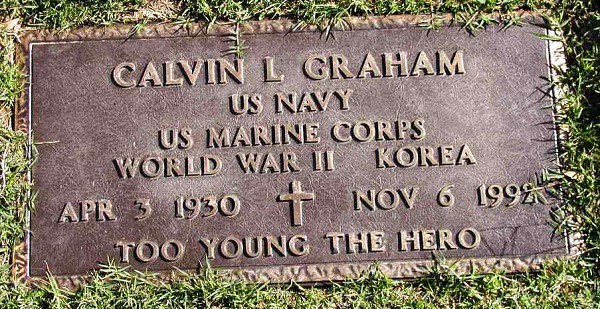
Graham came to public notice in 1988 with the made-for-TV movie Too Young the Hero starring Rick Schroder, prompting government review of his case.  Graham earned $50,000 for rights to his story, but half went to two agents and another 20% to the writer of a book, which was never published.  Graham and his wife received only $15,000, before taxes.

Calvin Graham, Medals

Calvin Leon Graham, Military Awards
1st Row: Bronze Star Medal with Combat “V”
2nd Row: Purple Heart Medal, Navy Unit Commendation with service star, American Campaign Medal
3rd Row: Asiatic-Pacific Campaign Medal with two service stars, World War II Victory Medal, National Defense Service Medal

President Ronald Reagan signed legislation granting Graham full disability benefits and increasing back pay to $4,917, and allowing $18,000 for medical expenses incurred during his military service. Lamentably, many old medical bills were permanently lost, and some of his doctors, had died. Graham received only $2,100 reimbursement for past medical expenses.

Calvin Leon Graham died at his home in Fort Worth Texas in 1992, a victim of heart failure.  He was buried at Laurel Land Memorial Park in Fort Worth, Texas.  Graham’s Purple Heart was reinstated two years later and awarded to his widow by Secretary of the Navy John Dalton. Fifty-two years after the events which led to its award.

Calvin-Leon-Graham-grave

If you enjoyed this “Today in History”, please feel free to re-blog, “like” & share on social media, so that others may find and enjoy it as well. Please click the “follow” button on the right, to receive email updates on new articles.  Thank you for your interest, in the history we all share.

August 5, 1942 Old Doctor

The children’s author was offered sanctuary on the “Aryan side” but the man refused, saying that he would stay with his children. Janusz Korczak and his orphaned children were last seen boarding the train to the Treblinka extermination camp on August 5 or 6.

Janusz Korczak was a children’s author and pediatrician, a teacher and himself a lifelong learner, a student of pedagogy, the art of science of education, and how children learn.

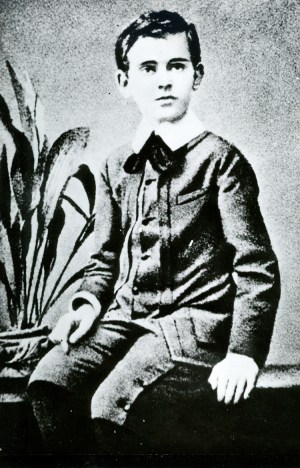
Korczak10lat0001Born Henryk Goldszmit into the Warsaw family of Józef Goldszmit, in 1878 or ’79 (the sources vary), Korczak was the pen name by which he wrote children’s books.

Henryk was an exceptional student, of above-average intelligence. His father fell ill when the boy was only eleven or twelve and was admitted into a mental hospital, where he died, six years later. As the family’s situation worsened, the boy would tutor other students, to help with household finances.

Goldszmit was a Polish Jew, though not particularly religious, who never believed in forcing religion on children.

He wrote his first book in 1896, a satirical tome on child-rearing, called Węzeł gordyjski (The Gordian Knot). He adopted the pen name Janusz Korczak two years later, writing for the Ignacy Jan Paderewski Literary Contest.

220px-Janusz_KorczakKorczak wrote for several Polish language newspapers while studying medicine at the University of Warsaw, becoming a pediatrician in 1904. Always the writer, Korczak received literary recognition in 1905 with his book Child of the Drawing Room (Dziecko salonu), while serving as medical officer during the Russo-Japanese war.

He went to Berlin to study in 1907-’08 and worked at the Orphan’s Society in 1909, where he met Stefania “Stefa” Wilczyńska, an educator who would become his associate and close collaborator.

In the years before the Great War, Korczak ran an orphanage of his own design, hiring Wilczyńska as his assistant. There he formed a kind of quasi-Republic for Jewish orphans, complete with its own small parliament, court, and newspaper. The man was born to be an educator.

1307809-Janusz-Korczak-Quote-I-am-well-versed-in-reading-the-pages-of-war

In early modern European Royalty, 15th – 18th century, a “whipping boy” was the friend and constant companion to the boy prince or King, whose job it was to get his ass kicked, for the prince’s transgressions. The Lord was not the be struck by his social inferior. It was thought that, to watch his buddy get whipped for his misdeeds would have the same instructional effect, as the beating itself.

The extent of the custom is open to debate and it may be a myth altogether, but one thing is certain.  Poland has been described as the “whipping boy of Europe”, for good reason.

JK2The Polish nation, the sixth largest in all Europe, was sectioned and partitioned for over a century, by Austrian, Prussian, and Russian imperial powers. Korczak volunteered for military service in 1914, serving as military doctor during WW1 and the series of Polish border wars between 1919-’21.
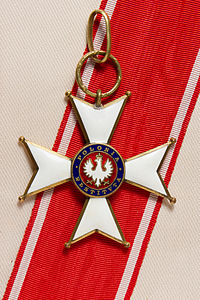
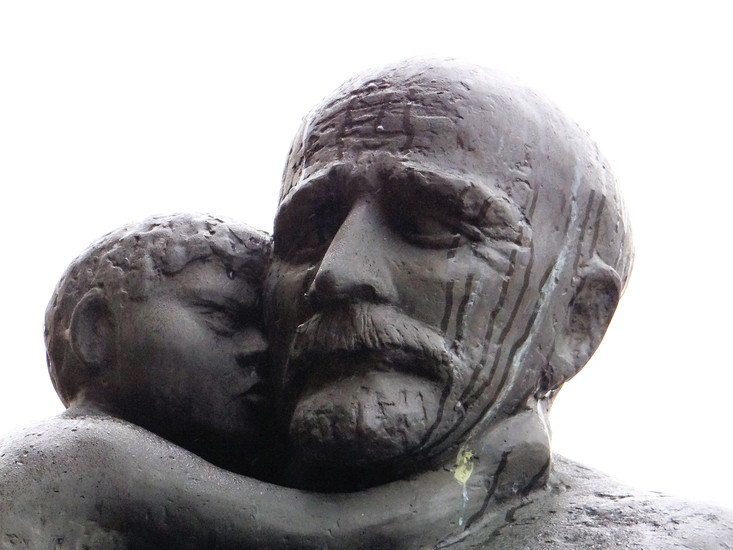
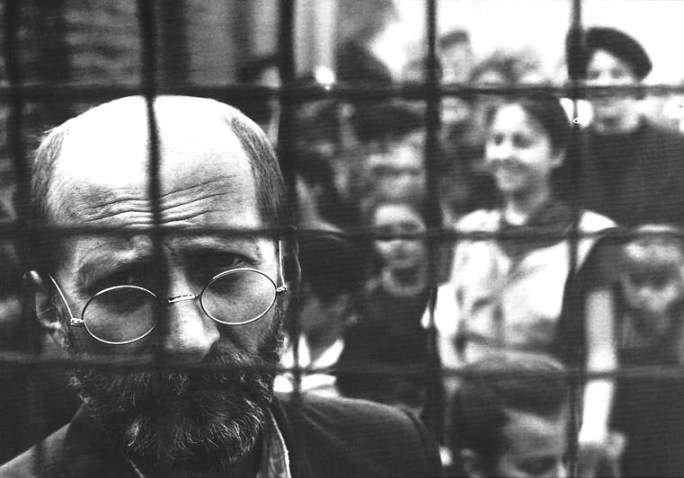
The “Second Polish Republic” emerging from all this in 1922 was roughly two-thirds Polish, the rest a kaleidoscope of ethnic, linguistic and religious minorities.  Relations were anything but harmonious between ethnic Russians, Germans, Lipka Tatars and others, and most especially Poland’s Jewish minority, the largest in pre-WW2 Europe.

Polonia_Restituta_-_Commander's_Cross_pre-1939_w_rib
Silver Cross of the Polonia Restituta

Janusz Korczak returned to his life’s work in 1921 of providing for the children of this Jewish community, all the while writing no fewer than thirteen children’s books, along with another seven on pedagogy and other subjects.

In the inter-war years, Korczak put together a children’s newspaper, the Mały Przegląd (Little Review), as a weekly supplement to the daily Polish-Jewish newspaper, Nasz Przegląd (Our Review).

Korczak had his own radio program promoting the rights of children, to whom he was known as Pan Doktor (“Mr. Doctor”) or Stary Doktor (“Old Doctor”).

The Polish government awarded “Old Doctor” the Polonia Restituta in 1933, a state order bestowed on individuals for outstanding achievements in the fields of education, science and other civic accomplishments.

Yearly visits to Mandatory Palestine, the geopolitical entity partitioned from the Ottoman Empire in 1923 and future Jewish state of Israel, led to anti-Semitic crosscurrents in the Polish press, and gradual estrangement from non-Jewish orphanages.

165210

The second Republic’s brief period of independence came to an end in September 1939, with the Nazi invasion of Poland.  Korczak volunteered once again but was refused, due to his age.

Tales of Polish courage in the face of the Wehrmacht are magnificent bordering on reckless, replete with images of horse cavalry riding out to meet German tanks. Little Poland never had a chance, particularly when the Soviet Union piled on, two weeks later.

As an independent nation-state the Sovereign Republic of Poland was dead, though Polish air crews went on to make the largest contribution to the Battle of Britain, among the United Kingdom’s thirteen non-British defenders.  Polish Resistance made significant contributions to the Allied war effort, throughout WW2.

janusz-korczak

Warsaw became the largest Jewish ghetto in Nazi-occupied Europe within the following year.  The Jews of Poland were herded into the city, barely existing on meager rations while awaiting the death squads of the SS.  Old Doctor and his orphans were forced into the Ghetto, in 1939.

There were nearly 200 of them on this day in 1942, when soldiers of the Gross-Aktion (Great Action) Warsaw, came for their “Resettlement to the East”.

ŚmierćMiasta
The Pianist, by Władysław Szpilman

The extermination camp at Treblinka, awaits.

Polish-Jewish composer and musician Władysław Szpilman, one of precious few survivors of the Jewish ghetto, describes the scene in his 1946 memoir, The Pianist:

“He told the orphans they were going out into the country, so they ought to be cheerful. At last they would be able to exchange the horrible suffocating city walls for meadows of flowers, streams where they could bathe, woods full of berries and mushrooms. He told them to wear their best clothes, and so they came out into the yard, two by two, nicely dressed and in a happy mood. The little column was led by an SS man…”

Eyewitness Joshua Perle states that:  Janusz Korczak was marching, his head bent forward, holding the hand of a child… A few nurses were followed by two hundred children, dressed in clean and meticulously cared for clothes, as they were being carried to the altar.

251012_Janusz_Korczak_monument_at_Jewish_Cemetery_in_Warsaw_-_03

At the Umschlagplatz, the rail-side assembly area on the way to Treblinka, an SS officer recognized Korczak, and called him aside.  The children’s author was offered sanctuary on the “Aryan side” but the man refused, saying that he would stay with his children.  Stary Doktor was offered deportation to the Theresienstadt concentration camp instead, but again he refused.

The man who refused freedom to die with his orphaned children was last seen boarding the train to Treblinka on August 5 or 6, where all 200 were murdered, the following day.

800px-פולין_001
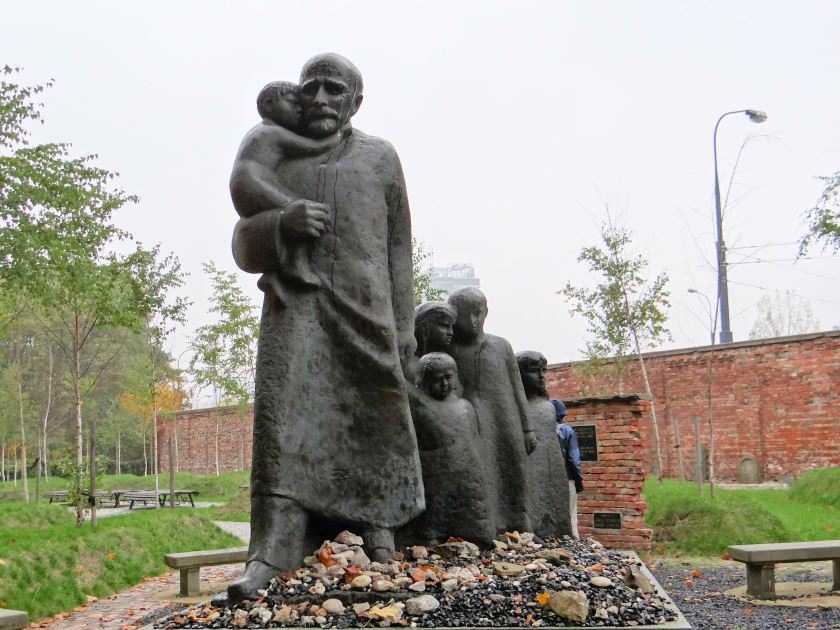
Janusz Korczak memorial stone, Treblinka

“Dr. Janusz Korczak’s children’s home is empty now. A few days ago we all stood at the window and watched the Germans surround the houses. Rows of children, holding each other by their little hands, began to walk out of the doorway. There were tiny tots of two or three years among them, while the oldest ones were perhaps thirteen. Each child carried the little bundle in his hand”. — Mary Berg, The Diary

August 2, 1864 Both Barrels

Named for one of it’s own private soldiers, the Mitchell Thunderbolts were not your standard military company. These guys were “organized strictly for home defense” and absolutely refused to take orders.  From anyone. They recognized no superior officer and the right to criticism was reserved and freely exercised from that “splendid old gentleman” Colonel John Billups, down to the lowliest private.

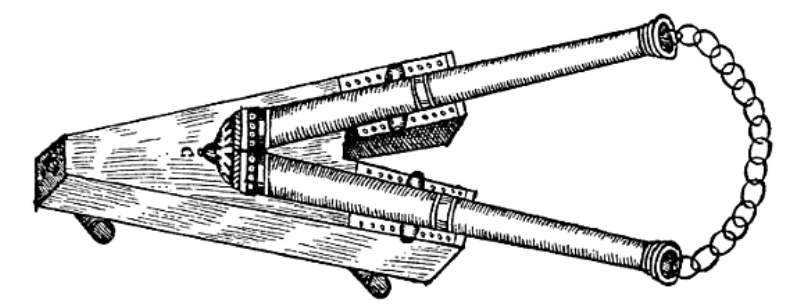
In 1642, Italian gun maker Antonio Petrini conceived a double barrel cannon, with tubes joined at 45° and firing solid shot joined together, by chain.  This was the year of the “Great Rebellion“, the English Civil War, when the King and Parliament raised armies to go to war – with each other.  The idea must have looked good as proposed to King Charles I of England, the weapon capable of slicing through his enemies, like grass before a scythe.

The idea was to fire both barrels simultaneously, but there was the rub.  Wild ideas occur to the imagination of imperfect combustion, and a chained ball swinging around to take out the gun crew.  The King himself was mute on the subject, and went on to lose his head, in 1649.  Petrini’s manuscript resides to this day in the tower of London.  There is no documented proof that the weapon was ever fired, save for the designer’s own description of the ‘Grandissima Ruina’ left behind, by his creation.

Capture_zps80a1eeae

Two-hundred years later the former British colonies in America, found themselves embroiled in their own Civil War.

In the early days of its independence, the Confederate Congress enacted a measure, allowing local cities and towns to form semi-military companies for the purpose of local defense. As the very flower of young southern manhood was called up and sent to the front, these “home guard” units often comprised themselves of middle-age and older gentlemen, and others for various reasons, unable to leave home and hearth.

ALHullAugustus Longstreet Hull was born 1847 in “The Classic City” of Athens Georgia, and enlisted in the Confederate Army on September 8, 1864.
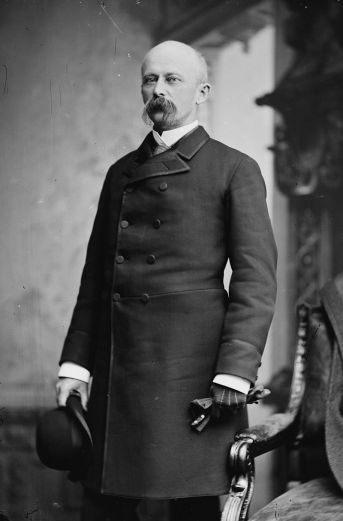

After the war, Hull worked twenty-seven years as a banker, before publishing the Annals of Athens, in 1906.  In it, Mr. Hull writes with not a little biting wit, of his own home town home guard unit, Athens’ own, Mitchell Thunderbolts.

“From the name one might readily infer that it was a company made up of fierce and savage men, eager for the fray and ready at all times to ravage and slaughter; yet such was not the case, for in all their eventful career no harm was done to a human being, no property was seized and not one drop of blood stained their spotless escutcheon.

Thus from their patriotism sprang the “Thunderbolts”, a company whose deeds must live in order that history may be complete, whose fame, though not blazoned to the world in song and story, is yet of such a character as to entitle the names of its members to be inscribed alongside those “that were not born to die.”

Named for one of it’s own private soldiers, the Mitchell Thunderbolts were not your standard military company. These guys were “organized strictly for home defense” and absolutely refused to take orders.  From anyone. They recognized no superior officer and the right to criticism was reserved and freely exercised by everyone from that “splendid old gentleman” Colonel John Billups, down to the lowliest private.

800px-Middleton_P._Barrow_-_Brady-Handy
Georgia Senator Middleton Pope Barrow

General Howell Cobb sent the future United States Senator Captain Middleton Pope Barrow to Athens in 1864, to inspect the Thunderbolts. Having no intention of submitting to “inspection” by any mere stripling of a Captain, Dr. Henry Hull (Augustus’ father) “politely informed him that if he wished to inspect him, he would find him on his front porch at his home every morning at 9 o’clock“.

John Gilleland, 53, was a local dentist, builder and mechanic, and member in good standing of the Mitchell Thunderbolts.  Gilleland must have liked Petrini’s idea because he took up a collection in 1862, and raised $350 to build the Confederate States of America’s own, double-barrel cannon.

Measuring 13 inches wide by 4-feet 8½” inches and weighing in at some 1,300 pounds, this thing had two barrels diverging at 3° and equipped with three touch holes, one for each barrel and a third should you wish to fire them, together.  It was the secret “super weapon” of the age, two cannonballs connected by a chain and designed to “mow down the enemy somewhat as a scythe cuts wheat.”

As with Mr. Petrini’s invention, the insurmountable problem remained, how to fire the two, simultaneously.

The atmosphere was festive on April 22, 1862, when a crowd gathered to watch Gilleland test his creation. The weapon was aimed at two upright poles stuck into the ground, but uneven ignition and casting imperfections sent the two balls spinning wildly off to the side, where they “plowed up about an acre of ground, tore up a cornfield, mowed down saplings, and then the chain broke, the two balls going in different directions“.

046_zps0a76b542
Double Barrel Cannon model, H/T ModelExpo

On its second test, two chain-connected balls shot through the air and into a stand of trees.   According to one witness, the “thicket of young pines at which it was aimed looked as if a narrow cyclone or a giant mowing machine had passed through“.

On the third firing, the chain snapped right out of the barrel.  One ball tore into a nearby cabin and destroyed the chimney, while the other spun off and killed a cow, who wasn’t bothering anyone.

Gilleland considered all three tests successful, but the only thing that was safe, seems to have been those target posts.

The dentist went straight to the Confederate States’ arsenal in Augusta where Colonel George Rains subjected his creation to extensive testing, before reporting the thing too unreliable for military use. The outraged inventor wrote angry letters to Georgia Governor Joseph “Joe” Brown and to the Confederate government in Richmond, but to no avail.

At last, the contraption was stuck in front of the Athens town hall and used as a signal gun, to warn the citizens of approaching Yankees.

7239343410_30c6de36eb_z

There it remained until August 2, 1864, when the gun was hauled out to the hills west of town to meet the Federal troops of Brigadier General George Stoneman.  The double-barrel cannon was positioned on a ridge near Barber’s Creek and loaded with canister shot, along with several conventional guns.  Outnumbered home guards did little real damage but the noise was horrendous, and Stoneman’s raiders withdrew to quieter pastures.

There were other skirmishes in the area, but all of them minor. In the end, Athens escaped the devastation of Sherman’s march to the sea, and the weapon was moved back to town.

Gilleland’s monstrosity was sold after the war and lost, for a time.  The thing was recovered and restored back in 1891, and returned to the Athens City Hall, where it remains to this day, a contributing property of the Downtown Athens Historic District.  Come and see it if you’re ever in Athens, right there at the corner of Hancock and College Avenue.  There you will find it, pointing north, toward the Yankees.  Just in case.

800px-Doublebarreledcannonathensgeorgia-plaque

If you enjoyed this “Today in History”, please feel free to re-blog, “like” & share on social media, so that others may find and enjoy it as well. Please click the “follow” button on the right, to receive email updates on new articles.  Thank you for your interest, in the history we all share.


August 1, 1086 The Doomsday Book

Edward the Confessor, King of England, died in January of 1066, without an heir to the throne. Anglo-Saxon Kings didn’t generally pick their own successors, but several believed he had done just that .  Edward’s death touched off an international succession crisis.  The events of the following months, would change the course of history.

Edward the Confessor, King of England, died in January of 1066, without an heir to the throne. Anglo-Saxon Kings didn’t generally pick their own successors, but several believed he had done just that .  Edward’s death touched off an international succession crisis.  The events of the following months, would change the course of history.

Edward’s brother-in-law Harold Godwinson was elected King by the Witenagemot, an early version of our own Town Meeting.  There were others with claims of their own.  One of these was Harold’s younger brother Tostig, Earl of Northumbria, whose animosity for his brother would prove fatal for them both.

il_fullxfull.756977332_djs5

After conducting a few inconclusive raids in the spring of that year, Tostig went to a Norman Duke called William “the Bastard”, looking for help. William had openly declared his intention to take the English throne, and had no use for the King’s little brother.  Tostig then went to the King of Norway, King Harald III “Hardrada”, the name variously translated as “stern counsel”, or “hard ruler”.

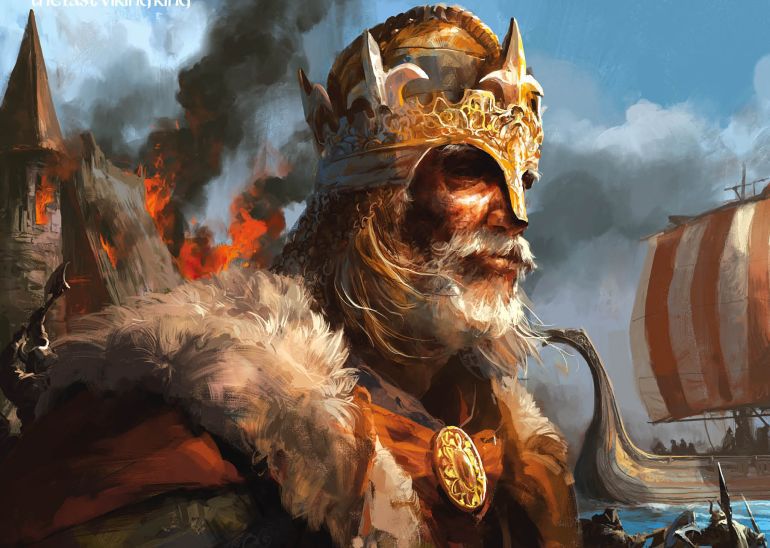
Hardrada believed that he himself had claim to the English throne, and was dismayed at Godwinson’s succession.  The two sailed for England at the head of a powerful fleet of 300 Viking ships and an army of 10,000 warriors, meeting the northern Earls Edwin and Morcar in battle at Fulford Gate on September 20.

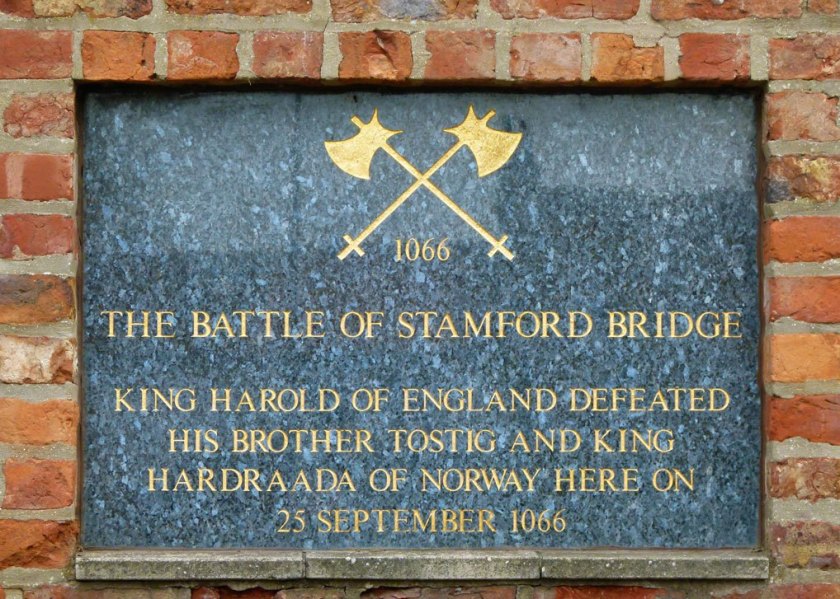
The battle was a comprehensive defeat for the English. When Harald came to Stamford Bridge a week later, it was in expectation of formal capitulation and tribute.

Facts_Harald_Hardrada_Last_Great_Viking_5

Meanwhile, King Harold was at the head of an army in the south, anticipating William’s invasion from Normandy. My military friends will appreciate what happened next.  Harold marched his army north, traveling day and night and covering 190 miles in four days, on foot, completely surprising the Viking army waiting at Stamford Bridge. The Vikings must have looked at the horizon and wondered how a peace party could raise that much dust, only to face the “gleam of handsome shields and white coats-of-mail”.

Thinking they were there to accept submission, Harald’s army had left half their numbers behind to watch the ships.  Worse still, many of Harald’s warriors had removed their heavy armor, and scattered over both sides of the River Derwent.

Battle of Stamford Bridge

The English army charged through the loose ranks of Norwegians, as the rest struggled to form the skjaldborg (shield wall) on the opposite bank.

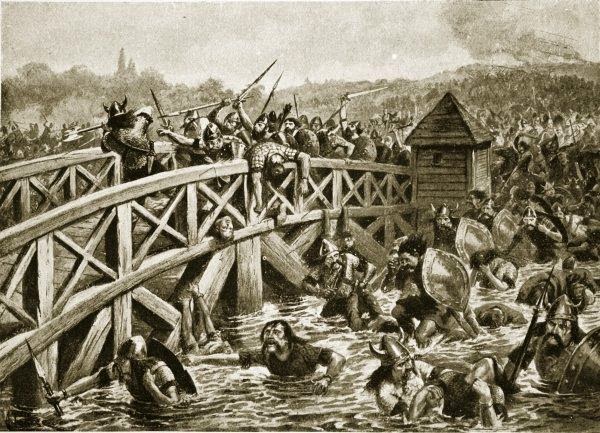
According to the Anglo-Saxon Chronicle, one giant Viking warrior stood alone at the top of Stamford Bridge. Swinging the great two handed Dane Axe, for a time this man held back the entire English army, crowding onto the narrow choke point.   40 English soldiers lay mangled and dead in heaps around this beast, when an English soldier moved beneath the bridge, spearing the Viking warrior from below.

Facts_Harald_Hardrada_Last_Great_Viking_7

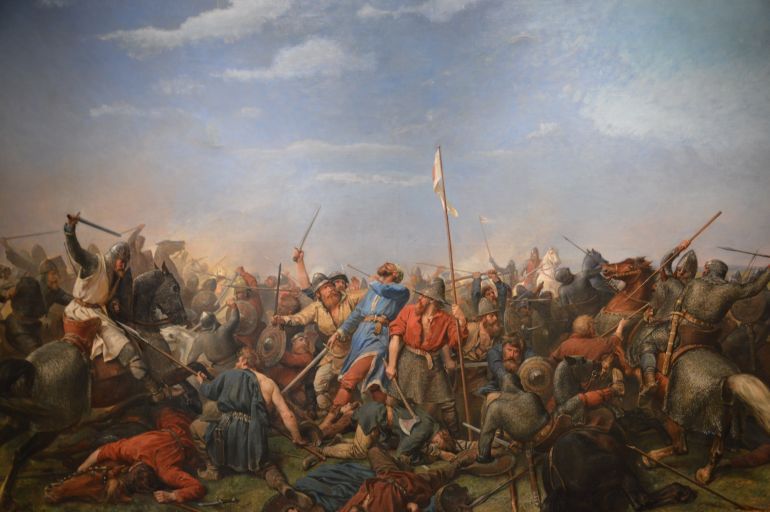
The savagery of the battle can only be imagined. This was before the age of industrialized warfare, when every injury was personally administered with a bladed weapon of some kind. 5,000 of King Harold’s soldiers would be dead before it was over, about a third of his force. Two thirds of King Harald’s Vikings died that day, about 6,000.  In the end, Harald Hardrada invoked his berserkergang (the state of going berserk), and waded into his foe, madly hacking and slashing all about him until an arrow found his throat.

Thus ends the tale of the last ‘Great Viking’.  Harald was dead, as was his ally Tostig, his reward, in the words of King Harold, “Seven feet of English soil, or as much more as he is taller than other men“.

Battle_of_Stamford_Bridge-04

Of 300 ships that had arrived on the 20th, the battered remnants of the Viking army required only 24, to sail away.

Meanwhile, William was in final preparations for his own channel crossing, a voyage many considered unlikely at that late time of year.  The Norman landing Harold had been waiting for took place three days later, just as his battered army was disbanding and heading home for the Fall harvest.

tumblr_la6h4gVLfh1qe23mao1_500A greatly diminished Anglo Saxon army marched south, meeting the Norman invader in October, 1066.  In an age of mechanized warfare, it is odd to think you could have been on a neighboring hill, and not heard a thing.  History changed that day, when King Harold took an arrow to the eye, at a place called Hastings.   The last of the Anglo Saxon Kings, was dead.  William was crowned King of England that December.  Henceforward and forever more, William the Bastard would be known as “William the Conqueror”.

Main rivals to the new King were now gone, but William wouldn’t be secure on his throne for another six years. Lands were confiscated from resisting members of the English elite and from lords who had fought and died in service to Harold.

800px-Norman-conquest-1066.svg
H/T By Amitchell125 at English Wikipedia

Such lands were enfeoffed, a process of the European middle ages through which land was granted in exchange for feudal allegiance, while the King retained ultimate title. Such confiscations led to revolts and further confiscations, as widows and daughters were forced into marriages with Norman barons.

Castles were built at an unprecedented rate, controlling military strongpoints across the land and, in the words of historian Robert Liddiard, “legitmizing a new elite”. Liddiard remarks that “to glance at the urban landscape of Norwich, Durham or Lincoln is to be forcibly reminded of the impact of the Norman invasion.”

7PASTmN

Beginning in 1085, seven or eight panels of commissioners fanned out across the land, taking sworn statements in every shire and village. Elaborate records were compiled of all lands and estates held by the King through his tenants, down to every agricultural plot and fishpond, and its value in pounds.

It was all done for purposes of taxation, particularly to see what was owed during the reign of Edward the Confessor. You can imagine how that went over but, as always, history is written by the victor.

So complete was the Norman conquest that William himself was able to spend three-quarters of his time, defending his interests in France. According to these records, no more than 5% of all lands remained in English hands by 1086.

While exact dates are subject to dispute, the major part of the “Great Survey” is traditionally held to have been bound and presented to King William on this day in 1086, in Salisbury.

1200px-Domesday-book-1804x972Late in the 12th century, King’s Treasurer Richard FitzNeal likened the Great Survey to the Book of Judgement, the book of “Domesday” (middle English for “Doomsday”), because its pronouncements were final and inviolate, as the Last day of Judgement.

Nothing even remotely similar to the “Domesday Book” would be attempted again, until 1873. For most English towns and villages (most but not all – no Domesday records are known to survive for London or Winchester), the Domesday book remains the starting point of history. The final and dispositive arbiter of lands and titles held, across the British Isles.

If you enjoyed this “Today in History”, please feel free to re-blog, “like” & share on social media, so that others may find and enjoy it as well. Please click the “follow” button on the right, to receive email updates on new articles.  Thank you for your interest, in the history we all share.


July 31, 1917  Did we really send men to fight in That?

Following the battle of Passchendaele, staff officer Sir Launcelot Kiggell is said to have broken down in tears.  “Good God”, he said, “Did we really send men to fight in That”?! 

The “War to end all Wars” exploded across the European continent in the summer of 1914, devolving into the stalemate of trench warfare, by October.

The ‘Great War’ became Total War, the following year.  1915 saw the first use of asphyxiating gas, first at Bolimow in Poland, and later (and more famously) near the Belgian village of Ypres.  Ottoman deportation of its Armenian minority led to the systematic extermination of an ethnic minority, resulting in the death of ¾ of an estimated 2 million Armenians living in the Empire at that time, and coining the term ‘genocide‘.

Battle-of-Passchendaele
Battle of Passchendaele

Kaiser Wilhelm responded to the Royal Navy’s near-stranglehold of surface shipping with a policy of unrestricted submarine warfare, as the first zeppelin raids were carried out against the British mainland.  German forces adopted a defensive strategy on the western front, developing the most sophisticated defensive capabilities of the war and determined to “bleed France white”, while concentrating on the defeat of Czarist Russia.

Russian Czar Nicholas II took personal command that September, following catastrophic losses in Galicia and Poland.  Austro-German offensives resulted in 1.4 million Russian casualties by September with another 750,000 captured, spurring a “Great Retreat” of Russian forces in the east, and resulting in political and social unrest which would topple the Imperial government, fewer than two years later.   In December, British and ANZAC forces broke off a meaningless stalemate on the Gallipoli peninsula, beginning the evacuation of some 83,000 survivors.  The disastrous offensive had produced some 250,000 casualties.  The Gallipoli campaign was remembered as a great Ottoman victory, a defining moment in Turkish history.  For now, Turkish troops held their fire in the face of the allied withdrawal, happy to see them leave.

The-third-battle-of-Ypres-1917-9
Passchendaele, 1917

A single day’s fighting in the great battles of 1916 could produce more casualties than every European war of the preceding 100 years, civilian and military, combined. Over 16 million were killed and another 20 million wounded, while vast stretches of the Western European countryside were literally torn apart.

1917 saw the resumption of unrestricted submarine warfare, and a German invitation to bring Mexico into the war, against the United States.  As expected, these policies brought America into the war on the allied side.  The President who won re-election for being ‘too proud to fight’ asked for a congressional declaration of war, that April.

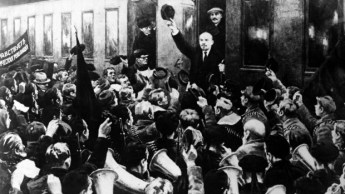
Sealed TrainMassive French losses stemming from the failed Nivelle offensive of that same month (French casualties were fully ten times what was expected) combined with irrational expectations that American forces would materialize on the western front led to massive unrest in the French lines.  Fully one-half of all French forces on the western front mutinied.  It’s one of the great miracles of WW1 that the German side never knew, else the conflict may have ended, very differently.
The sealed train carrying the plague bacillus of communism had already entered the Russian body politic.  Nicholas II, Emperor of all Russia, was overthrown and murdered that July, along with his wife, children, servants and a few loyal friends, and their dogs.

This was the situation in July 1917.

third-battle-of-ypres-passchendaele-ww1-007For eighteen months, British miners worked to dig tunnels under Messines Ridge, the German defensive works laid out around the Belgian town of Ypres.  Nearly a million pounds of high explosive were placed in some 2,000′ of tunnels, dug 100′ deep.  10,000 German soldiers ceased to exist at 3:10am local time on June 7, in a blast that could be heard as far away, as London.
Buoyed by this success and eager to destroy the German submarine bases on the Belgian coast, General Sir Douglas Haig planned an assault from the British-held Ypres salient, near the village of Passchendaele.

general

British Prime Minister David Lloyd George opposed the offensive, as did the French Chief of the General Staff, General Ferdinand Foch, both preferring to await the arrival of the American Expeditionary Force (AEF).  Historians have argued the wisdom of the move, ever since.

The third Battle of Ypres, also known as the Battle of Passchendaele, began in the early morning hours of July 31, 1917. The next 105 days would be fought under some of the most hideous conditions, of the entire war.

In the ten days leading up to the attack, some 3,000 guns fired an estimated 4½ million shells into German lines, pulverizing whole forests and smashing water control structures in the lowland plains.  Several days into the attack, Ypres suffered the heaviest rainfall, in thirty years.

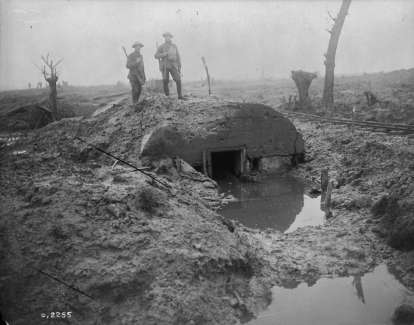
pillbox
German pillbox, following capture by Canadian soldiers.

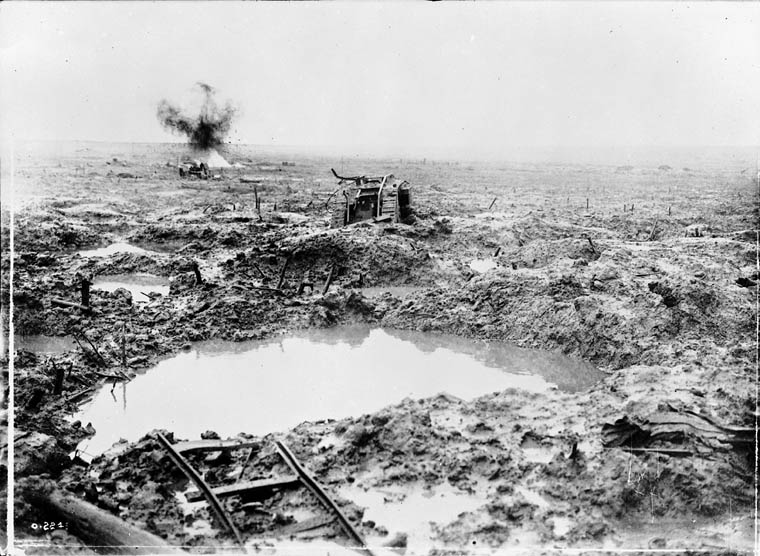
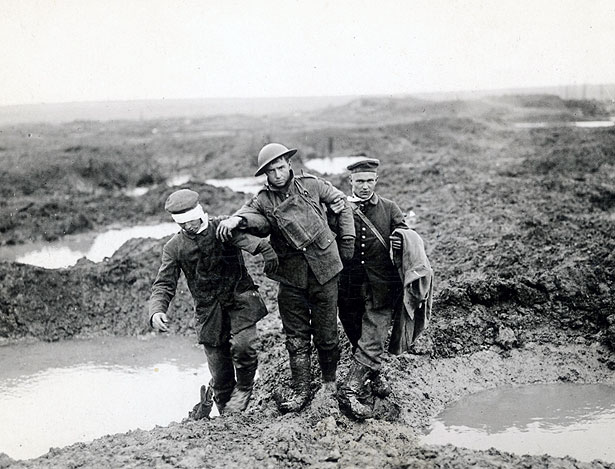
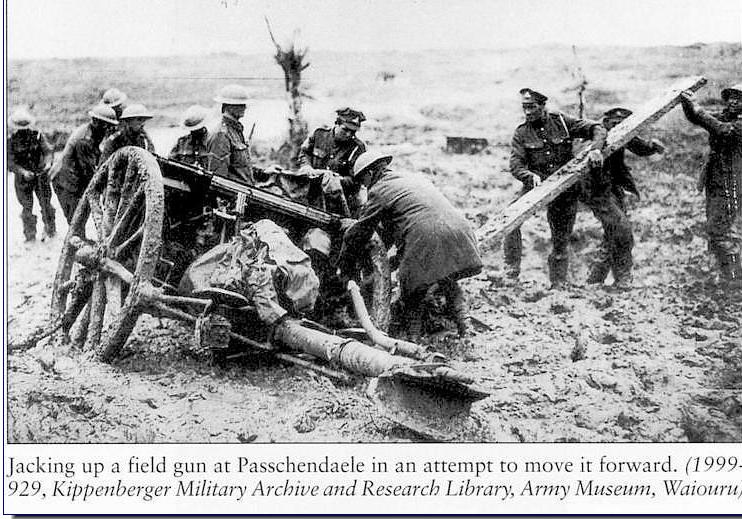
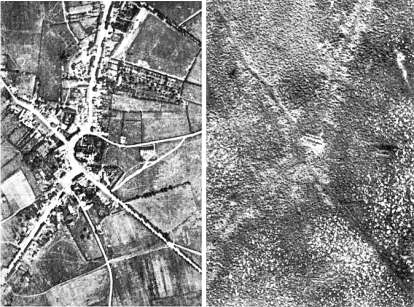
Conditions defy description. Time and again the clay soil, the water, the shattered remnants of once-great forests and the bodies of the slain were churned up and pulverized, by shellfire.  You couldn’t call the stuff these people lived and fought in mud – it was more like a thick slime, a clinging, sucking ooze, capable of claiming grown men, even horses and mules.  Most of the offensive took place across a broad plain formerly crisscrossed with canals, but now a great, sucking mire in which the only solid ground seemed to be German positions, from which machine guns cut down sodden commonwealth soldiers, as with a scythe.

Soldiers begged for their friends to shoot them, rather than being left to sink in that muck. One sank up to his neck and slowly went stark raving mad, as he died of thirst. British soldier Charles Miles wrote “It was worse when the mud didn’t suck you down; when it yielded under your feet you knew that it was a body you were treading on.”

Passchendaele, aerial
Passchendaele, before and after the offensive. H/T Imperial War Museums/Wikimedia Commons

In 105 days of this hell, Commonwealth forces lost 275,000 killed, wounded and missing.  The German side another 200,000.  90,000 bodies were never identified.  42,000 were never recovered and remain there, to this day.  All for five miles of mud, and a village barely recognizable, after its capture.

Following the battle of Passchendaele, staff officer Sir Launcelot Kiggell is said to have broken down in tears.  “Good God”, he said, “Did we really send men to fight in That”?!  The soldier turned war poet Siegfried Sassoon reveals the bitterness of the average “Joe Squaddy” whom his government had sent sent to fight and die, at Passchendaele.  The story is told in the first person by a dead man, in all the bitterness of which the poet is capable.  It’s called:

Memorial Tablet – by Siegfried Sassoon
Sassoon“Squire nagged and bullied till I went to fight,
(Under Lord Derby’s Scheme). I died in hell (They called it Passchendaele). My wound was slight,
And I was hobbling back; and then a shell
Burst slick upon the duck-boards: so I fell
Into the bottomless mud, and lost the light.

At sermon-time, while Squire is in his pew,
He gives my gilded name a thoughtful stare;
For, though low down upon the list, I’m there;
‘In proud and glorious memory’…that’s my due.
Two bleeding years I fought in France, for Squire:
I suffered anguish that he’s never guessed.
Once I came home on leave: and then went west…
What greater glory could a man desire?”

If you enjoyed this “Today in History”, please feel free to re-blog, “like” & share on social media, so that others may find and enjoy it as well. Please click the “follow” button on the right, to receive email updates on new articles.  Thank you for your interest, in the history we all share.