

There is a surprise or two, hidden among the 400,000+ grave sites, at Arlington National Cemetery. Did you know, for instance, that 4,000 former slaves went to their final rest there? Arlington is the only cemetery in the world, to hold American servicemen from every war in US history. Three graves contain the remains of enemy combatants, from WW2. Among them all there may no greater curiosity, than the grave of a Green Beret, interred with the remains of three South Vietnamese soldiers. Unless it’s to learn that that same guy, once wore the uniform of the Nazi SS.
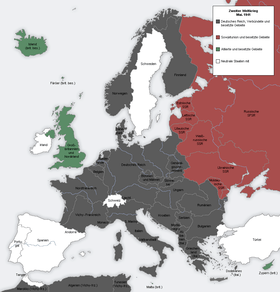
In May 1941, the geopolitical map of the Eurasian continent could be drawn in two colors, the spheres of influence of governments headed by two of the great monsters of the 20th century: Josef Stalin’s Soviet Union, and the Nazi Germany of Adolf Hitler.
The Republic of Finland, the 8th largest nation on the European landmass with a population equal to that of Minnesota, suffered military defeat during the “Winter War” of a year earlier, a 105-days long David vs. Goliath contest fought against the Soviet Union.
The two dictators were allies at this time according to the terms of the Molotov-Ribbentrop pact, signed two years earlier. That state of affairs ceased the following month, with ‘Operation Barbarossa’, Hitler’s surprise attack on his erstwhile ally.
Finland never signed the Tripartite Pact with Nazi Germany and stated that it would fight the Soviets only insofar as to redress territorial losses suffered during the Winter War. Adolf Hitler saw the distinction as irrelevant and regarded the Nordic republic as an ally. To Hitler, Finland would become just another part of the war on the Eastern Front. To Finnish patriots, the uneasy alliance with Nazi Germany and the continued struggle with the Soviet Union, would be known as the “Continuation War’.

Lauri Alan Törni was such a patriot, born this day in 1919 in Finland’s Viipuri Province. Törni fought the Soviet Union during the Winter War and the Continuation War, rising to the rank of Captain and earning the Mannerheim Cross, Finland’s equivalent to the British Victoria Cross, or the American Medal of Honor. An elite and highly effective guerrilla fighter, Törni trained with the Nazi SS in Austria. Such a menace was this man to Stalin’s war effort, that the Soviets placed a bounty on his head of three million Finnish marks, equivalent to $650,000. There is no record of such a bounty on any other Finnish soldier.

The Continuation War came to an end in September 1944, but Törni still had scores to settle with the Communists. He joined forces with a German unit fighting Soviet troops near Schwerin, Germany, and surrendered to British and American forces in the last stages of WW2.
Törni escaped the British POW camp and returned to Finland, only to be arrested on charges of treason for having joined the German army. There would be a six-year prison sentence and one more escape, before the Presidential pardon in 1948.
Traveling under alias as a Swedish seaman, Törni jumped overboard in the Gulf of Mexico, swimming ashore near Mobile, Alabama and claiming political asylum. He was granted citizenship in 1953 by special act of congress, and adopted the more “Americanized” name of Larry Thorne, joining the United States Army the following year.
 Thorne was soon headed to Special Forces, the elite warrior becoming an instructor of skiing, mountaineering, survival and guerrilla tactics.
Thorne attended airborne school and earned the silver wings of a Green Beret. He went through Officer Candidate School and received his commission as a 1st Lieutenant, rising to the rank of Captain in just three years.
Larry Thorne had a reputation for physical toughness, even amidst such an elite organization as the Green Berets. Now in his mid-forties, he could physically out-perform many men half his age.
 As part of the 10th Special Forces Group, Thorne served in a search-and-rescue capacity in West Germany, earning a reputation for courage in operations to recover bodies and classified documents, following a plane in the Zagros Mountains of Iran.
Captain Thorne was sent to Vietnam in 1963, assigned to operate Civilian Irregular Defense Group (CIDG) camps at Châu Lăng and later Tịnh Biên. Thorne earned two Purple Hearts and a Bronze Star for valor during one particularly ferocious attack on Tịnh Biên, an episode author Robin Moore wrote about in his best-selling paperback, The Green Berets.
On October 18, 1965, Larry Thorne was leading a covert mission against a Viet Cong stronghold in Laos when his helicopter crashed, killing all on board. He was 46. Captain Thorne was posthumously promoted to the rank of major and awarded the Legion of Merit and Distinguished Flying Cross. Let the citation tell his story:
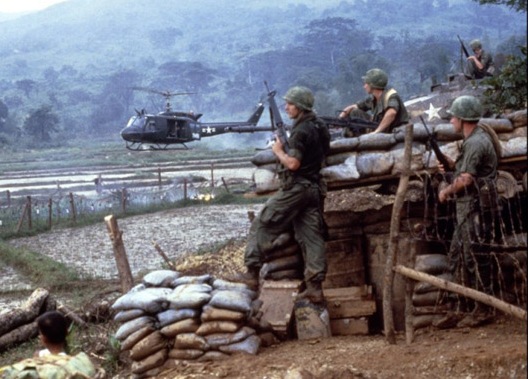
“If the patrol were immediately confronted by a superior force, Major Thorne would land and extricate the patrol under fire. This was done with total disregard for the inherent dangers and with selfless concern for the ground forces. In so doing, he exposed himself to extreme personal danger which ultimately led to his disappearance and the loss of his aircraft. He had, however, guaranteed the safe introduction of the patrol into the area, the successful accomplishment of this mission and had positioned himself to react to any immediate calls for assistance from the patrol“.
The crash site of the Republic of Vietnam Air Force CH-34 helicopter was discovered in 1999. Thorne’s remains were found, intermingled with those of Lieutenant Bao Tung Nguyen, First Lieutenant The Long Phan, and Sergeant Vam Lanh Bui. Major Thorne was identified by dental records.

Thorne’s family in Finland said let him be buried in America, because that was the choice that he made. The four were buried with full military honors in Arlington National Cemetery, the way they had died. Together.
So it is that the name of the elite warrior who had served under three flags, a man who once wore the uniform of the Nazi SS, is engraved on that stone in Arlington, along with those of the South Vietnamese warriors with whom he once served.


 The island nation of Great Britain alone escaped occupation, but British armed forces were shattered and defenseless in the face of the German war machine.
 Hitler ordered his Panzer groups to resume the advance on May 26, while a National Day of Prayer was declared at Westminster Abbey. That night Winston Churchill ordered “Operation Dynamo”. One of the most miraculous evacuations in military history had begun from the beaches of Dunkirk.
 Larger ships were boarded from piers, while thousands waded into the surf and waited in shoulder deep water for smaller vessels. They came from everywhere: merchant marine boats, fishing boats, pleasure craft, lifeboats and tugs. The smallest among them was the 14’7″ fishing boat “Tamzine”, now in the Imperial War Museum.
 A thousand copies of navigational charts helped organize shipping in and out of Dunkirk, as buoys were laid around Goodwin Sands to prevent strandings. Abandoned vehicles were driven into the water at low tide, weighted down with sand bags and connected by wooden planks, forming makeshift jetties.
 7,669 were evacuated on the first full day of the evacuation, May 27, and none too soon. The following day, members of the SS Totenkopf Division marched 100 captured members of the 2nd Battalion of the Royal Norfolk Regiment off to a pit, and machine gunned the lot of them. A group of the 2nd Battalion of the Royal Warwickshire Regiment were captured that same day, herded into a barn and murdered with grenades.
 Most light equipment and virtually all heavy equipment had to be left behind, just to get what remained of the allied armies out alive. But now, with the United States still the better part of a year away from entering the war, the allies had a military fighting force that would live to fight on.
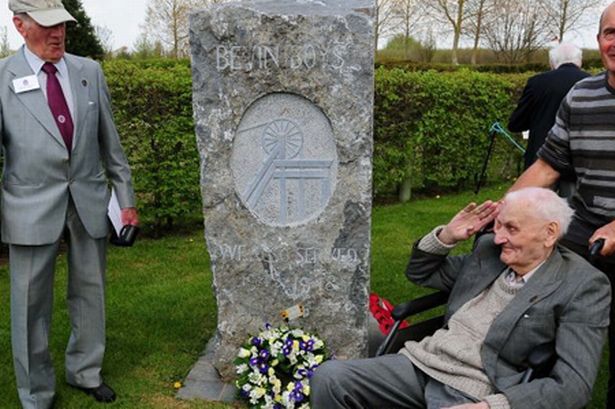


 If you’ve raised a child, you are well acquainted with the triumphs and the terrors of giving those little tykes the sword with which they will conquer their world.




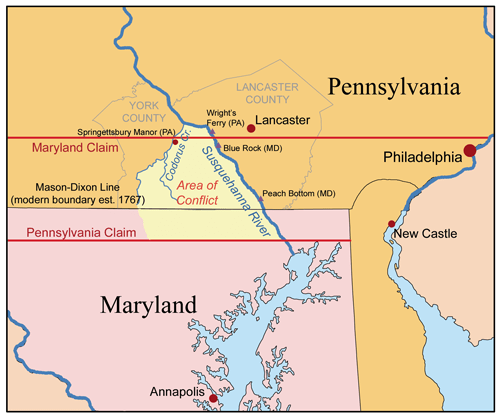
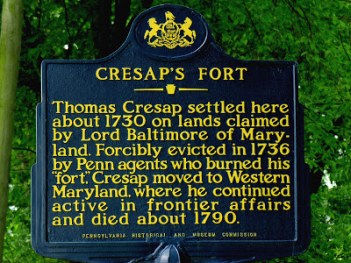
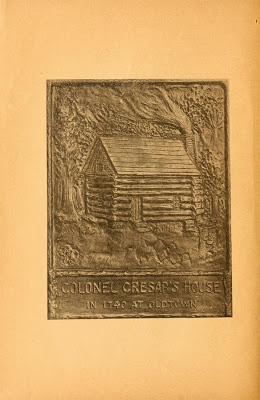 Business was good. By 1730, Wright had applied for a ferry license. With Lord Baltimore fearing a loss of control in the area (read – taxes), Maryland resident Thomas Cresap established a second ferry service up the river. Maryland granted Cresap some 500 acres along the west bank, serenely unconcerned that much of the area was already inhabited by Pennsylvania farmers.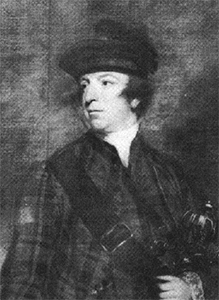
 Maryland authorities petitioned George II, King of Great Britain and Ireland, imploring the King to restore order among his subjects. King George’s proclamation of August 18, 1737 instructed the governments of both colonies to cease hostilities. When that failed to stop the fighting, the Crown organized direct negotiations between the two. Peace was signed in London on May 25, 1738, the agreement providing for an exchange of prisoners and a provisional boundary to be drawn fifteen miles south of the southernmost home in Philadelphia, and mandating that neither Maryland nor Pennsylvania “permit or suffer any Tumults Riots or other Outragious Disorders to be committed on the Borders of their respective Provinces.”


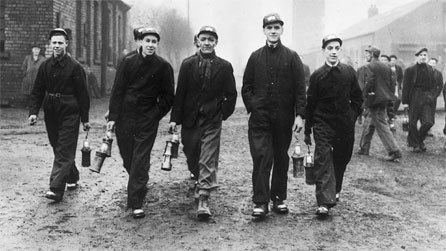
 In 18th century London, it was a bad idea to go out at night. Not without a lantern in one hand, and a club in the other.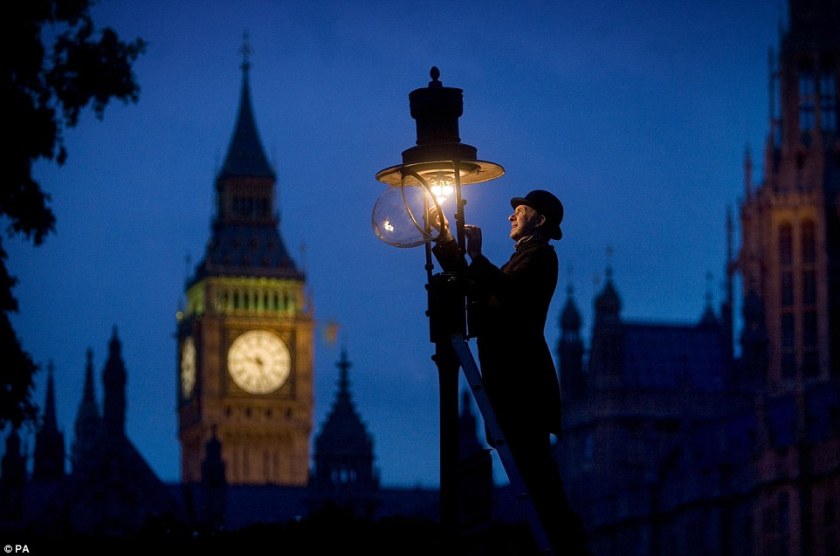
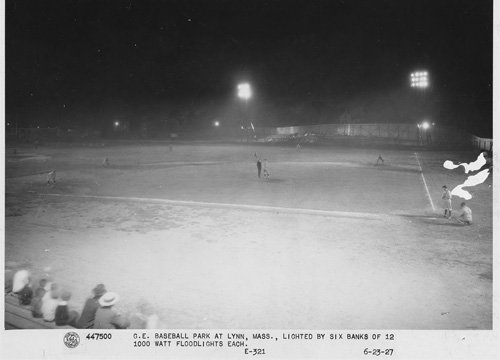 When the Great Depression descended across the land, minor league clubs folded by the bushel. Small town owners were desperate to innovate. The first-ever night game in professional baseball was played on May 2, 1930, when Des Moines, Iowa hosted Wichita for a Western League game.





 In the first half of the 19th century, 90% of federal government revenue came from tariffs on foreign manufactured goods. A lion’s share of this revenue was collected in the south, with the region’s greater dependence on imported goods. Much of this federal largesse was spent in the north, with the construction of railroads, canals and other infrastructure.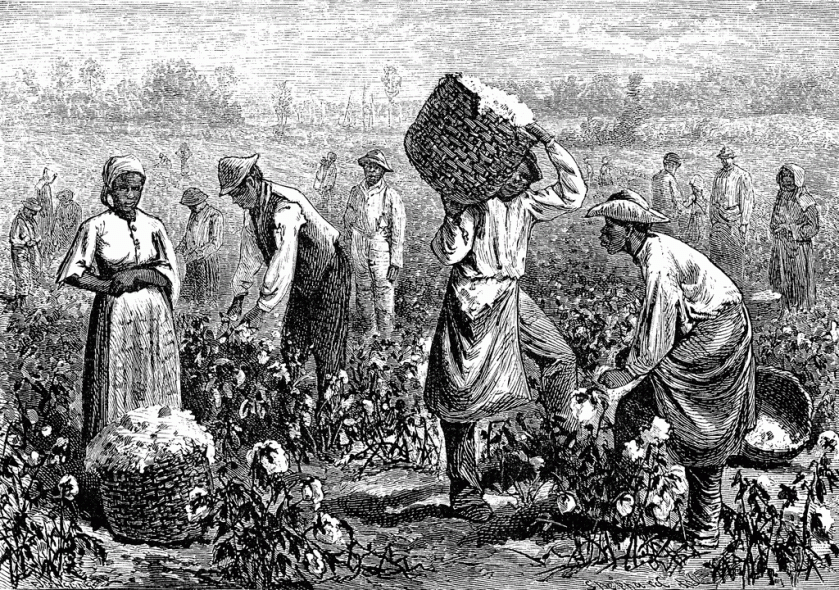
 The issue of slavery had joined and become so intertwined with ideas of self-determination, as to be indistinguishable.
 In Washington, Republicans backed the anti-slavery side, while most Democrats supported their opponents. On May 20, 1856, Massachusetts Senator Charles Sumner took to the floor of the Senate and denounced the Kansas-Nebraska Act. Never known for verbal restraint, Sumner attacked the measure’s sponsors Stephen A. Douglas of Illinois (he of the later Lincoln-Douglas debates), and Andrew Butler of South Carolina by name, accusing the pair of “consorting with the harlot, slavery”. Douglas was in the audience at the time and quipped “this damn fool Sumner is going to get himself shot by some other damn fool”.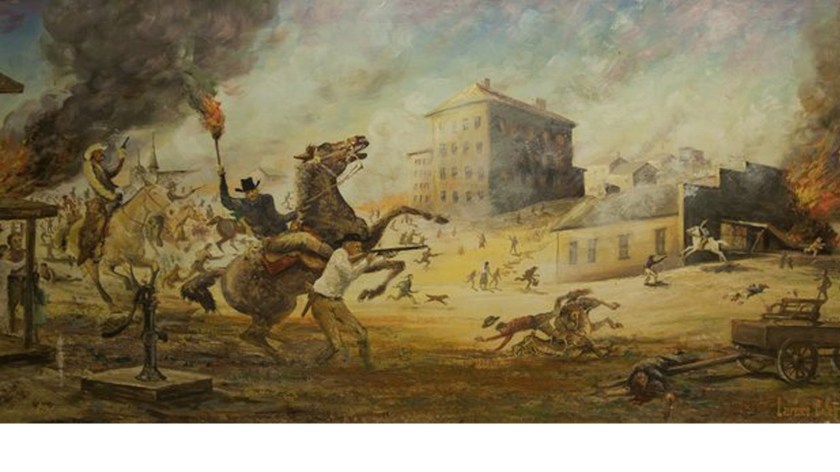


 The trio approached Sumner, who was sitting at his desk writing letters. “Mr. Sumner”, Brooks said, “I have read your speech twice over carefully. It is a libel on South Carolina, and Mr. Butler, who is a relative of mine.”
 In the next two days, a group of unarmed men will be hacked to pieces by anti-slavery radicals, on the banks of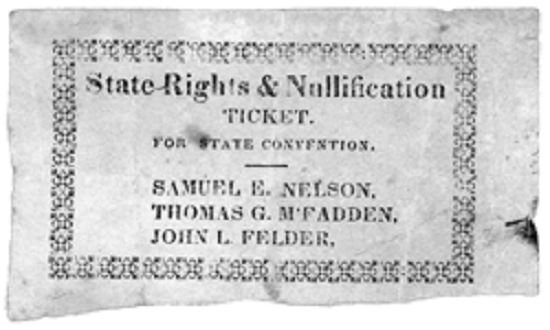


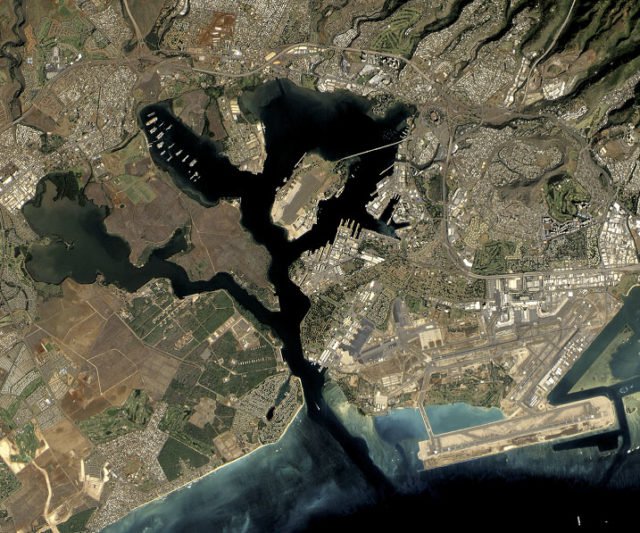

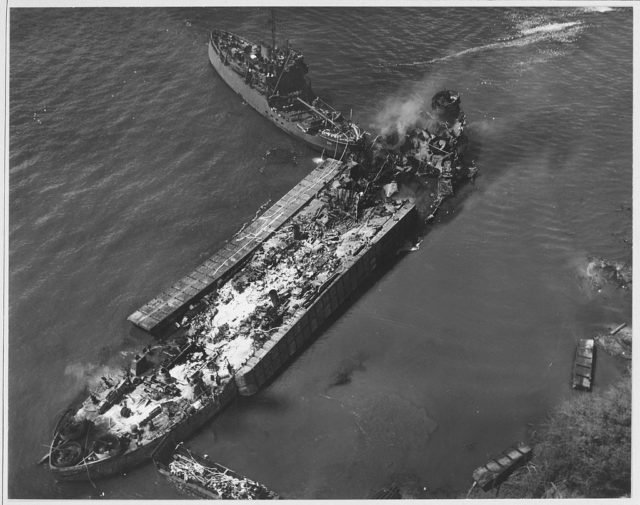

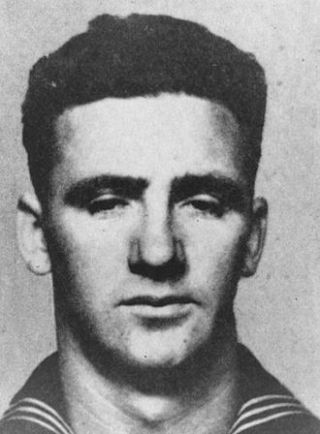
 “…Venturing still farther under the buried hulk, he held tenaciously to his purpose, reaching a place immediately above the other man just as another cave-in occurred and a heavy piece of steel pinned him crosswise over his shipmate in a position which protected the man beneath from further injury while placing the full brunt of terrific pressure on himself. Although he succumbed in agony 18 hours after he had gone to the aid of his fellow divers, Hammerberg, by his cool judgment, unfaltering professional skill and consistent disregard of all personal danger in the face of tremendous odds, had contributed effectively to the saving of his 2 comrades…”.

 Carlos Norman Hathcock, born this day in Little Rock in 1942, was a Marine Corps Gunnery Sergeant and sniper with a record of 93 confirmed and greater than 300 unconfirmed kills during the American war in Vietnam.
 The sniper’s choice of target could at times be intensely personal. One female Vietcong sniper, the platoon leader and interrogator called ‘Apache’ due to her interrogation techniques, would torture Marines and ARVN soldiers until they bled to death. Her signature was to cut the eyelids off her victims. After she skinned one Marine alive and left him emasculated within earshot of his base, Hatchcock spent weeks hunting this one sniper.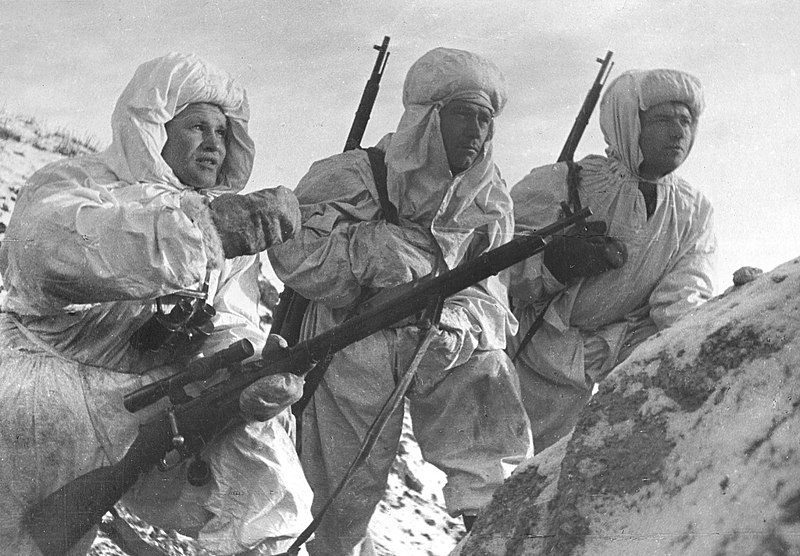


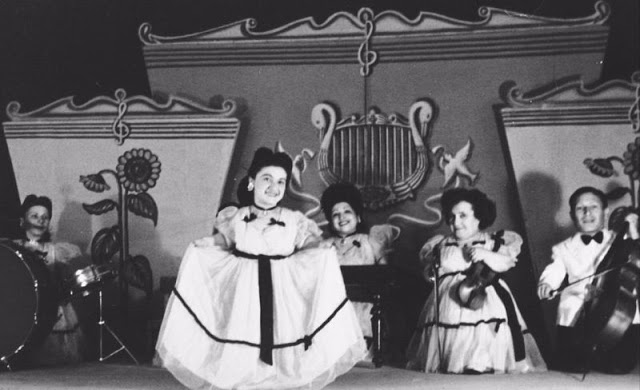

 There was no future for them in this place. Only 50 of the 650 Jewish inhabitants of the village ever returned. The family emigrated to Israel in May 1949, resuming their musical tour and performing until the group retired in 1955.
 Historical Easter Eggs - Today in History
You must be logged in to post a comment.