

By the end of the “Great War”, France, Great Britain and Belgium had at least 20,000 dogs on the battlefield, Imperial Germany as many as 30,000. Some sources report that over a million dogs served over the course of the war.
Dogs performed a variety of roles in WWI, from ratters in the trenches, to sentries, scouts and runners. “Mercy” dogs were trained to seek out the wounded on battlefields, carrying medical supplies with which the stricken could treat themselves. Sometimes, these dogs simply provided the comfort of another living soul, so that the gravely wounded should not die alone.

The famous Rin Tin Tin canine movie star of the 1920s was rescued as a puppy, from the bombed out remains of a German Army kennel, in 1917.
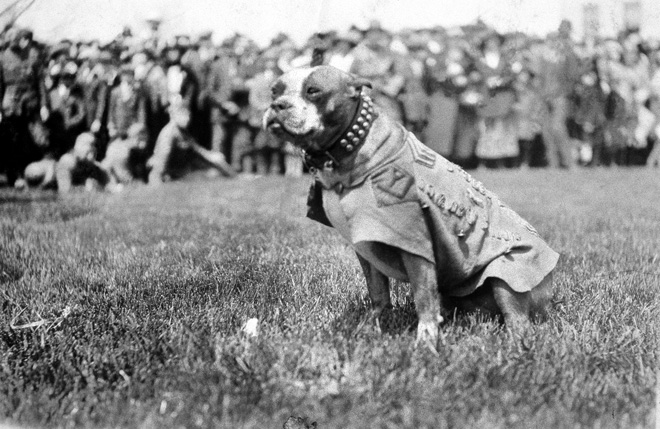
Leaders of the American Expeditionary Force (AEF) discussed the use of dogs as sentries, messengers and draft animals, but the war was over before US forces put together any kind of a War Dog program. America’s first war dog, “Sgt. Stubby”, went “over there” by accident, serving 18 months on the Western Front before coming home to a well-earned retirement.
In March 1942, the US Army Quartermaster Corps began training dogs for an American “K-9 Corps.” In the beginning, the owners of healthy animals were encouraged to “loan” their dogs to the Quartermaster Corps, where they were trained for service with the Army, Navy, Marine Corps and Coast Guard.
 One such dog was “Chips”, the German Shepherd/Collie/Husky mix who would become the most decorated K-9 of WWII.
Chips belonged to the Wren family of Pleasantville New York, who “enlisted” their dog in the “Dogs for Defense (DfD) program in 1942. He was trained at the War Dog Training Center in Front Royal Virginia, and served in the 3rd Infantry Division of Patton’s 7th Army, along with with his handler, Private John Rowell.
Tip of the hat to my son-in-law Nate who also served in the 3rd ID in the Wardak Province of Afghanistan, partnered as handler and “battle buddy” with a four-year-old German Shepard and Tactical Explosives Detection Dog (TEDD) named “Zino”.
Back to WW2. Chips and his handler took part in North Africa, Italy, France and Germany. He served as a sentry dog for the Casablanca Conference of 1943, where he met the American President Franklin Roosevelt and the British Prime Minister Winston Churchill.
The Allied invasion of Sicily was a large scale amphibious and airborne operation, beginning this day in 1943 and lasting through the 17th of August. The Rowell/Chips team was part of the landings, beginning six weeks of land combat in an action code named “Operation Husky”.

During the night landing phase on July 10, Private Rowell and Chips were pinned down in the darkness by an Italian machine gun team, operating out of a nearby hut. The dog broke free from his handler as the platoon dived for shelter, covering the beach in a flash and jumping into the building.
Private Rowell described the scene. “There was an awful lot of noise and the firing stopped. Then I saw one soldier come out of the door with Chips at his throat. I called him off before he could kill the man.”
Three others were quick to follow, hands up. Chips had grabbed the Italian’s machine gun by the barrel, knocking the gun off its mount before turning his attentions on the team. The dog sustained a scalp wound and powder burns, demonstrating that someone had tried to shoot him during the brawl. How many lives were spared by the actions of a single dog, is anyone’s guess.
That episode ended with a final score of Chips 4, Italian machine-gun team 0, but he wasn’t done. Before the day was over, Chips had helped to bag ten more.
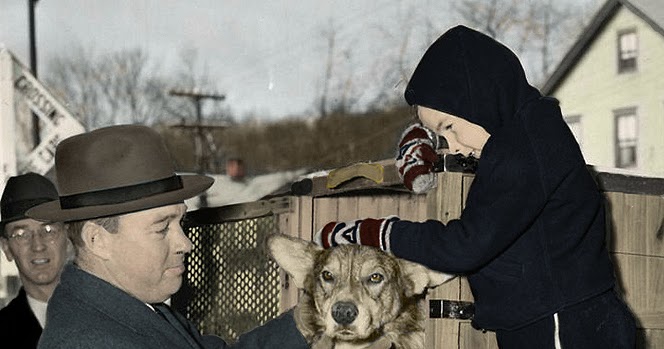
Chips was awarded the Distinguished Service Cross, Silver Star, and Purple Heart, but those awards were later revoked. At that time the army didn’t permit commendations to be given to animals. His unit awarded him a Theater Ribbon with an Arrowhead for the assault landing anyway, along with eight Battle stars. One for each of his campaigns.
Chips was discharged in December, 1945, and returned home to live out the rest of his days with the Wren family in Pleasantville, New York. In 1990, Disney produced a made-for-TV movie based on the life of the most highly decorated K-9 of WW2, calling it “Chips, the War Dog”.
Afterward
In 1917, the British animal welfare pioneer Maria Dickin founded the People’s Dispensary for Sick Animals (PDSA), to “provide care for sick and injured animals of the poor”. Today, the PDSA is the largest veterinary charity in England, carrying out a million or more free veterinary visits every year and employing the largest number of veterinary surgeons and nurses in the United Kingdom.

The Dickin Medal was established in 1943, to recognize animals displaying “conspicuous gallantry or devotion to duty while serving or associated with any branch of the Armed Forces or Civil Defence Units“. Sometimes referred to as “the animals’ Victoria Cross”, the Dickin medal has been awarded only 75 times as of November 2017, plus an honorary Dickin Medal for all animals who served during WW1.
On January 15, 2018, seventy-five years to the day following the Casablanca Conference, Chips was posthumously awarded the Dickin Medal. John Wren, who was only four when Chips went to war, accepted the award in Chips’ honor. United States Army Lieutenant Colonel Alan Throop and Military Working Dog (MWD) Handler Staff Sergeant Jeremy Mayerhoffer of the United States Air Force were also there, along with MWD Ayron, who stood in for Chips to wear his Dickin Medal.
The medal reads “For Gallantry” and “We Also Serve.” Previous recipients include 33 dogs, 32 messenger pigeons, four horses and a ship’s cat.




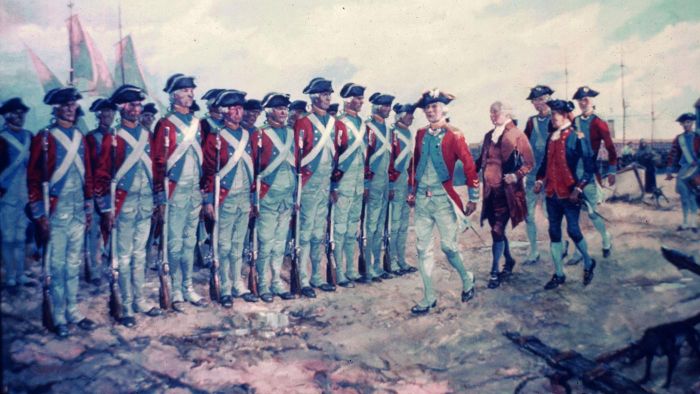


 Twenty-seven years after Gettysburg, surviving veterans of the regiment returned to dedicate a memorial to those members of the 11th Pennsylvania, who lost their lives on that field of battle.
 The other includes a brindle colored Terrier, named Sallie. The only one of the two to have actually participated in the battle.

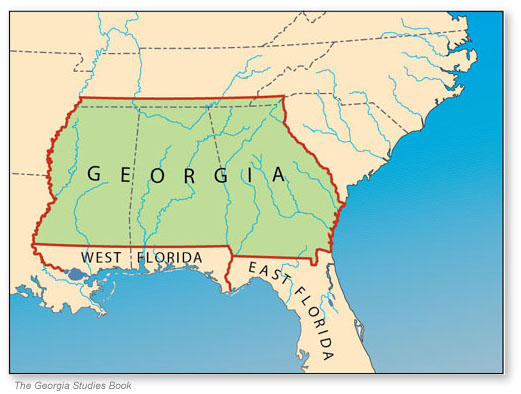
 The territory which would come to be occupied by the colony of Georgia was a subject for dispute between Great Britain and Spain, since long before the state became a colony.
 off the ear of Commander Robert Jenkins, informing the unfortunate ship’s master that he could “Go, and tell your King that I will do the same”, to him.


 Lee was appointed to the Committee of Confederation, assigned to write the Articles by which the fledgling nation would govern itself. Lee believed that two such committees were too much and, soon, he would be called home to care for a critically ill wife.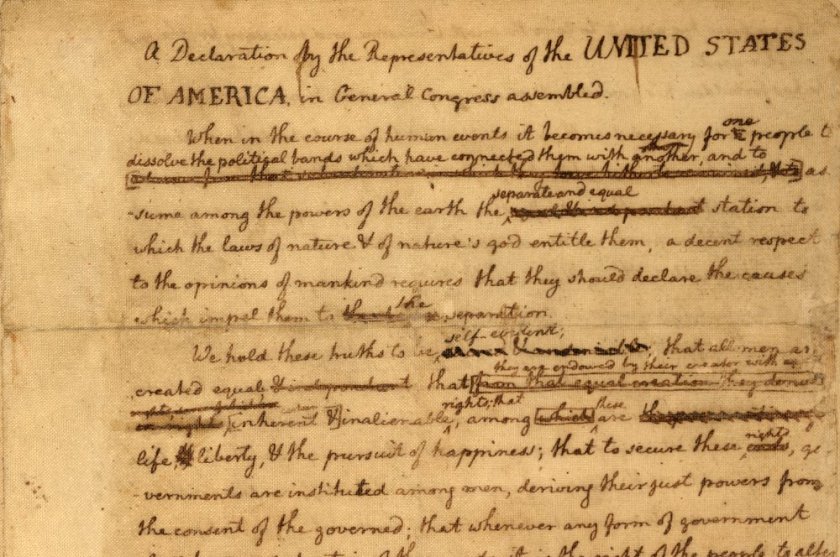

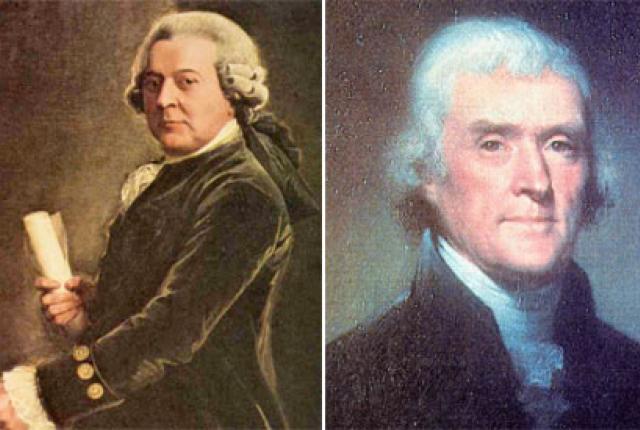


 Indeed, such a system has imperfections, not least among them those who would ascend to political office.


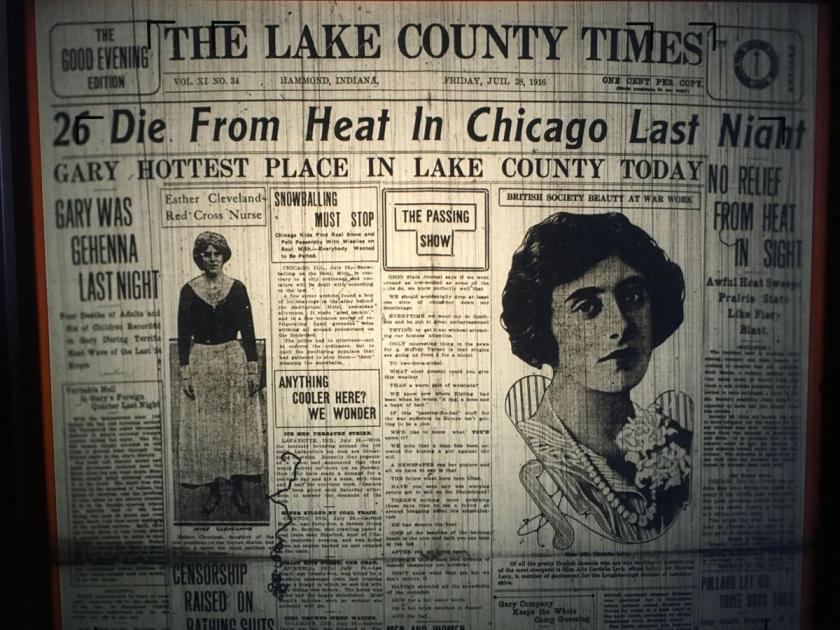
 In pre-1955 America and around much of the world, Summer was a time of dread. TIME Magazine offered what solace it could, in 1946: “for many a parent who had lived through the nightmare fear of polio, there was some statistical encouragement: in 1916, 25% of polio’s victims died. This year, thanks to early recognition of the disease and improved treatment (iron lungs, physical therapy, etc.) the death rate is down to 5%.”
 Charles Vansant’s left thigh was stripped to the bone. He was brought to the Engleside hotel, where he bled to death on the front desk.
 Like some earlier, real-life “Jaws”, authorities and the press downplayed the incident. The New York Times reported that Vansant “was badly bitten in the surf … by a fish, presumably a shark.” Pennsylvania State Fish Commissioner and former director of the Philadelphia Aquarium James M. Meehan opined that “Vansant was in the surf playing with a dog and it may be that a small shark had drifted in at high water, and was marooned by the tide. Being unable to move quickly and without food, he had come in to bite the dog and snapped at the man in passing“.


 Based on the style of the attacks and glimpses of the shark(s) themselves, the attacks may have been those of Bull sharks, or juvenile Great Whites. Massive shark hunts were carried out all over the east coast, resulting in the death of hundreds of animals. Whether all five attacks were carried out by a single animal or many, remains unknown.
 At the time, the story resulted in international hysteria. Now, the tale is all but unknown, but for the people of Matawan. Stanley’s grave sits on a promontory at the Rose Hill Cemetery, overlooking Lester’s grave, below. People still stop from time to time, leaving flowers, toys and other objects. Perhaps they’re paying tribute. Homage to the courage of those who would jump into the water, in the face of our most primordial fear.
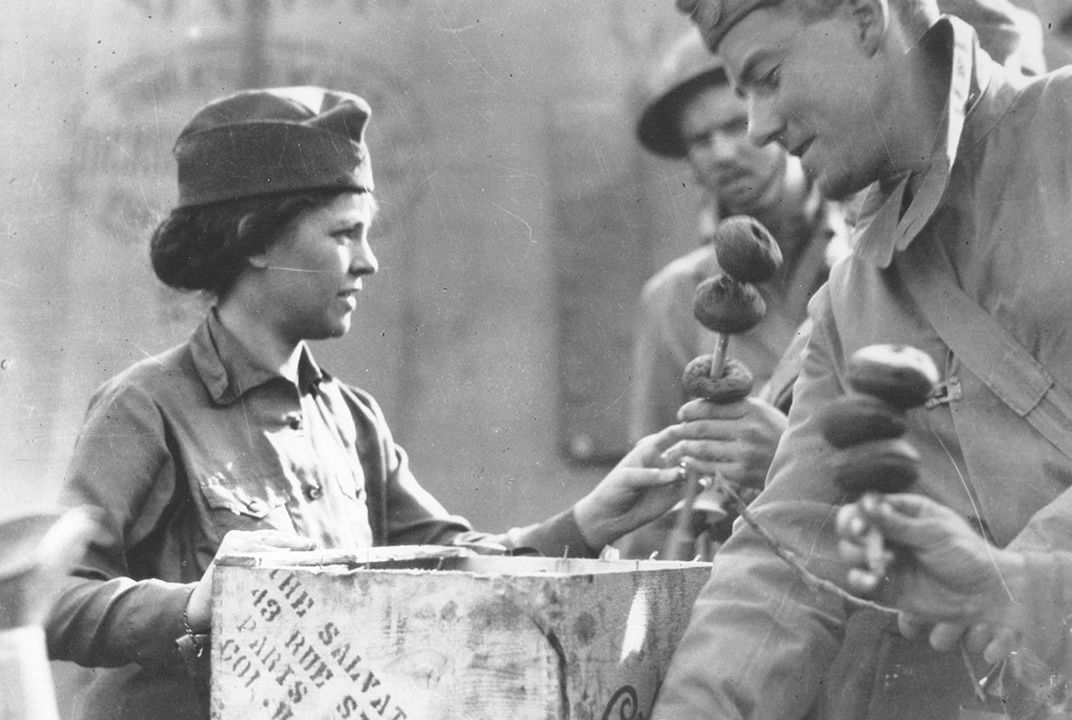
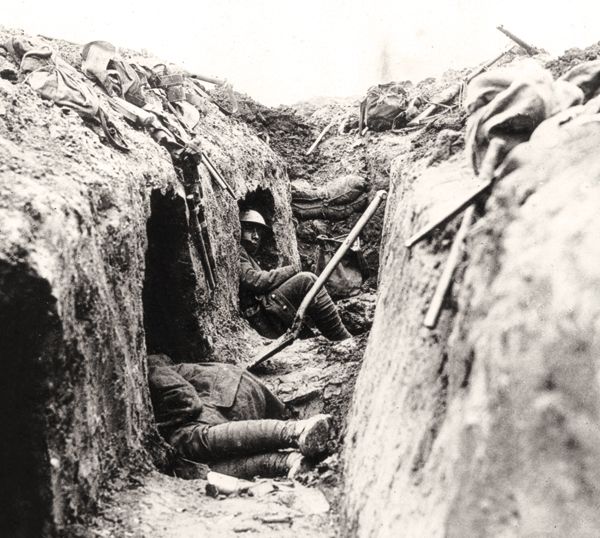
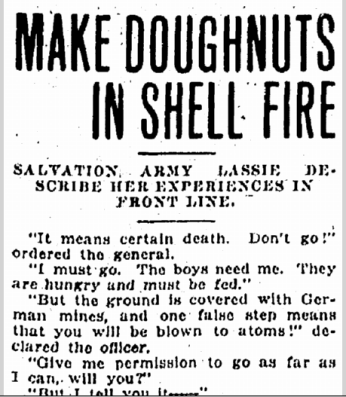 Often unseen in times of such dread calamity, are the humanitarian workers. Those who tend to the physical and spiritual requirements, the countless small comforts, of those so afflicted.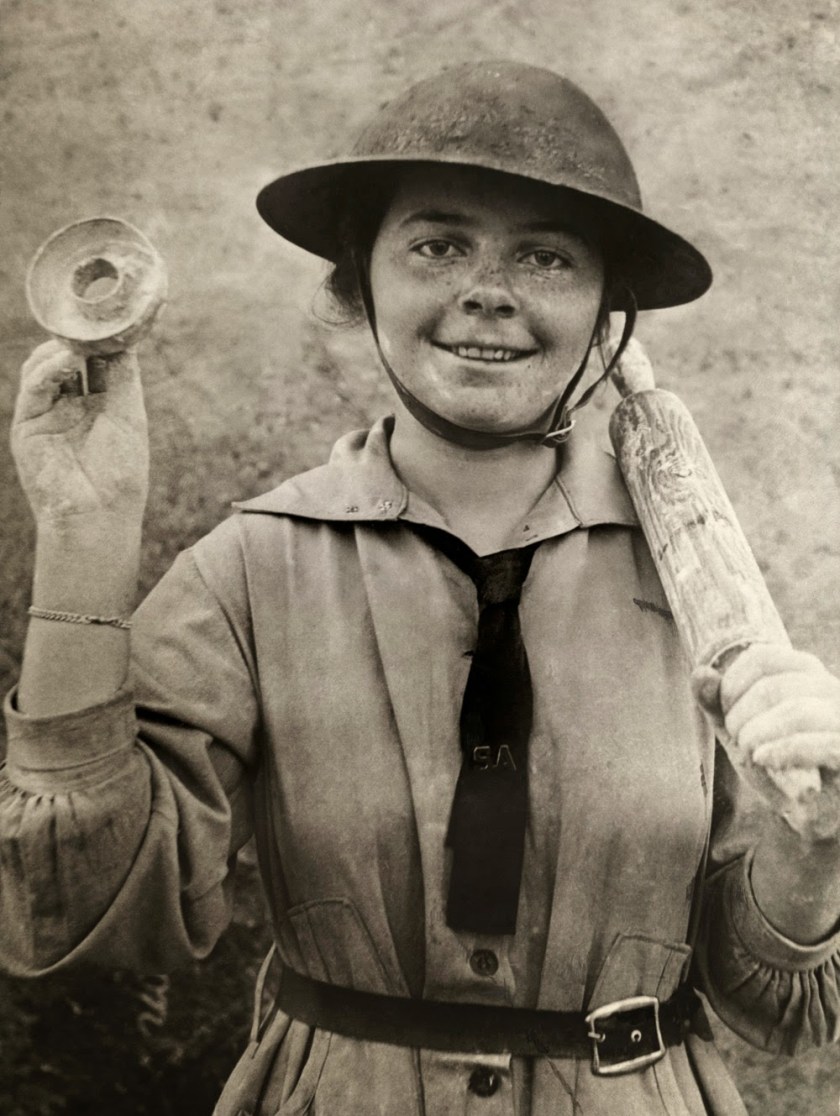
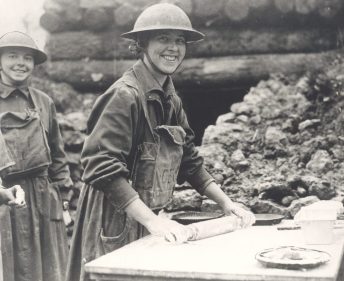 A small group of carefully selected female officers was sent to France on August 22. That first party comprised six men, three women and a married couple. Within fifteen months their number had expanded by a factor of 400.
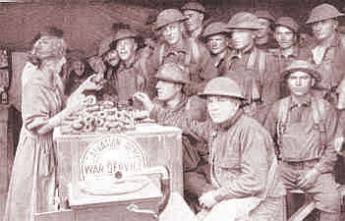 ‘Hutments’ were formed all over the front, many right out at the front lines. There were canteen services. Religious observances of all denominations were held in these facilities. Concert performances were given, clothing mended and words of kindness offered in response to all manner of personal problems. On one occasion, the Loyal Order of Moose conducted a member initiation. Pies and cakes were baked in crude ovens and lemonade served to hot and thirsty troops. Of all these corporal works of mercy, the ones best remembered by the ‘doughboys’ themselves, were the doughnuts.

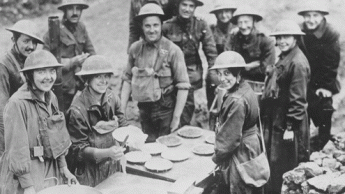 Before long, the women got better at it. Soon they were turning out 2,500 to 9,000 doughnuts a day. An elderly French blacksmith made Purviance a doughnut cutter, out of a condensed milk can and a camphor-ice tube, attached to a wooden block.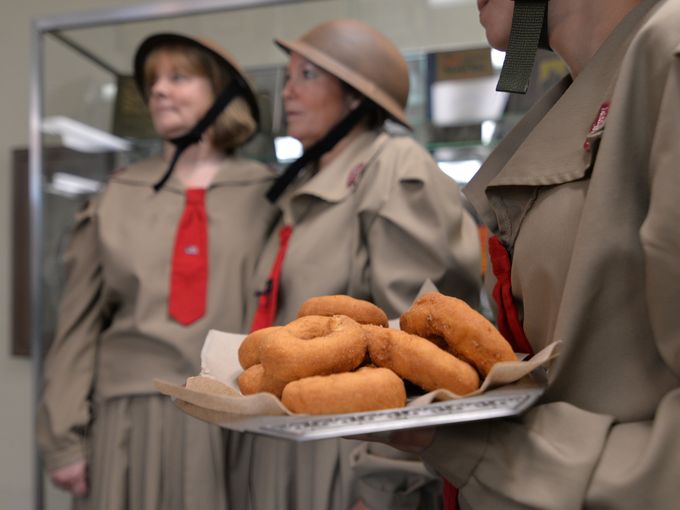


 Historical Easter Eggs - Today in History
You must be logged in to post a comment.