
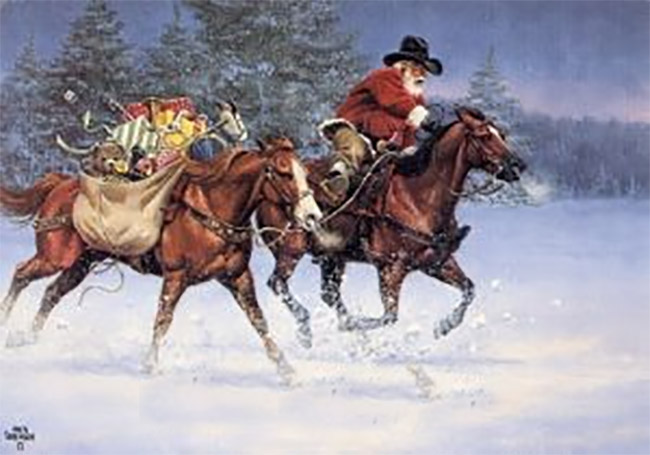
The historical life of St. Nicholas is shrouded in legend. Born in modern-day Turkey on March 15, AD270, Nicholas was the only child of rich parents who died in a plague, leaving the boy a wealthy orphan.
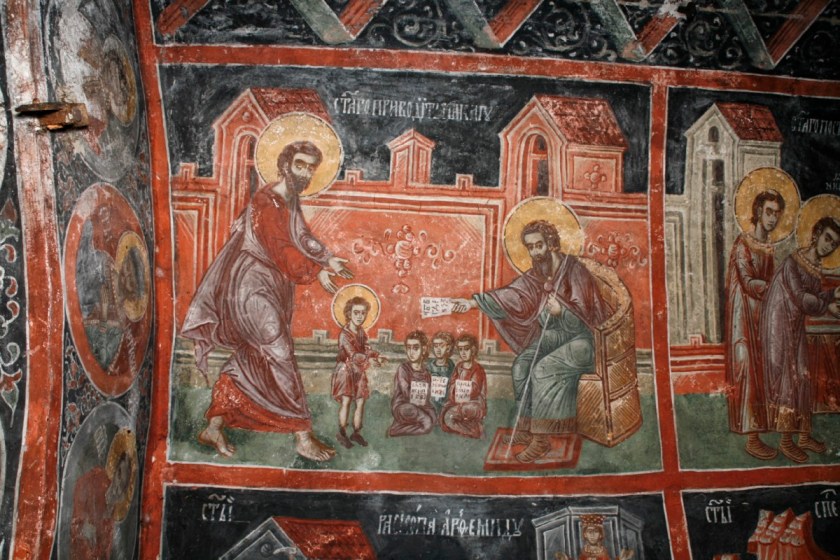
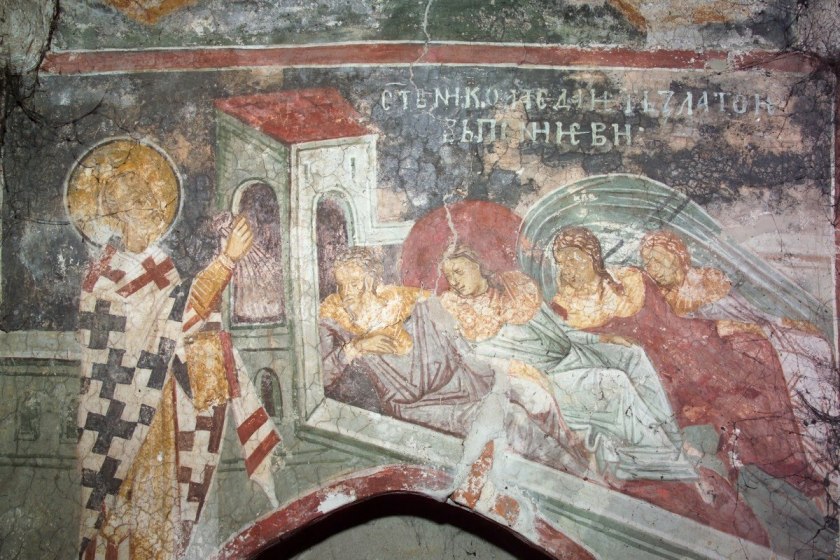
Nicholas was raised in the Christian faith and became an early bishop in the Greek church. One of many stories concerning the bishop’s generosity involves a destitute father, unable to raise a dowry sufficient to marry off his three daughters. On two consecutive nights, Nicholas crept up to the man’s window, and dropped a small sack of gold coins. On the third night, the man stayed up to learn the identity of his secret benefactor, only to be asked to keep the name, secret.
Saint Nicholas passed on December 6 in the year 343. He’s entombed in a marble cathedral dedicated to his name, in Myra.
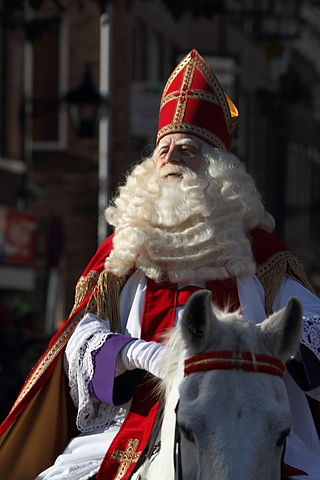
Nicholas is remembered as the patron saint of whole nations and cities such as Amsterdam and Moscow, revered among the early Christian saints and remembered for a legendary habit of secret gift-giving.
Some ideas take hold in the popular imagination, while others fade into obscurity. The “Three Daughters” episode made it into nearly every artistic medium available at that time, from frescoes to carvings and windows, even theatrical performances.
The Patron Saint not only of sailors, but of ships and their cargoes, the seas were the internet of the day, and the story of St. Nick spread from the Balkans to Holland, from England to Crete.
 The Feast of St. Nicholas took hold around the 6th of December. Children and other marginal groups such as old women and slaves could receive gifts, but only by demanding them. The secret giving of gifts appeared sometime around the year 1200.
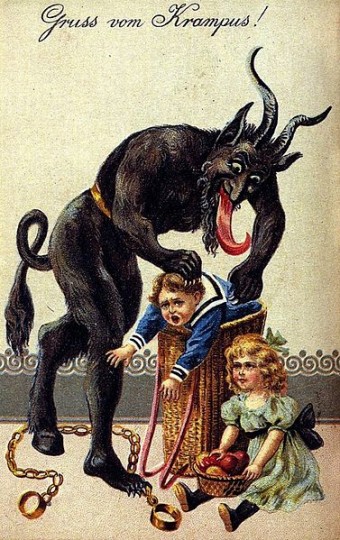
On the continent, legends of St. Nicholas combined with Pagan traditions and developed in quirky directions, including an evil doppelgänger who accompanies St. Nick on his rounds. As early as the 11th century, the Krampus may be expected to snatch bad little tykes away from parts of Germany, Austria and the Alpine villages of northern Italy, never to be seen again.
In eastern Europe, the witch Frau Perchta “The Disemboweller” was said to place pieces of silver in the shoes of children and servants who’d been good over the year, and replace the organs of the bad ones, with garbage. Yikes.
In French-speaking regions, Père Fouettard (Father Whipper) accompanies Père Noël on gift-giving rounds, dispensing beatings and/or lumps of coal to naughty boys & girls. In some German speaking regions, the malevolent Schmutzli accompanies Samichlaus, with a twig broom to spank wicked children.
Never mind Santa Claus. The Schmutzli is watching.

The “Little Ice Age” of the 13th century, led to a proliferation of chimneys. Windows and doors were the things of thieves and vagabonds, while the chimney led directly to the warm heart of the home. St. Nick made his first gift-giving appearance via the chimney in a three daughters fresco, painted sometime in 1392, in Serbia.
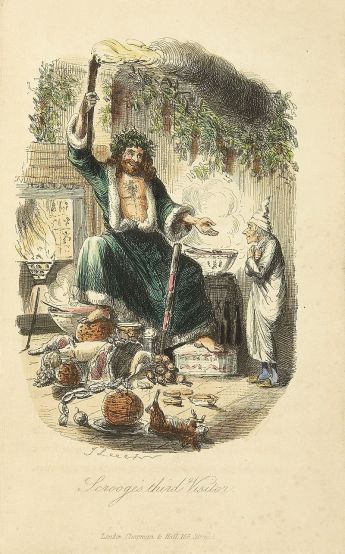
St. Nicholas was beginning to be seen as part of the family outside of the Church, which is probably why he survived what came next. Saints reigned in the Christian world until the 16th century, when the Protestant reformation rejected such “idolatry” as a corruption of Christianity.
Whatever you called him: Sinterklaos, Saint-Nikloi or Zinniklos, St. Nick went away entirely in England and Scotland during the time of Henry VIII, giving way to the spirit of Christmas cheer in the person of one Father Christmas. England would no longer keep the feast of the Saint on December 6. The celebration moved to December 25, to coincide with Christmas.
Protestants adopted as gift bringer the Baby Jesus or Christkindl, later morphing into Kris Kringle.
Puritan arrivals to New England rejected Christmas and everything with it, as “un-Christian”. In 1644, Massachusetts levied a fine of five shillings, on anyone observing the holiday.
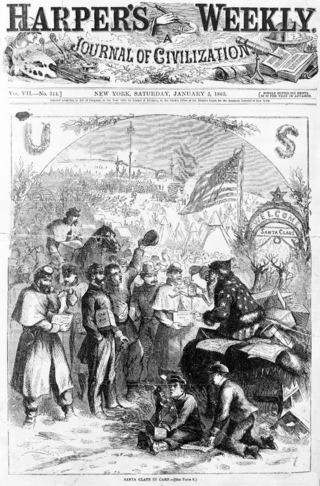
Sinterklaas survived the iconoclasm of the Reformation in places like Holland, transferring to the 17th century settlement of New Amsterdam: what we now know as the new world port city of New York.
Sinterklass blended with Father Christmas, to create a distinctly American Santeclaus, which began to take hold in the 19th century.
The Christmas “celebrations” of the period, looked more like Mardi Gras than what we know today. Drunk and rowdy gangs wandered the streets of New York, Philadelphia and the cities of the northeast, something between a noisy mob and a marching band. Men fired guns into the air and banged or blew on anything that would make noise. Mobs would beat up the unfortunate, and break into the homes of the “upper classes”, demanding food and liquor.
New York philanthropist John Pintard, the man responsible for the holidays celebrating the fourth of July and George Washington’s birthday, popularized an image first set forth by Washington Irving, in his satirical story A History of New York from the Beginning of the World to the End of the Dutch Dynasty, by Diedrich Knickerbocker, depicting St. Nicholas bringing gifts to good little boys and girls, and switches with which to tan the hides of bad kids.
 The unknown genius who published and illustrated A Children’s Friend in 1821, first depicted “Santa Claus” not as a Catholic bishop, but as a non-sectarian adult in a fur lined robe, complete with a sleigh inexplicably powered by a single reindeer, coming in through the chimney not on December 6, but on Christmas eve.
An anonymous poem believed to have been written on December 24, 1822 and later attributed to Clement Clarke Moore, began with the words: “T’was the night before Christmas, and all through the house“…
“A Visit From St. Nicholas“, better known by its first line, gave us the first description of the modern Santa Claus and a tool for domesticating the occasion, agreeable to law enforcement for calming the rowdy streets, to manufacturers and retailers for selling goods, to the church to make way for a family friendly day of worship and to parents, to control unruly children.
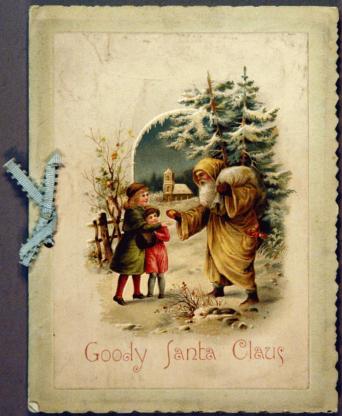
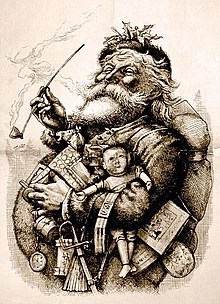
The “Right Jolly old Elf” took his modern form thanks to the pen of illustrator and editorial cartoonist Thomas Nast, creator of the Democratic donkey and the Republican elephant and scourge of the Tammany Hall political machine which had swindled New York city, out of millions.
The idea of a Mrs. Claus seems to come from a poem by Katharine Lee Bates of the Cape Cod Curmudgeon’s own town of Falmouth, Massachusetts.
Today, the author is best known for her 1895 poem “Pikes Peak”, later set to music and widely known as “America the Beautiful”.
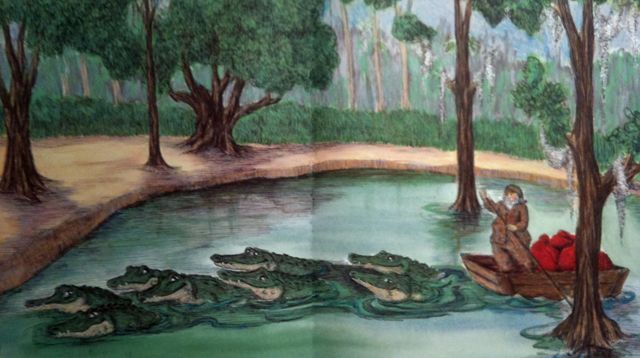
Tonight, NASA may be expected to track Santa and his sleigh drawn by eight reindeer, though none are any longer, all that tiny. Santa Claus will appear around the planet. Regional variations include Santa’s arriving on a surfboard in Hawaii. In Australia, he’s pulled by six white kangaroos. In Cajun country, Papa Noël arrives in a pirogue, drawn by eight alligators.
Santa Claus may be the most powerful cultural idea, ever conceived. This year, Christmas sales are expected to exceed one Trillion dollars. Not bad for a 2,000-year old saint, best remembered for gift giving with no expectation of anything in return.
Fun fact: Today, the port city of Bari on the Adriatic coast of Italy is remembered for the WW2-era mustard gas accident, which spawned the discovery of modern chemotherapy drugs. A thousand years earlier, city fathers feared growing Muslim influence over the tomb of Saint Nicholas, and went to retrieve his remains. Find him, they did. Saint Nicholas’ large bones were removed and brought back as holy relics to Bari, where they remain, to this day. Smaller fragments were removed during the 1st Crusade and brought back to Venice, or enshrined in basilica from Moscow to Normandy. According to one local antiquarian, the “Tomb of Saint Nicholas” in Ireland, is probably that of a local priest.
Feature image, top of page: Hat tip GP Cox. I don’t know where you got it, but I Love this image. Merry Christmas and all the best for a healthy and prosperous New Year to you and yours, from Mr. & Mrs. Cape Cod Curmudgeon.





 Be that at it as it may, the animal is a voracious herbivore, spending daylight hours at the bottom of rivers & lakes, happily munching on vegetation.

 During the 2nd Boer war, the pair had sworn to kill each other. In 1910, these two men became partners in a mission to bring hippos, to America’s dinner table.



 The terrain was considered unsuitable for such an attack. The tactical surprise was complete, British and American forces separated and driven back, their positions forming an inward “bulge” on wartime battle maps.
 Historian Stephen Ambrose wrote “Band of Brothers” nearly fifty years later, a non-fiction account later broadcast as an HBO mini-series, of the same name. The story refers to a black nurse named Anna. There is a brief appearance and then she is gone. No one knew who Anna was, or even if she was real.
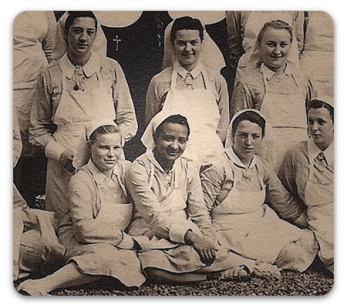 Augusta Chiwy came back to Belgium when she was nine, one of the luckier of thousands born to European fathers, and African mothers. Back to the doctor’s home in Bastogne, a small town of 9,000 where Augusta was loved and cared for by her father and his sister, whom the girl knew as “aunt Caroline”.

 Augusta Chiwy was in a neighboring building at the time. The explosion blew the petite nurse through a wall but, unhurt, she picked herself up and went back to work. There were grisly injuries and many died due to inadequate medical facilities, but many lived, their families reunited thanks to the tireless work of Dr. Jack Prior, and nurse Augusta Chiwy.
 Augusta Chiwy suffered symptoms of post-traumatic stress disorder, a condition poorly understood at that time. She would go long periods without speaking, becoming quiet and withdrawn even years later. She married a Belgian soldier in 1959 and the couple had two children. It would be twenty years, before she resumed her nursing career. She almost never spoke of her experience in Bastogne.
 Albert II of Belgium. Six months later she received the U.S. Army’s Civilian Award for Humanitarian Service. And on March 21, 2014, Augusta was recognized by her hometown as a Bastogne Citizen of Honor”.


 Turns out that Mary Bateman, the bird’s owner and a serial fraudster, was writing these messages with some kind of “corrosive ink”, maybe an acid, and reinserting them into the poor chicken. The “Yorkshire Witch” met her end on a gibbet, hanged for the poisoned pudding she gave that couple to relieve their chest pain. But I digress.
 5,000 years ago, the Mayan civilization of modern-day Mexico and Central America developed a sophisticated calendar, working with a base numerical system of 20.


 On a lighter note, town government sold the jail once. To a sixteen-year-old kid. For a buck and a half and he sold it to a dummy, but now I’m getting ahead of the story.

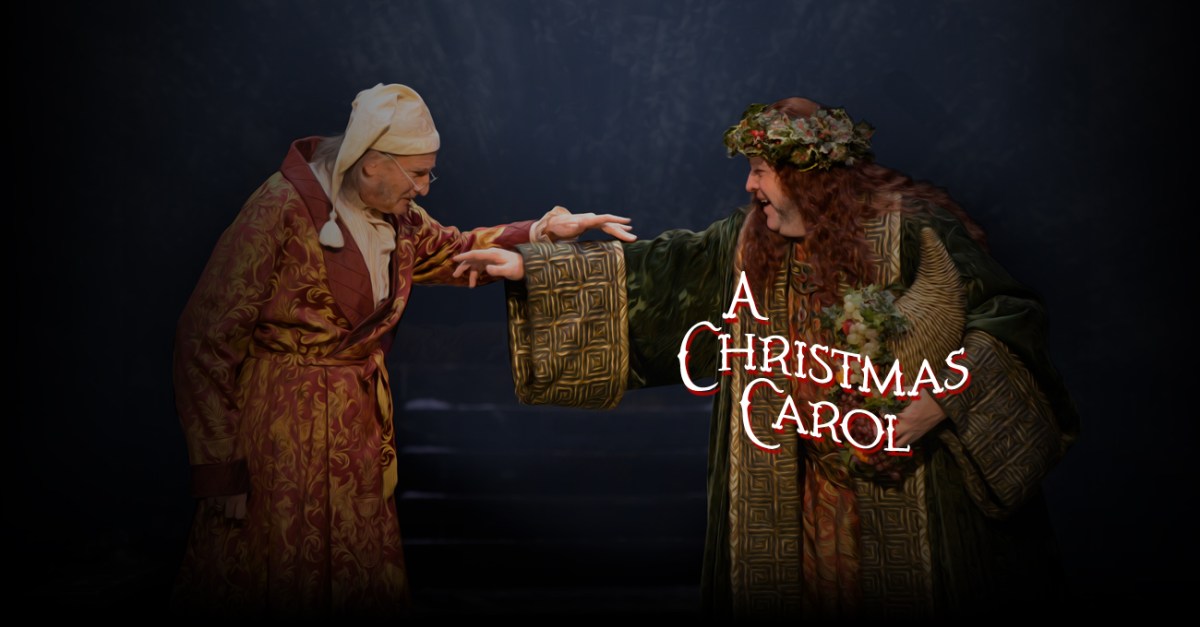

 The celebrity novelist enjoyed the finest sights of Boston and New York, and took in a steamship ride, down the Mississippi. He visited one of the great wonders of the natural world, the spectacular Niagara Falls.







 For the American colonies, the conflict took the form of the French and Indian War. Across the “pond”, the never-ending succession of English wars meant that, not only were colonists left alone to run their own affairs, but individual colonists learned an interdependence of one upon another, resulting in significant economic growth during every decade of the 1700s.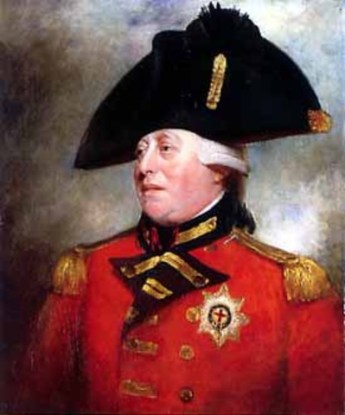

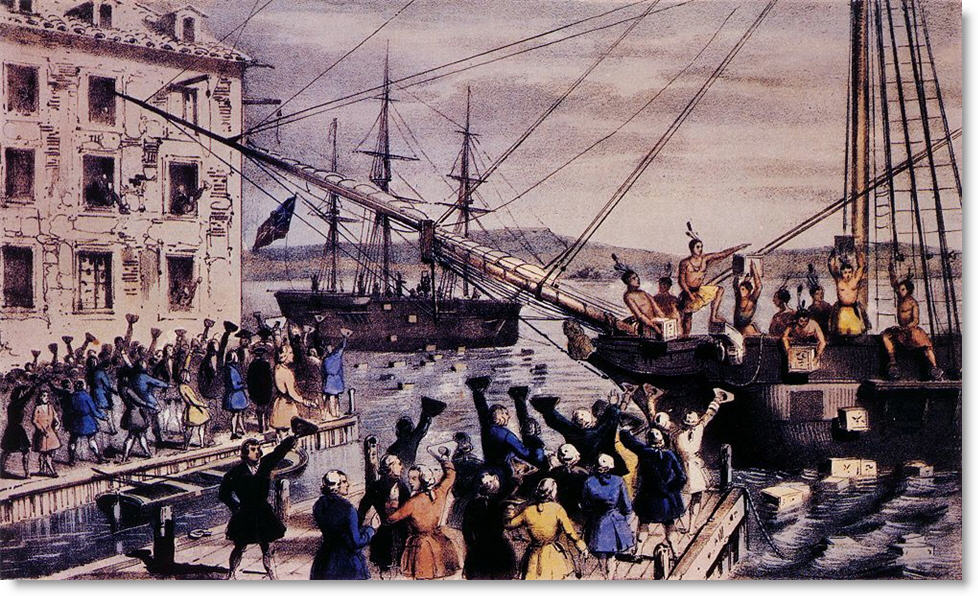
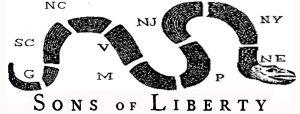 7,000 gathered at Old South Meeting House on December 16th, 1773, the last day of deadline, for Dartmouth’s cargo. Royal Governor Hutchinson held his ground, refusing the vessel permission to leave. Adams announced that “This meeting can do nothing further to save the country.”
 Boston by British troops. Minutemen clashed with “Lobster backs” a few months later, on April 19, 1775. When it was over, eight Lexington men lay dead or dying, another ten wounded. One British soldier was wounded. No one alive today knows who fired the first shot at Lexington Green. History would remember the events of that day as “


 Historical Easter Eggs - Today in History
You must be logged in to post a comment.