
To anyone under the age of 40, the Cold War must seem a strange and incomprehensible period. Many of us who lived through it, feel the same way.
The communist world emerging from the “Great War” comprised the former Czarist state of Russia alone, the 1924 constitution promising a “federation of peoples equal in rights”. Instead, the Soviet system delivered a murderous, top-down authoritarian ideology, best exemplified by the deliberate murder by starvation of millions of its own citizens in Ukraine, the Holodomor, under the guise of agricultural “collectivization”. Here, the Party controlled the state, the military, the press and the economy.
At their best, the western democracies of the “First World” operated on the basis of classical liberalism with two or more distinct political parties, a free press and rule of law.

In the wake of WW2, the two governing ideologies were irreconcilable, splitting the alliance which had once defeated Nazi Germany. The most destructive war in history had barely come to a close in 1946, when the Soviet state set itself to gobbling up the formerly non-communist states of eastern Europe. Former British Prime Minister Winston Churchill delivered the most famous oration of the era on March 5, declaring “From Stettin in the Baltic to Trieste in the Adriatic, an iron curtain has descended across the continent.” The leaders of non-communist parties were discredited and intimidated, subjected to show trials and even execution. Albania, Poland, Hungary, Czechoslovakia, Romania, East Germany: all were taken, often forcibly, into the Soviet embrace.
As the “Cold War” descended across the land, United States and allied nations of the “Western Bloc” sought to “contain” Soviet expansionism, extending military and financial aid to the western democracies and creating the North Atlantic Treaty Organization (NATO alliance). With the Soviet Berlin Blockade of 1948 – ’49, the US Air Force together with the RAF and Royal Australian Air Force delivered 2,333,478 tons of freight in nearly a third of a million sorties. Added together, the Berlin Airlift covered the better part of the distance from the Earth, to the Sun.
The United States’ monopoly on the most destructive weapon system in history came to an end on August 29, 1949, with the ‘RDS-1’ explosion at the Semipalatinsk test site in modern-day Kazakhstan. The Soviet Union had the atomic bomb.

Today, the anti-communist tactics of the House Un-American Activities Committee (HUAC) and Senator Joseph McCarthy are reviled as excessive, as indeed some of them were. Yet, the Top Secret cable decryption program known as Venona and declassified only in 1995, revealed extensive Soviet espionage activities at Los Alamos National Laboratories, the State Department, Treasury, Office of Strategic Services (OSS) and even the White House.
The 1950s were a time of escalating tensions and sometimes calamity: the war in Korea, the “Space Race”, the beginning of American intervention in Vietnam. The Cuban Revolution of 1959. The exodus from Soviet-controlled East Germany to the west resulted in a “brain drain” of some 20% of the population, culminating in the “Berlin Crisis” of 1961. First it was barbed wire and then a wall, complete with guard towers and mine fields. Nobody else was getting out.
In 1957 – ’58, both American and Soviet authorities planned in a show of force, to Nuke the Moon.
United States Air Force General and Strategic Air Command (SAC) commander General Thomas Sarsfield Power introduced Operation Chrome Dome, placing thermonuclear weapons on permanent air patrol to provide a rapid “first strike” or retaliatory “second strike” in the event of nuclear war.

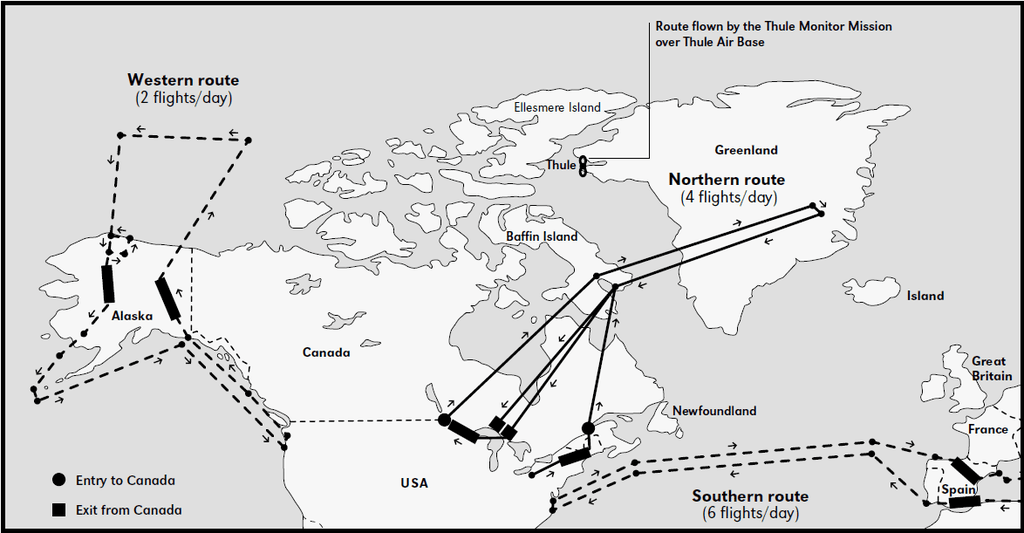
Missions initially departed Sheppard Air Force Base in Texas and flew across the United States and over New England, refueling over the Atlantic before heading north toward Soviet air space. Three separate missions were being flown by 1966, one East over the Atlantic and the Mediterranean, another north to Baffin Bay, and the third over Alaska. 12 missions per day, 365 days a year.

The Department of Defense has a term for accidents involving nuclear weapons, warheads or components, which do not involve the immediate risk of nuclear war. They’re called “Broken Arrows“.
Broken Arrows include accidental or unexplained nuclear or non-nuclear detonation of an atomic weapon, the loss of such a weapon and the release of nuclear radiation resulting in public hazard, actual or potential. There have been 32 Broken Arrow incidents since 1950. As of this date, six nuclear weapons have been lost and never recovered.
Major “Kong” rides the bomb in the dark, 1964 comedy by Stanle Kubrick, “Dr. Strangelove or: How I Learned to Stop Worrying and Love the Bomb”
Five such incidents are associated with Operation Chrome Dome:
• On January 24, 1961, a B-52 Stratofortress carrying two Mark 39 nuclear weapons broke up in mid-air, dropping its payload in the area of Goldsboro, North Carolina. Five men bailed out and landed safely. One bailed out but did not survive the landing. Two more died in the crash.
• Two months later, a B-52 Stratofortress carrying two nuclear weapons departed Mather Air Force Base near Sacramento before experiencing uncontrolled decompression. Forced to fly at a lower altitude and unable to meet its refueling aircraft, the bomber ran out of gas and crashed outside of Yuba City, California. The air crew safely bailed out, but a fireman was killed and several injured in an accident, while en-route to the scene.
• In 1964, a B-52 Stratofortress carrying two Mark 53s was returning from Massachusetts to Georgia in heavy winter weather. Severe turbulence tore off a vertical stabilizer and the bomber crashed on the Stonewell Green farm, Near Meyersdale, Pennsylvania. Radar Bombardier Major Robert Townley was unable to bail out, and died in the crash. Navigator Major Robert Lee and tail gunner TSgt Melvin Wooten succumbed to injuries and hypothermia, on the ground. Only pilot Major Thomas McCormick and co-pilot Captain Parker Peedin, survived.
• On January 17, 1966, a B-52G bomber collided with a KC-135 tanker during mid-air refueling at 31,000-feet, over the Mediterranean. The tanker ignited, killing all four crew members. The bomber broke apart, killing three of seven.
• On January 21, 1968, a B-52 carrying four hydrogen bombs over Baffin Bay developed an uncontrolled cabin fire, forcing seven crew to bail out. Six ejected safely. Co-pilot Leonard Svitenko gave up his ejection seat when the third pilot took over, and sustained fatal head injuries while bailing out from a lower hatch. The bomber crashed on sea ice over 770-feet of water in North Star Bay in Greenland, a territory under Danish jurisdiction. Conventional explosives detonated in the crash, dispersing radioactive material, for miles.
For days, the only way to the crash site, was by dog sled. With average daytime temperatures of -25° and 80-MPH winds, “Project Crested Ice” was better known by those who were there as “Dr. Freezelove”. The cleanup involved 562 American and Danish personnel, removing twenty-seven 25,000-gallon containers of contaminated snow and ice.

The Thule Air Base accident became an international incident, resulting in termination of Operation Chrome Dome on January 22, 1968. From that day to this, the next thermonuclear war will have to start from the ground.
At the height of the Cold war, civil defense film character Bert the Turtle advised school children to “Duck and Cover”. Kids across the nation were shown this film, I was one of them. “Always remember“, says the narrator.,”the flash of an atomic bomb can come at any time, no matter where you may be“.
Probably explains a lot, about my generation.

 The happy couple had yet to meet when the marriage was performed by proxy, the bride remaining in Vienna while the groom stayed in Paris. At 12 she was now the Dauphine, Marie Antoinette, wife of the 14-year-old Dauphin, future King of France.
 The stories you read about 18th century Court intrigue make you wonder how anyone lived like that. Antoinette was naive of the shark tank into which she’d been thrown. Relations were especially difficult with the King’s mistress, the Comtesse du Barry. Antoinette was somehow expected to work them out.
 France had serious debt problems in the 1770s, the result of endless foreign wars, but Antoinette received more than her share of the blame.

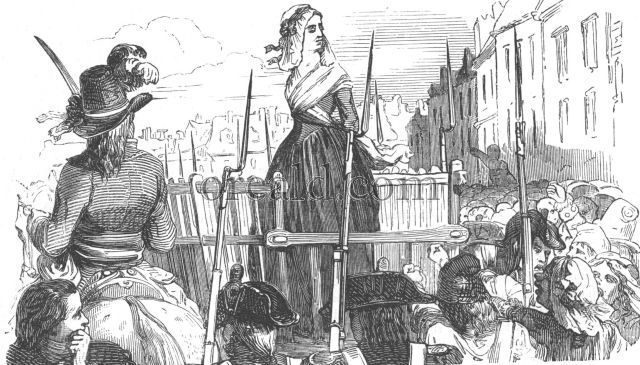
 Marie-Antoinette’s hair was cut off on October 16, 1793. She was driven through Paris in an ox cart, taken to the Place de la Révolution, and executed by decapitation. She accidentally stepped on the executioner’s foot on mounting the scaffold. Her last words were “Pardon me sir, I meant not to do it”.


 Over the years there have been many Rosie the Riveters, the last of whom was Elinor Otto, who built aircraft for fifty years before being laid off at age ninety-five. Naomi Parker-Fraley knew she was the “first”, but that battle was a long lost cause until Dr. Kimble showed up at her door, in 2015. All those years, she had known. Now the world knew.


 Former Olympian and coach of the German Olympic track & field team Josef Waitzer took an interest in the work, becoming a friend and consultant. Dassler brothers shoes were used in international competitions as early as the 1928 games in Amsterdam and the Los Angeles games, of 1932.



 Frank Bench, a personal friend of the inventor, was the first to install the machine. The first pre-sliced loaf was sold in July of the following year. Customers loved the convenience and Bench’s bread sales shot through the roof.
 Article 1, Section 8 of the Constitution includes the “Commerce Clause”, permitting the Congress “To regulate Commerce with foreign Nations, and among the several States, and with the Indian Tribes”. That’s it.
 The United States Supreme Court, apparently afraid of President Roosevelt and his aggressive and illegal “
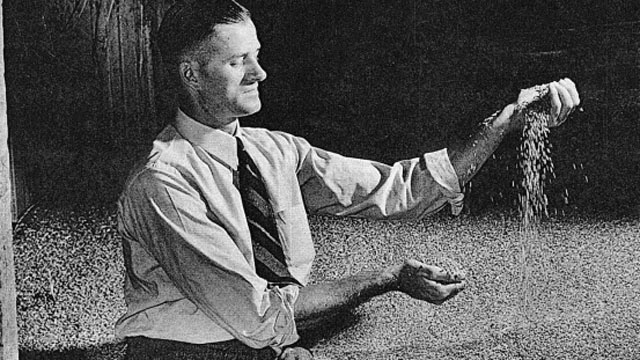
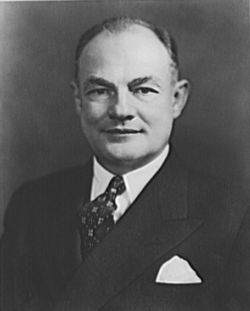
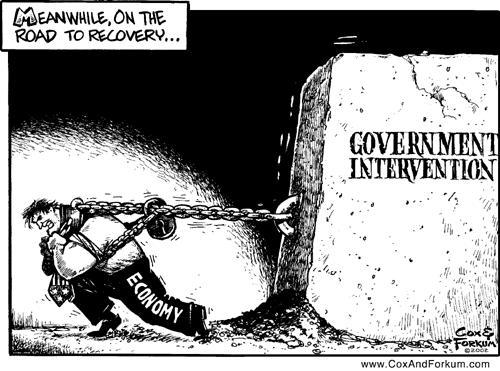 The stated reasons for the ban never did make sense. At various times, Wickard claimed that it was to conserve wax paper, wheat or steel, but one reason was goofier than the one before. According to the War Production Board, most bakeries had plenty of wax paper supplies on hand, even if they didn’t buy any. Furthermore, the federal government had a billion bushels of wheat stockpiled at the time, about two years’ supply, and the amount of steel saved by not making bread slicers has got to be marginal, at best.


 He appeared from 1973 – ’75 on The National Lampoon Radio Hour, along with future SNL regulars Gilda Radner, Chevy Chase and Bill Murray. A number of radio segments went on to become SNL sketches in the show’s first couple of seasons.
 Animal House, the film that launched Belushi’s career on the big screen, almost didn’t happen.
 John Belushi was found dead the following morning. The cause of death was originally thought to be an accidental overdose. Cathy Smith was extradited from Canada and tried on first degree murder charges following a National Enquirer interview in which she admitted giving Belushi eleven speedballs. A plea bargain reduced the charge to involuntary manslaughter. She served fifteen months in prison.


 STS-1, the first mission of the “Space Shuttle” program launched aboard “Columbia” from the Kennedy Space Center on Merritt Island, Florida. It was April 12, 1981, the 20th anniversary of the first human spaceflight aboard the Russian capsule Vostok 1.
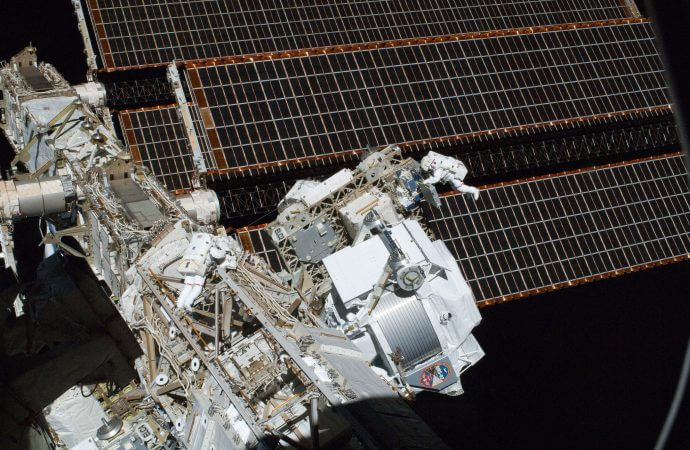
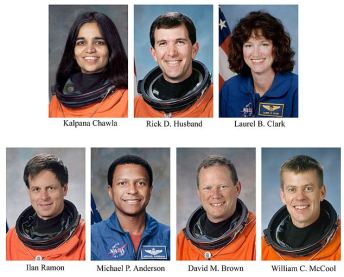 STS-107 launched from the Kennedy Space Center aboard the Space Shuttle Columbia on January 16, 2003.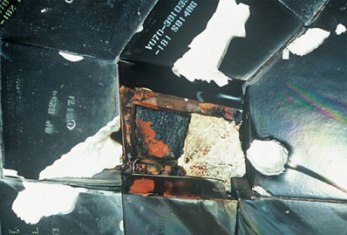
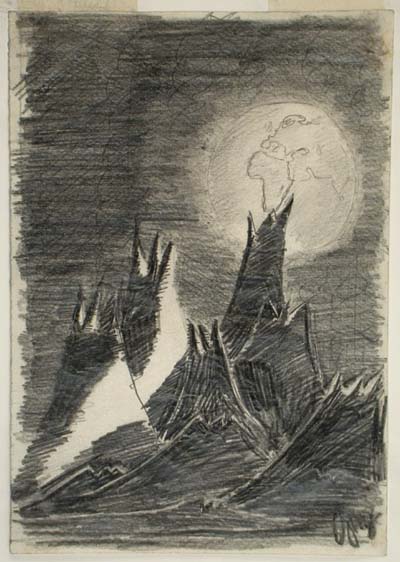




 Educated Spaniards of the era considered witchcraft to be a Protestant superstition. The Spanish Inquisition, launched in 1478 to protect Catholicism as the One True Faith, went first after forced converts from Islam (Moriscos) and Judaism (Marranos) suspected of lapsing into their prior faith.

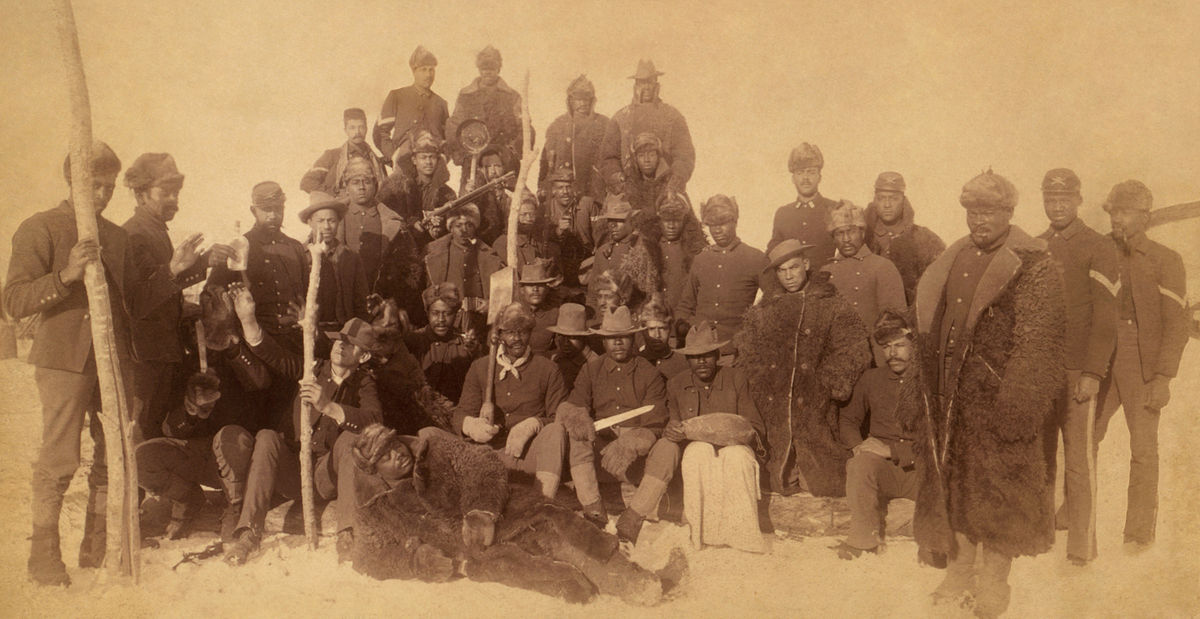
 Cornered in a washout under some railroad tracks, single handed, Randall held off the attack with his revolver, despite a gunshot wound to his shoulder and no fewer than 11 lance wounds.
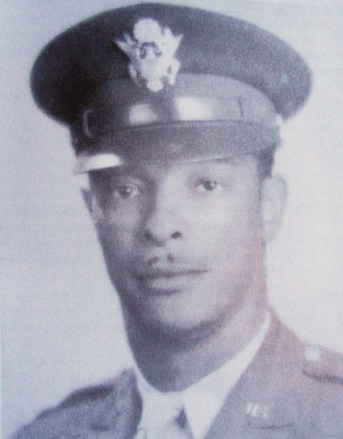
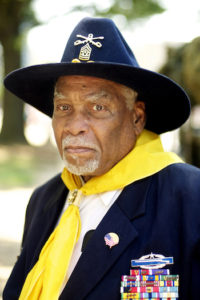 1st Sergeant Mark Matthews, the last of the Buffalo Soldiers, died of pneumonia on September 6, 2005 at age of 111. A man who forged papers in order to join at age fifteen and once had to play taps from the woods, was buried with military honors at Arlington National Cemetery, section 69, grave #4215.
 Historical Easter Eggs - Today in History
You must be logged in to post a comment.