December 10, 1986 Toxic Sanctuary

Ironically, the threat posed by humans outside the exclusion zone is greater for some species than that posed by radiation, within the zone.

The accident began as a test. A carefully planned series of events intending to simulate a station blackout at the Chernobyl Nuclear Power Plant, in the Soviet Socialist Republic of Ukraine.

This most titanic of disasters began with a series of smaller mishaps. Safety systems intentionally turned off, reactor operators failing to follow checklists, inherent design flaws in the reactor itself.

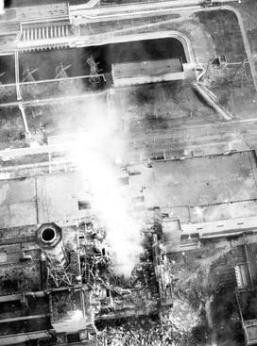
Chernobyl_burning-aerial_view_of_core

Over the night of April 25-26, 1986, a nuclear fission chain reaction expanded beyond control at reactor #4, flashing water to super-heated steam resulting in a violent explosion and open air graphite fire. Massive amounts of nuclear material were expelled into the atmosphere during this explosive phase, equaled only by that released over the following nine days by intense updrafts created by the fire.  Radioactive material rained down over large swaths of the western USSR and Europe, some 60% in the Republic of Belarus.

It was the most disastrous nuclear power plant accident in history and one of only two such accidents classified as a level 7, the maximum classification on the International Nuclear Event Scale.  The other was the 2011 tsunami and subsequent nuclear disaster at the Fukushima Daiichi reactor, in Japan.

One operator died in the steam-blast phase of the accident, a second resulting from a catastrophic dose of radiation.  600 Soviet helicopter pilots risked lethal radiation, dropping 5,000 metric tons of lead, sand and boric acid in the effort to seal off the spread.

Remote controlled, robot bulldozers and carts, soon proved useless. Valery Legasov of the Kurchatov Institute of Atomic Energy in Moscow, explains: “[W]e learned that robots are not the great remedy for everything. Where there was very high radiation, the robot ceased to be a robot—the electronics quit working.”

20120409-3-Kiev-Chernobyl_Museum_(30)
Hat tip, Chernobyl Museum, Kiev , Ukraine

Soldiers in heavy protective gear shoveled the most highly radioactive materials, “bio-robots” allowed to spend a one-time maximum of only forty seconds on the rooftops of surrounding buildings. Even so, some of these “Liquidators” report having done so, five or six times.

In the aftermath, 237 suffered from Acute Radiation Sickness (ARS), 31 of whom died in the following three months.  Fourteen more died of radiation induced cancers, over the following ten years.

liquidators_chernobyl4
Chernobyl “Liquidators”, permitted to spend no more than a one-time maximum of forty seconds, cleaning the rooftops of surrounding structures.

The death toll could have been far higher, but for the heroism of first responders.  Anatoli Zakharov, a fireman stationed in Chernobyl since 1980, replied to remarks that firefighters believed this to be an ordinary electrical fire.  “Of course we knew! If we’d followed regulations, we would never have gone near the reactor. But it was a moral obligation – our duty. We were like kamikaze“.

The concrete sarcophagus designed and built to contain the wreckage has been called the largest civil engineering project in history, involving no fewer than a quarter-million construction workers, every one of whom received a lifetime maximum dose of radiation.  By December 10 the structure was nearing completion. The #3 reactor at Chernobyl continued to produce electricity, until 2000.

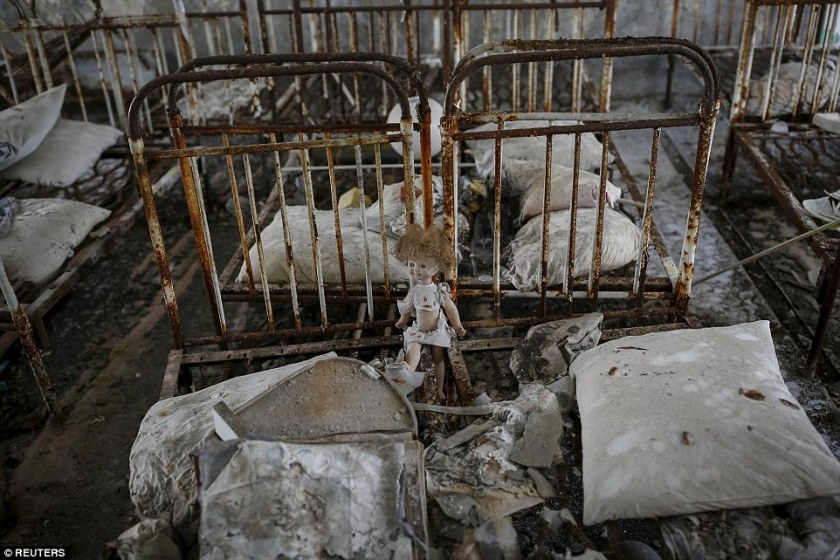
Abandoned nursery
A plastic doll lies abandoned on a rusting bed, 30 years after the town was evacuated following the Chernobyl disaster. H/T Dailymail.com

Officials of the top-down Soviet state first downplayed the disaster.  Asked by one Ukrainian official, “How are the people?“, acting minister of Internal Affairs Vasyl Durdynets replied that there was nothing to be concerned about: “Some are celebrating a wedding, others are gardening, and others are fishing in the Pripyat River.

As the scale of the disaster became apparent, civilians were at first ordered to shelter in place.  A 10-km exclusion zone was enacted within the first 36 hours, resulting in the hurried evacuation of some 49,000.  The exclusion zone was tripled to 30-km within a week, leading to the evacuation of 68,000 more.  Before it was over, some 350,000 were moved away, never to return.

evacuation_of_pripyat
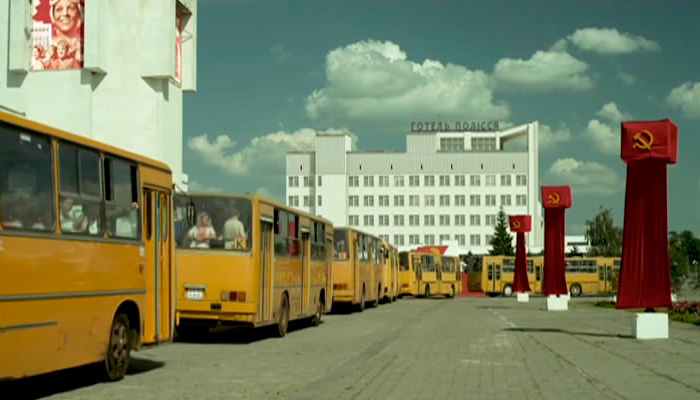
Evacuation of Pripyat

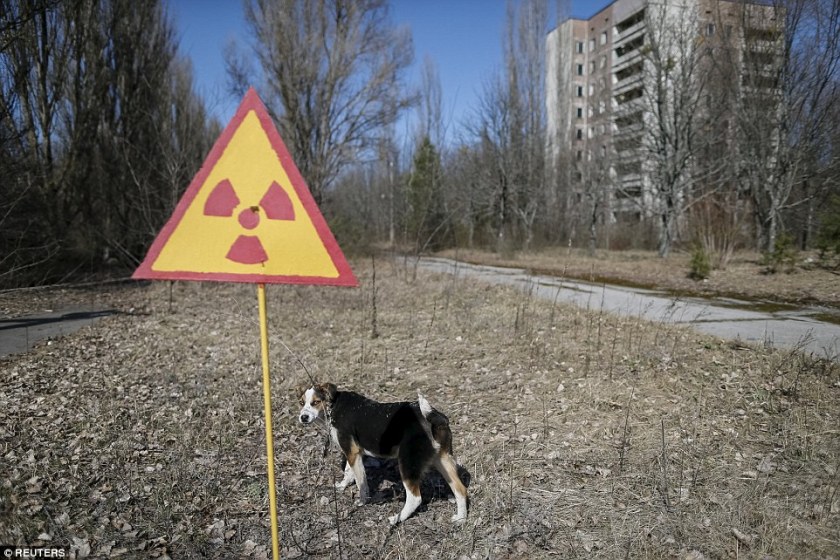
The chaos of these evacuations, can scarcely be imagined.  Confused adults.  Crying children.  Howling dogs.  Shouting soldiers, barking orders and herding the now-homeless onto waiting buses, by the tens of thousands.  Dogs and cats, beloved companion animals, were ordered left behind.  Evacuees were never told.  There would be no return. 

Abandoned amusement park
Two bumper cars lie face to face in the rusting remains of an amusement park in the abandoned town of Pripyat near Chernobyl

There were countless and heartbreaking scenes of final abandonment, of mewling cats, and whimpering dogs.  Belorussian writer Svetlana Alexievich compiled hundreds of interviews into a single monologue, an oral history of the forgotten.  The devastating Chernobyl Prayer tells the story of: “dogs howling, trying to get on the buses. Mongrels, Alsatians. The soldiers were pushing them out again, kicking them. They ran after the buses for ages.” Heartbroken families pinned notes to their doors: “Don’t kill our Zhulka. She’s a good dog.”

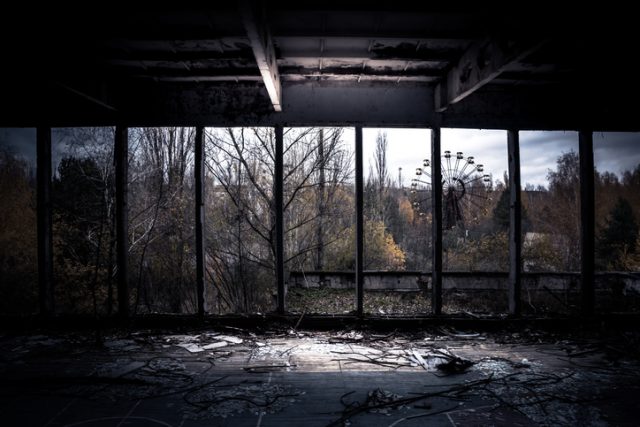
Abandoned gym
View from an abandoned gym in the Prypyat ghost town, of Chernobyl. H/T Vintagenews.com

There would be no mercy.  Squads of soldiers were sent to shoot those animals, left behind.  Most died.  Some escaped discovery, and survived.

Today the descendants of those dogs, some 900 in number occupy an exclusion zone some 1,600 square miles, slightly smaller than the American state, of Delaware. They are not alone.

329F772A00000578-0-image-a-37_1459248391912

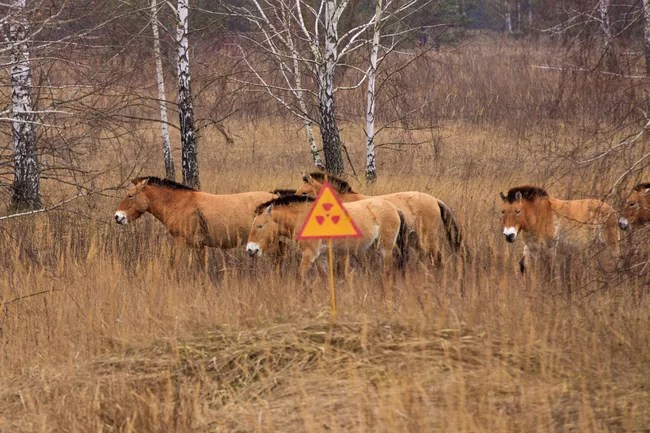
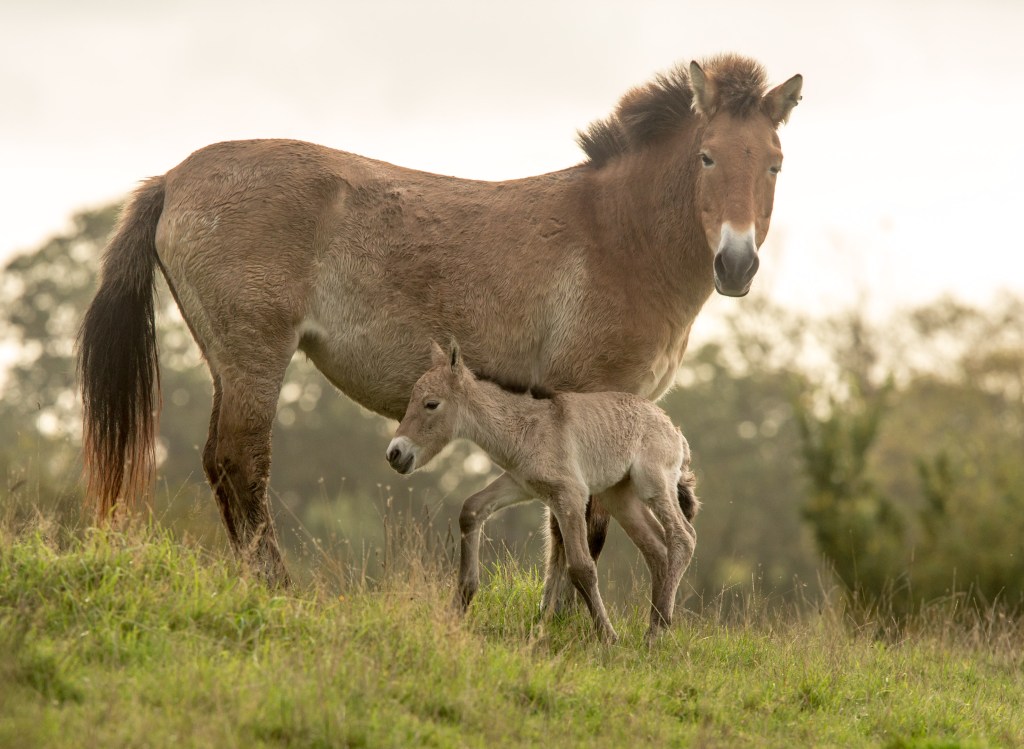
In 1998, 31 specimens of the Przewalski Horse were released into the exclusion zone which now serves as a de facto wildlife preserve. Not to be confused with the American mustang or the Australian brumby, the Przewalski Horse is a truly wild horse and not the feral descendant, of domesticated animals.

Named by the 19th century Polish-Russian naturalist Nikołaj Przewalski, Equus ferus przewalskii split from ancestors of the domestic Equus caballus some 38,000 to 160,000 years ago, forming a divergent species where neither taxonomic group is descended, from the other. The last Przewalski stallion was observed in the wild in 1969. The species is considered extinct in the wild, since that time.

Today approximately 100 Przewalski horses roam the Chernobyl Exclusion Zone one of the larger populations of this, possibly the last of the truly wild horses, alive today.

In 2016, US government wildlife biologist Sarah Webster worked at the University of Georgia. Webster and others used camera traps to demonstrate how wildlife had colonized the exclusion zone, even the most contaminated parts. A scientific paper on the subject is linked HERE, if you’re interested.

Ironically, the threat posed by humans outside the exclusion zone is greater for some species than that posed by radiation, within the zone. Wildlife spotted within the exclusion zone include wolves, badgers, swans, moose, elk, turtles, deer, foxes, beavers, boars, bison, mink, hares, otters, lynx, eagles, rodents, storks, bats and owls.

Not all animals thrive in this place. Invertebrates like spiders, butterflies and dragonflies are noticeably absent, likely because of eggs laid in surface soil layers which remain, contaminated. Radionuclides settled in lake sediments effect populations of fish, frogs, crustaceans and insect larvae. Birds in the exclusion zone have difficulty reproducing. Such animals who do successfully reproduce often demonstrate albinism, deformed beaks and feathers, malformed sperm cells and cataracts.

Tales abound of giant mushrooms, six-pawed rabbits and three headed dogs. While some such stories are undoubtedly exaggerated few such mutations survive the first few hours and those who do are unlikely to pass on the more egregious deformities.

Far from the post-apocalyptic wasteland of imagination the Chernobyl exclusion zone is a thriving preserve for some but not all, wildlife. Which brings us back to the dogs. Caught in a twilight zone neither feral nor domestic the dogs of Chernobyl are neither able to compete in the wild nor are many of them candidates for adoption, due to radiation toxicity.

Since September 2017, a partnership between the SPCA International and the US-based 501(c)(3) non-profit CleanFutures.org has worked to provide for the veterinary needs of these defenseless creatures.  Over 450 animals have been tested for radiation exposure, given medical care, vaccinations, and spayed or neutered, to bring populations within manageable limits.  Many have been socialized for human interaction and successfully decontaminated, available for adoption into homes in Ukraine and North America.

For most there is no future beyond this place and a life expectancy unlikely to exceed a span of five years.

Thirty five years after the world’s most devastating nuclear disaster a surprising number of people work in this place, on a rotating basis. Guards are stationed at access points whose job it is to control who gets in and to keep out unauthorized visitors, known as “stalkers”.

BBC wrote in April of this year about the strange companionship sprung up between these guards, and the dogs of Chernobyl. Jonathon Turnbull is a PhD candidate in geography at the University of Cambridge. He was the first outsider to recognize the relationship and gave the guards disposable cameras, with which to record the lives of these abandoned animals. The guards around this toxic sanctuary had but a single request: “please, please – bring food for the dogs”.

December 8, 1941 The Game that Never Was

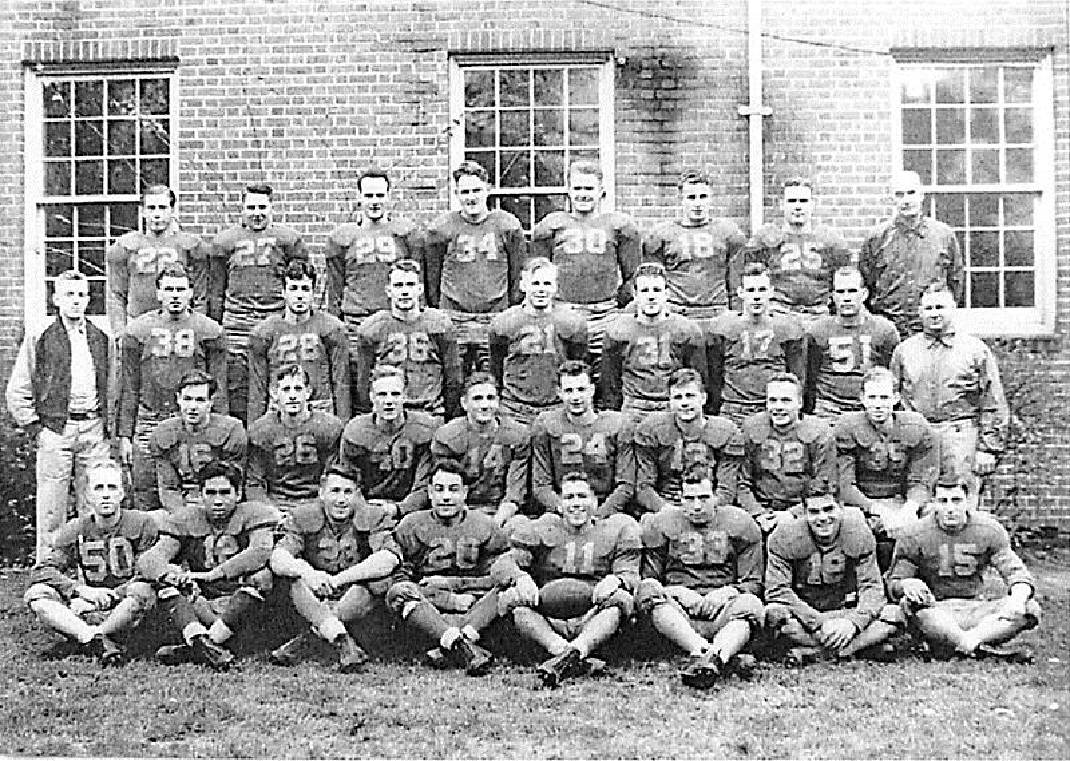
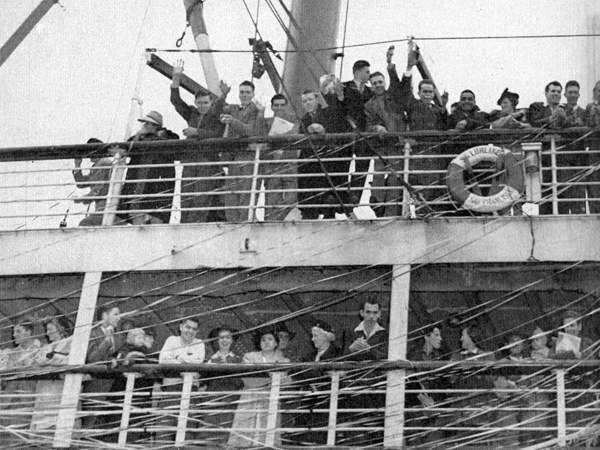
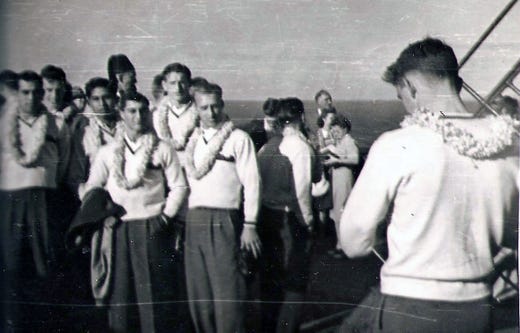
The two teams departed November 27 aboard the SS Lurline along with an entourage of fans, dignitaries and coaching staff. An outing like that was once in a lifetime. An unforgettable trip and so it was, only not for the reason any of them expected.

In December 1941, the San Jose Spartans and the Willamette Bearcats of Oregon, went on the road. They were college kids, enjoying a few days in paradise and a chance to play, the game they loved. What could be better than that?

The two teams departed November 27 aboard the SS Lurline along with an entourage of fans, dignitaries and coaching staff. The Rainbow Warriors of Hawaii defeated Willamette 20-6 on Saturday, December 6. The Warriors were scheduled to play San Jose State on December 13, followed by a Spartans- Bearcats matchup, on December 16.

An outing like that was once in a lifetime. An unforgettable trip and so it was, only not for the reason any of them expected.

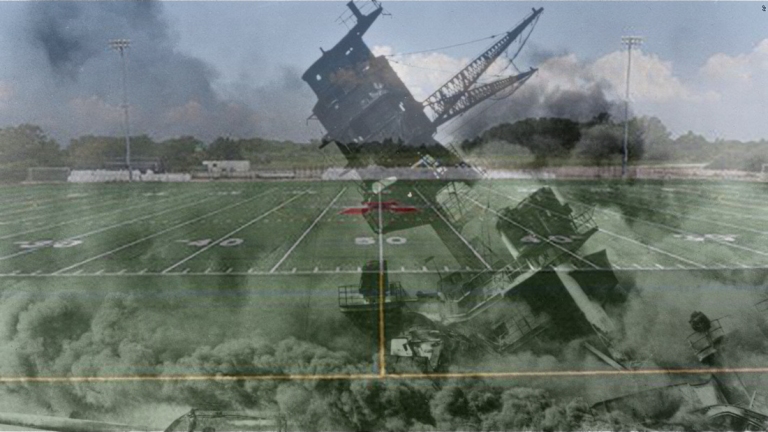
On December 7, 1941 a great sucker punch came out of the southeast. 353 Imperial Japanese warplanes attacked Hickam Air Field and the US Pacific Naval anchorage at Pearl Harbor, lying at peace in the early morning sunshine of a quiet Sunday morning. The sneak attack carried out 80 years ago yesterday destroyed more American lives than any foreign enemy attack on American soil, until the Islamist terrorist attack of September 11, 2001.

The President of the United States addressed a joint session of Congress on December 8, requesting a declaration of war against the Empire of Japan.

Back on the mainland, the families of players now stranded in Hawaii, received no word. There were no communications. None could know with certainty, that brothers and sons were alive or dead. Hawaii was locked down, under Martial Law.

Meanwhile, the visiting teams were mobilized to perform wartime duties. San Jose state players were sent to work with Federal authorities and Honolulu police to round up Japanese, Italian and German citizens, and to enforce wartime blackout orders. Willamette players were assigned World War 1-vintage Springfield rifles and tin hats, and ordered to string barbed wire on the beaches.

If you’ve heard of Punahou High School it probably involves the school’s most famous alumnus, the former US President Barack Obama. 80 years ago today all hell, was about to break loose at Punahou high.

United States Army Corps of Engineers troops began to appear at the Punahou gates at 1:00am, on December 8. By 5:00am, Dole Hall Cafeteria Manager Nina “Peggy” Brown was ordered to prepare breakfast, for 750 men. For the next ten days Willamette players stood 24-hour guard, around the school.

Many players had never so much as handled a gun. Now in the darkness every shadow carried the menace, of an enemy soldier. Wild gunfire would break out at the sound of a stealthy invader which turned out to be nothing, but a falling coconut. Shirley McKay Hadley was a Willamette student in 1941 accompanied by her father, then serving as state Senator. She joked it all, many years later, “They were lucky they didn’t shoot each other.”

Female members of the entourage were assigned nursing duties. Spartan Guard Ken Stranger delivered a baby, on December 7.

On December 19, players received two-hours notice. It was time to go. The civilian liner SS President Coolidge had been commandeered to transport gravely wounded service members. This would be the kids’ ride home complete with Naval escort, a defense against Japanese submarine attack.

Seven San Jose players stayed behind and joined the Honolulu police force , for which each was paid $166 a month. Willamette coach Roy “Spec” Keene refused to let any of his players stay behind as none had been able to speak with their parents, first.

Nearly every member of both squads went on to fight for the nation. Willamette Guard Kenneth Bailey was killed over Bari Italy in 1943 and awarded the Purple Heart, posthumously.

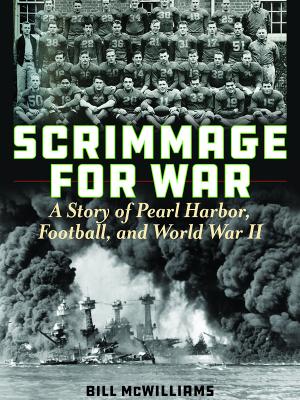
Bill McWilliams served 27 years in the United States Air Force, as a fighter bomber pilot. He’s written a book about 12 of these guys who went on to fight the conflict, of the “Greatest Generation”.

The book came out in 2019 and it’s still in print, if you’re interested. It looks like one hell of a story.

Andy Rogers played for the Willamette squad and went on to serve for the duration of the war, with the 3rd division of the United States Marine Corps. Mr. Rogers is 98 today and lives in Napa Valley, California. The only living member of either traveling squad who would have played that day, in the game that never was.

December 1, 2013 The First Full Day of Forever

Something sacred and wonderful happened back in 2013, and few of us heard about it, at the time.

November 11, nineteen short days ago, marked the end of World War One. Before they had numbers. “The Great War”. The “War to end all Wars”. There is barely a piece of 20th century history, you cannot trace back to that conflict.

International Communism was borne of the Great War, without which there would be no cold war, no Korean War, no war in Vietnam. The killing fields of Cambodia would remain in this alternative universe, mere fields. The spiritual descendants of Chiang Kai-shek’s brand of capitalism would today run all of China, and not some communist cabal.

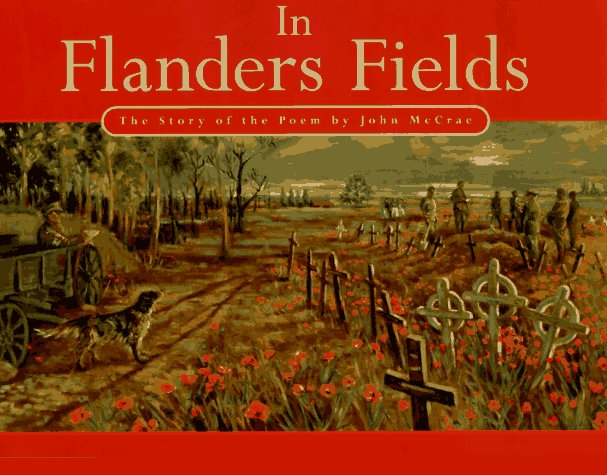
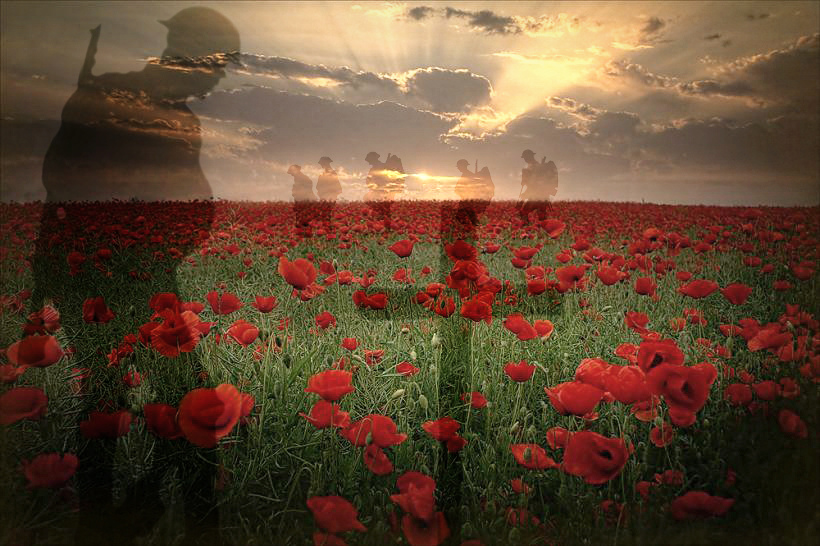
In Flanders Fields

The modern boundaries of the Middle East arose from the Great War. While the region’s tribal alliances and religious strife are nothing new those conditions would exist in a very different form, if not for those boundaries.

World War II, a conflagration which left more dead, wounded or missing than any conflict in human history (WWI ranks only number 5), was little more than the Great War, part II. A Marshall of France, on looking at the Versailles Treaty formally ending WWI, said “This isn’t peace. This is a cease-fire that will last for 20 years”.

He was off, by something like 36 days.

It’s hard to know how any of us can be participating citizens of a self-governing Republic, how we can know where we want the country to go, if we don’t understand where it’s been. It’s a principle reason to study, history. It’s why I believe something wonderful happened back in 2013, and few of us heard about it.

In the summer of 2013, over 1,000 British and Belgian schoolchildren visited seventy battlefields of the Great War. Ypres. Passchendaele. Verdun. The Somme. All over Northern France and Belgium, the region known as “Flanders”. There those children collected samples of the sacred soil from those fields of conflict.

_77985394_020167620-1

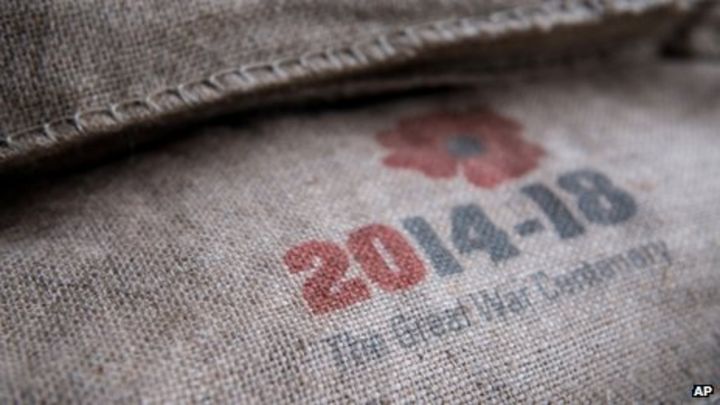
The soil was placed in WWI-style burlap sandbags, each stenciled with a red poppy, where it came from, and the dates. 70 sandbags were transported to London and brought to Wellington Barracks, the central London home to some of the most elite regiments in the British military, regiments dating back to the time of the English Civil Wars who gave so many of their own, to the soil of Flanders Fields.

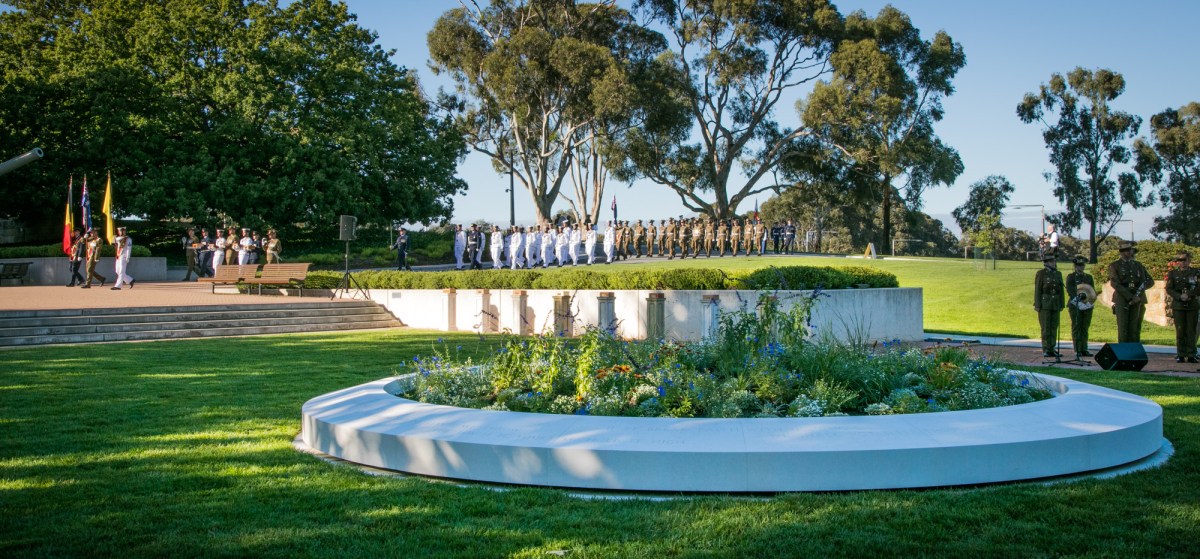
There at Wellington Barracks next to Buckingham Palace a garden was being built. The soil of the Great War would nourish and support that garden, planted to be made ready for the following year, and the solemn 100-years’ remembrance of the War to end all Wars.

_71447576_soil4_getty

That day, December 1, 2013, was for the Flanders Fields Memorial Garden, the first full day of forever.

I cannot think of anything more fitting than that it was children, our own future and posterity, who retrieved the sacred soil of Flanders and brought it to that garden.

It is now for that posterity to keep our shared history alive, and never let it fade into some sepia-toned remnant of a forgotten past.

November 18, 1978 Jonestown

The visit of the 17th was cordial at first, with Jones himself hosting a reception in the central pavilion.  Underlying menace soon came to the surface as a few Temple members expressed the desire, to leave with the delegation.

Those who remember him as a child spoke of a “really weird kid“, obsessed with religion and death.  He’d hold elaborate, pseudo-religious ceremonies at the house, mostly funerals for small animals.  How James Warren Jones got all those dead animals, was a matter for dark speculation.

1536936987137.jpeg

It was depression-era rural Indiana, in the age of racial segregation.  Father and son often clashed over issues of race.  The two didn’t talk to each other for years one time, after the time the elder Jones refused to let one of his son’s black friends, into the house.

Jim Jones was a bright boy, graduating High School with honors, in 1949.  He was a voracious reader, studying the works of Stalin, Marx, Mao, Gandhi and Hitler and carefully noting the strengths and weaknesses, of each.

Jones married Marceline Baldwin in 1949 and moved to Bloomington, Indiana, where he attended Indiana University and later Butler University night school, earning a degree in secondary education.

A long-standing interest in leftist politics heightened during this period, when Jones became a regular at Communist Party-USA meetings.  There he would rail against the McCarthy hearings, and the trials of Julius and Ethel Rosenberg.

Jones recalled he later asked himself, “How can I demonstrate my Marxism? The thought was, infiltrate the church.”

jim-jones-red-robe-ht-jef-180925_hpEmbed_21x16_992.jpg“Reverend” Jim Jones got his start as a student pastor at the Sommerset Southside Methodist Church but soon left, over issues of segregation.  This was the age of Jim Crow and Jones, was a Social Justice Warrior .

636150546188409893-1492665.jpg

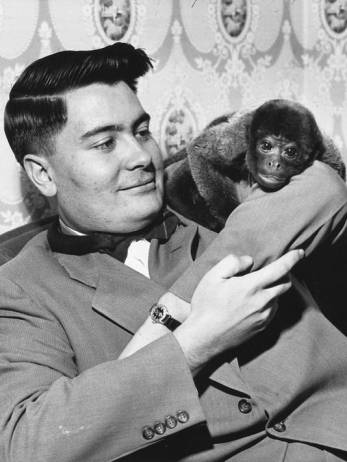
The New York Times reported in 1953, “declaring that he was outraged at what he perceived as racial discrimination in his white congregation, Mr. Jones established his own church and pointedly opened it to all ethnic groups. To raise money, he imported monkeys and sold them door to door as pets.”

Jones witnessed a faith-healing service and came to understand the influence to be had, from such an event.  He arranged a massive convention in 1956, inviting the Oral Roberts of his day, as keynote speaker. Reverend William Branham did not disappoint.  Soon, Reverend Jones opened his own mission with an explicit focus on racial integration. 

Thus began the Peoples Temple of the Disciples of Christ.

Jones’ integrationist politics did little to ingratiate himself in 1950s rural Indiana.  Mayor and commissioners alike asked him to tone it down, while he received wild applause at NAACP and Urban League conventions with speeches rising to a thundering crescendo:  “Let My People GO!!!”

Jones spoke in favor of Kim Il-sung’s invasion of South Korea, branding the conflict a “war of liberation” and calling South Korea “a living example of all that socialism in the north has overcome.

Jim and Marcelline adopted three Korean orphans, beginning what would become a family of nine including their only biological child, Stephan Ghandi.  The couple adopted a black boy in 1961 and called him Jim Jr., the Jones’ “rainbow family” a reflection of the pastor’s congregation.

jim-jones-family-pic-01-ht-jef-180925_hpMain_4x3_992An apocalyptic streak began to show, as Jones preached of nuclear annihilation. He traveled to Brazil for a time, in search of a safe place for the coming holocaust.  He even gave it a date:  July 15, 1967. On returning from Brazil, the “Father” spoke to his flock.  Jones’ “children” would have to move.  To northern California, to a new and perfect, socialist, Eden.

4710360004_3f8f97efbd_o
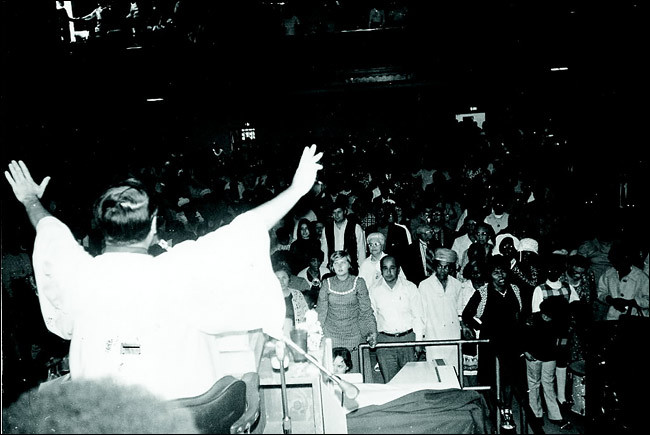
Jim Jones preaching, 1971

For Jim Jones, religion was never more than a means to an end. ”Off the record” he once said in a recorded conversation, “I don’t believe in any loving God. Our people, I would say, are ninety percent atheist. Uh, we— we think Jesus Christ was a swinger…I must say, I felt somewhat hypocritical for the last years as I became uh, an atheist, uh, I have become uh, you— you feel uh, tainted, uh, by being in the church situation. But of course, everyone knows where I’m at. My bishop knows that I’m an atheist.

Faith healing.  The California days

Jones referred to himself as the reincarnation of Mohandas Gandhi. Father Divine. Jesus, Gautama Buddha and Lenin, all rolled into one. “What you need to believe in is what you can see…. If you see me as your friend, I’ll be your friend. As you see me as your father, I’ll be your father, for those of you that don’t have a father…. If you see me as your savior, I’ll be your savior. If you see me as your God, I’ll be your God.”

The years in California were a time of rapid expansion from Temple Headquarters in San Francisco to locations up and down the “Golden State”.  Jones hobnobbed with the who’s who of Democratic politics, from San Francisco Mayor George Moscone to Presidential candidate Walter Mondale. Even First Lady Rosalynn Carter.

“If you’re born in capitalist America, racist America, fascist America, then you’re born in sin. But if you’re born in socialism, you’re not born in sin.”

Jim Jones

California Assemblyman Willie Brown called Jones a combination of Martin Luther King, Jr., Angela Davis, Albert Einstein and Mao Tse Tung.  Harvey Milk wrote to Jones after one visit: “Rev Jim, It may take me many a day to come back down from the high that I reach today. I found something dear today. I found a sense of being that makes up for all the hours and energy placed in a fight. I found what you wanted me to find. I shall be back. For I can never leave.

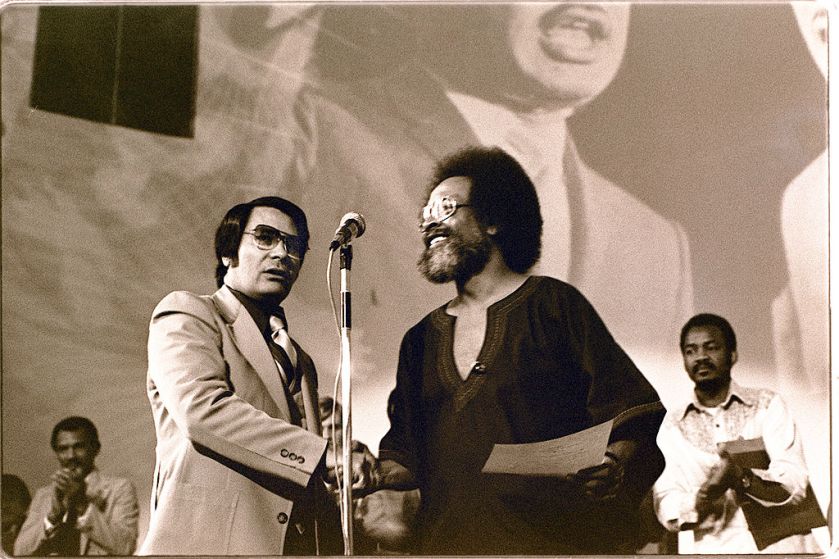
Jim_Jones_shakes_hands_with_Cecil_Williams_-_January_1977
“Jones receives a Martin Luther King, Jr. Humanitarian award from Pastor Cecil Williams, 1977” H/T Wikipedia

Meanwhile, Jones was building the perfect socialist utopia in the South American jungles of Guyana, formally known as the “Peoples Temple Agricultural Project”.  Most simply called the place, “Jonestown”.

San Francisco Chronicle reporter Marshall Kilduff wrote in the summer of 1977, telling a grotesque tale of physical and sexual abuse, of brainwashing and emotional domination. Chronicle editors balked and Kilduff published the piece in the New West Magazine.

That was when Jones and his congregation left town and fled.  To Guyana.

A long standing drug addiction became more pronounced in Jonestown where the preacher spoke of the gospel of “Translation”, a weird crossing over from this life to some other, finer, plane.

Some 68 percent of Jonestown faithful were black at this time, congregants who somehow got something from this place, they couldn’t get at home.  Inclusion.  Fulfillment.  Acceptance.  Whatever it was, the cult of Jonestown was mostly, a world of willing participants.

Mostly, but not entirely.  Those who entered Jonestown were not allowed to leave.  Those who escaped told outlandish tales of abuse:  mental, physical and sexual.

Former members of the Temple formed a “Concerned Relatives” group in the Fall of 1977, to publicize conditions afflicting family members, still in the cult.

1506309501695-jonestown-commune
Jonestown compound, Guyana

Concerned Relatives produced a packet of affidavits in April 1978, entitled “Accusation of Human Rights Violations by Rev. James Warren Jones“.  Jones’ political support began to weaken as members of the press and Congress, took increasing interest.

California Congressman Leo Ryan led a fact-finding mission that November, to see things for himself.  The Congressional Delegation (CoDel) arrived at the Guyanese capital on November 15, with NBC camera crew and newspaper reporters, in tow.

a35dea6f-37bc-473b-977f-b1edb580da9d
Congressman Ryan arrives at Jonestown

The delegation traveled by air and drove the last few miles to Jonestown, by limo. The visit of the 17th was cordial at first, with Jones himself hosting a reception in the central pavilion.  Underlying menace soon came to the surface as a few Temple members expressed the desire, to leave with the delegation. Things went from bad to worse when temple member Don Sly attacked Congressman Ryan with a knife, the following day.

BobBrownKaituma
NBC photographer Bob Brown took this shot, of the shooters

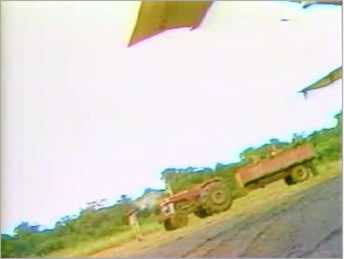
Ryan’s hurried exit with fifteen members of the Temple met with no resistance. At first. The CoDel was boarding at the small strip in Port Kaituma, when Jones’ “Red Brigade” pulled up in a farm tractor, towing a trailer.   The new arrivals opened fire, killing Congressman Ryan and four others.  One of the supposed “defectors” produced a weapon and wounded, several more.

download - 2019-11-18T082734.667.jpg

Back at the compound, Jones lost an already tenuous grasp on reality.

Fearing assault by parachute, lethal doses of cyanide were distributed along with grape “Flavor Aid” for 900-plus members of the People’s Temple, including 304 children.

This wasn’t the first time the Jonestown flock believed they were ingesting poison, for The Cause.  It was about to be the last.

Jones spoke with an odd lisp which seemed to grow more pronounced, at times of excitement. You can hear it in the 45 minute “death tape“ below, his words sometimes forming a perfect “S“ and at other times, lapsing into a soft “TH” or some combination, of the two.

You can hear it clearly, in the recording.  Heads up dear reader.  If you care to listen, it’s 45-minutes of tough sledding.

Jonestown “Death Tape”  November 18, 1978

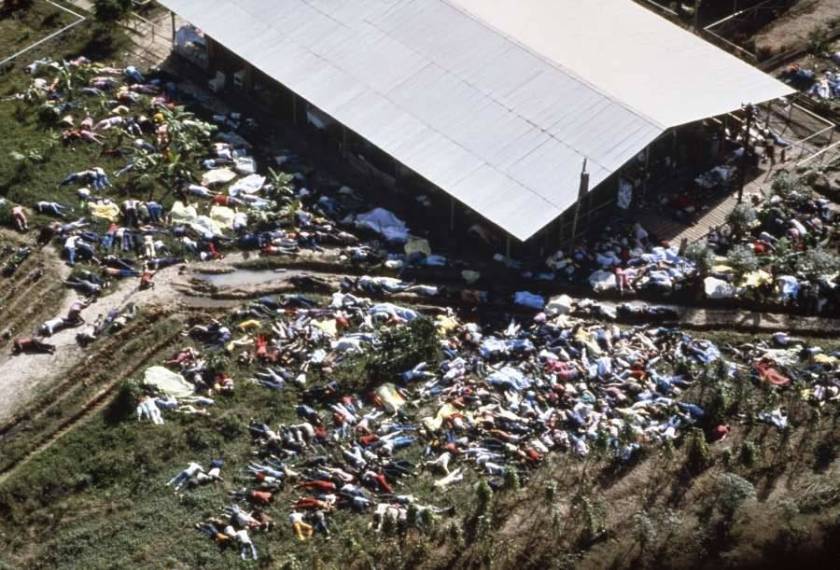
909 people lost their lives in the murder/suicide of November 18, 1978, at the Jonestown compound, the Kaituma air strip and the Temple-run building in the Guyanese capital city, of Georgetown. It was the largest loss of civilian life in American history, until the Islamist terrorist attacks of September 11, 2001.

interesting-historical-events-jonestown.jpg
Jones:  How very much I’ve loved you. How very much I’ve tried, to give you the good life…We are sitting on a powder keg…I don’t think that’s what we wanted to do with our babies…No man takes my life from me, I lay my life down…If we can’t live in peace, then let us die in peace.
Christine [Miller]: Is it too late for Russia?
Jones: Here’s why it’s too late for Russia. They killed. They started to kill. That’s why it makes it too late for Russia. Otherwise I’d said, “Russia, you bet your life.” But it’s too late.
Unidentified Man: Is there any way if I go, that it’ll help?
Jones: No, you’re not going. You’re not going.
Crowd: No! No!
Jones: I haven’t seen anybody yet that didn’t die. And I’d like to choose my own kind of death for a change. I’m tired of being tormented to hell, that’s what I’m tired of.
Crowd: Right, right.
Jones: Tired of it.
Unidentified Man: It’s over, sister, it’s over … we’ve made that day … we made a beautiful day and let’s make it a beautiful day … that’s what I say.
“A lot of people are tired around here, but I’m not sure they’re ready to lie down, stretch out and fall asleep”. Jim Jones

November 15, 1873 Forever Faithful

When it comes to loyalty, it’s hard to beat the love of a dog.

According to National Geographic, “Wolves were the first animal to be domesticated, sometime between 33,000 and 11,000 years ago“. The first wolf may have approached some campfire, looking for a morsel.  Maybe someone took in a sick or injured pup. Wolf packs may have shadowed human hunting parties, the two groups learning to work together for their own mutual benefit. The facts are lost to history, but one thing is certain. When it comes to loyalty, it’s hard to beat the love of a dog.

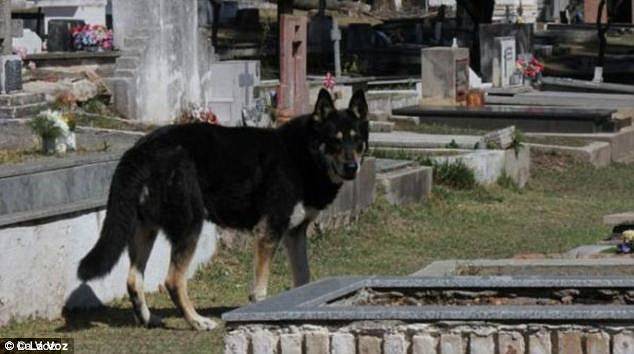
Miguel Guzmán of Cordoba Argentina, died in 2006. The following day Capitán, the family’s German Shepherd, disappeared. Mrs. Guzmán and the couple’s son searched all day, until the dog arrived at the cemetery. Forty-five minutes away. No one knows how he got there. The family claims they didn’t bring him. Cemetery director Hector Baccega remembers when he first saw the dog: ‘He turned up here one day, all on his own, and started wandering all around the cemetery until he eventually found the tomb of his master”.

434B6A2000000578-0-image-a-116_1502877093313
Capitan. H/T Guardian, for this image

Capitán was brought home but he came back, the following day. Baccega describes what has since become, routine: “During the day he sometimes has a walk around the cemetery, but always rushes back to the grave. And every day, at six o’clock sharp, he lies down on top of the grave [and] stays there all night”.

Capitán lived to fifteen or sixteen, old for a large breed, and died in February 2018, in the cemetery in which he had lived. He was crippled and mostly blind by the time he went to join his “Dad”. 

Who knows. I certainly don’t. Maybe they really Are, together again.

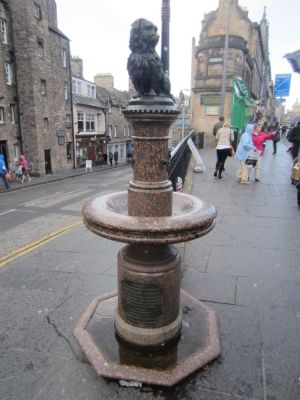
“Greyfriar’s Bobby” was a Skye Terrier in 19th-century Edinburgh, who waited 14 years by the grave of his owner, Police night watchman, John Gray.  He died there in 1872 and was buried in the Greyfriars Kirkyard, not far from where his master lay.

Artist William Brodie created a life-sized likeness atop the Greyfriars Bobby Fountain in Edinburgh. Paid for by local aristocrat Baroness Burdett-Coutts, the memorial was formally unveiled on November 15, 1873

200365253-114256-400
Greyfriars Bobby

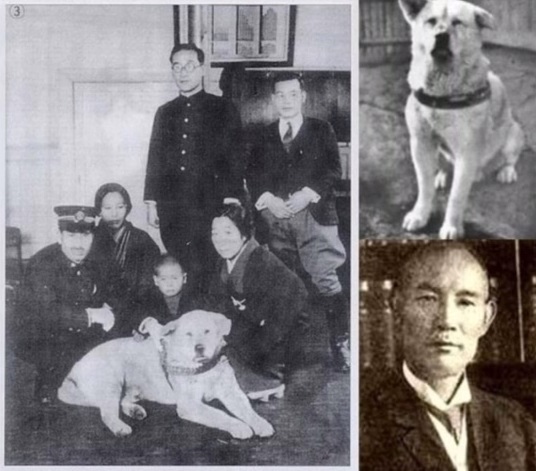
Hidesaburō Ueno taught agriculture during the interwar years at Tokyo University. Every day, Ueno would take the train to work from Shibuya Station. In the evening, the professor’s golden colored Akita “Hachikō” would always be there waiting, at the station.

Hidesaburō stopped coming home one day in May 1925 after a cerebral hemorrhage took him away, in the middle of a lecture. Every day for nine years, nine months and fifteen days, the Akita appeared at Shibuya Station, precisely on time for that evening train.

Japanese children know the golden colored Akita as chūken Hachikō. “Faithful dog Hachikō”.

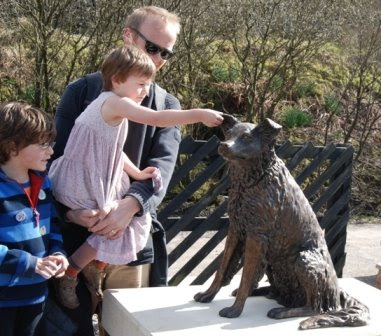
Ruswarp was a fourteen-year old Border Collie who went hiking with Graham Nuttall on January 20, 1990 in the Welsh Mountains, near Llandrindod.

On April 7, a hiker discovered Nuttall’s body near a mountain stream. The dog had been standing guard, for eleven weeks.

Feeling Ruswarp Statue
Ruswarp, the Border collie

Ruswarp was so weak he had to be carried off the mountain and died, shortly thereafter. Can there be any doubt the dog would have expired right there by Graham’s side, had he not been discovered.

Today there’s a small monument erected in the memory of this extraordinary animal, on a platform near the Garsdale railway station.

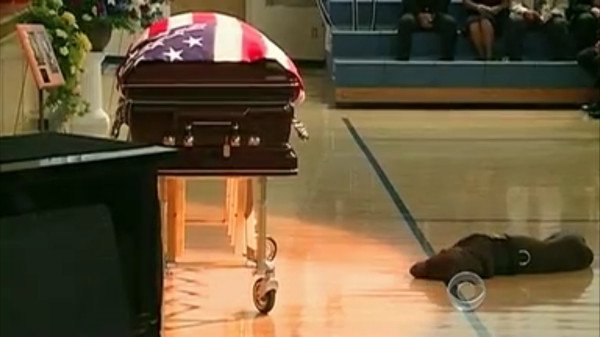
In the early morning hours of August 6, 2011, 30 American military service members including 22 United States Navy SEALs were killed along with eight Afghans, SEAL Team 6 handler John “Jet Li” Douangdara and his Military Working Dog (MWD) “Bart”. The Chinook helicopter in which they were all riding was shot down by a rocket-propelled grenade in the Kunar Province, of Afghanistan.

To anyone around at that time, the images of “Hawkeye”, together for the last time with slain Navy SEAL Jon Tumilson,  are hard to forget.

Hawkeye-and-Tumilson

In 1936, a sheep dog called “Shep” belonged to a herder whose name is now, lost to history. This was near Fort Benton, in Montana.

The man fell ill and was taken, to a local hospital. For over a week, Shep waited at the hospital, for his master to return. On the 11th day the man died, his casket taken to the local train station and placed in the cargo hold, to be returned home for burial.

Shep was there throughout and watched the train chug away with the body of his “Dad”. He’d return to that hospital door where a kindly nun would feed him a scrap, but every time he heard that train whistle, there was a sheepdog waiting at the station.

In those days, there were four trains a day. For nearly six years, Shep returned to the station, every time he heard that whistle. He even dug a den for himself, near the track.

Passengers took the Havre to Great Falls rail line just to see the dog. Shep received so much fan mail, the Great Northern Railroad assigned a secretary to write responses.

In time, the old boy wasn’t quite as fast as he used to be, his hearing not so good. On January 12, 1942, “Forever Faithful” Shep was struck and killed on the tracks, waiting for a man who could never return.

Stories like these are enough to fill a book, if not a library. I’m not a big one for bumper stickers but, if I were, this would be my first: “Lord, make me half the man my dog thinks I am“.

The CCC lives with his three “Chicas”, Margarita, Roxana and JoJo. They’re all rescues, from Cozumel. Of course, there has to be a margarita.

November 11, 1918 The 11th Hour

In the end, starvation and malnutrition stalked the land at home as well as the front with riots at home and mutiny, in the trenches. The Russian Empire of the Czars had collapsed into a Bolshevik hellhole, never to return.  Nearly every combatant saw the disintegration of its domestic economy, or teetering on the brink.

In an alternate history, the June 1914 assassination of the heir-apparent to the Habsburg Empire may have led to nothing more, than a regional squabble.  Wiser heads could have prevailed, the diplomatic crisis of July resulting in nothing more than a policing action in the Balkans.

As it was, mutual distrust and entangling alliances combined with slavish obedience to mobilization timetables, to draw the Great Powers of Europe into the vortex.  On August 3, the “War to End All Wars” exploded across the European continent.

Many of the soldiers who went off to war in those days, viewed the conflict as some kind of grand adventure. Many of them sang patriotic songs as the young men and boys of Russia, Germany, Austria and France stole last kisses from wives and sweethearts, and boarded their ships and trains.

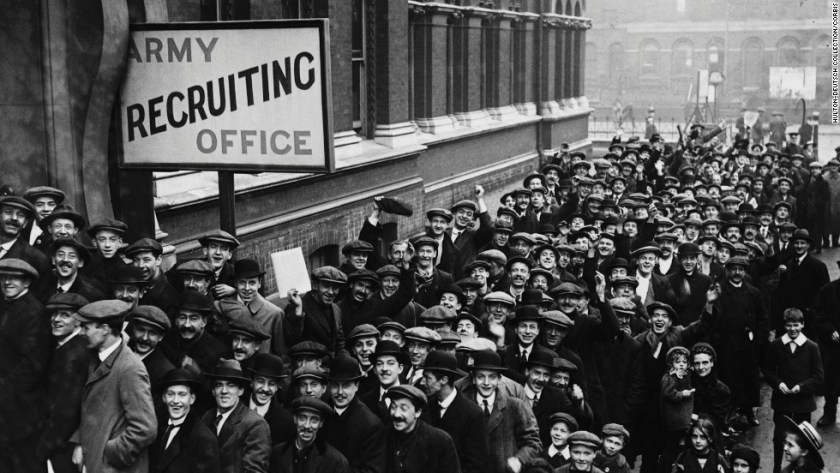
Believing overwhelming manpower to be the key to victory, British Secretary of State for War Lord Horatio Kitchener recruited friends and neighbors by the tens of thousands into “Pal’s Battalions”, to fight for King and country.

140604153439-19-wwi-main-timeline-0604-restricted-horizontal-large-gallery
The signs could have been written in any number of languages, in the early phase of the war

Over the next four years a generation would be chewed up and spit out, in pieces.

Many single day’s fighting of the great battles of 1916 produced more casualties than every European war of the preceding 100 years, civilian and military, combined.

6,503 Americans lost their lives during the savage, month-long battle for Iwo Jima, in 1945. The first day’s fighting during the 1916 Battle of the Somme killed three times that number on the British and Commonwealth side, alone.

battle_of_the_somme_in_pictures_1
Over 1.5 million shells were fired in the days leading to the battle of the Somme

Over 16 million were killed and another 20 million wounded while vast stretches of the European countryside were literally, torn to pieces. Tens of thousands remain missing, to this day.

Had you found yourself in the mud and the blood, the rats and the lice of the trenches during the New Year of 1917-’18, you could have heard a plaintive refrain drifting across the barbed wire and frozen wastes of no man’s land, sung to the tune of “Auld Lang Syne”.

We’re here, because we’re here,
because we’re here, because we’re here,
we’re here, because we’re here,
because we’re here, because we’re here.

cher-ami
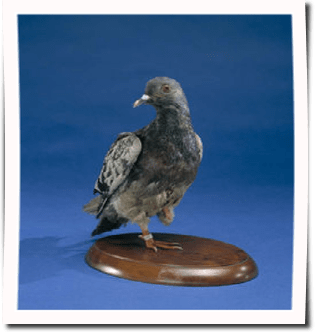
Cher Ami

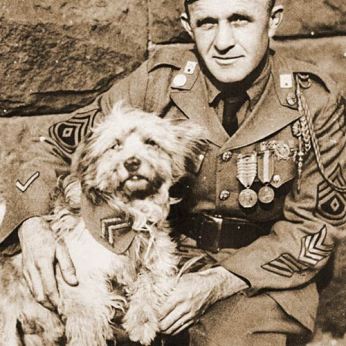
Those who fought the “Great War”, were not always human.  The carrier pigeon Cher Ami escaped a hail of bullets and returned twenty-five miles to her coop despite a sucking chest wound, the loss of an eye and a leg that hung on, by a single tendon.  The message she’d been given to carry, saved the lives of 190 men.

“Warrior” was the thoroughbred mount to General “Galloper” Jack Seely, arriving in August 1914 and serving four years “over there”. “The horse the Germans can’t kill” survived snipers, poison gas and shellfire to be twice buried alive in great explosions, only to return home to the Isle of Wight, and live to the ripe old age of 33.

18-03-23-thumb
First division Rags

First Division Rags” ran through a torrent of shells, gassed and blinded in one eye, a shell fragment damaging his front paw, yet still, he got his message through.

Jackie the baboon lost a leg during heavy bombardment from German guns while frantically building a protective rock wall to shelter himself from what the German soldier Ernst Jünger later called, the “Storm of Steel”.

Tirpitz the German pig jumped clear of the sinking light cruiser SMS Dresden and would serve out the war not in a frying pan but as mascot to the HMS Glasgow.

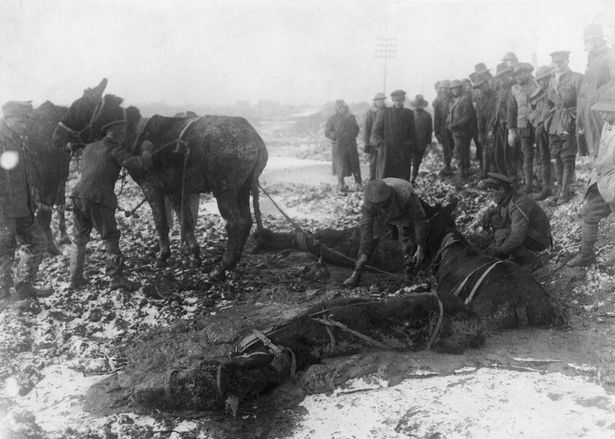
Sixteen million animals served on all sides and in all theaters of WW1:  from cats to canaries, to pigeons and mules, camels, donkeys and dogs.  As “dumb animals”, none were given the choice to “volunteer”.  And yet serve they did, some nine million animals making the supreme sacrifice.

WW1-animals
British Army mules in the mud of the western front, 1918

In the end, starvation and malnutrition stalked the land at home as well as the front with riots at home and mutiny, in the trenches. The Russian Empire of the Czars had collapsed into a Bolshevik hellhole, never to return.  Nearly every combatant saw the disintegration of its domestic economy, or teetering on the brink.
A strange bugle call came out of the night of November 7, 1918. French soldiers of the 171st Régiment d’Infanterie, stationed near Haudroy, advanced into the fog and the darkness, expecting that they were about to be attacked. Instead, they were shocked to see the apparitions of three sedans, their sides displaying the German Imperial Eagle.

Imperial Germany, its army disintegrating in the field and threatened with revolution at home had sent a peace delegation, headed by the 43-year-old politician Matthias Erzberger.

The delegation was escorted to the Compiegne Forest near Paris, to a conference room fashioned from a railroad dining car. There they were met by a delegation headed by Ferdinand Foch, Marshall of France.

Adolf Hitler would gleefully accept French surrender in the same rail car, some twenty-two years later.

original-french-postcard-showing-the-wagon-in-which-the-ww1-armistice-M1B0DJ

The German delegation was shocked at the words that came out of Foch’s mouth. ‘Ask these gentlemen what they want,’ he said to his interpreter. Stunned, Erzberger responded. The Germans believed they were there to discuss terms of an armistice. Foch dropped the hammer: “Tell these gentlemen that I have no proposals to make”.

Ferdinand Foch had seen his country destroyed by war. He had vowed “to pursue the Feldgrauen (Field Grays) with a sword at their backs”. He had no intention of letting up.

Marshall Foch now produced a list of thirty-four demands, each one a sledgehammer blow on the German delegation. Germany was to divest herself of all means of self-defense, from her high seas fleet to the last machine gun. She was to withdraw from all lands occupied since 1870. With the German population at home facing starvation, the allies were to confiscate 5,000 locomotives, 150,000 rail cars and 5,000 trucks.

1200px-Waffenstillstand_gr

With 2,250 dying every day on the Western Front, Foch informed Erzberger he had 72 hours in which to respond. “For God’s sake, Monsieur le Marechal”, responded the German, “do not wait for those 72 hours. Stop the hostilities this very day”.  Even so, the plea fell on deaf ears. Fighting would continue until the last minute, of the last day.

The German King, Kaiser Wilhelm, abdicated on the 10th as riots broke out in the streets of Germany. The final surrender was signed at 5:10am on November 11 and back-timed to 5:00am Paris time, scheduled to go into effect later that morning. The 11th hour, of the 11th day, of the 11th month.

The order went out to that effect. The war would be over in hours, but there were no other instructions.

Some field commanders ordered their men to stand down. Why fight and die over ground they could walk over in just a few hours?

the-last-soldier-killed-in-wwi-died-one-minute-before-the-war-ended
The last six hours

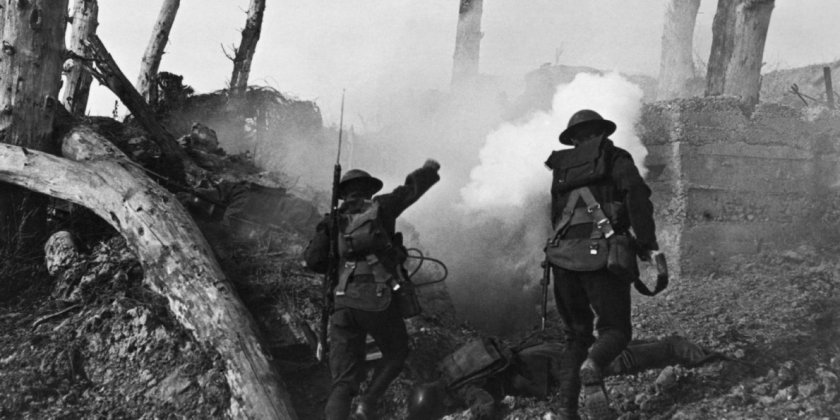
Many continued the attack, believing that Germany had to be well and truly beaten. Others saw their last chance at glory or promotion. An artillery captain named Harry S Truman, kept his battery firing until only minutes before 11:00.

English teacher turned Major General Charles Summerall had a fondness for the turn of phrase. Ordering his subordinates across the Meuse River in those final hours, Summerall said “We are swinging the door by its hinges. It has got to move…Get into action and get across. I don’t expect to see any of you again…

No fewer than 320 Americans were killed in those final six hours, another 3,240 seriously wounded.

7fe16b6c9f770b107480c9ca6c28e87c

Still smarting from the disastrous defeat at Mons back in 1914, British High Command was determined to take the place back, on the final day of the war. The British Empire lost more than 2,400 in those last 6 hours.

The French 80th Régiment d’Infanterie received two orders that morning – to launch an attack at 9:00, and cease-fire at 11:00. French losses for the final day amounted to 1,170. The already retreating Germans suffered 4,120.

One-hundred-three years ago today all sides suffered over 11,000 dead, wounded, and missing in those final six hours. Some have estimated that more men died per hour after the signing of the armistice, than during the D-Day invasion, 26 years later.

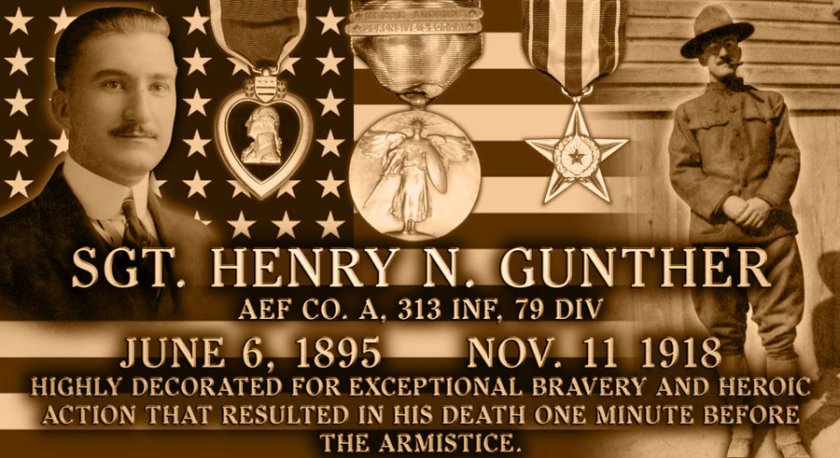
Over in the Meuse-Argonne sector, Henry Gunther was “visibly angry”.   Perhaps this American grandson of German immigrants felt he had something to prove.  Anti-German bias had not reached levels of the next war, when President Roosevelt interned Americans of Japanese descent.  Yet, such bias was very real.  Gunther’s fiancé had already broken up with him. He’d recently been busted in rank, after writing home complaining about conditions at the front.

Bayonet fixed, Gunther charged the enemy machine gun position, as German soldiers frantically waved and yelled for him, to go back. He got off a “shot or two”, before the five round burst tore into his head. Henry Nicholas John Gunther of Baltimore Maryland was the last man to die in combat, in the Great War.  It was 10:59am.  The war would be over, in sixty seconds.

Sargeant-Henry-Gunther

After eight months on the front lines Corporal Joe Rodier of Worcester Massachusetts, was jubilant.   “Another day of days“.   Rodier wrote in his diary.  “Armistice signed with Germany to take effect at 11 a.m. this date. Great manifestations. Town lighted up at night. Everybody drunk, even to the dog. Moonlight, cool night & not a shot heard“.

Matthias Erzberger was assassinated in 1921, for his role in the surrender. The “Stab in the Back” mythology destined to become Nazi propaganda, had already begun.

AEF Commander General John “Black Jack” Pershing believed the armistice to be a grave error. He believed that Germany had been defeated but not beaten, and that failure to smash the German homeland meant that the war would have to be fought, all over again. Ferdinand Foch agreed. On reading the Versailles treaty in 1919, Foch remarked “This isn’t peace! This is a truce that will last for 20 years”.

The man got it wrong, by 36 days.

On a personal note:
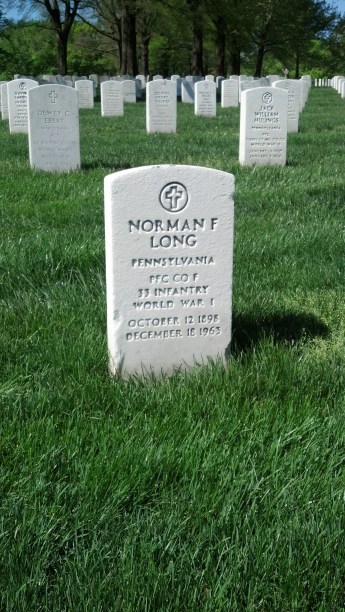
Norman Francis Long

PFC Norman F. Long was wounded during the Great War, a member of the United States Army, 33rd Pennsylvania Infantry.  He left us on December 18, 1963, only hours before his namesake, my brother Norm, was born.

My father’s father went to his final rest on Christmas eve of 1963, in Arlington National Cemetery.  Section 41, grave marker 2161.

At 63 I remember still, the pleasures of a little boy fishing with his grandfather. Just as I myself will one day take my granddaughter fishing and a bridge some sixty years in the building, will have been crossed.

Rest in peace, Grampa.  You left us, too soon.

November 8, 1965 Kill or Be Killed

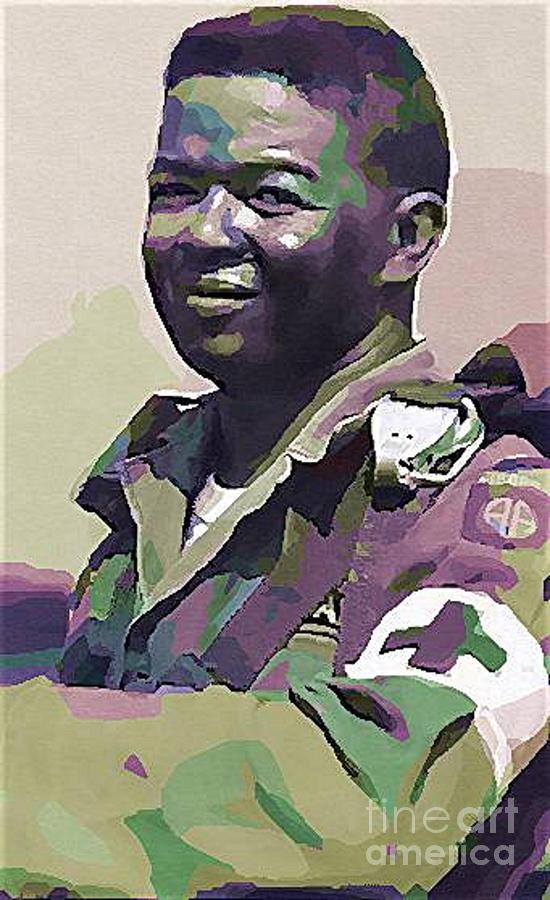
On this day in 1965, the 173rd Airborne Infantry Brigade was halfway through a one-year term of service, in Vietnam. “Operation Hump”, so named in recognition of that mid-point, was a search and destroy mission inserted by helicopter, on November 5.

Vietcong fighters occupied positions on several key hills near Bien Hoa, with the objective of driving the Americans out.

Operation hump, 2

There was little contact through the evening of the 7th, when B and C Companies of the 1/503rd took up a night defensive position in the triple canopied jungle near Hill 65.

On the morning of the 8th, the Brigade found itself locked in combat with an entire main line Vietcong Regiment, pouring out of entrenched positions and onto the American defenses.

The Vietcong were well aware of American superiority when it came to artillery and air cover. The VC strategy was to get in close enough to nullify the advantage. “Grab Their Belts to Fight Them”.

Operation hump, 4

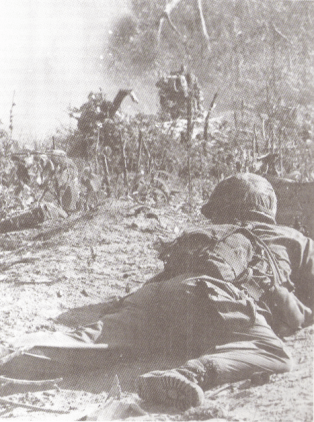
Outnumbered in some places six to one, it was a desperate fight for survival as parts of B and C companies were isolated in fighting that was shoulder to shoulder, hand to hand.

Shot through the right thigh and calf with his medical supplies depleted, Army Medic Lawrence Joel hobbled about the battlefield on a makeshift crutch, tending to the wounded.

Though himself wounded, Specialist 4 Randy Eickhoff ran ahead, providing covering fire. Eickhoff was later awarded the Silver Star and Purple Heart for his actions.

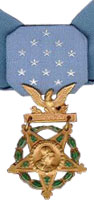
Specialist 5 Joel received the Medal of Honor for his actions that day, near hill 65.  Let Joel’s citation, tell his part of the story:

Cmoh_army

For conspicuous gallantry and intrepidity at the risk of life above and beyond the call of duty. Specialist 5 Joel demonstrated indomitable courage, determination, and professional skill when a numerically superior and well-concealed Viet Cong element launched a vicious attack which wounded or killed nearly every man in the lead squad of the company. After treating the men wounded by the initial burst of gunfire, he bravely moved forward to assist others who were wounded while proceeding to their objective. While moving from man to man, he was struck in the right leg by machine gun fire. Although painfully wounded his desire to aid his fellow soldiers transcended all personal feeling. He bandaged his own wound and self-administered morphine to deaden the pain enabling him to continue his dangerous undertaking. Through this period of time, he constantly shouted words of encouragement to all around him. Then, completely ignoring the warnings of others, and his pain, he continued his search for wounded, exposing himself to hostile fire; and, as bullets dug up the dirt around him, he held plasma bottles high while kneeling completely engrossed in his life saving mission. Then, after being struck a second time and with a bullet lodged in his thigh, he dragged himself over the battlefield and succeeded in treating 13 more men before his medical supplies ran out. Displaying resourcefulness, he saved the life of one man by placing a plastic bag over a severe chest wound to congeal the blood. As 1 of the platoons pursued the Viet Cong, an insurgent force in concealed positions opened fire on the platoon and wounded many more soldiers. With a new stock of medical supplies, Specialist 5 Joel again shouted words of encouragement as he crawled through an intense hail of gunfire to the wounded men. After the 24 hour battle subsided and the Viet Cong dead numbered 410, snipers continued to harass the company. Throughout the long battle, Specialist 5 Joel never lost sight of his mission as a medical aid man and continued to comfort and treat the wounded until his own evacuation was ordered. His meticulous attention to duty saved a large number of lives and his unselfish, daring example under most adverse conditions was an inspiration to all. Specialist 5. Joel’s profound concern for his fellow soldiers, at the risk of his life above and beyond the call of duty are in the highest traditions of the U.S. Army and reflect great credit upon himself and the Armed Forces of his country“.

lawrence-joel-popart-lawrence-joel

48 Americans lost their lives in the battle. Many more were wounded. Two Australian paratroopers were recorded, MIA. Their remains were discovered years later and repatriated, in 2007.

The country music duo Big and Rich wrote a musical tribute to that day. It’s called the 8th of November.

The children at YouTube have chosen to place this video behind an “age restriction”. You will do well to ignore YouTube. Those people are fools.

November 7, 1957 Nuke the Moon

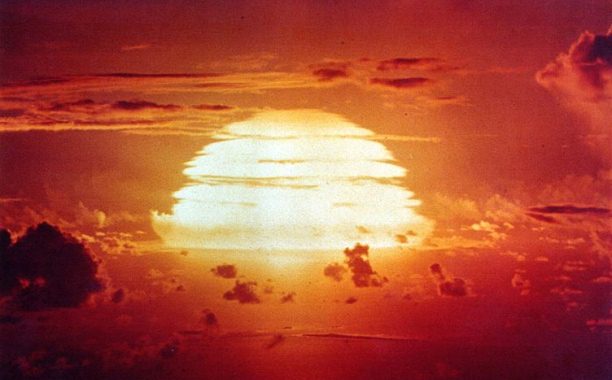
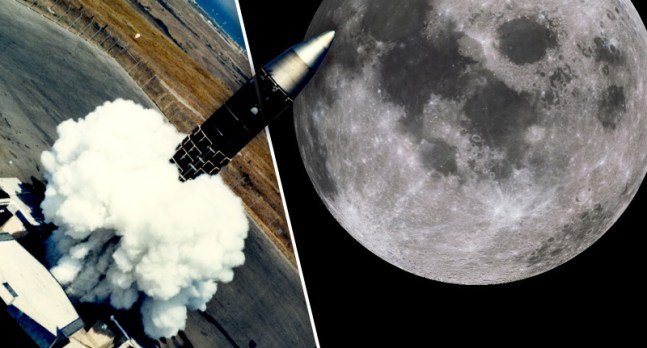
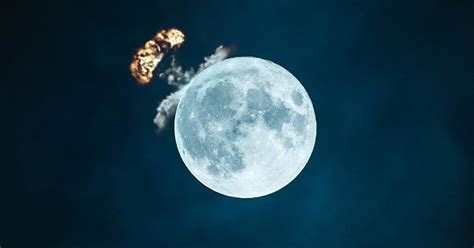
Out of the mess of the Space race emerged an idea destined to go down in the Hare-Brain Hall of fame, if there is ever to be such a place. A show of force sufficient to boost domestic morale while showing the Russkies, we mean Business. It was the top-secret “Project A119”, also known as A Study of Lunar Research Flights. We were going to detonate a nuclear weapon. On the moon.

As World War II drew to a close in 1945, there arose a different sort of conflict, a contest of wills, between the two remaining Great Powers of the world. The “Cold War” pitted the free market economy and constitutional republicanism of the United States against the top-down, authoritarian governing and economic models of the Soviet Union. The stakes could not have been higher, as each side sought to demonstrate its own technological and military superiority and, by implication, the dominance of its own economic and political system.

American nuclear preeminence lasted but four short years, coming to an end with the first successful Soviet atomic weapon test code named “First Lightning”, carried out on August 29, 1949. Mutual fear and distrust fueled the Soviet-American “arms race”, a buildup of nuclear stockpiles beyond any rational purpose. A generation grew up under the shadow of nuclear annihilation.  A single mistake, misunderstanding or one fool in the wrong place at the wrong time, initiating a sequence and bringing about the extinction of life on this planet.

nuclear

The arms race acquired the dimensions of a Space Raceon July 29, 1956, when the United States announced its intention to launch an artificial satellite, into earth orbit. Two days later, the Soviet Union announced that it aimed to do the same.

The early Space Race period was a time of serial humiliation for the American side, as the Soviet Union launched the first Inter-Continental Ballistic Missile (ICBM) on August 21, 1957, and the first artificial satellite “Sputnik 1” on October 4.

Laika and capsule

The first living creature to enter space was the dog Laika“, launched aboard the spacecraft Sputnik 2 on November 3 and labeled by the more smartass specimens among the American commentariat, as “Muttnik”.

Soviet propaganda proclaimed “the first traveler in the cosmos”, replete with heroic images printed on posters, stamps and matchbook covers. The American news media could do little but focus on the politics of the launch, as animal lovers the world over questioned the ethics of sending a dog to certain death, in space.

On the American side, the giant Vanguard rocket was scheduled to launch a grapefruit-sized test satellite into earth orbit that September, but the program was plagued by one delay after another. The December 6launch was a comprehensive disaster, the rocket lifting all of four-feet from the pad before crashing to the ground in a sheet of flame, the satellite rolling free where it continued to beep, only feet from the burning wreck.

The second Vanguard launch was nearly as bad, exploding in flames only seconds after launch.  Chortling Soviet leaders were beside themselves with joy, stamping the twin disasters as “Kaputnik”, and “Flopnik”.

Out of this mess emerged an idea destined to go down in the Hare-Brain Hall of fame, if there is ever to be such a place. A show of force sufficient to boost domestic morale, while showing the Russkies, we mean business. It was the top-secret “Project A119”, also known as A Study of Lunar Research Flights.

We were going to detonate a nuclear weapon.  On the moon.

In 1957, newspapers reported a rumor. The Soviet Union planned a nuclear test explosion on the moon, timed to coincide with the lunar eclipse of November 7. A celebration of the anniversary of the Glorious October Revolution.

Edward Teller himself, the ‘Father of the H-Bomb” is said to have proposed such an idea as early as February, to test the effects of the explosion in a vacuum, and conditions of zero gravity.

644962_v1

Today, we take for granted the massively complex mathematics, involved in hitting an object like the moon. In 1957 there was a very real possibility of missing the thing and boomerang effect, returning the bomb from whence it came.

While the information is still classified, the project was revealed in 2000 by former NASA executive Leonard Reiffel, who said he was asked to “fast track” the program in 1958, by senior Air Force officials. A young Carl Sagan was all for the idea, believing at the time that living microbes may inhabit the moon, and a nuclear explosion may help in detecting such organisms.

Reiffel commented in a Guardian newspaper interview:  “It was clear the main aim of the proposed detonation was a PR exercise and a show of one-upmanship. The Air Force wanted a mushroom cloud so large it would be visible on earth. The US was lagging behind in the space race.” The now-retired NASA executive went on to explain that “The explosion would obviously be best on the dark side of the moon and the theory was that if the bomb exploded on the edge of the moon, the mushroom cloud would be illuminated by the sun.”

The Air Force canceled the A119 program in 1959, apparently out of concern that a ‘militarization of space’ would create public backlash, and that nuclear fallout may hamper future research and even colonization efforts, on the moon.

moon-nuke_wikimedia-commons_fb

Previously secret reports revealed in 2010 that Soviet leaders had indeed contemplated such a project, part of a multi-part program code named “E”.  Project E-1 involved reaching the moon, while E-2 and E-3 focused on sending a probe around the far side of the celestial body. The final stage, project E-4, involved a nuclear strike on the moon as a “display of force”.

Construction plans for the aforementioned Hare-Brain Hall of Fame have yet to be announced but, it already appears the place may need another wing.

IS00561-What-If-We-Detonated-a-Nuke-on-the-Moon-thumbnail-image-16X9.jpg

November 6, 1944 Going Home

Sometime in the 2030s it is said, the most destructive war in human history will fade from living memory as the last World War II combatant, is laid to rest. They have All earned the right, to be remembered.

As Depression descended over the 1930s US, few states had a harder time of it, than the Sooner state. This was the world of Loyce Edward Deen, growing up 7th of eight children born to Grace and Allen Deen in the small town of Sulphur, Oklahoma.

The family moved to Altus, Oklahoma where Allen worked as a schoolteacher. Loyce would care for his younger brother Lewis, born with Down’s syndrome. The pair became extremely close. It broke his brother’s heart when Lewis became and ill and died, while Loyce was still in Junior High.

Loyce and his older brother Lance were busy during the High school years, caring for their mother following a debilitating stroke.

Loyce’s niece Bertha Deen Sullivan was little at the time, and still remembers. “Loyce was a tall dark handsome young man with deep blue eyes”. He would pick her up and ask “Who loves ya?” And then he would kiss her on the forehead.

Altus was a small town, the kind of place where the newspaper printed the bio of every graduating high school senior. Where Deen was concerned, the Times-Democrat wrote “Loyce Deen is a young man with high ambitions. He plans to enter the US Navy aeronautical mechanics division after graduation and finds subjects such as problems of American democracy, the most interesting. He has also been active in dramatics work at school.

Loyce worked for a time with the government’s Civilian Conservation Corps (CCC), and later joined the Douglas Aircraft Company in Wichita, building wing sets for the A-26 Invader attack bomber.

Loyce_pic_

Deen wanted to join the Navy, even before the Japanese attack on Pearl Harbor. In October 1942, he did just that.

First came basic training in San Diego and then gunner’s school, learning all about the weapons systems aboard a Grumman TBF Avenger torpedo bomber. Then on to Naval Air School Fort Lauderdale, before joining the new 15th Air Group, forming out of Westerly, Rhode Island.

On April 29, 1944, the Air Group reported for duty aboard the “Fightingest Ship in the Navy” at Pearl Harbor.  The aircraft carrier, USS Essex.

An Air Group consists of eighty or so aircraft, of three distinct types. First are the fighters, the fast, single seat Grumman Hellcats. Next are the two-seat dive bombers, the Curtiss Helldivers, the pilot joined by a rear-seat gunner whose job it is to lay the one-ton bomb on the target while handling a machine gun, at the same time. Third is the torpedo bomber, the Grumman Avenger, with two enlisted crewmen in addition to the pilot. The Avenger carries a ton of bombs, depth charges or aerial torpedoes and, like the Helldiver, is designed for low-level attack.

cache_3727742604

Loyce was the turret gunner on one of these Avengers, assigned to protect the aircraft from above and teamed up with Pilot Lt. Robert Cosgrove from New Orleans, Louisiana and Radioman Digby Denzek, from Grand Rapids, Michigan.

Cosgrove was a superb pilot, often returning aircraft to the carrier, so shot up as to seem unflyable. Digby had several jobs, including arming the weapons systems, and operating the radio. When the team was under fire, Digby would crawl down into a ball turret on the belly of the aircraft, his machine gun defending from below.

The 15th Air group saw some of the most intense fighting it had ever encountered during the battle of Leyte Gulf of October 24-25, 1944. Commander Lambert, who oversaw the Avenger squadron, described “Coming in through the most intense and accurate AA yet experienced, the squadron made three hits on one battleship, two hits on another battleship, and two hits each on two different heavy cruisers“.

Dennis_Blalock
Dennis Blalock of Calhoun GA, his hands on the shoulders of shipmate, Loyce Deen. Both would be dead within ten days, of this photograph

Deen received a shrapnel wound to his foot sometime during the fighting of the 24th. He wrapped the thing up and stayed on to fight, the following day. He would later receive a Purple heart medal for the wound. Posthumously.

Following rest and replenishment at Ulithi Atoll in the Caroline Islands, USS Essex was on station for the November 5 Battle of Manila Bay.  Loyce could have stayed back on a hospital ship until that foot healed, but chose to ignore the injury and rejoin his unit.

Loyce’s niece Bertha, was not surprised. On being informed of his injury, she said “I’m not surprised he stayed with his unit. Loyce would not have it any other way – he would always remain at his post to make sure his brothers came home safely with him.

Loyce Deen climbed into his gun turret for the last time on November 5. It was a two hour ride to the target zone in Manila Bay, with Japanese aircraft on the radar for most of that time, the carriers USS Lexington and Ticonderoga, under kamikaze attack.

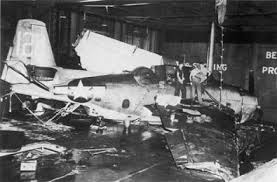
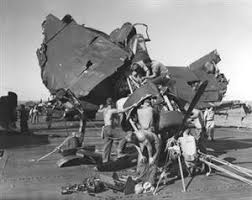
Lieutenant Cosgrove’s Avenger came under savage anti-aircraft fire, from a Japanese cruiser.  Loyce Deen took two direct hits and was killed, instantly.  The Avenger aircraft, tail number 93, was so smashed up as to be all but unflyable.  It took all of the pilot’s strength and skill to fly the thing back through two thunderstorms, and land on the Essex.

e281f946d5375133dd2c1afe6213dacd

The body Loyce Edward Deen was so badly mangled it was impossible to disentangle the remains, from the smashed turret. For the first time in history and I believe the only time, a man was deliberately buried at sea, entombed by the aircraft in which he had served.

Fingerprints were taken and dog tags removed. This particular Avenger wasn’t even scavenged, for parts. With the crew of the USS Essex assembled on deck, the shattered aircraft was pushed over the side. Two other Avengers flew overhead in salute, as the tail dipped beneath the waves.

Loyce Edward Deen, was going home.

Not long after the ceremony, the carrier went to General Quarters. There were kamikazes to deal with.

For us this story has come to an end. Lieutenant Cosgrove and the rest of Air Group 15 got back into their aircraft the following day, November 6 and again on the 12th, 13th and 14th, each day yet another mortal combat against that same fleet, in Manila Bay.

For the Deen family the dread knock came to their door, the week of Thanksgiving.

November 5, 1605 Remember Remember, the 5th of November

The plan was to decapitate the English state, blowing up King James I along with much of the nation’s religious and political leadership. The Gunpowder Plot would end in failure, and a rhyme known to British school children, from that day to this.

The Tudor King Henry VIII began to take control of the English church in 1533, barely 16 years after Martin Luther is said to have nailed his 95 theses to the church door. The Protestant Reformation was barely underway. With life and eternal damnation at stake both sides would come to regard the other, as heretical.

Henry fell out with Pope Clement VII over the latter’s refusal to grant him an annulment from Catherine of Aragon. By 1540, the break between the Church of England and the Church of Rome was complete.

henryviii

English Catholics became increasingly marginalized for the remainder of Henry’s reign, and that of his daughter, Elizabeth I, who died in 1603 without issue. There were several assassination attempts against Protestant rulers in Europe and England, including a failed plot to poison Elizabeth I and the assassination of French King Henry III, who was stabbed to death by a Catholic fanatic, in 1589.

King James VI of Scotland succeeded the “Virgin Queen” in 1603, to the great disappointment of English Catholics. The moderates among them favored James’ and Elizabeth’s cousin Arbella Stuart, a woman believed to harbor Catholic sympathies. More radical Catholics looked to the infant daughter of Phillip II of Spain, the Infanta Isabella.

There were already at least two plots to remove the King from office, when James discovered that his wife, Queen Anne, had secretly received a rosary from the Pope. James responded by denouncing the Catholic Church, ordering Jesuit and all other Catholic priests to leave the country. He re-imposed “recusancy fees”, which had earlier been implemented by Elizabeth. The sum of such fines soon rose to £5,000 a year, equivalent to well over £10 million today.

Among those who believed that ‘faith need not be kept with heretics’, regicide seemed the only way out.

The “Gunpowder Plot”, also known as the “Jesuit Treason”, was inspired by Robert Catesby, a man of “ancient, historic and distinguished lineage”.

In league with about a dozen others, Catesby planned to blow up the House of Lords on November 5, 1605, killing King James and his Privy Council along with untold MPs and government records. The plan was to spark a popular revolt in the Midlands ending in the installation of James’ 9-year-old daughter, Princess Elizabeth, as Catholic head of state.

gfawkes

Guy Fawkes, who had 10 years of military experience fighting for the King of Spain in the Netherlands by this time, was placed in charge of the explosives.

In those days, goods of all kinds were transported in kegs. The movement of even a large number, was perfectly ordinary. Anticipating the State Opening of Parliament on July 28, 36 kegs of powder were moved to an undercroft on the 20th, a small room beneath the House of Lords. There was a metric ton of the stuff, enough to destroy the parliament building and everything around it, for a radius of 100 meters.

And then the plague reared its head and with it the fear, of gathering in large numbers. Parliament was postponed, until November 5.

Others were brought into the plot. That was probably it’s undoing. As the day approached an anonymous letter came to light, warning of the plot. Two separate searches on the evening of the 4th revealed the gunpowder barrels, hidden under sticks and coal. Guy Fawkes was discovered nearby carrying a length of slow burning fuse, called a match.

Fawkes was defiant at first saying there was enough powder, to “blow you Scotch beggars back to your native mountains“. Days of torture lay in wait, beginning with shackles and increasing in severity until finally, his body was “broken” on the rack. In January, all but two of the 13 conspirators were hanged, drawn and quartered for their treason. Those two had died in the attempt to flee and these, were dug up and decapitated. Fawkes himself, weakened by torture and weeks of confinement in the tower of London, even now managed to jump from the scaffold and break his neck, and thus to spare himself the ordeal of being emasculated and disemboweled before his own dying eyes.

Guy Fawkes Mask

So it is that today, November 5th, is “Guy Fawkes Day”. People all over England will “remember, remember, the 5th of November, gunpowder, treason and plot.” Effigies of Guy Fawkes will be burned throughout the land.

A stylized version of the “Guy Fawkes Mask” came to be in the 1980s, with a comic book series and its later film adaptation, “V for Victory”. The story depicts a vigilante effort to destroy an authoritarian government in a dystopian future, Great Britain.

Since that time, groups ranging from the hacker/activist group Anonymous to Occupy, even radical Libertarians have used the Guy Fawkes mask. A symbol of protest against out of control, tyrannical government, political and banking institutions.