Fun fact: Bill Murray was bitten not once but twice, by the groundhog used on the set.
Here on sunny Cape Cod, there is a joke about the four seasons. We have “Almost Winter”, “Winter”, “Still Winter” and “Bridge Construction”.
Midway between Winter Solstice and Spring Equinox and well before the first crocus of spring has peered out across the frozen tundra, there is a moment of insanity which helps those of us living in northern climes get through to that brief, blessed moment of warmth when the mosquitoes once again have their way with us.
The ancient Romans observed their mid-season festival on February 5, the pagan Irish on February 1. For Christians, it was February 2, Candlemas day, a Christian holiday celebrating the ritual purification of Mary. For reasons not entirely clear, early Christians believed that there would be six more weeks of winter if the sun came out on Candlemas Day.
Clergy would bless and distribute candles needed for winter, their length representing how long and cold the winter was expected to be. Germans expanded on the idea by selecting an animal, a hedgehog, as a means of predicting weather. Once a suitable number of Germans had come to America, they switched over to a more local rodent: Marmota monax. The common Groundhog.
Groundhogs hibernate for the winter, an ability held in great envy by some people I know. During that time, their heart rate drops from 80 beats per minute to 5, and they live off their stored body fat. Another ability some of us would appreciate, very much.
The male couldn’t care less about the weather. He comes out of his burrow in February, in search of a date. If uninterrupted, he will fulfill his groundhog mission of love and return to earth, not coming out for good until sometime in March.
But then there is the amorous woodchuck’s worst nightmare in a top hat. The groundhog hunter.
In 1887, a group of Pennsylvania groundhog hunters took to calling themselves the Punxsutawney Groundhog Club. One of them, a newspaper editor, declared on February 2, 1887: you could search far and wide but their groundhog “Phil” was the only True weather forecasting rodent.
There are those who would dispute the Gobbler’s Knob crowd and their claims to Punxsutawney Phil’s weather forecasting prowess. Alabama has “Birmingham Bill”, and Canada has Shubenacadie Sam. New York can’t seem to decide between Staten Island Chuck and New York City’s very own official groundhog, “Pothole Pete”. North Carolinians look to “Queen Charlotte” and “Sir Walter Wally”, while Georgia folks can take their choice between “Gus” the Groundhog and “General Beauregard Lee”.
Since the eponymously named Bill Murray film from 1993, nothing seems to rise to the appropriate level of insanity, more than Groundhog Day drinking games. For the seasoned Groundhog enthusiast, “beer breakfasts” welcome the end of winter, across the fruited plain. If you’re in the Quaker state, you can attend the Groundhog day “Hawaiian Shirt Beer Breakfast”, at Philadelphia’s own Grey Lodge Public House. If you’re in Des Moines, stop by the The High Life Lounge, where free Miller High Life beers will be served from 6am, to eleven. And for the late sleeper, there is the annual screening of the Bill Murray Masterpiece, at the Alamo Drafthouse Cinema Beer Dinner.
Fun fact: Bill Murray was bitten not once but twice, by the groundhog used on the set.
It appears that there is no word for groundhog in Arabic. Accounts of this day in the Arab press translate the word as جرذ الأرض. “Ground Rat”. I was pretty excited to learn that, thank you Al Jazeera.
If anyone was to bend down and ask Mr. Ground Rat his considered opinion on the matter, he would probably cast a pox on all their houses. Starting with the guy in the top hat. It’s been a long winter, and Mr. Ground Rat’s dressed up for a date. He has other things on his mind.
“The general killed the Viet Cong; I killed the general with my camera. Still photographs are the most powerful weapon in the world. People believe them, but photographs do lie, even without manipulation. They are only half-truths”. Pulitzer prize winning photographer, Eddie Adams
According to some studies, the average World War 2 infantry soldier saw 40 days of combat in the Pacific, over 4 years. In Vietnam, the average combat infantryman saw 240 days of combat, in a year.
Gallup poll, 1965 – 1971
By 1967, the Johnson administration was coming under increasing criticism for what many in the American public saw as an endless and pointless stalemate in Vietnam.
Opinion polls revealed an increasing percentage believed that it was a mistake to send more troops into Vietnam, their number rising from 25% in 1965, to 45% by December, 1967.
The Johnson administration responded with a “success offensive” emphasizing “kill ratios” and “body counts”, of North Vietnamese and Viet Cong fighters. Vice President Hubert Humphrey stated on NBC’s Today show that November, “We are on the offensive. Territory is being gained. We are making steady progress.”
In Communist North Vietnam, the massive battlefield losses of 1966-’67 combined with economic devastation wrought by US Aerial bombing, causing moderate factions to push for peaceful coexistence with the south. More radical factions favoring military reunification on the Indochina peninsula, needed to throw a “hail Mary” pass. Plans for a winter/spring offensive began, in early 1967. By the New Year, some 80,000 Communist fighters had quietly infiltrated the length and breadth of South Vietnam.
One of the largest military operations of the war launched on January 30, 1968, coinciding with the Tết holiday, the Vietnamese New Year. In the first wave of attacks, North Vietnamese troops and Viet Cong Guerillas struck over 100 cities and towns including Saigon, the South Vietnamese capital.
Initially taken off-guard, US and South Vietnamese forces regrouped and beat back the attacks inflicting heavy losses on North Vietnamese forces. The month-long battle for Huế (pronounced “Hway”) uncovered the massacre of as many as 6,000 South Vietnamese by Communist forces, 5-10percent of the entire city. Fighting continued for over two months at the US combat base at Khe Sanh.
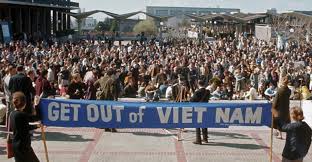
While the Tết offensive was a military defeat for North Vietnamese forces the political effects on the American public, were profound. Support for the war effort plummeted leading to demonstrations. Jeers could be heard in the streets. “Hey! Hey! LBJ! How many kids did you kill today?”
Lyndon Johnson’s Presidency, was finished. The following month, Johnson appeared before the nation in a televised address, saying “I shall not seek, and I will not accept, the nomination of my party for another term as your president.”
In the early morning darkness of February 1, 1968, Nguyễn Văn Lém led a Viet Cong sabotage unit in an assault on the Armor base in Go Vap. After taking control of the camp, Nguyễn arrested Lieutenant Colonel Nguyen Tuan with his family, demanding that the officer show his guerillas how to drive tanks. The officer refused and the Viet Cong slit his throat, along with those of his wife, his six children and 80-year-old mother.
The only survivor was one grievously injured 10-year-old boy.
Nguyễn was captured later that morning, near the mass grave of 34 civilians. He said he was “proud” to have carried out orders to kill them.
AP photographer Eddie Adams was out on the street that day with NBC News television cameraman Võ Sửu, looking for something interesting. The pair saw a group of South Vietnamese soldiers dragging what appeared to be an ordinary man into the road, and began to photograph the event.
Adams “…followed the three of them as they walked towards us, making an occasional picture. When they were close – maybe five feet away – the soldiers stopped and backed away. I saw a man walk into my camera viewfinder from the left. He took a pistol out of his holster and raised it. I had no idea he would shoot. It was common to hold a pistol to the head of prisoners during questioning. So I prepared to make that picture – the threat, the interrogation. But it didn’t happen. The man just pulled a pistol out of his holster, raised it to the VC’s head and shot him in the temple. I made a picture at the same time.”
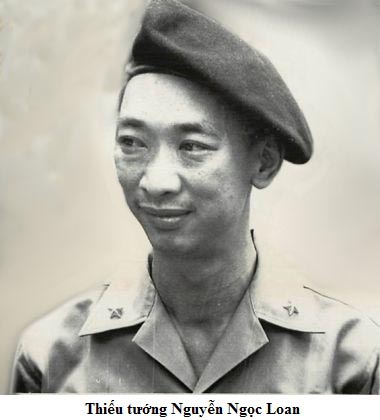
The man with the pistol was Nguyễn Ngọc Loan, Chief of the national police. Loan had personally witnessed the murder of one of his officers, along with the man’s wife and three small children.
Composite sequence published by the Dolph Briscoe Center for American History of the University of Texas, at Austin.
Nguyễn Văn Lém had committed atrocities. He was out of uniform and not engaged in combat when he murdered the General’s subordinates and their families. The man was a war criminal and terrorist with no protections under the Geneva Conventions, legally eligible for summary execution.
And so he was. Loan drew his .38 Special Smith & Wesson Bodyguard revolver, and fired. The execution was barely a blip on the radar screen.
In February 1968, hard fighting yet remained to retake the capitol. As always, Nguyễn Ngọc Loan was leading from the front, when a machine gun burst tore into his leg.
Meanwhile, Adams’ “Saigon Execution” photograph and Võ’s footage made their way into countless papers and news broadcasts. Stripped of context, General Nguyễn came to be seen as a “bloodthirsty sadist”, the Viet Cong terrorist his “innocent victim”.
Adams was on his way to winning a Pulitzer prize for that photograph. Meanwhile an already impassioned anti-war movement, lost the faculty of reason.
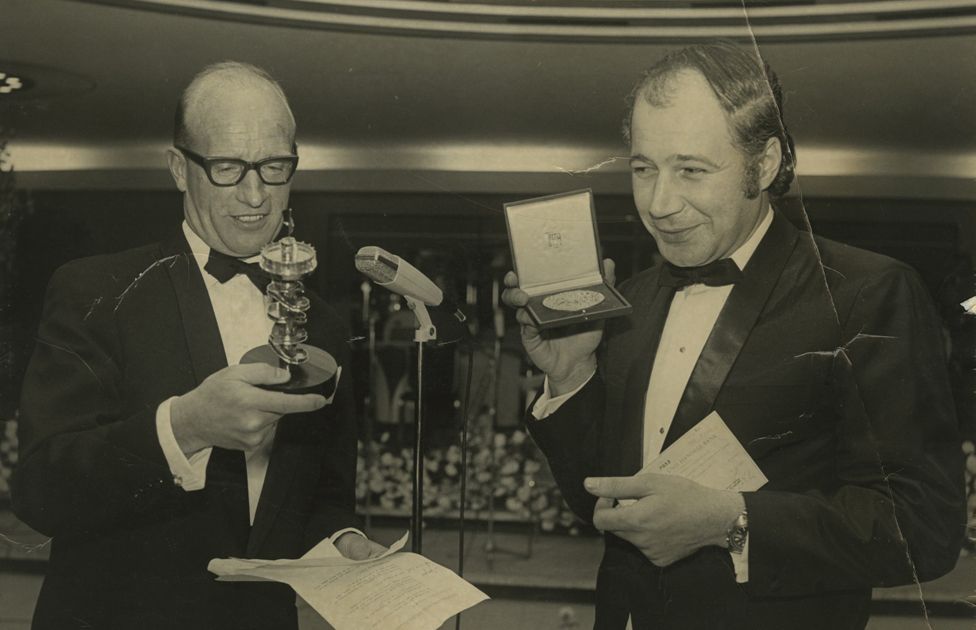
Photographer Eddie Adams (right), holds up his Pulitzer prize. H/T BBC.com
The political outcry reached all the way to Australia, where General Nguyễn was recuperating from an amputation. An Australian hospital refused him treatment, and so he traveled to America, to recover.
“I was getting money for showing one man killing another,” Adams said at a later awards ceremony. “Two lives were destroyed, and I was getting paid for it. I was a hero.”
H/T BBC
American politics looked inward in the years to come, as the Nixon administration sought the “Vietnamization” of the war. By January 1973, direct US involvement in the war, had come to an end.
Scenes from the final evacuation of Saigon, April, 1975
Military aid to South Vietnam was $2.8 billion in fiscal year 1973. The US Congress placed a Billion dollar ceiling on that number the following year, cutting it to $300 million, in 1975. The Republic of Vietnam collapsed some fifty-five days later.
General Nguyễn was forced to flee the country he had served. American immigration authorities sought deportation on his arrival, in part because of Eddie Adams’ image. The photographer was recruited to testify against the General but surprised his interrogators, by speaking on his behalf.
General Nguyễn was a devoted Patriot and South Vietnamese Nationalist. An accomplished pilot who led an airstrike on Việt Cộng forces at Bo Duc in 1967, he was loved and admired by his soldiers. He and his wife were permitted to stay
The couple opened a pizza shop in the Rolling Valley Mall of Virginia and called it, “Les Trois Continents”. The restaurant was a success for a time, until word got out about the owner’s identity. Knowing nothing about the man except for Adams’ photograph, locals began to make trouble. Business plummeted as the owner was assaulted in his own restaurant, his life threatened.
The photographer and the General stayed in touch after the war and even became friends. The last time Adams visited Nguyễn’s pizza parlor, some self-righteous coward had scrawled the words “We know who you are, fucker“, across the bathroom wall.
In 1991, the couple was forced to close the restaurant. Seven years later Nguyễn Ngọc Loan died of cancer.
Eddie Adams won his Pulitzer in 1969, but came to regret that he had ever taken that photograph. Years later he wrote in Time Magazine:
‘The general killed the Viet Cong; I killed the general with my camera. Still photographs are the most powerful weapon in the world. People believe them, but photographs do lie, even without manipulation. They are only half-truths. What the photograph didn’t say was, “What would you do if you were the general at that time and place on that hot day, and you caught the so-called bad guy after he blew away one, two or three American soldiers?”‘
Photography has been edited to deceive, for nearly as long as there have been photographs. Consider this image of Leon Trotsky next to Vladimir Lenin. Now you see him, now you don’t. And yet, sometimes images lie, without the aid or even the intent, of dishonesty.
Before Nguyễn died, Adams apologized to the General and his family for what the image had done to his reputation. “The guy was a hero” said the photographer, after the General’s death. “America should be crying. I just hate to see him go this way, without people knowing anything about him.”
In 1954 Roger Bannister became the first human being to break the four-minute mile. Today, the Jamaican sprinter Usain Bolt is the fastest man who ever lived. It would come as a rude shock to both of those guys, that they are literally slower than cold molasses. In January.
The fastest man alive today is the Jamaican sprinter, Usain Bolt. He may be the fastest man who ever lived. The average male aged 20 to 40 in reasonably good shape is capable of speeds, between 10 and 15 miles per hour. At the 2009 World Track and Field Championships, Bolt ran 100 meters from a standing start at an average 23.35 mph and the 20 meters between the 60 & 80 marks, at an average 27.79 mph.
On May 6, 1954, Roger Bannister became the first human to run a sub-four minute mile with an official time of 3 minutes, 59.4 seconds.
It would come as a rude shock to both of those guys that they are literally slower than cold molasses. In January.
Usain Bolt
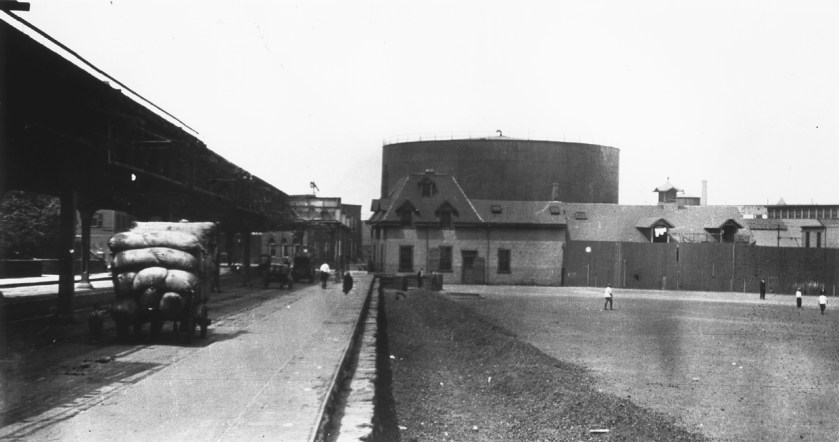
In 1919, the Purity Distilling Company operated an enormous iron storage tank, in the North End of Boston. Six stories high and ninety feet wide, the tank held 2.32 million gallons of molasses, awaiting transformation to sweeteners, drinking liquor and alcohol based munitions.
It was cold that month but on January 15 the temperature reached a balmy 46°, up from the bitter low of 2° of the day before.
If you were there that morning you would have heard sounds, not unlike the grumbling of some great, upset stomach. At 12:30 came a rumble, a sound like a distant train. Then came the staccato chatter of the machine gun, as iron rivets popped and the sides of the great tower split apart.
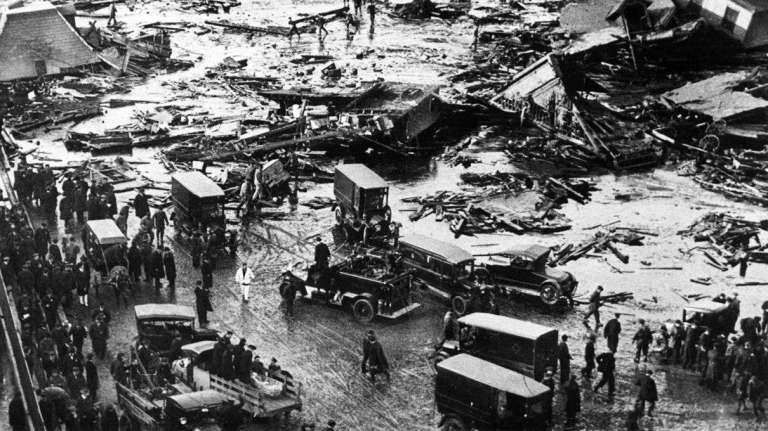
The collapse hurled a wall of molasses 40-feet high down the street at 35 miles per hour, smashing the elevated train tracks on Atlantic Ave and hurling entire buildings from foundations. Horses, wagons and dogs were caught up with broken buildings and scores of people struggling in the brown deluge, speeding across the North End. Twenty municipal workers eating lunch in a nearby city building were swept away, parts of the building hurled some fifty yards. Part of the tank wall fell on a nearby fire house, crushing the building and burying three firemen, alive.
The men playing cards at the firehouse looked out the windows and saw a dark wall that didn’t belong there. Whatever it was, the wall was coming right at them.
The power of the deluge may be seen in the elevated rail, twisted and deformed as by the temper tantrum, of some titanic child.
In the 17th century, Sir Isaac Newton described the physical properties of fluids. Water, a “Newtonian” fluid, retains a constant viscosity (flow) between 32° and 212°, Fahrenheit. We all know what it is to swim in water. You can propel yourself through the stuff but a “non-Newtonian” fluid such as ketchup or molasses, behaves differently. Non Newtonian fluids change viscosity and “shear” in response to pressure. You can’t propel yourself through a non-Newtonian fluid. The stuff will swallow you, whole. Not even Michael Phelps would be able to swim out of a sea of that gunk.
“Firefighters tried to wash the molasses away with freshwater, but would later find that briny seawater was the only way to “cut” the hardened substance”. H/T Historycollection.com
The Boston Post reported “Molasses, waist deep, covered the street and swirled and bubbled about the wreckage … Here and there struggled a form—whether it was animal or human being was impossible to tell. Only an upheaval, a thrashing about in the sticky mass, showed where any life was … Horses died like so many flies on sticky fly-paper. The more they struggled, the deeper in the mess they were ensnared. Human beings—men and women—suffered likewise”.
In 1983, a Smithsonian Magazine article described the experience of one child: “Anthony di Stasio, walking homeward with his sisters from the Michelangelo School, was picked up by the wave and carried, tumbling on its crest, almost as though he were surfing. Then he grounded and the molasses rolled him like a pebble as the wave diminished. He heard his mother call his name and couldn’t answer, his throat was so clogged with the smothering goo. He passed out, then opened his eyes to find three of his four sisters staring at him”.
All told, the molasses flood of 1919 killed 21 people and injured another 150. 116 cadets from the Massachusetts Nautical School, now Mass Maritime Academy, were the first to arrive on-scene. They were soon followed by Boston Police, Red Cross, Army and Navy personnel. Some Red Cross nurses literally dove into the mess to rescue victims while doctors and surgeons set up a makeshift hospital and worked around the clock.
Four days later the search was called off, for additional victims. The cleanup has been estimated at 87,000 man-hours.
The rupture resulted from a combination of factors. Construction was so poor, locals knew they could come down and collect household molasses from drippings down the outside of the thing which was leaking so badly the company painted it brown, to hide the leaks.
This was only the 4th time the tank was filled to capacity and rising temperatures helped build up gas pressure, inside the structure. Subsequent analysis determined the thickness and quality of the iron itself was insufficient, to contain 14,000 tons of molasses.
With temperatures so cold, the rapid spread of all that molasses made no sense. Everyone knows what it is to turn over a jar of the stuff…and wait. Now, cold molasses had all but exploded. In January, no less. There must be something else. There HAD to be. Dark rumors spread outward like ripples, on a pond. Newspapers speculated. There must be some insidious cause, a bomb perhaps, planted by Italian anarchists. Or the work of German saboteurs.
The newspapermen of the age would have learned more if they’d cracked a physics textbook. In fluid dynamics, a “gravity current” describes the horizontal flow in a gravitational field, of a dense fluid into a fluid of lesser density. Like, say, a wall of molasses, into the surrounding air. The air around us is after all, a fluid. Think about the way cold air rushes through an open doorway into a warm room, even when there is no wind.
Harvard lecturer and aerospace engineer Nicole Sharp explains that, as a non-Newtonian fluid, the flood would have advanced with terrifying rapidity behaving much the same as a mudslide, avalanche or lava flow. Sharp’s calculations confirm the initial flow could have indeed traveled as fast, as 35 miles per hour.
Today, the site of the Great Molasses Flood is occupied by a recreational complex called Langone Park featuring a Little League ball field, a playground, and bocce courts. Boston Duck Tours regularly visit the place in amphibious vehicles, designed for land and water. Especially the dark brown one. The one with the name “Molly Molasses”, painted on the side.
“The Army disclosed yesterday that it secretly conducted 239 germ warfare tests in open air between 1949 and 1969, some tests releasing live but supposedly harmless microscope [SIC] “bugs” at Washington’s Greyhound bus terminal and National Airport as part of the experiment.” Washington Post, March 9, 1977
Hat tip Wall Street Journal
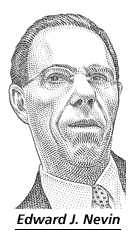
On October 11, 1950, Mr. Edward J. Nevin checked into Stanford hospital in San Francisco with a fever, respiratory and other symptoms. Doctors diagnosed the retired pipefitter, with pneumonia.
Ten other women and men checked into the same hospital at this time, all suffering with the same symptoms. Respiratory difficulty combined with kidney and/or urinary tract infections so rare as to prompt their publication in a prestigious medical journal.
The cause was believed to be exposure to the bacterium, Serratia marcescens. Mr. Nevin, 75, underwent prostate surgery causing S. marcescens to travel through his blood from the urinary tract, to his heart. Three weeks later, he was dead. The other ten recovered.
In 1981 the Nevin grandchildren sued the federal government for the death of their grandfather and the economic destruction wrought on their grandmother, the direct result of ruinously high medical expenses. The alleged cause of death was the deliberate poisoning of the entire city of San Francisco, by the United States Navy.
On January 14, 1967, the New York Times reported the United States Army was conducting secret germ warfare experiments, on its own citizens.
Turns out the San Francisco episode was part of a biowarfare experiment, called “Operation Sea-Spray”. Beginning on September 20, 1950 and continuing for seven days the US Navy sprayed massive amounts of two bacteria into the air believed to be harmless at the time, along with an iridescent agent, to aid with tracking. With cover and assistance from the famous San Francisco fog enough of this stuff was released into the atmosphere, that 43 tracking stations set up across the city determined that every one of the city’s 800,000 residents inhaled no fewer than 5,000 such particles.
Ten years later the U.S. Senate Subcommittee on Health and Scientific Research held a series of hearings, on the matter. On March 9, 1977, the Washington Post reported: “The Army disclosed yesterday that it secretly conducted 239 germ warfare tests in open air between 1949 and 1969, some tests releasing live but supposedly harmless microscope [SIC] “bugs” at Washington’s Greyhound bus terminal and National Airport as part of the experiment…Washingtin [SIC] was one of five cities where the Army released simulated lethal germs i [SIC] public places. Other cities where the public served as unknowing guinea pigs were New York, San Francisco, Key West and panama City, Fla”.
The Wall Street Journal reported on October 22, 2001, “In New York, military researchers in 1966 spread Bacillus subtilis variant Niger, also believed to be harmless, in the subway system by dropping lightbulbs filled with the bacteria onto tracks in stations in midtown Manhattan. The bacteria were carried for miles throughout the subway system, leading Army officials to conclude in a January 1968 report: “Similar covert attacks with a pathogenic [disease-causing] agent during peak traffic periods could be expected to expose large numbers of people to infection and subsequent illness or death.””
The Post reported 27 instances of simulated germ warfare attacks on two tunnels of the Pennsylvania Turnpike and a number of military installations including Fort Detrick, Maryland, Fort Belvoir, Virginia and the Marine training school at Quantico, Virginia.
The Post goes on to report that “Another 504 workers connected with biological warfare activities at Ft. Detrick, Dugway proving Ground and the Deseret test Center in Utah and the Pine Bluff Arsenal in Arkansas suffered infections, according to the Army’s count”. The Army went on to report that “three laboratorers at Fort Detrick died from diseases contracted in the 1950s and 1960s”.
I wasn’t aware that “laboratorers” is a word but the Washington Post seems to think it is.
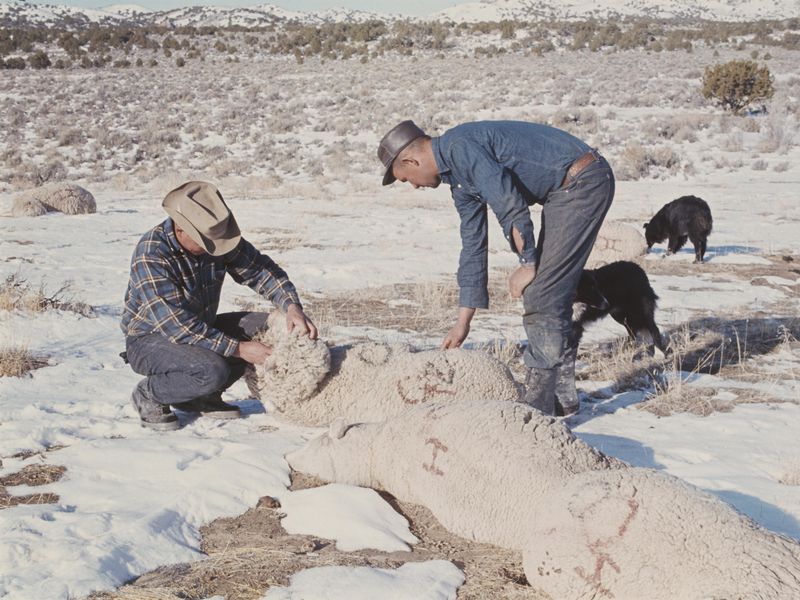
Utah’s Dugway Proving Ground alone conducted “hundreds, perhaps thousands of open-air tests using bacteria and viruses that cause disease in human, animals, and plants” according to a 1994 report, by the GAO (US General Accounting Office). One such experiment resulted in 3,843 dead animals in an episode known as, the “Skull Valley Sheep Kill“. In the end as many as 6,400 were killed or humanely euthanized as even the rumor of nerve agents renders both the wool and the meat of such an animal, less than worthless. A report which remained classified for thirty years blamed a faulty nozzle left open, as the test aircraft gained altitude.
Public backlash was vehement against the US Army Chemical Corps, and nearly lead to its disbanding. President Richard Nixon ordered a halt to open air testing of “NBC” (Nuclear Biological and Chemical) agents, in 1969.
In the past, military spokesmen have argued that such tests are necessary. That NBC agents are readily available to state and non-state actors such as terrorist organizations and we must know how these agents behave, under real world conditions.
Perhaps they have a point. As does the ancient proverb of the Kikuyu people of Kenya, which tells us, “when elephants fight, it is the grass that suffers”.
Historians differ as to the deaths brought about by this one man. Numbers range from several million to well over twenty million.
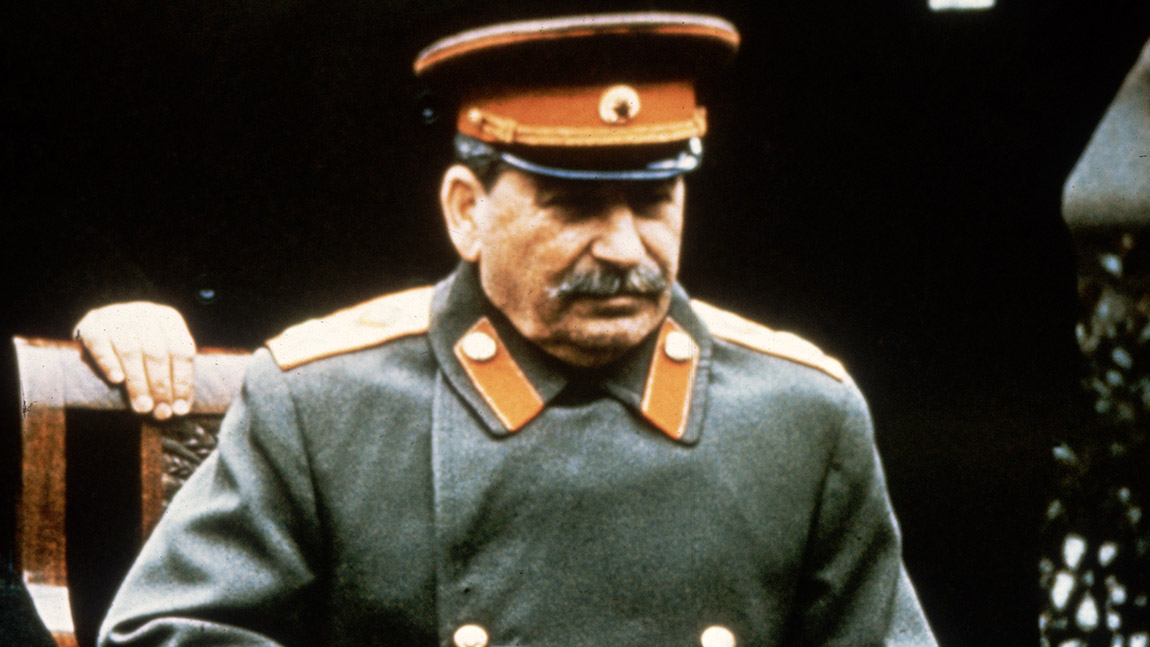
A story comes to us of one Josef Jughashvili, the only child of a laundress and an alcoholic shoemaker, to survive to adulthood. Walking along a rain swollen river a group of boys chanced upon a bleating calf, cut off by the torrent on a small and crumbling island. Taking off his shirt Jughashvili dived into the roiling waters and swam to the terrified animal. Turning first to be sure his buddies were watching Josef proceeded to break the defenseless animal’s legs, one at a time.
The tale may be apocryphal or it may be true but the narrative captures perfectly, the man he would become. One of the great beasts of a century which gave us, no small number of monsters.
In 1884 a bout with smallpox left him disfigured. The other kids called him “pocky”. Though smaller than his classmates he joined a gang and got into many fights from which he never, backed down. He was smart and excelled in academics. He also displayed talent in art, drama and choir. A childhood friend recalled he “was the best but also the naughtiest pupil”.
Police phot at age 23, 1902
He enrolled in the seminary in Tiflis but a life in the priesthood, was never meant to be. A voracious reader, the “Forbidden Book Club” filled young Jughashvili’s head with ideas forbidden, in Czarist Russia. Plato. Checkov. Tolstoy. Zola. So taken was he with the writings of Friedrich Engels and Karl Marx he attempted to learn German, to better appreciate the original text.
Jugashvili proclaimed himself an atheist and thus ended any future, in the Orthodox priesthood. Expelled from seminary before the turn of the century he was now a Marxist agitator, teaching classes in leftist theory from a small flat on Sololaki Street and entering a life of crime, in order to finance the Bolshevik party.
In 1912, Vladimir Ilyich Lenin appointed Josef to the first Central Committee of the Bolshevik Party, while still in exile in Switzerland. On this day in 1913, Josef Dzhugashvili signed a letter to the Social Democrat newspaper, “Stalin”. The Man of Steel.
By 1917, three years of total war had brought the Russian economy, to its knees. Kaiser Wilhelm calculated that all he had to do was “kick the door in” to destroy his adversary to the east. Thus did the famous “sealed train” depart Zurich bound for Petrograd in April, 1917 carrying Lenin, and 31 Marxist revolutionaries.
Kaiser Wilhelm was right. As WW1 continued elsewhere Czarist Russia descended into not one but two civil wars resulting in the triumph of the radical Bolsheviks over the more moderate Mensheviks and the murder of Czar Nicholas, his wife the Czarina and the couple’s children, servants and dogs.
The Union of Soviet Socialist republics (USSR) was officially founded in 1922. Lenin died in 1924. Throughout this period Stalin steadily grew his own base of support, outmaneuvering rivals for the top spot. By the late 1920s he was head of the communist state.
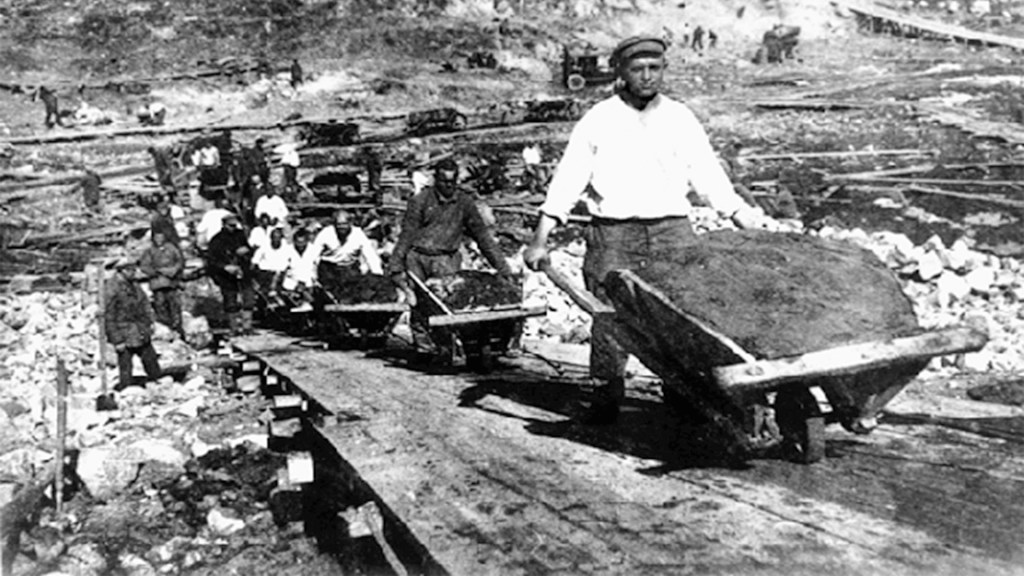
The “Glavnoe Upravlenie Lagerei” or Main Camp Administration system, began in 1919. By 1921 there were 84 such “Gulags”, but this hideous system really came of age, under Josef Stalin.
The Soviet Union was mostly agrarian when Stalin came to power, launching a series of five year plans to bring the USSR into the industrial age. Significant opposition came first from the Kulaks, the more prosperous of the peasant farming class who viewed Stalin’s “collectivization” efforts as a return to the serfdom, of earlier ages.
The ranks of the Gulags swelled to include the educated and ordinary citizens alike. Doctors, intellectuals, students, artists and scientists all disappeared into the Gulags, crude slave labor camps from which many, never returned.
Anyone so much as suspected of holding views contrary to the regime, anyone suspected of association with such persons were “disappeared”. Swept up in the night by Stalin’s terrifying NKVD security police and placed in conditions of such brutality prisoners were known to hack at their hands with axes or thrust their arms into wood stoves to avoid yet another man-killing hour, of slave labor.
“I trust no one, not even myself.
Josef Stalin
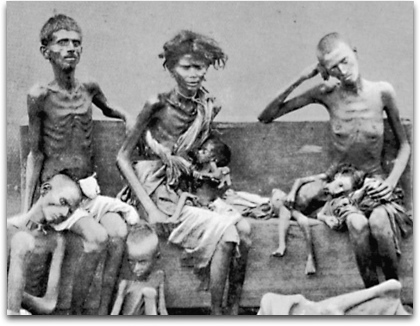
The early 1930s was a time of famine for the Kulaks of Ukraine, the former breadbasket of the Soviet Union. Continuing to resist Stalin’s collectivization, these “enemies of the state” were deliberately starved to death by their own government, their numbers running into the several millions in a period known, as “Holodomor“.
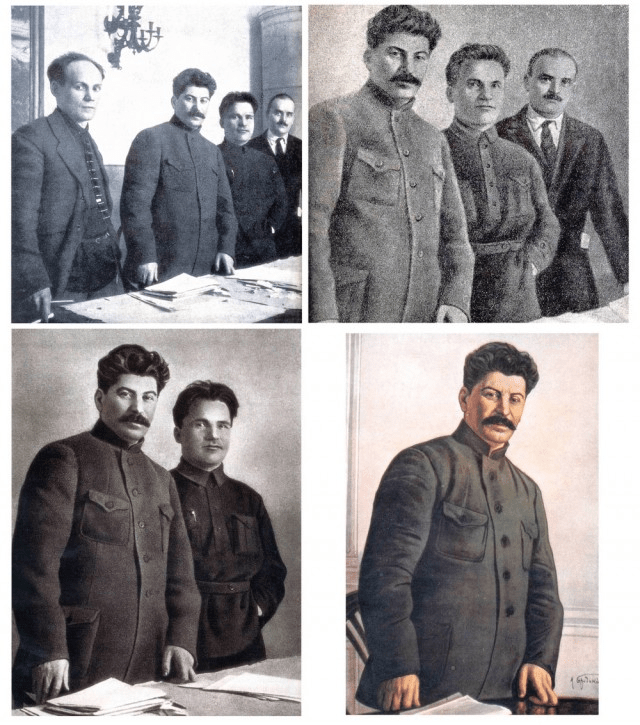
During the late ’30s, nearly 800,000 were summarily executed during the Great Purge, another two million shipped off to the gulags. Official paranoia rose to levels almost comical, but for their deadly consequence. Photo retouching became a cottage industry as former associates were simply…disappeared.
Much may be said of a man, by the company he keeps. Genrikh Yagoda, Nikolai Yezhov, Lavrentiy Beria, they’re not common names for those of us educated in American public schools but these are the men who carried out the Stalinist terror, as heads of the dread NKVD. Though we may not know their names these are beasts as loathsome as Nazi Police Official Reinhard Heydrich, SS Reichsführer Heinrich Himmler or Gestapo Chief Heinrich Müller.
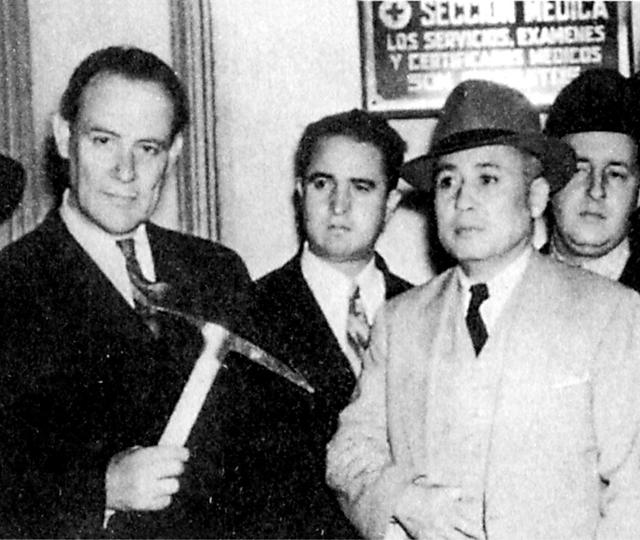
By 1938, Stalin’s purges had crippled the Soviet Union. Entire swathes of the Soviet military, government and popu,ation, had ceased to exist. Head of the security state Nikolai Yezhov was himself outmaneuvered from his position, denounced and murdered by his successor, Lavrentiy Beria. Even Leon Trotsky, founding father that he was of the Bolshevik party was tracked down to his place of exile in Mexico on Stalin’s orders and murdered with an ice axe, in the top of his head.
Investigators display the ice axe used to assassinate Leon Trotsky
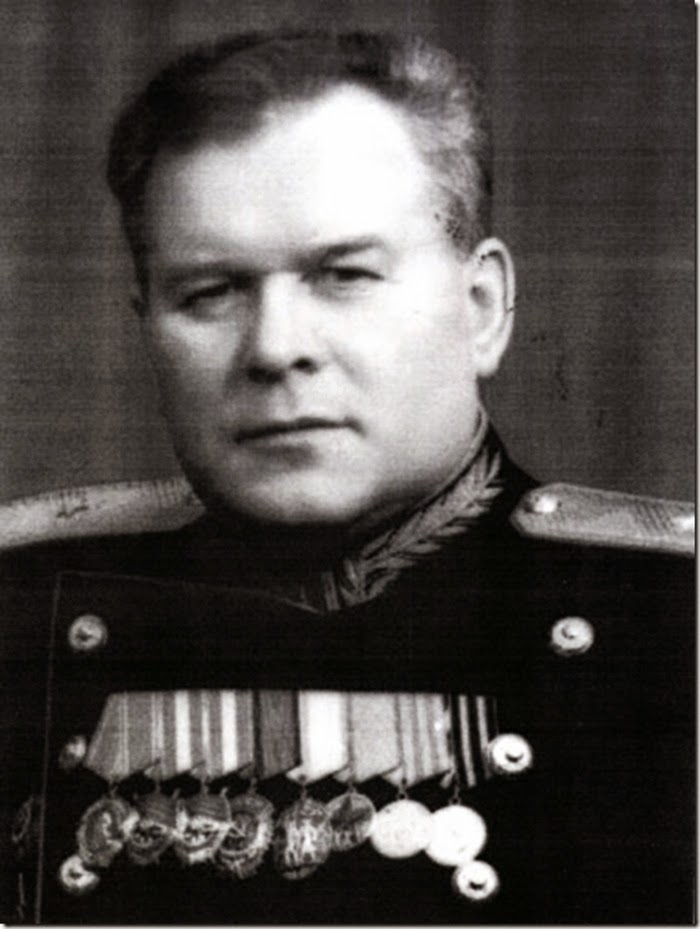
Major General Vasili Blokhin was handpicked by Stalin in 1926 as chief executioner, for the NKVD. To this day the man stands as the world’s most prolific executioner with tens of thousands dead, by his blood soaked hands. During the Spring of 1940 Blokhin personally murdered 7,000 Polish prisoners of war over 28 consecutive nights, each with a bullet to the back of the head.
The man literally kept a briefcase full of German made Walther PPK pistols, lest one of them overheat.
Major General Vasili Blokhin
Today, the 1940 episode is remembered as the Katyn Massacre, the murder of 22,000 defenseless prisoners of war primarily, Polish Army officers. For fifty years the atrocity was believed to have been carried out, by the Nazis.
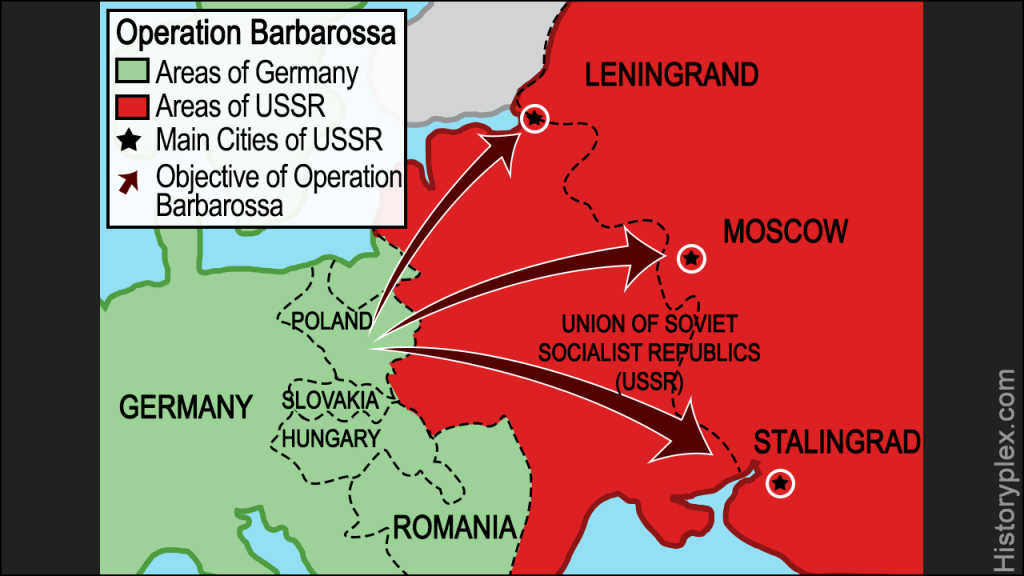
The Molotov Ribbentrop pact of 1939 meant, at east for a time, an alliance between the two great monsters of mid-20th century Europe. That all changed on June 22, 1941. Operation Barbarossa. Adolf Hitler’s surprise attack, on the Soviet Union.
Some 30 million among an estimated 70 to 85 million killed during World War 2 died, on the Eastern Front. The number includes nine million children, killed in an out-and-out race war, Slav against Teuton, that is dreadful even by the horrendous standards of WW2. Order No. 27 became standard operating procedure, for the rest of the war. Between 1942 and 1945 some 422,700 Red Army personnel were executed by their own officers, as the result of Stalin’s order. “Ni shagu nazad”. “Not one step back”.
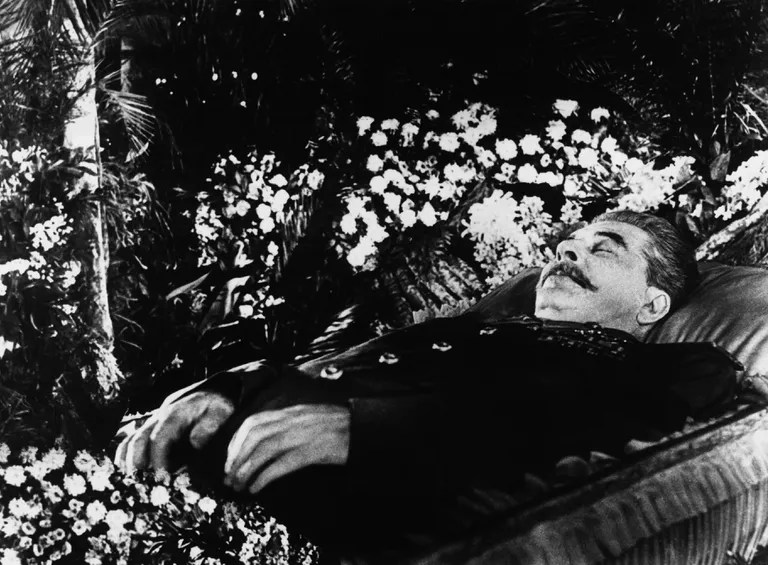
Josef Stalin went to bed sometime after 4:00am on February 28, 1953, with orders that he not be disturbed. 10am came and went, the usual time when the dictator would call for his tea. Morning turned to afternoon and into evening and yet, his terrified guards not wanting themselves to be purged, waited on. It was 10pm when a guard entered the room using as his excuse, the afternoon mail. The Soviet dictator was alive but helpless and unable to speak, laying in a pool of his own urine. His broken watch was stopped at 6:30pm.
The Man of Steel lingered in agony until March 5 as his own doctors languished in the Gulag and none assumed the authority, to make a decision about his care. Whether Stalin was murdered or simply left to die by those too terrified to do anything about it, is a matter for speculation.
Historians differ as to the deaths brought about by this one man. Numbers range from several million to well over twenty million.
Today, public imagination barely registers how fortunate we are that Adolf Hitler chose to turn from a defeated adversary on the beaches of Dunkirk to attack his erstwhile ally, in the east. Where we would be today had Little Boy and Fat Man had a swastika or a hammer and sickle painted on the side is a nightmare, too dismal to contemplate.
Mr. Columbus seems not to have been impressed with his mermaids, describing these particular creatures as “not half as beautiful as they are painted.”
Pax Romana”. The “Roman Peace”. A period between the 1st and 2nd century AD when the force of Roman arms subdued nearly all, who would stand against them.
Unsurprisingly, the conquered peoples described the period, somewhat differently. Sometime around 84AD Calgacus of the Caledonian Confederacy in Northern Scotland said, “They make a desert and call it peace”.
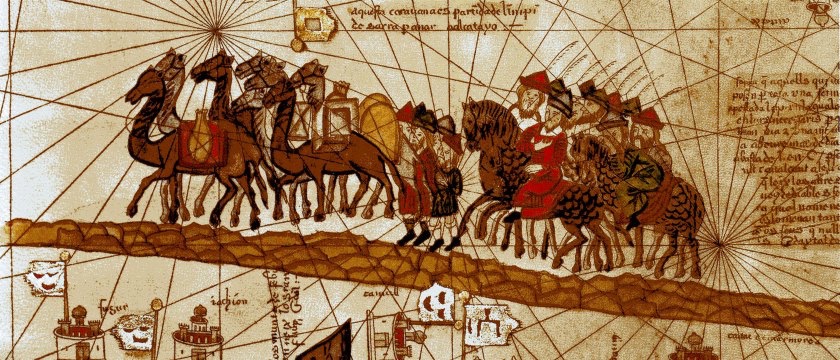
The conquests of Genghis Khan and his successors accomplished much the same during the 13th and 14th century. The “Pax Mongolica” effectively connected Europe with Asia, a time when one could travel the “Silk Road” from Britain in the west to China in the east. Great caravans carrying Chinese silks and spices came to the west via transcontinental trade routes. It was said of the era that “a maiden bearing a nugget of gold on her head could wander safely throughout the realm.”
Never mind the pyramids of skulls, over there.
Over time the “Black Death” and Mongol fracturing along political lines brought the Pax Mongolica to an end. Muslim domination of Middle Eastern trade routes made overland travel to China and India increasingly difficult in the 15th century. After Constantinople fell to the Ottoman Turks in 1453, such travel became next to impossible. Europe began to look for a water route to the East.
It’s popular to believe that 15th century Europeans thought the world was flat, but that’s a myth. Otherwise, cats would have pushed everything over the edge by now.
The fact that the world is round was understood for over a thousand years, though 15th century mapmakers often got places and distances wrong. In 1474, Paolo dal Pozzo Toscanelli detailed a scheme for sailing westward to China, India and the Spice Islands. He believed that Japan, which he called “Cipangu”, was larger than it is, and farther to the east of “Cathay” (China). Toscanelli vastly overestimated the size of the Eurasian landmass while the Americas were left out, altogether.
This is the map that Christopher Columbus took with him, in 1492.
Columbus had taken his idea of a westward trade route to the Portuguese King, to Genoa and to Venice, before he came to Ferdinand and Isabella in 1486. At that time the Spanish monarchs had a Reconquista to tend to, but by 1492, they were ready. The Nina, Pinta and the Santa Maria sailed that August.
By the new year the expedition had been at sea for six months. Sailing off the coast of Hispaniola on January 9, what we now call the Dominican Republic, Columbus spotted three “mermaids”.
They were almost certainly Manatee, part of the order “Sirenia”. “Sirens” are the beautiful sisters, half birdlike creatures who live by the sea, according to ancient Greek mythology. These girls, according to myth, sang a song so beautiful that sailors fell into hypnosis, dashing ships on the rocks in vain efforts to reach them.
Columbus seems not to have been impressed, describing these particular mermaids as “not half as beautiful as they are painted.”
Small wonder. These marine herbivores measure 10 to 13-feet from nose to tail and weigh in at 800 to 1,200 lbs.
Not everyone was quite so dismissive. A hundred years later, the English explorer John Smith reported seeing a mermaid, probably a Manatee. The creature was “by no means unattractive” Smith wrote, but I’m not so sure. Maybe Mr. Smith just needed to get out a little more.
Guidelines set up in 1939 by the National Safety Council and the American Medical Association gave three ranges for blood alcohol content, which would become the standard in a majority of state legislatures:
• 0.05% and below: Defendants should not be considered under the influence
• 0.05% to 0.15%: Not considered “under the influence” but taken into account if other evidence is presented
• 0.15% and above: Presumed “under the influence” of alcohol
Today national standards for BAC are .08% for drivers 21 and over with state limits ranging from 0.00 to 0.02 for younger drivers.
The first recorded drunk driving arrest came about in 1897 when London taxi driver George Smith, crashed into a building. Smith entered a plea of guilty after his arrest and was sentenced to a fine of 25 shillings, equivalent to $33.49 USD, in 2021.
In the US at this time transportation more often, involved a horse. There were 4,192 vehicles on US roads in 1900 mostly steam and electric with a mere 936 running, on internal combustion. The Automobile Club of America estimated 200,000 motorized cars in the United States in 1909. By 1916 the number skyrocketed, to 2.25 million.
Early postcard warning of the dangers, of driving drunk.
As roads became more numerous and cars got faster the drunk driver’s primary concern was no longer, falling off his horse. Now pedestrians and other motorists were increasingly at risk. New York was the first state to enact drunk driving laws, in 1910.
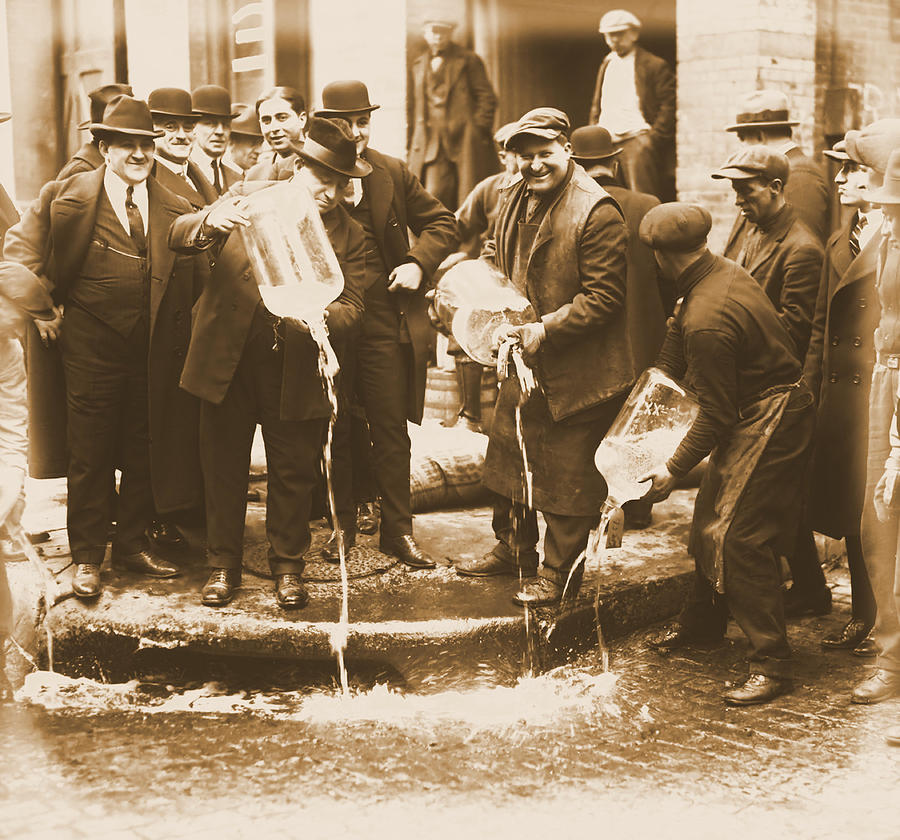
“Prohibition” went into effect at midnight, January 16, 1920. It was now illegal to import, export, transport or sell intoxicating liquor, wine or beer in the United States.
It was a disaster. Portable stills went on sale within a week and organized smuggling was quick to follow. California grape growers increased acreage by over 700% over the first five years, selling dry blocks of grapes as “bricks of Rhine” or “blocks of Port”. The mayor of New York City personally sent instructions to constituents, on how to make wine.
Frustrated by the lack of compliance the federal government ordered the deliberate poisoning of industrial alcohols in 1926 to prevent bootleggers from “renaturing” the stuff, as drinkable alcohol. By some estimates the federal government’s poisoning program killed as many as 10,000 of its own people.
For thirteen years federal prohibition did little more than empower the mob, and destroy the nation’s 5th largest industry. It’s hard to compare alcohol consumption rates before and during prohibition but, if death by cirrhosis of the liver is any indication, alcohol consumption never went down more than 10 to 20 percent. Revelers continued to get behind the wheel, and drive.
In 1927, Dr. Emil Bogen’s landmark study established a scientific method of determining inebriation by testing the blood, urine or breath of a subject. An individual would breathe into an apparatus not unlike a football bladder where chemicals would change to various colors, depending on exposure to alcohol. Colors were then compared with a collection of vials to determination the amount of alcohol in the system. The system worked but it wasn’t very practical, for a traffic stop.
One W.D. McNally published the picture below in the November 1927 issue of Science and Invention with the promise that a method was coming soon, to reliably determine blood alcohol levels.
Prohibition was repealed in late 1933. In the first six months of 1934 Chicago reported a four-fold increase in drunk driving fatalities over the same period of the last full year, of Prohibition. Los Angeles reported similar numbers.
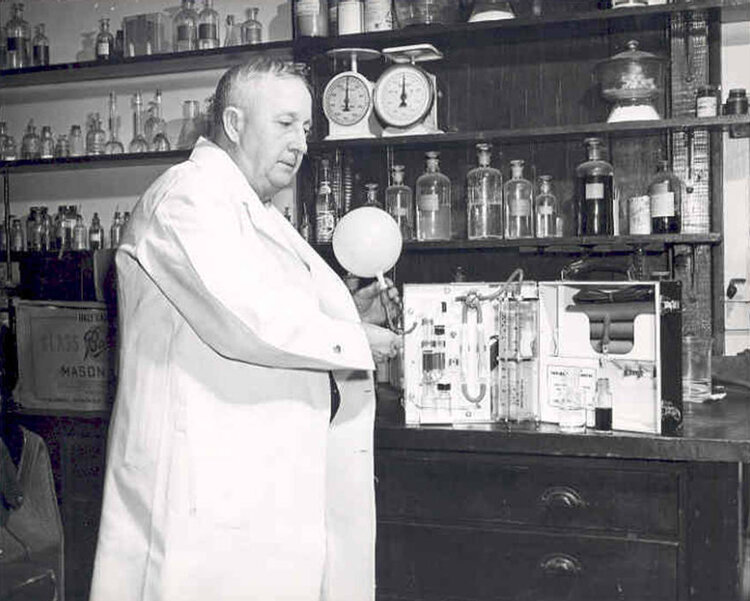
A conceptual breakthrough happened in 1931 when Indiana University biochemist Dr. Rolla N. Harger announced his own method for measuring blood alcohol content, by means of a breath test. By 1938 Harger had a working model of a new machine, small enough for practical use in the field. Indiana State Police first put the device to use on December 31.
By 1940 police departments across the nation were using Harger’s device like the one pictured here, at the New Jersey State police.
When asked what they called their device Harger and his team called the thing, a “Drunkometer”. Whether they were serious or the name was a joke is a matter for conjecture, but the modern breathalyzer, was here to stay.
Eighty three years to the day it is New Year’s Eve, 2021. Tonight, revelers the world over will celebrate the New Year. I wish you and yours a safe, healthy and prosperous new year and if you need to, you can always call a cab. Just make sure the guy’s name isn’t, George Smith.
She’s the most prolific female serial killer of all time. The Guinness Book of World Records, says she is.
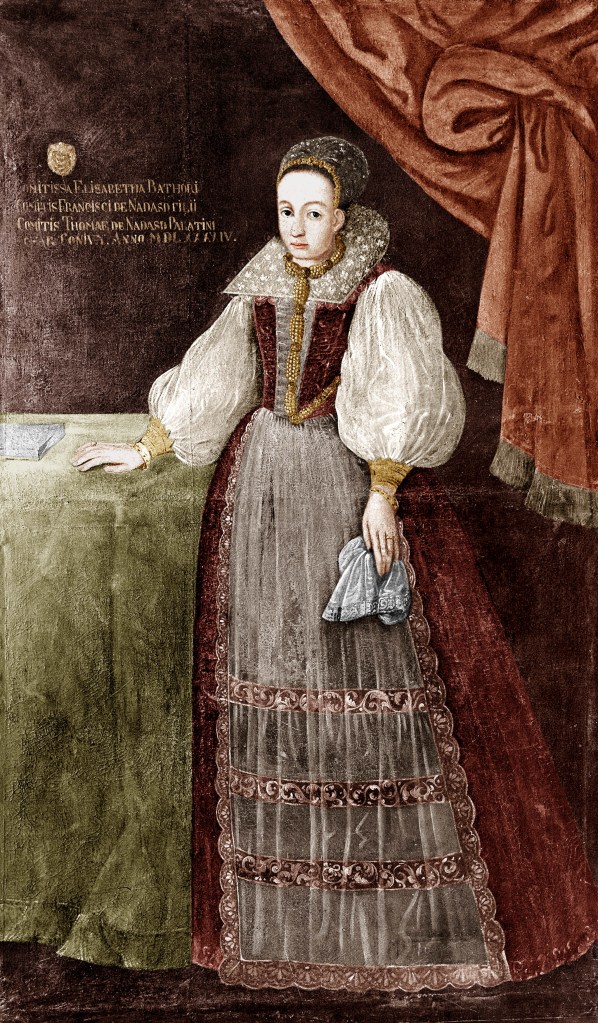
The “Blood Countess” Erzsébet (Elizabeth) Báthory is the most prolific female serial killer in history. The Guinness book of World Records says she is, bathing in the blood of as many as 650 virgins to keep her skin looking young.
Erzsébet (Elizabeth) Báthory
Servants were convicted of killing 80 while Erzsébet herself was neither tried nor convicted, due to her rank. She was walled up in prison and left to die, the most prolific female murderer, in history. A woman whose bestiality has elevated from mere mortal to semi-supernatural, vampiric ghoul.
So…was she?
According to one story a servant girl once noted a few hairs out of place on the countess’ head. The noblewoman struck the girl so hard that great gouts of blood sprayed across her ladyship’s face. Báthory noticed how the blood seemed to rejuvenate the skin. Thus began the murder of 650 maidens to bathe, in their blood.
Other versions describe the blood landing on the skin of her hand and still others a belief on the countess’ part that only the blood of noble women, would have such rejuvenating effects.
A problem arises, with the absence of contemporary accounts. The tale of the blood bath first came out over a hundred years, after her death. Secondly, we all know how quickly the stuff clots and congeals, once leaving the body. Aside from the repulsiveness of the act does such a goopy coagulated mess seem suitable, for a bath?
Elizabeth lived from August 7, 1560 to August 21, 1614, a member of the powerful Báthory clan of Transylvania, an area which now includes parts of Hungary, Romania and the Slovak Republic. Her uncle was the King of Poland, her nephew, a voivode (prince) of Transylvania.
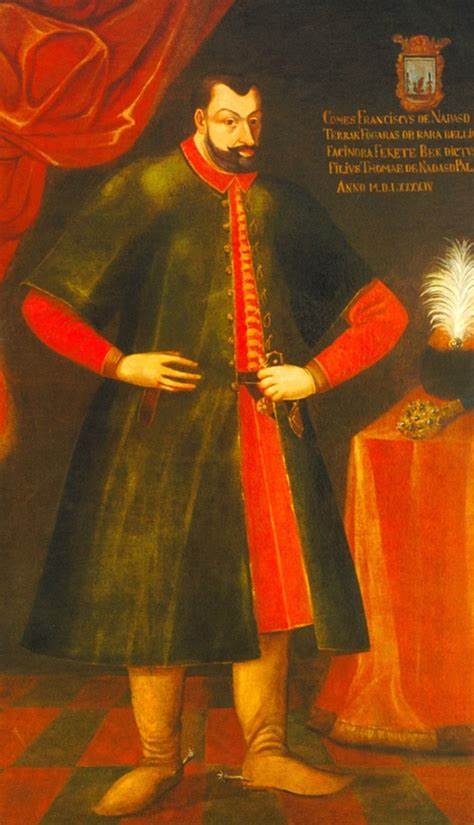
The future Hungarian war hero Ferenc Nádasdy was betrothed to Báthory when he was fourteen and she, ten rears old. The couple wed when he was nineteen and she fifteen and, as the Báthory clan outranked the Nádasdy she kept her name and he added it, to his own.
Theirs was a time and place closer to the fall of Constantinople than World War 1 is, to our own. It was an age of ever aggressive expansion of the Ottoman Empire. A time and place not so greatly removed from that of Vlad (The Impaler) Țepeș, a man of such freakishly extreme cruelty as to spawn the legend, of Count Dracula.
The Ottoman-Hungarian wars were never ending at this time and Ferenc spent more time fighting abroad than at home. He soon earned the sobriquet “Black Knight”, likely for excessive cruelty extended, to Ottoman prisoners.
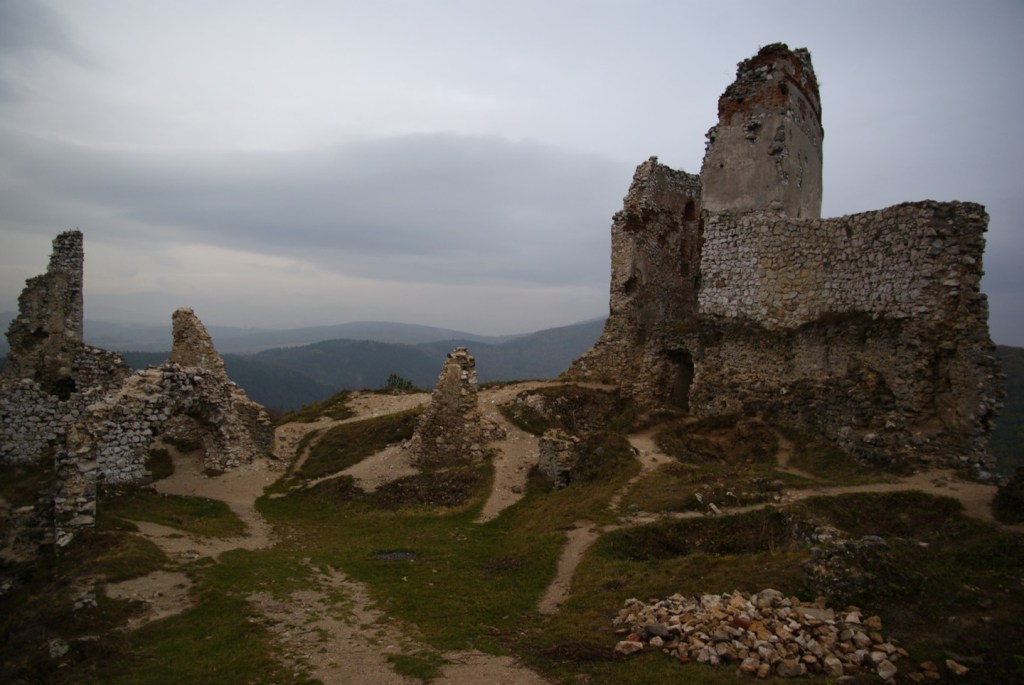
Back at home Elizabeth managed the family estates including no fewer than seventeen villages and living at the Nádasdy castles at Sárvár, Hungary and Čachtice in what is now, the Slovak Republic.
Due to Ferenc’s frequent absence the marriage would fail to produce a child, for the first ten years. In time there would be five, two daughters dying in infancy with two more daughters and a son, growing to adulthood.
According to some stories, Elizabeth would write to her husband asking for the gruesome details of the torture, inflicted on prisoners. She was seen for a time as a benevolent ruler but that began to change, in 1602.
The stories make for difficult reading, tales of servant girls smeared with honey and left to be devoured by insects. Tales of stark naked girls made to stand in pails of water until they froze to death and mutilations carried out with scissors, knives and hot pokers and even Elizabeth’s own, teeth.
The higher ranking members of the servants’ corps would fan out across those seventeen villages to recruit a never ending supply of young girls, to the castle. None of it bothered the authorities all that much as even treatments so gruesome as these were alright, so long as they were carried out among the lower classes.
In 1604 the Black Knight died while in battle allegedly, of some unknown disease. Despite the rumors Elizabeth’s henchmen fed an ever increasing stream of young girls to the castle, increasingly, girls of the lesser nobility.
Now if the murder of a peasant girl is alright, killing a member of a Family of Rank™, is not. Questions asked about disappearances were met with implausible yarns about murder-suicides and sudden illness always conveniently followed, by the rapid disposal of the corpse.
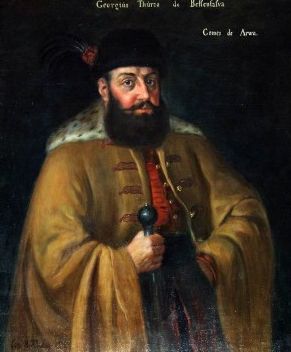
Count György Thurzó was the Lord Palatine of Hungary, the personal representative of the monarch and as such, responsible for investigation. On December 29, 1610 according to some stories he surprised the blood soaked countess in the very act of tormenting, one of her victims. The following day, December 30, she was arrested.
Whether there were 36 victims or 50 or 650 all depended, on whom you ask. Judicial proceedings decided on the number, eighty. Accused of being accomplices servants Dorothy Szentes, Helena Jo and John Ujvary were all sentenced to death for helping Báthory to lure and murder her victims. The women had their fingers pulled off with hot pincers before being burned alive. John was beheaded and then, burned.
Ever obsessed with rank, the authorities didn’t try Báthory herself but instead walled her up in a small space in the Castle Čachtice, with only openings, for food and water. There she lingered for another four years until the morning of August 14, 1614 when she was found dead, on the floor.
Today, Castle Čachtice is just a ruin
Was Elizabeth Báthory guilty of the crimes laid against her? There is too much consistency among too many stories, to absolve her of her misdeeds. Not entirely. There were too many tales telling the same story for the woman to be entirely innocent but two things can be true at the same time, right?
Báthory was at odds with some powerful people. Her support of her cousin Prince Gábor Báthory of Transylvania put her in conflict with the mighty Habsburg Empire who just happened to owe the woman, money. A LOT of money and, happily, Báthory’s exile made it all, go away. It is reasponsible to view with jaundiced eye any story, told under torture. Furthermore, 250 of the 289 eyewitness accounts used against her contained nothing more than hearsay with no real information, whatsoever. Many witnesses owed Count Thurzó personally and he had exclusive authority, over the proceedings. Lastly, the testament of the widow Báthory left her estates, to her children. The Báthory-Nádasdy offspring were banished from Hungary following her incarceration. Some would return in 1640 but by that time the family name had lost, its former nobility.
More than a tale of cops and robbers this one seems more like two scorpions in a jar and only one coming out, alive. A story about bad guys vs other bad guys not unlike certain current events, of today. Unless of course you’re one who believes that Jeffrey Epstein, really did kill himself.
White Christmas hit Number 1 on the Hit Parade that November, and never looked back. By Christmas day 1942 the song had barely made it halfway through a ten-week run, at the top spot.
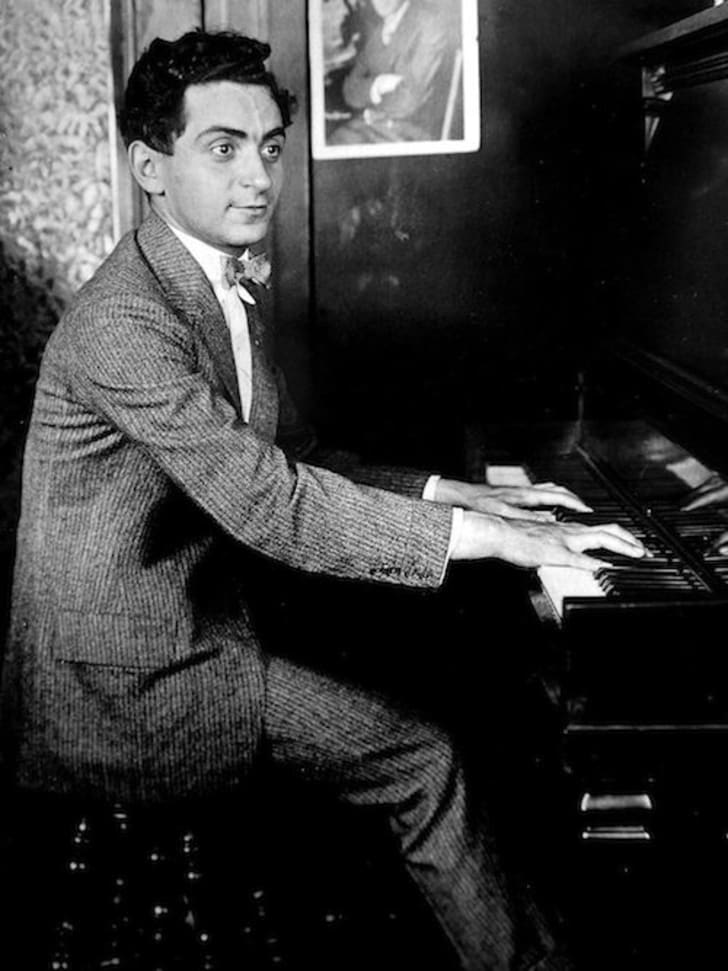
Israel was the youngest of eight children borne of the Baline Family in western Siberia and emigrated to the United States, in 1893. In grammar school “Izzy” delivered telegrams and sold newspapers, to help with family finances. Israel’s father Moses died when the boy was only 13 and he took work as a “ Busker”, to support himself.
Everyone who will read this has bought a record I suspect, but the sale of music came long before the age of the phonograph. Buskers or “song pluggers” would perform songs in vaudeville theaters, railroad stations and even street corners in hopes of selling sheet music, of the latest songs.
Even at a young age Israel Baline had a pleasing voice and a natural ear, for music. By 16 he was a singing waiter at the Pelham Cafe in New York’s Chinatown. It was there he taught himself to play the piano and to compose music, with the help of a friend. The boy’s first published work led to a name change when Marie from Sunny Italy came back from the publisher, with a typo. I. Baline was now I. Berlin.
At least that’s the story. Others will tell you Irving Berlin changed his name to sound less ethnic. Be that as it may, the author of American standards like “Puttin’ on the Ritz” and “There’s No Business Like Show Business”, had come of age.
In 1911, Berlin’s “Alexander’s Ragtime Band” sold a million copies and inspired a dance craze still remembered, to this day.
Irving Berlin wrote “God Bless America” during World War 1 but only used it, in 1938. A love song to an adopted country from a kid escaped from the anti-Jewish Russian pogroms of the age the song went on to earn $9.6 million. Every dime of it was donated to the Boy Scouts of America, and Campfire Girls.
Christmas was an unhappy time for Irving Berlin. A devoted husband of 62 years Irving and Ellin (Mackay) lost their only son (also Irving) on Christmas day in 1928, to Sudden Infant death Syndrome. Every year at Christmas was an occasion to visit their baby’s grave.
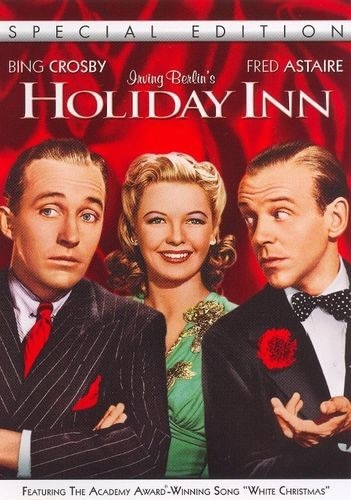
Berlin wrote the best selling record of all time in 1941 but it didn’t start out, the way you might think. In 1940, the composer signed to score a musical for paramount Pictures, about a retired vaudeville performer who opened an inn. The hook was that this particular inn was only open, on holidays. “Holiday Inn” would guide the viewer through a years’ worth of holidays, in music.
As for White Christmas that started out, as a spoof. A satire sung under a palm tree by music industry sophisticates enjoying drinks, around a Beverly hills swimming pool:
The sun is shining, the grass is green The orange and palm trees sway There’s never been such a day In Beverly Hills, L. A. But it’s December the 24th And I am longing to be up north…. I’m dreaming of a white Christmas… (Chorus continues)
Bing Crosby was already famous in 1941. Berlin agreed to include White Christmas in the film, provided that Crosby perform the tune. Crosby himself was on board, from day 1. On hearing the song he told Berlin “You don’t have to worry about this one, Irving.”
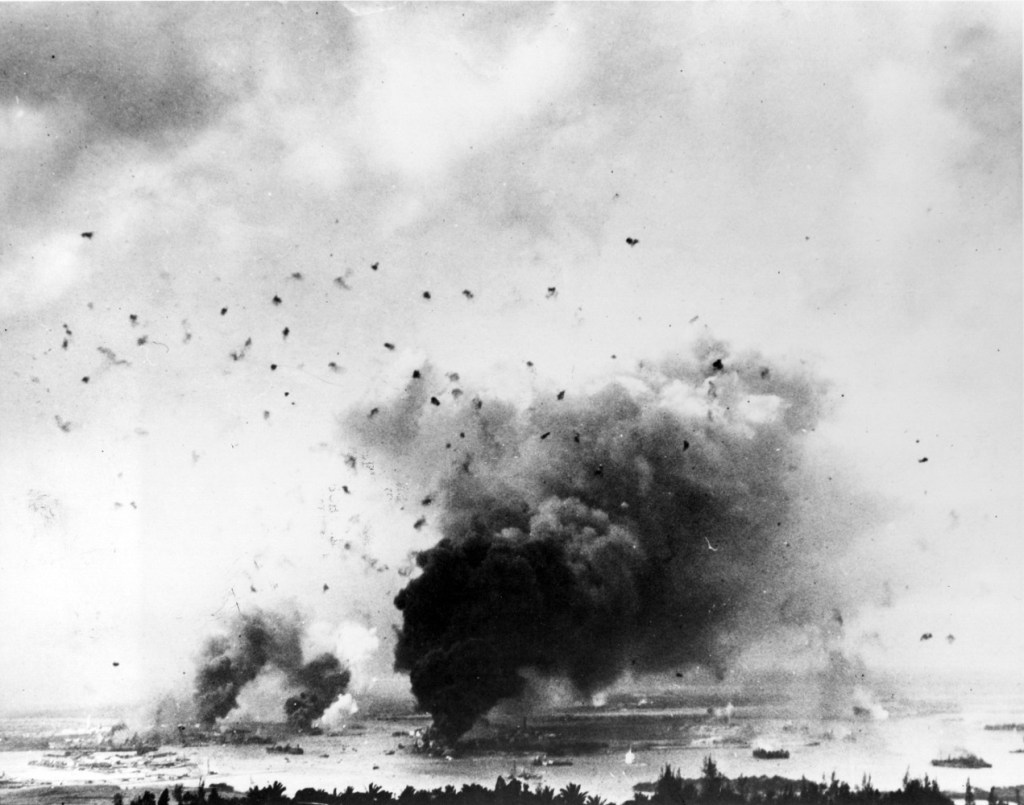
And then the world changed. A mighty sucker punch came out of the east on December 7, 1941, a sneak attack by the air and naval forces of imperial Japan on the American Pacific naval anchorage, at Pearl Harbor.
President Franklin Roosevelt asked for and received a congressional declaration of war on Japan, on December 8. Nazi Germany piled on and declared war on the United States, three days later. The US had entered World War 2.
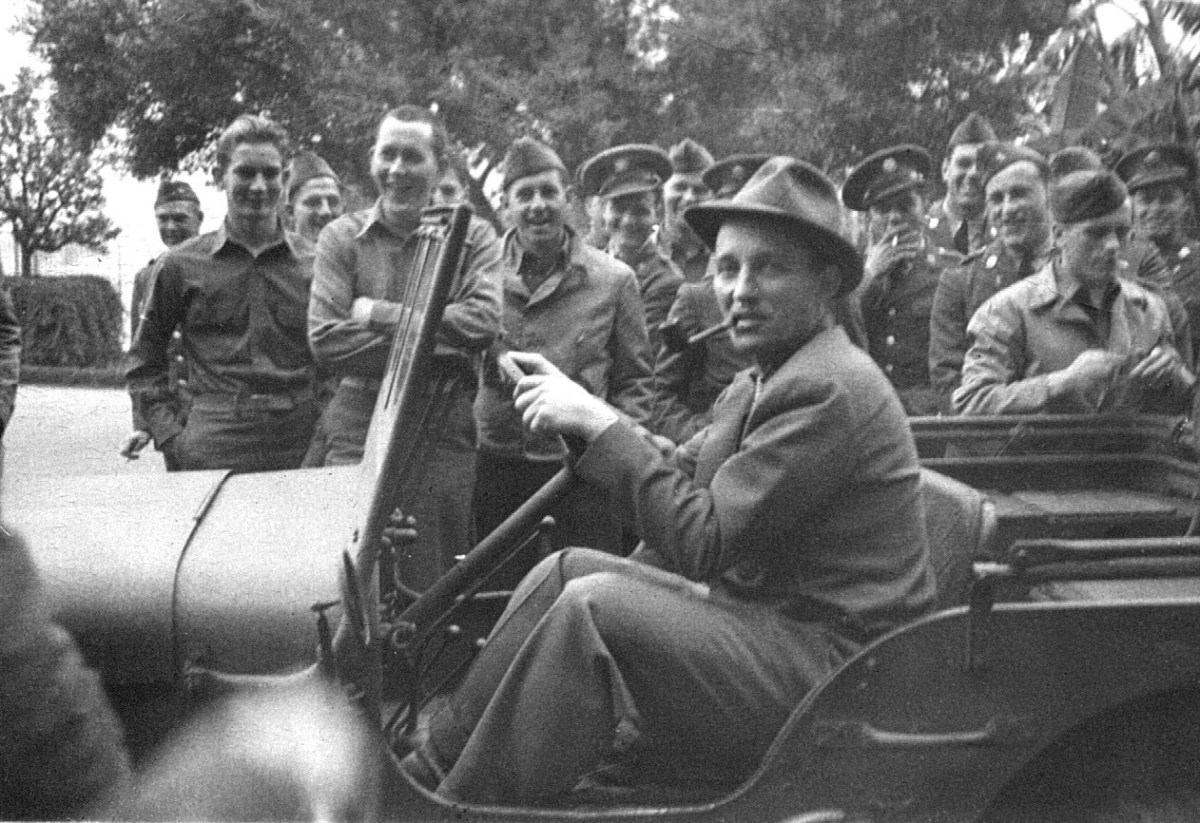
A generation of men signed up for the draft including Bing Crosby. He would prove too old but this was a loyal American. Crosby would use his gifts at every opportunity and perform for the troops.
Seventeen days after the attack on Pearl Harbor was Christmas eve, 1941. Bulkhead markings would later reveal that even then, the last survivors on board the USS Oklahoma down there at the bottom of Pearl Harbor were making their last marks on the wall of that black, upside down place in the vain hope of a rescue, that would never come.
Bing Crosby performed the track live that Christmas eve and over the following January, the shortwave broadcast of the Kraft Music Hall reaching troops then fighting for their lives on Corregidor and the Philippines. The set list always started out with a tune, destined to become the official anthem of the US Army: “AS The Caissons Go Rolling Along.”.
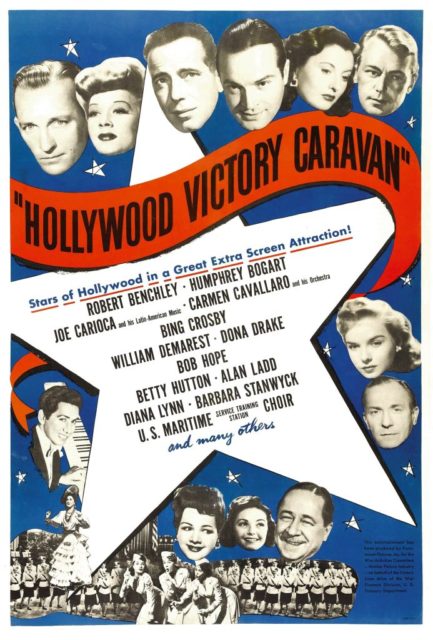
President Roosevelt asked Hollywood to step up, and do its part. Crosby and others formed the Hollywood Victory Caravan in support of the war effort, Carey Grant, Desi Arnaz, Olivia de Havilland and others raising over $700,000 in support of the Army and Navy Relief Society.
When Holiday Inn was released in 1942 Berlin expected Be Careful It’s My Heart to be a hit, a song tied in the film, to Valentine’s day. But a funny thing happened. White Christmas was received by the people who heard it not as satire but a heartfelt reminder of Christmases past and a promise, of Christmas yet to come. Soldiers abroad and their families dreamed alike of a white Christmas, “just like the ones I used to know“.
That first verse quietly went away, never to return.
Fun Fact: Despite Berlin’s songwriting success he didn’t write music and only played the piano in F Sharp. He bought special transposing keyboards so his songs didn’t all sound the same and paid music secretaries to notate and transcribe, his music.
Crosby himself had mixed feelings about performing White Christmas. “I hesitated about doing it” he once told an interviewer, ” because invariably it caused such a nostalgic yearning among the men, that it made them sad. Heaven knows, I didn’t come that far to make them sad. For this reason, several times I tried to cut it out of the show, but these guys just hollered for it.”
White Christmas hit Number 1 on the Hit Parade that November, and never looked back. By Christmas day 1942 the song had barely made it halfway through a ten-week run, at the top spot.
Bing Crosby appeared in over 70 radio shows over the course of the war including 30 Command Performance spots, 13 on Mail Call, 5 appearances on Song Sheet, 19 on GI Journal and at least twice on Jubilee, all in addition to his regular Kraft Music Hall show transcribed on discs and personal appearances before troops on the front lines. A survey among soldiers after the war revealed that Bing Crosby had accomplished more in support of troop morale than Franklin Roosevelt, Dwight Eisenhower or even, Bob Hope.
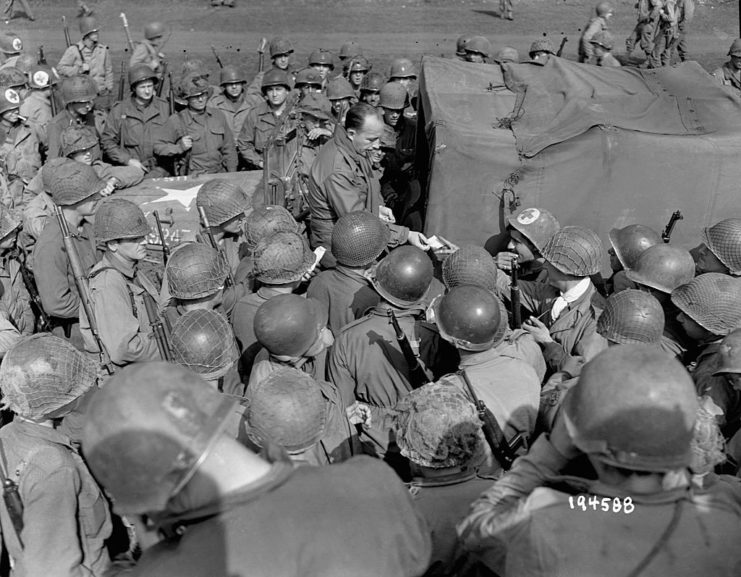
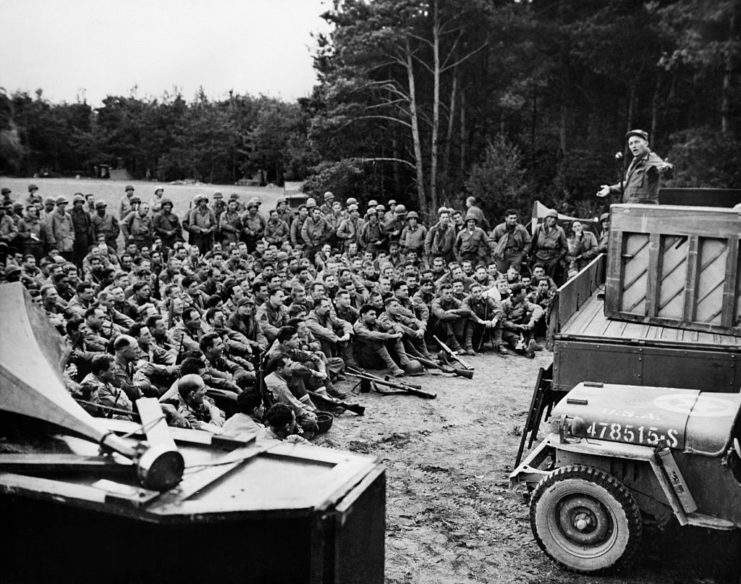
Bing Crosby signing autographs in France, in 1944
It’s a new perspective to look at one of the seminal events of the 20th century, through the eyes of the artist. Imagine for a moment you are Bing Crosby himself, performing for the troops in Belgium and France and Luxembourg in December, 1944. What must it have been like a month later to realize that 75,000 of those men were now casualties in the last great feat of German arms of World War 2, the Battle of the Bulge.
Bing Crosby performing for the troops in 1944
Today, the Guinness Book of World Records names Bing Crosby’s “White Christmas” not only the best-selling Christmas single in the United States, but also the best-selling single of all time with estimated sales of over 50 million copies, worldwide.
I hope you enjoyed this story and wish a you Merry Christmas and a safe, healthy and prosperous new year.. May this be the first of many more.
“In early times some sufferer had to sit up with a toothache, and he put in the time inventing the German language”. – Mark Twain
Planning a business trip from Sunny Cape Cod™ to Presque Isle Maine I found myself pondering. What shall I do with the eternity it will take me to get there, or six hours, fifty minutes, whichever comes first? I hit upon the idea of teaching myself German, and why not? Books on Tape are free at my local library. I shall arrive at my meeting with mind fresh and horizons expanded by new adventures, in learning.
Right.
I emerged from my rolling inquisition some seven hours later, blinking like a marmot, flummoxed, exhausted and thoroughly convinced, of my own inadequacy. How the hell is anyone supposed to learn that stuff?
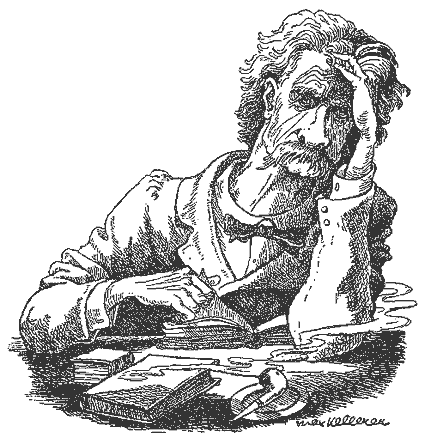
Illustration by Max Kellerer from German edition of Die Million Pfund-Note from the Dave Thomson collection
Turns out, I was not alone. No less a giant of the literary world than Mark Twain once said a person of modest gift could learn English in 30 hours, French in thirty days and German, in thirty years.
“I would rather decline two drinks than one German adjective.”
Mark Twain
Consider for example, verb separation. The German verb ankommen is a separable verb, a trait wisely shunned by the rest of the world’s 6,500 languages save Dutch, Afrikaans and Hungarian:
a. Sie kommt sofort an. she comes immediately at – ‘She is arriving immediately.’ b. Sie kam sofort an. she came immediately at – ‘She arrived immediately.’ c. Sie wird sofort ankommen. she will immediately at.come – ‘She will arrive immediately.’ d. Sie ist sofort angekommen. she is immediately at.come – ‘She arrived immediately.’
Der Zungenbrecker: Tongue Twister, or literally, The Tongue Breaker
And forget about Gender. Every noun has a gender in German for which there are no means save brute memorization, to learn. Then it turns out, a young lady has no gender at all while a turnip, does. A fish scale has a gender but a fishwife, an actual female, does not.
“Surely there is not another language that is so slipshod and systemless, and so slippery and elusive to the grasp. One is washed about in it, hither and thither, in the most helpless way; and when at last he thinks he has captured a rule which offers firm ground to take a rest on amid the general rage and turmoil of the ten parts of speech, he turns over the page and reads, “Let the pupil make careful note of the following exceptions.” He runs his eye down and finds that there are more exceptions to the rule than instances of it”.
Mark Twain, a Tramp Abroad
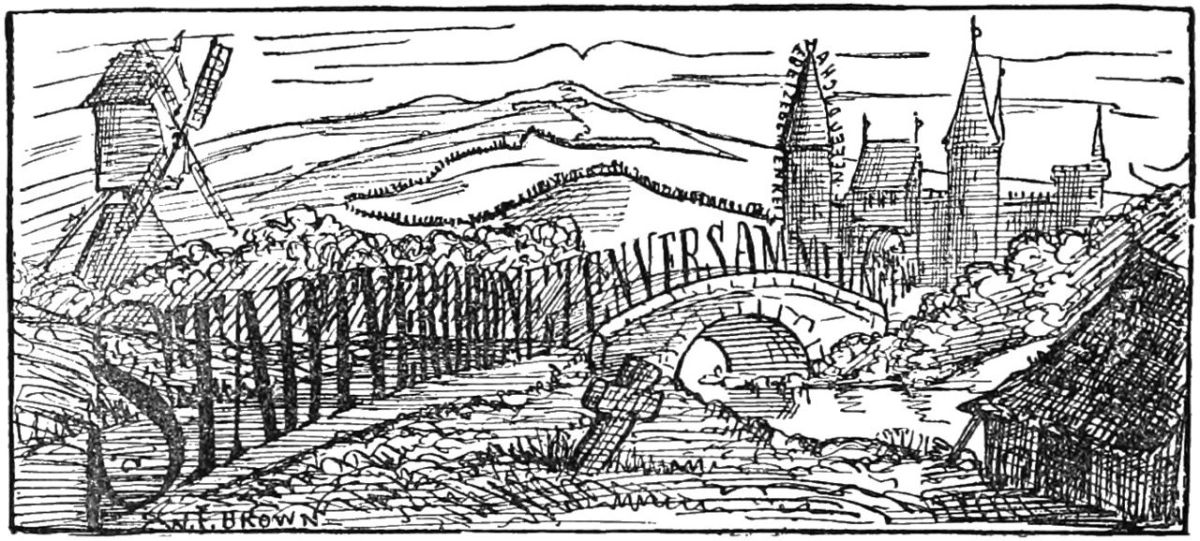
Take an art class sometime and the first thing you’ll learn about, is perspective. In the German language whole sentences run together into single words so long as themselves, to have perspective. Consider “Generalstaatsverordnetenversammlungen“. For the German as a second language learner, what does that even mean!? The native speaker will tell you that means, General Assemblies. For the rest of us it’s all in the perspective.
‘Never knew before what eternity was made for. It is to give some of us a chance to learn German.’
Mark Twain
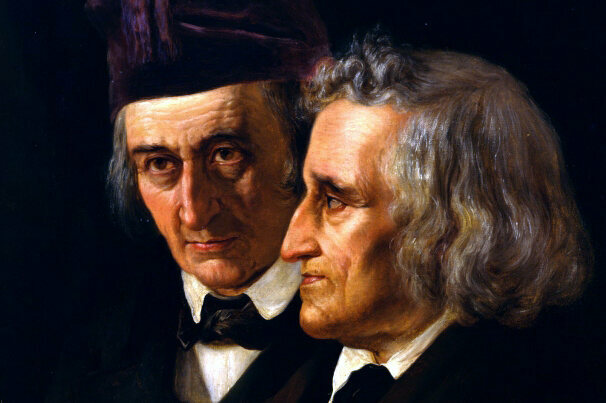
Today we remember Jacob and Wilhelm Grimm for their collection of folklore and fairy tales, first published on this day in 1812 and expanded seven times, by 1857. Snow White and the Seven Dwarves, Red Riding Hood, Rapunzel. There are few among us not steeped in the work of these two but, did you know? The Grimm brothers also wrote the dictionary of the German language? Well, sort of.
Jacob and Wilhelm, the Brothers Grimm
In 1837, the Brothers Grimm needed to pay the rent. Taking a local publisher up on its offer to create a dictionary of the German language the first part was released on this day, in 1852. Two years later, the project included ‘A’ all the was to “Biermolke”. (Beer whey). “Biermolke” through E came about in 1860 the year after Wilhelm, died. Jacob died three years later with the last entry, “Frucht,” (Fruit).
The Grimm brothers project outlived the formation of the German state and two world wars coming at last to completion, in 1961.
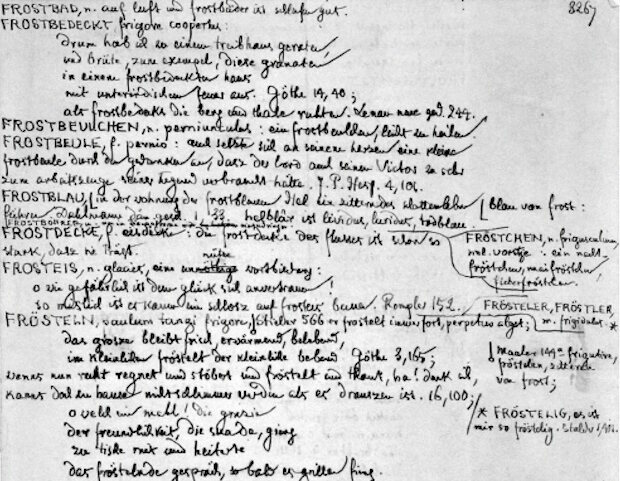
The “Deutsches Wörterbuch“, the dictionary of the German language fills a whopping 330,000 headwords in 32 volumes, but that’s not all. The structure of the language allows users to stay within grammatical rules and yet combine words in ways bewildering to the non-native speaker. This tower of babel amounts to a befuddling 5.3 million words according to some sources with as many as a third, introduced in the last 100 years.
By way of comparison, the Oxford English Dictionary is enough to make a bookshelf groan with 171,146 words plus another 47,156 obsolete terms all contained, in 20 bound volumes.
124 years in compiling and THAT, was by native speakers. So, about that 30 years thing, to learn the German language. Sure thing, Mark ol’ buddy . Sure thing.

















































 Historical Easter Eggs - Today in History
You must be logged in to post a comment.