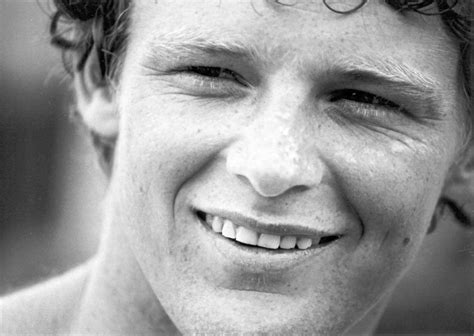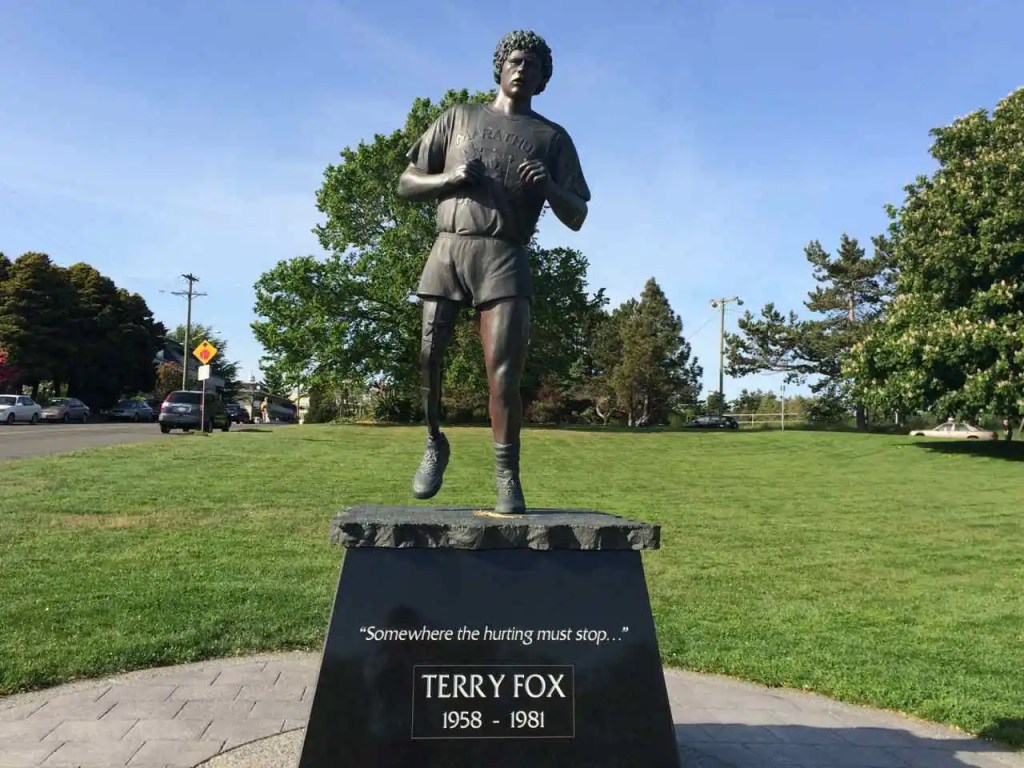
June 28, 1981 Marathon of Hope

“The running I can do, even if I have to crawl every last mile. We need your help. The people in cancer clinics all over the world need people who believe in miracles. I am not a dreamer, and I am not saying that this will initiate any kind of definitive answer or cure to cancer. But I believe in miracles. I have to”. Terry Fox, letter to the Canadian Cancer Society, October 1979

We’ve all known a “natural”. Be it academics, sports or what-have-you, we’re talking about that person who is naturally wired for a task. Who just…”gets it”. Then there is a second type. One born without that natural talent whose success depends on guts, drive and determination to succeed.

When it came to sports, Terrance Stanley Fox was one of those.

The second child of four born to Betty and Rolland Fox, Terry arrived on July 28, 1958 in Winnipeg, Manitoba, the family later moving to British Columbia, the westernmost province in Canada.

Terry’s best buddy Doug Alward was a basketball natural, starting for the Mary Hill Jr. High School Cobras. Fox loved the sport but basketball is difficult for a guy who stood barely five feet high in Jr. high. Coach Bob McGill suggested he go out for cross country which he did, but he never lost the desire to play hoops.

Fox would practice every morning before school and during the summers. He finally made the team in grade 8, dead last, and only played a single minute for the whole season. By grade 10 Fox and Alward were first string guards for the Port Coquitlam High School Ravens. Later that year the two shared the school’s Athlete of the Year award. Fox continued with cross-country running and also soccer and rugby. By grade 12 Fox was actually the better basketball player while Alward went on to distinguish himself, in long distance running.

The year was 1976. The year when Terry first noticed that pain, in his right leg.

Terry began college that year at Simon Fraser University where he tried out and won, a place on the schools Junior Varsity basketball squad. A car wreck later that year did little to help that sore knee. Terry worked through it but, a training run the following spring left him in so much pain he could barely move. Suspecting something more serious Rolly took his son to the family doctor.

Dr. Michael Piper suspected osteogenic sarcoma, an aggressive bone cancer which often begins in the knee. The diagnosis was confirmed on March 4. The only choice was amputation.

The night before his surgery, high school basketball coach Terri Fleming brought him an article. It was about an amputee named Dick Traum who went on to run the marathon, in New York city. “Someday” he told nurse Judith Ray the following morning, “I’m going to do something like that”. Doctors amputated the leg above the knee on March 9, 1977.

Terry was walking again in a few weeks, with the help of an artificial leg. There were chemotherapy sessions and physiotherapy. Golf dates with his father and through it all, a growing sense of…something. Yes his hair was falling out but Terry saw other cancer patients during this time and somehow, he felt like one of the lucky ones. Many of these people were destroyed by this disease, some were dying, but…Terry…he had a Future.

There were sixteen months of chemotherapy and, despite the nausea, Terry took up wheelchair basketball. His hands would blister and bleed as he struggled to master this new approach to an old game. Within two years he had made the national team.

But he never forgot that article, or his own sense of responsibility to those who, like himself, suffered from this terrible disease.

Fox began to train at night, first a half-mile, and then more. Prosthetist Ben Spencer helped with modifications to his artificial leg, making it easier to withstand the impact of running.

There was a half-marathon in 1979 in which he finished dead last but only ten minutes behind, the last two-legged runner. Around this time Terry had an idea that turned into an obsession. A fund raiser for cancer research. He would run across Canada in a “Marathon of Hope” and he would do it, the following spring. The goal to raise $24 million, representing a dollar from every person in Canada.

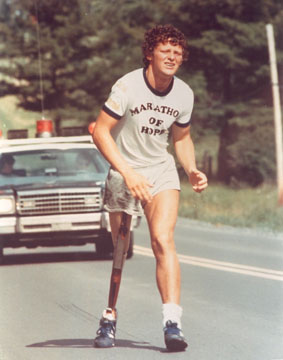
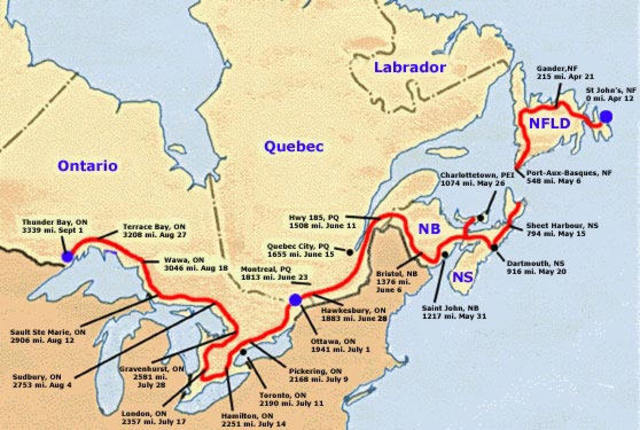
The marathon of hope got off to a wet, cold start on April 12, 1980, when Terry dipped his artificial leg in Atlantic waters, off of Newfoundland. He filled two bottles, one for a souvenir and the other, he would dump into the Pacific.

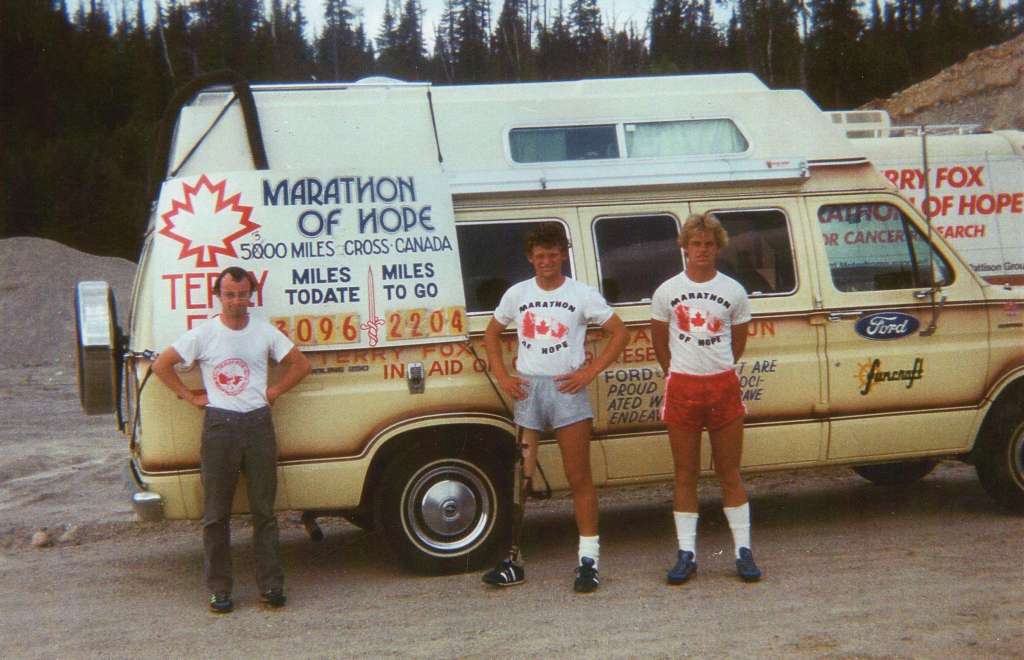
Terry Fox, Doug Alward and Darrell Fox near White river, Ontario. H/T the Canadian Encyclopedia

The response was disappointing throughout much of the maritime provinces. Little had been done to publicize the run. Very few even knew it was happening. Terry pushed on running about 42km a day, supported by Doug Alward in the van and later joined by Terry’s brother, Darrell.

Nothing whatever had been done to publicize the run throughout all of Quebec but that all changed in Ontario, with the help of businessman Isadore Sharp and Bill Vigars, of the Canadian Cancer Society. Journalist Leslie Scrivener of the Toronto Star began to write a weekly column on Fox’s run.

He became a national star in Ontario, gaining personal meetings with Prime Minister Pierre Trudeau, British actress Maggie Smith and NHL Greats Darryl Sittler and Bobby Orr.

For 143 days Fox ran ever westward covering a total of 5,373 kilometers, equivalent to over 128 full-length marathons. It all came to an end on September 1 in a place called Thunder bay.

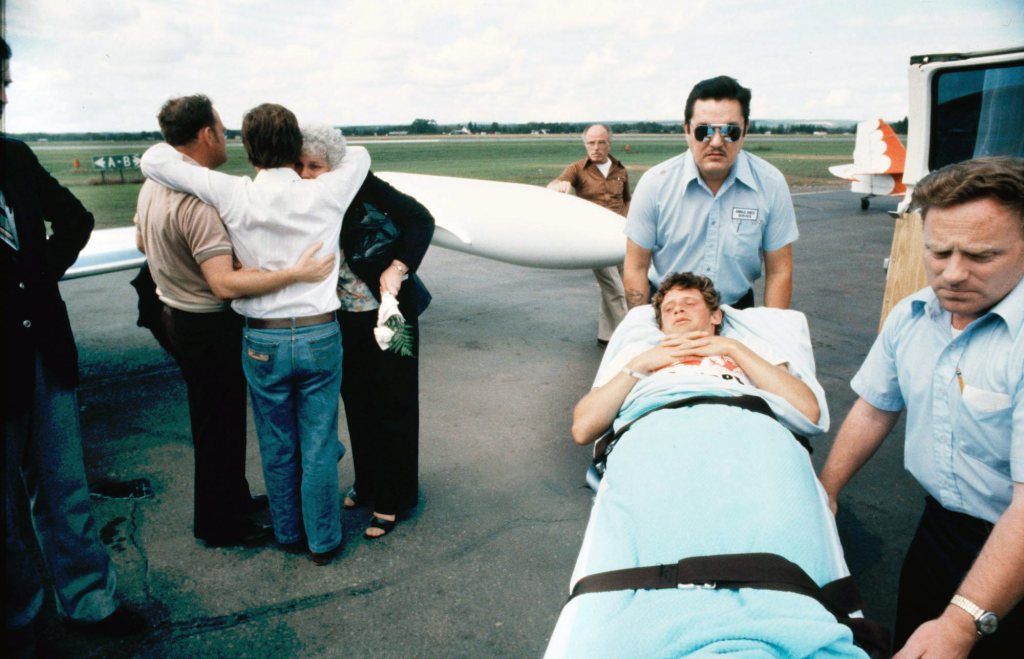
The pain he could live with. Terry Fox had demonstrated that but the cough was relentless, and debilitating. The cancer had returned and now, it was in his lungs. He was airlifted on September 2.

STOCK Terry Fox. Published 19800903 with caption: Terry Fox’s mother and father are embraced by his companion Bill Vigars as ambulance attendants wheel Terry to jet for flight to British Columbia. Photo taken by David Cooper Sept. 2, 1980.

The CTV telethon airing later that week raised $6.5 million, for cancer research. Fox received the Companion to the Order of Canada two weeks later, becoming the youngest person ever to win Canada’s highest civilian honor. That December he won the Lou Marsh trophy as Canada’s Athlete of the Year.

Port Coquitlam High School was later renamed, in his honor.

Donations topped $24.17 million on February 1, 1981, achieving Terry’s goal of raising a dollar from every person in Canada. Terry Fox’s Marathon of Hope was a success. His struggle against that hideous disease which had taken his leg, was not.

There were long months of cancer treatments but this thing was relentless. In June 1981 Terry contracted pneumonia. He went into a coma on June 27. Terry Fox died at 4:35 am on June 28 at Royal Columbian Hospital. He would have been 23 in about a month.

Flags across all of Canada were lowered that day, to half-staff. Let Prime Minister Pierre Trudeau have the last word in this story as he himself spoke, before the House of Commons:

“It occurs very rarely in the life of a nation that the courageous spirit of one person unites all people in the celebration of his life and in the mourning of his death. Our profound gratitude for the gift which Terry gave to all of us, the gift of his own boundless courage and hope.”
June 19, 1864 Single Combat

Tales of single combat reach back to the mists of antiquity where history fades, into legend.  Homer’s Iliad tells of the great battle when Menelaus squared off against Paris and later Achilles, met  Hector. The Hebrew Bible brings us that most unlikely of tales where David, slew Goliath.  The Islamic chronicles are filled with such stories as are the native legends of the American plains, legends of European Knights and tales of the samurai, of the Japanese home islands.  On this day in 1864 the American Civil War took to the battle in a no-holds-barred fight to the finish off the coast of Cherbourg.


Tales of single combat reach back to the mists of antiquity where history fades, into legend.  Homer’s Iliad tells of the great battle when Menelaus squared off against Paris and later when Achilles, met  Hector. The Hebrew Bible brings us that most unlikely of tales where David, slew Goliath.  The Islamic chronicles are filled with such stories as are legends of European Knights, tales of Japanese samurai and the aerial dogfights of a later age.

On this day in 1864 the American Civil War took to the seas in a fight to the finish off the coast of Cherbourg, between the federal steam sloop-of-war USS Kearsarge and the Confederate commerce raider CSS Alabama. 

Only one would come out of this alive.

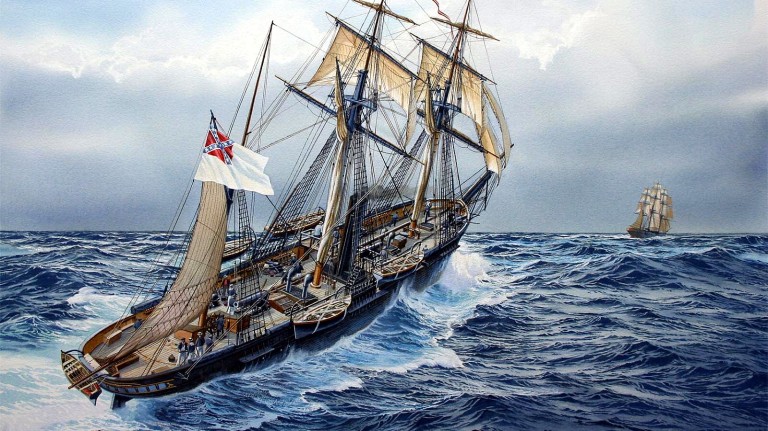
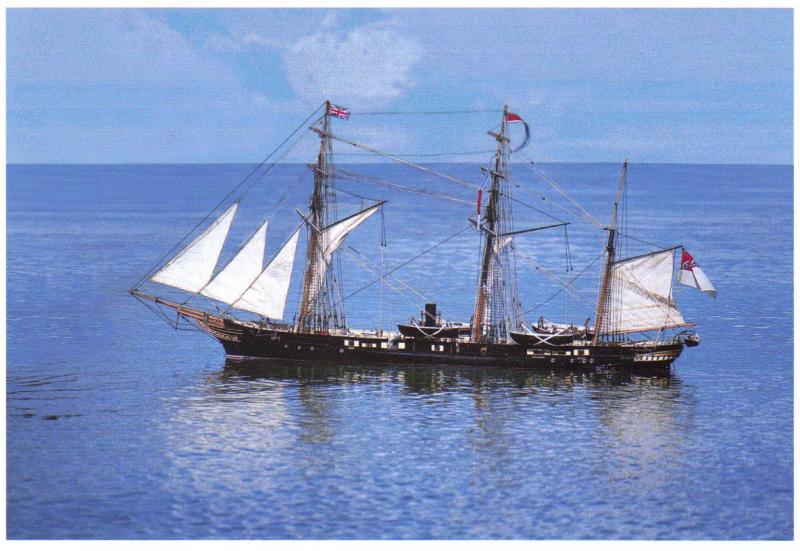
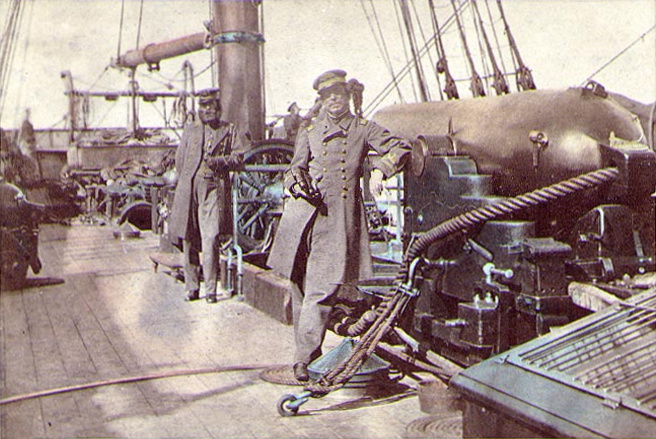
Hull #290 was launched from the John Laird & Sons shipyard in Birkenhead, Cheshire, England as the screw sloop HMS Enrica on May 15, 1862. She sailed in secret to the Terceira Island in the Azores, where she was met by Raphael Semmes, her new captain. Three days, 8 cannon and 350 tons of coal later, the Enrica was transformed into the 220′, 1,500-ton sloop of war and Confederate States of America commerce raider, CSS Alabama.

CSS Alabama
CSS Alabama

Alabama’s mission was to wage economic war on the Union, attacking commercial shipping from the Pacific to the Indian Ocean, from Newfoundland to Brazil. In her two-year career as commerce raider, Alabama claimed 65 prizes valued at nearly $123 million in today’s dollars.  She was the most successful, and most notorious, commerce raider of the Civil War.

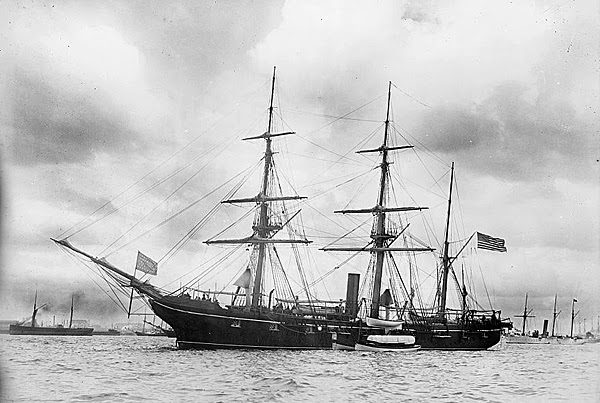
portsmouth nh-uss kearsarge-civil war steam sloop
Civil War Steam Sloop USS Kearsarge

Alabama was in sore need of a refit when she put into Cherbourg France, on the 11th of June, 1864. The Mohican-class Union steam sloop-of-war USS Kearsarge, then on patrol near Gibralter hurried to Cherbourg, arriving on the 14th.

Captain_Raphael_Semmes_and_First_Lieutenant_John_Kell_aboard_CSS_Alabama_1863
Captain Raphael Semmes and 1st Lieutenant John Kell aboard CSS Alabama 1863

Seeing himself blockaded, Alabama’s Captain challenged Kearsarge Captain John Winslow to a ship-to-ship duel, saying “my intention is to fight the Kearsarge as soon as I can make the necessary arrangements. I hope these will not detain me more than until to-morrow or the morrow morning at farthest. I beg she will not depart until I am ready to go out. I have the honor to be your obedient servant, R. Semmes, Captain“.  That suited Winslow just fine, who took up station in international waters, and waited for Alabama to come out.

CSS Alabama steamed out of Cherbourg harbor on the morning of June 19, 1864, escorted by the French ironclad Couronne, which remained nearby to ensure that the combat remained in international waters. Kearsarge steamed further to sea as the Confederate vessel approached.  There would be no one returning to port until the issue was decided.

Captain Winslow put his ship around and headed for his adversary at 10:50am. Alabama fired first from a distance of a mile, and continued to fire as the range decreased.

Sinking_of_the_CSS_Alabama, by Andy Thomas
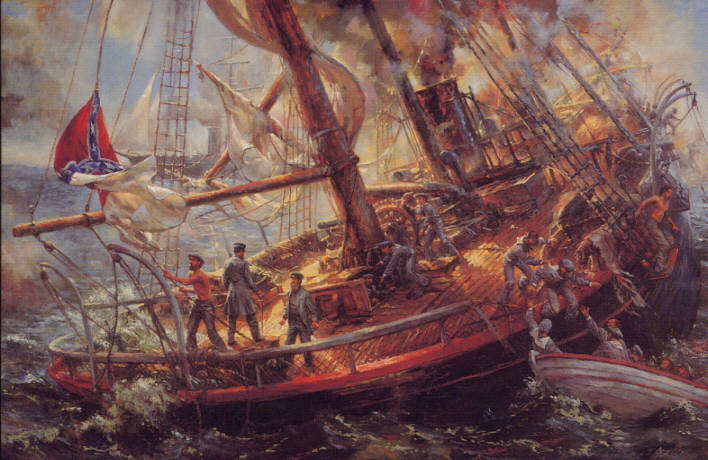
Sinking of the CSS Alabama, by Andy Thomas

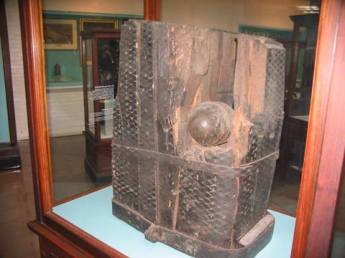
The engagement followed a circular course at a range of a half mile; the ships steaming in opposite directions and firing at will.  One ball from Alabama lodged in Kearsarge’s sternpost, but failed to explode.  Within an hour, Kearsarge’s 11″ Dahlgren smooth bore pivot cannons reduced the most successful commerce raider in history to a sinking wreck. Alabama turned and tried to run back to port, but Kearsarge headed her off as rising water stopped her engines.

Kearsarge Stern Post
USS Kearsarge Sternpost

Semmes struck his colors and sent a boat to Kearsarge with a message of surrender and an appeal for help.

For those rescued by Kearsarge, the Civil War was over. These would spend the rest of the war as prisoners of the Federal government.  Captain Semmes escaped along with 41 others, being plucked from the water and taken to neutral ports by the British steam yacht Deerhound, and the private sail yacht Hornet.

June 18, 1815 Waterloo

It was common practice of the age to “spike” enemy cannon, driving a nail into the touchhole to disable the weapon. But for a handful of nails, the outcome of the battle might have been different. Possibly, even the history of the world.  Eleven times French cavalry gained the hill and surrounded those guns. Eleven times the gunners retreated into defensive infantry squares, bristling with bayonets. Eleven times French cavalry withdrew only to form up, and do it all over again.

The Napoleonic Wars began in 1799, pitting Emperor Napoleon Bonaparte and his Grand Armée against a succession of international coalitions. The first five such coalitions formed to oppose him would go down to defeat.

The empire of Czar Alexander I had long traded with Napoleon’s British adversary. Napoleon invaded Russia in 1812 intending to cut off that trade, but he made the same mistake that Adolf Hitler would make, 130 years later. He failed to account for Russia’s greatest military asset. General Winter.

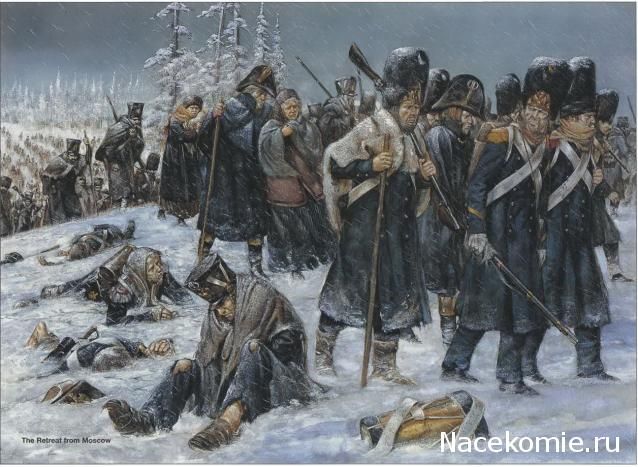
For months Napoleon’s army pressed ever deeper into Russian territory, as Cossack cavalry burned out villages and fields to deny food or shelter to the advancing French army. Napoleon entered Moscow itself in September, with the Russian winter right around the corner. He expected capitulation.  Instead, he got more scorched earth.

Grand Armee Retreat from Moscow

Finally there was no choice for the Grand Armée, but to turn about and go home. Starving and exhausted with no winter clothing, stragglers were frozen in place or picked off by villagers or pursuing Cossacks. From Moscow to the frontiers you could follow their retreat, by the bodies they left in the snow. 685,000 had crossed the Neman River on June 24. By mid-December there were fewer than 70,000 known survivors.

The War of the 6th Coalition ended in 1814 with Bonaparte’s defeat and exile to the Mediterranean island of Elba, and the restoration to the throne of the Bourbon King, Louis VXIII. That would last 111 days, until Napoleon reappeared at the head of another army.

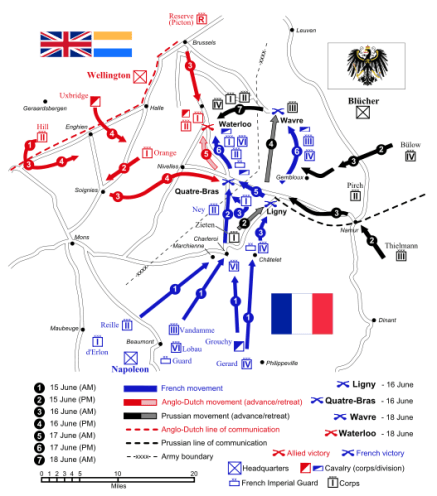
Waterloo_Campaign_map

The Congress of Vienna declared Napoleon an outlaw on March 13, 1815.  Austria, Prussia, Russia and the UK bound themselves to put 150,000 men apiece into the field to end his rule.

Napoleon struck first, taking 124,000 men of l’Armee du Nord on a pre-emptive strike against the Allies in Belgium. Intending to attack Coalition armies before they combined, he struck and defeated the Prussian forces of Gebhard von Blücher near the town of Ligny.

Napoleon then turned his attention to the coalition forces under the Lord Arthur Wellesley, Duke of Wellington, who fell back to a carefully selected position on a long east-west ridge at Mont St Jean, a few miles south of the village of Waterloo.

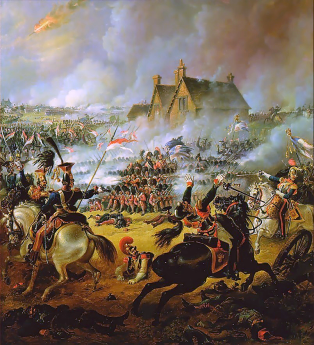
Waterloo, Chateau

It rained all day and night that Saturday. Napoleon waited for the ground to dry on the morning of June 18, launching his first attack before noon while Wellington’s Prussian allies were still five hours away. The 80 guns of Napoleon’s grande batterie opened fire at 11:50, while Wellington’s reserves sheltered out of sight on the reverse slope of the Mont St. Jean ridge.

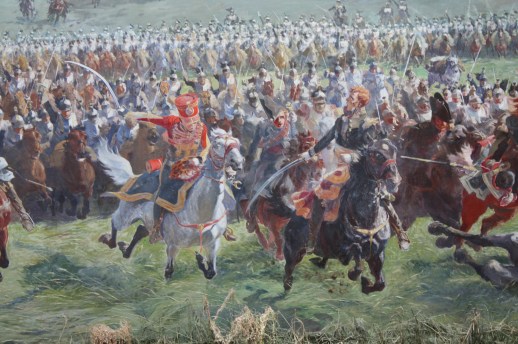
Waterloo_Cavalry

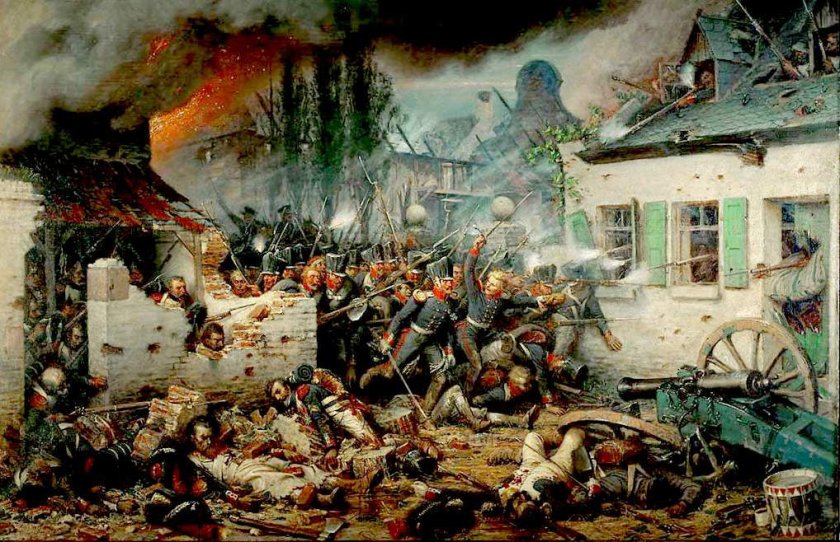
Fighting was furious around Wellington’s forward bastions, the walled stone buildings of the Château Hougomont on Wellington’s right, and La Haie Sainte on his left.  Eight times, French infantry swarmed over the orchards and outbuildings of the stone farmhouses, only to be beat back.

Waterloo, Chateau Battle

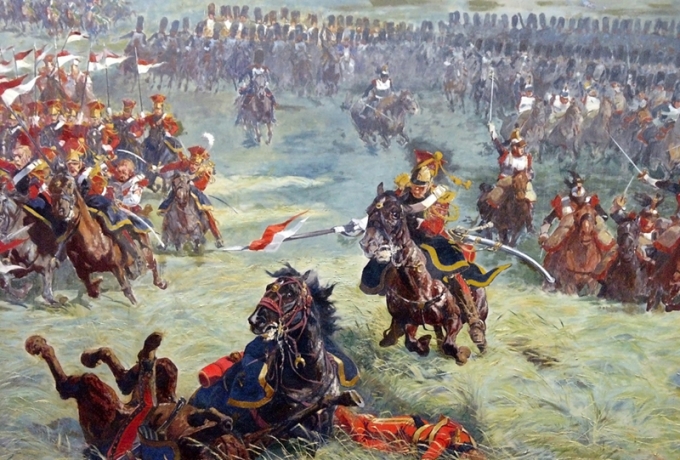
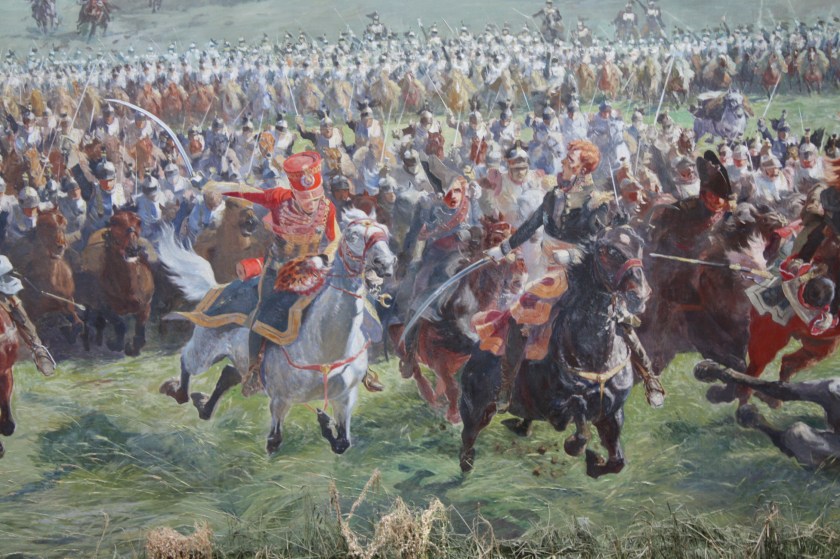
Most of the French reserves were committed by 4:00pm, when Marshall Ney ordered the massed cavalry assault. 9,000 horsemen in 67 squadrons charged up the hill as Wellington’s artillery responded with canister and shot, turning their cannon into giant shotguns tearing holes in the French ranks.

Waterloo_Cavalry

It was common practice of the age to “spike” enemy cannon, driving a nail into the touchhole to disable the weapon. But for a handful of nails, the outcome of the battle might have been different. Possibly, even the history of the world.  Eleven times French cavalry gained the hill and surrounded those guns. Eleven times the gunners retreated into defensive infantry squares, bristling with bayonets. Eleven times French cavalry withdrew only to form up, and do it all over again.

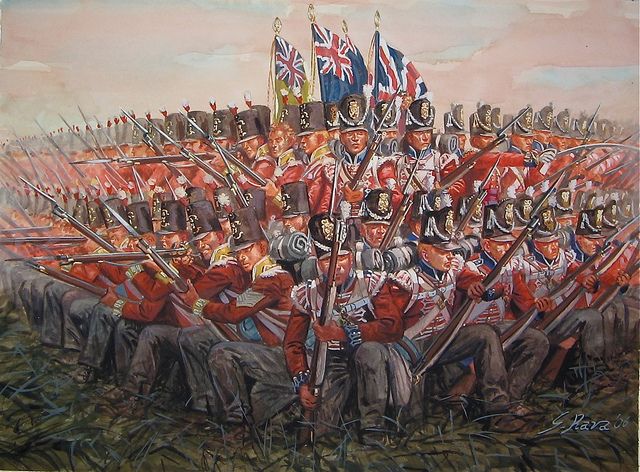
Newly arrived Prussians were pouring in from the right at 7:30 when Napoleon committed his 3,000-man Imperial Guard. These were Napoleon’s elite soldiers, almost seven feet tall in their high bearskin hats. Never before defeated in battle, they came up the hill intending to roll up Wellington’s center, away from their Prussian allies. 1,500 British Foot Guards were lying down to shelter from French artillery. As the French lines neared the top of the ridge, the English stood up, appearing to rise from the ground and firing point blank into the French line.

Infantry Square

The furious counter assault which followed caused the Imperial Guard to waver and then fall back.  Retreat broke into a route, someone shouting “La Garde recule. Sauve qui peut!” (“The Guard retreats. Save yourself if you can!”), as the Allied army rushed forward and threw themselves on the retreating French.

There is a story, possibly apocryphal, concerning Henry Paget, 2nd Earl of Uxbridge. One of the last cannonballs fired that day hit Uxbridge just above the knee, all but severing the leg. Lord Uxbridge was close to Wellington at the time, exclaiming “By God, sir, I’ve lost my leg!”. Wellington replied “By God, sir, so you have!” There’s another version in which Wellington says “By God, sir, you’ve lost your leg!”. Looking down, Uxbridge replied “By God, sir, so I have!”

According to Wellington, the battle was “the nearest-run thing you ever saw in your life.” The French defeat was complete. Bonaparte was once again captured and exiled, this time to a speck in the North Atlantic called Saint Helena.  He died there in 1821.

Estimates of the total killed and wounded in the Napoleonic wars range from 3.5 to 6 million, at a time when the entire world population was about 980 million. Until Waterloo, Napoleon Bonaparte participated in, and won, more battles than Julius Caesar, Hannibal, Frederick the Great, and Alexander the Great.  Combined.

June 17, 1775 Act Worthy of Yourselves

Two months before the battle, Dr. Warren spoke to his men. “On you depend the fortunes of America”, he said. “You are to decide the important question, on which rest the happiness and liberty of millions yet unborn. Act worthy of yourselves.”

Charlestown, Massachusetts occupies a hilly peninsula to the north of Boston, at the point where the Mystic River meets the Charles. Like Boston itself, much of what is now Charlestown was once Boston Harbor.  In 1775 the town was a virtual island, joined to the mainland only by a thin “neck” of land.

Bunker Hill, 2

Thousands of Patriot Militia poured into the area following the April battles of Lexington and Concord, hemming in the British who controlled Boston and its surrounding waterways.

Reinforced and provisioned from the sea over which the Crown held undisputed control, British forces under General Sir Thomas Gage could theoretically remained in Boston, indefinitely.

The elevation of Breed’s and Bunker’s Hill across the river, changed that calculation.  Should colonial forces obtain artillery of their own, they would be able to rain down hell on British forces bottled up in Boston.  It was just this scenario that led Henry Knox into a New England winter later that year, to retrieve the guns of Fort Ticonderoga.

The Massachusetts Provincial Congress received word on the 13th that the British planned to break out of Boston within the week, taking the high ground of Dorchester Heights to the south and Charlestown to the north. Major General Israel Putnam was directed to set up defenses on Bunker Hill, on the northwest end of the Charlestown peninsula.

Bunker_Hill_by_Pyle

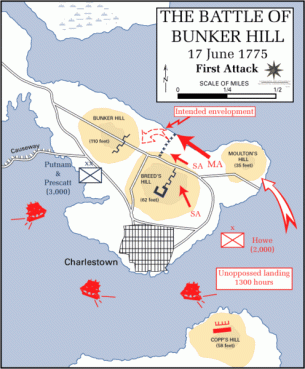
Colonel William Prescott led about 1,200 men onto the peninsula on the night of the 16th. Some work was performed on the hill which gives the battle its name, but it was farmer Ephraim Breed’s land to the southeast, which offered the more defensible hill from which to defend the peninsula.

Shovels could be heard throughout the night.  The sun rose on June 17 to reveal a 130′ defensive breastwork across Breed’s hill. Major General William Howe was astonished. “The rebels,” he said, “have done more work in one night than my whole army would have done in one month.”

The warship HMS Lively opened fire on the redoubt shortly after 4am, with little effect on the earthworks. 128 guns joined in as the morning bore on, including incendiary shot which set fire to the town. Militia continued to reinforce the high ground throughout the morning hours, as Regulars commanded by General Howe and Brigadier General Robert Pigot crossed the Charles River and assembled for the assault.

Bunker_hill_first_attack
First Assault

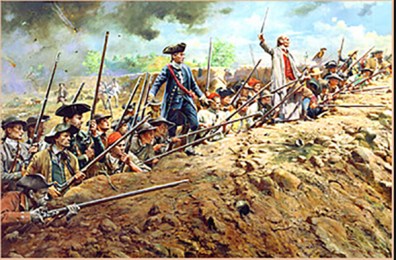
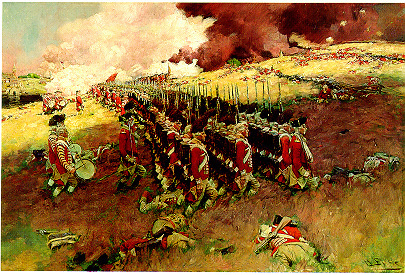
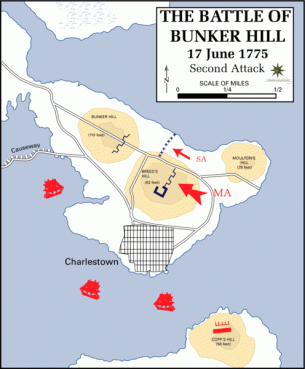
The British line advanced up Breed’s Hill twice that afternoon, Patriot fire decimating their number and driving survivors back down the hill to reform and try again. Militia supplies of powder and shot began to give out as the British advanced up the hill for the third assault.

“Don’t fire until you see the whites of their eyes”. The quote is attributed to Prescott, but the order seems to have originated with General Putnam and passed along by Prescott, Seth Pomeroy, John Stark, and others, in a desperate attempt to conserve ammunition.

Finally, there was nothing left with which to oppose the British bayonets.  The Militia was forced to retreat.

Bunker_hill_second_attack
Second Assault

Most of the colonists’ casualties occurred at this time, including Boston physician and President of Massachusetts’ Provincial Congress, Dr. Joseph Warren.  Dr. Warren had been appointed Major General on June 14, but the commission had not arrived as of yet.  On this day, he fought as a private soldier. He had been  but the commission had not yet taken effect.

Two months before the battle, Dr. Warren spoke to his men. “On you depend the fortunes of America”, he said. “You are to decide the important question, on which rest the happiness and liberty of millions yet unborn. Act worthy of yourselves.”

“Act worthy of yourselves”. 

That they did.

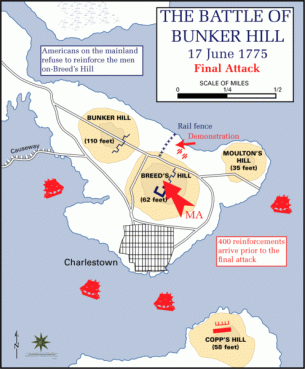
Bunker_hill_final_attack
Final Attack

The Battle of Bunker Hill ended in victory for the British, in that they held the ground when the fighting was over. It was a Pyrrhic victory. Howe lost 226 killed and 828 wounded, over a third of their number and more than twice those of the Militia.

One Eighth of all the British officers killed in the Revolution, died on Ephraim Breed’s Hill. General Henry Clinton wrote afterward, of the battle:  “A few more such victories” he said, “would have shortly put an end to British dominion in America”.

June 12, 1942 A Night at the Beach

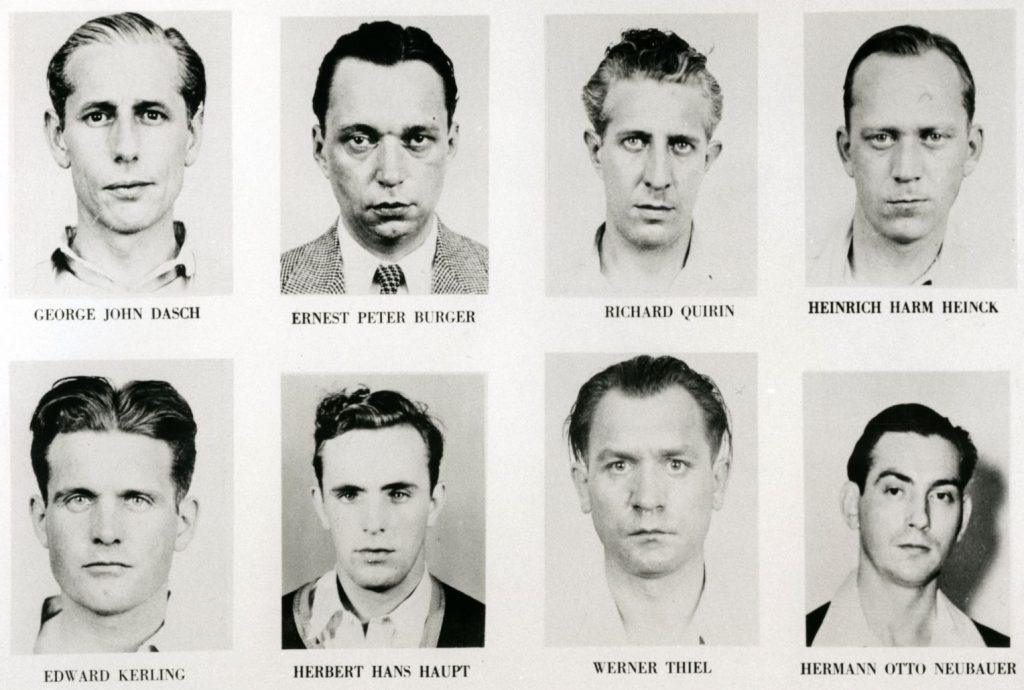
Much has been written about the eight central characters in this story. These individuals have been described by contemporary and subsequent sources alike, as Saboteurs, Nazis and Spies. Certainly to call them such, fed into the political expectations of the day. Yet their country had chosen them for this mission based on unique qualifications, separate and apart from whatever devotion they felt for the fatherland, or the Nazi party. It may be that these guys deserve every evil name that’s been heaped on them. Or maybe they were just eight guys who got caught up between two nations at war. It’s an interesting story. You decide.

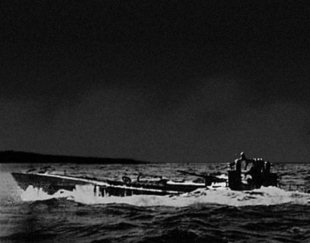
The German submarine U-202 commanded by Hans Linder came to the surface on the night of June 12 at Amagansett, New York, near Montauk Point. An inflatable emerged from the hatch and rowed to shore at what is now Atlantic Ave beach, in Long Island. Four figures stepped onto the beach wearing German military uniforms.  If they’d been captured at this point every one of them wanted to be treated as enemy combatants, instead of spies.

Pastorius

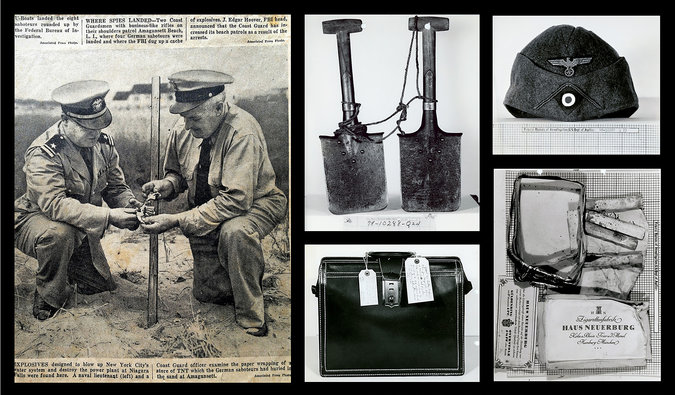
This was “Operation Pastorius”, a mission was to sabotage American economic targets and damage defense production. Targets included hydroelectric plants, train bridges and factories. The four had nearly $175,000 in cash, some good liquor and enough explosives to last them two years or more.

German plans began to unravel as they buried their uniforms and explosives in the sand.  21-year old Coast Guardsman John Cullen was a “sand pounder”.  Armed only with a flashlight and a flare gun, Cullen had the unglamorous duty of patrolling the beaches, looking for suspicious activity.

It was “so foggy that I couldn’t see my shoes” Cullen said, when a solitary figure came out of the dunes.  He was George John Davis he said, a fisherman run ashore.  But something seemed wrong and Cullen’s suspicions were heightened, when another figure came out of the darkness.  This one was shouting something in German, when “Davis” spun around and shouted, “You damn fool!  Go back to the others!”

With standing orders to kill anyone who confronted them during the landing, Davis hissed, “Do you have a mother? A father?  Well, I wouldn’t want to have to kill you.”

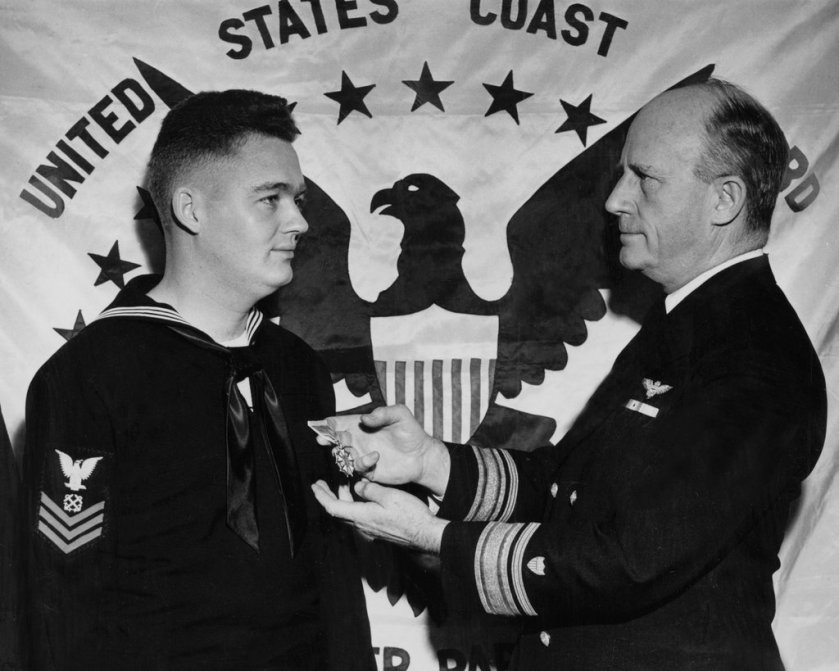
It was Cullen’s lucky day.  “Davis’” real name was Georg John Dasch.  He was no Nazi. He’d been a waiter and dishwasher before the war, who’d come to the attention of the German High Command because he had lived for a time, in the United States.   “Forget about this, take this money, and go have a good time” he said, handing over a wad of bills.   $260 richer, John Cullen sprinted two miles directly to the Coast guard station.

Cullen
Seaman John Cullen, left, received the Legion of Merit from Rear Adm. Stanley V. Parker for his service in WW2

Before long the beach was swarming with Coast Guardsmen. A dawn broke it was easy to see something heavy had been dragged, across the sand. Within minutes boxes were found containing Nazi uniforms.

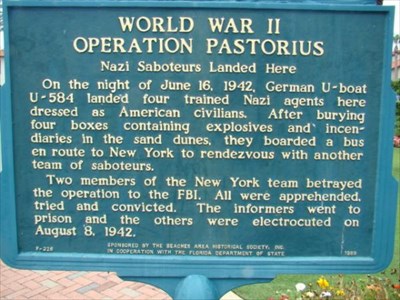
Four days later, U-584 deposited a second team of four at Ponte Vedra Beach, Florida, south of Jacksonville. As with the first, this second group had lived and worked in the United States, and were fluent in English.  Two of the eight were US citizens.

Georg Dasch had a secret.  He had no intention of carrying out his mission.  He summoned Ernst Peter Burger to an upper-level hotel room.  Gesturing toward an open window Dasch said  “You and I are going to have a talk, and if we disagree, only one of us will walk out that door—the other will fly out this window.”

Pastorius-Plaque

Burger turned out to be a naturalized US citizen who’d spent 17 months in a concentration camp.  He hated the Nazis as much as Dasch. Then and there, the two of them decided to defect.

Dasch tested the waters. Convinced the FBI was infiltrated with Nazi agents, he telephoned the New York field office.  Put on hold with the call transferred several times, Dasch was horrified to have the agent who finally listened to him, quietly hang up the phone.  Had he reached a German mole?  Had the call been traced?

Dasch had no way of knowing, he’d been transferred to the ‘nut desk’.  The FBI thought he was a clown.

Finally, Dasch went to the FBI office in Washington DC, only to be treated like a nut job.  Until he dumped $84,000 cash on Assistant Director D.M. Ladd’s desk, a sum equivalent to about a million dollars, today.  Dasch was interrogated for hours, and happily gave up everything he knew.  Targets, German war production, he spilled it all, even a handkerchief with the names of local contacts, written in invisible ink.  He couldn’t have been a very good spy, though.  He forgot how to reveal the names.

All eight were in custody, within two weeks.

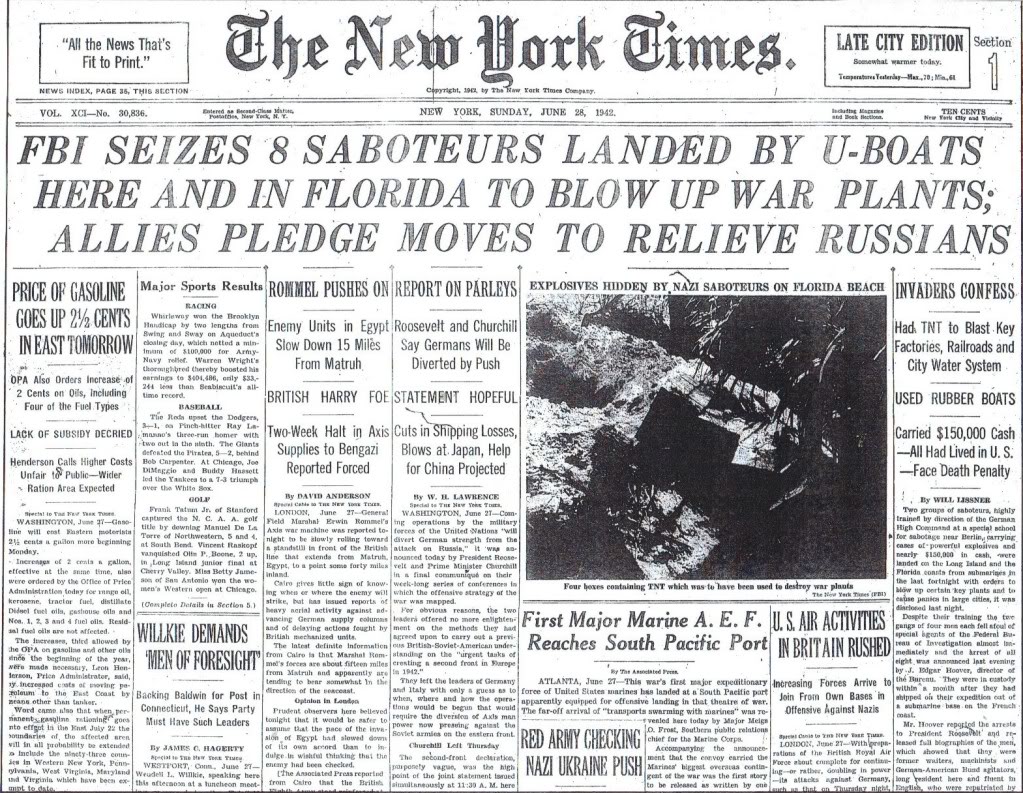
J. Edgar Hoover announced the German plot on June 27, but his version had little resemblance to that of Dasch and Burger.  As with the brief he had given President Roosevelt, Hoover praised the magnificent work of FBI detectives and the Sherlock Holmes-like powers of deduction which led Assistant Director Ladd to that $84,000.  Dasch and Burger’s role in the investigation was conveniently left out, as was the fact that the money had all but bounced Mr. Ladd off the head.

Neither Dasch nor Burger expected to be thrown in a cell, but agents assured them it was a formality.  Meanwhile, a credulous and adoring media speculated on how Hoover’s FBI had done it all.  Did America have spies inside the Gestapo?  German High Command?  Were they seriously that good?

Attorneys for the defense wanted a civilian trial, but President Roosevelt wrote to Attorney General Francis Biddle: “Surely they are as guilty as it is possible to be and it seems to me that the death penalty is almost obligatory”. The case went all the way to the Supreme Court, where the decision “Ex parte Quirin” became and remains precedent to this day, for the way unlawful combatants are tried.  All eight would appear before a military tribunal.

Whether any of the eight were the menace they were made out to be, remains unclear.  German High Command had selected all eight based on past connections with the United States, and ordering them to attack what they may have regarded as their adopted country.  Several were arrested in gambling establishments, others in houses of prostitution.  One had resumed a relationship with an old girlfriend and the pair was planning to marry.  Not the behavior patterns you might expect from “Nazi saboteurs”.

Pastorius-Sentinel

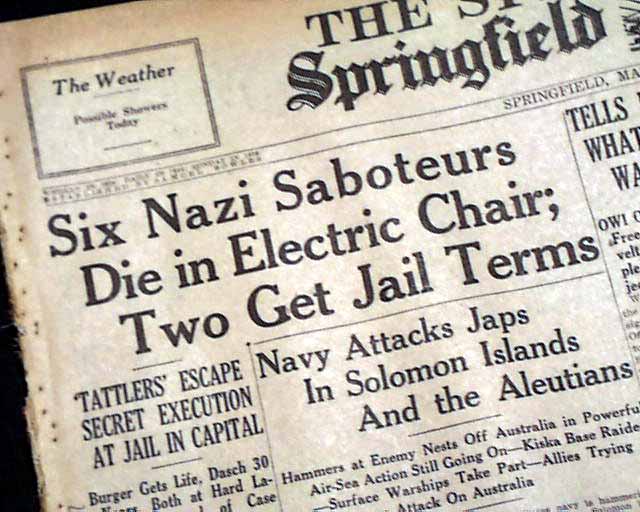
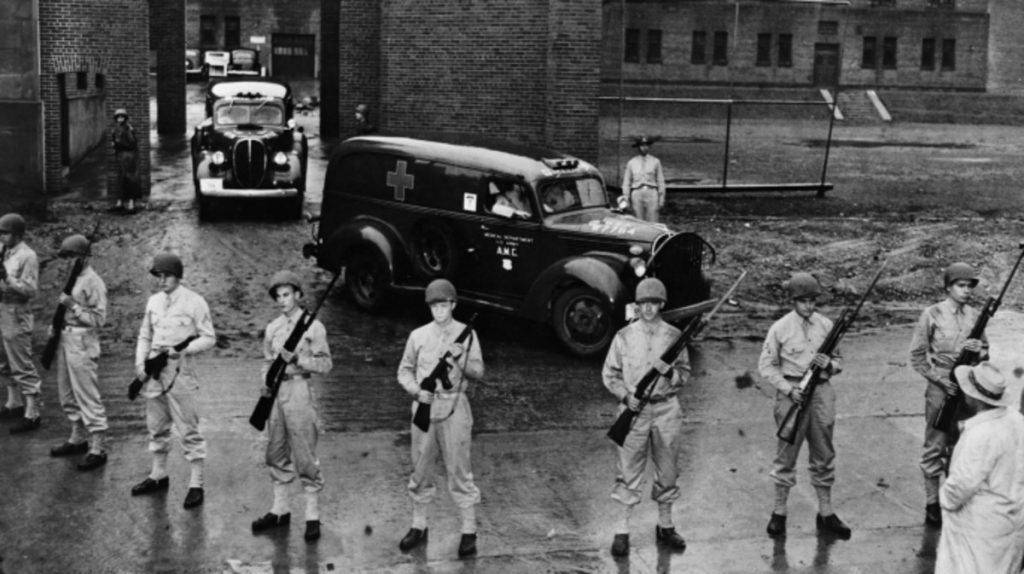
The trial was held before a closed-door military tribunal in the Department of Justice building in Washington, the first such trial since the Civil War. All eight defendants were found guilty and sentenced to death.  It was only on reading trial transcripts, that Roosevelt learned the rest of the story.  The President commuted Burger’s sentence to life and Dasch’s to 30 years, based on their cooperation with the prosecution. The other six were executed by electric chair on August 8, in alphabetical order.

Bodies of the six men executed are transported by ambulance, under armed guard.

After the war, Burger and Dasch’s trial transcripts were released to the public, over the strenuous objections of J. Edgar Hoover.  In 1948, President Harry S. Truman bowed to political pressure, granting the men executive clemency and deporting them both to the American zone of occupied Germany.  The pair found themselves men without a country hated as spies in America, and traitors in Germany.

The reader may decide, whether Hoover and Roosevelt operated from base and venal political motives, or whether the pair was playing 4-D chess.  Be that as it may, Hitler rebuked Admiral Canaris, and seems to have bought into Hoover’s version of FBI invincibility.  There would be no further missions of this type, save for one in November 1944, when two spies were landed on the coast of Maine to gather information on the Manhattan project.

Georg Dasch campaigned for the rest of his life, to be allowed to return to what he described as his adopted country.  Ernst Burger died in Germany in 1975, Dasch in 1992.  The pardon Hoover promised both men over a half-century earlier, never materialized.

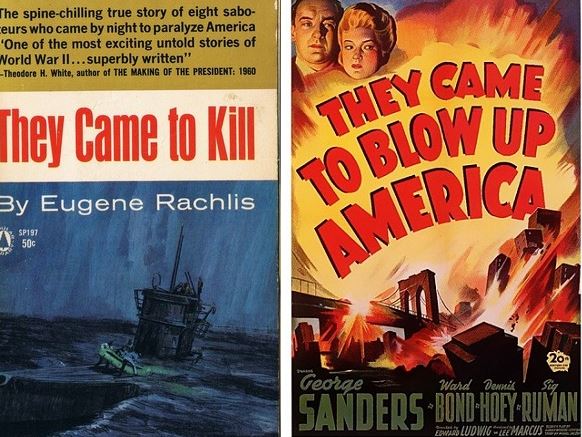
Neither Dasch nor Burger could have dreamed of what they would become, in the popular imagination.

March 28, 1892 Two-Gun Hart, Prohibition Cowboy

Hart was loved by temperance types and hated by the “wets”, and famous across the state of Nebraska. The Homer Star reported that this hometown hero was “becoming such a menace in the state that his name alone carries terror to the heart of every criminal.”

A boy was born on this day in 1892 in the south of Italy, James Vincenzo, the first son of a barber named Gabriele and his wife, Teresa. A second son named Ralph came along before the small family emigrated to the United States in pursuit, of a better life.

Hart
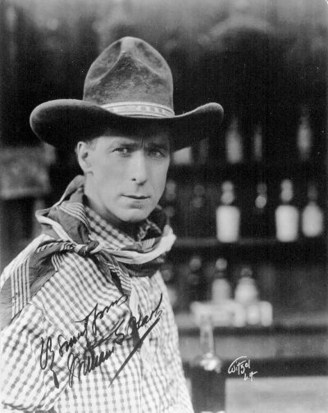
Silent film cowboy star William S Hart

Gabriele and Teresa would have seven more children in time: Frank and Alphonse followed by Ermina who sadly died in infancy, John, Albert, Matthew and Mafalda.

Most of the brothers followed a life of petty crime but not Vincenzo, the first-born who would often take the ferry to Staten Island to escape the overcrowded mayhem, of the city.

Vincenzo got a job there with help from his father. He was cleaning stables and learning how to care for horses. He even learned to ride and preferred the more “American sounding” part of his name, of “James”.

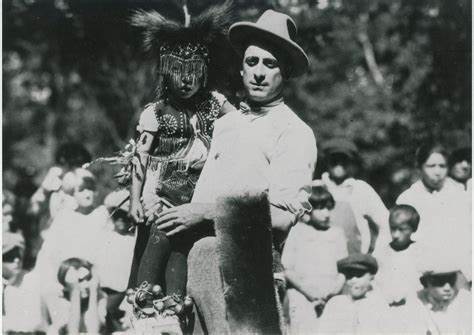
James newfound love of horses led to a fascination with Buffalo Bill Cody and the “Wild West” shows, popular at this time. At sixteen he left the city for good. James family had no idea where he had gone until a letter, a year later. James was in Kansas he wrote working as a roustabout, with a traveling circus.

This was the age of the silent film, William S. Hart one of the great “cowboy” stars of the era. Hart was larger than life, the six-gun toting cow-punching gunslinger from a bygone era.

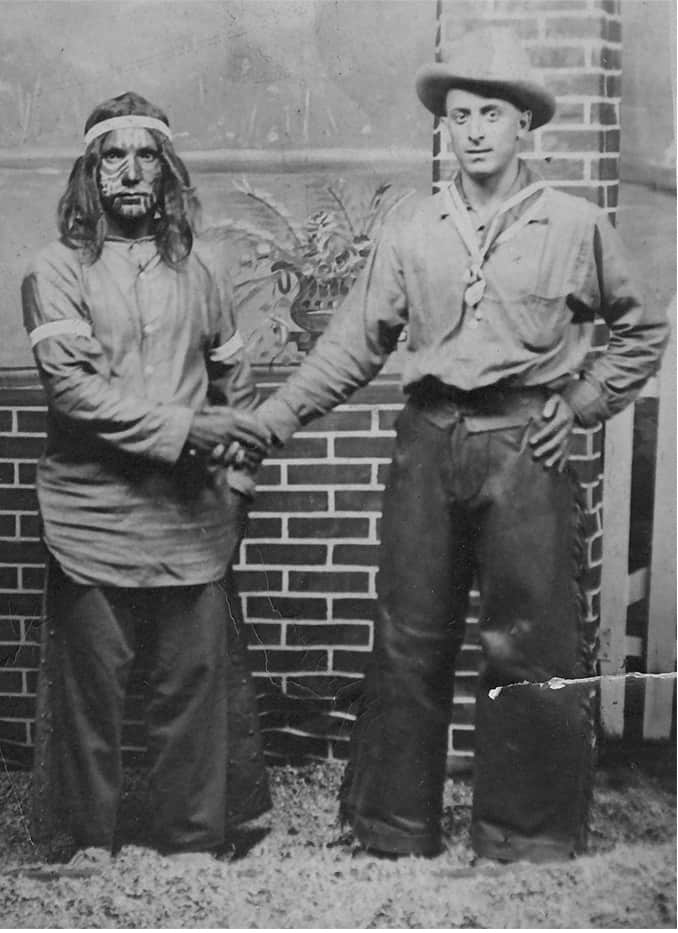
The roustabout idolized the silent film star and adopted his mannerisms, complete with low-slung six-shooters, red bandanna and ten-gallon hat. He worked hard to lose his Brooklyn accent and explained his swarthy southern Italian color, saying he was part native American.

James even adopted the silent film star’s name and enlisted in the Army as Richard James Hart claiming to be a farmer, from Indiana. Some stories will tell you that Hart fought in France and rose to the rank of Lieutenant, in the military police. Others will tell you he joined the American Legion after the war only to be thrown out when it was learned, that the whole story was fake.

Be that as it may Vincenzo legally changed his name to Richard James Hart.

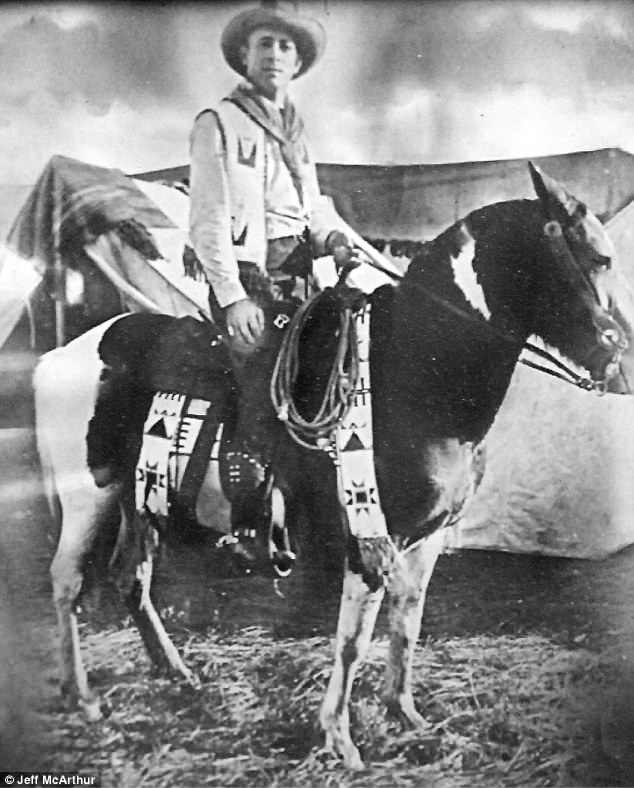
Richard Hart stepped off the freight train in 1919, a walking, talking anachronism. He was a 19th century Wild West gunfighter, from his cowboy boots to his embroidered vest to that broad-brimmed Stetson hat. This was Homer Nebraska, a small town of about 500, some seventeen miles from Sioux City Iowa.

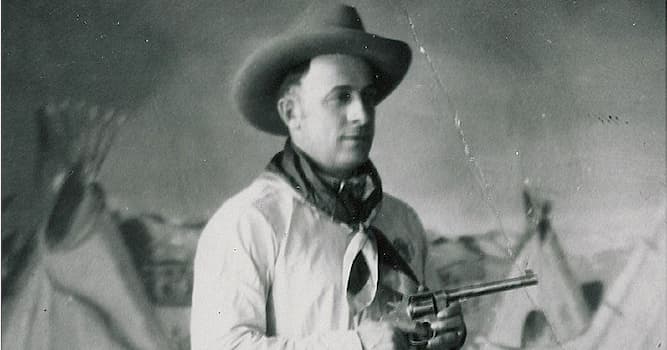
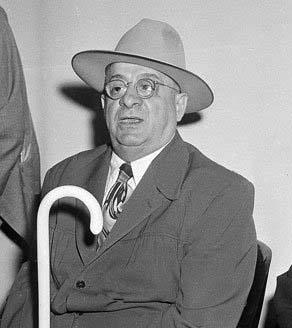
Richard James “Two Gun” Hart

He claimed to be a hero of the Great War, personally decorated by General John J. Pershing. Intelligent, ambitious and not afraid of a little hard work, Hart took jobs as paper hanger, house painter, whatever it took.

He was short and powerfully built with the look of a man who carried mixed Indian or Mexican blood, regaling veterans at the local American Legion with tales of his exploits, against the Hun.

The man could fight and he knew how to use those guns, amazing onlookers with feats of marksmanship behind the Legion post.

Any doubts about Hart’s physical courage were put to rest that May when a flash-flood nearly killed the Winch family of neighboring Emerson Nebraska. Hart dashed across the raging flood time after time to bring the family to safety.  Nineteen-year-old Kathleen was so taken with her savior she married the man that Fall, a marriage that later produced four boys.

The small town was enthralled by this new arrival, the town council appointing Hart as Marshall. He was a big fish in a small pond, elected commander of the Legion post and district commissioner for the Boy Scouts of America.

The 18th Amendment to the Constitution was ratified on January 16 of that year, the Volstead Act passed by the United States Congress over the veto of President Woodrow Wilson on October 29. “Prohibition” was now, the law of the land. It was now illegal to produce, import, transport or sell intoxicating liquor.

Richard-shaking-hand

Richard Hart became a prohibition agent in the Summer of 1920 and went immediately to work, destroying stills and arresting area bootleggers.

Hart was loved by temperance types and hated by the “wets”, famous across the state of Nebraska. The Homer Star reported that this hometown hero was “becoming such a menace in the state that his name alone carries terror to the heart of every criminal.

Officials at the federal Bureau of Indian Affairs took note and before long, Hart was performing the more difficult (and dangerous) job of liquor suppression on the reservations.

two-gun-hart-lawman-cowboy-and-longlost-brother-of-al-capone-1-638

Hart brought his chaps and his six-shooters to South Dakota where the Yanktown reservation superintendent reported to his superiors in Washington “I wish to commend Mr. Hart in highest terms for his fearless and untiring efforts to bring these liquor peddlers and moonshiners to justice. …This man Hart is a go-getter.”

Hart became proficient in Lakota and Omaha dialects. Tribal leaders called him “Two Gun”, after the twin revolvers he wore. Some members of the Oglala tribe called him “Soiko”, a name roughly translating as “Big hairy boogey-man”.

By 1927, Two-Guns Hart had achieved such a reputation as to be appointed bodyguard to President Calvin Coolidge, on a trip through the Black Hills of South Dakota.

By 1930, Richard James Hart was so famous a letter addressed only as “Hart” and adorned with a sketch of a brace of pistols, arrived to his attention.

Hart became livestock inspector after repeal of prohibition, and special agent assigned to the Winnebago and Omaha reservations.  He was re-appointed Marshall of his adopted home town but, depression-era Nebraska was tough.  The money was minuscule and the Marshall was caught, stealing cans of food.

181580_max

The relatives of one bootlegging victim from his earlier days tracked him down and beat him so severely with brass knuckles,  the prohibition cowboy lost his sight sight in one eye.

Fellow members of the American Legion had by this time contacted the Army to learn Hart’s WW1 tales, were fake.  Richard James Hart was never in the Army though his namesake Richard Jr. died fighting for the nation, in World War 2.

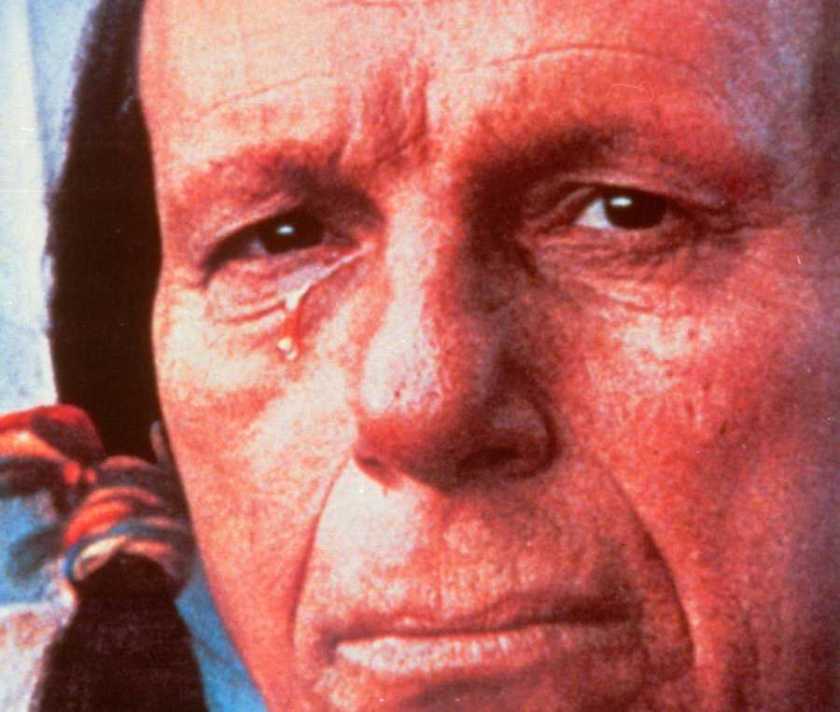
Turns out that other parts of the lawman’s story were phony, too.  A good story but altogether fake, just like the Italian American actor Espera Oscar de Corti better known character “Iron Eyes Cody” the “crying Indian”, who possessed not a drop of native American blood.  Nor did the mixed native American pretender, Richard James Hart.

CryingIndian

The lawman had left the slums of Brooklyn to become a Prohibition Cowboy while that little brother Alphonse, pursued a life of crime.  Richard James Hart was James Vincenzo Capone, long lost brother of Alphonse “Scarface” Capone.

A Trivial Matter
James Vincenzo Capone’s strange double-life came to the public eye for the first time in 1951, when defense attorneys subpoenaed Richard Hart to testify on behalf of his brother Ralph Capone. Hart faded into anonymity following a rash of newspaper stories, and died within a year at his adopted home town of Homer, the small Nebraska town where he stepped off that freight train, some 33 years earlier.

May 16, 1938 Buddy’s Eyes

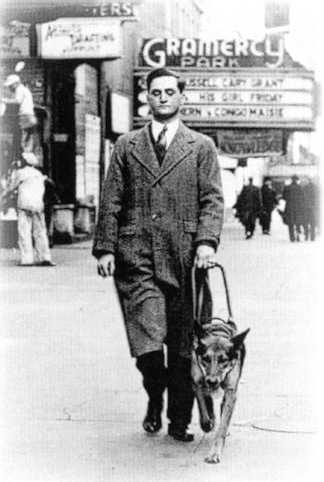
Man and dog stepped off the ship in 1928 to a throng of reporters. There were flash bulbs, shouted questions and the din of traffic and honking horns that can only be New York City.  Buddy never wavered. At the end of that first day, Dorothy Eustis received a single word telegram: “Success”. 

Morris Frank lost the use of an eye in a childhood accident. He lost his vision altogether in a boxing mishap, at the age of 16.  Frank hired a boy to guide him around but the young man was easily bored and sometimes wandered off, leaving Frank to fend for himself.

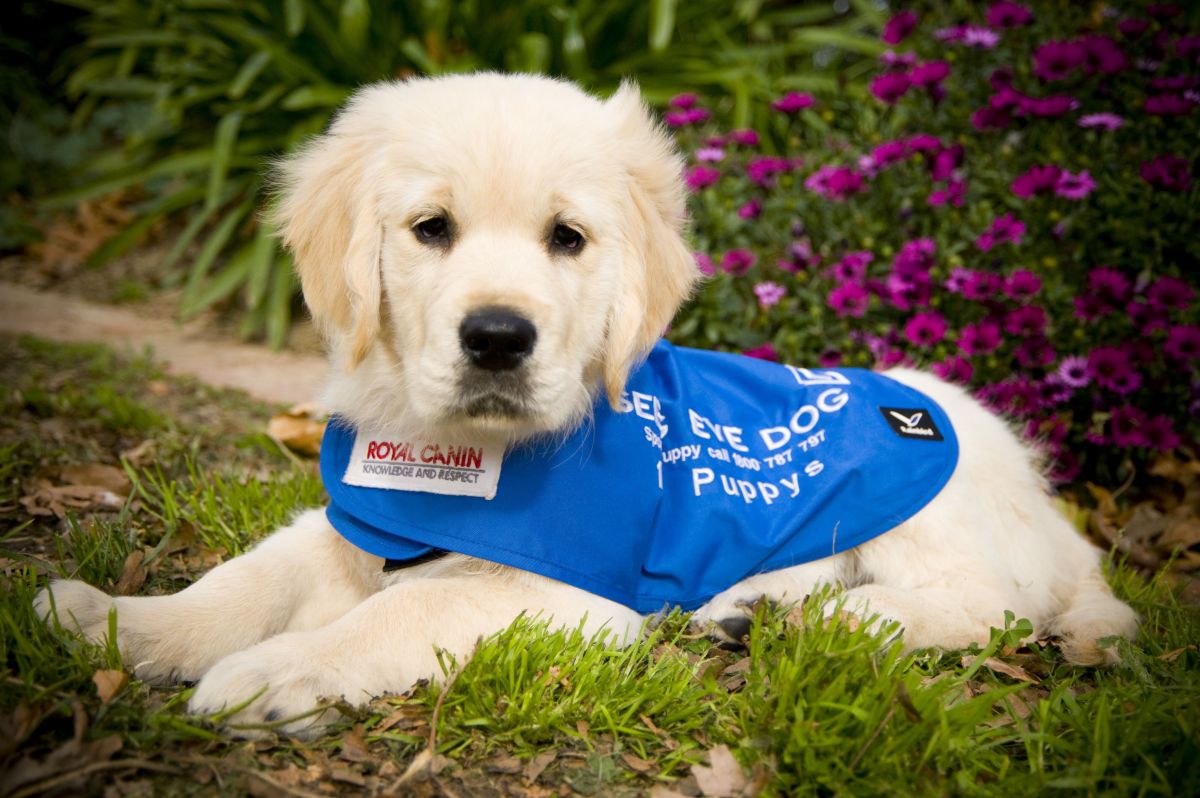
German specialists were working at this time on the use of Alsatians (German Shepherds) to act as guide dogs for WWI veterans blinded by mustard gas. An American breeder living in Switzerland, Dorothy Harrison Eustis, wrote an article about the work in a 1927 issue of the Saturday Evening Post. When Frank’s father read him the article, he wrote to Eustis pleading that she train a dog for himself.  “Is what you say really true? If so, I want one of those dogs! And I am not alone. Thousands of blind like me abhor being dependent on others. Help me and I will help them. Train me and I will bring back my dog and show people here how a blind man can be absolutely on his own. We can then set up an instruction center in this country to give all those here who want it a chance at a new life.

Dorothy Eustis

Dorothy Eustis called Frank in February 1928 and asked if he was willing to come to Switzerland.  The response left little doubt:  “Mrs. Eustis, to get my independence back, I’d go to hell”.  She accepted the challenge and trained two dogs, leaving it to Frank to decide which was the more suitable. Morris came to Switzerland to work with the dogs, both female German Shepherds. He chose one named “Kiss” but, feeling that no 20-year-old man should have a dog named Kiss, he called her “Buddy”.

Buddy's Eyes

Man and dog stepped off the ship in 1928 to a throng of reporters. There were flash bulbs, shouted questions and the din of traffic and honking horns that can only be New York City.  Buddy never wavered. At the end of that first day, Dorothy Eustis received a single word telegram: “Success”.  Morris Frank was set on a path that would become his life’s mission: to get seeing eye dogs accepted all over the country.

Frank and Eustis established the first guide dog training school in the US in Nashville, on January 29, 1929.    Frank was true to his word, becoming a tireless advocate of public accessibility for the blind and their guide dogs.  In 1928, he was routinely told that Buddy couldn’t ride in the passenger compartment.  Within seven years, all railroads in the United States adopted policies allowing guide dogs to remain with their owners while onboard.  By 1956, every state in the Union had passed laws guaranteeing access to public spaces for blind people and their dogs.

Buddy, 1

Frank told a New York Times interviewer in 1936 that he had probably logged 50,000 miles with Buddy, by foot, train, subway, bus, and boat. He was constantly meeting with people, including two presidents and over 300 ophthalmologists, demonstrating the life-changing qualities of owning a guide dog.

Sadly, no dog is given the span of a human lifetime. Buddy’s health was failing in the end, but the team had one more hurdle to cross. One more barrier to break. Frank wanted to fly in a commercial aircraft with his guide dog. The pair did so on this day in 1938, flying from Chicago to Newark. Buddy passed the time curled up at Frank’s feet. United Air Lines was the first to adopt the policy, granting “all Seeing Eye dogs the privilege of riding with their masters in the cabins of any of our regularly scheduled planes.”

Buddy was all business during the day, but, to the end of her life, she liked to end her work day with a roll on the floor with Mr. Frank.  Buddy died seven days after that plane trip, but she had made her mark.  By this time there were 250 seeing eye dogs working across the country, and their number was growing fast.  Buddy’s replacement was also called Buddy, as was every seeing eye dog Frank would ever own until he passed away, in 1980.

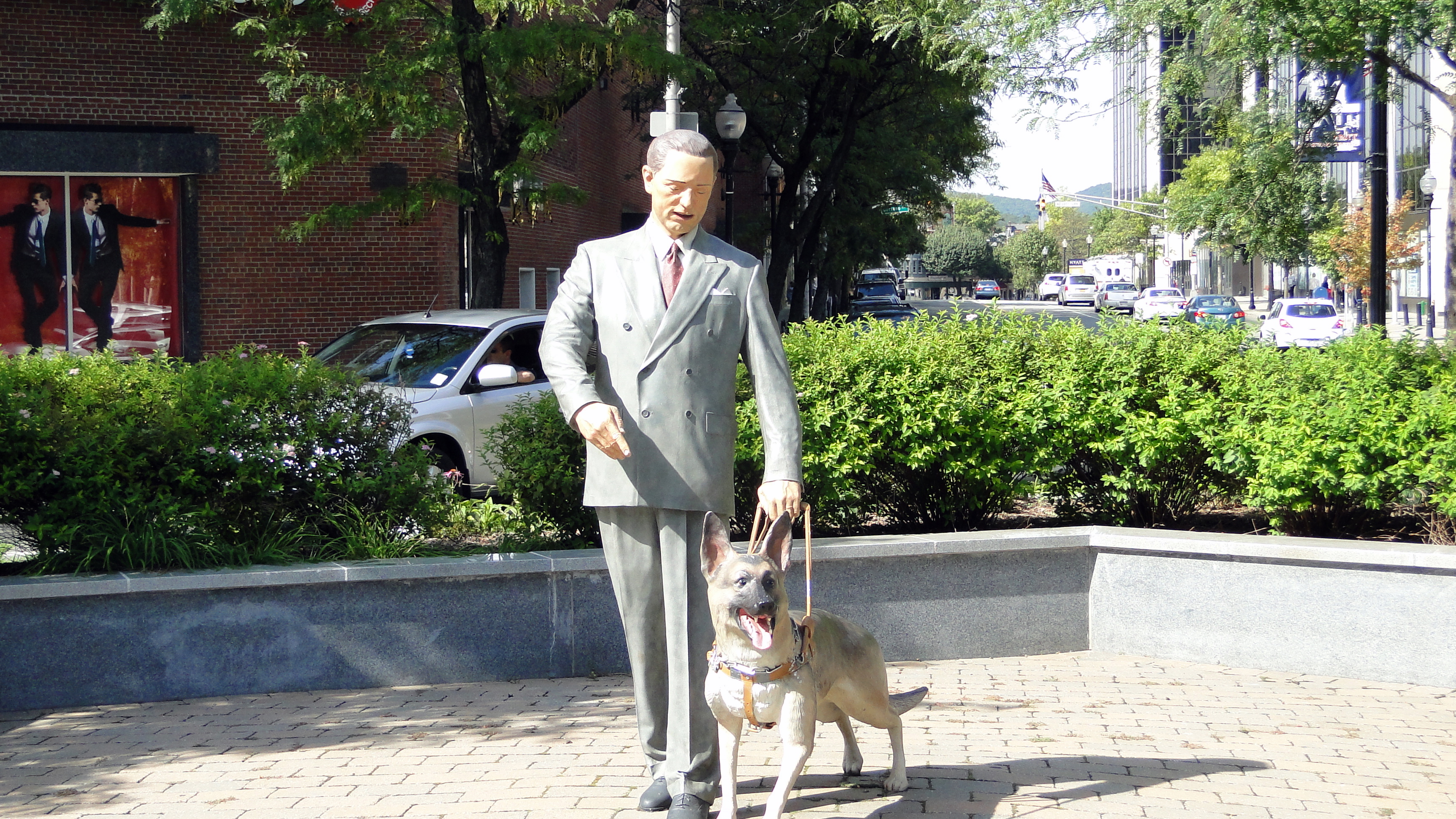
Four decades and more since Morris Frank left this earth, his dream lives on. Today there are an estimated 10,000 seeing eye dogs currently at work, in the United States.

morris-frank-and-buddy-seeing-eye-dog-promo
The trompe l’oeil painted bronze statue “The Way to Independence” was unveiled on April 29, 2005, on Morristown Green, Morristown NJ. Artist John Seward Johnson, II

May 7, 1945 Victory in Europe

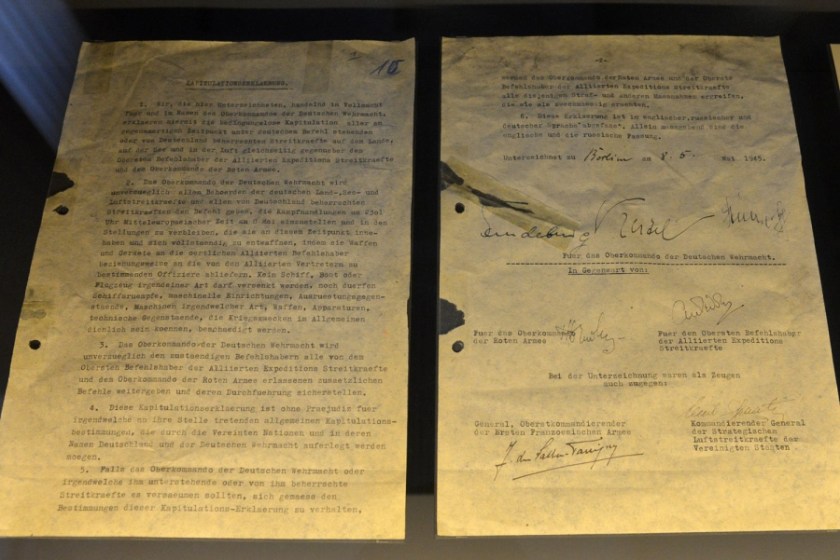
General Alfred Jodl came to Reims to sign the document including the phrase “All forces under German control to cease active operations at 2301 hours Central European time on 8 May 1945“.

Beginning on May 5, reporters from AP, Life magazine, and others began to sleep on the floor of Eisenhower’s red brick schoolhouse headquarters, for fear of stepping out and missing the moment. Adolf Hitler was dead by his own hand, the life of the German tyrant extinguished on April 30.

General Alfred Jodl came to Reims to sign the document including the phrase “All forces under German control to cease active operations at 2301 hours Central European time on 8 May 1945“.

Instruments of Surrender, ww2

The signing of the instruments of surrender ending the most destructive war in history took place on Monday, May 7, at 2:41am, local time.   In Europe, World War II had come to an end.The German government announced the end of hostilities right away to its own people, but most of the Allied governments, remained silent.   It was nearly midnight the following day when Field Marshal Wilhelm Keitel signed a second instrument of surrender, in the Berlin headquarters of Soviet General Georgy Zhukov.

Soviet Premier Josef Stalin had his own ideas about how he wanted to handle the matter while the rest of the world, waited.

ve-day-picadilly-square-750-1200x0-c-default

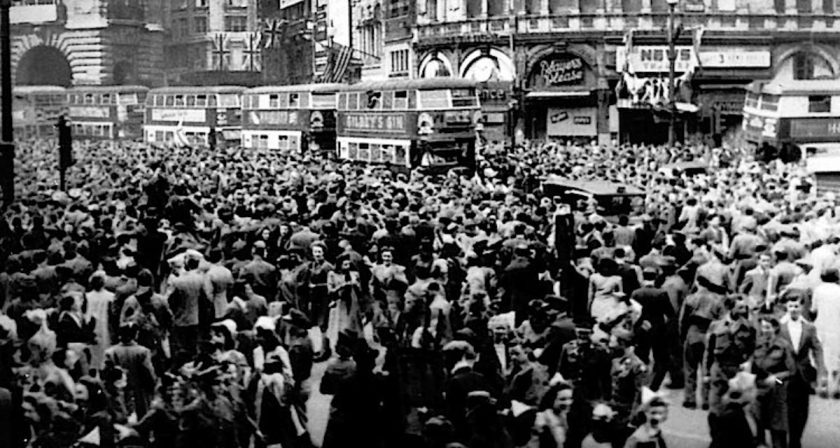
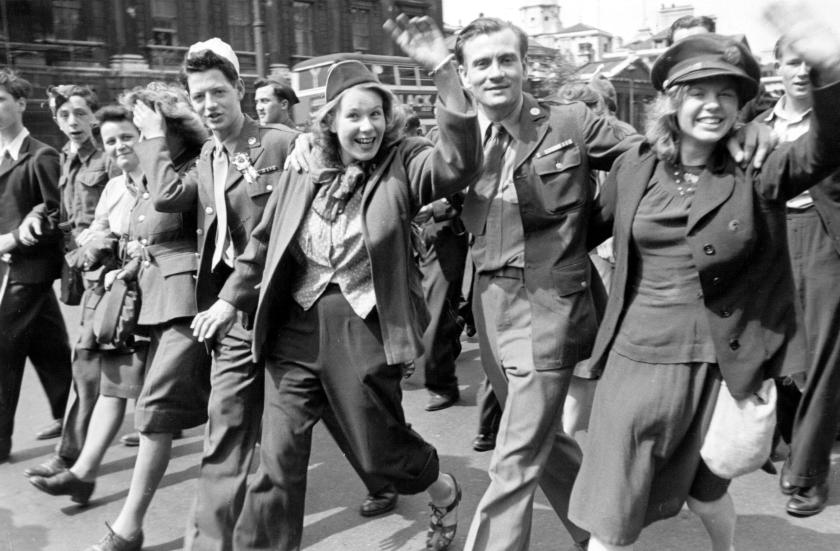
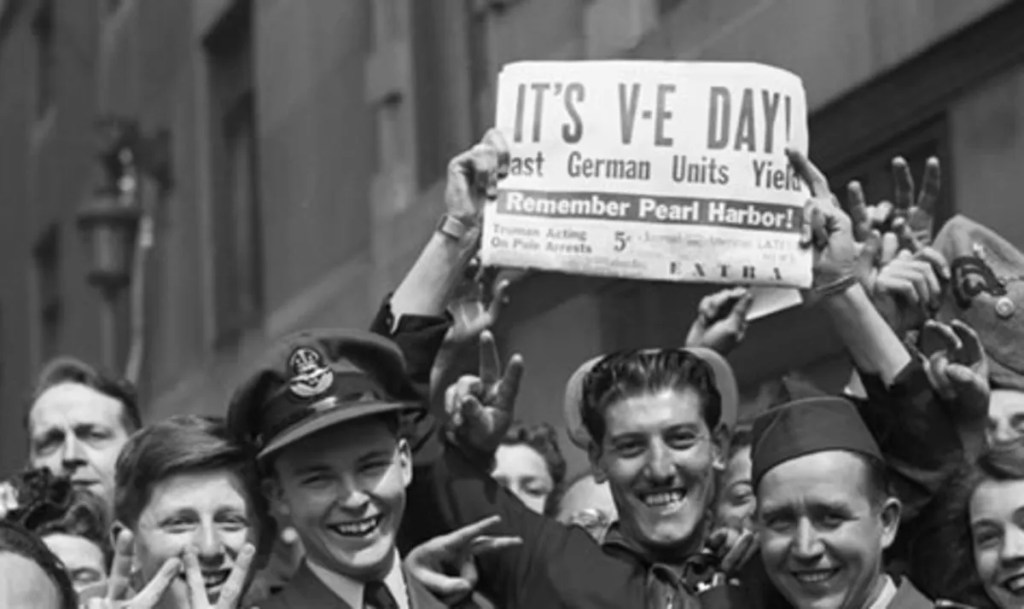
In England, May 7 dragged on with no public statement. Large crowds gathered outside of Buckingham Palace shouting “We want the King”. Bell ringers throughout the British Isles remained on silent standby, waiting for the announcement. The British Home Office issued a circular, instructing Britons how they could celebrate: “Bonfires will be allowed, but the government trusts that only material with no salvage value will be used.” And still, the world waited.

Prime Minister Winston Churchill finally lost patience in the early evening, saying he wasn’t going to give Stalin the satisfaction of holding up what everyone already knew. The Ministry of Information made this short announcement at 7:40pm: “In accordance with arrangements between the three great powers, tomorrow, Tuesday, will be treated as Victory in Europe Day and will be regarded as a holiday”.

nintchdbpict000000727094

The news was greeted with reserve in the United States, where the first thought was that of the Pacific. Even now, many months of savage combat lay ahead. President Harry Truman broadcast his own address to the nation at 9:00am on May 8, thanking President Roosevelt and wishing he’d been there to share the moment.

Franklin Delano Roosevelt had died on April 12 in Warm Springs, Georgia. President Truman’s speech begins: “This is a solemn but a glorious hour. I only wish that Franklin D. Roosevelt had lived to witness this day. General Eisenhower informs me that the forces of Germany have surrendered to the United Nations. The flags of freedom fly over all Europe. For this victory, we join in offering our thanks to the Providence which has guided and sustained us through the dark days of adversity”.

So it is that most of the world celebrates May 8 as Victory in Europe, “VE Day”, the day of formal cessation of all hostilities, by Nazi Germany. And yet in some sectors, the fighting continued.

German military operations officially ceased on May 8, a day celebrated as VE Day in in the United States, Great Britain, Western Europe and Australia. VE Day occurs on May 9 in the former Soviet territories, and New Zealand.

Even so isolated pockets of resistance continued to surrender day through May 14-15. The “Georgian uprising” of some 400 German troops and 800 allied Georgian soldiers under German officers continued until May 20 on the Dutch island of Texel (pronounced “Tessel).

The last major battle in Europe concluded on May 25 between the Yugoslav Army and Croatian Armed Forces. One contingent of German soldiers lost radio communications in Spitsbergen in the Norwegian archipelago and surrendered to a group of seal hunters, on September 4. Two days after the formal surrender of Imperial Japan and the end of war, in the Pacific.

May 5, 1945 A Sunday School Picnic

Only once during all of World War 2 did death result from enemy action, in the 48 contiguous United States. That of a Sunday School class out for a picnic, on May 5, 1945.

Japanese_fire_balloon_shotdown_gun

Following the 1883 eruption of the Krakatoa volcano, weather watchers described an eastbound, upper atmospheric air current described as the “equatorial smoke stream”. 

In the 1920s, Japanese meteorologist Wasaburo Oishi tracked these upper level winds using pilot balloons from a site, near Mount Fuji. Oishi published his findings in Esperanto, dooming his work to international obscurity. Inside Japan there were those who took note, filing away this new-found knowledge of what we now call the “Jet Stream”.

Japanese balloon bomb diagram

During the latter half of WWII, Japanese military thinkers conceived a fūsen bakudan or “fire balloon”, a hydrogen filled balloon device designed to ride the jet stream using sand ballast and a valve system, to navigate its way to the North American continent.

With sandbags, explosives, and the device which made the thing work, the total payload was about a thousand pounds at liftoff.  The first such device was released on November 3, 1944, beginning the crossing to the west coast of North America. 

Between late 1944 and April 1945 some 9,300 such balloons were released, with military payloads.

Today, inter-continental ballistic missiles are an everyday if frightening reality, of our time. Such a long range attack was unheard of during World war 2 and would not be duplicated until the Falklands War, in 1982.

In 1945, intercontinental weapons existed only in the realm of science fiction.  As these devices began to appear, American speculation ran wild. Authorities theorized that they originated with submarine-based beach assaults, German POW camps, even the internment camps into which the Roosevelt administration herded Japanese Americans.

These “washi” paper balloons flew at high altitude and surprisingly quickly, completing the Pacific crossing in only three days. Balloons came down from Alaska to Northern Mexico and as far east, as Detroit.

A P-38 Lightning fighter shot one down near Santa Rosa, California, while Yerington, Nevada cowboys cut one up to make hay tarps. Pieces of balloon were found in the streets of Los Angeles. A prospector near Elko Nevada delivered one to local authorities, on the back of a donkey.

Among US units assigned to fight fire balloons was the 555th Parachute Infantry Battalion, which suffered one fatality and 22 injuries fighting fires.

One of the last balloons came down on March 10 near Hanford Washington, shorting out power lines supplying electricity for Manhattan Project nuclear reactor cooling pumps. The war in the Pacific could have ended very differently had not backup safety devices restored power, almost immediately.

Japanese Balloon Bomb

Colonel Sigmund Poole, head of the U.S. Geological Survey military geology unit, asked, “Where’d the damned sand come from?”  Microscopic analysis of sand ballast identified diatoms and other microscopic sea life.  This and the mineral content of the sand itself proved to be definitive.  The stuff could only have come from the home islands of Japan, more specifically, one or two beaches on the island of Honshu.

American authorities were alarmed.  Anti-personnel and incendiary bombs were relatively low grade threats.  Not so the biological weapons Japanese military authorities were known to be developing at the infamous Unit 731, in northern China.

284 of these weapons are known to have completed the Pacific crossing to the United States, Mexico and Canada.  Experts estimate as many as 1,000 may have made the crossing.  Sightings were reported in seventeen US states. Pilots were ordered to shoot them down on sight, but many escaped detection, altogether.

In an effort to deny valuable intelligence to their Japanese adversary, US military and government authorities did everything they could to keep these “Fire Bombs” out of the media.  Even while such secrecy put Americans at risk.

Japanese Authorities reported that the bombs were hitting key targets. Thousands were dead or injured they insisted, and American morale was low.

On the morning of May 5, 1945, Pastor Archie Mitchell and his wife Elsie took a Sunday school class of five on a picnic to a forest area near Bly, Oregon.  As Pastor Mitchell parked the car, Elsie and the kids came upon a large balloon with a strange looking device, attached. There was no way they could have known, what they had found was a Japanese weapon of war.  The device exploded killing all six, instantly.

Japanese balloon bomb shrapnel tree

Several such devices exploded, igniting wildfires in the forests of California, Oregon and Washington, but the site near Bly is the only one known to have resulted in American casualties.

Today there is a small picnic area located in the Fremont-Winema National Forest in Lake County, Oregon.  It’s maintained by the US Forest Service, memorialized as the Mitchell Recreation Area and listed on the National Register of Historic Places.  A small stone marker points the way to a shrapnel scarred tree.

A second monument bears the words cast in bronze:  The “only place on the American continent where death resulted from enemy action during World War II”.  There are six names above those words, those of five children and their teacher:  Elsie Mitchell, age 26,  Edward Engen, 13,  Jay Gifford, 13,  Joan Patzke, 13,  Dick Patzke, 14 and  Sherman Shoemaker, age 11.

Elsie Mitchell was pregnant at the time of her death. Her unborn child was the 7th albeit nameless victim, of one of the most bizarre weapon systems of WW2.

Mitchell Monument

May 4, 1943 Counter Measures

Virtually anything that can be opened or closed, stepped on or moved in any way can be rigged to mutilate or kill, the unwary. Fiendish imagination alone, limits the possibilities.

In the Spanish language, the word “Bobo” translates as “stupid…daft…naive”. The slang form “bubie” describes a dummy. A dunce. The word came into English sometime around 1590 and spelled “booby”, meaning a slow or stupid person.

In a military context, a booby trap is designed to kill or maim the person who activates a trigger. Like the common mess tin at the top of this page, modified to mangle or kill the unsuspecting soldier. During the war in Vietnam, Bamboo pit vipers known as “three step snakes” (because that’s all you get) were tucked into backpacks, bamboo sticks or simply hung by their tails, a living trap for the unwary GI.

980x (3)
Punji stakes were often smeared with human excrement result in hideous infection for the unsuspecting GI

The soldier who goes to lower that VC flag might pull the halyard rope may hear distant snickering in the jungle…just before the fragmentation grenade goes off. Often, the first of his comrades running to the aid of his now shattered body hits the trip wire, setting off a secondary and far larger explosive.

Not to be outdone, the operation code-named “Project Eldest Son” involved CIA and American Green Berets sabotaging rifle and machine gun rounds, in such a way as to blow off the face the careless Vietcong shooter.

German forces were masters of the booby trap in the waning days of WW1 and WW2. A thin piece of fishing line connected the swing of a door with a hidden grenade, by your feet. A flushing toilet explodes and kills or maims everyone in the building. The wine bottle over in the corner may be perfectly harmless, but the chair you move over to get it, blows you to bits.

Virtually anything that can be opened or closed, stepped on or moved in any way can be rigged to mutilate or kill, the unwary. Fiendish imagination alone, limits the possibilities. Would the “Joe Squaddy” entering the room care if that painting on the wall was askew? Very possibly not but an “officer and a gentleman” may be moved to straighten the thing out at the cost of his hands, or maybe his life.

PAY-The-wartime-work-of-Laurence-Fish-Pea-Trigger
Exploding Peas, illustration by Laurence Fish

In the strange and malignant world of Adolf Hitler, the German and British people had much in common.  Are we not all “Anglo-Saxons”?  The two peoples need not make war the man believed, except for their wretched man, Winston Churchill.

Prime Minister Winston Churchill was a true leader of world-historical proportion during the darkest days, of the war.  Taking the man out just might cripple one of Hitler’s most potent adversaries.

In 1943, Hitler’s bomb makers concocted an explosive coated in a thin layer of chocolate and wrapped in expensive black & gold foil labeled “Peter’s Chocolate”. When you break a piece off of this thing, you might wonder in the last nanoseconds of your life.  What the hell is this canvas doing in a chocolate bar?

2CECF3F600000578-3254580-image-a-38_1443606430476

Churchill was known to have a sweet tooth and so it was, that Nazi Germany planned to kill the British Prime Minister. A booby trapped chocolate bar placed in a war cabinet meeting room.

We rarely hear about the work of the spy or the saboteur in times of war. They are the heroes who work behind enemy lines, with little to protect them but their own guts and cleverness. Their work is performed out of sight, yet there were times when the lives of millions hung in the balance, and they never even knew it.

PAY-The-wartime-work-of-Laurence-Fish-Flask-bomb

The lives of millions, or perhaps only one.  German saboteurs were discovered operating inside the UK, the information sent to British Intelligence.

Lord Victor Rothschild was a trained biologist in peace and member of the Rothschild banking family. During WW2, British Intelligence recruited him to work for MI5, heading up a three-member explosives and counter-sabotage unit. Rothschild immediately grasped the importance of the information and the need to illustrate Nazi devices to communicate, with other intelligence officers. 

We live in an age when computers are commonplace but that wasn’t the case, in 1943. ENIAC, the first electronic computer wouldn’t come around yet, for another two years. Photoshop was definitely out of the picture and yet, high quality illustrations were needed and quickly, and they had to come from a trusted source. Donald Fish, one of Rothschild’s two colleagues, had just the man. His son.

On this day in 1943, Lord Rothschild typed a letter to illustrator, Laurence Fish.  The letter, marked “secret”, begins: “Dear Fish, I wonder if you could do a drawing for me of an explosive slab of chocolate…”

The letter went on to describe the mechanism and included a crude sketch, requesting the artist bring the thing, to life.

Laurence Fish would one day become a commercial artist and illustrator, best remembered for his travel posters of the 1950s and ’60s.  He always signed his work, “Laurence”. 

From the pen and ink technical drawings of the war years to the brightly colored travel posters of his post-war career, Laurence Fish was a gifted and versatile artist.

In 1943 that was all for some time in an unknown future, a time when dozens of wartime drawings were quietly left in a drawer and forgotten, for seventy years. For now a world had a war to win and Laurence Fish, played a part.

Hitler’s bomb makers devised all manner of havoc, from booby trapped mess tins to time-delay fuses meant to destroy shipping, at sea.   In 2015, members of the Rothschild family were cleaning out the house, and discovered a trove of Fish’s work.

PAY-The-wartime-work-of-Laurence-Fish-Device-photographs

The artist is gone now and his name all but forgotten but his work, lives on.  Fish’s illustrations are now in the hands of his widow Jean, an archivist and former journalist living in Winchcombe, Gloucestershire. Thanks to her we can see this forgotten piece of history in her husband’s work, last shown in an exhibition last year over the weekend of September 18 – 19.

And a good thing it is. The man has earned the right to be remembered.