

Born this day in 1837, Stephen G. “Big Steve” Cleveland was 33 the day he left his practice of law to become Sheriff of Erie County, in western New York.
As Sheriff, Cleveland was responsible for carrying out the sentence of death, either with his own hands, or by that of a deputy. For this, the hangman was paid a fee of ten dollars.

Sheriff Cleveland took care of this job himself, personally releasing the trap door on September 6, 1872 and hanging one Patrick Morrissey, who’d been convicted of stabbing his mother to death in a drunken rage. He executed another convicted murderer six months later, hanging John Gaffeny on February 14, 1873.
The fees for these and other services were surprisingly lucrative, amounting to $40,000 over a two year term, equivalent to $836,556, today.
A lifelong Democrat, Cleveland had a reputation for ‘shooting straight” at a time of rampant political corruption, by both parties.
Elected Mayor of Buffalo in 1871, Cleveland was called upon to approve a street cleaning contract awarded to the highest bidder. The difference between high and low bids came to the considerable sum of $100,000, a pot of money which could be expected to find its way back to the politicians who’d approved it.
This sort of graft had long been a feature of political life in New York, but not now. Mayor Cleveland vetoed the measure, describing the scheme “as the culmination of a most bare-faced, impudent, and shameless scheme to betray the interests of the people, and to worse than squander the public money“.
This reputation for honesty propelled Big Steve’s political career from the Mayoralty of Buffalo to the Governor’s mansion, in New York.

Talk about corruption. Five years earlier, one New York city alderman’s committee estimated that Boss Tweed’s Tammany Hall machine fleeced New York taxpayers to the tune of $25 to $45 million. Later estimates ranged as high as an astonishing $200 million, equivalent to a jaw-dropping $2.8 Billion, today. As Governor, Cleveland earned the ire of the city’s Tammany Hall machine, with eight vetoes in his first two months in office.
In 1884, the “Buffalo Hangman” found himself Democratic nominee for President of the United States. Boston Globe columnist and political commentator Jeff Jacoby notes that “Not since George Washington had a candidate for President been so renowned for his rectitude.”
Despite all that rectitude, the candidate was not without skeletons in his closet. One was a relationship with one Maria Crofts Halpin which produced a son, named Oscar Folsom Cleveland.
Halpin insisted to the end of her days, that she’d been raped. Big Steve claimed she was crazy and overly generous with her affections, accepting paternity only as a way of doing right by an old girlfriend. Cleveland did manage to get the woman involuntarily committed, for a time, and the boy taken away to be raised in anonymity, by his adoptive family.

The Presidential election of 1884 was as close as any in history and Republicans made hay with the Halpin scandal. “Ma, Ma, where’s my Pa“?
Despite all of it, Stephen Grover Cleveland won the popular vote by one quarter of one per cent, and an electoral college victory of 219-192, leading to the rejoinder “Ma, Ma, where’s my Pa? Gone to the White House, ha ha ha“.
Fun fact: The only former executioner ever elected President of the United States, Grover Cleveland is best remembered for being the only President to ever serve two non-consecutive terms. The 22nd and 24th President of the United States was also, something of a medical miracle.
President Grover Cleveland was inaugurated for the second time in the midst of a disastrous recession known as the Panic of 1893. The nation suffered vast unemployment, with hundreds of businesses closing down. The railroad industry was devastated. With Americans struggling everywhere, many looked to the new President to provide hope and a new direction.
Early in his second term, the President noticed a bumpy and rapidly growing patch, on the roof of his mouth. White House physician Dr. Robert Maitland O’Reilly took one look and pronounced: “It’s a bad looking tenant, and I would have it evicted immediately”.
The health of the famously rotund, cigar chomping President was already a matter of public concern. Cleveland feared a cancer diagnosis would set off a panic. The tumor would have to be removed and the whole procedure, kept secret.
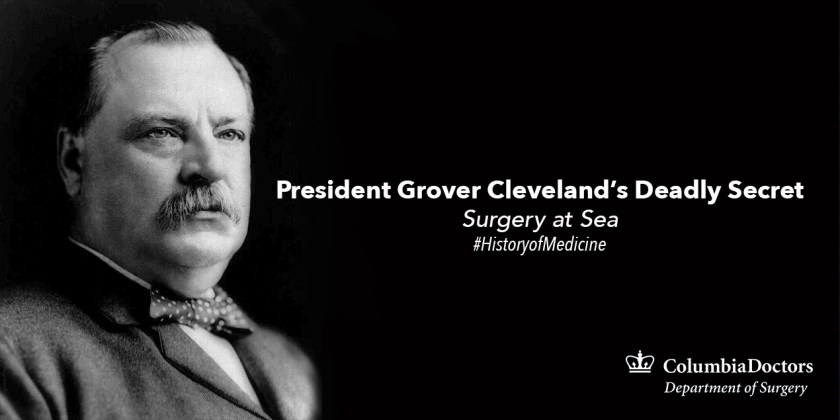
The only answer to the prying eyes of the press was to do it on the move, and there could be no scar. President Cleveland announced a four-day vacation aboard a friend’s yacht, a cruise through Long Island Sound to Buzzard’s Bay and on to the President’s summer home, on Cape Cod.
A surgical team of six boarded the yacht in disguise. On July 1, 1893, the President was strapped into a chair and anesthetized, with ether. The tumor was removed in a ninety minute procedure, along with the entire left side of the upper jaw, and five teeth. For all that, there was no external incision. The President’s life was saved, the trademark mustache undisturbed.
The operation remained secret until 1917, nine years after the death of the former President. A medical miracle for the time, the President’s surgery is studied, to this day.


 Twelve of the thirteen original states ratified these “Articles of Confederation” by February, 1779. Maryland would hold out for another two years, over land claims west of the Ohio River. In 1781, seven months before Cornwallis’ surrender at Yorktown, the 2nd Continental Congress formally ratified the Articles of Confederation. The young nation’s first governing document.

 It’s interesting to note the priorities of that first Congress, as expressed in their original 1st and 2nd amendments. The ones that were thrown out. The first had to do with proportional representation, and would have led us to a 6,000-member House of Representatives, instead of the 435 we currently have. The second most important thing in the world, judging by the priorities of that first Congress, was that any future Congress could not change their own salaries. Any such change could affect only future Congresses.


 Post journalist Carl Rowan insists the FBI sent at least one anonymous letter to Reverend Martin Luther King, Jr., urging the man to commit suicide.

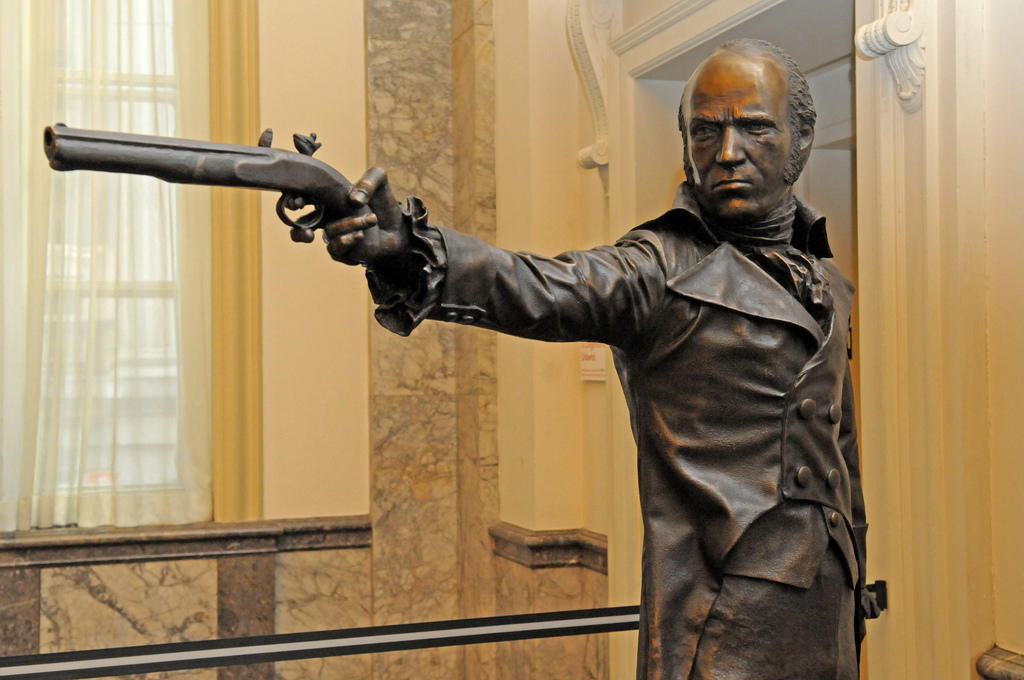
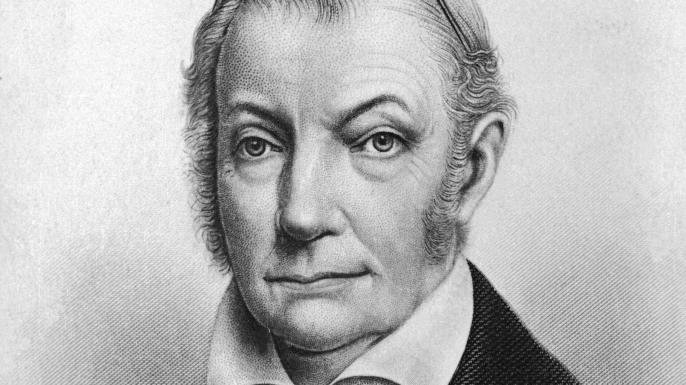
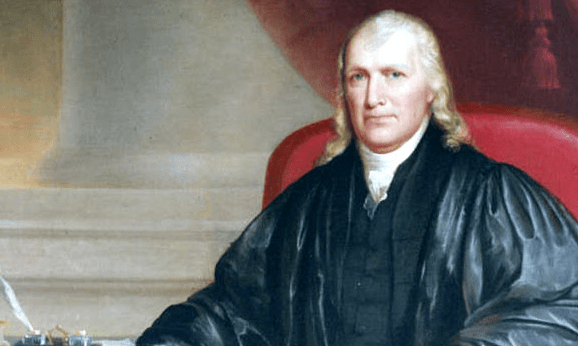
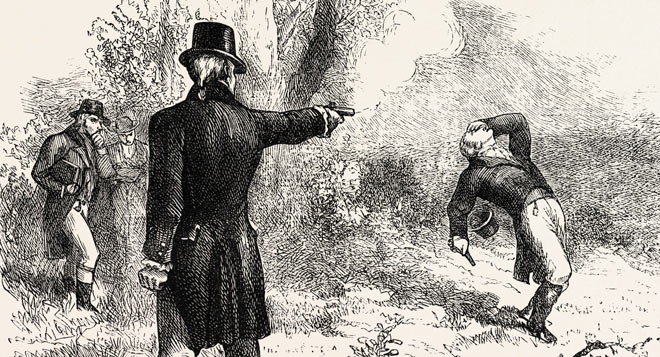 Murder charges were filed in both New York and New Jersey, but neither went to trial.


 Mickey Dugan was “born” on February 17, 1895, a wise-cracking street urchin from the wrong side of the tracks. “Generous to a fault” with a “sunny disposition” Mickey was the kind of street kid you’d find in New York’s turn-of-the-century slums, maybe
  Outcault worked for Joseph Pulitzer in those days, owner of the New York World Newspaper. Arch rival William Randolph Hearst hired the cartoonist away to work for Pulitzer’s cross-town competitor Journal American, but the pair soon learned that there was no copyright protection on the Yellow Kid. Soon the character was simultaneously appearing in both competing newspaper strips, where he would remain for over a year.

 The Spanish-American War began the following month, directly resulting in the Philippine-American war.




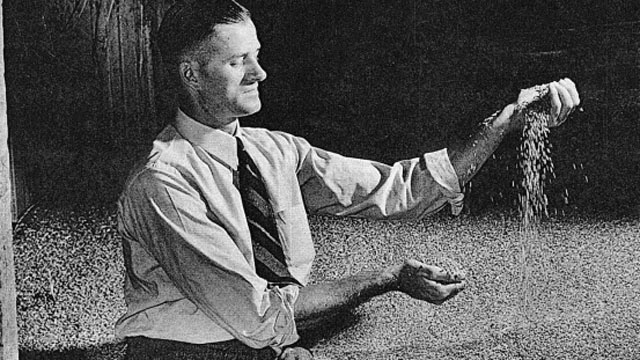
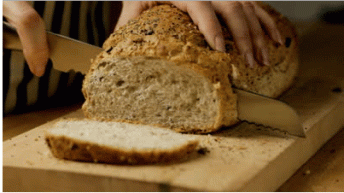 Frank Bench, a personal friend of the inventor, was the first to install the machine. The first pre-sliced loaf was sold in July of the following year. Customers loved the convenience and Bench’s bread sales shot through the roof.
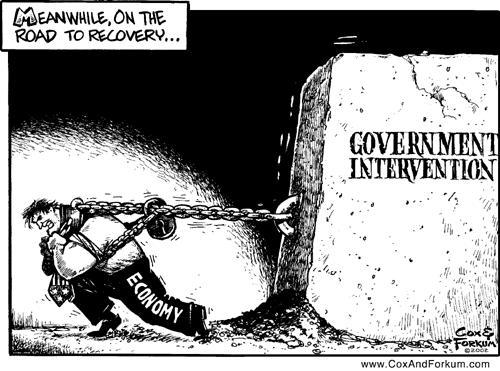
 Article 1, Section 8 of the Constitution includes the “Commerce Clause”, permitting the Congress “To regulate Commerce with foreign Nations, and among the several States, and with the Indian Tribes”. That’s it.
 The United States Supreme Court, apparently afraid of President Roosevelt and his aggressive and illegal “
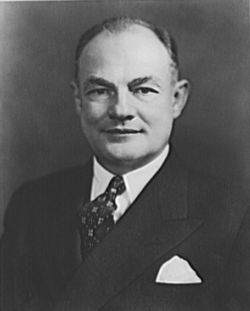
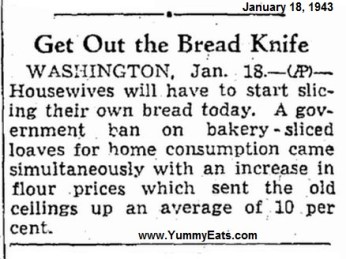
 The stated reasons for the ban never did make sense. At various times, Wickard claimed that it was to conserve wax paper, wheat or steel, but one reason was goofier than the one before. According to the War Production Board, most bakeries had plenty of wax paper supplies on hand, even if they didn’t buy any. Furthermore, the federal government had a billion bushels of wheat stockpiled at the time, about two years’ supply, and the amount of steel saved by not making bread slicers has got to be marginal, at best.
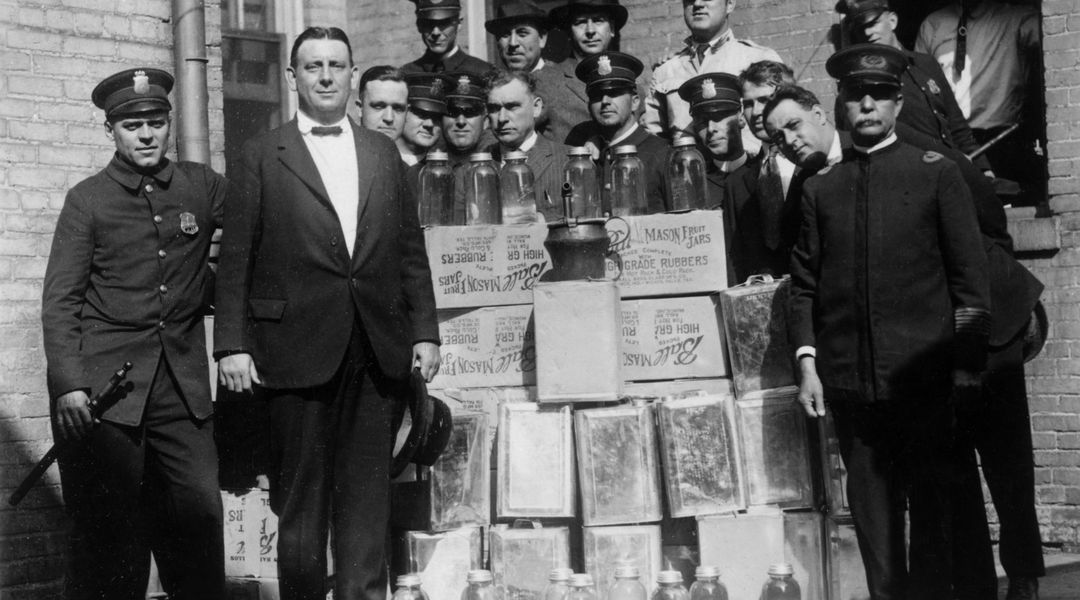
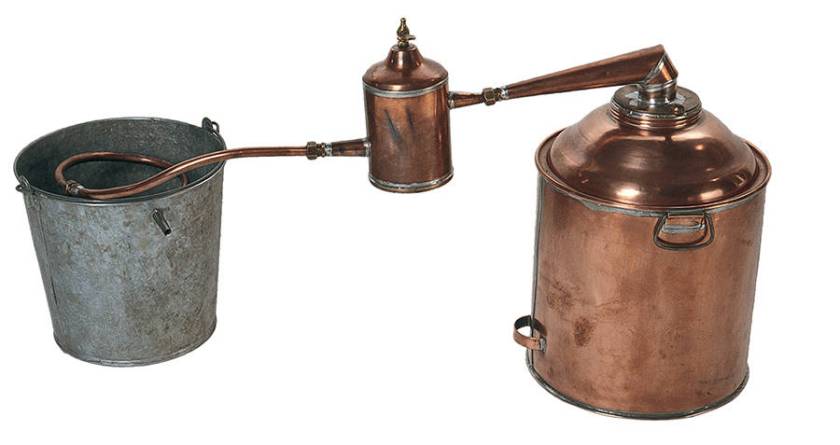
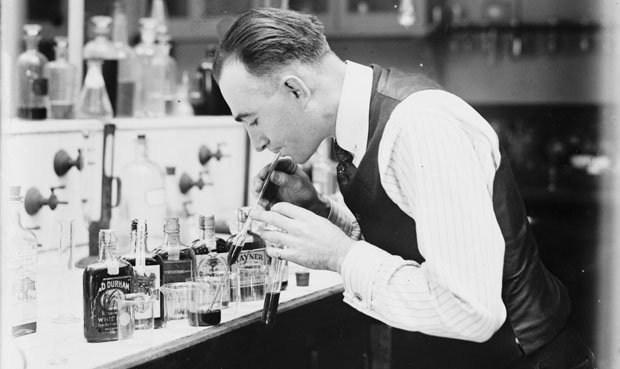
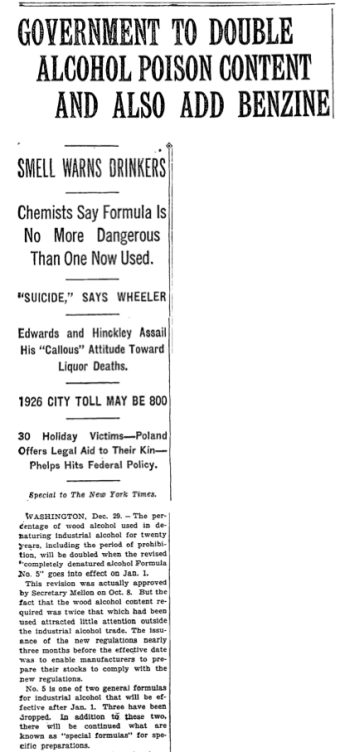
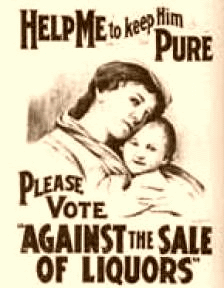 The Eighteenth Amendment establishing the national prohibition of “intoxicating liquors” was passed out of Congress on December 17, 1917 and sent to the states, for ratification. The National Prohibition or “Volstead” act, so named for Chairman of the House Judiciary Committee Andrew Volstead, was enacted to carry out its intent.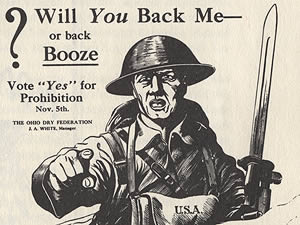


You must be logged in to post a comment.