

In 1727 England, the anonymously published book “The Sailor’s Advocate”, argued for improvements in the terrible working conditions, that sailors of the day were forced to endure.
The pamphlet’s “unknown” author was James Oglethorpe, a crusader, an idealist, and member of the British Parliament. Oglethorpe saw urbanization as the great evil of his day, the stripping of the productively employed from the countryside, while depositing them in cities with no opportunity for meaningful work.
Oglethorpe chaired a committee on prison reform the following year, calling attention to the horrendous conditions in English debtors’ prisons, and the hopeless plight of those released with no means of support.
To deal with the problem, Oglethorpe and others petitioned in 1730 to form a committee of trustees, to form the 13th Colony in America. They would call this new colony “Georgia”, a new start for the worthy poor, and a military buffer against Spanish Florida to the south, and French Louisiana to the west. The charter was signed by King George II on April 21, 1732.
Thousands applied to go, trustees narrowing the number down to an initial 114 colonists. Those who couldn’t pay their own way would be subject to a period of indenture, typically 5-7 years.
It was November of that year, when the first group of colonists left aboard the “Anne”, bound for the new world. James Oglethorpe and his 114 pilgrims scrambled up the 40′ banks of the Savannah River on February 12, 1733, there to establish the Province of Georgia and its Colonial Capital of Savannah.
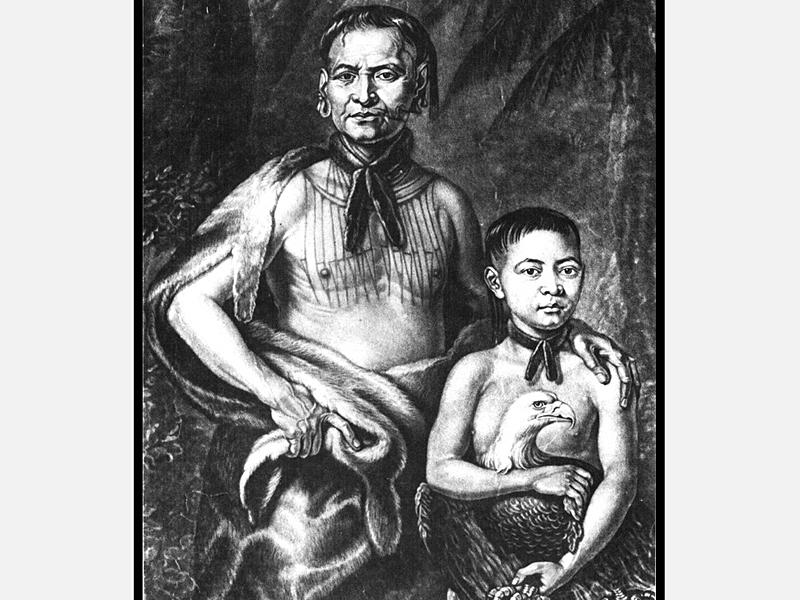
A personal friendship developed between Oglethorpe and native Chieftan Tomochichi, Mico (Leader) of the Yamacraw, a formal treaty of friendship signed in May of that year.
The Trustees obtained £10,000 for the Georgia colony that first year, the subsidy becoming smaller in the following years. Georgia was the only American colony thus dependent on a Parliamentary allowance.
Oglethorpe returned to England two years later along with several “goodwill ambassadors”, among them Chief Tomochichi himself, his wife Senauki, their nephew Toonahowi, and six other members of the Lower Creek tribes. Members of the Indian delegation were treated as celebrities, entertained by Trustees and personal guests of the King and Queen, after which the group became tourists, visiting the Tower of London, St. Paul’s Cathedral and enjoying a number of plays, from Shakespearean dramas to comic farces.
Tomochichi presented a symbol of power to the King of England, a bald eagle feather, the first time this symbol of our nation was connected to the American colonies.
The home town to Oglethorpe’s Utopian experiment, Savannah, was founded around four wards, each containing eight blocks situated around its own central square. Established to help the poor and to produce materials like silk and olives for England, Georgia issued each colonist 50 acres of land – perfect for the yeoman farmer, but too small for major landholders. Its motto was “Non Sibi Sed Allis”. “Not for Themselves But for Others”. Oglethorpe outlined four by-laws for the Georgia province, four prohibitions forming the legal framework of his Utopian experiment.
1. No rum, Brandy or spirits were allowed in Georgia, though beer, wine and ale, were OK.
2. No African slaves were permitted, though they were occasionally “borrowed” for construction projects.
3. Oglethorpe believed that every man ought to be able to speak for himself. Hence, no lawyers were allowed.
4. No Catholics were allowed either, as it was feared that they’d be too sympathetic with co-religionist Spain, then in control of the Florida territory.
“If we allow slaves,” Oglethorpe had said, “we act against the very Principles by which we associated together, which was to relieve the distressed.”
Returning to England, Oglethorpe continued to serve on the Board of Trustees, though he often found himself outvoted. Despite his opposition, the Board of Trustees gradually relaxed their restrictions on land ownership, on hard liquor, and on slavery. By 1750, Georgia’s founding father was no longer involved with the board which had given it life. Oglethorpe’s grand experiment was over in 1754, when Trustees voted to dissolve their governing charter, making Georgia the 13th of Great Britain’s American colonies.

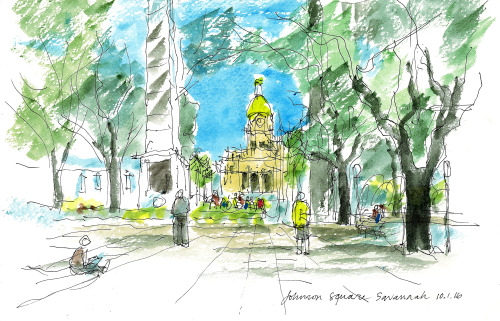
Chief Tomochichi died in 1739 at age 97, requesting that he be buried among his English friends. The Mico of the Yamacraw was interred in Wright Square, and saluted with cannon and musket fire. James Oglethorpe himself was one of the pall bearers. If you ever visit the city of my childhood, there you will find Wright Square and Tomochichi’s monument, dedicated on April 21, 1899. A bronze tablet is engraved with Cherokee roses and arrowheads, and inscribed with these words. “In memory of Tomochichi – the Mico of the Yamacraws – the companion of Oglethorpe – and the friend and ally of the Colony of Georgia”.


 Elbridge Gerry was born in 1744, in the north shore Massachusetts town of Marblehead. Gerry spent most of his adult life in public office, excepting a ten-year period in the family codfish packing business. First elected to the state legislature in 1772, Gerry died in office in 1814, while serving as Vice President under President James Madison.
 Benjamin Russell was a newspaper editor, and ardent Federalist. The painter Gilbert Stuart commented on the new district map hanging over Russell’s desk, saying “That will do for a salamander.” “Better say a Gerry-mander!” was Russell’s reply. A cartoonist added head, wings, and claws. The cartoon map and the name appeared in the Boston Gazette within the month.
 In the 1960s, gerrymandering was used to “crack” the voting strength of black and urban voters. A 1962 Supreme Court decision ruled that electoral districts must reflect the principle of “one man, one vote”. A 1985 decision ruled it unconstitutional to alter election districts to favor of any political party.
 Here in the home of the Gerrymander, Barney Frank’s old 4th congressional district resembles nothing so much as a grasping hand. I’m not sure if the new congressional map is much of an improvement, but hey. It seems to work for the ruling class.

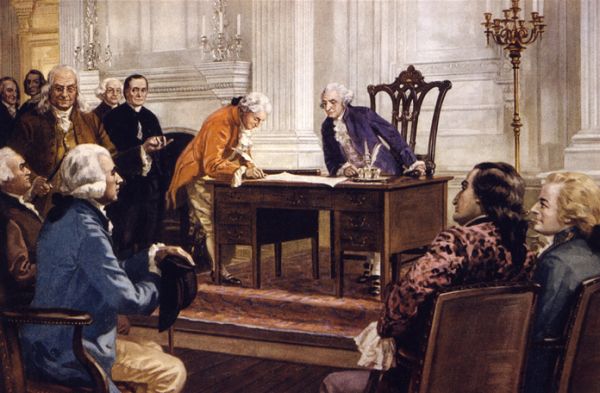
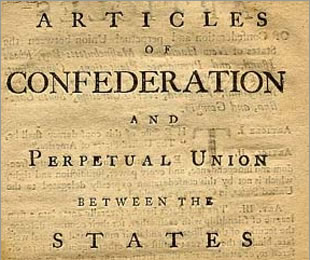 Twelve of the original thirteen states ratified these “Articles of Confederation” by February, 1779. Maryland held out for another two years, over land claims west of the Ohio River. In 1781, seven months before Cornwallis’ surrender at Yorktown, the 2nd Continental Congress formally ratified the Articles of Confederation. The young nation’s first governing document.
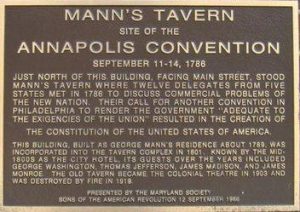 The Union would probably have broken up, had not the Articles of Confederation been amended or replaced. Twelve delegates from five states met at Mann’s Tavern in Annapolis Maryland in September 1786, to discuss the issue. The decision of the Annapolis Convention was unanimous. Representatives from all the states were invited to send delegates to a constitutional convention in Philadelphia, the following May.
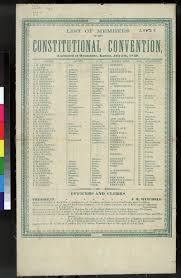 25, 1787. The building is now known as Independence Hall, the same place where the Declaration of Independence and the Articles of Confederation were drafted.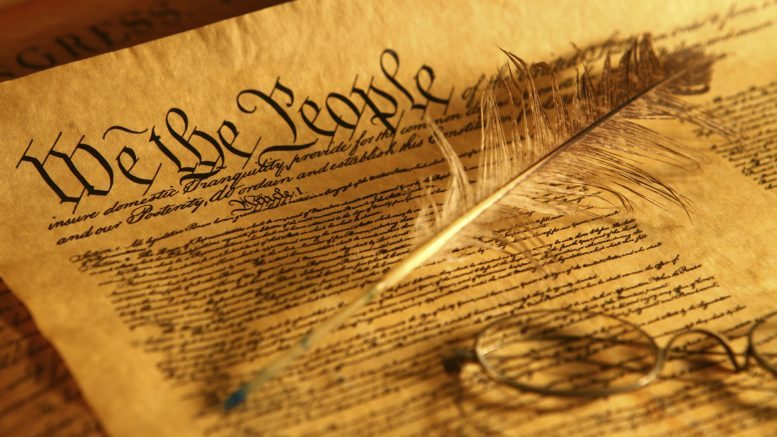
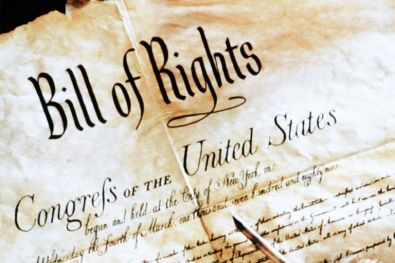 On September 25, the first Congress adopted 12 amendments, sending them to the states for ratification.

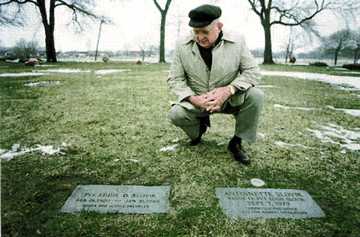
 Edward Donald “Eddie” Slovik was paroled in 1942, his criminal record making him 4F. “Registrant not acceptable for military service”. He took a job at the Montella Plumbing and Heating company in Dearborn, Michigan, where he met bookkeeper Antoinette Wisniewski, the woman who would later become his wife.
 The rapid movement of the army during this period caused difficulty for many replacements, in finding their units. Edward Slovik and John Tankey finally caught up with the 109th on October 7. The following day, Slovik asked his company commander Captain Ralph Grotte for reassignment to a rear unit, saying he was “too scared” to be part of a rifle company. Grotte refused, confirming that, were he to run away, such an act would constitute desertion.
 “I, Pvt. Eddie D. Slovik, 36896415, confess to the desertion of the United States Army. At the time of my desertion we were in Albuff [Elbeuf] in France. I came to Albuff as a replacement. They were shelling the town and we were told to dig in for the night. The following morning they were shelling us again. I was so scared, nerves and trembling, that at the time the other replacements moved out, I couldn’t move. I stayed there in my fox hole till it was quiet and I was able to move. I then walked into town. Not seeing any of our troops, so I stayed over night at a French hospital. The next morning I turned myself over to the Canadian Provost Corp. After being with them six weeks I was turned over to American M.P. They turned me loose. I told my commanding officer my story. I said that if I had to go out there again I’d run away. He said there was nothing he could do for me so I ran away again AND I’LL RUN AWAY AGAIN IF I HAVE TO GO OUT THERE. — Signed Pvt. Eddie D. Slovik A.S.N. 36896415”.
 1.7 million courts-martial were held during WWII, 1/3rd of all the criminal cases tried in the United States during the same period. The death penalty was rarely imposed. When it was, it was almost always in cases of rape or murder.


 Iva Ikuko Toguri was born in Los Angeles on July 4, 1916, the daughter of Japanese immigrants. She attended schools in Calexico and San Diego, returning to Los Angeles where she enrolled at UCLA, graduating in January, 1940 with a degree in zoology.
 She called herself “Orphan Annie,” earning 150 yen per month (about $7.00 US). She wasn’t a professional radio personality, but many of those who recalled hearing her enjoyed the program, especially the music.

 d’Aquino was sentenced to ten years and fined $10,000 for the crime of treason, only the seventh person in US history to be so convicted. She was released from the Federal Reformatory for Women at Alderson, West Virginia in 1956, having served six years and two months of her sentence.


 The United States had been in World War II for two years in 1943, when Claude Wickard, head of the War Foods Administration as well as Secretary of Agriculture, had the hare brained idea of banning sliced bread.
 Article 1, Section 8 of the Constitution includes the “Commerce Clause”, permitting the Congress “To regulate Commerce with foreign Nations, and among the several States, and with the Indian Tribes”. That’s it and, not surprisingly, the Federal District Court sided with the farmer.
 The Supreme Court, apparently afraid of President Roosevelt and his aggressive and illegal “
 The stated reasons for the ban never did make sense. At various times, Wickard claimed that it was to conserve wax paper, wheat and steel, but one reason was goofier than the one before.


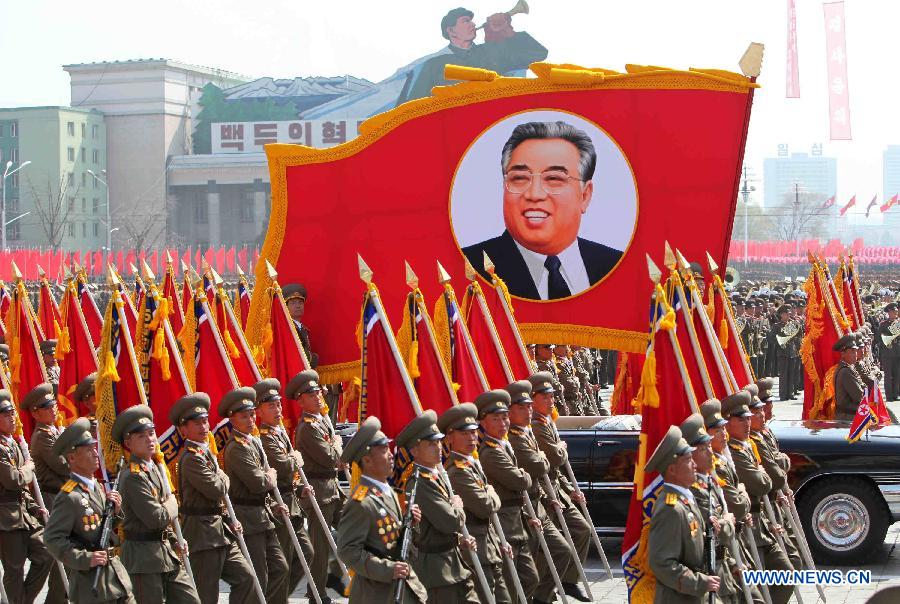
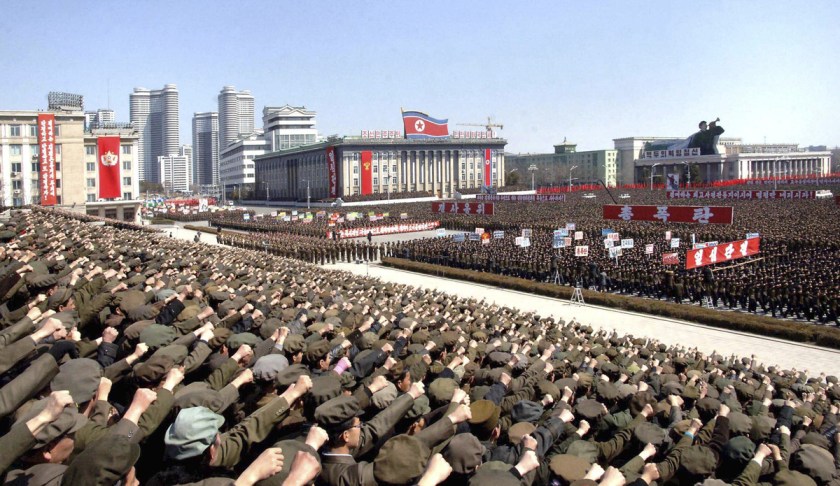
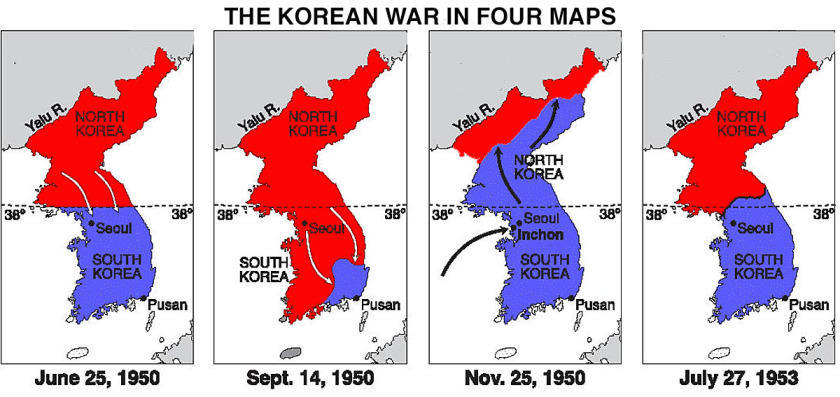 Sixteen countries sent troops to South Korea’s aid, about 90% of whom were Americans. The Soviets sent material aid to the North, while Communist China sent troops. The Korean War lasted three years, causing the death or disappearance of over 2,000,000 on all sides, combining military and civilian.
 The night-time satellite image of the two Koreas, tells the story of what happened next. In the south, the Republic of Korea (ROK) developed into a successful constitutional Republic, a G-20 nation with an economy ranking 11th in the world in nominal GDP, and 13th in terms of purchasing power parity.
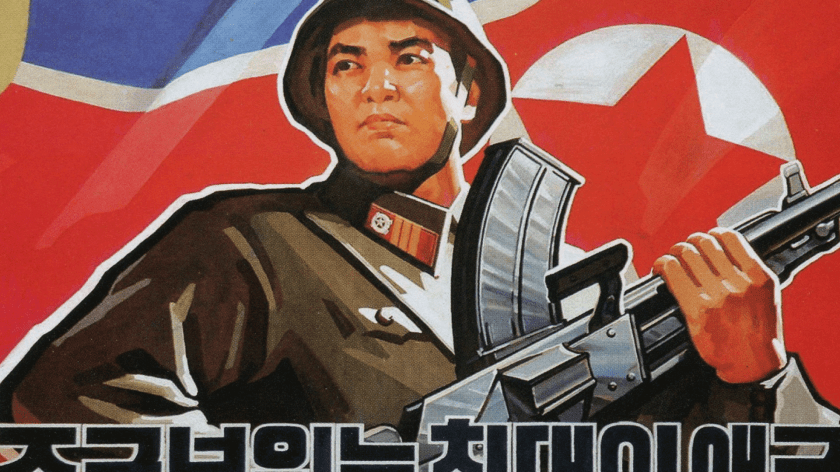
 Son of the founder of the Juche Ideal, Kim Jung Il, was an enthusiastic film buff. In a move that would make Caligula blush, Kim had South Korean film maker Shin Sang Ok kidnapped along with his actress ex-wife, Choi Eun Hee. After four years spent starving in a North Korean gulag, the couple accepted Kim’s “suggestion” to re-marry and go to work for him, producing the less-than-box-office-smash “Pulgasari”, a kind of North Korean Godzilla film.


 Over time, the solution to the meat question became a matter of doubling down on what we’re already doing, as factory farms and confinement operations took the place of free ranges, and massive use of antibiotics replaced the idea of balanced biological systems.

 Ten years into the Great Depression with unemployment standing at 17.2%, the Federal government was afraid of the same thing. Never afraid to tinker with precedent, President Franklin Roosevelt decided to deviate from the customary last Thursday, and declared the fourth Thursday, November 23, to be a national day of prayer and thanksgiving.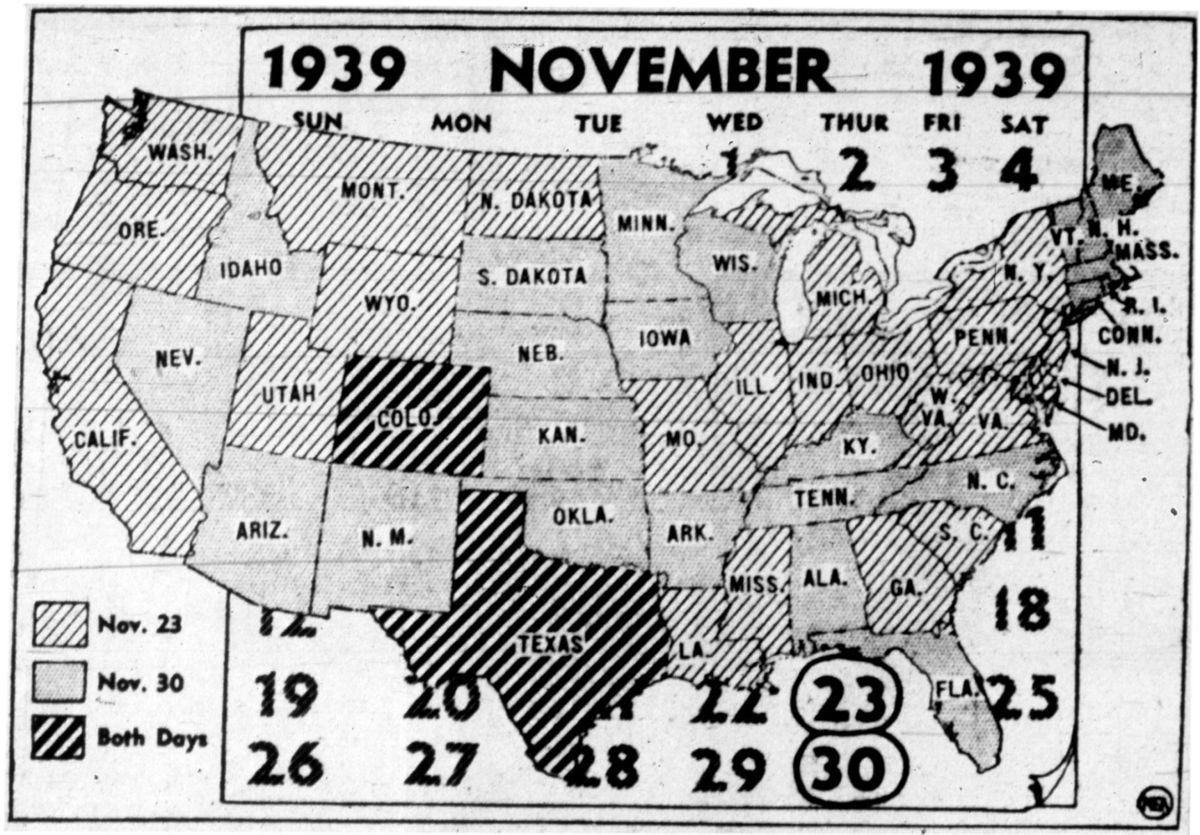
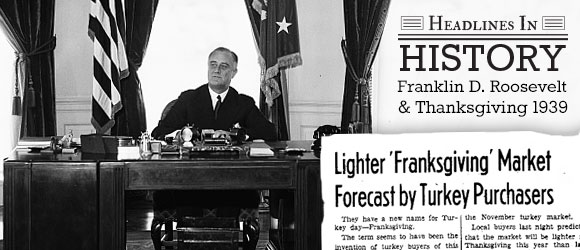
 Popular comedians of the day got a lot of laughs out of it, including Burns & Allen and Jack Benny.
 Historical Easter Eggs - Today in History
You must be logged in to post a comment.