

 In the heart of the Financial District in Manhattan, at the corner of Wall Street & Broad stands an office building, commonly known as “The Corner”.
Once owned by J.P. Morgan & Co., 23 Wall Street was designated a New York City landmark in 1965, and later added to the National Register of Historic Places.
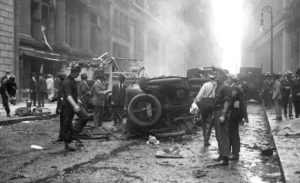
On this day in 1920, the horse-drawn wagon passed by lunchtime crowds and stopped outside the Financial District’s busiest corner. Inside the wagon was one-hundred pounds of dynamite, and five-hundred pounds of cast iron sash weights, designed to act as shrapnel.
At a minute past noon, moments after the driver left the scene, the timer-set bomb exploded. The wagon and horse were blasted to bits, as automobiles were hurled through the air and iron weights tore through the late Summer crowd. Thirty-eight people were killed in the blast, mostly young people – messengers, stenographers, clerks and brokers. Hundreds more were maimed, 143 of those, grievously.

Property damage was estimated at two million dollars, equivalent to $24.4 million, today. Suspicion for the blast centered on radical leftists, followers of the Italian anarcho-terrorist, Luigi Galleani.

A life-long anarchist and radical subversive, the 40-year-old Luigi Galleani was repeatedly incarcerated and/or deported from his native Italy, Switzerland, France and Egypt, before emigrating to the United States in 1901.
Settling in Paterson NJ and later Barre, Vermont, Galleani became editor of the largest Italian anarchist newsletter of the time, La Questione Sociale, as well as founding editor of the anarchist newsletter Cronaca Sovversiva (Subversive Chronicle)

There, Galleani harangued and criticized “timid” socialists, organizing immigrant labor communities and agitating for the “propaganda of the deed”, direct action to overthrow the institutions of civil society and the market economy.
Luigi Galleani was specific. He wanted violence, and the man was every bit the fire-breather in person, as he was in his writing. Carlo Buda, brother of Galleanist bombmaker Mario Buda, said of Galleani, “You heard Galleani speak, and you were ready to shoot the first policeman you saw“.
Mario Buda was responsible for the Milwaukee Police Station bombing in 1917, an event which accounted for the largest single-incident loss of life in the history of United States law enforcement, until 9/11.
Historians believe that Galleanists began their bombing campaign in 1914, after police forcibly dispersed a protest outside the home of John D. Rockefeller, in Tarrytown, New York. A series of bombs over the next several months, destroyed churches, police stations and businesses.

A bomb was placed under the seat of a judge that November, who’d sentenced an anarchist for inciting to riot. Two months later, New York police uncovered a plot to blow up St. Patrick’s Cathedral.
In 1916, Chicago police hunted for Chef Nestor Dondoglio, who’d poisoned 100 guests at a banquet to honor Archbishop George Mundelein. Quick thinking and a hastily prepared emetic by a physician among the guests prevented any fatalities, but Dondoglio himself was never apprehended.
Bombings occurred at dozens of sites throughout late 1917 and into 1918, in New York, San Francisco, Washington, D.C., Boston, and Milwaukee, and always accompanied by the leaflets, denouncing “the priests, the exploiters, the judges and police, and the soldiers” whose time was coming to an end.

Galleani spoke before an anarchist group in Taunton, Massachusetts in February 1919. The following night, four of them attempted to place a bomb at the American Woolen Company’s mill in nearby Franklin, where workers were on strike. That time, the bomb went off prematurely, and killed all four of them.
That April, Galleani followers attempted to assassinate Woodrow Wilson’s Attorney General Alexander Mitchell Palmer, with a bomb mailed to his home in Washington, DC. The package was intercepted and defused but, not to be deterred, the group tried again that June. This time, the bomb was delivered in person by anarchist Carlo Valdinoci, who screwed something up and died in a blast so powerful, that it hurled the neighbors from their beds..
AG Palmer and his family were shaken but unhurt, though the blast mostly destroyed their home. Valdinoci’s remains rained down over an area of several city blocks.
In that one month alone, Italian anarchists mailed no fewer than 36 dynamite bombs to prominent political and business leaders.
One package was discovered because plotters had failed to add sufficient postage. Fortunately, most of the others were found out, as the packaging was identical. Most were never delivered but one blew off the hands of a housekeeper, working at the home of Senator Thomas W. Hardwick, a sponsor of the Immigration Act of 1918.
 That June, another nine far more powerful bombs used up to twenty-five pounds of dynamite, for the first time introducing the use of metal slugs, to add to the bomb’s lethality. The intended victims were all political figures who’d supported anti-sedition or deportation legislation including AG Palmer himself, or judges who’d sentenced anarchists to long prison terms. None were successful, though one killed a 70-year-old night watchman, who stopped to check a suspicious package on the doorstep of judge Charles Nott.
Today, the period is derisively referred to as the first “Red Scare”. At the time, the American public clamored for action. Attorney General Palmer attempted to suppress these radical organizations in 1919-’20, but his “Palmer Raids” were often illegal, his arrests and detentions without warrant, and many of his deportations, questionable.

The 1920 arrest and subsequent execution of Italian-born American anarchists Nicola Sacco and Bartolomeo Vanzetti for the robbery and murder of two men in Braintree Massachusetts, remains controversial, to this day. Many blamed “anti-Italian” and “anti’immigrant” bias for the executions. Fifty years later, Massachusetts Governor Michael Dukakis proclaimed that Sacco and Vanzetti had been unfairly tried and convicted and that “any disgrace should be forever removed from their names”.
The Governor’s proclamation failed to note the 1927 attempts on the lives of Sacco & Vanzetti’s executioner Robert Elliott, nor that of Webster Thayer, trial judge in the Sacco-Vanzetti case. A second explosions at the Thayer home in 1932 destroyed the front of the house, and injured judge Thayer’s wife and housekeeper. Judge Thayer himself lived the rest of his life at a club at Boston University, under 24-hour guard.
The Wall Street bombing, carried out ninety-eight years ago today, was never solved.













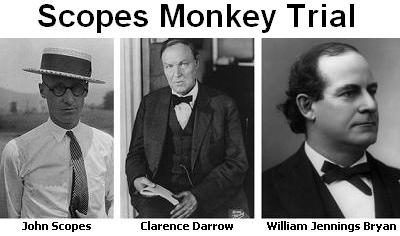 Bryan complained that evolution taught children, that humans were no more than one among 35,000 mammals. He rejected the idea that humans were descended from apes. “Not even from American monkeys, but from old world monkeys”. The ACLU wanted to oppose the Butler Act on grounds that it violated the teacher’s individual rights and academic freedom, but it was Darrow who shaped the case, taking the position that the theistic and the evolutionary views were not mutually exclusive.
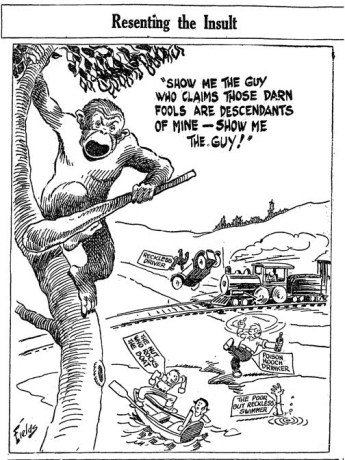 What had begun as a publicity stunt soon became an overwhelming media event. 200 newspaper reporters from all over the country arrived in Dayton, along with two come all the way from London. Twenty-two telegraphers sent out 165,000 words a day over thousands of miles of telegraph wires, hung specifically for the purpose.
 After eight days of trial, the jury took only nine minutes to deliberate, finding Scopes guilty on July 21. The gym teacher was ordered to pay a $100 fine, equivalent to something like $1,300, today. Scopes’ conviction was overturned by the Tennessee Supreme Court, on the basis that state law required fines over $50 to be decided by a jury, and not by the judge presiding.
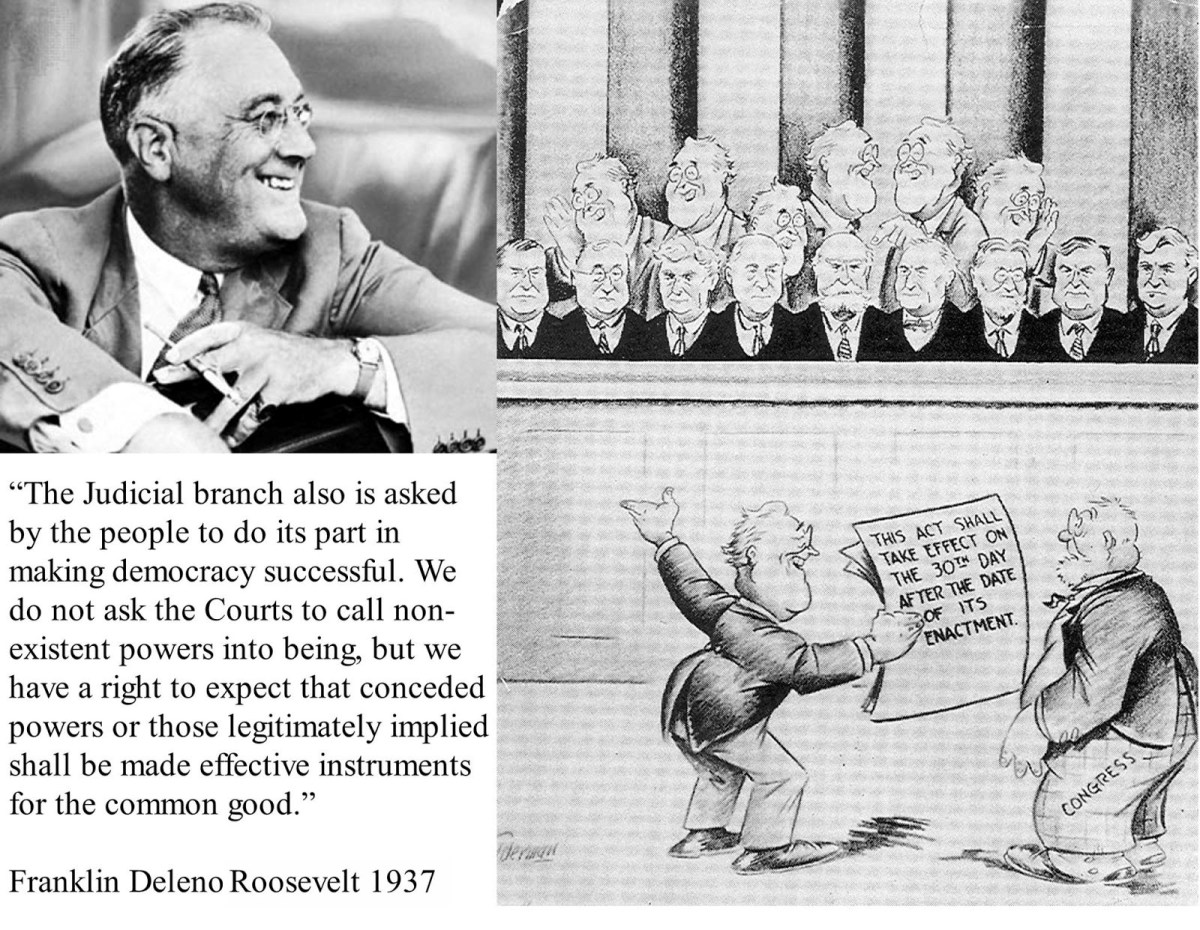
 Article III, Section 1 of the United States Constitution creates the highest court in the land. The relevant clause states that “The judicial power of the United States, shall be vested in one Supreme Court, and in such inferior courts as the Congress may from time to time ordain and establish“. Nowhere does the document specify the number of justices.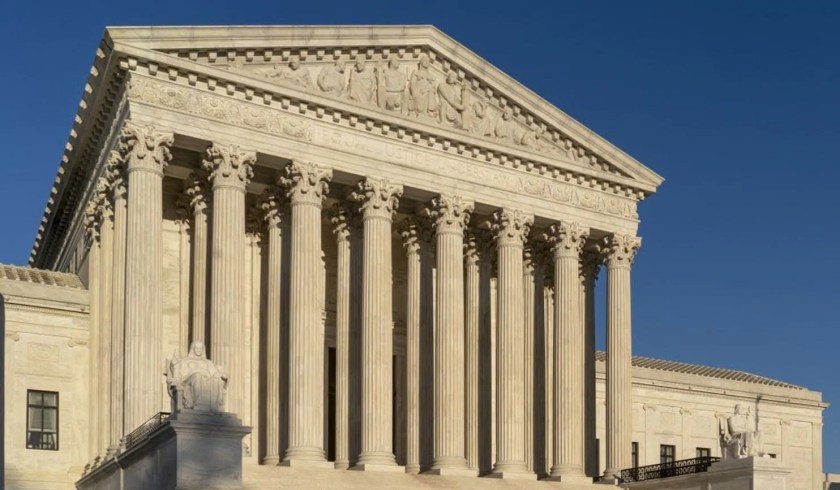


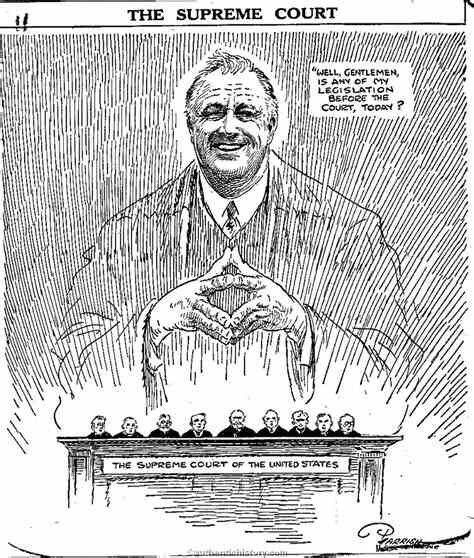
 The full Senate voted on July 22, 1937, to send the bill back to the Senate Judiciary Committee, where provisions for additional justices were stripped from the bill. A modified version passed in August, but Roosevelt’s “Court Packing” scheme was dead.

 The scandal of the 1919 “Black Sox” series began when Arnold “Chick” Gandil, the first baseman with ties to Chicago gangsters, convinced his buddy and professional gambler Joseph “Sport” Sullivan, that he could throw the World Series against the Cincinnati Reds. New York gangster Arnold Rothstein supplied the money through his right-hand man, former featherweight boxing champion Abe Attell.

 in the possession of Comiskey’s lawyer. It’s funny how that works.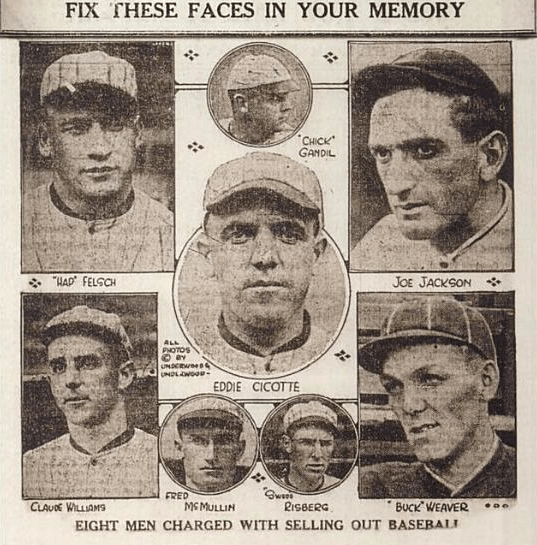


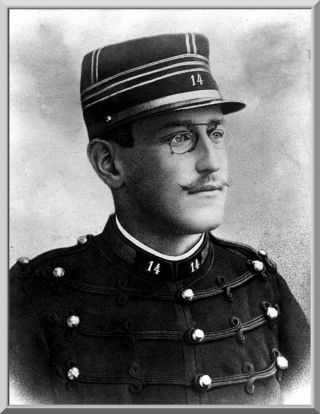 In the late 19th century, Europe was embarked on yet another of its depressingly regular paroxysms of anti-Semitism, when a French Captain of Jewish Alsatian extraction by the name of Alfred Dreyfus was arrested, for selling state secrets to Imperial Germany.
 Chief Inspector Lieutenant-Colonel Charles Armand Auguste Ferdinand Mercier du Paty de Clam, himself no handwriting expert, agreed with Bertillon. With no file to go on and despite the feebleness of the evidence, de Clam summoned Dreyfus for interrogation on October 13, 1894.
 Most of the political and military establishment lined up against Dreyfus. The public outcry became furious in January 1898 when author Émile Zola published a bitter denunciation in an open letter to the Paris press, entitled “J’accuse” (I Blame).


 3,662,374 military service certificates were issued to qualifying veterans, bearing a face value equal to $1 per day of domestic service and $1.25 a day for overseas service, plus interest. Total face value of these certificates was $3.638 billion, equivalent to $43.7 billion in today’s dollars and coming to full maturity in 1945.
 The Great Depression was two years old in 1932, and thousands of veterans had been out of work since the beginning. Certificate holders could borrow up to 50% of the face value of their service certificates, but direct funds remained unavailable for another 13 years.
 This had happened before. Hundreds of Pennsylvania veterans of the Revolution had marched on Washington in 1783, after the Continental Army was disbanded without pay.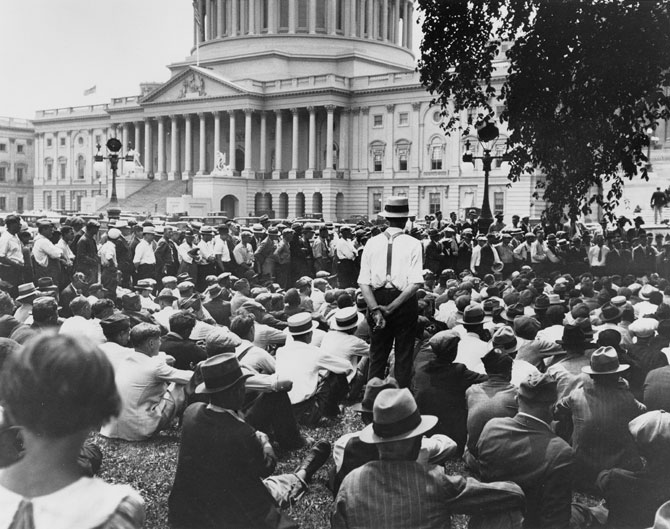
 Marchers and their families were in their camps on July 28 when Attorney General William Mitchell ordered them evicted. Two policemen became trapped on the second floor of a building when they drew their revolvers and shot two veterans, William Hushka and Eric Carlson, both of whom died of their injuries.
 President Herbert Hoover ordered the Army under General Douglas MacArthur to evict the Bonus Army from Washington. 500 Cavalry formed up on Pennsylvania Avenue at 4:45pm, supported by 500 Infantry, 800 police and six battle tanks under the command of then-Major George S. Patton. Civil Service employees came out to watch as bonus marchers cheered, thinking that the Army had gathered in their support.
 Bonus marchers fled to their largest encampment across the Anacostia River, when President Hoover ordered the assault stopped. Feeling that the Bonus March was an attempt to overthrow the government, General MacArthur ignored the President and ordered a new attack, the army routing 10,000 and leaving their camps in flames. 1,017 were injured and 135 arrested.
 Then-Major Dwight D. Eisenhower was one of MacArthur’s aides at the time. Eisenhower believed that it was wrong for the Army’s highest ranking officer to lead an action against fellow war veterans. “I told that dumb son-of-a-bitch not to go down there”, he said.
 The bonus march debacle doomed any chance that Hoover had of being re-elected. Franklin D. Roosevelt opposed the veterans’ bonus demands during the election, but was able to negotiate a solution when veterans organized a second demonstration in 1933. Roosevelt’s wife Eleanor was instrumental in these negotiations, leading one veteran to quip: “Hoover sent the army. Roosevelt sent his wife”.

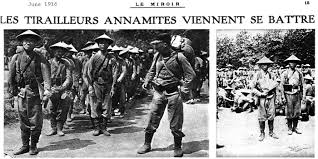 France re-occupied the region following the Japanese defeat ending WWII, but soon faced the same opposition from the army of Ho Chi Minh and Vo Nguyen Giap. What began as a low level rural insurgency, later became a full-scale modern war when Communist China entered the fray in 1949.
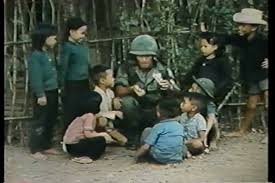 US policy makers feared a “domino” effect, and with good cause. The 15 core nations of the Soviet bloc were soon followed by Eastern Europe, as Poland, Bulgaria, Romania, Hungary and Czechoslovakia fell into the Soviet sphere of influence. Germany was partitioned into Communist and free-enterprise spheres after WWII, followed by China, North Korea and on across Southeast Asia.
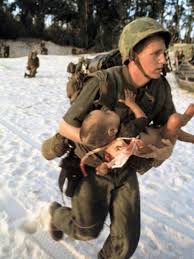 Even then it wasn’t over. Communist forces violated cease-fire agreements before they were signed. Some 7,000 US civilian Department of Defense employees stayed behind to aid South Vietnam in conducting an ongoing and ultimately futile war against communist North Vietnam.
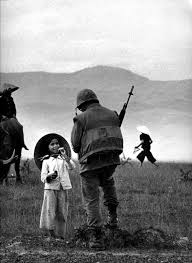 Imagine feeling so desperate, so fearful of this alien ideology invading your country, that you convert all your worldly possessions and those of your family to a single diamond, bite down on that stone so hard it embedded in your shattered teeth, and fled with your family to open ocean in a small boat. All in the faint and desperate hope, of getting out of that place. That is but one story among more than three million “boat people”. Three million from a combined population of 56 million, fleeing the Communist onslaught in hopes of temporary asylum in other countries in Southeast Asia or China.


 themselves, and came to feel as I do to this day, that anyone who has a problem with our country’s war policy, needs to take it up with a politician. Not with a member of the Armed Services.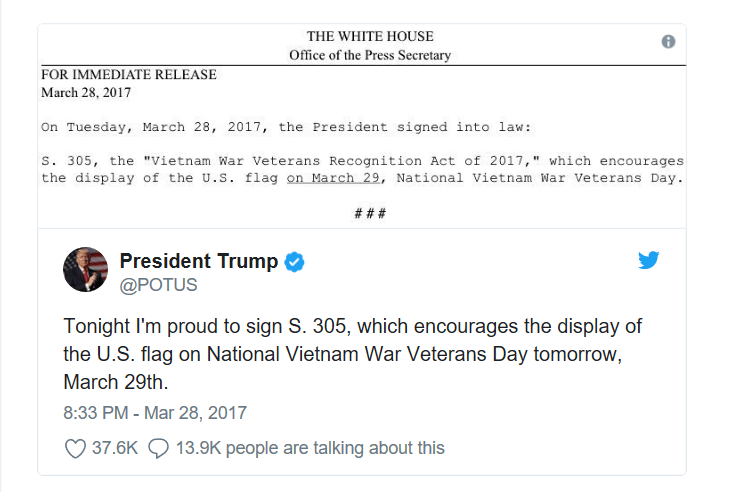


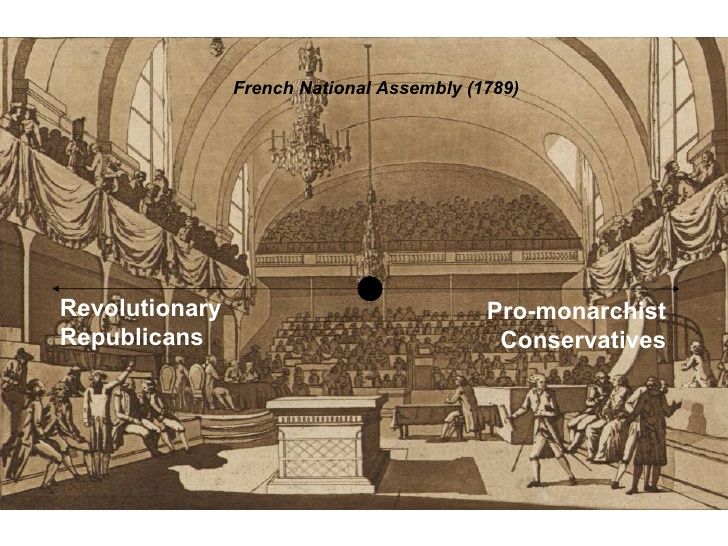 By that time it wasn’t just the “Party of Order” on the right and the “Party of Movement” on the left. Now, the terms began to describe nuances in political philosophy, as well.

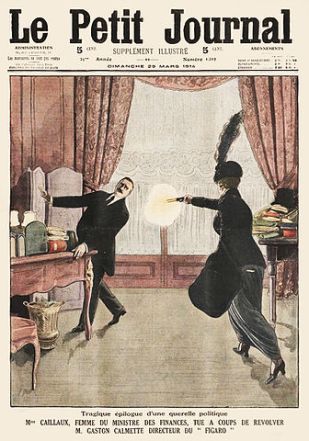 The July Crisis of 1914 was a series of diplomatic maneuverings, culminating in the ultimatum from Austria-Hungary to the Kingdom of Serbia. Vienna, with tacit support from Berlin, made plans to punish Serbia for her role in the assassination, while Russia mobilized armies in support of her Slavic ally.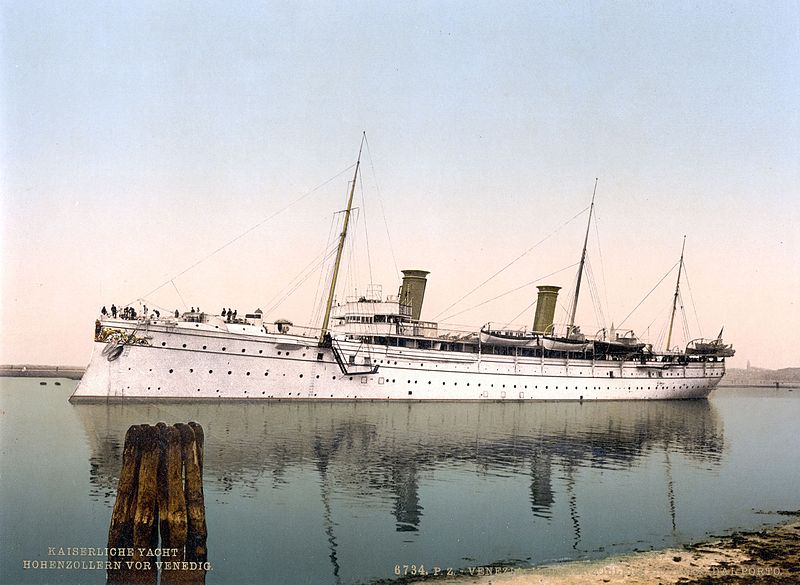
 In the days that followed, the Czar would begin the mobilization of men and machines which would place Imperial Russia on a war footing. Kaiser Wilhelm’s Germany invaded Belgium, in pursuit of the one-two punch strategy by which it sought first to defeat France, before turning to face the “Russian Steamroller”. England declared war in support of a 75-year-old commitment to protect Belgian neutrality, a treaty obligation German diplomats had dismissed as a “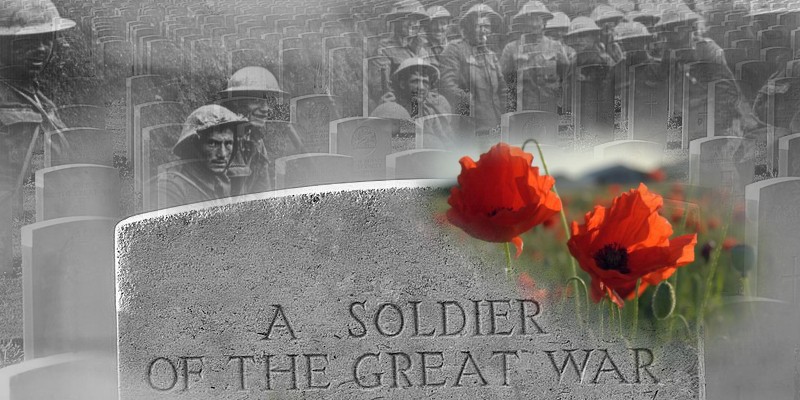

 Historical Easter Eggs - Today in History
You must be logged in to post a comment.