

With the invention of gunpowder in the year 142, the Chinese of the Eastern Han Dynasty had a handy if somewhat noisy way, to scare off evil spirits.
The first millennium of the common era was a time of ever improved and more efficient ways for humans to slaughter one another, from the gunpowder slow match of 919 to the fire bombs and gunpowder propelled fire arrows of the Southern Tang, of 975.
The Wuwei Bronze Cannon of 1227 may be the first such weapon in all history. By 1453, the terrifying bombard of the Ottoman Turks were capable of hurling stone balls up to 24.8-inches in diameter, more than enough to shatter the formerly impregnable Theodosian Walls of Constantinople.

For a thousand years, gunpowder weapons large and small businesses and a inflicted massive injury to the human frame, resulting in damage beyond even the skills of the modern surgeon. Often the only answer was amputation, seemingly by the bushel basket.
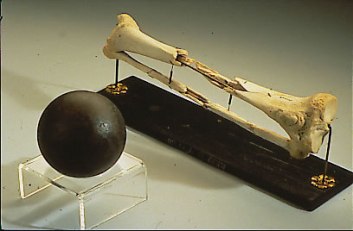
The carnage of the gunpowder era experienced something of a golden age in the 19th century. Projectiles traveled at a bone-shatteringly slow pace compared with the high velocity weapons of today while innovations such as percussion caps, shrapnel shells and breech loading weapons geometrically increased the rate of fire.
It’s been said the most common objects removed from the bodies of front-line soldiers, were the shattered bones and teeth of the next man in line.
This was a time before anesthesia, when the speed of the surgeon’s knife spelled the difference in the pain experienced by the patient, to say nothing of the poor unfortunates’ chance of survival. Florence Nightingale explains in her Notes on Nursing: “there are many physical operations where ceteris paribus” (everything else being the same) “the danger is in a direct ratio to the time the operation lasts; and ceteris paribus the operator’s success will be in direct ratio to his quickness“.
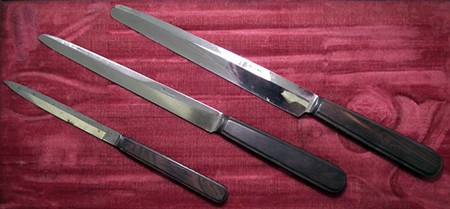
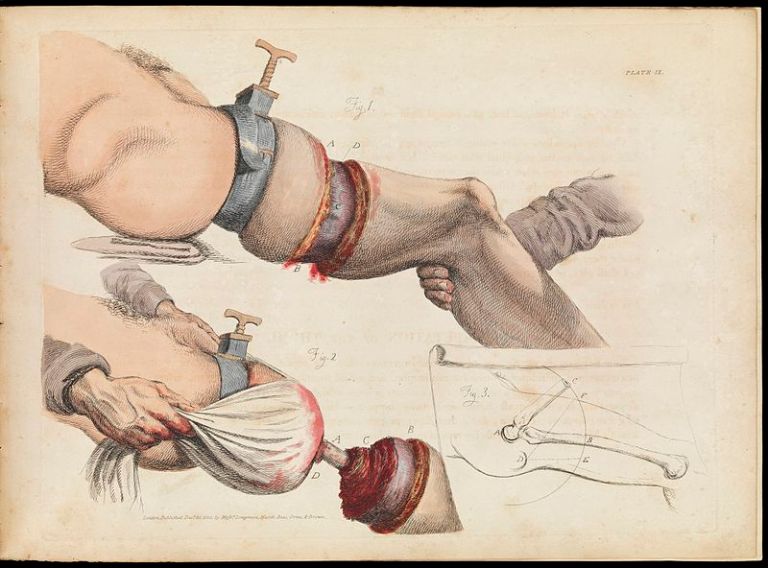
First came the burly assistants, to hold down the writhing victim
. In skilled hands the surgeon’s knife could cut all-round in a single stroke, through skin and muscle and sinew clear down to the bone before the saw completed the work of separation. Screams of agony rent the air as veins, flesh and arteries were cauterized with red-hot irons, vitriol (sulfuric acid) or boiling hot tar. Should the victim survive the experience the wound would then be sewn shut. God help the poor soul if there was any infection left after all that.
During the Franco-Prussian War of 1870 –’71, one surgeon amputated 200 shattered limbs in one 24-hour period, a nearly unbelievable average of one every seven minutes. Perfectly healthy fingers were occasionally severed in the gore and confusion.
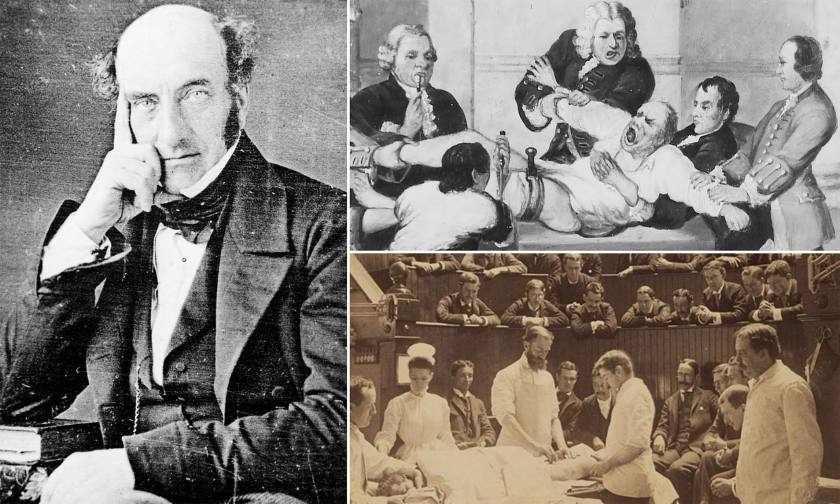
This was the world of the “Fastest Knife on West End”, a Scottish-born physician who, on this day in 1819, had just embarked on the first year of a medical career which would last until his death, in 1847.
Robert Liston, always the showman, would stride into the operating theater and call out, “Time me Gentlemen. Time me”. English surgeon and author Richard Gordon, an expert on Robert Liston, describes what that looked like:
“He was six foot two, and operated in a bottle-green coat with wellington boots. He sprung across the blood-stained boards upon his swooning, sweating, strapped-down patient like a duelist, calling, ‘Time me gentlemen, time me!’ to students craning with pocket watches from the iron-railinged galleries. Everyone swore that the first flash of his knife was followed so swiftly by the rasp of saw on bone that sight and sound seemed simultaneous. To free both hands, he would clasp the bloody knife between his teeth”.
 Liston once amputated a leg in 2½ minutes from incision to suture but accidentally severed the poor bastard’s testicles, in the process.
On another occasion, he amputated a leg in 2½ minutes while severing the fingers of one assistant and piercing the coat of an observer. The spectator was so terrified at the blood and so certain that his own vital organs had been pierced, he died right then and there from heart failure.
Both patient and assistant later died from hospital gangrene, a common problem in the days before Joseph Lister. To the best of my knowledge, Robert Liston remains the only surgeon in history to achieve 300% mortality, on a single procedure.

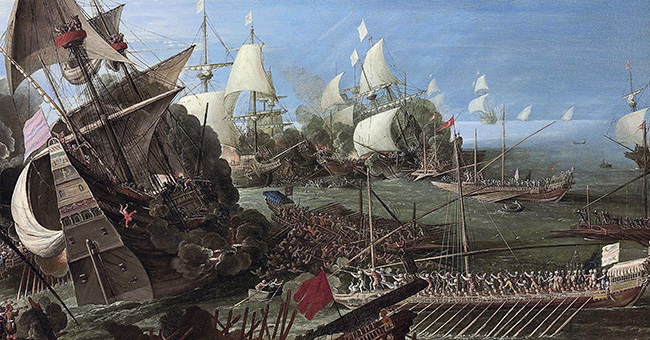
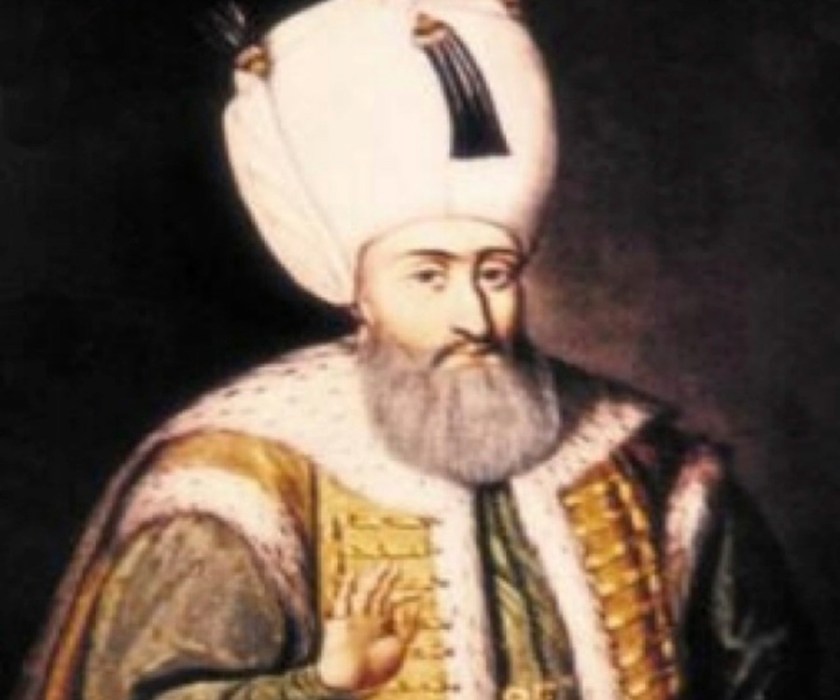
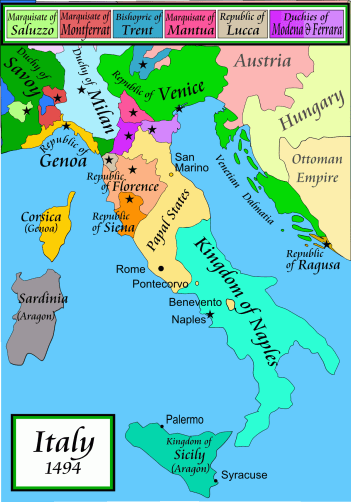 The “Italian wars” of the late fifteenth and early sixteenth centuries pitted no fewer than eight separate Christian alliances against one another, between forces of the Valois and Habsburg monarchies, the Holy Roman Empire and various Italian republics. In time, republican Venice was alone in retaining her independence, aside from minor city-states such as Lucca and San Marino.
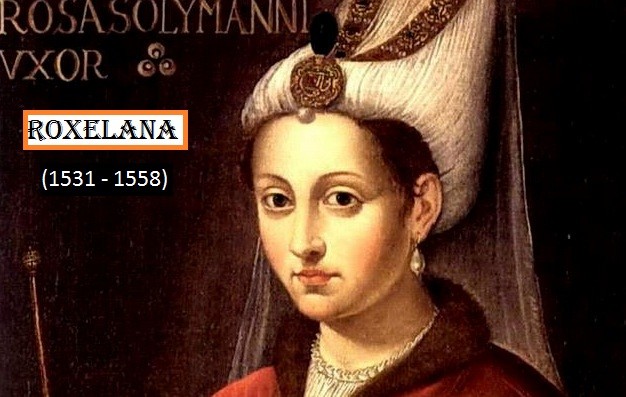 Roxelana is unique in all Ottoman history, rising from Harem slave and Sultan’s concubine, to Süleiman’s legal wife and “Queen of the Ottoman Empire.” It was she who began a 130-year period of female influence over the male line known as the “Sultanate of Women” when, though born to slavery, the wives and mothers of the Sultan wielded extraordinary political power over affairs of the Ottoman Empire.

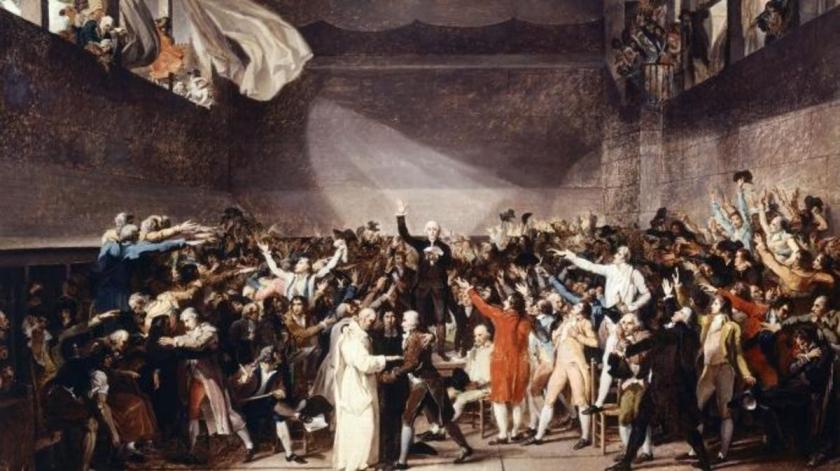 The oath itself was a revolutionary act. Unlike the English Parliament, the Estates-General were little more than an advisory body, whose authority was not required for Royal taxation or legislative initiatives. The oath taken that day asserted that political authority came from the people and their representatives, not from the monarchy. The National Assembly had declared itself supreme in the exercise of state power, making it increasingly difficult for the monarchy to operate based on “Divine Right of Kings”.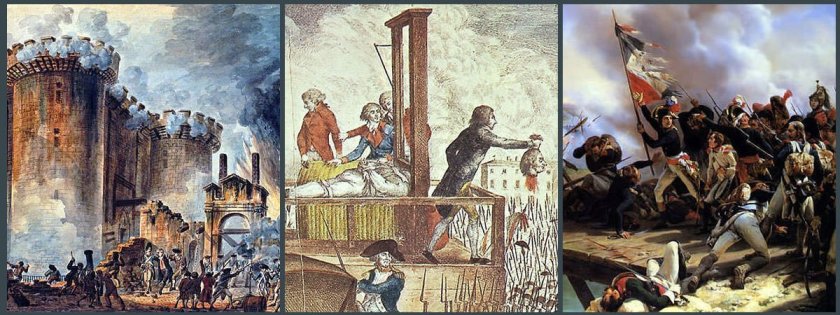
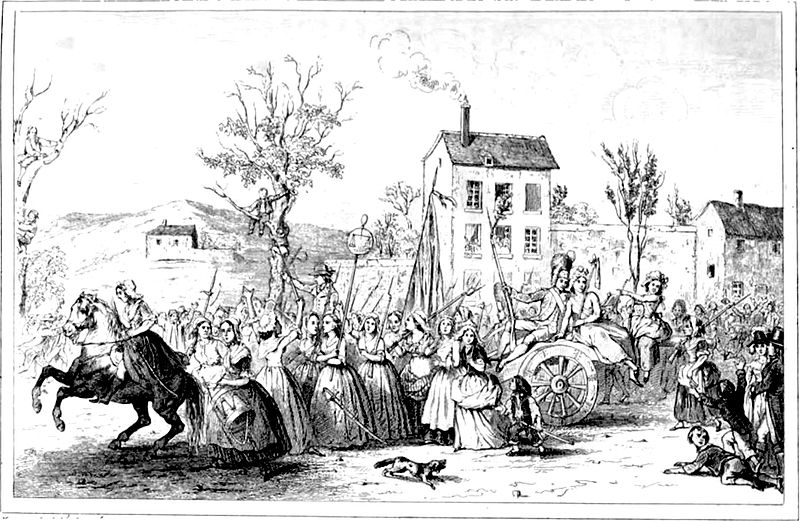
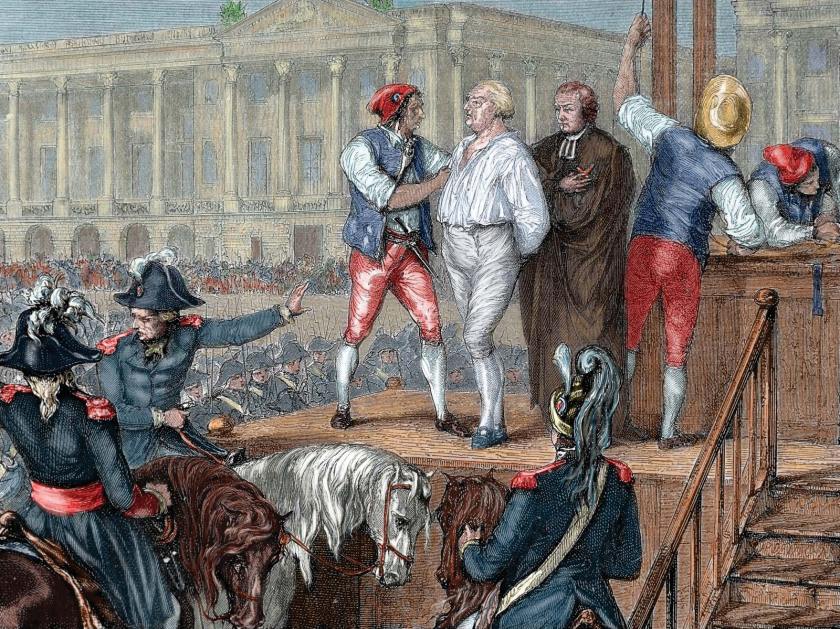


 The story may be little more than a tale told “out of school”, no better than “a guy told me at the pub” concerning a Queen whose name wasn’t ‘Victoria’ at all but Alexandrina Victoria, after her godfather Tsar Alexander I.




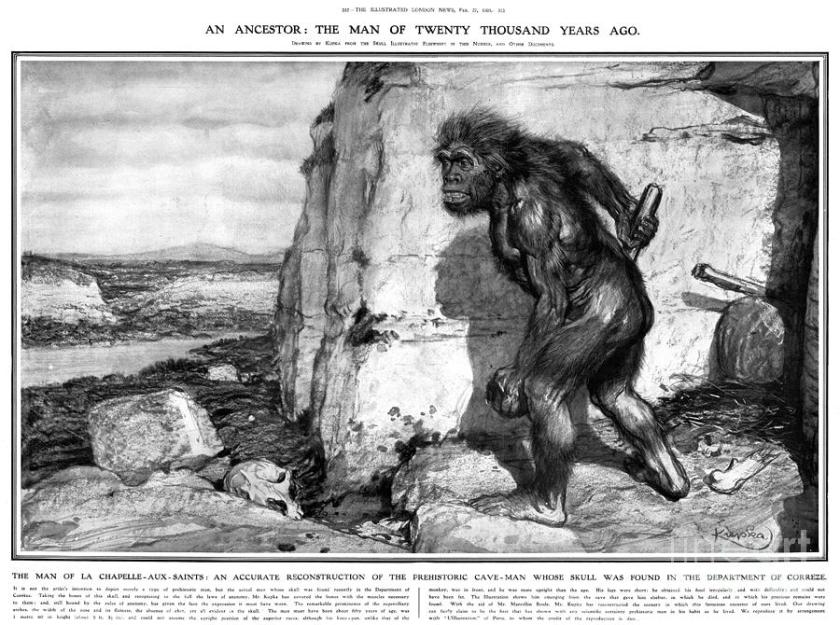
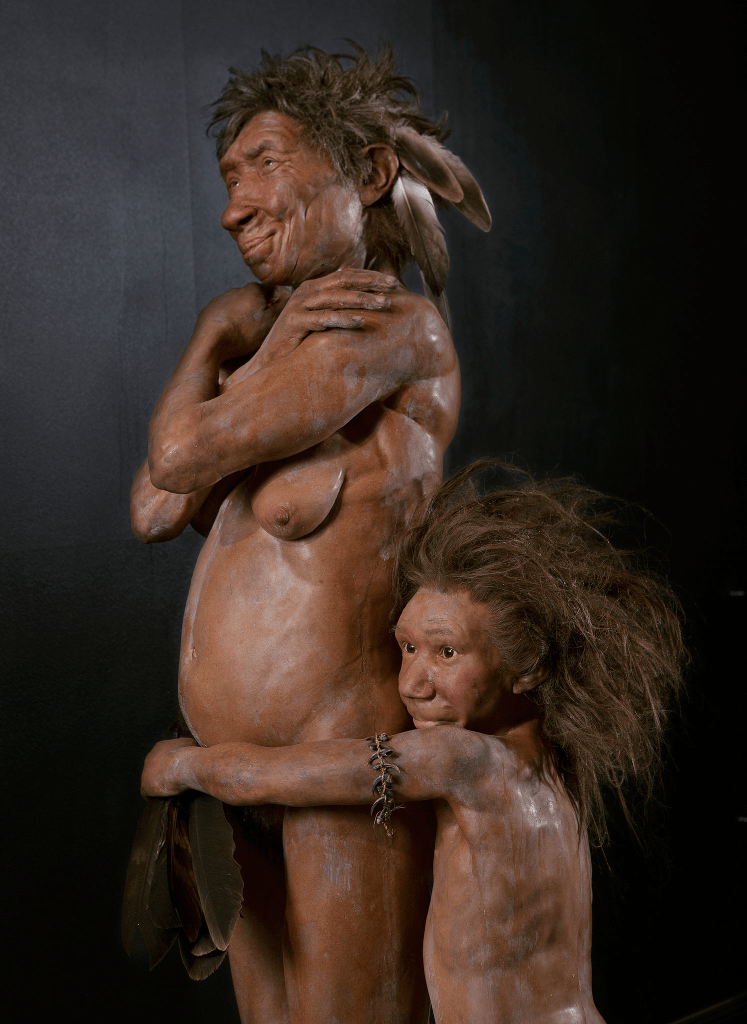
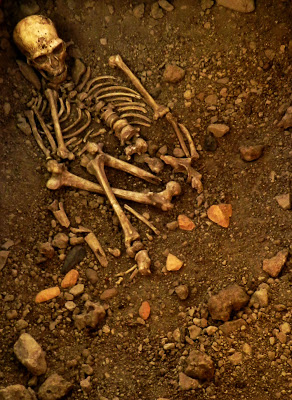
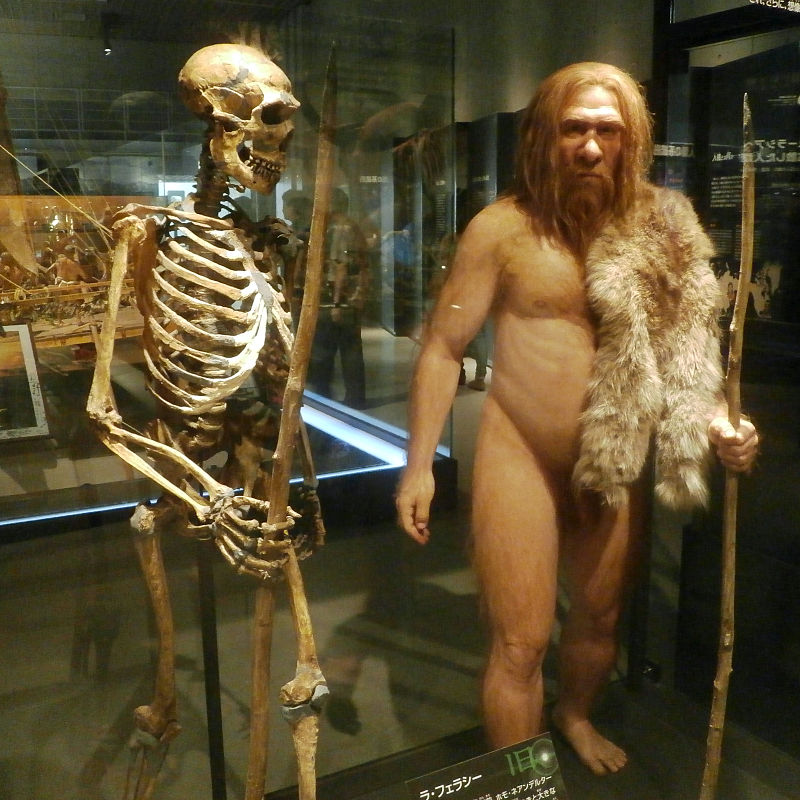
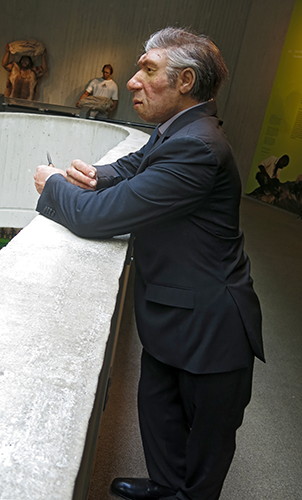
 Research suggests that we ourselves carry Neanderthal genes, those among us of Eurasian ancestry. These genes may have changed our immune systems leaving us vulnerable to diseases such diabetes and cancer.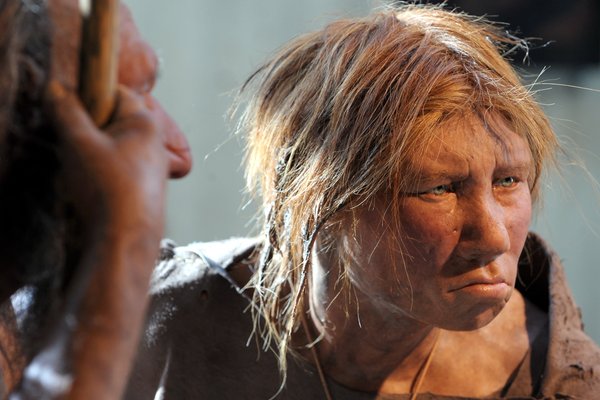


 The monarchical powers of Europe were quick to intervene. For the 32nd time since the Norman invasion of 1066, England and France once again found themselves in a state of war.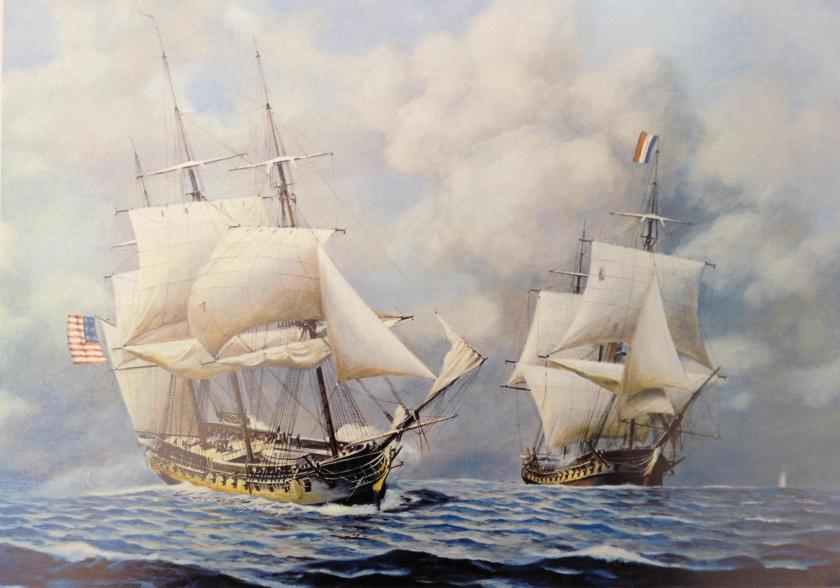




 In modern Romanian, “Dracul” means “The Devil”. In the old language, it meant “the Dragon”, the word “Dracula” (Drăculea) translating as “Son of the Dragon”.
 A crossroads between East and West, the region was scene to frequent bloodshed, as Ottoman forces pushed westward into Europe and Christian forces pushed back..
 Vlad now consolidated power as his reputation for savagery, grew. According to stories circulated after his death, hundreds of disloyal Boyars (nobles) and their allies met their end, impaled on spikes.
 Țepeș invaded the Ottoman Empire the following year. In a letter to Hungarian king Matthias Corvinus dated February 11, 1462, Țepeș wrote: “I have killed peasants men and women, old and young, who lived at Oblucitza and Novoselo, where the Danube flows into the sea, up to Rahova, which is located near Chilia, from the lower Danube up to such places as Samovit and Ghighen. We killed 23,884 Turks without counting those whom we burned in homes or the Turks whose heads were cut by our soldiers…Thus, your highness, you must know that I have broken the peace with him (Sultan Mehmet II)”.
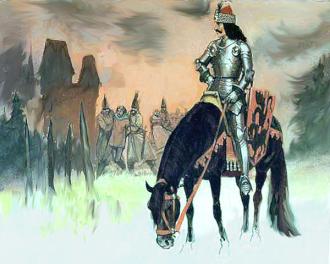 Outnumbered five-to-one, Ţepeş carried out a scorched earth policy, poisoning the waters, diverting small rivers to create marshes and digging traps covered with timber and leaves. He would send sick people among the Turks, suffering lethal diseases such as leprosy, tuberculosis and bubonic plague.


 For six hundred years, the Balkan states of Southeastern and Central Europe were conquered and unwilling subjects of foreign powers. First the Ottoman, and then the Austro-Hungarian Empires.
 Lepa Svetozara Radić was born into this world on December 19, 1925.
 Resistance fighters freed the Radić family in weeks. That December, Lepa and her sister Dara officially joined the Partisans.
 Lepa was found out in February 1943, coordinating the rescue of 150 women and children attempting to flee the Nazis. She fired everything she had at attacking SS forces, but never had a chance. Lepa Radić was captured and sentenced to death by hanging, tortured for three days to extract information on Yugoslavian Resistance.
 Moments before her execution with the rope around her neck, Radić was offered a pardon. All she had to do, was give up the names of her Partisan comrades.


 The hyoid bone at the floor of the mouth serves as a connecting-point for the tongue and other musculature, giving humans the ability to speak. A delicate structure likely to be lost in most fossilized specimens, the first Neanderthal hyoid was only discovered in 1989.


 The idea isn’t as strange as it sounds. Last year, Sir Richard Branson was in the news, claiming he’d looked into his family ancestry. Forty generations back, turns out Branson is related to Charlemagne. It’s no big deal, according to Geneticist Adam Rutherford. Speaking at the Chalke Valley History Festival, Rutherford explained: “Literally every person in Europe is directly descended from Charlemagne. Literally, not metaphorically. You have a direct lineage which leads to Charlemagne,” adding “Looking around this room, every single one of you … is directly descended between 21 and 24 generations from Edward III.”
 If you have European or Asian ancestry, the following traits might be a sign of your inner Neanderthal:
 The naturally large eyes of individuals such as Ukrainian model Masha Tyelna are believed to have been useful to Neanderthal, making their way in the dim light of northern latitudes. In fact, Neanderthal may have used more brain power processing visual input: an evolutionary disadvantage compared with early modern humans.
 Freckles? Fair skin is more efficient at producing vitamin D from weak sunlight, an advantage for those living at northern latitudes. Freckles result from clusters of cells which overproduce melanin granules, triggered by exposure to sunlight. Freckles are found in a wide range of skin colors and ethnicity, but are most prevalent on fair complexions. It is a Neanderthal gene most common in Eurasians, among whom 70% are believed to carry the gene.

 Historical Easter Eggs - Today in History
You must be logged in to post a comment.