December 29, 1778 The Siege of Savannah

For the Americans and their allies, the frontal assault of October 9 was one of the bloodiest engagements, of the Revolution.  It could have been worse.  As battered American and French soldiers fell back, 500 free men of color known as the Chasseurs Volontaires de Saint-Domingue stepped up, to cover their retreat.

Many of these Haitian soldiers went on to win their own war of independence, and credited their military experience, to Savannah.

As 1778 drew to a close, British military planners could look back on five years of trying to suppress rebellion in the American colonies, with little to show for it.   In March of that year, the British defeat at Saratoga had brought France into the war, on the side of the Rebels.

Two years of open warfare had centered mostly on the north.   Now, a “southern strategy” was devised to conquer rebellious colonies in the south, while isolating those to the north. Key to the Southern Strategy was Georgia and the colonial capital at Savannah, the southernmost commercial port of the thirteen Colonies.

General sir Henry Clinton dispatched a force of some 3,100 from New York under Lieutenant Colonel Archibald Campbell, along with an unknown quantity of artillery. Campbell arrived outside Tybee Island on December 23.

Georgia was defended by two separate forces at this time, units of the Continental Army under the command of General Robert Howe, and state militia under the command of Governor John Houstoun.  The two men had a history of squabbling for control and most of their troops, had yet to be tried.

ArchibaldCampbell-by-George-Romney-239x300
Lieutenant Colonel Archibald Campbell, British commander at the capture of Savannah in December 1778

The 850 under General Howe never really had a chance, against the battle hardened Regulars, Hessian auxiliaries and Loyalist militia, coming ashore on December 29.  Defeat turned to rout when Howe’s forces threw down their weapons and ran.  Campbell reported that “It was scarcely possible to come up with them, their retreat was rapid beyond conception.

Patriot forces suffered 83 killed, 11 wounded and 453 captured. Campbell suffered 7 killed and 17 wounded.

Howe was court-marshaled for the disaster, while Campbell bragged about being “the first British officer to [rend] a star and stripe from the flag of Congress

Brigadier General Augustine Prevost arrived from St. Augustine Florida two weeks later, with a mixed force of Regulars and Creek and Cherokee allies.   Campbell and a force of 1,000 would take the provisional capital at Augusta that February but soon retreated to Savannah, citing insufficient support among Loyalist and Native American populations.

American hopes soon fell back on their new-found alliance with France. During the following summer, French Admiral Count Charles-Hector Theodat d’Estaing captured St. Vincent and Grenada in the British West Indies, clearing the way to the Georgia coast. The powerful 47-ship French fleet arrived with 4,000 troops on September 1, surprising and capturing several British ships outside the mouth of the Savannah River.

french-shipsD’Estaing sent an ultimatum to British Commander Augustine Prevost on September 16, 1779. He was to surrender the city “To the arms of his Majesty the King of France”, or he would be personally answerable for what was about to happen. It could not have pleased General Benjamin Lincoln or his Patriot allies when d’Estaing added “I have not been able to refuse the army of the United States uniting itself with that of the King. The junction will probably be effected this day. If I have not an answer therefore immediately, you must confer with General Lincoln and me”.

“Bullet Head Prevost”, so called because of a circular scar on his temple, stalled for 24 hours, using the time in furiously building up his defenses and calling up 800 reinforcements from South Carolina.

Lincoln joined d’Estaing on September 23 with an army of 3,000 militia and Continental soldiers, laying siege to Savannah and the 2,500 British and Loyalist troops in occupation.

On October 1, a British relief column under one Captain French was coming to the city’s aid, camped on the banks of the Ogeechee River. Georgia Continental Colonel John White had two officers, a sergeant and three privates with him, when he tricked French into surrendering. These guys ran through the woods lighting so many fires that the British thought the entire continental Army was bivouacked around them. Captain French was unavailable for comment but, it must be a special feeling, knowing that you just surrendered 111 guys to six, without firing a shot.

Scene-of-Savannah
View of the siege works against the town at the Siege of Savannah September and October 1779 in the American Revolutionary War: contemporary picture by a French officer

Lack of horses and artillery carriages delayed the allies’ moving their cannon ashore, so French warships bombarded the city from the sea. At one point shortly after Midnight on October 3, with rum rations flowing far too freely, fire from French gunners became more dangerous to themselves than to the city itself.

For the Americans and their allies, the frontal assault of October 9 was one of the bloodiest engagements, of the Revolution.  It could have been worse.  As battered American and French soldiers fell back, 500 free men of color known as the Chasseurs Volontaires de Saint-Domingue stepped up, to cover their retreat.

Many of these Haitian soldiers went on to win their own war of independence, and credited their military experience, to Savannah.

Franklin-Sq-Monument
Franklin Square Monument remembers the contributions of the Haitian militia, in the Siege of Savannah

 The siege of Savannah inflicted untold misery among the population, but Patriot forces and their French allies, never did break the city’s defenses. The siege broke a short time later, amidst recriminations on both sides.   D’Estaing returned to France, where he lost his head to the guillotine in 1794.

Savannah would remain in British hands until the end of the war, finally evacuated on July 11, 1782. A coquina marker in a small Savannah park; that soft, seashell limestone common throughout the Caribbean basin to Florida and beyond, bears a small brass plaque, darkened with the patina of age.

COMMEMORATIVE OF THE BRITISH EVACUATION OF SAVANNAH 1782
PRESENTED TO THE CITY OF SAVANNAH
BY THE
LACHLAN McINTOSH CHAPTER
DAUGHTERS OF THE AMERICAN REVOLUTION
1904

british-attack-on-american-forces-in-savannah-georgia-in-the-revolutionary-adw8m3-1
Attack of 2nd South Carolina Continentals on the Spring Hill Redoubt at the Siege of Savannah on 9th October 1779 in the American Revolutionary War: picture by A.I. Keller

December 26, 1776 Hell Ships of the Revolution

British and American forces and their allies fought no less than seventy-one major engagements from the April 19, 1775 battles of Lexington and Concord, to the 1783 Battle of Arkansas Post.  The prison ships of the British killed more Americans than every single one of them, combined.

Since the first Geneva Convention of 1864, nations have attempted to codify a system of international law, concerning acceptable limits on the conduct of war.  These laws address a range of considerations including declarations of war, acceptance of surrender and proper treatment of prisoners.

Such discussions are nothing new, the earliest examples dating to the ancient Sanskrit epic Mahābhārata, and to the old testament (Torah) Book of Deuteronomy. The first Caliph, Abu Bakr, laid down ten rules of warfare for his Muslim army, in the 7th century.

In the New World British colony in North America, one of twenty-seven grievances enumerated in the Declaration of Independence was that King George IIIhas endeavoured to bring on the inhabitants of our frontiers the merciless Indian Savages whose known rule of warfare is an undistinguished destruction of all ages, sexes and conditions“.

unknown-8-1489678956-1972The American Revolution was on its last legs in December 1776. The year had started out well for the Patriot cause but turned into a string of disasters, beginning in August. Food, ammunition and equipment were in short supply by December.  Men were deserting as the string of defeats brought morale to a new low.   Most of those who remained, ended enlistments at the end of the year.

General George Washington and a force of 5,000 performed the famous crossing of the Delaware River in the howling blizzard of Christmas day, 1776. The assault on the Hessian garrison at Trenton, was do or die. The cause of Independence needed decisive victory, or it was over. The pass word on that frigid night was “Victory”.  There was only one acceptable response: “Or Death”.

The tactical surprise was complete in the early morning hours of December 26.  Hessian losses were 22 killed, 92 wounded and 918 captured.  Only 400 escaped. The Americans suffered two who had frozen to death in the march on Trenton, and five wounded. It was the colonist’s first major victory of the Revolution.

What to do with all those prisoners was a new problem for Washington, who ordered his troops to treat them with humanity.  “Let them have no reason to complain of our copying the brutal example of the British army in their treatment of our unfortunate brethren who have fallen into their hands.”

Washington’s position on the treatment of prisoners was clear and consistent. On September 14 of the previous year, the General wrote to Colonel Benedict Arnold then in camp in Cambridge Massachusetts: “Should any American soldier be so base and infamous as to injure any [prisoner]…I do most earnestly enjoin you to bring him to such severe and exemplary punishment as the enormity of the crime may require.”

No such consideration was given American prisoners of his Majesty’s government.  King George III personally declared American revolutionaries to be traitors in 1775, denying them prisoner of war status.  Land based detention facilities in British-occupied cities such as New York, Philadelphia and Charleston quickly filled up when the hulks of spent vessels were brought into service as prison ships, little more than waterlogged coffins.

1024px-HMS_Jersey_Prison_Ship_1782_(cropped)
Prison Ship HMS Jersey

Conditions on board these prison ships, were gruesome.  The stifling hold of  HMS Jersey alone held no fewer than 1,000 men in Wallabout Bay, modern-day site of the Brooklyn Navy Yard.

Authorities were loath to execute detainees for “treason” for fear of inciting sympathy.  Prisoners were left instead to wallow in their own filth, starved and tormented by most every disease and parasite, known to modern medicine.   The Connecticut Gazette recounted the experience of one Robert Sheffield in July 1778, one of precious few to escape:

The heat was so intense that [the 300-plus prisoners] were all naked, which also served the well to get rid of vermin, but the sick were eaten up alive. Their sickly countenances, and ghastly looks were truly horrible; some swearing and blaspheming; others crying, praying, and wringing their hands; and stalking about like ghosts; others delirious, raving and storming, all panting for breath; some dead, and corrupting. The air was so foul that at times a lamp could not be kept burning, by reason of which the bodies were not missed until they had been dead ten days. One person alone was admitted on deck at a time, after sunset, which occasioned much filth to run into the hold, and mingle with the bilge water …

Bodies of the dead were tossed overboard, ten or fifteen every day from Jersey, alone.  Thousands of dead fouled the brackish waters of Wallabout Bay, from which water was drawn to boil “soup” for survivors, more like a toxic sludge, sometimes augmented with moldy bread or rancid meat.

Even after Cornwallis’ surrender in 1781, prisoners languished in the holds of Jersey and other Hell ships until the Treaty of Paris formally ended the war, in 1783.

A host of place names enter the popular imagination, when we think of the American Revolution.  Bunker Hill.  Trenton.  SaratogaYorktown.  British and American forces and their allies fought no fewer than seventy-one major engagements from the April 19, 1775 battles of Lexington and Concord, to the 1783 Battle of Arkansas Post.  The prison ships of the British killed more Americans than every one of them, combined.

Thousands of remains washed up on the shores of Brooklyn.  Bones were still being found in 1801, during construction of the Brooklyn Navy Yard.

Prison-Ship-Martyrs-Memorial-Fort-Greene-Park-Brooklyn
Prison Ship Martyrs Memorial Fort Greene Park Brooklyn

Locals collected as many as they could for burial in a local tomb.  The bones were eventually moved to a crypt in Fort Greene Park, a half-mile south of Wallabout Bay.  Today, a 149-foot martyrs memorial topped with an eight-ton bronze brazier marks the location of their Fort Greene crypt.

In eight years, an estimated eleven to twelve thousand men perished of the filth, abuse, neglect and disease of these Hell Ships.  Untold thousands more passed through their stinking holds, and lived to tell the tale.

That such men ever lived, may be counted among the blessings of Liberty.

Brooklyn Parks Commissioner Martin “Marty” Maher is quoted in Smithsonian.com“These were ordinary citizens, fighting for a country that had barely been born. Every man was offered freedom if he would swear to stop fighting. But there’s no record that anyone took up the offer. No prisoner renounced the revolution to gain his freedom. Not one.”

fort-greene-park-brooklyn

If you enjoyed this “Today in History”, please feel free to re-blog, “like” & share on social media, so that others may find and enjoy it as well. Please click the “follow” button on the right, to receive email updates on new articles.  Thank you for your interest, in the history we all share.

November 16, 1776 The First Salute

242 years ago today, three thousand American Patriots fought a desperate and losing battle against 8,000 British forces and their Hessian allies for Washington Heights, in New York.  1776 miles away at that very moment, little Sint Eustatius had just become the first nation in history, to recognize American independence.

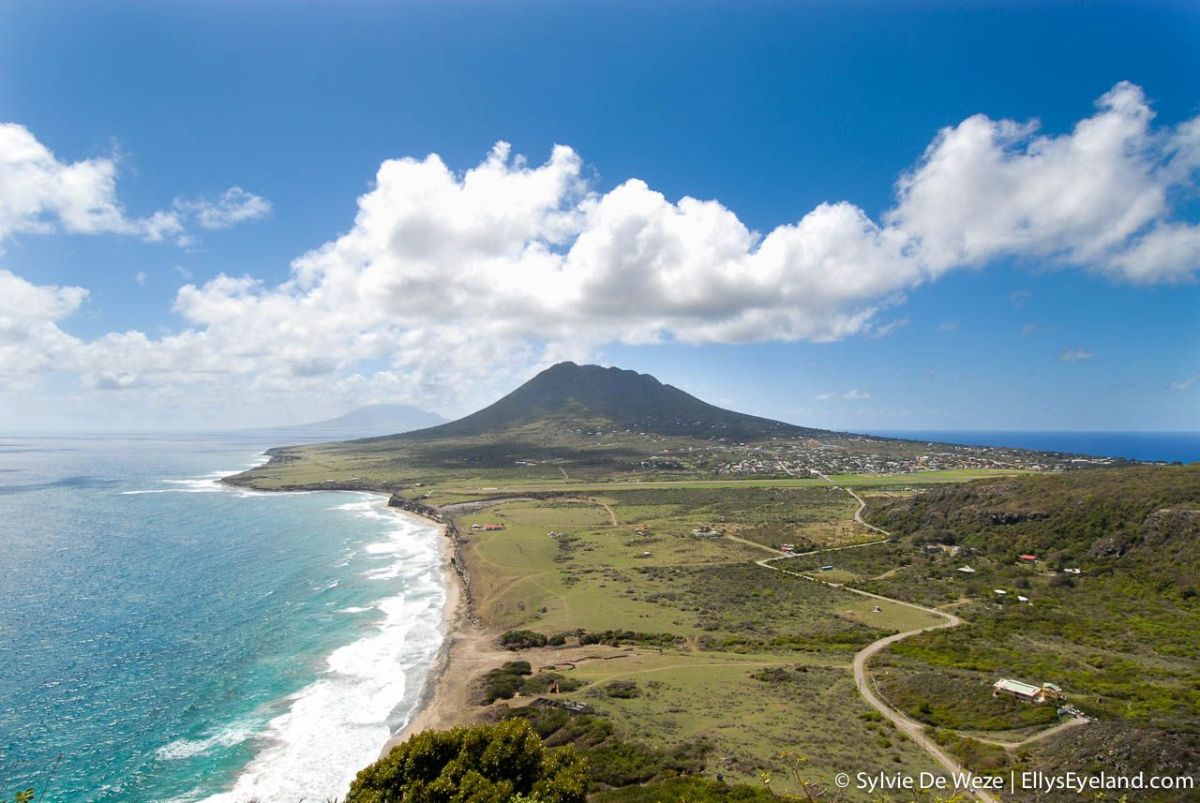
Sint Eustatius, known to locals as “Statia”, is a Caribbean island of 8.1 sq. miles in the northeastern Caribbean, located between St. Kitts and Puerto Rico.

Throughout the 18th century, Sint Eustatius had close ties with North America, and became wealthy from the trade in a variety of goods.  Sugar, molasses, gin, rum and cotton were only a few of the goods shipped from, or through, Sint Eustatius. Colonial ports from Maine to Virginia shipped products to the island in return, including barrel staves, beans, flour, cod, horses, lumber and tobacco.

At its height, the island was handling over 3,000 vessels per year, making St. Eustatius the “Golden Rock” of the Caribbean.

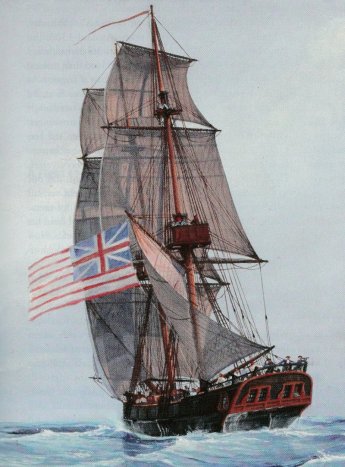
Andrew Doria
Andrew Doria

As a Dutch Colony, Sint Eustatius was required to remain neutral during the American Revolution. The government in Holland warned Governor Johannes de Graaff to stay away from the American “rebels” fighting for independence, but de Graaff didn’t see it that way.  The trade in powder, ammunition and arms continued throughout the Revolutionary period, with covert support smuggled in from Spain, France and dissident interests in Holland.

For a time, little Sint Eustatius was the only link between Europe, and the American colonies.

On November 16, 1776, the Brig Andrew Doria sailed into Sint Eustatius’ principle anchorage in Oranje Bay, flying the Continental Colors, the first national flag of the fledgling United States.  The brig, under command of Captain Isaiah Robinson, was there to obtain munitions and military supplies. Andrew Doria also carried a precious cargo, a copy of the Declaration of Independence.

This was the Americans’ second attempt to send the Declaration to their Dutch associates, the first having been captured on the way to Holland.  Wrapped in papers containing some obscure espionage code, British investigators labored in vain to unlock this strange new cipher. They could have spared themselves the effort.  That first copy of the declaration was sheathed in notes written in Yiddish, personal greetings to some of the Jewish merchants of Holland.

Fort Oranje on Statia
Fort Oranje, Sint Eustatius

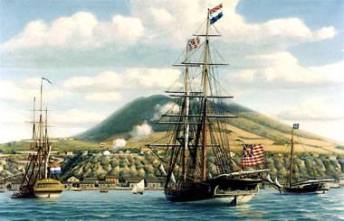
It was traditional in those days, that vessels approaching a foreign harbor fire a gun salute upon entering. Captain Robinson fired a 13-gun volley on entering the bay, one for each of the thirteen American colonies.

Tradition dictated that a salute be fired in return, typically two guns fewer than that discharged by the incoming vessel, but such an act carried meaning.  Such a return salute was an act of overt recognition, that a sovereign state had entered the harbor. Such a salute would amount to formal recognition of the thirteen American colonies, as free and independent states.

St Eustatius 1st Salute
First Salute

The commander at Fort Oranje, overlooking the anchorage, didn’t know how to respond. Governor de Graaff ordered an 11-gun return salute fired from the guns of Fort Oranje.

At the time, none could have known:  242 years ago today, three thousand American Patriots fought a desperate and losing battle against 8,000 British forces and their Hessian allies for Washington Heights, in New York.  1776 miles away at that very moment, little Sint Eustatius had just become the first nation in history, to recognize American independence.

Playing the role of the young tattle-tale to an older sibling, nearby Saint Kitts immediately dispatched a vessel to England, to inform the British government of the event. The British were furious, of course. The trade between St. Eustatius and the American Colonies became the principal cause of the fourth Anglo-Dutch war, begun on December 12, 1780.

Admiral George Bridges Rodney forced the surrender of Sint Eustatius the following February, complaining that “This rock, of only six miles in length and three in breadth, has done England more harm than all the arms of her most potent enemies, and alone supported the infamous rebellion. When I leave the island of St. Eustatius, it will be as barren a rock as the day it erupted from the sea. Instead of one of the greatest emporiums on earth, it will be a mere desert and known only by report.”

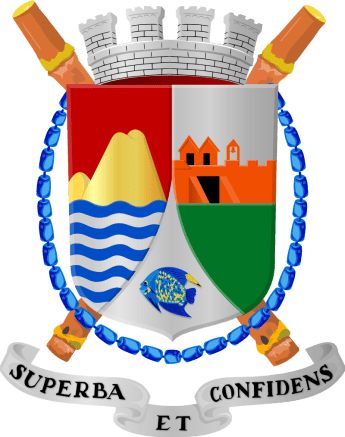
Sint_Eustatius_wapenAdmiral Rodney pretty much had his way. The census of 1790 shows 8,124 on the Dutch island nation. In 1950, the population stood at only 790. It would take 150 years from Rodney’s departure, before tourism even began to restore the economic well-being of the tiny island.

Today, Sint Eustatius celebrates the 16th of November as “Statia America Day”, in recognition of that first salute.

An official coat of arms was designed by Sint Eustatius’ Director of Monuments Walter Hellebrand, and adopted on this day in 2004. On the left is a Golden Rock, in memory of the trade that made the island rich. On the right is Fort Oranje, Sint Eustatius’ most important landmark. The angel fish of this pristine diving destination is at the bottom, symbolizing the island’s future. Below is the Latin motto, “SUPERBA ET CONFIDENS”.  Proud and Confident.

Happy Statia America Day!

Feature image, top of page: The silky mosses, orchids and sweet smelling bromeliads of a pocket-sized tropical rain forest occupies the crater of Sint Eustatius’ dormant volcano, known as “The Quill”.

If you enjoyed this “Today in History”, please feel free to re-blog, “like” & share on social media, so that others may find and enjoy it as well. Please click the “follow” button on the right, to receive email updates on new articles.  Thank you for your interest, in the history we all share.

November 10, 1775 Semper Fi

Happy 243rd birthday, United States Marine Corps.  Semper Fi.

The Navy had been in existence for less than a month and the Battles of Lexington and Concord a mere seven months in the past, when the Continental Marines were formed by an act of the 2nd Continental Congress, convened on November 10, 1775.

“Resolved, That two Battalions of Marines be raised, consisting of one Colonel, two Lieutenant Colonels, two Majors, and other officers as usual in other regiments; and that they consist of an equal number of privates with other battalions; that particular care be taken, that no persons be appointed to office, or inlisted into said Battalion, but such are good seamen, or so acquainted with maritime affairs as to be able to serve to advantage by sea when required: that they be inlisted and commissioned to serve for and during the present war between Great Britain and the colonies, unless dismissed by order of Congress: that they be distinguished by the names of the first and second battalion of American Marines, and that they be considered as part of the number which the continental Army before Boston is ordered to consist of.”

Happy-Birthday-US-Marine-Corps

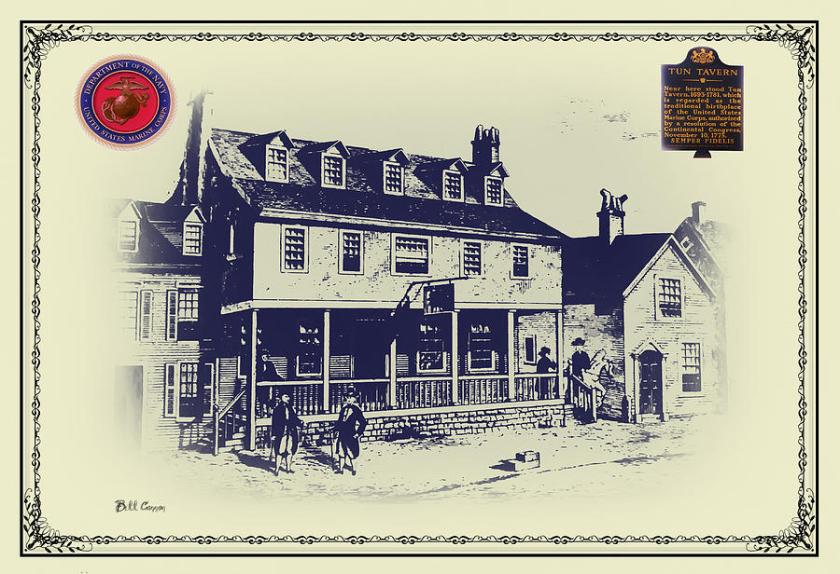
Historians differ on the location of the first recruiting station. Some will tell you that it was the “Conestoga Waggon” tavern in Philadelphia. Tradition holds it to have been the “Tun Tavern”, a name coming from the Olde English “Tun”, meaning a barrel or a keg of beer.

Continental Marines served a number of important functions during the Revolution, including ship-board security, amphibious assault and ship to ship combat. Then as now, Marines were riflemen first. During naval engagements they could be found in the masts and rigging, their sharpshooters’ skills taking out opposing helmsmen, gunners and ship’s officers.

tun-tavern--birthplace-of-the-marine-corps-bill-cannon
Tun Tavern, birthplace of the Marine Corps, by Bill Cannon

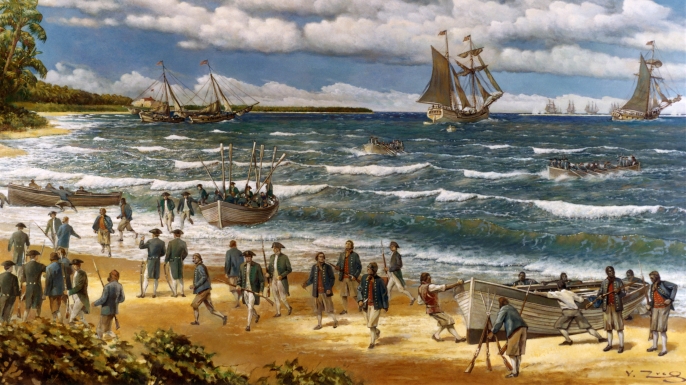
The first Marine landing on a hostile shore took place in March the following year, when a Marine force under the former Quaker, Captain Samuel Nicholas, captured New Province Island in the Bahamas. The island’s British governor managed to ship out 150 barrels of powder, but several brass cannon and mortars were captured, and later put to use with George Washington’s Continental Army.

Captain Nicholas was the first commissioned officer in the Continental Marines, and is now remembered as the first commandant of the Marine Corps.

list-us-marine-Battle_of_Nassau-E
First Marine landing, New Providence Island Bahamas, March 3, 1776

The Continental Congress disbanded the Marines in 1783, following their help in winning American independence. Increasing conflict and the coming “quasi-war” with revolutionary France would soon bring them back.

President John Adams signed a bill establishing the United States Marine Corps as a permanent military force under Navy jurisdiction on July 11, 1798.

The most famous action of the early period occurred during the Tripolitan War of 1801–’05, against the Barbary states of Tripoli, Algiers, Tunis, and the independent Sultanate of Morocco. US Army Lieutenant William Eaton and United States Marine Corps 1st Lieutenant Presley O’Bannon led eight Marines and 500 mercenaries on a 600-mile forced march through the desert, against a much larger force defending the city of Derna, in Libya.

list-us-marinesAttack_on_Derna_by_Charles_Waterhouse_01
US Marine attack Derna, by Charles Waterhouse

Ottoman viceroy Prince Hamet awarded a Mameluke sword to O’Bannon on December 8, 1805, in a gesture of respect for the Marines’ conduct. That curved, cross-hilted scimitar became the model for swords worn by Marine officers to this day, the victory at Derna memorialized in a line from the Marine Corps Hymn “From the halls of Montezuma, to the shores of Tripoli”.

Marine-Corps-Mameluke-sword

Since then, the Marine Corps has participated in virtually every conflict ever fought by the United States, and usually the first ones in. To date, United States Marines have executed over 300 landings on foreign shores.

Badly outnumbered in 1918 near the French hunting preserve of Belleau Wood, Marines under General James Harbord, were urged to withdraw.  One captain retorted “Retreat? Hell, we just got here.”  Over three weeks, US Marines and Army troops made a half-dozen assaults on German positions in the Wood, enduring poison gas, withering machine gun fire and hand to hand combat.  Belleau Wood killed more Marines than every battle in Marine Corps history combined, and proved for all time the Marine Corps’ reputation as an elite fighting force.

Marines in the World War II era are best known for Pacific “island hopping” battles such as Guadalcanal, Tarawa and Iwo Jima, but 6,000 Marines took part in nearly every theater, of the war.  Always riflemen first, it was Marine Corps sharpshooters who cleared the way for the D-Day landing, picking off floating mines on the morning of June 6.

To the Germans of Belleau Wood, this new and unfamiliar fighting force were “Höllenhunde” (“hellhound”), “Teufelshunde”, (“Devil Dogs.”), an appellation which survives, to this day.  Devil Dog and Marine Corps mascot “Chesty XV” arrived at Marine barracks Washington DC on March 19, 2018, the phase I recruit to begin training, immediately.

marines-chesty-bulldog.jpg

The original Tun Tavern burned down in 1781, shortly before the end of the Revolution. Today, the site is part of Interstate 95, where the highway passes Penn’s landing. You can still visit the Tun Tavern-styled restaurant at the National Marine Corps Museum in Quantico, where a beer and a bread pudding is always part of the lunch menu.

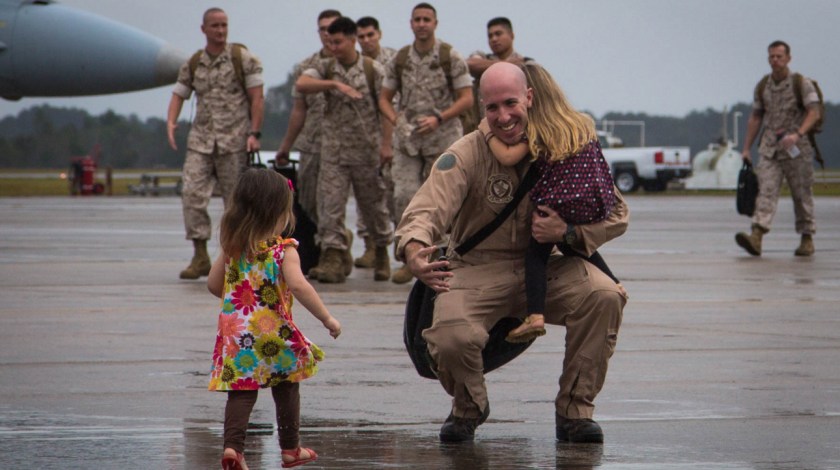
The USMC has 182,000 active duty members as of 2016, with 38,500 in reserve. They are separated into three divisions, headquartered at Camp Lejeune, North Carolina, Camp Pendleton in California; and Okinawa, Japan. Each division maintains one or more expeditionary units, prepared for major operations anywhere in the world on two weeks’ notice.

Happy-Birthday-USMC-1.jpg

Over the course of Marine Corps history, fewer than 100 people have ever received the title of Honorary Marine, including Brigadier General Bob Hope, Master Sergeant Bugs Bunny, Corporal Jim Nabors and Gary Sinise of the “Lieutenant Dan Band”. Such a title may only be bestowed by the Commandant of the Marine Corps, the license plate of whose car will always read “1775”.

Happy 243rd birthday, United States Marine Corps.  Semper Fi.

If you enjoyed this “Today in History”, please feel free to re-blog, “like” & share on social media, so that others may find and enjoy it as well. Please click the “follow” button on the right, to receive email updates on new articles.  Thank you for your interest, in the history we all share.


October 21, 1774 First Flag

“…Steadfast, in Freedom’s Cause, we’ll live and die,
Unawed by Statesmen; Foes to Tyranny,
But if oppression brings us to our Graves,
and marks us dead, she ne’er shall mark us Slaves”

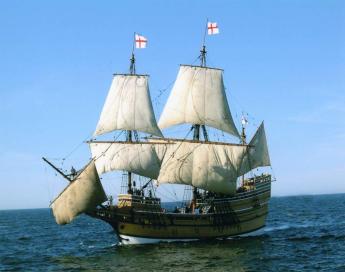
The Mayflower set sail from England on September 6, 1620, and fetched up on the outer reaches of Cape Cod in mid-November, near the present-day site of Provincetown Harbor.

5848246db1583.image
Mayflower, historic reproduction

One was born over those 66 days at sea, another died.  They were 101 in all, including forty members of the English Separatist Church, a radical Puritan faction who felt the Church of England hadn’t gone far enough, in the Protestant Reformation.

There the group drew up the first written framework of government established in the United States, 41 of them signing the Mayflower Compact on board the ship on November 11, 1620.

With sandy soil and no place to shelter from North Atlantic storms, a month in that place was enough to convince them of its unsuitability. Search parties were sent out and, on December 21, the “Pilgrims“crossed Cape Cod Bay and arrived at what we now know, as Plymouth Harbor.

Fully half of them died that first winter but the rest hung on, with assistance from the Grand Sachem Massasoit (inter-tribal chief) of the Wampanoag confederacy, in the form of the emissaries, Samoset and Squanto. The Mayflower returned to England in April 1621, with half its original crew.

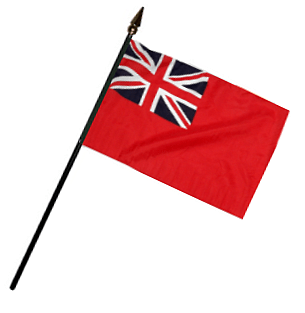
british red ensign mini 2
British Red Ensign

Three more ships arrived in Plymouth over the next two years, including the Fortune (1621), the Anne and the Little James (1623). Those who arrived on these first four ships were known as the “Old Comers” of Plymouth colony, and were given special treatment in the affairs of “America’s Home Town”.

A short seventeen years later, members of the Plymouth Colony founded the town of Taunton twenty-four miles inland, and formally incorporated the place on September 3, 1639.

In 1656, the first successful iron works in Plymouth Colony and only the third in “New England” was established in Taunton, on the Two Mile River. The Taunton Iron Works operated for over 200 years, until 1876.

The town was once home to several silver smithing operations, including Reed & Barton, F.B. Rogers, and Poole Silver. To this day, Taunton is known as the “Silver City”.

Taunton also has the distinction of flying what may have been the first distinctly American flag, in history.

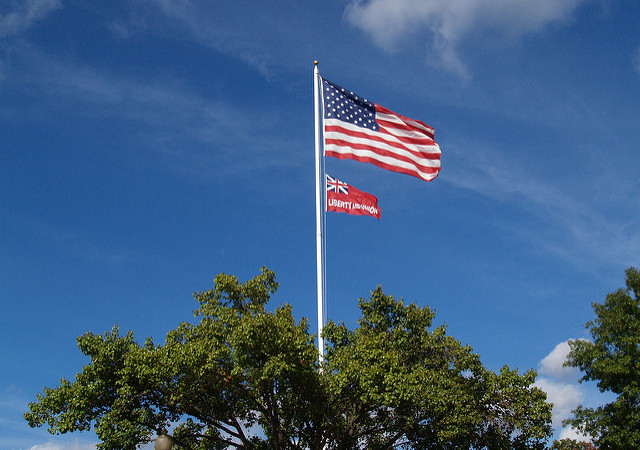
united_states_taunton_flag_liberty_and_union_1774_coffee_mug-rf4e479fc61a14108aaef1be92fcbb695_x7jgr_8byvr_512First raised above the town square on October 19, 1774, the flag’s canton featured the Union Jack, on the blood red field of the British Red Ensign. The Declaration of Independence lay two years in the future for these people.  They were, after all, still British subjects.

Between hoist and fly ends were written the words “Liberty and Union”, a solemn declaration that the colonies were going to stick together, and that their rights as British citizens, were not about to be violated.

Not so long as they had something to say about it.

On October 21, 1774, the Taunton Sons of Liberty raised the flag 112-feet high on a Liberty Pole, and tacked the following inscription on that pole:

“Be it known to the present,
And to all future generations,
That the Sons of Liberty in TAUNTON
Fired with Zeal for the Preservation of
Their Rights as Men, and as American Englishmen,
And prompted by a just Resentment of
The Wrongs and Injuries offered to the
English Colonies in general, and to
This Province in particular,
Through the unjust Claims of
A British Parliament, and the
Machiavellian Policy of their fixed Resolution
To preserve sacred and inviolate
Their Birth-Rights and Charter-Rights,
And to resist, even unto Blood,
All attempts for their Subversion or Abridgement.
Born to be free, we spurn the Knaves who dare
For us the Chains of Slavery to prepare.
Steadfast, in Freedom’s Cause, we’ll live and die,
Unawed by Statesmen; Foes to Tyranny,
But if oppression brings us to our Graves,
and marks us dead, she ne’er shall mark us Slaves”.

The Taunton flag is considered to be among the oldest distinctly American flags if not the oldest, in history. The city officially adopted it on October 19, 1974, the 200th anniversary of the day it was first raised above Taunton green. Stop and see it if you ever get by.   It’s there on the Liberty Pole, directly beneath the Stars and Stripes of the Star Spangled Banner.

AR-150926822

.If you enjoyed this “Today in History”, please feel free to re-blog, “like” & share on social media, so that others may find and enjoy it as well. Please click the “follow” button on the right, to receive email updates on new articles.  Thank you for your interest, in the history we all share.

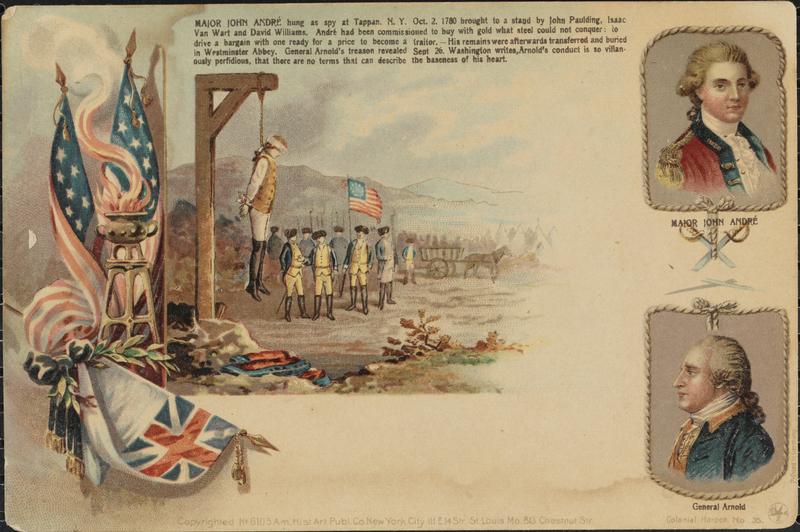
September 29, 1780 André

In an age before radio or television, John André was a fun and interesting guy to be around. He was a gifted story teller with a great sense of humor. He could draw, paint and cut silhouettes. He was an excellent writer, he could sing, and he could write verse.

In an age before radio or television, John André was a fun and interesting guy to be around. A gifted story teller with a great sense of humor, Major André was a favorite of Colonial Loyalist society.  He could draw, paint and cut silhouettes. He was an excellent writer, he could sing, and he could write verse.

John André was a British Major at the time of the American Revolution, taking part in his army’s occupations of New York and Philadelphia.  He was also, a spy.

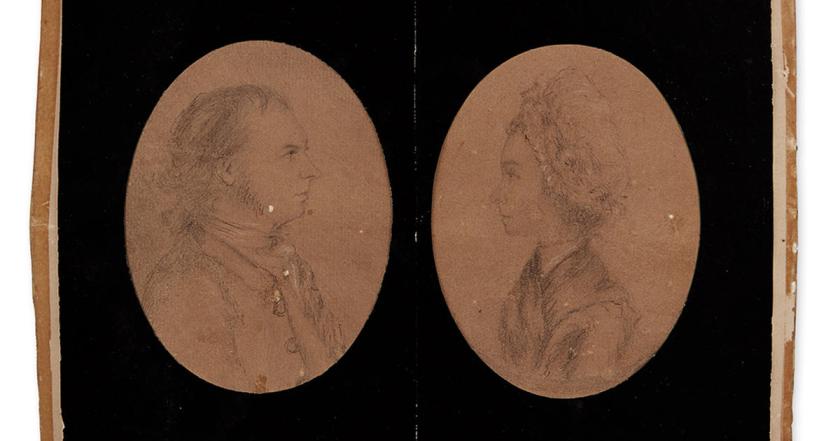
albany16172503056541
Portrait drawn by Major John André, 1776

Peggy Shippen was the daughter of a prominent Philadelphia Tory and, for a time, enjoyed a dating relationship with Major André.  Following the French entry into the war on the American side, British General William Howe removed his command from Philadelphia, including Major André.

Peggy-Shippen
Peggy Shippen

In 1778, Peggy Shippen met an important officer in the Patriot cause, a hero of Valcour Island, and the Battle of Saratoga.  On April 8, 1779, the couple was married in the Shippen townhouse on Fourth Street   The relationship provided the connection between the British spy and a man who could have gone into history among the top tier of American founding fathers, had he not switched sides.  Peggy Shippen’s new husband, was General Benedict Arnold.

Arnold was Commandant of West Point at the time, the future location of one of our great military academies. At the time, West Point was a strategic fortification on high ground overlooking the Hudson River. The British capture of West Point would have split the colonies in half.

John André struck a bargain with Benedict Arnold which would turn a Hero of the Revolution into a name synonymous with “Traitor”. Arnold would receive £20,000, equivalent to over a million dollars today, in exchange for which he would give up West Point.

Arnoldpicture1
General Benedict Arnold

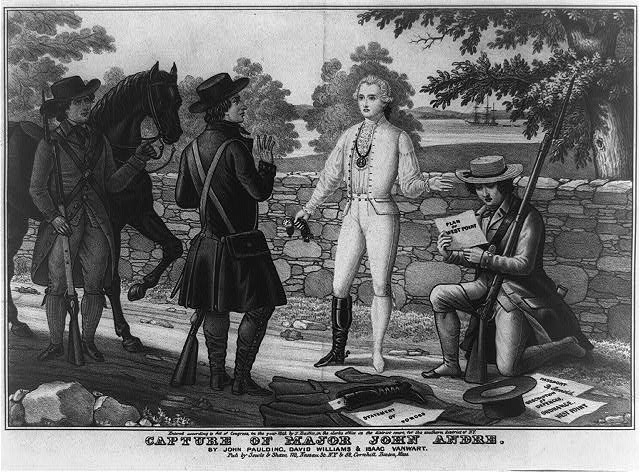
Major André sailed up the Hudson River in the Sloop of War HMS Vulture on September 20, 1780. Dressed in civilian clothes, he was returning to his lines on the 23rd. Six papers written in Arnold’s hand were hidden in his sock when three members of the New York militia:  John Paulding, David Williams and Isaac Van Wart stopped him.  Paulding was wearing a Hessian overcoat, and André thought they were Tories. “Gentlemen”, he said, “I hope you belong to our party”. “What party”, came the response and André replied “The lower (British) party”. “We do”, they said, to which André announced himself to be a British officer who must not be detained. That was as far as he went.

The discovery of these papers brought Benedict Arnold’s treachery to light.  Unaware that General Arnold himself was the culprit, Lt. Col. John Jameson dispatched letters to General George Washington and Benedict Arnold, warning the two of the plot.   Washington was literally on the way to a breakfast meeting with Arnold, when the General received the note.  Thus forewarned, Arnold slipped out a side door and escaped to a British ship, waiting nearby.

Capture_of_John_andre1

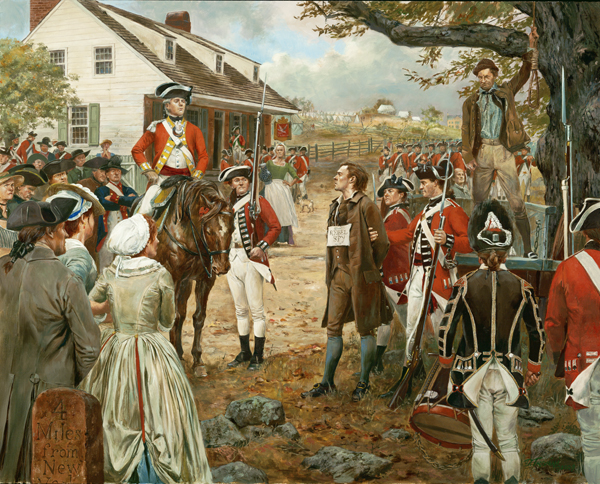
John André was tried and sentenced to death as a spy, and jailed on September 29. He asked if he could write a letter to General Washington. In it he asked not that his life be spared, but that he be executed by firing squad, considered to be a more “gentlemanly” death than hanging.

General Washington believed that Arnold’s crimes were far more egregious than those of John André, and he was impressed with the man’s bravery.  Washington wrote to General Sir Henry Clinton, asking for an exchange of prisoners.

Having received no reply by October 2, Washington wrote in his General Order of the day, “That Major André General to the British Army ought to be considered as a spy from the Enemy and that agreeable to the law and usage of nations it is their opinion he ought to suffer death. “The Commander in Chief directs the execution of the above sentence in the usual way this afternoon at five o’clock precisely.”

John André was hanged in Tappan New York on October 2, 1780.  He was 31.

M3Y60817

During his nine-month stay in Philadelphia, John André lived in Ben Franklin’s home, while the British army occupied the city. As they were packing to leave, Swiss born Pierre Du Simitiere came to say goodbye. He was shocked to find such a fine Gentleman as André, looting the Franklin residence. The man had always been known for extravagant courtesy, and this was completely out of character. He was packing books, musical instruments, scientific apparatus, and an oil portrait of Franklin, offering no defense or even explanation, in response to Simitiere’s protests.

Portrait of Ben TNLong afterward, in the early 20th century, the descendants of Major-General Lord Charles Grey returned the painting to the United States, indicating that André had probably looted Franklin’s home under orders from General Grey, himself. A Gentleman always, it would explain the man’s inability to defend his own actions. Today, that oil portrait of Benjamin Franklin hangs in the White House.
If you enjoyed this “Today in History”, please feel free to re-blog, “like” & share on social media, so that others may find and enjoy it as well. Please click the “follow” button on the right, to receive email updates on new articles.  Thank you for your interest, in the history we all share.

September 10, 1776 One Life to Lose

The young Patriot, untrained and unskilled in the ways of deception, placed his trust where it did not belong.

From the earliest days of the American Revolution, the Hale brothers of Coventry Connecticut, fought for the Patriot side. Five of them helped to fight the battles at Lexington and Concord. The youngest and most famous brother was home in New London at the time, finishing the terms of his teaching contract.

Nathan Hale’s unit would participate in the siege of Boston, Hale himself joining George Washington’s army in the spring of 1776, as the army moved to Long Island to block the British move on the strategically important port city of New York.

d5ddb592616457bccdf1c941f3cd5f89

General Howe appeared at Staten Island on June 29 with a fleet of 45 ships. By the end of the week, he’d assembled an overwhelming fleet of 130.

There was an attempt at peaceful negotiation on July 13, when General Howe sent a letter to General Washington under flag of truce. The letter was addressed “George Washington, Esq.”, intentionally omitting Washington’s rank of General. Washington declined to receive the letter, saying that there was no one there by that address. Howe tried the letter again on the 16th, this time addressing it to “George Washington, Esq., etc., etc.”. Again, Howe’s letter was refused.

The next day, General Howe sent Captain Nisbet Balfour in person, to ask if Washington would meet with Howe’s adjutant, Colonel James Patterson. A meeting was scheduled for the 20th.

Patterson told Washington that General Howe had come with powers to grant pardons. Washington refused, saying “Those who have committed no fault want no pardon”.

george_washington_1107

Patriot forces were comprehensively defeated at the Battle of Brooklyn, fought on August 27, 1776. With the Royal Navy in command on the water, Howe’s army dug in for a siege, confident that his adversary was trapped and waiting to be destroyed at his convenience.

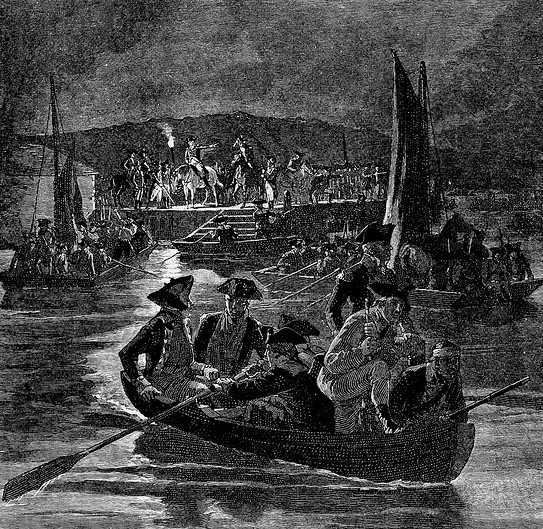
On the night of August 29-30, Washington withdrew his army to the ferry landing and across the East River, to Manhattan.

With horse’s hooves and wagon wheels muffled and oarlocks stuffed with rags, the Patriot army withdrew as a rearguard tended fires, convincing the redcoats in their trenches that the Americans were still in camp.

The surprise was complete for the British side, on waking for the morning of the 30th. The Patriot army, had vanished.

Retreat from LI
Retreat from long island, August 29-30, 1776

The Battle of Long Island would almost certainly have ended in disaster for the cause of Liberty, but for that silent evacuation over the night of August 29-30.

Following evacuation, the Patriot army found itself isolated on Manhattan island, virtually surrounded. Only the thoroughly disagreeable current conditions of the Throg’s Neck-Hell’s Gate segment of the East River, prevented Admiral Sir Richard Howe (William’s brother), from enveloping Washington’s position, altogether.

Expecting a British assault in September, General Washington was desperate for information on the movements of his adversary.  Washington asked for volunteers for a dangerous mission, to go behind enemy lines, as a spy.  One volunteer stepped up, on September 10. His name was Nathan Hale.

Hale set out the same day, disguised as a Dutch schoolmaster. He was successful for about a week but appears to have been something less than “street smart”. The young Patriot, untrained and unskilled in the ways of deception, placed his trust where it did not belong.

Nathan Hale

Major Robert Rogers was an old British hand, a leader of Rangers during the earlier French and Indian War. Rogers must have suspected that this Connecticut schoolteacher was more than he pretended to be, and intimated that he himself, was a spy in the Patriot cause.

Hale took Rogers into his confidence, believing the two to be playing for the same side. Barkhamsted Connecticut shopkeeper Consider Tiffany, a British loyalist and himself a sergeant of the French and Indian War, recorded what happened next, in his journal: “The time being come, Captain Hale repaired to the place agreed on, where he met his pretended friend” (Rogers), “with three or four men of the same stamp, and after being refreshed, began [a]…conversation. But in the height of their conversation, a company of soldiers surrounded the house, and by orders from the commander, seized Captain Hale in an instant. But denying his name, and the business he came upon, he was ordered to New York. But before he was carried far, several persons knew him and called him by name; upon this he was hanged as a spy, some say, without being brought before a court martial.”

MI-Hercules_Mulligan
Hercules Mulligan

The Irish tailor Hercules Mulligan had far greater success reporting on British goings-on, and twice saved General Washington himself, from capture.   This Patriot who converted Alexander Hamilton from Tory to Patriot.  The secret member of the Sons of Liberty who, for seven years worked behind enemy lines.  Yet today, we barely remember the man’s name.. Hercules Mulligan earned the right to be remembered, as a hero of American history.  His will be a story for another day.

Nathan Hale, the schoolteacher-turned-spy who placed his trust where it didn’t belong,  was brought to the gallows on September 22, 1776, and hanged. He was 21. CIA.gov describes him as “The first American executed for spying for his country”.

Nathan_Hale_Statue_-_Flickr_-_The_Central_Intelligence_Agency_(1)There was no official record taken of Nathan Hale’s last words, yet we know from eyewitness statement, that the man died with the same clear-eyed personal courage, with which he had lived.

British Captain John Montresor was present at the hanging, and spoke with American Captain William Hull the following day, under flag of truce.  He gave the following account:

“‘On the morning of his execution, my station was near the fatal spot, and I requested the Provost Marshal to permit the prisoner to sit in my marquee, while he was making the necessary preparations. Captain Hale entered: he was calm, and bore himself with gentle dignity, in the consciousness of rectitude and high intentions. He asked for writing materials, which I furnished him: he wrote two letters, one to his mother and one to a brother officer.’ He was shortly after summoned to the gallows. But a few persons were around him, yet his characteristic dying words were remembered. He said, ‘I only regret, that I have but one life to lose for my country‘.

August 30, 1776 A Damn Close-Run Thing

The silent evacuation over the night of August 29-30 had averted disaster, a feat made possible only through the nautical skills of the merchants and rum traders, the sailors and the fishermen of Colonel John Glover’s Marblehead, Massachusetts militia, the “Amphibious Regiment”.

When General George Washington raised his sword under the branches of that ancient elm on Cambridge commons, by that act did he take command of an “army”, equipped with with an average of only nine rounds per man.

116037-040507-01.tif1776 started out well for the cause of American independence, when the twenty-six-year-old bookseller Henry Knox emerged from a six week slog through a New England winter, at the head of a “Noble train of artillery’.

Manhandled all the way from the frozen wilderness of upstate New York, the guns of Fort Ticonderoga were wrestled to the top of Dorchester Heights, overlooking the British fleet anchored in Boston Harbor.

General sir William Howe faced the prospect of another Bunker Hill.   A British victory, yes, but one which came at a cost that  Howe could ill afford to pay again.

The eleven-month siege of Boston came to an end on March 17 when that fleet evacuated Boston Harbor, and removed to Nova Scotia.  Three months later, a force of some 400 South Carolina patriots fought a day-long battle with the nine warships of Admiral Sir Peter Parker, before the heavily damaged fleet was forced to withdraw.  The British eventually captured Fort Moultrie and Charleston Harbor along with it but, for now, 1776 was shaping up to be a very good year.

Declaration of IndependenceThe Continental Congress adopted the Declaration of Independence, that July.
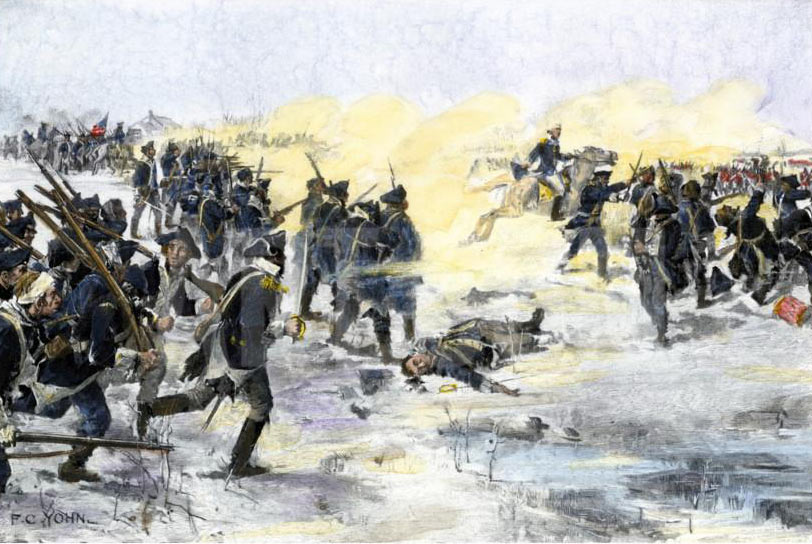
King’s Regular and Rebel alike understood the strategic importance of New York, as the center of communications between the New England colonies, and those in the south.  Beginning that April, Washington moved his forces from Boston to New York, placing his troops along the west end of Long Island in anticipation of the British arrival.

The British fleet was not long in coming, the first arrivals dropping anchor by the end of June.  Within the week, 130 ships were anchored off Staten Island, under the command of Admiral sir Richard Howe, the General’s brother.  By August 12 the British force numbered 400 vessels with 73 warships, with a force of some 32,000 camped on Staten island.

American forces were badly defeated at the Battle of Brooklyn, fought on August 27, 1776. The British dug in for a siege, confident that their adversary was cornered and waiting to be destroyed at their convenience, while the main Patriot army retreated to Brooklyn Heights.

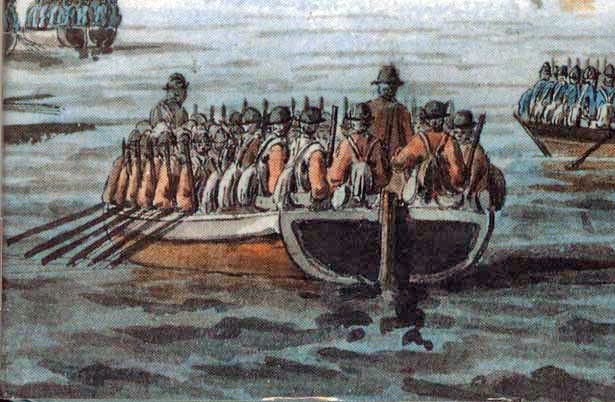
British_flat-bottomed_boat_American_Revolution
“British troops in the type of flat-bottomed boat used for the invasion of Long Island. Hessians in their blue uniforms are in the two boats that are only partly visible”. H/T Wikipedia

Cornered on land with the British-controlled East River to their backs, it may have been all over for the Patriot cause, but for one of the great feats of military history.   The surprise was complete for the British side on waking for the morning of August 30, to discover that the American army, had vanished. The silent evacuation over the night of August 29-30 had averted disaster, a feat made possible through the nautical skills of the merchants and rum traders, the sailors and the fishermen of Colonel John Glover’s Marblehead, Massachusetts militia, the “Amphibious Regiment”.

Retreat from LI
Retreat from long island, August 29-30, 1776

That October, the defeat of General Benedict Arnold’s home-grown “Navy” on the waters near Valcour Island in Vermont, cost the British fleet dearly enough that it had to turn back, buying another year of life for the Patriot cause.

By December, the Continental army had fled New York, to the south of New Jersey.  Already reduced to a puny force of only 4,707 fit for duty, Washington faced a decimation of his army by the New Year, with the end of enlistment for fully two-thirds of those.  With nowhere to go but on offense, Washington crossed the Delaware river in the teeth of a straight-up gale over the night of December 25, defeating a Hessian garrison at Trenton in a surprise attack on the morning of December 26.

trenton

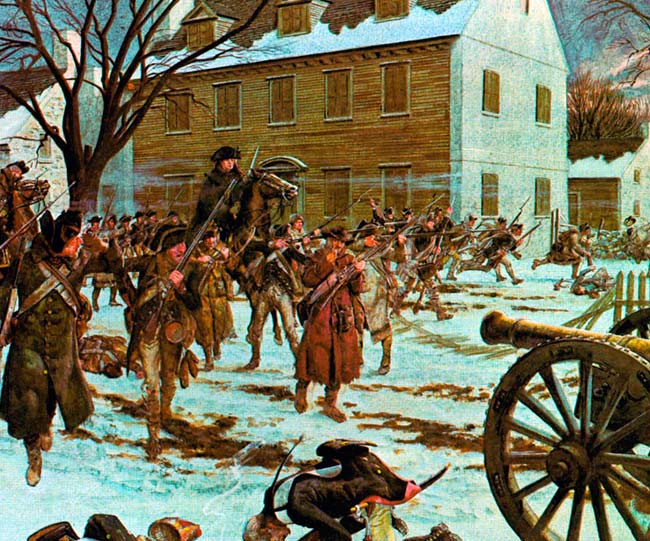
While minor skirmishes by British standards, the January 2-3 American victories at Assunpink Creek and Princeton demonstrated an American willingness, to stand up to the most powerful military of its time.  Cornwallis had suffered three defeats in the last ten days, and withdrew his forces from the south of New Jersey.  American morale soared, as enlistments came flooding in.

american-troops-charging-the-british-at-the-battle-of-princeton-new-jersey-c-1777
Battle of Princeton, January 3, 1777

The American war for independence would not be over, for another six years.  Before it was through, more Americans would die in the fetid holds of British prison ships than in every battle of the Revolution, combined.  Yet, that first year had come and gone, and the former colonies were still in the fight.

A generation later, Lord Arthur Wellesley described the final defeat of a certain “Corsican corporal” at a place called Waterloo.  Wellesley might have been talking about the whole year of 1776 in describing that day in 1815:  “It was a damn close run thing“.

If you enjoyed this “Today in History”, please feel free to re-blog, “like” & share on social media, so that others may find and enjoy it as well. Please click the “follow” button on the right, to receive email updates on new articles.  Thank you for your interest, in the history we all share.

July 4, 1826 Friends and Rivals

In an ending no fiction writer would dare put to paper, both men died on the same day, July 4, 1826.  Fifty years to the day from the birth of the Republic, they had helped to create. 

Delegates to the 2nd Continental Congress originally pushed for Richard Henry Lee to write the Declaration of Independence.  It was he who delivered the all-important resolution on June 1, 1776:  “Resolved, that these United Colonies are, and of right ought to be, free and independent States...”

committLee was appointed to the Committee of Confederation, assigned to write the Articles by which the fledgling nation would govern itself.  Lee believed that two such committees were too much and, soon, he would be called home to care for a critically ill wife.
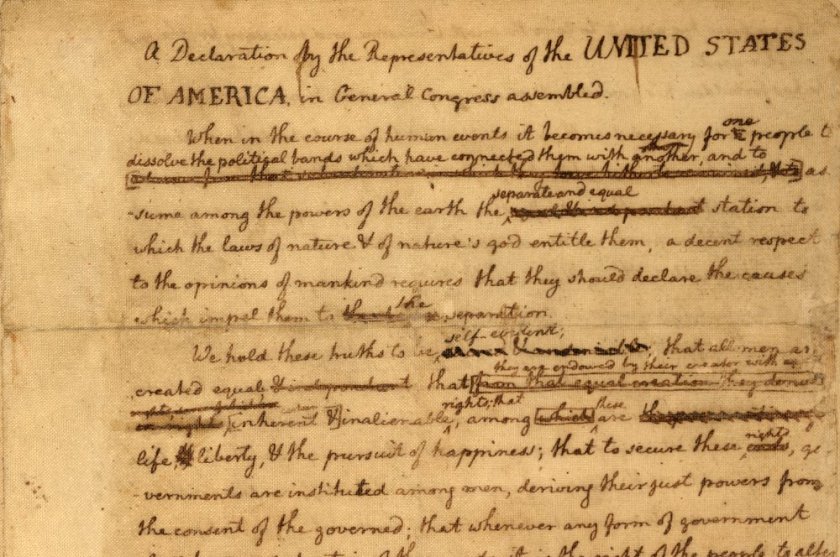
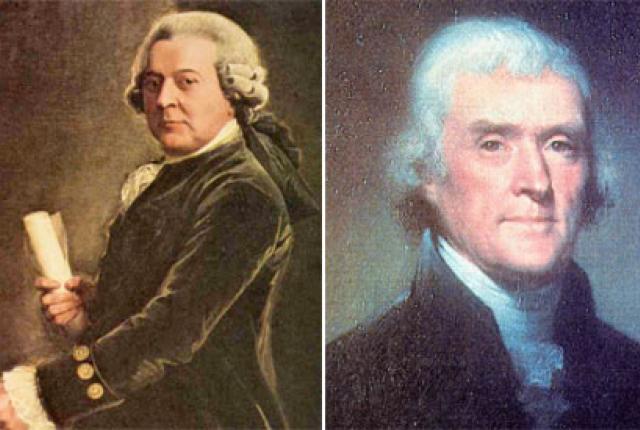
So it is that a committee of five were appointed to write the Declaration of Independence, including Massachusetts attorney John Adams, and a young Virginia delegate named Thomas Jefferson.

Jefferson had no interest in writing the Declaration of Independence and suggested that Adams pen the first draft. Adams declined, and described the following conversation, in a letter to Massachusetts politician Timothy Pickering:

“Jefferson proposed to me to make the draft. I said, ‘I will not,’ ‘You should do it.’ ‘Oh! no.’ ‘Why will you not? You ought to do it.’ ‘I will not.’ ‘Why?’ ‘Reasons enough.’ ‘What can be your reasons?’ ‘Reason first, you are a Virginian, and a Virginian ought to appear at the head of this business. Reason second, I am obnoxious, suspected, and unpopular. You are very much otherwise. Reason third, you can write ten times better than I can.’ ‘Well,’ said Jefferson, ‘if you are decided, I will do as well as I can.’ ‘Very well. When you have drawn it up, we will have a meeting.”

Thomas Jefferson would spend the following seventeen days, writing the first draft.  He and Adams had only just met during the Continental Congress in Philadelphia.  The two would develop a close personal friendship which would last for most of their lives.

6cadd6d5f50e0e581e4e0fb6f9db974a

The friendship between the two men came to an ugly ending during the Presidential election of 1800, in which the mudslinging from both sides rose to levels never before witnessed in a national election.

Jefferson defeated one-term incumbent Adams and went on to serve two terms as President of the United States.  Upon Jefferson’s retirement in 1809, one of the Declaration’s signers, Dr. Benjamin Rush, took it upon himself to patch up the broken friendship between the two founding fathers.

Dr. Rush worked on this personal diplomatic mission for two years.  In 1811, he finally succeeded.

JeffersonSeal2
Jefferson Seal

There followed a series of letters between John Adams and Thomas Jefferson, which together constitute one of the most comprehensive historical and philosophical assessments ever written about the American founding.

The correspondence between the pair touched on a variety of topics, from the birth of a self-governing Constitutional Republic, to then-current political issues, to matters of philosophy and religion and issues related to their advancing years.

Both men understood that they were writing not only to one another, but also to generations yet unborn.  Each went to great lengths to explain the philosophical underpinnings of his views, Adams the firm believer in strong, centralized government, Jefferson advocating a smaller federal government which was more deferential to the states.

By 1826, Jefferson and Adams were among the very last survivors among the founding generation.  James Monroe alone, would survive these two.

In an ending no fiction writer would dare put to paper, both men died on the same day, July 4, 1826.  Fifty years to the day from the birth of the Republic, they had helped to create.  Adams was 90 as he lay on his deathbed, suffering from congestive heart failure.  His last words were “Thomas Jefferson still survives”.  There was no way of knowing.  The author of the Declaration of Independence had died of a fever,  five hours earlier at his Monticello home near Charlottesville, Virginia.  Jefferson was 82.

adams-jefferson_6

John Adams son John Quincy was himself President at the time of the two men’s passing, and remarked that the coincidence was among the “visible and palpable remarks of Divine Favor”.

A month after the two men passed, Daniel Webster spoke of the pair at Faneuil Hall, in Boston.

“No two men now live, (or) any two men have ever lived, in one age, who (have) given a more lasting direction to the current of human thought. No age will come, in which the American Revolution will appear less than it is, one of the greatest events in human history. No age will come, in which it will cease to be seen and felt, on either continent, that a mighty step, a great advance, not only in American affairs, but in human affairs, was made on the 4th of July 1776″.


If you enjoyed this “Today in History”, please feel free to re-blog, “like” & share on social media, so that others may find and enjoy it as well. Please click the “follow” button on the right, to receive email updates on new articles.  Thank you for your interest, in the history we all share.

July 2, 1776 Independence Day

56 men would sign the Declaration of Independence in the days and weeks that followed, giving birth to a nation unique in all history.  A nation founded on an idea.

The first Virginia Convention organized in 1774, when Royal Governor Lord Dunmore dissolved the colony’s House of Burgesses. The colonial governing body had called for a day of prayer, a show of solidarity with her sister colony in Boston, after the British government closed the harbor in retaliation for the “Boston Tea Party“.

Boston-Tea-Party-Mohawks

Three additional such meetings would take place in the following year-and-one-half, to discuss increasingly fractious relations with the British Empire. No expression emerged from these conventions, in favor of independence.

That would change on May 15, 1776, when the fifth Virginia Convention declared that the colonial government as “formerly exercised” by King George III in Parliament, was “totally dissolved”. Three resolutions emerged from this body:  one calling for a declaration of rights in Virginia, another calling for the establishment of a republican constitution, and a third instructing its delegates to the Continental Congress in Philadelphia, to declare independence from Great Britain.

7b05307160b58e9268d4d4c7486b07fe.800x466x1

Richard Henry Lee’s resolution was taken almost verbatim from instructions from the Virginia Convention. As presented to the second Continental Congress on June 7, 1776, Lee’s resolution read:

“Resolved, that these United Colonies are, and of right ought to be, free and independent States, that they are absolved from all allegiance to the British Crown, and that all political connection between them and the State of Great Britain is, and ought to be, totally dissolved. That it is expedient forthwith to take the most effectual measures for forming foreign Alliances. That a plan of confederation be prepared and transmitted to the respective Colonies for their consideration and approbation”.

At the time, several colonies were not yet ready to declare independence.

Representatives agreed to delay the vote until July 1, appointing a “Committee of Five” to draft a declaration of independence from Great Britain. Members of the committee included John Adams of Massachusetts, Benjamin Franklin of Pennsylvania, Roger Sherman of Connecticut, Robert Livingston of New York and Thomas Jefferson of Virginia. The committee selected Jefferson to write the document, the draft presented to the Congress for review on June 28.

Debate resumed on July 1, 1776, with most of the delegates expressing favor for Lee’s resolution.

doi signing

The final vote was taken on July 2, when delegates from 12 of the 13 colonies voted in favor. Delegates from New York abstained, having as yet received no clear instructions from their constituents.

The Pennsylvania Evening Post reported on July 2nd that “This day the Continental Congress declared the United Colonies Free and Independent States”.

The Pennsylvania Gazette followed suit on the third with “Yesterday, the CONTINENTAL CONGRESS declared the UNITED COLONIES FREE and INDEPENDENT STATES”.

John Adams believed that July 2 would go down as Independence Day, for the young nation.

Declaration of Independence

56 men would sign the Declaration of Independence in the days and weeks that followed, giving birth to a nation unique in all history.  A nation founded on an idea.

That line was drawn in the sand, two hundred and forty two years ago, today.  As Caesar had ‘crossed the Rubicon’ nearly two thousand years earlier, a decision had been taken from which there would be no turning back.  Fifty-six men affixed their signatures to that document, affirming that to this “… we mutually pledge to each other our lives, our fortunes and our sacred honor.”

These were no empty words.  One of those signers, Benjamin Franklin, stated in all candor, that now “We must all hang together or, assuredly we shall all hang separately.”

56Signers_after_103107_1

On this day in 1984, exactly 208 years after a young nation declared its independence, a memorial was dedicated in the Constitution Gardens, on the National Mall in Washington, DC. The monument consists of fifty-six stone blocks, each bearing the inscribed likeness of the actual signature, of every man who so pledged his life, his fortune and his sacred honor.

56-Signers-Three_1

Today, this day is mostly forgotten in favor of July 4, when the final edits of Jefferson’s Declaration were adopted, the final document engrossed (handwritten onto parchment), and sent off to the printer.

Happy Independence Day.

920x920

If you enjoyed this “Today in History”, please feel free to re-blog, “like” & share on social media, so that others may find and enjoy it as well. Please click the “follow” button on the right, to receive email updates on new articles.  Thank you for your interest, in the history we all share.