October 26, 1918 Speaking in Code

The history of the Navajo Code Talkers of WWII is relatively well known.  A number of books have been written about the subject.  Less well known is the code talk emerging from World War 1, based on the language of the Choctaw.

Between 1942 and 1945, “code talkers” of the Navajo Nation took part in every assault conducted by the United States Marine Corps. From Guadalcanal to Tarawa, Peleliu to Iwo Jima, Navajo code talkers served with all six Marine divisions in the Pacific theater, of World War 2.

Theirs was a language with no alphabet or symbols, a language with such complex syntax and tonal qualities as to be unintelligible to the non-speaker.  The military code based on such a language proved unbreakable in WWII.  Japanese code breakers never got close.

The history of the Navajo Code Talkers of WWII is relatively well known.  A number of books have been written about the subject.  Less well known is the code talk emerging from World War 1, based on the language of the Choctaw.

The government of the Choctaw Nation will tell you that they were the first native code talkers who ever served in the United States military.

Late in 1917, Colonel A. W. Bloor was serving in France with the 142nd Infantry Regiment.  This was a Texas outfit, constituted in May of that year and including a number of Oklahoma Choctaws.

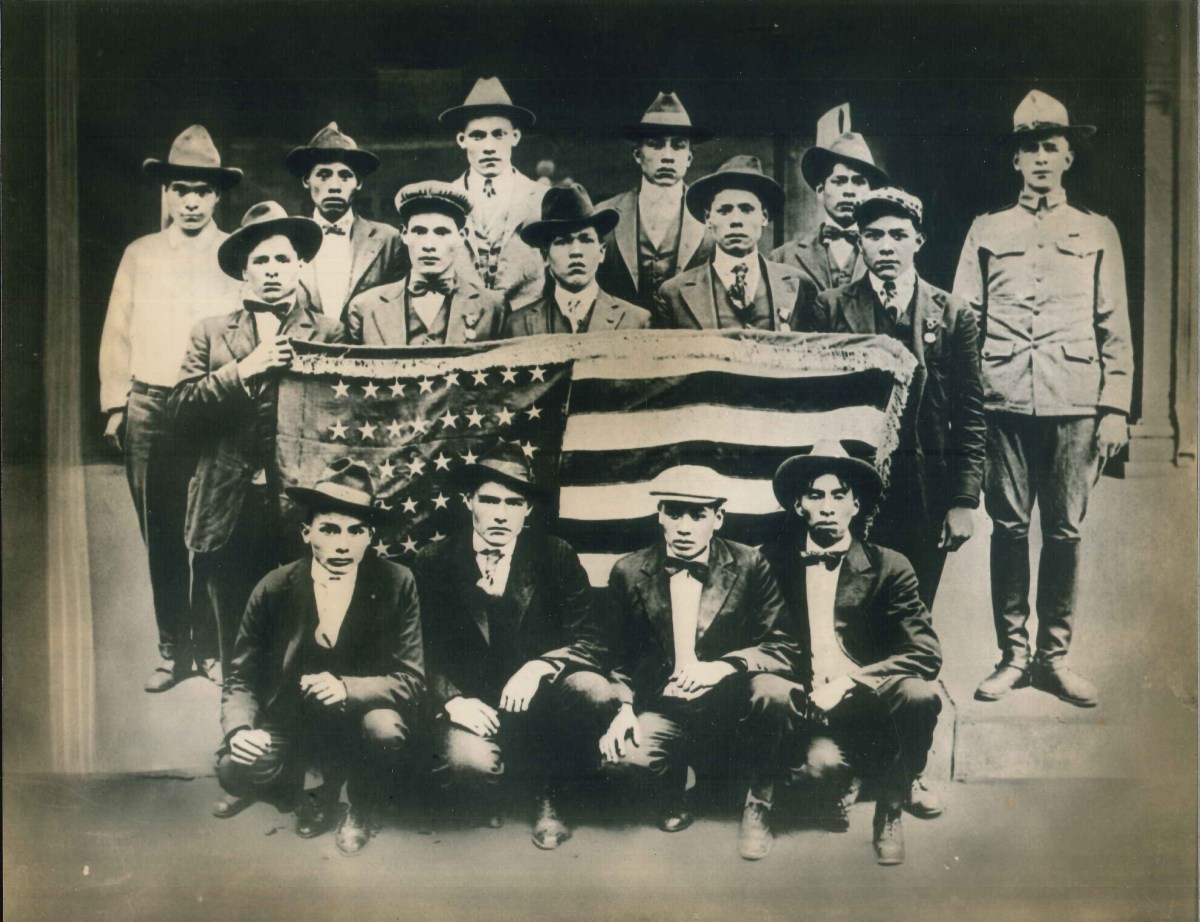
Choctaw code talkers

By now the Allies had learned the hard way, that many among the German adversary spoke excellent English.  German code breakers had intercepted and broken several English-based codes. 

Bloor heard two of his Choctaw soldiers talking to each other, and realized he didn’t have the foggiest notion of what they were saying.  If he didn’t understand their conversation he thought, no German could possibly have a clue.

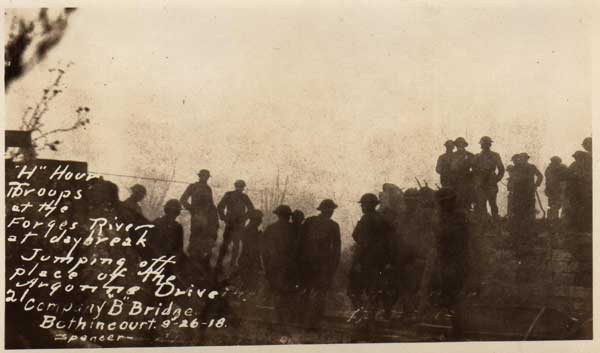
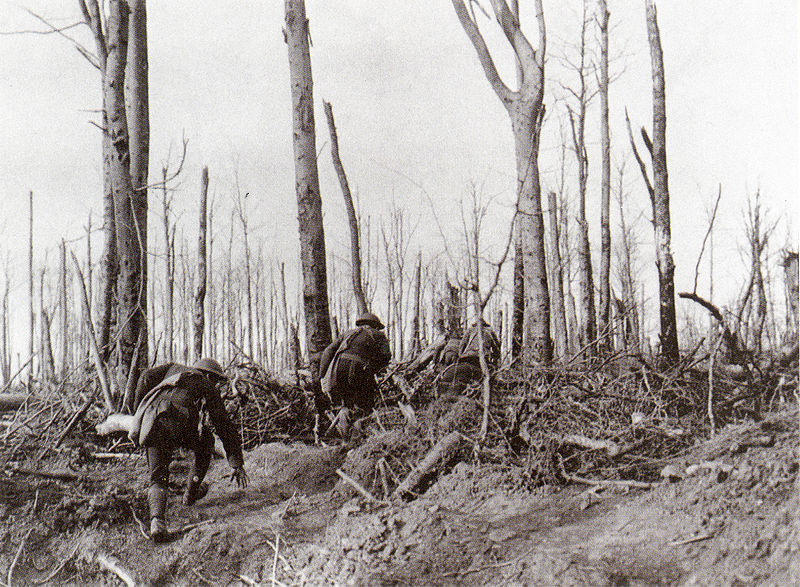
The first test under combat conditions took place on October 26, 1918, as two companies of the 2nd Battalion performed a “delicate” withdrawal from Chufilly to Chardeny, in the Champagne sector.  One captured German officer avowed the Choctaw code to have been a complete success.  We were “completely confused by the Indian language”, he said, “and gained no benefit whatsoever” from wiretaps.

Choctaw soldiers were placed in multiple companies of infantry.  Messages were transmitted via telephone, radio and runner, many of whom were themselves Native Americans.

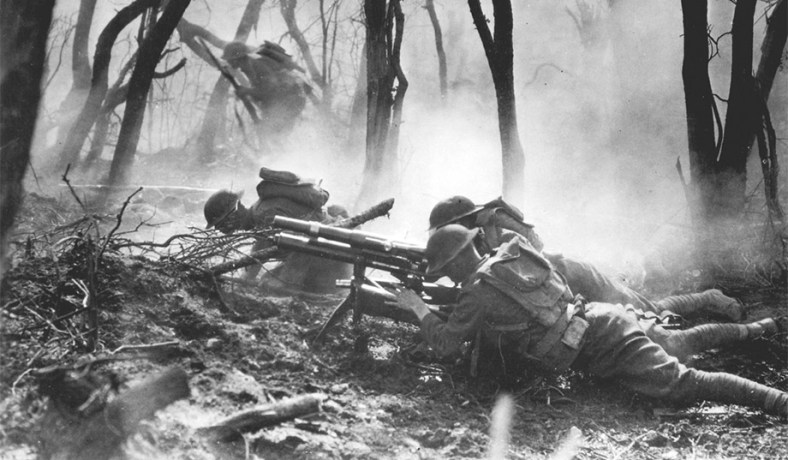
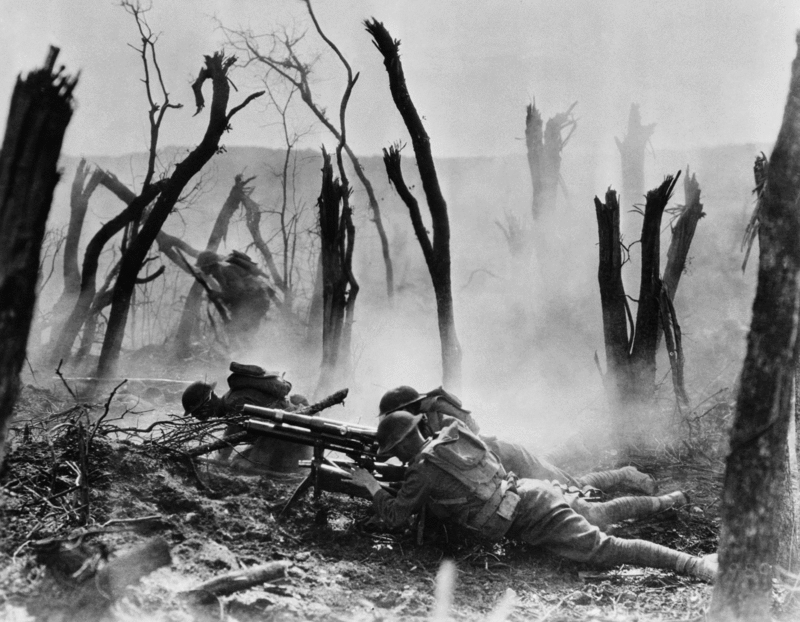
The Choctaw would improvise when their language lacked the proper word or phrase.  When describing artillery, they used the words for “big gun”.  Machine guns were “little gun shoot fast”.

The Choctaw themselves didn’t use the term “Code Talker”, that wouldn’t come along until WWII.  At least one member of the group, Tobias W. Frazier, described what he did as, “talking on the radio”.  Of the 19 who served in WWI, 18 were native Choctaw from southeast Oklahoma.  The last was a native Chickasaw. 

Youngest of the group was Benjamin Franklin Colbert, Jr., the son of Benjamin Colbert Sr., one of Teddy Roosevelt’s “Rough Riders” of the Spanish American War.  Born September 15, 1900 in the Durant Indian Territory, he was 16 the day he enlisted.

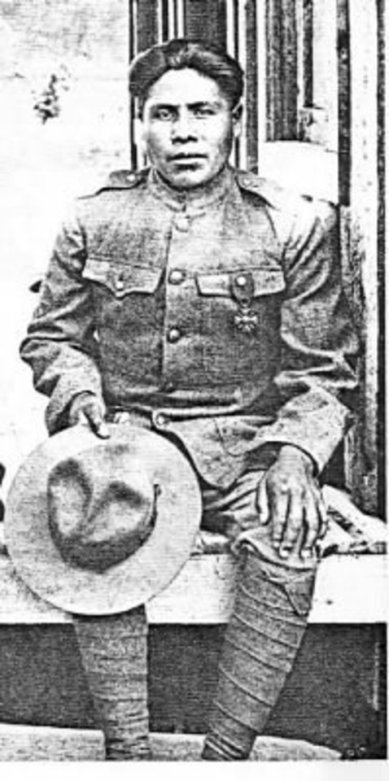
Joseph Oklahombi
Joseph Oklahombi

Another was Choctaw Joseph Oklahombi, whose name means “man killer” in the Choctaw language.    

Six days before Sergeant York’s famous capture of 132 in the Argonne Forest, Joseph Oklahombi charged a strongly held German position, single-handed.  Oklahombi’s Croix de Guerre citation, personally awarded by French Marshall Philippe Pétain, tells the story:  “Under a violent barrage, [Pvt. Oklahombi] dashed to the attack of an enemy position, covering about 210 yards through barbed-wire entanglements. He rushed on machine-gun nests, capturing 171 prisoners. He stormed a strongly held position containing more than 50 machine guns, and a number of trench mortars. Turned the captured guns on the enemy, and held the position for four days, in spite of a constant barrage of large projectiles and of gas shells. Crossed no man’s land many times to get information concerning the enemy, and to assist his wounded comrades“.

Unconfirmed eyewitness accounts report that some 250 Germans occupied the position, and that Oklahombi killed 79 of them before their comrades decided it was wiser to surrender. 

Some guys are not to be trifled with.

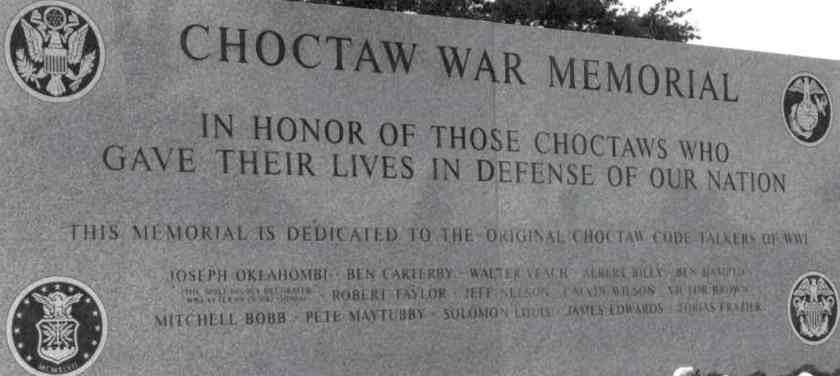
choctawwarmemorial

October 21, 1921 The Unknown Soldier

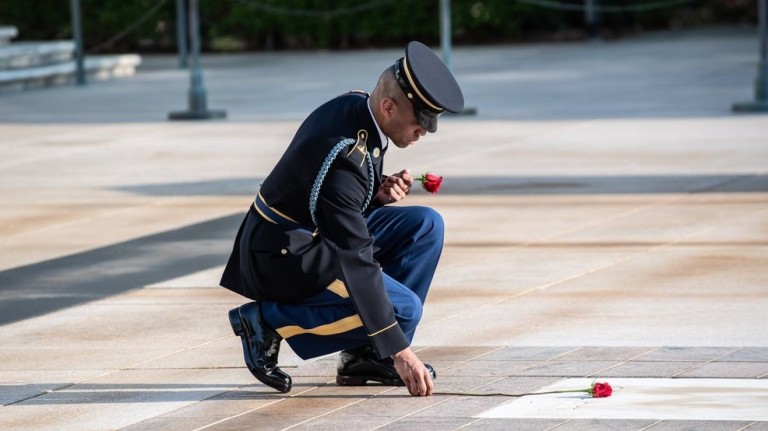
Passing between two lines of French and American officials, Sgt. Younger entered the room, alone.  Slowly, he circled the four caskets, three times, before at last stopping at the third from the left.  “What caused me to stop” he later said, “I don’t know.  It was as though something had pulled me”.  Younger placed the roses on the casket, drew himself to attention, and saluted.  This was the one.

Many years ago, Prussian Chancellor Otto von Bismarck remarked, “If a general war begins, it will be because of some damn fool thing in the Balkans“.

The Chancellor got his damn fool thing on a side street in Sarajevo, when a tubercular 19-year old leveled his revolver and murdered the heir-apparent to the Austro-Hungarian throne and his wife on June 28, 1914.

In another time and place, such an event may have led to limited conflict. A policing action, in the Balkans.  Instead, mutually entangling alliances brought mobilization timetables into effect, dictating the movement of men and equipment according to precise and predetermined schedules.

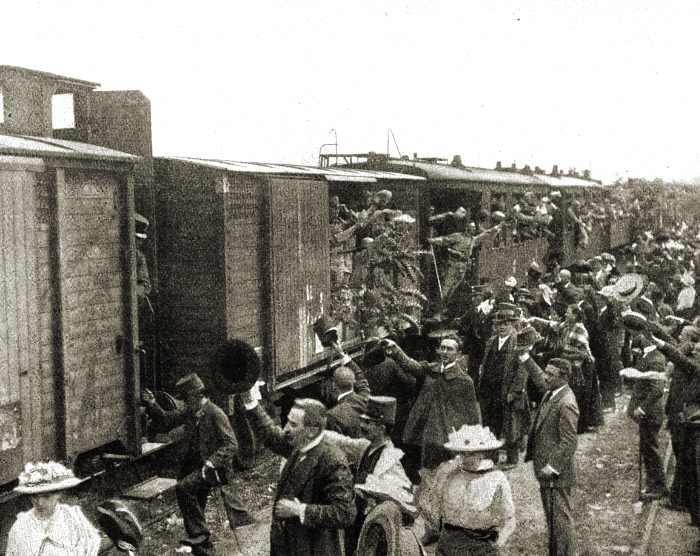
roads_mobil_2.jpg

German troops, leaving for the front

The hippie subculture of the 1960s produced an antiwar slogan based on the title of a McCall’s Magazine article by Charlotte E. Keyes. “Suppose They Gave a War and No One Came.”  In 1914, the coming war Had to happen.  If only because everyone was there.

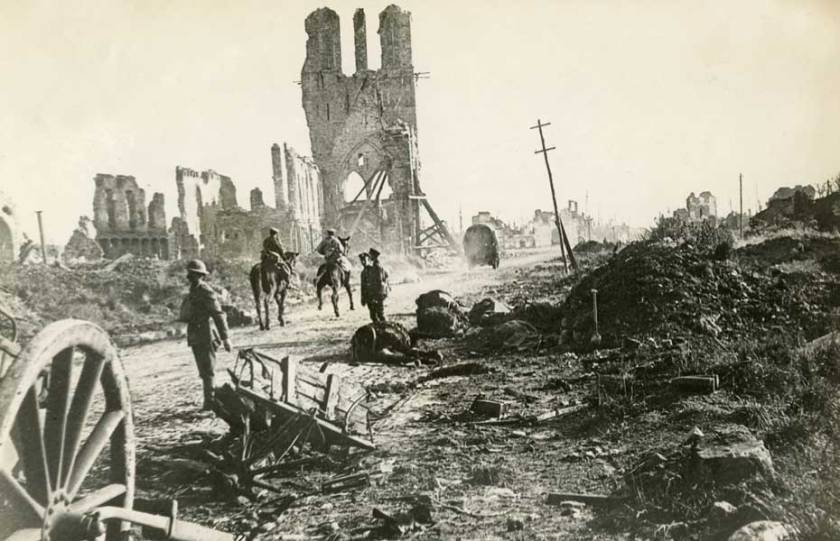
ruins.jpg

The cataclysm could have been averted, as late as the last day of July. By the first of August, mutual distrust had brought events past the point of no return. By the time it was over a generation was shattered, a continent destroyed and a new century, set on a difficult and dangerous course. Some 40 million were killed in the Great War, either that or maimed or simply,…vanished. 

It was a mind bending number, equivalent to the entire population in 1900 of either France, or the United Kingdom. Equal to the combined populations of the bottom two-thirds of every nation on the planet.  Every woman, man, puppy, boy and girl.

world-war-i-100-year-anniversary-american-entry-legacy-1

The United States entered the conflict in 1917, suffering casualties of 320,518 in only a few short months.

The idea of honoring the unknown dead from the “War to end all Wars” originated in Europe. Reverend David Railton remembered a rough cross from somewhere on the western front, with the words written in pencil:  “An Unknown British Soldier”.

In November 1916, an officer of the French war memorial association Le Souvenir Français proposed a national-level recognition for the unknown dead of the Great War.  Across the English Channel, Reverend Railton proposed the same.

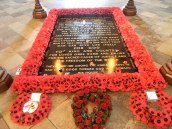
The two nations performed ceremonies on the first anniversary of Armistice Day, the Unknown Warrior laid to rest at Westminster Abbey on November 11, 1920. 

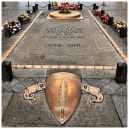
La Tombe du Soldat Inconnu was simultaneously consecrated under the Arc de Triomphe with the actual burial taking place, the following January.

Tomb_of_the_Unknown_Warrior_-_Westminster_Abbey_-_London,_England_-_9_Nov._2010
46184293502_32bb51f760_b
Left to Right:  Tomb of the Unknown Warrior, Westminster Abbey, London.  La Tombe du Soldat Inconnu. lArc de Triomphe, Paris.

That was the year, the United States followed Great Britain and France in honoring her own, unknown dead.

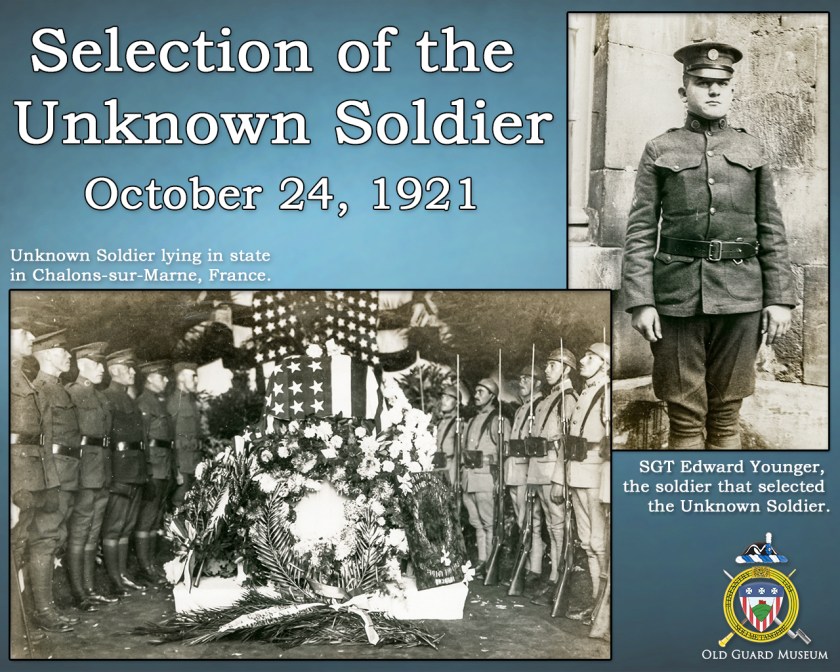
Four unidentified bodies were selected from the Aisne-Marne, Meuse-Argonne, Somme and St. Mihiel cemeteries and carefully examined, lest there be any clues to identity. The four were then transported to the Hôtel de Ville at Châlons-sur-Marne, and placed in a makeshift chapel.

9664b-10-24-selection2bof2bworld2bwar2bi2bunknown2bsoldier

Six soldiers were invited to act as pallbearers, each man a highly decorated and respected member of his own unit. 

Outside the chapel, Major Harbold of the Graves Registration Office handed a large spray of pink and white roses to twice-wounded Sergeant Edward F. Younger, of the American Expeditionary Force (AEF).  It was he who would perform the final selection.

Passing between two lines of French and American officials, Sgt. Younger entered the room, alone.  Slowly, he circled the four caskets, three times, before at last stopping at the third from the left.  “What caused me to stop” he later said, “I don’t know.  It was as though something had pulled me“.  Younger placed the roses on the casket, drew himself to attention, and saluted.  This was the one.

The body was transferred to a black casket bearing the inscription:  “An Unknown American who gave his life in the World War”.

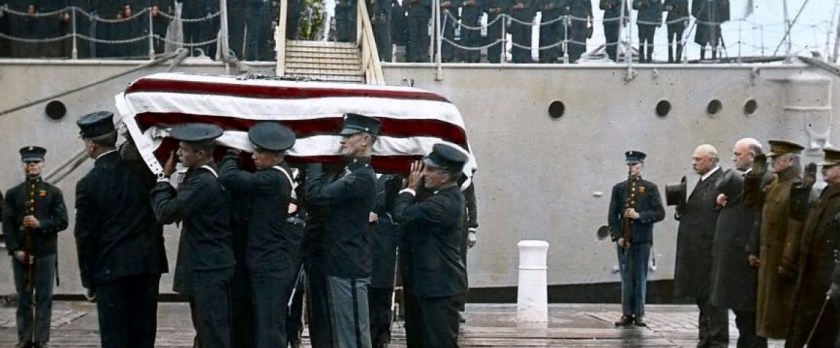
The casket passed from French soil on October 25, 1921. Up the gangplank to the the protected cruiser USS Olympia, even as the band segueued from La Marseilles, to the Star Spangled Banner.

Unknown_Soldier_at_the_Washington_Navy_Yard.jpg

Flags at half-mast with stern bedecked with flowers, Commodore George Dewey’s former flagship at the Battle of Manila Bay received the precious cargo and returned to the United States, arriving in the Navy Yard in Washington DC on November 9, 1921.

There the flag draped casket was solemnly transferred to the United States Army, and placed under guard of honor on the catafalque which had borne the bodies of three slain Presidents: Abraham Lincoln, James Garfield, and William McKinley.

On November 11, the casket was removed from the Rotunda of the Capitol and escorted under military guard to the amphitheater at Arlington National Cemetery. In a simple ceremony, President Warren G. Harding bestowed upon this unknown soldier of the Great War, the nation’s highest military decorations.  The Medal of Honor.  The Distinguished Service Cross.

Special representatives of foreign nations then bestowed each in turn, his nation’s highest military decoration.  The Croix de Guerre of Belgium.  The English Victoria Cross. Le Medaille Militaire & Croix de Guerre of France.  The Italian Gold Medal for Bravery. The Romanian Virtutes Militara.  The Czechoslavak War Cross.  The Polish Virtuti Militari.

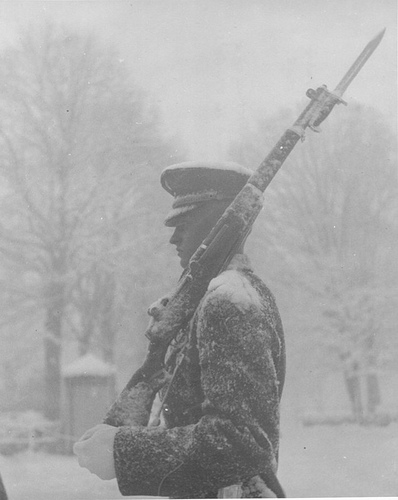
tomb-soldier-in-snow

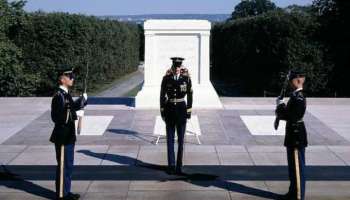
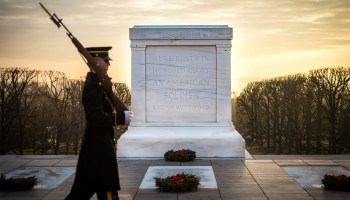
With three salvos of artillery, the rendering of Taps and the National Salute, the ceremony was brought to a close and the 12-ton marble cap placed over the Tomb of the Unknown Soldier.  The west facing side bears this inscription:

“Here Rests In
Honored Glory
An American Soldier
Known But To God”

Two years later, a civilian guard was placed at the tomb of the unknown.  A permanent Military guard took its place in 1926 and there remains, to this day.

In 1956, President Dwight David Eisenhower signed a bill to select and pay tribute to the unknown dead of WW2 and the American war in Korea. Selection and interment of these Unknowns took place in 1958.

The Unknown from the American war in Vietnam was selected on May 17, 1984, but wouldn’t remain unknown, for long.

Advances in mitochondrial DNA led to the exhumation and identification of Air Force 1st Lt. Michael Joseph Blassie of St. Louis, Missouri, shot down near An Lộc, in 1972.

The Tomb of the Unknown from the Vietnam conflict remains empty.  It is unlikely any future war is capable of producing a truly “Unknown”.

Sharing Today in History:

So it is through bitter cold and scorching heat, through hurricanes and blizzards and irrespective of day or night or whether Arlington is open or closed, the Tomb of the Unknown Soldier stands under guard.

This Guard of Honor is performed by a carefully selected elite body of the 3rd Infantry Division.  The “Old Guard”.  In service since 1784, the Tomb Guard is part of the longest-serving active infantry unit in the United States military.

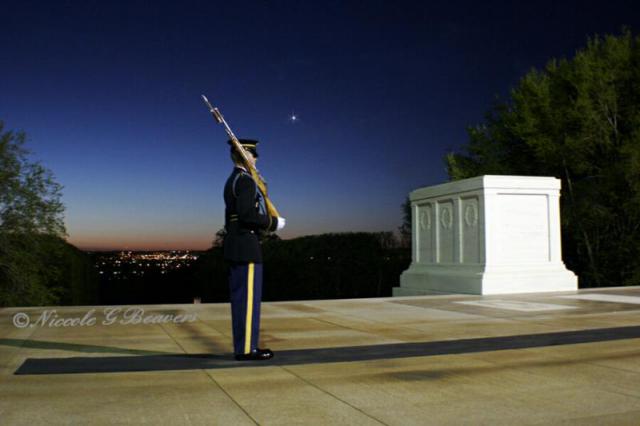
Since the 14th-century, the cannon salute signified the recognition of a sovereign state and a peaceful intent, among nations.  The 21-gun salute is the highest military honor, a nation can bestow.   The Tomb Sentinel who “walks the mat” walks precisely 21 steps down the 63-foot black mat laid across the Tomb of the Unknown, signifying that 21-gun salute.   The Guard then turns east to face the Tomb, pauses another 21-seconds, before beginning the return walk of 21-steps.

The Tomb Sentinel will continue in this manner for a half-hour, one hour or two depending on the time of day, and the season of the year.  If you have witnessed the Changing of the Guard, you are not likely to forget it.  My brother and I were once privileged to experience the moment, in the company of an Honor Flight of World War 2 veterans. If you’ve never seen the ceremony, I recommend the experience.

Back in 1919, AEF commander General John Pershing and Allied Supreme Commander Marshall Ferdinand Foch of France were adamantly opposed to the treaty, at Versailles. Germany had been defeated they argued, but not Beaten. Without destroying the German war machine on its own soil, Pershing believed the two nations would once again find themselves at war. Marshall Foch agreed, reading the treaty with the remark: “This isn’t a peace. It’s a cease-fire for 20 years!
_MG_0016_1466631465932.jpg

He got that wrong.  By 36 days.

October 19, 1864 When the Civil War came to Vermont

The St. Albans raid of October 19 1864 formed the northernmost land action of a Confederate force, as well as a final impetus toward the uniting of our northern neighbor.

The name of Vermont conjures many things, the forested landscapes, ski slopes, maple syrup and mountain trout brooks. The first state to be admitted into the union formed by the 13 former colonies, the 14th state existed for as many years as an independent Republic, a distinction shared with only three other states: Texas, Hawaii and California.

Fun Fact: For a time, western districts of Florida also formed their own sovereign state: the Republic of West Florida. If you ever want to get a Texan going, ask them about the Original Lone Star Republic“.

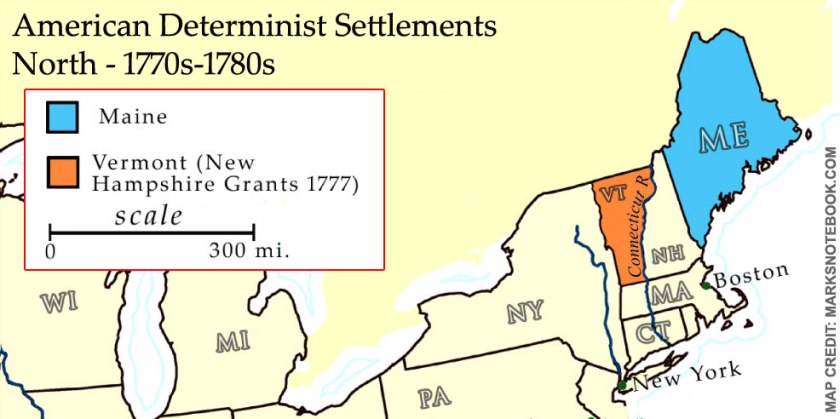
In the late 18th century, lands granted by the governor of New Hampshire led the colony into conflict with the neighboring province of New York.  Conflict escalated over jurisdiction and appeals were made to the King, as the New York Supreme Court invalidated the “New Hampshire grants”. 

Infuriated residents of the future Vermont Republic including Ethan Allen and his “Green Mountain Boys”, rose up in anger.  On March 13, 1775, two Westminster Vermont natives were killed by British Colonial officials.  Today we remember the event as the “Westminster Massacre”.

American_Determinist_Settlements_North_1770
The New Hampshire Grants region petitioned Congress for entry into the American union as a state independent of New York in 1776″ – H/T, https://en.wikipedia.org/wiki/New_Hampshire_Grants

The battles at Lexington and Concord broke out a month later, ushering in a Revolution and eclipsing events to the north.  New York consented to admitting the “Republic of Vermont” into the union in 1790, ceding all claims on the New Hampshire land grants in exchange for a payment of $30,000.  Vermont was admitted as the 14th state on March 4, 1791, the first state so admitted following adoption of the federal Constitution.

Organized in 1785, the city of St. Albans forms the county seat of Franklin County, Vermont.  15 miles from the northern border and located on the eastern shore of Lake Champlain, it’s not the kind of place you’d expect for a Civil War story.

screen shot 2014-05-22 at 5.14.39 pm
St. Albans Vermont, 1864

The Confederate States of America maintained government operations north of the border, from the earliest days of the Civil War.  Toronto was a logical relay point for communications with Great Britain, from which the Confederate government unsuccessfully sought to gain support.

Secondly, the future Canadian nation provided a safe haven for prisoners of war, escaped from Union camps.

Former member of Congress and prominent Ohio “Peace Democrat” Clement Vallandigham fled the United States to Canada in 1863, proposing to detach the states of Illinois, Indiana and Ohio from the Union in exchange for sufficient numbers of Confederate troops, to enforce the separation.  Vallandigham’s five-state “Northwestern Confederacy” would include Kentucky and Missouri, breaking the Union into three pieces.  Surely that would compel Washington to sue for peace.

ThomasHinesin1884fromHeadley

In April 1864, President Jefferson Davis dispatched former Secretary of the Interior Jacob Thompson, ex-Alabama Senator Clement Clay, and veteran Confederate spy Captain Thomas Henry Hines to Toronto, with the mission of raising hell in the North.

This was no small undertaking. A sizeable minority of Peace Democrats calling themselves “Copperheads” were already in vehement opposition to the war.  So much so that General Ambrose Burnside declared in his General Order No. 38, that “The habit of declaring sympathy for the enemy will not be allowed in this” (Ohio) “department. Persons committing such offenses will be at once arrested with a view of being tried. . .or sent beyond our lines into the lines of their friends. It must be understood that treason, expressed or implied, will not be tolerated in this department“.

Hines and fellow Confederates worked closely with Copperhead organizations such as the Knights of the Golden Circle, the Order of the American Knights, and the Sons of Liberty, to foment uprisings in the upper Midwest.

In the late Spring and early Summer of 1864, residents of Maine may have noted an influx of “artists”, sketching the coastline.  No fewer than fifty in number, these nature lovers were in fact Confederate topographers, sent to map the Maine coastline.

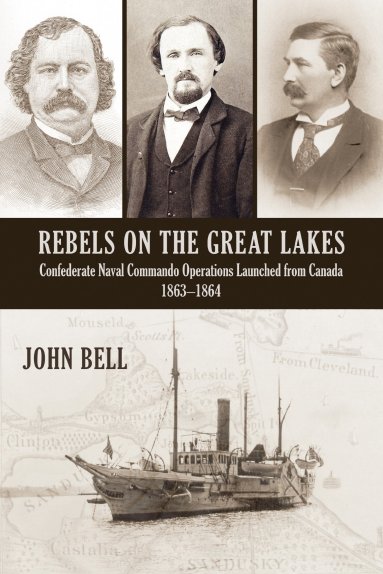
Rebels on the great Lakes

The Confederate invasion of Maine never materialized, thanks in large measure to counter-espionage efforts by Union agents.

J.Q. Howard, the U.S. Consul in St. John, New Brunswick, informed Governor Samuel Cony in July, of a Confederate party preparing to land on the Maine coast.

The invasion failed to materialize, but three men declaring themselves to be Confederates were captured on Main Street in Calais, preparing to rob a bank.

Disenchanted Rebel Francis Jones confessed to taking part in the Maine plot, revealing information leading to the capture of several Confederate weapons caches in the North, along with operatives in Maine, Massachusetts, New York, Pennsylvania, Maryland, Illinois, Kentucky, Tennessee and Ohio.

Captain Hines planned an early June uprising in the Northwest, timed to coincide with a raid planned by General John Hunt Morgan.  Another uprising was planned for August 29, timed with the 1864 Democratic Convention in Chicago.   The conspirators’ actions never lived up to the heat of their rhetoric, and both operations fizzled.   A lot of these guys were more talk than action, yet Captain Hines continued to send enthusiastic predictions of success, back to his handlers in Richmond.

“Canada” itself was a loose confederation of independent provinces in 1864. At the September 1, Charlottetown Conference, politicians from the United Province of Canada and Britain’s Maritime colonies discussed a possible union.

The Toronto operation tried political methods as well, supporting Democrat James Robinson’s campaign for governor of Illinois.  If elected they believed, Robinson would turn over the state’s militia and arsenal to the Sons of Liberty.  They would never know.  Robinson lost the election.

Bennett_H._Young_cropped
Bennett Henderson Young

All this fomenting cost money, and lots of it.  In October 1864, the Toronto operation came south to St. Albans, to make a withdrawal.

Today, St. Albans is a quiet town of 6,869.  In 1864 the town was quite wealthy, home to manufacturing and repair facilities for railroad locomotives.  Located on a busy rail line, St. Albans was also home to four banks.

Nicholasville, Kentucky native Bennett Henderson Young was a member of the Confederate 8th Kentucky Cavalry, captured during Morgan’s 1863 raid into Ohio.  By January, Young escaped captivity and fled to Canada. On October 10, Bennett crossed the Canadian border with two others, taking a room at the Tremont House, in St. Albans.  The trio claimed they had come for a “sporting vacation”.

Small groups filtered into St. Albans in the following days, quietly taking rooms across the town.  There were 21 altogether, former POWs and cavalrymen, hand selected by Young for their daring and resourcefulness.

featured-image-4

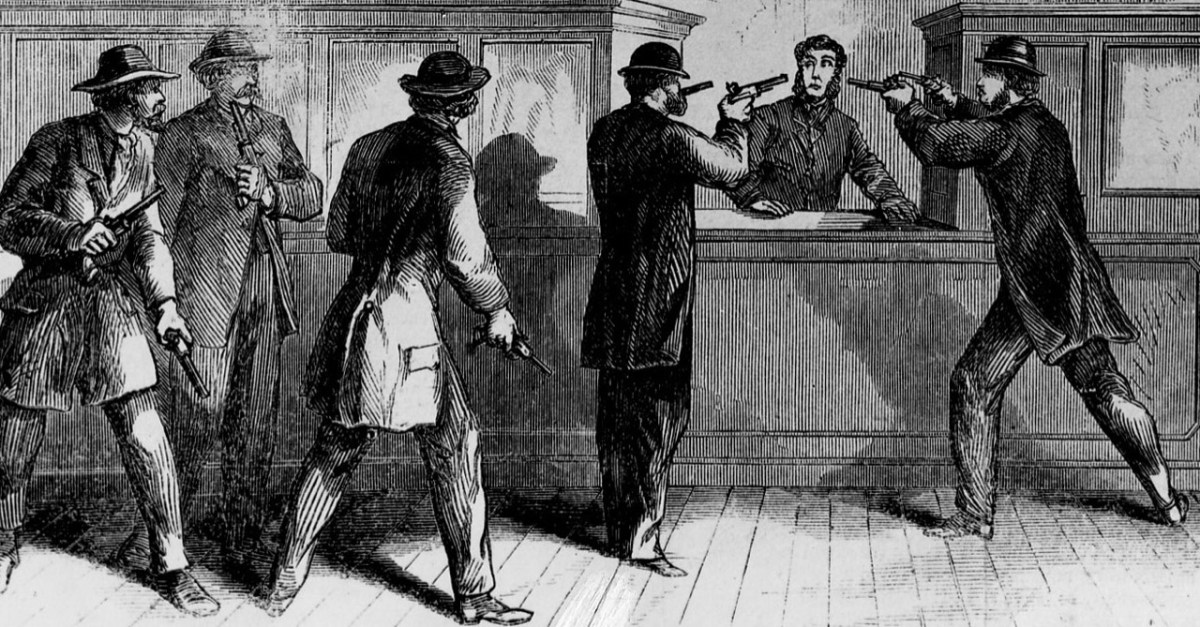
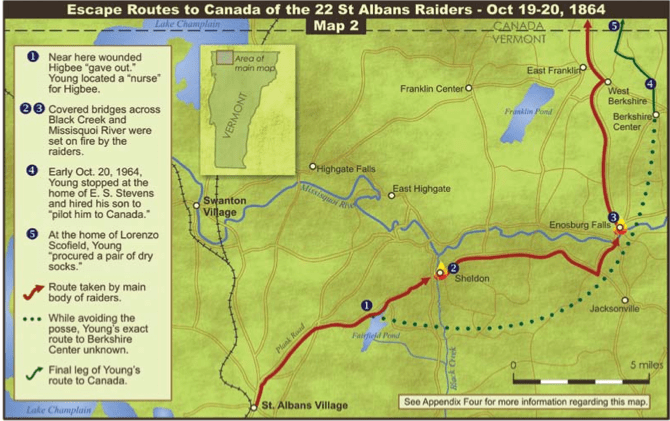
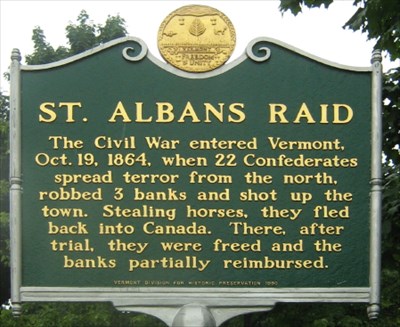
On October 19, 1864, the group sprang into action.  Splitting into four groups and declaring themselves Confederate soldiers, the groups simultaneously robbed three of St. Albans’ four banks while eight or nine held the townspeople at gunpoint, on the village green.  One resident was killed before it was over and another wounded. Young ordered his troops to burn the town, but bottles of “Greek Fire” carried for the purpose, failed to ignite.  Only one barn was burned down and the group got away with a total of $208,000, and all the horses they could muster. It was the northernmost Confederate action by land, of the Civil War.

st_albans_raiders_1

The group was arrested on crossing the border and held in Montreal.  The Lincoln administration sought extradition but Canadian courts decided otherwise, ruling that the raiders were under military orders at the time and neutral Canada could not extradite them to America.  The $88,000 found with the raiders, was returned.

American sensibilities were outraged. At least, those in the north. The Chicago Tribune urged the Northern states to invade, to “…take Canada by the throat and throttle her as a St. Bernard would a poodle pup.” President Abraham Lincoln announced that our neighbors to the north would now be required to produce passports, to travel south. The Reciprocity Treaty of 1854 abolishing duties on cross-border imports, was abolished.

StAlbansRaid, memoriaized

33 delegates were in Quebec City at this time, deadlocked over the Maritime Provinces’ objections to the proceedings.

Upper Canadian politician John A Macdonald declared, “For the sake of securing peace to ourselves and our posterity we must make ourselves powerful…The great security for peace is to convince the world of our strength by being united.” MacDonald, the only member of the Quebec Conference with a background in constitutional law drafted 50 of the 72 resolutions, emerging from the meeting.

So it is a Confederate robbery of a Vermont bank provided the final impetus, toward a united Canada. The dominion of Canada was established on July 1, 1867.

The million dollars the Confederate government sank into its Canadian office, probably did more harm than good.  Those resources could have been put to better use, but we have the advantage of hindsight.  Neither Captain Hines nor Jefferson Davis could know how their story would turn out.  In the end, both men fell victim to that greatest of human weaknesses: of believing to be true, that which they wanted to believe.

September 29, 1780 A Gentleman Always

He asked not that his life be spared, but only that he be executed by firing squad, a more worthy death for a gentleman, than hanging.

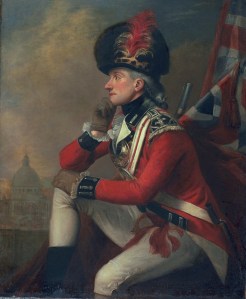
In an age before radio or television, John André was an interesting man to be around. A gifted story teller with a great sense of humor he could draw, paint and cut silhouettes. He was an excellent writer, he could sing, and he could write verse.  John André was a British Major at the time of the American Revolution, who took part in his army’s occupations of Philadelphia and New York.

Andre
Adjutant General John André

He was also, a spy.

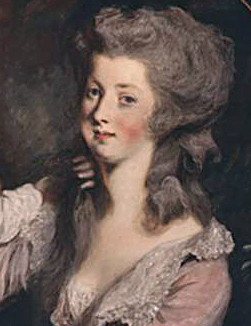
Major André was a favorite of Colonial-era Loyalist society. For a time he dated Peggy Shippen, the daughter of a prominent Philadelphia loyalist. She married an important Patriot General in 1779, a relationship which would later provide the connection between the British spy and a man who should have gone into history as one of the top tier, of American founding fathers.

Until that is, this man turned his coat. Today the stone monument erected to the man’s greatness near a place called Saratoga, declines to mention his name.  

Peggy-Shippen
Peggy Shippen

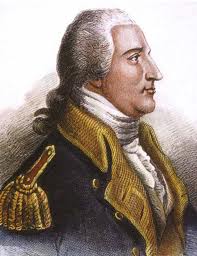
Peggy Shippen’s husband was Benedict Arnold.

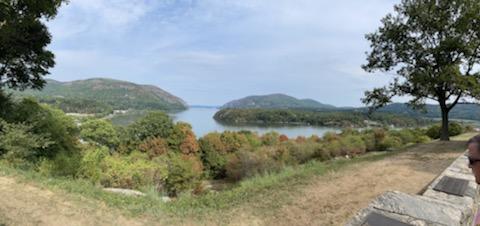
Arnold was Commandant of West Point at the time, the future location of one of our great military academies. At the time, West Point was a strategic fortification on high ground, overlooking the Hudson River. The British capture of West Point would have split the colonies in half.

Benedict Arnold
General Benedict Arnold

John André struck a bargain with Benedict Arnold which would turn a Hero of the Revolution into a name synonymous with “Traitor”.  General Arnold would receive £20,000, over a million dollars today, in exchange for which he would give up West Point.

André sailed up the Hudson River in the Sloop of War HMS Vulture on September 20, 1780. Dressed in civilian clothes, Major André was returning to his own lines on the 23rd, six papers written in Arnold’s hand hidden in his sock.

Major André was stopped by three Patriot Militiamen; John Paulding, David Williams and Isaac Van Wart. One of them was wearing a Hessian overcoat, and André thought they were Tories. “Gentlemen”, he said, “I hope you belong to our party”. “What party”, came the reply, and André said “The lower (British) party”. “We do”, they said, to which André replied that he was a British officer and must not be detained. That was as far as he got.

You need not be a military strategist to recognize the importance, of the commanding heights at West Point.

The discovery of those papers brought Benedict Arnold’s treachery to light. Arnold immediately fled on hearing of André’s arrest, even as George Washington was headed to his place for a meeting over breakfast.

John André was tried and sentenced to death as a spy, and jailed on September 29. He asked if he could write a letter to General Washington.  In it he asked not that his life be spared, but that he be executed by firing squad, a more worthy death for a gentleman, than hanging.

General Washington believed that Arnold’s crimes to be far more egregious than those of John André. Furthermore he was impressed with the man’s bravery.  So he wrote to General Sir Henry Clinton, asking for an exchange of prisoners.

Having received no reply, Washington wrote in his General Order of October 2, “That Major André General to the British Army ought to be considered as a spy from the Enemy and that agreeable to the law and usage of nations it is their opinion he ought to suffer death. The Commander in Chief directs the execution of the above sentence in the usual way this afternoon at five o’clock precisely.”

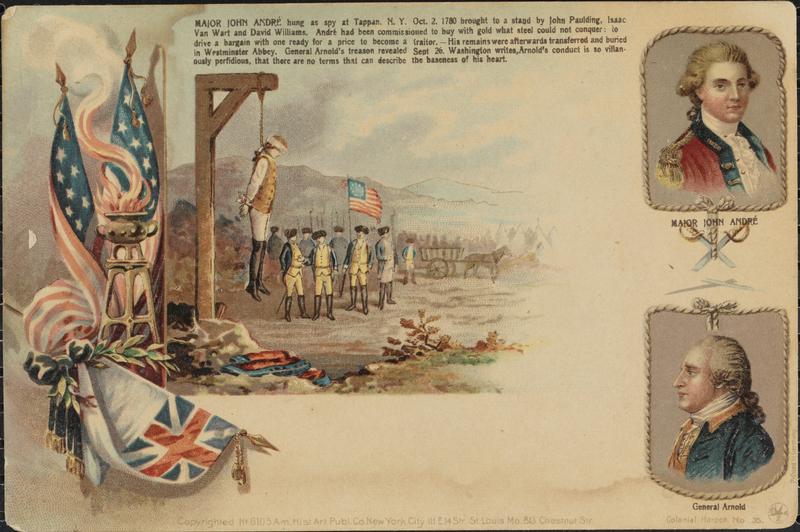
John André was executed by hanging in Tappan, New York on October 2, 1780. He was 31.
Andre Postcard

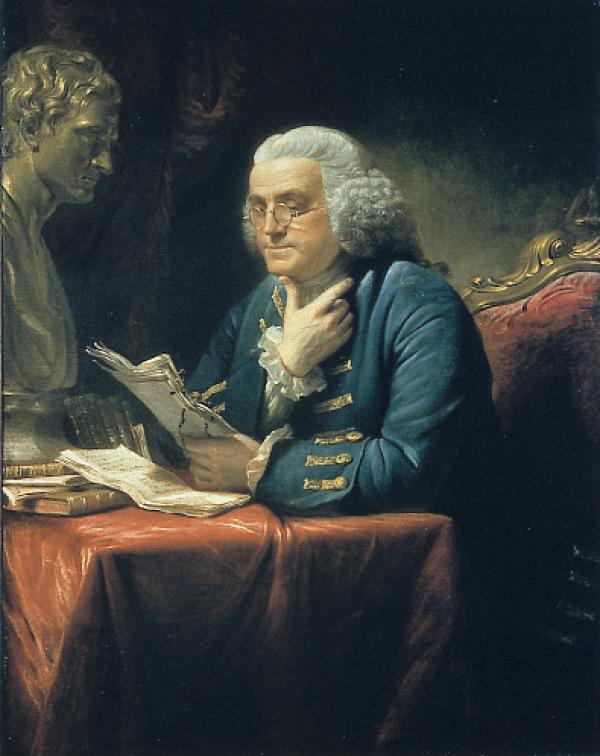
John André had lived in Benjamin Franklin’s house during a nine month stay in Philadelphia, while the British army occupied the city. As they were packing to leave, a Swiss-born citizen named Pierre Du Simitiere came to say goodbye. He was shocked to find such a Gentleman as John André looting the home of Benjamin Franklin. For a man known for extravagant courtesy, this was way out of character. He was packing books, musical instruments, scientific apparatus and an oil portrait of Franklin, all while offering no explanation nor even response, to Simitiere’s protests.

Nearly two hundred years later, the descendants of Major-General Lord Charles Grey returned the painting to the United States, explaining that André had probably looted Franklin’s home under direct orders from the General himself. A Gentleman always, it would explain the man’s inability to defend his own behavior.

Today that oil portrait of Benjamin Franklin, hangs in the White House.

September 27, 1943 A Sweet, Sad Story

World War 2-era reporter Ernie Pyle lamented “The daily record for forty-four years, one of the most legendary figures of the Seven Seas, kept in her own hand, gone up in smoke in two minutes”.

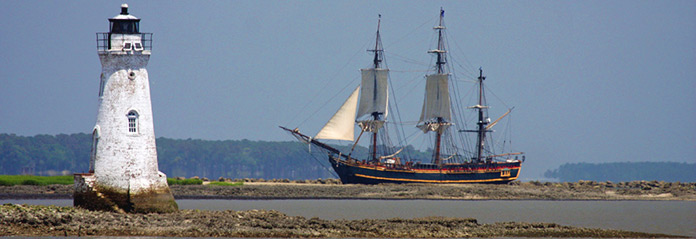
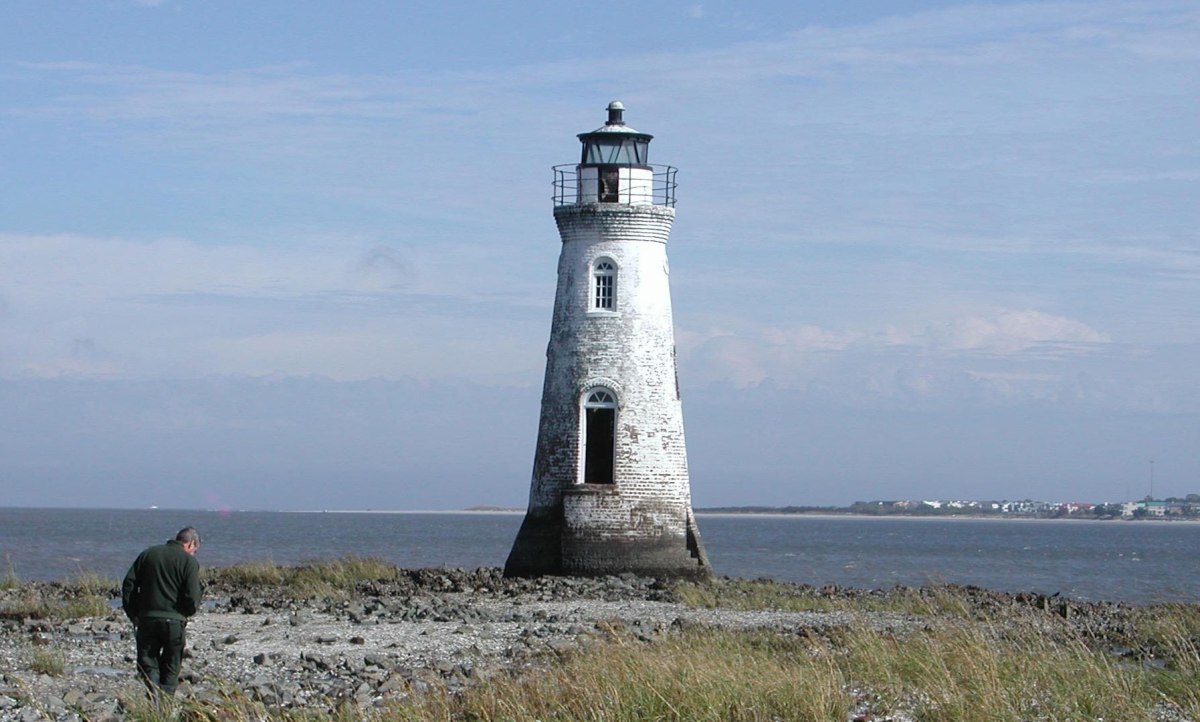
Following the War of 1812, President James Madison ordered a series of coastal fortifications to be built, to protect the young nation from foreign invasion. Fort Pulaski, located on Cockspur Island between Savannah and Tybee Island, Georgia, is one of them.

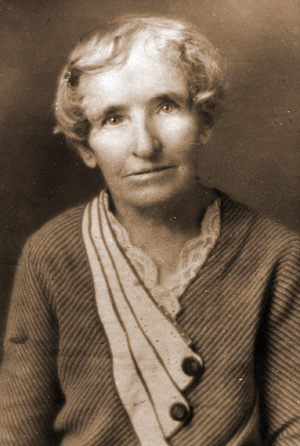
Florence Margaret Martus was born there in 1868 where her father was an ordnance sergeant. She spent her childhood on the south channel of the Savannah River, at 17 moving in with her brother, keeper of the Cockspur Island Lighthouse.

cockspur

Sometime around 1887 while still a young girl, Florence began waving at ships passing by. By night she’d use a lantern and a white handkerchief, by day.

It started with friends, working the river.  Harbor masters, bar pilots and tugboat captains.  Before long, “the waving girl” and her collie were familiar figures, greeting every ship that came or left the port of Savannah.  Sailors would look for her and salute in return. Vessels would blow their horns, but few ever met her in person.

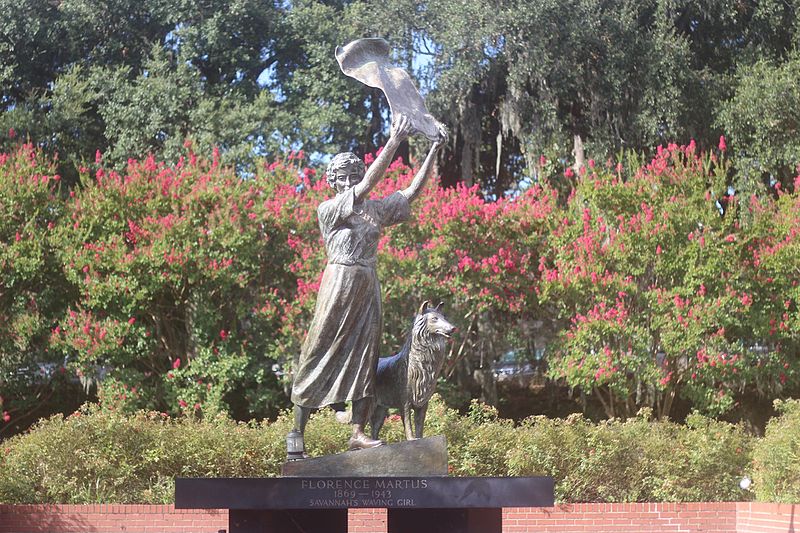
The Waving Girl Statue

Legends grew up around her. She had fallen in love with a sailor. She wanted him to find her when he returned buy he’d been lost at sea.

The sweet, sad truth was less dramatic than that. Florence later said, “That’s a nice story. But what got me started – I was young and it was sort of lonely on the island for a girl. At first I would run out to wave at my friends passing, and I was so tickled when they blew the whistle back at me“.

And so, Miss Martus would take out her handkerchief by day or light her lantern by night, and she would greet every vessel that came or went from the Port of Savannah.  Every one of them.  Some 50,000, over 44 years.

Florence Martus
Florence Margaret Martus

In 1893, Martus and her brother braved hurricane conditions, rowing out to save several men from a sinking boat.

She waved an American flag at the troop ship St. Mihiel after WWI, on its return to Savannah carrying the United States Army of the Rhine.

“The Waving Girl” had taken it upon herself to greet every single ship entering or leaving the Port of Savannah, from a young girl until her old age.

She stopped only when she was forced to do so when her brother, then 70, had to leave his lighthouse job and the home that went with it.

All that time she kept a careful record of every ship:  name, date, where it was from and the type of vessel.  It must have broken her heart to move because she burned the entire record, one night.  44-years’ worth. World War 2-era reporter Ernie Pyle lamented “The daily record for forty-four years, one of the most legendary figures of the Seven Seas, kept in her own hand, gone up in smoke in two minutes”.

Martus never reconciled herself to the move, saying, “It’s just like trying to dig up that big oak tree and get it to take root someplace else.”

The artist Felix de Weldon, who sculpted the United States Marine Corps Memorial outside Arlington National Cemetery erected a statue of the Waving Girl and her collie. You can see it in Morrell Park, on the west bank of the Savannah River.

1200px-The_Marine_Corps_War_Memorial_in_Arlington,_Va.,_can_be_seen_prior_to_the_Sunset_Parade_June_4,_2013_130604-M-MM982-036

Florence Martus passed away on February 8, 1943, following a brief bout with bronchial pneumonia.  One of many Liberty ships built in Savannah during World War II, was named in her honor. The SS Florence Martus was officially christened seven months later, September 27, 1943.

FlorenceMartusTheWavingGirl

September 25, 2022 Gold Star Mothers and Families

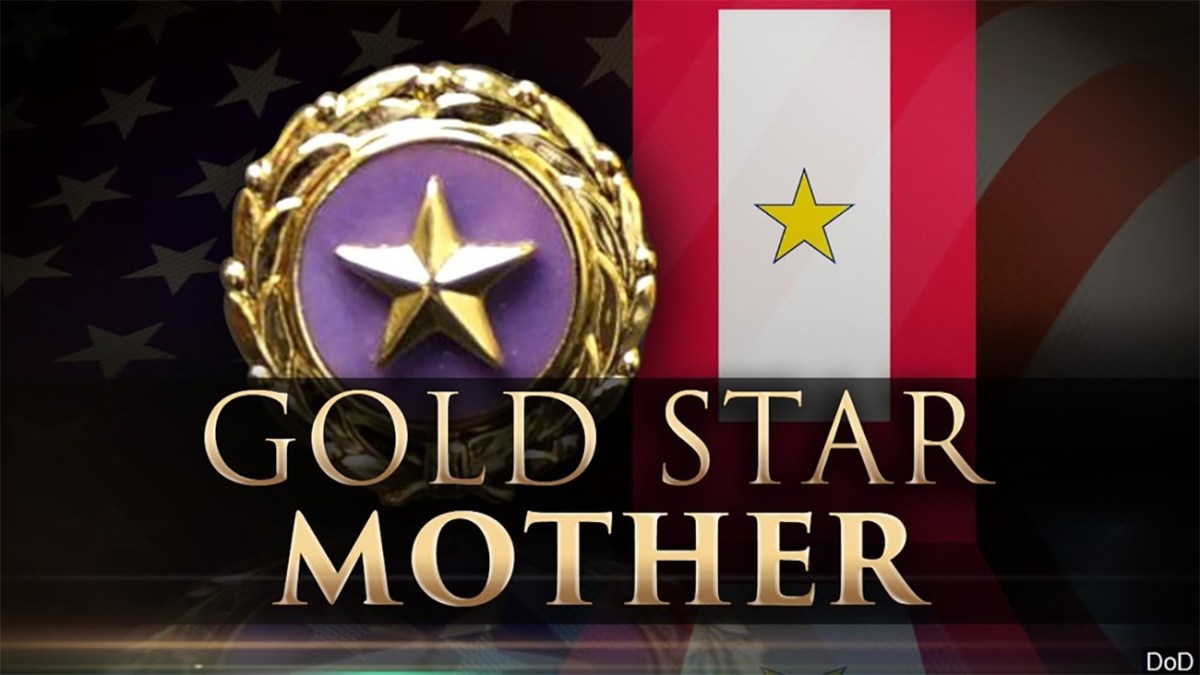
If you see a Gold Star Banner this weekend or someone wearing a Gold Star Pin, don’t pass by. Say hello. Ask for the name of the daughter or the son who gave their all in the defense of this nation. And then say it. Say their name out loud. For they may be gone but they are never truly dead. Until we have forgotten their names.

Suppose you were to stop 100 randomly selected individuals and ask them:  

Of all the conflicts in American military history, which single battle accounts for the greatest loss of life“.  

I suppose you’d get a few Gettysburgs in there, and maybe an Antietam or two.  The Battle of the Bulge would come up and there’s bound to be a Tarawa or an Iwo Jima.  Maybe a Normandy.  I wonder how many would answer, Meuse-Argonne.

80th-Div-No3

The United States arrived late to the Great War, entering the conflict in April 1917 when President Woodrow Wilson asked permission of the Congress, for a “War to end all wars”.  American troop levels “over there” remained small throughout the rest of 1917, as the formerly neutral nation of  fifty million ramped up to a war footing.

US_Marines_during_the_Meuse-Argonne_Campaign
US Marines during Meuse-Argonne offensive of 1918

The trickle turned to a flood in 1918, as French ports were expanded to handle their numbers.  The American Merchant Marine was insufficient to handle the influx and received help from French and British vessels.  By August, every one of what was then forty-eight states had sent armed forces, amounting to nearly 1½ million American troops in France.

After four years of unrelenting war, French and British manpower was staggered, the two economies, nearing collapse.  Imperial Russia DID collapse dissolving into not one but two revolutions, freeing tens of thousands of German troops from the east, to the western front.  The American Expeditionary Force was arriving none too soon.

Gun crew , 1918
“Gun crew from Regimental Headquarters Company, 23rd Infantry, firing 37mm gun during an advance against German entrenched positions. , 1918”, H/T Wikipedia

Following successful allied offensives at Amiens and Albert, Allied Supreme Commander Ferdinand Foch ordered General John J. “Black Jack” Pershing to take overall command of an offensive, intended to cut off the German 2nd Army. Some 400,000 troops were moved into the Verdun sector of northeastern France.  It was to be the largest AEF operation of World War I. With a half-hour to go before midnight on September 25, 2,700 guns opened up in a six hour bombardment against German positions in the Argonne Forest, along the Meuse River.

Montfaucon American Monument, World War I, France
Butte de Montfaucon, today

Some 10,000 German troops were killed or incapacitated by mustard and phosgene gas another 30,000 plus, taken prisoner.  The Allied offensive advanced six miles into enemy territory, but bogged down in the wild woodlands and stony mountainsides of the Argonne Forest.

dc582ea834d6854175ae8bb8b2a316b1
Meuse-Argonne American cemetery near Romagne, in France

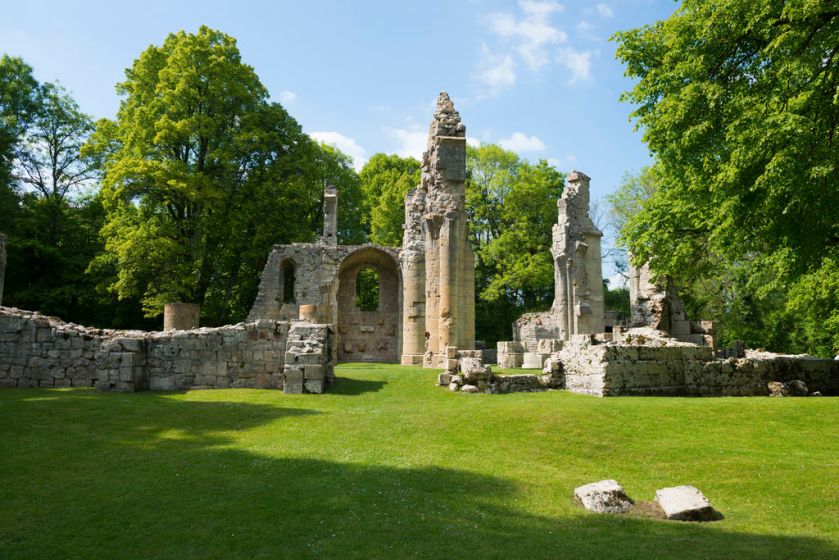
The Allied drive broke down on German strong points like the hilltop monastery at Montfaucon and others, and fortified positions of the German “defense in depth”.

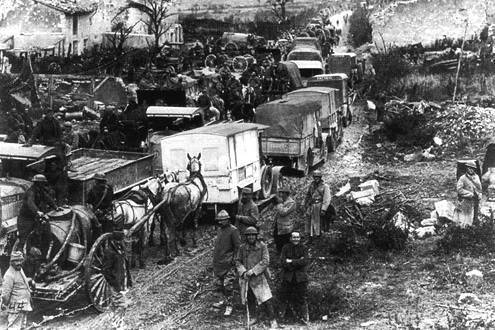
Pershing called off the Meuse-Argonne offensive on September 30, as supplies and reinforcements backed up in what can only be termed the Mother of All Traffic Jams.

MeuseArgonneTraffic

Fighting resumed four days later resulting in some of the most famous episodes of WW1 including the “Lost Battalion” of Major Charles White Whittlesey, and the single-handed capture of 132 prisoners by Corporal (later Sergeant), Alvin York.

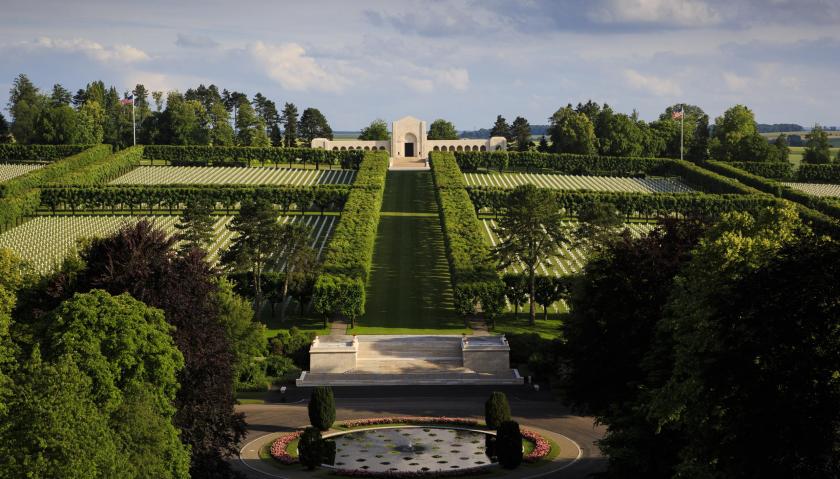
The Meuse-Argonne offensive would last forty-seven days, resulting in the death of 26,277 American troops.  More than any other battle in American military history.  Another 95,786 were seriously wounded.

20150618_wp_meuseargonne_ABMC_0146
Meuse-Argonne American Cemetery, outside of Romagne, France

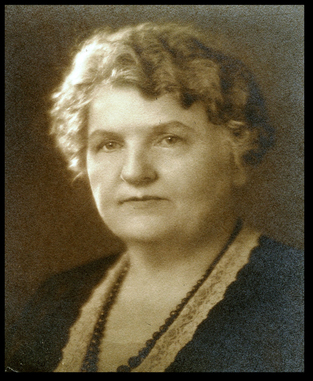
Grace Darling Siebold was prominent in Republican political circles, a personal friend to the wife of the future president, Calvin Coolidge. Grace’s son George was a 23-year-old realtor when the United States entered the war in April, 1917. Mother and son alike were enthusiastic supporters of the war effort. George enlisted to serve during the first few days.

George Siebold found civilian life, dull. Life in military aviation was anything but. Only the daring flew the rickety, unreliable aircraft of World War 1. It was said you knew the pilots not by the goggles and scarves they wore but rather the slings and the crutches. George got his wish. He would train outside of Toronto to fly for the Royal Flying Corps out of British Canada. He married his sweetheart Kathryn and shipped, out the following day.

gold-star-mothers-monument-at-the-putnam-county-veteran-memorial-park-james-connor
Gold Star Mother’s Monument At The Putnam County (NY) Veteran Memorial Park, photograph by James Connor

George sent frequent letters home to his newlywed wife Kathryn and to his mother, Grace. Grace focused on volunteer efforts visiting the wounded in hospital and helping to found American War Mothers forming a mutual support network and organizing hospital visits. George sailed the North Atlantic in January 1918, writing home how the troop ship in front of his took a torpedo, and sank. Once in France he joined the 148th aero squadron, a unit of American flyers serving under British officers. He wrote letters every week, with tales dogfights, crashed enemy aircraft and even a citation he received from the British government, for distinguished service.

Then in September, the letters stopped. A week went by and then a second, and a third. Grace searched the hospital wards for her son and finally reached out to the War Department. She was told the government didn’t “keep tabs” on those under British command.

There’s a story that Grace Siebold received a box on Christmas eve. The label read “Effects of deceased officer 1st Lieutenant George Vaughn Siebold, attached to the 148th Aero Squadron, British Royal Flying Corps”. The story isn’t entirely true the box arrived in October. Two weeks later, the war was over.

“Grief” she later explained “if self-contained, is self-destructive.” Grace continued to work with wounded veterans and reached out to other mothers of the fallen, providing consolation and the opportunity to take up the cause, just as Grace herself had done.

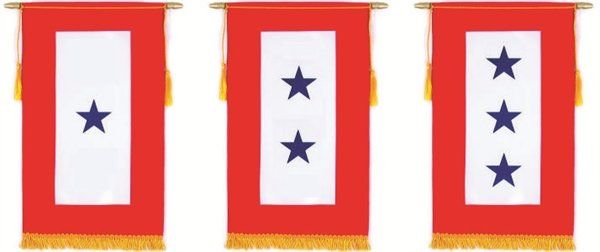
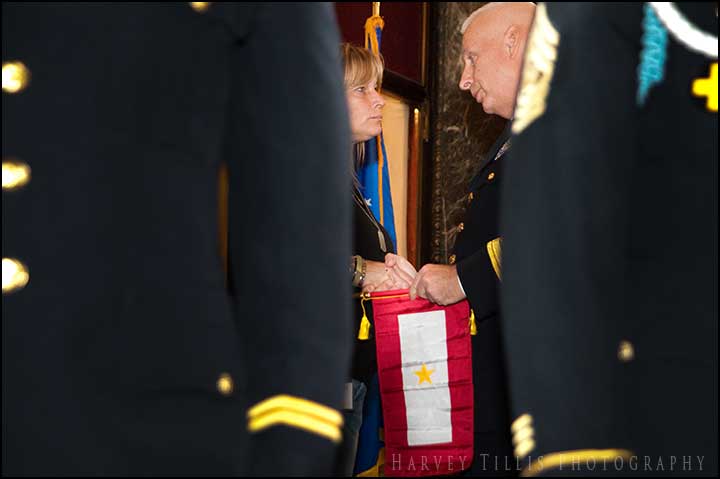
With two sons “over there” US Army Captain Robert L. Queissner created what is now called the “service flag” depicting a blue star, for every family member in the military during times of hostilities . If that service member was killed the blue star was replaced, with a gold star.

President Woodrow Wilson is believed to have coined the term, “Gold Star Mother”. In May of that year, Wilson approved a suggestion from the Women’s Committee of the Council of National Defenses, that such women wear black bands on the left arm bearing a gilt star for every family member who had given his life, on behalf of the nation.

A friend who lost her son Mark in Fallujah, calls it that most exclusive of clubs, no one ever wanted to join.

GoldStar1

Founded by Grace Siebold, American Gold Star Mothers Inc was established in 1929. In 1936, a joint resolution of congress designated the last Sunday in September Gold Star Mothers Day. President Franklin Roosevelt noted that “the American mother is the greatest source of the country’s strength and inspiration.” “We honor ourselves and the mothers of America” he said, “when we revere and give emphasis to the home as the fountainhead of the state.”

Today, Title 36 § 111 of the United States Code provides that the last Sunday in September be observed as Gold Star Mother’s Day, requesting that the president “issue a proclamation calling on United States Government officials to display the flag of the United States on all Government buildings, and the people of the United States to display the flag and hold appropriate meetings at homes, churches, or other suitable places, on Gold Star Mother’s Day as a public expression of the love, sorrow, and reverence of the people for Gold Star Mothers”.

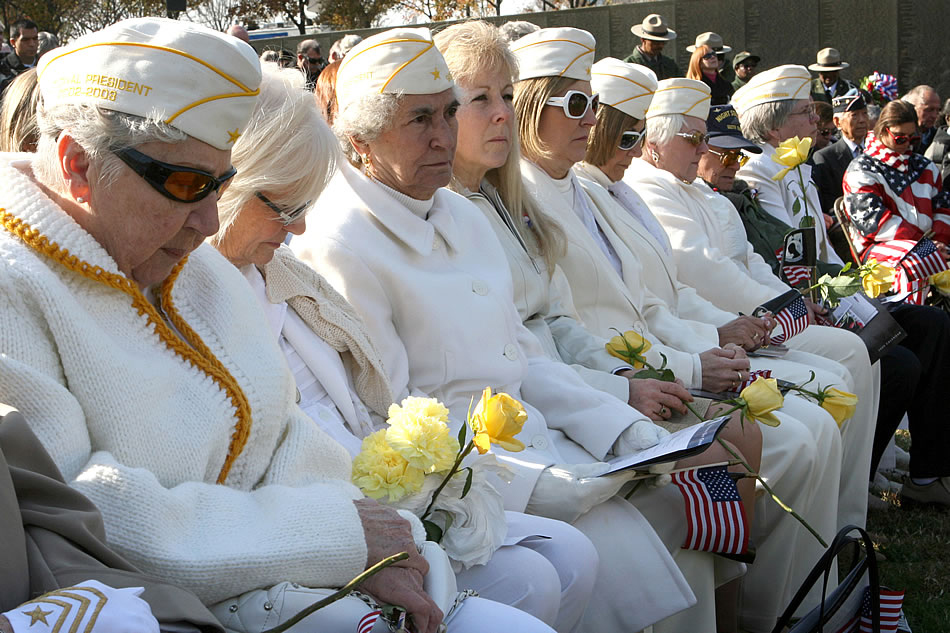
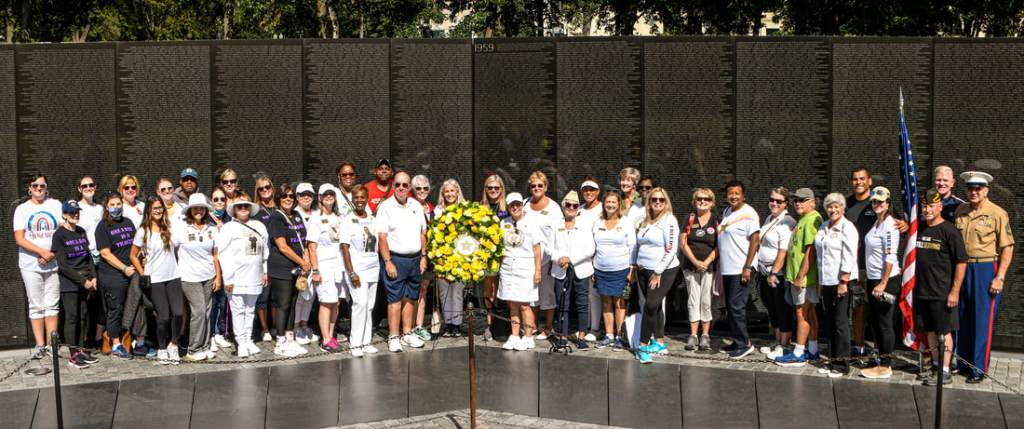
“Gold Star Mothers, who suffered the loss of a son or daughter killed while serving in the military, joined thousands at the Vietnam War Memorial in Washington, D.C., for a Veterans Day ceremony and the 15th Anniversary Commemoration of the Vietnam Women’s Memorial, Nov. 11, 2008. DoD photo by Army Staff Sgt. Michael J. Carde”

April 5 is set aside as Gold Star Spouse’s Day.

Recently, Presidents Barack Obama, Donald Trump and Joseph Biden have signed such proclamations. President Obama expanded the occasion to Gold Star Mother’s and Family’s Day.

At first a distinction reserved only for those mothers who had lost sons and daughters in WW1, that now includes a long list of conflicts, fought over the last 100 years.  Today there are some 470,000 gold star families in this nation, of some 320 million. They are so few who pick up this heaviest of tabs, on behalf of the rest of us.

So, if you see a Gold Star Banner this weekend or someone wearing a Gold Star Pin, don’t pass by. Say hello. Ask for the name of the daughter or the son who gave their all in the defense of this nation. And then say it. Say their name out loud. For they may be gone but they are never truly dead. Until we forget their names.

September 22, 1776 One Life to Lose

The young and unseasoned Patriot-turned spy placed his trust, where it did not belong. It would prove to be a fatal decision.

From the earliest days of the American war for independence, the nine Hale brothers of Coventry Connecticut fought on the Patriot side.  Five of them helped to fight the battles at Lexington and Concord.  The youngest and most famous brother was home in New London at the time, finishing the terms of a teaching contract.

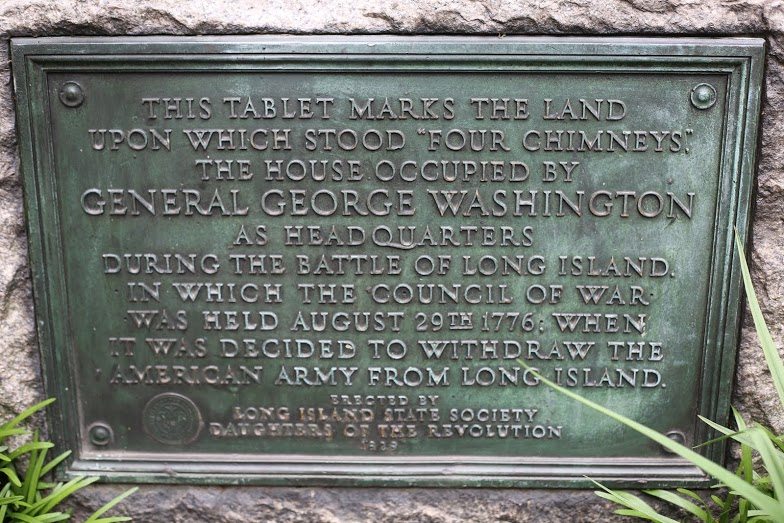
Nathan Hale’s unit participated in the siege of Boston. Hale himself joined George Washington’s army in the spring of 1776, as the army moved to Long Island to block the British move on the strategically important port city of New York.

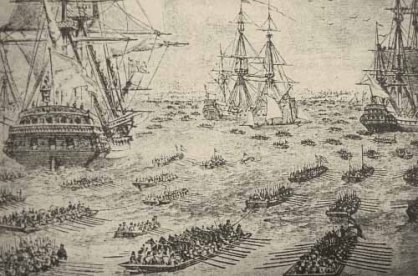
General Howe appeared at Staten Island on June 29 with a fleet of 45 ships.  By the end of the week he’d assembled an overwhelming fleet of 130.

There was an attempt at peaceful negotiation on July 13, when General Howe sent a letter to General Washington under flag of truce. The letter was addressed “George Washington, Esq.”, intentionally omitting Washington’s rank of General. Washington declined to receive the letter, responding there was no one there by that address. Howe tried the letter again on the 16th, this time addressing it to “George Washington, Esq., etc., etc.”.  Again, Howe’s letter was refused.

British Landing
British Landing on Long island

The next day, General Howe sent Captain Nisbet Balfour in person, to ask if Washington would meet with Howe’s adjutant, Colonel James Patterson.  A meeting was scheduled for the 20th.

Patterson told Washington that General Howe had come with powers to grant pardons.  Washington refused. “Those who have committed no fault” he said, “want no pardon”.

Patriot forces were comprehensively defeated at the Battle of Brooklyn, fought on August 27, 1776. With the Royal Navy in command on the water, Howe’s army dug in for a siege, confident the adversary was trapped and waiting to be destroyed at their convenience.

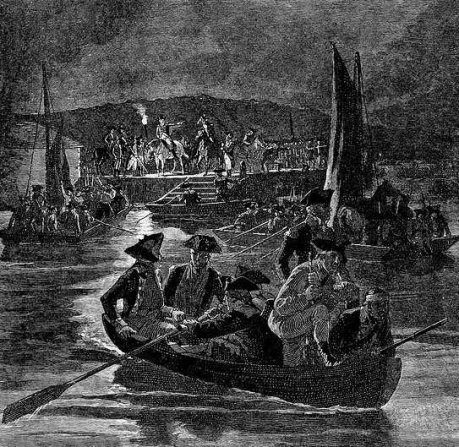
Retreat-from-LI
British retreat from Long Island

On the night of August 29-30, Washington withdrew his army to the ferry landing and across the East River, to Manhattan.

With horse’s hooves and wagon wheels muffled, oarlocks stuffed with rags, the Patriot army withdrew as a rearguard tended fires, convincing the redcoats in their trenches that the Americans were still present.

The surprise was complete for the British side, on waking for the morning of the 30th.  An entire army had vanished.

The Battle of Long Island would almost certainly have ended in disaster for the Patriot cause, but for that silent evacuation over the night of August 29-30.

Following evacuation, the Patriot army found itself isolated on Manhattan island, virtually surrounded.  Only the thoroughly disagreeable current conditions of the Throg’s Neck-Hell’s Gate segment of the East River, prevented Admiral Sir Richard Howe (William’s brother), from enveloping Washington’s position.

Expecting a British assault in September, General Washington grew increasingly desperate for information on British movements.

Nathan Hale Capture

The general asked for volunteers for a dangerous mission, to go behind enemy lines, as a spy.  Up stepped a volunteer.  His name was Nathan Hale.

Hale set out on his mission on September 10, disguised as a Dutch schoolmaster. He was successful for about a week but appears to have been something less than “street smart”.  

The young and unseasoned Patriot-turned spy placed his trust, where it did not belong.

Major Robert Rogers was an old British hand, a leader of Rangers during the earlier French and Indian War.  Rogers must have suspected that this Connecticut schoolteacher was more than he pretended to be and intimated that he himself, was a spy in the cause of Liberty.

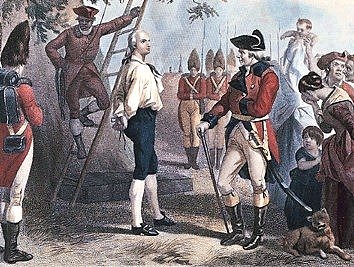
The hanging of Nathan Hale

Hale took Rogers into his confidence, believing the two to be playing for the same side. It was a fatal error in judgement.

Barkhamsted Connecticut shopkeeper Consider Tiffany, a British loyalist and himself a sergeant of the French and Indian War, recorded what happened next: “The time being come, Captain Hale repaired to the place agreed on, where he met his pretended friend” (Rogers), “with three or four men of the same stamp, and after being refreshed, began [a]…conversation. But in the height of their conversation, a company of soldiers surrounded the house, and by orders from the commander, seized Captain Hale in an instant. But denying his name, and the business he came upon, he was ordered to New York. But before he was carried far, several persons knew him and called him by name; upon this he was hanged as a spy, some say, without being brought before a court martial.”

The “stay behind” spy Hercules Mulligan would have far greater success reporting on British goings-on, from the 1776 capture of New York to the ultimate withdrawal seven years later.  But that must be a story for another day.

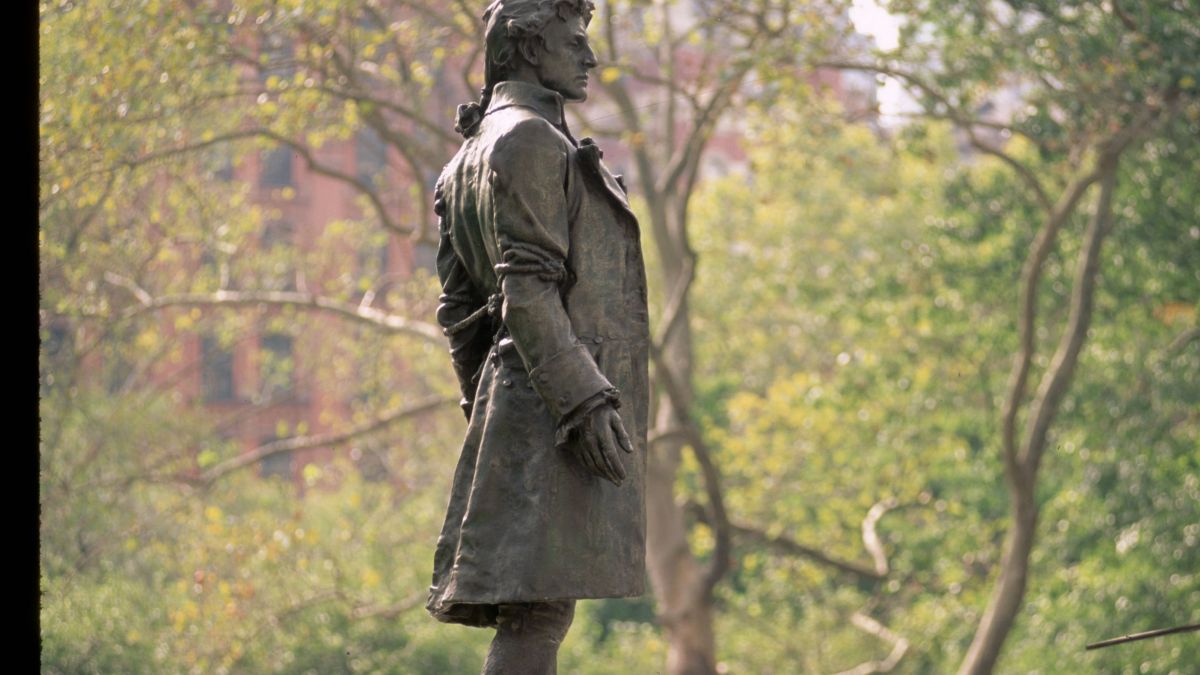
Nathan Hale was brought to the gallows on September 22, 1776 and hanged as a spy.  He was 21.  CIA.gov describes Nathan Hale as “The first American executed for spying for his country”.

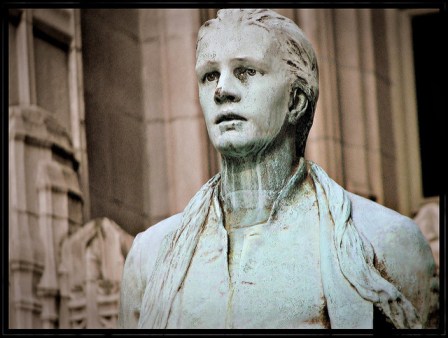
Nathan Hale

There is no official account of Nathan Hale’s final words, but we have an eyewitness statement from British Captain John Montresor, who was present at the hanging.

Montresor spoke with American Captain William Hull the following day under flag of truce, where he gave the following account: “‘On the morning of his execution, my station was near the fatal spot, and I requested the Provost Marshal to permit the prisoner to sit in my marquee, while he was making the necessary preparations. Captain Hale entered: he was calm, and bore himself with gentle dignity, in the consciousness of rectitude and high intentions. He asked for writing materials, which I furnished him: he wrote two letters, one to his mother and one to a brother officer.’ He was shortly after summoned to the gallows. But a few persons were around him, yet his characteristic dying words were remembered. He said, ‘I only regret, that I have but one life to lose for my country‘.

George-Washington-Brooklyn-Heights

September 11, 2001 Ogonowski

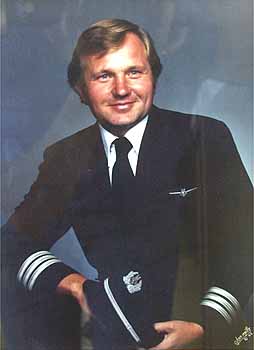
Twelve days a month John Ogonowski would leave the farm in his Captain’s uniform to fly jumbo jets out of Logan Airport, but he always returned to the land he loved.

A great wave of immigrants came into the United States around the turn of the 20th century, 20 million Europeans or more making the long journey to become Americans.

Among these was the Ogonowski family, who emigrated from Poland to make their home in Massachusetts’ Merrimack Valley, along the New Hampshire line.

The earliest members of the family received invaluable assistance from Yankee farmers, well acclimated to growing conditions in the harsh New England climate. Four generations later the Ogonowski family still tilled the soil on their 150 acre “White Gate Farm” in Dracut, Massachusetts.

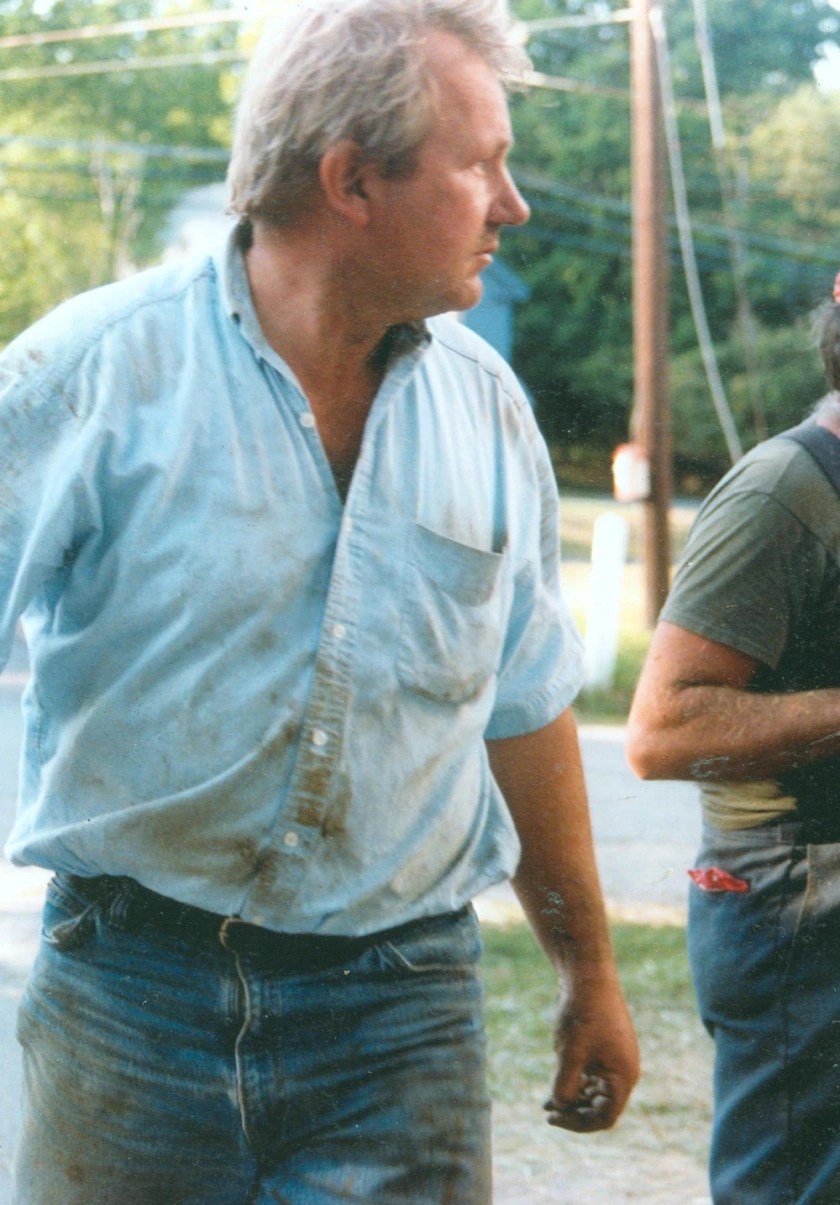
Ogonowski 2

Graduating from UMass Lowell in 1972 with a degree in nuclear engineering, John Ogonowski joined the United States Air Force.  During the war in Vietnam, the farmer-turned-pilot would ferry equipment from Charleston, South Carolina to Southeast Asia, sometimes returning with the bodies of the fallen aboard his C-141 transport aircraft.

Ogonowski left the Air Force with the rank of Captain, becoming a commercial pilot and joining American Airlines in 1978. There he met Margaret, a flight attendant, “Peggy” to her friends. The two would later marry, and raise three daughters.

Twelve days a month Ogonowski would leave the farm in his Captain’s uniform to fly jumbo jets out of Logan Airport, but he always returned to the land he loved.

Family farming is not what it used to be, as suburban development and subdivisions creep into what used to be open spaces. “When you plant a building on a field” he would say, “it’s the last crop that will ever grow there”.

Ogonowski 3

Ogonowski helped to create the Dracut Land Trust in 1998, working to conserve the town’s agricultural heritage. He worked to bring more people into farming as well.  The bumper sticker on his truck read “There is no farming without farmers”.

That was the year when the farm Service Agency in Westford came looking for open agricultural land, for Southeast Asian immigrants from Lowell.

mrkimcilantro

It was a natural fit. Ogonowski felt a connection to these people, based on his time in Vietnam. He would help them, here putting up a shed, there getting a greenhouse in order or putting up irrigation. He would help these immigrants, just as those Yankee farmers of long ago had helped his twice-great grandfather.

Cambodian farmers learned to grow their native vegetables in an unfamiliar climate. They would lease small plots growing water spinach, lemon grass, pigweed, Asian basil, and Asian squash. There was taro and Laotian mint, coconut amaranth, pickling spices, pea tendrils and more. It was the food they grew up with, and they would sell it into nearby immigrant communities and to the high-end restaurants of Boston.

Ogonowski farm

The program was a success.  Ogonowski told The Boston Globe in 1999, “These guys are putting more care and attention into their one acre than most Yankee farmers put into their entire 100 acres.”

So it was that, with the fall harvest of 2001, Cambodian immigrants found themselves among the pumpkins and the hay of a New England farm, putting on a special lunch spread for visiting agricultural officials from Washington, DC.  It was September 11.

By now you know that John Ogonowski was flying that day, Senior Captain on American Airlines flight 11.

He was one of the first to die, murdered in his cockpit by Islamist terrorist Mohammed Atta and his accomplices.

It’s a new perspective on a now-familiar story, to think of the shock and the grief of those refugees from the killing fields of Pol Pot, on hearing the news that their friend and mentor had been hijacked and flown into the World Trade Center.

The White Gate Farm was closed for a week, but the Ogonowski family was determined that John’s dream would not die.  Peg said it best:  “This is what he was all about. He flew airplanes, he loved flying, and that provided all the money, but this is what he lived for. He was a very lucky man, he had both a vocation and an avocation and he loved them both.”

John Ogonowski had been working with the Land Trust to raise $760,000 to purchase a 34 acre farm in Dracut, previously slated to be developed into a golf course with housing.  Federal funds were raised with help from two members of Congress.  The “Captain John Ogonowski Memorial Preservation Farmland” project was dedicated in 2003, a living memorial to Captain John Ogonowski.  The pilot, and the farmer.

September 10, 1813 We Have Met the Enemy, and They are Ours

The war of 1812 was fought in a series of land and sea battles along three fronts: The Atlantic Ocean & East Coast, the Southern States, and the Great Lakes & Canadian Frontier.


In June 1812, neither the United States nor the British Empire were prepared for war. Most of the British war machine was busy with a “Little Corporal” whose “Waterloo” lay two years into in an uncertain future.  

The Fledgling United States had only just disbanded the National Bank and now had no means of paying for war, while private northeastern bankers were reluctant to provide financing.

Support for the War of 1812 was bitterly divided, between the Democratic-Republicans of President James Madison, and the Federalist strongholds of Connecticut, Massachusetts and Rhode Island.  Of the six New England states, New Hampshire alone complied with President Madison’s requests for state militia.

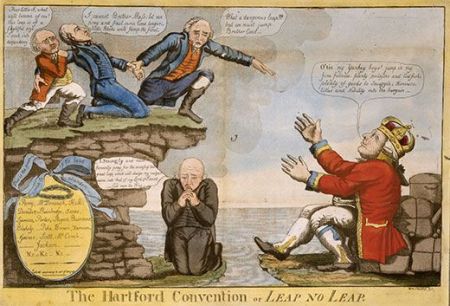
War-of-1812-Hartford-Convention-2
William Charles certoon, satirizing Thomas Pickering and the radical secessionist movement discussed at the Hartford Convention. H/T Smithsonian Magazine, for the image

It may have been the most unpopular war in United States’ history.  Much of New England threatened to secede, their position bolstered by the sack of Washington in August, 1814.

New England may have followed through with secession following the Hartford Convention of 1814, had not the Federalist position been made risible by future President Andrew Jackson’s overwhelming victory at the Battle of New Orleans.

Hartford Convention delegates ended with a formal report, resolutions from which would resurface decades later in a doctrine we know as nullification.

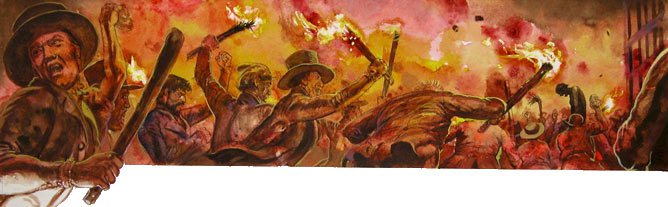
Opposition to America’s first declared war was vehement, and often bloody.  Four days after it began, the office of the Baltimore Federal Republican newspaper was burned to the ground by an angry mob, infuriated by the anti-war editorials of Alexander Contee Hanson.

settingstage2_stsp
Tip of the hat to historiograffiti, for this image

Hanson reopened his paper a month later, shielded by Revolutionary War veterans James Lingan and “Lighthorse Harry Lee”, father of Civil War General Robert E. Lee. The armed protection did him little good. Another mob formed within hours, this time torturing and severely beating Hanson, Lignan and Lee, before leaving them for dead.

James Lignan died of his injuries. Hanson recovered and went on to serve in the House of Representatives. Lee survived the beating but remained partially blind from hot wax poured into his eyes by the mob.

Baltimore Mayor Stephanie Rawlings-Blake claimed 200 years later, that, “Our city has a long history of peaceful demonstrations.”  With all due respect to Stephanie Rawlings-Blake, Baltimore has been known as “Mobtown”, for at least that long.

The war of 1812 was fought in a series of land and sea battles along three fronts: The Atlantic Ocean & East Coast, the Southern States, and the Great Lakes & Canadian Frontier.

The British Navy had virtually unchallenged control of the Great Lakes in 1812, with several warships already on station. The only American warship on Lake Erie was the brig USS Adams, pinned down in Detroit and not yet fitted for service.

War of 1812

Detroit fell almost immediately and remained in British hands for over a year. The Adams was captured along with the town and renamed “HMS Detroit”.

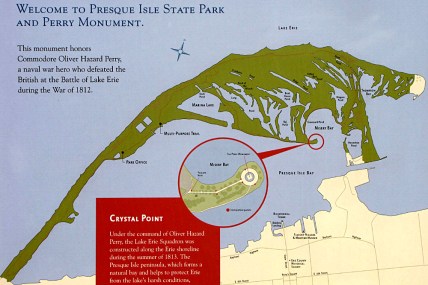
Meanwhile, Americans captured an English brig, the Caledonia, and acquired three civilian vessels, the schooners Somers and Ohio and the sloop-rigged Trippe. All four were converted into warships, which Master Commandant Oliver Hazard Perry had towed by oxen up the Niagara River. The operation which took six days. Once in Lake Erie they sailed down the coast to Presque Isle, on the Pennsylvania coast.

Chesapeake Bay and Pittsburgh foundries produced guns and fittings, while two more warships were ordered built at Presque Isle. Meanwhile, Perry drafted 50 experienced sailors from USS Constitution, then undergoing refit in Boston Harbor.

Presque Isle, Pennsylvania

The American squadron was almost complete by mid-July, but there was a problem. The sand bar at the mouth of Presque Isle Bay is only 5-feet deep. This sand bar kept the British blockade at bay, with a little help from 2,000 Pennsylvania militia and several shore batteries. Once ready though, American ships had to contend with the same obstacle.

British Commander Robert Heriot Barclay was forced to lift his blockade on July 29, due to a supply shortage and bad weather. Perry immediately began the exhausting process of moving his vessels across the sandbar. Guns had to be removed, the larger boats raised between “camels”:  barges lashed together and emptied of ballast to lift the ships high in the water. When Barclay returned four days later, he found the Americans had nearly completed the task.

What followed was one of history’s great head fakes. Naval warfare in the age of sail was typically conducted by two parallel lines of ships, pounding one another with cannon until one side could no longer take the punishment. Perry’s largest brigs were unready when the British fleet returned, yet the American gunboats formed into line of battle so quickly and with such confidence, that Barclay withdrew to await completion of HMS Detroit.

Put-In-Bay

Perry’s fleet established anchorage at Put-in-Bay on the Ohio coast. It was there that Barclay’s fleet came for them on September 10.

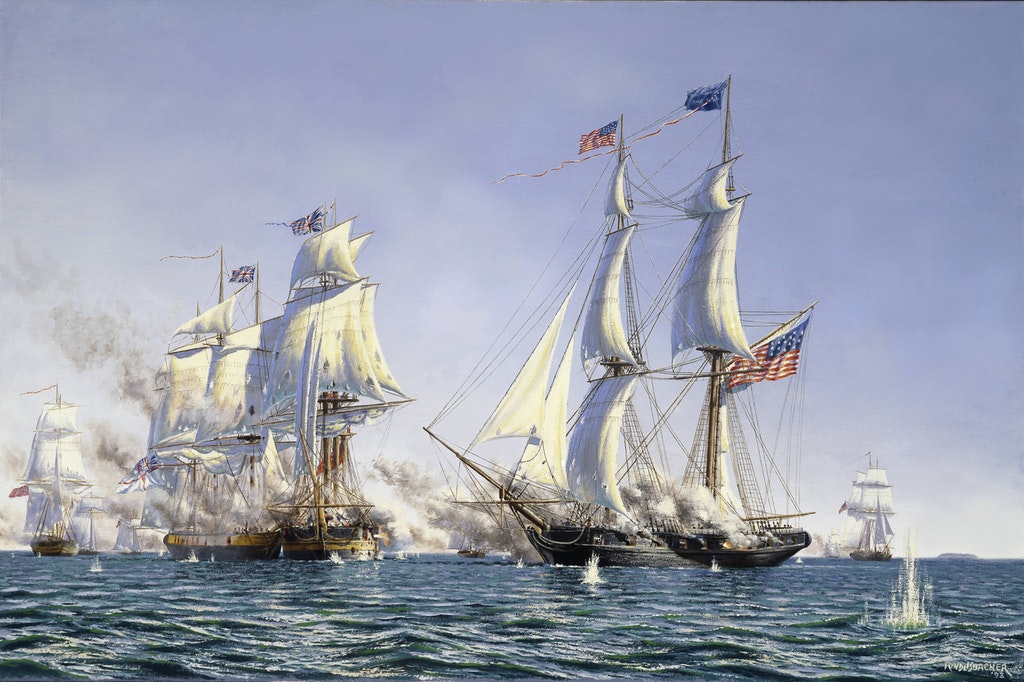
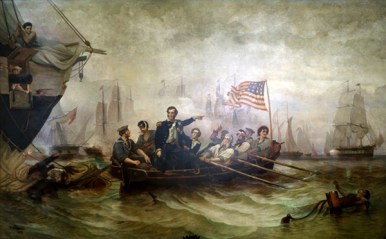
Battle lines converged outside the harbor shortly after 11:00am. Perry’s flagship USS Lawrence took a savage beating, the longer guns of HMS Detroit having 20 minutes to do their work before Lawrence could effectively reply.

Imacon Color Scanner
Battle of Lake Erie by William Henry Powell, painted 1865, shows Oliver Hazard Perry transferring from Lawrence to Niagara

HMS Queen Charlotte added her gunfire to that of Detroit. Soon the American flagship was a wreck, with 80% casualties. Perry transferred his flag and rowed to the USS Niagara half a mile away, the brig being almost unscathed in the action, up to this point.

Damaged masts and rigging on the British side resulted in collision between Detroit and Queen Charlotte. They were still snarled up as Niagara broke through the British line, pounding them with broadsides from 18 32-pounder carronades and two 12-pounder long guns. Smaller English ships attempted to flee but were quickly overtaken.

U.S. Brig Niagara
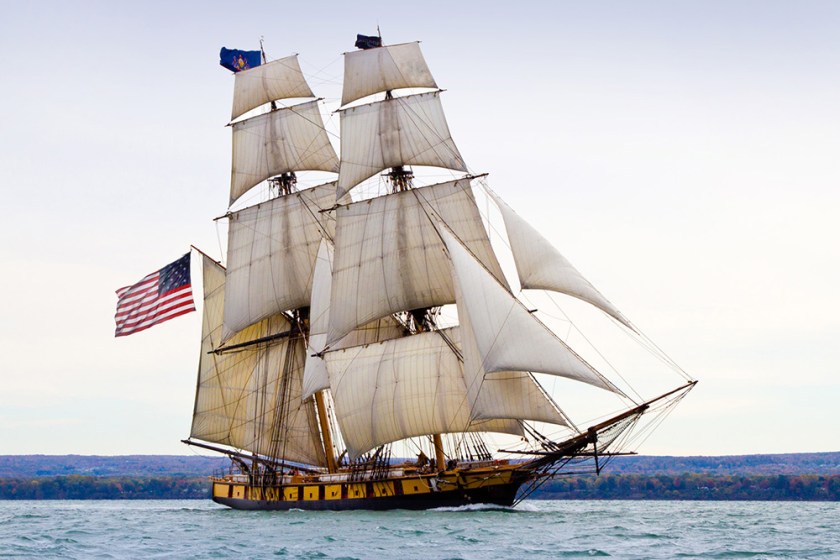
Brig USS Niagara, 2013

That afternoon American and English vessels, the latter now prizes of war, were anchored with hasty repairs already underway. Oliver Hazard Perry took an old envelope and scrawled his now famous message to future President William Henry Harrison. “Dear General, We have met the enemy and they are ours. Two ships, two brigs, one schooner and one sloop. Yours with great respect and esteem, O.H. Perry“.

Niagara remains in service to this day, a Coast Guard sail trainer and outdoor exhibit for the Erie Maritime Museum.  One of the last surviving ships, from the War of 1812.

September 6, (est) 1673 A Locker Room Joke

On or about this day in 1673, Father Marquette asked the Chief of the Peoria about another tribe living down the river.

Marquette_Joliet

On May 17, 1673, Father Jacques Marquette set out with the 27-year old fur trader Louis Joliet to explore the upper reaches of the Mississippi River.

The voyage established the possibility of water travel from Lake Huron to the Gulf of Mexico, helping to initiate the first white settlements in the North American interior and bestowing French names on places from La Crosse to New Orleans.

Relations with natives were mostly peaceful at this time, as several tribes jockeyed for advantage in the lucrative French fur trade.

Marquette Joliet Route

On or about this day in 1673, Father Marquette asked the Chief of the Peoria about another tribe living down the river.

Having no desire to share such a privileged position, the chief indicated that those people down the river…they didn’t amount to much. Don’t even bother. The chief called the group “Moingoana”, a name later transliterated into French as “Des Moines”.

Marquette was expert by this time, in several native dialects. Even so, the chief may have indulged himself in a little gag at the expense of the priest. The Miami-Illinois language is extinct today, but linguists suggest that Moingoana may derive from “mooyiinkweena”, translating if I may be polite, as, “those excrement-faces.”

Marquette and Joliet didn’t discover the Mississippi River, Native Americans had been there, for thousands of years. The Spanish explorer Hernan DeSoto had crossed the “Father of Waters” 100 years before. What they did was to establish the feasibility of travel from the Great Lakes, to the Gulf of Mexico. Armed with this information French officials led by the explorer LaSalle would erect a 4000-mile system of trading posts nearly exterminating every fur-bearing mammal in the upper Midwest and permanently altering indigenous cultures, along the way.

As for Des Moines there are alternate explanations of where the name comes from. They are much to be preferred I’m sure, by residents of the Hawkeye state. Even so it’s just possible Father Marquette had one put over on him that day, in 1673. That perhaps the Capital City of Iowa bears the name, of a 350-year-old locker room joke.