

The city of Charlestown, Massachusetts occupies a hilly peninsula to the north of Boston, at the point where the Mystic River meets the Charles. Like Boston itself, much of what is now Charlestown was once Boston Harbor. In 1775 the town was a virtual island, joined to the mainland only by a thin “neck” of land.

Thousands of Patriot Militia poured into the area following the April battles of Lexington and Concord, blocking British forces in control of Boston and its surrounding waterways.
The Massachusetts Provincial Congress received word on June 13 that a massive assault was planned for the 18th, intending to take the high ground at Dorchester Heights to the south, and Charlestown to the north. Major General Israel Putnam was directed to set up defenses on Bunker Hill, on the northwest end of Charlestown.
Col. William Prescott led 1,200 men onto the peninsula on the night of the 16th, with orders to construct fortifications on Bunker Hill. Some work was performed on the hill which gives the battle its name, but it was farmer Ephraim Breed’s land 1/3rd of a mile closer to Boston, which offered the more tenable hill from which to defend the peninsula.
Shovels could be heard throughout the night. The sun rose on the morning of June 17 to reveal a six-foot-high defensive earthwork running the length of Breed’s hill. Peering through the early morning fog, General Howe was astonished at what he saw. “The rebels,” he said, “have done more work in one night than my whole army would have done in one month.”
The warship HMS Lively opened fire on the redoubt shortly after 4am, with little effect, as Prescott’s men continued work on the entrenchment. 128 guns joined in as the morning bore on, including incendiary shot, setting fire to the town.

Ten miles to the south, a 7-year-old future President of the United States stood atop a hill with his mother Abigail, listening to the thunder of the guns and watching the smoke rise above Charlestown. John Quincy Adams would later write that he “witnessed the tears of my mother and mingled with them my own.”
Militia continued to reinforce the high ground throughout the morning hours, as Regulars commanded by Major General William Howe and Brigadier General Robert Pigot crossed the Charles River and assembled for the assault.
 The British line advanced up Breed’s Hill twice that afternoon, Patriot fire decimating their number and driving the survivors back down the hill to reform and try again.
Militia supplies of powder and shot began to give out as the Redcoats advanced up the hill for the third assault. “Don’t fire until you see the whites of their eyes”. The quote is attributed to Prescott, but the order seems to have originated with General Putnam and passed along by Prescott, Seth Pomeroy, John Stark and others, in a desperate attempt to conserve ammunition.

Finally, there was nothing left with which to oppose the British bayonets. In desperate hand to hand fighting, the Militia was forced to retreat.
Most of the colonists’ casualties occurred at this time, including Boston physician and President of Massachusetts’ Provincial Congress, Dr. Joseph Warren. Warren had been appointed Major General on June 14, but declined command, believing Putnam and Prescott to be more experienced soldiers. On this day, Dr. Warren fought as a private soldier.
Two months before the battle, Joseph Warren had spoken to his men. “On you depend the fortunes of America”, he said. “You are to decide the important question, on which rest the happiness and liberty of millions yet unborn. Act worthy of yourselves.”
That they did. The Americans had gone toe-to-toe with the most powerful military of its time, suffering 452 killed and wounded. Lieutenant Lord Rawdon recognized Dr. Warren on the third assault, and killed him with a musket ball to the head. Warren’s body was bayoneted beyond recognition and thrown into a ditch.
Dr. Warren’s body was exhumed some ten months later after the British evacuation of Boston, and identified by a false tooth made for him by the amateur dentist, Paul Revere. It may be the first instance of forensic dentistry, in American history.

The Battle of Bunker Hill was a military victory for the British side, but it was a Pyrrhic victory. Howe lost 226 men killed and 828 wounded, over a third of his number and over twice that of the Militia. One-eighth of all the British officers killed and one-sixth of those injured during the entire Revolution, occurred on Breed’s Hill.
General Thomas Gage wrote after battle, “The loss we have sustained is greater than we can bear.” Private Nathanael Greene, destined to become one of the Continental Army’s most important Generals, quipped “I wish [we] could sell them another hill at the same price.”


 Starvation, shipwreck and disease killed no fewer than 1 in 10 during the period 1790 – 1820, without any so much as setting foot in the new world. And still they came.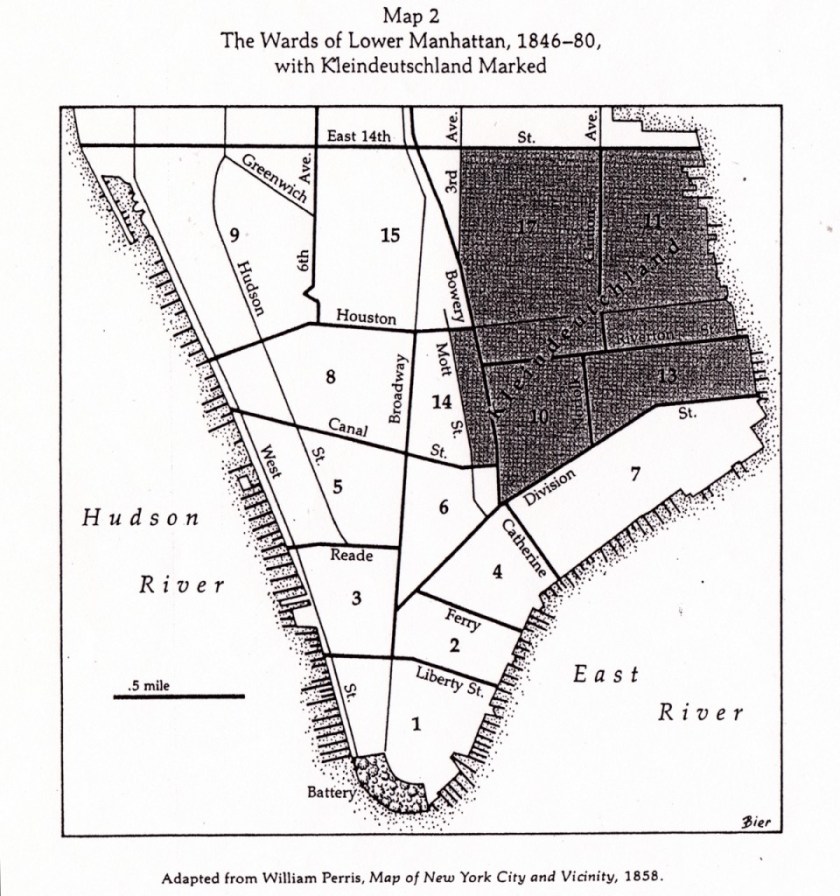


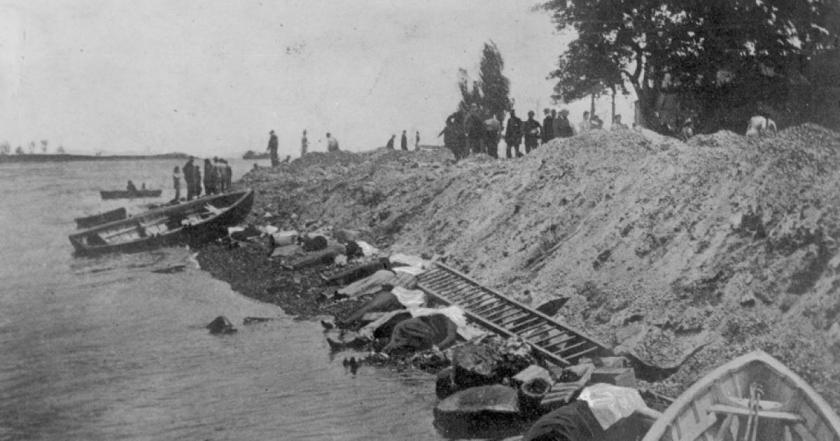


 From the dawn of the 20th century, the Nobel Peace prize was awarded to individuals and organizations which have “done the most or the best work for fraternity between nations, for the abolition or reduction of standing armies and for the holding and promotion of peace congresses.”
 Great Uncle Jacob Deppin was also there at Appomattox, wearing Blue. He served for the duration, save for the year and one-half spent in captivity.


 Lafayette’s wife Adrienne gave birth to their first child on one such visit, a baby boy the couple would name Georges Washington Lafayette.


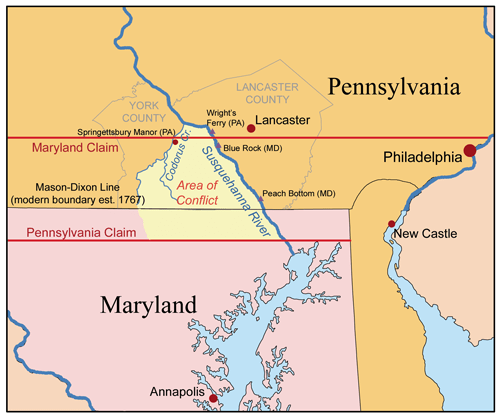
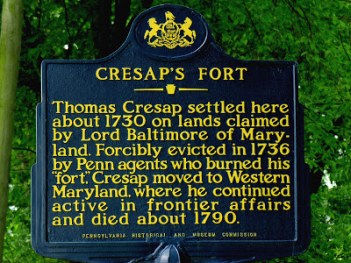
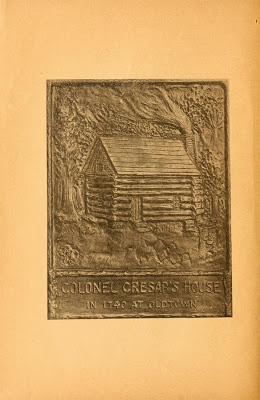 Business was good. By 1730, Wright had applied for a ferry license. With Lord Baltimore fearing a loss of control in the area (read – taxes), Maryland resident Thomas Cresap established a second ferry service up the river. Maryland granted Cresap some 500 acres along the west bank, serenely unconcerned that much of the area was already inhabited by Pennsylvania farmers.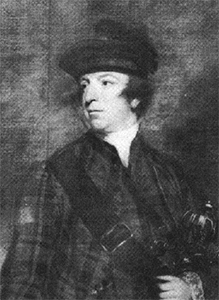
 Maryland authorities petitioned George II, King of Great Britain and Ireland, imploring the King to restore order among his subjects. King George’s proclamation of August 18, 1737 instructed the governments of both colonies to cease hostilities. When that failed to stop the fighting, the Crown organized direct negotiations between the two. Peace was signed in London on May 25, 1738, the agreement providing for an exchange of prisoners and a provisional boundary to be drawn fifteen miles south of the southernmost home in Philadelphia, and mandating that neither Maryland nor Pennsylvania “permit or suffer any Tumults Riots or other Outragious Disorders to be committed on the Borders of their respective Provinces.”


 In the first half of the 19th century, 90% of federal government revenue came from tariffs on foreign manufactured goods. A lion’s share of this revenue was collected in the south, with the region’s greater dependence on imported goods. Much of this federal largesse was spent in the north, with the construction of railroads, canals and other infrastructure.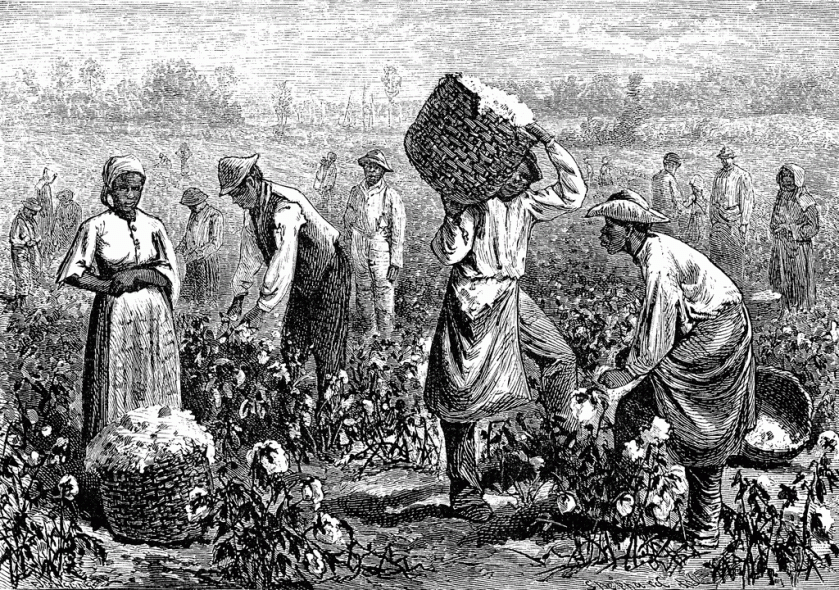
 The issue of slavery had joined and become so intertwined with ideas of self-determination, as to be indistinguishable.
 In Washington, Republicans backed the anti-slavery side, while most Democrats supported their opponents. On May 20, 1856, Massachusetts Senator Charles Sumner took to the floor of the Senate and denounced the Kansas-Nebraska Act. Never known for verbal restraint, Sumner attacked the measure’s sponsors Stephen A. Douglas of Illinois (he of the later Lincoln-Douglas debates), and Andrew Butler of South Carolina by name, accusing the pair of “consorting with the harlot, slavery”. Douglas was in the audience at the time and quipped “this damn fool Sumner is going to get himself shot by some other damn fool”.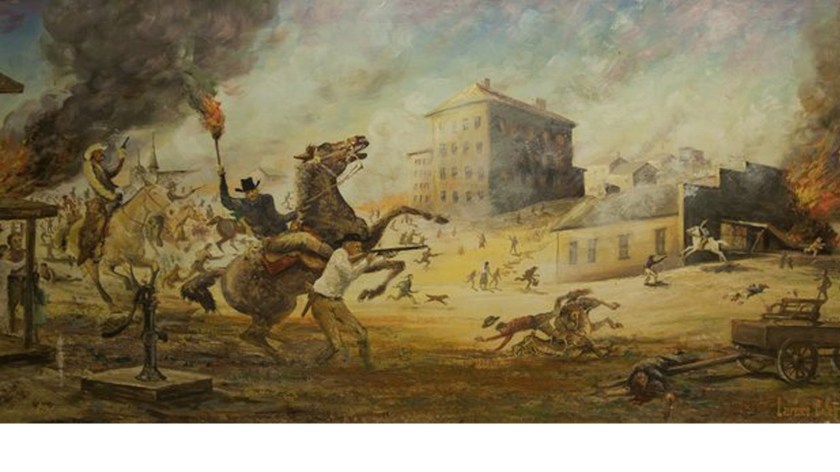


 The trio approached Sumner, who was sitting at his desk writing letters. “Mr. Sumner”, Brooks said, “I have read your speech twice over carefully. It is a libel on South Carolina, and Mr. Butler, who is a relative of mine.”
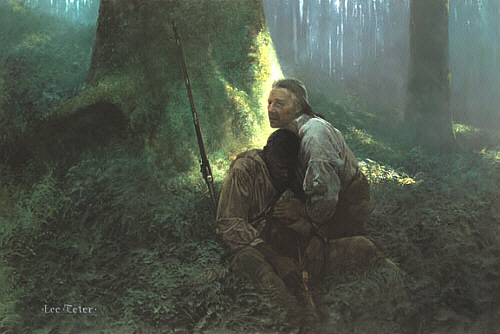
 In the next two days, a group of unarmed men will be hacked to pieces by anti-slavery radicals, on the banks of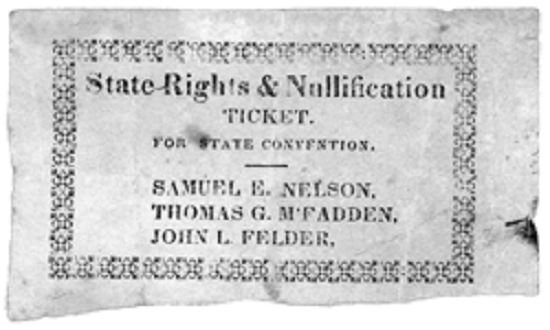


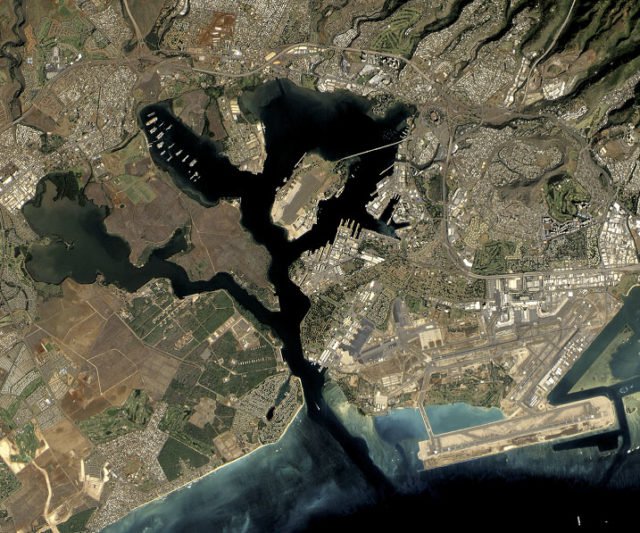

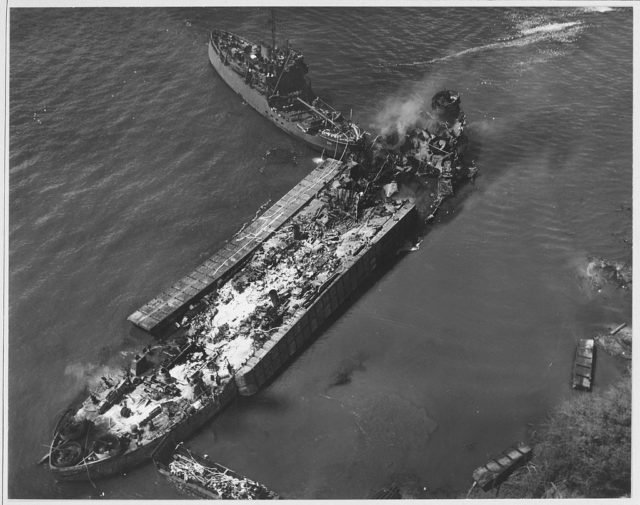

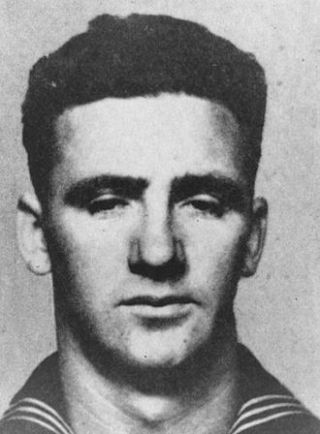
 “…Venturing still farther under the buried hulk, he held tenaciously to his purpose, reaching a place immediately above the other man just as another cave-in occurred and a heavy piece of steel pinned him crosswise over his shipmate in a position which protected the man beneath from further injury while placing the full brunt of terrific pressure on himself. Although he succumbed in agony 18 hours after he had gone to the aid of his fellow divers, Hammerberg, by his cool judgment, unfaltering professional skill and consistent disregard of all personal danger in the face of tremendous odds, had contributed effectively to the saving of his 2 comrades…”.






 In 1866, the Quartermaster ordered the remains of 2,111 unknown Civil War dead to be exhumed and placed inside a vault in the Lees’ rose garden.


 Gold Selleck Silliman, himself a widower, merged his household with that of Mary on May 24, 1775, in a marriage described as “rooted in lasting friendship, deep affection, and mutual respect”. The two would have two children together, who survived into adulthood: Gold Selleck (called Sellek) born in October 1777, and Benjamin, born in August 1779.


 Historical Easter Eggs - Today in History
You must be logged in to post a comment.