February 1, 1901 The End of Memory

The people he sought were over 101, one was 113. It could not have been easy, beginning with the phone call to next of kin. There is no delicate way to ask the question, “Is he still with us?” Most times, the answer was “no”.

last-of-the-doughboysThe Forgotten World War

In 2003, author Richard Rubin set out to interview the last surviving veterans of the Great War, the “War to End All Wars”.  World War One.

The people he sought were over 101, one was 113. It could not have been easy, beginning with the phone call to next of kin. There is no delicate way to ask the question, “Is he still with us?” Most times, the answer was “no”.

Sometimes, it was “yes”, and Rubin would ask for an interview. The memories his subjects sought to bring back were 80 years old and more.  Some spoke haltingly, and with difficulty.  Others were fountains of information, as clear and lucid as if the memories of which they spoke, were only  yesterday.

Rubin writes “Quite a few of them told me that they were telling me things that they hadn’t talked about in 50, 60, 70 years. I asked a few of them why not, and the surprising response often was that nobody had asked.”
anthony-pierro-at-107
Anthony Pierro at 107

Anthony Pierro of Swampscott, Massachusetts, served in Battery E of the 320th Field Artillery and fought in several of the major battles of 1918, including Oise-Aisne, St. Mihiel, and Meuse-Argonne.

Pierro recalled his time in Bordeaux, as the best time of the war. “The girls used to say, ‘upstairs, two dollars.’” Pierro’s nephew Rick interrupted the interview. “But you didn’t go upstairs.”  Although possibly unexpected, Uncle Anthony’s response was a classic.  “I didn’t have the two dollars”.

Reuben Law of Carson City, Nevada remembered a troop convoy broken up by a German U-Boat, while his own transport was swept up in the murderous Flu pandemic of 1918.

hildegarde-schan
Hildegarde Schan

They’re not all men, either. 107-year-old Hildegarde Schan of Plymouth, Massachusetts speaks of caring for the wounded.

Howard Ramsey started a new burial ground in France, we now know as theMeuse-Argonne American Cemetery.

“So I remember one night”, Ramsey said, “It was cold, and we had no blankets, or nothing like that. We had to sleep, we slept in the cemetery, because we could sleep between the two graves, and keep the wind off of us, see?”

Arthur Fiala of Kewaunee, Wisconsin remembered traveling across France in a boxcar marked “40-8″, (40 men or eight horses).

fialacombo
Arthur Fiala

There was J. Laurence Moffitt of Orleans, Massachusetts. Today, we see the “Yankee Division” on highway signs. At 106, this man was the last surviving member of his outfit, with a memory so clear that he could recall every number from every fighting unit of the 26th Division.

briantcombo
George Briant

George Briant was caught in an open field with his battery, as German planes dropped bombs from the sky.  Briant thinks he was hit by every one of them, too.  After several months in the hospital, he begged to go back to the front.  On the last night of the war, November 10, 1918, Briant came upon the bodies of several men who had just been shelled.

“Such fine, handsome, healthy young men”, he said, “to be killed on the last night of the war.  I cried for their parents. I mean it’s a terrible, terrible thing to lose anyone you love in a war, but imagine knowing precisely when that war ends, and then knowing that your loved one died just hours before that moment.

Rubin interviewed dozens of these men, and a handful of women. Their stories are linked HERE if you care to watch.  I highly recommend it.  Their words are more powerful than anything I can offer.

The Last Doughboy

Frank Woodruff Buckles, born Wood Buckles, is one of them. Born this day in 1901, Buckles enlisted with the First Fort Riley Casualty Detachment, trained for trench casualty retrieval and ambulance operations.  He was sixteen.

buckles2-obit-jumbo
Frank Woodruff Buckles, S/N 15577

The unit set sail from Hoboken New jersey in December 1917 aboard HMS Carpathia, a vessel made famous by the Titanic rescue, five years earlier.

Woodruff never saw combat but he saw lots of Germans, with a Prisoner-of War escort company.  Returning home in January 1920 aboard USS Pocahontas, Buckles was paid $143.90, including a $60 bonus.

Buckles was a civilian in 1940, working for the White Star Lines and WR Grace shipping companies. His work took him to the Philippines, where he remained after the outbreak of WWII. He was helping to resupply U.S. troops when captured by Japanese forces in January 1942, imprisoned for thirty-nine months as a civilian prisoner in the Santo Tomas and Los Baños prison camps.  He was rescued by the 11th Airborne Division on February 23, 1945, on the day he was to be executed.

buckles_and_bush
“I found out afterwards when I read up on my history that some of the things that I did were quite important”.

Buckles married Audrey Mayo of Pleasanton, California in 1946, and returned from whence he had come.  Back to the land, back to the Gap View Farm near Charles Town, West Virginia in January 1954, to farm the land his ancestors worked, back in 1732.

Audrey Mayo Buckles lived to ninety-eight and passed away on June 7, 1999.  Frank continued to work the farm until 106, and still drove his tractor.  For the last four years of his life he lived with his daughter Susannah near Charles Town, West Virginia.

Once asked his secret to a long life, Buckles responded, “When you start to die, don’t”.

On December 3, 2009, Frank Buckles became the oldest person ever to testify before the United States Congress, where he campaigned for a memorial to honor the 4.7 million Americans who served in the War to End All Wars.

“We still do not have a national memorial in Washington, D.C. to honor the Americans who sacrificed with their lives during World War I. On this eve of Veterans Day, I call upon the American people and the world to help me in asking our elected officials to pass the law for a memorial to World War I in our nation’s capital. These are difficult times, and we are not asking for anything elaborate. What is fitting and right is a memorial that can take its place among those commemorating the other great conflicts of the past century. On this 92nd anniversary of the armistice, it is time to move forward with honor, gratitude, and resolve”.
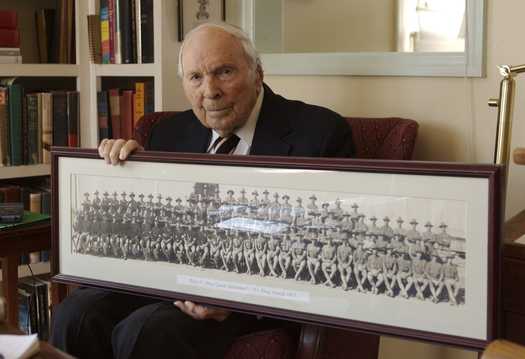
frankbuckles2

The United States came late to the Great War, not fully trained, equipped and mobilized until well into the last year.  Even so, fully 204,000 Americans were wounded in those last few months.  116,516 never came home from a war in which, for all intents and purposes, the US fought a bare five months.

Frank Woodruff Buckles passed away on February 27, 2011 at the age of 110, and went to his rest in Arlington National Cemetery.  The last of the Doughboys, the only remaining American veteran of WWI, the last living memory of the war to end all wars, was gone.

Concurrent resolutions were proposed in the US House of Representatives and Senate for Buckles to lie in state, in the Capitol rotunda. For reasons still unclear, the plan was blocked by Speaker John Boehner and Senate Majority Leader Harry Reid.  Neither Boehner nor Reid would elaborate, proposing instead a ceremony in the Amphitheater at Arlington National Cemetery.  The President of the United States attended his funeral.

Reporter Paul Duggan of The Washington Post described the occasion:

“The hallowed ritual at grave No. 34-581 was not a farewell to one man alone. A reverent crowd of the powerful and the ordinary—President Obama and Vice President Biden, laborers and store clerks, heads bowed—came to salute Buckles’s deceased generation, the vanished millions of soldiers and sailors he came to symbolize in the end”.

abc_nwo_frank_buckles_110228_wg

Afterward

Sixteen million Americans joined with allies the world over to defeat the Axis Powers of WW2.  They were the children of Frank Buckles’ generation, sent to complete what their parents had begun.  Seventy years later, 939,332 remained alive.  They’ve been called the “Greatest Generation”.  Today, we lose them at a rate of 362, per day.

If Department of Veterans Affairs actuarial projections are any indication, the Frank Buckles of his generation, the last living veteran of WW2, can be expected to pass from among us in 2044.

That such an event should pass from living memory, is a loss beyond measure.

https___blogs-images.forbes.com_niallmccarthy_files_2018_05_20180528_veterans

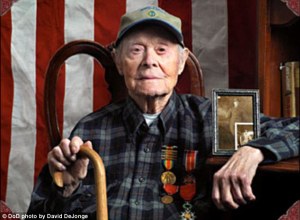
Feature image, top of page:  Frank Buckles, age 107
the-last-doughboy
If you enjoyed this “Today in History”, please feel free to re-blog, “like” & share on social media, so that others may find and enjoy it as well. Please click the “follow” button on the right, to receive email updates on new articles.  Thank you for your interest, in the history we all share.

January 30, 1752 Founding Philanderer

Not that he could’ve have done anything about it, even if the husband did find out.  Morris walked with a peg, his left leg severed below the knee in a carriage accident, lost while running from an angry husband.

nyc-pdf-manhattan-street-map-printable-street-guide-4
Midtown Street Grid

To drive the streets of Manhattan is to realize that someone had a plan for this place. You might not be able to get there for the congestion, but you can figure out how to do it. Not like the rabbit warren that is her sister city of Boston, that all but unnavigable melange of neighborhoods, grown together as the city expanded into former marshlands and harbor.

In grade school, we all learned the preamble to the Constitution. “We the People of the United States, in Order to form a more perfect Union…” It’s considerably snappier than the original version:

We the people of the states of New-Hampshire, Massachusetts, Rhode-Island and Providence Plantations, Connecticut, New-York, New-Jersey, Pennsylvania, Delaware, Maryland, Virginia, North-Carolina, South-Carolina, and Georgia, do ordain, declare and establish the following constitution for the government of ourselves and our posterity.”

us-constitution

That West 53rd leads to East 53rd and runs next to 54th may be attributed to a committee of three, who fought (and won) the battle against the wide circles and grand plazas, once envisioned for “The City”. That we may be spared that stultifying recitation of our founding document may be laid at the feet of one member of that committee.

Today, his life is all but lost to history, among the familiar constellation of founding fathers.  If he’s remembered at all it’s for that funny name.  Gouverneur Morris.  And what a life it was.

morris_g
Gouverneur Morris

Gouverneur Morris was born this day in 1752, the son of Lewis Morris, Jr. and his second wife Sarah (Gouverneur) Morris. Abigail Adams informs us the name was pronounced “Governeer”.

Born to a wealthy New York land owning family, Morris was destined to a place among the founders. His half-brother Lewis signed the Declaration of Independence.  Nephew Lewis Richard served in the Vermont legislature and the US Congress.

As a member of the Continental Congress, Morris helped General George Washington secure funding, to keep the Continental Army in the field. A staunch ally of the Commander-in-Chief, Morris defended Washington against the “Conway Cabal“, the only serious effort to have the General unseated, as commander-in-chief.

gouverneur_morris_1789
Gouverneur Morris 1789

A staunch opponent of slavery, Morris derided the “peculiar institution” as “the curse of heaven on the states where it prevailed.”  Morris mocked the “3/5ths compromise”, that cynical effort to increase congressional representation based on “property”, who had no right to vote.

Upon what principle”, Morris asked, “is it that the slaves shall be computed in the representation? Are they men? Then make them citizens, and let them vote. Are they property? Why, then, is no other property included?”

And did I mention, Gouverneur Morris was a first-class Rake?

“Rake” is such a great word, short for “Rakehell” or Hellraiser’.  It’s a shame it’s fallen out of usage.  This isn’t the tool shed variety.  An 18th century Rake is a man habituated to dissolute conduct, a chronic libertine devoted to wine, women and song.  Emphasis on the Women and, no problem if they just happened to be married.

At a time when sexual attitudes were “buttoned up” to say the least, Gouverneur Morris was all but addicted to sex in public, given over to the excitement, of the risk at being caught.

As Minister Plenipotentiary to France in the wake of the American Revolution, Morris writes of one such dalliance in the hallway at the Louvre, then a Royal Residence.

wooden-leg-of-gouverneur-morris-new-york-historical-society-photo-by-the_adverse_possessors-cc-by-sa-2-5-426x640
Gouverneur Morris’ wooden leg

“Go to the Louvre… we take the Chance of Interruption and celebrate in the Passage while Mademoiselle (the woman’s daughter) is at the Harpsichord in the Drawing Room. The husband is below. Visitors are hourly expected. The Doors are all open.”

“Celebrate” was Morris’ code word for…well…you know.

Not that he could’ve done anything about it, even if the husband did find out.  Morris walked with a peg, his left leg severed below the knee in a carriage accident, lost while running from an angry husband.

That wooden leg actually helped him one time, as the French Revolution spiraled downward toward the homicidal madness  known as the “Reign of Terror“. While riding in a carriage, a sign of the aristocracy, a horde of sans coulotte attempted to seize the vehicle.  It may have cost Morris, his head.  Gouverneur Morris leaned out the window and shook the leg at them, momentarily shocking the mob into stunned silence. Whether the mob thought him a war veteran or just plain crazy is unknown, but the driver had just enough time, to get away.

800px-william_hogarth_027
18th century painting “A Rake’s Progress”, by English artist William Hogarth

Morris tried to raise enough to bribe the guards, to release King Louis XVI and Marie Antoinette.  When that didn’t work out he bought the Queen’s furniture, and brought it home as a keepsake.

Morris finally “settled down” at age 57, but even that was a scandal.  That Anne Gary (“Nancy”) Randolph was twenty-two years younger than he was not so unusual, but marrying his housekeeper, was.  Worse still, the blushing bride had become pregnant by her own brother-in-law at age seventeen, and was tried for killing the baby.  On a plantation named “Bizarre’, no less.

Anne was acquitted of the charge of infanticide, but the scandal followed her, all her days.  Morris announced his marriage to her at his Christmas party.  In his diary, Gouverneur writes “I marry this day Anne Gary Randolph. No small surprise to my guests.”

1_bvbmve3hyozqr_ety3gckw
Whalebone

Toward the end of his life, Gouverneur Morris experienced problems with his urinary tract, probably the result of prostate cancer.  Believing there to be some blockage in his pipes, Morris tried the “Do-it-Yourself” approach to fixing the problem, with a piece of whalebone.

Unsurprisingly, the method caused himself considerable damage and massive infection.  The man who brought the Erie Canal to upstate New York died on November 6, 1813.  Six days later, the Columbian Centinal newspaper of Boston reported his death following “a short but distressing illness.”

I should say so.

If you enjoyed this “Today in History”, please feel free to re-blog, “like” & share on social media, so that others may find and enjoy it as well. Please click the “follow” button on the right, to receive email updates on new articles.  Thank you for your interest, in the history we all share.


January 29, 1820  An Ass for a Lion

“One of the strongest natural proofs of the folly of hereditary right in kings, is, that nature disapproves it, otherwise she would not so frequently turn it into ridicule by giving mankind an ass for a lion”.  – Thomas Paine, Common Sense

The Declaration of Independence, the birth certificate of the nation, begins with this preamble: “When in the Course of human events, it becomes necessary for one people to dissolve the political bands which have connected them with another...”.

The next paragraph leads with the phrase most commonly cited:

“We hold these truths to be self-evident, that all men are created equal, that they are endowed by their Creator with certain unalienable Rights, that among these are Life, Liberty and the pursuit of Happiness”. 

The paragraph ends with a personal indictment of one man, followed by a 27-item Bill of Particulars against him.  “The history of the present King of Great Britain is a history of repeated injuries and usurpations, all having in direct object the establishment of an absolute Tyranny over these States. To prove this, let Facts be submitted to a candid world“.

The word “He” appears 19 times in the document.  “Tyrant” is used twice and “ruler”, only once:  “A Prince whose character is thus marked by every act which may define a Tyrant, is unfit to be the ruler of a free people”.

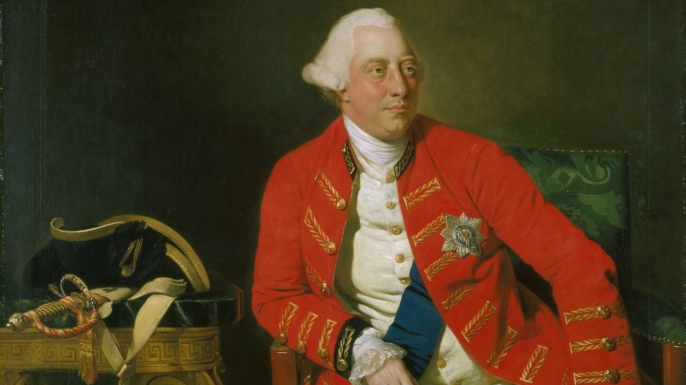
king_george_iii_of_england_by_johann_zoffany-e

King George III of England, by Johann Zoffany

The overall tenor of the document is a personal indictment of one man, George III, King of England.  Thomas Paine wrote of the King in “Common Sense”, the pamphlet which inspired a people to rise up in the summer of 1776:  “One of the strongest natural proofs of the folly of hereditary right in kings, is, that nature disapproves it, otherwise she would not so frequently turn it into ridicule by giving mankind an ass for a lion”.

George III became something of a lighting rod for colonial discontent, held personally responsible for policies brought forth by the British legislative body. The Stamp Act of 1765, the Townshend duties on tea, paper and other products in 1767;  these came from Parliament, as did the “Coercive Acts” of 1774, referred to by the Patriots of Massachusetts and others as “The Intolerable Acts”.

intolerable
The “Intolerable Acts” were a series of bills passed by Parliament, to punish American colonists for The Boston Tea Party.

These policies were a result of the financial burdens of garrisoning and administering the huge territories of the American colonies, the never-ending wars with France and Spain, and the loans given to the East India Company, then responsible for administering India.

The third King of the House of Hanover was himself a creature of Parliament, his lineage having been invited to rule over Great Britain in 1714, after the fall of the House of Stuart.  What Parliament gives, Parliament may take away.

George III is the longest reigning of any English King, ruling from 1760 until his death on January 29, 1820.  He is exceeded in office only by his Granddaughter Victoria, the last monarch of the House of the Hanoverian Dynasty and Elizabeth II, reigning Queen of the United Kingdom and the other Commonwealth realms.

Medical historians have long believed that George III suffered from a genetic blood disorder called Porphyria, a term from the Greek meaning “purple pigment”.  This refers to a blue discoloration in the urine of those suffering from the condition, along with symptoms primarily involving the central nervous system, and accompanied by severe abdominal pain, vomiting and mental disturbances.

king-george-iii_1_The illness seems to have afflicted George III alone however, casting doubt on an hereditary condition.  George III’s medical records cast further doubt on the porphyria diagnosis, showing that he was prescribed medicine based on gentian, a plant with deep blue flowers which may turn the urine blue. He seems to have been afflicted with some kind of mental illness, suffering bouts which occurred with increasing severity and for increasing periods of time.  At times he would talk until he foamed at the mouth or go into convulsions where pages had to sit on him to keep the King from injuring himself.
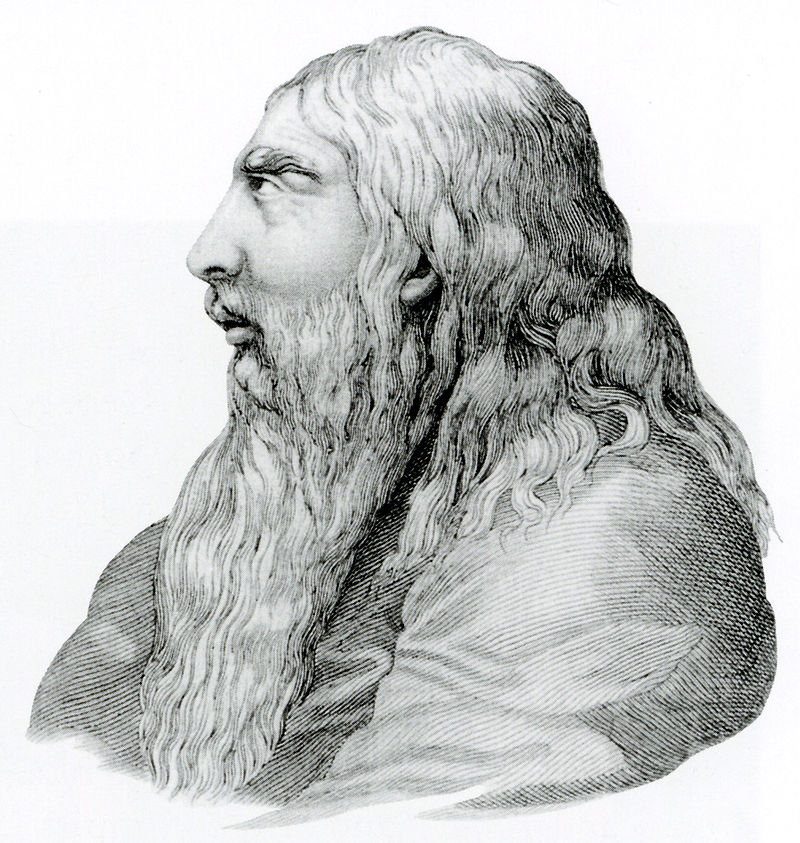
An ongoing research project at St George’s, University of London, has looked at thousands of King George III’s handwritten letters, and concluded that the King suffered from mental illness.  His writing was erratic at times coinciding with his “spells”, with run-on sentences of 400 words or more and as many as 8 verbs with no punctuation.  These are features seen today in the writing and speech of patients as they experience the manic phase of bipolar disorder.  This manic phase stands at one end of a spectrum of mood disorders, with an overwhelming sadness or depression at the other.  Research is ongoing, but these types of mood swings are consistent with contemporary witnesses to George’s behavior, as well as the written record.

All but blind from cataracts and suffering a painful rheumatic disorder, George’s final descent was triggered by the death of his youngest and favorite daughter Princess Amelia, at age 27.  In November 1810, the Princess’s nurse reported “scenes of distress and crying every day …  melancholy beyond description.”

George himself accepted the Regent Act of 1811, appointing his eldest son the Prince of Wales and future King George IV, Prince Regent.  Britannica.com describes the last ten years as a “living death”, a period of violent insanity interspersed with “intervals of senile lucidity”.

The King neither knew nor would he have understood when he was appointed King of Hanover in 1814, nor when his wife died in 1818. On Christmas 1819, George spoke for fifty-eight hours straight, all of it, gibberish.

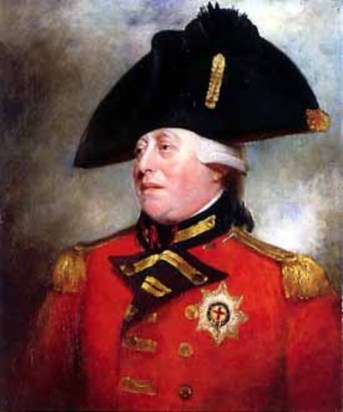
800px-george_iii_by_henry_meyer

Engraving of George III in later life, by Henry Meyer

Today, George III is remembered for two things:  losing the American colonies, and going mad.

There is an historic lesson in this story.  If the country ruled by a King (or Queen) wins the lottery and gets a good and fair monarch, then that country may experience a period of peace and prosperity.  If that nation draws the cosmic short straw and gets a bad one, the results can be catastrophic.  In the end, it’s the most powerful argument I can think of for a governmental system of specified authority, diffuse power, and checks & balances.

January 24, 1776 Seven Weeks in Winter

It must have been a sight when that noble train of artillery entered Cambridge on this day in 1776. By March, Henry Knox’ cannon would be manhandled to the top of Dorchester Heights, resulting in the British evacuation of Boston and a peculiar Massachusetts institution which exists to this day, known as “Evacuation Day”:  March 17.

The American Revolution began with the Shot Heard Round the World” on the morning of April 19, 1775. Within days of the Battles at Lexington and Concord and subsequent British withdrawal to Boston, over 20,000 men poured into Cambridge from all over New England. Abandoned Tory homes and the empty Christ Church became temporary barracks and field hospitals.  Even Harvard College shut down, its buildings becoming quarters for some 1,600 Patriots.

The Continental Congress appointed George Washington General of this “Army” on June 15, two days before the British assault on Farmer Breed’s hill. The action would take its name from that of a neighboring farmer, and went into history as the Battle of Bunker Hill.

battle-of-bunker-hill

Shortly after arriving in July, General Washington discovered that his army had enough gunpowder for nine rounds per man, and then they’d be done.

At the time, Boston was a virtual island, connected to the mainland by a narrow strip of land.  British forces were effectively penned up in Boston, by a force too weak to do anything about it.

The stalemate dragged on for months, when a 25-year-old bookseller came to General Washington with a plan. His name was Henry Knox. His plan was a 300-mile, round trip slog into a New England winter, to retrieve the guns of Forts Ticonderoga, and Crown Point.

fort ticonderoga artillery (fort ti photo)

Washington’s advisers derided the idea as hopeless, but the General approved. Henry Knox set out with a column of men on December 1.

Located on the New York banks of Lake Champlain, Fort Ticonderoga was captured by a small force led by Ethan Allen and Colonel Benedict Arnold, in May of that year. In it were brass and iron cannon, howitzers, coehorns and mortars, 30 pieces in all and another 29, from Fort Crown Point.  Arriving on December 5, Knox and his men set about disassembling the artillery, making it ready for transport. A flotilla of flat bottom boats was scavenged from all over the countryside, the guns loaded and rowed the length of Lake George, arriving barely before the water began to freeze over.

colonel-knox-bringing-the-cannons-from-fort-ticonderoga (2)Local farmers were enlisted to help and by December 17, Knox was able to report to General Washington “I have had made forty two exceedingly strong sleds & have provided eighty yoke of oxen to drag them as far as Springfield where I shall get fresh cattle to carry them to camp. . . . I hope in 16 or 17 days to be able to present your Excellency a noble train of artillery.”

Bare ground prevented the sleds from moving until Christmas morning, when a heavy snow fell and the column set out for Albany. Two attempts to cross the Hudson River on January 5 each resulted in cannon being lost to the river, but finally Knox was able to write “Went on the ice about 8 o’clock in the morning & proceeded so carefully that before night we got over 23 sleds & were so lucky as to get the Cannon out of the River, owing to the assistance the good people of the City of Albany gave.”

henry-knox-moving-canning-from-fort-ticonderoga

Continuing east, Knox and his men crossed into Massachusetts, over the Berkshires, and on to Springfield. With 80 fresh yoke of oxen, the 5,400lb sleds moved along much of what are modern-day Routes 9 and 20, passing through Brookfield, Spencer, Leicester, Worcester, Shrewsbury, Northborough, Marlborough, Southborough, Framingham, Wayland, Weston, Waltham, and Watertown.

It must have been a sight when that noble train of artillery entered Cambridge on this day in 1776. By March, Henry Knox’ cannon would be manhandled to the top of Dorchester Heights, resulting in the British evacuation of Boston and a peculiar Massachusetts institution which exists to this day:  “Evacuation Day”, March 17.

800px-henry_knox_artillery_handover_to_george_washington_marker

It is doubtful whether Washington possessed either powder or shot in quantities sufficient for a sustained campaign, but British forces occupying Boston didn’t know that. The mere presence of those guns moved British General Howe to weigh anchor and sail for Nova Scotia, but that must be a story for another day.

Afterward

During WW1, Winthrop Massachusetts artist and bronze foundry operator Henry L. Norton served with the Canadian army “over there” where he was wounded, seven times. In 1926, 150 years after Knox’s march through New York and Massachusetts, Norton and Albany sculptor Henry James Albright designed commemorative plaques to be installed on 56 stone monuments, marking the path of that noble train of artillery. The project was completed in 1927.

knoxtrailmap

Marker locations were updated in 1975 to reflect new research, concerning Knox’s route between Kinderhook New York and Alford, Massachusetts,

50581448_2298075013536100_5233603815533445120_n
Henry Knox Trail marker. Tip of the hat to Aaron Altice, for this image

A new marker was added in 2009, adjacent to a house owned by General John Thomas at the Roxbury Heritage State Park, in Boston. It was he who guided the weapons from Cambridge to their final placement on Dorchester Heights.

photo94269

If you enjoyed this “Today in History”, please feel free to re-blog, “like” & share on social media, so that others may find and enjoy it as well. Please click the “follow” button on the right, to receive email updates on new articles.  Thank you for your interest, in the history we all share.


January 22, 1968 Operation Chrome Dome

“Always remember, the flash of an atomic bomb can come at any time, no matter where you may be”.  

To anyone under the age of 40, the Cold War must seem a strange and incomprehensible period.  Many of us who lived through it, feel the same way.

The communist world emerging from the “Great War” comprised the former Czarist state of Russia alone, the 1924 constitution promising a “federation of peoples equal in rights”. Instead, the Soviet system delivered a murderous, top-down authoritarian ideology, best exemplified by the deliberate murder by starvation of millions of its own citizens in Ukraine, the Holodomor, under the guise of agricultural “collectivization”. Here, the Party controlled the state, the military, the press and the economy.

At their best, the western democracies of the “First World” operated on the basis of classical liberalism with two or more distinct political parties, a free press and rule of law.

hydrogen_nuclear_bomb

In the wake of WW2, the two governing ideologies were irreconcilable, splitting the alliance which had once defeated Nazi Germany. The most destructive war in history had barely come to a close in 1946, when the Soviet state set itself to gobbling up the formerly non-communist states of eastern Europe. Former British Prime Minister Winston Churchill delivered the most famous oration of the era on March 5, declaring “From Stettin in the Baltic to Trieste in the Adriatic, an iron curtain has descended across the continent.” The leaders of non-communist parties were discredited and intimidated, subjected to show trials and even execution. Albania, Poland, Hungary, Czechoslovakia, Romania, East Germany: all were taken, often forcibly, into the Soviet embrace.

As the “Cold War” descended across the land, United States and allied nations of the “Western Bloc” sought to “contain” Soviet expansionism, extending military and financial aid to the western democracies and creating the North Atlantic Treaty Organization (NATO alliance). With the Soviet Berlin Blockade of 1948 – ’49, the US Air Force together with the RAF and Royal Australian Air Force delivered 2,333,478 tons of freight in nearly a third of a million sorties. Added together, the Berlin Airlift covered the better part of the distance from the Earth, to the Sun.

The United States’ monopoly on the most destructive weapon system in history came to an end on August 29, 1949, with the ‘RDS-1’ explosion at the Semipalatinsk test site in modern-day Kazakhstan. The Soviet Union had the atomic bomb.

b-52chromedome

Today, the anti-communist tactics of the House Un-American Activities Committee (HUAC) and Senator Joseph McCarthy are reviled as excessive, as indeed some of them were. Yet, the Top Secret cable decryption program known as Venona and declassified only in 1995, revealed extensive Soviet espionage activities at Los Alamos National Laboratories, the State Department, Treasury, Office of Strategic Services (OSS) and even the White House.

The 1950s were a time of escalating tensions and sometimes calamity:  the war in Korea, the “Space Race”, the beginning of American intervention in Vietnam.  The Cuban Revolution of 1959.  The exodus from Soviet-controlled East Germany to the west resulted in a “brain drain” of some 20% of the population, culminating in the “Berlin Crisis” of 1961.  First it was barbed wire and then a wall, complete with guard towers and mine fields.  Nobody else was getting out.

In 1957 – ’58, both American and Soviet authorities planned in a show of force, to Nuke the Moon.

United States Air Force General and Strategic Air Command (SAC) commander General Thomas Sarsfield Power introduced Operation Chrome Dome, placing thermonuclear weapons on permanent air patrol to provide a rapid “first strike” or retaliatory “second strike” in the event of nuclear war.

chromedome1964b52mission
1964 Operation Chrome Dome Map from Sheppard Air Force Base, TX – H/T Wikipedia

Missions initially departed Sheppard Air Force Base in Texas and flew across the United States and over New England, refueling over the Atlantic before heading north toward Soviet air space. Three separate missions were being flown by 1966, one East over the Atlantic and the Mediterranean, another north to Baffin Bay, and the third over Alaska.  12 missions per day, 365 days a year.

heres_every_interesting_detail_you_should_know_about_the_cold_war_640_25

The Department of Defense has a term for accidents involving nuclear weapons, warheads or components, which do not involve the immediate risk of nuclear war. They’re called “Broken Arrows“.

Broken Arrows include accidental or unexplained nuclear or non-nuclear detonation of an atomic weapon, the loss of such a weapon and the release of nuclear radiation resulting in public hazard, actual or potential. There have been 32 Broken Arrow incidents since 1950. As of this date, six nuclear weapons have been lost and never recovered.

Major “Kong” rides the bomb in the dark, 1964 comedy by Stanle Kubrick, “Dr. Strangelove or: How I Learned to Stop Worrying and Love the Bomb”

Five such incidents are associated with Operation Chrome Dome:

• On January 24, 1961, a B-52 Stratofortress carrying two Mark 39 nuclear weapons broke up in mid-air, dropping its payload in the area of Goldsboro, North Carolina. Five men bailed out and landed safely. One bailed out but did not survive the landing. Two more died in the crash.
• Two months later, a B-52 Stratofortress carrying two nuclear weapons departed Mather Air Force Base near Sacramento before experiencing uncontrolled decompression. Forced to fly at a lower altitude and unable to meet its refueling aircraft, the bomber ran out of gas and crashed outside of Yuba City, California. The air crew safely bailed out, but a fireman was killed and several injured in an accident, while en-route to the scene.
• In 1964, a B-52 Stratofortress carrying two Mark 53s was returning from Massachusetts to Georgia in heavy winter weather. Severe turbulence tore off a vertical stabilizer and the bomber crashed on the Stonewell Green farm, Near Meyersdale, Pennsylvania. Radar Bombardier Major Robert Townley was unable to bail out, and died in the crash. Navigator Major Robert Lee and tail gunner TSgt Melvin Wooten succumbed to injuries and hypothermia, on the ground. Only pilot Major Thomas McCormick and co-pilot Captain Parker Peedin, survived.
• On January 17, 1966, a B-52G bomber collided with a KC-135 tanker during mid-air refueling at 31,000-feet, over the Mediterranean. The tanker ignited, killing all four crew members. The bomber broke apart, killing three of seven.
• On January 21, 1968, a B-52 carrying four hydrogen bombs over Baffin Bay developed an uncontrolled cabin fire, forcing seven crew to bail out. Six ejected safely. Co-pilot Leonard Svitenko gave up his ejection seat when the third pilot took over, and sustained fatal head injuries while bailing out from a lower hatch. The bomber crashed on sea ice over 770-feet of water in North Star Bay in Greenland, a territory under Danish jurisdiction. Conventional explosives detonated in the crash, dispersing radioactive material, for miles.

For days, the only way to the crash site, was by dog sled. With average daytime temperatures of -25° and 80-MPH winds, “Project Crested Ice” was better known by those who were there as “Dr. Freezelove”.  The cleanup involved 562 American and Danish personnel, removing twenty-seven 25,000-gallon containers of contaminated snow and ice.

800px-crested_ice_tank_loading

The Thule Air Base accident became an international incident, resulting in termination of Operation Chrome Dome on January 22, 1968.  From that day to this, the next thermonuclear war will have to start from the ground.

At the height of the Cold war, civil defense film character Bert the Turtle advised  school children to “Duck and Cover”.  Kids across the nation were shown this film, I was one of them.  “Always remember“, says the narrator.,”the flash of an atomic bomb can come at any time, no matter where you may be“.

Probably explains a lot, about my generation.

If you enjoyed this “Today in History”, please feel free to re-blog, “like” & share on social media, so that others may find and enjoy it as well. Please click the “follow” button on the right, to receive email updates on new articles.  Thank you for your interest, in the history we all share.

January 20, 2018 Rosie the Riveter

“She had been robbed of her part of history…It’s like the train has left the station and you’re standing there and there’s nothing you can do because you’re 95 and no one listens to your story.”

Following the German invasion of Poland in 1939 and the outbreak of general war in Europe, President Franklin Delano Roosevelt proclaimed a limited national emergency, authorizing an increase in Regular Army personnel to 227,000 and 235,000 for the National Guard. Strong isolationist sentiment kept the United States on the sidelines for the first two years, as victorious German armies swept across France.

That all changed on December 7, 1941, with the Japanese attack on the Pacific naval anchorage at Pearl Harbor. Seizing the opportunity, Nazi Germany declared war on the United States, four days later.

The Roosevelt administration had barely found the keys to the American war machine in February 1942, when disaster struck with the fall of Singapore, a calamity Prime Minister Winston Churchill called the “worst disaster” in British military history.

The mobilization of the American war machine was a prodigious undertaking. From that modest beginning in 1939, the Army alone had 5.4 million men under arms by the end of 1942. By the end of the war in 1945, American factories produced a staggering 296,000 warplanes, 86,000 tanks, 64,000 landing ships, 6,000 navy vessels, millions of guns, billions of bullets, and hundreds of thousands of trucks and jeeps. US war production exceeded that of the Axis powers of Germany, Italy, and Japan, combined.

As all that manpower mobilized to fight the war, women moved into the workforce in unprecedented numbers.  Nearly a third of a million women worked in the American aircraft industry alone in 1943:  65% of the industry’s workforce, up from just 1% in the interwar years.

rosie-the-riveter

All told, some six million women answered the call, expanding the female participation in the overall workforce from 27%, to 37%.

The mythical “Rosie the Riveter” first appeared in a song written by Redd Evans and John Jacob Loeb and made famous by swing bandleader James Kern “Kay” Kyser, in 1943.  The song told of a munitions worker who “keeps a sharp lookout for sabotage / Sitting up there on the fuselage…Rosie’s got a boyfriend, Charlie.  Charlie, he’s a Marine / Rosie is protecting Charlie Working overtime on the riveting machine”.

Norman Rockwell had almost certainly heard the song when he gave Rosie form for the cover of that year’s Memorial Day Saturday Evening Post.  Posed like the Prophet Isaiah from Michelangelo’s Sistine Chapel, Rockwell’s “Rosie” is on lunch break, riveting gun on her lap, a beat-up copy of Mein Kampf ground happily under foot.

1035x1485-gettyimages-90017379

Vermont Dental Hygienist Mary Doyle Keefe was the model for Rockwell’s Rosie.  The propaganda value of such an iconic image was unmistakable, but copyright rules limited the use of Rockwell’s portrait.  The media wasted no time in casting a real-life Rosie the Riveter, one of whom was Rose Will Monroe, who worked as a riveter at the Willow Run aircraft factory, in Ypsilanti Michigan.  Rose Monroe would go on to appear in war-bond drives, but the “Real” Rosie the Riveter, was someone else.

The year before the Rosie song came out, Westinghouse commissioned graphic artist J. Howard Miller to produce a propaganda poster, to boost company morale.  The result was the now-familiar “We Can Do It” poster, depicting the iconic figure flexing her biceps, wearing the familiar red & white polka dot bandanna.

world-war-ii-women-at-work-in-color-8
Colorized image of railroad workers on break, 1943

Though she didn’t know it, Miller’s drawing was based on a photograph of California waitress Naomi Parker Fraley, who worked in a Navy machine shop in 1942.

While Norman Rockwell’s Rosie the Riveter was the first, it is Miller’s work we remember, today.  Rosie the Riveter was larger than any one woman.  She was symbolic of her age, one of the most memorable and long lasting images of the twentieth century.

merlin_132732191_22bab46e-396e-4056-809a-2e551095a7dc-superjumbo
Naomi Parker Fraley, real-life model for Rosie the Riveter

For many years, it was believed that a Michigan woman, Geraldine Hoff Doyle, was the “real” Rosie the Riveter.  Hoff Doyle had seen the uncaptioned image, and believed it to be herself.  It was an innocent mistake. The woman bears a striking resemblance to the real subject of the photograph.

Thirty years came and went before Parker-Fraley even knew about it.  She saw herself in a newspaper clipping, and wrote to the paper around 1972, trying to set the record straight.  Too late. Hoff Doyle’s place had been cemented into popular culture, and into history.

Parker-Fraley was devastated. “I just wanted my own identity,” she says. “I didn’t want fame or fortune, but I did want my own identity.”

kimble_research_rosie-320
Professor James Kimble, Ph. D.

Another thirty-eight years would come and go before Seton Hall Communications Professor James J. Kimble, Ph.D., took an interest in the identity of the famous female from the WW2 poster. Beginning in 2010 and lasting nearly six years, the search became an obsession. It was he who discovered the long lost original picture with photographer’s notes identifying Naomi Parker-Fraley. “She had been robbed of her part of history,” Kimble said. “It’s so hurtful to be misidentified like that. It’s like the train has left the station and you’re standing there and there’s nothing you can do because you’re 95 and no one listens to your story.

rosie-the-riveter (1)Over the years there have been many Rosie the Riveters, the last of whom was Elinor Otto, who built aircraft for fifty years before being laid off at age ninety-five.  Naomi Parker-Fraley knew she was the “first”, but that battle was a long lost cause until Dr. Kimble showed up at her door, in 2015.  All those years, she had known.  Now the world knew.
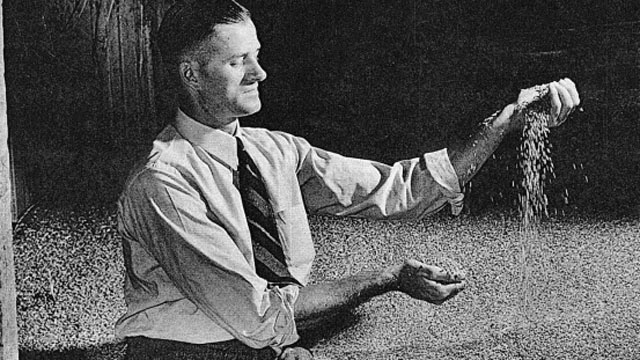
Rosie the Riveter died on January 20, 2018.  She was ninety-six.

Hat tip “BoredPanda.com”, for a rare collection of colorized images from the WW2 era, of women at work.  It’s linked HERE.

January 18, 1943 Chickenfeed

The United States Supreme Court, apparently afraid of President Roosevelt and his aggressive and illegal “court packing” scheme, ruled against the farmer. Ever since, what you don’t do can be argued in a court of law to impact interstate conditions, putting what you didn’t do under the jurisdiction of the federal government.

Get it? Neither do I, but I digress.

The first bread slicer was invented by Otto Frederick Rohwedder of Davenport, Iowa, in 1912. The idea was unpopular among bakers, who feared that pre-sliced bread would go stale faster, leading to spoiled inventory and dissatisfied customers.

The project almost ended in a fire in 1917, when a fire destroyed the prototype along with the blueprints. Rohwedder soldiered on.  By 1927, he had scraped up enough financing to rebuild his bread slicer.

sliced-breadFrank Bench, a personal friend of the inventor, was the first to install the machine.  The first pre-sliced loaf was sold in July of the following year. Customers loved the convenience and Bench’s bread sales shot through the roof.

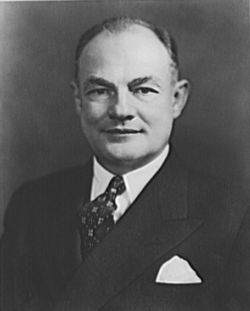
Sliced bread became a national hit when the Continental Baking Company, then-owner of the “Wonder Bread” brand, began using a modified version of Rowhedder’s machine in 1930.  Sliced bread was here to stay. Sort of.

These were the early days of the Great Depression.  Nine million savings accounts were wiped out in the first three years.  Federal agricultural officials conceived the hare brained idea that artificially introduced scarcity would raise prices and therefore wages, in the agricultural sector.  No fewer than six million hogs were destroyed in 1933, alone. Not harvested, just destroyed and thrown away at a time when a 22.9% unemployment led the way to widespread malnutrition and hunger.

470,000 cattle were shot in Nebraska alone. Vast quantities of milk were poured down sewers, and whole cotton fields, plowed under.

755px-us_employment_graph_-_1920_to_1940.svg
US unemployment, 1920-’40

Whether because of or despite government policies, unemployment dropped from 25% to 9% during Roosevelt’s first time (1933 – ’37), then more than doubled to 19%, in 1938.

250px-claude_r._wickard_2
Claude R. Wickard

The “Second New Deal” saw a blizzard of social welfare programs, all but crowding out the productive bits of the economy.  The Great Depression not so much as ended but paused, with the onset of WW2.

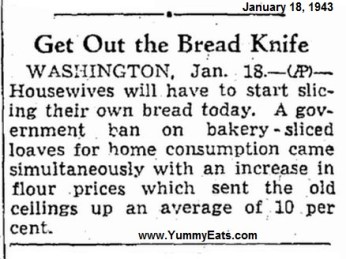
US entry into WW2 was in its second year in 1943 when Claude Wickard, head of the War Foods Administration and Secretary of Agriculture, had the hare brained idea of banning sliced bread.

Mr. Wickard was no stranger to hare brained ideas; it is he who lends his name to the landmark Supreme Court case Wickard v. Filburn.

Speaking of hare brained ideas.  The Agricultural Adjustment Act of 1938 limited the area that farmers could devote to wheat production, in an effort to stabilize the price of wheat. Ohio farmer Roscoe Filburn was producing more than his allotment, and the federal government ordered him to destroy the surplus and pay a fine, even though his “surplus” was being consumed on the farm by the Filburn family, and their chickens.

commerceclauseArticle 1, Section 8 of the Constitution includes the “Commerce Clause”,  permitting the Congress “To regulate Commerce with foreign Nations, and among the several States, and with the Indian Tribes”. That’s it.
The Federal District Court sided with the farmer, but the Federal government appealed to the Supreme Court, arguing that, by withholding his surplus from the interstate wheat market, Filburn was effecting prices and therefore fell under federal government jurisdiction under the commerce clause.

slicedbreadban-january18.1943The United States Supreme Court, apparently afraid of President Roosevelt and his aggressive and illegal “court packing” scheme, ruled against the farmer. Ever since, what you don’t do can be argued in a court of law to impact interstate conditions, putting what you didn’t do under the jurisdiction of the federal government.
Get it? Neither do I, but I digress.

Back to Mr. Wickard, who enacted his ban against sliced bread and put it into effect on January 18, 1943. The push-back, as you might guess, was immediate and vehement. One woman took up her pen, and wrote to the New York Times: “I should like to let you know how important sliced bread is to the morale and saneness of a household. My husband and four children are all in a rush during and after breakfast. Without ready-sliced bread I must do the slicing for toast—two pieces for each one—that’s ten. For their lunches I must cut by hand at least twenty slices, for two sandwiches apiece. Afterward I make my own toast. Twenty-two slices of bread to be cut in a hurry!”

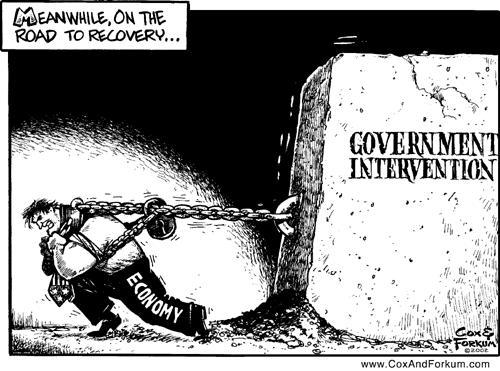
big-governmentThe stated reasons for the ban never did make sense. At various times, Wickard claimed that it was to conserve wax paper, wheat or steel, but one reason was goofier than the one before. According to the War Production Board, most bakeries had plenty of wax paper supplies on hand, even if they didn’t buy any.  Furthermore, the federal government had a billion bushels of wheat stockpiled at the time, about two years’ supply, and the amount of steel saved by not making bread slicers has got to be marginal, at best.

The ban was rescinded on March 8, 1943, and pre-sliced bread was once again available to the federal government and its subjects. There’s no telling who first used the expression “the greatest thing since sliced bread”, but a reasonable guess may be made as to why.

If you enjoyed this “Today in History”, please feel free to re-blog, “like” & share on social media, so that others may find and enjoy it as well. Please click the “follow” button on the right, to receive email updates on new articles.  Thank you for your interest, in the history we all share.

January 14, 1699 Witchcraft Hysteria

The witchcraft hysteria launched by the Spanish Inquisition would dwarf what was to come in the English colony.

Four years before the Salem witch trials of 1692, Goodwife Ann “Goody” Glover and her young daughter worked as housekeepers, for the Goodwin family of Boston.   13-year-old Martha, one of the Goodwin girls, accused the younger Glover of stealing fabric. Ann’s daughter ran out in tears, which earned Martha a rebuke from Ann Glover. Four of the five Goodwin children soon began to writhe and carry on in a manner destined to become familiar, four years later. Their doctor concluded “nothing but a hellish Witchcraft could be the origin of these maladies.”

The following trial, contained no small amount of anti-Catholic bigotry. Cotton Mather, the socially and politically influential New England Puritan minister called Glover “a scandalous old Irishwoman, very poor, a Roman Catholick and obstinate in idolatry.”

Glover’s Gaelic was far better than her English, and the two “Irish speakers” hired to translate, probably made some of it up as they went along.  For Ann Glover, the final straw was her inability to complete the Lord’s Prayer. What may seem to the modern mind as mere doctrinal differences were at one time matters of life-and-death. As a Catholic, she was either unable or unwilling to complete the prayer with the Protestant doxology, “For thine is the kingdom, and the power, and the glory, forever, Amen”. It doesn’t exist in the Catholic recitation.

Ann Glover was hanged as a witch on November 16, 1688.

5554327958_7c0274e293_o-700x900
The Great Elm of Boston Common, toppled in a storm in 1876, once served as the city’s hanging tree.

The witchcraft hysteria to strike Massachusetts’ North Shore communities of Danvers, Ipswich, Andover and Salem four years later ended the lives of five men and fourteen women at the end of a rope, on Gallows Hill. As many as 17 more died in the tiny, freezing stone compartments that passed for jail cells. 81-year-old Giles Cory was “pressed” to death over two days and nights, as rocks were piled on his chest to extract his confession. Knowing that his possessions were forfeit to his tormentor should he confess; Cory’s only response was “more weight”.

A persistent myth holds that victims of the Salem witchcraft hysteria were burned at the stake, but English law in the North American colonies, forbade it. All the convicted witches of 1692, died by hanging.

Not so one hundred years earlier, across the Atlantic. The witchcraft hysteria launched by the Spanish Inquisition would dwarf what was to come in the English colony.

The Spanish Inquisition was one of several such inquisitions, launched to root out “heretics” between the 12th and 19th centuries. The Inquisitional system was based on ancient Roman law and carried out by the Latin church from Mexico to Peru to the Portuguese colony of Goa, in India. The overwhelming majority of sentences handed down by the inquisition, demanded penances such as wearing a cross sewn into the clothing, scourging, or going on pilgrimage. When a suspect was convicted of unrepentant heresy, the inquisitional tribunal was required by law to hand the condemned over to secular authorities for execution of sentence, which may include imprisonment, banishment, or burning at the stake.

dc1459b2fb0d7566e9f725eac1ae9316

The Italian astronomer Galileo Galilee was tried by the Roman inquisition in 1633 and held under house arrest until his death in 1642, for the heretical belief that the earth revolved around the sun. The last victim of the Inquisition was in Spain in 1826, when schoolteacher Cayetano Ripoll was executed by garrote, for teaching Deism in his school.

Interestingly, there seems zero evidence that either the Greek or the Russian Orthodox Church, ever conducted an inquisition.

Belief in witches was widespread in pre-Christian Europe but largely absent from the first thirteen hundred years of Christian thought. The medieval Church distinguished between “white” and “black” magic, and local folk practice mixed with appeals to patron saints to ward off disease, protect livestock and ensure a bountiful harvest. The vehement denunciation of witches was more a product of the late medieval and early renaissance periods, due to plague outbreaks and changes in weather brought about by the Little Ice Age.

The Malleus Maleficarum or “Hammer of the Witches” written in 1486 by Dominican priest Heinrich Kramer, elevated witchcraft to criminal status and advocated for its extermination. Kramer himself was expelled from Innsbruck for his beliefs and described as “senile”, but the work would have lasting effect.

zugarramurdi-4_grandeEducated Spaniards of the era considered witchcraft to be a Protestant superstition. The Spanish Inquisition, launched in 1478 to protect Catholicism as the One True Faith, went first after forced converts from Islam (Moriscos) and Judaism (Marranos) suspected of lapsing into their prior faith.

In 1609, the French judge Pierre de l’Ancre conducted a massive witch hunt in Labourd, a formerly French territory in the Basque Provinces of Spain. De l’Ancre has been described as “ridiculous”, an “obsessed fanatic”. In the year of his judgeship, seventy people were burned at the stake including several priests. Even then he wasn’t satisfied, believing as many as 3,000 witches had escaped his grasp;  10% of the entire population of Labourd, at that time.

The following year, witch trials began in the northern Spanish cities of Logroño, and Navarre. In Salem, Puritans investigated only a few hundred suspected witches, resulting in the death of 20. During the Basque witch trials of 1610-’14, some 7,000 would be examined by the Inquisition on charges of witchcraft and sentenced to auto-da-fé, a ritualized, public penance after the performance of which, the condemned would learn their fate.

witch-trials-basque

Of 44,674 cases tried by the Spanish inquisition, 826 resulted in burning at the stake. Another 778 died by torture and were burned, in effigy.

In August 1614, the central office of the Inquisition ordered that all witch trials be dismissed in Logroño, and introduced new and more rigorous standards of evidence.  Back in Massachusetts, the state declared a day of fasting on January 14, 1699, in memory of the wrongful persecutions from 1688-’92.

Sometime in the 1830s, the writer Nathaniel Hawthorne added the “W” his name, distancing himself from his twice-great grandfather and Salem witch trial judge, John Hathorne.  None of it did a lick of good for the poor collection of oddballs and outcasts, done to death in the earlier period.

January 13, 1997 Buffalo Soldier

From the second floor of a house, Lieutenant Fox directed American defensive fire by radio, adjusting each salvo closer to his own position.  Warned that his final adjustment would bring down artillery fire on his own head, the soldier who received the message was stunned at the response. 1st Lt. John Fox’ last known words, were “Fire it.” 

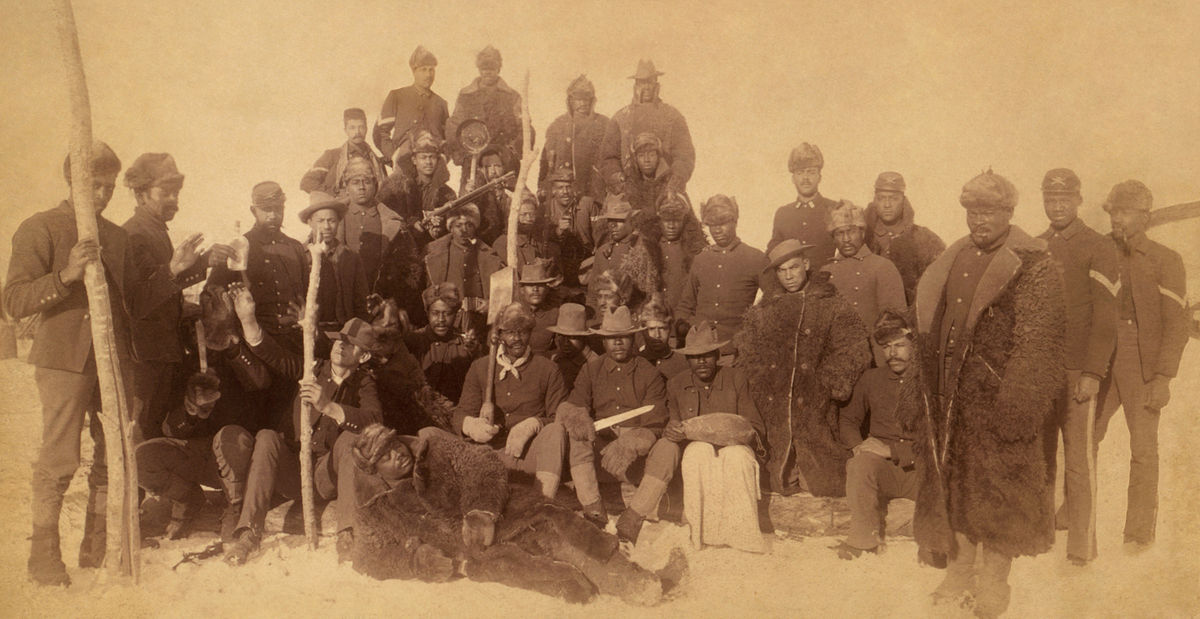
In September 1867, Private John Randall of Troop G, US 10th Cavalry Regiment, was assigned to escort two civilians on a hunting trip. The hunter became the hunted when a band of 70 Cheyenne warriors swept down on the trio. The two civilians were killed in the initial attack and Randall’s horse shot out from under him.

hardpicCornered in a washout under some railroad tracks, single handed, Randall held off the attack with his revolver, despite a gunshot wound to his shoulder and no fewer than 11 lance wounds.
By the time help arrived, 13 Cheyenne warriors lay dead.  Private Randall was still standing. Word spread among the Cheyenne about a new kind of soldier, “who had fought like a cornered buffalo; who like a buffalo had suffered wound after wound, yet had not died; and who like a buffalo had a thick and shaggy mane of hair.”

The US 10th Cavalry, formed on September 21, 1866 at Fort Leavenworth, Kansas, was the first unit of “Negro Cavalry”, an all-black unit which would soon be joined by the 9th, 24th and 25th Cavalry, and come to be known as “Buffalo Soldiers”.

Several all-black regiments were formed during the Civil War, including the 54th Massachusetts Volunteer Infantry depicted in the film, “Glory”.  The “Buffalo Soldiers” were the first peacetime all-black regiments in the regular Army.

The original units fought in the American Indian Wars, the Spanish-American War, the Philippine-American War, the Border War and two World Wars, amassing 23 Medals of Honor by the end of 1918.

423ecbee00000578-4688680-image-m-72_1499857448640
At one time, “Buffalo Soldiers” was a catch-all term, used to describe American troops of African ancestry. Today the term is used as a badge of honor only by those units who trace their lineage to the 9th and 10th Cavalry regiments. Here, the 92nd Division (segregated) in the Argonne Forest of WW1. The 92nd’s insignia is a buffalo: a tribute to their predecessors.

The old met with the new during WWII when Mark Matthews, veteran of the Pancho Villa Expedition, WW1, WW2 and the Battle of Saipan, was sent to train with the Tuskeegee Airmen.  In the end, Matthews would prove too old to fly.  A member of the Buffalo Soldiers Drum & Bugle Corps, Matthews would play taps at Arlington National Cemetery, always from the woods. Blacks of the era were not permitted at “white” funerals.  1st Sergeant Matthews retired shortly before the Buffalo Soldiers were disbanded, part of President Truman’s initiative to integrate United States’ armed forces..

154418015_zpswr4iy9c0
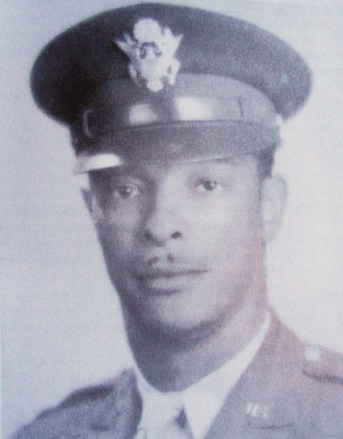
1st Lt. John Robert Fox

In December 1944, the segregated 366th Infantry Regiment of the 92nd Infantry Division was fighting in the vicinity of Sommocolonia, in northern Italy.  On Christmas day, German soldiers began to infiltrate the town, disguised as civilians.  A heavy artillery barrage began in the early morning hours of the 26th, followed by an overwhelming attack of enemy ground forces.  Vastly outnumbered, American infantry were forced to conduct a fighting retreat.

First Lieutenant John R. Fox, forward observer for the 598th Field Artillery Battalion, volunteered to stay behind with a small Italian force, to help slow the enemy advance.  From the second floor of a house, Lieutenant Fox directed American defensive fire by radio, adjusting each salvo closer to his position.  Warned that his final adjustment would bring down artillery fire on his own head, the soldier who received the message was stunned at the response. 1st Lt. John Fox’ last known words, were “Fire it.”

When American forces retook the town, Lieutenant Fox’ body was found with those of about 100 German soldiers.

The King James Bible translates John 15:13, as “Greater love hath no man than this, that a man lay down his life for his friends“.  After the war, Sommocolonia erected a Memorial.  A tribute to nine brave soldiers who gave their lives, that their brothers might live.  Eight Italians, and one American.

In a January 13, 1997 ceremony at the White House, President Bill Clinton awarded the Medal of Honor, posthumously, to the family of 1st Lieutenant John R. Fox.

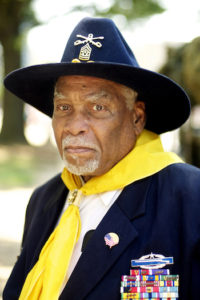
Memorial Day celebration in Washington, D.C.1st Sergeant Mark Matthews, the last of the Buffalo Soldiers, died of pneumonia on September 6, 2005 at age of 111.  A man who forged papers in order to join at age fifteen and once had to play taps from the woods, was buried with military honors at Arlington National Cemetery, section 69, grave #4215.
An American Hero.

The rank of General of the Armies is equivalent to that of a six-star general, the highest possible operational rank of the United States Armed Forces.  The rank has been awarded only twice, once posthumously to George Washington, and only once to an active-duty officer: John Joseph Pershing.

Then-1st Lieutenant Pershing served with the Buffalo Soldiers from October 1895 to May 1897 plus another six months in Cuba, and came to respect soldiers of African ancestry as “real soldiers”, in every way.  As West Point instructor beginning in 1897, Pershing was looked down upon and insulted by white cadets and officers, aggrieved over Pershing’s strict and unyielding disciplinary policies.

The press sanitized the favored insult to “Black Jack,” delivered, no doubt, behind the man’s back, but that’s not they said.

During WW1, General Pershing bowed to the segregationist policies of President Woodrow Wilson and Secretary of War Newton Baker.  It seems Pershing understood what the Connecticut academic and the Ohio politician had failed to learn, a principle the Reverend Martin Luther King Jr. would spell out, some fifty years later:

“We must learn to live together as brothers or perish together as fools”.

If you enjoyed this “Today in History”, please feel free to re-blog, “like” & share on social media, so that others may find and enjoy it as well. Please click the “follow” button on the right, to receive email updates on new articles.  Thank you for your interest, in the history we all share.

January 10, 1927 Poison Hooch

It’s a crazy, mixed up world full of nut job conspiracy theories. This is not one of those.

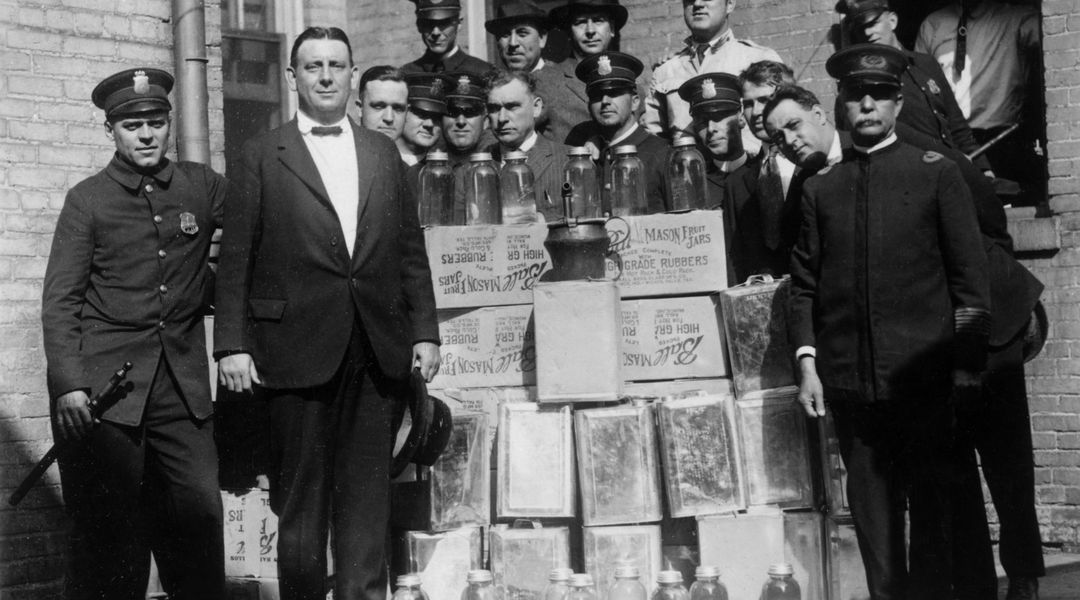
prohibition3The Eighteenth Amendment establishing the national prohibition of “intoxicating liquors” was passed out of Congress on December 17, 1917 and sent to the states, for ratification. The National Prohibition or “Volstead” act, so named for Chairman of the House Judiciary Committee Andrew Volstead, was enacted to carry out its intent.
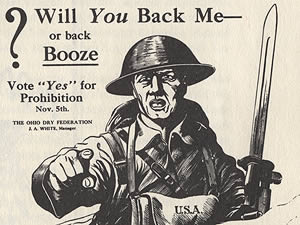

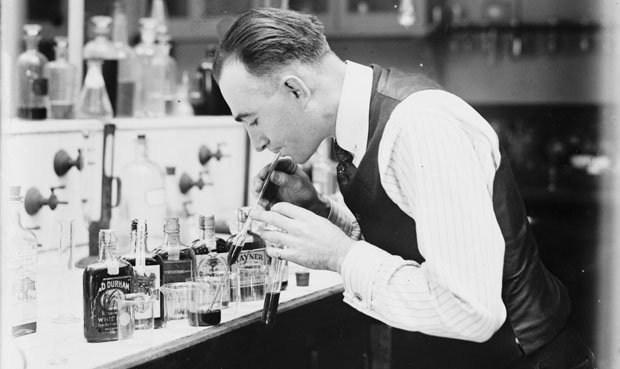
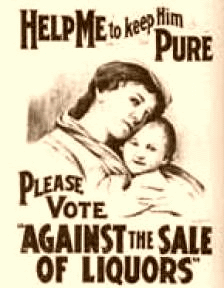
At last ratified in January 1919, “Prohibition” went into effect at midnight, January 16, 1920. For thirteen years, it was illegal to import, export, transport or sell liquor, wine or beer in the United States.

“Industrial alcohol” such as solvents, polishes and fuels were “denatured” and rendered unpalatable by the addition of dyes and chemicals.  The problem was, it wasn’t long before bootleggers figured out how to “renature” the stuff. The Treasury Department, in charge of enforcement at that time, estimated that over 60 million gallons of industrial alcohol were stolen during Prohibition.

war-propaganda
War-propaganda

Not to be defied, the government upped the ante. By the end of 1926, denaturing processes were reformulated with the introduction of known poisons such as kerosene, gasoline, iodine, zinc, nicotine, formaldehyde, chloroform, camphor, quinine and acetone. Better still, Treasury officials required no less than 10% by volume of methanol, a virulent toxin used in anti-freeze.

You can renature all you want. that stuff isn’t coming out.

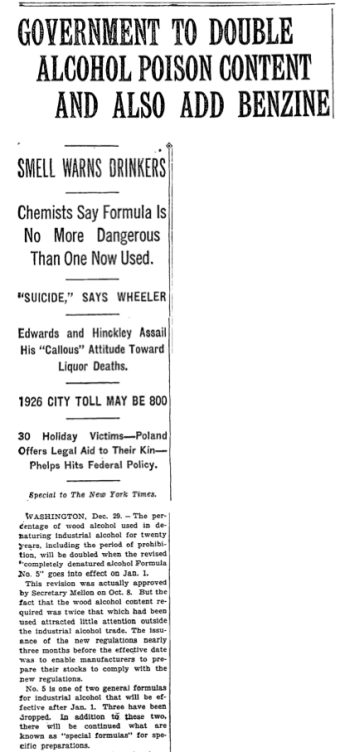
On Christmas eve 1926, sixty people wound up at New York’s Bellevue Hospital, desperately ill from contaminated alcohol. Eight of them died. Two days later the death toll was thirty-one. By New Year’s Day the number had soared to 400, with no end in sight.

copper-still
A copper still and bucket, like those used in the creation and renaturing of alcohol at home. H’T allthatsinteresting.com, and Chicago History Museum/Getty Images

Many who didn’t die, may have wished it. Drinkers experienced hallucinations, uncontrollable vomiting, even blindness.

In its January 10, 1927 issue, TIME Magazine reported  a doubling in toxicity levels, from the new method:  “The new formula included “4 parts methanol (wood alcohol), 2.25 parts pyridine bases, 0.5 parts benzene to 100 parts ethyl alcohol” and, as TIME noted, “Three ordinary drinks of this may cause blindness. (In case you didn’t guess, “blind drink” isn’t just a figure of speech.)”

New York medical examiner Charles Norris was quick to understand the problem, and organized a press conference to warn of the danger. “The government knows it is not stopping drinking by putting poison in alcohol,” he said. “Yet it continues its poisoning processes, heedless of the fact that people determined to drink are daily absorbing that poison. Knowing this to be true, the United States government must be charged with the moral responsibility for the deaths that poisoned liquor causes, although it cannot be held legally responsible.”

Norris pointed out that the poorest people of the city, were most likely to be victims: “Those who cannot afford expensive protection and deal in low-grade stuff”.

The towering sanctimony of the other side, is hard to believe.  Teetotalers argued that the dead had “brought it on themselves”. Long-time leader of the anti-saloon league Wayne B. Wheeler claimed “The Government is under no obligation to furnish the people with alcohol that is drinkable when the Constitution prohibits it. The person who drinks this industrial alcohol is a deliberate suicide.”

prohibition_2

In the thirteen years of its existence, Prohibition was an unmitigated disaster.  Portable stills went on sale within a week of enactment, and organized smuggling was quick to follow. California grape growers increased acreage by over 700% over the first five years, selling dry blocks of grapes as “bricks of rhine” or “blocks of port”. The mayor of New York City sent instructions to his constituents, on how to make wine.

Smuggling operations became widespread, as cars were souped up to outrun “the law”. This would lead to competitive car racing, beginning first on the streets and back roads and later moving to dedicated race tracks. It’s why we have NASCAR, today.

alcohol_poison_passed

Organized crime became vastly more powerful due to the influx of enormous sums of cash. The corruption of public officials was a national scandal.

Gaining convictions for breaking a law that everyone hated became increasingly difficult. The first 4,000 prohibition-related arrests resulted in only six convictions, and not one jail sentence.

It’s hard to compare alcohol consumption rates before and during prohibition but, if death by cirrhosis of the liver is any indication, alcohol consumption wasn’t reduced by any more than 10 to 20 per cent.

In the end, even John D. Rockefeller, Jr., a lifelong teetotaler who contributed $350,000 to the Anti-Saloon League, had to announce his support for repeal.

On December 5, 1933, Utah became the 36th state to ratify the Twenty-first Amendment, repealing the Eighteenth and voiding the Volstead Act, returning control over alcohol policy to the states.

Federal officials continued to poison industrial alcohol until the very end, resulting in the death of some 10,000 citizens.   They didn’t even pretend not to know, what was happening.  Assistant Secretary of the Treasury Seymour Lowman may have had the last word, among those who would say “I’m from the government, and I’m here to help”.  Lowman opined that, if deliberately poisoned alcohol resulted in a more sober nation, then “a good job will have been done.”

If you enjoyed this “Today in History”, please feel free to re-blog, “like” & share on social media, so that others may find and enjoy it as well. Please click the “follow” button on the right, to receive email updates on new articles.  Thank you for your interest, in the history we all share.